
Nagano · Northern Alps
Kamikochi is a car-free alpine valley in Japan’s Northern Alps, open from April 17 to November 15, 2026, where a flat seven-kilometre trail along the Azusa River links Taisho Pond, Kappa Bridge and Myojin without a single climb. The best things to do here are walking that riverside path, catching the 5 AM dawn that day-trippers never see, and timing your visit to the season rather than the weather.
I have walked into Kamikochi at first light and at midday, in early summer green and in late-October colour, and the valley is two completely different places depending on when you arrive and how long you stay. This page is the short version of six guides I have written about it — what to actually do, how to get in, when to come, and whether to stay the night. Each section links to the full guide if you want the detail.
What are the best things to do in Kamikochi?
The single best thing to do in Kamikochi is walk the flat riverside trail from Taisho Pond to Myojin and back — about seven kilometres one way, no climbing, on boardwalks and gravel. Everything else fits around that walk.
Walk Taisho Pond → Kappa Bridge → Myojin
The classic day: dead trees standing in the still water at Taisho Pond, the crowds and mountain view at Kappa Bridge, then the quieter forest course up to Myojin. Flat the whole way. See the full one-day walking route.
Be there at dawn
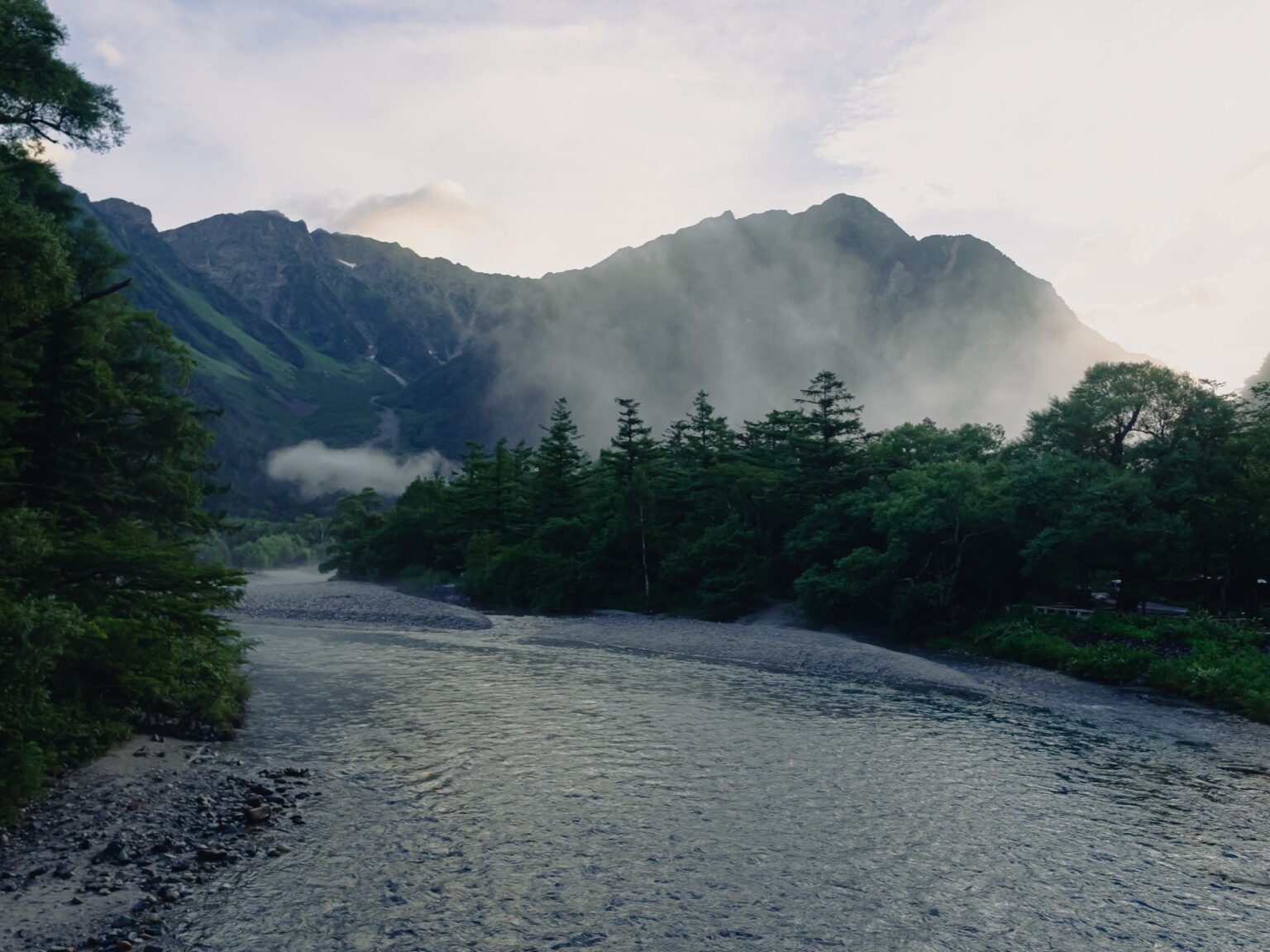
The first buses only reach the valley around 7:30 AM, so between 5:00 and 7:00 Kamikochi belongs to the people who slept there — mist on the Azusa River, no crowds at Kappa Bridge. What the valley looks like before the buses arrive.
Cross to Myojin Pond
A short detour past Myojin Bridge reaches Myojin Pond (¥500), a sacred, glass-still pond beneath Mt. Myojin with a small shrine on the shore. The boardwalk forest course between Taisho and Tashiro ponds is the prettiest stretch.
How do I get to Kamikochi?
You cannot drive into Kamikochi — private cars are banned year-round. You reach it by bus or taxi from one of three directions, then walk. These are the routes, with the times and fares I have checked:
| From | How | Time / fare |
|---|---|---|
| Matsumoto (fastest) | Alpico train to Shin-Shimashima, then Alpico bus | ~95 min · ¥3,810 |
| Sawando car park | Park your car, take the shuttle bus or a taxi | Taxi ~47 min · ¥5,400–6,000 (regular car) |
| Takayama (cheapest) | Nohi Bus via Hirayu Onsen | See access guide for fares |
| Tokyo | Shinjuku express bus, or Shinkansen + Matsumoto route above | See access guide |
If you are driving from the Matsumoto or Tokyo side you park at Sawando; from the Takayama or Nagoya side you park at Hirayu or Akandana, then switch to the bus or taxi. The full access guide has every timetable, the direct Matsumoto bus, and how to get back out to Takayama.
Coming from Southeast Asia? Fly into Tokyo (Haneda or Narita) or Nagoya, then it is a train to Matsumoto and a bus in. You never need a car or a Japanese licence at any point — the bus-and-taxi system does all of it, which makes Kamikochi one of the easier alpine places to reach without driving.
When is the best time to visit Kamikochi?
Kamikochi is only open from April 17 to November 15, 2026, and closed the rest of the year, so the real question is which month within that window. Late spring and autumn are the two highlights.
Jigokudani Snow Monkey Park
Add the snow monkeys: wild macaques bathing in a hot spring, north of Nagano.
Michi-no-Eki Hakuba
On the Nagano road: Michi-no-Eki Hakuba for purple rice and soba.
Japan’s Coolcation Trend (2026 Data)
Kamikochi is one of five escapes where summer searches surged in 2026.
Late spring & summer
June brings rainy-season rhododendrons; August brings alpine flowers and the most reliable green. Mornings stay cool even in midsummer.
Autumn colour
The valley turns in mid-to-late October, with the larches at Karasawa colouring as early as late September higher up. It is the busiest and, to me, the best time.
The month-by-month guide breaks down weather, crowds and what is blooming through the whole season.
Where should I stay in Kamikochi?
Kamikochi has nine places to stay across four tiers, from the historic Imperial Hotel at ¥45,000+ per person down to a ¥2,000 tent pitch at Konashidaira. Staying inside the valley is the only way to get the dawn — the alternative is basing in Matsumoto and busing in.
| Tier | Rough price (per person) | Example |
|---|---|---|
| Landmark hotel | ¥45,000–¥80,000 | Imperial Hotel Kamikochi |
| Comfortable lodge | ¥30,000–¥55,000 | Riverside lodges with two meals |
| Simple lodge | ¥18,000–¥35,000 | Walkers’ inns near Kappa Bridge |
| Camping | ¥2,000 / adult | Konashidaira campground |
From June 1, 2026 Matsumoto charges a ¥200 per-person, per-night lodging tax; stays priced under ¥6,000 per person per night (room-only, before tax) are exempt. The full lodge comparison walks through all nine properties.
Booking a bed near Kamikochi?
In-valley lodges sell out months ahead, so many people base in Matsumoto and bus in. Booking has the widest spread of Matsumoto and valley-edge hotels; if you want a guided day in instead, GetYourGuide lists Northern Alps tours.
Should I do Kamikochi as a day trip or stay overnight?
You can do Kamikochi as a day trip, and most people do — but the last buses leave in the late afternoon (the terminal closes at 17:30 and return buses need a reservation), which means a day-tripper misses the two things the valley is really about: the 5 AM dawn and the dark, light-pollution-free alpine sky at night. If you only have a day, go; if you can spare a night, stay. Here is how to decide without wasting the trip.
Planning to climb beyond Yokoo this summer? Note the 2026 trial gate checks (18 Jul–11 Aug) — they don’t affect valley walks, but climbers get a preparation checklist at the trailhead.
Frequently asked questions about Kamikochi
Is Kamikochi worth visiting?
Yes. Kamikochi is one of the most accessible high-mountain valleys in Japan — a flat riverside walk with Northern Alps scenery and no climbing required — which makes it worth the trip for almost any fitness level. The payoff is highest if you stay overnight and see it at dawn.
Can you drive into Kamikochi?
No. Private cars are banned in Kamikochi year-round. You park at Sawando (from the Matsumoto or Tokyo side) or at Hirayu/Akandana (from the Takayama or Nagoya side) and switch to a shuttle bus or taxi for the last stretch.
Is Kamikochi free to enter?
Yes, the valley and its main trail are free to walk. The only paid spot on the standard route is Myojin Pond, which charges ¥500. Your real cost is getting in — about ¥3,810 by train and bus from Matsumoto.
How long do you need in Kamikochi?
Half a day is enough for the main flat walk from Taisho Pond to Kappa Bridge and back. To see the valley at dawn and after the day crowds leave, plan one overnight inside Kamikochi.
When is Kamikochi open?
Kamikochi is open from April 17 to November 15, 2026, and closed to visitors from November 16 through April 16. Late spring rhododendrons and mid-to-late October autumn colour are the two standout windows.
Can you do Kamikochi as a day trip from Tokyo?
It is possible but long. With the last buses leaving in the late afternoon, a Tokyo day trip means a very early start and a rushed valley. Basing a night in Matsumoto or inside Kamikochi makes the trip far more worthwhile.
Plan the Kamikochi trip
Three doors into the valley. Book the bed first — in-season lodges go early.
Join travelers discovering Japan's hidden side
Weekly dispatches from off-the-beaten-path Japan — spots and stories you won't find in guidebooks.
No spam. Unsubscribe anytime.
Welcome aboard!
You're in. See you in your inbox soon.