Saga · Porcelain · Imari & Arita
Imari ware is Japan’s first porcelain — fired in the hills of Arita in Saga from the 1610s, after a Korean potter found the right white stone at Izumiyama. It took the name “Imari” from the port it was shipped out of, sailed to Europe by the Dutch in the hundreds of thousands, and survives today in the secret-kiln village of Okawachiyama. Here’s how to make sense of Imari, Arita, Old Imari and Nabeshima — and where to see the real thing.
What Imari ware actually is
For most of its history Japan made stoneware, not porcelain — the hard, white, almost translucent material that China had perfected and Europe couldn’t crack. That changed in Arita. In the 1610s a potter who had come over from Korea with the Nabeshima clan, known by the names Ri Sampei and Kanagae Sanbei, found a deposit of porcelain stone at Izumiyama in Arita. With the right raw material, the local kilns fired Japan’s first true porcelain. (He’s traditionally dated to 1616; kiln-site archaeologists put the real start a few years either side, in the 1610s.)
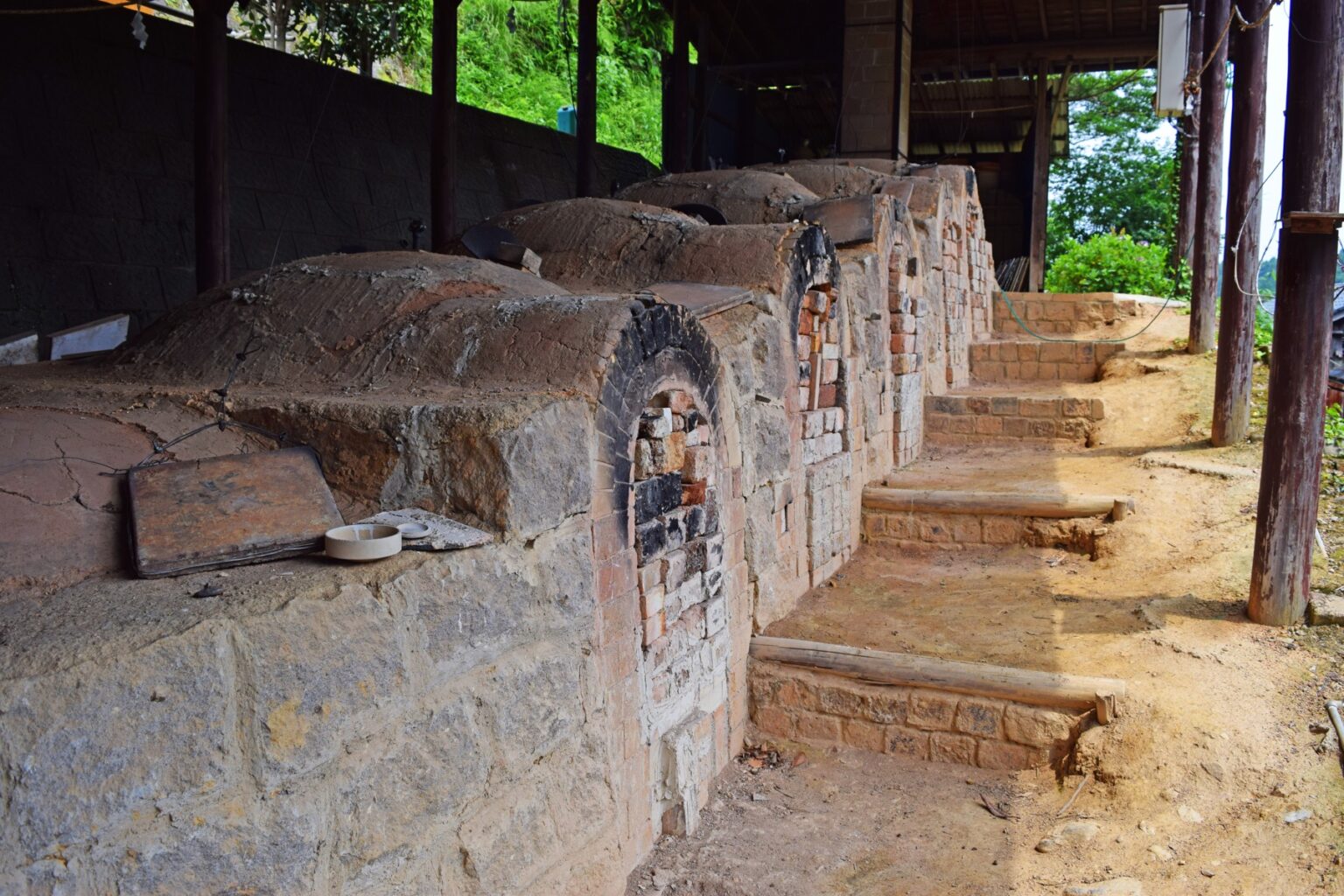
Why “Imari,” when it’s made in Arita?
This trips everyone up. The porcelain was made in Arita and the kiln towns around it, but in the Edo period it was carried down to the coast and shipped out from the port of Imari — so buyers across Japan and Europe knew it as Imari ware, after the port, not the kiln town. The names overlap completely for the old pieces.
After the Meiji Restoration, when railways replaced the sea route, the terms split. Today, broadly:
Arita ware (有田焼)
The modern name for porcelain made in and around Arita town — the everyday term you’ll see in shops.
Imari ware (伊万里焼)
Now used more specifically for the Nabeshima tradition centred on Okawachiyama in Imari.
Old Imari (古伊万里)
Edo-period antiques — the historic Hizen porcelain, much of it exported, that the “Ko-” (old) marks out.
The four looks to know
Most of what you’ll see falls into a handful of decorative styles, layered up over the 17th and 18th centuries.
| Style | What it looks like |
|---|---|
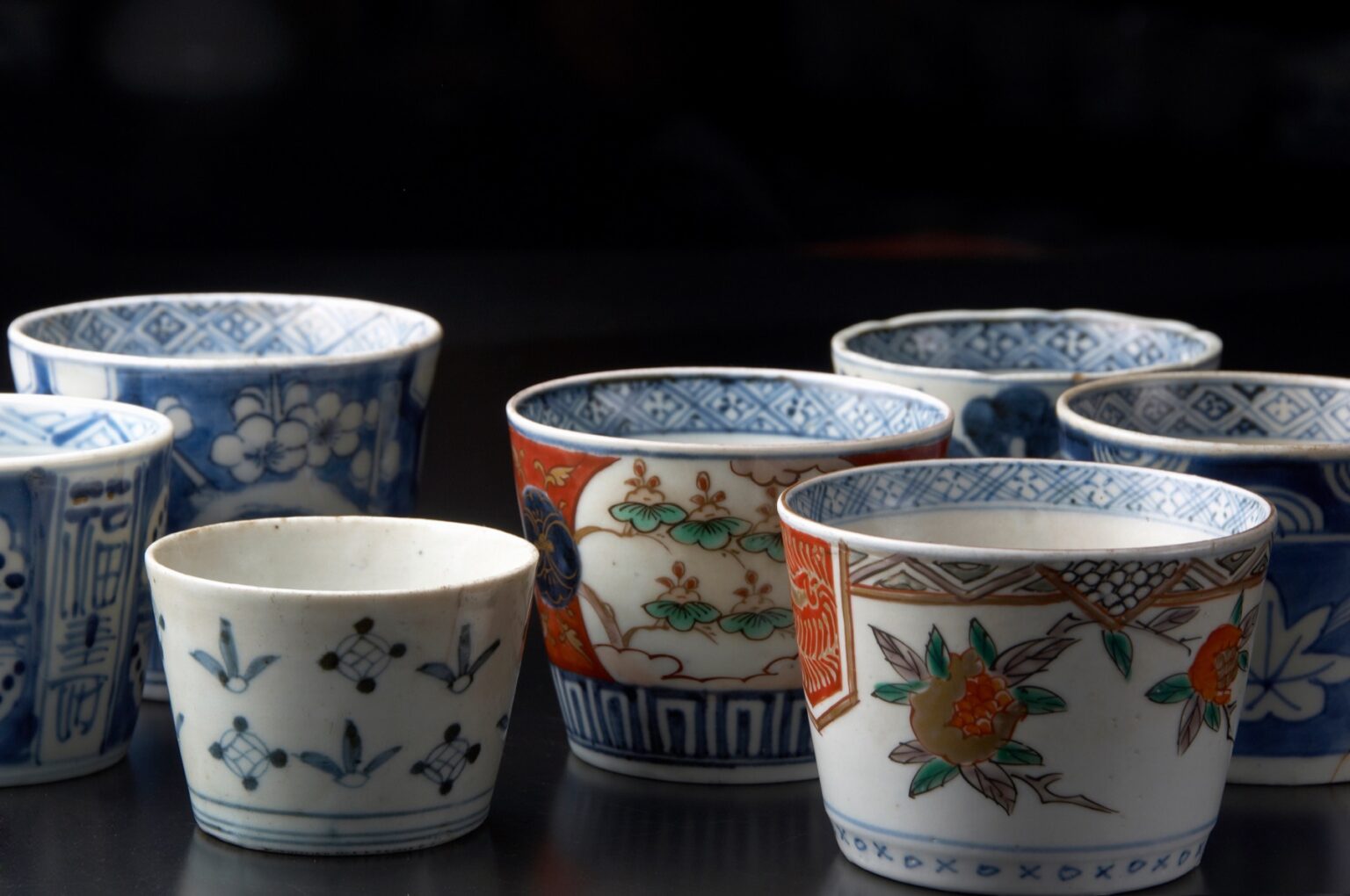
| Sometsuke (染付) | Underglaze cobalt blue on white — the earliest and most everyday Hizen look |
| Iro-e (色絵) | Overglaze enamels — red, yellow, green — painted on after the first firing and fired again |
| Kakiemon (柿右衛門) | A milky-white body (nigoshide) with delicate, asymmetric enamel painting and lots of empty space; the 1670s–90s style Europe adored |
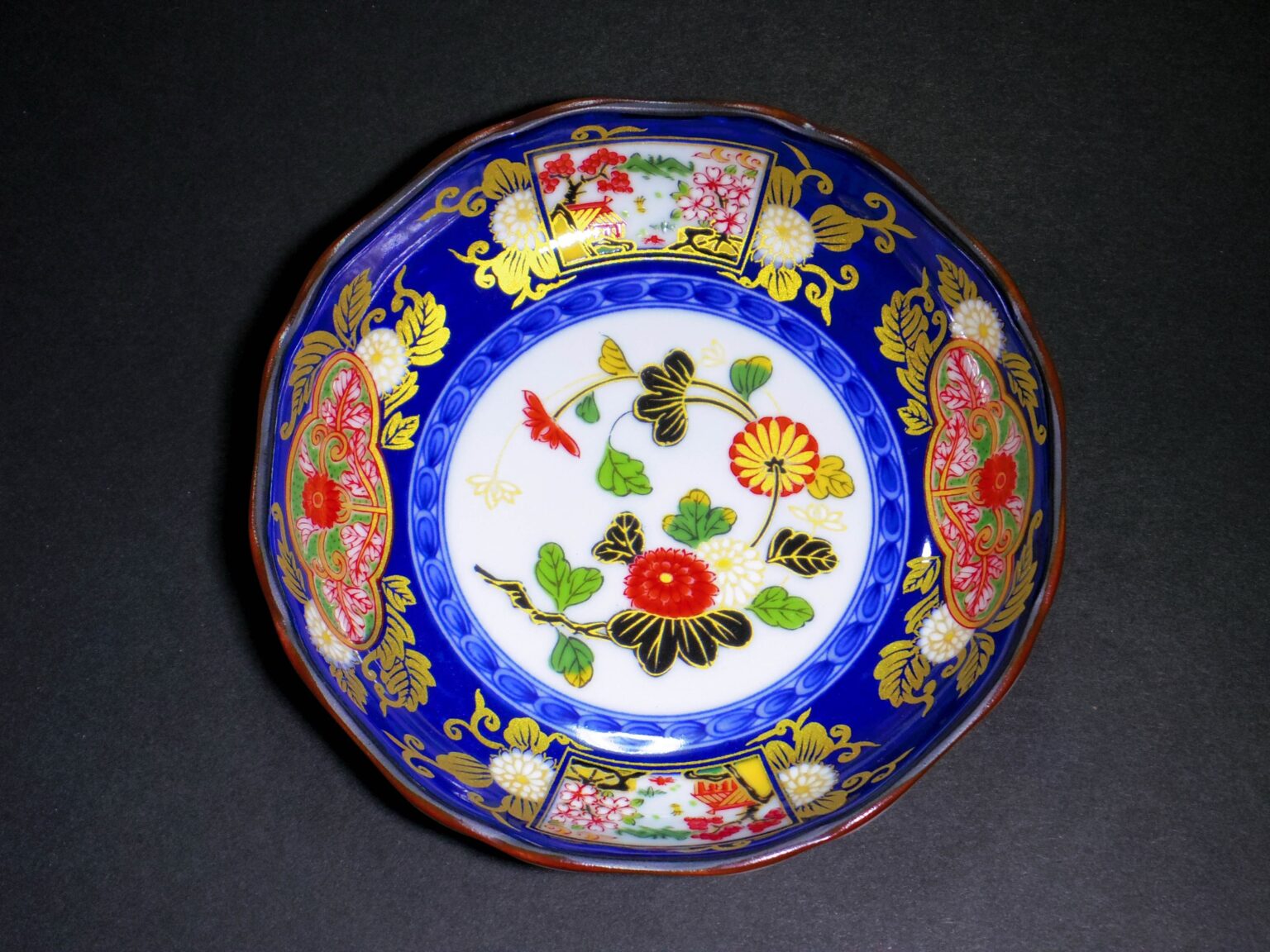
| Kinrande (金襴手) | Dense “gold brocade” — blue, red and gold together; the opulent late-Edo export look |
Old Imari and the voyage to Europe
The timing was lucky. When the Ming-Qing wars disrupted China’s kilns at Jingdezhen in the mid-1600s, the Dutch East India Company — which had its Japan trading post on the island of Dejima in Nagasaki — turned to Hizen to fill the gap. From 1659 they shipped Imari to Europe in bulk; over the following decades the recorded total ran past two million pieces. Arita’s potters even copied the Chinese “Kraak” export style (known here as fuyōde) to slot straight into the demand. Those export pieces are what collectors call Old Imari, and you’ll still find them in European country houses today.
Nabeshima ware & the secret kilns of Okawachiyama
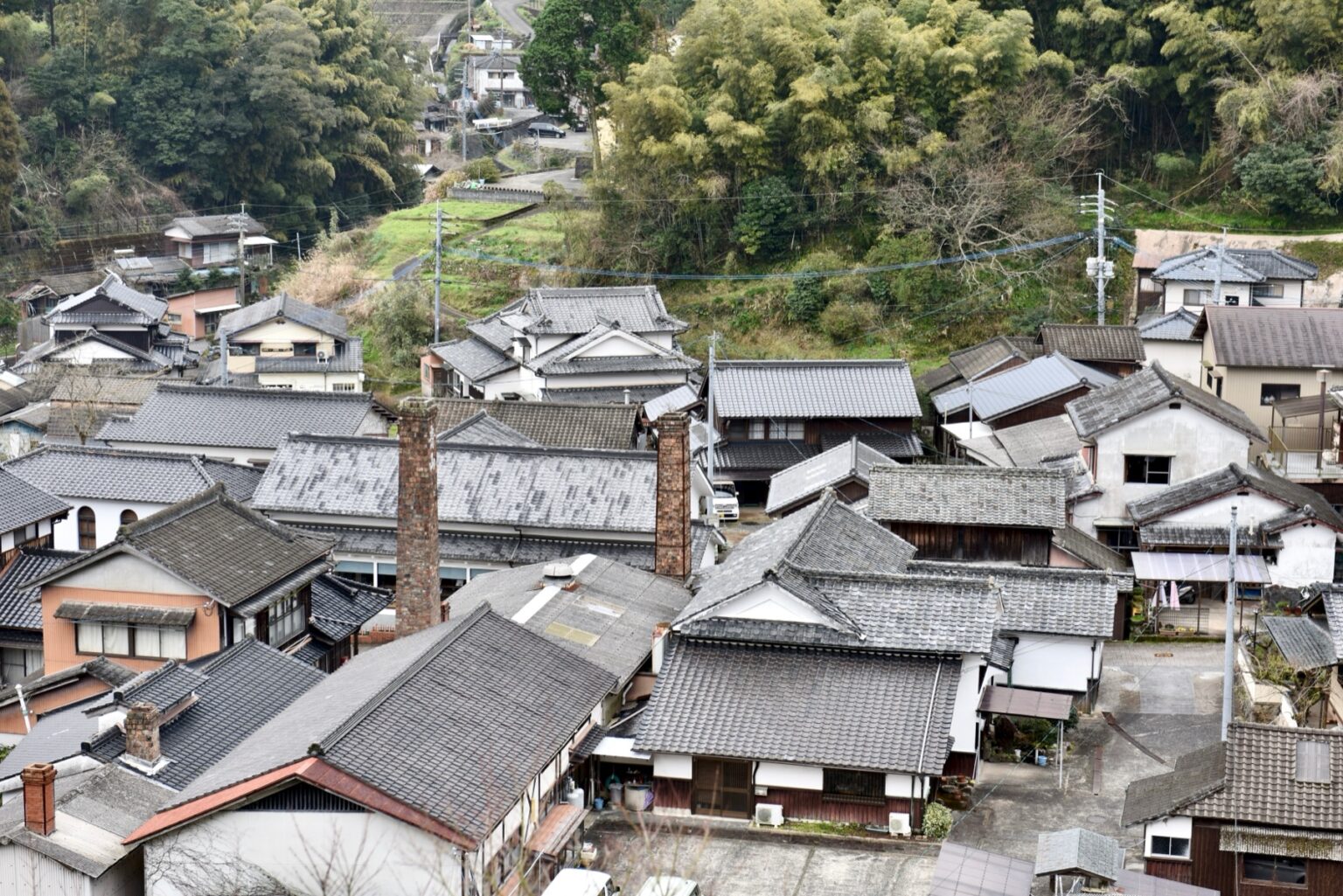
While merchants exported the flashy stuff, the Saga (Nabeshima) clan kept the very best for itself. Its official kiln made Nabeshima ware — porcelain that was never sold, only presented to the shogun and used as high-end gifts. To keep the techniques from leaking, the clan moved the kiln deep into the mountains at Okawachiyama in Imari, controlled who came and went, and in 1693 issued an order tightening the secrecy further. The village earned its nickname: the hiyō no sato, the home of the secret kilns.
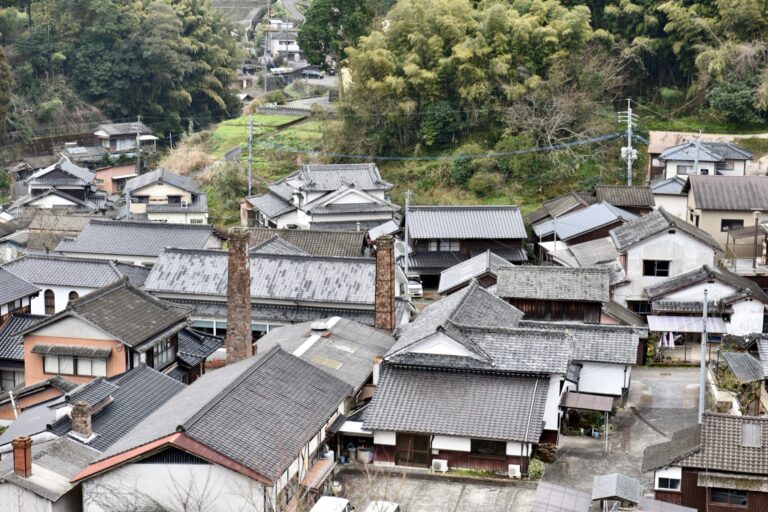
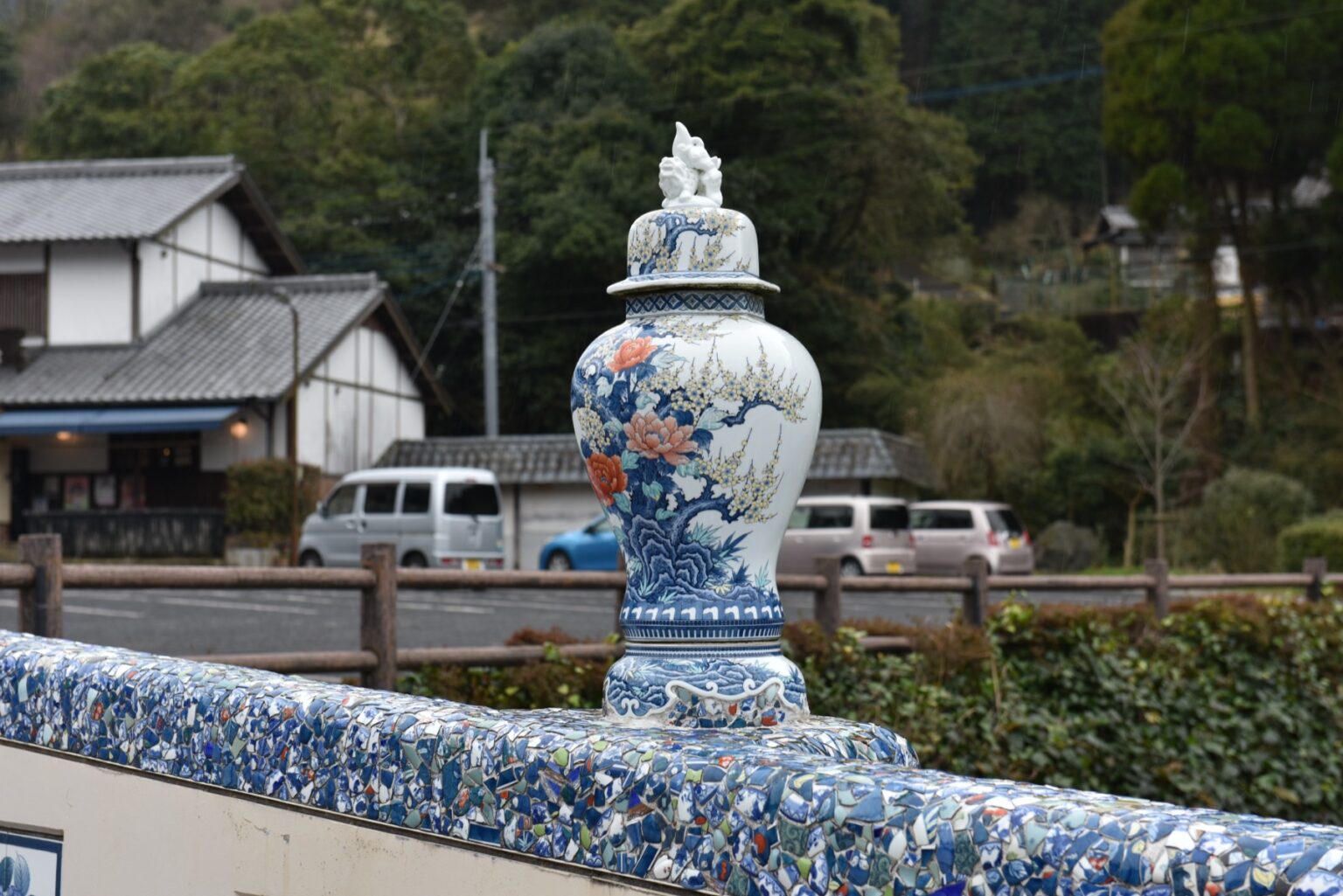
Nabeshima work comes in three lines: iro-nabeshima (overglaze red, yellow and green), nabeshima-sometsuke (cobalt blue) and nabeshima-seiji (celadon green). Around 29 kilns still work in Okawachiyama today, and the mountain village — with its old brick chimneys and porcelain-tiled bridges — is the single best place to understand all of this in person.
Where to see and buy it today
Two anchors. Okawachiyama in Imari is where you walk the kiln village and watch Nabeshima ware being made; its calendar peaks with the summer wind-chime displays (June–August) and the Nabeshima Autumn Festival (20–24 November in 2026, per Okawachiyama’s official notice of 10 September 2026). For shopping, the Arita Pottery Market fills the streets of Arita every Golden Week — April 29 to May 5 in 2026, Japan’s biggest ceramics fair, with around a million visitors — and the porcelain mall at Arita Sera runs year-round if you’d rather browse 22 shops in a quiet afternoon. For the hunt-through-the-bins version, there’s treasure-hunting at Kouraku-gama.
Staying in the pottery towns
Arita and Imari are small; many people base in nearby Karatsu, Takeo Onsen or Ureshino Onsen and drive in. Booking has the widest spread; Rakuten Travel is stronger for the onsen ryokan that make the better overnight.
Good to know
What’s the difference between Imari ware and Arita ware?
They’re historically the same Hizen porcelain. It was made in and around Arita and shipped out from the port of Imari, so both names were used. Today “Arita ware” generally means porcelain made in Arita, while “Imari ware” is used more specifically for the Nabeshima tradition centred on Okawachiyama in Imari. Edo-period antiques are called “Old Imari” (Ko-Imari).
When did Imari/Arita porcelain start?
In the 1610s, when a Korean-born potter known as Ri Sampei (Kanagae Sanbei) found porcelain stone at Izumiyama in Arita. He’s traditionally dated to 1616; archaeology puts the actual start in the 1610s. It was Japan’s first porcelain.
What is Old Imari (Ko-Imari)?
Edo-period Hizen porcelain, much of it exported to Europe by the Dutch East India Company from 1659 onward — over two million recorded pieces. The blue-red-and-gold “gold brocade” (kinrande) style is the classic export look.
What is Nabeshima ware?
The top-grade porcelain made by the Saga clan’s own kiln, never sold but presented to the shogun. To protect its secrets the kiln was hidden at Okawachiyama in Imari. It comes in three styles: iro-nabeshima (overglaze colour), nabeshima-sometsuke (blue) and nabeshima-seiji (celadon).
Where can I see kilns being worked?
Okawachiyama in Imari — the “secret kiln village” — has around 29 working kilns and is open to visitors, with festivals through the year. Arita town has the Izumiyama quarry, the porcelain shrine and the Golden Week pottery market.
When is the Arita Pottery Market in 2026?
April 29 to May 5, 2026, over Golden Week — the 122nd edition. It’s Japan’s largest ceramics market, drawing around a million people, so book accommodation early and expect crowds.
Arita Sera
22 porcelain shops on one hill — where to actually buy Arita ware.
Treasure-hunting in Arita
Digging through the bins for cheap seconds at a working kiln.
Imari Shrine
The vermilion gate, the sweets god and the fighting festival in Imari town.
Getting to Imari & Arita
The trains and the car routes into Saga’s pottery country.
Yoshinogari Historical Park
The great Yayoi moated village, the other side of Saga’s history.
Arita Porcelain Park
A free baroque-palace theme park and sake brewery in Arita.
Join travelers discovering Japan's hidden side
Weekly dispatches from off-the-beaten-path Japan — spots and stories you won't find in guidebooks.
No spam. Unsubscribe anytime.
Welcome aboard!
You're in. See you in your inbox soon.