Saga · Arita · Hands-On Pottery
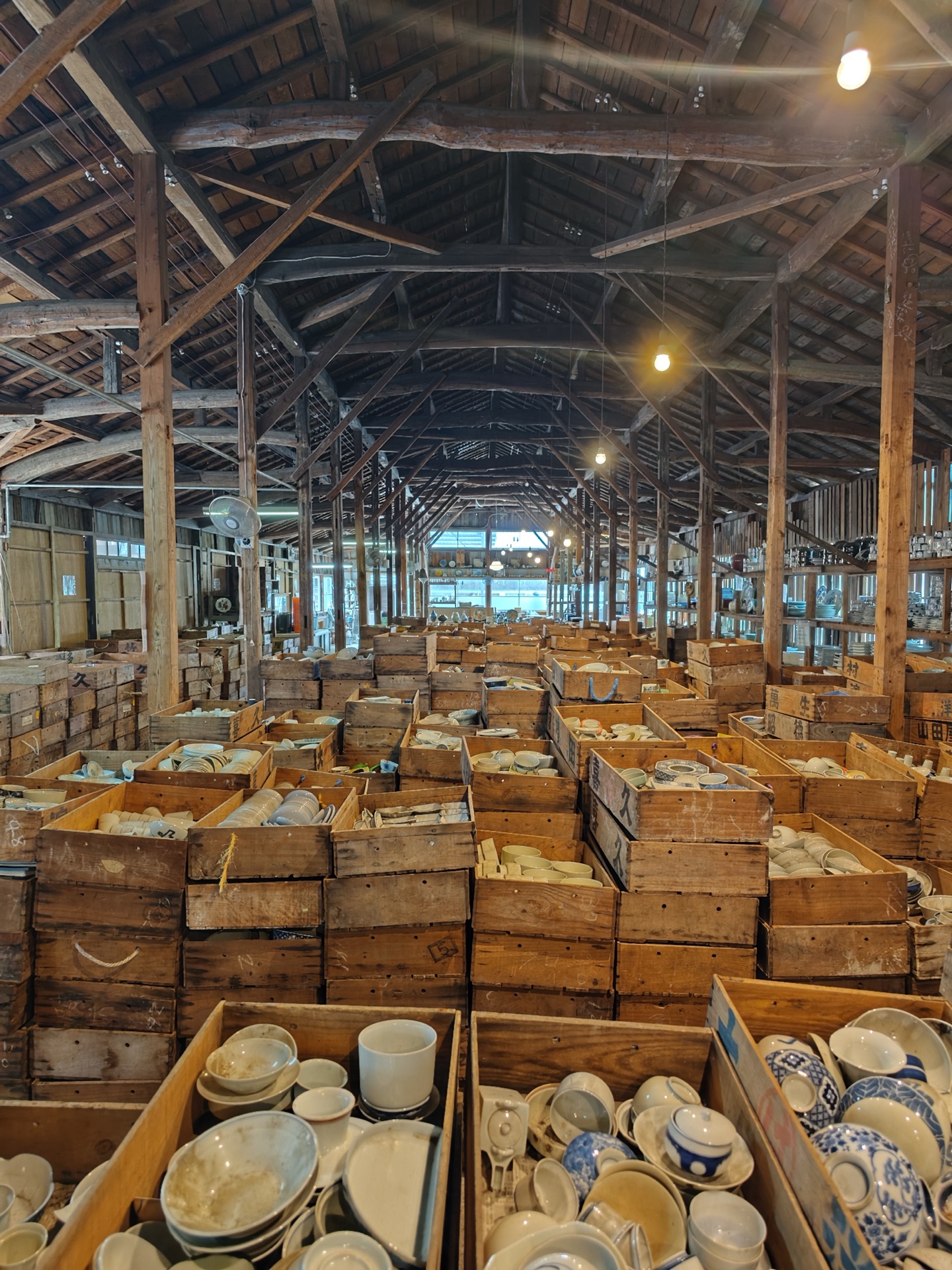
Kouraku-gama (幸楽窯), founded 1865 in Arita, Saga Prefecture, runs the most unusual pottery experience in Japan: a 90-minute “treasure hunt” through a warehouse of Arita porcelain where you fill an orange basket (¥6,600) or black basket (¥13,200) with as much as fits — outlet pieces, factory seconds, and stock that’s been forgotten on shelves for decades. No reservation needed (except for groups), reception 10:00–11:00 and 13:00–14:00, English support available, and shipping handled by the kiln to anywhere in Japan.
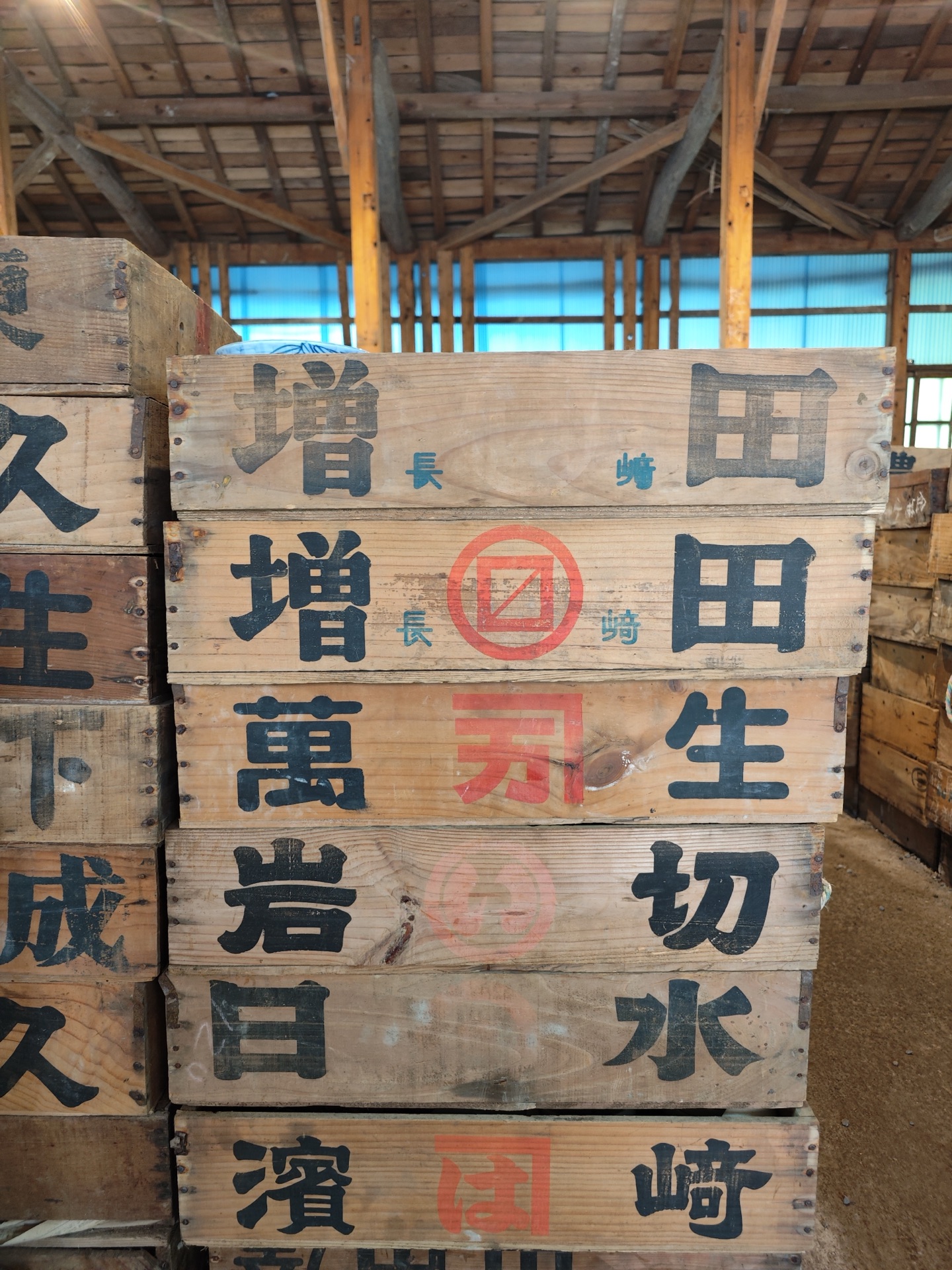
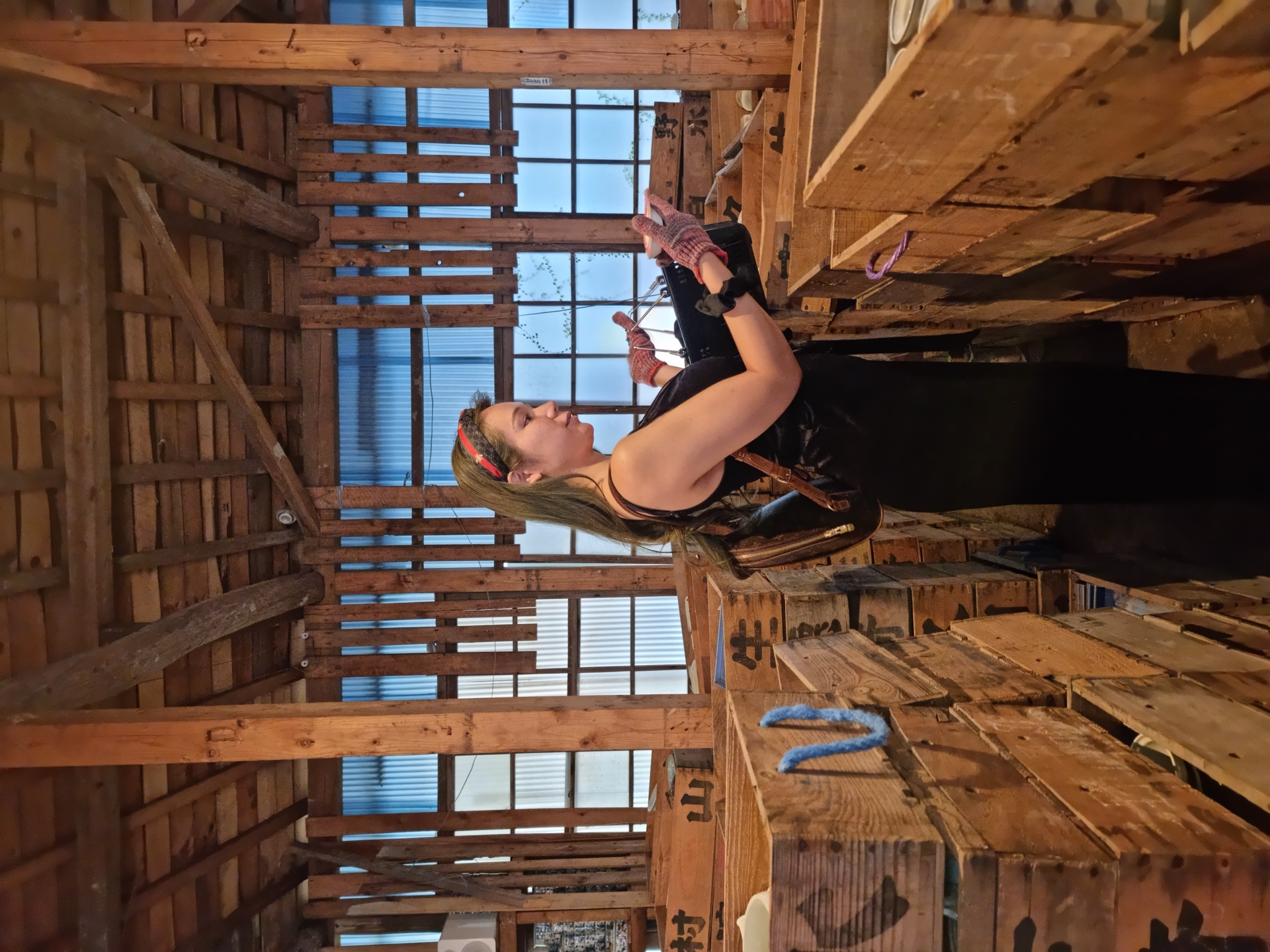
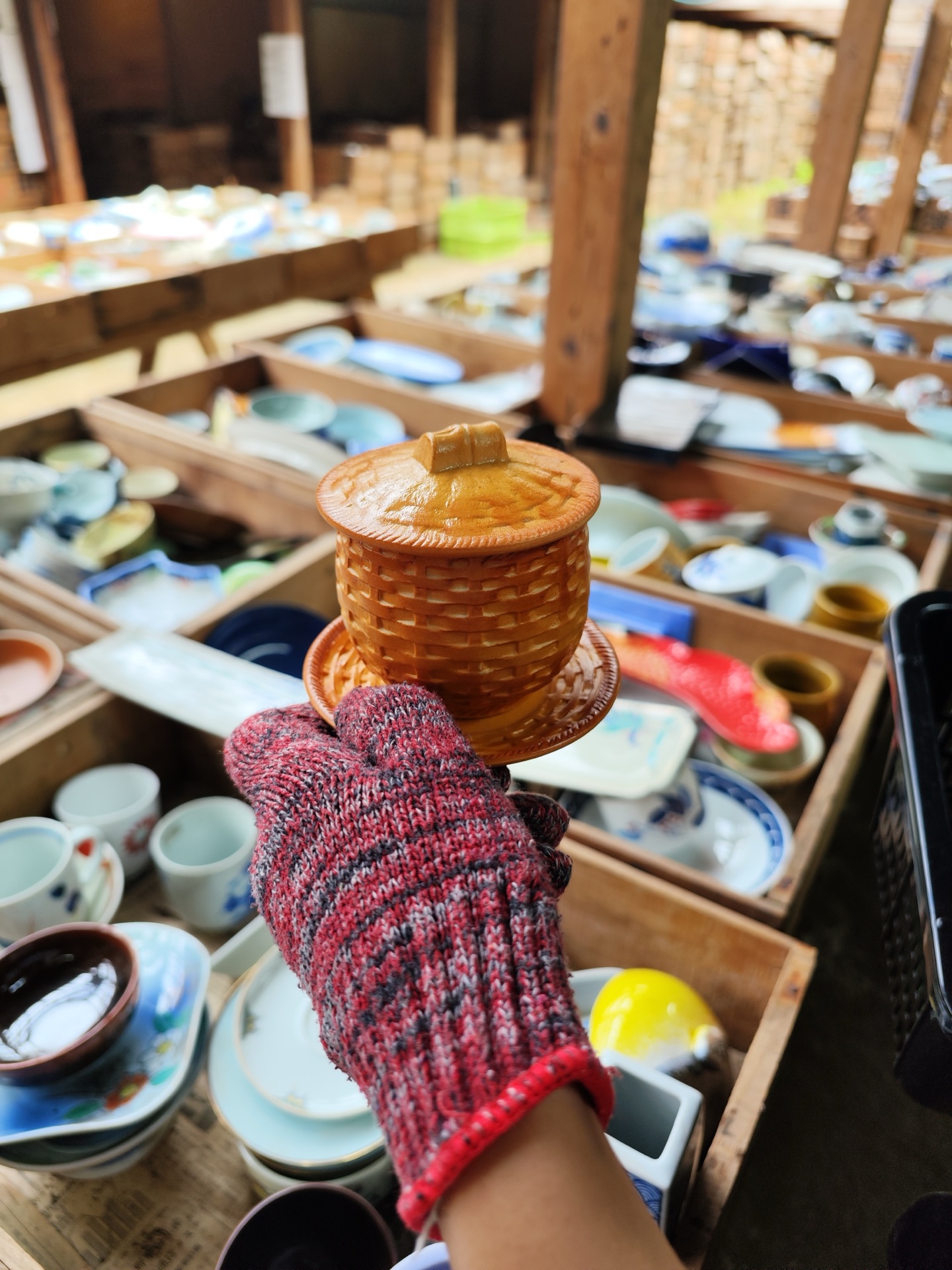
I have been to Arita twice now and walked past Kouraku-gama’s gate the first time without realising what was inside. The brochures describe it as “a kiln tour” — which is technically accurate and completely misleading. What’s actually inside is a working-warehouse-as-game: you pay for a basket, get 10 minutes of orientation about how the experience works, then have 90 minutes to fill the basket with whatever pottery you can find. Tea cups, plates, decorative vases, sake sets — anything in the warehouse is fair game. The piece a potter forgot to display in 1995. The pattern a designer prototyped in 2010 and never released. The chip-corner factory second from yesterday’s production run. The 30-year-old undecorated white porcelain blank that never got painted. You leave with five to fifteen pieces of Arita-yaki for ¥6,600. This is the case for treating it as one of Japan’s most undersold pottery experiences.
30-second summary
What it is: A 90-minute treasure hunt at a 1865-founded Arita kiln. You fill a basket with as much Arita-yaki as fits. Pricing is per basket, not per piece.
Two basket sizes: Orange (¥6,600) for white porcelain + celadon + basic blue-and-white. Black (¥13,200) for decorated hand-painted pieces.
Why it stands out: Nowhere else in Japan can you walk out with a whole new dinner-set’s worth of authentic Arita porcelain for under ¥10,000. Pieces include outlet, factory seconds, and decades-old stock.
Quick Facts
Official Name
Kouraku-gama (幸楽窯), run by Tokunaga Ceramic Co., Ltd. Established 1865. Address: Arita, Saga Prefecture.
The Experience
“Arita-yaki Treasure Hunting” (有田焼トレジャーハンティング). 90-minute basket-fill in the kiln warehouse.
Price (2026)
Orange basket ¥6,600 · Black basket ¥13,200. Tax included. No per-piece pricing.
Reception
Morning: 10:00–11:00 entry (12:00 end) · Afternoon: 13:00–14:00 entry (15:30 end). No reservation for individuals; groups must book ahead.
Closures
Year-end and New Year only. Otherwise open every day.
Parking
Free: 3 spaces for large vehicles + 20 spaces for standard cars.
Phone / Site
0955-42-4121 · kouraku.jp.net/experience/hunting/ (English info available)
The Two Baskets: Pick Yours
The single most important decision is which basket to buy. The colour determines which section of the warehouse you have access to and what kind of pottery you walk out with.
Beginner / Variety
Orange Basket
¥6,600
- Access: ¥5,000-tier area only
- Mostly white porcelain, celadon, and underglaze blue-and-white
- Capacity: piece count varies by size; rule is the basket’s top edge
- The pragmatic choice — daily-use tableware
Collector / Decorated
Black Basket
¥13,200
- Access: all warehouse areas (including ¥5,000-tier)
- Adds overglaze hand-painted (iro-e), gold-leaf (kinran-de), and limited / discontinued designs
- Capacity: same top-edge rule but pieces tend to be larger
- The serious choice — display-grade pieces
If forced to pick: Orange for first-time visitors and anyone who wants daily-use Japanese tableware. Black if you collect ceramics, run a tea-ceremony interest, or want display-grade pieces with strong hand-painting. Going as a couple or family? Two oranges is more variety than one black.
How the 90 Minutes Actually Go
The flow is precisely choreographed by the staff. They’ve run this experience daily for years and the timing is calibrated.
Inside the Treasure Hunt — Minute-by-minute
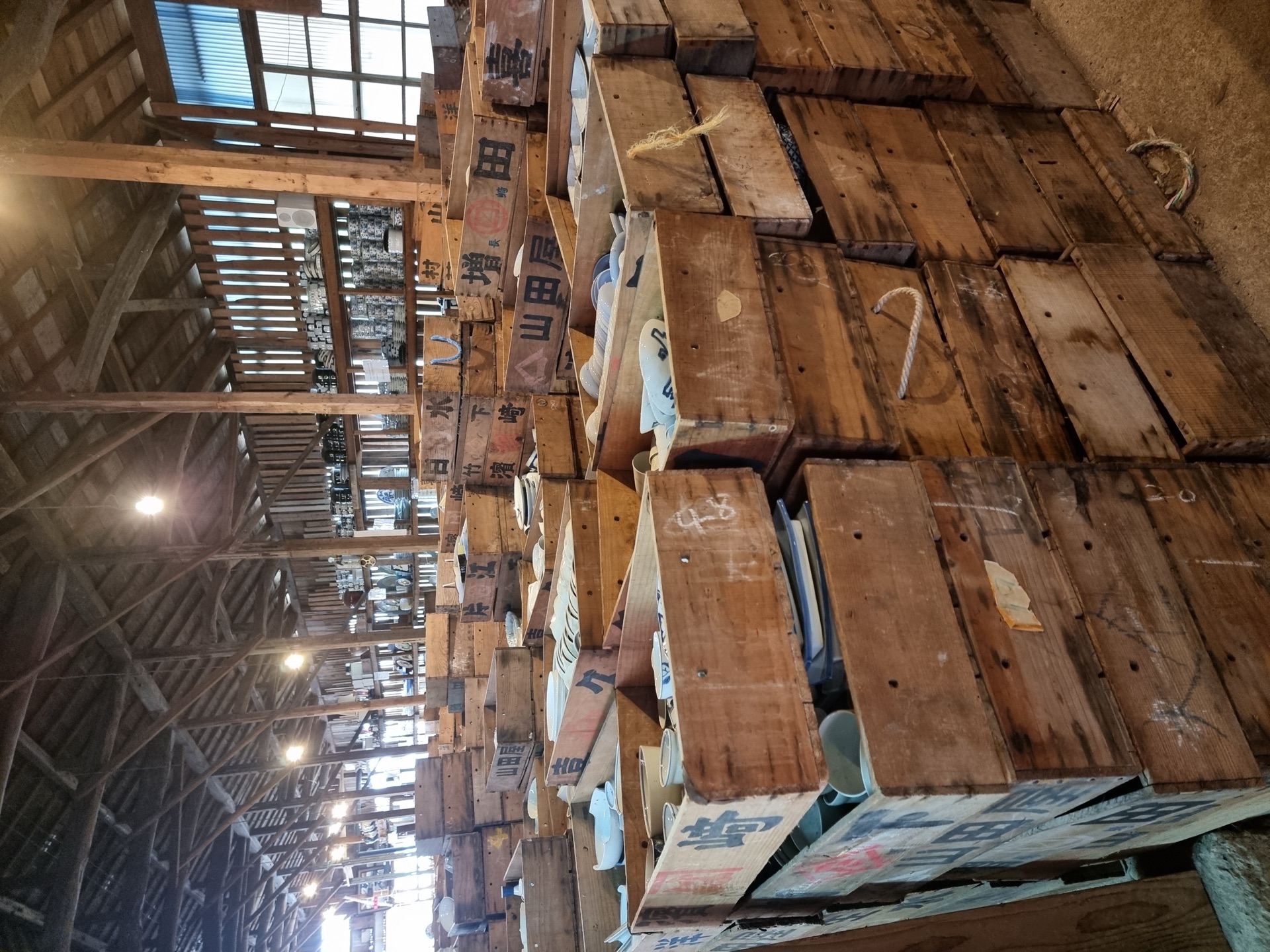
“90 minutes. One basket. Whatever fits.”
What’s Actually in the Warehouse
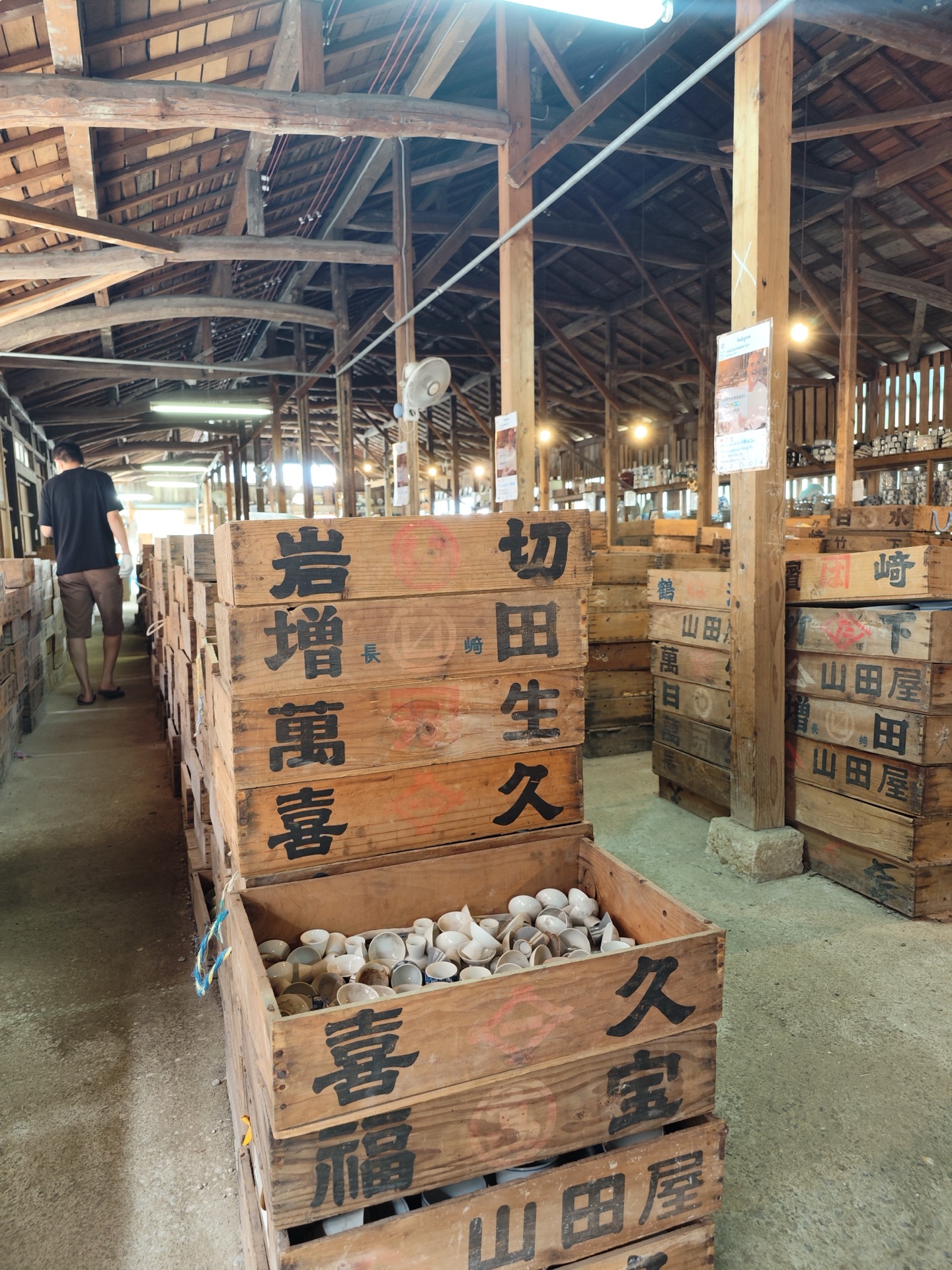
Kouraku-gama has been operating since 1865 and has accumulated stock in roughly four categories. Knowing which one you’re looking at helps you decide what to grab.
| Category | What it is | Why it’s here |
|---|---|---|
| Factory seconds | Pieces with minor defects — small chips, glaze irregularities, slight warping | Quality control culls from current production. Visually nearly perfect, structurally fine for daily use. |
| Outlet / discontinued | Past-season designs, retired patterns, end-of-line stock | Department-store inventory that didn’t sell, returned to the kiln. |
| Forgotten stock | Pieces literally forgotten on shelves for 10-30+ years | Old commercial orders, prototype runs, samples that never got reordered. Genuinely rare patterns. |
| Workshop samples | Test pieces from potter R&D, glaze experiments, shape prototypes | Studio iteration that never reached market. Often one-of-a-kind. |
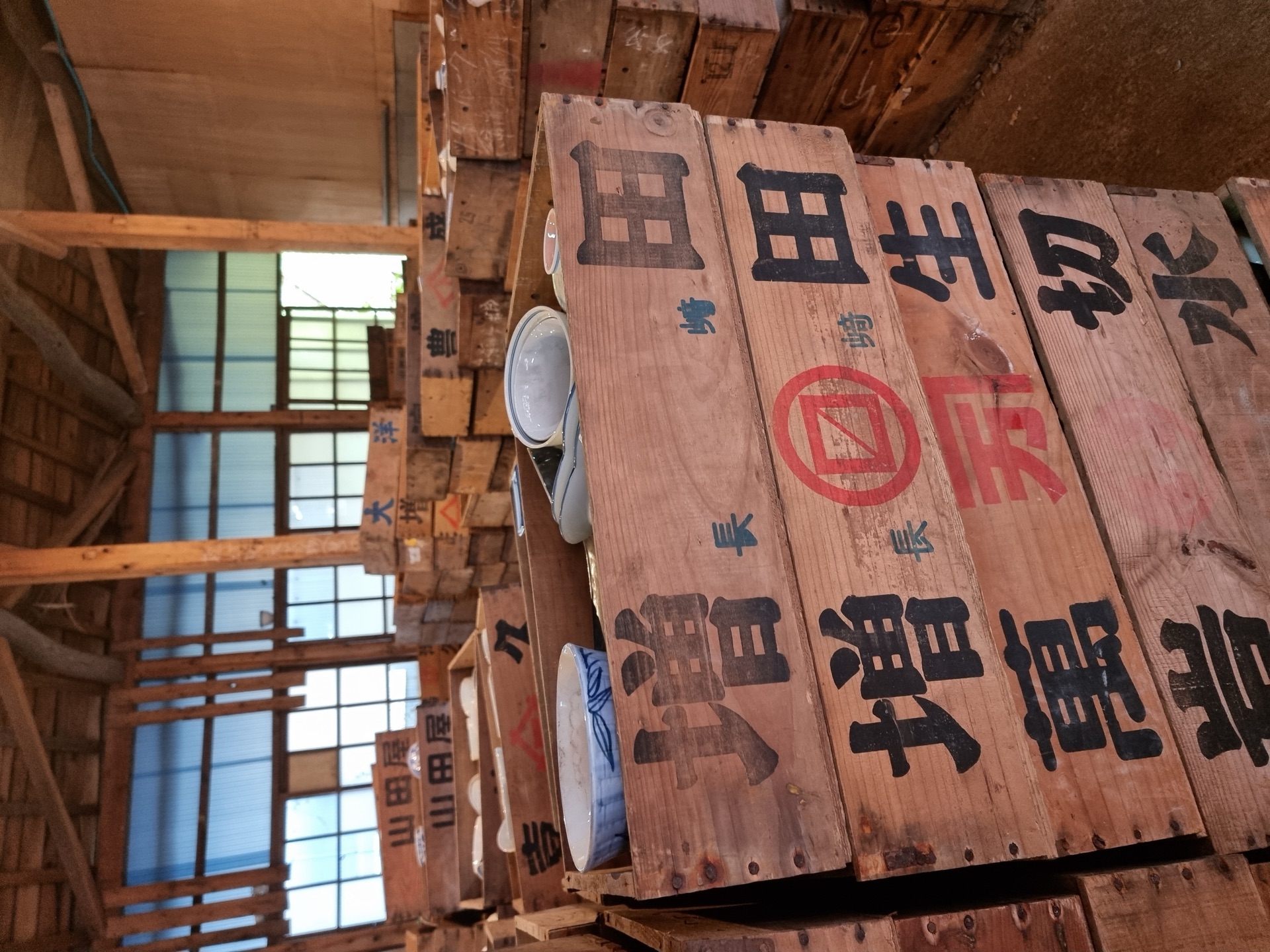
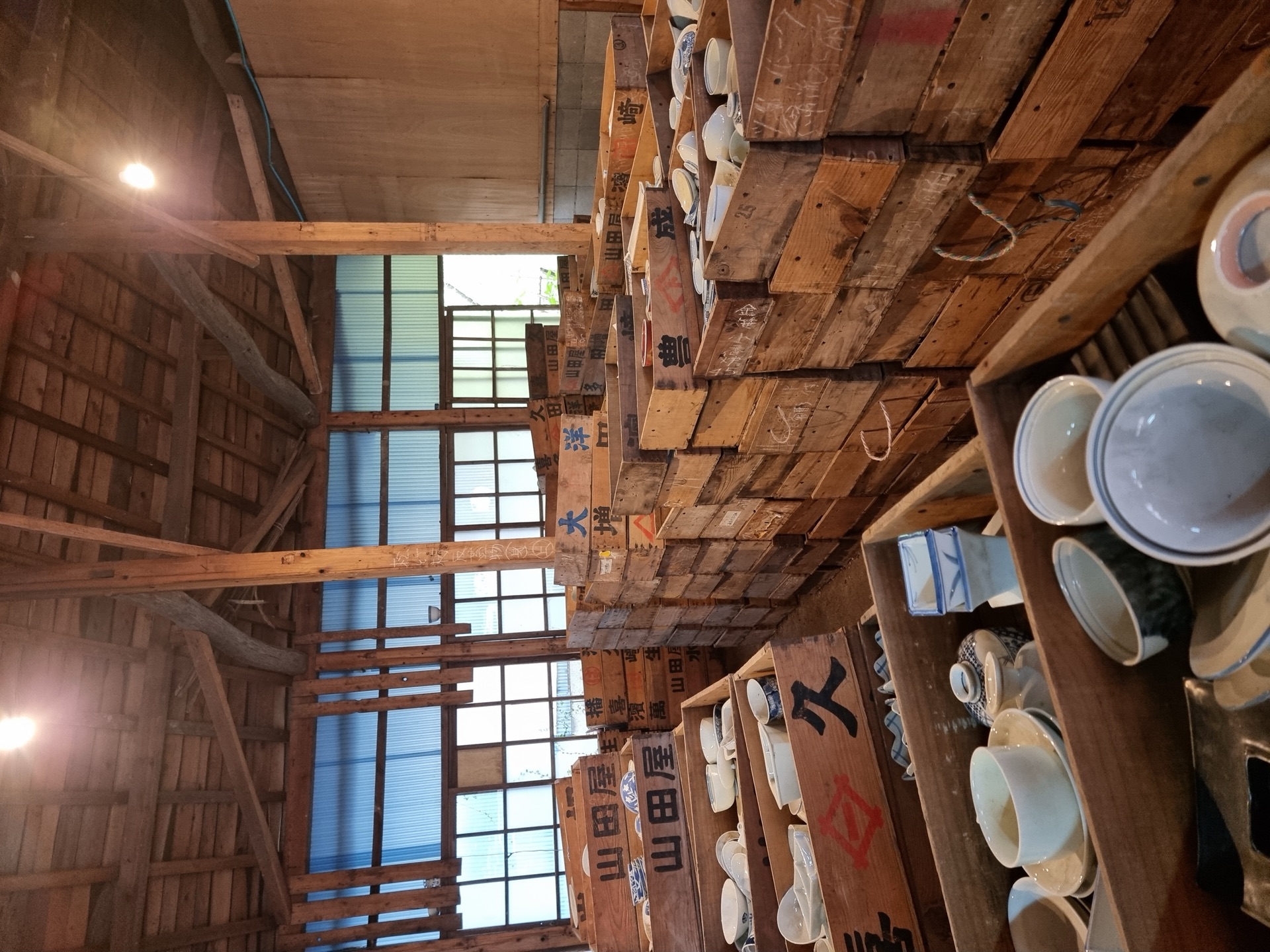
One thing worth noting: the staff have made clear that some of these pieces predate any current commercial circulation. They are not “antiques” in the formal museum sense, but they’re production-era pieces that no longer exist in retail anywhere else. The kiln treats this experience as both inventory clearance and a way to extend their archive.
What You Tend to End Up With (Orange Basket)
The mix you walk out with depends entirely on which crates you stop at. A common orange-basket combination across visitors I’ve compared notes with:
- 3-5 sometsuke (blue-and-white) rice or rim bowls, often each from a different pattern
- 2-4 small sauce dishes (mamezara) — these stack densely so they fit easily
- 1-2 medium plates in white porcelain or celadon
- 2-3 tea / sake cups
- 1 chopstick-rest set or small accessory
Total: typically a daily-use tableware collection that would otherwise take multiple separate purchases at a Tokyo department store. Cost: the flat ¥6,600 basket fee.
Pair It With: Arita Sera + 2016/ SHOP (10 min by car)
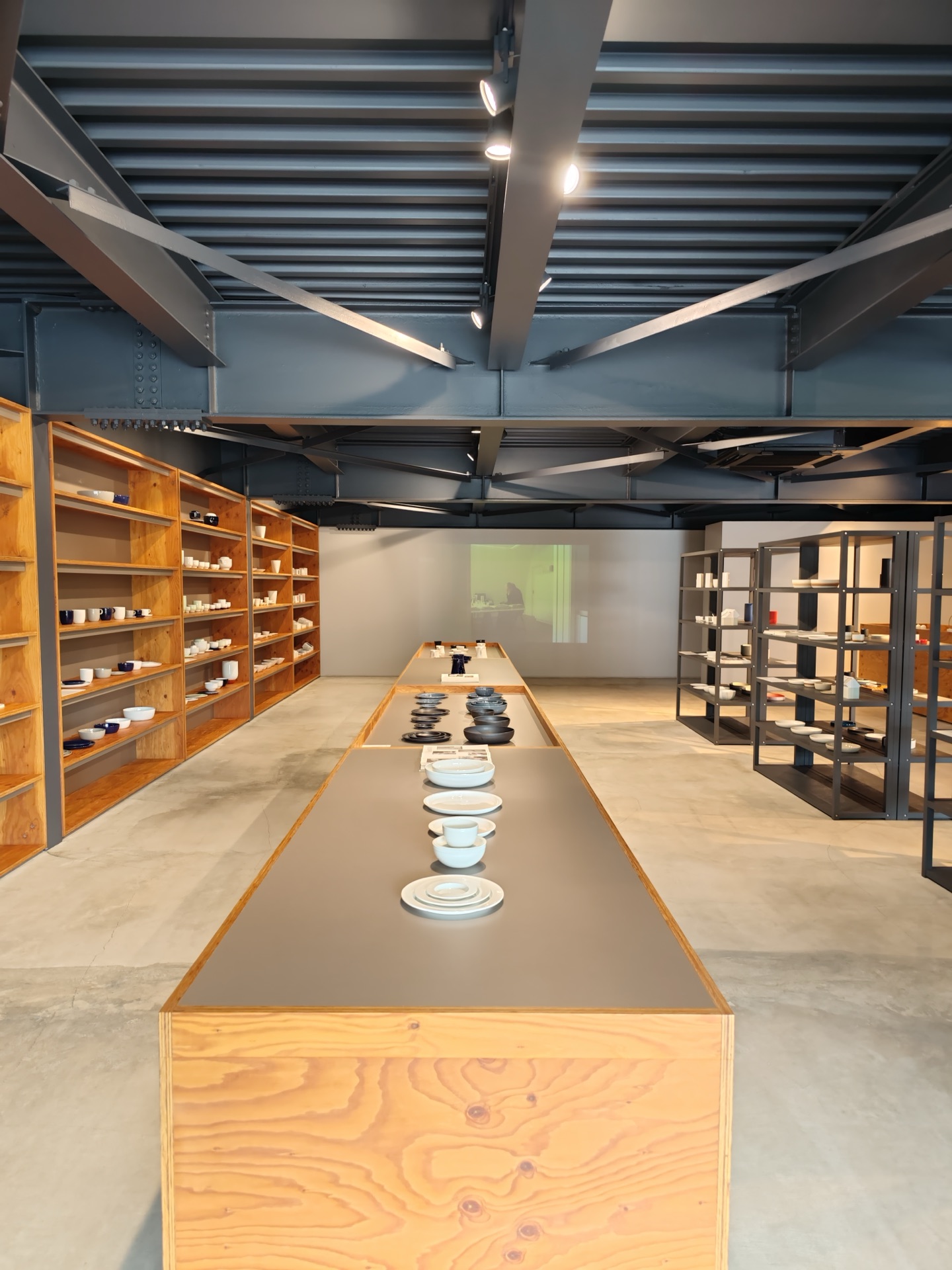
The natural complement to Kouraku-gama’s chaotic-warehouse experience is a stop at Arita Sera (アリタセラ), a 10-minute drive across town. Arita Sera is a Japan-only shopping plaza built around a single product category — Arita-yaki — with about 25 separate kiln-and-pottery shops, a restaurant row, a gallery space, and the design-store flagship 2016/ SHOP. The two visits balance each other: Kouraku-gama gives you bulk porcelain in a basket, Arita Sera gives you curated single pieces from named potters.
What 2016/ SHOP is
2016/ SHOP is the retail face of the “2016/” project, a design initiative launched for the 400-year anniversary of Arita porcelain (Imari ware production began in 1616). The project paired contemporary designers from Europe and Japan with 16 Arita kilns to produce a new line of Arita-yaki for modern dining tables. The shop carries the resulting catalogue plus rotating exhibitions. Pieces here are retail-priced, individually labelled, and come with the designer/kiln attribution — opposite of the anonymous-stock warehouse model at Kouraku-gama.
What Arita Sera is
Arita Sera (アリタセラ) is the larger shopping plaza that contains 2016/ SHOP. About 25 independent pottery shops, two restaurants, a museum corner, free parking, and a quiet exterior in the residential-edge district of Arita. Useful if you want to compare styles across multiple kilns, or if you want to buy from a specific named potter you’ve researched in advance.
The contrast between the two visits is the point: chaotic warehouse with bulk-buy basket at Kouraku-gama (¥6,600 flat price for whatever fits the basket), curated design retail at 2016/ SHOP (¥3,000-15,000 per individual piece, named potter, single-purchase intent). Both are part of the same Arita-yaki ecosystem; they sit at opposite ends of how you can shop it.
How to Get There
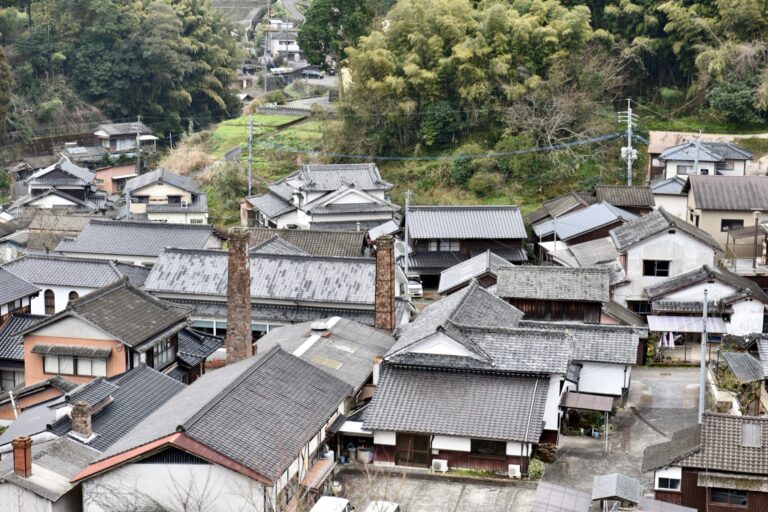
Arita is a small town in northwestern Saga Prefecture, on the JR Sasebo Line. Kouraku-gama is a 5-min taxi from Arita Station or a 20-min walk through the historic kiln-town streets.
| From | Route | Time |
|---|---|---|
| Hakata Station (Fukuoka) | JR Limited Express “Midori” or “Huis Ten Bosch” → Arita Station | ~1h 20min |
| Fukuoka Airport | Subway to Hakata + JR Express to Arita | ~1h 40min |
| Saga Station | JR Limited Express → Arita | ~40 min |
| Sasebo Station | JR Sasebo Line east → Arita | ~30 min |
| From Arita Station to Kouraku-gama | 5 min by taxi (~¥800) or 20 min on foot through historic district | 5-20 min |
| By car | Nagasaki Expressway → Hasami IC → 10 min local roads | From Fukuoka: ~1h 30min |
Pair the Visit With (Saga Half-Day)
Same day: Arita historic district + Tonbai walls
Arita town itself is worth a 1-2 hour walk. The “tonbai” walls (made from broken kiln bricks fused with red clay) line the older streets and are a UNESCO World Heritage candidate. The Arita Sengen Shrine sits above town; the Sasebo Pottery Museum is 5 min away.
Same trip: Karatsu (1 hour east)
Karatsu is another pottery town on the Saga coast — different aesthetic (Karatsu-yaki is heavier, stoneware-style, tea-ceremony-oriented). Pair Arita morning + Karatsu afternoon for a full Saga pottery day. See our Ashino-hana Karatsu shaved ice guide for a Karatsu summer stop.
Overnight: Takeo Onsen
30 min east of Arita. Famous for the Takeo library + the historic onsen quarter. Pair lunch at Ide Chanpon Takeo with a night at a Takeo onsen ryokan.
Plan This Trip
Plan This Trip
For Southeast Asian Visitors
Arita is a niche destination compared to standard Tokyo/Kyoto routes — Singaporean, Malaysian, Thai, Indonesian, and Filipino travellers who include Saga in a Kyushu loop will find this is one of the most distinctly Japanese hands-on experiences available. Shipping note: Kouraku-gama ships domestically within Japan only (no international shipping). If you’re flying out of Fukuoka, ship your basket to your Fukuoka hotel for pickup the day before departure. Air-travel: most domestic Japanese airlines allow porcelain in checked luggage if properly bubble-wrapped (the kiln provides packing material free). International airline policies vary; check JAL/ANA/SQ/MH/CX baggage rules for ceramics. Language: the orientation is in Japanese, but staff have English information sheets and can manage simple English questions. Best time: Arita Pottery Market runs late April-early May annually; Kouraku-gama gets crowded that week. November-March is the quiet window with shorter waits.
FAQ
Do I need to reserve in advance?
For individuals: no. Walk in during reception hours (10:00-11:00 or 13:00-14:00) and pay at the counter. The morning session is preferred — afternoon sessions sometimes fill up on weekends with bus tours. For groups of 5+, reservations are required.
Can I really fit “as much as I want” in the basket?
The rule the staff enforce is that the basket’s top edge cannot be exceeded. Anything inside the basket at the top-edge rule is included in the flat price; pieces piled above incur an additional per-piece fee — ask at orientation for the current rate. Piece counts vary by size: small mamezara stack densely, larger plates take up more room.
What if I drop something?
Pieces in the warehouse are considered the kiln’s stock; if you drop one before purchase, the staff handle it. Pieces in your basket after you’ve paid are your responsibility. The staff provide work gloves and the warehouse has packing material; reasonable care prevents almost all breakage.
Will the pieces be authentic Arita-yaki?
Yes — everything in the warehouse is Kouraku-gama production, made on-site or by partner kilns within Arita. The “Arita-yaki” designation requires the piece to be made in Arita town, which all stock meets. Many pieces carry the kiln’s underglaze maker mark.
How long does shipping take?
Domestic Japan only. The kiln packs your items and arranges courier shipping at the warehouse counter (Yamato/Sagawa courier rates apply by box size and destination). You pay shipping separately from the basket fee — ask at the counter for the current cost to your address.
Is it kid-friendly?
Yes — children can participate alongside parents (one basket fits 2 adults + middle-school students max under the kiln’s rules). Younger children should not handle pieces independently because of breakage risk, but they can pick out pieces visually and have parents lift them into the basket. The 90-minute timeframe is on the long side for under-6s.
What if I want a specific style and can’t find it in the warehouse?
Drive 10 minutes to Arita Sera, the shopping plaza with about 25 separate pottery shops including 2016/ SHOP (the design-led flagship from the Arita 400th-anniversary project). Pieces there are individually priced from named potters, opposite of Kouraku-gama’s bulk-basket model. Custom orders are possible at most Arita Sera shops with 2-4 week production and shipping.
Booking the Trip
Booking the Trip
Three doors into a Saga pottery day. Fukuoka base is the easiest setup.
Related Reading
- Ide Chanpon Takeo, Saga — Lunch stop 30 min east, paired with a Takeo Onsen overnight.
- Ashino-hana Karatsu — Shaved Ice in a Historic Saga Town — Karatsu summer pottery + dessert combo.
- Gyosanjin Saga — Michelin Seafood Sanctuary — Saga overnight upgrade option.
- Atago Kaido / Saga Toriimoto — Kyoto’s preserved street, for comparing to Arita’s tonbai-wall district.
Join travelers discovering Japan's hidden side
Weekly dispatches from off-the-beaten-path Japan — spots and stories you won't find in guidebooks.
No spam. Unsubscribe anytime.
Welcome aboard!
You're in. See you in your inbox soon.