
Tokyo · Suginami · Ogikubo · autumn leaves 2026
Otaguro Park is a Japanese garden run by Suginami City, free by day, a 10-minute walk from Ogikubo Station, on the former estate of the music critic Otaguro Motoo. Its ginkgo avenue and maples usually colour from late November into early December. The 2026 autumn light-up runs from Friday 27 November to Sunday 6 December 2026. I photographed the garden on the afternoon of 5 December 2025.
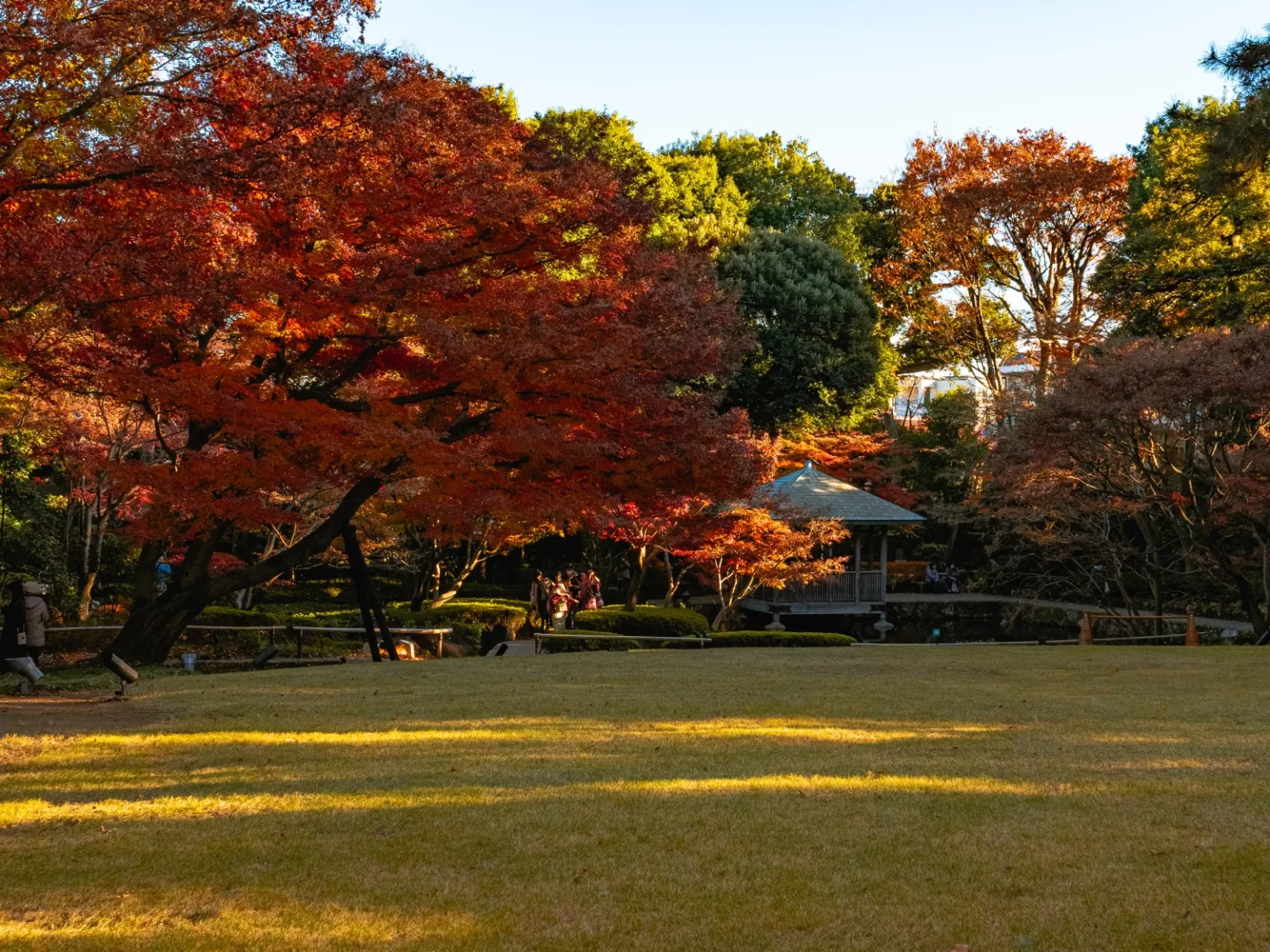
What Otaguro Park is
Suginami City opened the park on 1 October 1981 on the estate of Otaguro Motoo (1893–1979), a pioneering music critic in Japan. Otaguro Motoo moved to Ogikubo in 1933 and lived there until 1979. The city laid out the 8,972 m² site as a kaiyu-shiki garden, a stroll garden with a path that loops round a pond, the first of its kind among Suginami’s ward parks, keeping the large trees that were already there.
Otaguro Motoo studied piano under Hanka Schjelderup Petzold at the Tokyo Music School, went to the University of London in 1912, and came home in 1914 when the First World War began. The park’s site credits Otaguro Motoo with first introducing Debussy and Stravinsky to Japan.
Gate and ginkgo avenue
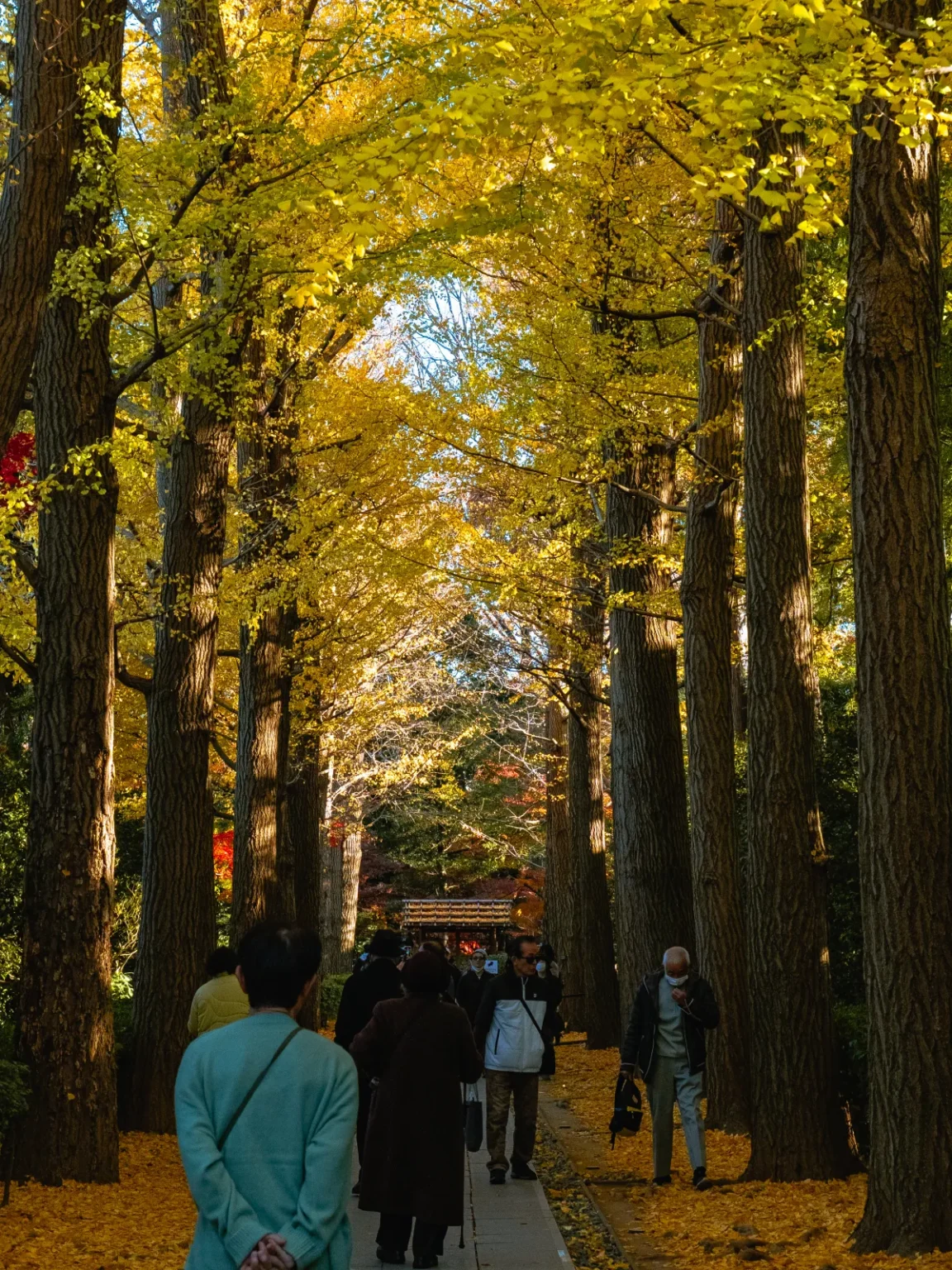
Hinoki gate, then 70 m of granite path under ginkgos over 100 years old.
Tea room and rest house
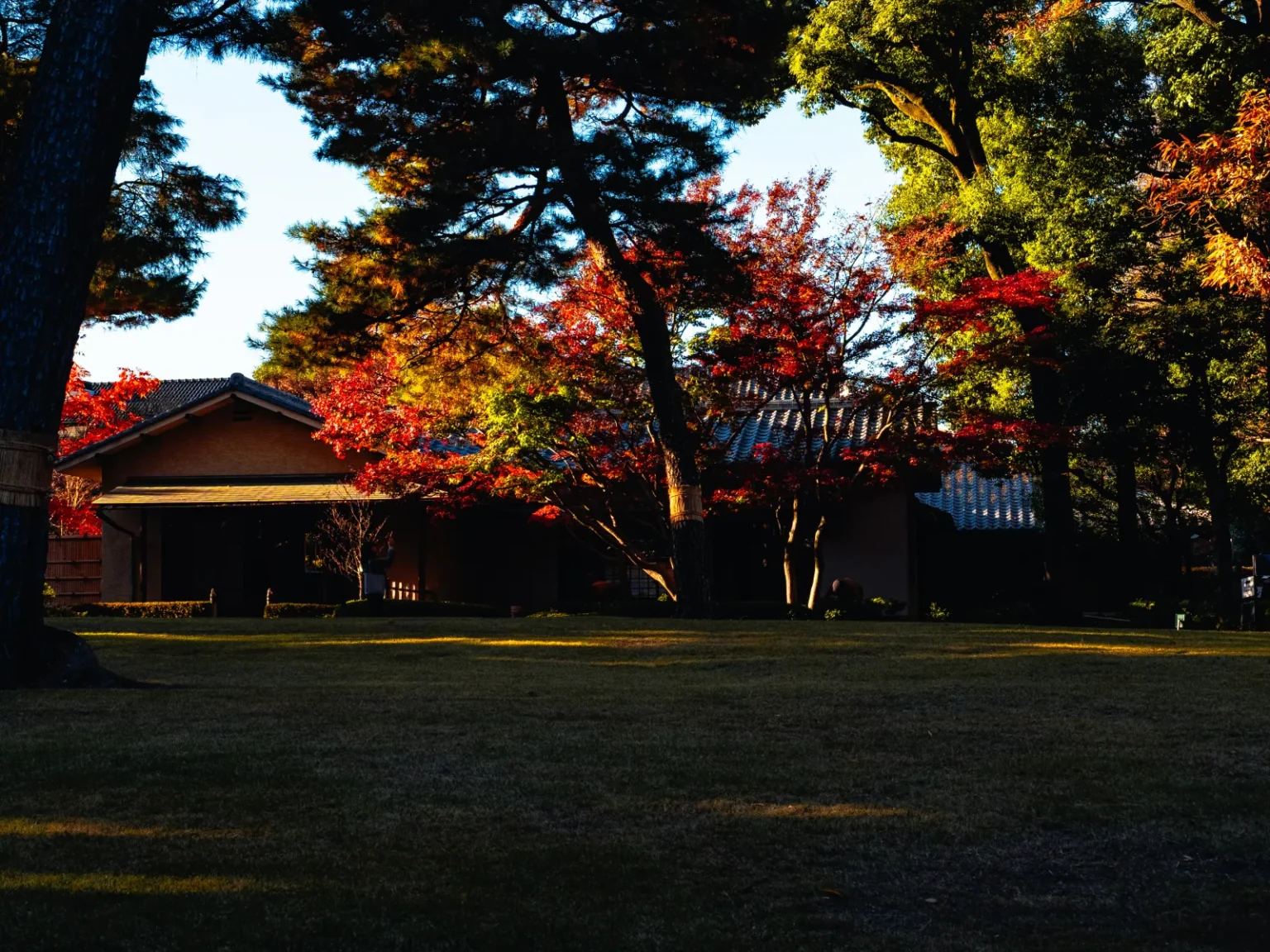
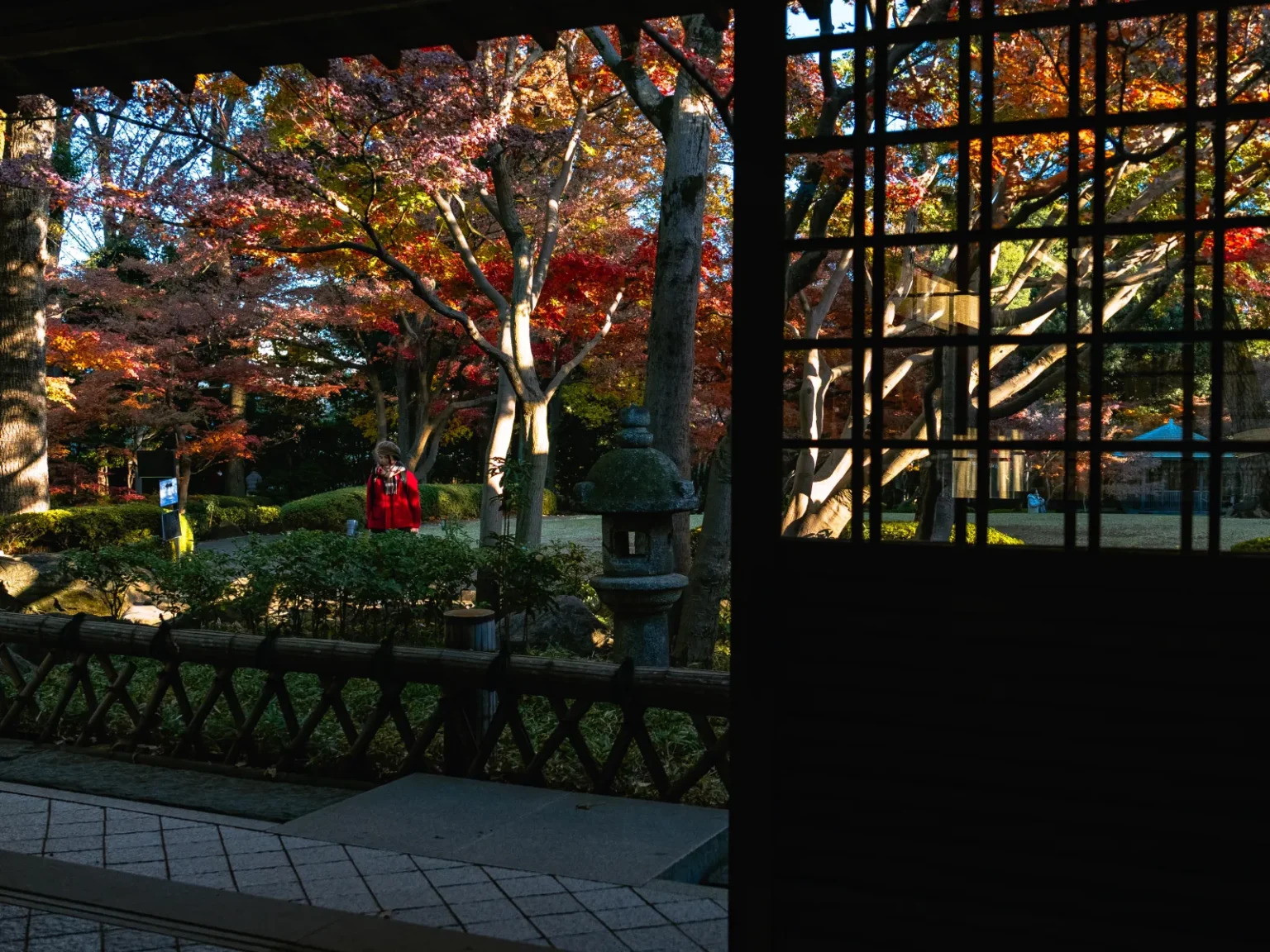
Rest area, 8-mat tea room and park office in one building.
Lawn and pond
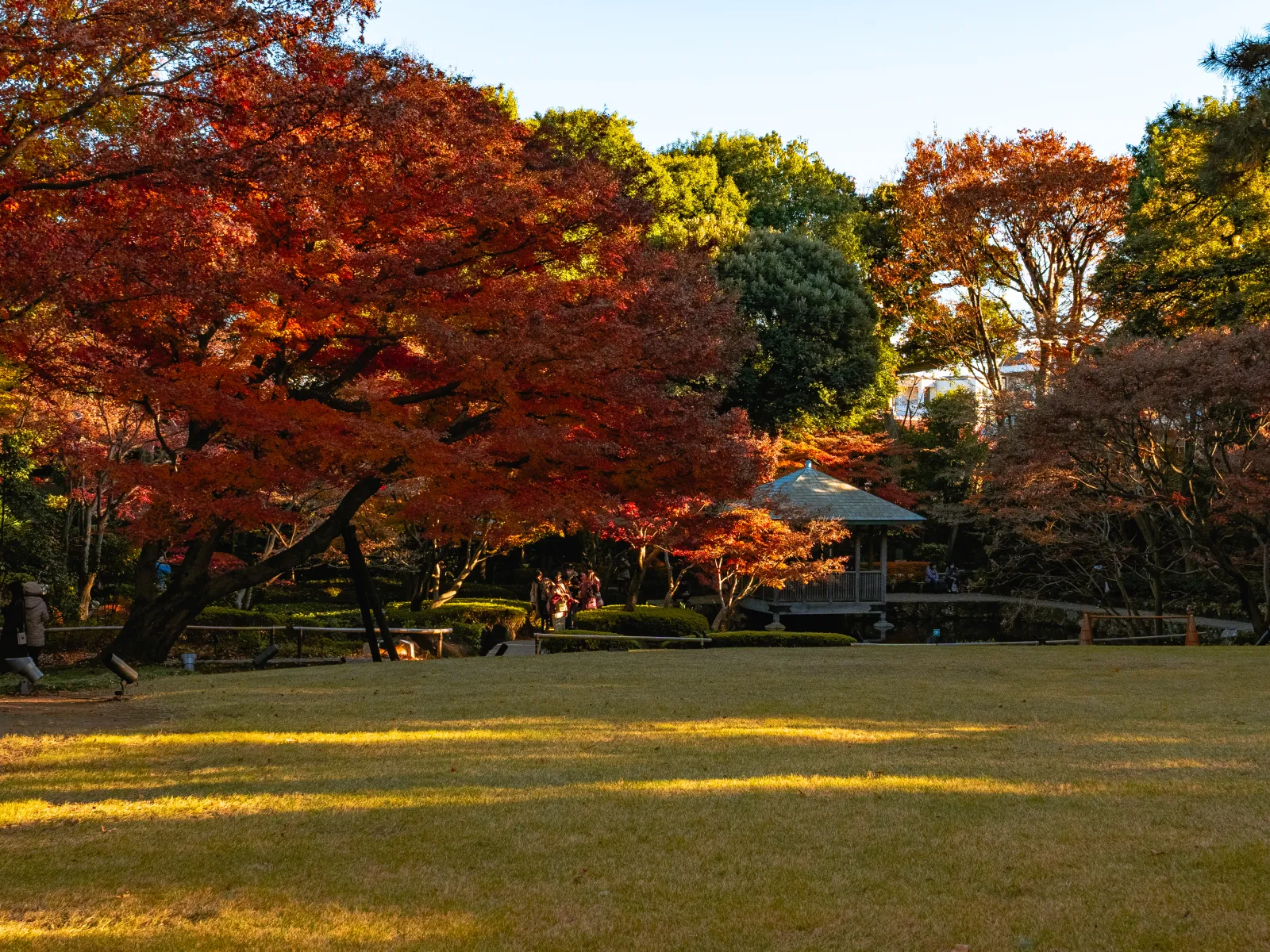
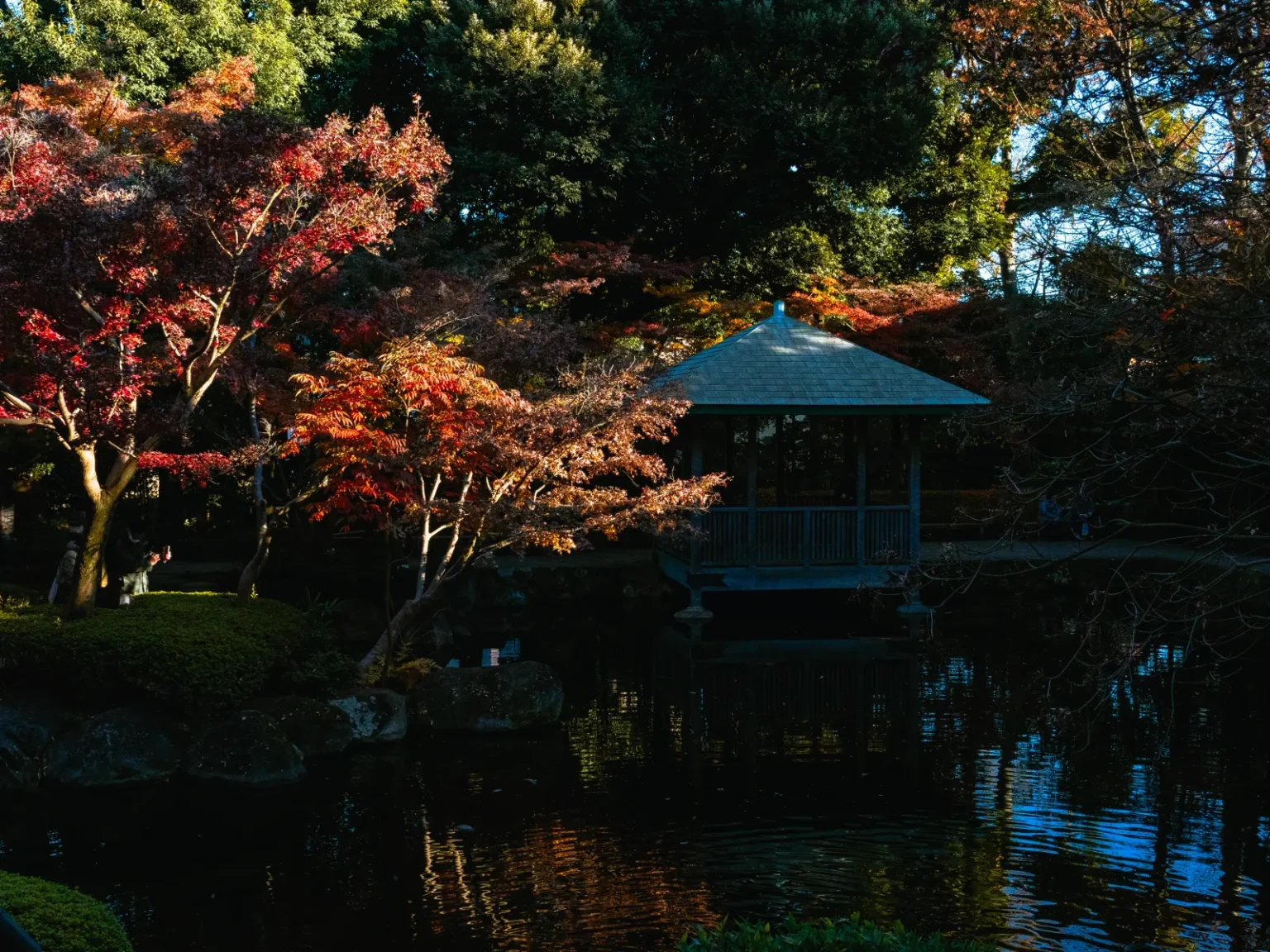
Lawn and red pines sloping to a koi pond with an azumaya.
Memorial hall
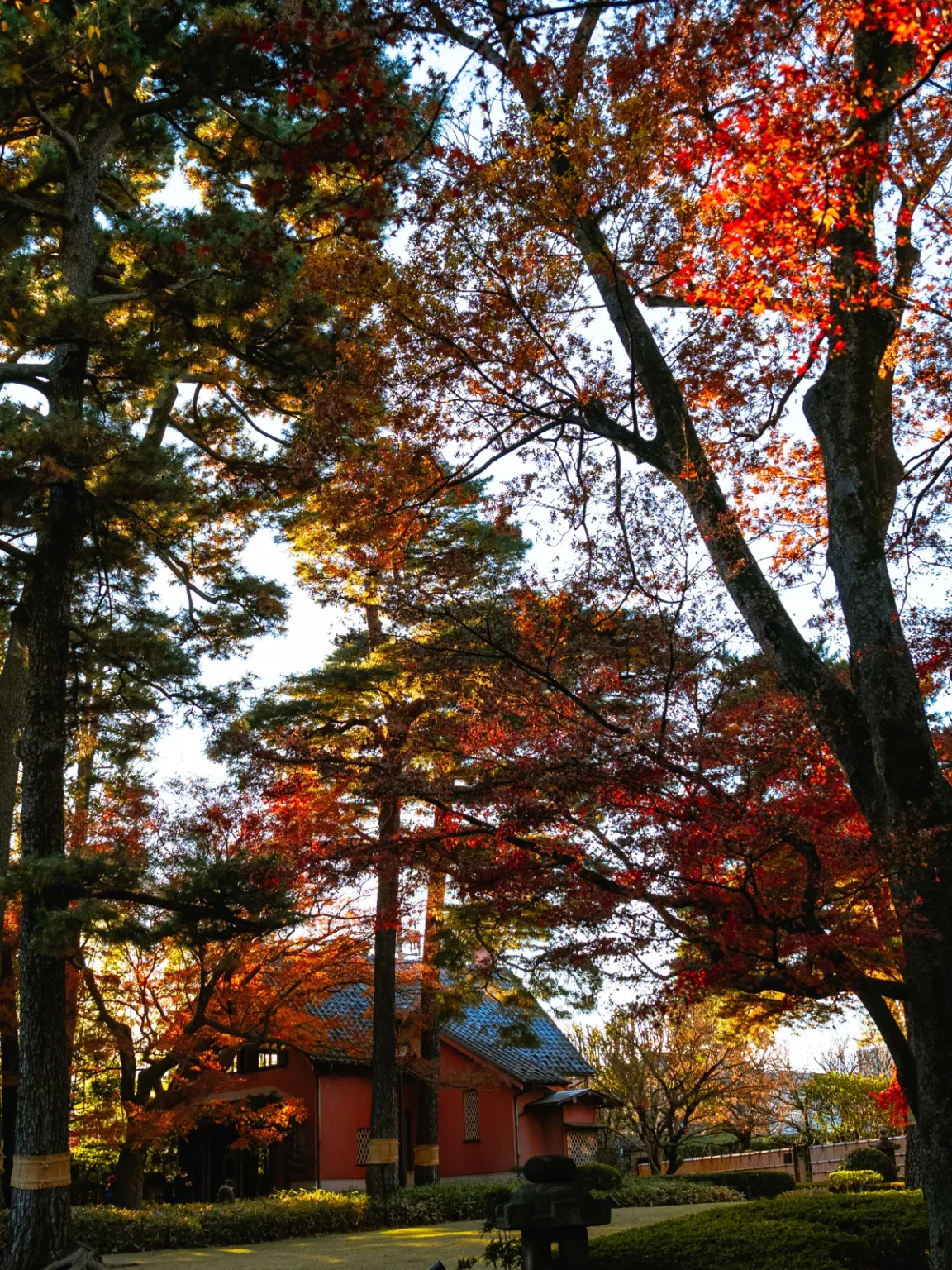
The 1933 Western-style workroom, with a 1900 Steinway.
The gate and the ginkgo avenue
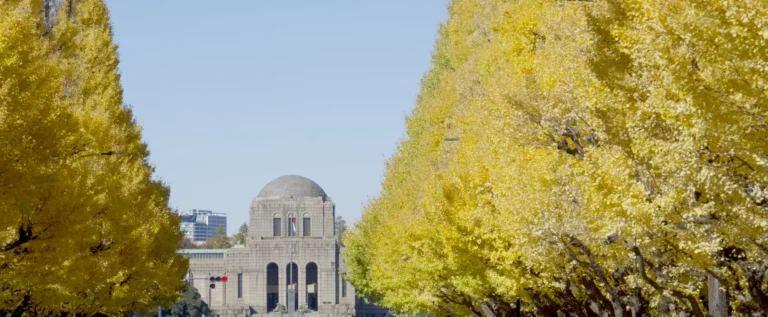
The main gate is built entirely of hinoki, with a tiled gable roof and earthen walls either side. From it a white granite path runs straight for 70 m between ginkgo trees more than 100 years old, then climbs low steps to the tea-room building.
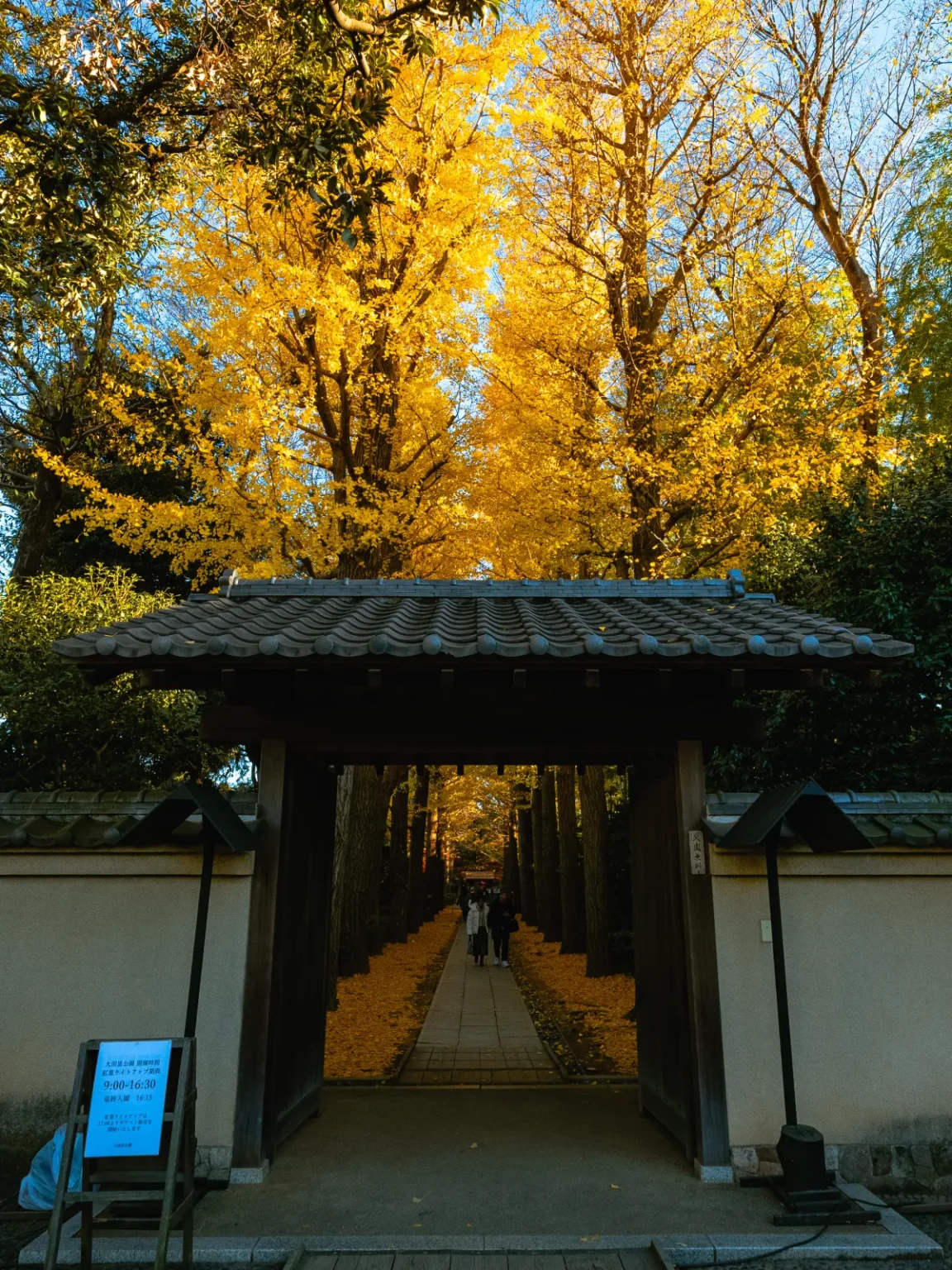
The Japanese notice at the gate said, in translation: “During the autumn light-up: 9:00–16:30, last entry 16:15. Light-up tickets go on sale from 17:00.” Those were the 2025 arrangements.
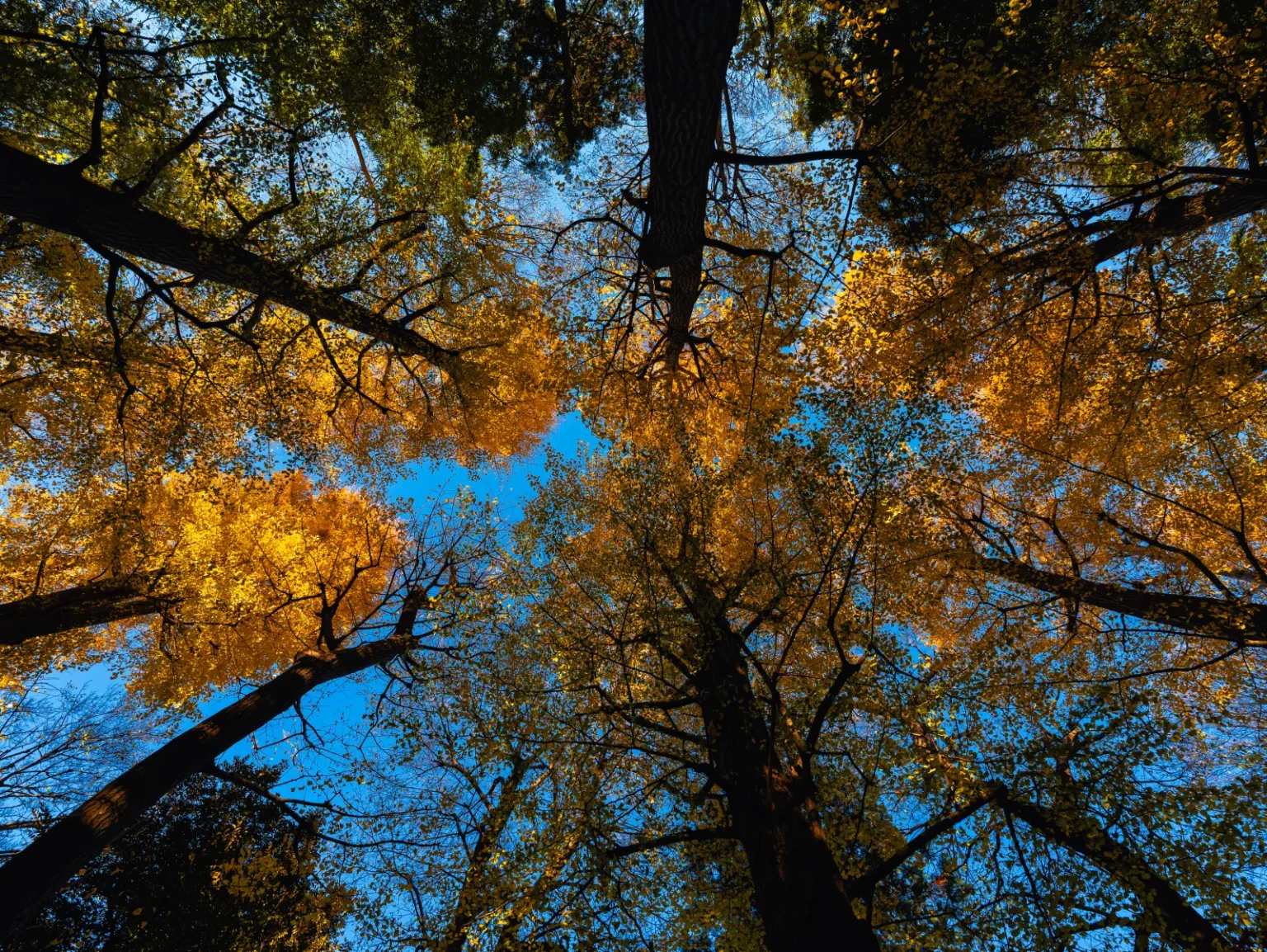
On 5 December 2025 the crowns were still mostly yellow, and fallen leaves lay thick on both sides of the path.

The lawn, the stream and the pond
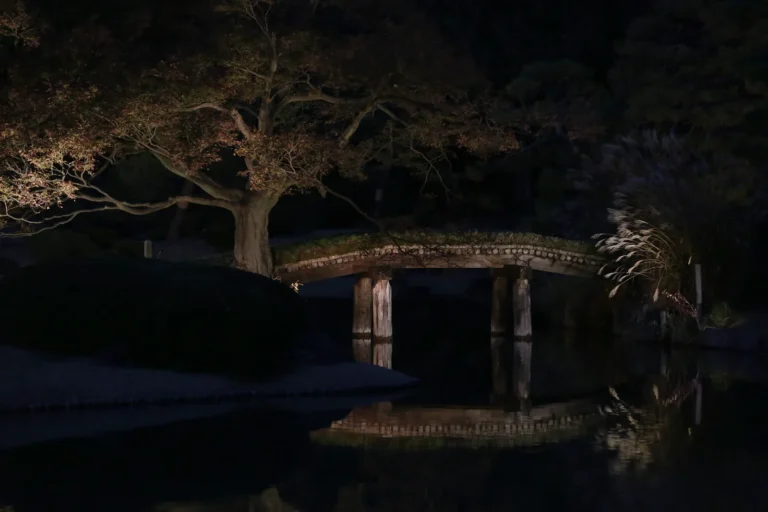
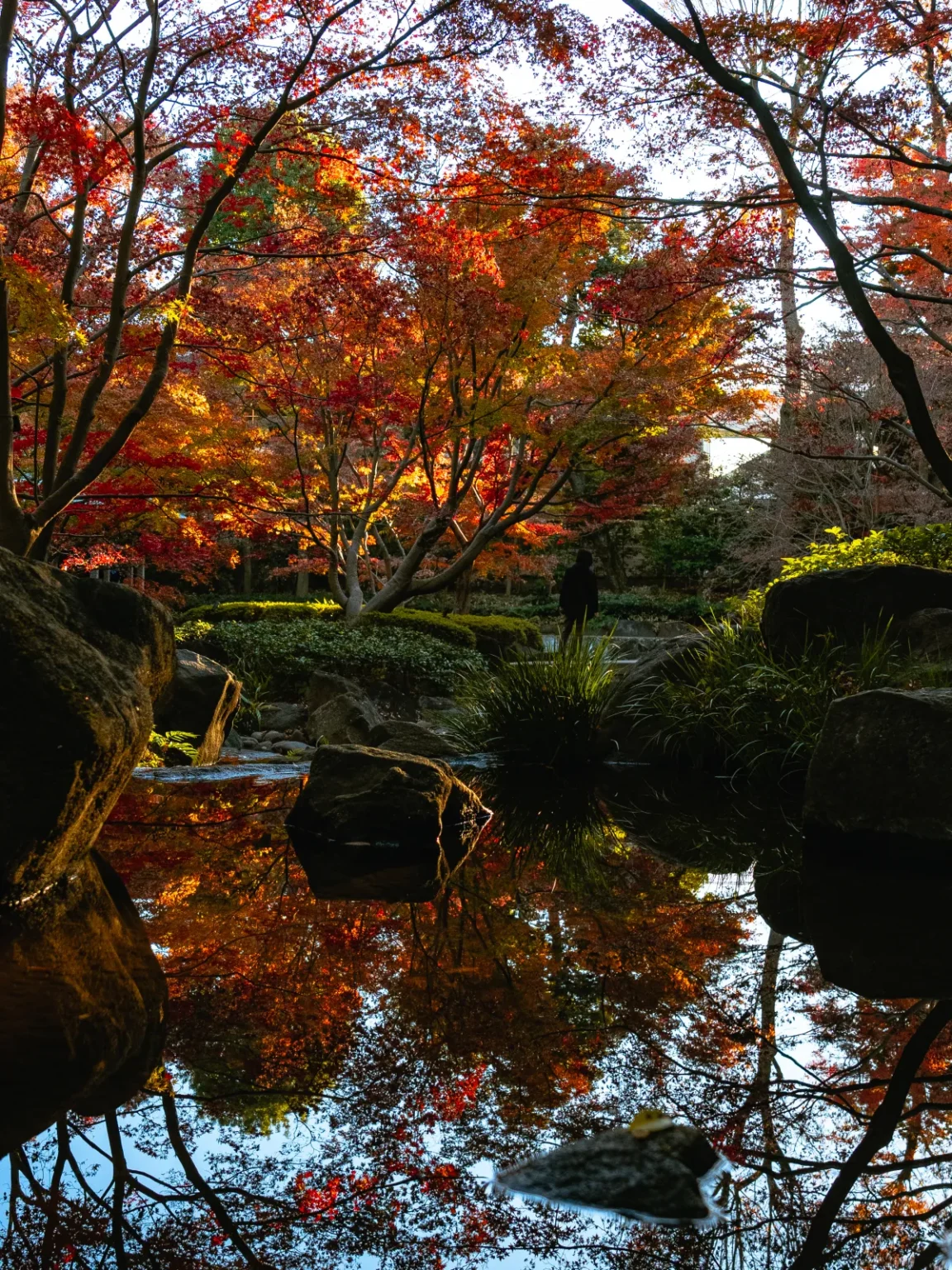
From the tea-room veranda the lawn slopes gently down to the pond. A few red pines stand on it, with bamboo grass at their feet, and oaks and zelkovas grow on its left. A narrow stream from a well in the courtyard behind the tea room circles the building and widens through the trees into the pond, which is edged with Tsukuba stones and planting, has an azumaya pavilion on its bank, and holds nishikigoi koi.

The tea room and rest house
The building at the end of the avenue joins the tea room, a rest area and the park office with a roofed corridor; a large pine beam spans the rest area. The eight-mat tea room, finished in Akita cedar, is rented out through the city’s Sazanka-net booking system.
The memorial hall
On the western side of the lawn stands the brick-coloured building Otaguro Motoo built in 1933 as a workroom, a Western-style building unusual for its time. The two-storey wooden building, renovated in 1981, became a registered tangible cultural property in 2016. Inside are Otaguro Motoo’s books, photographs, a gramophone and a Steinway piano made in 1900, which the park says is believed to have been brought from London. A 2023 city article gives the hall’s opening as 9:00–16:00, an hour shorter than the garden; the current official pages give no separate hours.
Getting to Otaguro Park
Ogikubo Station is served by the JR Chuo Line and the Tokyo Metro Marunouchi Line. The official site gives a 10-minute walk from either. The park’s access map shows it south-east of the station, on the South Exit side. There is no car park, and the city asks visitors not to drive.
From Shinjuku, the JR Chuo Line Rapid runs direct to Ogikubo. JR East’s October 2026 timetable has, for example, the 13:17 from Shinjuku reaching Ogikubo at 13:27 on weekdays and at 13:25 on Saturdays, Sundays and holidays, when it does not stop at Koenji or Asagaya.
If you are staying in Tokyo for the light-up, compare Tokyo hotels on Booking.com, and check the journey time to Ogikubo before you book.
If you want live maps on the walk from Ogikubo Station, a Japan eSIM is one way to get mobile data.
See eSIM optionsWhen the leaves turn
Suginami City gives the autumn-leaf period, when the light-up is held, as the end of November to early December. The Japan Meteorological Agency’s dates below come from its Tokyo observation site, not from this park.
| Source | What it says |
|---|---|
| Suginami City (article of 1 June 2023) | Autumn-leaf period end of November to early December |
| JMA Tokyo normals, 1991–2020 | Ginkgo yellow 23 November; maple red 28 November; ginkgo leaves fallen 3 December |
| JMA Tokyo, 2025 observations | Ginkgo yellow 22 November 2025; maple red 23 November 2025; ginkgo leaves fallen 4 December 2025 |
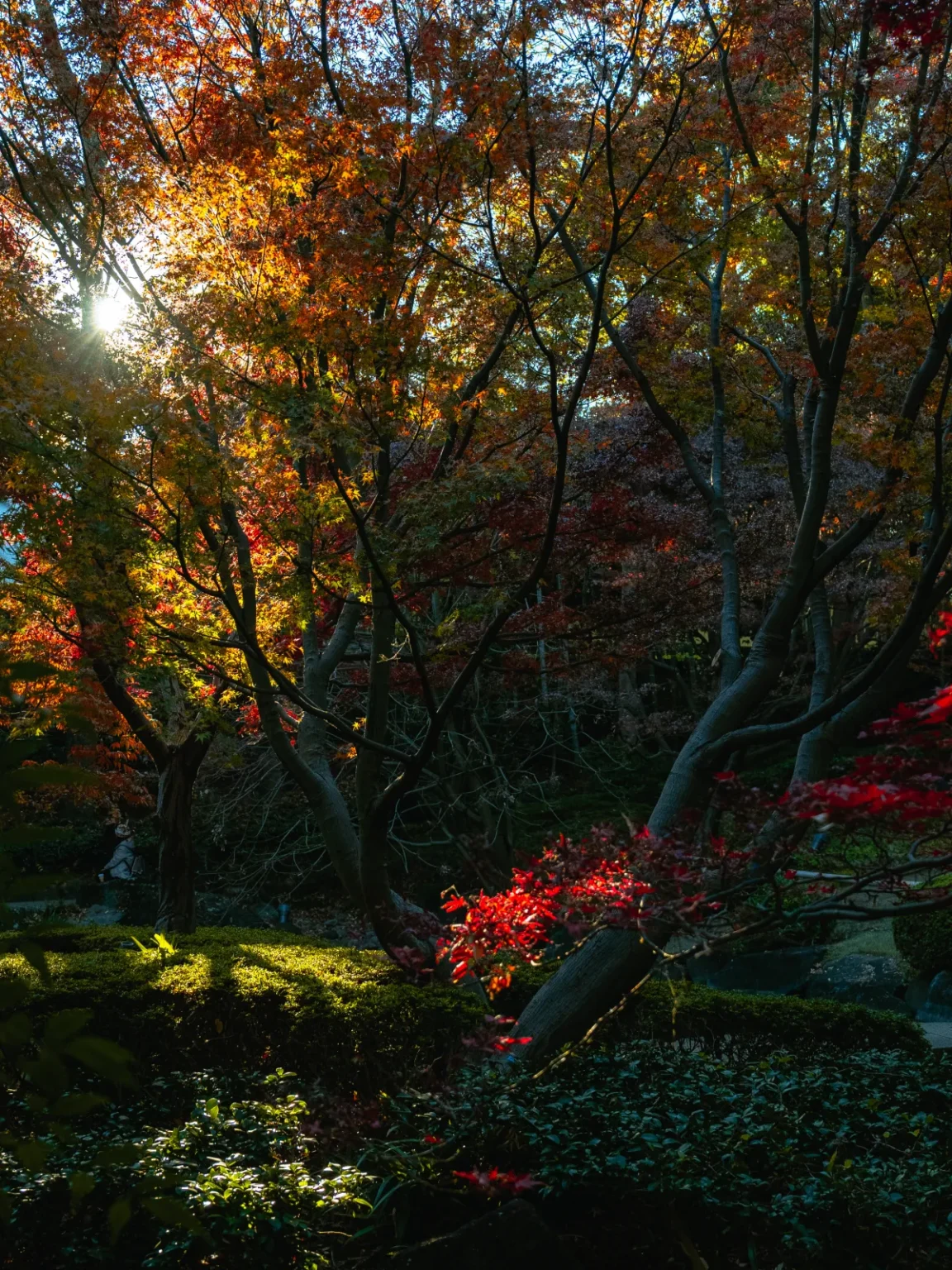
| My photos, 5 December 2025 | Ginkgo avenue still yellow, with a thick layer of fallen leaves; maples red and orange |
The Japan Weather Association publishes a forecast for this park on tenki.jp.
For a day in the mountains the same month, see Nikko’s autumn leaves.
The 2026 autumn light-up
The park announced the 2026 dates on 13 October 2026; further details are to be posted on the same page on or after 1 November. This year the light-up is a partner programme of ARTE TOKYO, an arts festival organised by the Tokyo Metropolitan Government and the Executive Committee for the Tokyo International Festival of Arts and Culture.
| Light-up 2026 | As announced on 13 October 2026 |
|---|---|
| Dates | Friday 27 November to Sunday 6 December 2026 |
| Wednesday 2 December | Open by day and in the evening (Wednesday is normally a closed day) |
| Each day | Everyone leaves at 16:30 and the gate closes; it reopens at 17:00 with the lights on |
| Photo session | Planned for Thursday 26 November 2026; the only day tripods are allowed |
| Evening hours, fee, ticketing, last daytime entry | Not listed when checked on 18 October 2026 |
2025 example, from the city’s press release:
| Light-up 2025 (finished) | Arrangements |
|---|---|
| Dates | Friday 28 November to Sunday 7 December 2025; also open on Wednesday 3 December |
| Monday to Thursday | 17:00–20:00, last entry 19:45 |
| Friday to Sunday | 17:00–21:00, last entry 20:30 |
| Evening fee | ¥300 general, ¥100 primary and junior-high pupils, preschool children free; daytime entry free |
| Photo session | Thursday 27 November 2025, 17:30–20:00, ¥500, no booking needed |
| Tickets | Sold from 17:00 (notice at the gate, 5 December 2025) |
Neither the 2025 release nor the 2026 notice mentions advance booking. The city’s 2024 event page added that entry might be limited when necessary.
An afternoon at Otaguro Park
I took the photos in this post between about 14:38 and 15:02 on 5 December 2025: the low sun lights the ginkgo crowns and throws long shadows across the lawn, and parts of the pond are already in shade. The National Astronomical Observatory of Japan gives Tokyo sunset at 16:28 that day, and at 16:28 or 16:29 on every day of the 2026 light-up.
| Time | A light-up-week afternoon (2026) |
|---|---|
| 13:17 | JR Chuo Line Rapid from Shinjuku; Ogikubo at 13:25–13:27 (October 2026 timetable) |
| 13:30 | Leave Ogikubo Station on the South Exit side; walk about 10 minutes |
| 13:45 | Main gate and the ginkgo avenue |
| 14:30 | Lawn, stream and pond; the azumaya |
| 15:00 | Memorial hall and rest house; check the hall’s current opening hours before relying on entry |
| 15:45 | Back along the ginkgo avenue to the gate |
| 16:30 | Everyone leaves and the gate closes (2026 notice); the last daytime entry for 2026 is not yet listed |
| 17:00 | The gate reopens with the lights on; evening hours, fee and ticketing not yet announced (further details on or after 1 November 2026) |
From Shinjuku Station, the JR Chuo Line Rapid takes 8–10 minutes to Ogikubo (13:17 departure, October 2026 timetable).
Tokyo hotels on AgodaRules and facilities
- Toilets, intercom, AED: toilets, including an accessible toilet, and a toilet with a baby bed and baby chair; an intercom and an AED on site (Suginami facility page, updated 9 September 2025).
- Lawns and planting: visitors cannot go onto the lawns or into the planting, and there is no play equipment (2023 city article).
- Tripods: see the light-up section; rules outside that period were not stated on the pages checked.
- Organised shoots: location filming and photo shoots are not permitted during the light-up period and the days around it (Suginami facility page).
- Pets, food and drink: not mentioned on the official pages checked on 18 October 2026. Ask the park office: 03-3398-5814.
Two more gardens nearby
The official access map places two more city gardens south of Otaguro Park. Both are a 15-minute walk from Ogikubo Station and list 9:00–17:00 hours, last entry 16:30. They normally close on Wednesdays and from 29 December to 1 January, although Tekigaiso’s lawn closes only over the New Year. All three gardens open on Wednesday 4, 11, 18 and 25 November and 2 December 2026.
Tekigaiso
Built in 1927 to a design by Ito Chuta; home of three-time prime minister Konoe Fumimaro from 1937. A national historic site since 2016. House admission ¥300 adults; shoes off inside.
Kadokawa Garden
Former home of Kadokawa Gen’yoshi, founder of the publisher Kadokawa and a haiku poet; a 1955 house open since 2009, with a garden planted for haiku.
Questions travellers ask
When are the autumn leaves best at Otaguro Park?
Suginami City gives the end of November to early December; the JMA Tokyo normals in the table above are from its own observation site. On 5 December 2025 the ginkgo avenue was still yellow and the maples red and orange.
Is there a light-up in 2026, and how will entry work?
The light-up is scheduled for Friday 27 November to Sunday 6 December 2026, with the gate reopening at 17:00. The 2026 evening hours, fee and ticketing were not listed when checked on 18 October 2026; the park says further details are to be posted on or after 1 November. In 2025 adults paid ¥300, tickets went on sale at 17:00, and the city’s release did not mention advance booking.
Is Otaguro Park free?
Daytime entry is free. The 2026 light-up fee has not been announced; evening entry was charged in 2025 (¥300 for adults). On light-up days everyone leaves at 16:30 before the evening opening.
How do I get there from Shinjuku?
Take the JR Chuo Line Rapid to Ogikubo (the 13:17 from Shinjuku takes 10 minutes on weekdays and 8 at weekends and holidays on the October 2026 timetable), then leave on the South Exit side and walk about 10 minutes south-east. The Tokyo Metro Marunouchi Line also stops at Ogikubo.
How long do I need?
No official time is given. The garden covers about 9,000 m², and the afternoon plan above runs from 13:45 to the 16:30 closing. The photos in this post took about 24 minutes and are not a guide to visit length.
Can I use a tripod?
Not during the 2026 light-up period, by day or by night; a monopod is allowed. A separate photo session planned for Thursday 26 November 2026, the day before the light-up starts, permits tripods.
Tokyo Autumn Light-Ups 2026
Night gardens across Tokyo, with dates and tickets.
Tokyo Autumn Leaves
City gardens to Mount Takao, and when each turns.
Tokyo in November 2026
Weather, autumn-leaf timing and what’s on.
Sources
- Checked 18 October 2026 — Ogikubo Three Gardens (official site): Otaguro Park (history, hours, closed days, memorial hall, tea room, garden map and access map); Otaguro Park autumn light-up 2026 (13 October 2026); autumn Wednesday openings (13 October 2026); Tekigaiso; Kadokawa Garden
- Checked 18 October 2026 — Suginami City: facility page, Otaguro Park (updated 9 September 2025); parks with special features (28 March 2024); Suginami parenting site article on Otaguro Park (1 June 2023); press releases light-up 2025 (27 November 2025) and light-up 2024 (28 November 2024); event page, light-up 2024
- Checked 18 October 2026 — Japan Meteorological Agency, phenology: ginkgo yellowing, ginkgo leaf fall, maple colouring (2025 dates and differences from the 1991–2020 normals)
- Checked 18 October 2026 — National Astronomical Observatory of Japan, sunrise and sunset for Tokyo: November 2026, December 2026, December 2025
- Checked 18 October 2026 — JR East timetable, October 2026: Ogikubo, Chuo Line Rapid, westbound; trains 13:17 from Shinjuku (weekdays) and 13:17 from Shinjuku (Saturdays and holidays)
Join travelers discovering Japan's hidden side
Weekly dispatches from off-the-beaten-path Japan — spots and stories you won't find in guidebooks.
No spam. Unsubscribe anytime.
Welcome aboard!
You're in. See you in your inbox soon.