
Nagano · Togakushi Shrine · Opening and closing dates
Togakushi Shrine is open. The Okusha (the inner shrine) and Kuzuryusha at the top of the Okusha approach reopened on 21 April 2026, the other three shrines are open, and no closure has been announced as of 15 October 2026. This autumn there are three notices: drainage work on part of the Okusha approach with a signposted detour, closed toilets at two car parks, and a one-way rule on the road round Kagami-ike pond until 3 November. You can still walk to the Okusha and pray as normal; allow a little extra time and plan your toilet stops. This page tracks what is open now, what to expect this winter, and how the 2026 season went.
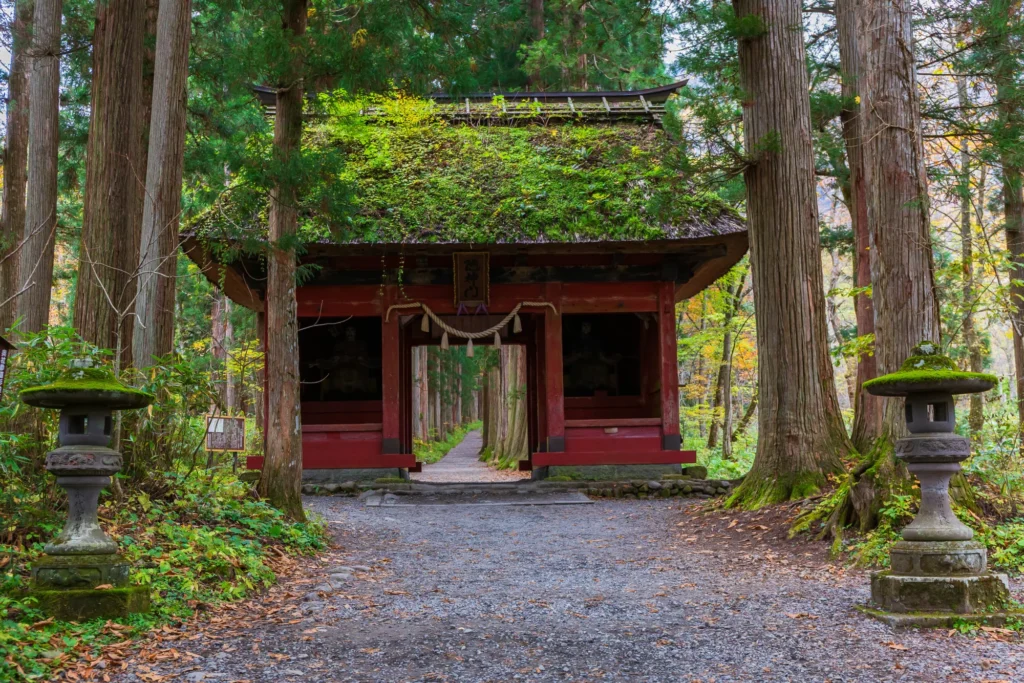
Is Togakushi Shrine open now?
Yes. Here is each part of the shrine as of 15 October 2026, with what happened last winter. The 2026–27 winter dates have not been announced, and they move from year to year.
| Shrine or place | Now, and last winter (2025–26) |
|---|---|
| Okusha (inner shrine) and Kuzuryusha | Now: Open; office for amulets and goshuin 9:00–17:00 (in 2025 it went to 9:00–16:00 from 1 November). Last winter: Closed on 7 January 2026; reopened on 21 April 2026. |
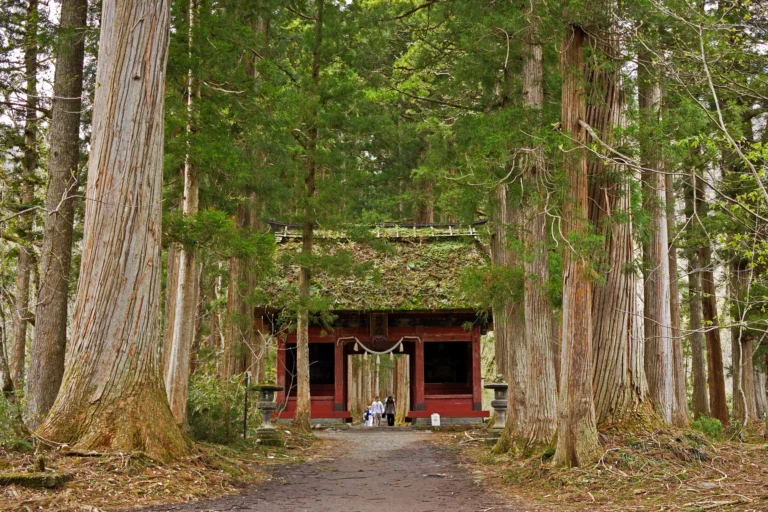
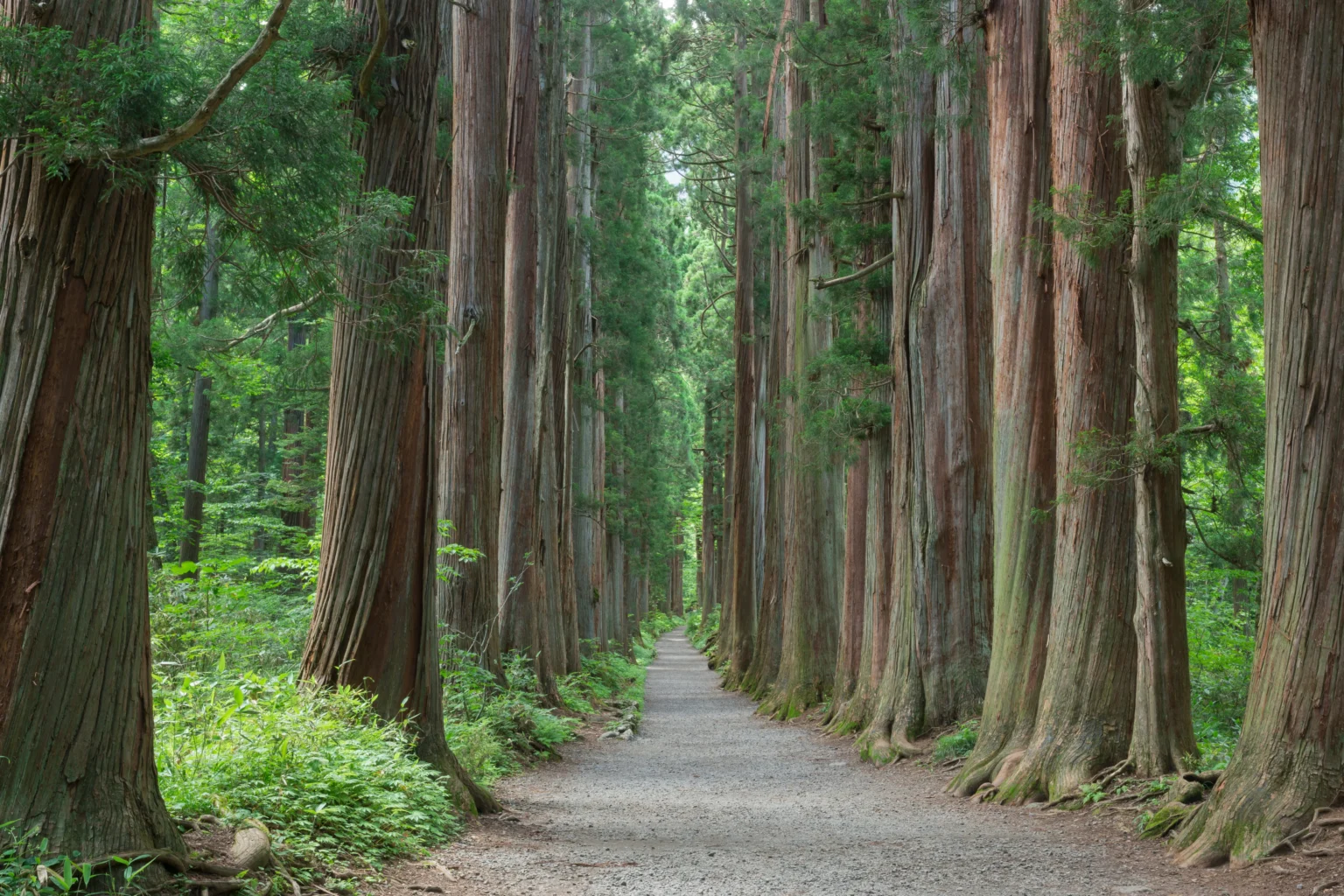
| Okusha approach and cedar avenue | Now: Open, with a signposted detour round the drainage work. Last winter: No entry beyond Zuishinmon gate from 7 January 2026 until the spring reopening. |
| Chusha (middle shrine) | Now: Open. Last winter: Open all winter. The Okusha and Kuzuryusha spirits were enshrined here, and their amulets and goshuin were given here and at the Okusha-no-Chaya tea house. |
| Hokosha (lower shrine) | Now: Open. Last winter: Office closed on 18 December 2025 and reopened on 24 April 2026; you could still pray there. |
| Hinomikosha | Now: Open (no office of its own). Last winter: Open. |

What do this autumn’s notices mean for a visit?
You can still walk the approach, see the cedars and pray at every shrine. Here is what to expect on the day.
Drainage work on the Okusha approach
From 13 October 2026 the shrine is building drains for rain and spring water on part of the 2 km approach, to protect the cedar avenue. It has not said which stretch or when the work ends. Worship continues as normal: follow the signs and staff onto the detour, and watch your footing.
Toilets closed at two car parks
The toilets at the Okusha entrance and the Chusha west car park are closed for renovation until mid-January 2027 (planned). Only a few temporary toilets are planned, so the tourism association suggests other public toilets, including the one on the Okusha approach and the one in the Chusha grounds. Go before you set off.
Kagami-ike pond road is one way
From 10 October to 3 November, 9:30–16:00, cars can enter the Kagami-ike road only from the Hokosha side, not from the Chusha and Okusha side. There is no shuttle bus this year. If you are only driving to the Okusha, stay on prefectural road 36.
When does the Okusha close for winter 2026–27?
Not announced yet. This is how last winter went; the dates change from year to year (in 2025 the Okusha reopened on 24 April, in 2026 on 21 April).
| Date | What happened |
|---|---|
| 1 November 2025 | Okusha office moved to winter hours, 9:00–16:00 |
| 1 December 2025 | Formal prayer services (kito) at the Okusha and Kuzuryusha were suspended until the spring reopening |
| 18 December 2025 | Hokosha office closed for winter; visitors could still pray there |
| 7 January 2026 | Okusha and Kuzuryusha closed. The tourism association banned all entry beyond Zuishinmon gate, including snowshoe treks and guided tours |
| 23–28 March 2026 | The approach was closed from just below Zuishinmon to the Okusha while hazardous trees were felled |
| 21 April 2026 | Okusha and Kuzuryusha reopened. The shrine does not announce the date in advance |
The tourism association gave the reason as visitor safety: avalanches and falling snow, ice and branches on the approach. Last winter you could bow towards the Okusha from the approach entrance or from the prayer spot inside the Okusha-no-Chaya tea house.
The 2026 reopening in 9 dates
How spring 2026 unfolded, from the tourism association’s 6 April schedule and the shrine’s own notices. The dates change each year.
| Date | What happened |
|---|---|
| 11 April | Togakushi Soba Museum Tonkururin |
| 18 April | Kagami-ike Donguri House cafe |
| 18 April | Togakushi Bamboo Craft Center |
| 20 April | Opening ceremony at Chusha, the Okusha and Kuzuryusha |
| 21 April | Okusha and Kuzuryusha open to visitors |
| 24 April | Hokosha office |
| 25 April | Togakushi Folk Museum, Ninja Museum and Karakuri House |
| 25 April | Togakushi Forest Botanical Garden and the campgrounds |
| June (no date given) | Togakushi Ranch |
How do you get to Togakushi Shrine?
Sightseeing express bus
Alpico’s express leaves Nagano Station from bay 7 and reaches the Okusha entrance in 59 minutes for ¥2,500. Eleven buses a day, 6:50 to 14:10; the last one back leaves the Okusha entrance at 16:24. The tourism association advises finishing walks by about 15:00 because of bears, so to walk to the Okusha and back, take a bus by about 11:50. Book seats online up to a month ahead; without a booking you can board only if there is a free seat. IC cards are not accepted.
Route 70 local bus
Five buses on weekdays, ending at Chusha, not the Okusha entrance. Alpico asks sightseers to use the express so commuters and students get seats. Route 73 closed on 30 September 2025.
By car
About an hour from Nagano IC through the city and up the Nanamagari hairpins (the Togakushi Bird Line); large vehicles must use the Asakawa Loop Line. Okusha first car park: about 100 spaces; standard cars ¥800 for 3 hours, then ¥100 an hour, up to ¥1,200 for 24 hours.
What is happening in 2027?
The Shikinen Taisai, the shrine’s grand festival held in the years of the ox and the sheep, runs from 25 April to 25 May 2027. The procession out is on 9 May, a ceremony at the Okusha on 15 May, and the procession back on 23 May. Expect much bigger crowds than usual in those weeks.
For the walk itself, the five shrines and when to go, see our Togakushi Shrine cedar path and five-shrine guide. For big cedars in winter, look at Suwa Taisha’s four shrines in Nagano, or Kitaguchi Hongu Fuji Sengen Shrine near Mt Fuji, with its giant sacred cedars.
Questions travellers ask
Is Togakushi Shrine closed now?
No. As of 15 October 2026 all five shrines are open, including the Okusha and Kuzuryusha, which reopened on 21 April 2026. Drainage work on part of the Okusha approach means a signposted detour, but worship continues as normal.
When does the Okusha close for winter?
The 2026–27 dates have not been announced. Last winter the Okusha and Kuzuryusha closed on 7 January 2026 and reopened on 21 April 2026; the year before, they reopened on 24 April. The shrine does not announce the reopening date in advance.
Can I walk the cedar avenue in winter?
Not while the winter restrictions are in force. From 7 January 2026 there was no entry beyond Zuishinmon gate, where the cedar avenue starts, and that included snowshoe treks and guided tours. Chusha stays open all winter.
Does the drainage work affect a visit?
A little. From 13 October 2026 there is a signposted detour round the work on part of the approach. The shrine says worship continues as normal and asks visitors to use the detour and mind their footing. It has not given an end date.
Are there toilets at the Okusha entrance?
The permanent ones are closed. The toilets at the Okusha entrance and the Chusha west car park are closed for renovation until mid-January 2027 (planned). Only a few temporary toilets are planned, so use the other public toilets, such as the one on the Okusha approach or in the Chusha grounds.
Do I need to book the bus to Togakushi?
Booking is strongly advised. Seats on Alpico’s sightseeing express are booked online up to a month ahead; without a booking you can board only if there is a free seat. It is ¥2,500 and 59 minutes from Nagano Station to the Okusha entrance.
How much is parking at the Okusha?
The Okusha first car park has about 100 spaces. Standard cars pay ¥800 for the first 3 hours, then ¥100 an hour, up to ¥1,200 for 24 hours. There is a second car park with about 50 spaces.
Do I have to pay to visit Togakushi Shrine?
The shrine lists no admission fee for visiting the five shrines. Goshuin, amulets and some parking, including the Okusha first car park, cost extra.
Plan the trip
Sleeping in Nagano the night before lets you take one of the first express buses up.
Related reading
Togakushi Shrine cedar path and five shrines
The walk to the Okusha, the five shrines, etiquette and the best months.
Zenkoji Temple, Nagano
The big temple in Nagano city, about 15 minutes by bus from the station plus a short walk.
Nagano in winter: 4 days
Snow monkeys, Zenkoji and Nozawa Onsen, for when the Okusha is closed.
Sources
- Checked 15 October 2026 — Togakushi Shrine: news (drainage work from 13 October 2026; toilets, 19 September 2026; Okusha winter hours from 1 November 2025; prayer services suspended from 1 December 2025; Hokosha closed from 18 December 2025; Okusha closed from 7 January 2026; tree felling 23–28 March 2026; Hokosha office from 24 April 2026; opening ceremony 20 April and reopening 21 April 2026); access; five-shrine visit; about
- Checked 15 October 2026 — Togakushi Tourism Association: autumn 2026 one-way rules; toilet renovation; winter closure, 7 January 2026; winter 2025–26 guide; spring 2026 opening dates; Okusha reopening; parking; buses and discontinued tickets; Shikinen Taisai 2027; seasons
- Checked 15 October 2026 — Alpico Kotsu: sightseeing express Togakushi line; route 70 timetable. JR East: Hokuriku Shinkansen journey times. Zenkoji: access
Join travelers discovering Japan's hidden side
Weekly dispatches from off-the-beaten-path Japan — spots and stories you won't find in guidebooks.
No spam. Unsubscribe anytime.
Welcome aboard!
You're in. See you in your inbox soon.