Yamanashi · Fujiyoshida · Lotus & Hydrangea
Asumiko Pond — written 明見湖 and known to almost everyone simply as Hasu-ike, “the lotus pond” — is a small natural lake in Fujiyoshida, the town at the foot of Mt Fuji, where roughly 20,000 lotus plants cover the water and a hillside of about 1,500 hydrangea climbs the bank. I went on 23 June 2026: the hydrangea were already well underway — the city’s flower report still listed them as just starting that week — while the lotus was still all leaves, holding out for its mid-to-late-summer bloom.
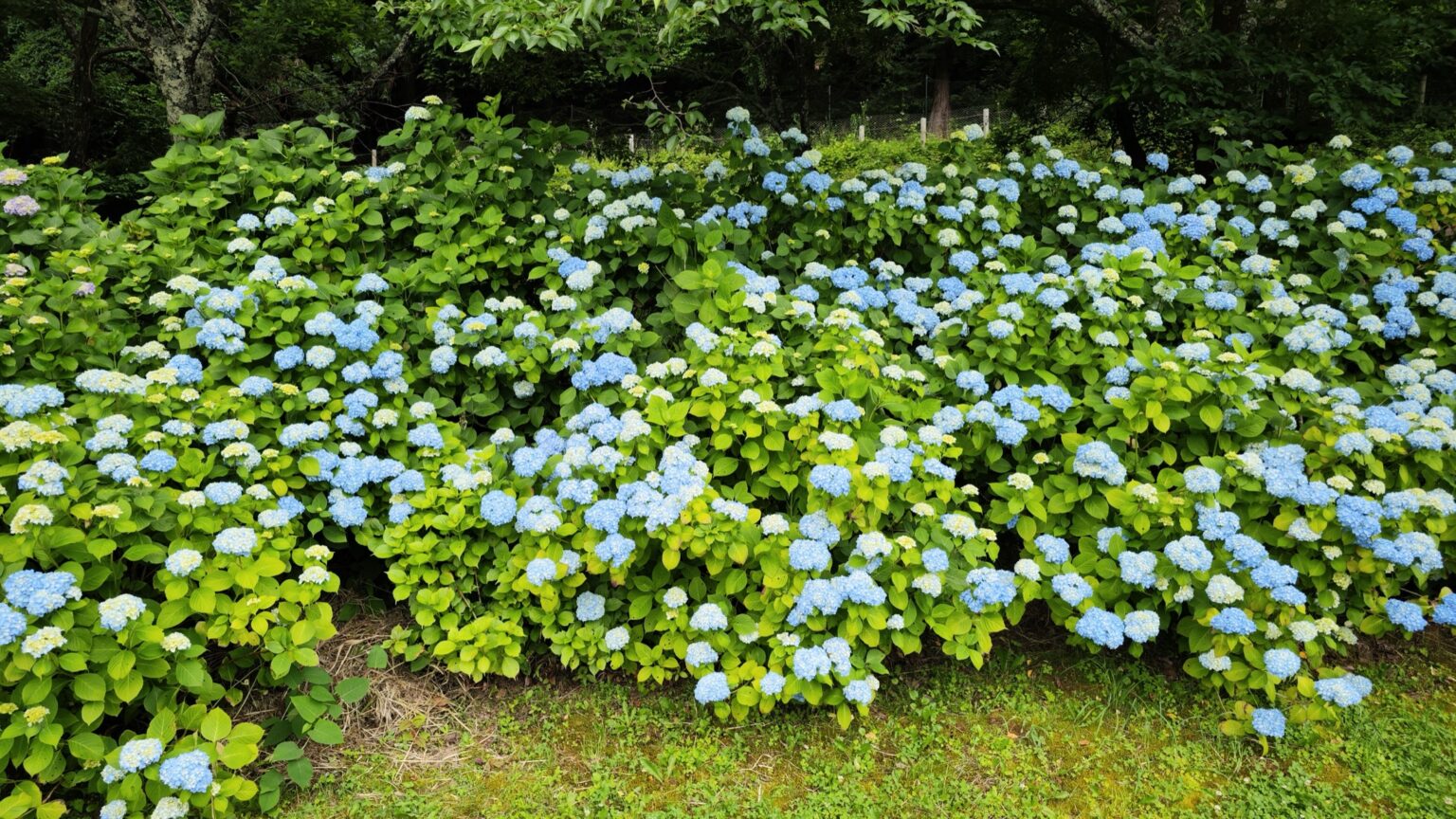
The hydrangea slope
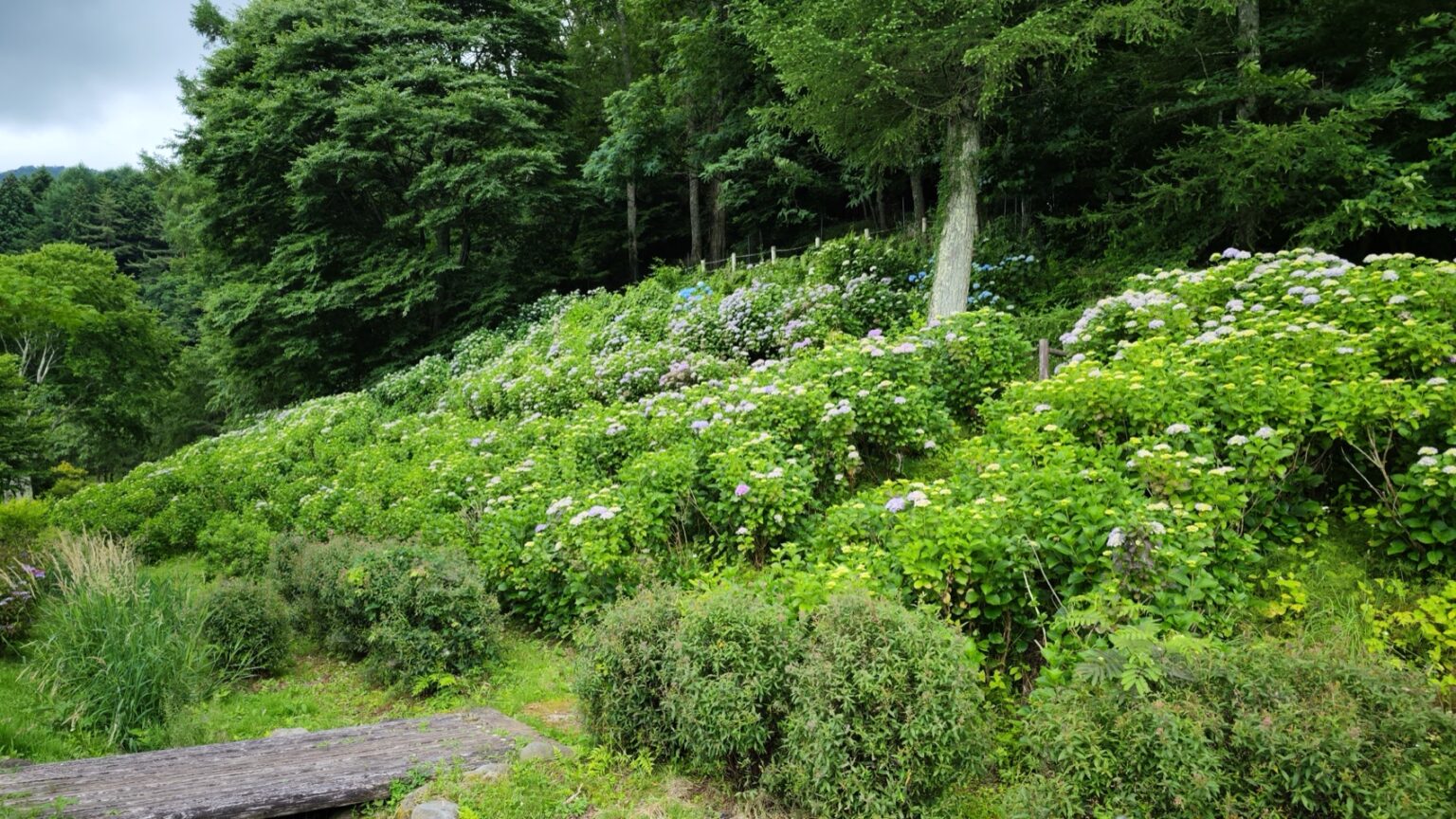
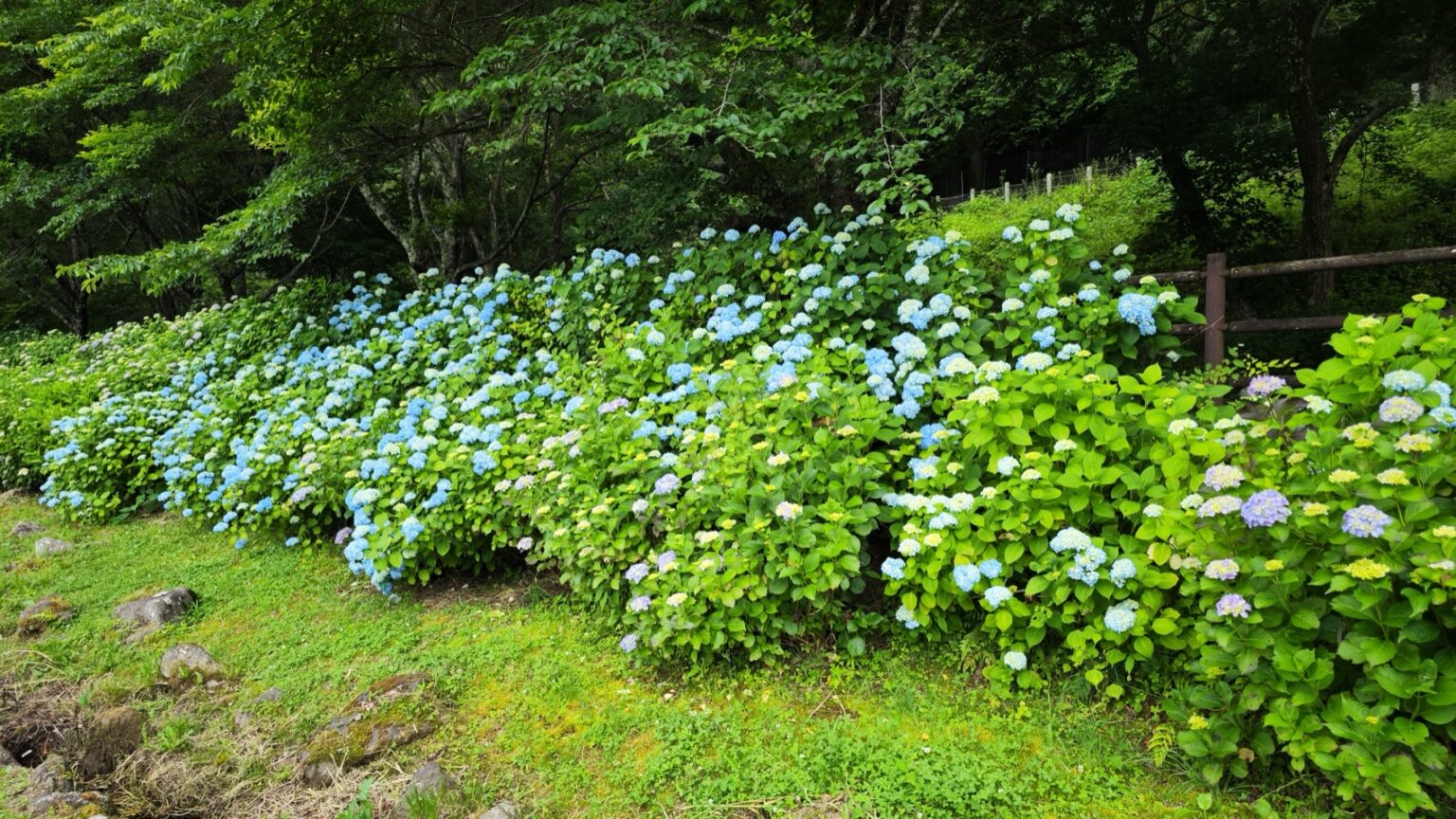
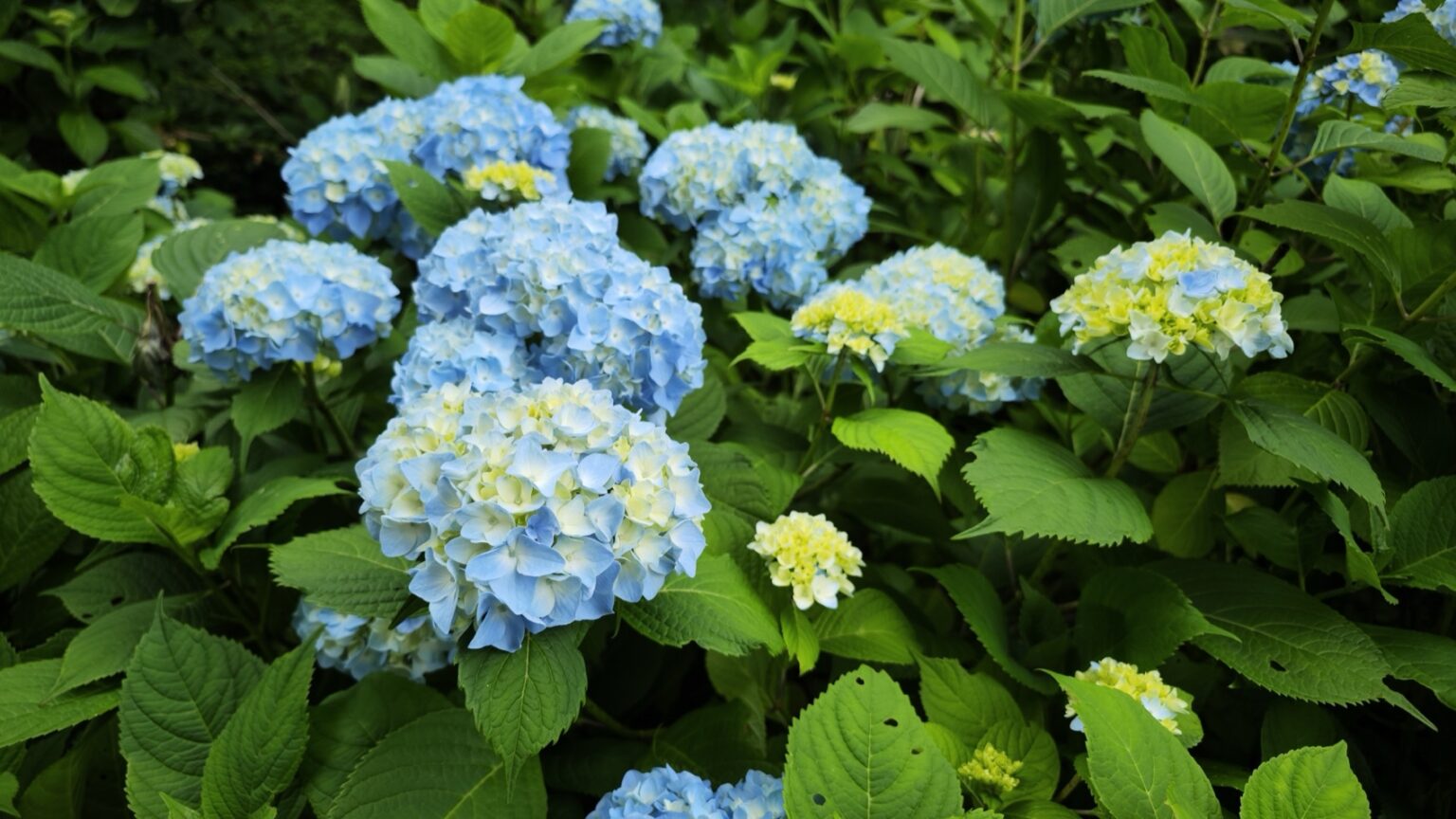
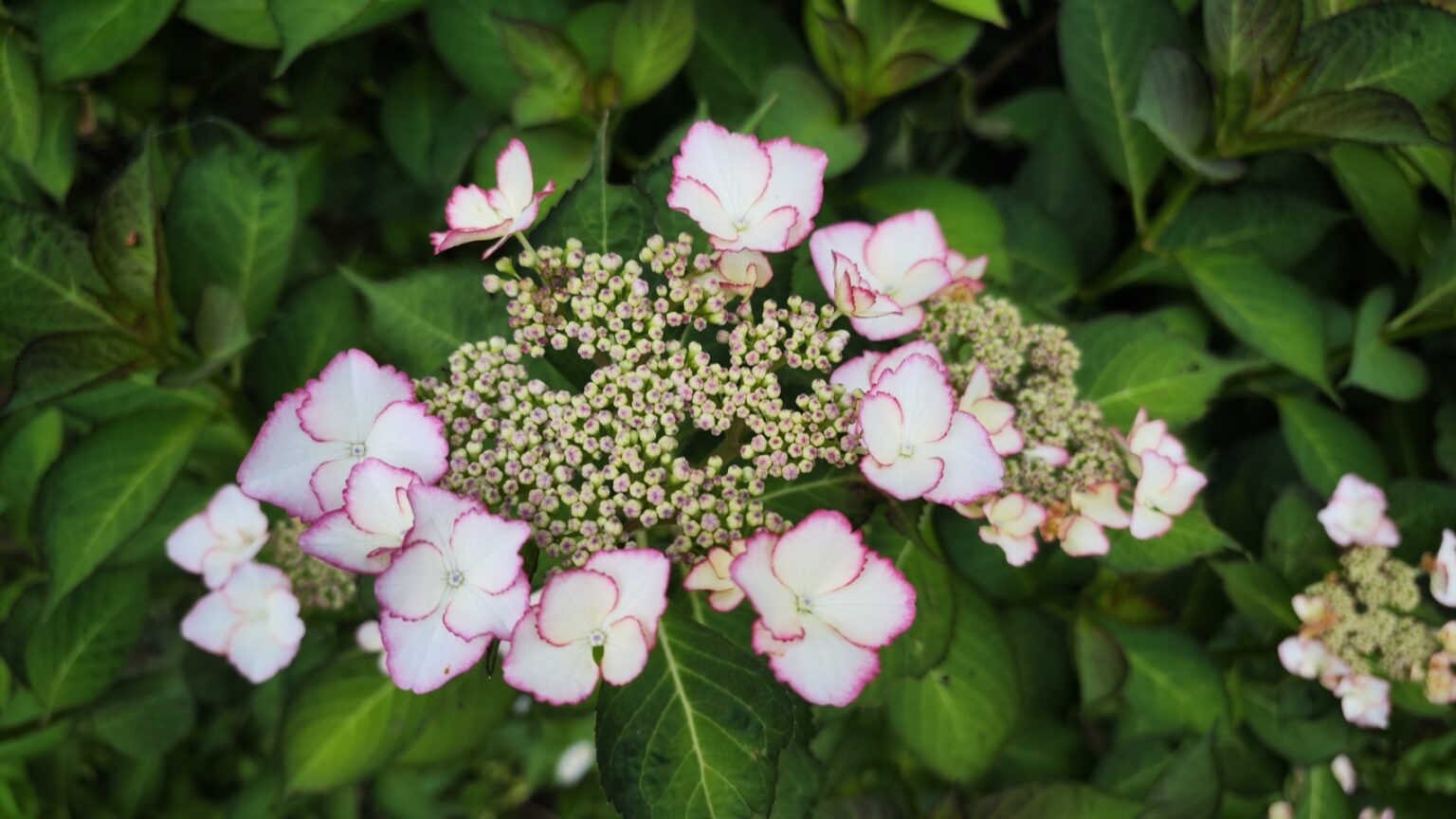
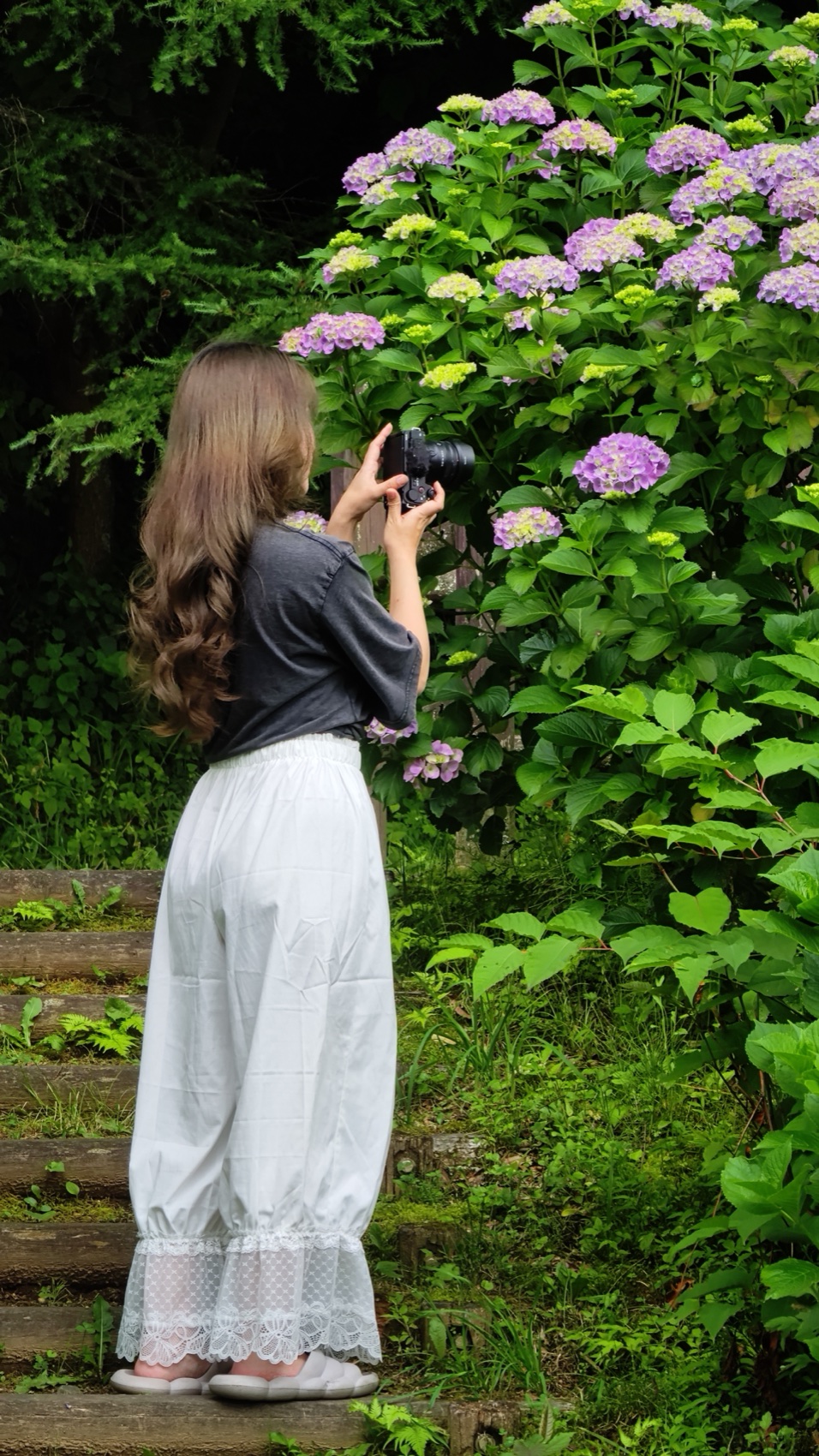
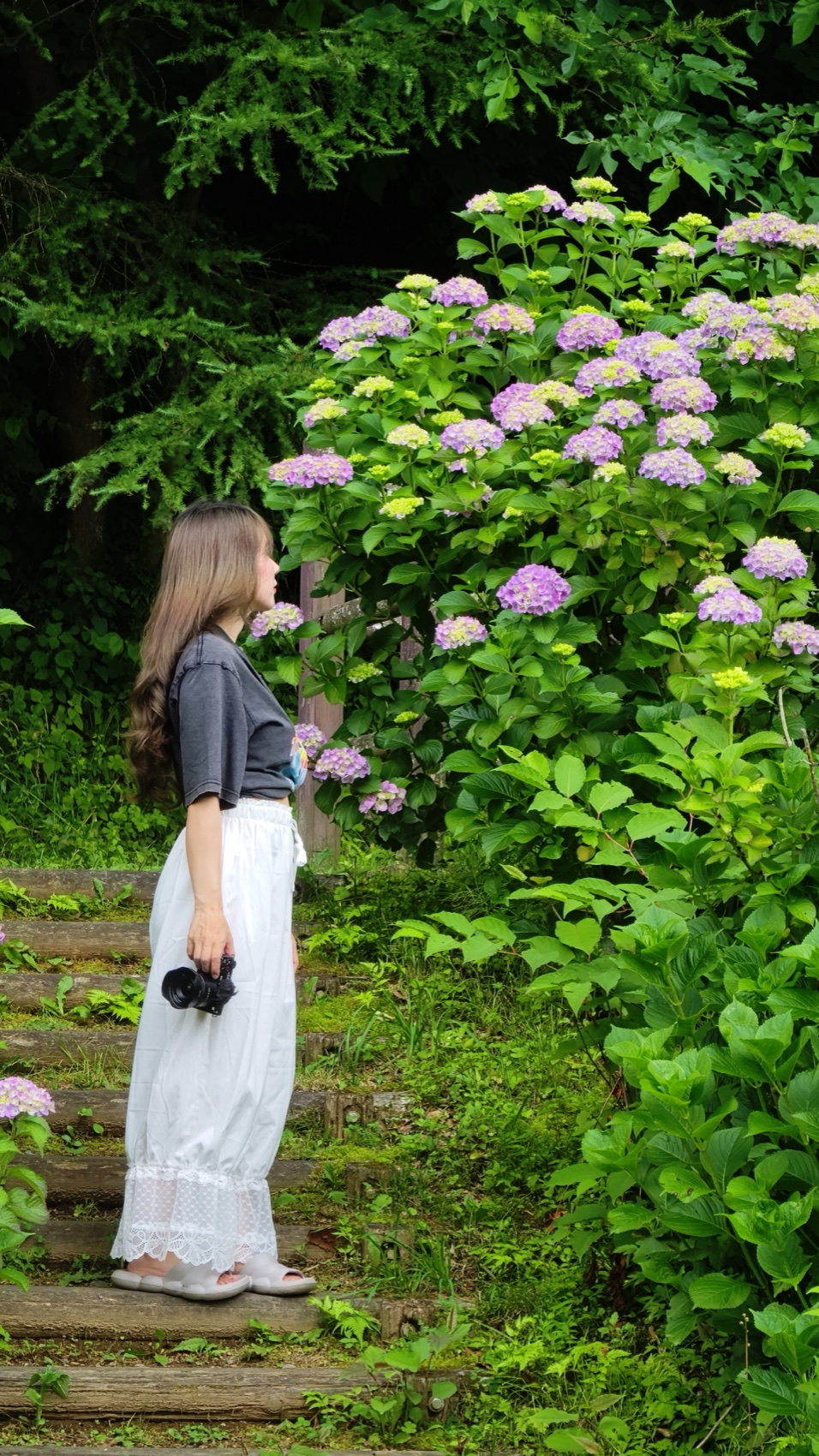
What pulls people up here in early summer is the ajisai (hydrangea). About 1,500 plants are set into a slope behind the pond, so instead of a flat bed you get a wall of colour that rises with the hillside — blue and lilac mopheads, the odd pink, and the delicate flat-flowered lacecaps mixed through. In a normal year the slope peaks in July, a little later than the lowlands around Tokyo because Fujiyoshida sits high and cool; this year, in the last week of June, it was already close. Here it is in wide view — swipe through:
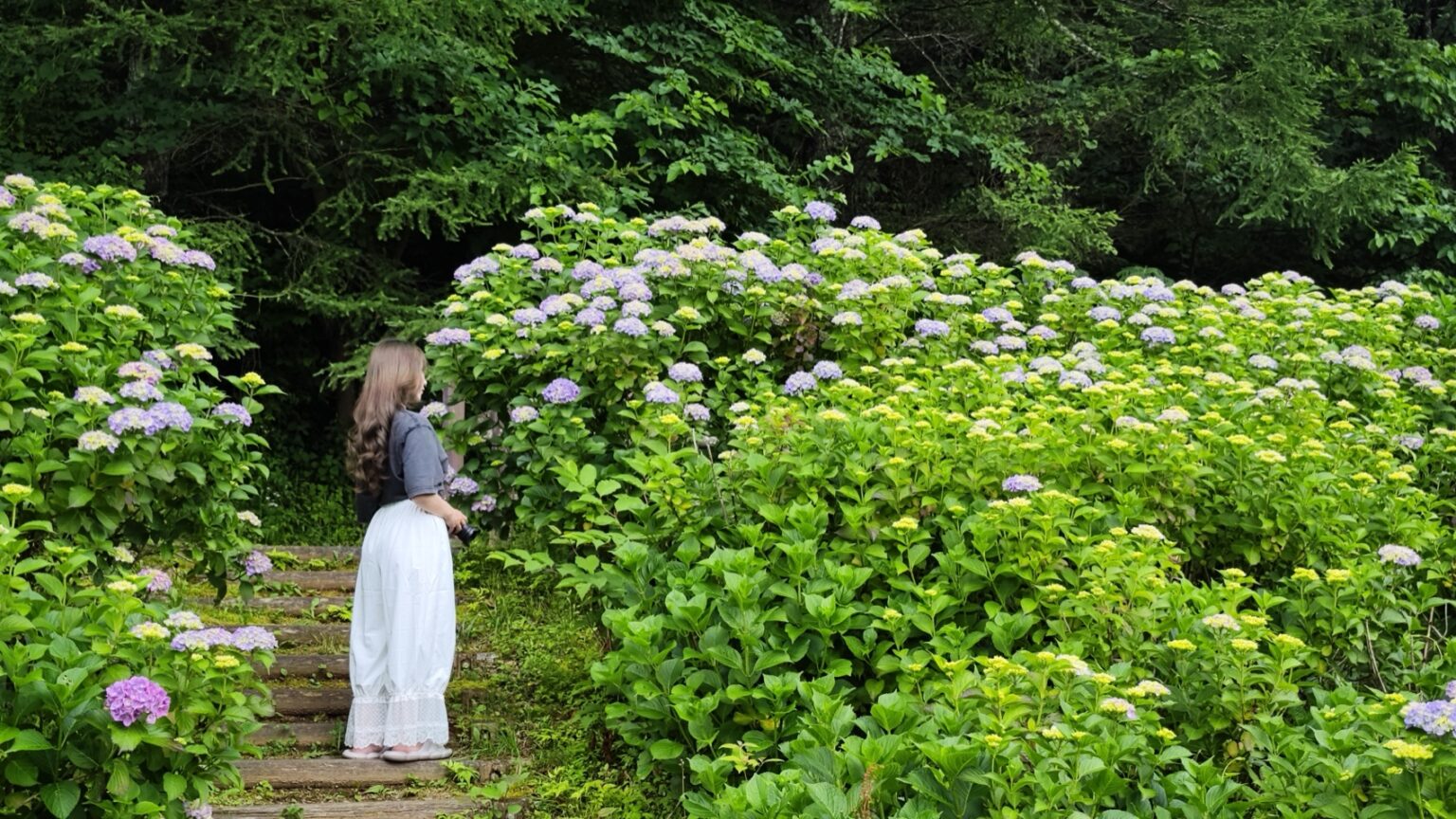
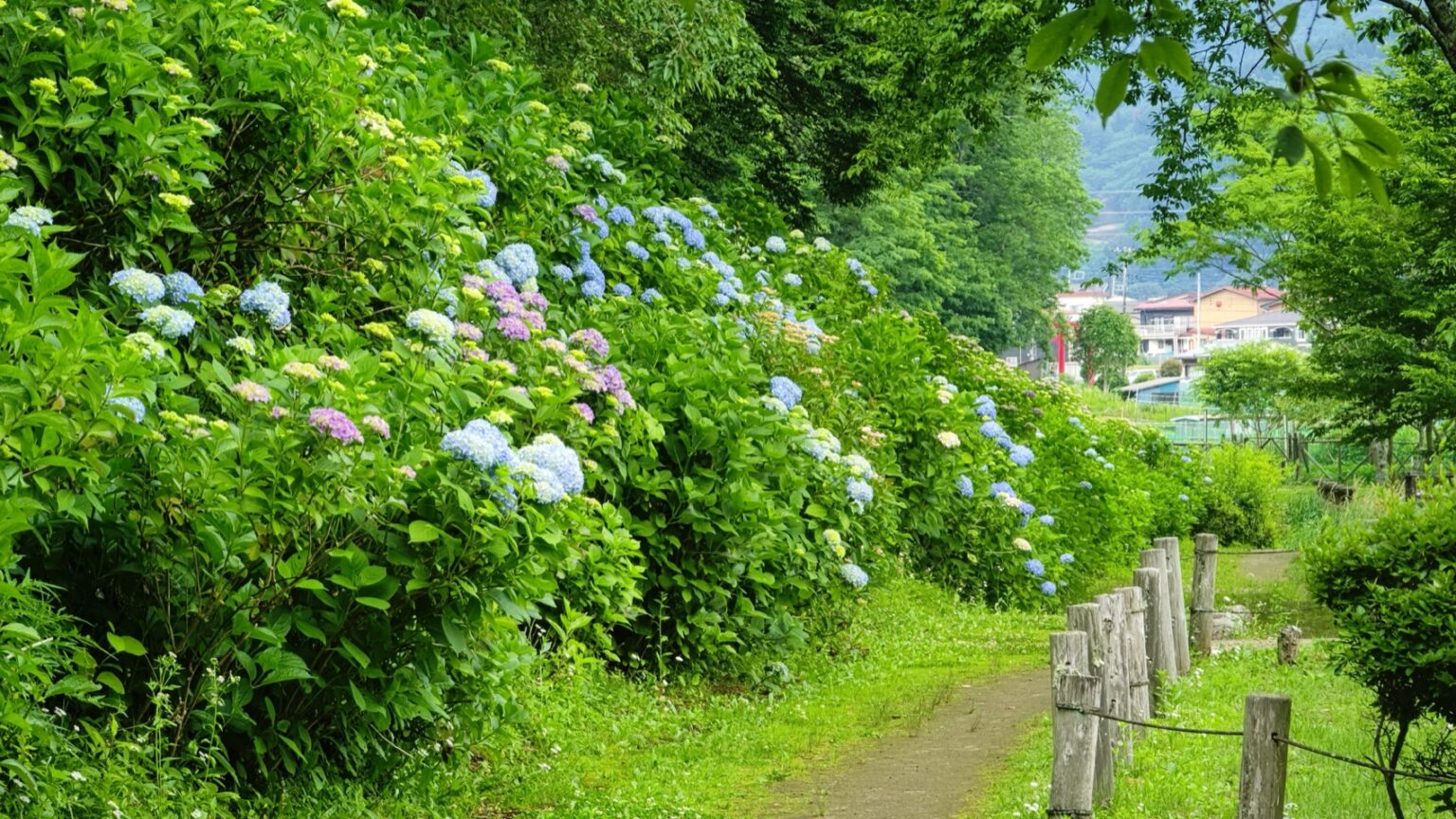
← swipe / scroll · wide shots →
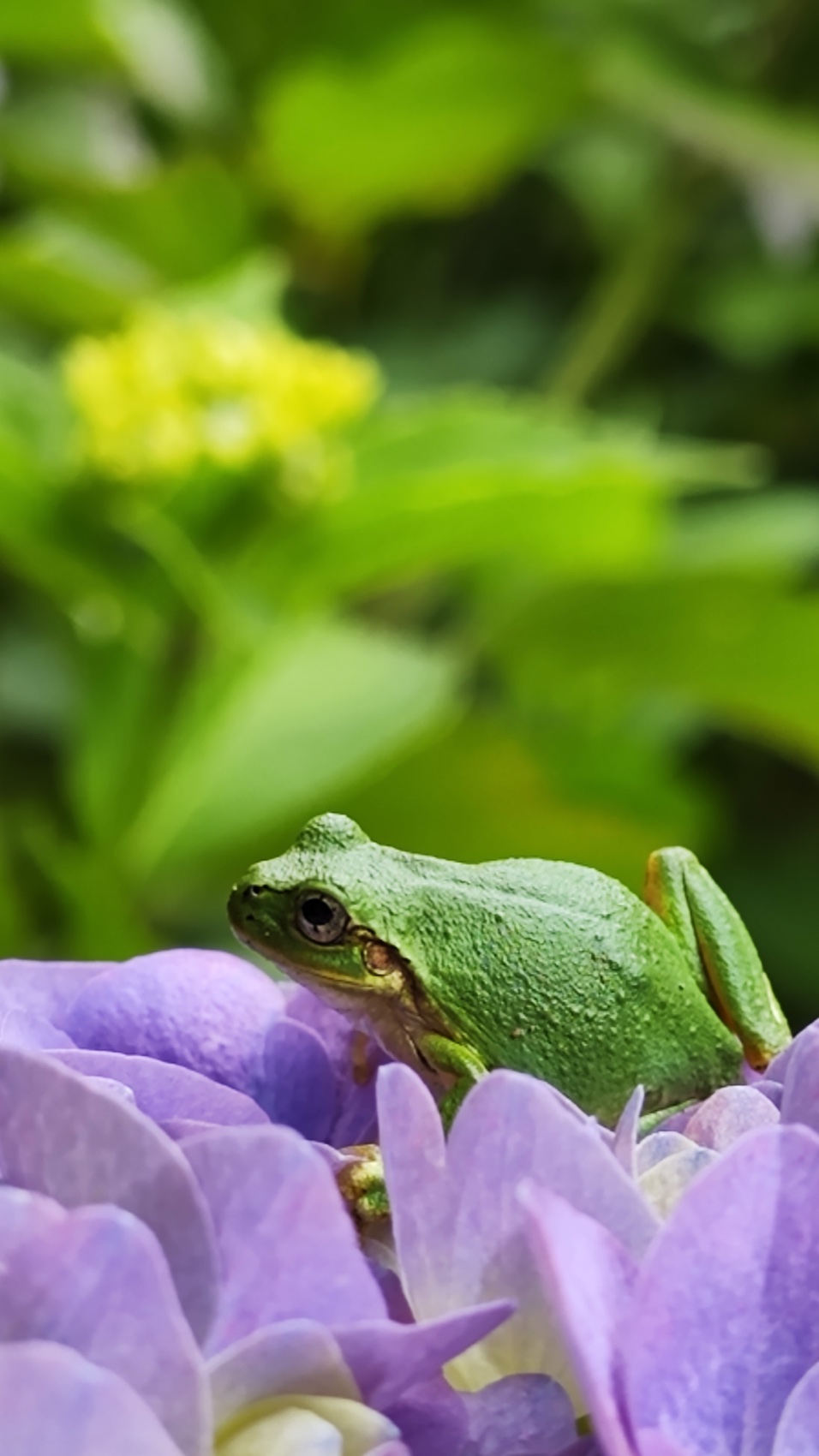
And a few upright frames from along the steps, where the heads come up to eye level:
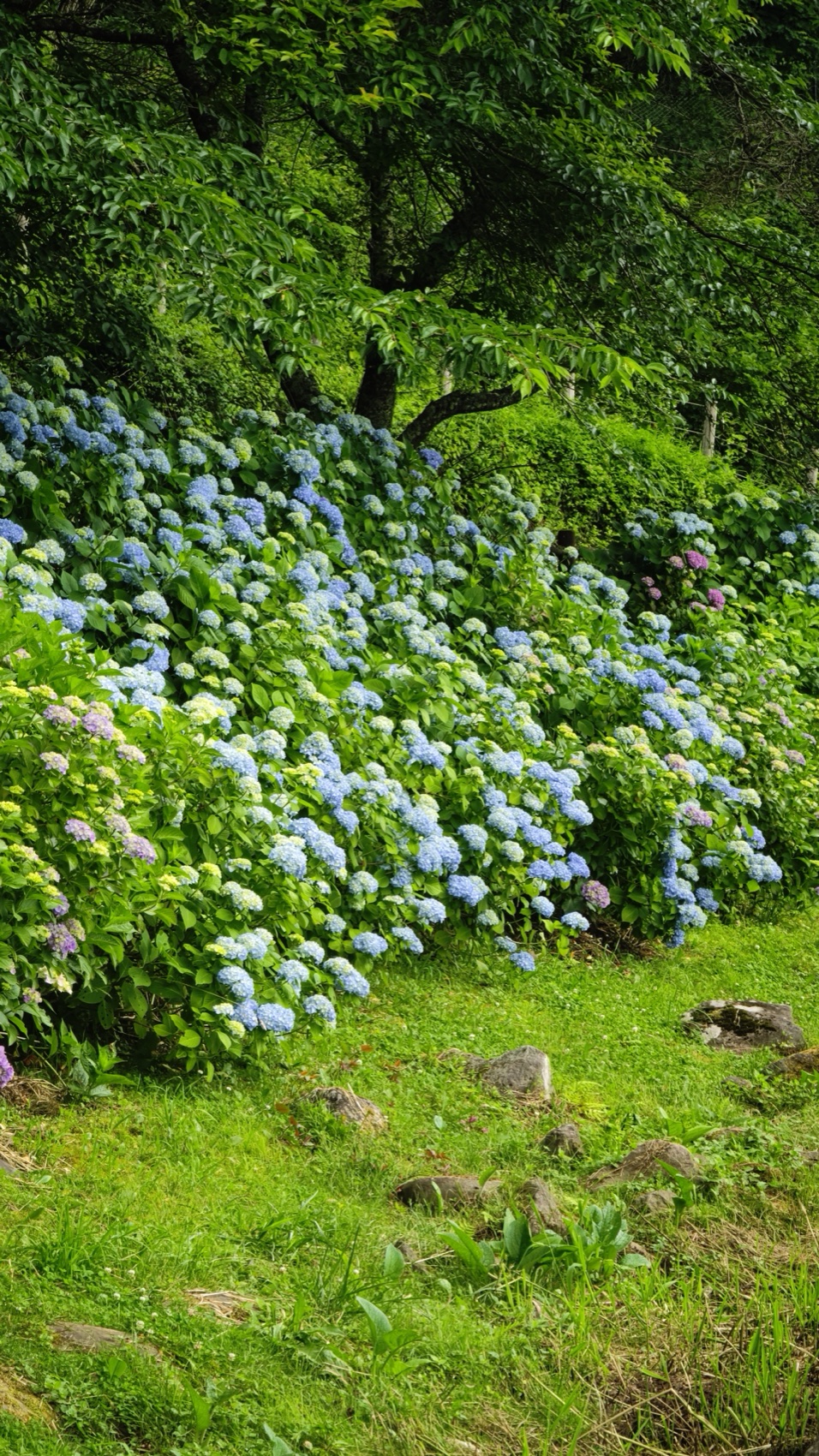
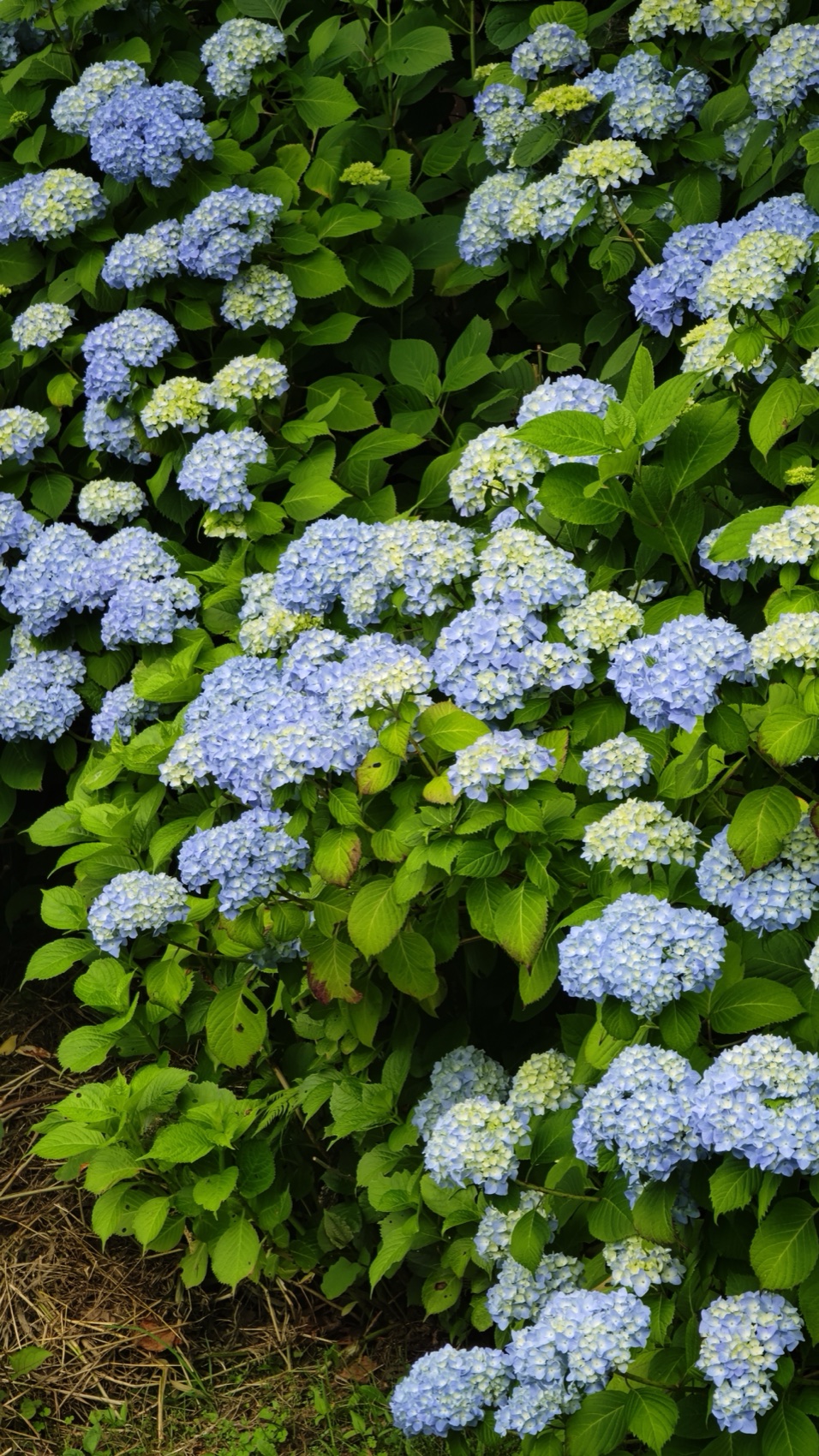
← swipe / scroll · upright shots →
The pond and the lotus
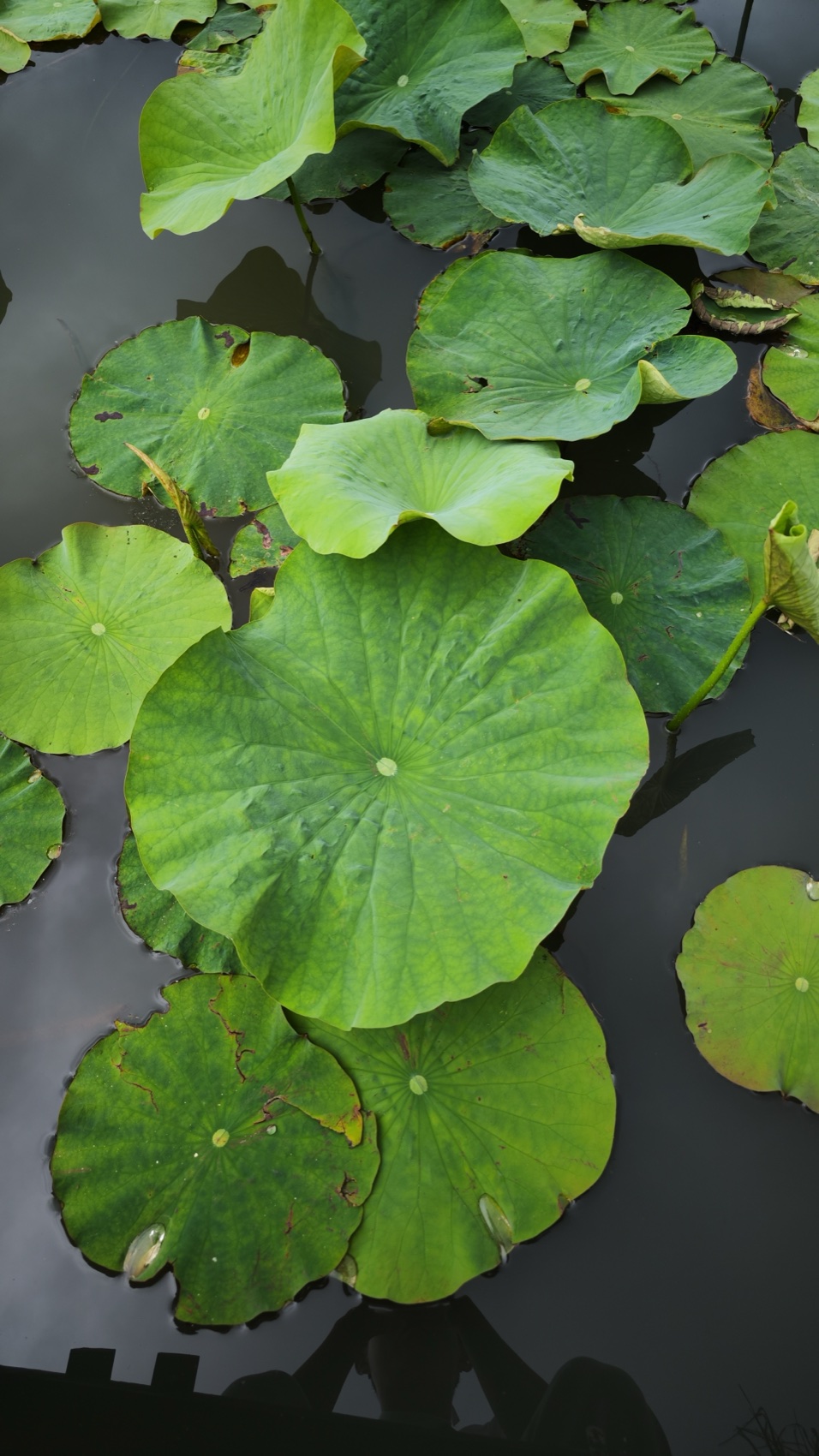
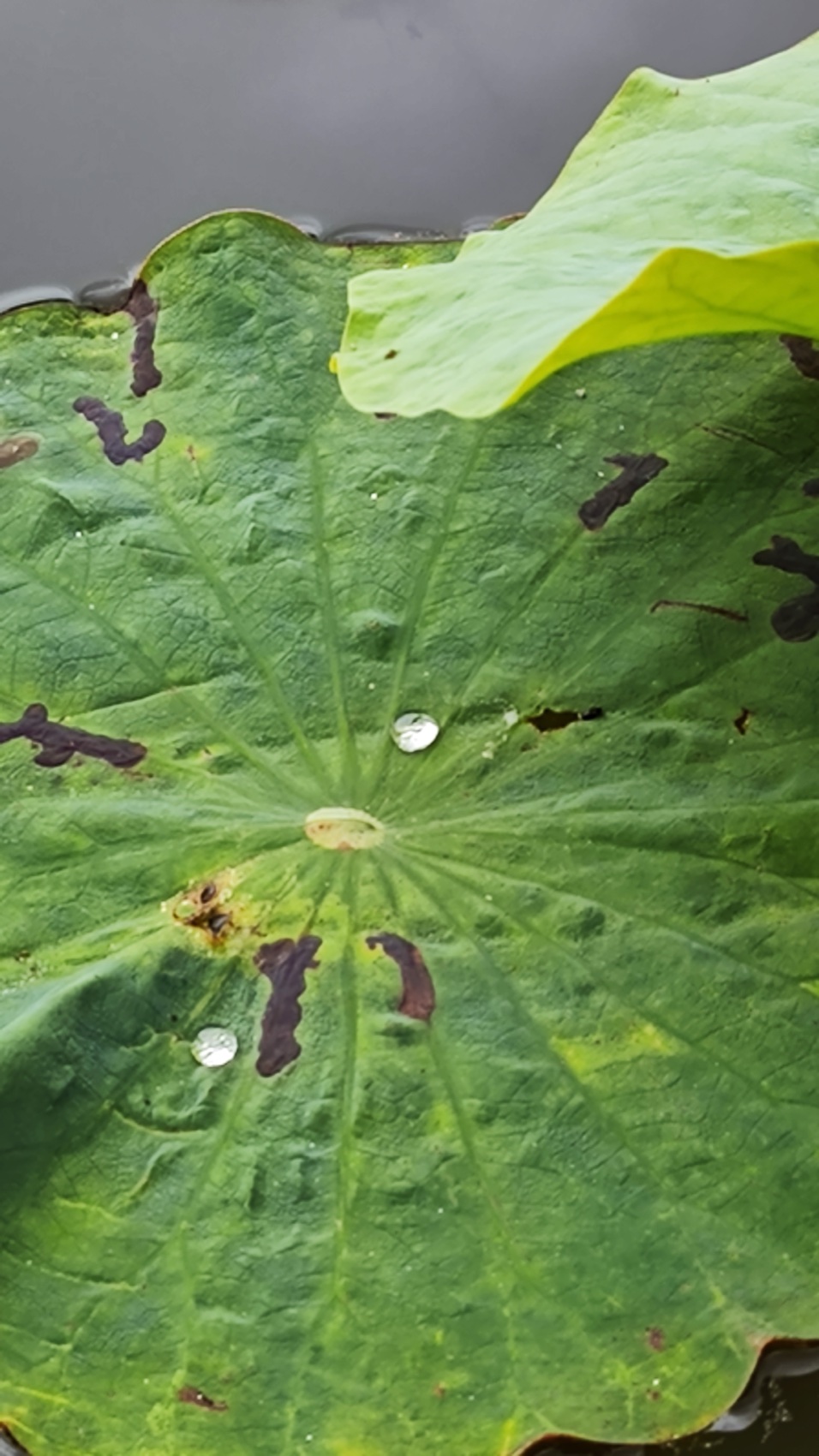
The pond itself is the reason for the nickname. Around 20,000 lotus grow here — self-seeded rather than planted — and by high summer they lift pink-to-white flowers above a sea of round leaves. In late June, though, it’s all leaves: a green carpet stretched bank to bank, the odd raindrop sitting on a leaf like mercury. The lotus blooms from roughly mid-to-late July through August, and the flowers are at their best early in the morning, before they open fully in the heat — so a dawn visit is the one worth setting an alarm for.
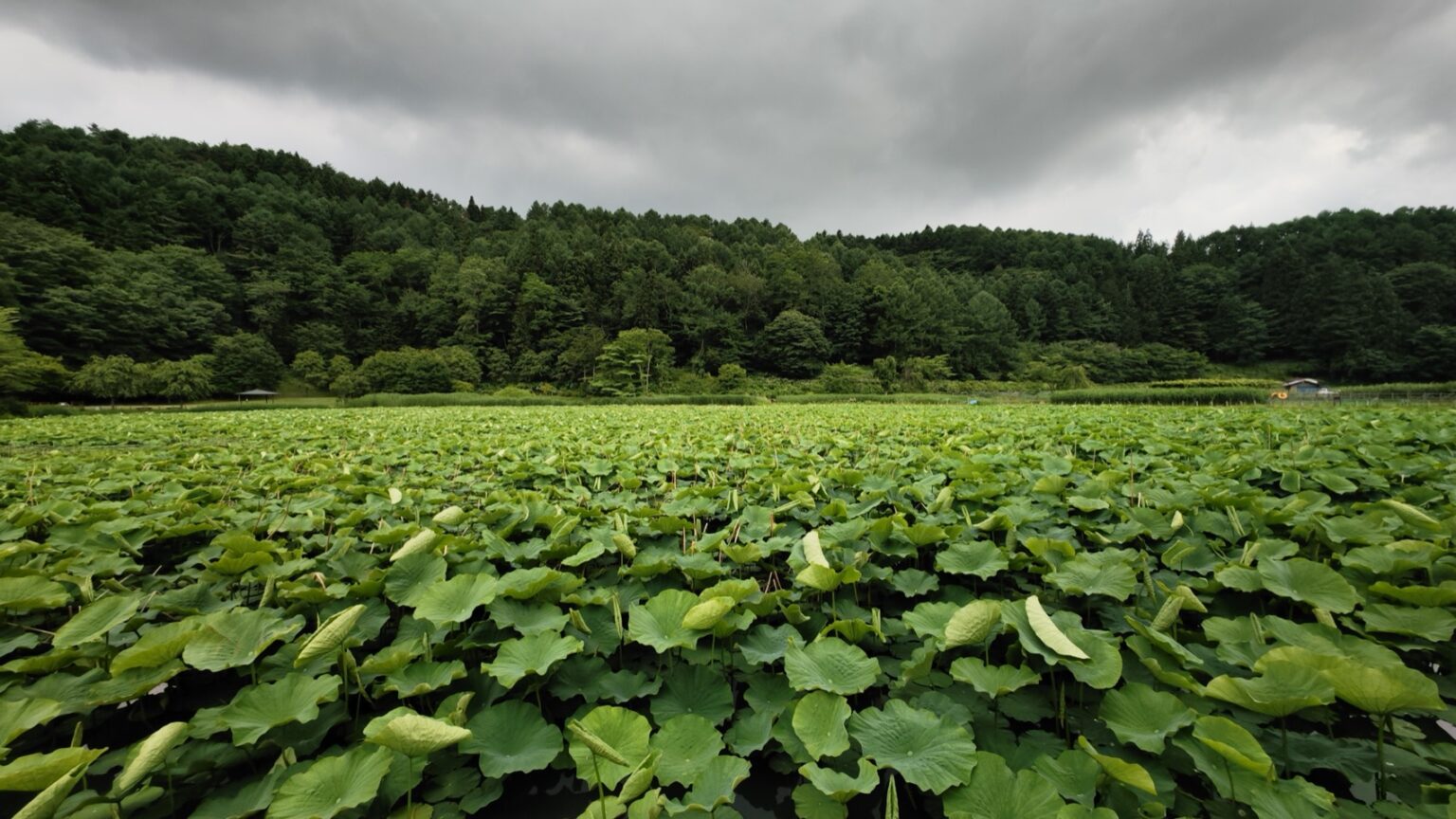
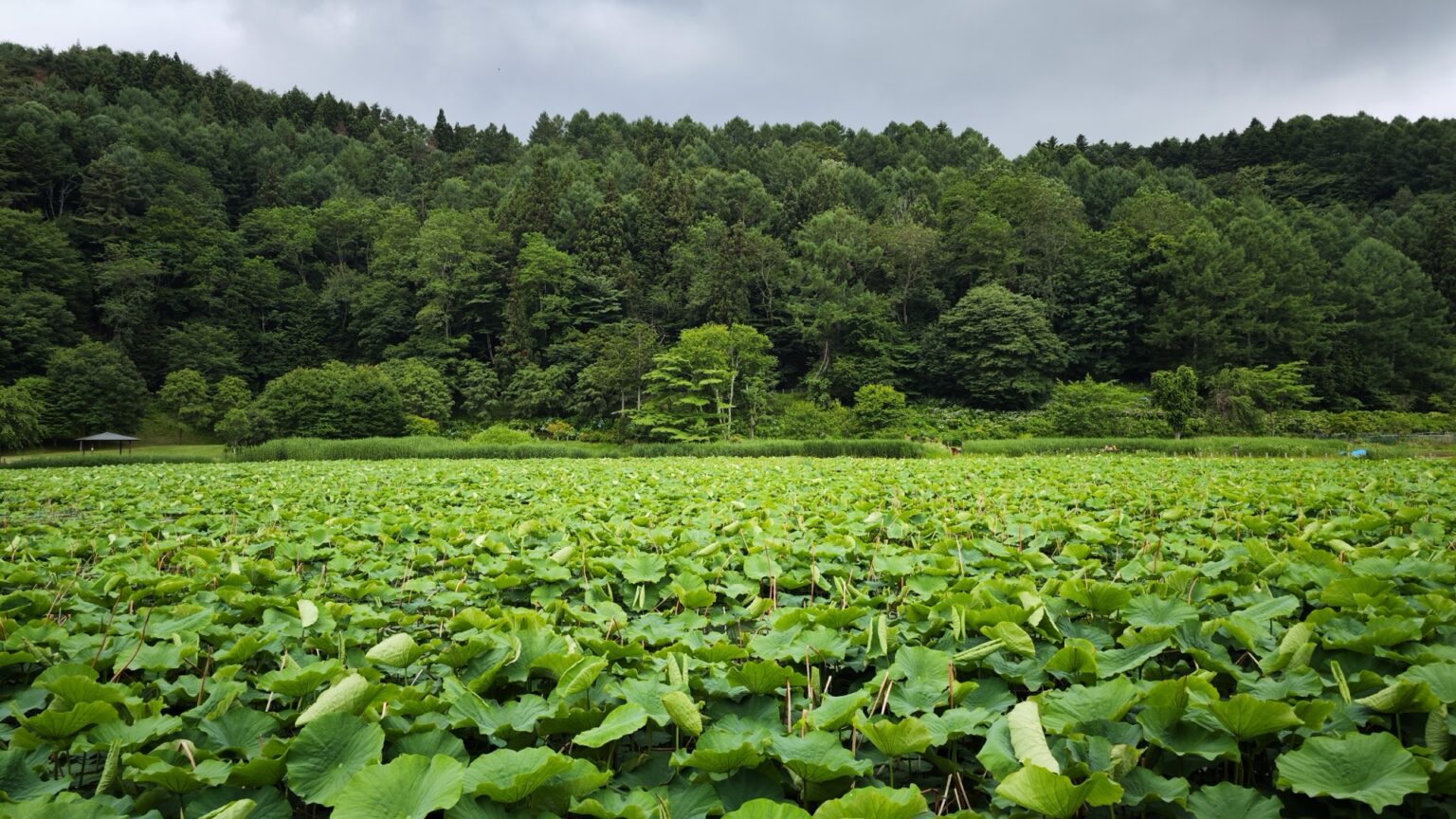
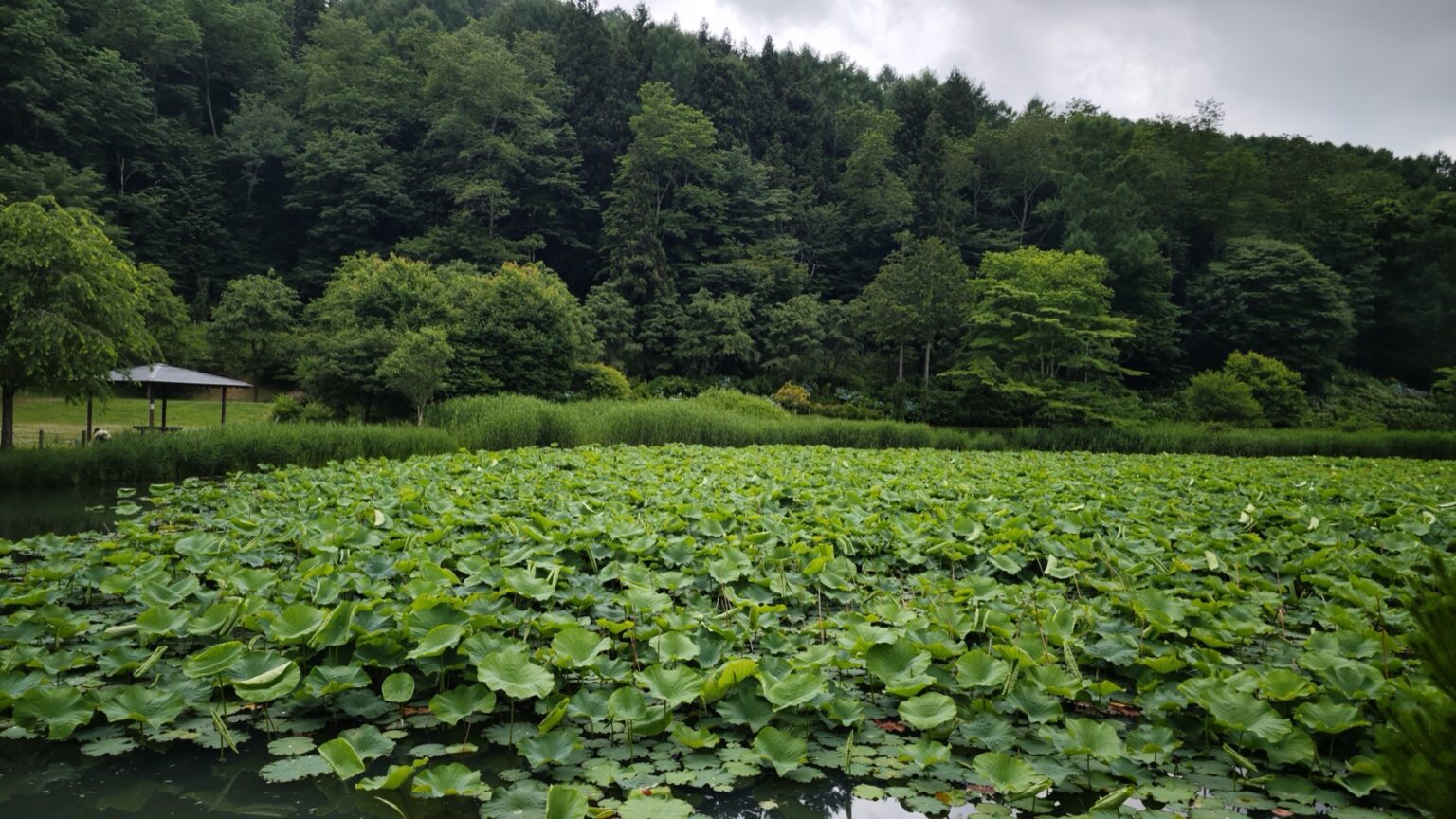
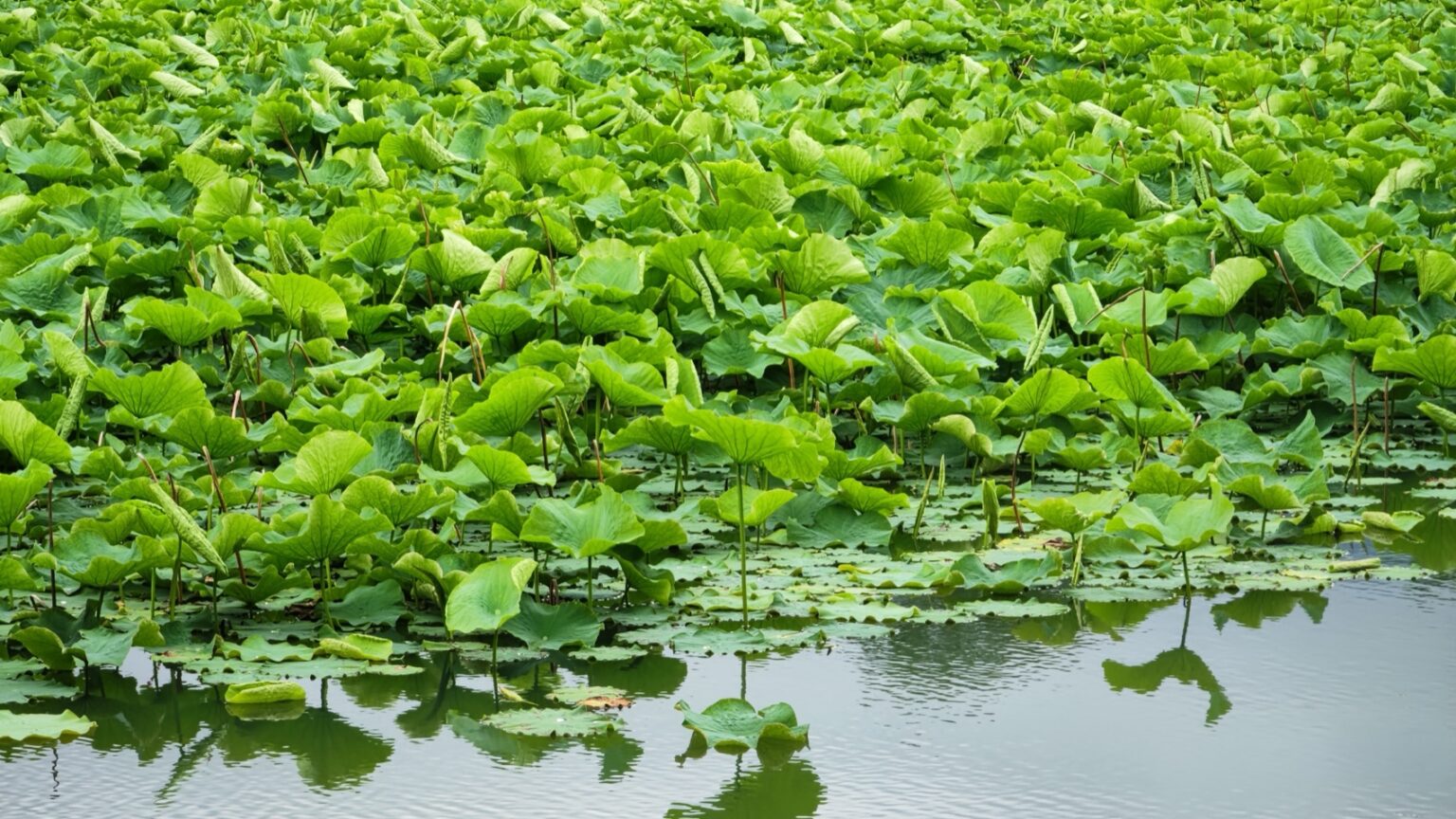
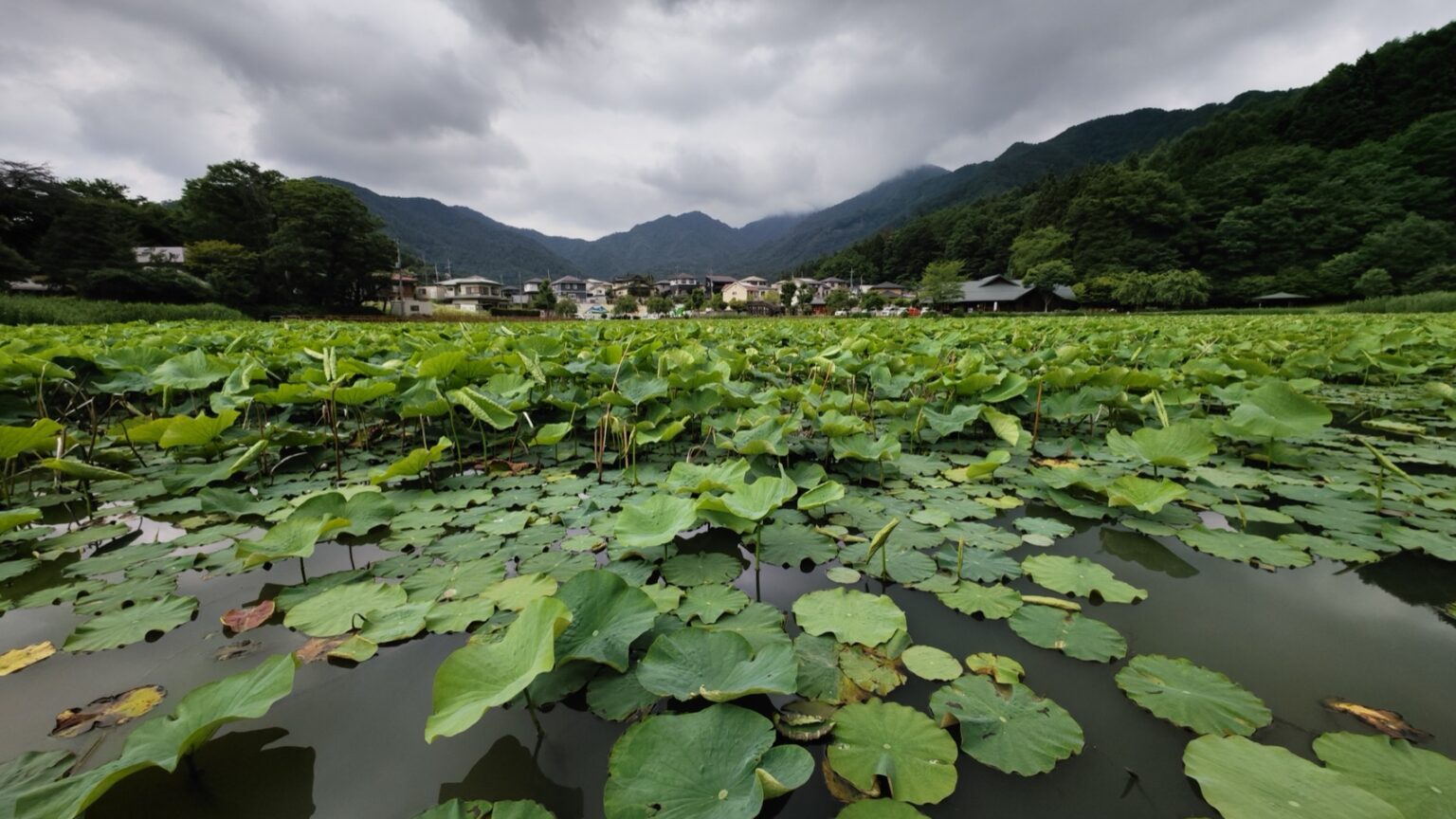
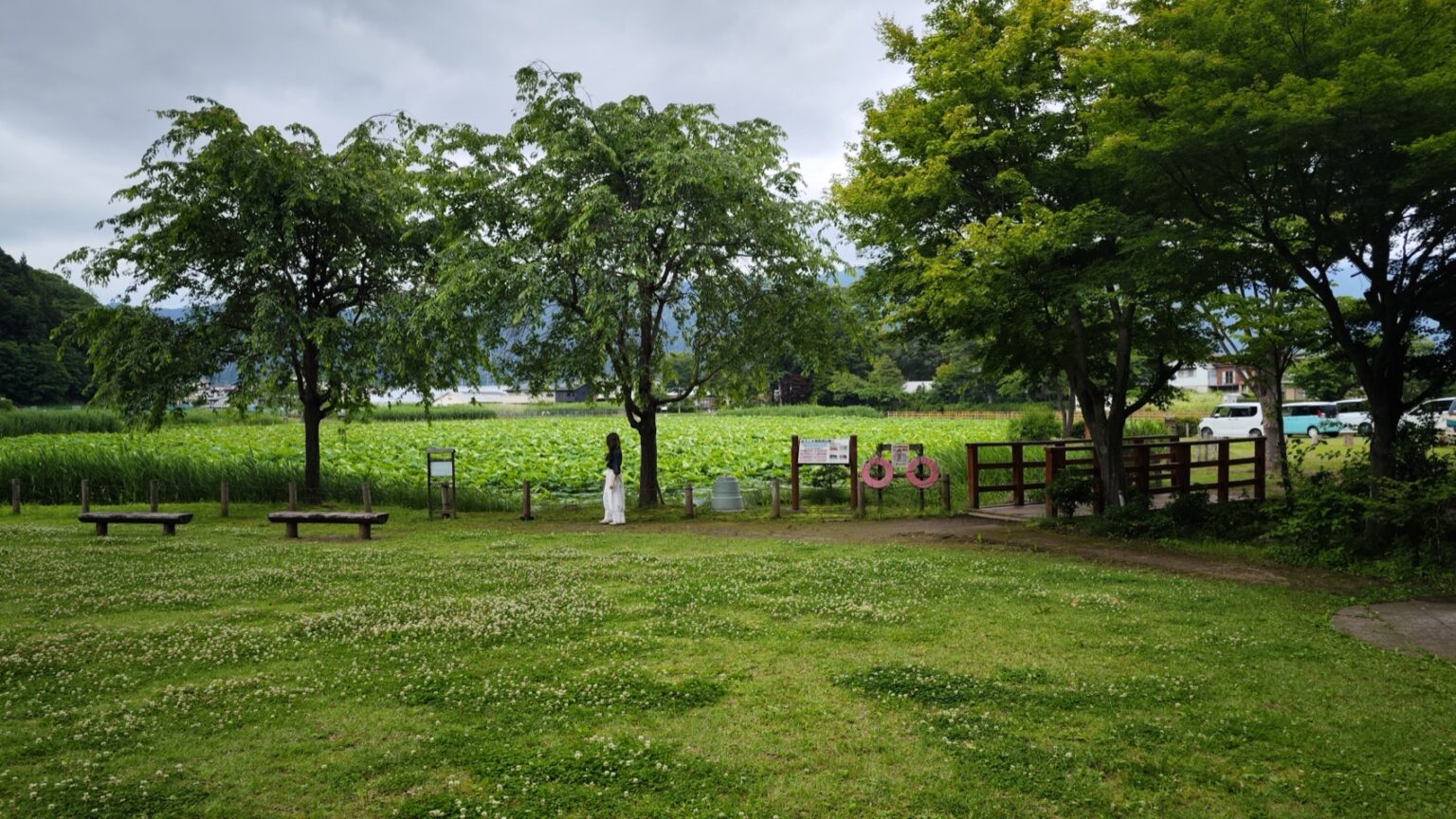
← swipe / scroll · wide shots →
The water sits inside Asumiko Park (明見湖公園), a roughly 3.4-hectare municipal park that the city restored between about 2000 and 2007. It’s divided into zones — a biotope, a satoyama (countryside) area, lawns, and a waterside area with a fishing deck — and there’s an observation point, a gazebo, an environmental-education workshop and easy walking paths around the shore. It’s the kind of place locals come to for a quiet hour, not a ticketed attraction. Stick to the paths, keep dogs out, and leave the plants and fish alone outside the marked spots — the water’s edge can be slippery.
More than a pretty pond
Asumiko looks modest, but it carries real weight in the history of Mt Fuji worship. It’s counted among the Eight Lakes of Fuji (富士八湖 / the “inner eight seas,” 内八海) — the sacred waters that Fuji-kō pilgrims would circle and bathe in to purify themselves before climbing the mountain. Asumiko served as one of these koriba, ritual cleansing sites, and is tied by tradition to Hasegawa Kakugyō, the ascetic regarded as the founder of the Fuji-kō faith, who is said to have performed water austerities here.
The name carries history too. “Asumi” comes from the old village of Asumi (阿須見村) that once stood here — and that name appears in Hokusai’s One Hundred Views of Mount Fuji as “Fuji from Asumi Village.” The pond is thought to be very old. None of that is on the signboards in big letters, but it’s why a small lotus pond gets a place in a Mt Fuji guide.
Can you see Mt Fuji from the pond?
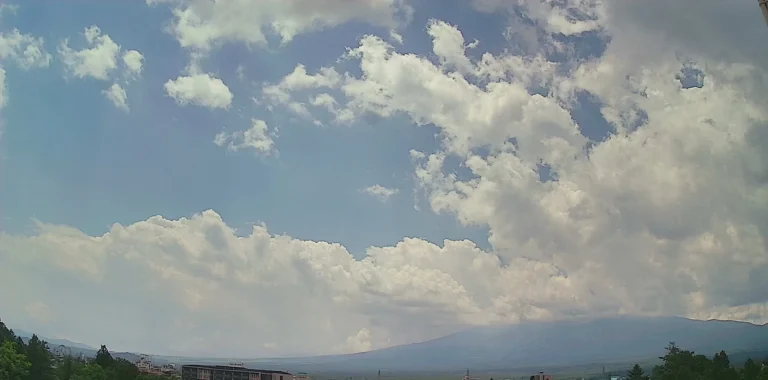
On a clear day, yes — Fuji rises beyond the water, and Asumiko is a known spot for photographers. The day I visited was flatly overcast, though, and the mountain never showed, which is worth saying plainly: this is not a guaranteed Fuji view like the Chūreitō Pagoda. Come for the lotus and hydrangea first, and treat a clear-day Fuji as the bonus it is.
Wildlife
Because the park was restored as a natural habitat, it’s quietly alive. Waterbirds rest on the pond, kingfishers nest in the sanctuary zone, and the restoration aims to protect native species like the hotoke loach, medaka and fireflies. (Introduced black bass and bluegill are an ongoing problem the city is working against — a reminder that “natural” here is also carefully managed.)
When to go
| What | Season | Notes |
|---|---|---|
| Hydrangea | roughly July (near peak in late June 2026) | ~1,500 plants on the slope; later than the lowlands due to altitude |
| Lotus | mid/late July – August | ~20,000 plants; flowers best in the early morning |
| Both overlap | late July | hydrangea fading as the first lotus open; lotus peak is August |
| Time of day | morning | lotus open early and close in the heat; light is softer |
Southeast Asia traveler tip: for the lotus, treat this as an early-morning stop — the flowers are open and fresh soon after dawn and tighten up by midday. Fujiyoshida sits around 750 m, so even in midsummer mornings here are cooler than Tokyo; a light layer helps. It pairs naturally with the Chūreitō Pagoda, which is in the same town.
Getting there
By car is easiest: roughly 20 minutes from the Kawaguchiko IC on the Chūō Expressway, about 7 minutes from the Fujiyoshida-Nishikatsura Smart IC, or about 20 minutes from the Yamanakako IC. There’s free parking in three small lots by the park (the multipurpose-ground lot can close in wet weather), and there are restrooms.
By train, the nearest Fujikyu Railway station is Yoshiike-onsen-mae, about a 35-minute walk away; from Fujisan Station it’s around 15 minutes by car or taxi. It’s a stop best built into a wider Fujiyoshida day rather than a quick dash from the station.
| Park gate hours | Open |
|---|---|
| May 1 – Sep 30 | 6:00–18:00 |
| Mar 1 – Apr 30 & Oct 1 – Nov 30 | 7:00–17:30 |
| Dec 1 – end Feb | 7:00–17:00 |
Where to stay: base yourself around Kawaguchiko or Fujiyoshida to reach the pond early and see the rest of Fuji’s north side. Search hotels around Kawaguchiko & Fujiyoshida →
We may earn a small commission from bookings, at no extra cost to you.
Nearby on Fuji’s north side
Tabi-no-Eki Kawaguchiko Base
Pair the pond with a market lunch at Tabi-no-Eki Kawaguchiko Base.
Chūreitō Pagoda
The famous five-storey pagoda-and-Fuji view — in the same town, an easy pairing.
Ōishi Park, Kawaguchiko
Seasonal flower beds along the lake with Mt Fuji behind.
Fuji Shibazakura Festival
Spring’s pink moss-phlox carpet under Mt Fuji.
Mt Fuji travel guide
Access, viewpoints and how to plan the whole Mt Fuji area.
FAQ
What is Asumiko Pond, and why is it called Hasu-ike?
It’s a small natural lake in Fujiyoshida, Yamanashi, near Mt Fuji. The nickname Hasu-ike (“lotus pond”) comes from the roughly 20,000 lotus plants that grow across its surface. The formal name is written 明見湖 and read “Asumiko.”
When do the lotus and hydrangea bloom?
The lotus blooms from about mid/late July into August and is best early in the morning. The hydrangea slope (around 1,500 plants) usually peaks in July — a little later than the Tokyo lowlands because of the altitude; in late June 2026 it was already close to its peak.
Can you see Mt Fuji from the pond?
On a clear day, yes — Fuji rises beyond the water and it’s a popular photo spot, but the Fuji view isn’t guaranteed; on an overcast day the mountain is hidden, so come mainly for the flowers.
How much does it cost, and what are the hours?
The park and pond are free. Gate hours are seasonal: 6:00–18:00 from May to September, 7:00–17:30 in spring and autumn, and 7:00–17:00 in winter. There’s free parking and restrooms.
How do I get there?
Easiest by car — about 20 minutes from the Kawaguchiko IC, or 7 minutes from the Fujiyoshida-Nishikatsura Smart IC, with free parking. By train, it’s about a 35-minute walk from Yoshiike-onsen-mae Station, or roughly 15 minutes by car/taxi from Fujisan Station.
Is it worth visiting outside lotus and hydrangea season?
It’s a quiet local park year-round, with walking paths, birdlife and a satoyama feel, but the flowers are the main draw. If you’re timing a trip around them, aim for July, when the hydrangea and the first lotus overlap.
Sources: Fujiyoshida City Hall (city.fujiyoshida.yamanashi.jp, pond and park pages); Fujiyoshida tourism (fujiyoshida.net); Yamanashi Prefecture tourism. Bloom timing, hours and access verified June 2026; flower seasons shift year to year, so check the live bloom status before a special trip. Photos taken on site, 23 June 2026.
Join travelers discovering Japan's hidden side
Weekly dispatches from off-the-beaten-path Japan — spots and stories you won't find in guidebooks.
No spam. Unsubscribe anytime.
Welcome aboard!
You're in. See you in your inbox soon.