

Mt. Fuji Night Climb 2026: 12-Hour Visual Guide [With Photos]
Most Mt. Fuji guides tell you what to pack and which trail to take. This one shows you what the mountain actually looks and feels like — hour by hour, from the moment the sun drops behind the cloud sea at 6 PM to the moment it rises in front of you at 4:30 AM. I am Nobu from Hidden Japan Gems. I climbed Mt. Fuji overnight, and the 12 hours between dusk and dawn were nothing like what I expected. Here is the visual story, with practical notes for planning your own overnight climb.
Table of Contents
Quick Facts
| Detail | Info |
| What | Overnight Mt. Fuji climb with mountain hut stay |
| Duration | ~20 hours total (5th Station departure to 5th Station return) |
| Climbing season | July 1 – September 10, 2026 |
| Entry fee | ¥4,000 mandatory (all trails) |
| Gate closure (Yoshida) | 2:00 PM – 3:00 AM (hut reservation holders exempt) |
| Mountain hut cost | ¥10,000–¥17,600 (1 night, 2 meals) |
| Summit sunrise | 4:30 AM (July) → 5:15 AM (late August) |
| Night temperature | 0–8°C depending on altitude and wind |
| Trail | Yoshida Trail recommended (most huts, best infrastructure) |
| Key moments | Sunset cloud sea → night city lights → pre-dawn blue hour → goraiko → Shadow Fuji |
1. Why Should You Climb Mt. Fuji Overnight?
There are two ways to climb Mt. Fuji: a daytime ascent and an overnight ascent. The overnight version — arriving at a mountain hut by late afternoon, sleeping a few hours, then pushing to the summit for sunrise — is how the majority of climbers do it.
The practical reason: The 2026 Yoshida Trail gate system closes the trailhead from 2:00 PM to 3:00 AM. If you do not have a mountain hut reservation, you cannot start climbing after 2 PM. This effectively makes the overnight hut stay mandatory for anyone wanting to see the sunrise.
The experiential reason: Mt. Fuji transforms completely between dusk and dawn. The mountain you climb in afternoon sunlight becomes an entirely different place at night — the city lights below, the silence of the volcanic slopes, the headlamp chain winding upward, the slow explosion of color at dawn. You experience six distinct visual phases in 12 hours.
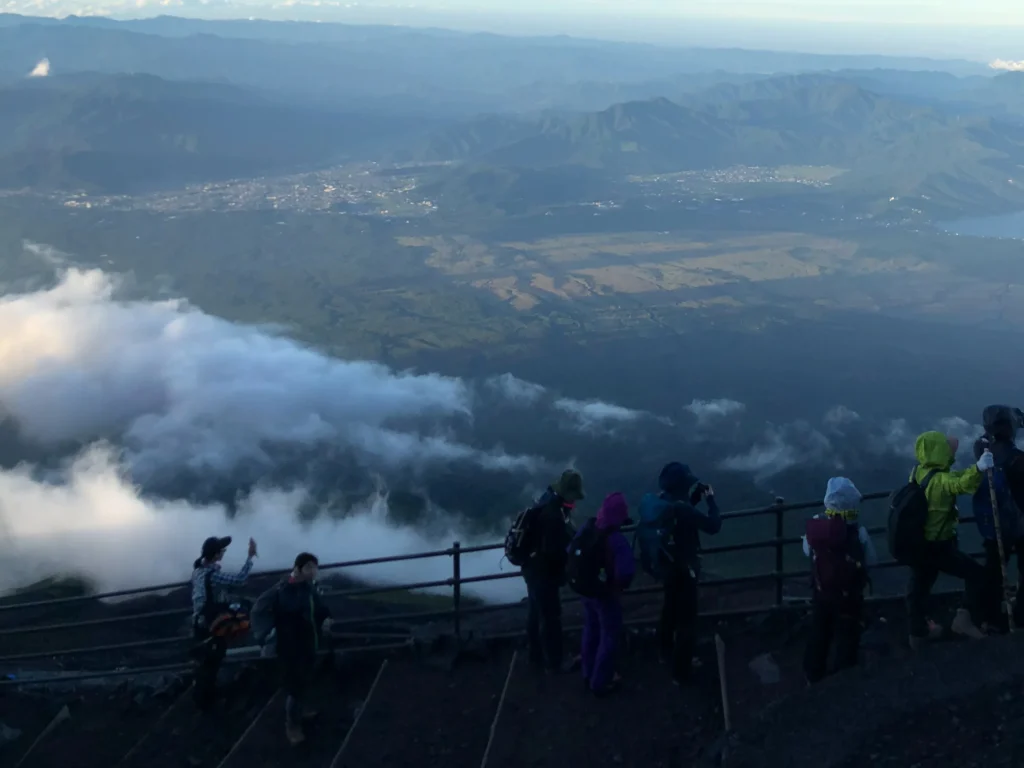
2. What Does the Dusk to Dawn Timeline Look Like?
This is the core of the experience — what you will actually see during each phase of the overnight climb.
Phase 1: The Ascent (1:00 PM – 5:00 PM)
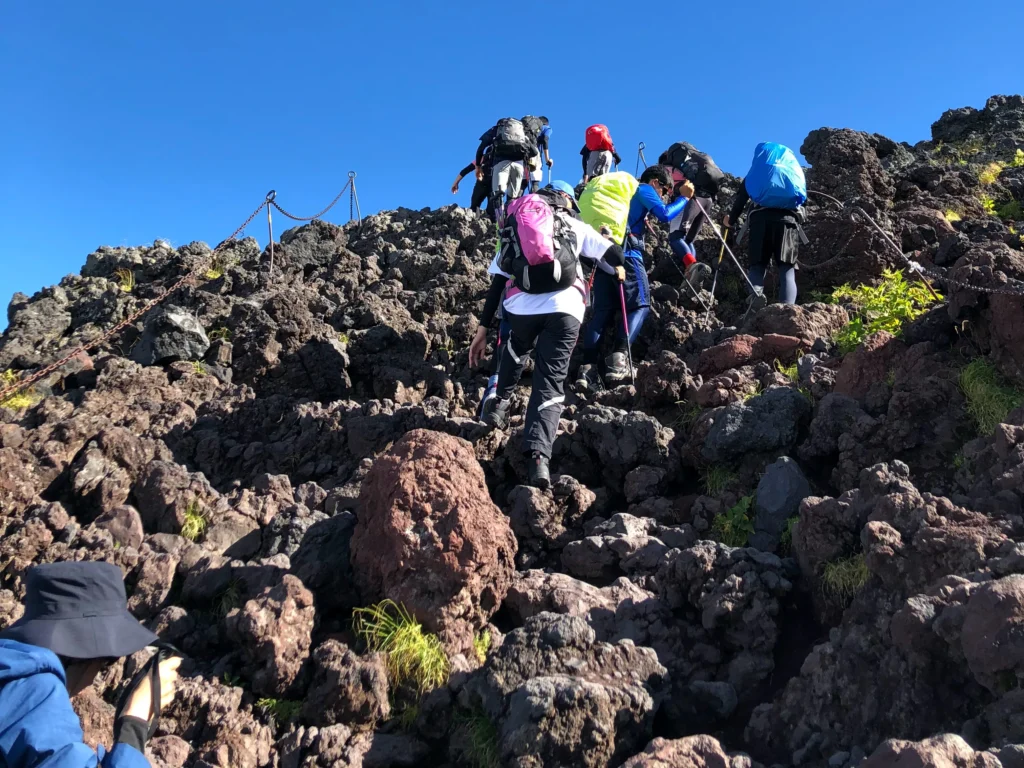
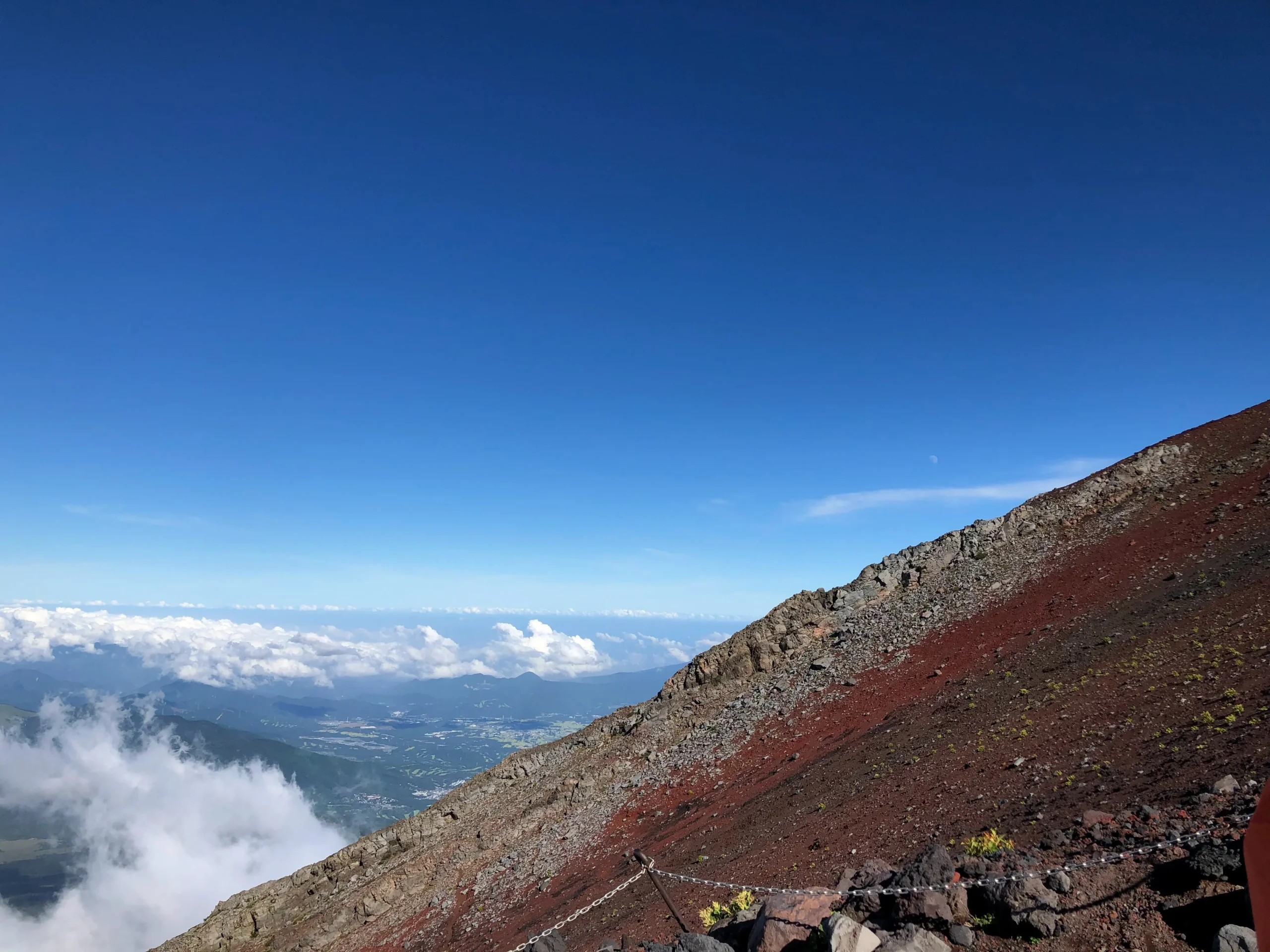
The afternoon climb from 5th Station to 8th Station takes 4–5 hours. The landscape shifts from sparse forest at 2,300m to bare volcanic rock by 3,000m. Above the 7th station, it is all black basalt, red oxidized volcanic rock, and loose gravel. The colors are Mars-like — deep reds and blacks under harsh afternoon sun.
Phase 2: The Red Earth (3:00 PM – 5:00 PM)
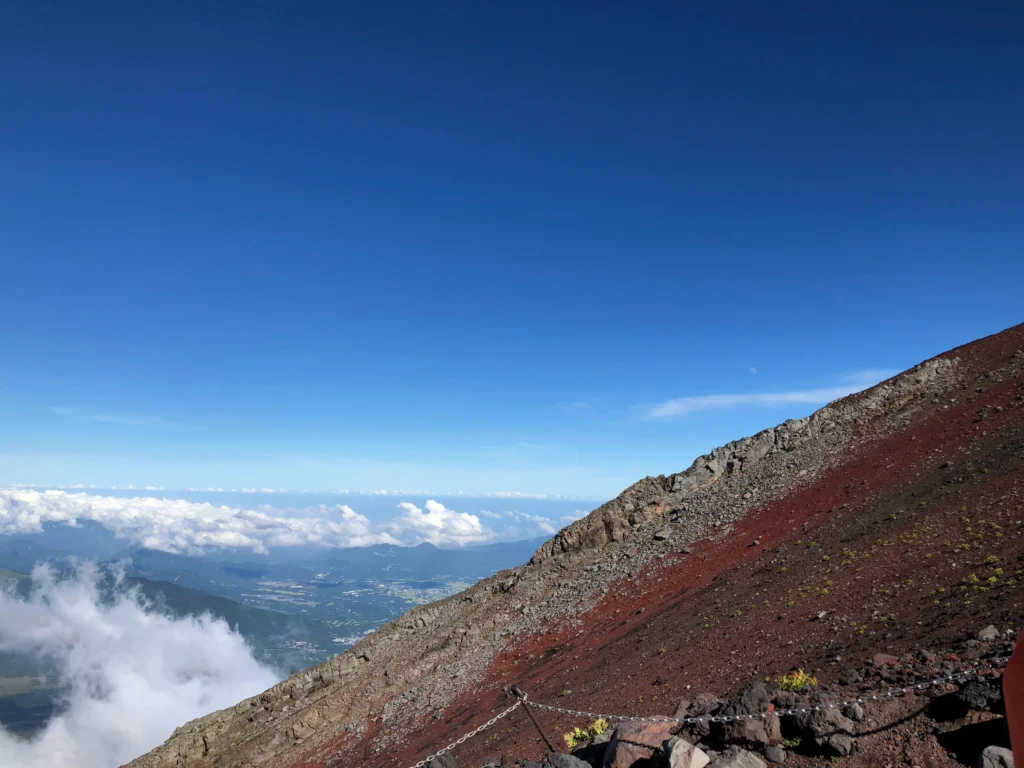
Between the 7th and 8th stations, the ground turns a striking rust-red. Combined with the white cloud sea below and the deep blue sky above, the color palette is surreal.
Phase 3: Sunset Above the Clouds (5:30 PM – 7:00 PM)
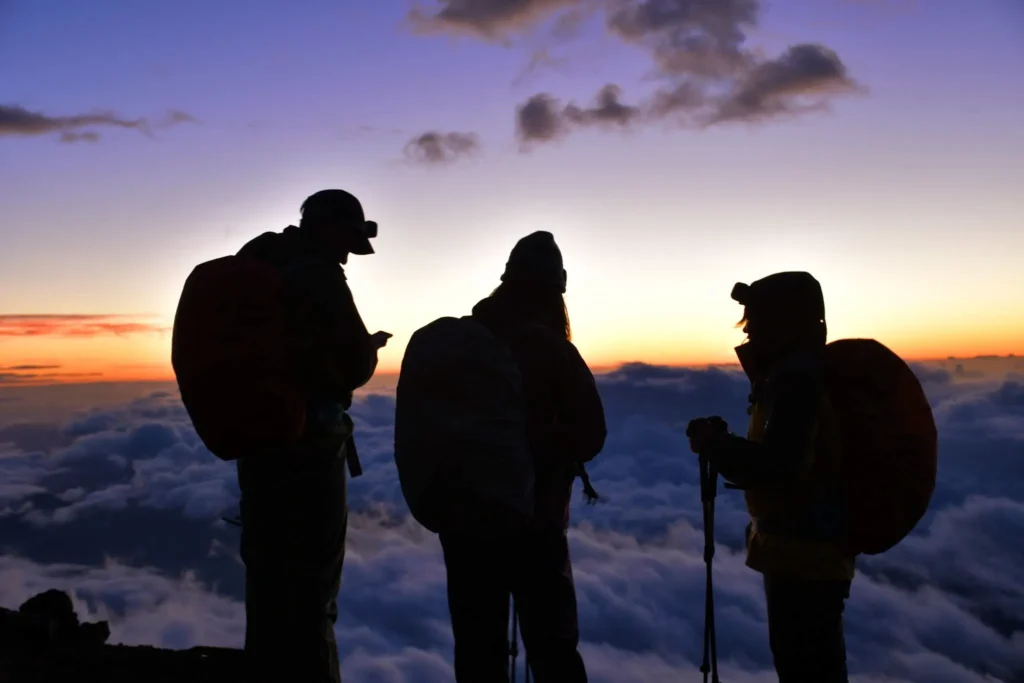
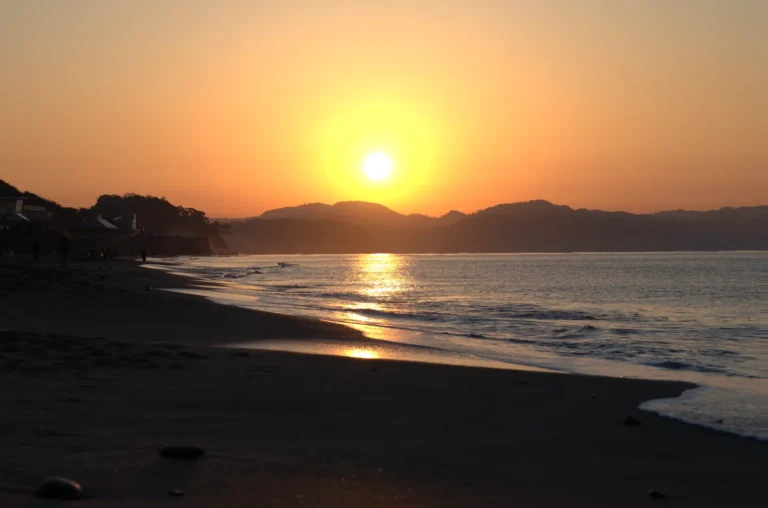
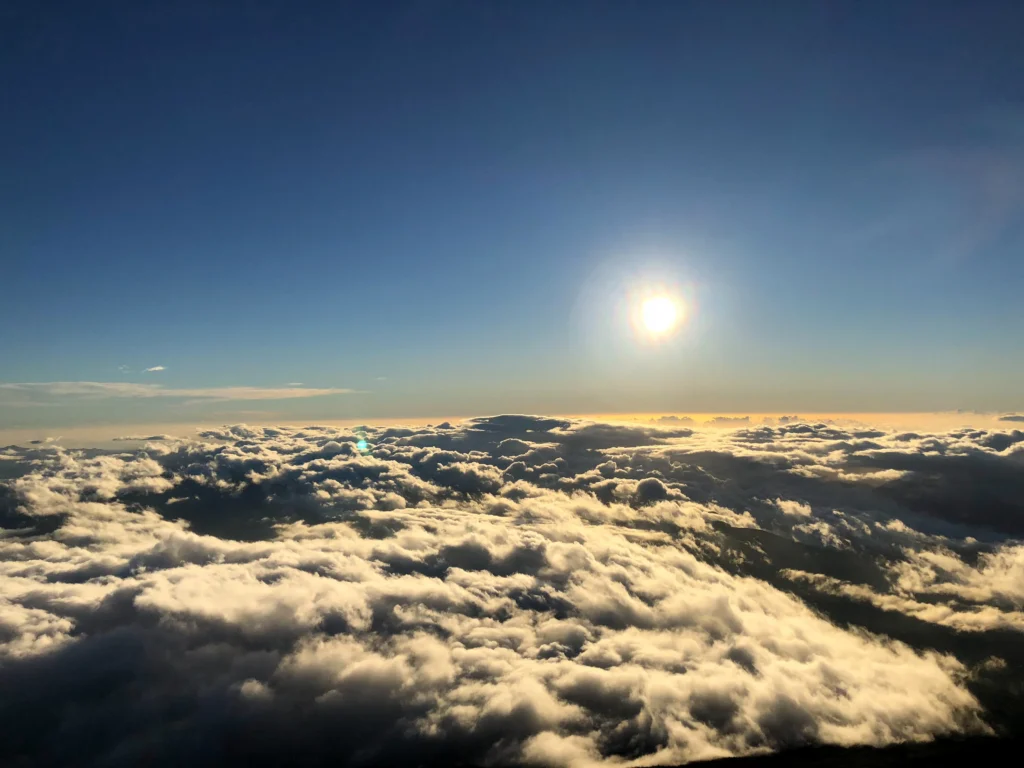
If you time your arrival at the mountain hut right, you will catch the sunset from above the cloud sea. The sun drops toward the western horizon, painting the cloud sea in layers of gold, pink, and eventually deep orange.
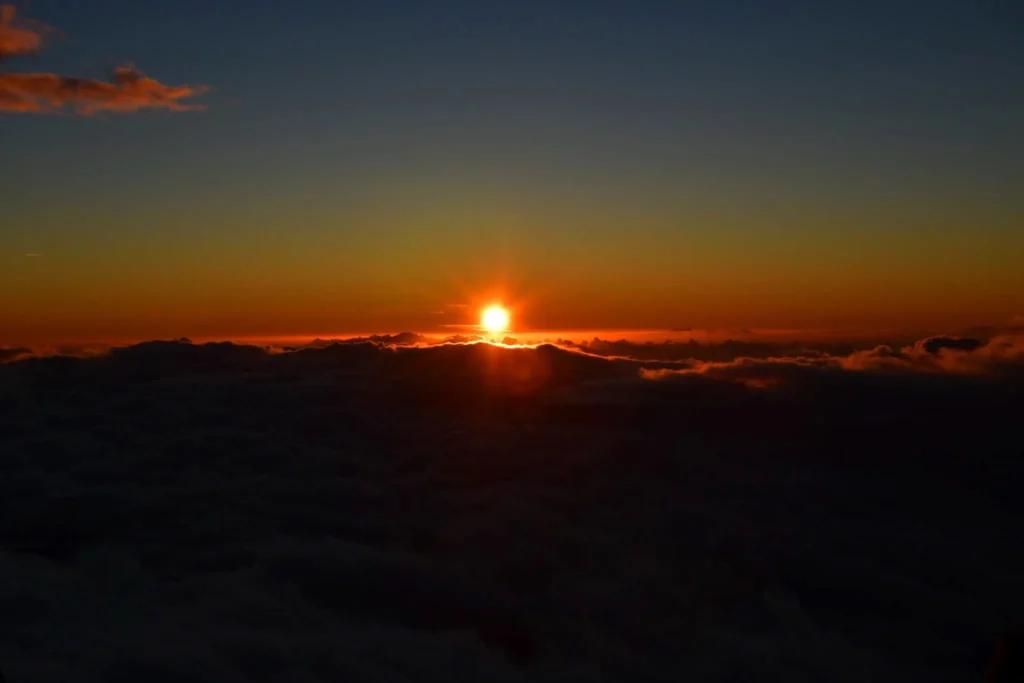
Phase 4: The Night City Lights (8:00 PM – 2:00 AM)
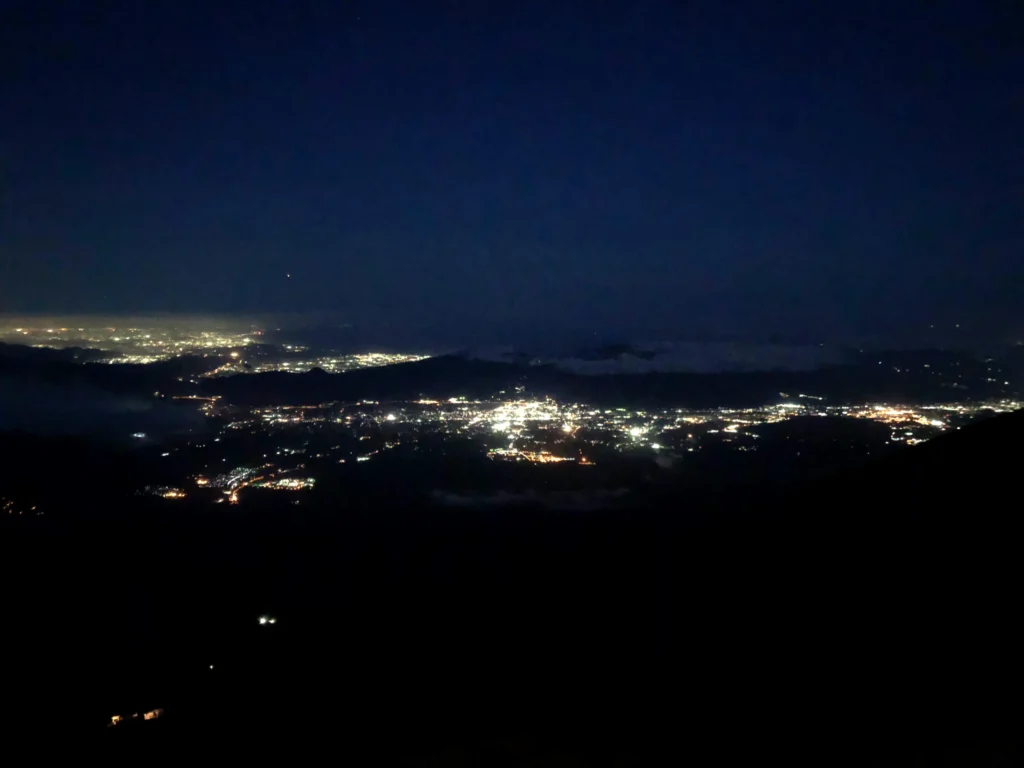
After sunset, the mountain goes dark. From the Yoshida Trail’s 8th station huts, you can see the lights of Fujiyoshida, Gotemba, and the Fuji Five Lakes towns.
Phase 5: The Pre-Dawn Push (1:30 AM – 4:00 AM)
You step outside into air that bites your lungs. The temperature has dropped to 0–3°C. A chain of headlamp lights stretches above you, winding up the mountainside in a slow-moving river of light.
Phase 6: First Light (3:30 AM – 4:15 AM)
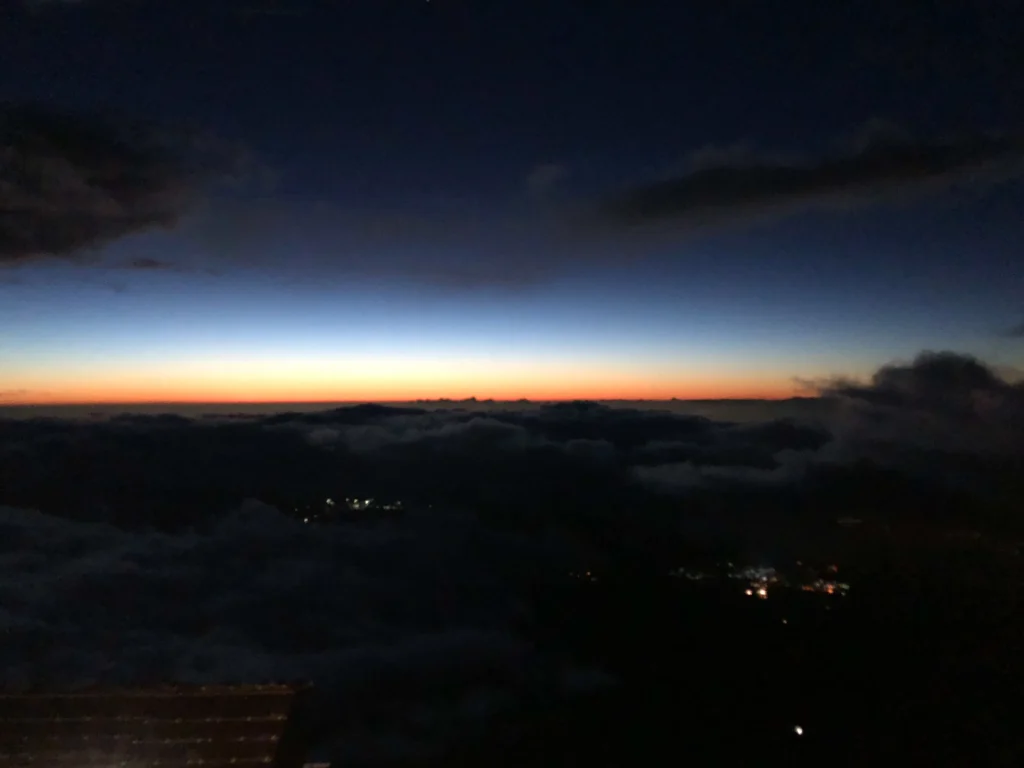
The first sign of dawn is not light — it is color. Around 3:30 AM, a thin band of warm orange appears on the eastern horizon. Over the next 45 minutes, that band widens and intensifies into the blue hour.
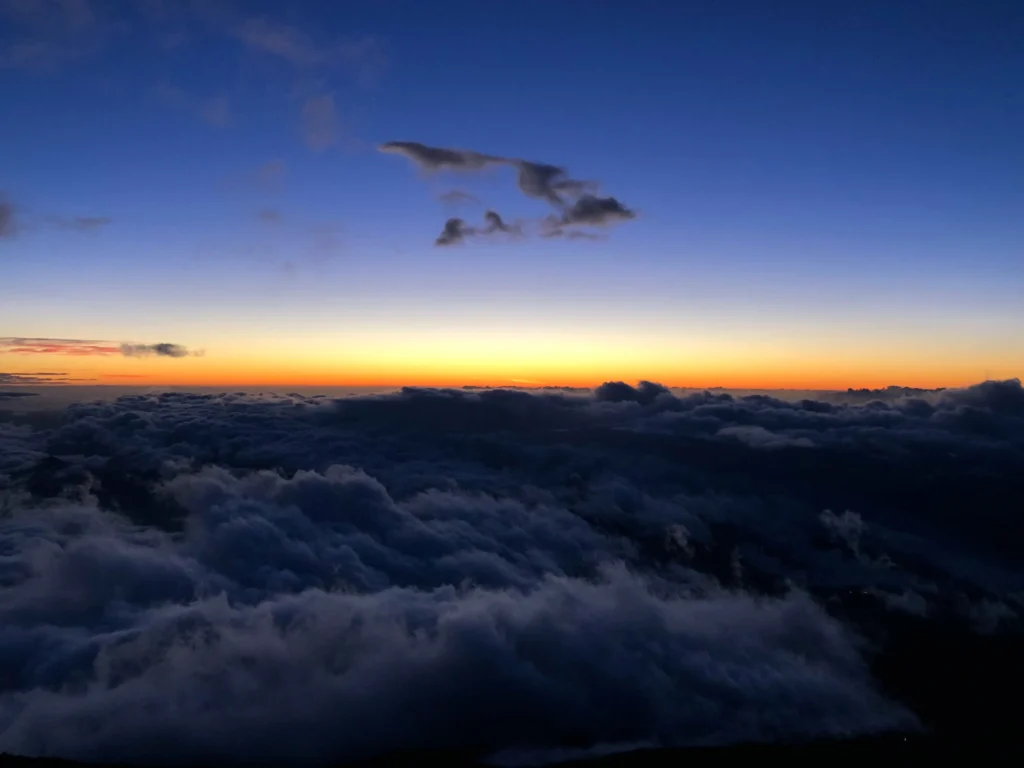
Phase 7: Goraiko — The Sunrise (4:30 AM – 5:00 AM)
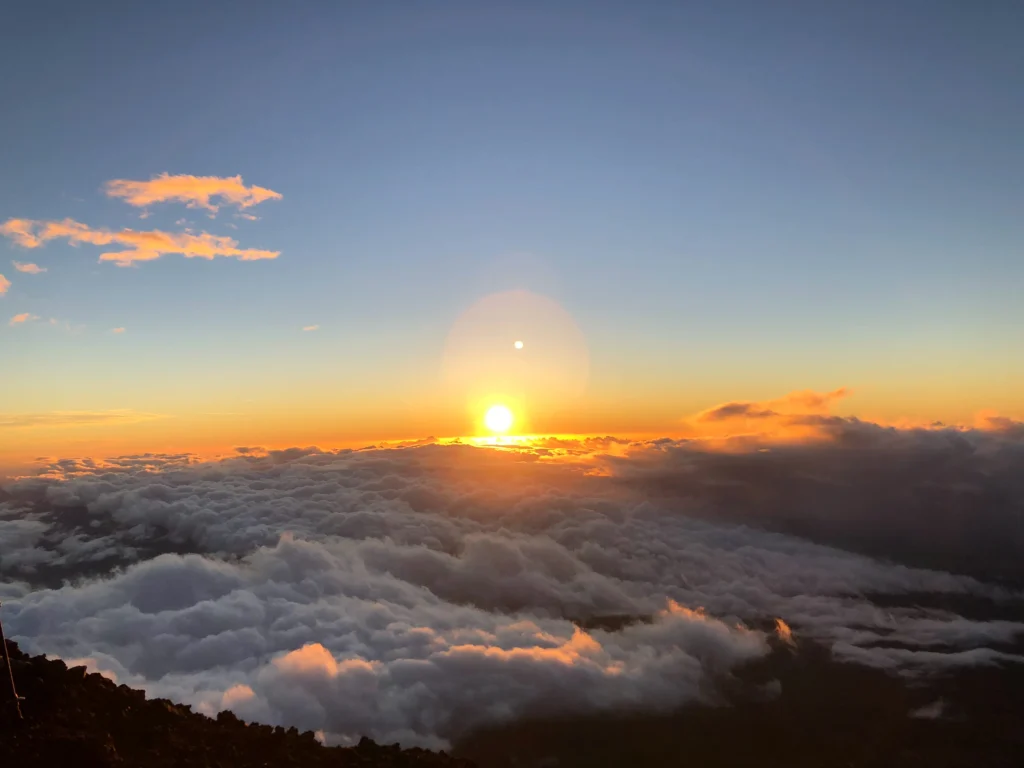
The sun rises from within the cloud sea. You are watching it emerge from a white ocean that stretches to the horizon in every direction.
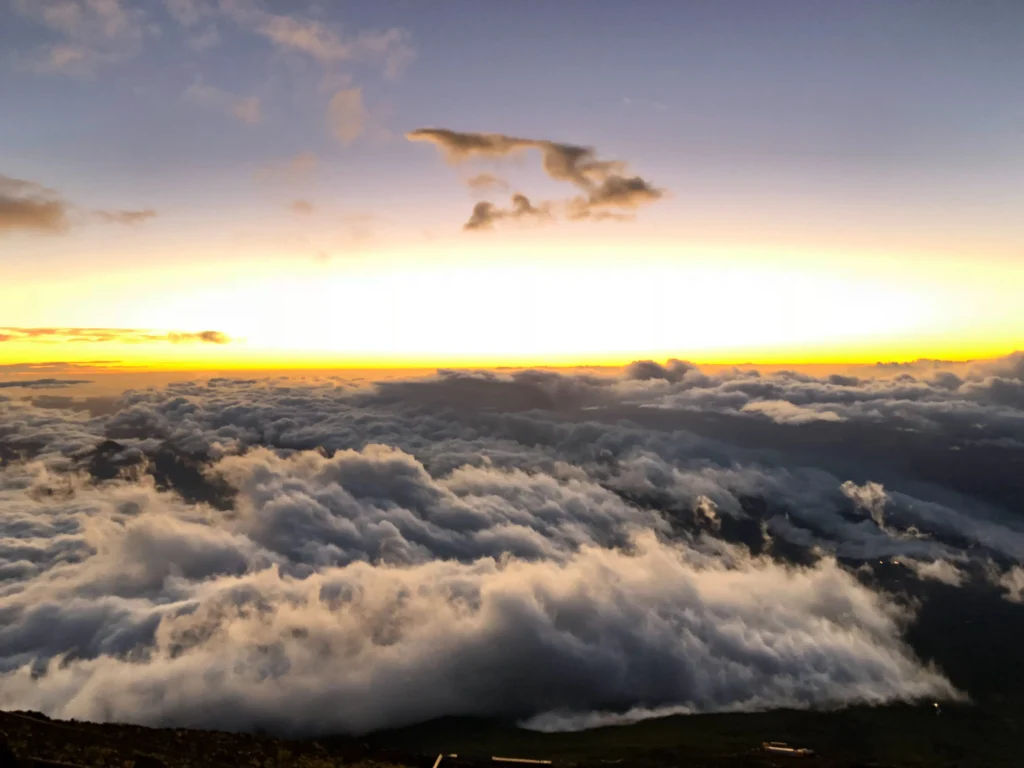
Phase 8: Shadow Fuji & Morning Light (5:00 AM – 6:00 AM)
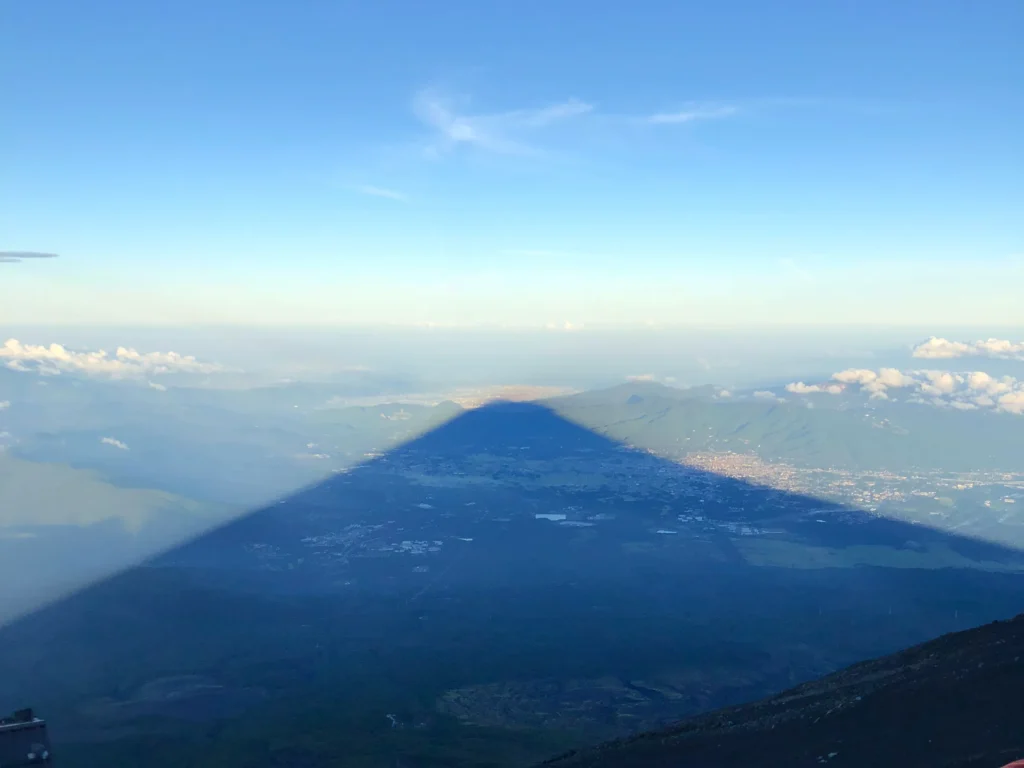
While everyone faces east, turn west. Mt. Fuji’s own shadow — a perfect dark triangle — stretches across the landscape below. This is Kage-Fuji (Shadow Fuji).
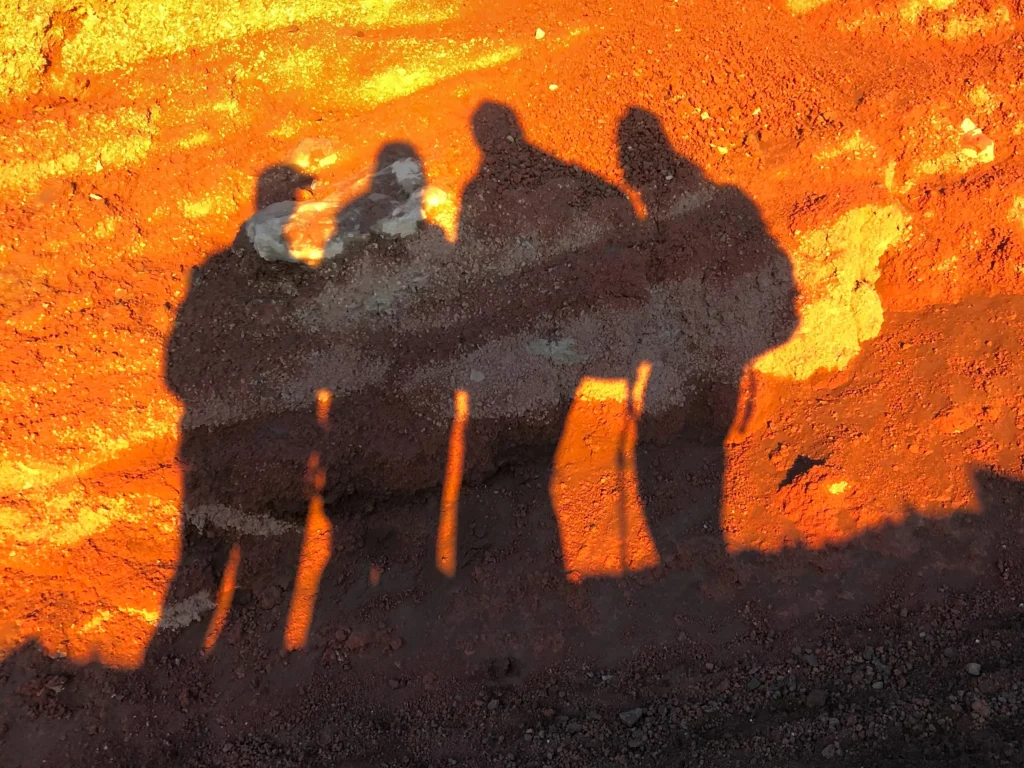
Phase 9: The Summit in Daylight (6:00 AM – 7:00 AM)
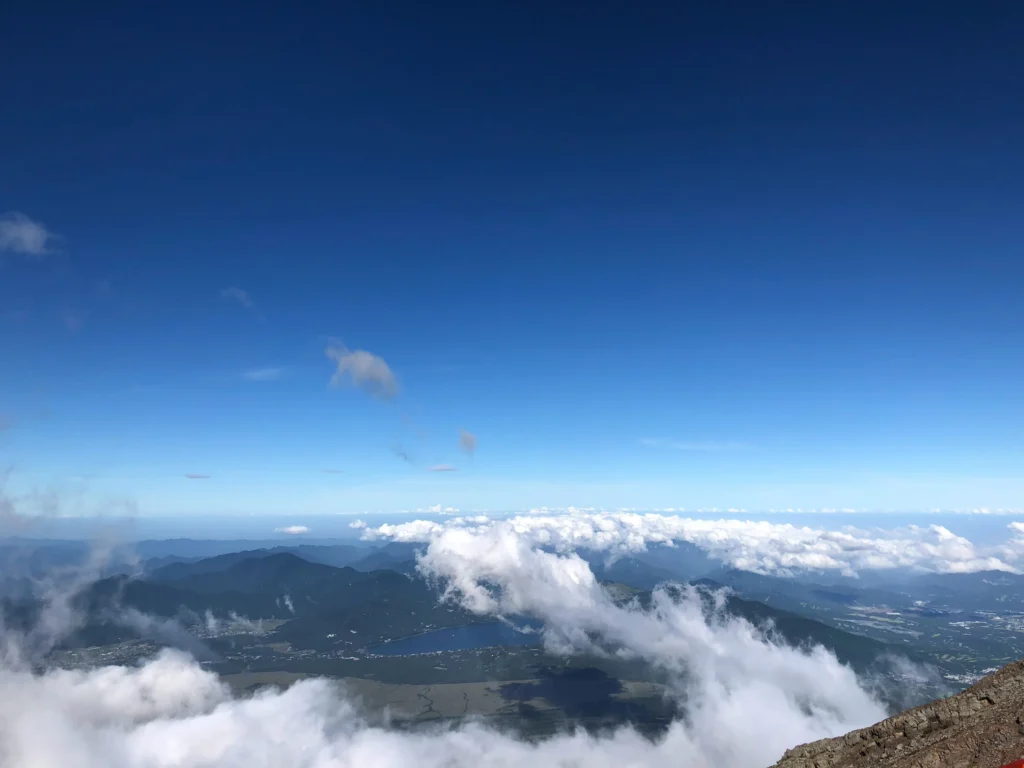
With the sun up, you can finally see where you are. The panoramic view on a clear morning extends over 100 kilometers.
3. What Happens in the Mountain Hut Between 6 PM and 1 AM?
The mountain hut experience is the part most climbers are least prepared for.
•Arrival (5:00–6:00 PM): Check in by showing your reservation confirmation. You will sleep side by side with other climbers on a wooden platform.
•Dinner (5:30–7:00 PM): Typically curry rice with miso soup.
•Sunset viewing (6:00–7:00 PM): Prime time for photography on the outdoor terrace.
•Lights out (8:00–9:00 PM): The hut goes quiet. Earplugs and an eye mask are essential.
•Wake-up (1:00–2:00 AM): Get dressed quickly, fill your water bottle, and head out.
4. How Does the 2026 Gate System Affect Night Climbing?
The 2026 regulations have fundamentally changed how night climbing works on Mt. Fuji.
Yoshida Trail:
•Trailhead gate closes at 2:00 PM, reopens at 3:00 AM.
•Climbers with mountain hut reservations are exempt.
•This effectively eliminates “bullet climbing” (non-stop overnight ascent without a hut stay) on the Yoshida Trail.
Shizuoka Trails (Fujinomiya, Subashiri, Gotemba):
•Online pre-registration via the FUJI NAVI app is mandatory.
•Safety training content must be completed before registration is approved.
You must book a mountain hut. It is no longer optional on the Yoshida Trail.
5. What Gear Do You Need for an Overnight Climb?
The overnight climb has different gear needs than a daytime hike.
Lighting:
•Headlamp with fresh/charged batteries.
Warmth (the #1 underestimated need):
•Base layer, mid layer (fleece), and outer shell (windproof/waterproof).
•Down jacket for summit wait (0°C).
•Gloves and beanie.
Sleep:
•Earplugs and eye mask.
Sustenance:
•1.5–2 liters of water.
•High-energy snacks (onigiri, chocolate).
Other essentials:
•¥100 coins for pay toilets.
•Portable phone charger (keep it inside your jacket for warmth).
6. Practical Tips for Southeast Asian Travelers & More
•Flights & Access: Travelers from Southeast Asia can fly into Tokyo (HND/NRT) via direct flights. From Shinjuku, take a highway bus directly to the Fuji Subaru Line 5th Station.
•Weather & Clothing: In August, Mt. Fuji’s summit is around 0–5°C (32–41°F) — a massive contrast to the 30°C+ temperatures in Tokyo or Southeast Asia. Bring proper winter jackets and layer your clothing.
•Cash vs. Card: Mountain huts and toilets are cash-only. Bring plenty of ¥100 coins and ¥1,000 bills.
•Altitude Acclimatization: Spend 30–60 minutes at the 5th Station before starting. Walk around and hydrate to reduce altitude sickness risk.
7. Suggested Overnight Itinerary
For Yoshida Trail, targeting August 1 sunrise (4:50 AM):
| Time | Activity |
| 9:00 AM | Depart Shinjuku by highway bus |
| 11:30 AM | Arrive Fuji Subaru Line 5th Station (2,305m). Acclimatize 30–60 min |
| 12:30 PM | Begin ascent. Pass through gate (show hut reservation) |
| 3:00 PM | 7th Station (2,700m). Rocky switchbacks begin |
| 5:00 PM | 8th Station (3,040–3,400m). Check into mountain hut |
| 5:30 PM | Dinner at hut |
| 6:00–7:00 PM | Sunset above cloud sea from hut terrace |
| 8:00 PM | Sleep (earplugs in) |
| 1:30 AM | Wake up, gear up, depart hut |
| 2:00 AM | Climbing in darkness. City lights below |
| 3:30 AM | 9th Station area. First glow on horizon |
| 4:20 AM | Arrive summit. Find position facing east |
| 4:50 AM | Goraiko (sunrise) |
| 5:05 AM | Turn west — Shadow Fuji |
| 7:00 AM | Begin descent via bulldozer route |
| 10:00 AM | Arrive 5th Station. Bus to Kawaguchiko or Shinjuku |
8. FAQ
Q: Is bullet climbing on Mt. Fuji still possible in 2026?
A: On the Yoshida Trail, effectively no. The trailhead gate closes at 2:00 PM and reopens at 3:00 AM, giving insufficient time to reach the summit before sunrise. On Shizuoka trails, it is technically possible but strongly discouraged due to safety risks.
Q: Can I climb Mt. Fuji at night without a mountain hut reservation?
A: On the Yoshida Trail in 2026, you need a hut reservation to pass through the gate after 2:00 PM. On Shizuoka trails, hut reservations are not gate-enforced, but huts are unlikely to accept walk-ins during peak season.
Q: Will I sleep at all in a Mt. Fuji mountain hut?
A: Most climbers get 3–5 hours of broken sleep. The combination of altitude, tight quarters, noise, and anticipation makes deep sleep unlikely. Earplugs and an eye mask make a significant difference.
Q: How dark is the Mt. Fuji trail at night?
A: Very dark. There is no trail lighting. Your headlamp is your only light source. The chain of other climbers’ headlamps provides a visual guide for the route.
Q: What happens if weather turns bad during the night climb?
A: Mountain hut staff monitor conditions continuously. If conditions become dangerous, they will advise climbers to stay in the hut. If you are on the trail, return to the nearest hut.
Q: How crowded is the pre-dawn Mt. Fuji summit trail?
A: On the Yoshida Trail during peak season, very crowded. Wait times of 30–60 minutes at bottleneck points are common on weekends. The 2026 daily cap of 4,000 climbers helps somewhat. Weekdays are significantly less crowded.
Q: Can I charge my phone at a Mt. Fuji mountain hut?
A: Most huts have limited charging spots, and some charge ¥500–1,000. Bring a portable battery pack and keep it inside your jacket — cold temperatures drain lithium batteries rapidly.
Q: Is the overnight Mt. Fuji climb safe for beginners?
A: Yes, with proper preparation. The Yoshida Trail is well-maintained and staffed. Main risks are altitude sickness, hypothermia, and exhaustion — all mitigated by slow pace, proper clothing, and the hut rest period. Thousands of first-time climbers complete it every season.
9. Final Thoughts
Climbing Mt. Fuji at night is not about endurance. It is about watching the world transform.
In 12 hours, you see the sun set behind a cloud sea, city lights emerge from darkness, stars appear overhead, the first crack of dawn paint the horizon orange, the sun rise from within the clouds, and the mountain’s own shadow stretch across the sleeping land below.
No other experience in Japan compresses that much visual drama into a single night. The moment the sun rises, none of the cold or exhaustion matters.
Sources checked
fujisan-climb.jp (official), mountain hut operator websites, Japan Meteorological Agency, Yamanashi Prefecture climbing regulations

- Diamond Fuji 2026-2027: Complete Calendar Guide to Where and When to See It
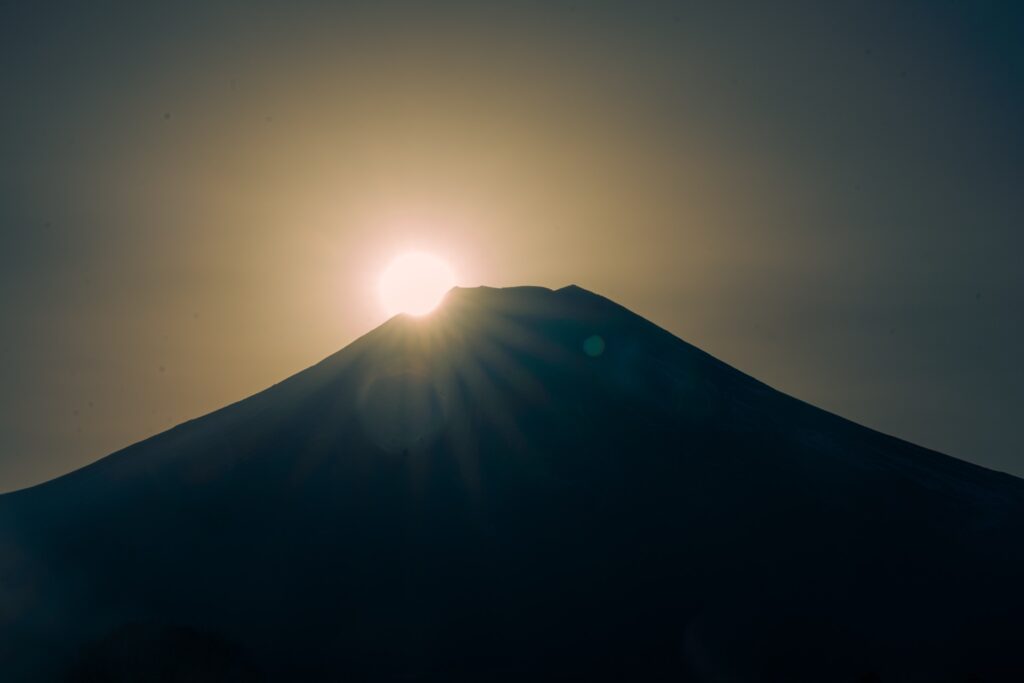 Mt. Fuji · Diamond Fuji · 2026–2027 Diamond Fuji 2026–2027: The Complete Calendar Guide to Where and When to See It On any given month somewhere in Japan, the sun touches the summit of Mt. Fuji at sunset or sunrise. Here’s the calendar of where and when each spot lights up. Diamond Fuji — the… Read more: Diamond Fuji 2026-2027: Complete Calendar Guide to Where and When to See It
 - Kai no Katsuyama Yabusame: I Stood at the Rope Line Today and Watched a 900-Year-Old Bow Find Its Target
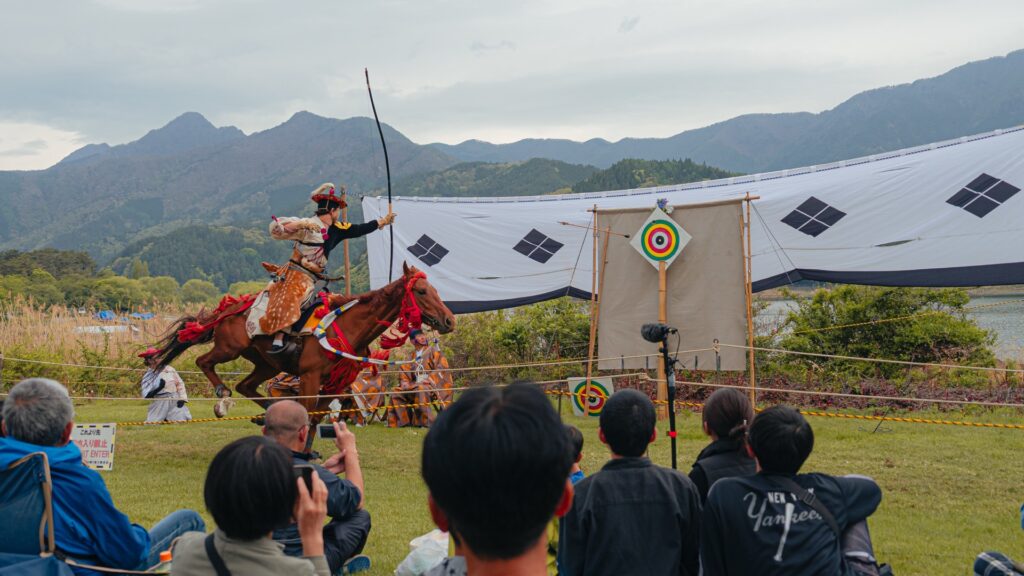 Field report from the 900-year-old Takeda-style yabusame at Fuji Omuro Sengen Shrine, Lake Kawaguchiko. 12-photo slideshow, day timeline, photography tips, and the date for 2027.
 - Hanaan — The Park Canteen Inside Hana no Miyako Koen That Quietly Outcooks the Tourist Strip
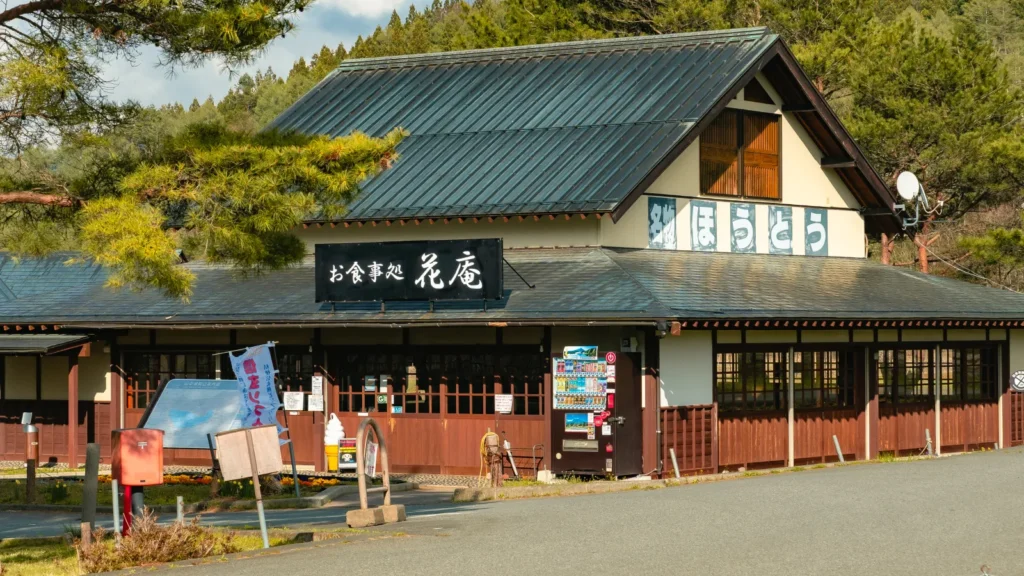 Inside Yamanakako’s Hana no Miyako Park, a wooden-beamed canteen serving ginger pork, negi-tama butadon, and kabocha hōtō from ¥1,150.
 - Kobaiya — Kawaguchiko’s Quiet Wagyu Specialist Serving a ¥2,500 Beef-and-Tempura Set Under Mt. Fuji
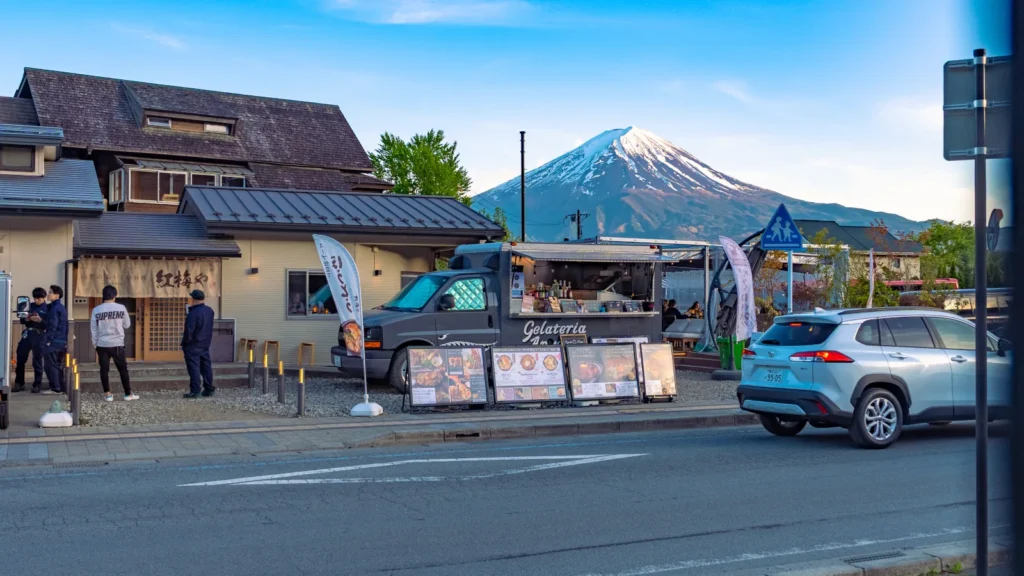 A wagyu-focused lunch spot near Lake Kawaguchi. The ¥2,500 Oishi Gozen set — wagyu beef bowl with tempura — is the signature. Mt. Fuji fills the window.
 - Oishi Park — The Kawaguchiko Flower Park with a Different Bloom Every Month
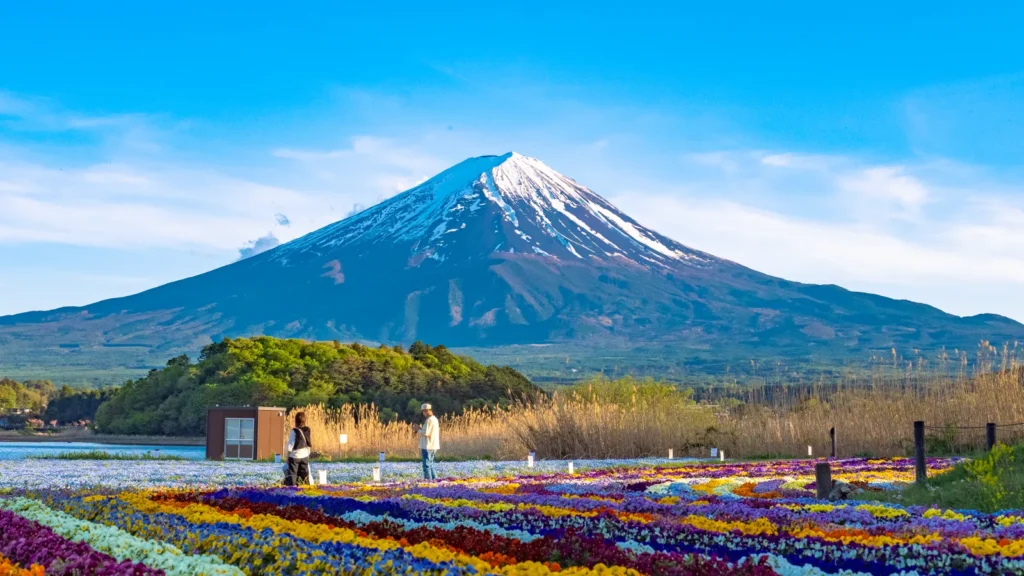 A free lakeside park on Lake Kawaguchiko where shibazakura, nemophila, lavender, and kochia each take turns in front of Mt. Fuji through the year.
2026 cherry blossom cherry blossoms day trip from tokyo flower festival fuji five lakes fujiyoshida Fukuoka fushimi hanami hiking japan japanese culture japanese food japan travel kamakura Kamikochi kanagawa kawagoe kawaguchiko Kumamoto kyoto Mount Fuji mt fuji Nagano Nikko Oku-Nikko Onsen Ramen ryokan saitama sakura Shizuoka shrine sightseeing spring spring in japan Tokyo travel travel guide Travel Guide 2026 when to visit japan winter winter travel Yamanashi
Join 1,000+ travelers discovering Japan's hidden side
Weekly dispatches from off-the-beaten-path Japan — spots and stories you won't find in guidebooks.
No spam. Unsubscribe anytime.
Welcome aboard!
You're in. See you in your inbox soon.