Kyoto · Kyoto Station · Observation
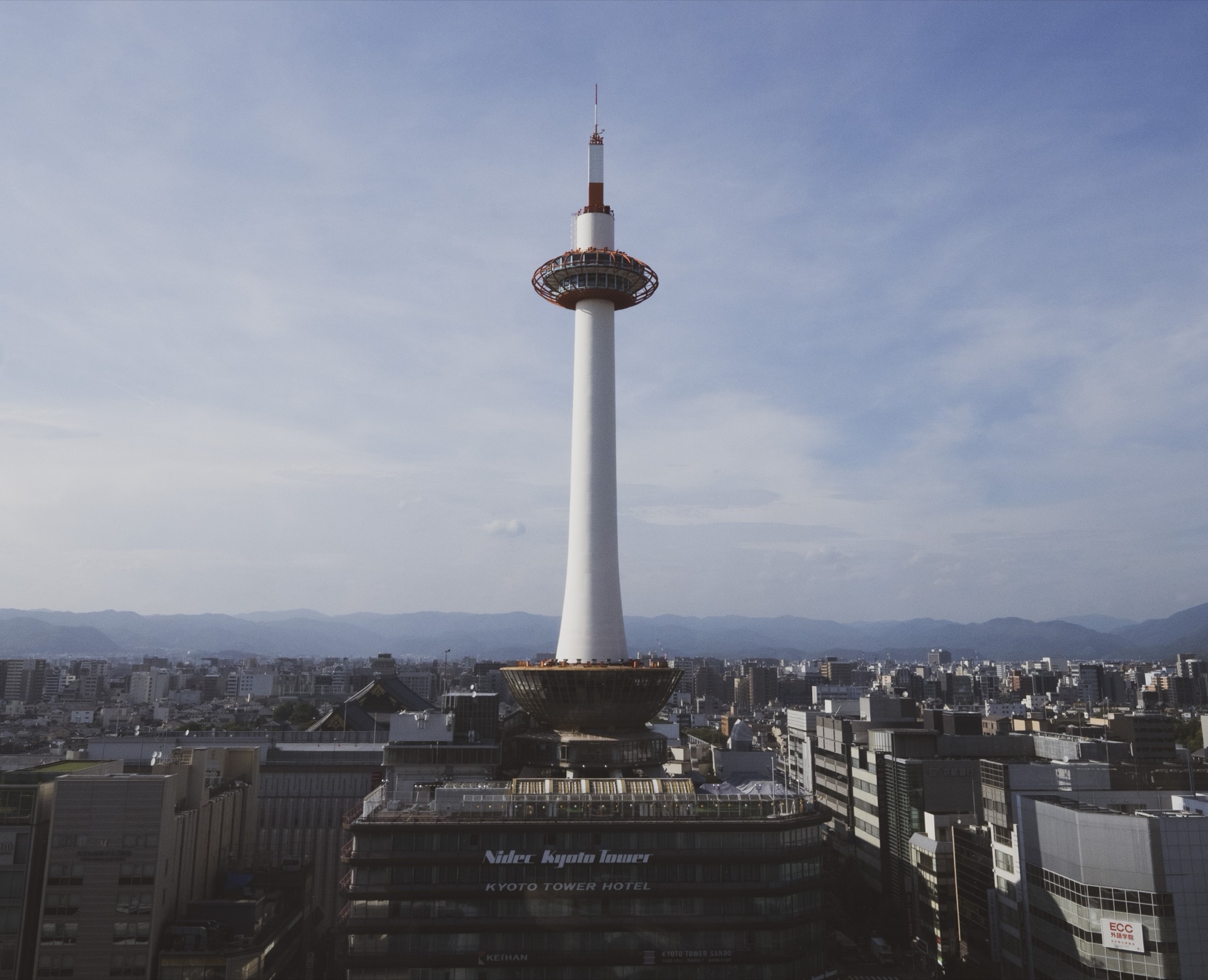
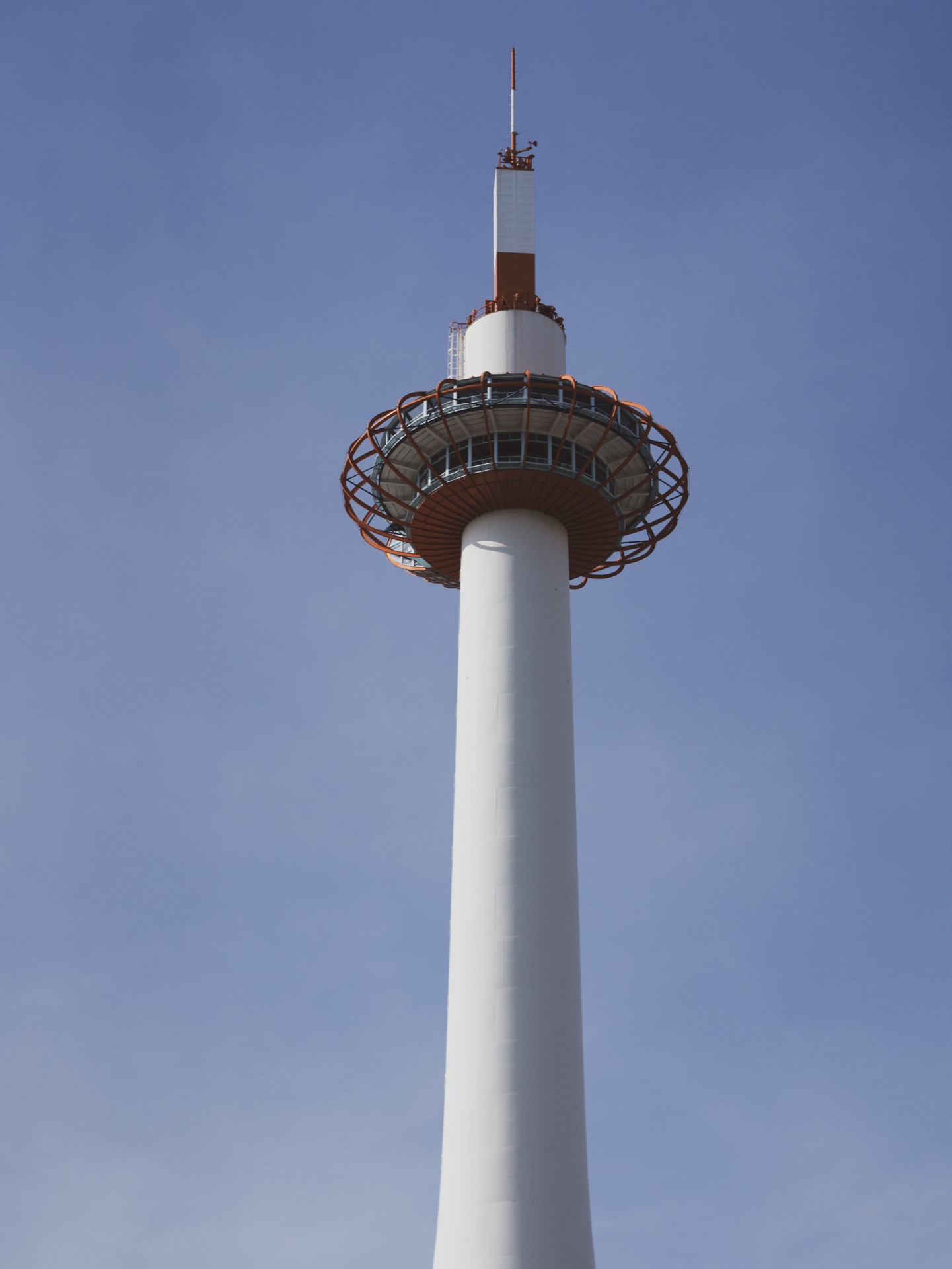
Most guides skip Kyoto Tower. The argument is that it’s a 1960s steel-and-paint monolith stuck in front of a city full of wooden temples, and that the city banned tall buildings specifically so that towers like this would feel out of place. All of that is true. The other thing that’s true is that Kyoto Tower is the only place in Kyoto where you can stand 100 meters up, look in any direction, and see the entire city — Higashiyama mountains, the temple grids, the river, the Daimonji bonfire mountain — at once. Once an afternoon, that perspective is worth more than a third temple visit.
Quick Facts
Why You Should Actually Go Up
The contrarian case for Kyoto Tower is the geography of the city. Kyoto sits in a basin ringed by mountains on three sides — Higashiyama to the east, Kitayama to the north, Nishiyama to the west. The buildings are kept low by ordinance, so from street level the city feels enclosed but you can never quite see the shape of it. From the tower, the whole bowl makes sense.
The second case is the architecture you’re standing on. The tower itself is a 1960s steel monument, but Kyoto Station — which sits directly across the plaza — is a 1997 Hara Hiroshi-designed glass-and-steel structure that is genuinely one of Japan’s significant late-20th-century buildings. The tower is the cleanest place in the city to look down at the station’s roof and see how the architecture works.
Climb the tower, see the city, photograph the station roof on the way back down. Forty-five minutes total. Better than spending the same time stuck behind tour groups at one more temple.
The View: What You Can See
The 100-meter deck is a 360° glass-walled circular hall. Free telescopes are mounted around the perimeter and signage points to the major landmarks. There is no time limit. On a clear day you can pick out:
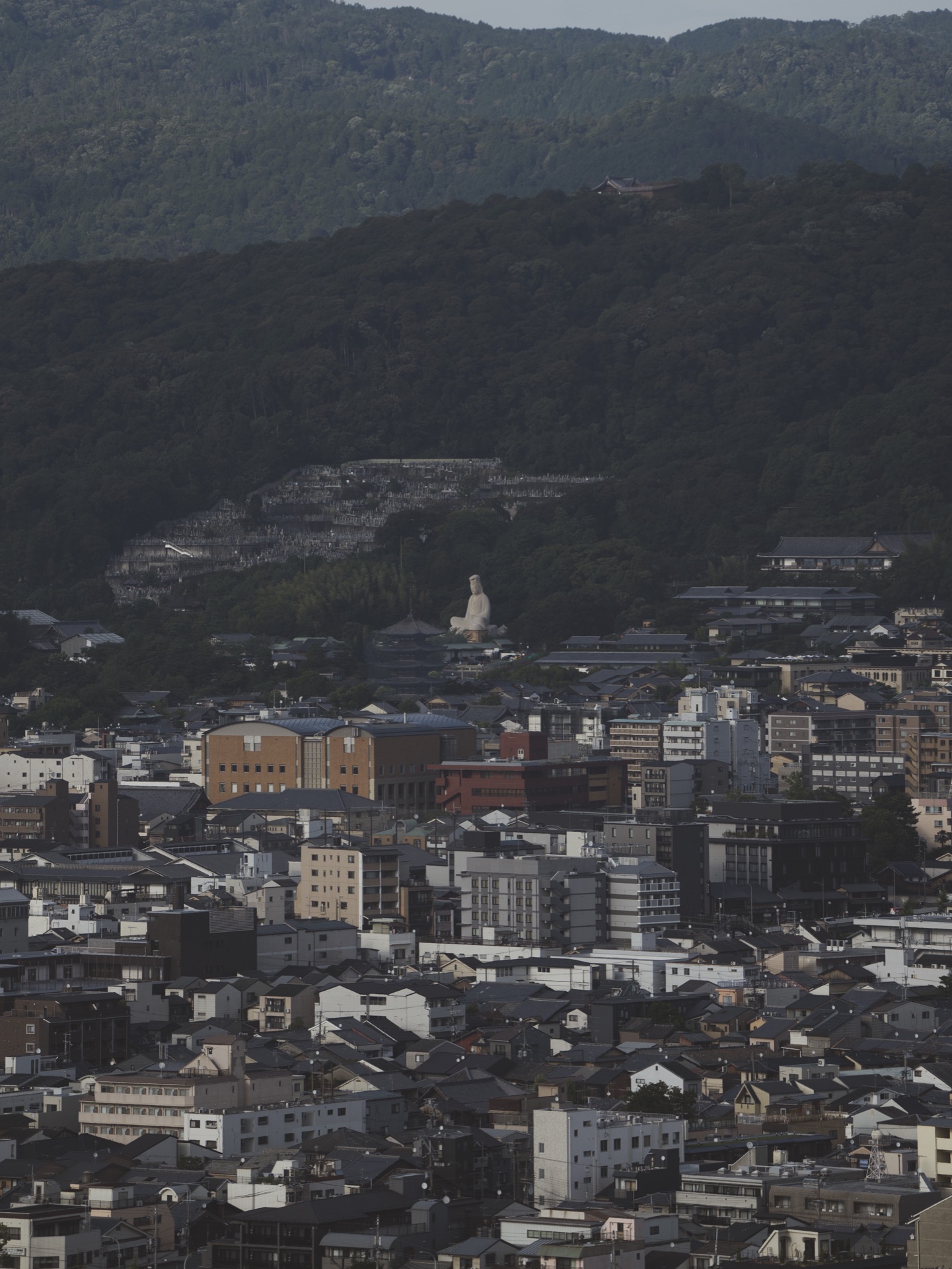
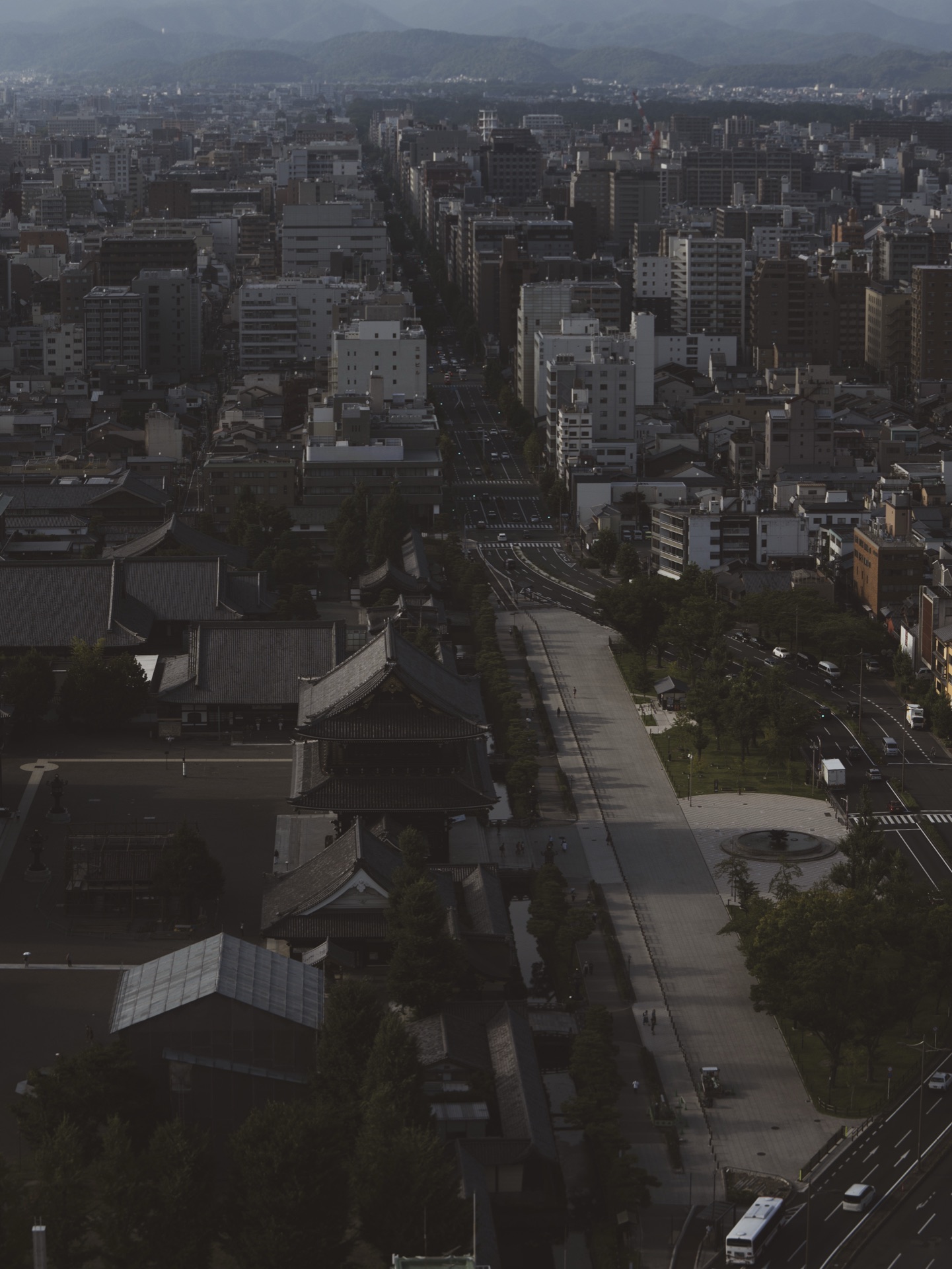
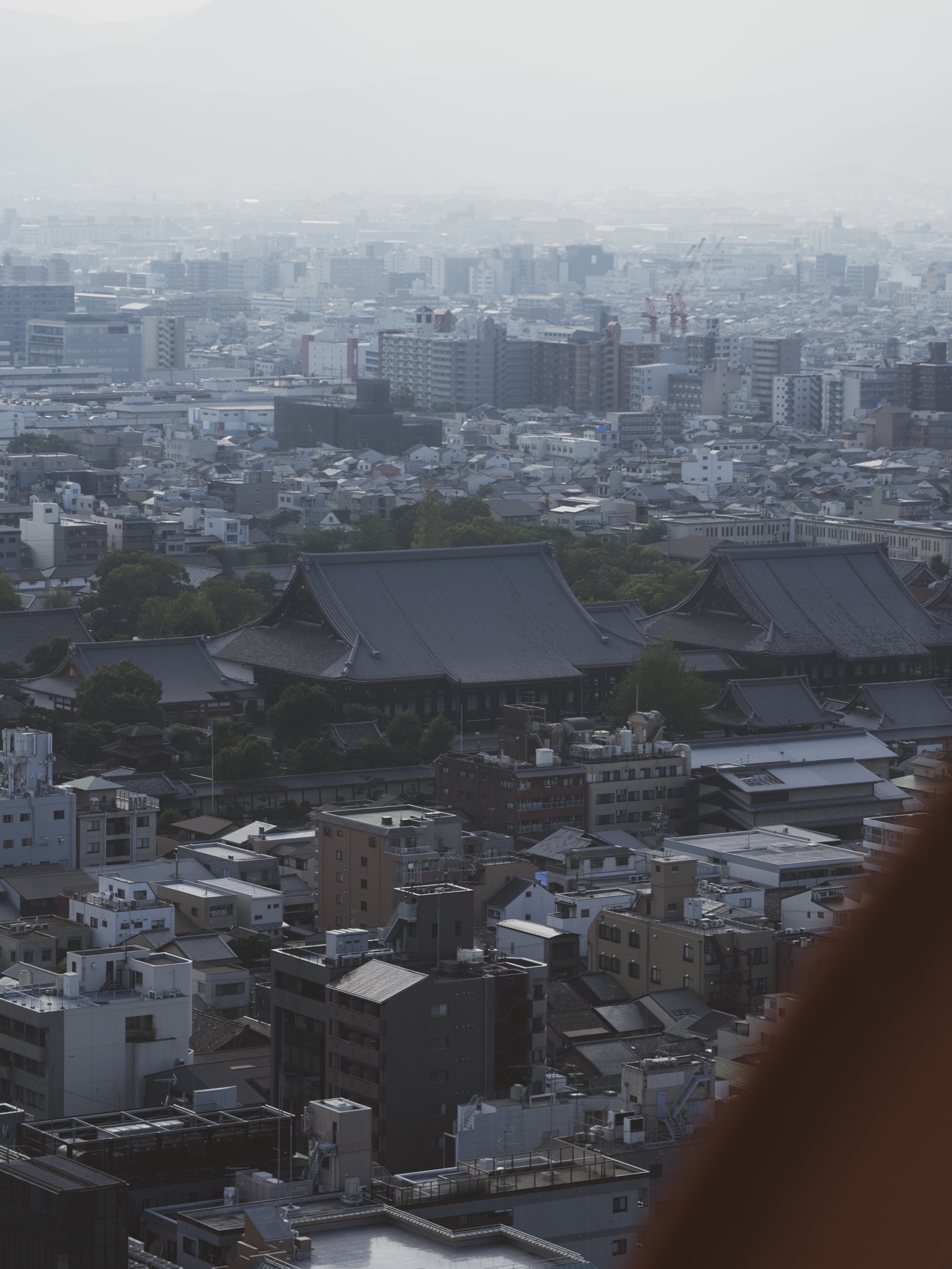
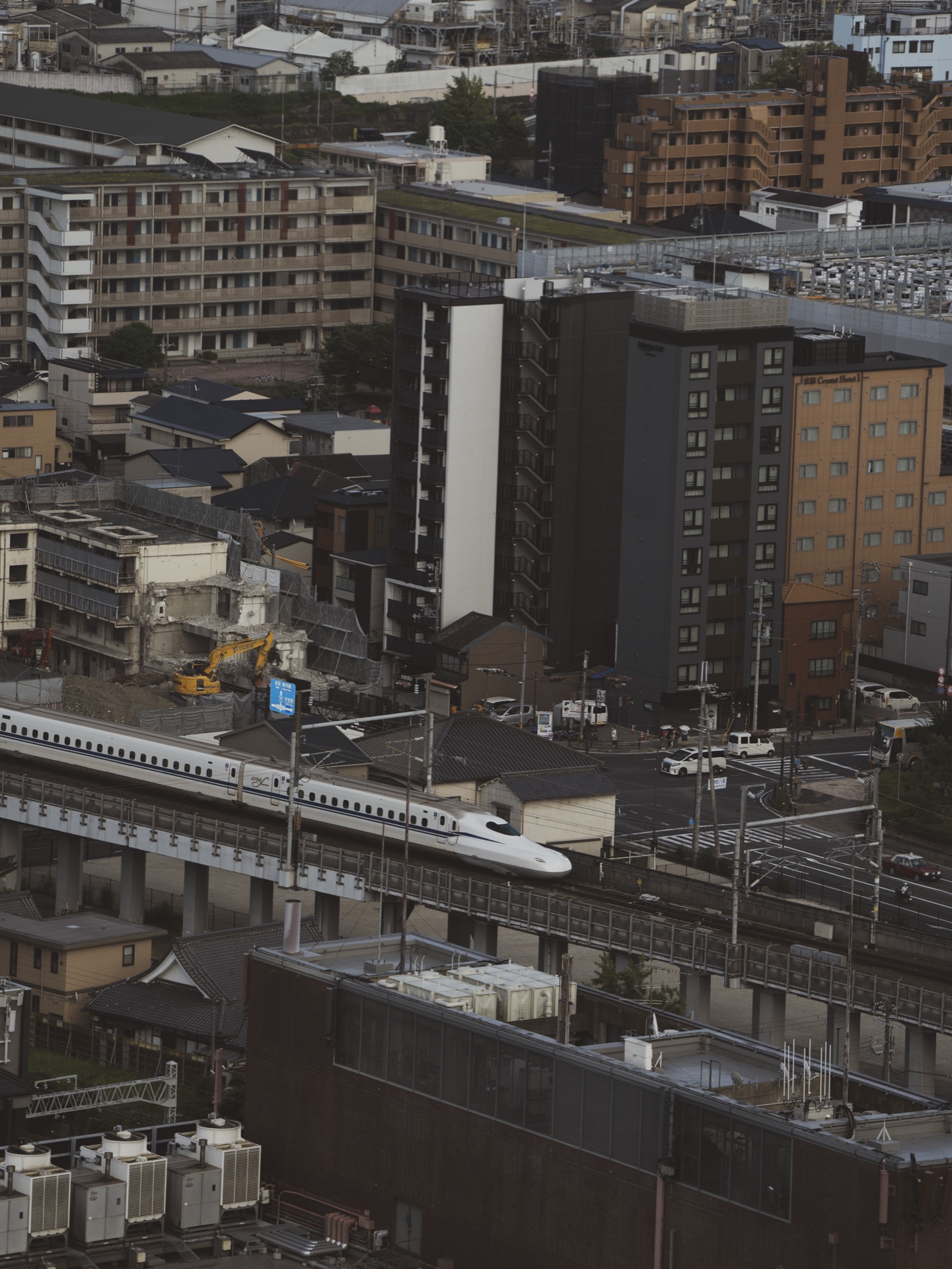
The most rewarding direction to face is east. Higashi Hongan-ji’s massive curved roof sits in the foreground, the Kamogawa river is invisible behind the buildings but its corridor of green trees is clear, and the eastern mountain wall rises directly behind it all. On a clear evening the Daimonji character — the giant 大 carved into the slope, used for the August 16 bonfire — is sharp against the green.
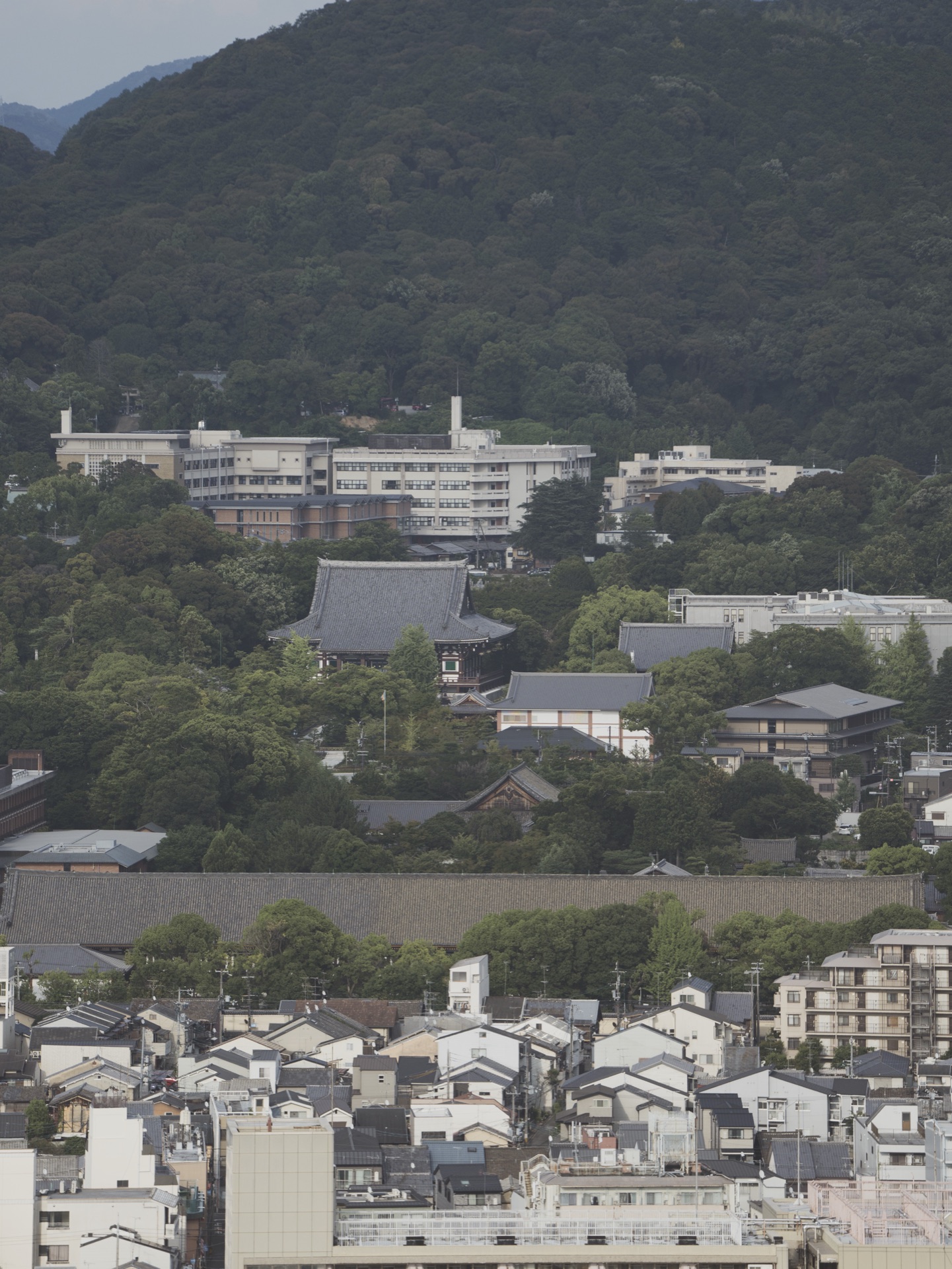
South looks toward Toji’s five-story pagoda — the only tall wooden structure in central Kyoto. North looks at the high-rises of the Karasuma-Oike business district, then up toward Kitayama. West looks toward the Arashiyama hills.
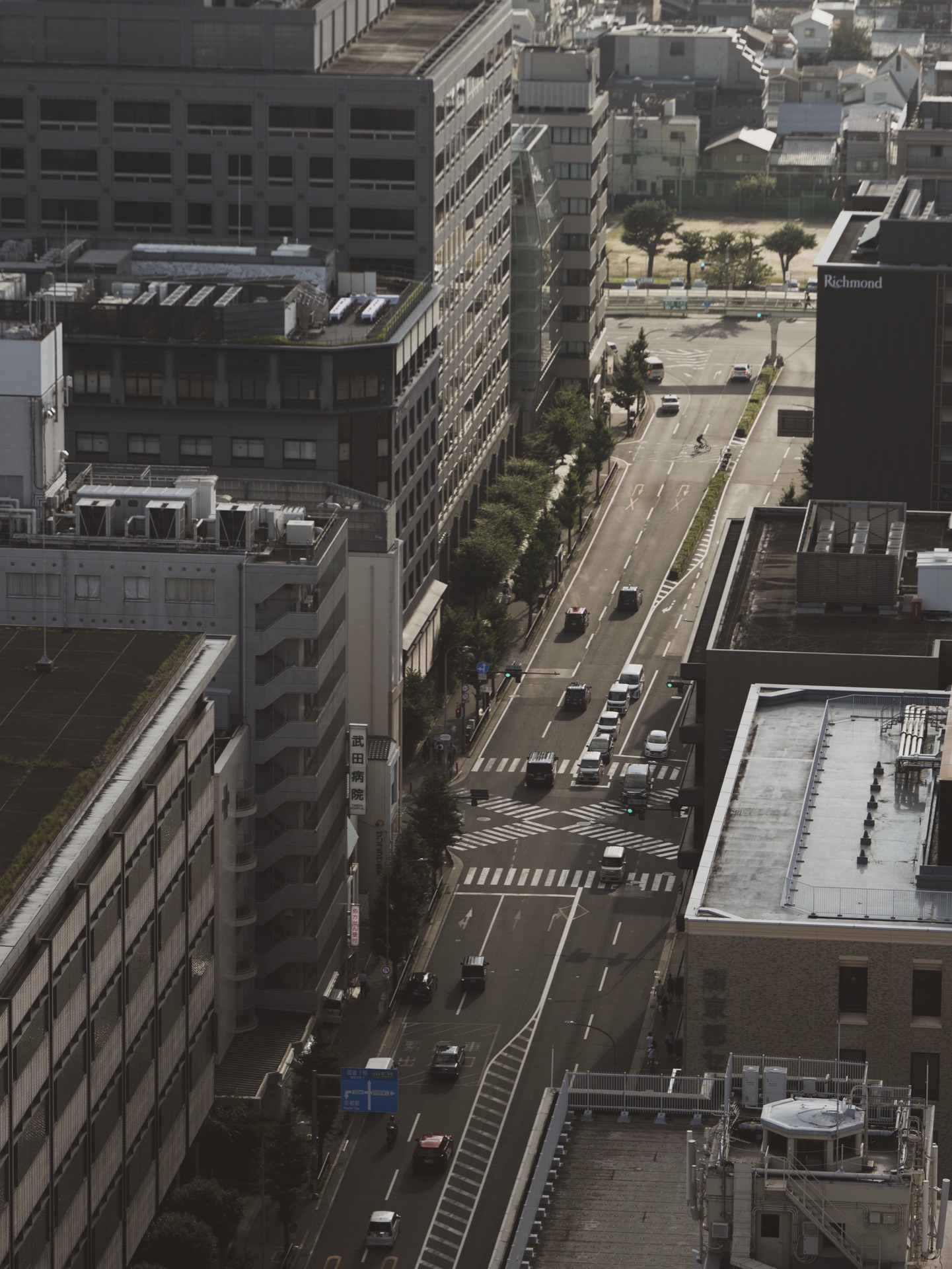
The Tower Itself
Kyoto Tower opened in 1964, the same year the Tokaido Shinkansen launched and Tokyo hosted the Olympics. It was — and is — controversial. The city had passed a height ordinance to protect skyline views of the temples and mountains; the tower predates strict modern enforcement and grandfathered itself in. Some locals still hate it. Some treat it as the most identifiable Kyoto landmark after the Yasaka pagoda.
In 2024, the tower was renamed “Nidec Kyoto Tower” under a sponsorship agreement with Nidec Corporation, the Kyoto-headquartered motor manufacturer. Most signage and tickets now use the new name. The tower itself is unchanged.
The Kyoto Station Complex (Don’t Miss)
Whether you go up the tower or not, take ten minutes to walk into Kyoto Station and look up. The 1997 Hara Hiroshi design is a glass and steel cathedral — a 60-meter-tall central concourse with a curved roof, exposed structural lattice, and a long set of stairs called the “Grand Staircase” that runs from the ground floor to the rooftop garden.
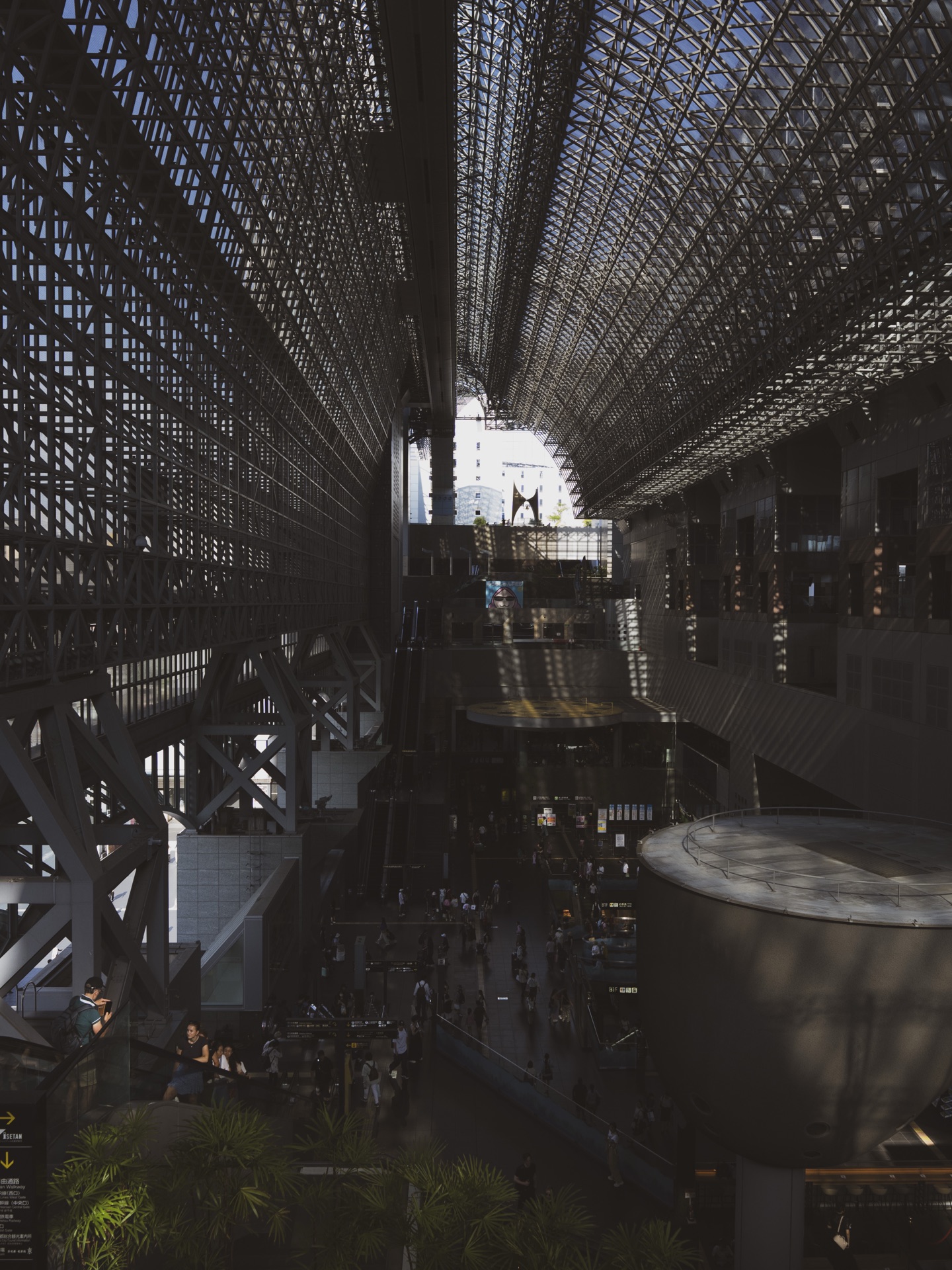
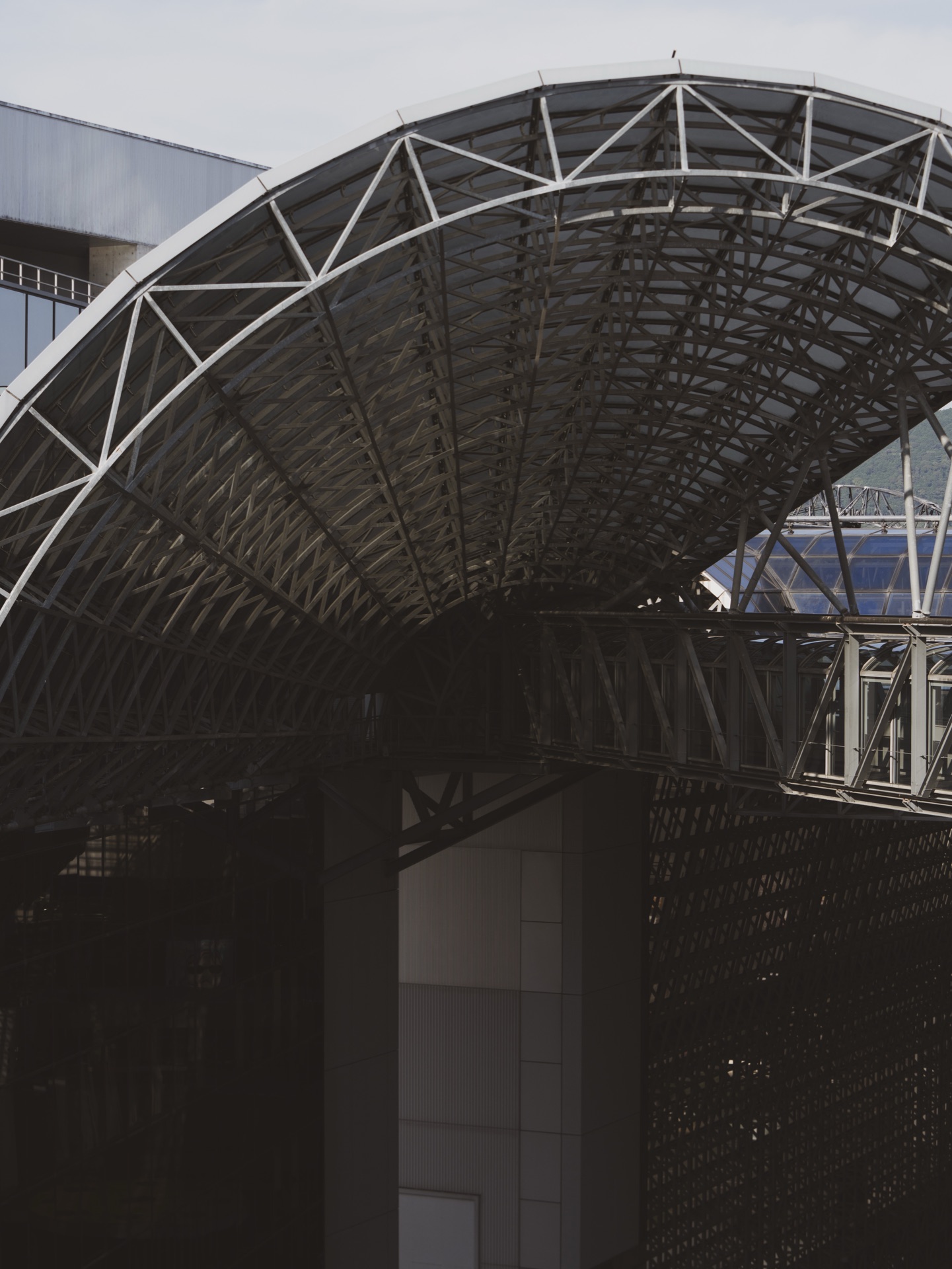
The roof structure is engineered to look impossibly heavy and let through more light than you’d expect. From the upper levels you can shoot the tower from inside the station — the geometry of the orange and white tower framed by the lattice of the station is the cleanest building portrait in Kyoto.
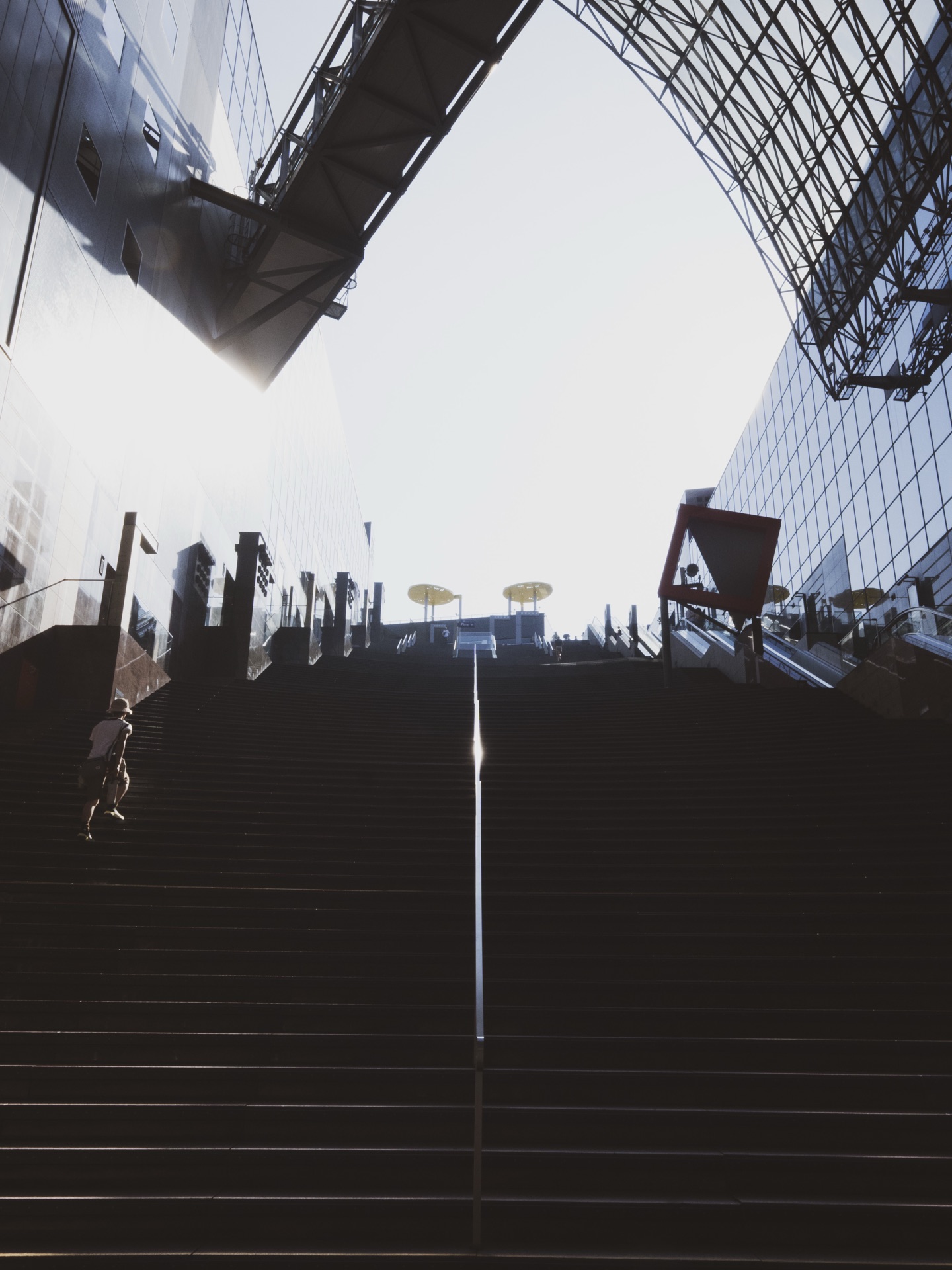
Walk up the Grand Staircase. The rooftop “Sky Garden” at the top is free, open to the public, and gets significantly less foot traffic than the tower deck — though the view is from a different angle and lower in elevation.
Practical: Tickets, Hours, Access
Admission
Observation Deck Pricing
Best Time of Day to Go Up
After the Tower: Where to Eat
The tower base sits on top of a hotel, with multiple restaurants in the building. Better is to walk out into the surrounding station district. Kyoto’s best food is not in the tourist core — it’s in the smaller restaurants tucked into the streets around the station and the Shijo / Karasuma area.
Stay across from the tower itself — the Kyoto Tower Hotel and dozens of other Kyoto Station–area hotels put you ten minutes from anywhere in the city by JR or subway.
Browse Kyoto Station Hotels →Combine With
Frequently Asked Questions
Is Kyoto Tower worth visiting?
Yes, but not as a centerpiece — as a 30-to-60-minute orientation moment. It’s the only 100-meter observation deck in central Kyoto, and the view of the basin (Higashiyama mountains, Hongan-ji roofs, the city grid) is information you can’t get anywhere else. Pair it with Kyoto Station architecture and you have a high-value hour near the station.
How much is admission?
¥900 for adults, ¥700 for high school students, ¥600 for elementary/middle school, ¥200 for toddlers (3+), free under 3. Disability discount ¥450. Group rate ¥700/adult for 20+. Annual pass ¥3,500.
What are the opening hours?
10:00 to 21:00 daily, with last entry at 20:30. The single exception is August 16 (Daimonji bonfire night), which closes at 18:30 with last entry 18:00. Hours can change without notice — confirm on the official site if your trip depends on a specific evening visit.
Why is it called “Nidec Kyoto Tower” now?
In 2024, Nidec Corporation — a major Kyoto-headquartered motor manufacturer — acquired naming rights. The tower itself, the building, and the operations are unchanged. Locals still mostly call it “Kyoto Tower.”
Can I see Mt. Fuji from Kyoto Tower?
No. Kyoto sits on the wrong side of multiple mountain ranges from Mt. Fuji. The view is the city basin and the surrounding ring of nearby mountains.
Best time to go for photos?
Late afternoon into sunset (16:30–18:30 in spring/summer, 15:30–17:30 in late autumn/winter). The transition from afternoon light to city lights at sunset is the strongest 60-minute window of the day.
Is there a restaurant on the tower?
Restaurants are in the Kyoto Tower Hotel building below the deck, not on the deck itself. The deck has vending machines and a small gift shop only. Plan to eat before or after.
Can I bring a tripod?
Tripod policies are not always strict but are inconsistent. The deck is busy enough that a full-size tripod will be in everyone’s way. A small tabletop tripod or pressing the lens against the glass works well — the windows are clean.
The case against Kyoto Tower is aesthetic. The case for it is geographic. You cannot understand the shape of Kyoto without seeing the basin from above, and there is exactly one place to do that. The tower is also one of the only late-evening attractions in the city, which makes it a useful pivot when temples close and you still have an hour of daylight.
Forty-five minutes, ¥900, and the rest of your trip makes more sense. Worth doing once, ideally on the first afternoon after you arrive.
Join travelers discovering Japan's hidden side
Weekly dispatches from off-the-beaten-path Japan — spots and stories you won't find in guidebooks.
No spam. Unsubscribe anytime.
Welcome aboard!
You're in. See you in your inbox soon.