Miyazaki · Nichinan · Cave Shrine
Udo Jingu, on the cliffs of the Nichinan coast in Miyazaki, is one of Japan’s most striking shrines: its vermilion main hall stands inside a natural sea cave in the rock face, reached by walking down a railed stairway along the cliff rather than up. It’s built around the legend of a sea-god’s daughter who gave birth in this cave, you toss clay “luck balls” at a turtle-shaped rock offshore to make a wish, and the grounds are free. There’s no easy train, so plan on a car or the coast bus.
A shrine you walk down into
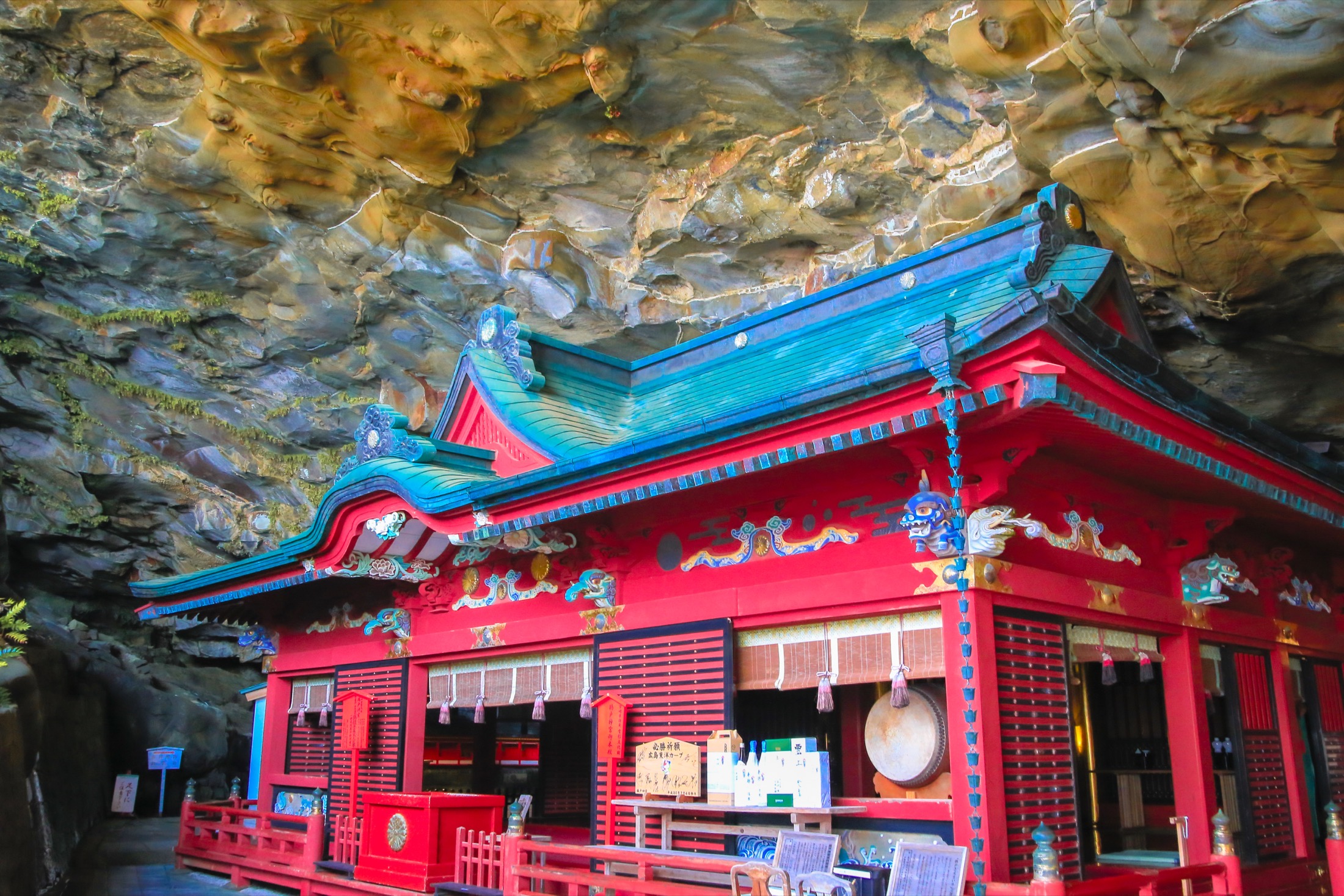
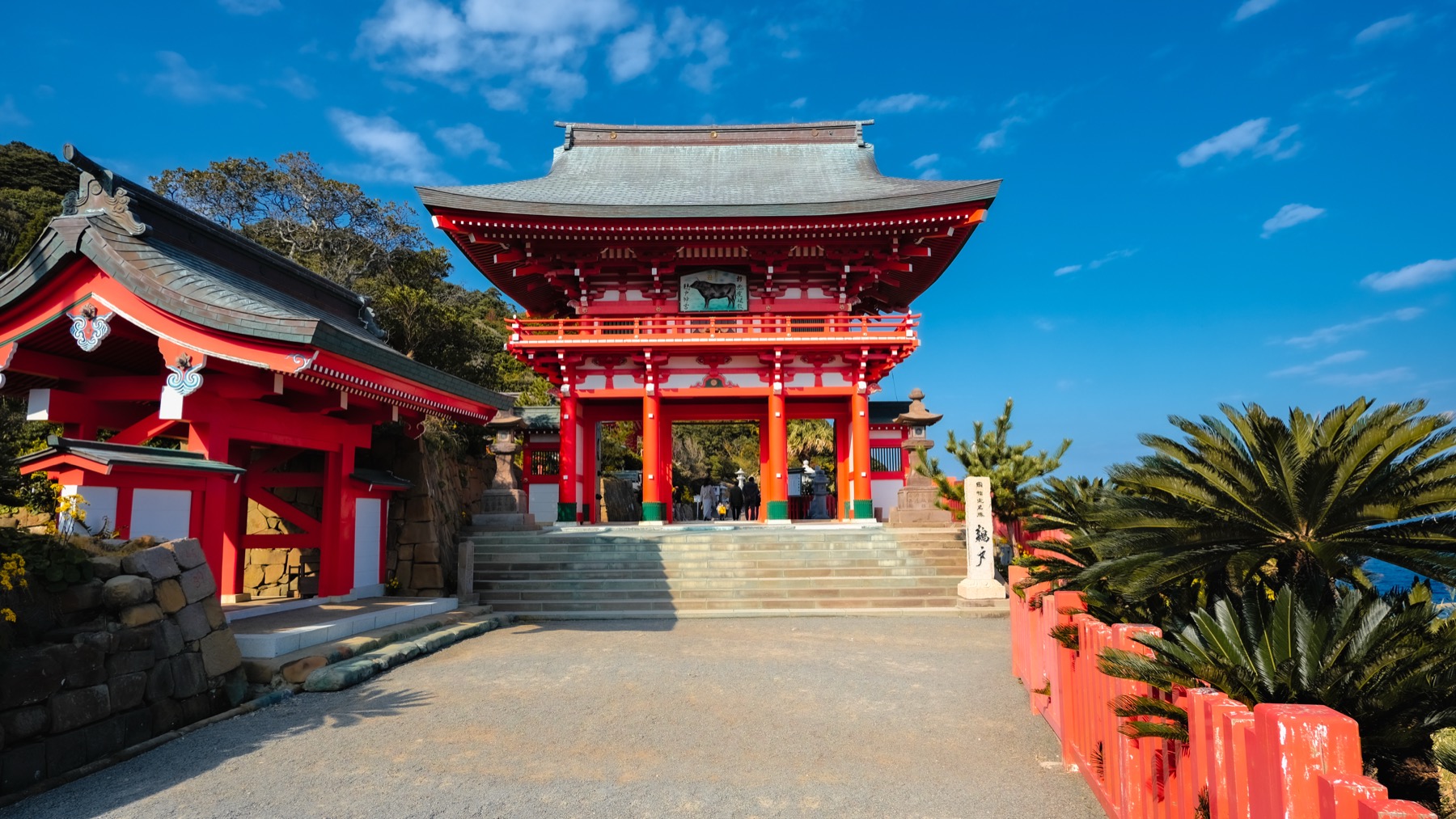
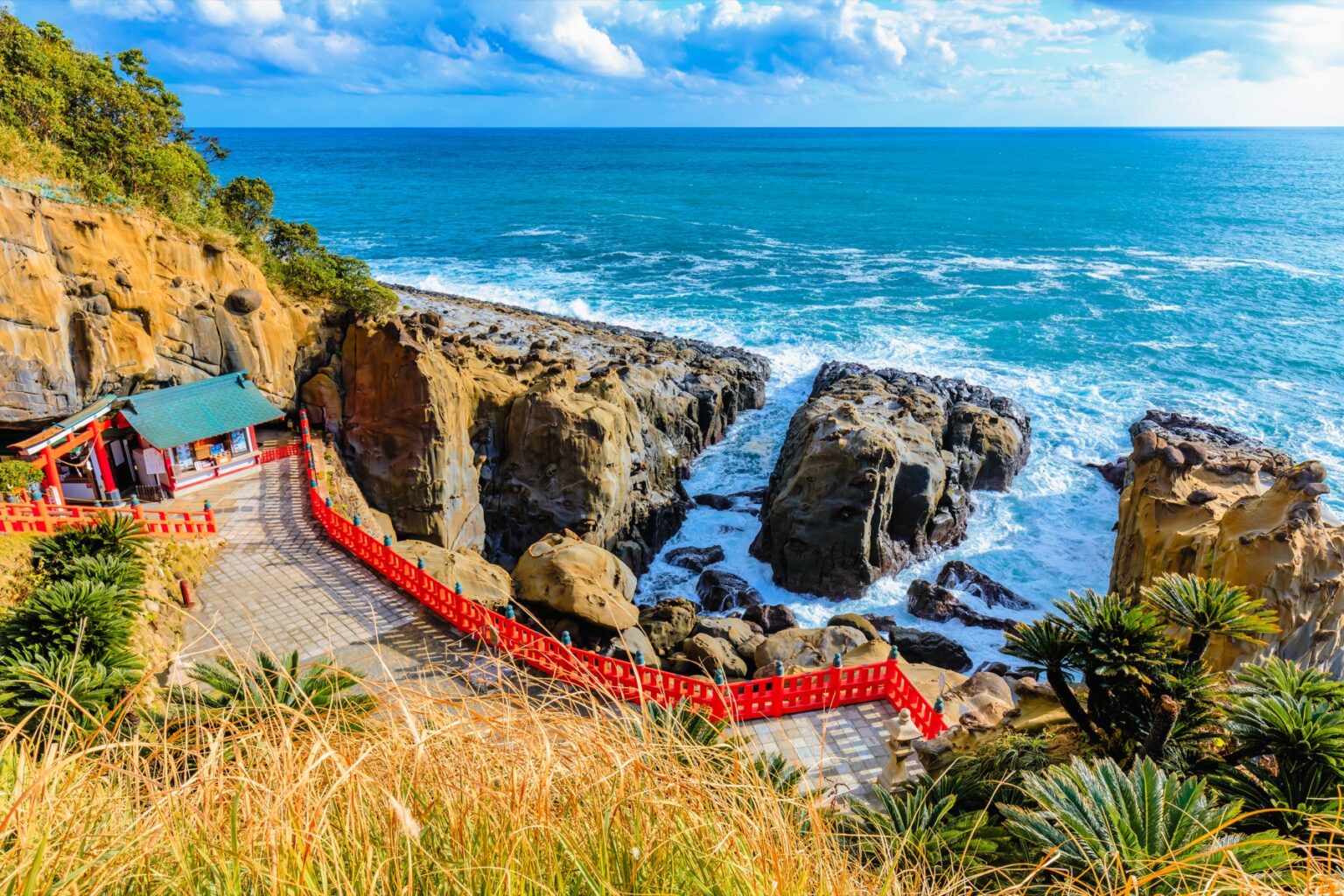
Most shrines make you climb. Udo Jingu does the opposite: from the tower gate at the top you walk down a vermilion stairway and a railed corridor cut along the cliff, the Hyuga-nada sea crashing on the rocks below, until you reach the cave. That makes it a rare kudari-miya — a “descending shrine.” The torii, the two bridges and the hall are all painted the same deep vermilion, and the effect against the blue sea is the reason photographs of this place go around the world.
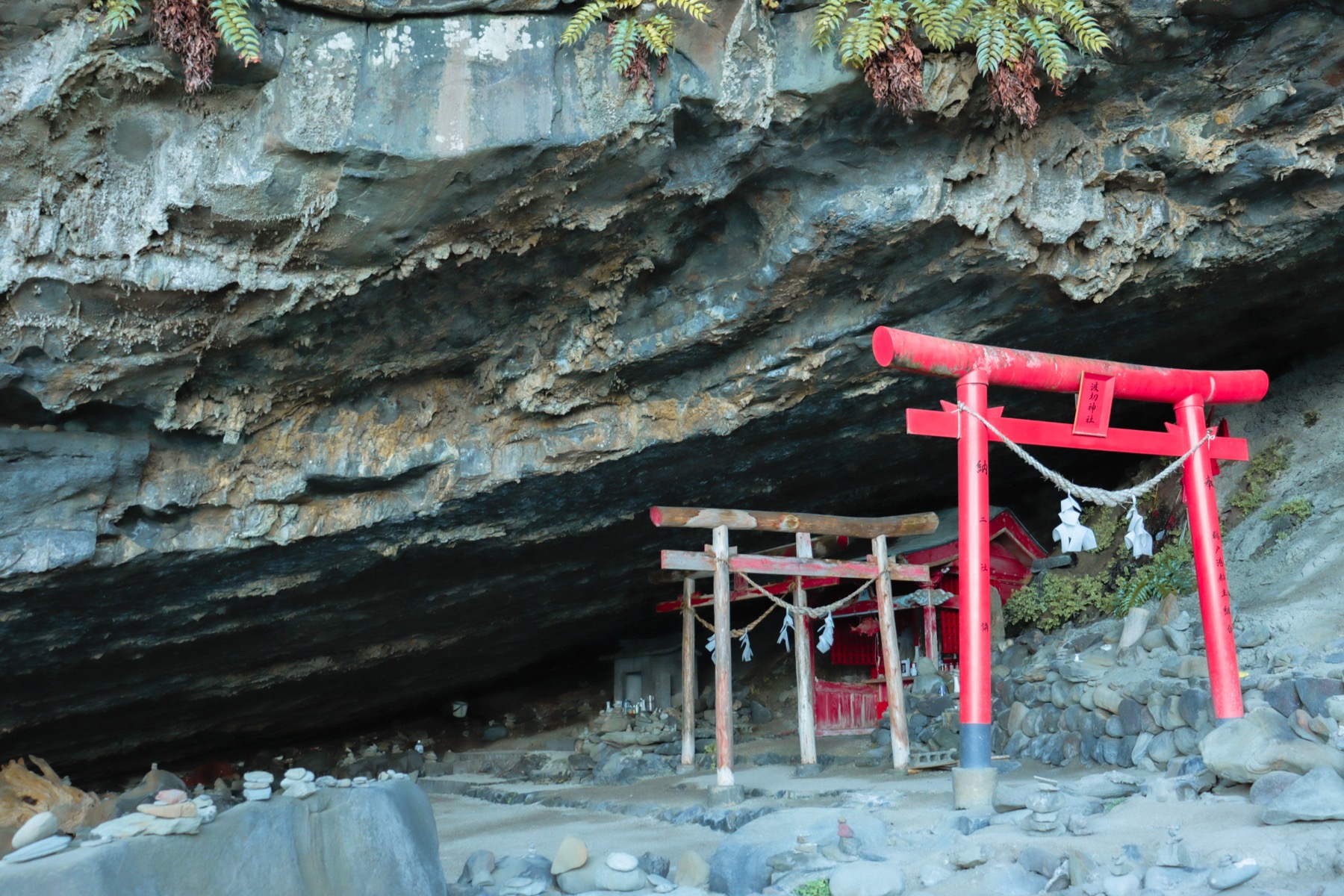
The main hall sits right inside the cave mouth, built in the eight-roof yatsumune style and registered as a Miyazaki prefectural cultural property. It enshrines Ugayafukiaezu-no-Mikoto — in legend the father of Japan’s first emperor, Jimmu — along with five other deities.
The cave and its legend
The cave is the heart of it. In the Kojiki myth, this is the birthing hut of Toyotama-hime, daughter of the sea god, who came ashore to give birth. She asked her husband Hoori — Yamasachihiko — not to watch; he looked anyway and saw her transformed into a creature of the sea, and in her shame she returned to the waves, leaving the baby behind. The hut’s roof had been thatched with cormorant feathers but never finished, which is where the deity’s tongue-twister name comes from. Inside the cave you’ll find the o-chichi-iwa, the “breast rock,” where water drips continuously; by tradition Toyotama-hime left it to nurse her child, and people pray there for safe childbirth and healthy children.
Throw a luck ball at the turtle
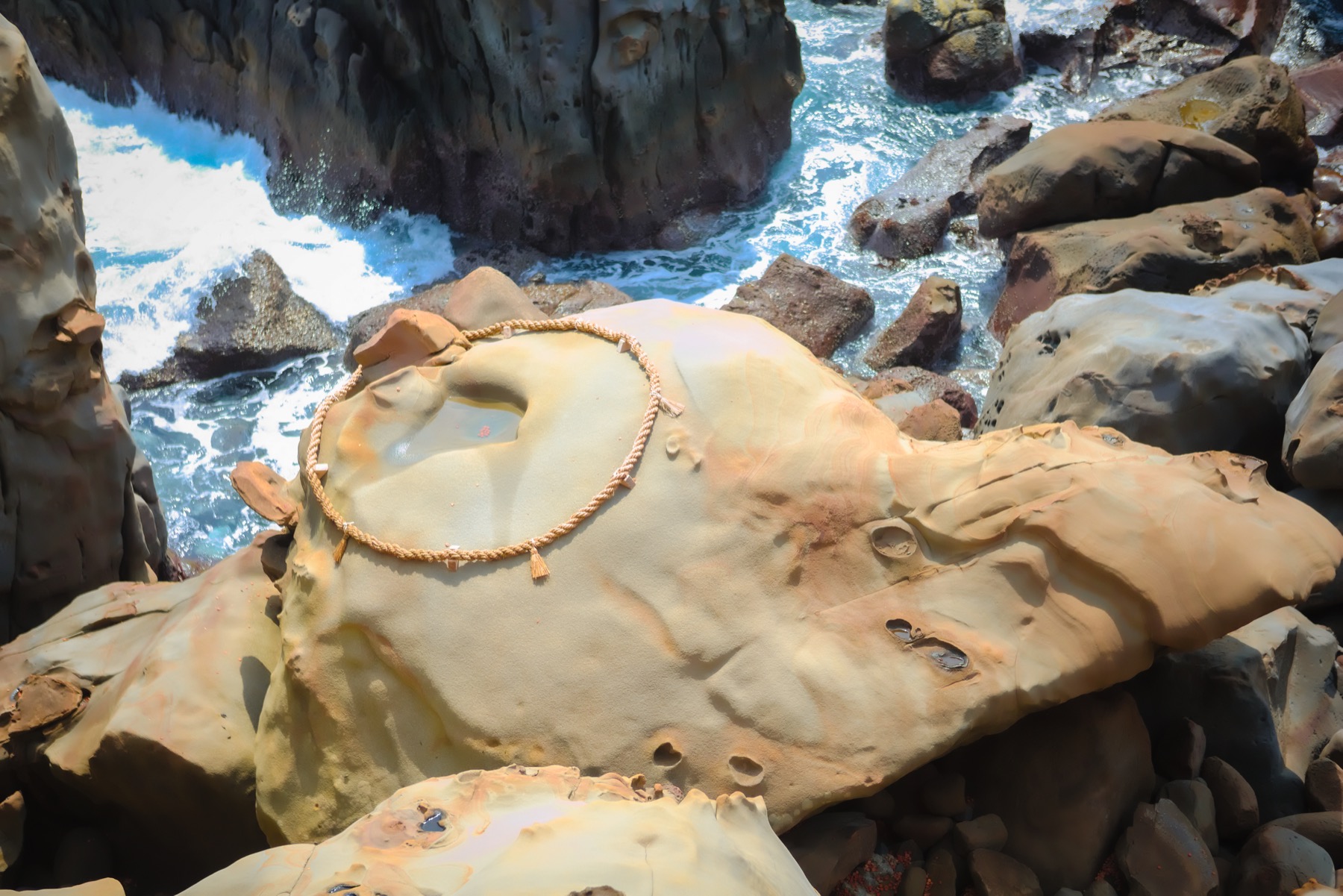
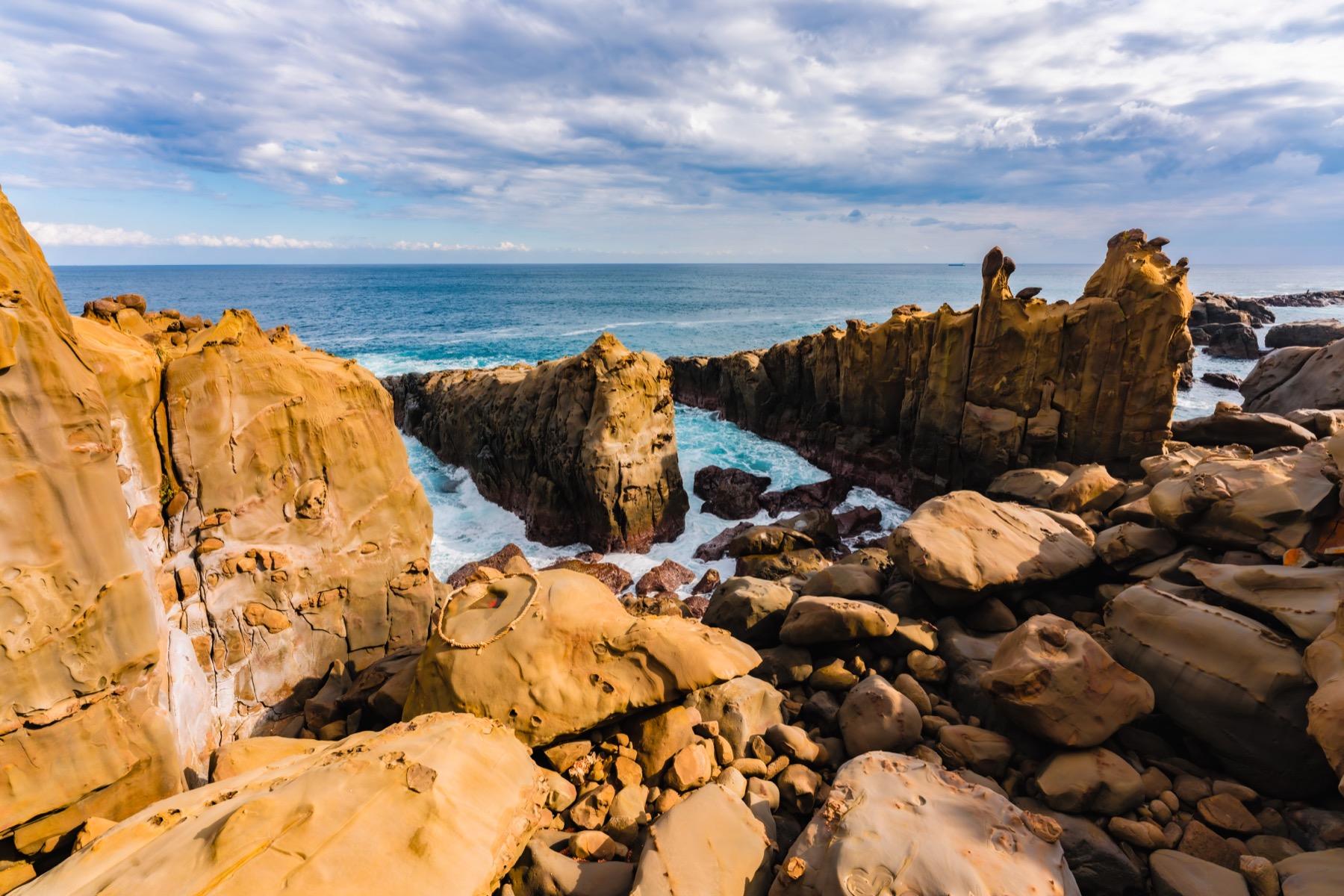
The thing everyone lines up for is the untama toss. Out on the shore below the hall sits a flat-topped turtle-shaped rock — legend says Toyotama-hime arrived riding a giant turtle that turned to stone — with a shallow square hollow on its back. You buy small clay balls stamped with the character for “luck” (5 balls for ¥100), and throw them toward that hollow: land one inside and your wish is said to come true. Men throw with the left hand, women with the right. It’s good fun and a genuine crowd-pleaser — though worth knowing it’s a modern custom, started around 1954, not an ancient rite.
When & how to visit
Entry is free — you only pay for untama, prayers, amulets and goshuin. The grounds open early and close around dusk, but the exact hours vary by source and season, so if you need a very early or late visit, confirm with the shrine first. The catch is access: there’s no railway station within walking distance. By car it’s about an hour from central Miyazaki down Route 220 (around 45 minutes from the airport), with free parking. By bus, take Miyazaki Kotsu route 965 from Miyazaki Station and get off at the Udo Jingu stop — roughly 80–90 minutes, then a 10-minute walk up through a gate and down the cliff stairs. Buses are infrequent, so check the timetable, and a car is by far the easier choice.
Staying on the Nichinan coast
Most people base in Miyazaki city or the castle town of Obi and drive the coast. Booking has the widest spread; Rakuten Travel is good for the area’s Japanese-run inns and onsen.
Good to know
What makes Udo Jingu special?
Its main hall is built inside a natural sea cave in a cliff over the Hyuga-nada, and you reach it by walking down a vermilion stairway along the cliff — a rare “descending shrine.” It’s tied to a sea-god birth legend and famous for the untama luck-ball toss.
What is the untama toss?
You buy small clay balls stamped with “luck” (five for ¥100) and throw them at a shallow square hollow on a turtle-shaped rock on the shore; landing one inside is said to grant your wish. Men throw left-handed, women right-handed. It’s a modern custom dating to around 1954.
Is it free, and what are the hours?
The grounds are free; you only pay for untama, prayers and amulets. It opens early and closes around dusk, but exact hours vary by season and source — confirm with the shrine (0987-29-1001) if timing matters.
How do I get to Udo Jingu?
By car it’s about an hour from central Miyazaki on Route 220, with free parking. By bus, Miyazaki Kotsu route 965 to the Udo Jingu stop (about 80–90 minutes), then a 10-minute walk. There’s no station within walking distance, so a car is easiest; buses are infrequent.
What are the blessings here?
En-musubi (matchmaking and marriage), safe childbirth and child-rearing — fitting for a shrine built on a birth legend. It’s popular with couples and families.
Can I combine it with other sights?
Yes — it sits on the Nichinan coast road with Aoshima to the north and Cape Toi further south, so the three make a natural coastal drive.
Obi Castle & Castle Town
Nearby Obi, Miyazaki’s “Little Kyoto” castle town.
Aoshima & Aoshima Shrine
The shrine island in the sea terraces, up the coast.
Cape Toi
Wild horses on the grassland at Miyazaki’s southern tip.
Takachiho Gorge
The boat to Manai Falls in Miyazaki’s myth country, up north.
Plan a Nichinan Coast Trip
Udo Jingu is easiest by car. Three ways to set it up.
Join travelers discovering Japan's hidden side
Weekly dispatches from off-the-beaten-path Japan — spots and stories you won't find in guidebooks.
No spam. Unsubscribe anytime.
Welcome aboard!
You're in. See you in your inbox soon.