Miyazaki · Nichinan · Castle Town
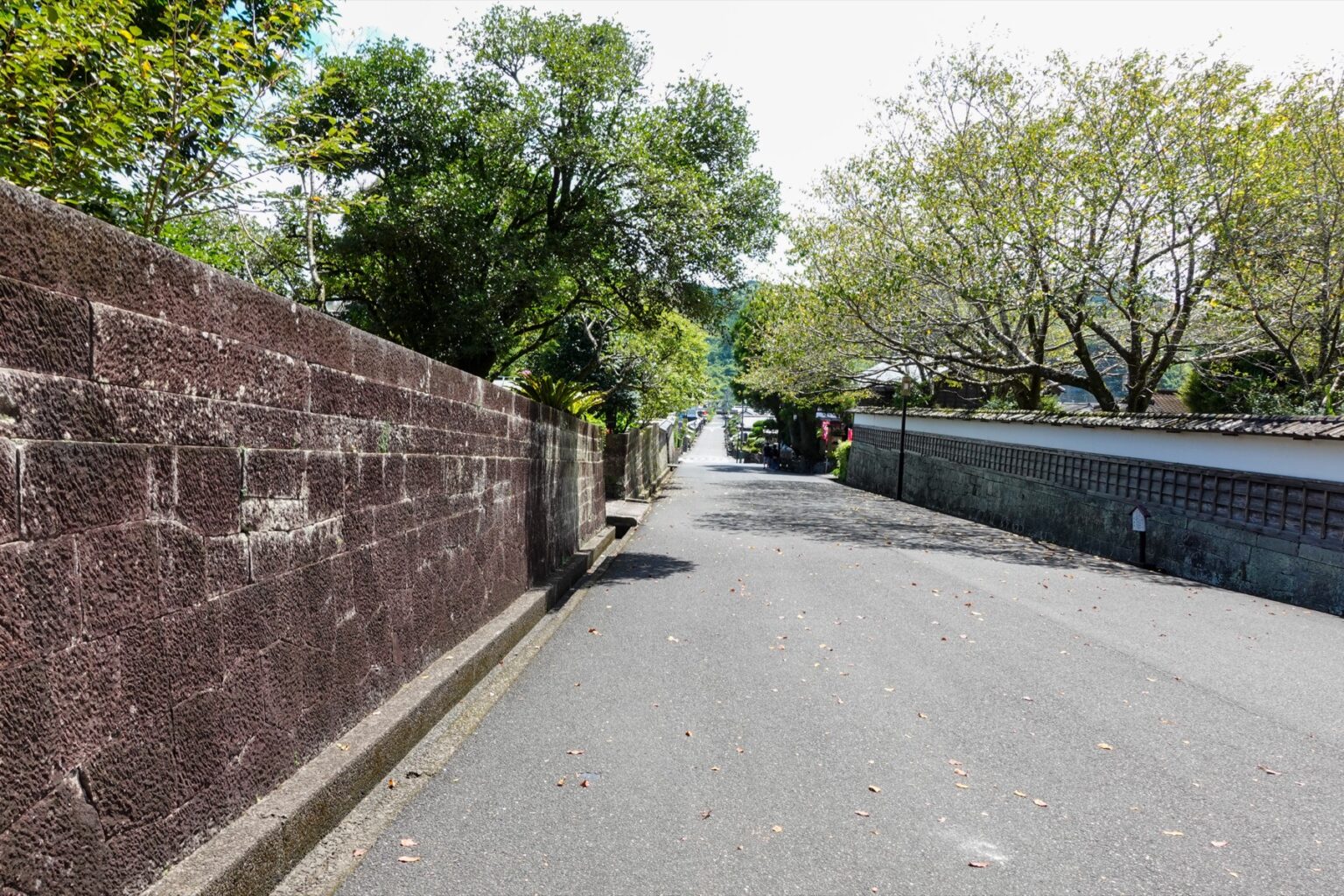
Obi, in the south of Miyazaki, is a former castle town the Itō clan ruled for fourteen generations — so well preserved that it’s nicknamed the “Little Kyoto of Kyushu.” The wooden main gate of Obi Castle was rebuilt in 1978 from century-old local cedar without a single nail, and beyond it lies a grid of samurai streets, walls cut from porous local “Obi stone,” carp swimming in the gutters, and shops frying obiten fish cakes — most of it walkable on one combined ticket.
Kyushu’s Little Kyoto
Obi sits inland from the Nichinan coast, and for most of its history it was the seat of the Itō, who held the small Obi domain through fourteen generations of the Edo period until the feudal system was abolished in 1871. The castle’s beginnings go back to the 15th century, when it changed hands repeatedly in the long rivalry between the Itō and the Shimazu of Satsuma — control of this valley was worth fighting for. What survives today isn’t a towering keep but something quieter and, to me, more interesting: a whole town that still reads as a castle town. The samurai quarter is a nationally designated preservation district, so the walls, gates and street plan are protected rather than redeveloped.
The castle grounds
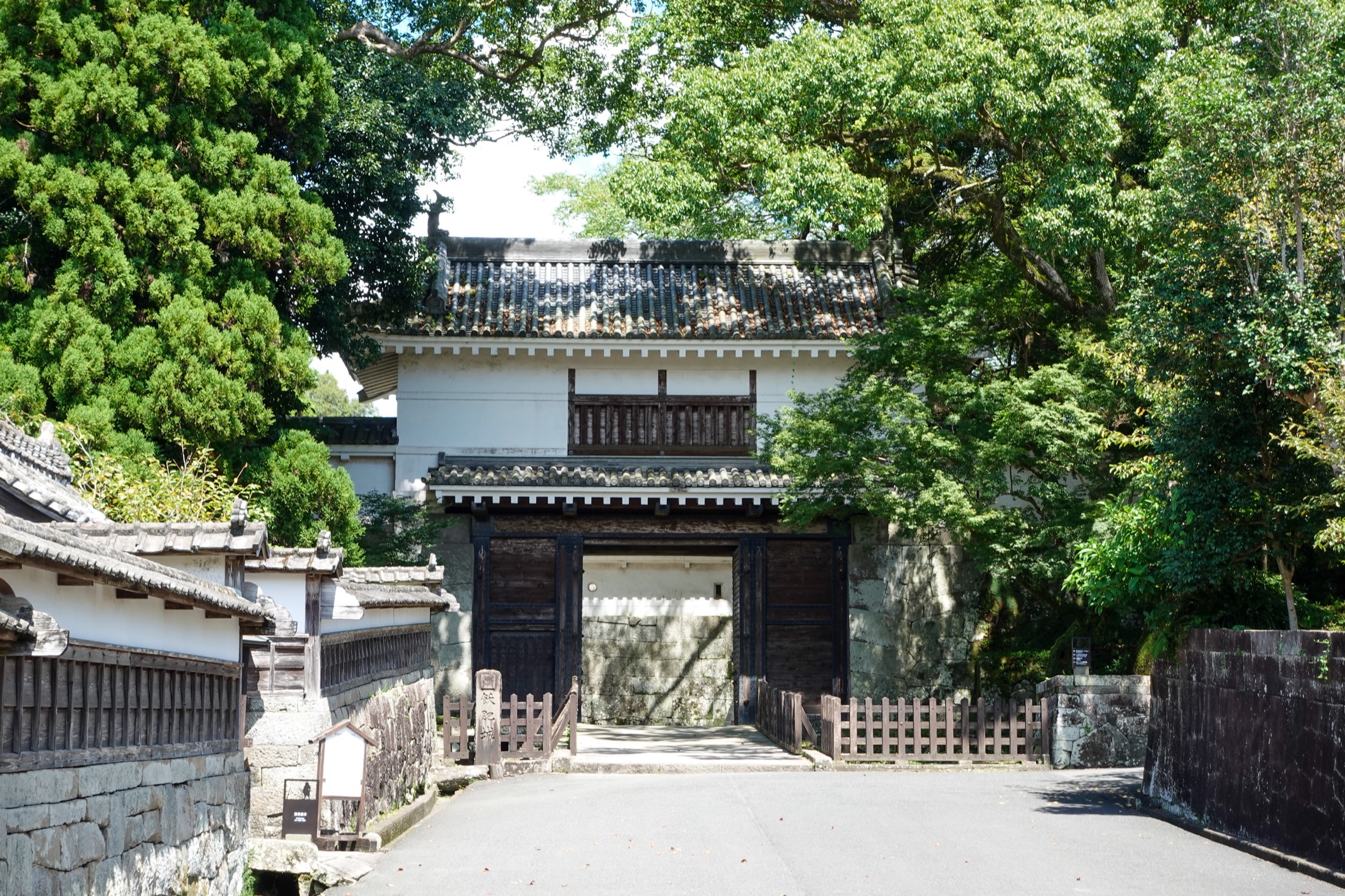
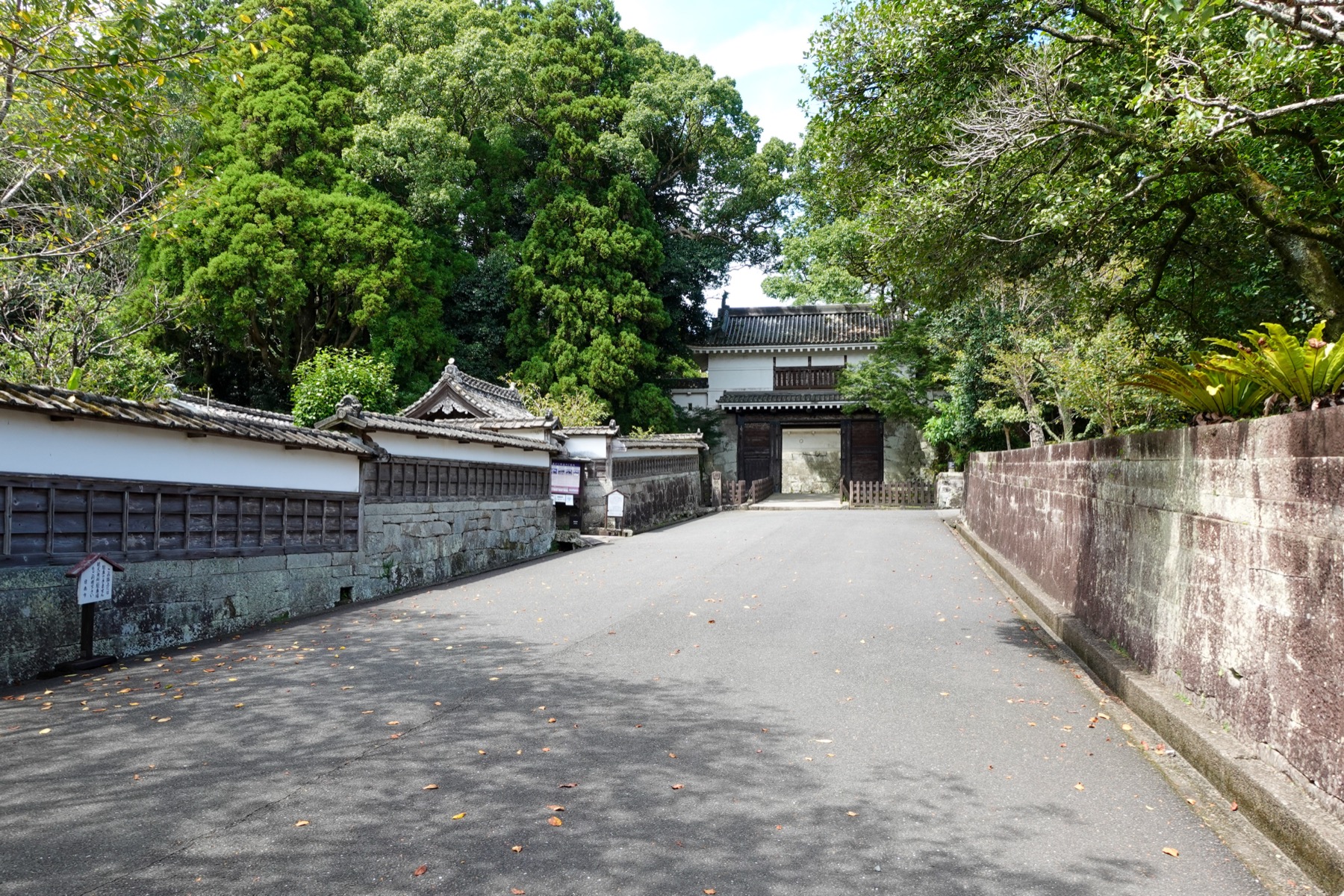
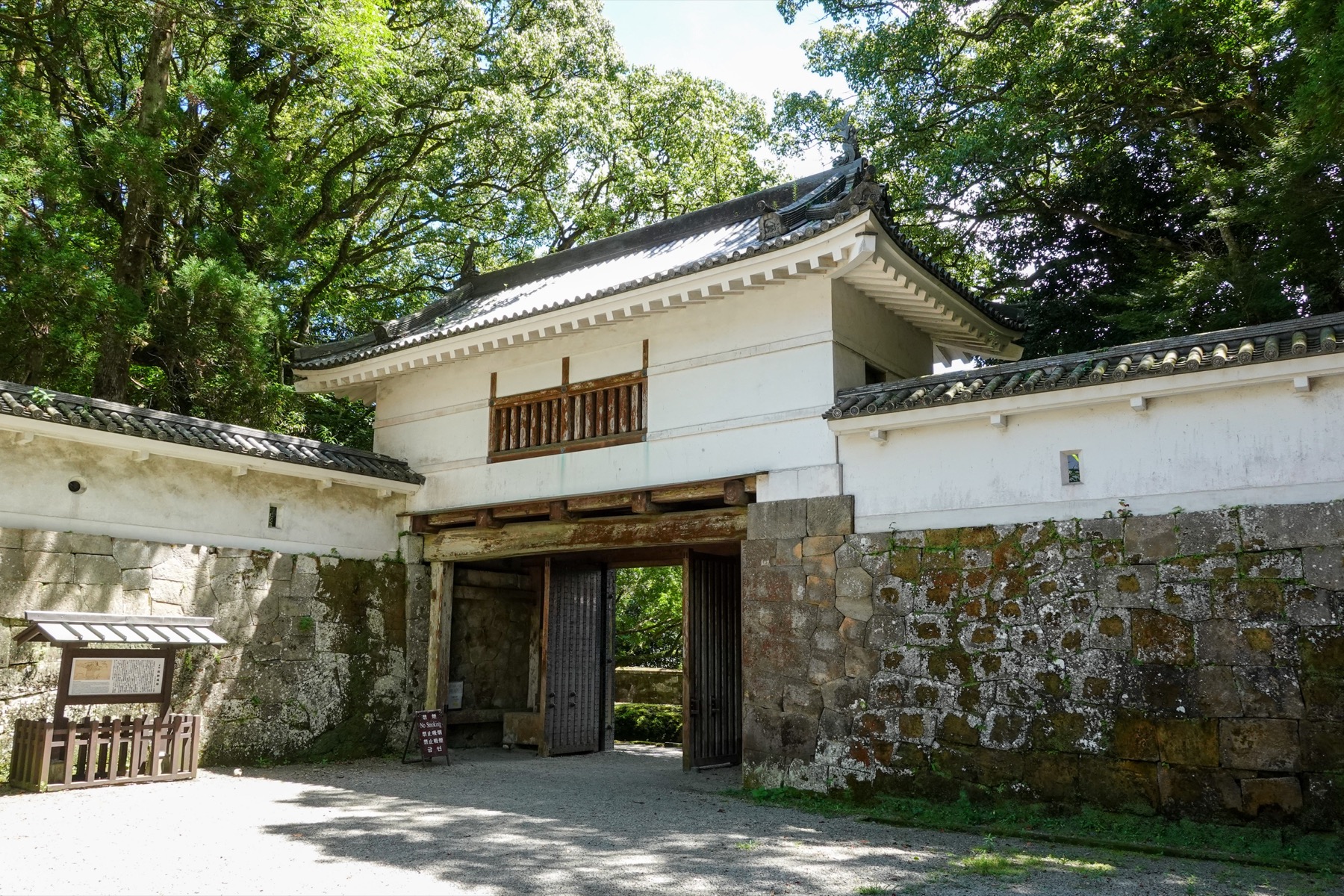
You enter through the Otemon, the main gate, and it’s worth a pause. It was reconstructed in July 1978 using four cedars over a hundred years old, grown locally — Obi has long been cedar country — and joined in the old way, without nails, under a heavy tiled roof. Past it the ground rises between ramparts built from Obi stone, a soft, porous local tuff that weathers to a warm reddish-grey; you’ll see the same stone in walls all over town. Inside the grounds, the Matsuo-no-maru is a reconstruction of the lord’s Edo-period residence, and the Obi Castle History Museum holds armour, documents and gear from the Itō domain. Both keep the same hours, 9:30 to 17:00, with last entry at 16:30.
Walking the samurai district
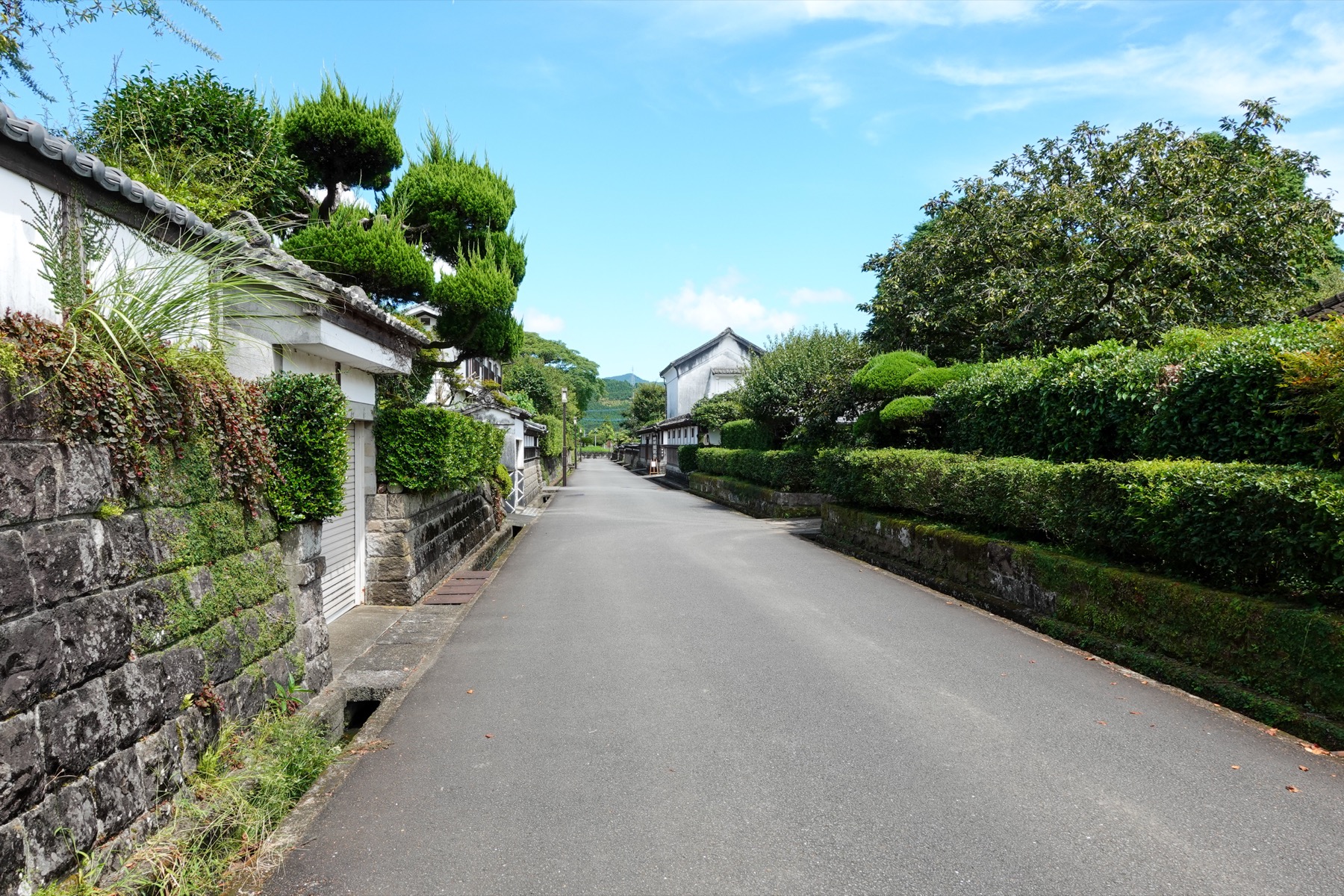
The part I’d give the most time to is the town itself. Below the castle the streets run straight and quiet between long walls — Obi stone at the base, white plaster above — fronting former samurai homes, with carp drifting in the roadside channels. It’s flat, compact and almost traffic-free, the kind of place you wander rather than tick off. Two houses are open to look inside: the Yoshōkan, a high-ranking retainer’s residence with a garden borrowing the hill behind it, and the Komura Memorial Hall, devoted to Komura Jutarō, the Meiji-era diplomat born in Obi who negotiated the treaty that ended the Russo-Japanese War. Both are covered by the combined ticket.
What to eat: obiten and atsuyaki tamago
Two things are worth eating here. Obiten is the local fish cake — fresh fish paste blended with tofu and a little sugar and miso, then deep-fried, so it comes out fluffier and sweeter than the usual satsuma-age. Atsuyaki tamago is the other: a thick, dense block of grilled egg, sweet enough to eat almost like a custard or a dessert. The easiest way to graze on both is the “Ayumi-chan” food-walk map, a booklet with five coupons you exchange for tastes and souvenirs at more than forty shops around town; a version of it also bundles admission to the historic houses.
| Ticket | Adult | Hi/Uni | Elem/JHS | What it covers |
|---|---|---|---|---|
| Combined facilities | ¥800 | ¥600 | ¥350 | Yoshōkan, Matsuo-no-maru, History Museum, Komura Memorial |
| Ayumi-chan food-walk + sites | ¥1,600 | ¥1,400 | ¥1,150 | Six historic buildings + 5 food/souvenir coupons |
Getting there
Obi is far enough south that it pairs best with the Nichinan coast rather than a quick hop from the city. The station, Obi on the JR Nichinan Line, is about a 16-minute walk from the castle, but trains are infrequent, so most visitors come by car — roughly an hour from Miyazaki City, and an easy add-on to Aoshima, Udo Jingū or Cape Toi on a coastal drive. Give the town itself two to three hours on foot.
Staying near Obi
Nichinan and the Nichinan coast make a calmer base than Miyazaki City if you want to slow down. Booking has the widest spread across southern Miyazaki; Rakuten Travel is good for the Japanese-run inns.
Good to know
What is Obi Castle Town?
It’s the preserved former castle town of the Itō clan in Nichinan, southern Miyazaki — nicknamed the “Little Kyoto of Kyushu.” The castle’s wooden Otemon gate, stone ramparts, samurai-district streets and several historic houses survive in a nationally designated preservation district.
How much does it cost to visit?
A combined ticket to four historic buildings (Yoshōkan, Matsuo-no-maru, History Museum, Komura Memorial) is ¥800 for adults, ¥600 high/university, ¥350 elementary/junior-high. The grounds and streets themselves are free to walk. An “Ayumi-chan” food-walk map with six buildings plus five tasting coupons is ¥1,600 for adults.
What are the opening hours?
The castle-grounds facilities (History Museum and Matsuo-no-maru) are open 9:30–17:00, with last entry at 16:30. The streets are open any time.
What should I eat in Obi?
Obiten — a fluffy, lightly sweet fried fish cake made with tofu — and atsuyaki tamago, a thick, sweet block of grilled egg. The Ayumi-chan food-walk coupons are the easiest way to try both around town.
How do I get to Obi?
By train it’s about a 16-minute walk from Obi Station on the JR Nichinan Line, but services are infrequent. A rental car is easier — roughly an hour from Miyazaki City, and a natural stop on a drive down the Nichinan coast.
How long do I need?
Two to three hours covers the gate, a couple of historic houses and a slow walk through the samurai streets with a snack or two. Half a day if you take the full food-walk.
Plan a Southern Miyazaki Trip
Obi works best by car, strung together with the Nichinan coast.
Takachiho Gorge
The boat to Manai Falls in Miyazaki’s myth country, up north.
Cape Toi
Wild horses on the clifftops at Miyazaki’s southern tip.
Udo Jingū
The cave shrine on the Nichinan coast nearby.
Skip the Crowds in Japan
Quiet castle towns like Obi, and other crowd-free swaps.
Join travelers discovering Japan's hidden side
Weekly dispatches from off-the-beaten-path Japan — spots and stories you won't find in guidebooks.
No spam. Unsubscribe anytime.
Welcome aboard!
You're in. See you in your inbox soon.