Miyazaki · Kushima · Wild Horses
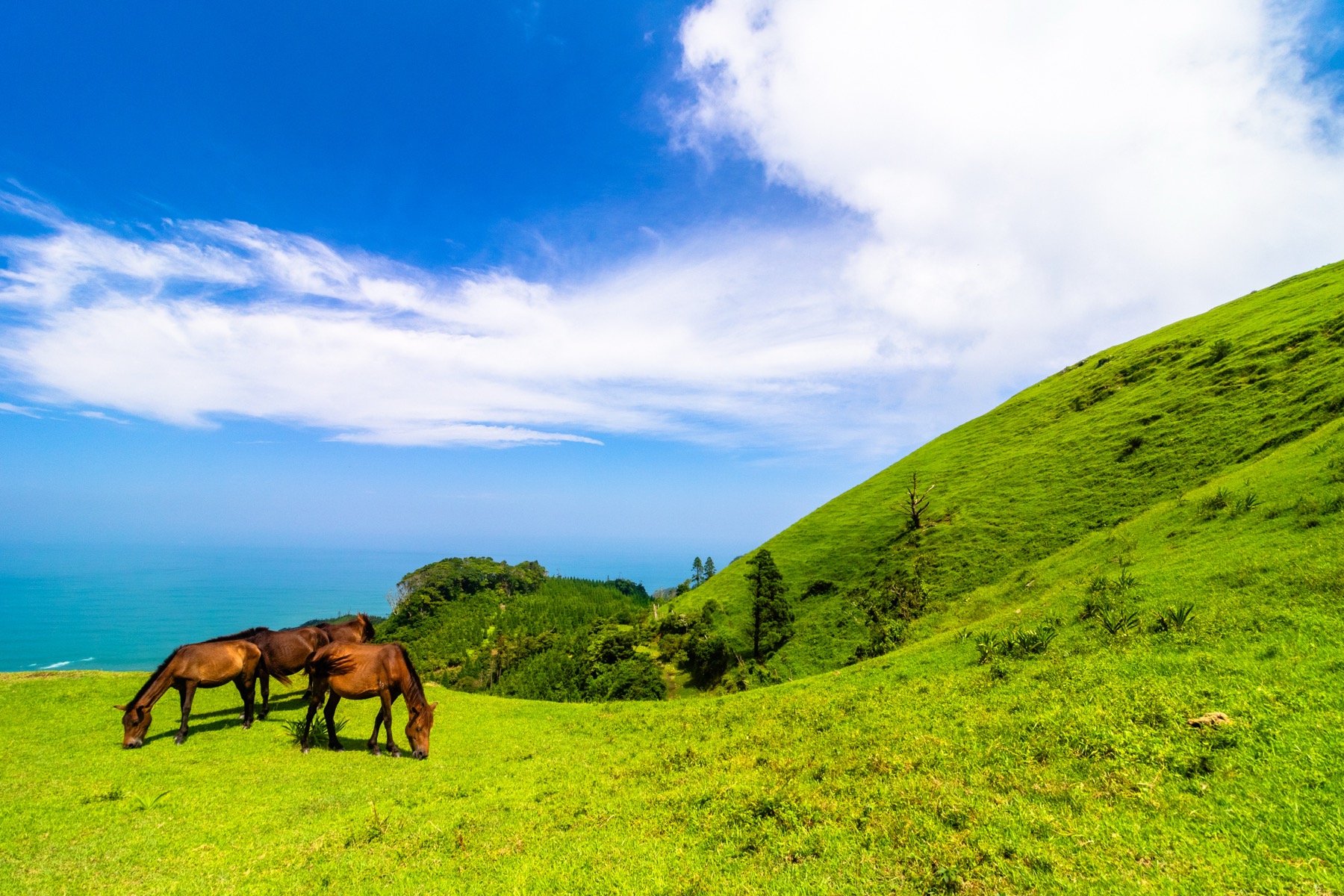
Cape Toi, at the southern tip of Miyazaki, is one of the only places in Japan where you can watch wild horses roam free against the sea. Around a hundred Misaki horses — a native breed protected as a National Natural Monument, descended from animals a feudal domain pastured here in the Edo period — graze the clifftop grassland. You pass through the “Komadome gate,” pay a small fee that goes toward protecting them, and then it’s just you, the horses and the Pacific. Bring a car: the cape is large, and the horses set the pace.
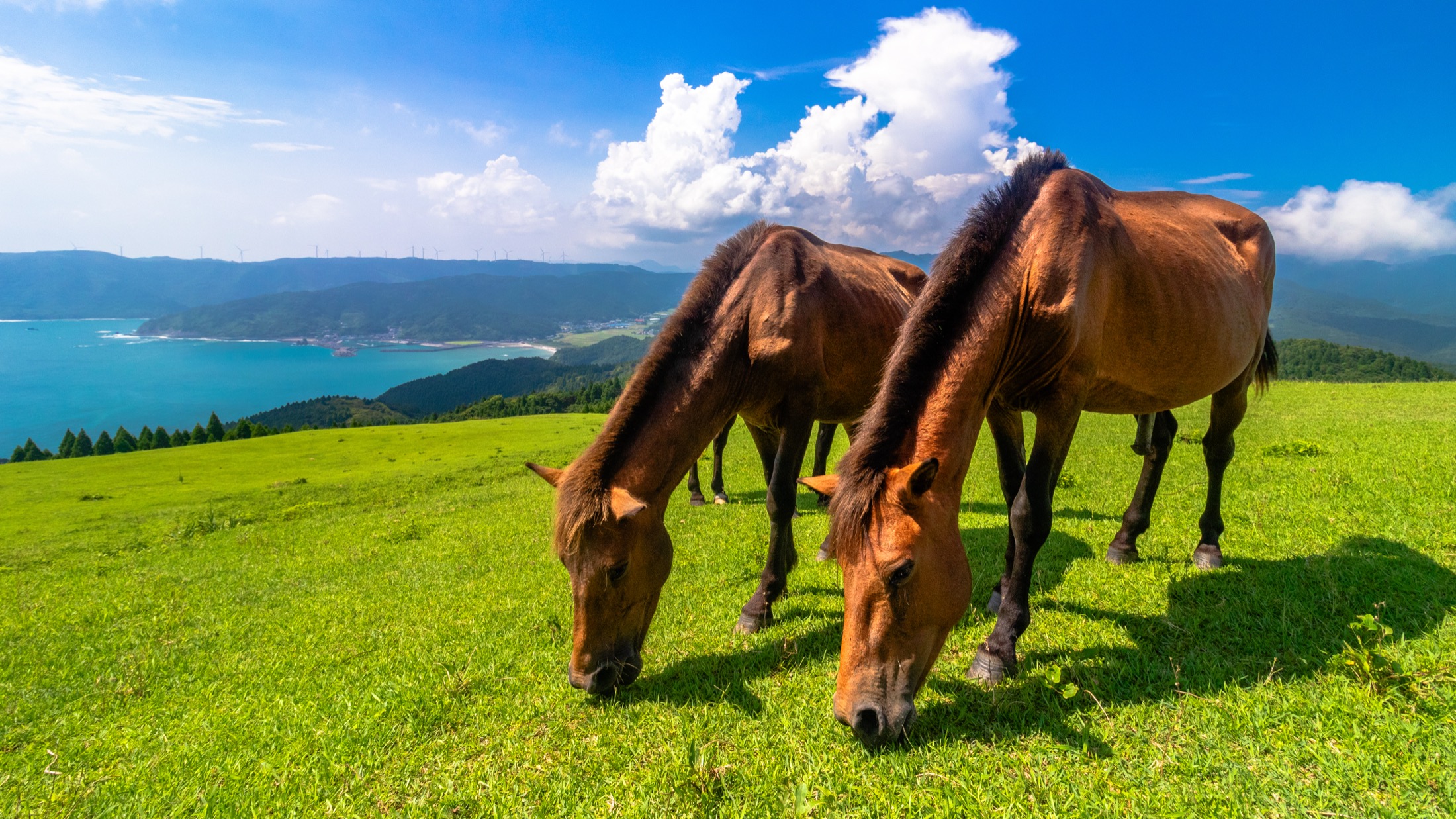
The wild horses of Cape Toi
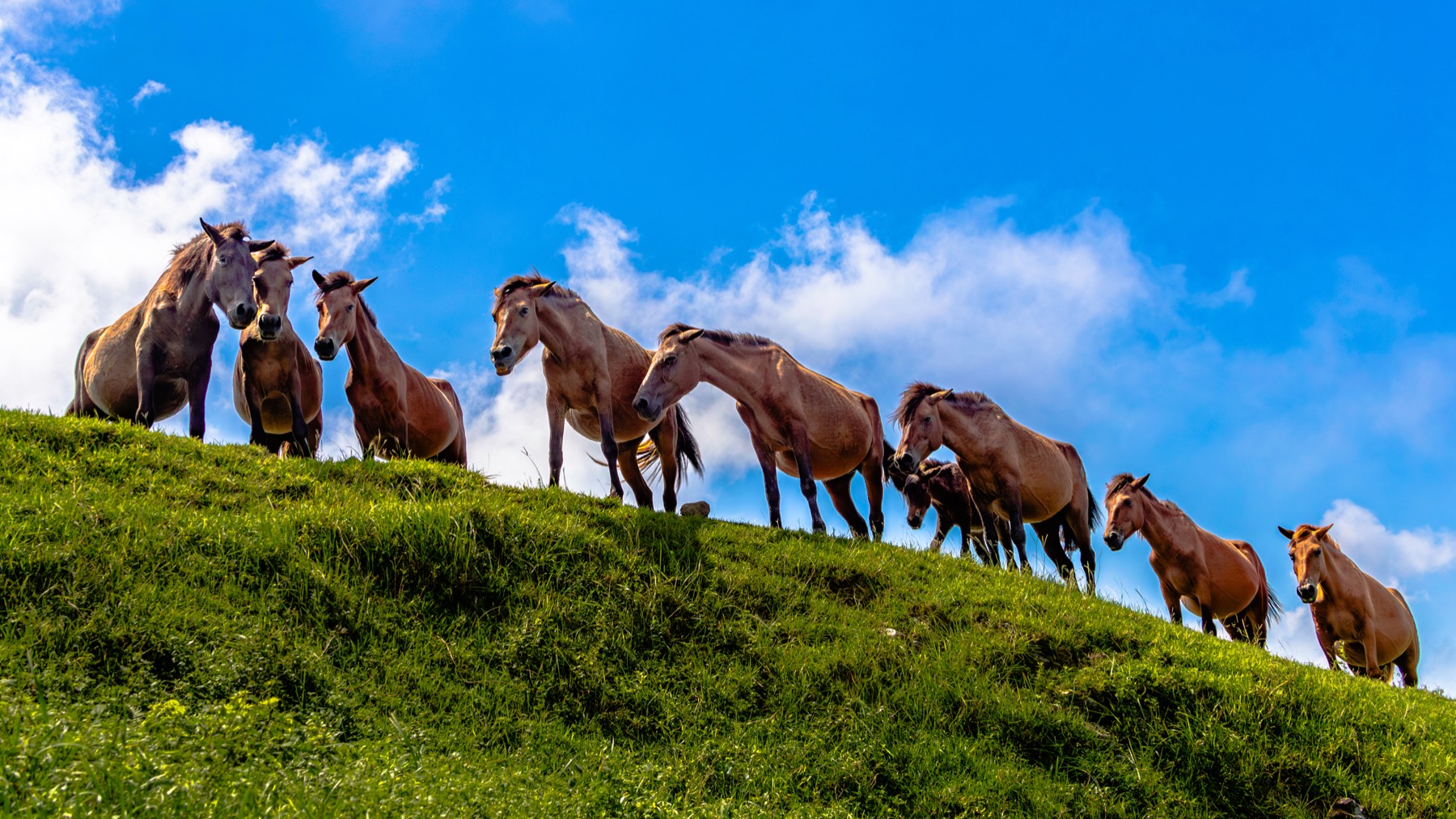
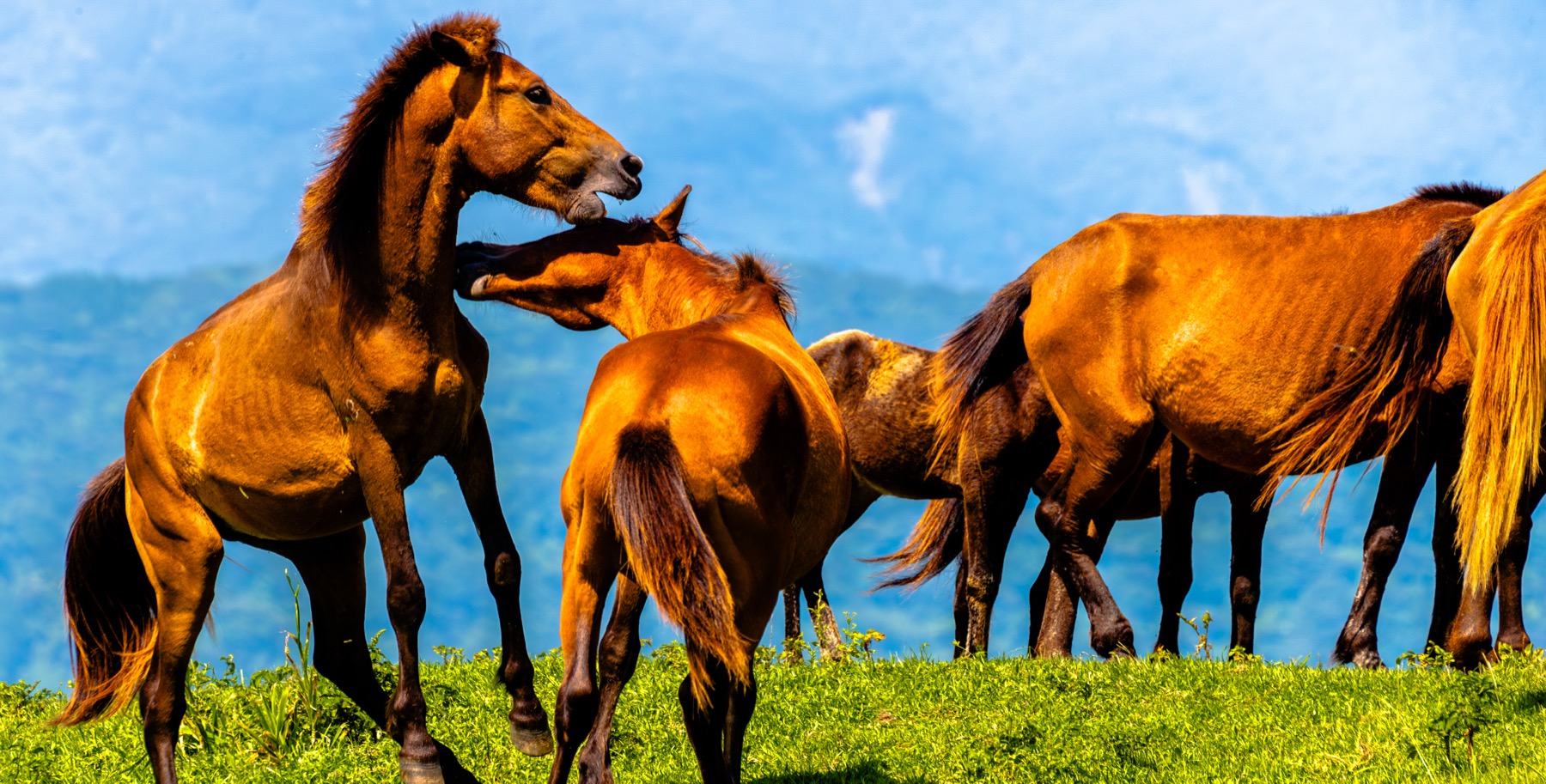
The Misaki horses have been here a long time. They descend from horses the Takanabe domain set out to pasture on the cape in the Edo period, and they’ve lived semi-wild ever since — never stabled, foaling and grazing on the open grassland. Today there are around a hundred of them, and the herd is protected as a National Natural Monument. You reach their world through the Komadome gate at the cape entrance, where you pay a small fee toward their conservation; past it, the road runs through open hills where horses graze, cross the tarmac and ignore the cars entirely.
They’re easiest to find around the Komatsugaoka grassland, though “wild” means no guarantees — some visitors meet a whole herd, others a scattered few. Spring, roughly April into May, is foaling season, so that’s the time to catch the foals.
Watching them the right way
These are genuinely wild animals and a protected cultural treasure, so the rules matter — for the horses and for you.
Don’t touch or feed
Keep your distance and never feed them. They’re wild; feeding harms them and breaks the line between people and the herd.
Never approach from behind
A startled horse kicks. Give them a wide berth, especially around the rear, and don’t get between mares and foals.
Drive at 30 km/h
Horses walk the roads and won’t move for you. Keep to the cape’s 30 km/h limit and stop to let them pass.
They’re protected by law
The Misaki horses are a designated cultural property; harming them can be an offence. Watch, photograph, leave them be.
Beyond the horses
At the very tip stands the Toi Misaki lighthouse, one of only a handful in Japan you can actually climb — the gallery gives a sweeping view over the cape and the sea. It costs ¥300 for adults to go up (free for younger children), and it opens mornings and afternoons with a midday break, so check the current hours before you make the drive out. The cape is also home to a wild colony of sago palms (sotetsu), itself a protected natural monument, which adds to the slightly subtropical, end-of-Japan feel of the place.
When & how to visit
Pay the small conservation fee at the Komadome gate on the way in. There’s no railway to the cape; Kushima’s community “Yoka Bus” reaches the area (a day pass is good value), but the practical way to see Cape Toi is to drive — it’s a fair distance south of Miyazaki city, and you’ll want a car to cover the grassland, the lighthouse and the lookouts. Spring and autumn are kindest for weather; spring also brings the foals.
Staying near Cape Toi
It’s far south, so an overnight in Kushima or Nichinan beats a long round trip. Booking has the spread across southern Miyazaki; Rakuten Travel is good for the Japanese-run inns.
Good to know
What are the horses at Cape Toi?
Misaki horses, a Japanese native breed descended from animals pastured here by the Takanabe domain in the Edo period. About a hundred live semi-wild on the cape, and the herd is protected as a National Natural Monument.
Will I definitely see the horses?
Usually, but not guaranteed — they roam freely. They’re most often found around the Komatsugaoka grassland. Spring (around April–May) is foaling season, when you may see foals.
Is there an entry fee?
Yes — a small fee (around ¥400) at the Komadome gate on the way in, which supports the horses’ conservation. The lighthouse is a separate ¥300 to climb (free for younger children).
What are the rules around the horses?
Don’t touch or feed them, keep your distance (never approach from behind — they kick), and drive at the 30 km/h limit since they walk the roads. They’re a protected cultural property, so harming them is an offence.
How do I get to Cape Toi?
By car — it’s a long way south of Miyazaki city and the cape is too big to walk. There’s a community bus to the area, but driving lets you move between the grassland, lighthouse and viewpoints. There’s no train to the cape.
What else is there besides horses?
The climbable Toi Misaki lighthouse with sweeping sea views, a wild sago-palm colony (a natural monument), and the open clifftop scenery at the southern end of Miyazaki.
Obi Castle & Castle Town
Inland from the coast: Obi, a preserved samurai castle town.
Aoshima & Aoshima Shrine
The shrine island in the sea terraces, up the coast.
Udo Jingu
The cave shrine and the lucky-ball toss on the Nichinan coast.
Takachiho Gorge
The boat to Manai Falls in Miyazaki’s myth country, up north.
Plan a Southern Miyazaki Trip
Cape Toi needs a car. Three ways to set up the trip.
Join travelers discovering Japan's hidden side
Weekly dispatches from off-the-beaten-path Japan — spots and stories you won't find in guidebooks.
No spam. Unsubscribe anytime.
Welcome aboard!
You're in. See you in your inbox soon.