Yamanashi · Lake Kawaguchiko · Roadside Food
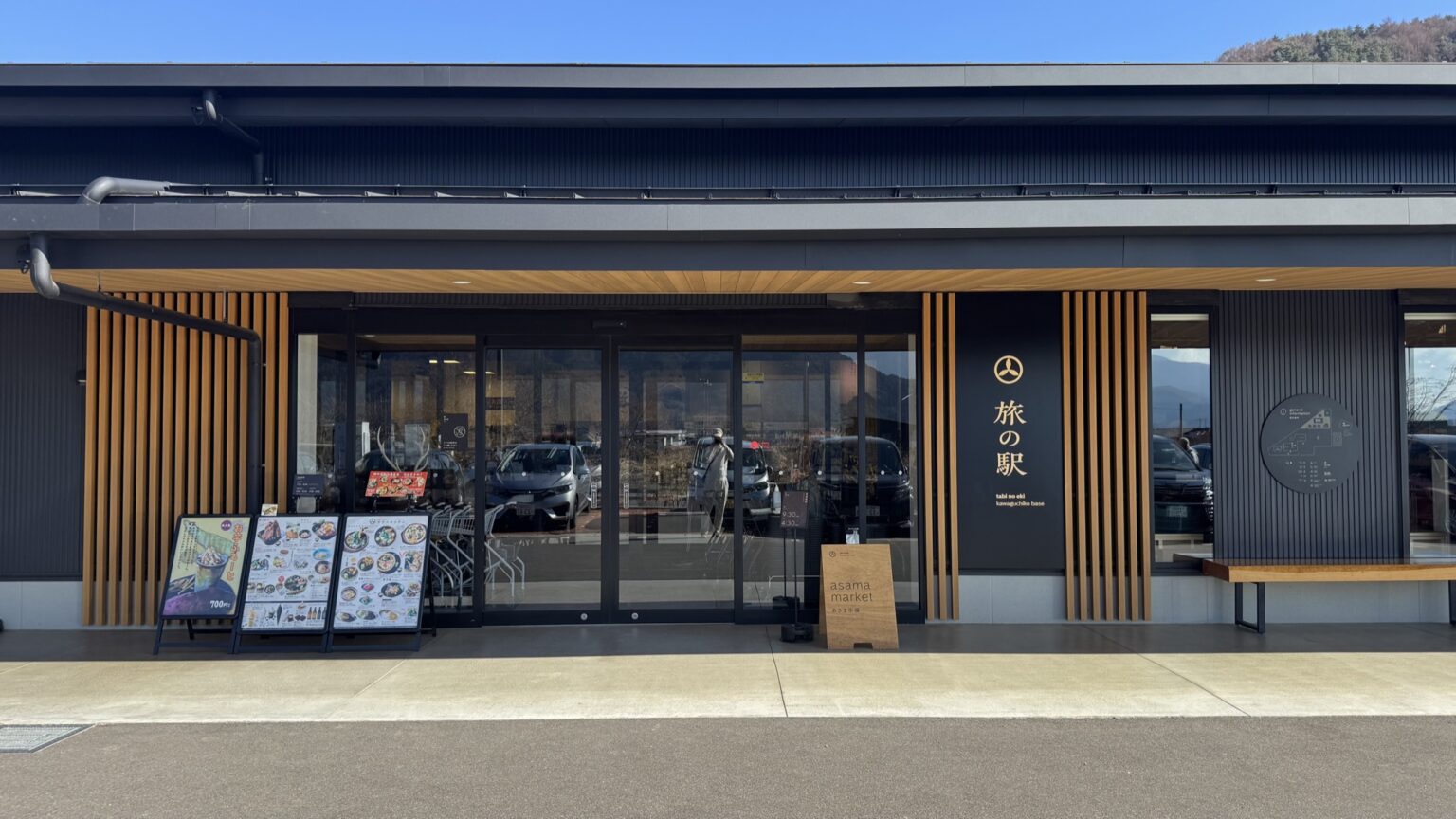
Tabi-no-Eki Kawaguchiko Base is a roadside food market and restaurant on the north shore of Lake Kawaguchiko, where the headline dish is a Fujizakura-pork sauce katsudon that weighs about a kilo — three cutlets stacked over 400 g of rice for ¥3,980. It opened in 2022 as a tabi-no-eki (“travel station”), the slick, privately-run cousin of Japan’s roadside michi-no-eki — polished, photogenic and, to be honest, priced for visitors.
What’s a michi-no-eki — and why this is a “tabi-no-eki”
If you’ve driven in Japan, you’ve passed a michi-no-eki (道の駅, “road station”). They’re a government program: a town applies, and the Ministry of Land, Infrastructure and Transport registers the site if it meets the rules — free 24-hour parking and toilets, road and tourist information, and something regional, usually a farm stand selling local produce. The system started in 1993 and there are now over 1,200 of them nationwide. For a traveller they’re gold: clean loos, cheap local fruit, and a cheap hot lunch.
Kawaguchiko Base looks the part, but it’s technically a tabi-no-eki (旅の駅, “travel station”) — not a registered michi-no-eki. It’s privately run, by a local tourism company, and opened in 2022 as a polished, “new-generation” take on the idea. That distinction matters in one practical way: it’s built for visitors first, so it’s noticeably more stylish — and more expensive — than the workaday municipal road stations. None of that makes it bad; it just sets expectations.
Terrace Kitchen and that katsudon
The sit-down restaurant is Terrace Kitchen, and its menu is a tour of Yamanashi’s proud ingredients — Fujizakura pork, Koshu beef, Shingen chicken, hōtō noodles. The dish everyone photographs is officially the Fujizakura-pork sauce katsudon set (¥3,980) — though with three cutlets stacked into a peak, it’s easy to see why visitors nickname it after Mt Fuji.
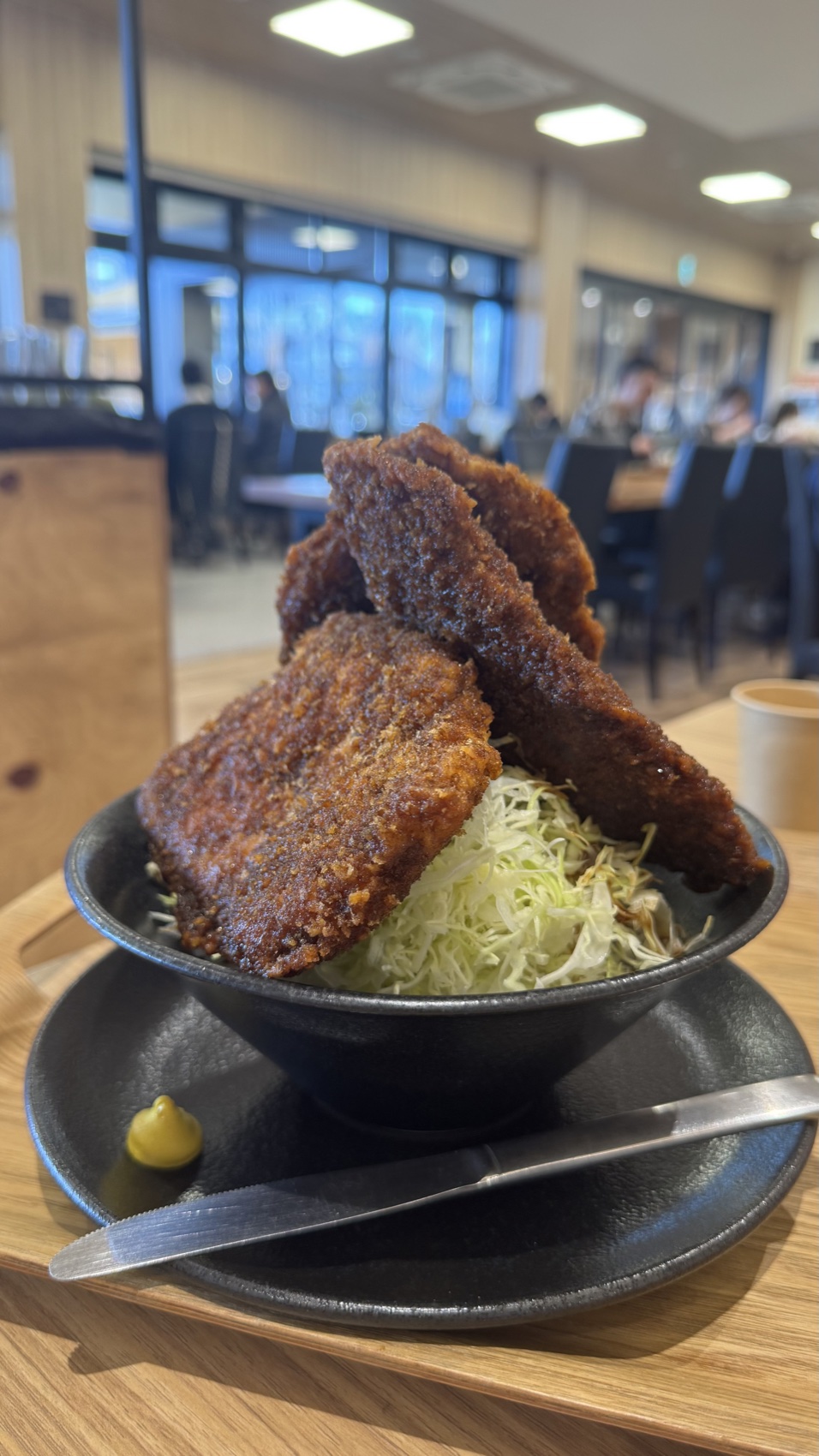
This is a serious plate of food. It’s a limited-quantity item that totals about 1 kilogram — three 140 g cutlets plus 400 g of rice — so unless you’re very hungry, order one and share it. We did, and it was still plenty for two. The pork itself is the reason to come: Fujizakura pork (甲州富士桜ポーク) is a Yamanashi-prefecture brand, and here it’s tender and juicy under the crunch, not the dry slab a cheap katsu can be.
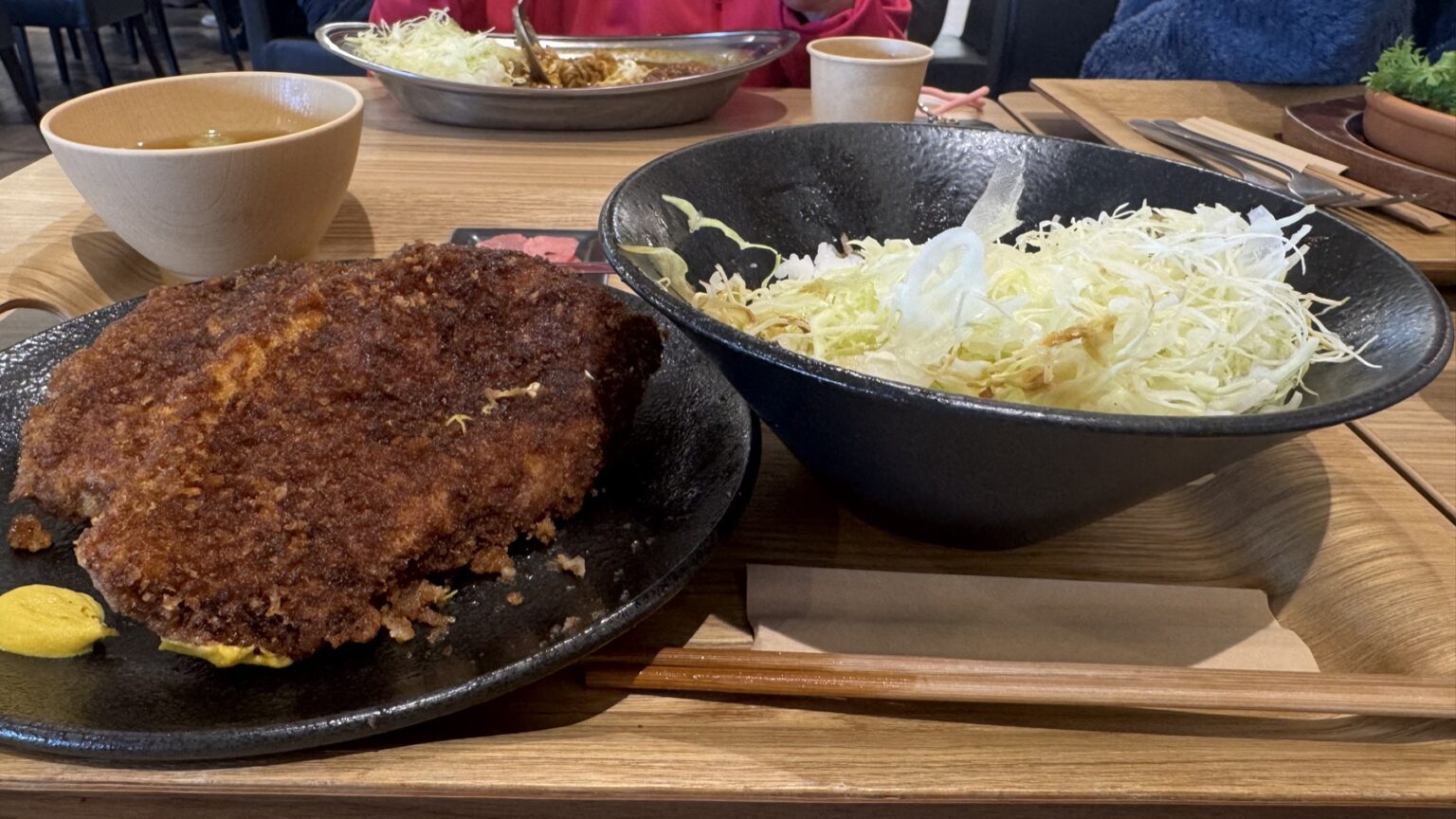
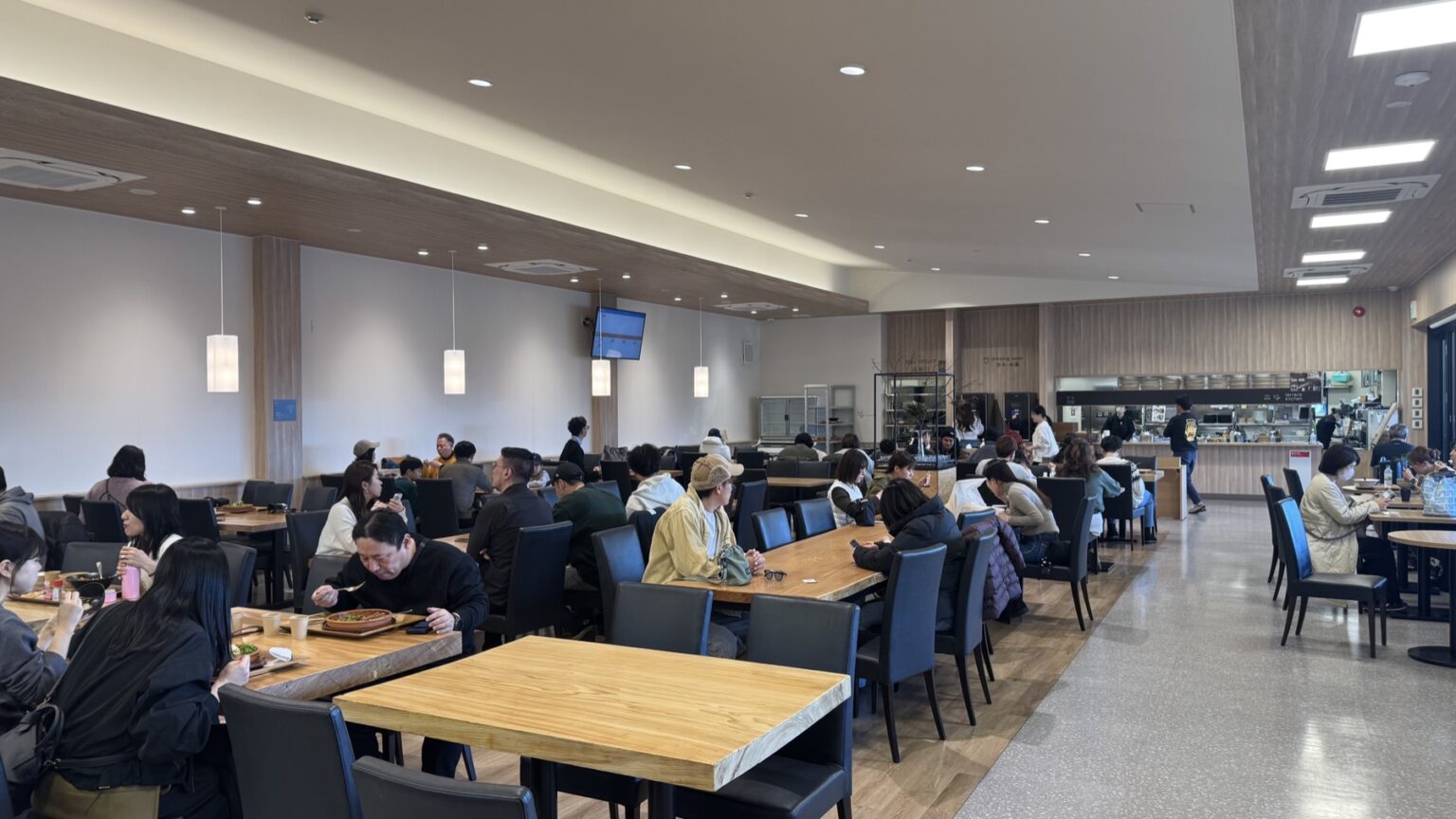
← swipe / scroll for more →
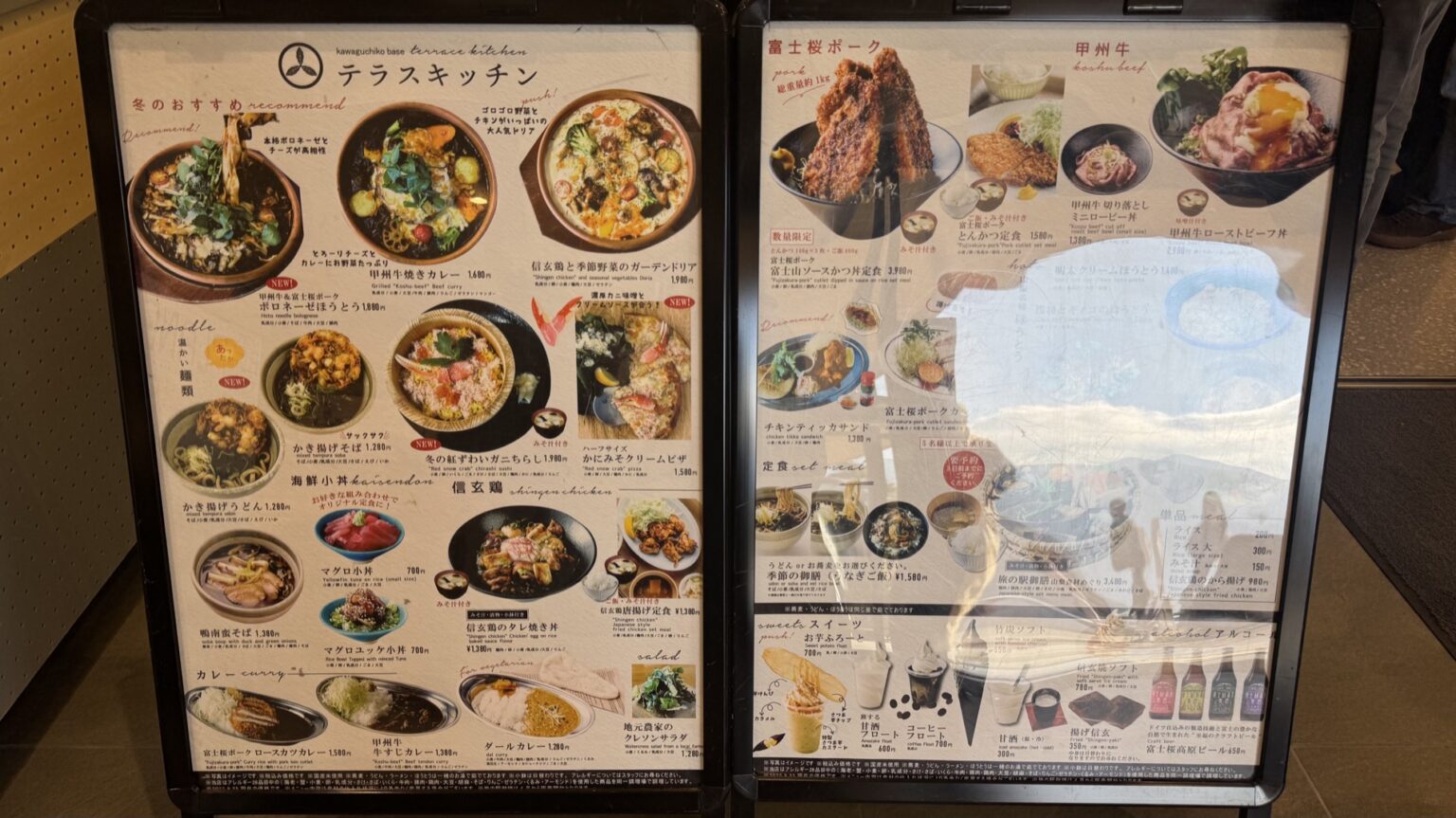
Terrace Kitchen menu and prices
A selection from the official menu (spring 2026, tax included). Prices are seasonal and change, so treat them as a guide.
| Dish | Price |
|---|---|
| Fujizakura-pork sauce katsudon set (limited, ~1 kg) | ¥3,980 |
| Fujizakura-pork tonkatsu set | ¥1,580 |
| Fujizakura-pork simmered-katsu set | ¥1,680 |
| Koshu-beef roast-beef bowl | ¥2,980 |
| Koshu-beef mini roast-beef bowl | ¥1,380 |
| Shingen-chicken karaage | ¥980 |
| Clam & rape-blossom hōtō | ¥1,380 |
| Tabi-no-eki gozen (Yamanashi ingredient sampler) | ¥3,480 |
| Rice ¥200 / large ¥300 · Miso soup ¥150 |
There’s a fruit side of the menu too — including a “mountain of strawberries” plate (¥2,000) and strawberry milk (¥650) in season.
Asama Market — produce, wine and souvenirs
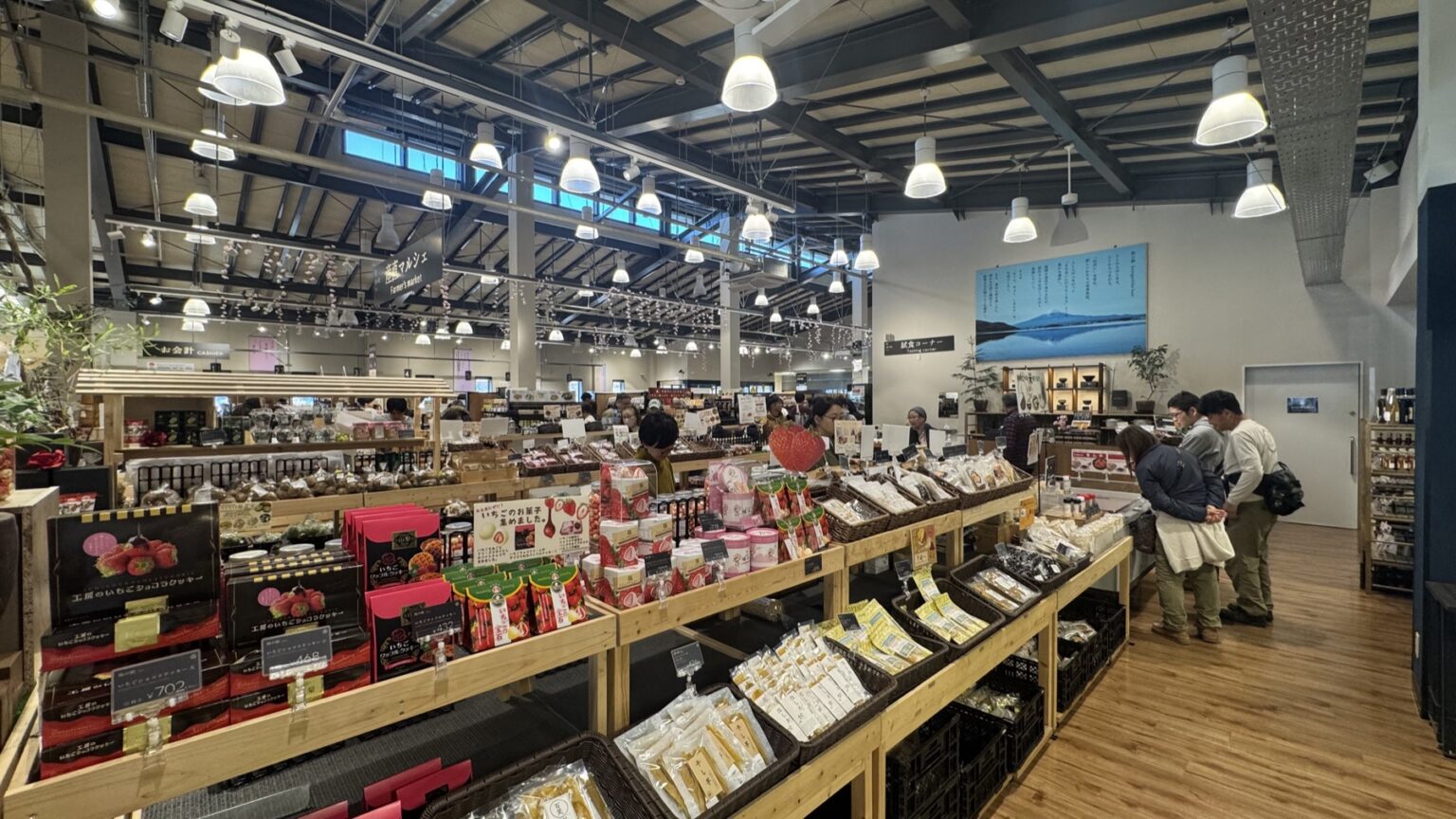
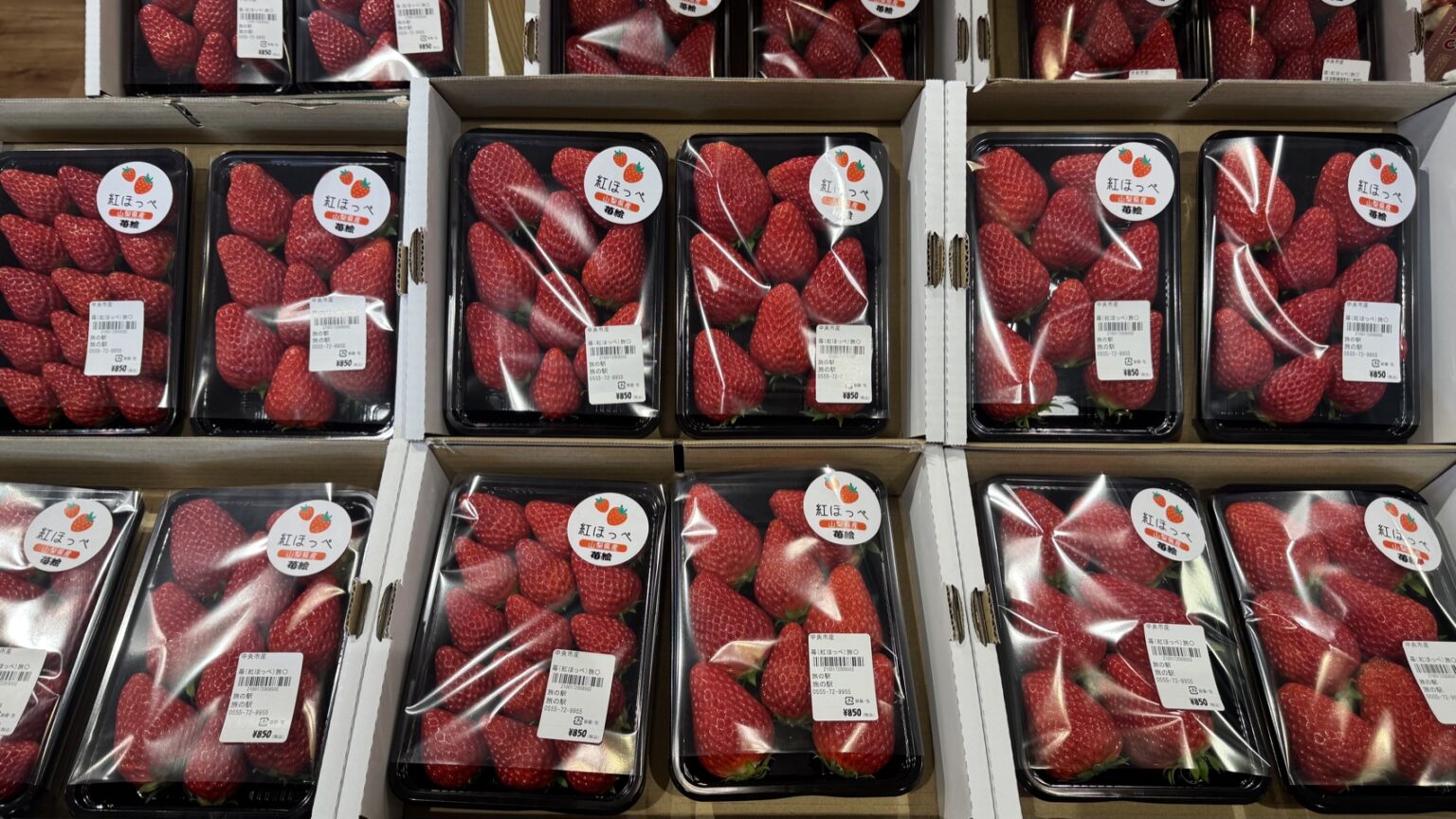
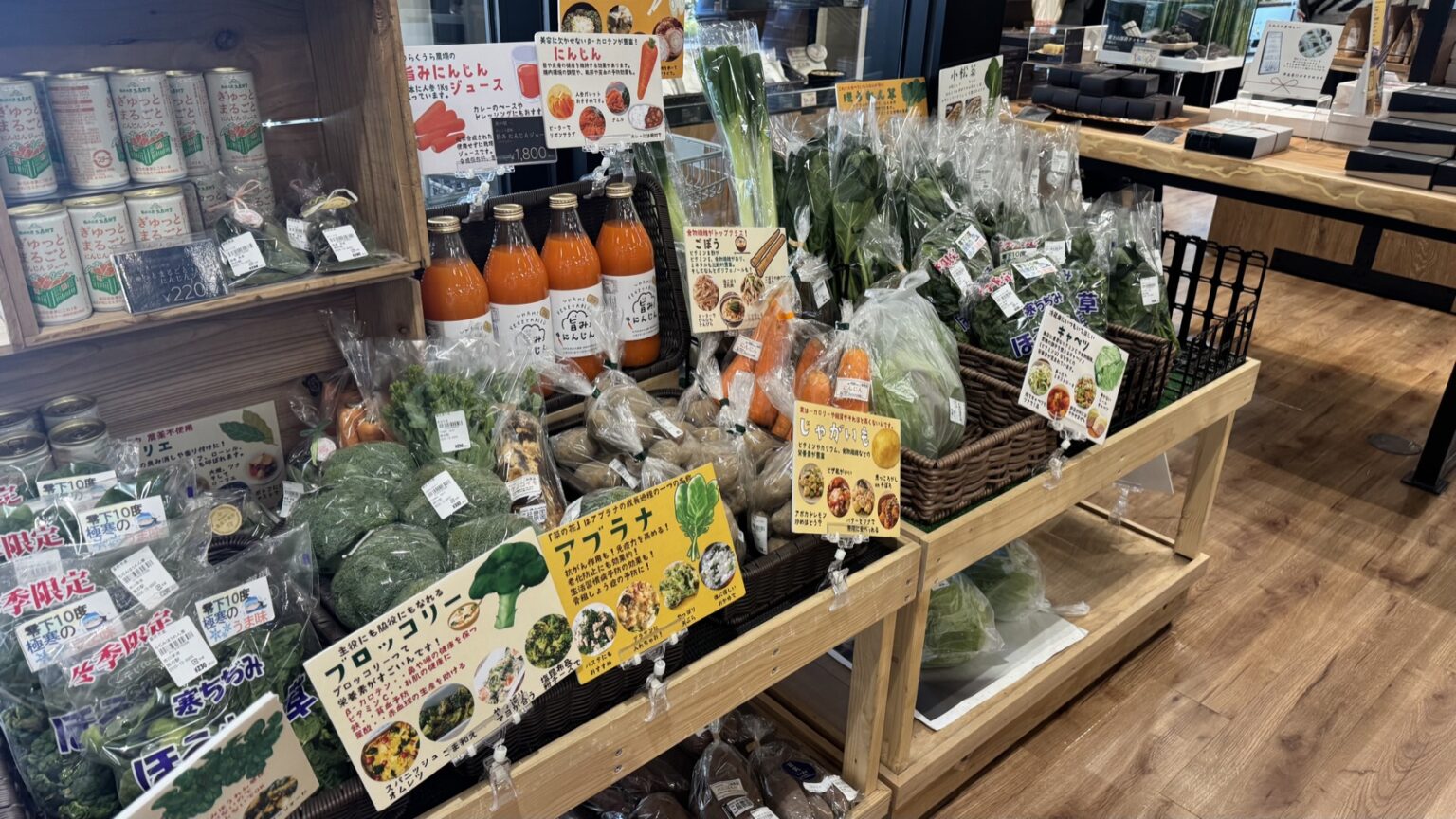
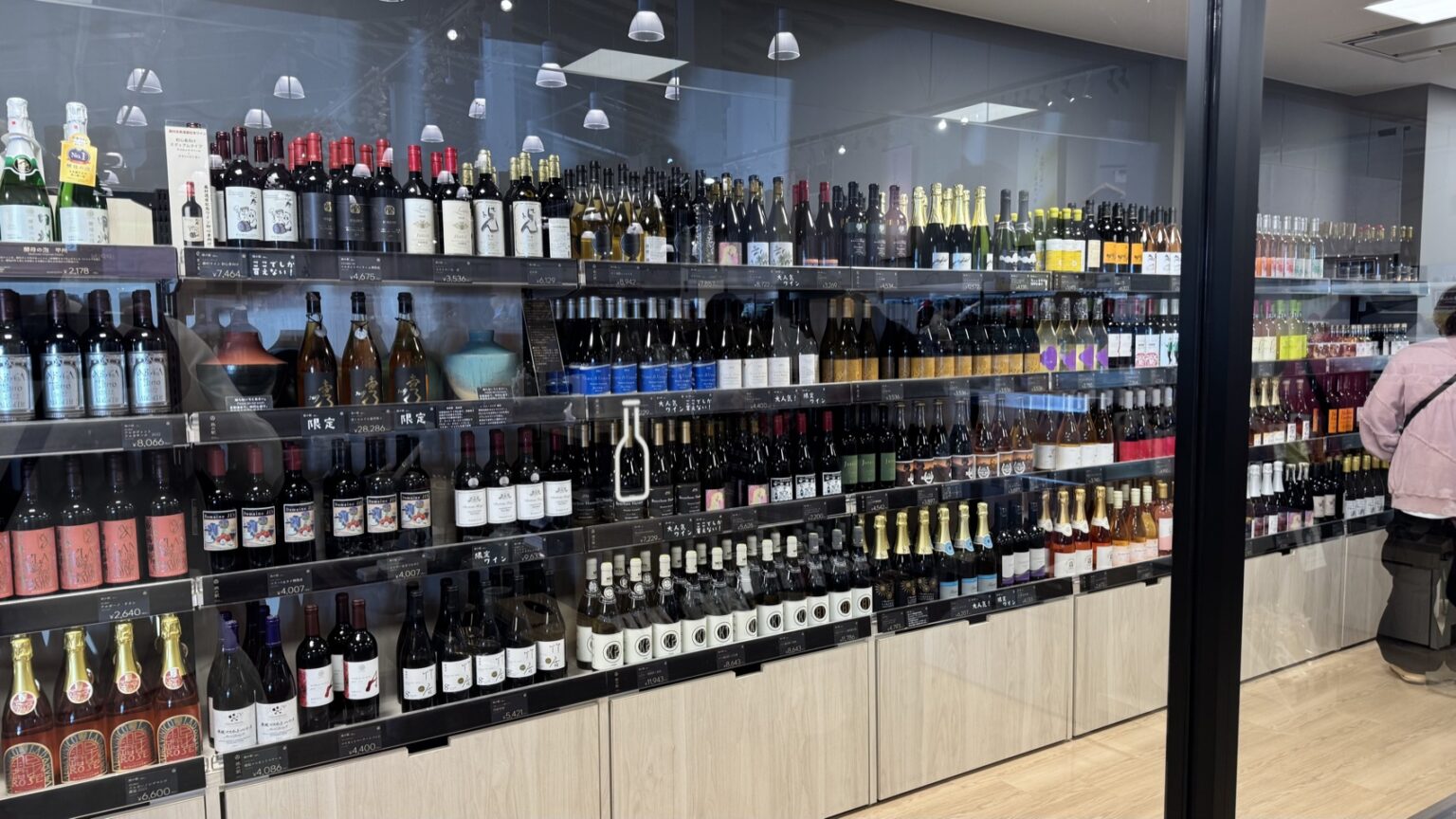
The other half of the building is Asama Market, a farm-direct marché with more than 2,000 products. The vegetables and fruit are local and seasonal — and in early summer that means the strawberry boxes I couldn’t walk past. Yamanashi is also Japan’s wine country, and there’s a whole glass-fronted wall of local wine and sake to prove it. Swipe through:
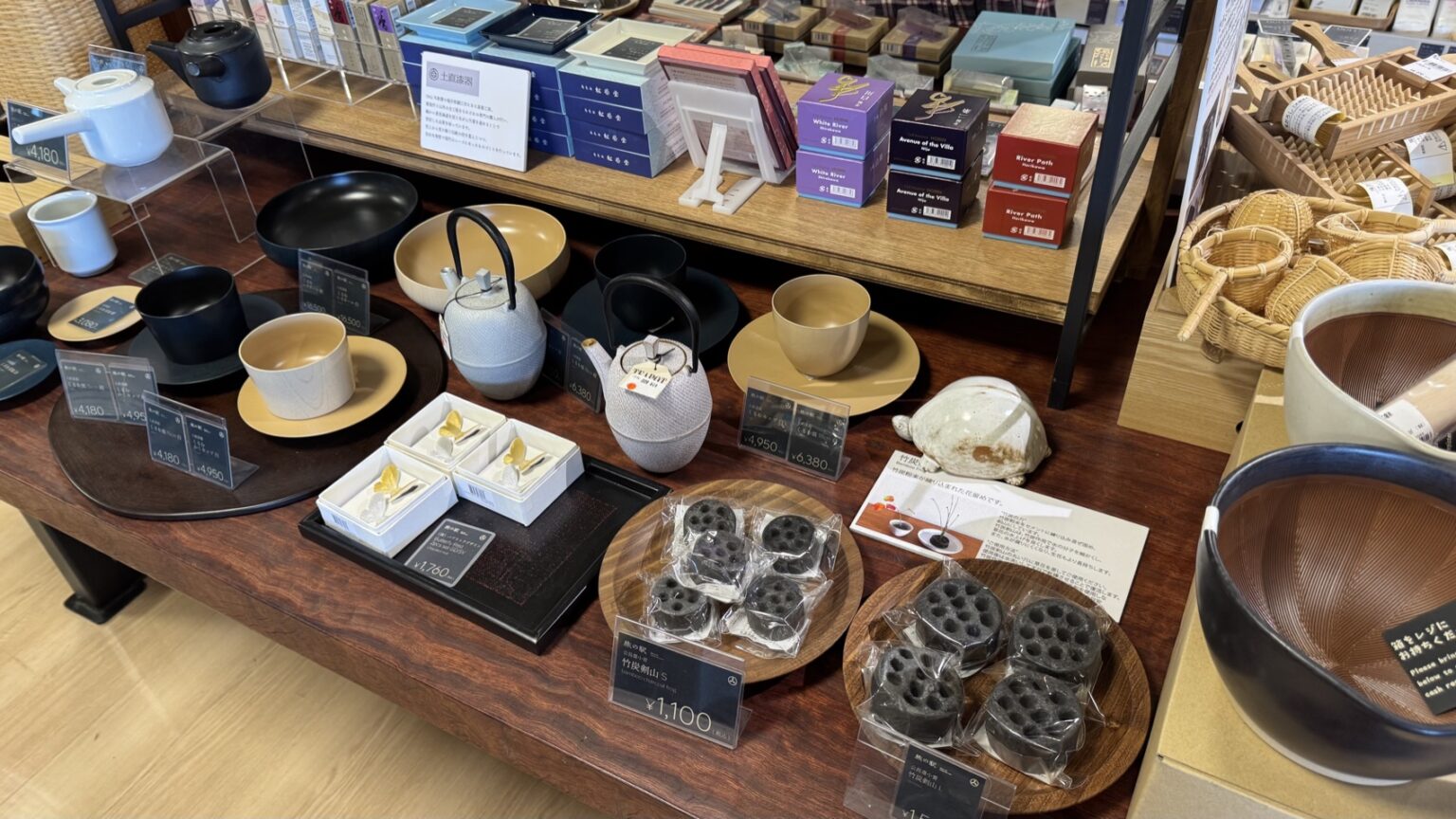
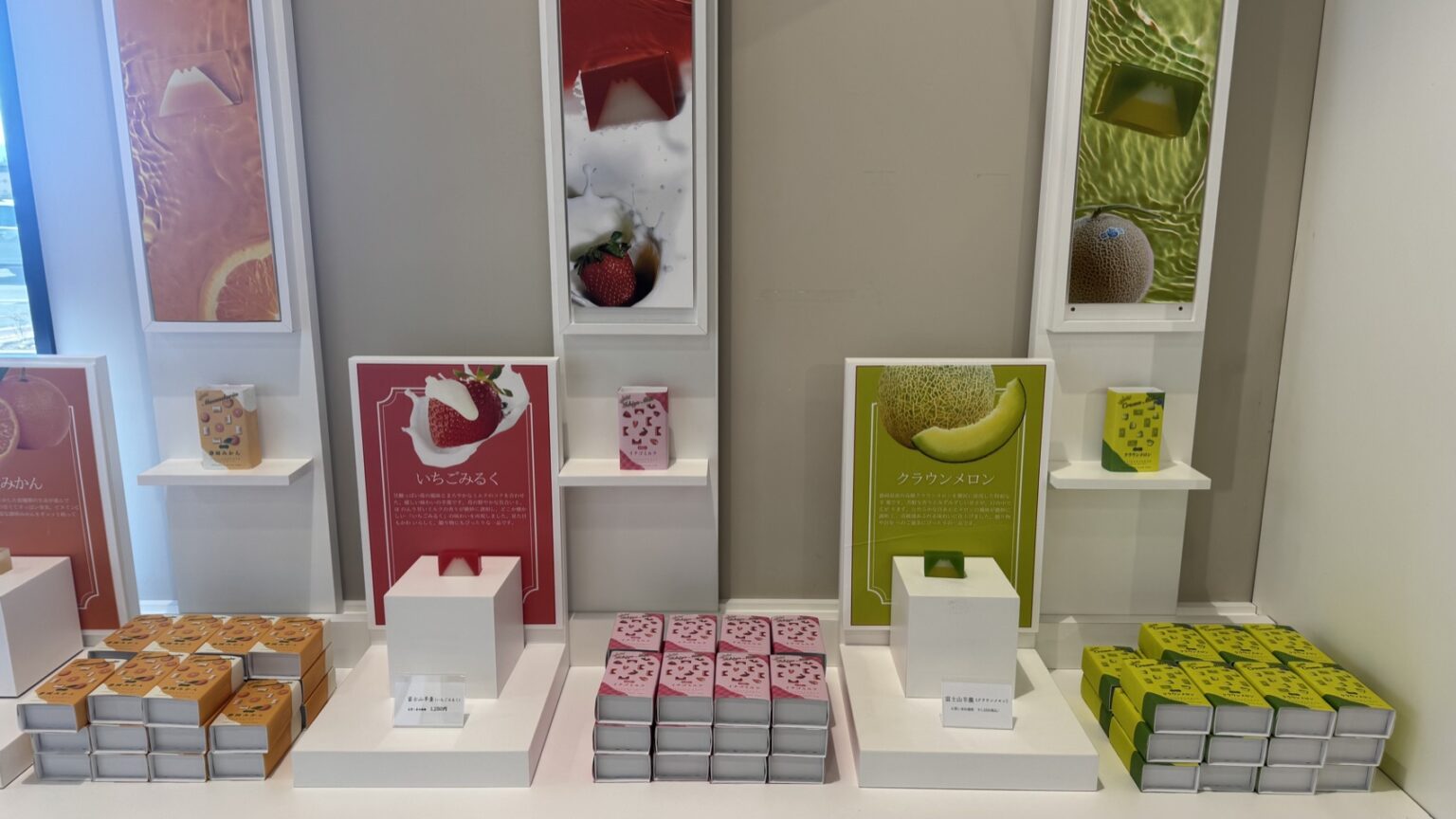
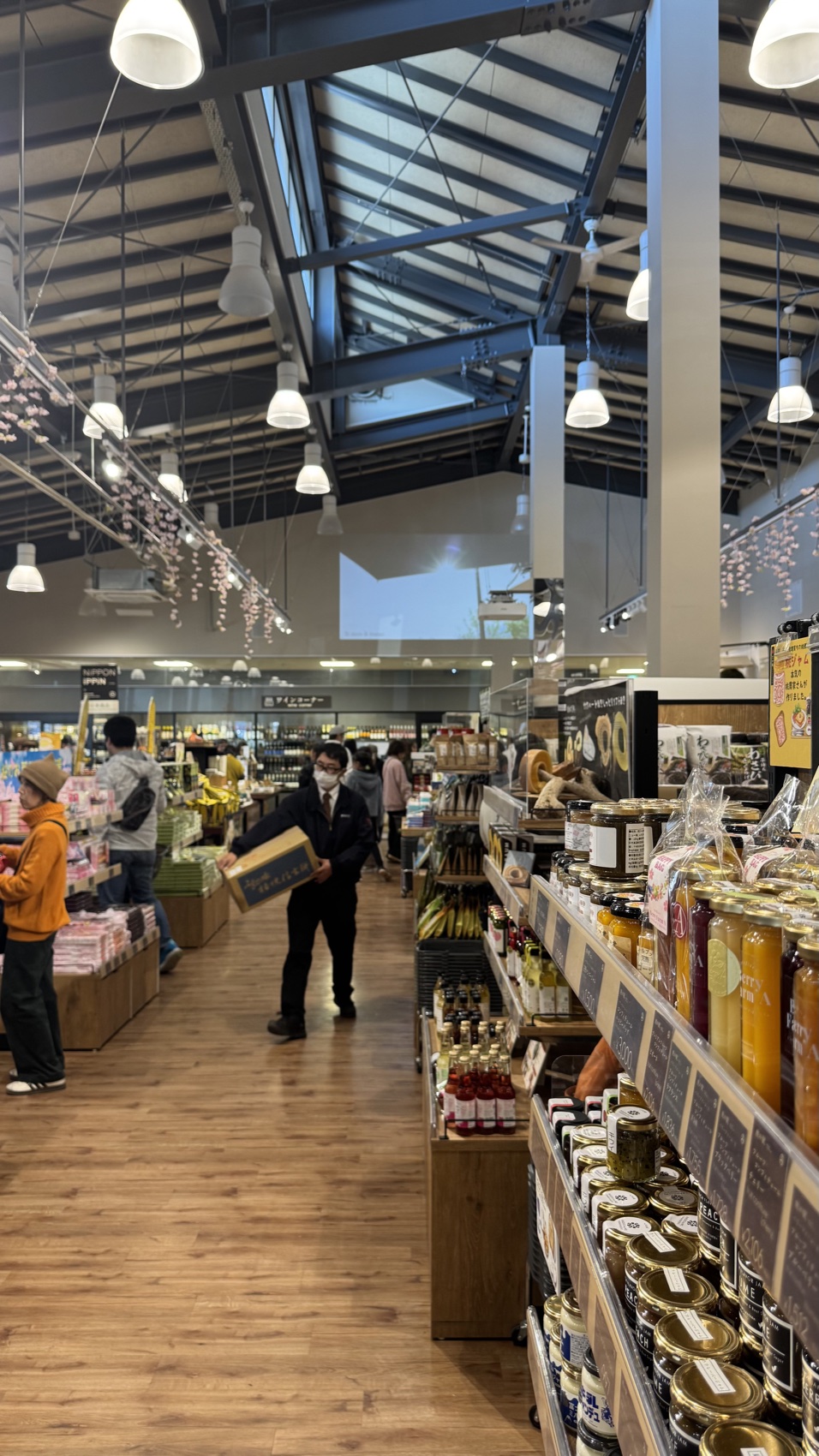
← swipe / scroll for more →
There’s also a bakery, Kawaguchiko Bakery by saint cloud, turning out around 70 kinds of bread, plus soft-serve and sweets — so it works as a coffee-and-pastry stop as much as a lunch one.
A word on the prices
Here’s the honest part. Because this is a polished, visitor-facing tabi-no-eki right on the Mt Fuji tourist route, the prices run higher than you’ll pay at an ordinary roadside station — that ¥3,980 katsudon is the clearest example. The food and produce are good, but you are paying the Kawaguchiko premium.
If your priority is cheap, local and unpolished, the registered michi-no-eki a little further out are gentler on the wallet. Michi-no-Eki Tsuru, in Tsuru City, is a municipal road station known for Fuji spring-water pork and farm vegetables; Michi-no-Eki Dōshi, up Route 413 in Dōshi Village, is famous for its locally grown watercress. Neither is as slick as Kawaguchiko Base — which is exactly the point.
Southeast Asia traveler tip: the big sets here are genuinely huge — order one between two and add a side rather than one each. Come hungry but plan to shop too: the strawberries, wine and deli items travel well as gifts. And mind the kitchen’s last order (~15:00, earlier in winter), which is well before the market closes.
Getting there
Kawaguchiko Base sits on the north shore of Lake Kawaguchiko, on the far side from the station. It’s easiest by car — about 10 minutes from Kawaguchiko Station, with free parking for 181 cars (plus EV charging). Without a car, the Kawaguchiko sightseeing “Red Line” retro bus loops the lake; get off at stop 15 (Music Forest / Hotori-no-Hotel Ban), then it’s about a 10-minute walk. Opening hours are 9:30–17:30 (to 16:30 in winter), and entry is free.
Where to stay: the north shore and around Kawaguchiko Station are both handy bases for this side of Mt Fuji. Search hotels around Kawaguchiko →
We may earn a small commission from bookings, at no extra cost to you.
Nearby on Fuji’s north shore
Ōishi Park
Lakeside flower beds with Mt Fuji behind — a few minutes along the same north shore.
Aozora Ichiba
A super-cheap open-air greengrocer on the same north shore — the budget counterpoint to a travel-station market.
Asumiko Pond (Hasu-ike)
A quiet lotus-and-hydrangea pond over in Fujiyoshida.
Kobaiya, Kawaguchiko
If you’d rather a proper sit-down wagyu meal by the lake.
Pandian
A wood-fired, natural-yeast bakery on the lake’s south shore — hard Jomon-style bread, takeout only.
Michi-no-Eki Fujioyama
A registered road station on the Shizuoka side of Mt Fuji, for comparison.
Mt Fuji travel guide
Plan the whole Mt Fuji area — access, views and seasons.
FAQ
Is Tabi-no-Eki Kawaguchiko Base a michi-no-eki?
Not officially. It’s branded a tabi-no-eki (“travel station”) and is privately run, so it isn’t part of the government michi-no-eki registry — even though it works much like one, with a farm market, restaurant and free parking. Some tourism sites loosely call it a “new-generation road station,” but that’s marketing.
How much is the famous katsudon, and how big is it?
The Fujizakura-pork sauce katsudon set is ¥3,980 and totals about 1 kilogram — three 140 g cutlets over 400 g of rice, plus cabbage and miso soup. It’s a limited-quantity item and easily enough for two, so share it.
What can I buy at the market?
Asama Market stocks 2,000-plus local products: seasonal local vegetables, fruit (strawberries in early summer), Yamanashi wine and sake, deli foods, sweets and own-brand goods. There’s also a bakery with around 70 kinds of bread.
Is it expensive?
For a roadside stop, yes — it’s a polished, tourist-facing place on the Mt Fuji route, so prices run higher than an ordinary road station. For cheaper, more local options, the registered michi-no-eki at Tsuru and Dōshi are gentler on the wallet.
How do I get there, and what are the hours?
It’s on Lake Kawaguchiko’s north shore, about 10 minutes by car from Kawaguchiko Station (free parking for 181 cars), or via the Red Line sightseeing bus. Open 9:30–17:30 (to 16:30 in winter); the restaurant’s last order is around 15:00 (earlier, about 14:00–14:30, in winter). Entry is free.
Is there vegetarian food?
The restaurant leans heavily on pork and beef, but the market sells plenty of fresh produce, bread and fruit, and there are noodle and rice dishes on the menu. It’s easier to assemble a light meal from the market than to find a dedicated vegetarian set.
Sources: official site kawaguchikobase.com (facility, hours, parking) and its Terrace Kitchen menu PDF (prices, spring 2026, tax incl.); Yamanashi Prefecture (Fujizakura pork); MLIT (michi-no-eki system) and the Kanto michi-no-eki association (Tsuru, Dōshi). Hours, prices and menus are seasonal and change — confirm on the official site before a special trip. Photos taken on site, June 2026.
Join travelers discovering Japan's hidden side
Weekly dispatches from off-the-beaten-path Japan — spots and stories you won't find in guidebooks.
No spam. Unsubscribe anytime.
Welcome aboard!
You're in. See you in your inbox soon.