
Kyoto · Nishijin · Field report
Kiichi is not a regular ramen shop. It is a 10-seat, three-times-a-day, fully reservation-only room above the 120-year-old Itutuji no Kombu in Nishijin, where the staff start the meal by pouring you a small cup of cold-brewed kombu water and asking you to taste it. The bowl that arrives forty minutes later is the most surprising ¥1,520 I have spent on noodles in Kyoto. I went, I booked once and missed, I rebooked, and below is everything I would have wanted to know going in.
The 30-second version
A 45-minute reservation-only kombu ramen experience on the second floor of a 1902 Kyoto kombu shop. Three seatings a day (11:00 / 12:00 / 13:00), 10 seats each, ¥1,520 plus the “one kombu” purchase rule (you must buy at least one product from the shop downstairs). Closed Sundays. Booking opens 30 days ahead and the seats vanish fast — do not show up without a confirmation.
Quick Facts
| What it is | Kombu (kelp) tasting + ramen experience above the long-established Itutuji no Kombu kombu shop |
|---|---|
| Address | Kyoto, Kamigyo-ku, Nishi-Gotsuji-higashi-machi 74-2, 五辻の昆布 本店 2F |
| Closest station | Kitano-Hakubaichi (Randen Kitano line); 12 min walk from Imadegawa (subway) |
| Hours | Three seatings only: 11:00, 12:00, 13:00. Each seating is approximately 45 minutes. |
| Closed | Sundays + irregular days (check booking calendar) |
| Capacity | 10 seats per seating, fully reservation-only |
| Price | ¥1,520 (kombu ramen) + at least one purchase from the kombu shop downstairs (the “one kombu” rule) |
| Menu | One dish: kombu ramen. No variations. |
| Reservation | Online form only, opens 30 days in advance. Arrive 10 minutes early. |
| Payment | Cash, Visa/Mastercard/JCB/Amex/Diners, IC card, PayPay all accepted. |
| Phone | 080-7227-7500 (use only to confirm booking; reservations themselves are form-only) |
Why a kombu shop opened a ramen restaurant
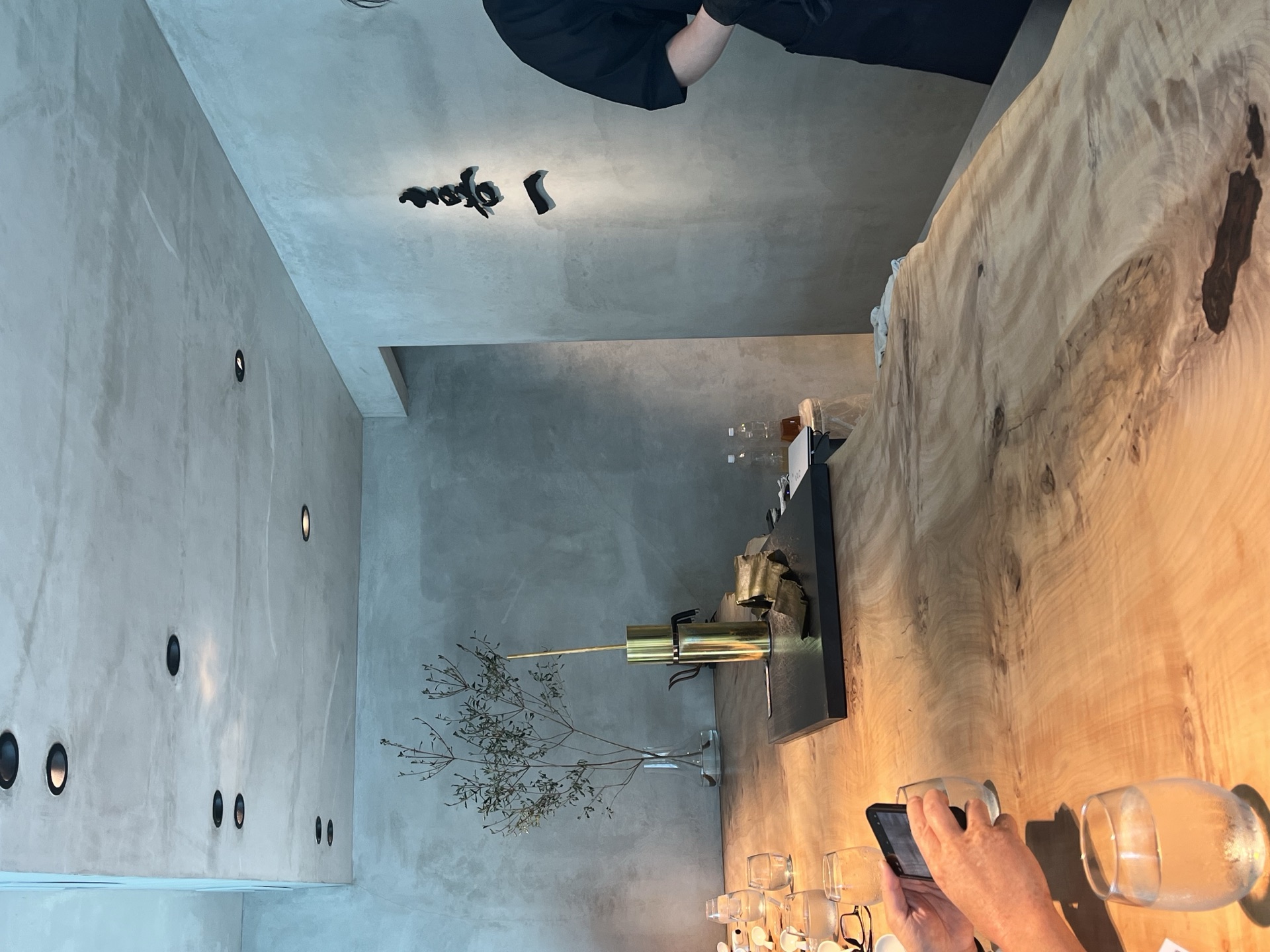
Itutuji no Kombu has been selling kombu in Kyoto’s Nishijin district since Meiji 35 — 1902 — which makes it 124 years old this year. For most of that time it has been a quiet neighbourhood institution, the kind of shop you walk past dozens of times before realising it is older than half the buildings around it. Locally it is just called “Itutuji no kombuyasan”, the kombu shop on the Itutsuji crossroads.
What the shop’s owners noticed, like a lot of long-term sellers of any single ingredient, is that fewer Japanese households are using kombu the way their grandparents did. Dashi packets, instant granules, store-bought broths — the texture and clarity of properly made kombu stock is becoming a thing people read about rather than taste. Their answer was Kiichi: a small reservation-only room on the second floor where you sit down for 45 minutes, taste the kombu water cold, watch oboro kombu being shaved by hand, and then eat a bowl of ramen built entirely on top of that experience.
It opened in April 2023 and the calendar has been hard to crack ever since. The point of the room is not “we make great ramen” — the point is “kombu tastes like this, and here is what one bowl built around it can be.”
The 45 minutes, hour by hour
What actually happens, in order
Arrive ten minutes early. Climb the stairs.
The shop downstairs is functioning normally as a kombu retailer — you walk past the counters, find the staircase to the back-right, and head up. Late arrivals lose their seat to the next seating’s queue, so the 10-minute buffer matters. The booking form is explicit about this.
Counter, glasses, kombu water
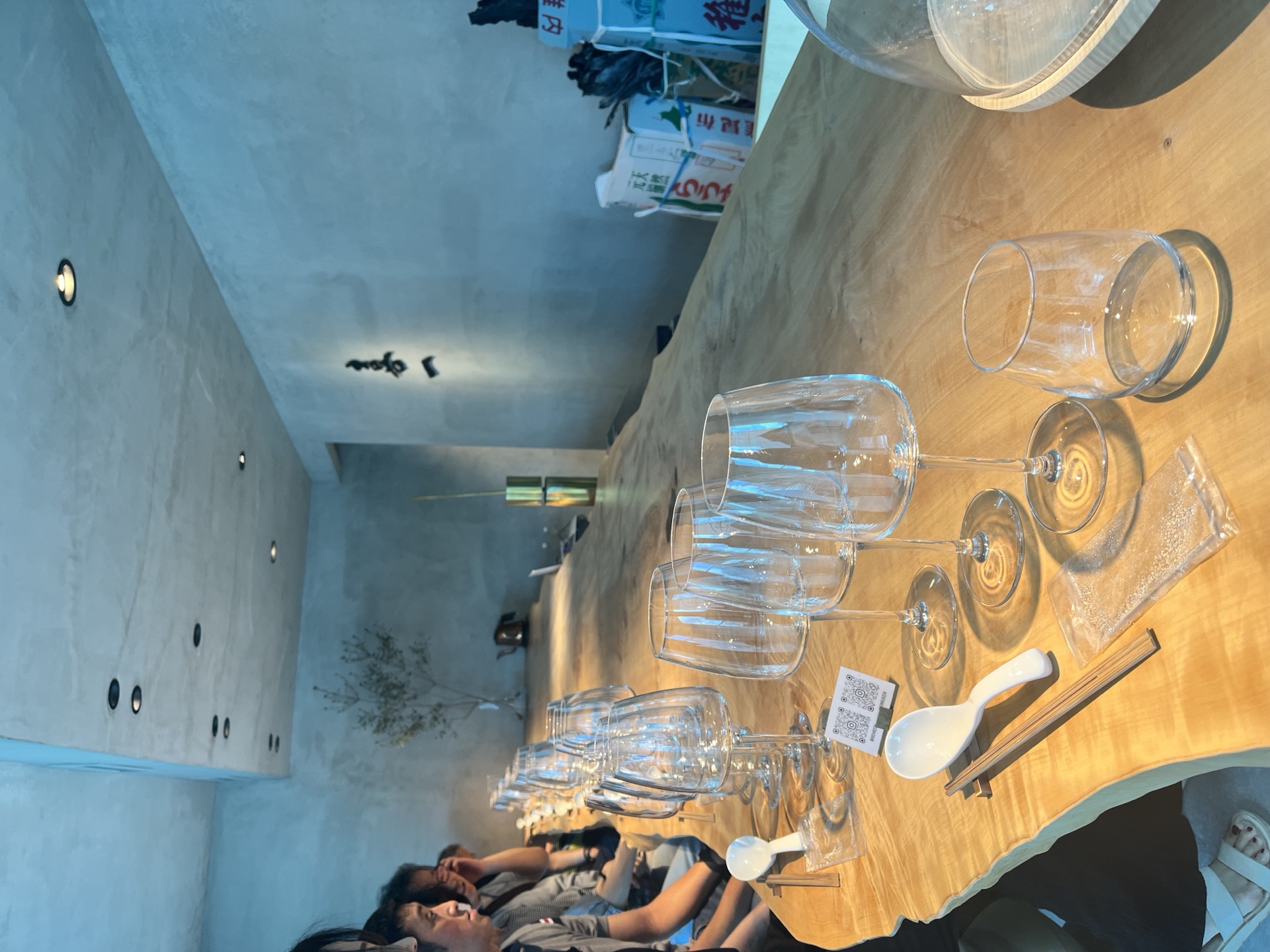
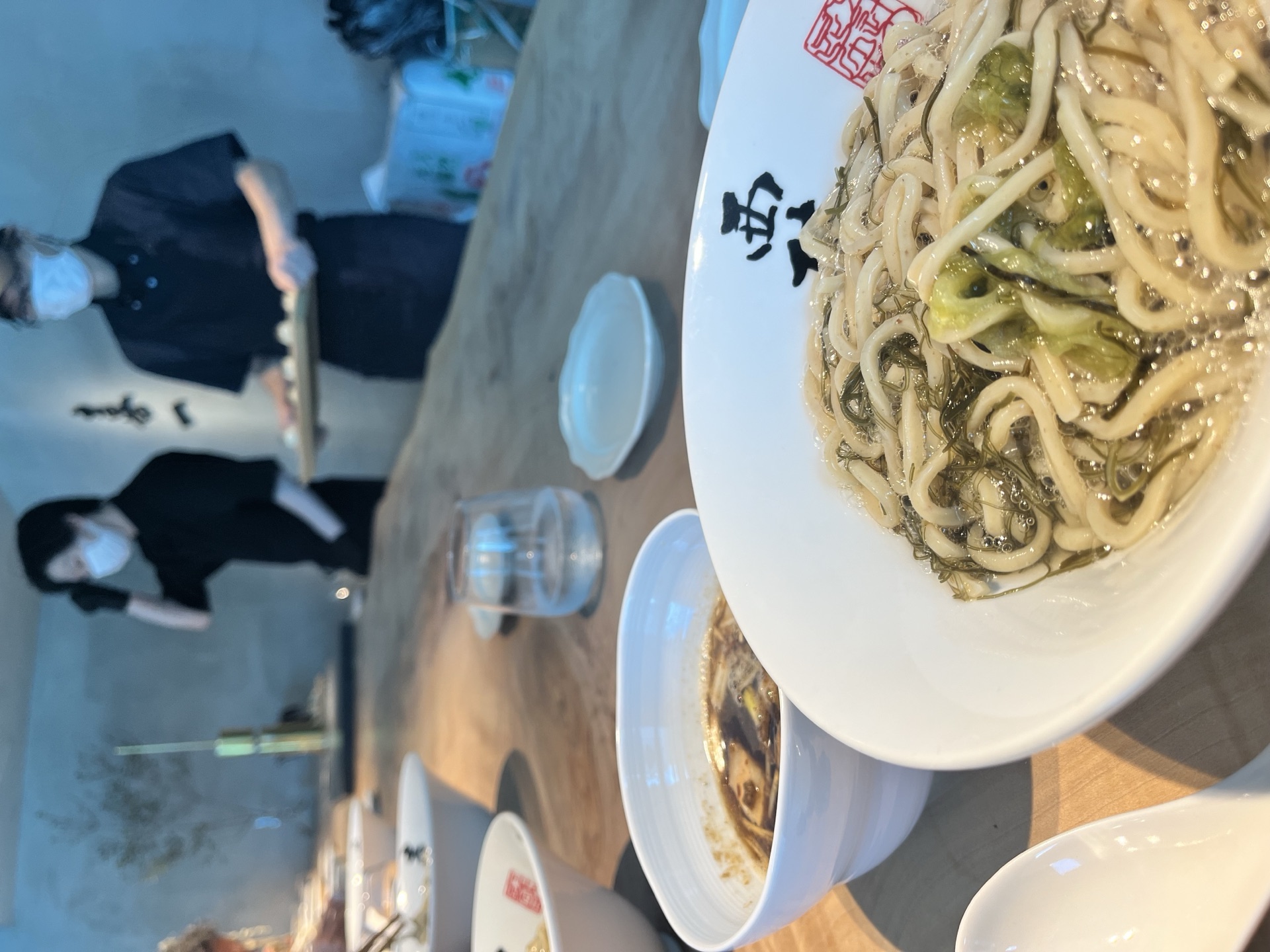
The counter seats ten side-by-side along a single live-edge wooden slab. Water glasses are pre-set. Within a couple of minutes the host pours each guest a small cup of cold-brewed kombu water. You taste it before anything else — this is the baseline reference for the rest of the meal.
Hand-shaving oboro kombu
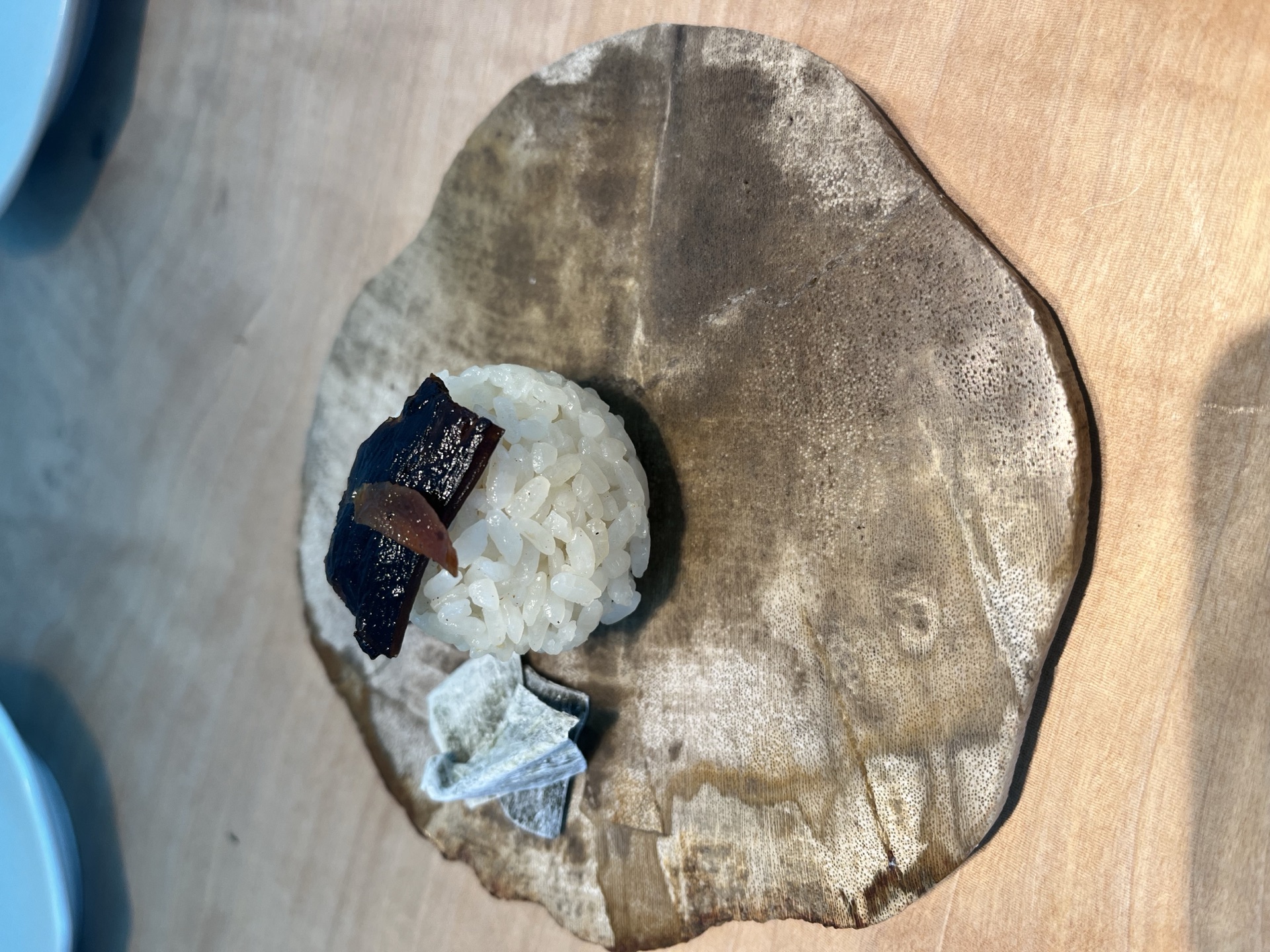
A short demonstration of what oboro kombu is and how it is shaved — thin, almost translucent ribbons peeled by hand off a stack of pressed kombu. A small welcome plate appears with a rice ball, a piece of dark kombu, oboro fragments and a chocolate. You eat each component in sequence as the host explains it.
The bowl arrives
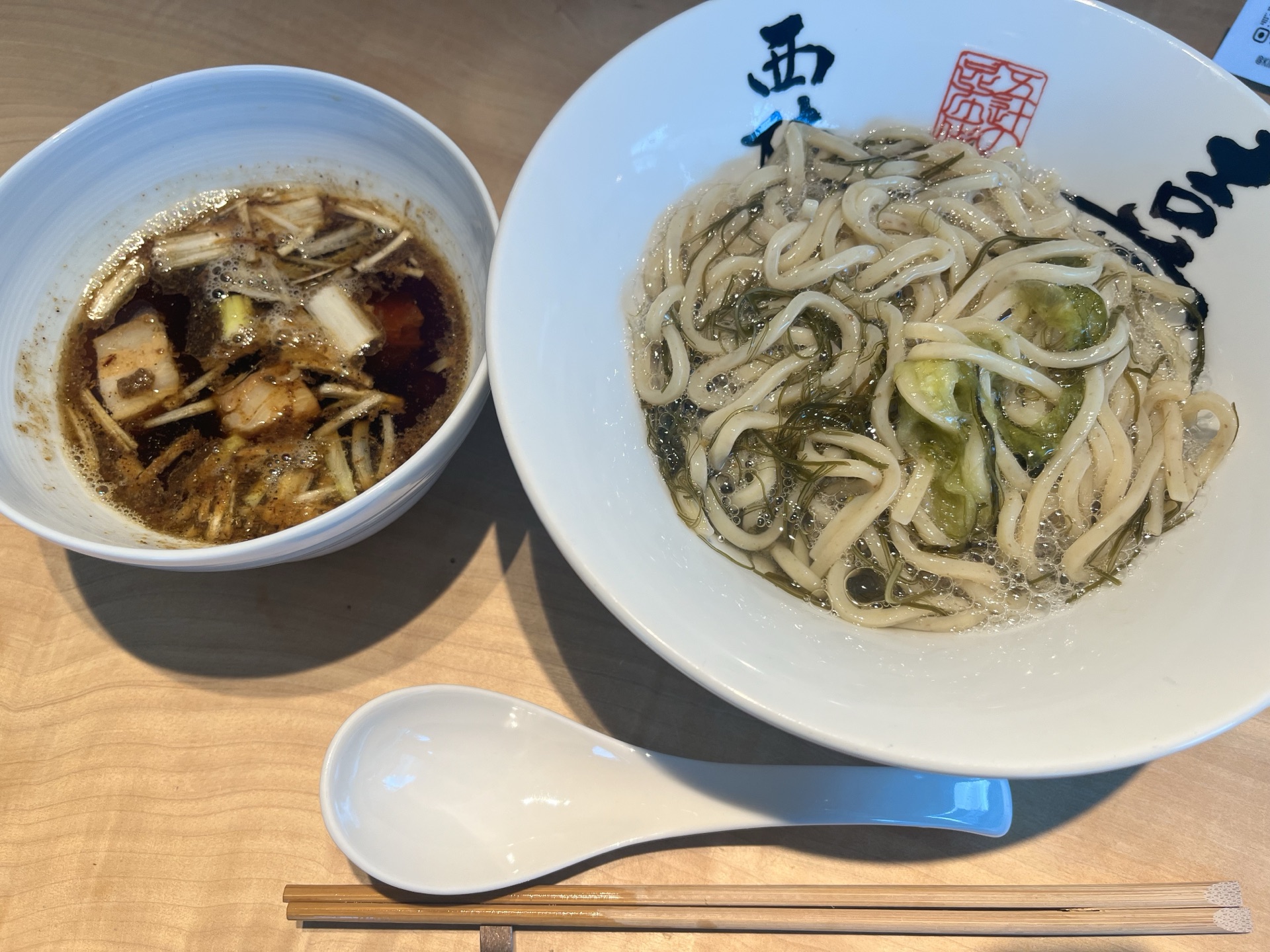
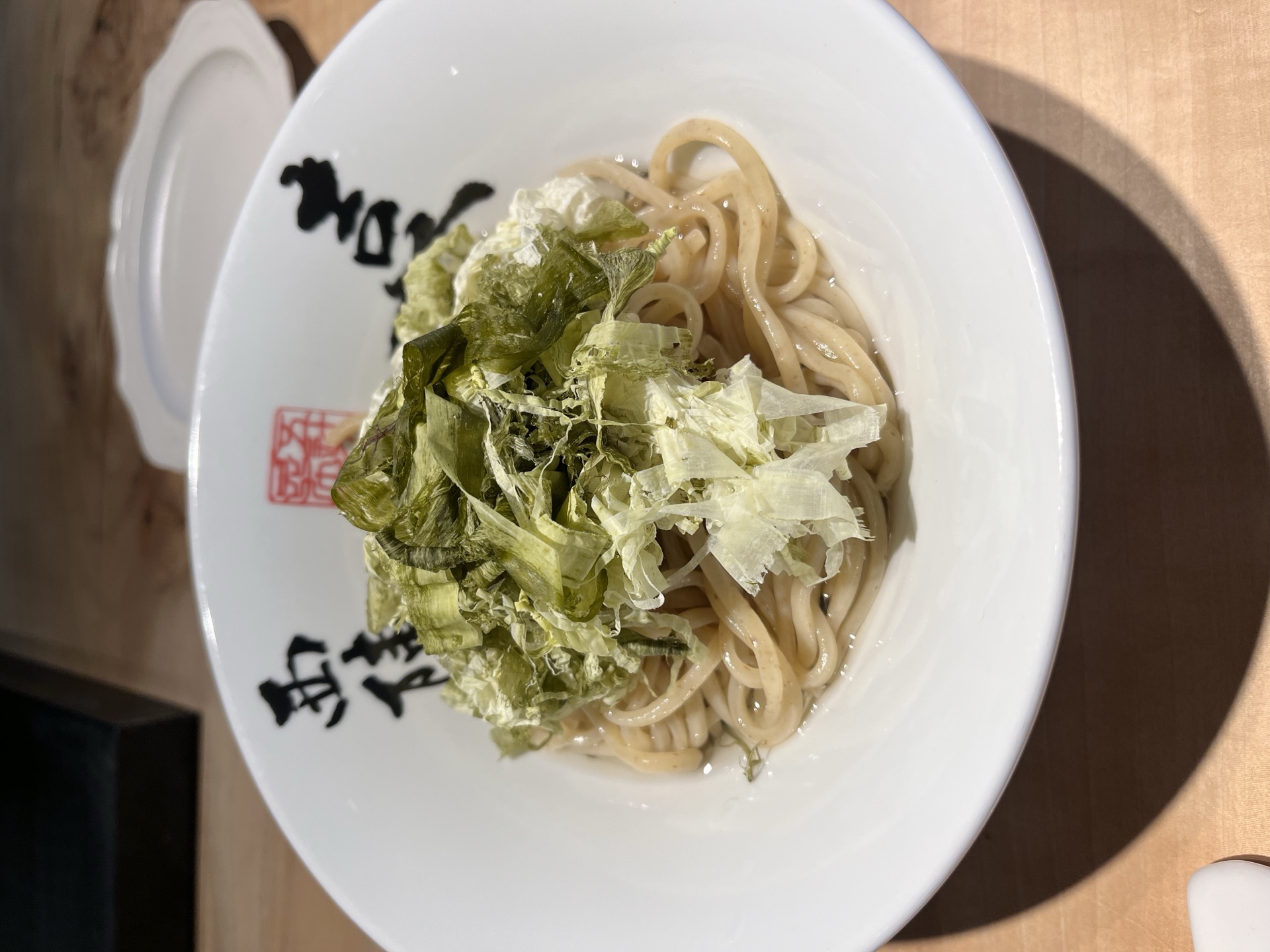
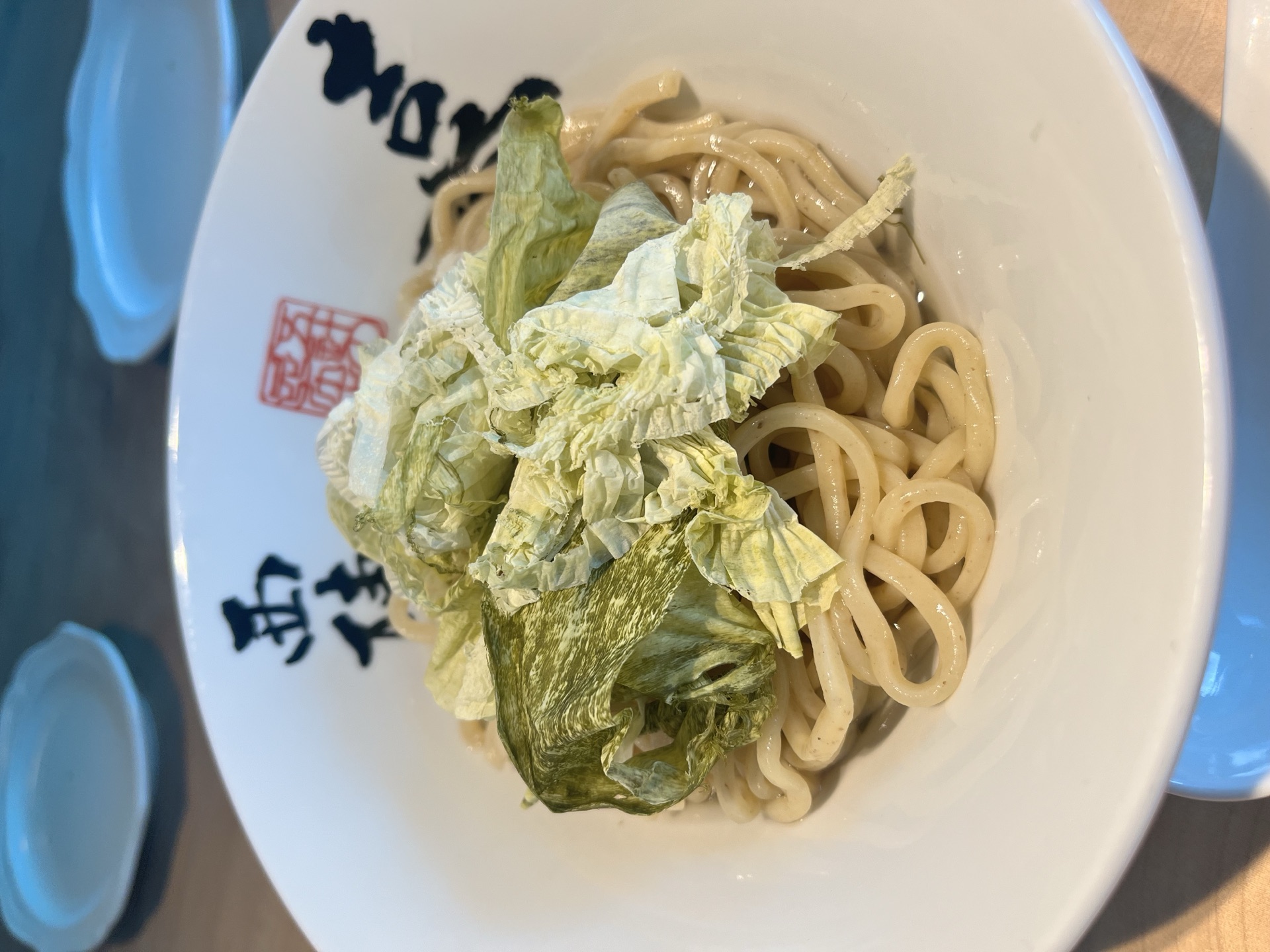
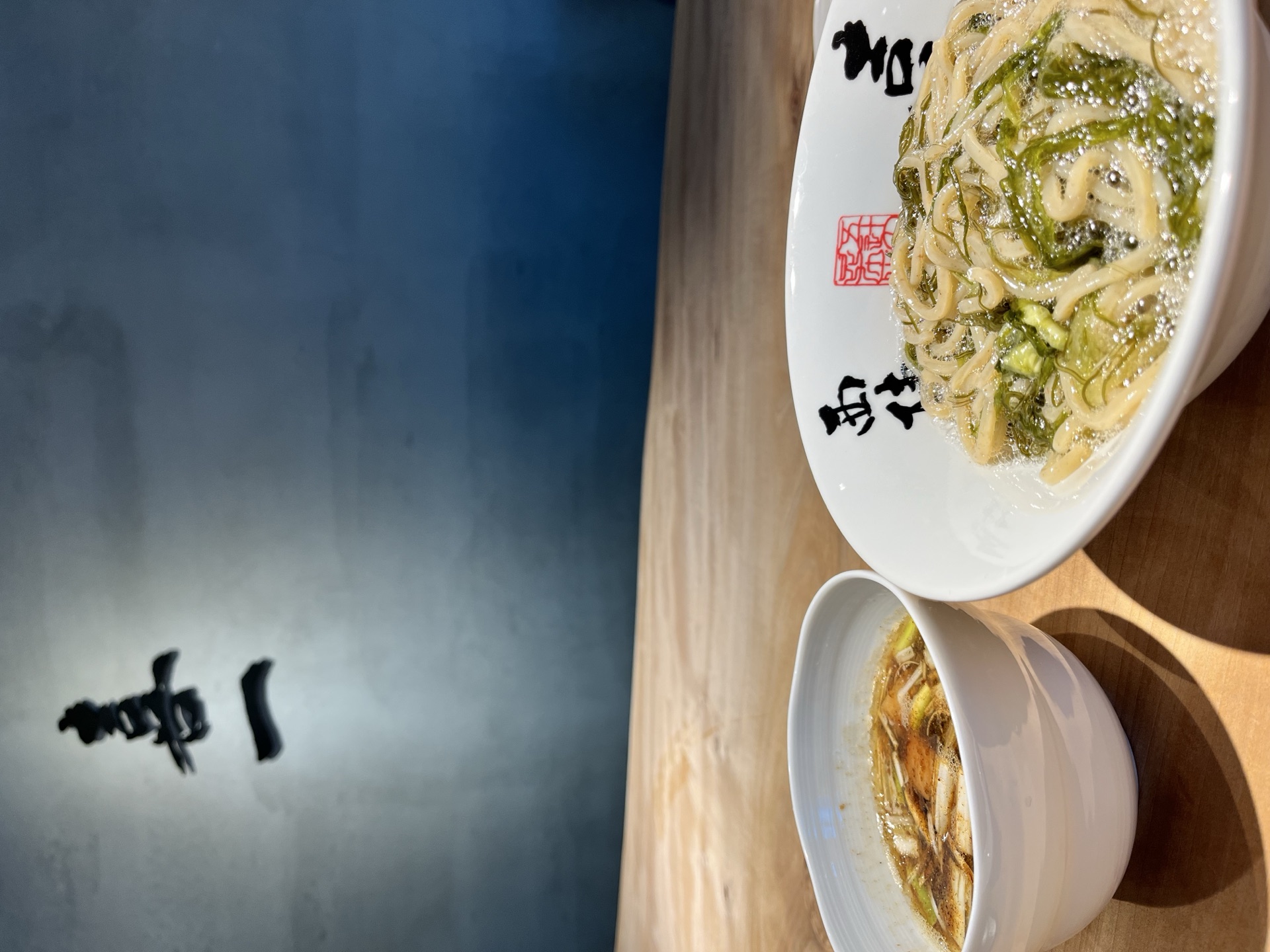
One bowl of noodles in clear kombu broth, a small dipping cup of darker dashi alongside. You eat the noodles first the way they come, then dip a portion in the secondary broth to taste the difference. Both are kombu-based but use different ratios.
The “one kombu” purchase, then out
Before leaving the seat, you choose at least one kombu product from a small shelf at the back of the room or, more commonly, from the shop downstairs. This is the “one kombu” rule built into the price — the experience is also a hands-on tasting menu for the shop’s actual products. The next seating’s guests are already at the bottom of the stairs.
The bowl, taken apart
What sits in front of you is unusual enough that knowing what each part is helps. There are three layered elements — broth, noodles, topping — and each is doing something specific.
Three-kombu cold-brewed dashi
真昆布 · 羅臼 · 利尻のブレンド
Cold-water extraction from a blend of Ma-kombu (sweet, body), Rausu (deeper umami), and Rishiri (clarity). Layered with bonito, dried squid, shellfish, nuts, and tea leaves. No soy sauce, no animal stock. Reads pale gold in the bowl.
Hokkaido whole-grain
北海道産「春よ恋」全粒粉麺
Thin, slightly chewy, made from Haru Yo Koi wheat from Hokkaido as a whole-grain flour. The bran gives a wheat-forward taste that holds up against the kombu broth without overpowering it.
Hand-shaved oboro kombu
手削りおぼろ昆布
Translucent ribbons of pressed kombu shaved fresh and laid over the noodles. As they wilt into the broth they thicken it slightly and add a textural counterpoint to the noodles. The third element sometimes appears as low-temperature chicken or dashi-cooked bamboo, depending on the day.
The “one kombu” rule, explained without fuss
Pricing-wise, ¥1,520 covers the meal and the experience. On top of that, you commit to buying at least one product from the kombu shop downstairs — tororo kombu, tsukudani, dashi packets, the small kombu chocolate they sell as a souvenir. Most products run between ¥500 and ¥2,500, and there is something in every price band, including individually-wrapped pieces well under ¥1,000.
This sounds gimmicky at first read but it isn’t. The shop’s whole proposition is that you cannot fully appreciate a kombu-based dish without tasting kombu in its other forms — raw, simmered in soy as tsukudani, fluff-shaved as oboro for rice. The “one kombu” purchase pulls a piece of the dining experience home with you. It is also the single most direct way to support a 124-year-old kombu shop that, like every old Kyoto specialty store, is operating in a tighter market every year.
Reservation reality
How to actually book Kiichi (without losing your slot)
Booking is form-only at itutuji.com/kiichi/form. The calendar opens 30 days ahead and refreshes daily. Popular weekend seatings disappear within hours of opening; weekdays are easier.
- Sundays are closed. The calendar will mark them in red.
- Arrive 10 minutes before your seating. Late arrivals are reseated to the next slot only if space allows.
- The shop has reported double-booking issues recently. If your confirmation email is unclear or you don’t receive one, call the phone (080-7227-7500) the day before to verify.
- Cancellation: handled through the form. Doing it manually is more reliable than waiting on email exchange.
- Group size: small. Reservations are usually solo or pairs; check the form for availability.
Getting there from central Kyoto
The shop sits on the western edge of the Imperial Palace area, on the Itutsuji crossroads which gives the parent shop its name. Three realistic ways to arrive:
- By Randen Kitano line: Kitano-Hakubaichi station, then 7-8 minutes walk east. The most direct from the western Kyoto sights (Kinkakuji, Ryoanji).
- By subway: Imadegawa station (Karasuma line), then 12 minutes walk west through residential streets. Pleasant on a clear day.
- By bus: Routes 51, 59, 102 from Kyoto Station to Senbon-Imadegawa stop, then 4 minutes walk. Easiest for first-timers but the buses can be slow at peak times.
If you are pairing this with other Kyoto sights, the geography works well with the Ryoanji rock garden, the Imperial Palace gardens, or a walk through the western edge of Saga-Toriimoto. Kiichi is the kind of stop that anchors a half-day rather than a full one.
Where to stay nearby
Sponsored placement
Stay walking distance from Kiichi
The Nishijin / Imperial Palace area has the best small-machiya hotel concentration in Kyoto. Within a 15-minute walk you have everything from converted-machiya boutique stays (¥18,000+) to chain business hotels (¥7,000–12,000). Saturday and weekday-Friday dates are the most flexible. If you are visiting in cherry blossom season or autumn, book 6–8 weeks ahead.
If you are after a more traditional ryokan stay or a kaiseki-included night, see our Hoshinoya Kyoto review — a different price band but a worthwhile pairing for travellers who want one luxury night during a Kyoto trip.
FAQ
Is the “one kombu” purchase strict?
Yes, but it’s also reasonable. There are products at every price point including small bags and bites under ¥1,000. The rule exists to keep the kombu shop downstairs commercially active — treat the purchase as part of the experience rather than an extra cost.
Can I just walk in if seats are open?
No. The form is the only way in. The room turns over every 45 minutes and walk-ins disrupt the flow for the staff and the guests already booked. If you arrive without a booking, you will be politely turned away.
What if I have dietary restrictions?
The bowl is naturally meat-free, dairy-free, and the broth has no soy sauce. The whole-grain noodles contain wheat. There is no menu variation, so the experience is the experience as served — if you cannot eat wheat or have allergies the staff cannot accommodate, this is not the place for you.
Is it worth it for someone who isn’t into kombu specifically?
Honestly, partly — if you appreciate quiet rooms, a single skilled craft, and a bowl of noodles done unusually, yes. If you came to Japan for ramen and want chashu, fat, and complexity, this isn’t that. The question to ask before booking is whether you want to taste an ingredient on its own terms for 45 minutes.
How does the price compare to a regular Kyoto ramen?
A standard bowl in central Kyoto runs ¥900–1,200. Kiichi at ¥1,520 plus a kombu purchase is more expensive than a normal ramen lunch — closer to a casual lunch course. The value is in the experience and the produce, not in the absolute volume of the bowl.
Do they speak English?
Some, but the experience is built around the host’s commentary which is mostly in Japanese. Bring a translation app or come with a friend who reads kanji. The form itself is Japanese-only with simple fields — navigable with a translator browser extension.
Join travelers discovering Japan's hidden side
Weekly dispatches from off-the-beaten-path Japan — spots and stories you won't find in guidebooks.
No spam. Unsubscribe anytime.
Welcome aboard!
You're in. See you in your inbox soon.