![Adashino Nenbutsuji 2026: Kyoto's Temple of 8,000 Stone Buddhas [With Map]](https://hiddenjapan-gems.com/wp-content/uploads/2026/04/DSC2083-2-2-1536x864.webp)

Most visitors to Arashiyama stop at the famous bamboo grove. But if you keep walking north for about 30 minutes, past the crowds and into the quiet Saga Toriimoto preserved district, you’ll find something entirely different. Adashino Nenbutsuji (化野念仏寺) is not a place of imperial grandeur or manicured zen gardens. It is a vast, moss-covered field where 8,000 weathered stone Buddhas stand shoulder-to-shoulder, commemorating the unclaimed dead of Kyoto‘s past.
I find this temple to be one of the most honest and hauntingly beautiful religious sites in the city. It asks you to remember that the ancient capital was built on top of millions of unrecorded lives. In this guide, I’ll explain what you are looking at, how to navigate the grounds, and when to visit for the extraordinary Sento Kuyo candlelight ceremony.
Table of Contents
Quick Facts for 2026
| Information | Details |
| Japanese Name | Adashino Nenbutsuji (化野念仏寺) |
| Location | Saga Toriimoto, Ukyo-ku, Kyoto (North of Arashiyama) |
| Hours | 9:00 AM – 4:30 PM (Last entry 4:00 PM). Closes at 3:30 PM in Dec, Jan, Feb. |
| Admission | ¥5,00 for adults ¥400 for students. |
| Sento Kuyo 2026 | August 29 (Sat) & August 30 (Sun), 18:00–21:00. Special admission ¥1,000. |
| Time Needed | 30–45 minutes (1.5–2 hours for Sento Kuyo) |
What Is Adashino Nenbutsuji?
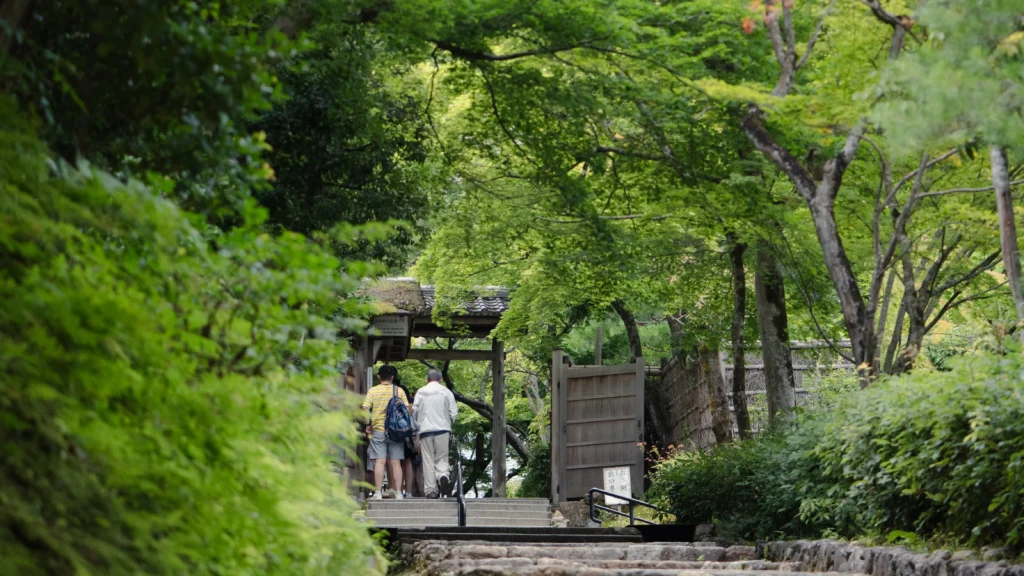
Adashino Nenbutsuji is a Jodo-shu (Pure Land) Buddhist temple located at the northern edge of the Sagano area in Kyoto. While it has a main hall and a bamboo grove, its defining feature is the Sai-no-Kawara (賽の河原) — an expansive, terraced field containing approximately 8,000 stone statues of Buddha and multi-tiered stupas.
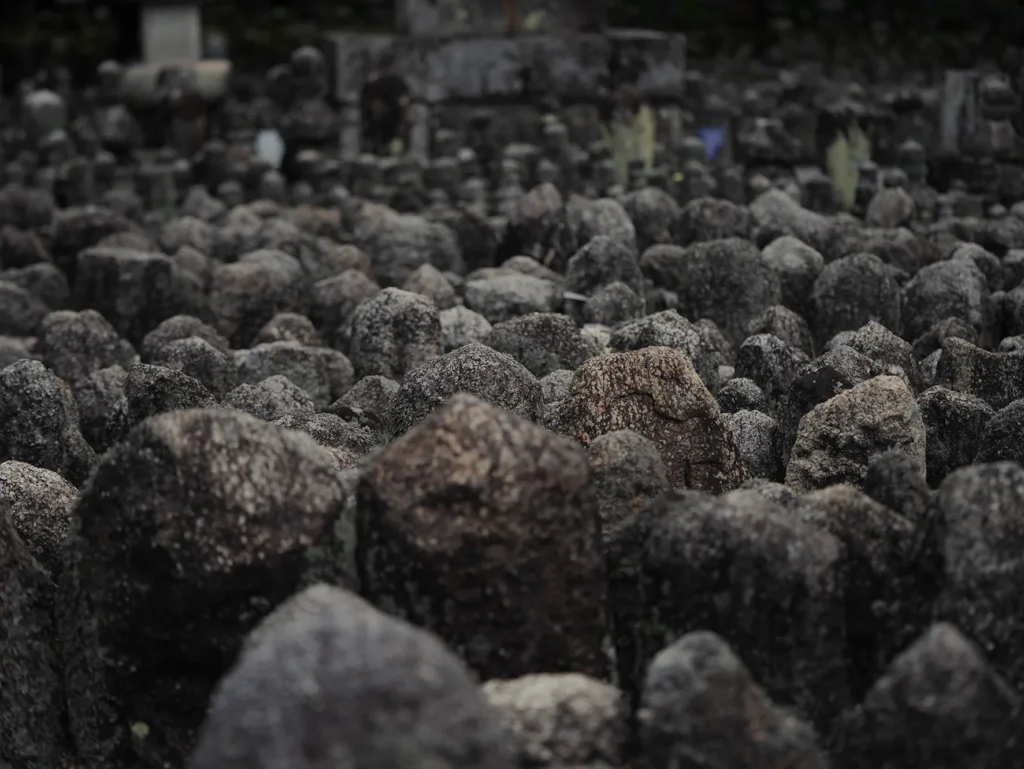
Unlike the meticulously carved statues you see in museums, these stones are small, rough, and heavily weathered. Many have lost their facial features entirely, worn smooth by centuries of rain and wind. They are packed tightly together, rising from a bed of green moss, creating a visual impact that is both somber and profoundly peaceful.
The History: Why Are There 8,000 Statues?
To understand Adashino Nenbutsuji, you have to understand the geography of ancient Kyoto.
A millennium ago, the “Adashino” area was outside the city limits. Along with Toribeno in the east and Rendaino in the north, Adashino was one of Kyoto’s three major burial grounds. Specifically, it was a place for fūsō (風葬) — wind burial. The bodies of commoners, the poor, and those without family were simply left in the open fields here to return to nature.
According to temple tradition, the great monk Kukai (Kobo Daishi) visited this area in the early 9th century, felt deep compassion for the abandoned dead, and established a temple to pray for their souls. Centuries later, the monk Hōnen transformed it into a Pure Land temple, dedicating it to the continuous chanting of the Nenbutsu to ensure all these forgotten souls could reach the Western Paradise.
Over the centuries, local people carved small stone Buddhas to memorialize the dead, but these eventually became buried and scattered across the hillsides. During land development in the Meiji period (late 19th century), thousands of these forgotten stones were unearthed. Local residents gathered them together, and the temple arranged them into the collective memorial you see today.
What You’ll See: A Visit in Order
The temple grounds are relatively compact, but the emotional weight of the site makes visitors slow down. Here is how your visit will unfold.
1. The Main Hall (Hondo)
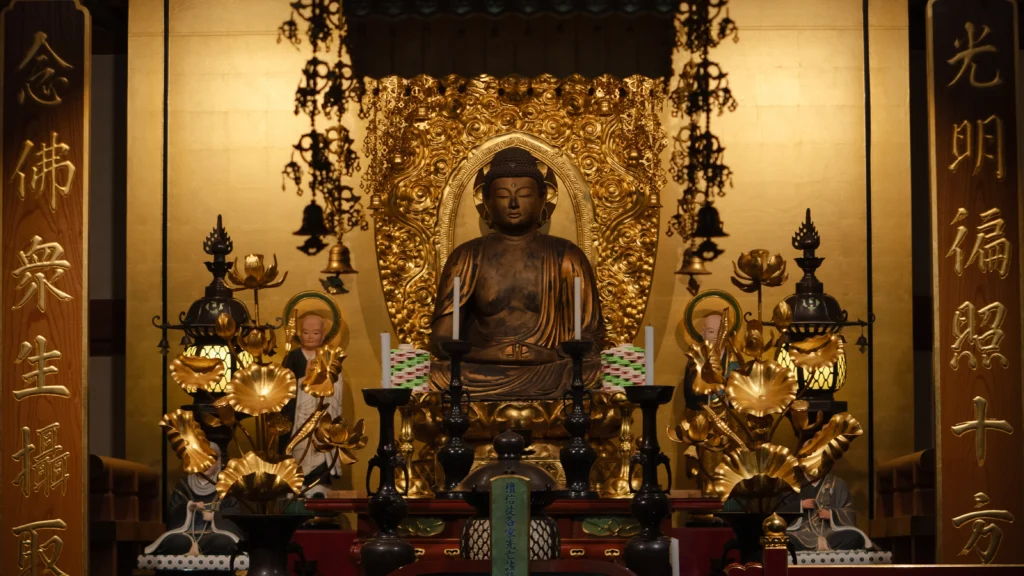
After paying admission, you’ll first approach the main hall. Inside sits a beautiful wooden statue of Amida Nyorai (the Buddha of Infinite Light), carved by the renowned Kamakura-period sculptor Tankei. The contrast between this pristine, golden statue inside and the thousands of weathered, anonymous stone statues outside is striking.
2. The Field of Stone Buddhas (Sai-no-Kawara)
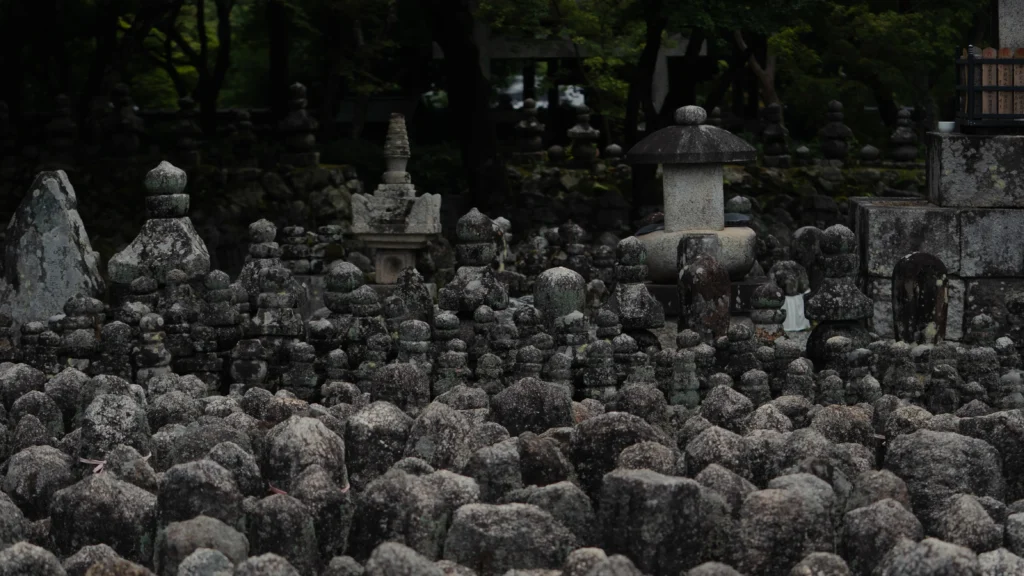
Behind the main hall opens up the Sai-no-Kawara. This is the heart of Adashino. The name refers to the mythological riverbed in the Buddhist underworld where the souls of children who died before their parents must stack stones as penance.
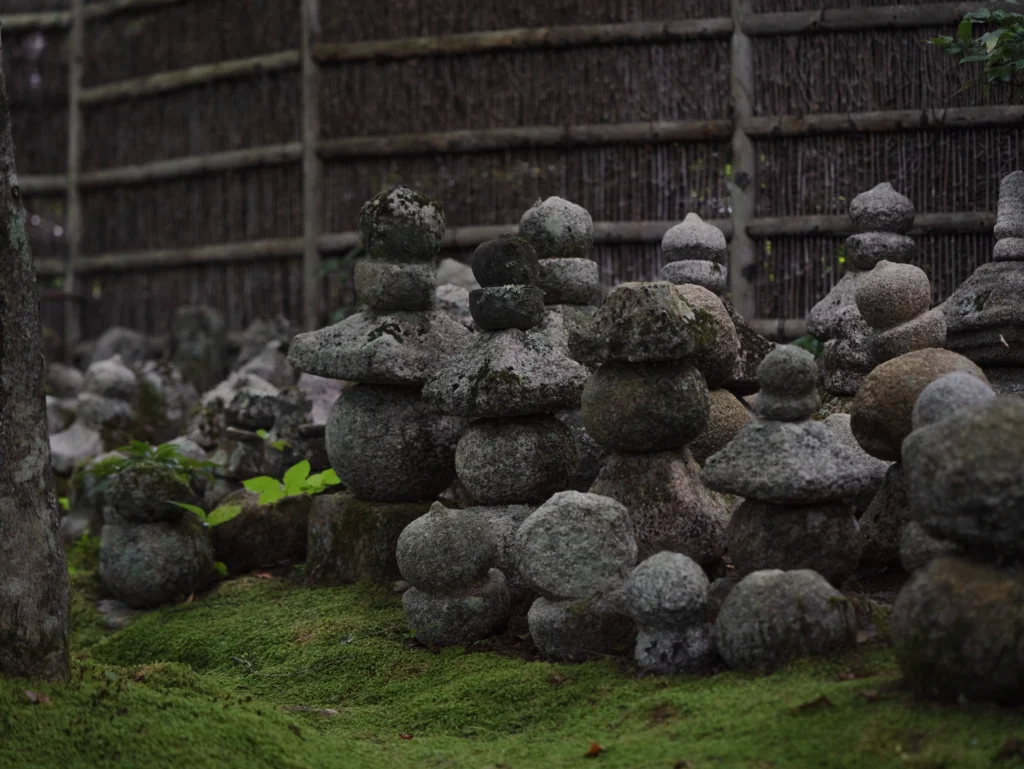
The 8,000 stones are arranged in terraced rows. You cannot walk among them; you observe them from the perimeter paths. The sheer volume of the stones, combined with the silence of the surrounding forest, is overwhelming.
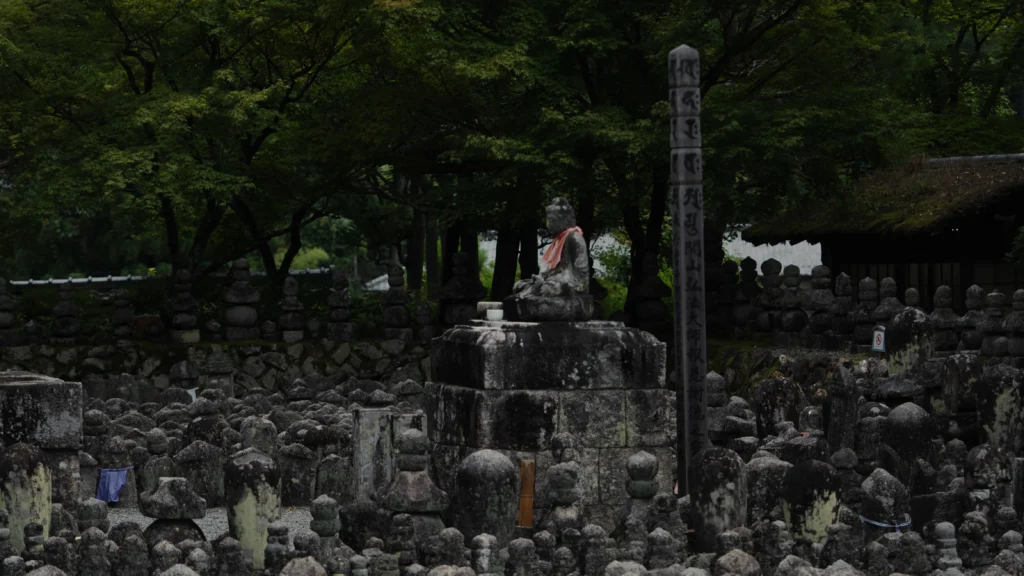
Look closely at the stones. Some are clearly carved in the shape of seated Buddhas. Others are gorinto (five-tiered stupas representing the five elements). Many are just rounded lumps of rock, their original shapes erased by time.
3. The Central Stupa
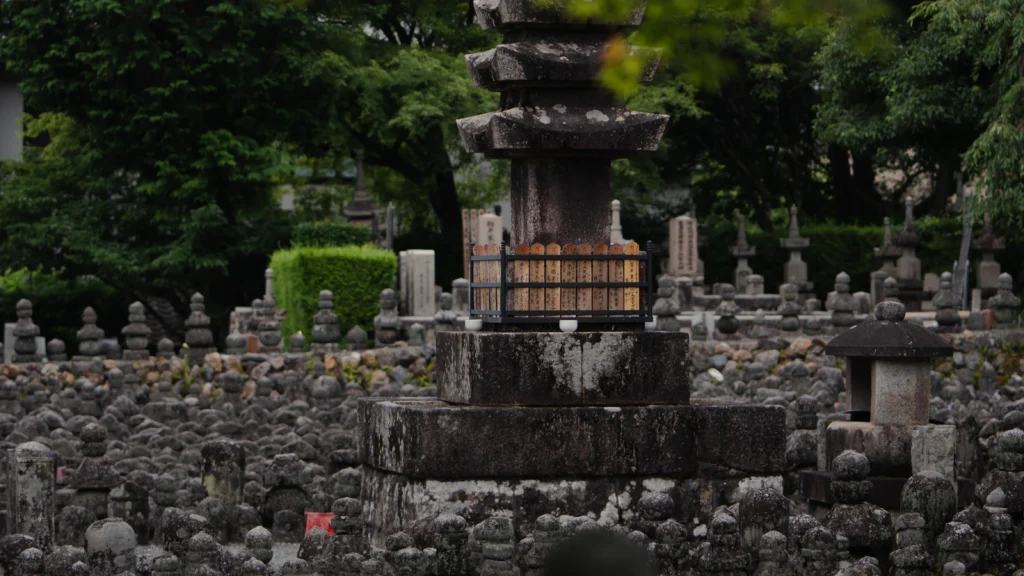
In the center of the field stands a large, multi-tiered stone stupa. During the Sento Kuyo ceremony, this central monument becomes the focal point of the prayers.
4. The Jizo Bodhisattva
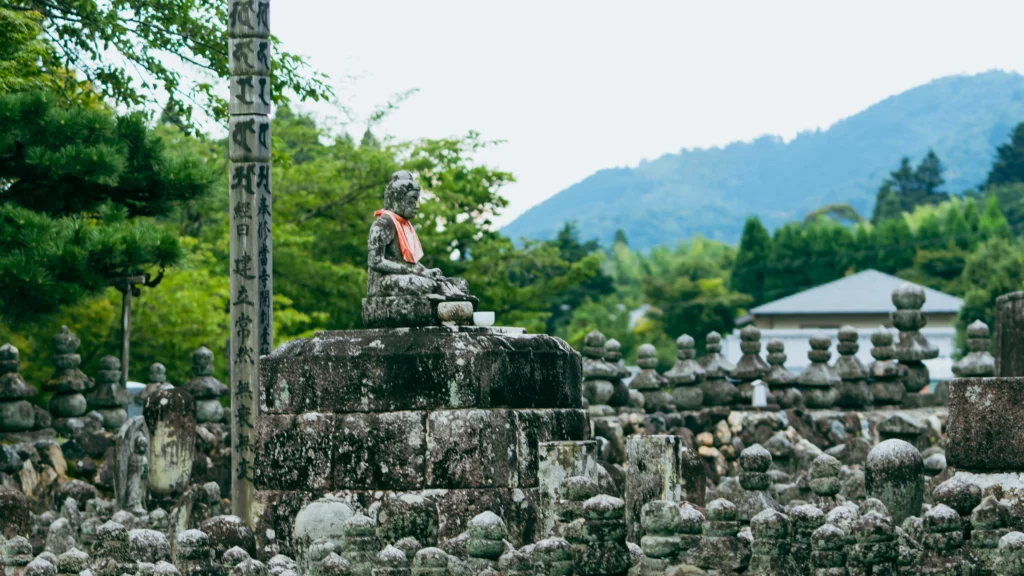
Near the back of the field, you’ll often see a larger statue of Jizo — the guardian deity of travelers and children — wearing a bright red yodarekake (bib). In Japanese Buddhism, Jizo is the one who steps into the underworld to save the souls trapped there.
5. The Bamboo Path
At the back of the temple grounds is a short but incredibly atmospheric path through a dense bamboo grove. While much smaller than the famous Arashiyama bamboo grove, this one is almost always empty, allowing you to actually hear the wind rustling through the stalks.
The Sento Kuyo Candlelight Ceremony
If you happen to be in Kyoto in late August, Adashino Nenbutsuji hosts one of the most visually stunning and emotionally resonant events in Japan: the Sento Kuyo (千灯供養), or Ceremony of a Thousand Lights.
To comfort the souls of the unclaimed dead, the temple lights a candle beside every single one of the 8,000 stone statues.
The effect is extraordinary. The 8,000 stones you saw in daylight become 8,000 tiny flames in the dusk, each one representing a soul remembered.
2026 Sento Kuyo Dates:
•Dates: August 29 (Saturday) and August 30 (Sunday), 2026
•Time: 18:00–21:00 (reception closes at 20:30)
•Admission: ¥1,000 (special ceremony rate)
•Reservations: Not required
•Note: The ceremony traditionally takes place on August 23–24, but in recent years the dates have shifted to accommodate the closest weekend. The 2026 dates are confirmed for the final weekend of August.
What to expect at Sento Kuyo:
•Arrive before sunset (around 17:30–18:00) to see the field in transition from day to night.
•The temple provides the candles and instructions — no personal candles needed.
•Photography is permitted but respectful (no flash, don’t block pathways).
•Dress modestly; this is a religious ceremony, not a light festival.
•Expect more crowds than a normal visit — book your accommodation in Kyoto in advance if attending.
Pro tip from Nobu: Sento Kuyo is genuinely one of the most moving experiences you can have in Kyoto, but it’s also one of the least well-known to international visitors. If your August trip to Japan coincides with the dates, this should be near the top of your list.
How to Get There
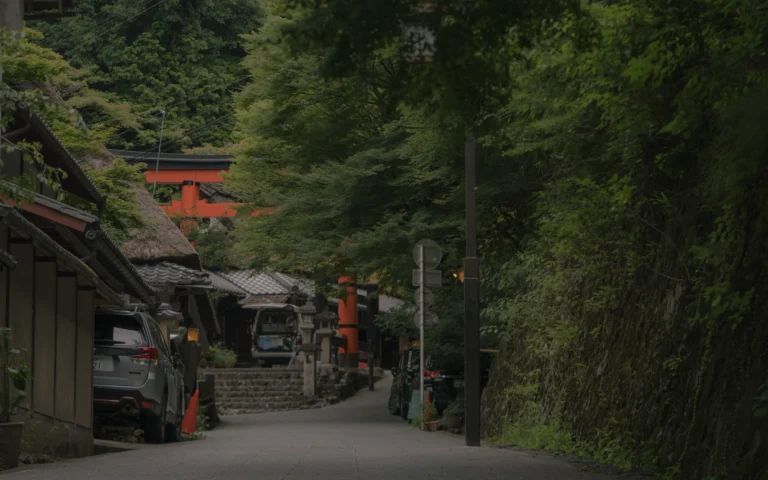
Adashino Nenbutsuji sits at the northern end of the Saga Toriimoto preservation district, approximately 5 minutes’ walk beyond the thatched tea houses of Atago Kaido.
Option 1: Walk (Recommended)
From JR Saga-Arashiyama Station or Hankyu Arashiyama Station, walk north through Sagano. The route takes about 35–45 minutes and passes through some of Kyoto’s best temples: Tenryu-ji, the bamboo grove, Jojakko-ji, Gio-ji, and finally the Saga Toriimoto preserved district. The temple is at the northern end of this corridor.
Option 2: Kyoto Bus
From Hankyu Arashiyama Station, take the Kyoto Bus (京都バス) bound for Kiyotaki (清滝). Get off at Toriimoto (鳥居本) bus stop. The temple is a 5-minute walk from the stop. Buses run roughly once per hour. Note that IC cards like Suica and Pasmo are accepted on these buses.
Option 3: Taxi
Taxis from central Arashiyama or Kyoto Station can drop you directly at the temple entrance. From central Kyoto, expect ¥3,000–4,000.
Address in Japanese (for taxis):
京都市右京区嵯峨鳥居本化野町17
Kyoto-shi, Ukyo-ku, Saga Toriimoto, Adashino-cho 17
When to Visit
Best Seasons:
•Spring (April–May): Cherry blossoms near the approach, fresh green maple canopy.
•Early summer (June): Vibrant green moss at its most saturated, lush surroundings.
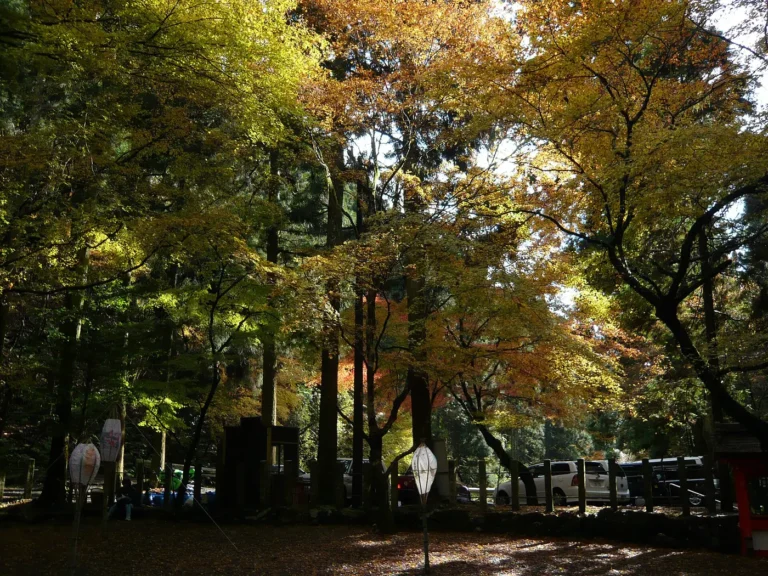
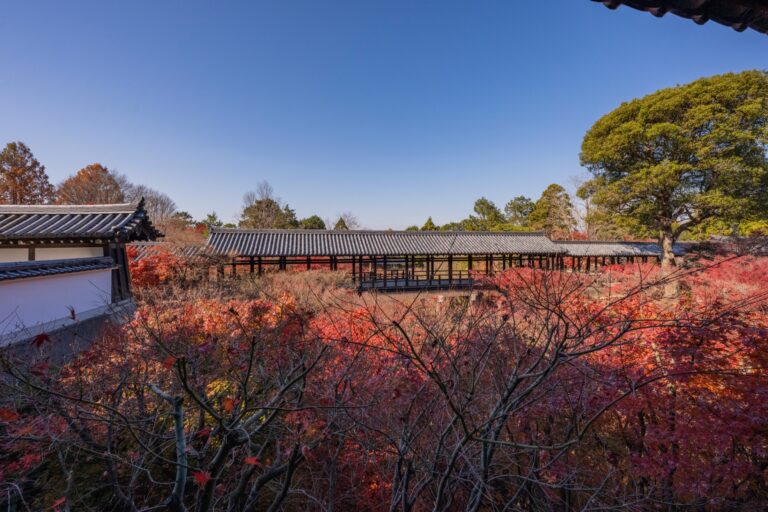
•Autumn (mid-November): Maple foliage turns the approach brilliant red.
•Winter (December–February): Quietest time; occasional snow creates striking contrast on the stone statues. Note the temple closes early at 3:30 PM.
•Late August (Sento Kuyo): Candlelight ceremony — the single most atmospheric time to visit.
Best Time of Day:
Early morning (9:00–10:00 AM) offers the fewest visitors and soft light angles on the stones, making it the most atmospheric time for photography. Avoid midday in summer, as the harsh overhead light flattens the textures of the weathered stone.
Where to stay
Three beds near Saga-Arashiyama Station for an early start
Sleeping in Saga-Arashiyama lets you reach Adashino before the day-trip crowds come out from central Kyoto. None of these is next to the temple: Booking puts all three 1.7–1.8 km away, near JR Saga-Arashiyama Station or in central Arashiyama.
Links in this box go to Booking.com and are affiliate links: if you book through them, HJG earns a commission at no extra cost to you. Distances and rules are from each property’s Booking.com listing in October 2026; check the listing for your dates.
For a simple guest-house room by JR Saga-Arashiyama Station
Guest House Atagoya
Saga-Arashiyama · 200 m from JR Saga-Arashiyama Station (Booking)
A small guest house with Japanese-style rooms, a shared kitchen and self-service laundry.
Catch: Bathrooms are shared, and check-in is 16:00–22:00 only.
- Temple1.8 km (Booking search)
Affiliate link · HJG may earn a commission
For families who want a private bathroom and breakfast
Homm Stay Nagi Arashiyama Kyoto
Saga-Arashiyama · 200 m from JR Saga-Arashiyama Station (Booking)
Rooms have a private bathroom and the building has a lift. Children of any age are welcome.
Catch: Breakfast is not included in every rate, so check what your rate covers before you book.
- Temple1.7 km (Booking search)
Affiliate link · HJG may earn a commission
For adults who want a ryokan with large baths, or who drive
Ranzan
Central Arashiyama · about 10 min on foot from Tenryu-ji (Booking)
A ryokan with large public baths, a garden, Kyoto-style dinner and Japanese breakfast on meal plans, and free on-site parking, first come, first served. Check-out opens at 05:30.
Catch: No children, no entry between 00:00 and 05:00, no cash, and guests with tattoos may not be allowed in the public baths (Booking).
- Temple1.7 km (Booking search)
Affiliate link · HJG may earn a commission
Combining with Nearby Sites
Adashino Nenbutsuji is the natural endpoint of the Saga Toriimoto walking route. Combine it with:
1. Atago Kaido / Saga Toriimoto Preserved District (Adjacent)
The entire preserved street of thatched tea houses, vermilion torii, and traditional machiya architecture leads directly to Adashino Nenbutsuji. Walking the full district takes about 30 minutes and is included with no admission fee. See our full Atago Kaido guide.
2. Otagi Nenbutsuji Temple (15 min walk uphill)
Similar name, completely different atmosphere. Otagi Nenbutsuji is famous for 1,200 rakan statues carved by amateur sculptors in the 1980s. Each statue has a unique personality: some laugh, some play instruments, some hold cats. Where Adashino is solemn, Otagi is playful. Visiting both creates a striking contrast.
3. Gio-ji Temple (10 min walk downhill)
A tiny moss temple with one of the most beautiful moss gardens in Kyoto. The story of Gio — a dancer who became a nun after being abandoned by her lover — gives the place a quiet melancholy that pairs well with Adashino.
Suggested Full-Day Route:
Arashiyama Station → Tenryu-ji → Bamboo Grove → Jojakko-ji → Gio-ji → Saga Toriimoto (Atago Kaido) → Adashino Nenbutsuji → Otagi Nenbutsuji → return by bus.
Practical Tips for Southeast Asian & International Visitors
•Photography Rules: Photography is allowed throughout the temple grounds except where explicitly posted. No flash photography inside the main hall. Be respectful — this is an active place of worship and memorial, not just a tourist attraction.
•Footwear: Wear comfortable walking shoes. The path is paved but uneven in sections, and the temple sits at the end of a 30-minute walking corridor.
•Respectful Behavior: Keep voices low. Don’t touch or climb on the statues. Don’t move or rearrange anything.
•Winter Visits: If you are visiting from warmer climates like Singapore or Thailand in December-February, be aware that the Arashiyama area at the base of the mountains is noticeably colder than central Kyoto. Dress warmly, and remember the temple closes at 3:30 PM in winter.
FAQ
How many stone statues are at Adashino Nenbutsuji?
Approximately 8,000, though some sources cite up to 10,000. The statues were gathered from across the Adashino area during Meiji-period land development and arranged as a collective memorial to those who died without family.
What are Adashino Nenbutsuji’s opening hours?
9:00 AM to 4:30 PM with last entry at 4:00 PM. In December, January, and February, the temple closes earlier at 3:30 PM.
When is the Sento Kuyo candlelight ceremony in 2026?
August 29 (Saturday) and August 30 (Sunday) 2026, from 18:00 to 21:00. Special admission is ¥1,000.
What is the meaning of the 8,000 statues at Adashino Nenbutsuji?
Each statue commemorates a person who died without family to mourn them. The Adashino area was historically a burial ground for Kyoto’s unclaimed dead. The statues were gathered during Meiji-era land development and arranged as a collective grave.
Can I take photos at Adashino Nenbutsuji?
Yes in most of the grounds including the field of stone Buddhas. Avoid flash inside the main hall. Remember that this is a place of remembrance and photograph respectfully.
How long does a visit to Adashino Nenbutsuji take?
30-45 minutes for a standard visit, 60 minutes if you include the main hall, bamboo grove, and time for contemplation. The Sento Kuyo ceremony takes 1.5 to 2 hours.
Is Adashino Nenbutsuji worth visiting?
Yes, precisely because it differs from every other Kyoto temple. Rather than emphasizing architectural grandeur or imperial history, Adashino presents a meditation on anonymous death and collective memory.
Who founded Adashino Nenbutsuji?
Traditionally attributed to Kukai (Kobo Daishi), founder of Shingon Buddhism, in the early 9th century. The monk Hōnen re-established it as a Pure Land temple in 1247.
How do I get to Adashino Nenbutsuji from Arashiyama?
Walk 35-45 minutes north through Sagano temples, or take the Kyoto Bus toward Kiyotaki from Hankyu Arashiyama Station and get off at Toriimoto stop (5-minute walk to the temple).
Most Kyoto temples tell you who mattered. Emperor so-and-so built this pagoda. Shogun so-and-so commissioned this garden. The stories are written in elegant calligraphy on plaques at every gate.
Adashino Nenbutsuji tells you about the people whose names no one wrote down.
Eight thousand small stone Buddhas, most without features, packed together in a moss-covered field. Each one standing in for a life that ended with no one to remember it. The temple doesn’t romanticize this. It doesn’t tell you stories about the dead. It simply gathers them together and, once a year in August, lights a candle beside each one.
Walking through the field in early morning, with the soft light angling across the weathered stones and the mountains of Sagano rising in the background, is something that stays with you. Not in the same way as the Golden Pavilion or the Fushimi Inari torii — those are beautiful, photogenic, memorable. Adashino is quieter. More uncomfortable. It asks you to remember that Kyoto, the capital of imperial Japan, was built on top of millions of unrecorded lives.
It’s one of the most honest religious sites in the city.
Related articles on Hidden Japan Gems:
•Atago Kaido (Saga Toriimoto): Kyoto’s Hidden Preserved Street (adjacent site, companion article)
•Early Morning and Late Night in Kyoto
•7 Days Kansai Itinerary Beyond Kyoto
Sources checked
nenbutsuji.jp (official temple), ja.kyoto.travel (Kyoto City tourism), kyototravel.info, kanpai-japan.com, japan.travel (JNTO)
Join travelers discovering Japan's hidden side
Weekly dispatches from off-the-beaten-path Japan — spots and stories you won't find in guidebooks.
No spam. Unsubscribe anytime.
Welcome aboard!
You're in. See you in your inbox soon.