Kansai · Kyoto Station · Architecture
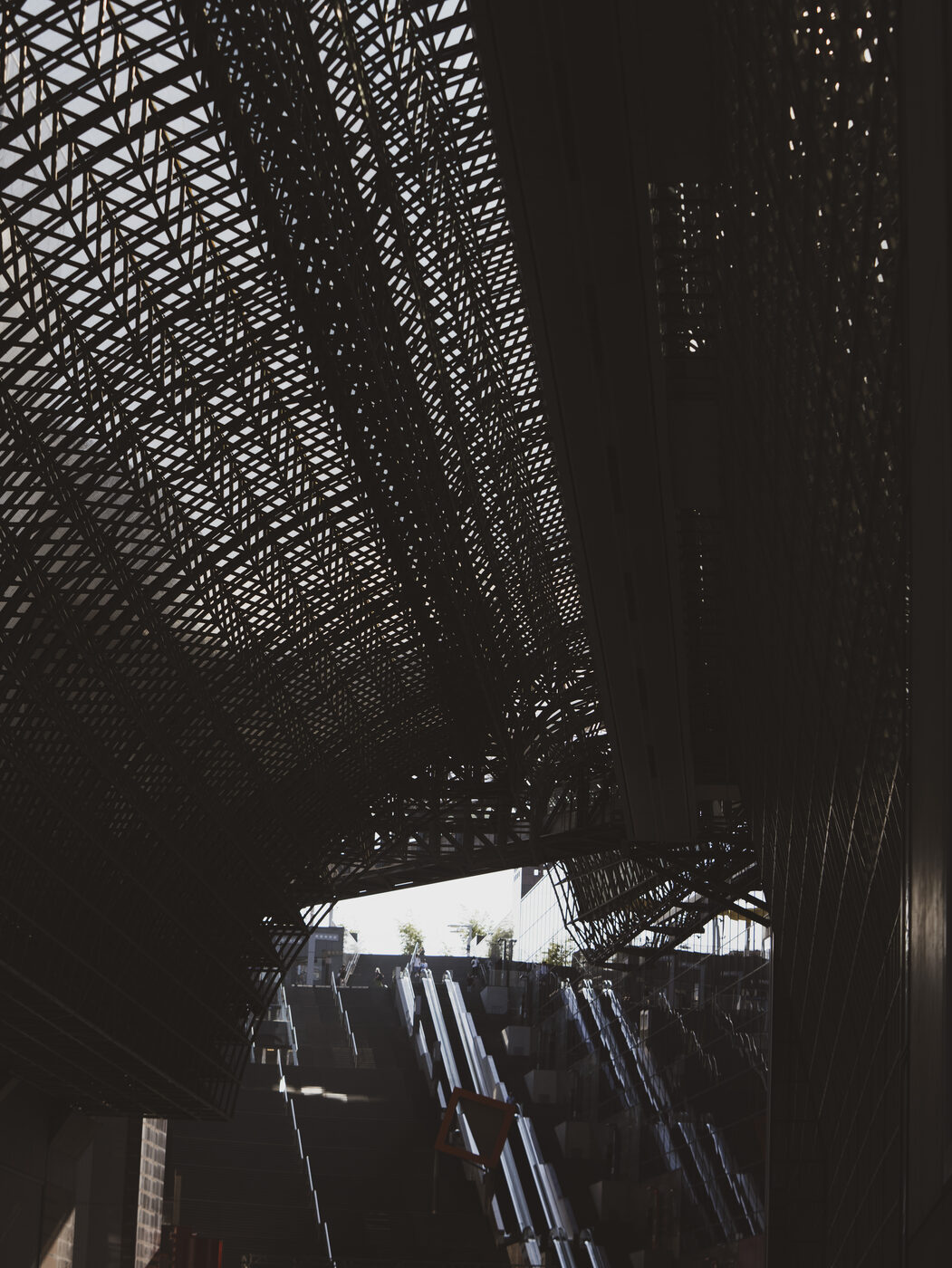
Kyoto Station is the boldest piece of modern architecture in Japan’s most traditional city — and most travelers walk through it without realizing what they are inside. The central concourse is sixty meters tall, four hundred and seventy meters long, and was nearly never built. When Hara Hiroshi’s design won the 1991 competition, half of Kyoto wanted it stopped.
I have walked through this station perhaps a thousand times. After the first hundred, I started looking up instead of forward. This is a walking guide to what you are missing — the six features worth pausing for, the five best photo spots, and the architectural argument the building was built to make.
The Building Kyoto Almost Refused
The 1991 design competition was the most public architectural debate in late-twentieth-century Japan. Seven finalists were invited: Tadao Ando, Kisho Kurokawa, Bernard Tschumi, James Stirling, Peter Busmann, Yoshinobu Ashihara, and Hara Hiroshi. The brief asked for a building to mark Kyoto’s 1,200th anniversary — a piece of architecture that would last as long as the city itself.
The opposition was loud. Local citizen groups argued that nothing in Kyoto should rise above the 54-meter pagoda at Toji Temple, the city’s traditional skyline anchor for over a thousand years. The proposed station would be sixty meters tall, six meters higher — a number deliberately chosen as a compromise. Newspaper editorials warned that the building would destroy what was left of Kyoto’s silhouette. Petitions circulated. Lawsuits were threatened.
Hara’s design won anyway. Construction began in 1994 and ended in 1997. By the time the station opened, the architectural press had named it one of the most important Japanese buildings of the late twentieth century. The locals, mostly, came around. Today the building handles 640,000 passengers a day and is the second-busiest station in western Japan.
Who Was Hara Hiroshi?
Hara Hiroshi (原広司) was born in Kawasaki in 1936 and trained at the University of Tokyo, where he later returned as a professor of architecture. His work sits in a strange place between high modernism and Japanese tradition — every project of his is recognizably industrial, but the proportions and the spatial logic are unmistakably from a country that thinks about architecture in terms of ma (negative space) rather than mass.
Kyoto Station was not his only landmark. Three earlier buildings proved he could handle this scale before he was given Japan’s most contested commission:
1986
Yamato International HQ, Tokyo
1993
Umeda Sky Building, Osaka
2001
Sapporo Dome, Hokkaido
Six Architectural Features Worth Pausing For
The station is not just one building but a layered complex — a department store, a hotel, a shopping mall, a museum, and the transit infrastructure all wrapped inside a single steel-and-glass volume. These are the six features I always point out to first-time visitors.
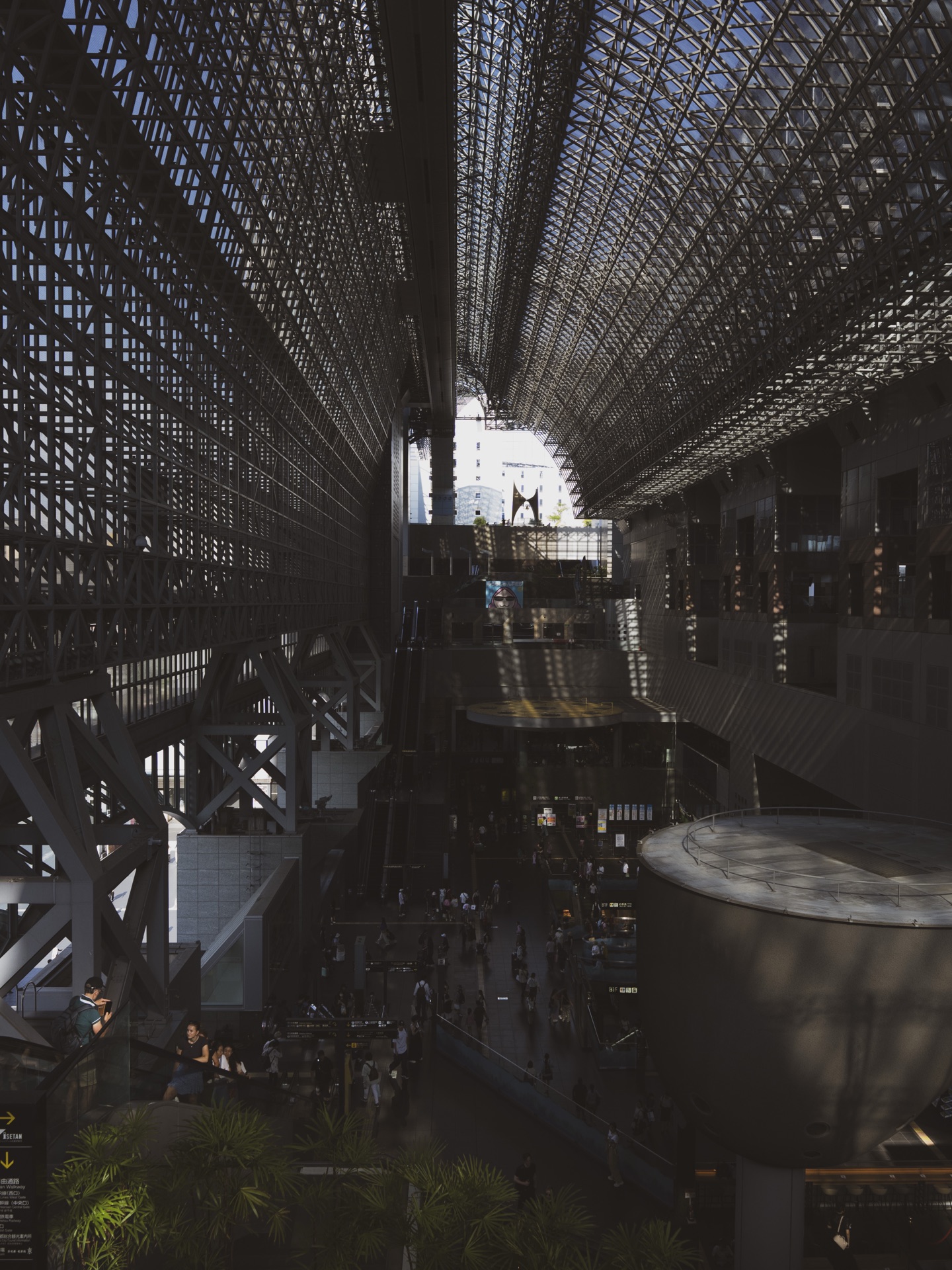
Feature 01
The Central Concourse
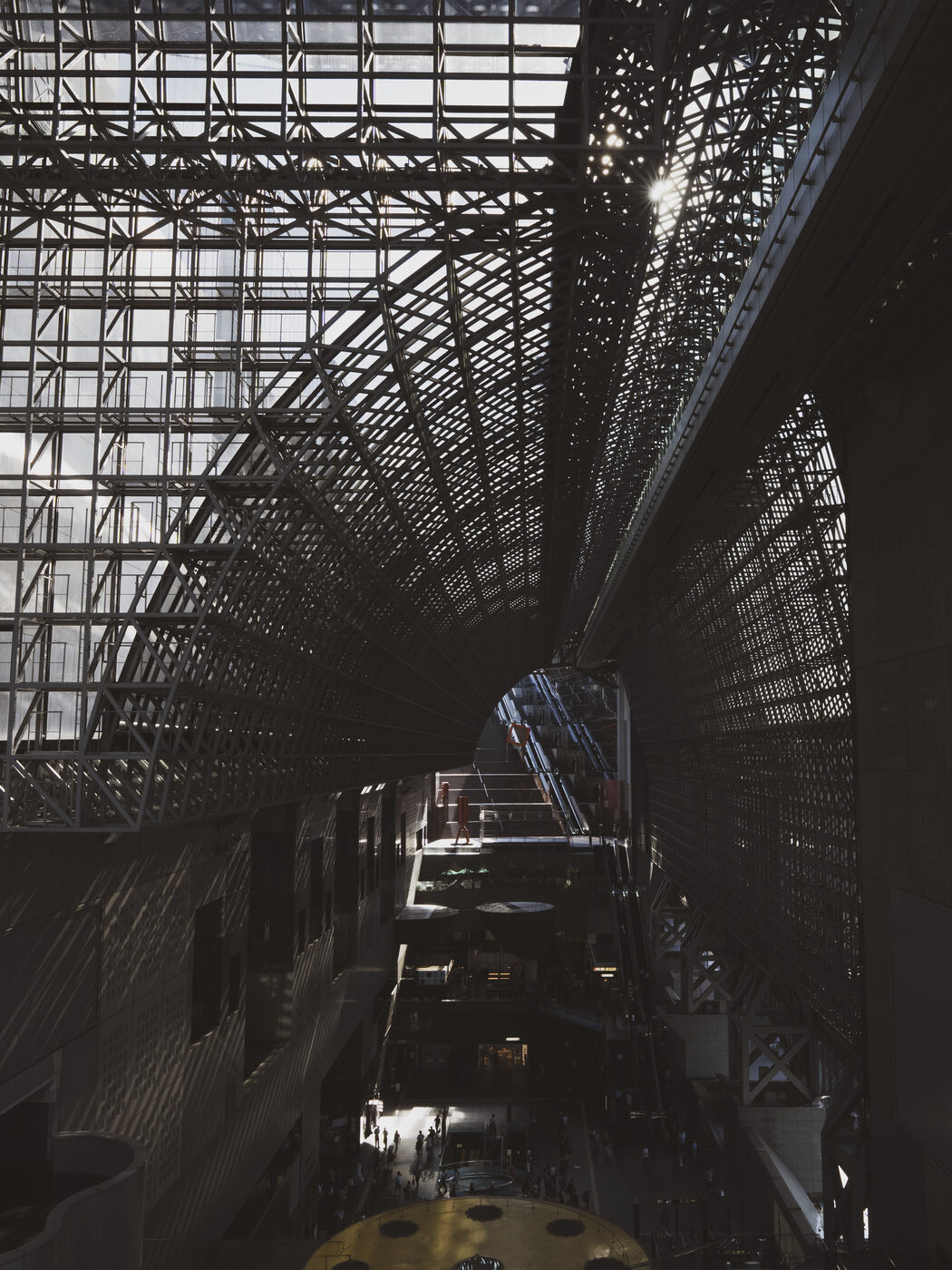
The 60-meter-tall covered atrium that runs the entire length of the building. The glass-and-steel ceiling is held up by an exposed truss system you can read at a glance — every member visible, no ornamentation.
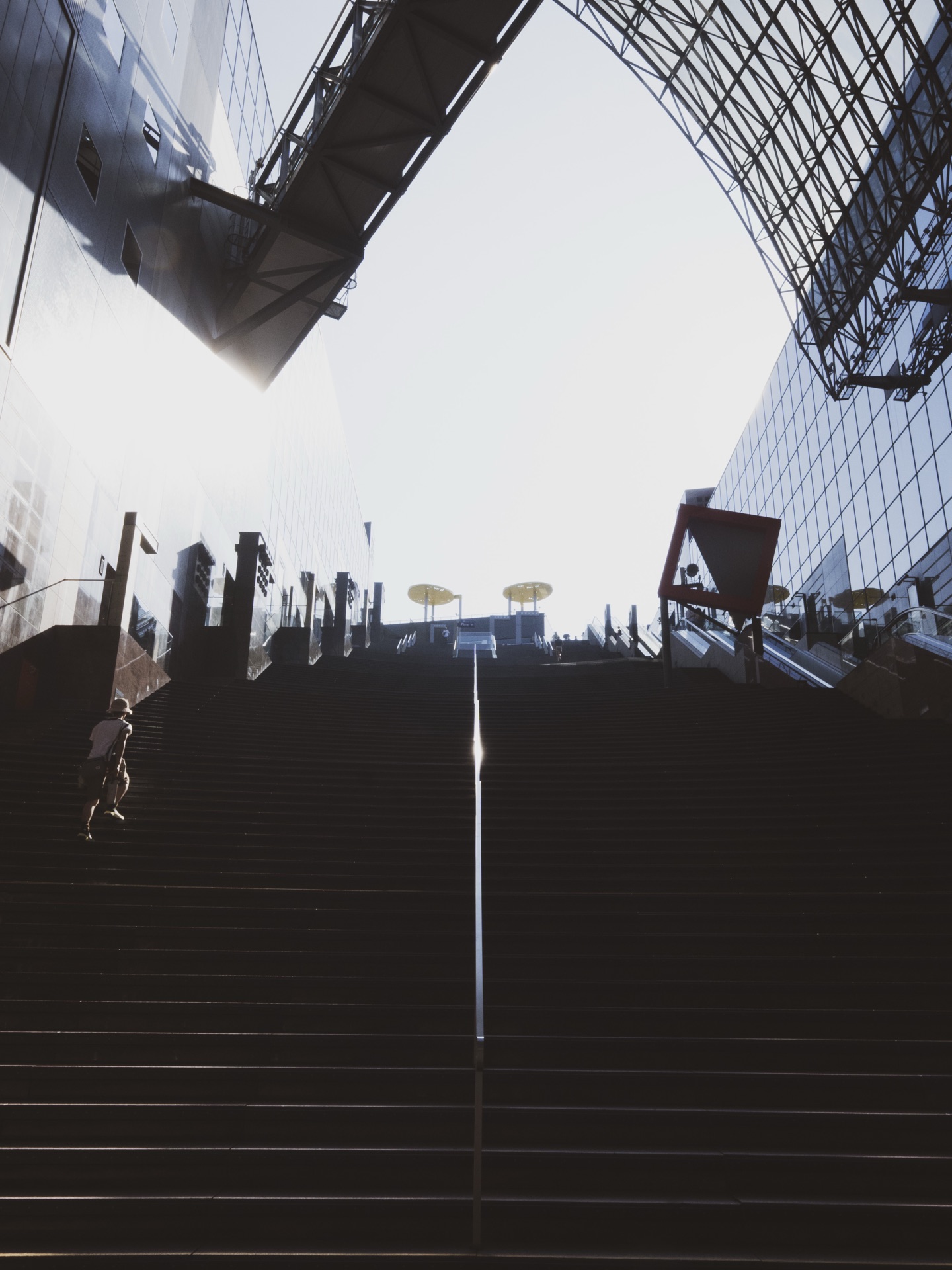
Feature 02
The Grand Stairway
171 steps from the central concourse to the rooftop. The width and the unbroken sightline are deliberate — Hara designed it as a public square rotated ninety degrees into the vertical.
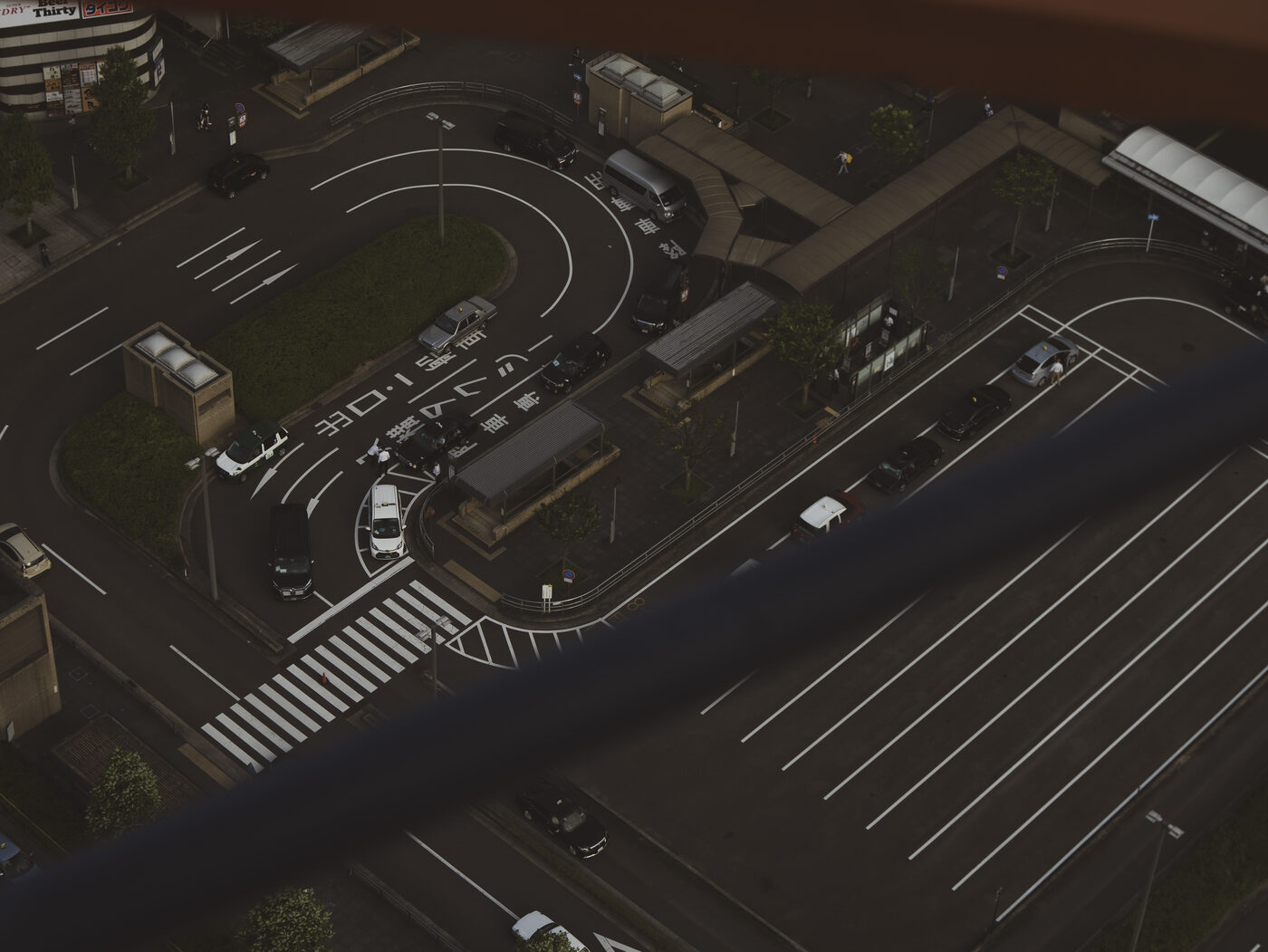
Feature 03
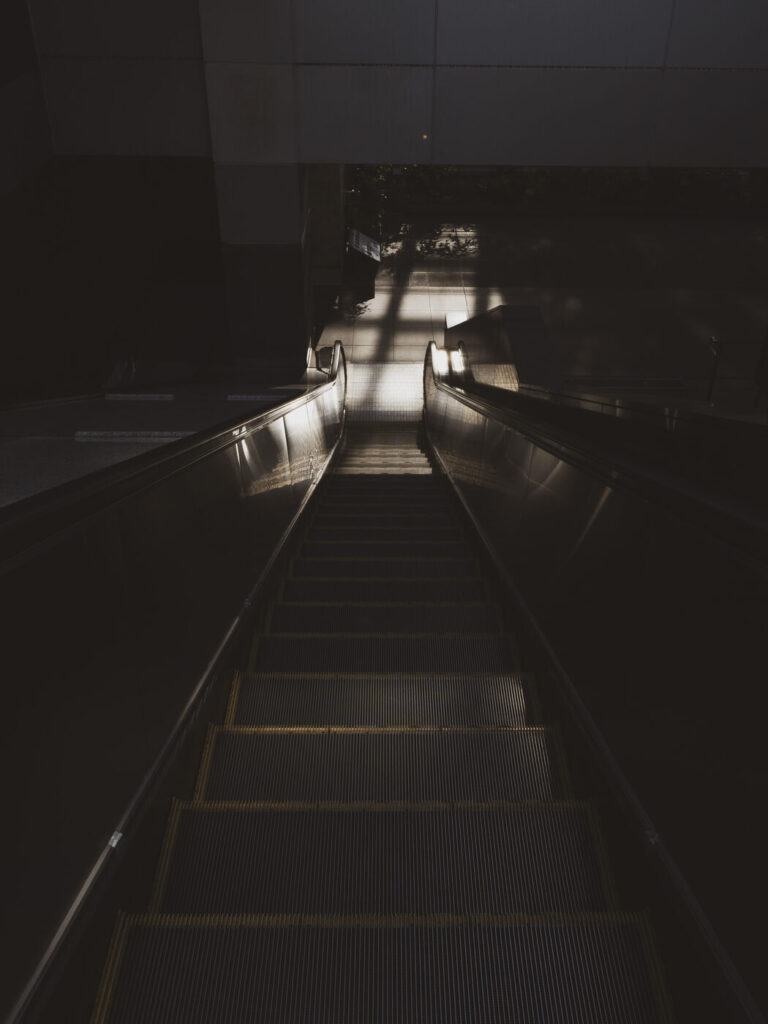
The Vertical Escalators
Hara’s escalators are theatrical. The longest stretches from the second floor to the seventh in a single uninterrupted run, set against the lattice ceiling. The view changes every step.
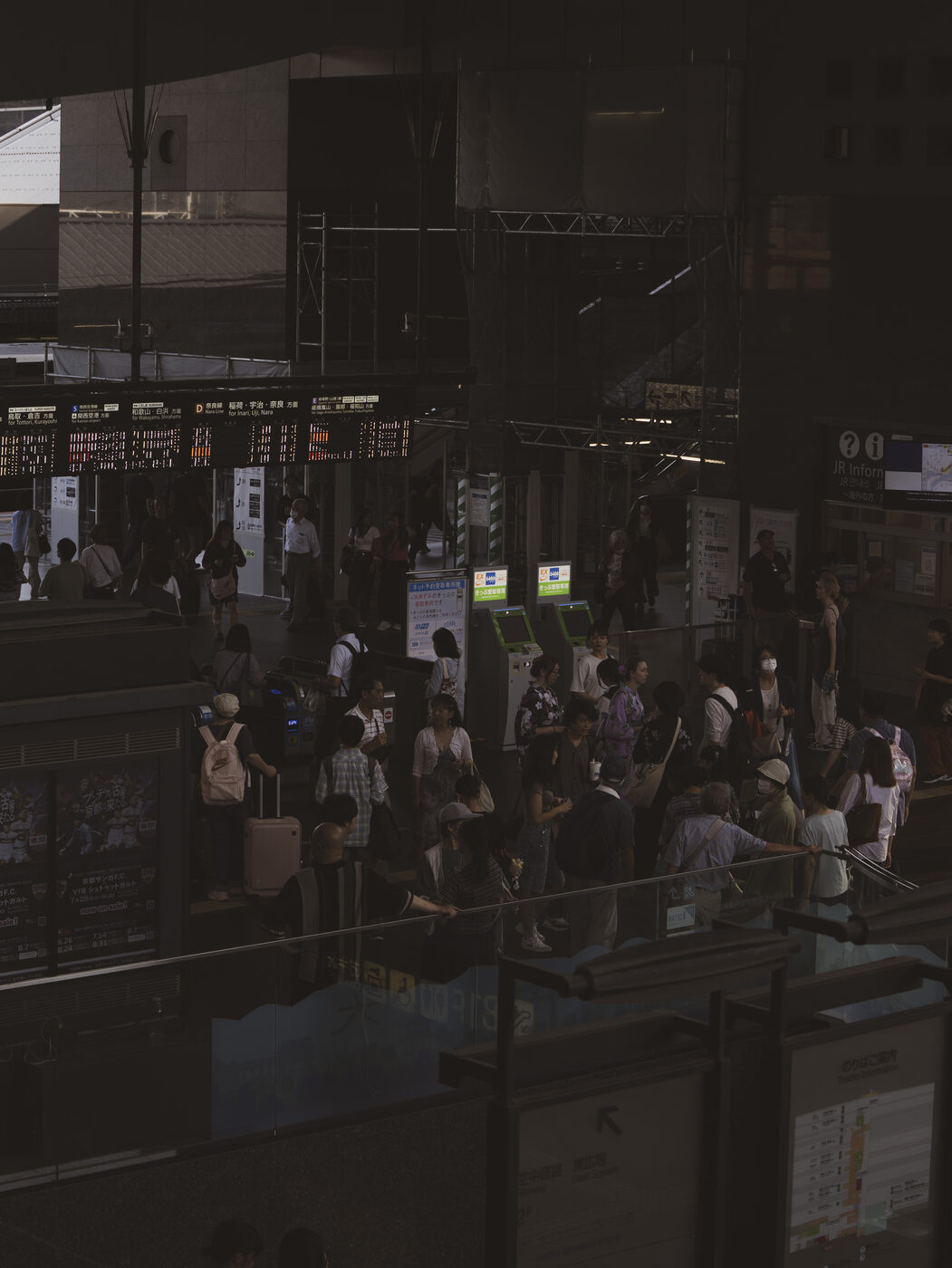
Feature 04
The Skyway
A 147-meter pedestrian bridge at the 11th-floor level, running the full width of the building under a steel mesh canopy. Open to the public, free, and almost always empty.
Feature 05
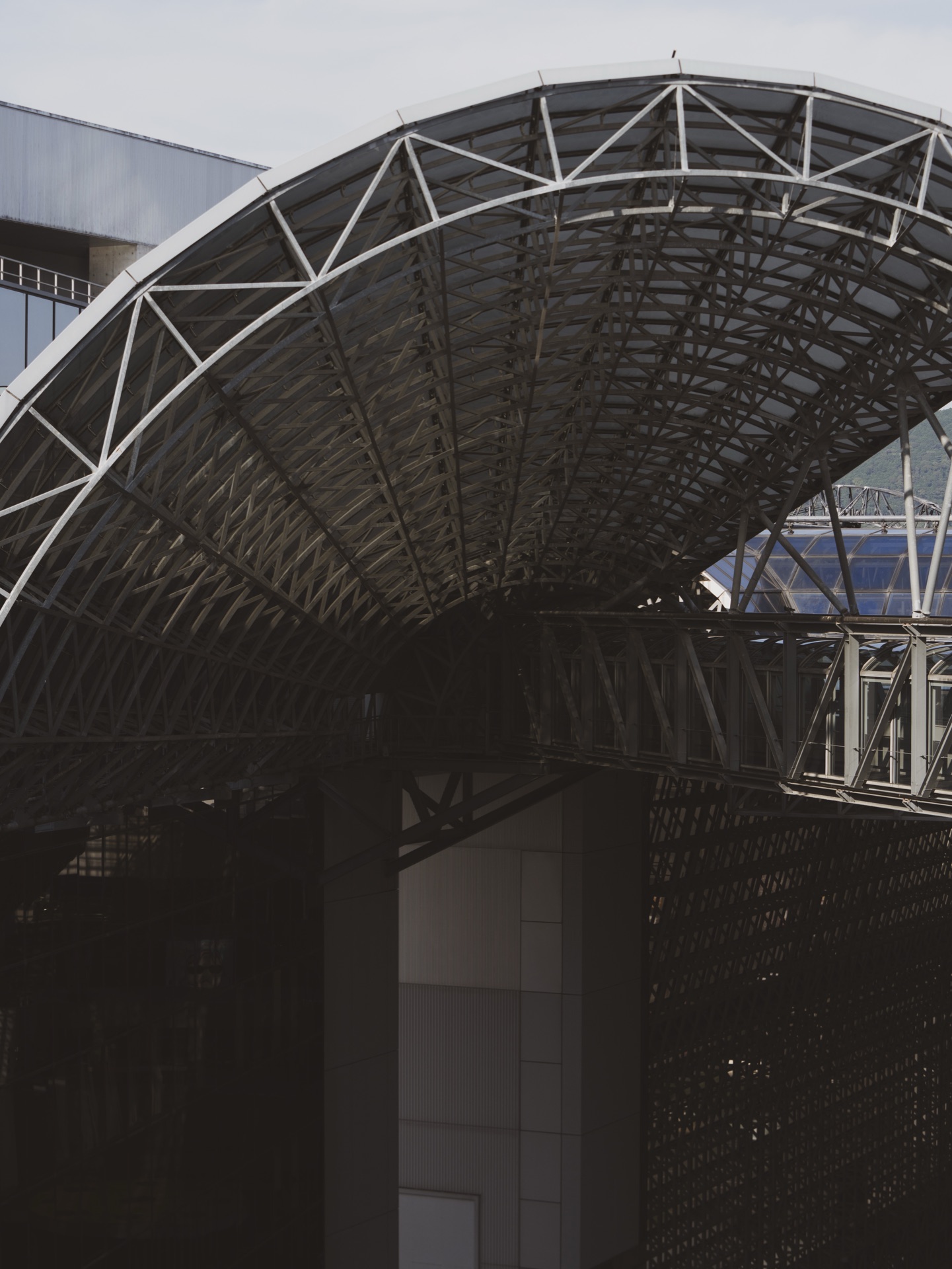
The Barrel Vault
The curved exterior roof that defines the station’s south side. Best seen from the Hachijo (south) exit looking up — the geometry is hard to read from inside.
Feature 06
The Lattice Shadows
The single most photographed detail. On a sunny afternoon, the latticework throws moving shadow patterns across the floor and walls — slow, geometric, and impossible to recreate.
If you only have ten minutes — stand at the bottom of the Grand Stairway, count to ten, then look up. The building reveals itself in that single moment.
Hara’s Conceptual Argument: Kyoto as a Historical Gateway
Every Hara Hiroshi building tries to do something philosophical, and Kyoto Station is no exception. His sketches from the 1991 competition describe the building as “a historical gateway” — a literal threshold between the modern world arriving by Shinkansen and the thousand-year-old city that lies just to the north.
The Central Concourse is designed as a “valley” — a deep, open canyon running east-west, with the city on either side. When you walk in from the Karasuma (north) exit, the concourse opens up overhead like a geological feature. When you walk out toward Higashi-Honganji, the temple’s wooden roof sits visually framed at the end of the corridor.
This is the part of the design most travelers miss. The building is not pretending to be a temple, and it is not apologizing for being a station. It is staging a deliberate confrontation between modern infrastructure and ancient city, and inviting you to walk through the seam.
Kyoto Station vs. Toji Pagoda: The Skyline Argument
Anchor 01 (Built 826 CE)
Toji Temple’s Five-Storied Pagoda
- 55 meters tall — Japan’s tallest wooden pagoda
- Wood construction, traditional joinery
- Defined Kyoto’s southern skyline for 1,200 years
- Visible from the Shinkansen platform as the train arrives
Anchor 02 (Built 1997 CE)
Kyoto Station
- 60 meters tall — only 5 meters taller than the pagoda
- Steel and glass, modular industrial assembly
- Holds the modern skyline of a thousand-year-old city
- The pagoda is visible from the station’s Skyway looking south
The two buildings exist in deliberate visual dialogue. Walk fifteen minutes south from the station and you reach Toji. From the station’s Skyway, you can see the pagoda’s silhouette against the southern hills. From Toji’s temple grounds, you can see the station’s mass behind you. They were never going to be the same kind of building. The compromise was that they could share a skyline.
For a deep dive on Toji, see our Toji Temple 2026 guide.
Five Best Photo Spots in the Station
The bottom of the Grand Stairway, looking up
The single most dramatic vantage in the building. The 171 steps frame the lattice ceiling, and if you visit between 11 AM and 1 PM the sun comes through the roof at the right angle for clean shadows.
The 7th-floor “Happy Terrace” looking back at the concourse
Halfway up the Grand Stairway is a small landing that opens onto the central atrium. Stand at the railing and shoot back toward the entrance — you get the full 60-meter height of the space in one frame.
The Skyway, looking east at the lattice ceiling
The 147-meter Skyway at the 11th floor is almost always empty. The lattice ceiling above it produces shadow patterns at all hours, and the perspective lines run straight to the horizon. Tripods are tolerated outside rush hour.
The rooftop garden, sunset
Take the Grand Stairway all the way up. The rooftop is a free public garden with views west across Kyoto. At sunset the Eastern Mountains glow, and on clear days you can see the southern hills toward Toji.
The Hachijo south exit, looking back at the barrel vault
Leave the station via the south (Shinkansen) exit, cross the road, and turn around. The curved barrel-vault roof and the south facade are easiest to read from this side — the north entrance hides the geometry behind shop signage.
The Building You Walk Past: Kyoto Tower
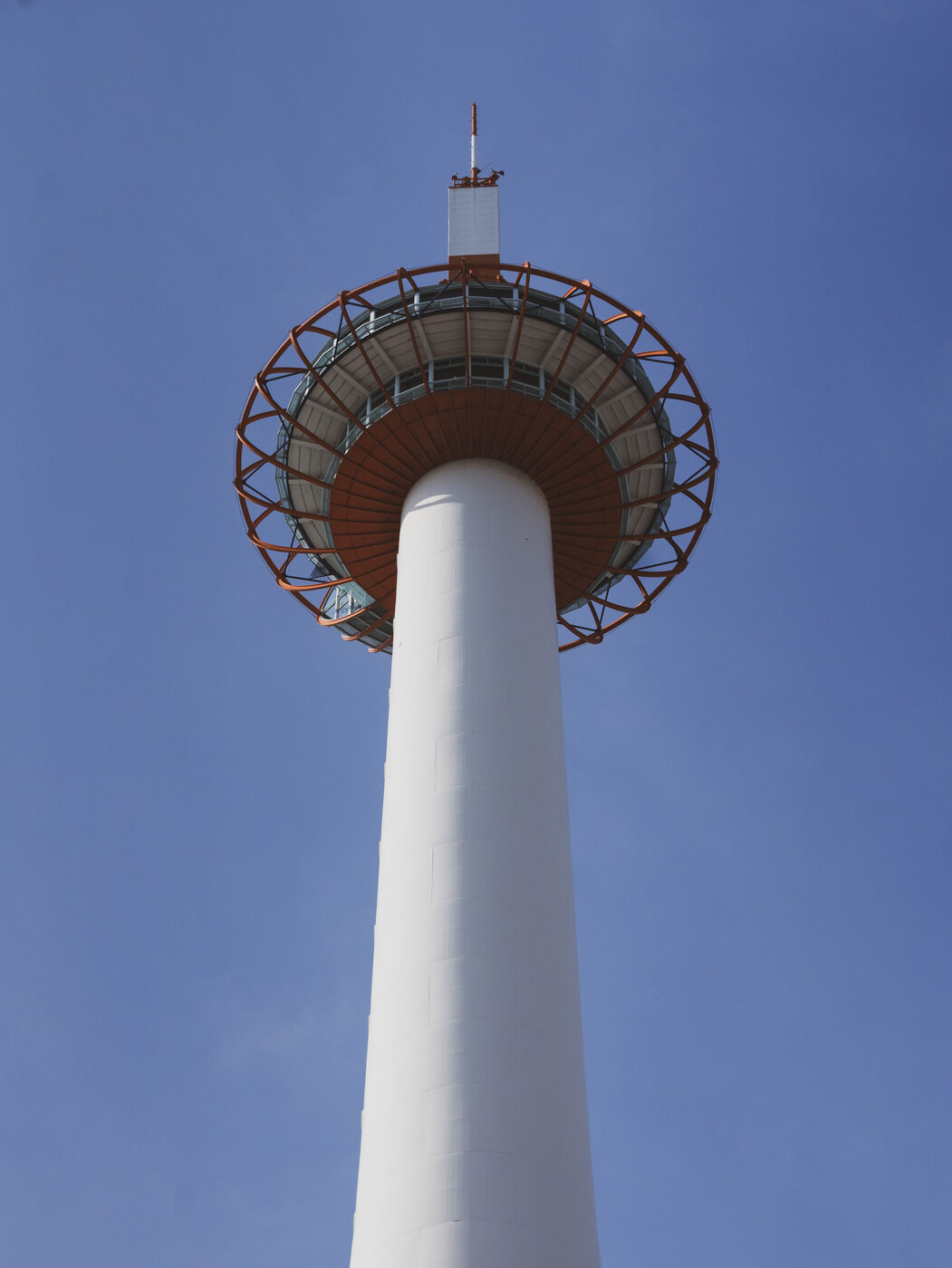
Directly across the road from the station’s Karasuma exit stands the other modernist landmark Kyoto could not decide whether to love: Kyoto Tower, finished in 1964 and the city’s only true high-rise. The two buildings are usually treated as separate stories. They should not be. The tower was the first time Kyoto allowed a modern structure to rise above its temples; the station was the second. Together they bracket the twentieth century — one in concrete-and-steel verticality, the other in steel-and-glass horizontality.
If you have time after walking the station, the tower’s 100-meter observation deck is the only spot in Kyoto where you can see both buildings in the same frame, and the entire city laid out beyond them.
How to Actually See the Architecture: A 45-Minute Walk
The station is hard to read when you are passing through it on the way to a train. Block forty-five minutes on a day when you are not traveling, and walk it as a building.
Start at the Karasuma (north) exit. Stand outside, look at the curtain wall, then walk straight in. The Central Concourse opens up immediately to your right. Walk halfway down its length and look up.
Take the escalator to the second floor, then the Grand Stairway up. Pause on the seventh-floor landing (the “Happy Terrace”) and shoot back toward the entrance. Continue all the way to the top.
Walk the Skyway east-to-west, 147 meters. There is no shopping on this level; the architecture is the entire point.
Take the elevator (not the stairs) back down to the rooftop garden, then walk out the south side. Cross the road at the Hachijo exit, turn around, and look at the barrel vault from the outside.
That is the full reading. If you only have fifteen minutes, do the Grand Stairway and the Skyway. If you only have five, do the Stairway.
If you have the rest of the day free, browse Kyoto tours on Klook.
Practical Notes for Architecture Visitors
Free. Every public space in the station is free to enter. You do not need a train ticket to walk the concourse, the Stairway, the Skyway, or the rooftop.
Hours. The station is technically open 24 hours, but the upper levels close at midnight and the rooftop garden closes at 10 PM. Most shops shut at 21:00.
Photography. Permitted throughout, including tripods on the Skyway during off-peak hours. The only restriction is on the Shinkansen platform (ticketed area), where security may ask about long lenses near the gates.
Accessibility. Every level is reachable by elevator. The Grand Stairway has a parallel escalator for those who do not want to climb 171 steps.
Crowds. The central concourse is busiest 7:30–9 AM and 4–6 PM (commuter peaks). The Grand Stairway and Skyway are quiet almost any time, but for crowd-free photos go on a weekday between 10 AM and 3 PM, or after 8 PM.
Where to Stay for an Architecture-Focused Visit
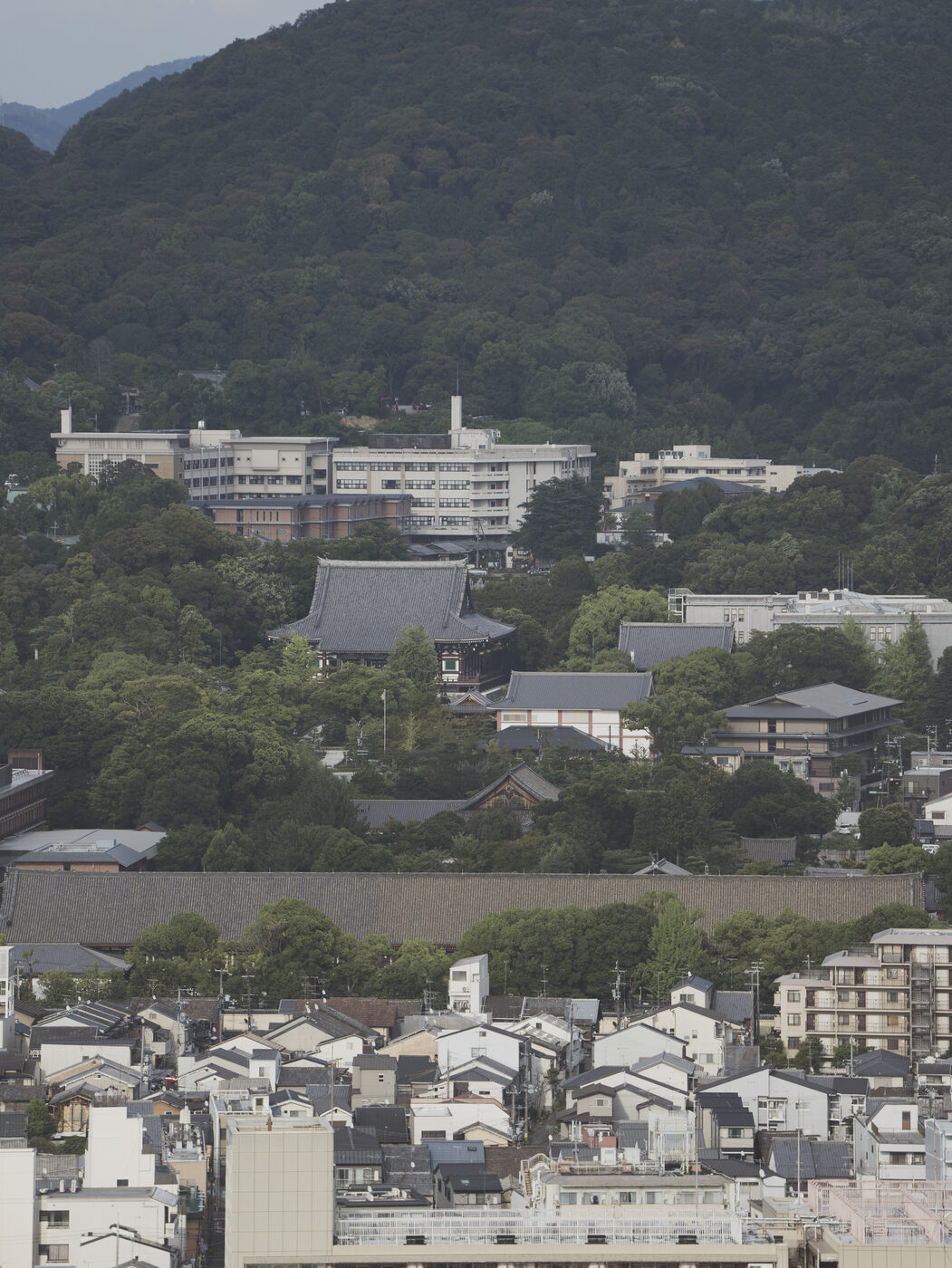
The Hotel Granvia Kyoto sits directly above the station and is the only place where you can step out of your room into the architecture you came to see. For traditional ryokan within ten minutes’ walk, the side streets toward Higashi-Honganji have some of the most affordable machiya stays in the city.
Search Kyoto hotels on Booking, compare Kyoto hotels on Agoda, or browse ryokan on Rakuten Travel and look at the side streets toward Higashi-Honganji.
Frequently Asked Questions
Is Kyoto Station an architectural landmark I should plan to visit?
If you have any interest in modern architecture, yes — it is one of the three most important Japanese buildings of the late twentieth century, along with Hara’s Umeda Sky Building and Ando’s Church of Light. A 45-minute walk is enough to see the major spaces.
Can I see the architecture without buying a train ticket?
Yes. The Central Concourse, the Grand Stairway, the Skyway, and the rooftop garden are all free public space outside the ticket gates. Only the platforms require a ticket.
Why did the building cause so much controversy?
Locals worried that a 60-meter modern building near the city center would damage Kyoto’s traditional skyline, which had been anchored by Toji’s 55-meter pagoda for over a thousand years. The compromise was that the station would be only five meters taller — and built in glass and steel rather than concrete, to feel less heavy.
How does Kyoto Station compare to other Hara Hiroshi buildings?
Kyoto Station and the Umeda Sky Building (Osaka, 1993) share the same architectural vocabulary — steel lattice, exposed structure, theatrical vertical movement. The Sapporo Dome (2001) extends the same ideas to a stadium. If you like the station, the other two are worth visiting.
What is the best time of day to photograph the interior?
Late morning (10–11 AM) for direct sunlight through the lattice ceiling, or blue hour (30 minutes after sunset) when the interior lights and the exterior darkness produce the strongest contrast. The Skyway is most photogenic in mid-afternoon.
One More Thing
The next time you are catching a Shinkansen to Tokyo, give yourself an extra thirty minutes. Walk the Grand Stairway up and the Skyway across before you board. The building was designed to be passed through quickly — but it rewards being looked at slowly. Hara Hiroshi designed it for exactly that.
Join travelers discovering Japan's hidden side
Weekly dispatches from off-the-beaten-path Japan — spots and stories you won't find in guidebooks.
No spam. Unsubscribe anytime.
Welcome aboard!
You're in. See you in your inbox soon.