Kyoto · Kansai · Reuse & antiques
Away from the big national reuse chains, Kyoto has a quiet web of small, local “recycle shops” — secondhand stores where a ¥10,000 samurai-armour doll, an antique cast-iron kettle and a shelf of kokeshi dolls sit beside used furniture and everyday clutter. This is a hunter’s guide built from a shared list of 19 neighbourhood shops locals actually use, spread across Fushimi, Yamashina, Uji and Kyoto’s southern wards and satellite towns — and how to shop them.
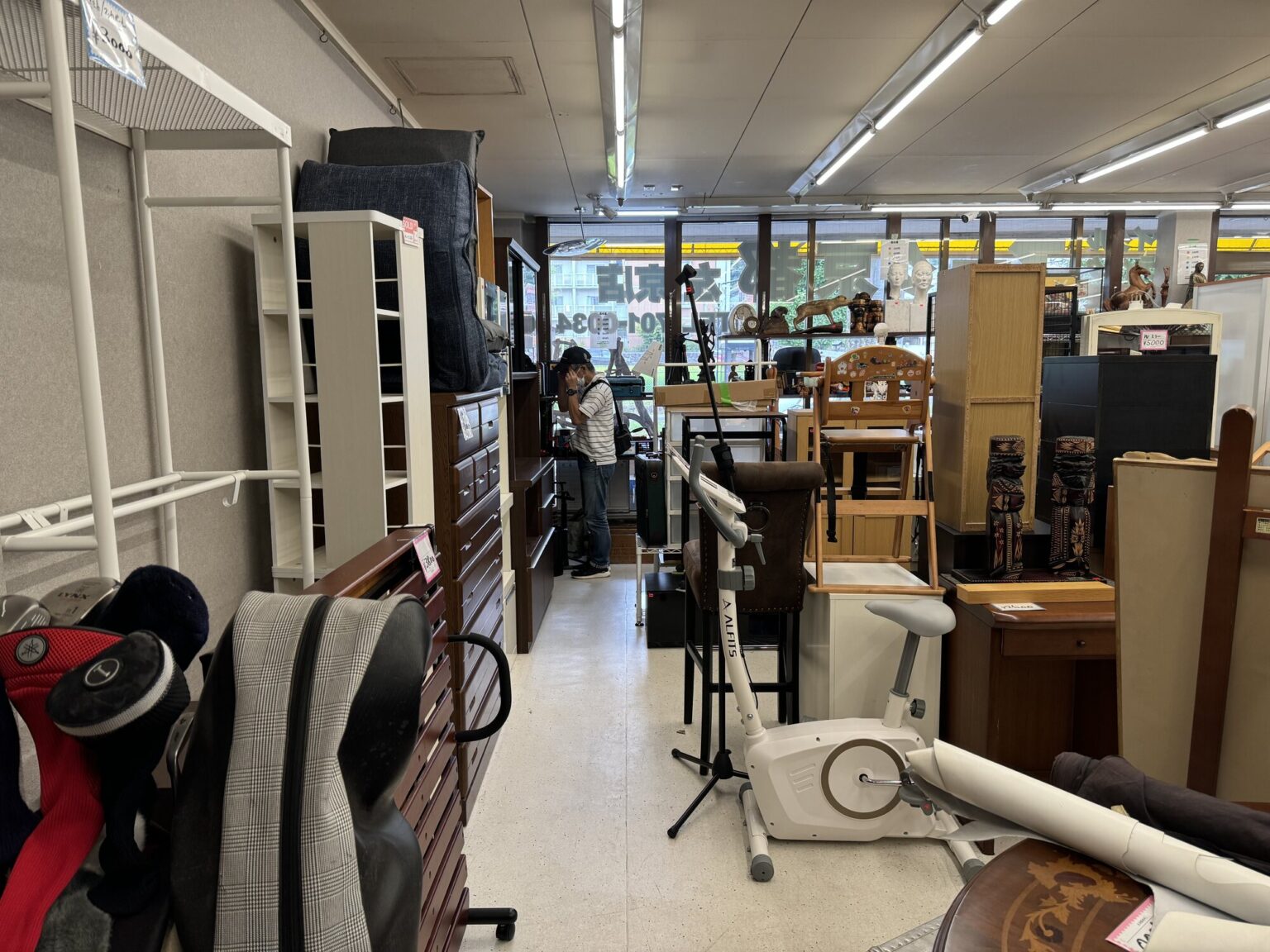
I’m Nobu, and when people picture Kyoto they picture temples, not a fluorescent-lit aisle stacked with old chests, golf clubs and a glass case of gilded lacquer. But the city’s risaikuru shoppu — literally “recycle shops,” the Japanese term for a general secondhand store — are a favourite slow-afternoon detour of mine. The ones I like aren’t the big chains; they’re the smaller local shops, where the stock is a jumble and the odd antique sits right in among the everyday goods. Here’s what turns up, where the local list points you, and how to shop them.
Not the big chains — the local ones
Japan’s reuse scene has two broad layers. There are the big national chains — Hard Off, Book Off, 2nd Street — large, tidy and standardised. Then there’s a much wider spread of smaller local and regional recycle shops, some of them little chains with a handful of branches. These pile the goods high, and for my money that’s the appeal: the stock is more of a jumble, and antiques still sit mixed in with the everyday clutter rather than picked out and priced up on their own.
The list this guide is built on is a shared Google Maps list titled “recycling shops in Kyoto that locals frequent.” It leans local rather than national, and it sits mostly in Kyoto’s residential south and its satellite towns rather than the temple district.
What you actually find
The fun of a recycle shop is that the stock changes with whatever people bring in. On one visit the shelves ran from a ¥10,000 samurai-armour doll to an antique brass cash register, with tea things and folk dolls in between. Here’s a sample of what turned up.
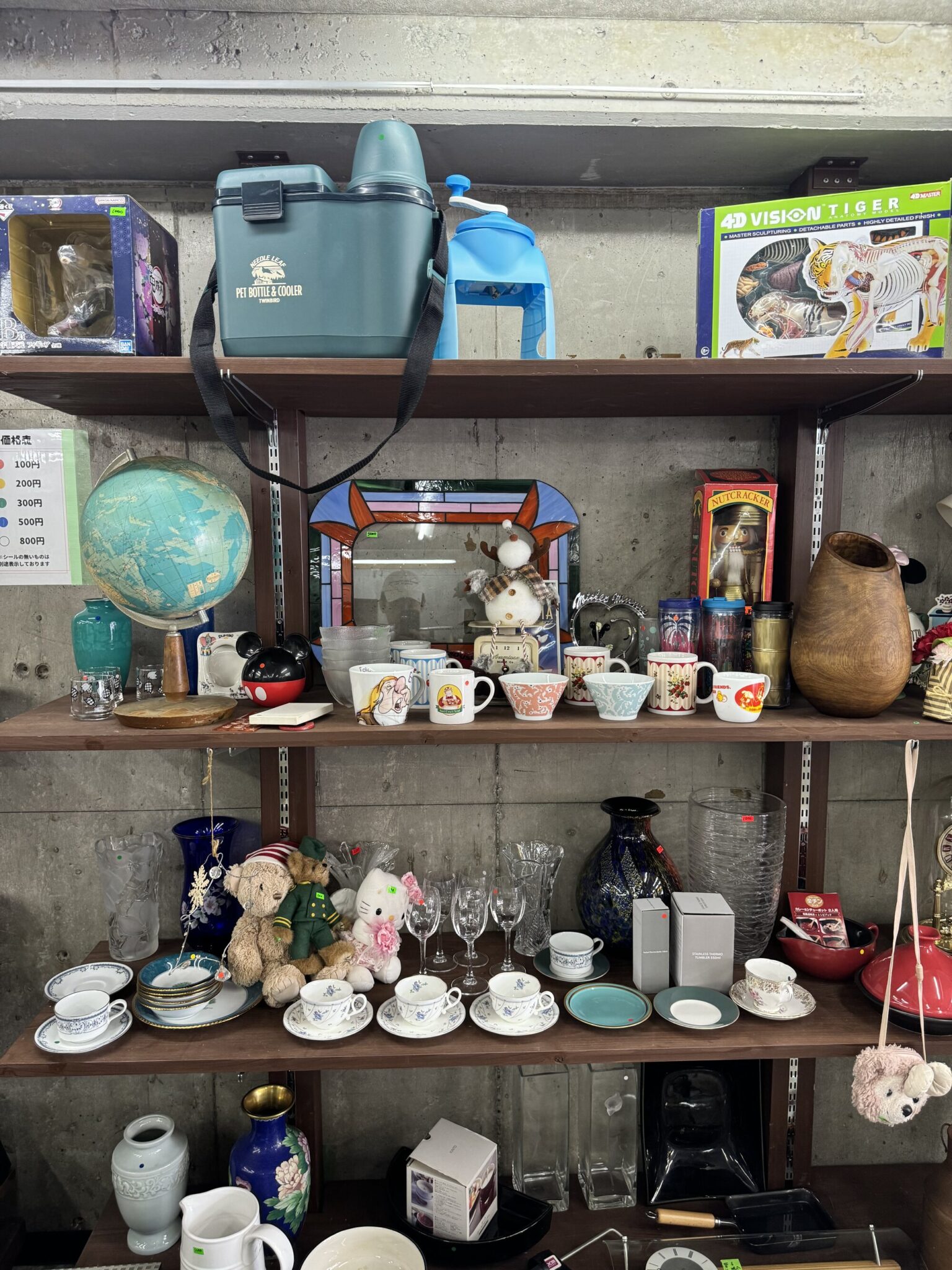 The general shelves
A globe, teacups, glassware, little vases and figurines — the everyday layer worth a slow look.
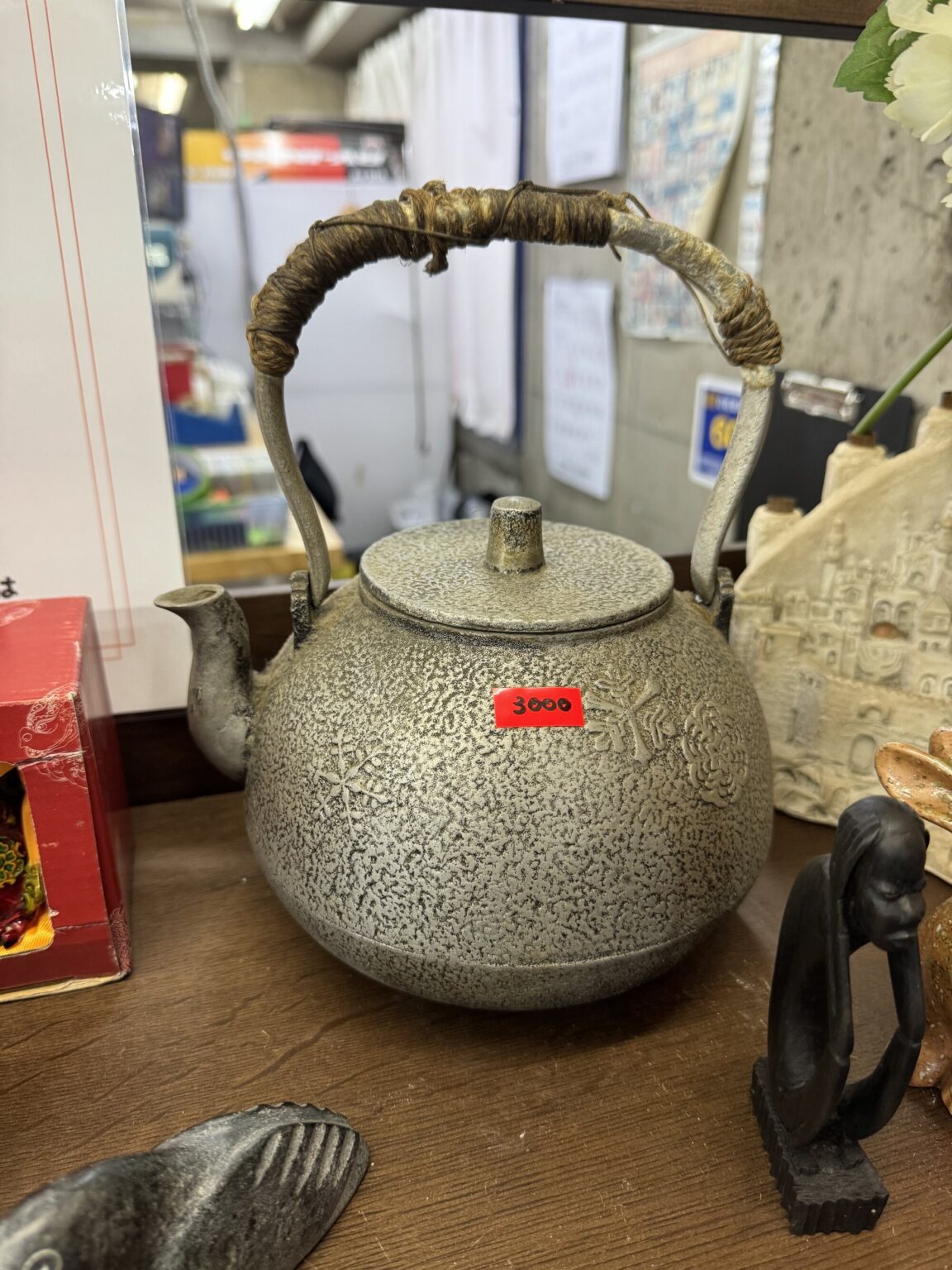 A cast-iron tetsubin
An old tetsubin iron kettle with a woven handle — the kind of tea-ware you’d expect behind glass in an antique shop, out on a table here with a price tag.
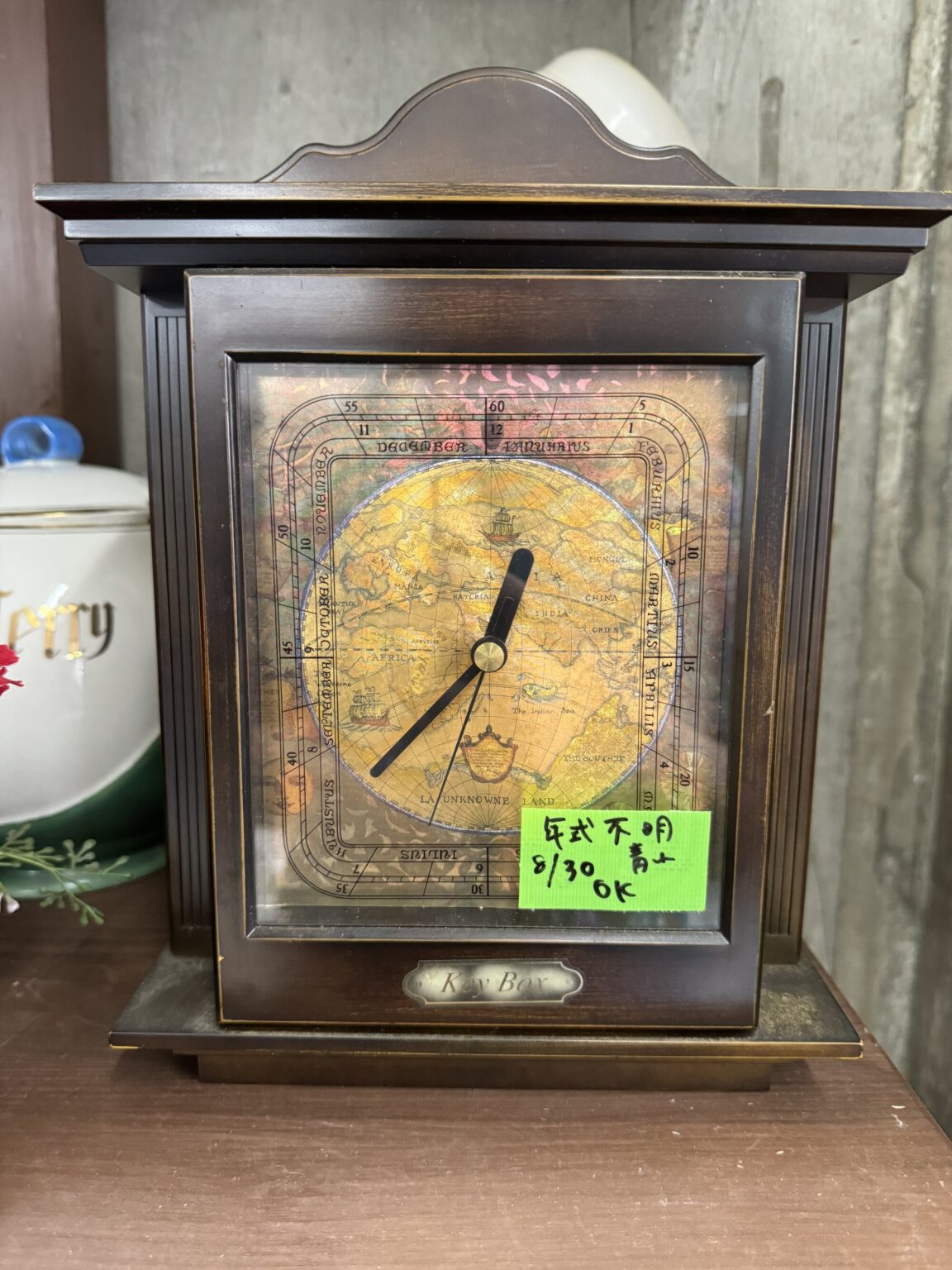 A vintage clock
A wooden mantel clock with a map-style face and a handwritten tag noting the style was unknown — half the charm.
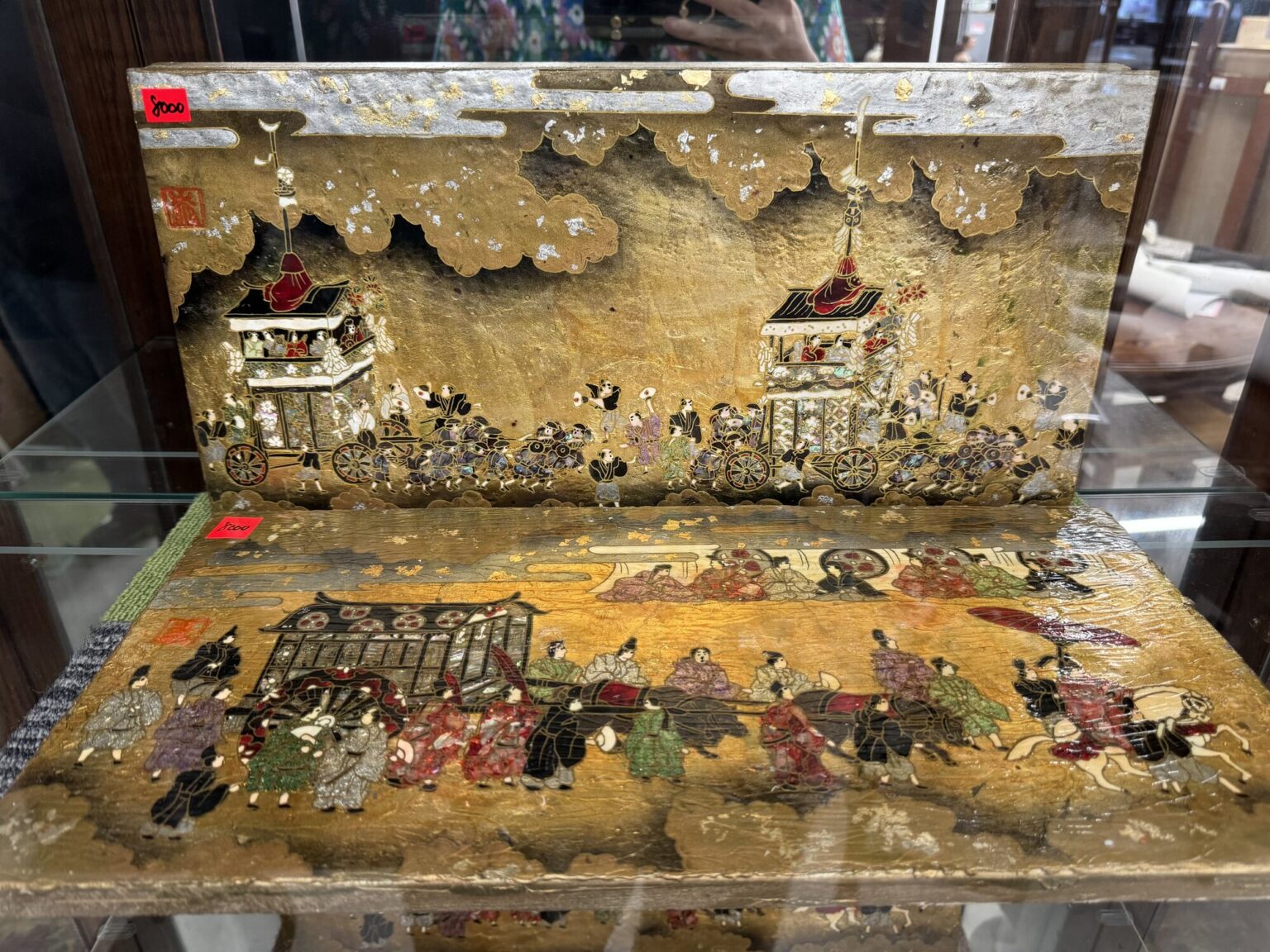 A gold-leaf panel
A gold-leaf lacquer panel of a townscape in a glass case — the sort of piece that makes you slow down and look twice.
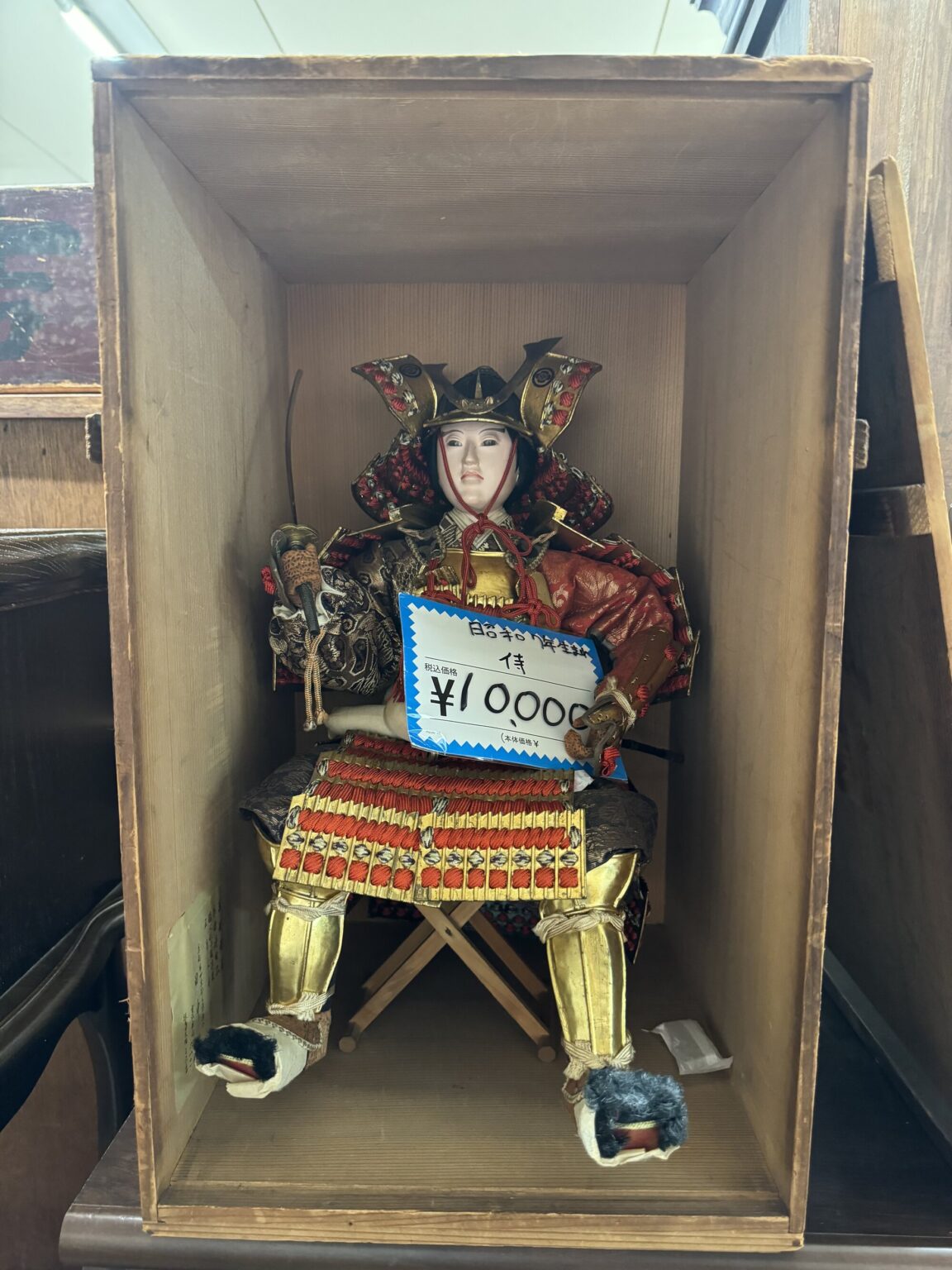 A samurai-armour doll
A boys’-festival gogatsu ningyō in its wooden case, tagged at ¥10,000 — the kind of seasonal display doll you’ll come across in these shops.
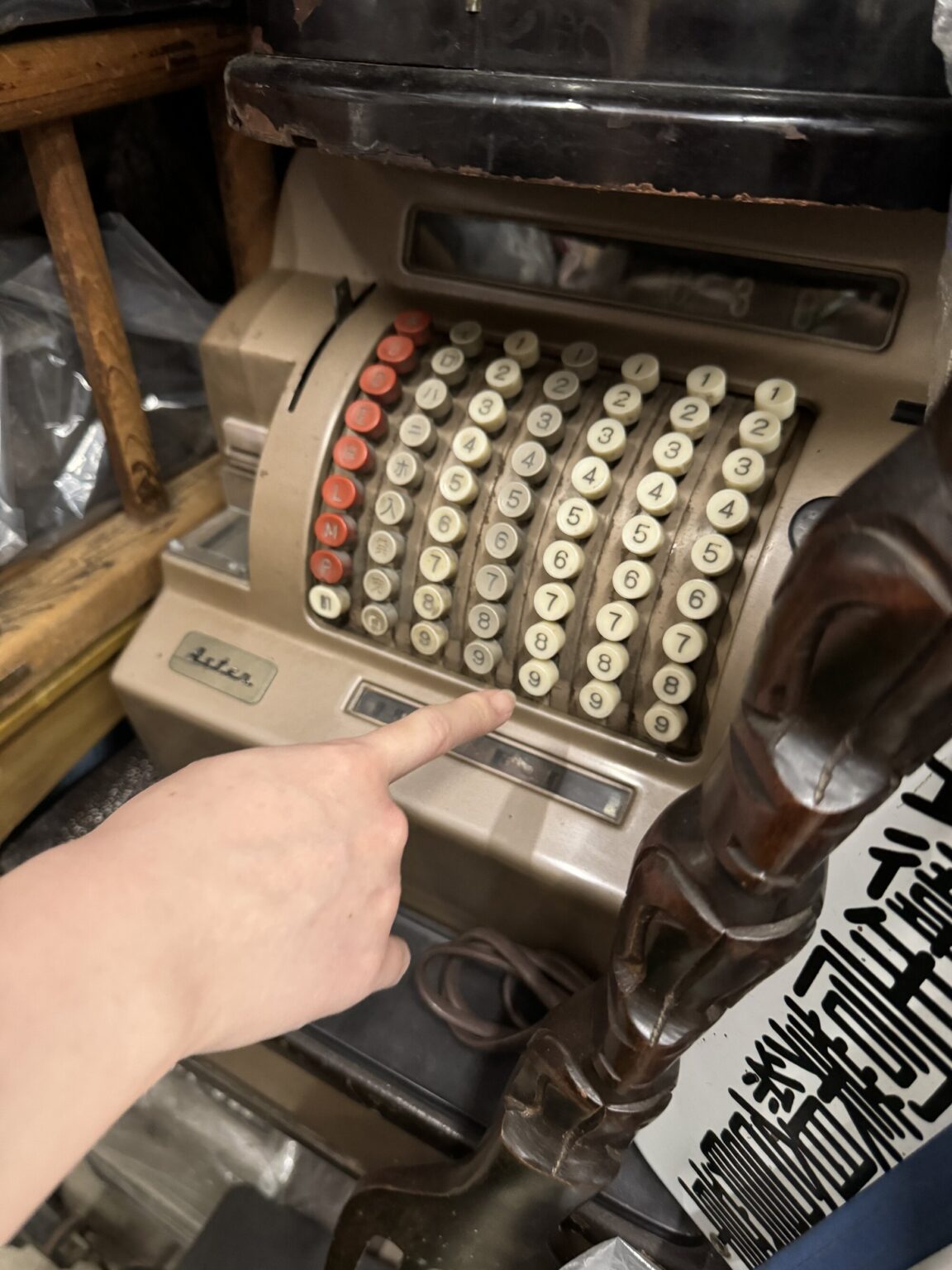 A brass cash register
An antique manual till with rows of number keys — proof that “recycle shop” can shade into “small museum you can buy from.”
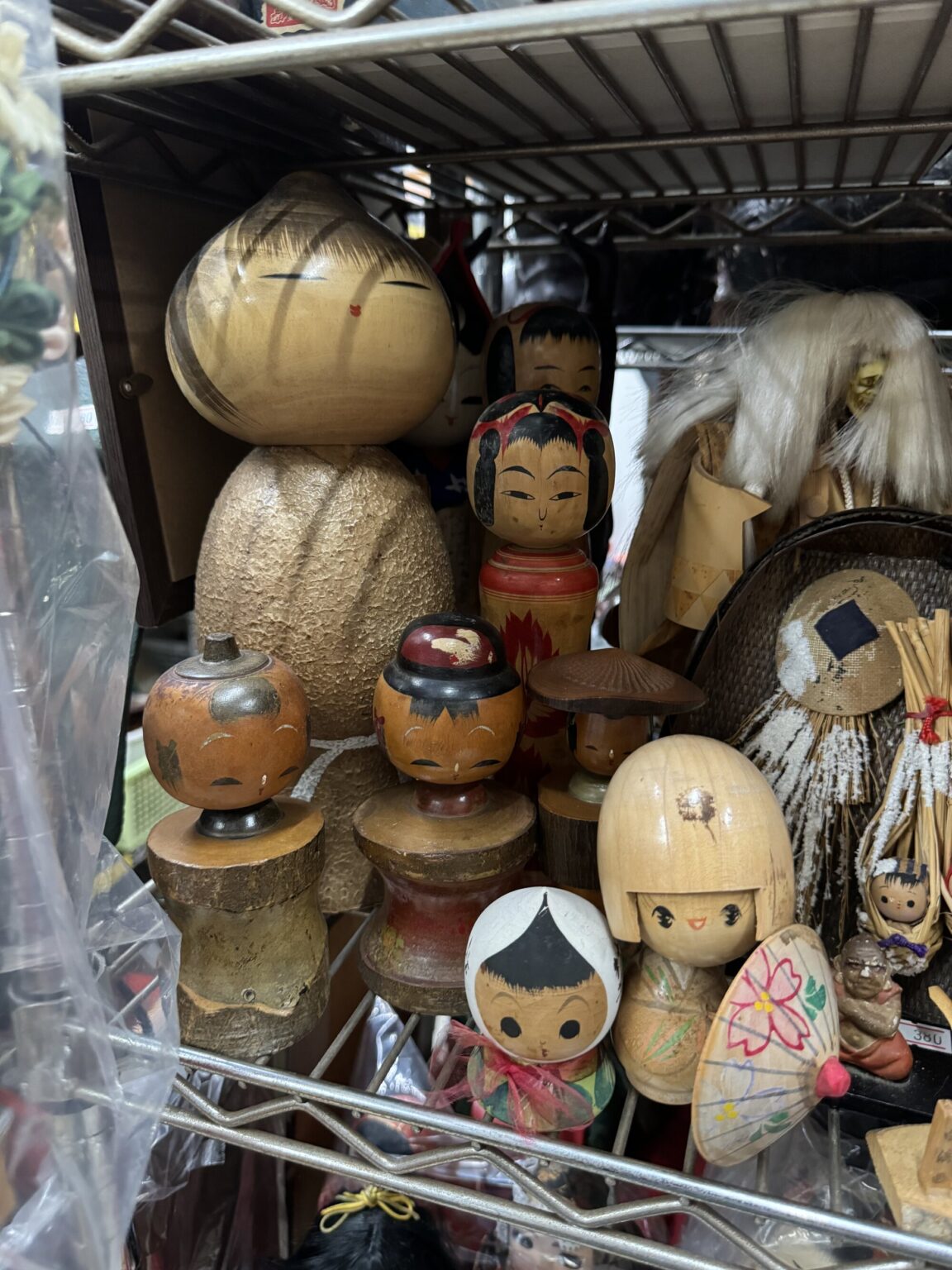 Kokeshi & folk crafts
Wooden kokeshi dolls and carved crafts crowded onto a wire rack — light, packable and a lot more characterful than a station-kiosk souvenir.
Where locals go: the shop list
These are the open shops on the shared local list, with the area where it’s given in the shop’s own name, the Google star rating from the list, and what kind of shop it is. Ratings drift over time, so treat them as a rough steer rather than gospel — and a few places on the original list had closed, so I’ve left those out.
| Shop | Area | ★ | Type |
|---|---|---|---|
| Wakuwaku Recycle RE (わくわくリサイクル アールイー 伏見深草店) | Fushimi · Fukakusa | 5.0 | Recycle shop |
| Midoriya (ミドリヤ 京都南店) | South Kyoto | 4.7 | Recycle shop |
| Recycle Mart (リサイクルマート京都伏見店) | Fushimi | 4.7 | Recycle shop |
| World Banana (リサイクルショップ ワールドバナナ) | — | 4.5 | Recycle shop |
| Zakka Bakkā (ザッカバッカー) | — | 4.4 | Used clothing |
| Aoi Recycle Shop (葵リサイクルショップ) | — | 4.1 | Recycle shop |
| Treasure Hunter (トレジャーハンター 八幡店) | Yawata | 4.1 | Recycle shop |
| Hand to Hand (HAND TO HAND) | — | 4.0 | Recycle shop |
| Eco Green (激安リサイクルショップ エコグリーン) | — | 3.9 | Recycle shop |
| Otakara Sōko (お宝創庫 宇治店) | Uji | 3.6 | Recycle shop |
| Town Town (タウンタウン 山科店) | Yamashina | 3.6 | Recycle shop |
| Treasure Hunter (トレジャーハンター長岡京店) | Nagaokakyō | 3.5 | Recycle shop |
| Mono Shop (モノショップ伏見店) | Fushimi | 3.4 | Recycle shop |
| Kaihō Sōko (開放倉庫 京都山城店) | Yamashiro | 3.3 | Recycle shop |
| Recycle Neo (【京都】リサイクルNeo) | — | 3.3 | Recycle shop |
| Kyoto Recycle Kingdom (京都リサイクル王国) | — | 3.3 | Recycle shop |
| Recycle Shop Cube (リサイクルショップキューブ) | — | 3.2 | Recycle shop |
| Ark Kyoto (アーク京都 左京店) | Sakyō | — | Recycle shop |
| Gakusei Recycle (学生リサイクル) | — | — | Student-focused reuse |
Shop names, areas (where stated in the name), star ratings and categories are taken from the shared “locals frequent” list; ratings are a snapshot and change over time. Always confirm a shop is open on Google Maps before a special trip.
How to hunt them
Assume cash
Cash is the safe assumption at small local shops — not all take cards or IC. Prices are generally as marked; Japanese shops aren’t places you’re expected to haggle, so treat the tag as the price.
Check hours first
Opening times vary from shop to shop. Pull up the exact branch on Google Maps and check today’s hours before you set out — many sit outside central Kyoto, in the southern wards and satellite towns.
Cluster by area
Fushimi has several shops on the list; the rest are more spread out across the south and the satellite towns. Pick one area and short-hop between shops rather than criss-crossing the city.
Look in the cases
The antiques tend to sit in the glass cabinets — the lacquer, the dolls, the tea-ware. Give the cases a slow, proper look rather than only skimming the open shelves.
Language
Expect Japanese signage. A translation app handles the price tags fine, and pointing works for the rest — staff are used to it.
Condition & carrying
Used means used — check for chips and cracks before you buy, and don’t count on returns. Choose light, packable things (dolls, tea-ware, textiles) if you’re flying home.
Visitor tip: this is a rainy-afternoon or between-temples activity, not a headline sight — treat it as a way to see a very ordinary, lived-in side of Kyoto. Fushimi pairs it naturally with the sake district and Fushimi Inari; the southern and satellite shops suit anyone already staying out that way rather than in the tourist centre.
Basing yourself in Kyoto
A giant reuse complex in Tokyo
The other end of the scale — four “Off” chains stacked under one roof in west Tokyo.
Oi Racecourse flea market, Tokyo
The open-air version of the hunt: up to around 700 stalls in a racecourse car park on most weekends.
Kyoto travel guide
How the wards, seasons and sights fit together if this is your first proper Kyoto trip.
Fushimi Ōtesuji shopping street
A covered local shopping arcade in Fushimi — good to pair with the recycle shops out that way.
What is a Japanese “recycle shop”?
Despite the name, a risaikuru shoppu isn’t about bottles and cans — it’s a general secondhand store that buys and resells used goods: furniture, appliances, tableware, clothing, toys, tools and often antiques. The local ones tend to be less curated than the big national chains, which is why the finds can be better.
How are these different from Hard Off or Book Off?
Hard Off, Book Off and 2nd Street are large national chains — clean and standardised. The shops on this list are smaller local and regional places, with more unpredictable stock, including the odd antique mixed in among the everyday goods.
Where are the shops?
They’re spread across Kyoto away from the tourist centre — with a cluster in Fushimi (including Fukakusa), plus shops in Yamashina, Uji, the satellite towns of Nagaokakyō and Yawata, and Sakyō and the southern wards. Several show their area in the shop’s own name; check the exact branch on Google Maps for the address.
Can I pay by card, and can I haggle?
Assume cash — many small recycle shops don’t take cards or IC. Prices are generally as marked; Japanese shops aren’t places you’re expected to haggle, so treat the tag as the price.
Is it worth it for a short Kyoto trip?
Only if you enjoy the hunt. On a first, temple-focused trip it’s a detour, not a must — but as a rainy-afternoon or half-day activity it shows a genuinely local, unglamorous side of the city, and you might carry home a piece of tea-ware or a folk doll for very little.
Are all the shops on the list still open?
Not all. The original shared list included a few that have since closed or come off the map, so this guide leaves those out and lists 19 that were shown as open. Reuse shops come and go, so always confirm on Google Maps that a specific branch is trading before you make a special trip.
For the Tokyo version of the same hunt, see our 23-minute photo walk through Shimokitazawa’s vintage streets — with the price signs actually photographed, and what the shop counts really are.
Join travelers discovering Japan's hidden side
Weekly dispatches from off-the-beaten-path Japan — spots and stories you won't find in guidebooks.
No spam. Unsubscribe anytime.
Welcome aboard!
You're in. See you in your inbox soon.