Shizuoka · Yaizu · Craft
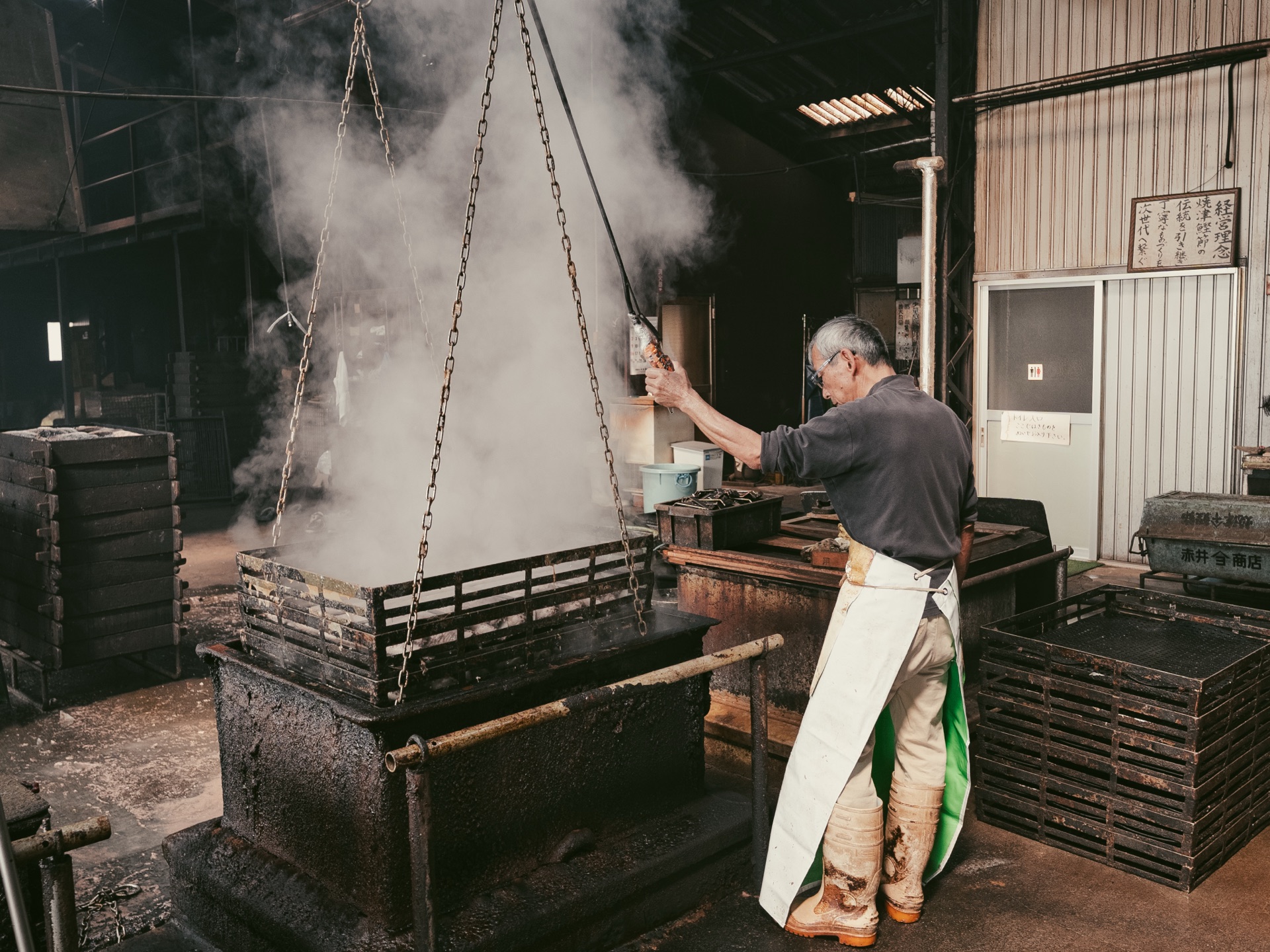
I went to Yaizu on a weekday morning. The town sits on the Suruga Bay coast, about an hour west of Shizuoka, and has been Japan’s bonito processing capital since the Edo period. The workshop I came to see is small — a family operation called Yamaju Masuda Shoten, founded in 1887 — and it is one of the very few places left in the country that still makes katsuobushi using tebiyama-zukuri, the original direct-fire smoking method. I wanted to see how the umami in every Japanese kitchen actually gets made. The workshop runs on steam, smoke, and four generations of muscle memory.
Quick Facts
Why Yaizu, and Why This Workshop
Yaizu has been a fishing port for centuries. The deep waters off Suruga Bay give the city access to skipjack tuna (katsuo) almost year-round, and the local processing industry grew up around that. At one point in the 1800s, dozens of small katsuobushi workshops ran in Yaizu. Most are gone now — replaced by larger industrial operations or shuttered when the next generation didn’t take over.
Yamaju Masuda Shoten is one of the holdouts. It was founded in 1887 by Masuda Tasaburo and has been continuously operated by the Masuda family since. The current operation is small, deliberate, and stubbornly traditional. It still uses the smoking method called tebiyama-zukuri — direct fire, no flue gas, oak and cherry firewood — which most of the industry abandoned because it is slower and more expensive.
By the official count, only a handful of workshops in Japan still produce katsuobushi this way. Yamaju is one of them. The rest of the country’s bonito flakes come out of stainless-steel ovens.
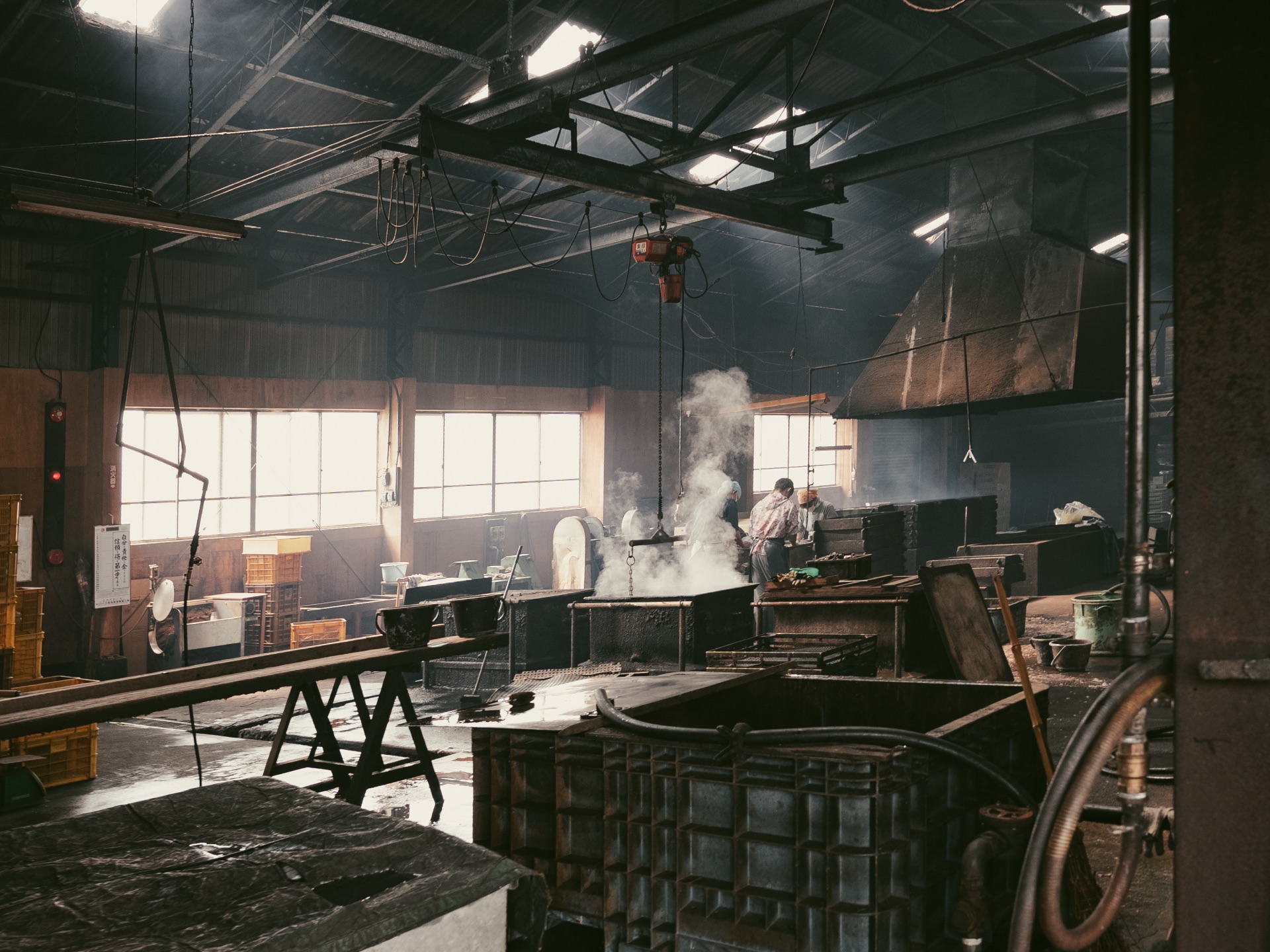
The Process, Step by Step
From whole skipjack to finished katsuobushi takes roughly three to four weeks for arabushi, and up to six months for the fully aged hongare-bushi. The workshop runs the early stages every working day. Below is what I saw, in order.
Step-by-step
From whole bonito to finished katsuobushi
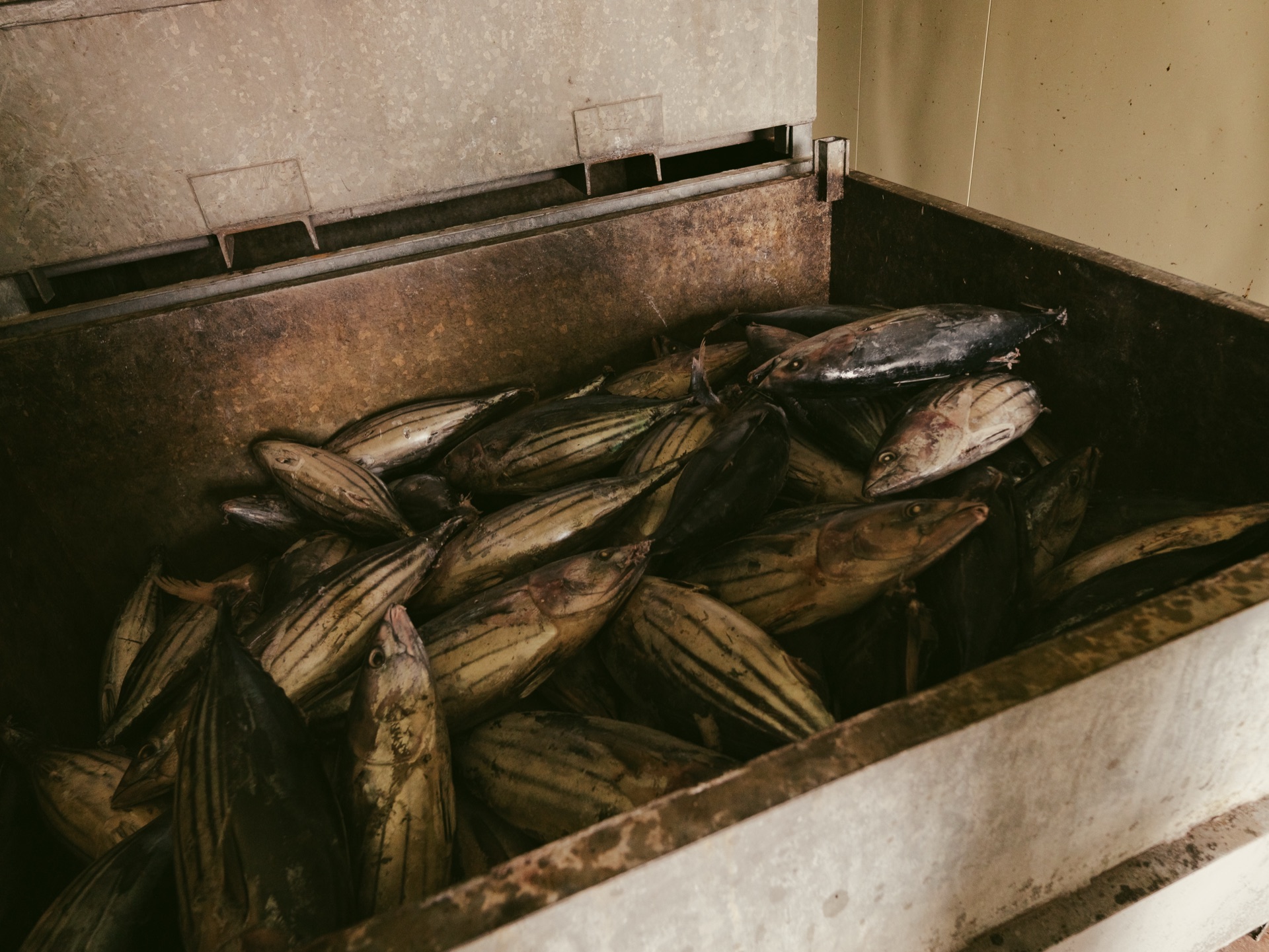
Sorting and gutting. The bonito arrive whole at the workshop, generally caught off the Pacific coast. They are sorted by size and gutted on metal trays.
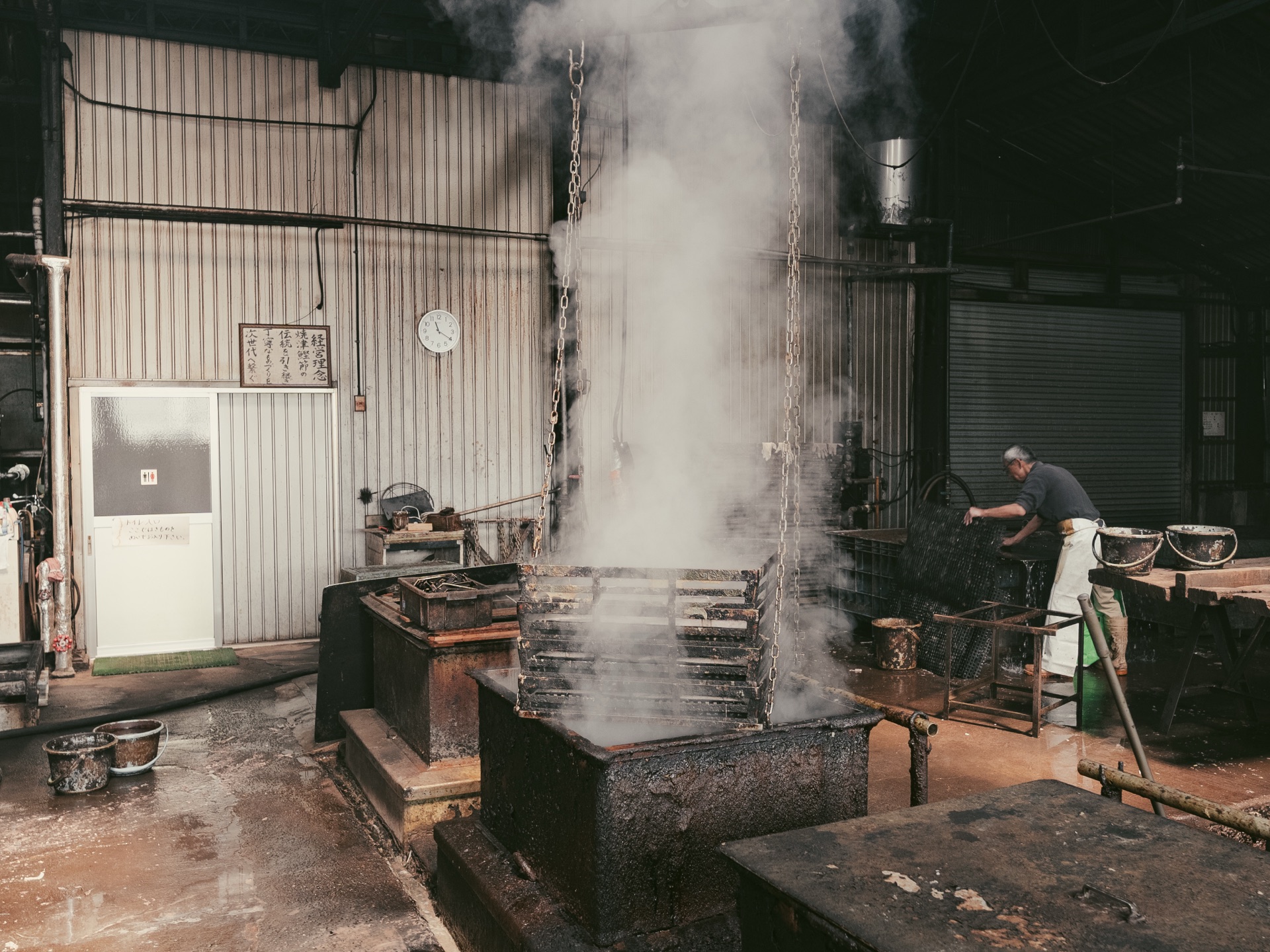
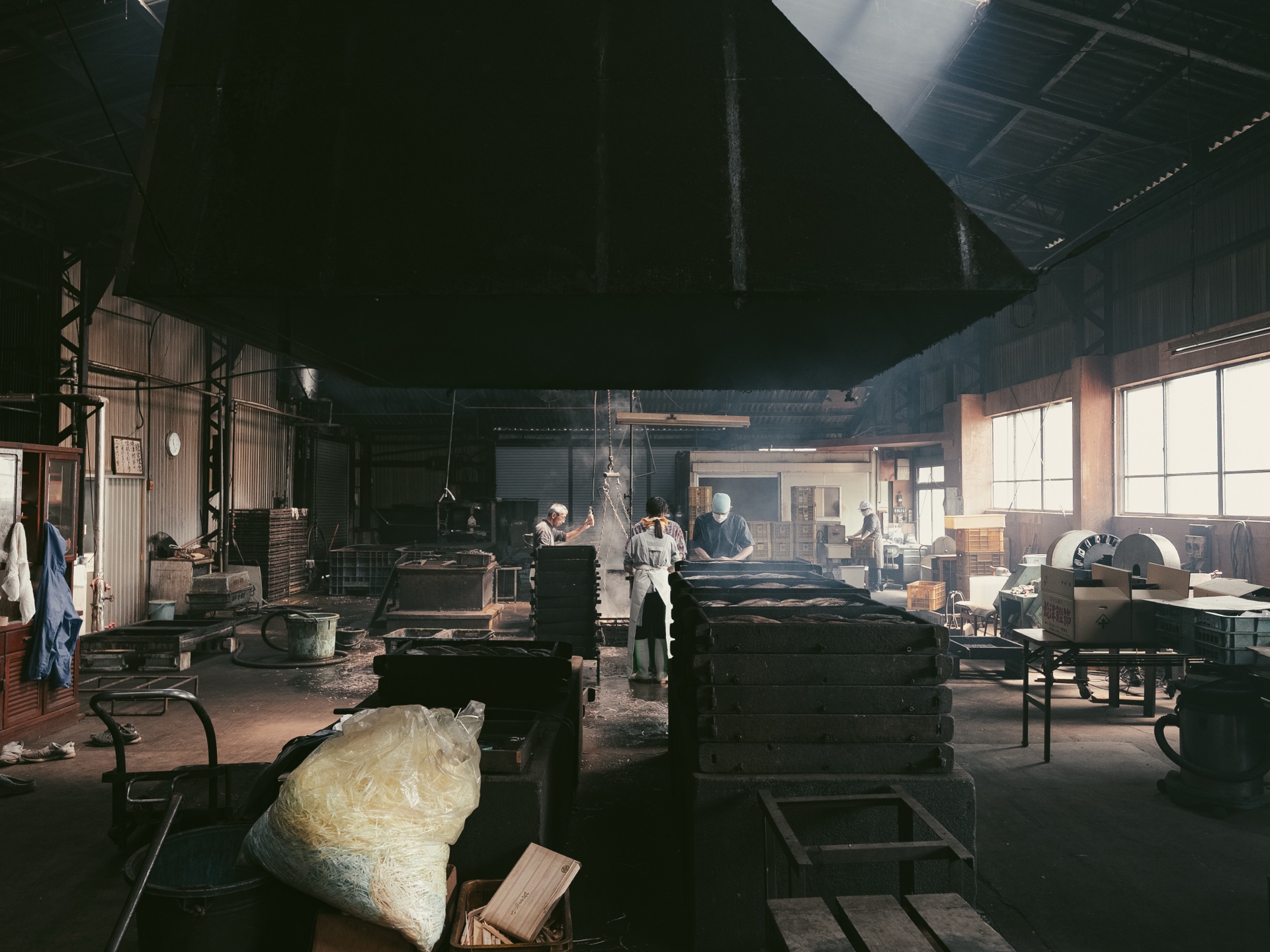
Boiling. Each fish is simmered in a deep iron pot for roughly an hour. This sets the protein and locks in the umami compounds before any smoking begins. The boiling-water vapor is the first cloud you see when you walk in.
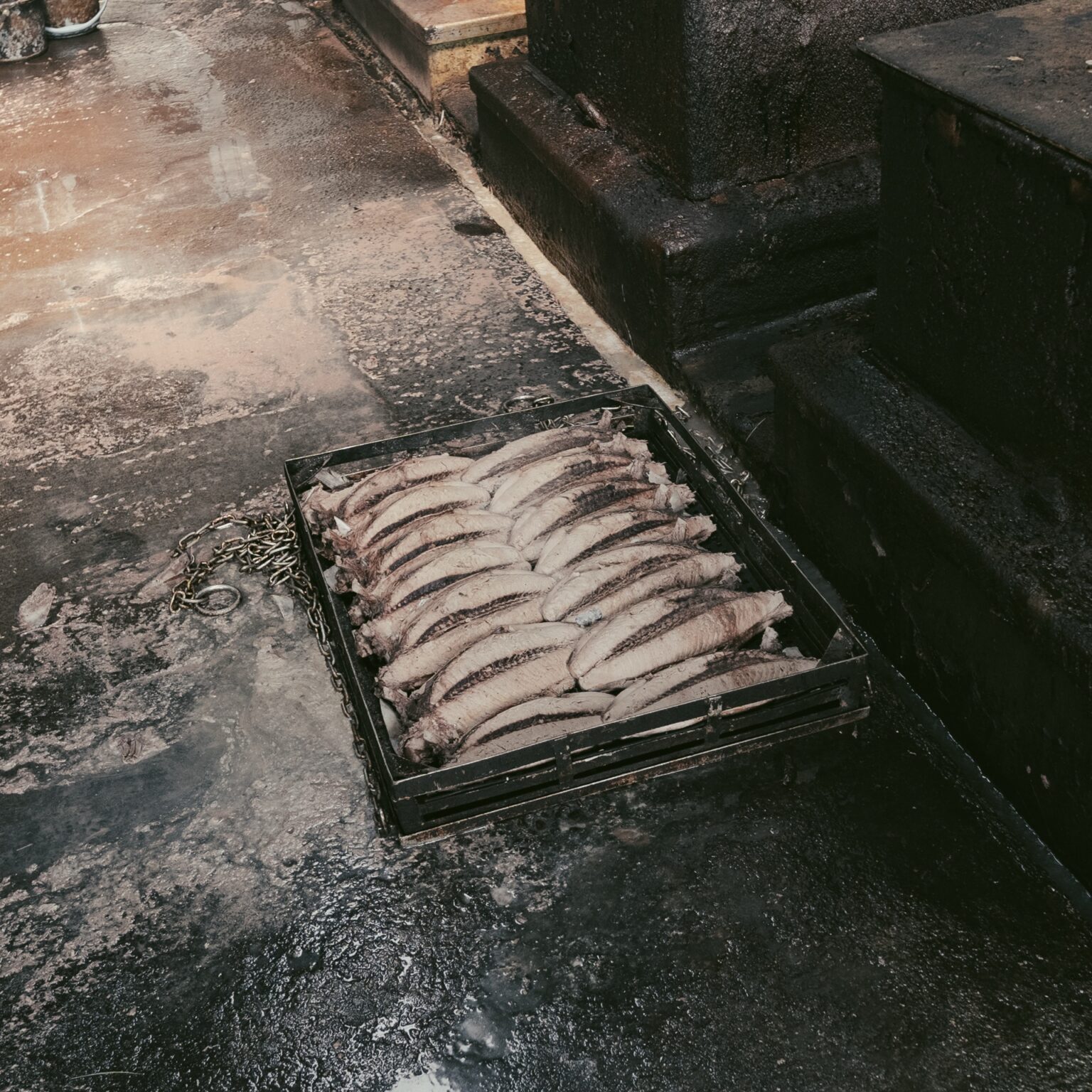
Filleting and bone removal. After cooling, each fish is split into four loins and the major bones are pulled by hand. The pin-bones are picked individually with tweezers. This is the only stage where the work is slow and quiet.
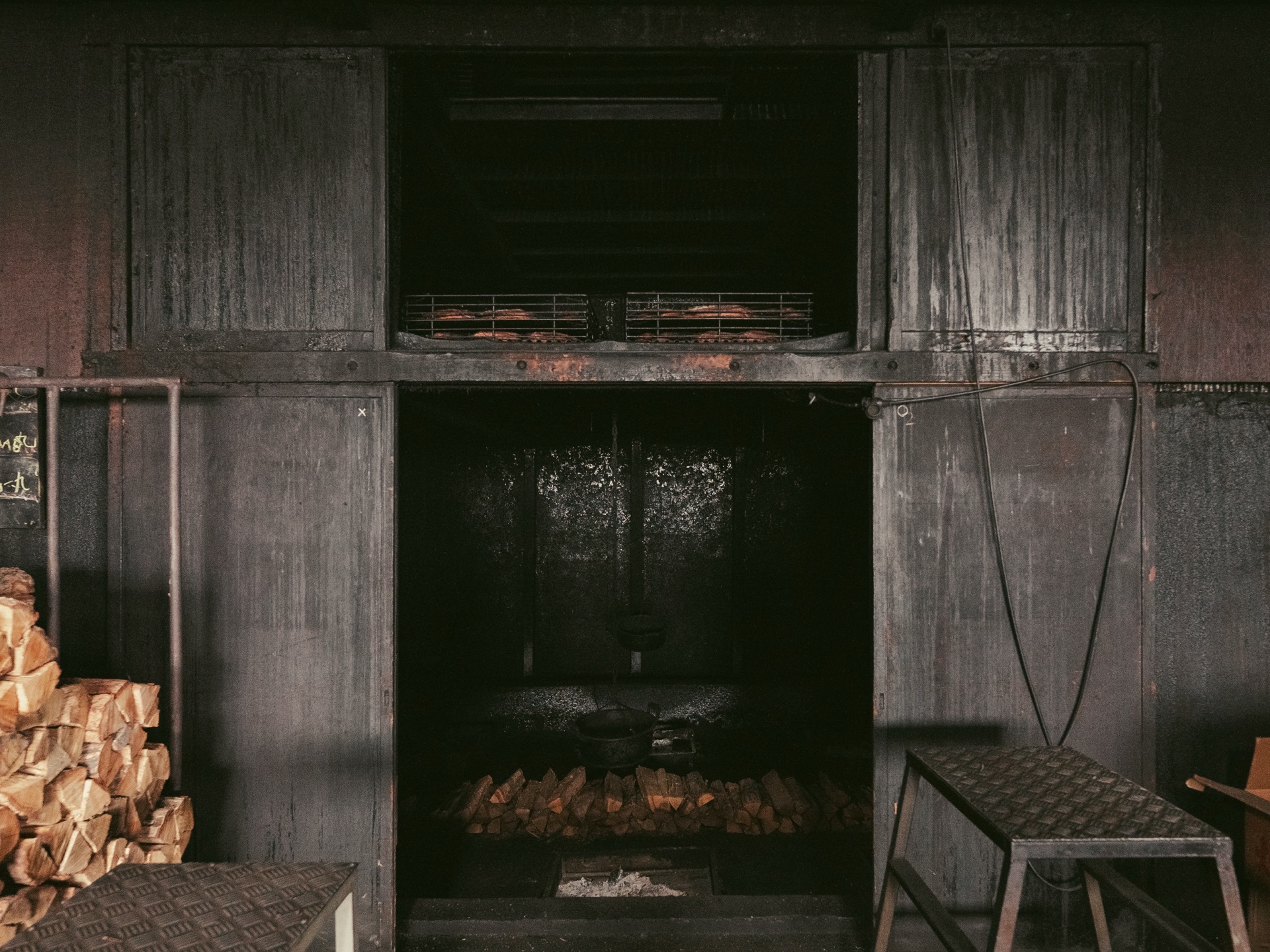
The first smoke. The loins go onto wooden racks above the smoke chamber. The fire is fed with split oak and cherry, and the smoke is deliberately heavy. This first smoking — called baikan — runs for about half a day.
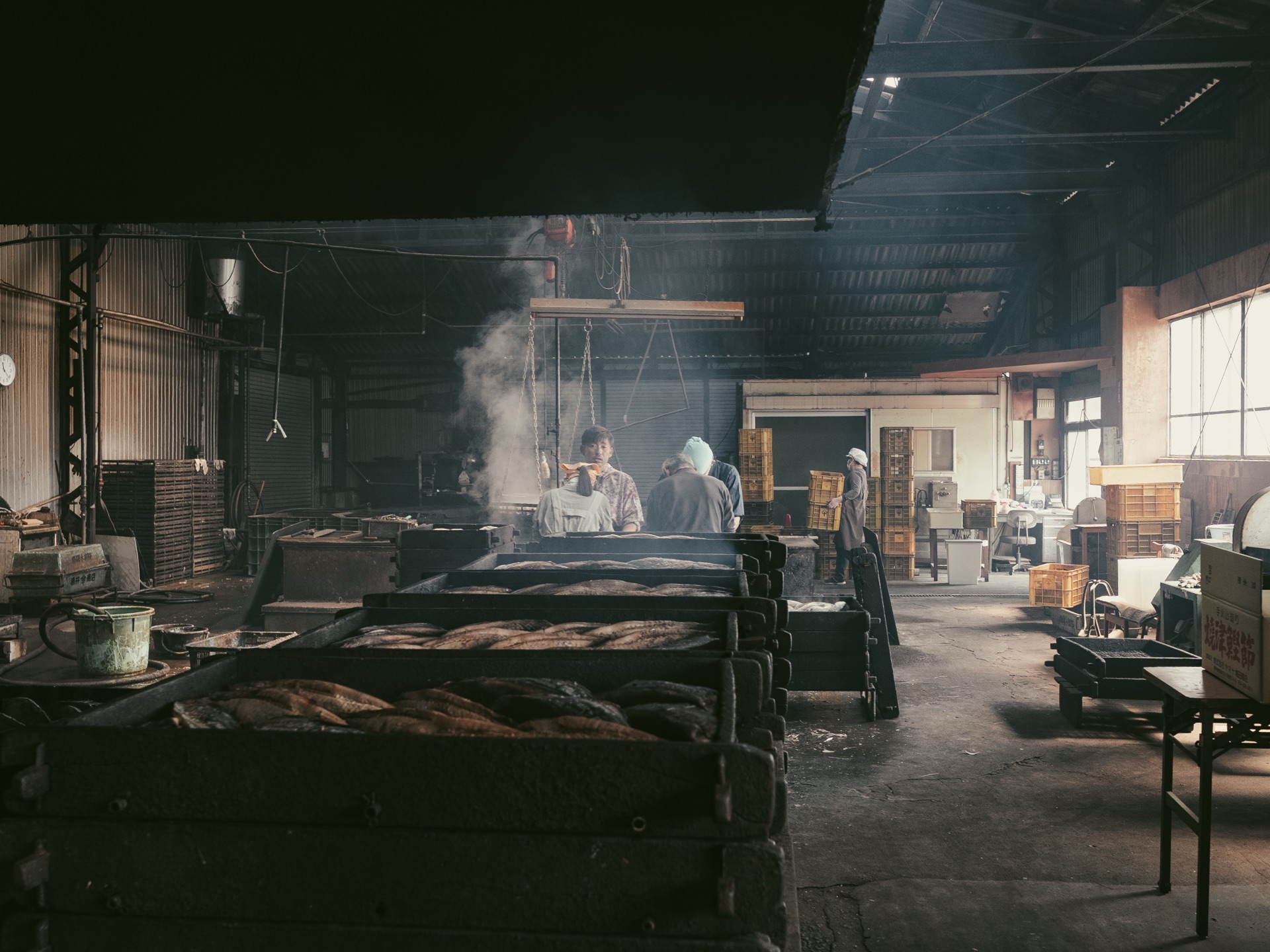
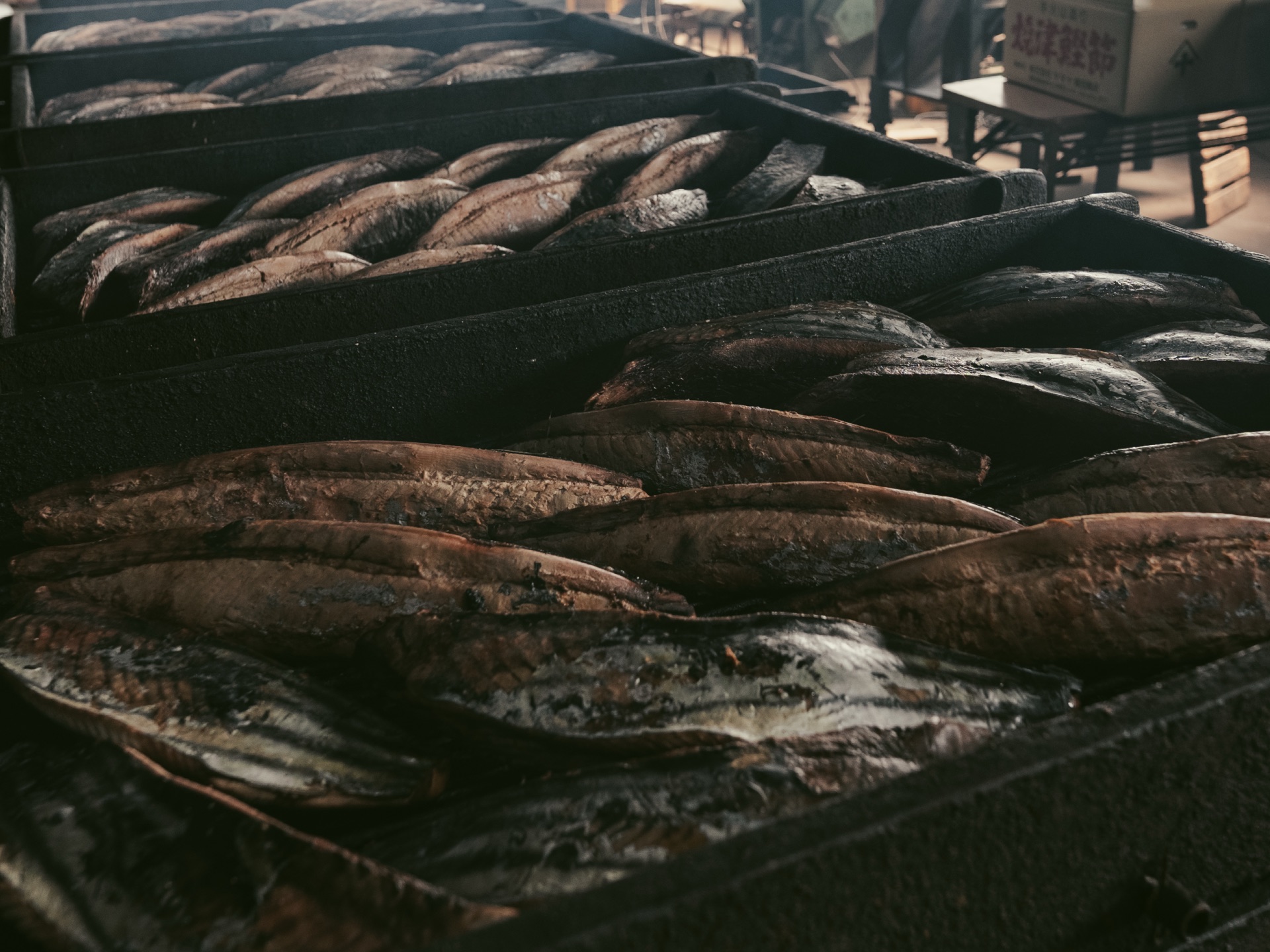
Cooling, sleeping, repeating. After the first smoke, the loins rest on racks for hours, then go back into the smoker. This cycle repeats — typically 10 to 20 times — over the course of about two weeks. With each pass, the loin loses water, the surface darkens, and the umami concentrates inward.
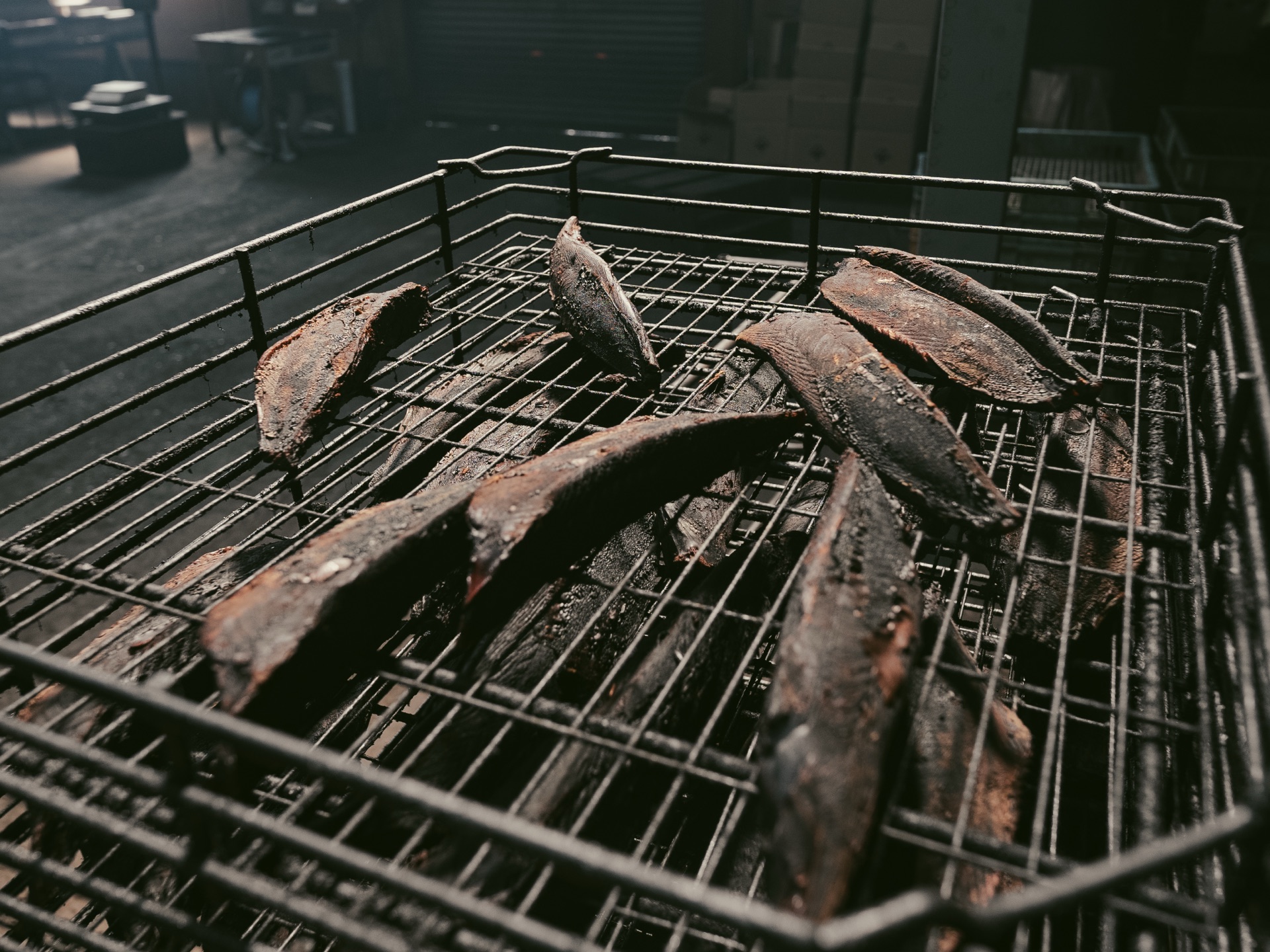
Surface trim and inspection. The half-finished loins — at this stage called arabushi — get checked and trimmed. The blackened, hardened surface is cleaned and a small amount of charred wood is scraped away. This is the cheaper grade and the form you’ll find shaved into most everyday dashi packets.
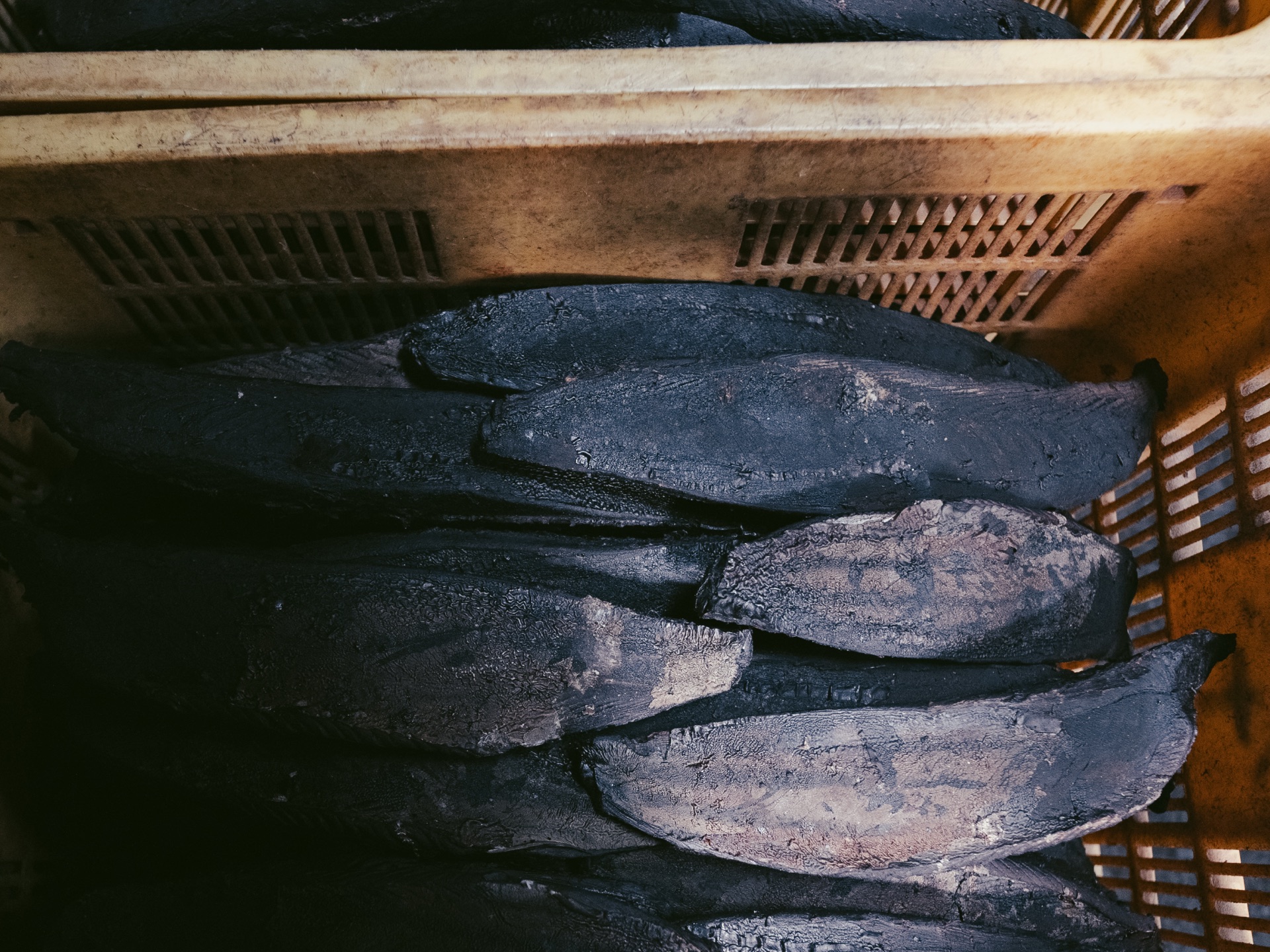
Mold curing — three rounds. For the fully aged grade — hongare-bushi — the arabushi is moved to a humidity room and a controlled mold is applied. Over weeks, the mold pulls remaining moisture out and develops complex flavor. The mold is brushed off, and the cycle is repeated up to three times. The final product is rock-hard, almost wood-like.
Aging and shipping. Hongare-bushi is left to rest for additional months before shipping to high-end restaurants and home cooks who shave it themselves with a wooden plane. Yamaju ships nationwide direct from the workshop.
The Tools
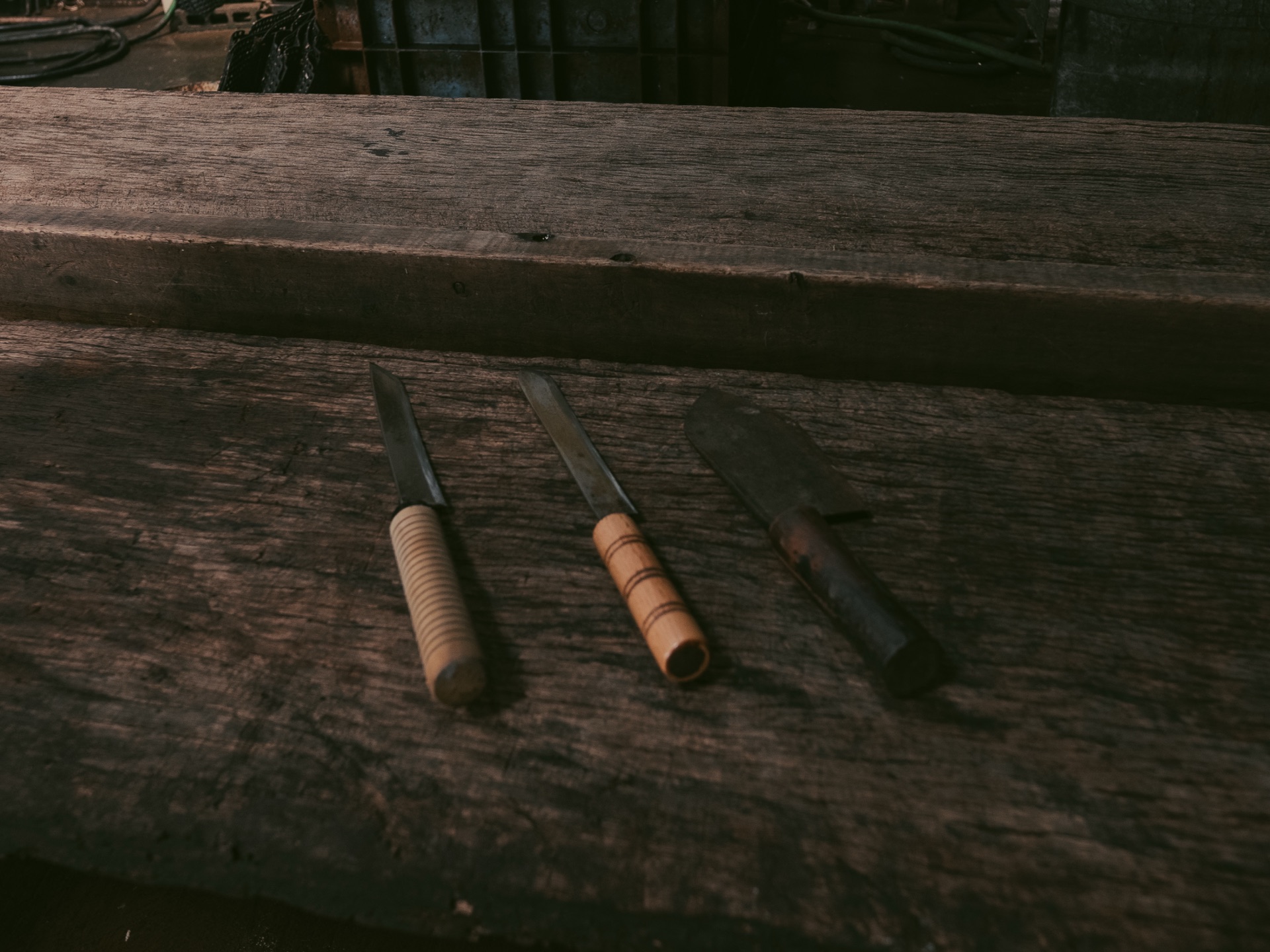
Most of the work runs on hand tools — long filleting knives, pin-bone tweezers, the surface-trim knife with its thick spine. The craftsmen sharpen them every morning. The wooden bench they sit on is older than the men using it.
The smoke chamber itself is the largest piece of equipment in the building. It’s a brick-lined pit with iron grates above, a fire bed below, and a chain hoist that lowers the racks down. There’s no automated control. Heat is judged by sight and the back of a hand.
Why Tebiyama Matters (For Eaters)
If you cook Japanese food at home, the difference between commodity katsuobushi and tebiyama-style katsuobushi is real and noticeable. The mass-produced flake is smoke-flavored, sometimes lightly. A tebiyama flake is genuinely smoky — closer to a single-malt whisky compared to a blended one.
The reason has to do with the smoke chemistry. Direct-fire smoke contains phenolic compounds and combustion volatiles that don’t make it through industrial flue systems. Most of those compounds are not flavor-active in their own right, but they react with the bonito’s amino acids over the repeated heat cycles to develop the deep umami-and-smoke complexity that defines a great dashi.
Once you have shaved a hongare-bushi yourself with a wooden plane and made dashi from it, supermarket pre-shaved flake will taste flat. This is the trap of every traditional craft — the moment you understand it, the cheap version stops being satisfying.
How to Visit: The Tour Logistics
The workshop opens for guided tours on monthly tour days only. Tours are by reservation, mostly conducted in Japanese, and include a katsuobushi souvenir.
Tour fee: ¥1,750 per group (souvenir included)
Reservation: Individual visitors book through the “meets!Yaizu” platform. Group tours of 10+ contact the workshop directly by phone or inquiry form. Confirm current tour days on the official website (yama10.jp/kengaku) before planning your trip.
Closed: Weekends, holidays, and the summer Obon week. Inquiries are accepted on weekdays only.
Language: Tours are conducted in Japanese. There is no published English-language tour. If you don’t speak Japanese, plan to bring a friend who does, or use a translation app respectfully.
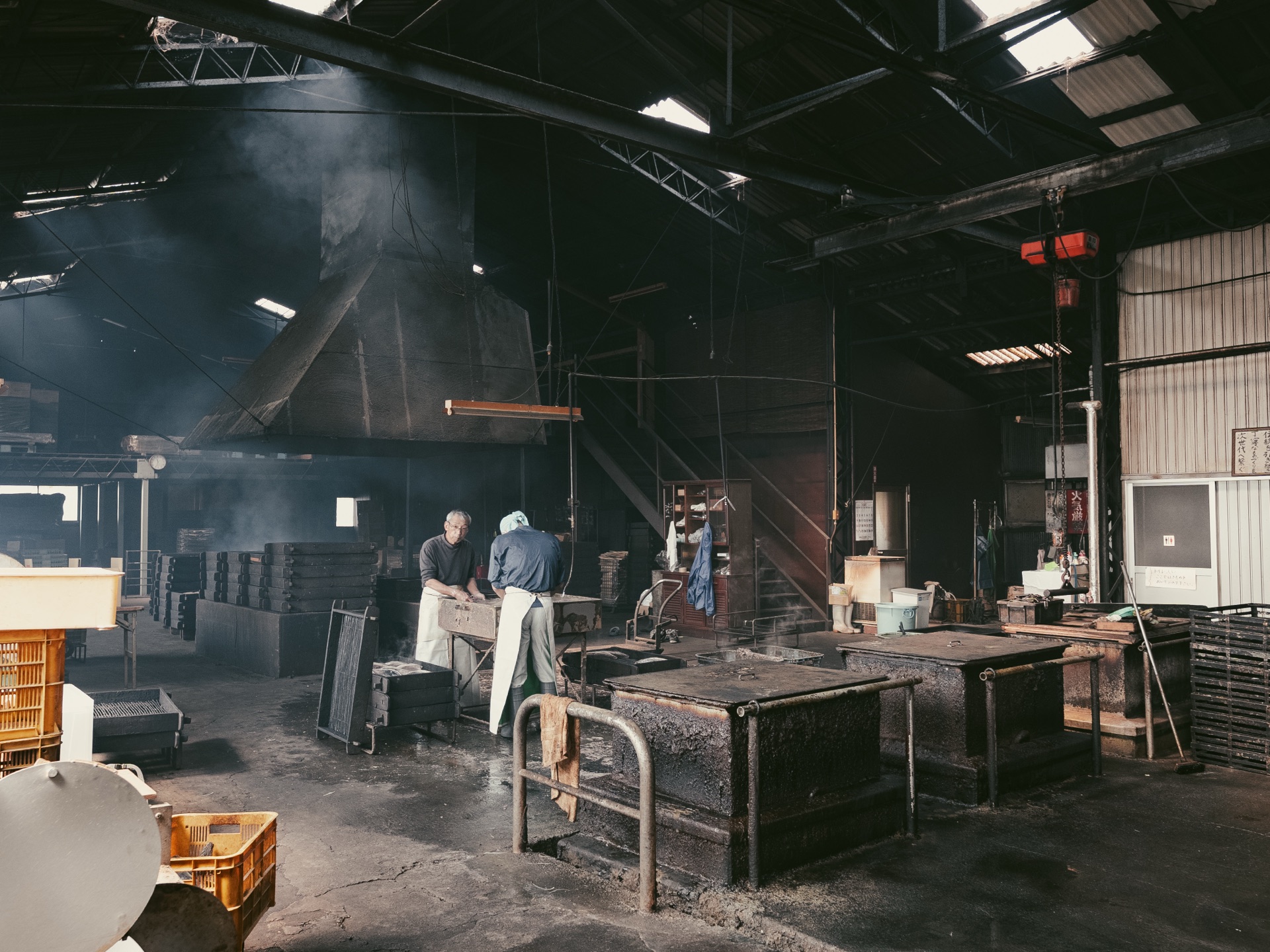
This is a working factory, not a museum. Tours fit around production. If a tour day is full or production is at a delicate stage, your booking won’t be confirmed. Be flexible with dates.
Getting to Yaizu
RecommendedShinkansen + local train
From Tokyo Station, take the Tokaido Shinkansen Hikari to Shizuoka (~1 hour). Transfer to the local Tokaido Line and ride 4 stops to Yaizu Station (~12 minutes).
From the station, the workshop is about 10 minutes by taxi (~¥1,200) or 30 minutes on foot through residential streets.
From Tokyo total: roughly 1 hour 40 minutes, around ¥6,000–7,000 one-way.
From Kyoto / OsakaEastbound
From Kyoto Station, Tokaido Shinkansen Hikari to Shizuoka takes about 1 hour 50 minutes. Then local train to Yaizu.
From Kyoto total: roughly 2 hours 30 minutes, around ¥8,000–10,000 one-way.
By carTomei Expressway
Yaizu IC on the Tomei Expressway is about 10 minutes from the workshop. Roughly 2 hours from central Tokyo, 3 hours from central Osaka. Parking is available at the workshop for tour visitors.
Combined tripMt. Fuji area
Yaizu is about 1 hour east of the Mt. Fuji area by train. A practical pairing: Mt. Fuji visibility check / Lake Kawaguchiko in the morning, Yaizu workshop tour in the afternoon. Stay overnight in Shizuoka City.
What to Bring
After the Tour: Where to Eat
Yaizu is a fishing town. The katsuo / bonito sashimi served fresh at local restaurants is some of the best in Japan, especially in spring (hatsu-gatsuo) and autumn (modori-gatsuo) seasons. A quick walk from the station puts you in the Sakanacenter wholesale market complex with multiple sashimi-bowl restaurants.
Stay overnight in Yaizu or Shizuoka and the trip becomes much easier — the workshop tour, a bonito sashimi lunch, and an evening walk along Suruga Bay all in one day.
Browse Yaizu / Shizuoka Hotels →Combine This Trip With
Frequently Asked Questions
Can I just walk in to Yamaju Masuda Shoten?
No. The workshop is a working factory, not a public attraction. Tours are reservation-only and run on monthly tour days. Walk-up visitors will not be admitted to the production area.
How do I make a reservation?
Individual visitors reserve through the “meets!Yaizu” booking platform. Group tours (10+) contact the workshop directly by phone or via the inquiry form on yama10.jp. Confirm current tour days on the official website before planning travel.
Is the tour in English?
Tours are conducted in Japanese. There is no published English-language tour. Bring a Japanese-speaking friend if you can, or use a translation app respectfully. The workshop runs at its own pace and translation should not slow that down.
How long does the tour take?
A typical tour runs 60 to 90 minutes. This includes walking through the production area, watching active stages of the process, and taking home a small katsuobushi souvenir included in the tour fee.
What’s the difference between arabushi and hongare-bushi?
Arabushi is the half-finished form — smoked, hardened, but not mold-cured. It’s what gets shaved into most consumer katsuobushi packets. Hongare-bushi takes additional months of three-round mold curing and aging. The flavor is deeper, less smoky, more umami-forward, and more expensive.
Can I buy katsuobushi at the workshop?
Yamaju ships product nationwide directly from their workshop. You can also buy products from their website (yama10.jp). On-site purchases at the workshop tour are typically possible but bring cash to be safe.
Will I smell like smoke afterwards?
Yes. Wear clothes you can wash or air out. The smell is strong but fades over a day. Don’t visit in clothes you need for a formal occasion that evening.
Can I combine this with a Mt. Fuji trip?
Yes — Yaizu is about 1 hour east of the Mt. Fuji / Kawaguchiko area by train via Shizuoka. A typical pairing: Mt. Fuji visibility check / lake walk in the morning, Yaizu workshop in the afternoon, sleep in Shizuoka City. See our Mt. Fuji Visibility Forecast for the morning planning.
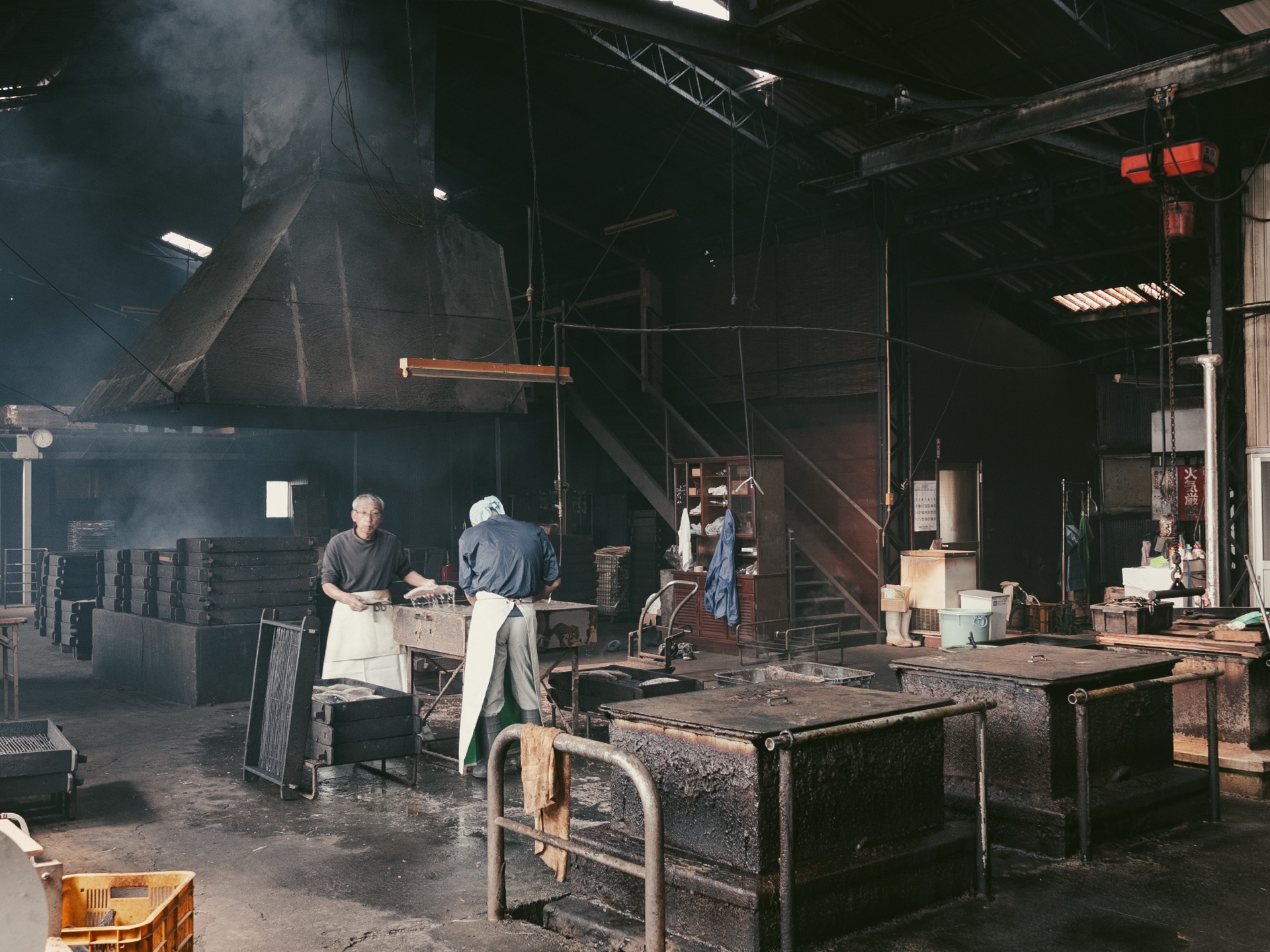
What I keep thinking about, after the tour, is the consistency. The workshop has been operating for 138 years. The smoking pit, the iron racks, the wooden benches, the knives — all old, all still working. Not because the family is sentimental about machinery. Because what they make tastes better when made this way, and a meaningful market still exists for that difference.
If you cook with dashi at home, you should at least once shave your own katsuobushi from a hongare block. The taste is different and you understand it the moment it hits the water. The workshop in Yaizu is where most of the world’s good ones come from. Worth the day trip.
Join travelers discovering Japan's hidden side
Weekly dispatches from off-the-beaten-path Japan — spots and stories you won't find in guidebooks.
No spam. Unsubscribe anytime.
Welcome aboard!
You're in. See you in your inbox soon.