

Mt. Fuji · Diamond Fuji · 2026–2027
Diamond Fuji 2026–2027: The Complete Calendar Guide to Where and When to See It
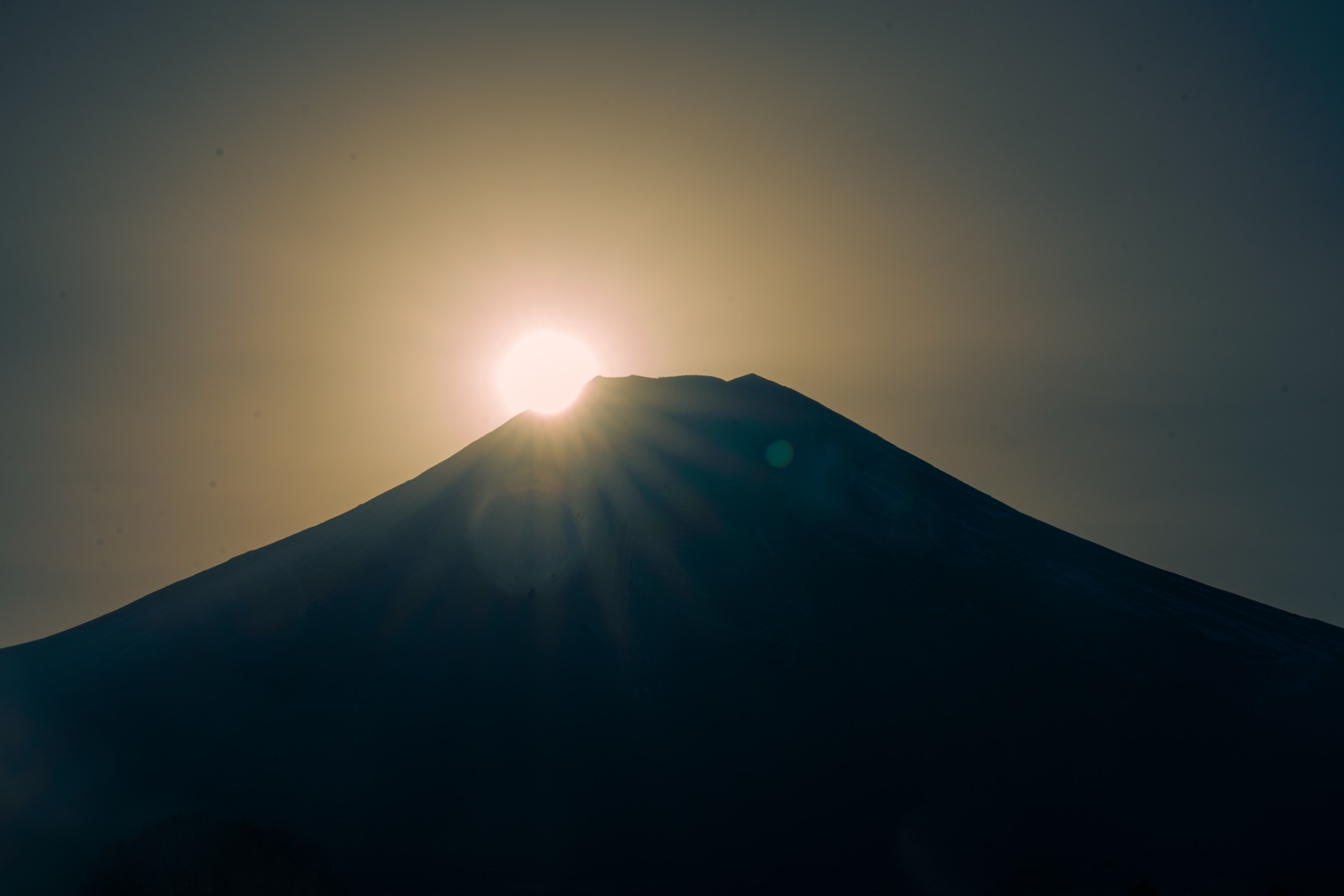
Diamond Fuji — the moment the sun edge meets the summit. The whole event lasts about 30 seconds. The radial sunburst is real, captured at 1/4000s.
Diamond Fuji (Daiya Fuji) is the moment when the sun rises or sets exactly on the summit of Mt. Fuji, creating the appearance of a diamond perched on the peak. The geometry only works at specific places on specific dates — every viewing spot in Japan has its own narrow window. For Yamanashi and Tokyo it runs from mid-October to late February. For Chiba City the sunset windows are tighter — about ten days each in late October and again in mid-to-late February. For the southern Boso peninsula the geometry shifts entirely: Diamond Fuji is a spring and summer event there, late April to late May and mid-July to mid-August. This guide is the calendar you need to plan a trip around it.
Quick Facts
The Annual Window
Diamond Fuji is not a year-round phenomenon. It only happens when the sun’s daily arc — which moves north and south across the sky over the course of a year — lines up with the summit of Mt. Fuji as seen from a specific viewing point. Because Mt. Fuji’s summit is at a fixed position, and the sun’s arc is fixed by latitude, each viewing spot has exactly two windows of about 2 days each per year. The one most people care about is the autumn-to-winter sunset window, when the sun sinks toward the summit from the east-side viewing spots.
Annual viewing window · Eastern (sunset) spots
The implication: Diamond Fuji travel planning is the opposite of cherry blossoms. Cherry blossoms have a hard 10-day national window. Diamond Fuji has a soft 4-month window — but you have to match a specific date to a specific viewing point. Show up at the wrong spot on the right day and you see a regular sunset.
How It Works (Briefly)
The sun rises in the east, peaks at solar noon, and sets in the west. The exact azimuth (compass direction) of sunrise and sunset shifts about 47° over the course of a year — north in summer, south in winter. Mt. Fuji is a fixed point. To see Diamond Fuji from a given spot:
- Stand directly east of Mt. Fuji’s summit → the sun sets behind the summit (sunset Diamond)
- Stand directly west of the summit → the sun rises behind it (sunrise Diamond)
- The exact compass alignment only happens twice a year for any one spot
The further east you are from Mt. Fuji and the closer to its latitude, the later in winter the sunset Diamond happens — usually around the February window. Locations significantly south of Fuji’s latitude (the Boso peninsula tip) instead see it in spring and summer entirely. The closer you are (Lake Yamanaka, Tanzawa), the longer the window. Lake Yamanaka has 4+ months of viewing because its 9 different shoreline spots each have slightly different angles to the summit.
Cherry blossoms ask “when does it bloom?” Diamond Fuji asks “where do you stand on December 22?”
Spot-by-Spot Viewing Windows
Viewing windows · sunset spots
When each spot is active
Lake Yamanaka has the longest combined window because the sun’s setting azimuth crosses each of its 9 lakeshore spots at slightly different dates. Mt. Takao has the shortest — about 10 days centered on the winter solstice. Chiba Bay has two short windows: October sunset (incoming sun moving south) and February sunset (outgoing sun moving north).
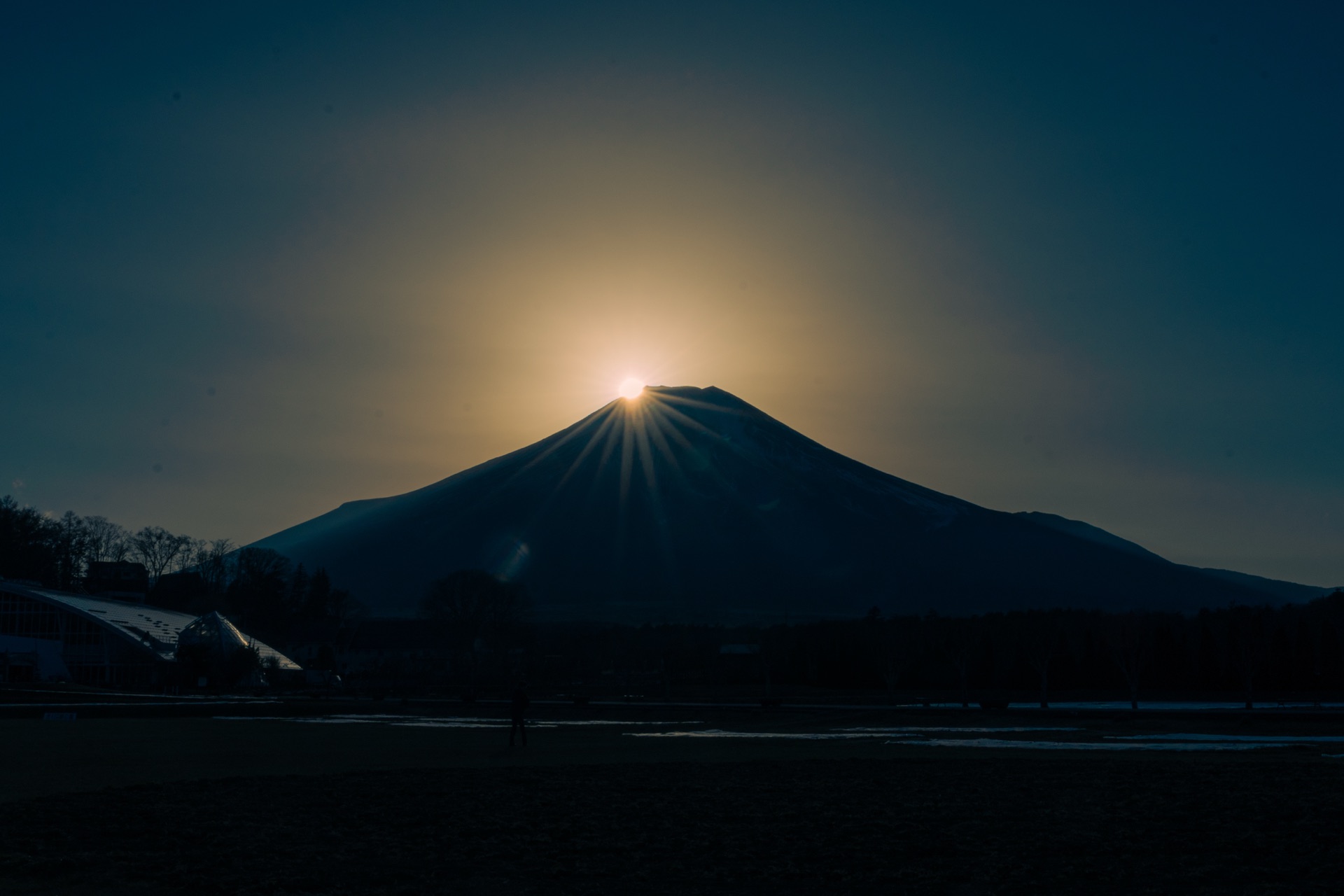
A wider frame from a similar moment. The crowd is part of the experience — most spots get a small group of locals at the right window.
The Same Phenomenon, Six Different Settings
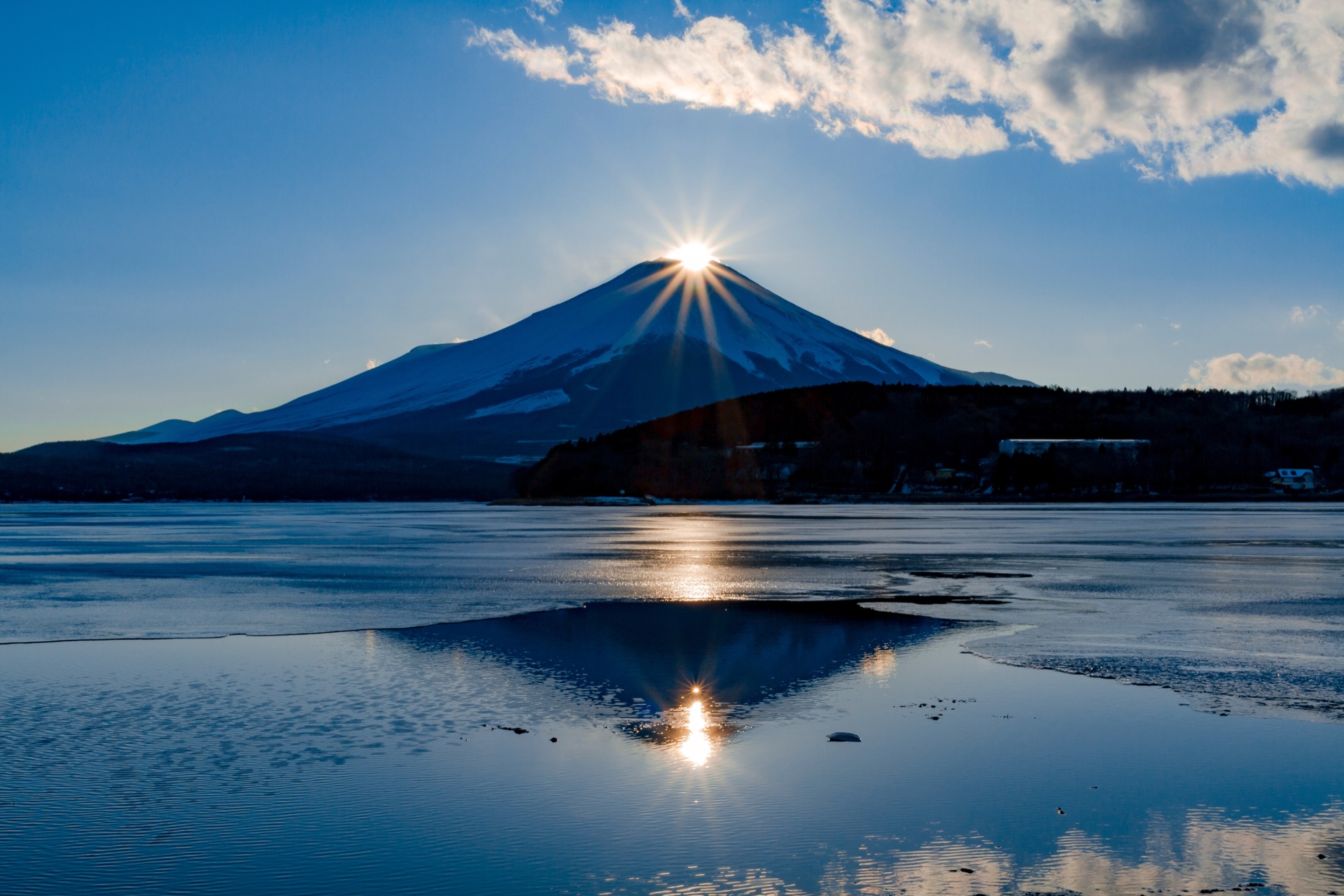
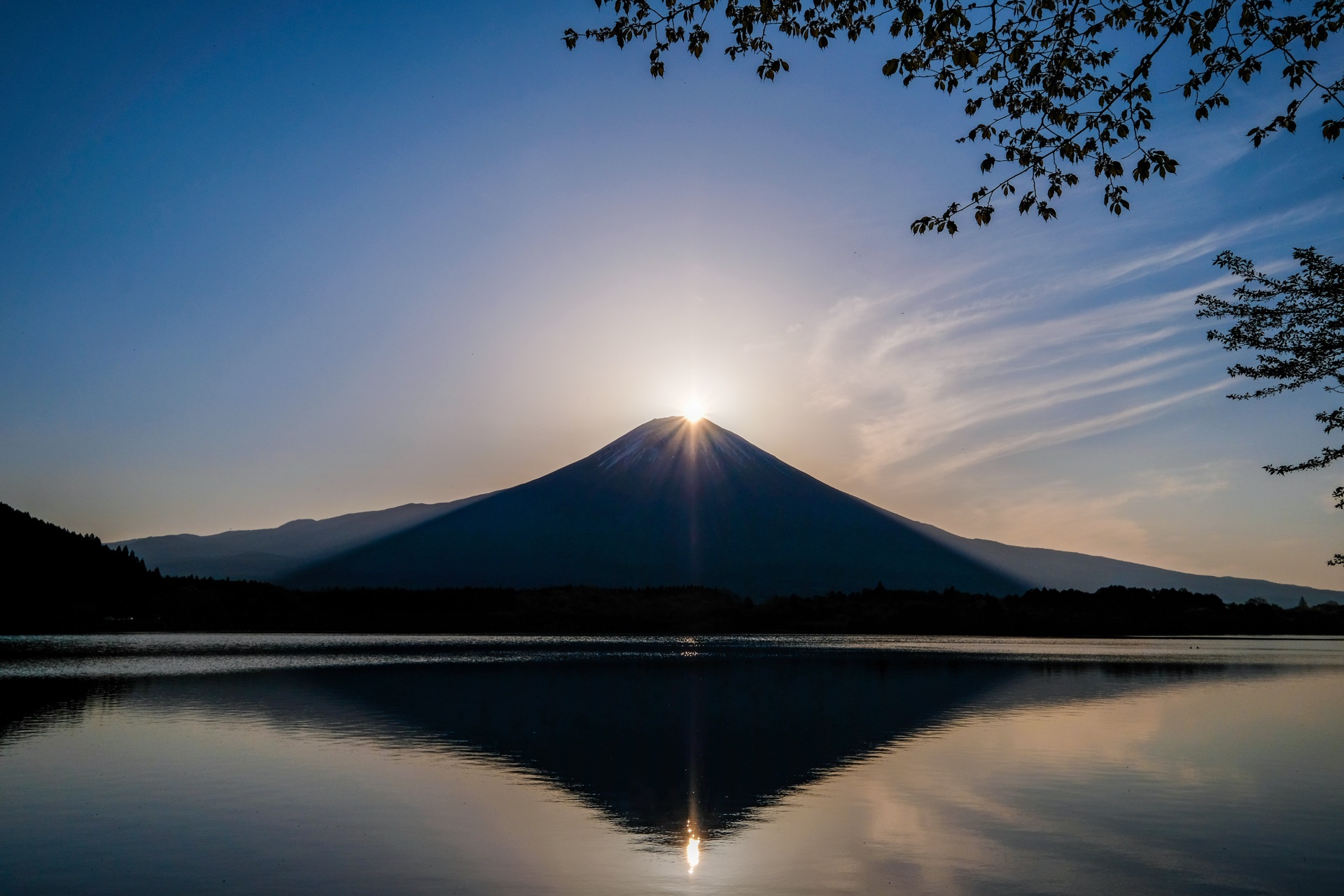
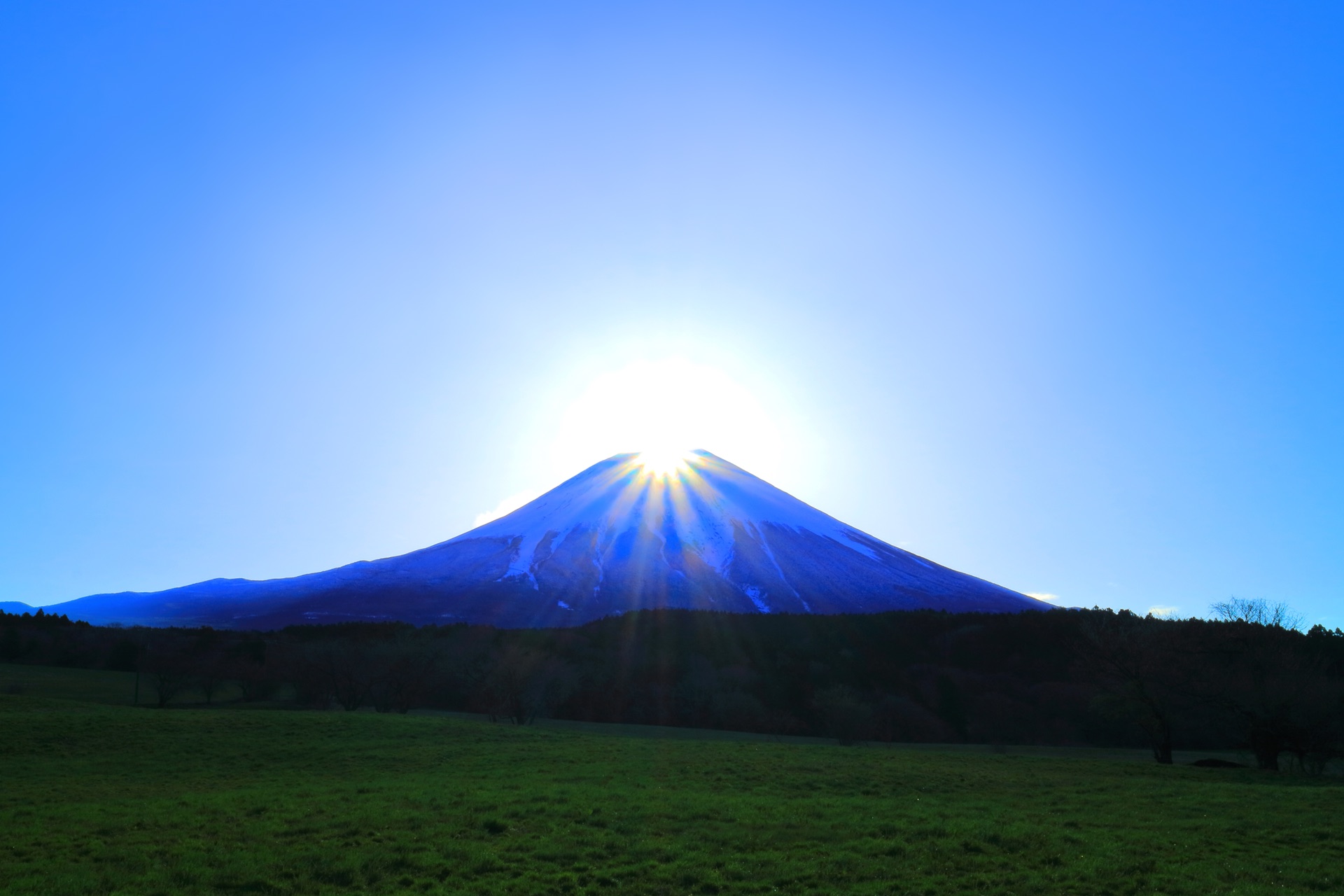
Diamond Fuji looks different from each region because the foreground changes everything. Same sun, same summit, same 30 seconds — but the photographs read like different events depending on where you stand. Six versions, briefly:
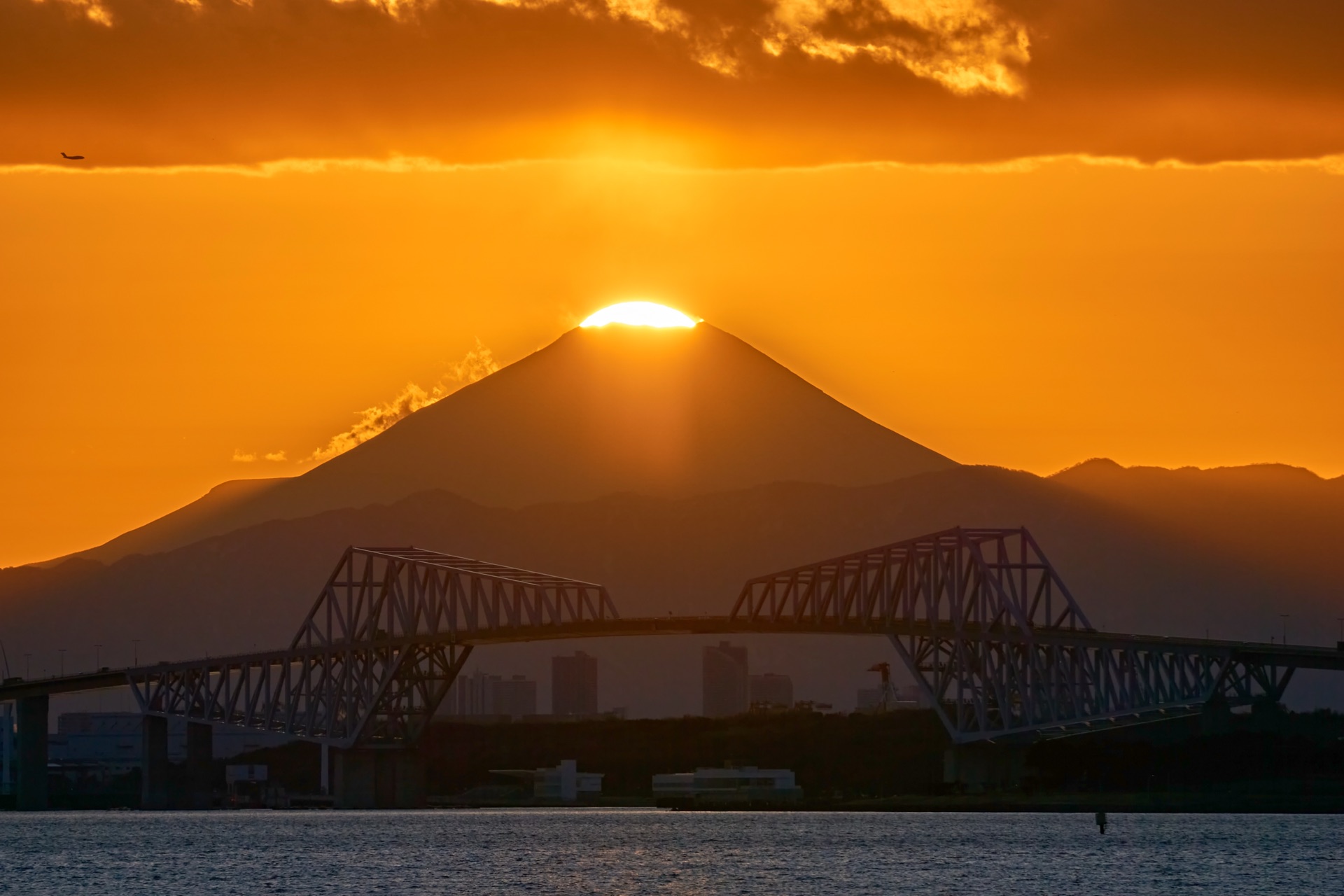
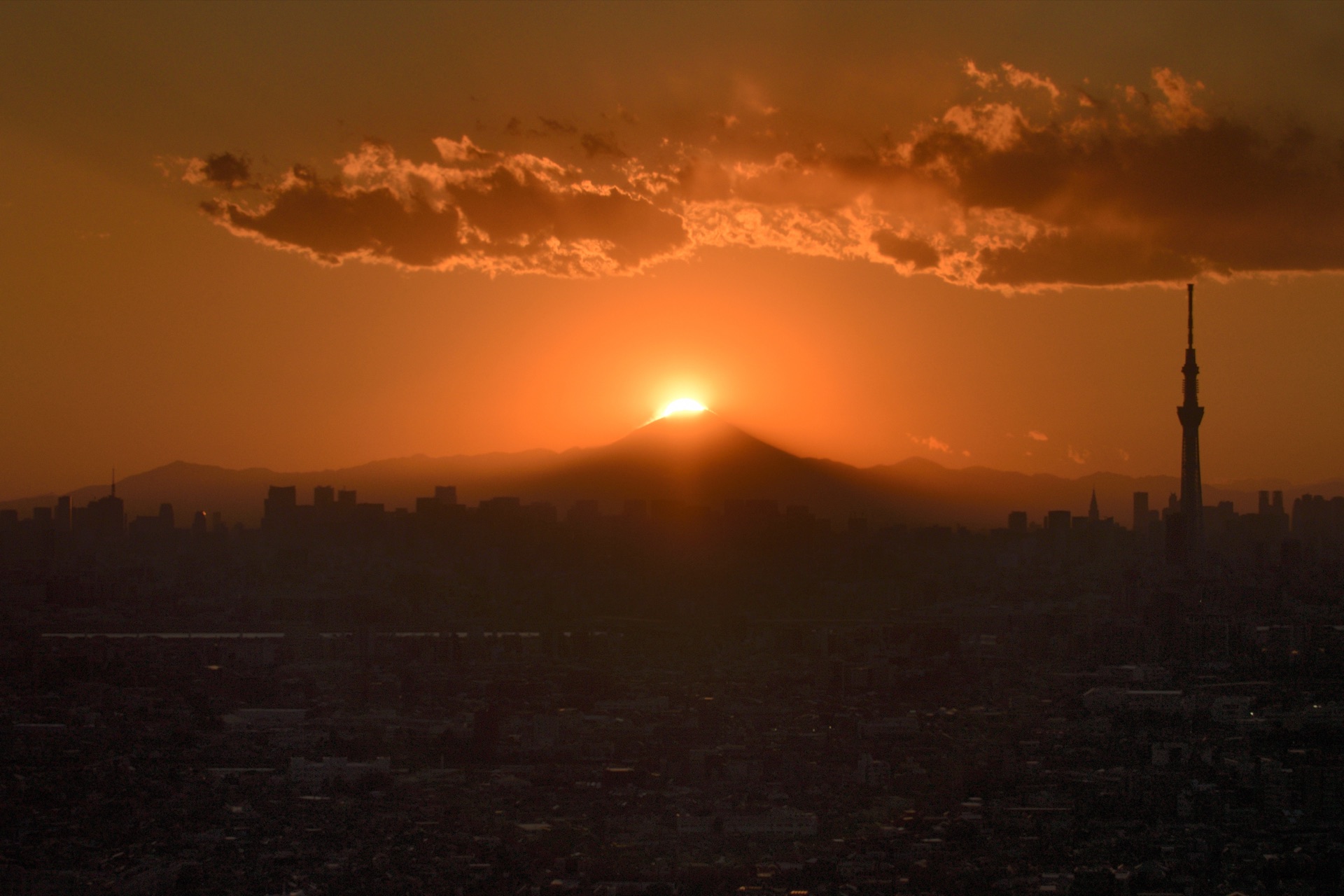
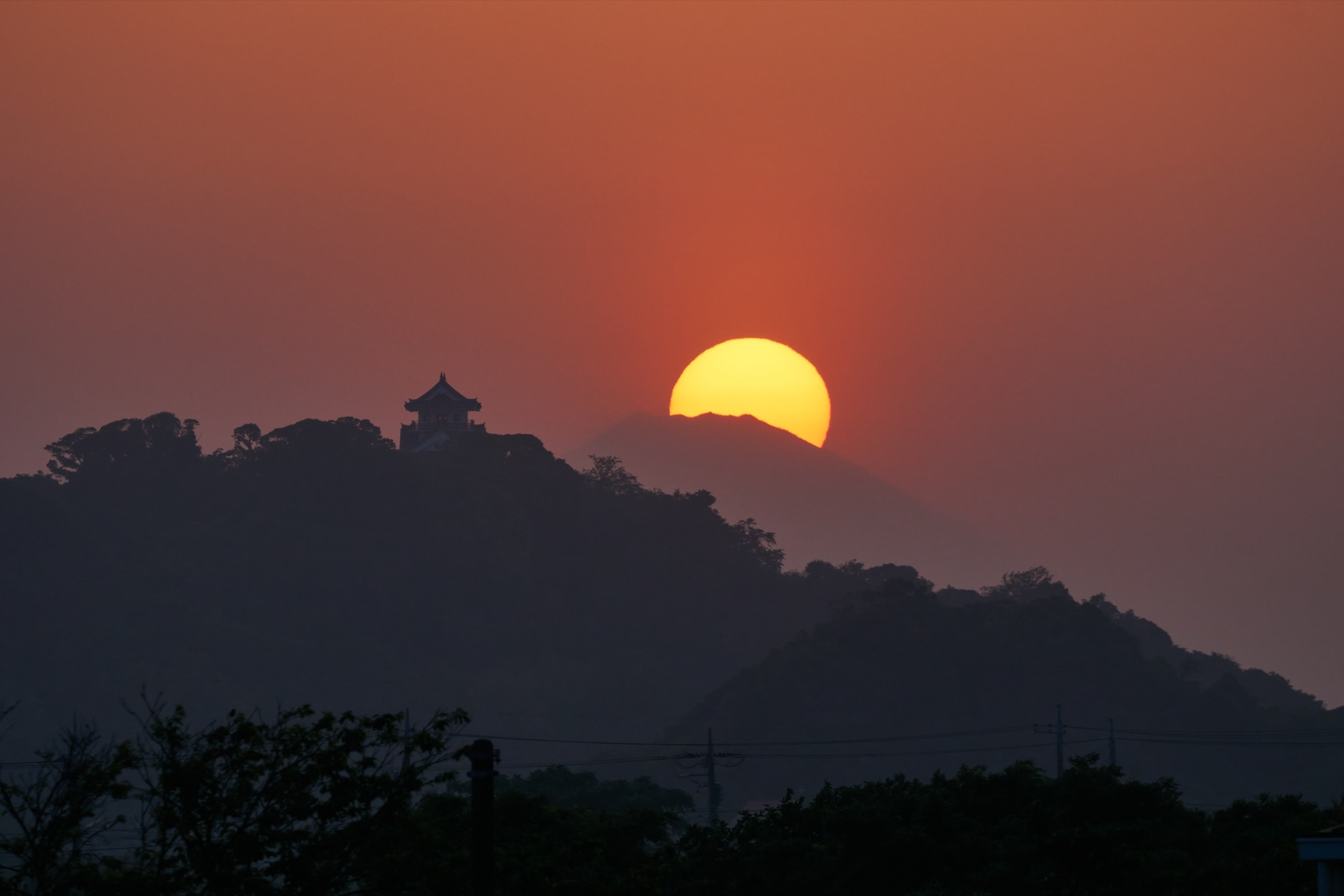
By Region
山梨 · Yamanashi
Lake Yamanaka & West Fuji
The most active region for Diamond Fuji, with 9 official lakeshore spots plus inland areas. The “Diamond Fuji Weeks” festival in February draws thousands.
- Panorama-dai — the marquee spot, mountain view
- Asahigaoka Lakeshore — water reflection
- Hana no Miyako Park — flower foreground
静岡 · Shizuoka
Tanuki & Asagiri Plateau
The west-side viewing area for sunrise Diamond Fuji. Less famous, less crowded, photographically stronger because of the open field foregrounds.
- Tanuki Lake — reflective water + dawn
- Asagiri Plateau R139 — open field
- Fuji City bay — coastal angle
神奈川 · Kanagawa
Tanzawa & Shonan Coast
The middle-distance viewing band. Tanzawa peaks for sunset Diamond in mid-December; Shonan coast for sunrise in mid-January.
- Mt. Hiruga-take — Tanzawa highest peak
- Enoshima Lighthouse — coastal panorama
- Shichirigahama — beach + Fuji silhouette
東京 · Tokyo
Mt. Takao & Urban Spots
The most accessible sunset Diamond Fuji from a major city. Mt. Takao’s window is December 17–26 around the winter solstice. Some downtown high-rises also align.
- Mt. Takao Summit — mid-December sunset
- Roppongi Hills Sky Deck — observation, Feb
- Arakawa Riverside — Feb sunset, multiple spots
千葉 · Chiba
Tokyo Bay East
The Chiba City bayfront, ~85 km from Mt. Fuji. Two narrow sunset windows: late October and around February 18-27, with the date sliding by a day for each beach as you move down the bay. The bay-water reflection is a unique feature, and the February dates coincide with the Chiba City “Diamond Fuji Days” festival.
- Inageo no Hama — Chiba City beach
- Makuhari Bay — Tokyo Bay sunset
- Funabashi Sandbar — when the tide is out
南房総 · Minami-Boso
Spring & Summer Sunset
The most under-covered Diamond Fuji geography in Japan. The southern tip of the Boso peninsula sits at a lower latitude than Mt. Fuji and looks west across Tokyo Bay, which means the sun crosses the Fuji-line in late April to late May and again in mid-July to mid-August — not winter. Sunset Diamond Fuji over the sea, in t-shirt weather, off mostly-empty beaches.
- Iwai Beach — Apr 29-30 (spring) / late July (summer)
- Haraoka Beach — May 6-7
- Daibo Misaki — May 8
- Hojo Beach (Tateyama) — May 12-14
- Nagisa Sta. Tateyama / Sunset Pier — May 15
- Shiroyama Park — May 16-17
- Okinoshima Park — May 17
If You Can Only Go Once: 5 Spots
The classic · YamanakaPanorama-dai
The most-photographed Diamond Fuji spot in Japan. A mountain pull-off with full Lake Yamanaka and Mt. Fuji panorama. Sunset Diamond visible Oct 16 – Feb 25, with the best dates around the early February window.
The accessible · TokyoMt. Takao Summit
The closest Diamond Fuji to central Tokyo. Cable car runs late December for the season, summit observatory and Momiji Plateau both work. The window is roughly Dec 17–26 with the absolute peak on the winter solstice.
The reflection · YamanakaHana no Miyako Park
A flower park at the base of Mt. Fuji with foreground tulips/cosmos depending on season. The Diamond Fuji window here is short (late November to mid-January) but the foreground gives the most photographically rewarding frame in the entire region.
The dawn version · ShizuokaTanuki Lake at Sunrise
The west side of Mt. Fuji. The phenomenon is the same but in reverse — the sun emerges from behind the summit at dawn, with reflection on the lake. Spring/summer (April–August) only.
The sea view · ChibaMakuhari Bay
Mt. Fuji is ~100 km away across Tokyo Bay. The summit is a tiny silhouette but the sun, the bay, and the silhouette together produce a uniquely Tokyo-area image. Two short windows: late October and mid-February.
Photography Setup
Camera setup
What works for the 30-second window
Focal length
200–600 mm
Aperture
f/8 – f/11
Shutter
1/2000 – 1/4000 s
ISO
100 – 400
Tripod
Required
ND filter
Optional ND8
The window is short. The sun touches the summit, sits on it for ~30 seconds, then drops behind. Pre-frame your shot 30 minutes early. Use bracketing (-2, 0, +2 EV) to handle the extreme dynamic range. Don’t switch lenses during the event.
⚠ Eye safety: Even at golden-hour brightness, looking at the sun through a telephoto lens can damage your eyes and your camera sensor. Use Live View on the LCD, not the optical viewfinder. Keep the lens cap on between shots while pre-framing.
Practical Considerations
Combine With
Frequently Asked Questions
What exactly is Diamond Fuji?
Diamond Fuji is the moment when the rising or setting sun appears to sit exactly on the summit of Mt. Fuji, creating a diamond-like brilliance. It’s a geometric coincidence that occurs at any given viewing point only twice per year. Photographs typically show a single bright burst on the peak with rays radiating outward — the “diamond” effect.
When is Diamond Fuji season?
For sunset Diamond Fuji from east-side spots: roughly mid-October through late February. For sunrise Diamond Fuji from west-side spots: roughly April through August. Each individual viewing point has a much narrower window of about 2 days each occurrence.
Where is the best place to see Diamond Fuji?
For first-timers, Lake Yamanaka in Yamanashi is the most reliable. The Panorama-dai pull-off has the longest viewing window (Oct 16 to Feb 25) and is the most famous spot. For Tokyo-based travelers without a car, Mt. Takao is the most accessible — its window is around the winter solstice (Dec 17–26).
Do I need a special permit?
No. All major Diamond Fuji viewing spots are publicly accessible. Some require park admission (Hana no Miyako Park, etc.) but most are free. Mt. Takao requires a cable car ticket if you don’t want to hike.
How likely is it that I’ll actually see Diamond Fuji on a given day?
If your date is correctly aligned with a viewing spot, the only remaining variable is weather. Mt. Fuji is statistically visible about 50% of winter days from Yamanaka, less from Tokyo. Plan for at least a 2-day visit to your spot if you can — gives you a backup day.
What gear do I need?
Minimum: a camera with a 200–400mm lens, a sturdy tripod, a remote shutter or 2-second self-timer, and warm clothes. Aperture f/8–f/11, shutter 1/2000–1/4000s, ISO 100–400 are good starting points. Use Live View, not the optical viewfinder, to protect your eyes.
Is Diamond Fuji the same as Pearl Fuji?
No. Diamond Fuji is the sun on Mt. Fuji’s summit. Pearl Fuji (パール富士) is the moon on the summit. Pearl Fuji is rarer because it requires the moon to be both at the right azimuth AND at the right phase to be visible above the summit. The same calendar sources track both.
What’s the deepest Yamanaka guide?
For a date-by-date guide to all 9 Lake Yamanaka viewing spots, see our Lake Yamanaka Diamond Fuji 9-Spot Guide. For Tokyo and accessible options, see our Diamond Fuji from Tokyo guide.
Final Thoughts
Diamond Fuji is the kind of experience Mt. Fuji rewards travelers willing to plan around dates instead of bucket-list landmarks. Show up at the wrong spot at the wrong time and you see a regular sunset. Show up correctly and you see something that has been photographed by Japanese landscape photographers for over a century — and that, on a clear evening, lasts about 30 seconds.
Pin the date, plan the spot, watch the weather, dress for the cold. The rest is timing. Once it happens, you understand why people drive three hours each way for the chance.
Join 1,000+ travelers discovering Japan's hidden side
Weekly dispatches from off-the-beaten-path Japan — spots and stories you won't find in guidebooks.
No spam. Unsubscribe anytime.
Welcome aboard!
You're in. See you in your inbox soon.