![A Night at Hoshinoya Kyoto: Boat Ride, Kaiseki & River Views [Stay Review]](https://hiddenjapan-gems.com/wp-content/uploads/2026/04/IMG_4741-scaled.webp)

2026 Update :
Hoshinoya Kyoto continues to operate its exclusive boat access from the Arashiyama pier. Due to the increasing popularity of the Arashiyama area, we highly recommend arriving at the private waiting lounge at least 30 minutes before your scheduled boat departure to enjoy the welcome tea and avoid the crowds. Boat wait times can reach up to 1 hour during peak autumn and cherry blossom seasons.
There are no cars here. No roads. No noise except the river and the occasional call of a bird. You arrive by boat, and for one night, Kyoto belongs only to you.
When you book a stay at Hoshinoya Kyoto, you are not just reserving a room. You are buying seclusion. Hidden deep in the Arashiyama gorge along the Oi River, this 25-room luxury ryokan is accessible only by a private wooden boat. As the founder of hiddenjapan-gems.com, I have stayed in many luxury properties across Japan, but the transition from the chaotic tourist streets of Arashiyama to the profound silence of this century-old former villa remains one of the most striking experiences in the country.
Is it worth over ¥200,000 for one night? I don’t know. But I know that three months later, I can still hear the sound of that river.
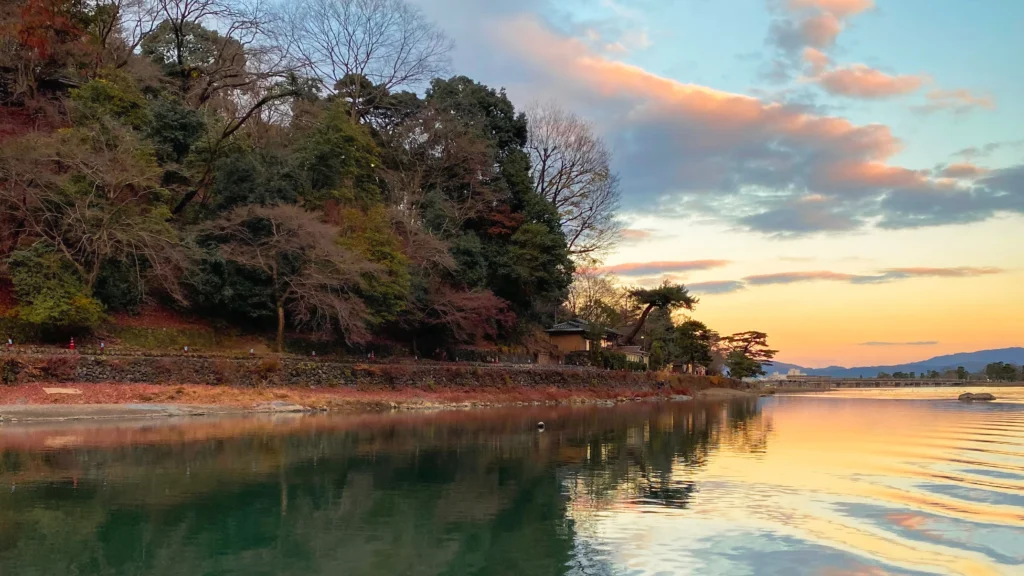
Table of Contents
Quick Facts: Hoshinoya Kyoto
| Detail | Information |
| Property | Hoshinoya Kyoto (星のや京都) |
| Rooms | 25 (all river view) |
| Room Rate | From ~¥76,000/night (room only) |
| Dinner | ¥24,200/person (kaiseki, 11 courses) |
| Breakfast | ~¥3,800/person (in-room hot pot) |
| Check-in / Out | 15:00 / 12:00 |
| Access | Private boat from Arashiyama (~15 min) |
| Onsen | None (private in-room hinoki tubs instead) |
| Best For | Anniversaries, honeymoons, once-in-a-lifetime stays |
| Book Here | Check availability on Trip.com |
How Do You Get to Hoshinoya Kyoto?
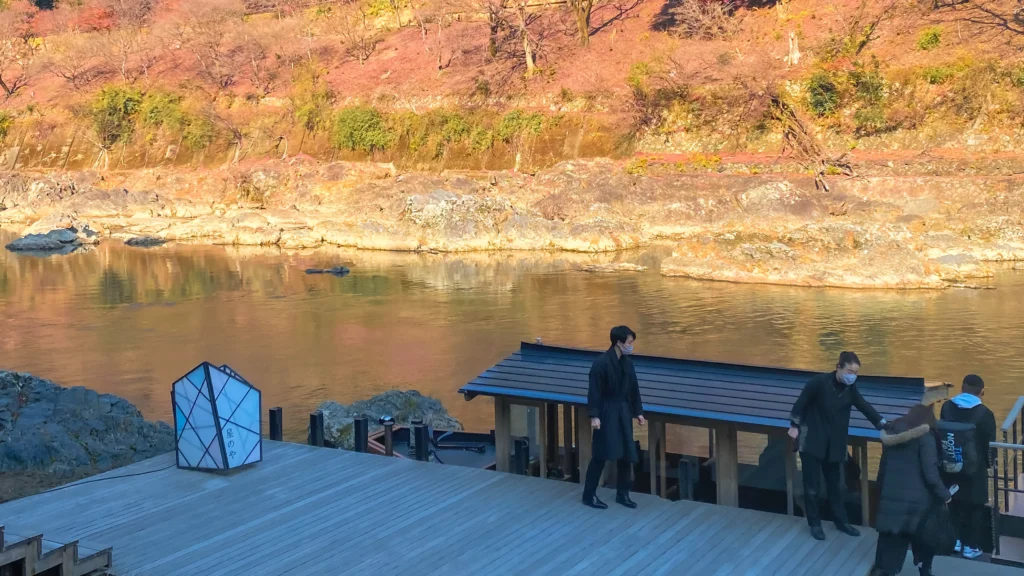
The experience starts before you even reach the property. Near the iconic Togetsukyo Bridge in Arashiyama, hidden away from the crowds, sits the Hoshinoya boat landing — the Funa Machiai (舟待合), located at Arashiyama Nakao Shimomachi 60, Nishikyo-ku, Kyoto.
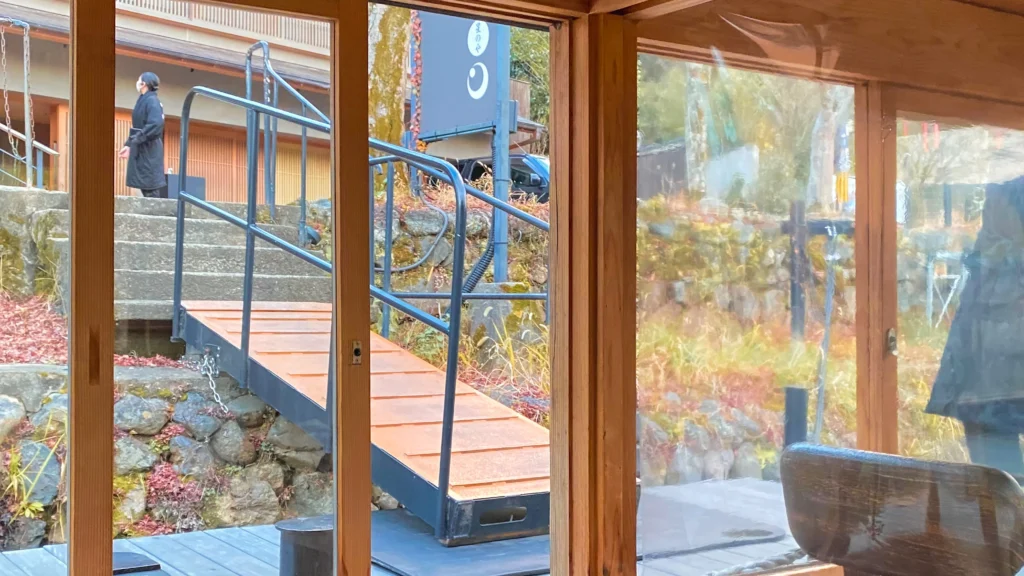
After checking in at the lounge, you are escorted to a traditional wooden boat. As the boat motors slowly up the Oi River, the noise of Arashiyama fades away. The 15-minute ride serves as a decompression ritual. The tourist crowds, the souvenir shops, the rickshaw drivers calling out — all of it dissolves behind you. By the time you reach the property, your breathing has already slowed.
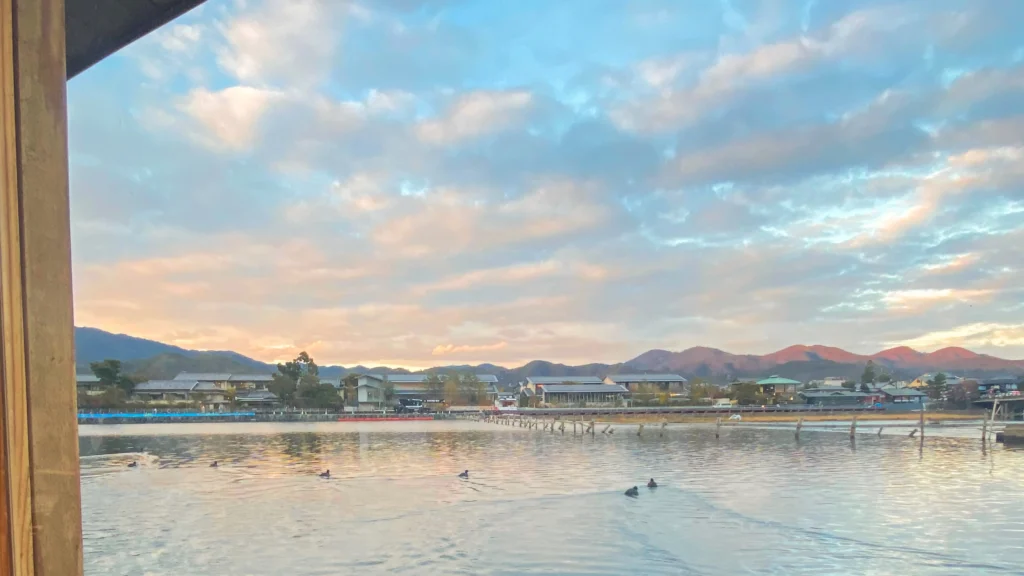
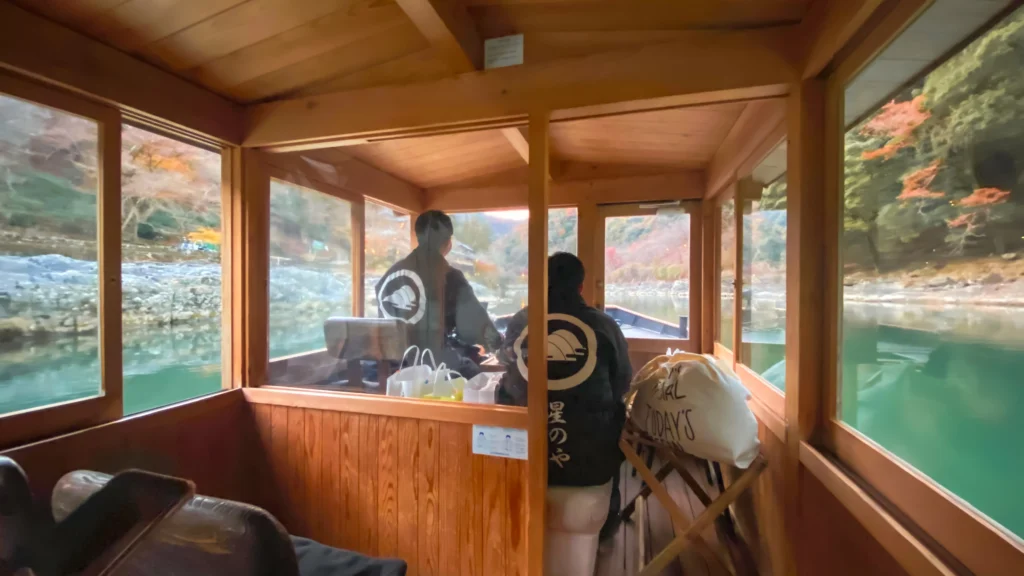
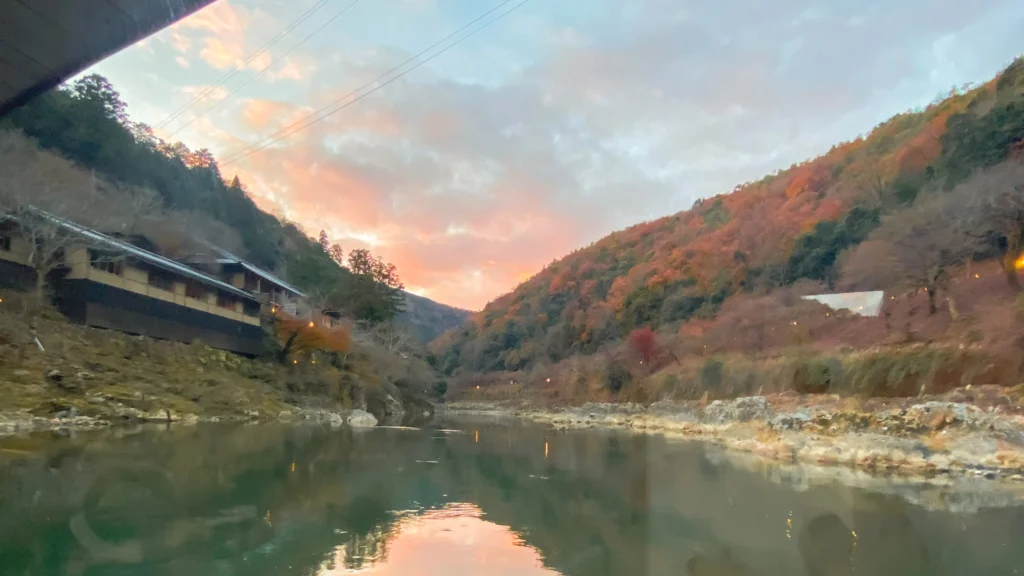
Through the glass windows, the ryokan eventually comes into view, built into the steep, forested hillside. That first glimpse through the autumn trees is the moment you understand what you are paying for.
Getting to Arashiyama: From Kyoto Station, take the JR Sagano Line to Saga-Arashiyama Station (17 minutes, ¥240). The Funa Machiai is a 15-minute walk south from the station, past Togetsukyo Bridge. If you are traveling from further afield, our guide on Getting Around Japan covers all major transport options. Visitors from Southeast Asia can fly direct to Kansai International Airport (KIX) on budget carriers like Scoot (Singapore), AirAsia (Kuala Lumpur), and Jetstar Asia (Bangkok), then take the Haruka Express to Kyoto Station (75 minutes, ¥3,640).
What Is It Like to Arrive at Hoshinoya Kyoto?
Stepping off the boat, you are greeted by staff on a private dock. The property is built into the hillside, requiring you to navigate a series of stone paths and stairways that wind through moss-covered gardens.
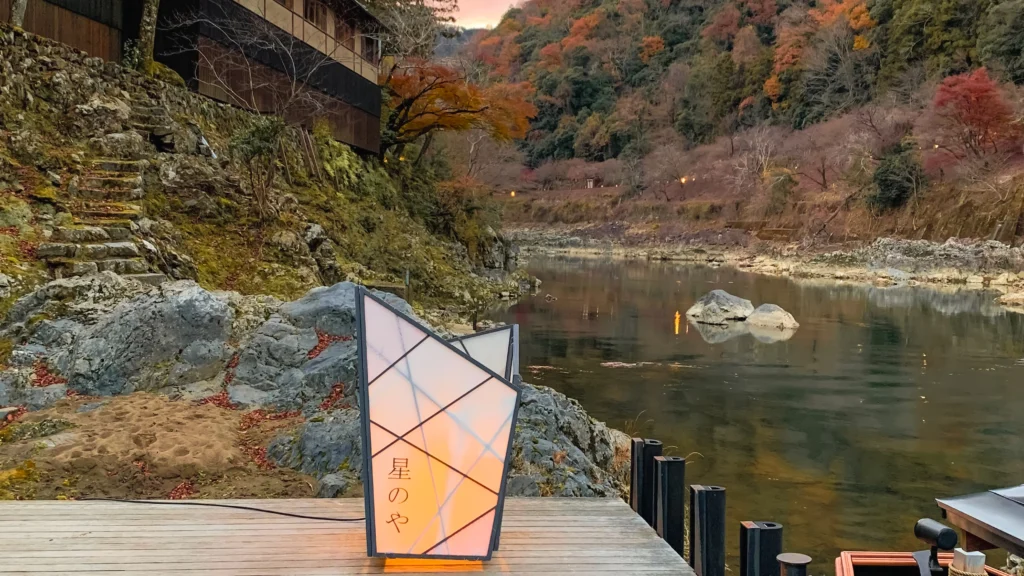
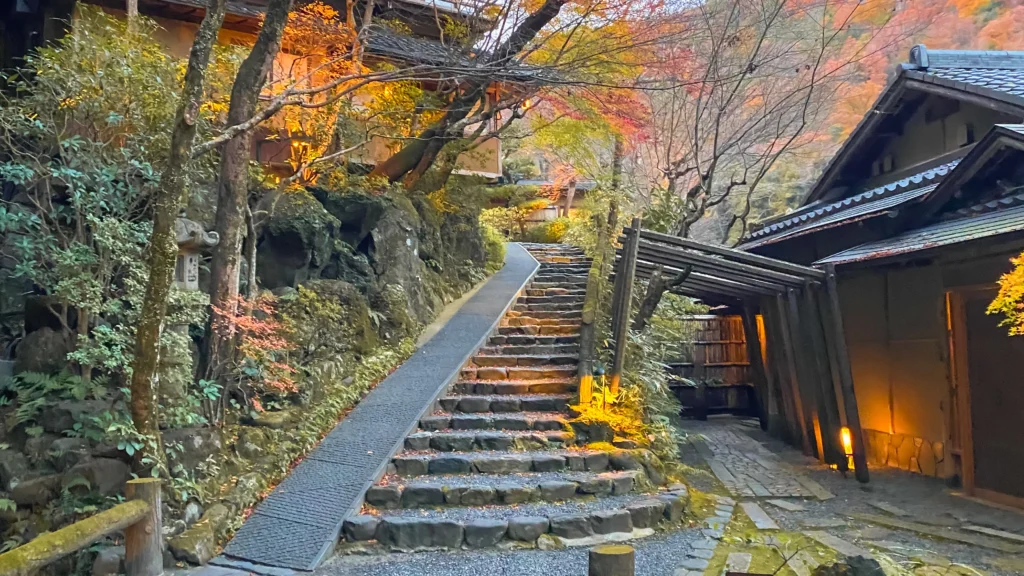
The architecture is a masterful renovation of the Rankyokaku (嵐峡館), a 100-year-old Meiji/Taisho-era villa. Opened as Hoshinoya Kyoto on December 12, 2009, the design seamlessly blends traditional Kyoto craftsmanship — like kyo-karakami (woodblock-printed paper) — with modern comforts. There are no cars, no traffic noise. Only the river and birdsong.
What Are the Rooms Like at Hoshinoya Kyoto?
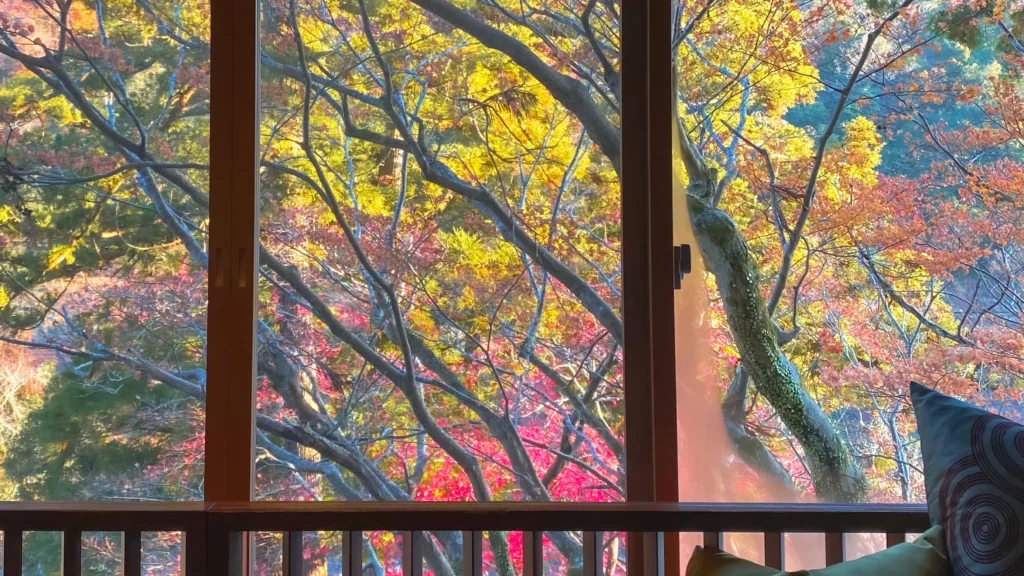
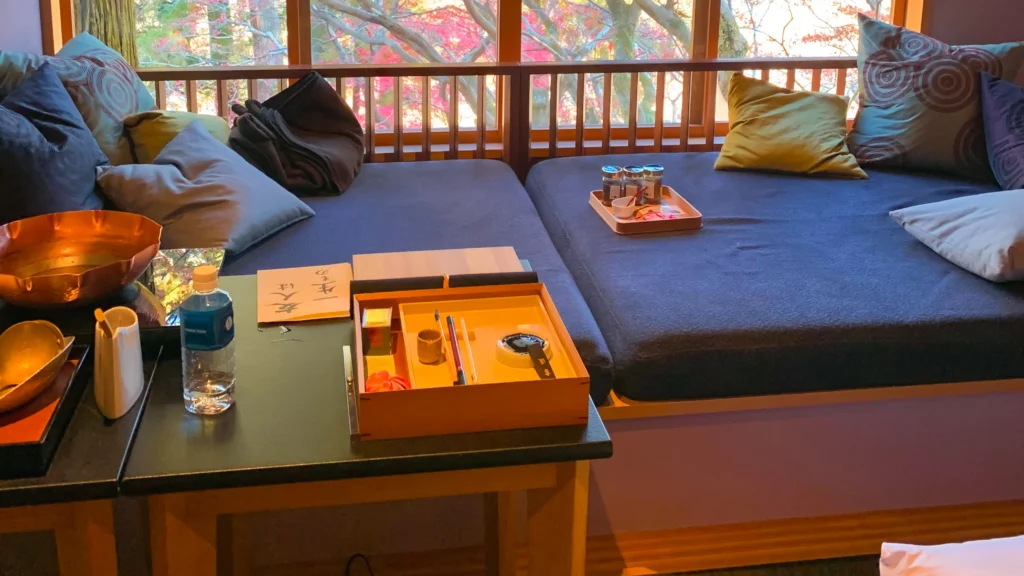
Every single one of the 25 rooms faces the Oi River. There are no compromises here, no “garden view” consolation prizes.
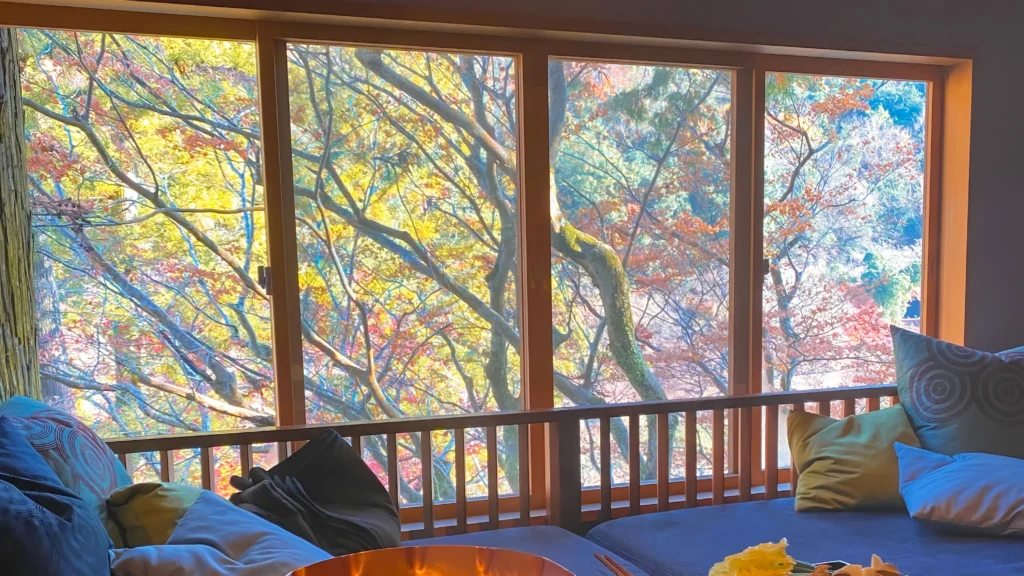
The centerpiece of the room is the “Tatami Sofa,” a modern interpretation of traditional floor seating that allows you to lounge comfortably while watching the river flow by. The lighting is intentionally dim — designed for atmosphere and relaxation rather than reading. This is a deliberate choice, and one that may frustrate guests who prefer brighter spaces.
Room Types and Pricing
| Room Type | Size | Starting Price | Features |
| Mizunone (水の音) | 33-36 m² | ~¥76,000/night | Compact, river view, hinoki tub |
| Tanigasumi (谷霞) | 42-68 m² | ~¥95,000/night | Mid-range, river view, hinoki tub |
| Yamanoha (山の端) | ~76 m² | ~¥110,000/night | Tatami, river view, hinoki tub |
| Tsukihashi (月橋) | ~81 m² | ~¥130,000/night | Premium suite, panoramic river view |
One thing to note: there is no onsen (public hot spring) at Hoshinoya Kyoto, which is a notable absence at this price point. Instead, each room features a deep, private hinoki (cypress) wooden tub with seasonal herbal baths. Amenities are by Hokuroku Sousui (北麓草水). For first-time ryokan guests, our guide to 10 Things That Might Surprise You at a Japanese Ryokan is essential reading.
What Activities Are Available at Hoshinoya Kyoto?
In-Room Calligraphy: Ink, Brush, Silence
To help guests disconnect, the room includes a traditional calligraphy set.
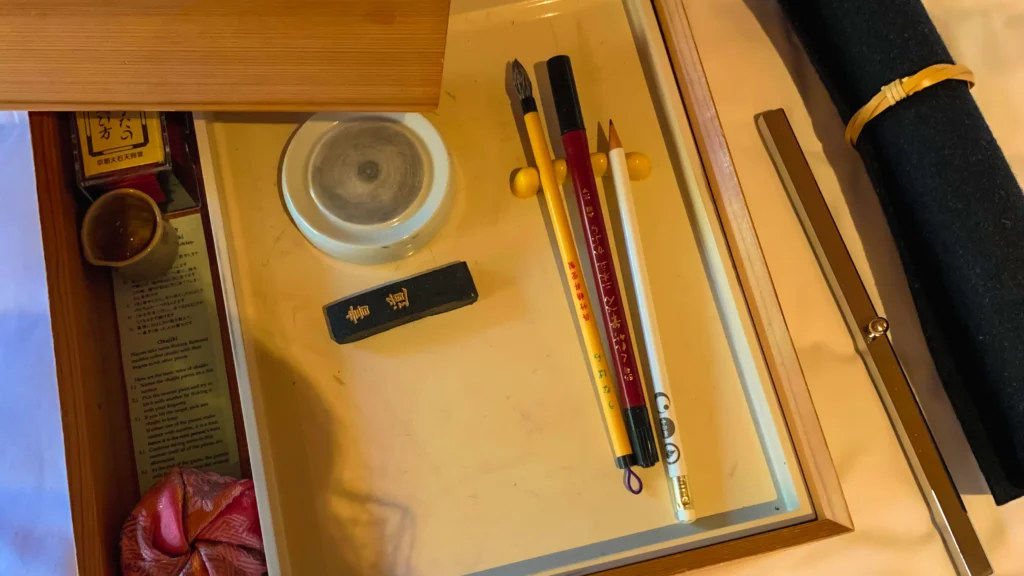
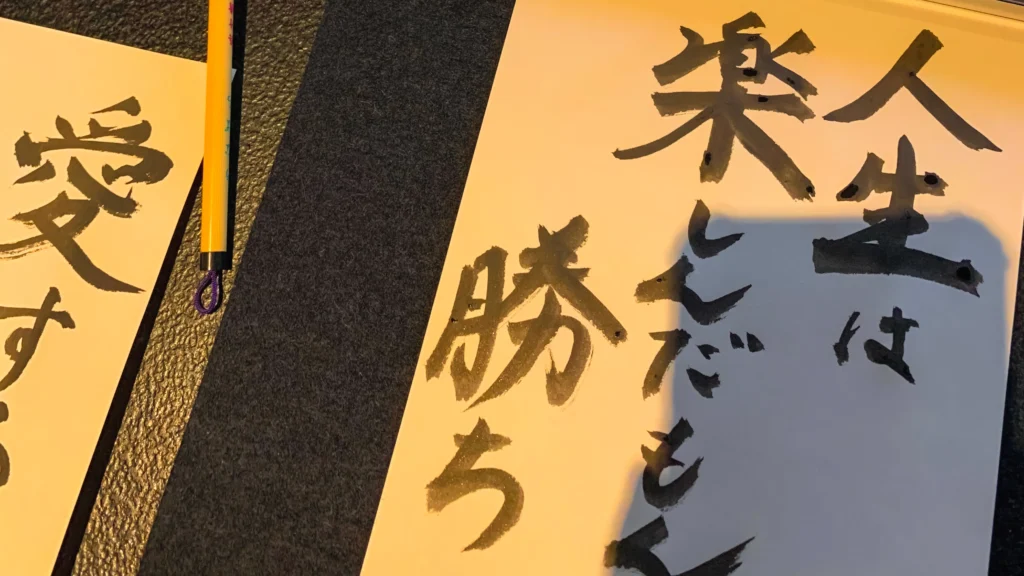
Grinding the ink stick against the stone becomes a meditative practice. You are not meant to create a masterpiece; you are meant to focus on the present moment. The sound of the ink grinding, the smell of the sumi, the river outside — it all merges into a single, quiet experience.
Paid Activities
| Activity | Price | Notes |
| Monko incense ceremony | ¥3,388 | Traditional fragrance appreciation |
| Karakami card-making | ¥3,388 | Woodblock-printed Kyoto paper craft |
| Morning worship at Daitoku-ji | ¥15,427 | Guided temple visit with a monk |
| Cormorant fishing boat dinner | ¥58,300 | Summer only (June-September) |
| Autumn boat breakfast | ¥82,000-97,000 | Seasonal special, limited availability |
For more Arashiyama activities, consider visiting Daikakuji Temple, a stunning lakeside temple just 20 minutes north of the property.
What Is the Evening Like at Hoshinoya Kyoto?
As night falls, the property transforms. The stone paths are lit by low lanterns, and the silence becomes even more profound. The river, invisible in the darkness, makes its presence known only through sound.
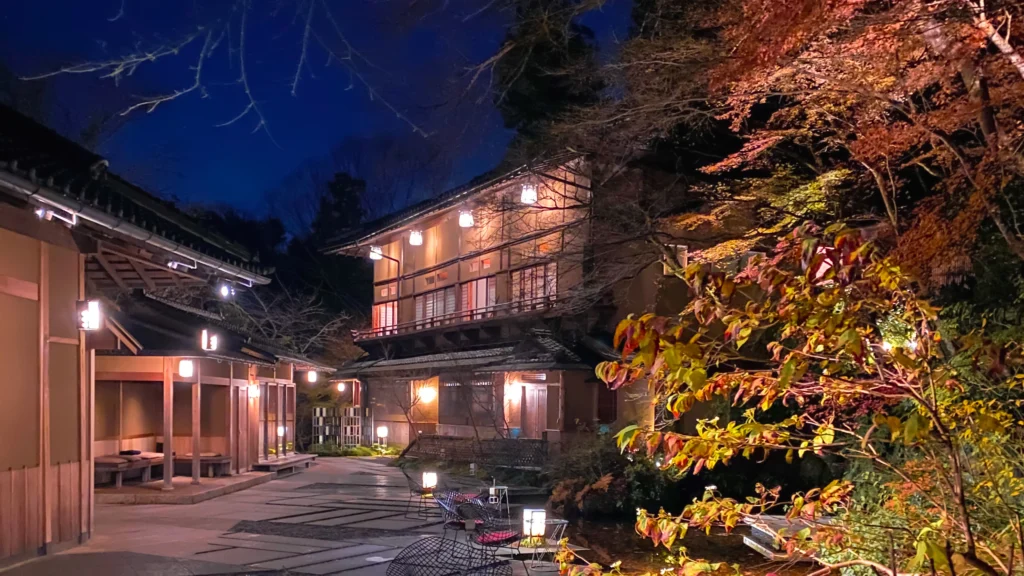
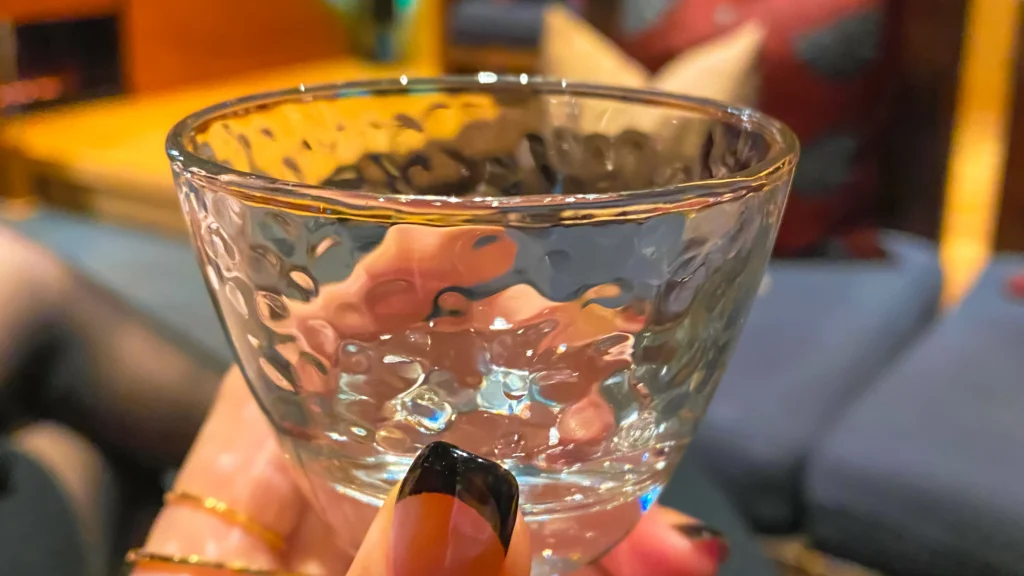
Before dinner, you can visit Salon & Bar Kura (サロン&バー蔵), a converted kura (storehouse) that serves free coffee and sweets during the day and transitions to a bar in the evening. The Library Lounge, curated by the famous Keibunsha Ichijoji bookshop, is open 24 hours with free drinks. And the Sky Tea Room (空中茶室), a wooden deck suspended over the river, offers free matcha from Uji between 7 AM and 10 PM.
What Is the Food Like at Hoshinoya Kyoto?
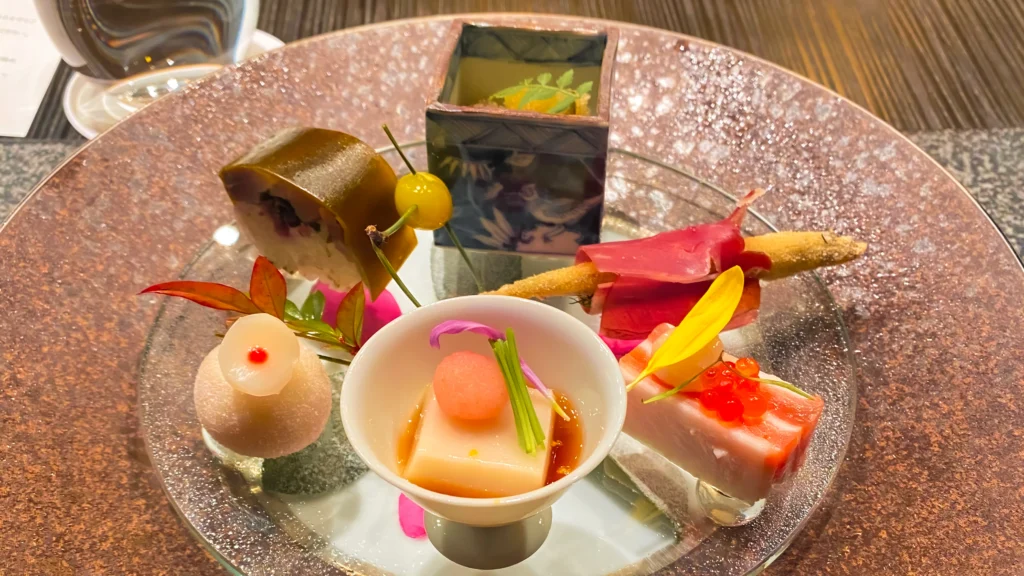
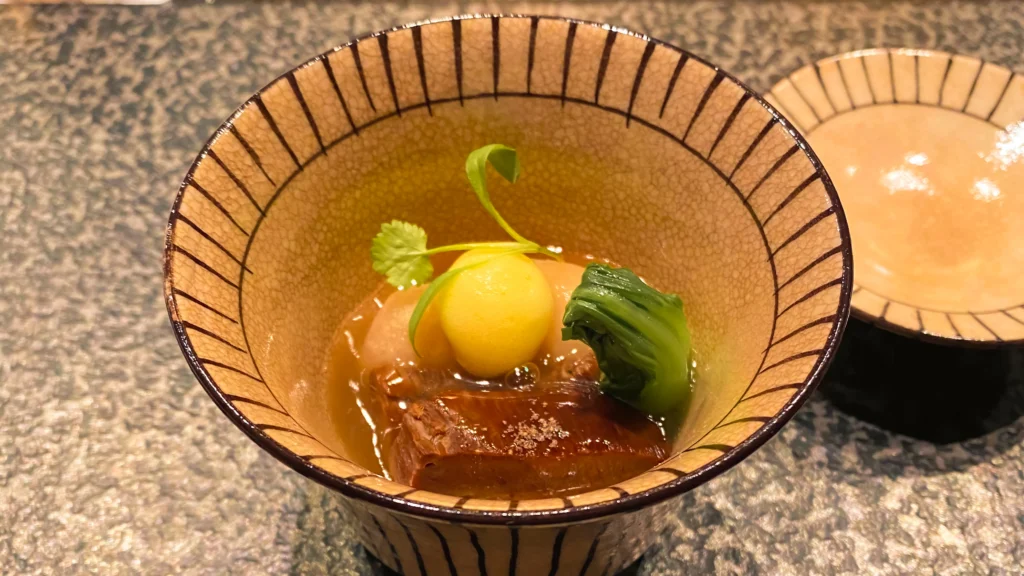
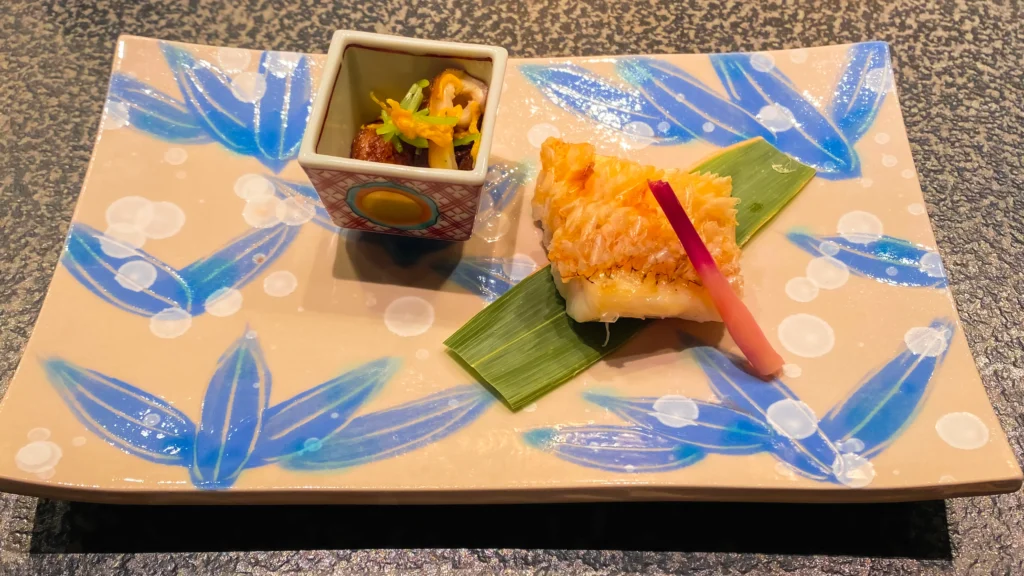
The kaiseki dinner was eleven courses. Each dish arrived like a small painting — autumn leaves, river stones, cedar wood, golden broth. I stopped counting and started feeling.
Dinner is not included in the room rate (a system known as Hakushoku Bunri 泊食分離), but dining here is essential. The concept is “Gomi Jizai” (五味自在) — a seasonal kaiseki that blends Japanese tradition with modern touches, heavily featuring Kyoyasai (京野菜, Kyoto-grown vegetables). At ¥24,200 per person, it is not cheap. But it is one of the most memorable meals I have had in Japan.
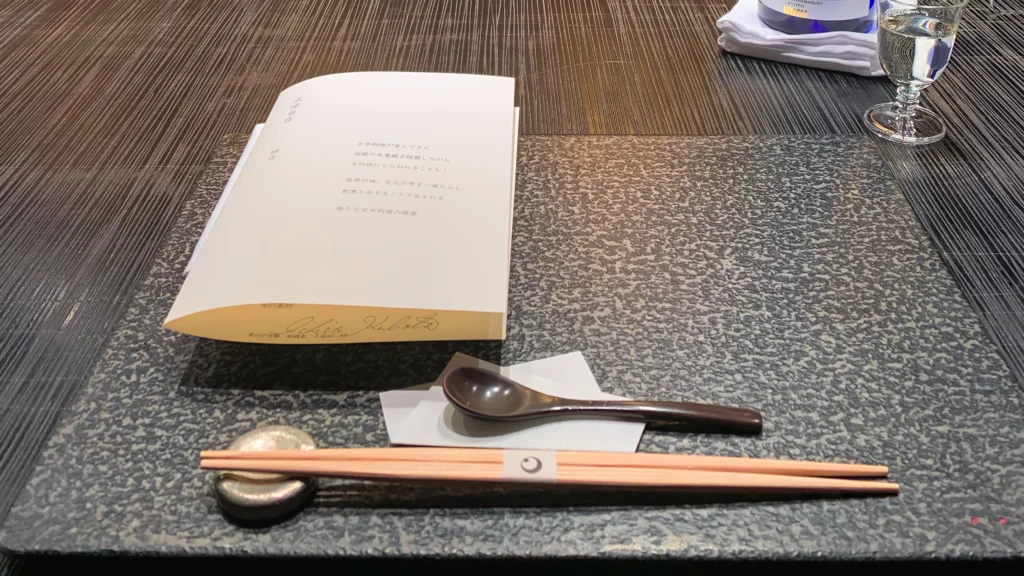
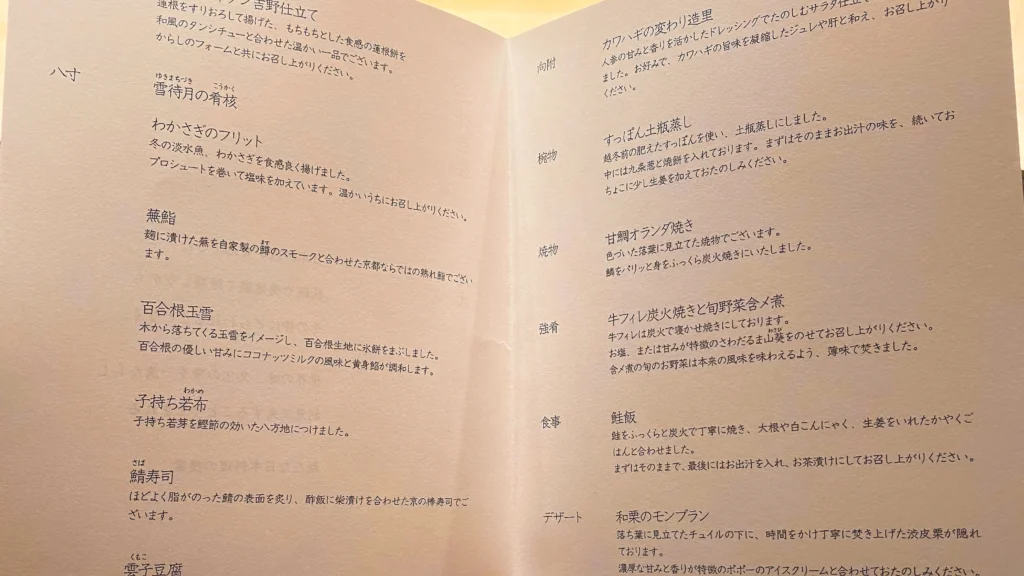
The meal unfolds at a leisurely pace — expect two to two and a half hours from start to finish. The service pace is slow, deliberately so. Everything here runs on river time, which can frustrate impatient guests but rewards those who surrender to it.
The Hassun (Seasonal Appetizer)
The Nimono (Simmered Dish)
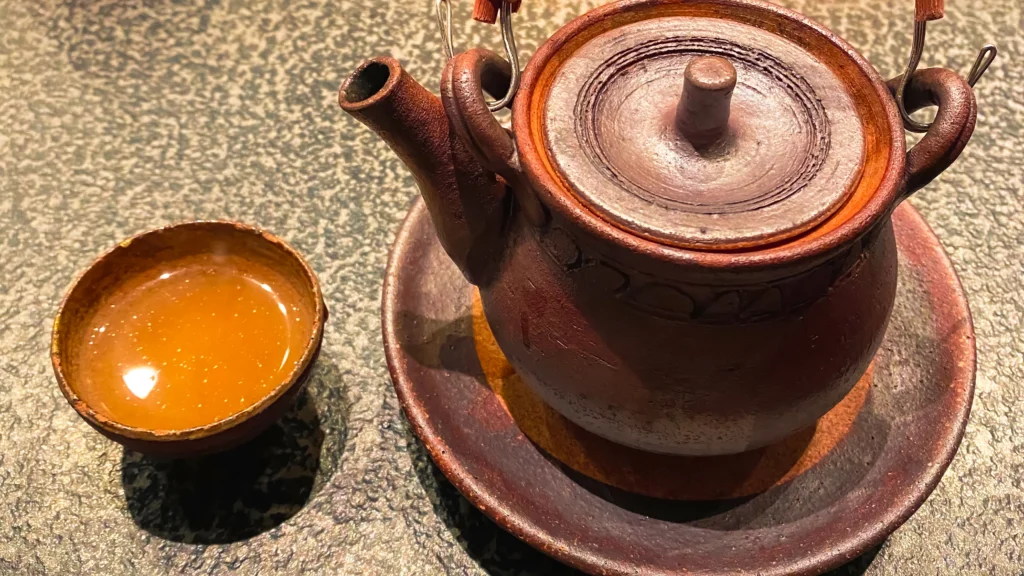
The Dobin-mushi (Broth)
The Dobin-mushi offers a pure, concentrated taste of seasonal ingredients. You pour the golden dashi from an earthenware teapot into a tiny cup and drink it like tea.
The Yakimono (Grilled Dish)
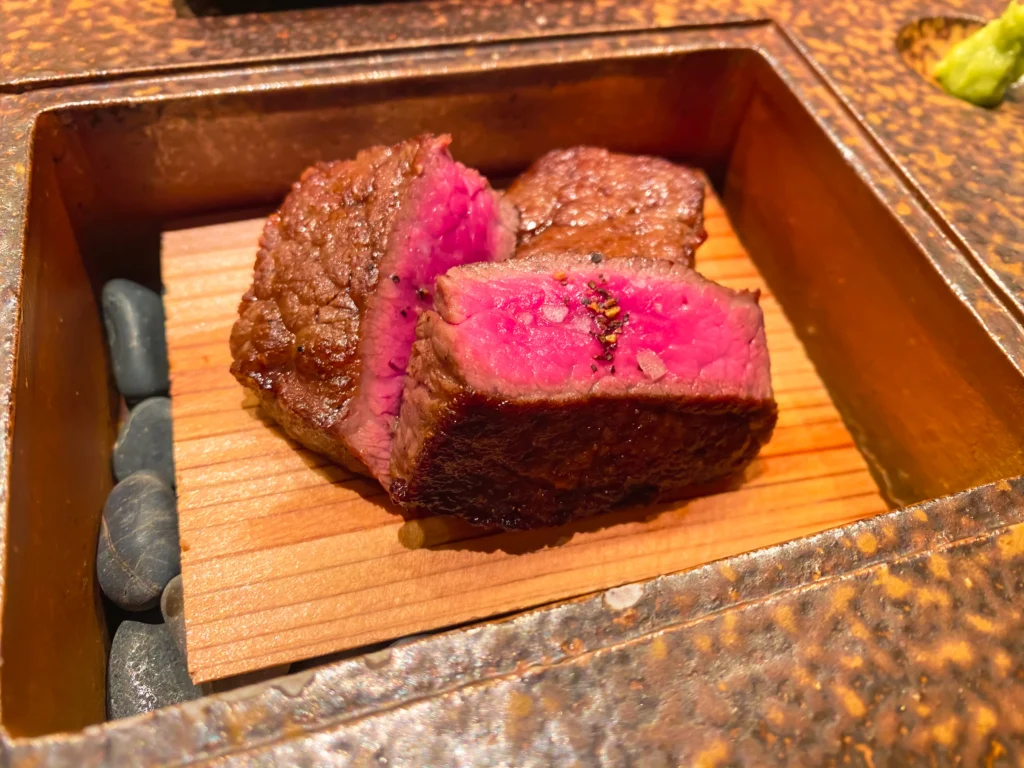
The Wagyu
The absolute highlight. Served dramatically on heated river stones, the wagyu was seared to a perfect rare pink with visible marbling throughout. A dab of fresh wasabi on the side.
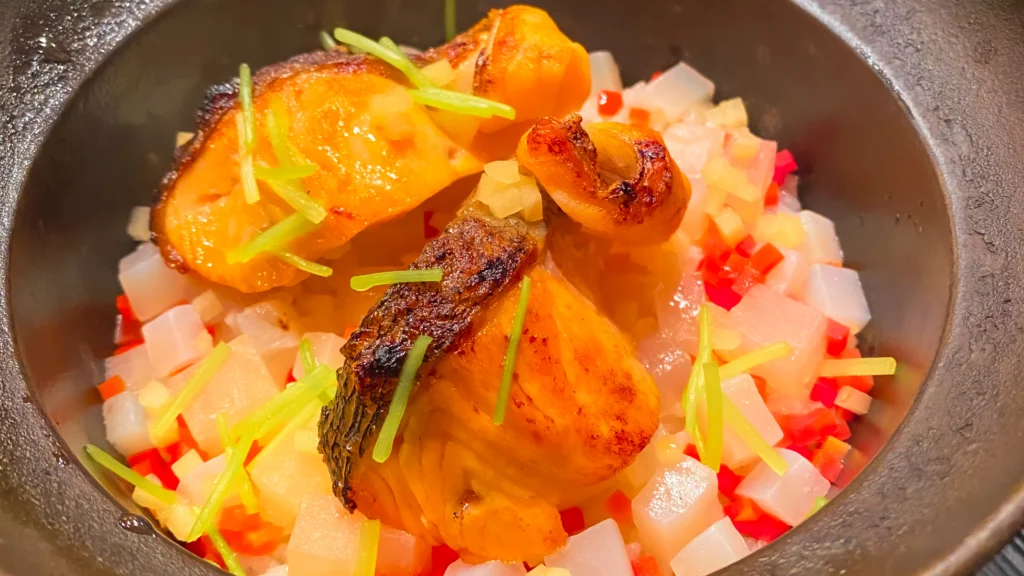
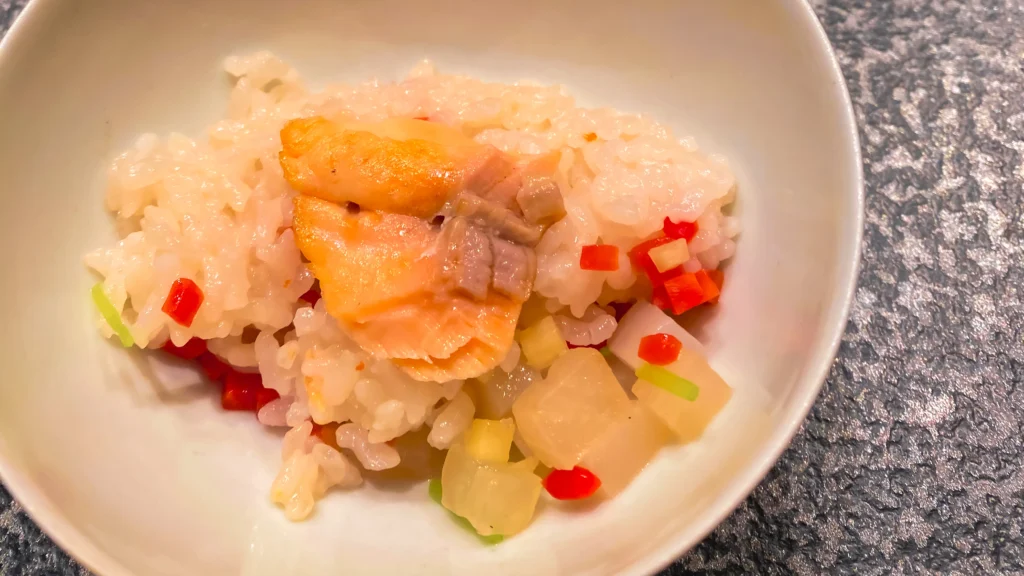
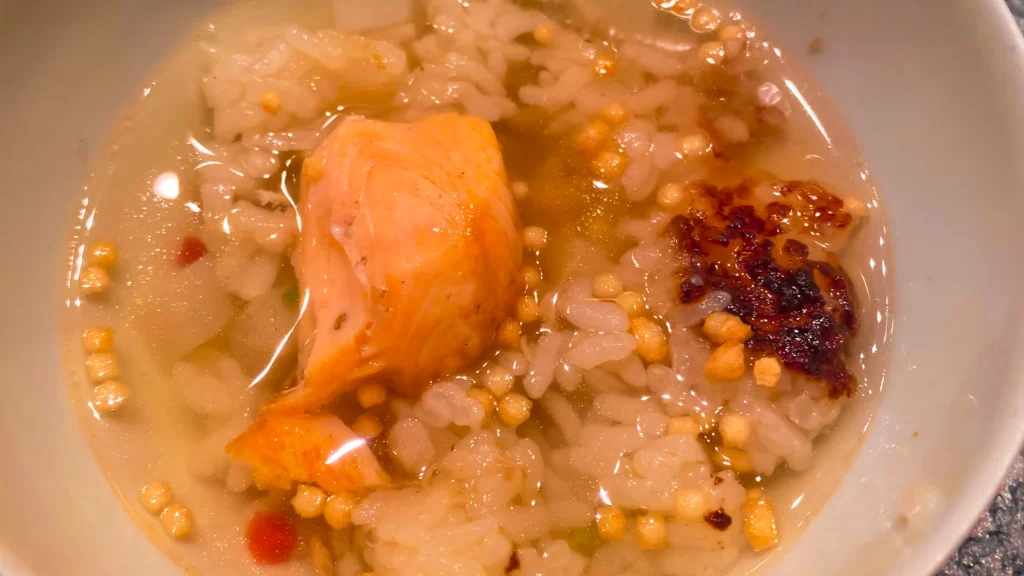
The Rice Course: Three Ways
The rice course (Gohan) is served in three stages. First, eat it plain with the seared fish. Then, add condiments. Finally, pour broth over it for a warming ochazuke.
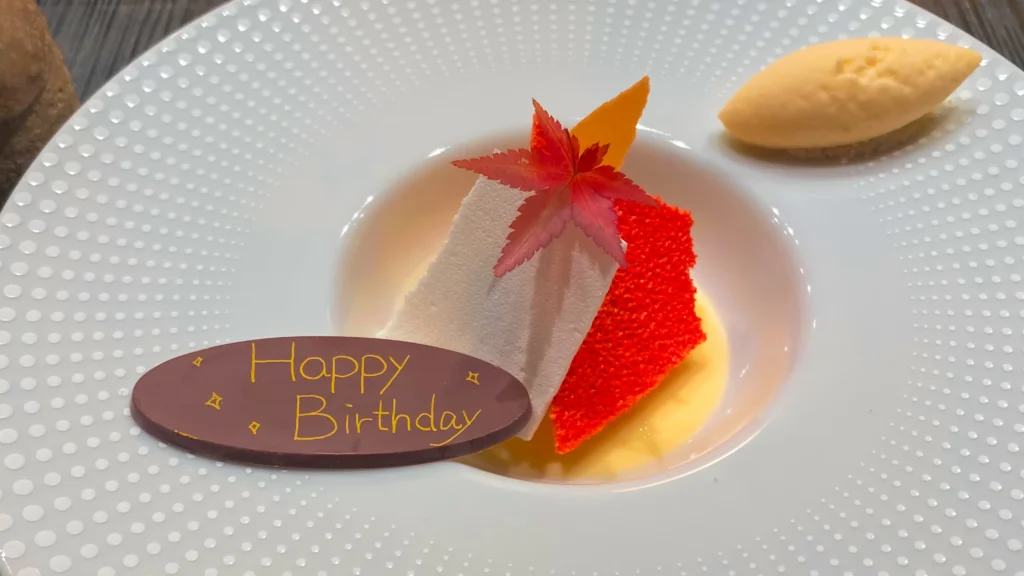
A Birthday Surprise
Because the staff knew we were celebrating a birthday, a special dessert arrived without us asking. The service here is anticipatory and deeply personal.
What Is Breakfast Like at Hoshinoya Kyoto?
One of the greatest luxuries of Hoshinoya Kyoto is the noon checkout time, giving you a full, unhurried morning. Breakfast is served directly in your room.
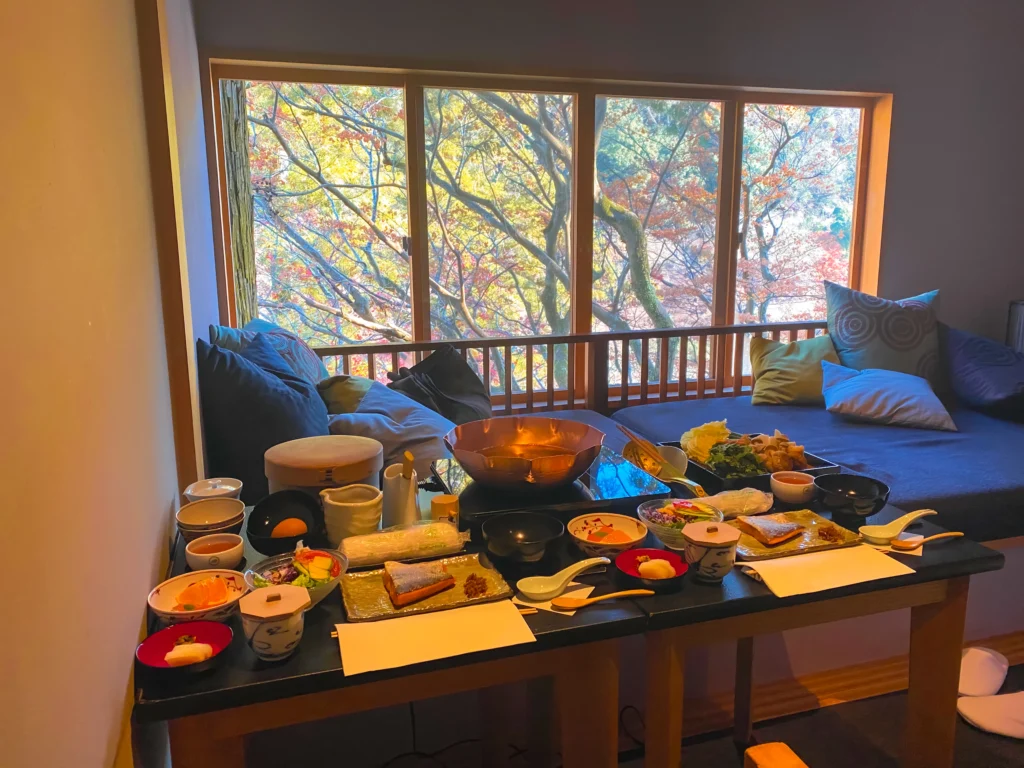
The “Asa-nabe” (朝鍋, morning hot pot, ~¥3,800/person) allows you to select your own ingredients from the array of small dishes to simmer in the copper pot. Grilled fish, pickles, salad, rice, miso — each in its own small vessel. A Western breakfast option is also available. The in-room river-view breakfast is consistently cited as a highlight by reviewers, and I understand why. Eating slowly while watching the morning light filter through the maples is not something you forget.
A Box of Kyoto
Before leaving, we discovered a final touch.
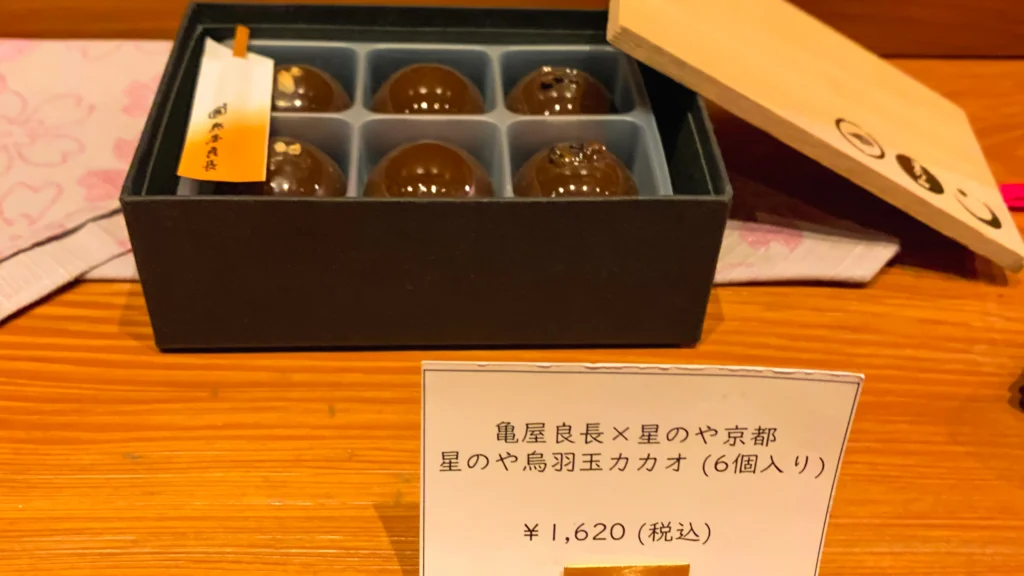
Kameya Yoshinaga (亀屋良長) has been making wagashi in Kyoto for over 220 years. This collaboration, “Irotama Cacao,” is exclusive to Hoshinoya Kyoto. If you enjoy Kyoto sweets, our review of Saryo Suisen’s warabi mochi covers another must-try experience in the city.
Is Hoshinoya Kyoto Worth the Price?
This is the question everyone asks, and it deserves an honest answer.
A one-night stay with dinner for two and breakfast easily exceeds ¥200,000. That is a significant amount of money. Here is what you get for it, and what you do not.
What you get:
•Complete seclusion within Kyoto city limits (30 minutes from Kyoto Station but feels like deep countryside)
•A private boat ride that transforms your mental state before you even arrive
•A 100-year-old villa renovated with extraordinary taste
•An 11-course kaiseki dinner that ranks among the best I have had in Japan
•An approximately 1:1 staff-to-guest ratio with anticipatory, deeply personal service
•Noon checkout — a rare luxury that gives you a full morning
What you do not get:
•An onsen or spa (a genuine gap for a luxury ryokan at this price)
•Bright, well-lit rooms (the dim lighting is deliberate but not for everyone)
•Speed (everything runs on river time — this can frustrate impatient guests)
•Dry air (the river-adjacent location means humidity, especially in summer)
•Predictable boat schedules (wait times can reach 1 hour during peak seasons)
Worth it for a once-in-a-lifetime stay? Absolutely. Hard to justify for annual visits? Also yes. This is a place you go to mark a moment — an anniversary, a milestone, a decision to slow down.
If you are planning a trip to the area, I highly recommend reading our Kyoto Guide to understand the city’s layout. Because Hoshinoya is so secluded, it pairs perfectly with exploring Early Morning Kyoto the day before or after your stay. For another excellent boat experience in Kyoto, consider the Fushimi Canal Cruise during your Fushimi Walking Guide day trip.
Practical Tips for Southeast Asian Visitors
Kyoto in autumn (late October to early December) averages 8-15°C — significantly cooler than Singapore’s 27°C or Bangkok’s 30°C. Pack layers and a warm jacket. The Arashiyama gorge is even cooler due to the river, especially in the evening and early morning.
Flights: Direct flights to Kansai International Airport (KIX) are available from Singapore (Scoot, ~6.5 hours), Kuala Lumpur (AirAsia, ~6 hours), Bangkok (Jetstar Asia, ~5.5 hours), and Jakarta (Garuda Indonesia, ~7 hours). From KIX, take the Haruka Express to Kyoto Station (75 minutes, ¥3,640).
Payment: Hoshinoya Kyoto accepts all major credit cards. However, smaller shops and restaurants in the Arashiyama area may be cash-only. Withdraw yen at 7-Eleven ATMs, which accept most international cards. For more details, see our guide on banking hours and ATMs in Japan.
Dietary needs: The kaiseki dinner can accommodate some dietary restrictions if notified in advance. Halal-certified restaurants are limited in Arashiyama, but Kyoto Station area has several options. Vegetarian kaiseki (shojin ryori) is available at many temples in the area.
Frequently Asked Questions About Hoshinoya Kyoto
How do I get to Hoshinoya Kyoto?
You must take a private boat from the Hoshinoya waiting lounge (Funa Machiai) near Togetsukyo Bridge in Arashiyama. The boat ride takes about 15 minutes. There is no road access for guests. If you are coming from other parts of the country, refer to our guide on Getting Around Japan.
Does Hoshinoya Kyoto have an onsen?
No, there are no public hot springs on the property. However, every room is equipped with a deep, private hinoki (cypress) wooden tub with seasonal herbal baths. This is a notable absence at this price point.
Is dinner included in the room rate?
No, Hoshinoya Kyoto operates on a room-only basis (Hakushoku Bunri). The 11-course kaiseki dinner is an additional ¥24,200 per person and must be booked in advance. Breakfast is also separate at approximately ¥3,800 per person.
When is the best time to visit Hoshinoya Kyoto?
The property is stunning year-round. Autumn (mid-November to early December) brings spectacular foliage — check the Cherry Blossom Forecast for spring timing. Summer features traditional cormorant fishing boats on the river, and winter offers deep, contemplative quiet with fewer guests.
Are children allowed at Hoshinoya Kyoto?
Yes, children are welcome, but the property’s quiet, secluded atmosphere and lack of child-specific facilities make it better suited for adults, couples, and older children who can appreciate the stillness.
Can I book Hoshinoya Kyoto on regular travel sites?
Can I book Hoshinoya Kyoto on regular travel sites?
Yes, you can book through platforms like Trip.com or Agoda. For tips on comparing prices across platforms, see our Hotel Booking Guide.
Sources checked
Hoshinoya Kyoto Official, Hoshinoya Kyoto Access, Hoshinoya Kyoto Activities, Premium Japan 2026, Precious.jp, MATCHA, Rakuten Travel Guide, TripAdvisor Reviews

- A Perfect Kyoto Afternoon: Walking Higashiyama from the Yasaka Pagoda to Kiyomizudera at Golden Hour (2026 Guide)
- Adashino Nenbutsuji 2026: Kyoto’s Temple of 8,000 Stone Buddhas [With Map]
![Adashino Nenbutsuji 2026: Kyoto's Temple of 8,000 Stone Buddhas [With Map]](https://hiddenjapan-gems.com/wp-content/uploads/2026/04/DSC2083-2-2-1024x576.webp) Most visitors to Arashiyama sto… 続きを読む: Adashino Nenbutsuji 2026: Kyoto’s Temple of 8,000 Stone Buddhas [With Map]
Most visitors to Arashiyama sto… 続きを読む: Adashino Nenbutsuji 2026: Kyoto’s Temple of 8,000 Stone Buddhas [With Map] - Atago Kaido / Saga Toriimoto — Kyoto’s Preserved Street
 2026 Update: While Arashiyama c… 続きを読む: Atago Kaido / Saga Toriimoto — Kyoto’s Preserved Street
 - A Night at Hoshinoya Kyoto: Boat Ride, Kaiseki & River Views [Stay Review]2026 Update : Hoshinoya Kyoto c… 続きを読む: A Night at Hoshinoya Kyoto: Boat Ride, Kaiseki & River Views [Stay Review]
- 7 Days in Kansai: A Journey Beyond Kyoto to Hidden Temples & Sacred Trails
 As the founder of hiddenjapan-g… 続きを読む: 7 Days in Kansai: A Journey Beyond Kyoto to Hidden Temples & Sacred Trails
2026 cherry blossom cherry blossoms day trip from tokyo flower festival fuji five lakes fujiyoshida Fukuoka fushimi hanami hiking japan japanese culture japanese food japanese garden japan travel kamakura kawagoe kawaguchiko Kumamoto kyoto local food Mount Fuji mt fuji Nagano nature Nikko Oku-Nikko Onsen Ramen saitama sakura Shizuoka shrine sightseeing snow spring in japan Tochigi Tokyo travel travel guide travel planning winter winter travel Yamanashi
Join 1,000+ travelers discovering Japan's hidden side
Weekly dispatches from off-the-beaten-path Japan — spots and stories you won't find in guidebooks.
No spam. Unsubscribe anytime.
Welcome aboard!
You're in. See you in your inbox soon.