Fukuoka · Sasaguri · Forest
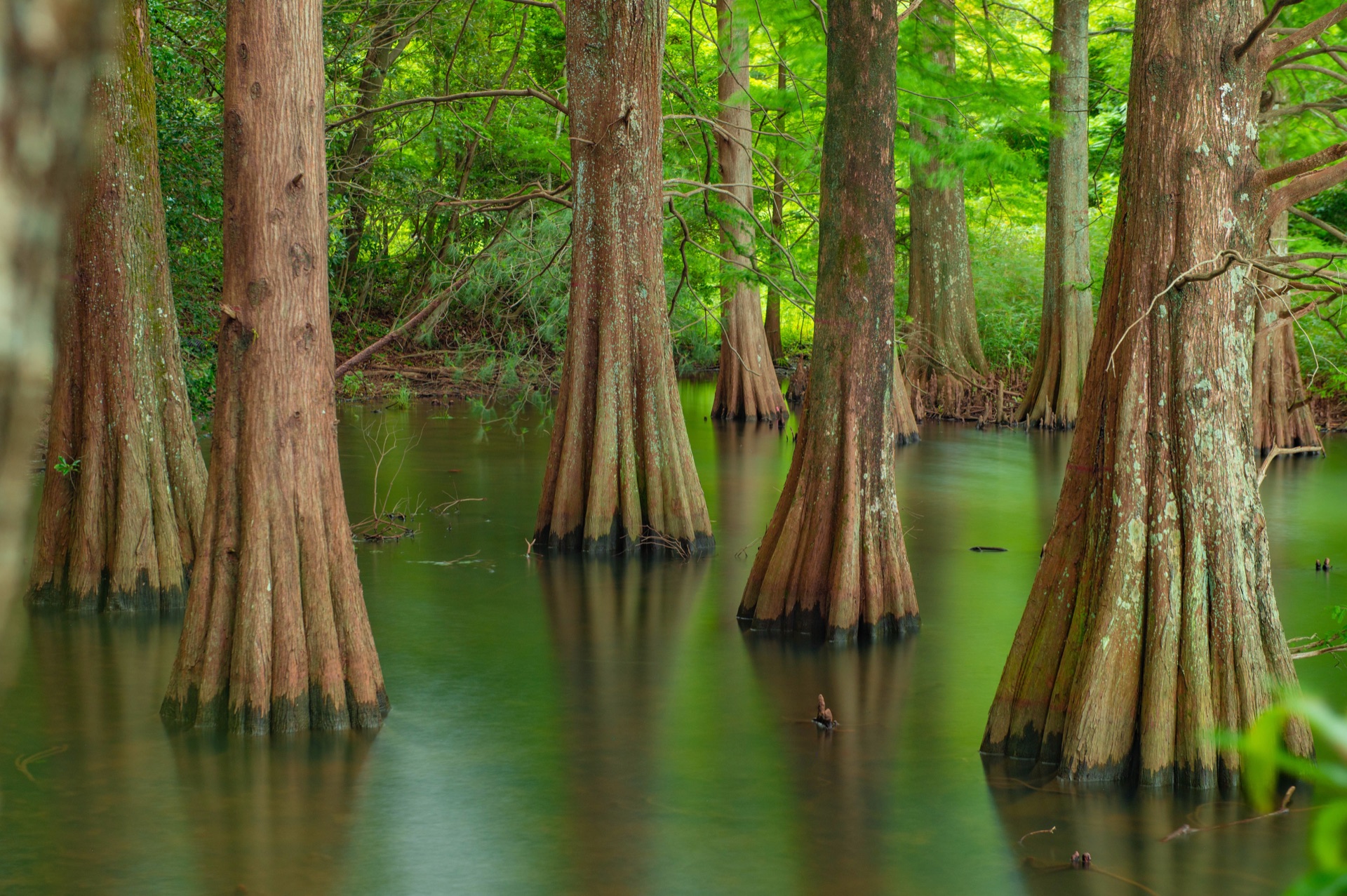
I walked into the forest at the south entrance just after sunrise. The path runs through cedars and broadleaf trees for about ten minutes, and then opens onto a small pond. Tall, slender trees grow straight out of the water — bald cypresses, called rakuushou in Japanese — and the pond surface, on a still morning, holds a near-perfect mirror of them. This is Sasaguri Kyudai-no-Mori, run by Kyushu University as a research forest, and the trees-in-water moment is the only thing most visitors come for.
Quick Facts
What It Actually Is
Kyudai-no-Mori is not a park. It is an active research forest belonging to Kyushu University’s Faculty of Agriculture — one of several university-managed forests in Fukuoka Prefecture. Researchers run actual silviculture and ecology projects on the grounds. The trails were opened to the public mainly so locals could enjoy walking through it.
The pond at the heart of the forest is called Kamada-ike. The trees standing in it are rakuushou (bald cypress, Taxodium distichum), a North American species that survives in waterlogged ground because of its specialized “knee” roots that protrude above water for oxygen exchange. The combination of a still pond surface, vertical trees rising directly out of it, and Japanese broadleaf forest behind is unusual enough that the place has been compared to certain landscapes in Studio Ghibli films.
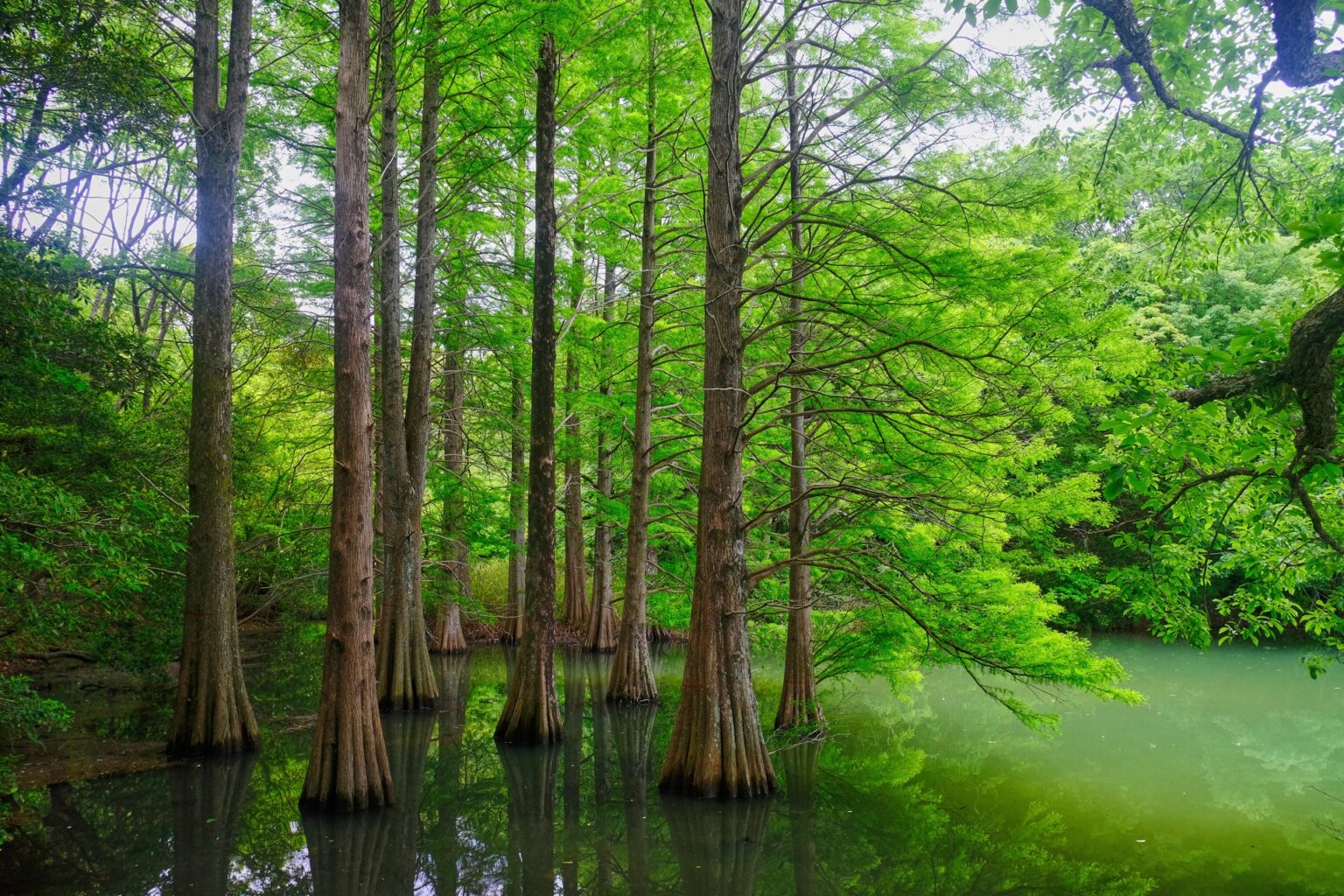
What makes the photos work is the water itself. When the pond is full and still, every tree gets duplicated upside-down and the scene reads almost surreal. When the water level drops — which it does — the magic largely goes with it. The water level is the thing to check before you go.
The Water Level (and Why You Need to Check)
The pond does not always have water. It is a reservoir-style basin, and water levels shift seasonally and across years. Heavy rains refill it; long dry spells lower it; drainage events sometimes empty it almost entirely. There have been years when the pond sat dry for months and recent visitors arrived to find a bed of mud and exposed tree roots instead of the famous mirror.
If the trees-in-water shot is the reason you’re going, check recent photos before you make the trip. The Sasaguri town tourism office can confirm current conditions.
The most reliable windows for water are typically June through August (after the rainy season) and after periods of consistent rain. Even within these windows, conditions can change. Aim for an early morning visit on a still day.
Why the Forest Tightened Its Rules
2017–2018
The forest got too famous
Around 2017, photos of the bald cypress pond went viral on Instagram and Japanese travel blogs. Visitor numbers jumped from a few hundred a month to several thousand on weekends. Visitors started leaving the trails to get angles closer to the water, treading on protected vegetation, leaving litter, and using drones over the canopy.
The forest’s response, made jointly with the town and the university, was to tighten the rules sharply. Off-trail walking was banned outright. Commercial photography and any media filming now requires advance permission from Kyushu University’s public relations office. Drones are not permitted. The fence lines around the pond were extended.
The trees-in-water view is still completely visible from the official viewing area. The boundary just got firmer.
Getting There
RecommendedBy car
Set your GPS to 糟屋郡篠栗町和田1009 for the south entrance parking lot. From central Fukuoka, the drive is about 30 minutes via Route 201 and the Sasaguri valley road.
Two parking lots, both free. The south lot has restrooms; the north lot is closer to the pond. No tour buses are permitted at either lot.
Both lots are locked outside operating hours. If you arrive before opening, you will not be able to leave your car.
By train + walkJR Kadomatsu Station
The nearest station is JR Kadomatsu on the Sasaguri Line — about 35 minutes from Hakata Station. From Kadomatsu, the south entrance is roughly 2 km / 25 minutes on foot, mostly flat through residential streets.
A taxi from Kadomatsu to the entrance takes about 5 minutes (~¥800–1,000) and is worth it on hot days.
CombinedWith Nanzoin
One full day from Hakata: Nanzoin first (Kido-Nanzoin-mae station, 9:00 opening), then take the Sasaguri Line one stop south to Sasaguri or two stops to Kadomatsu, walk or taxi to the forest. Lunch in Sasaguri town between.
CombinedWith Nomiyama Kannon-ji
Nomiyama Kannon-ji is a 15-minute drive from the forest. If you have a car, the two pair well — forest in the morning while the light is soft, temple in the afternoon.
When to Walk
What the Walk Is Actually Like
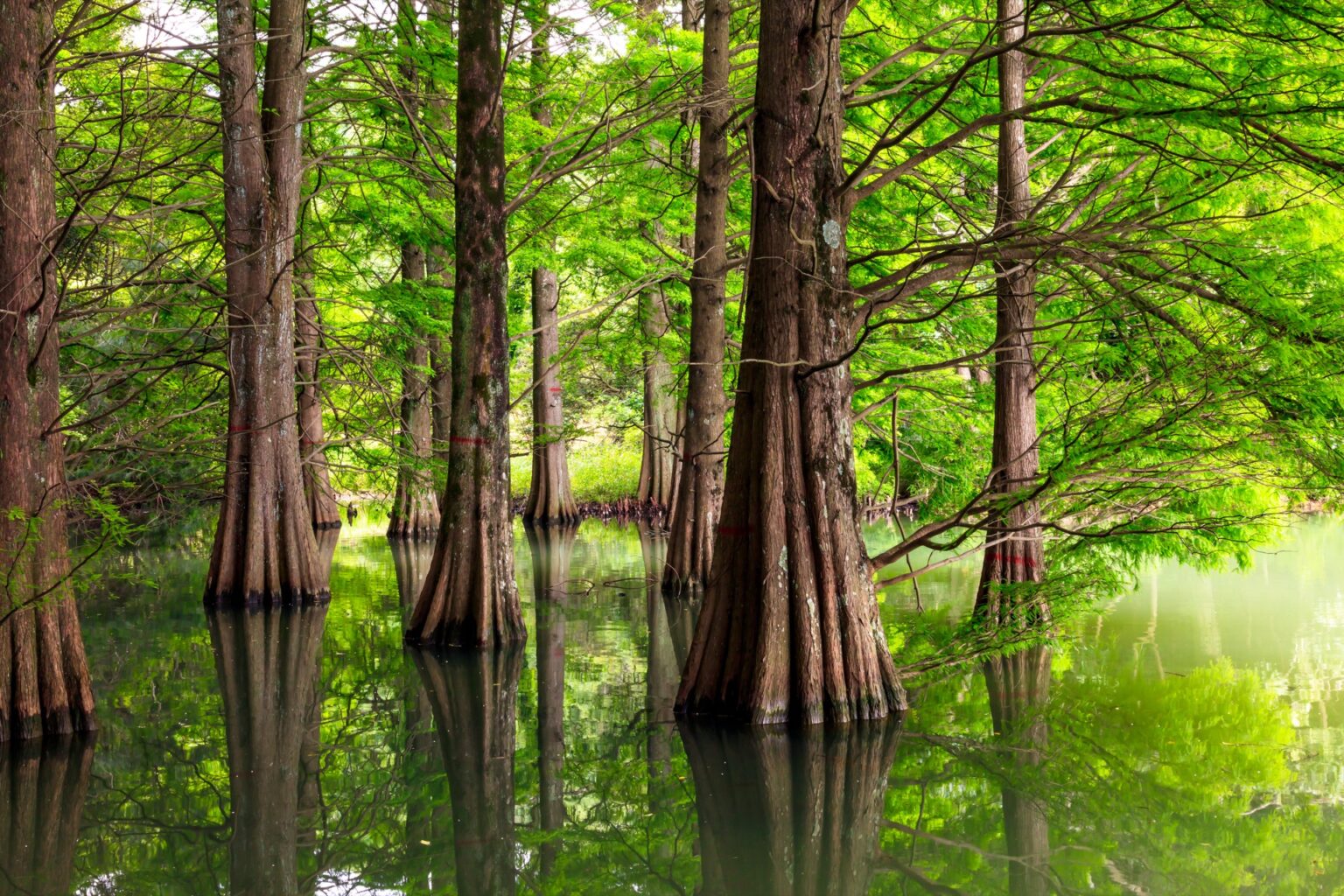
From the south entrance the trail climbs gently for about ten minutes through mixed forest before it opens onto Kamada-ike. The ground is uneven dirt path with tree roots and the occasional rock. Sneakers or trail shoes work. After heavy rain, expect mud.
The viewing area at the pond is wooden boardwalk with railings. You walk along the boardwalk, see the trees from several angles, and either turn back the way you came (most visitors) or continue around the pond on the longer loop trail. The full loop adds about 30 minutes and threads through quieter forest with no other features besides the trees themselves.
Total time, opening to exit:
- Quick visit (south entrance → pond → back): 30 minutes
- Standard (full pond viewing + south lot): 45 minutes
- Full loop (around the pond, both entrances): 90 minutes
Hazards You Should Know About
The forest is not landscaped. Three risks the official signage emphasizes:
Hornets (suzumebachi): Active May through October. Avoid bright clothing, perfumes, and don’t swat. If a hornet circles you, walk calmly toward shade.
Vipers (mamushi): Live in the underbrush. The trail itself is safe; staying on it is the rule. Don’t reach into rocks or thick grass.
Wild boars: Possible encounters, especially early morning. If you see one, back away slowly and give it a wide berth. Don’t run.
Rules to Know
Combine With
Frequently Asked Questions
Is Sasaguri Kyudai-no-Mori always open?
The trails are open daily. Hours change by season: 6:00–17:00 from April through September, 7:00–17:00 from October through March. Both parking lots are locked outside these hours, so don’t arrive early.
Does the pond always have water?
No. Water levels shift with rainfall and drainage events. The trees-in-water view requires the pond to be full. Check recent photos or contact Sasaguri town tourism (092-947-1217) before going if the pond shot is your priority. Best months for high water are typically June through August.
Can I take photos at Kyudai-no-Mori?
Personal handheld photos are accepted. Commercial photography, video shoots, drone footage, and any media-purpose visit require advance permission from Kyushu University’s public relations office. The forest tightened these rules after a period of overcrowding in 2017–2018.
How long does the walk take?
A quick visit to the pond and back is 30 minutes. The standard route with full pond viewing is about 45 minutes. The full loop around the pond, including the longer back trail, takes 90 minutes.
Is there an entry fee?
No. Both the forest and the parking lots are free. There are no concessions or facilities inside, so bring your own water.
How do I get there from Hakata without a car?
Take the JR Sasaguri Line from Hakata to JR Kadomatsu (about 35 minutes). From Kadomatsu, the south entrance is a 25-minute walk or a 5-minute taxi (about ¥800–1,000). The forest is not directly bus-served.
Is it kid-friendly?
The trail to the pond is short and mostly flat. Strollers struggle with the dirt sections after rain. The hornet and viper warnings apply to all visitors — keep small children on the trail. The boardwalk at the pond has railings.
Can I combine it with Nanzoin?
Yes — both sit on the JR Sasaguri Line, one stop apart. Visit Nanzoin in the morning and the forest in the afternoon, or vice versa. Lunch in Sasaguri town between. Bring transit-friendly walking shoes for the forest’s dirt paths.
Kyudai-no-Mori is a small, careful place. The trees-in-water view is genuinely striking when the pond is full, but the forest only stays the way it does because the rules around it are taken seriously. The university runs research here, the town protects it, and visitors who treat it like a photo set get the rules tightened on everyone else.
Go in summer. Go early. Stay on the trail. Take fewer photos than you want. The trees will still be there next year.
Join travelers discovering Japan's hidden side
Weekly dispatches from off-the-beaten-path Japan — spots and stories you won't find in guidebooks.
No spam. Unsubscribe anytime.
Welcome aboard!
You're in. See you in your inbox soon.