Saba Kaidō · Fukui
Kumagawa-juku is a preserved post town in the mountains of Fukui, strung along a channel of fast, clear running water — the key relay point on the old “Mackerel Road” that carried Wakasa Bay’s seafood over the passes to Kyoto, and a national preservation district since 1996.
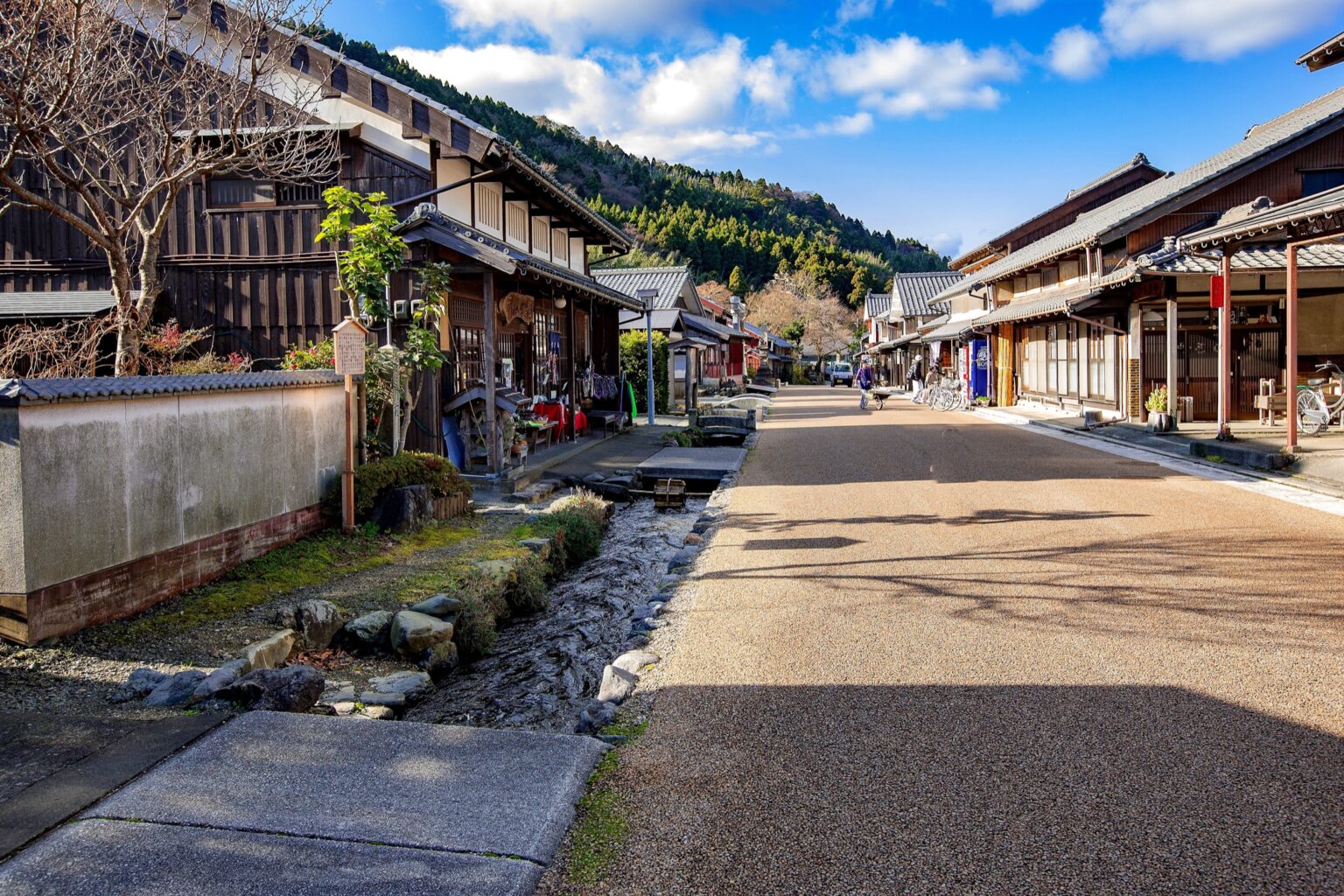
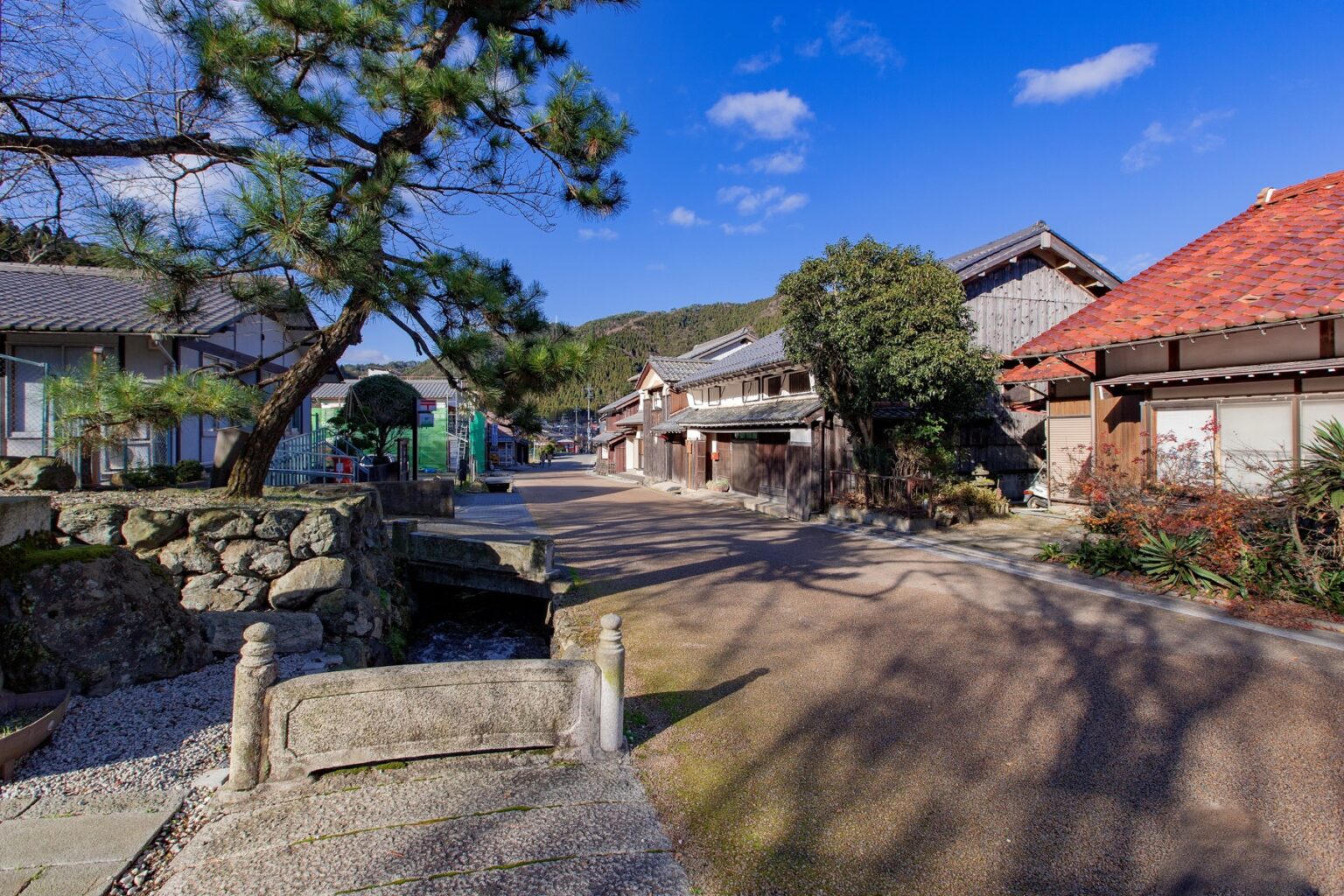
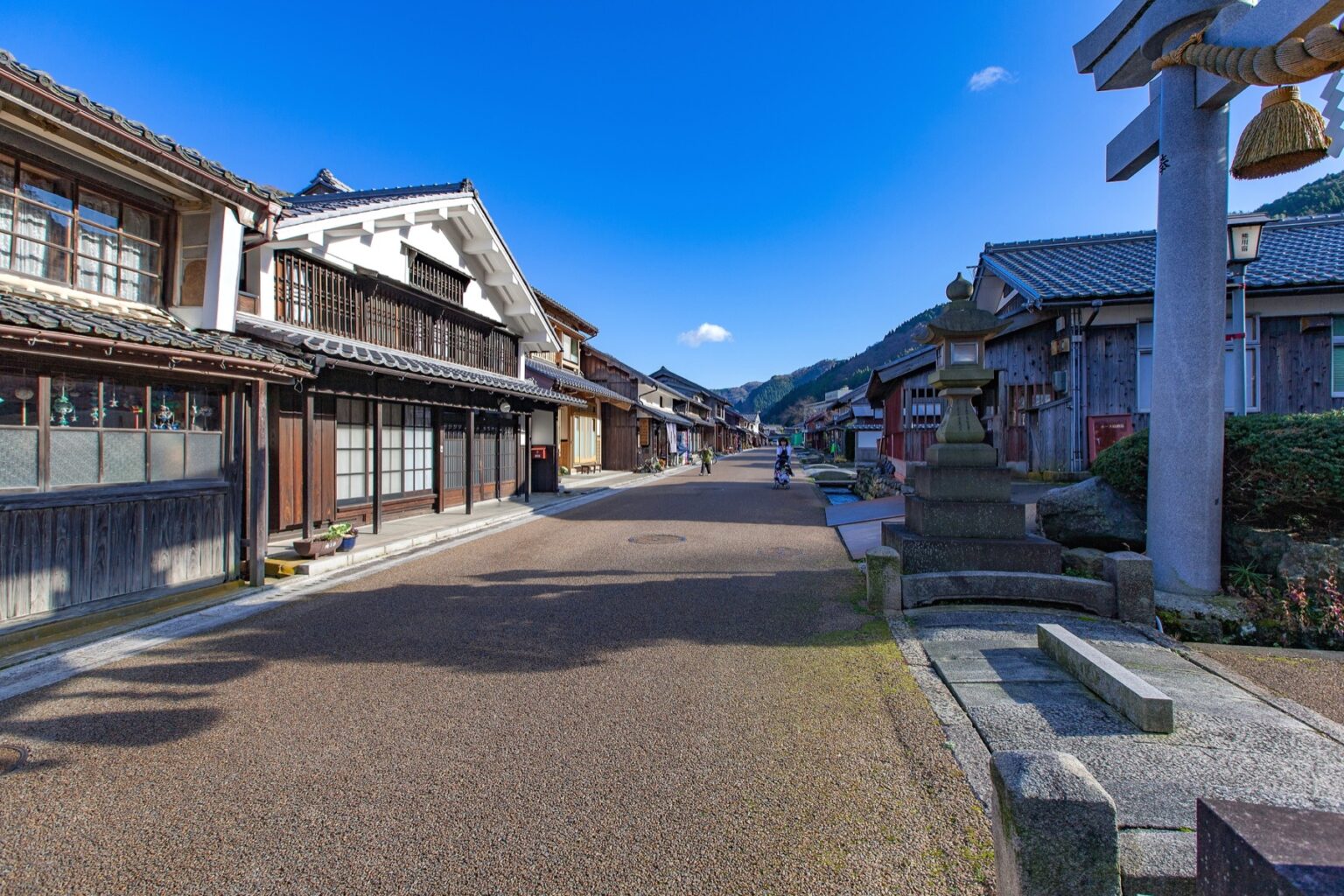
Long before refrigeration, the fish markets of Kyoto were fed by porters who salted mackerel on the Wakasa coast and walked it inland — “eighteen ri to Kyoto, but not so far,” as the old saying went. The web of routes they used is now remembered as the Saba Kaidō, the Mackerel Road, and Kumagawa-juku was its busiest staging post. I’m Nobu, and what makes this one special among old post towns is the water: the Maegawa channel runs the whole length of the street, crossed in places by little stone bridges, so the town has a sound as well as a look — moving water the entire way.
What Kumagawa-juku is
The Saba Kaidō — really a network of routes, of which the Wakasa Kaidō through Kumagawa carried the most traffic — linked the seafood ports of Wakasa Bay to the capital at Kyoto. Wakasa sent salted mackerel, other fish and salt over the mountains, and Kumagawa-juku grew into the largest relay point on the road: wholesalers here handed goods coming up from the port of Obama on to the horse-drivers and porters who took them onward toward Kyoto. The Agency for Cultural Affairs now tells that whole story as a Japan Heritage — some 1,500 years of travel across these passes.
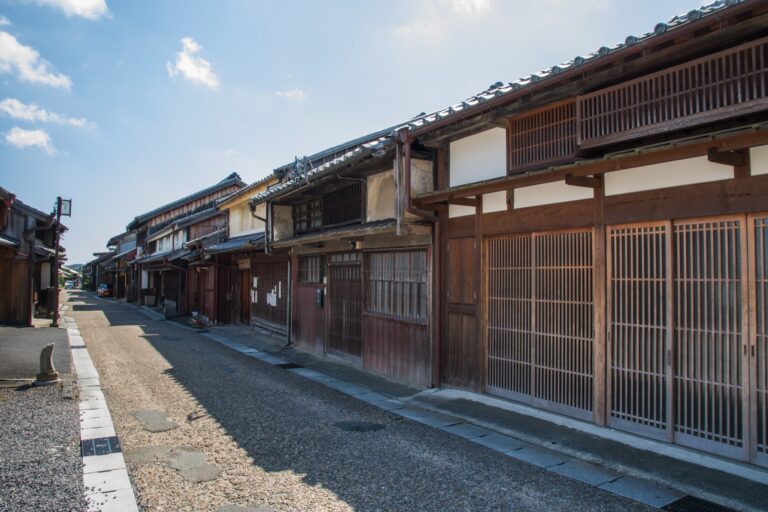
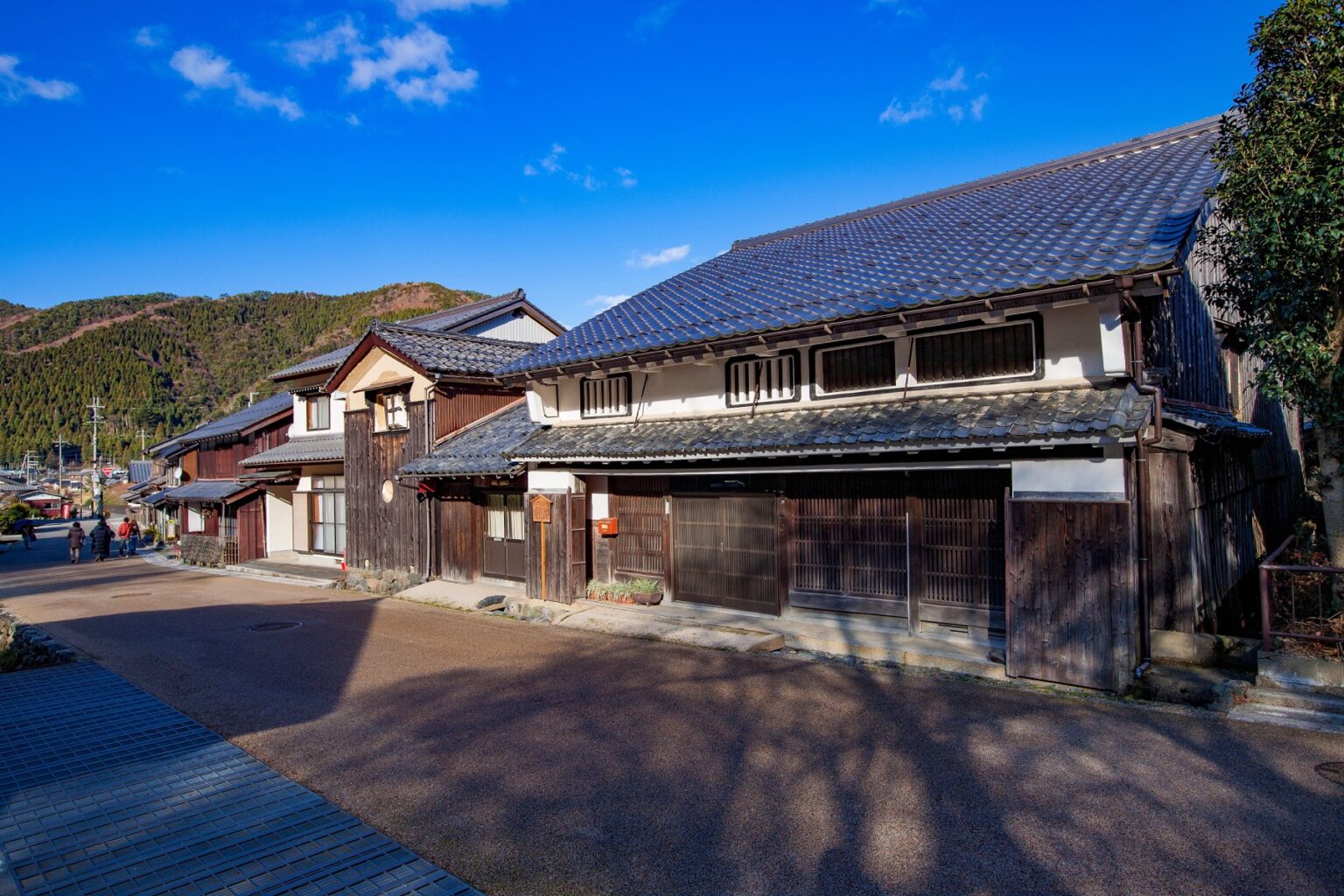
The old town survived without being redeveloped, and in 1996 it was made a national preservation district as a “post town,” covering about 10.8 hectares. Along its street stand 211 traditional buildings — a mix of hirairi houses (entered on the long side) and tsumairi houses (entered on the gable end) that gives the streetscape its rhythm.
What to see
The Maegawa channel
The clear channel running the whole street is the town’s signature — fast, abundant water listed among Japan’s “100 Best Waters.” Old stone kawato washing places still step down to it in places.
Kumagawa Bansho
The restored checkpoint at the town’s entrance, where officials once watched people and goods on the road. Adults ¥50; open 10:00–16:00 (to 15:00 December–March), closed Tuesday, Wednesday and Friday.
Kumagawa-juku Museum “Shukubakan”
Set in the 1940 former village office, it tells the Kumagawa-juku and Saba Kaidō story. Adults ¥200; open 9:00–17:00 (to 16:00 December–February), closed Mondays.
People live here. Kumagawa-juku is a lived-in town, not an open-air museum. Keep to the street, don’t lean over the channel into people’s doorways or gardens, and it stays the quiet place that makes it worth the trip.
Southeast Asia traveler tip: Kumagawa is genuinely remote — there’s no train station in the town itself, just a bus stop, and few English signs. That’s the charm, but check bus times both ways before you go, allow half a day, and treat it as a slow detour rather than a quick stop. Coming from Kyoto it’s a scenic ride of well over an hour.
How to get to Kumagawa-juku
From Kyoto
Take the JR Kosei Line to Ōmi-Imazu, then the JR bus toward Wakasa; it’s roughly 1 hour 40 minutes from Kyoto Station to Kumagawa. The bus stops right in the town (IC cards accepted).
From the Obama Line
From JR Kaminaka Station on the Obama Line, take the JR bus toward Ōmi-Imazu and get off at “Kumagawa,” about a 3-minute walk from the street.
By car
It’s about 15 minutes from the Wakasa-Kaminaka interchange on the Maizuru-Wakasa Expressway.
When to go
Kumagawa is quiet in every season, which is the point. Spring brings cherry blossom (the Matsunoki Shrine is a local spot) and the Shiraishi Shrine festival on May 3, when festival floats (dashi) come out (check the year’s notice for details). In mid-to-late June, Genji fireflies come out near the water. Summer is green and cool in these hills; autumn turns the surrounding mountains, and winter — this is snow country near the Japan Sea — can be deep and white. The running water looks its best on a bright, still day.
Where to stay near Kumagawa-juku
Kumagawa is usually a day trip from Kyoto, from the Wakasa coast around Obama, or from Lake Biwa’s western shore near Ōmi-Imazu. Staying on the Wakasa coast lets you pair the town with the seafood that made the Mackerel Road.
Wakasa & Obama stays on Booking
Coastal inns and hotels near the routes into Kumagawa-juku.
Compare on Agoda
A second price check across the Wakasa / Lake Biwa area.
Kansai tours & transport via Klook
Day trips and passes if you’re building a wider Kyoto / Wakasa route.
Some links above are affiliate links — they cost you nothing extra and help keep this site going.
Is there an entry fee for Kumagawa-juku?
No. The street and the channel are free to walk. You only pay to enter the Kumagawa Bansho checkpoint (¥50) or the Shukubakan museum (¥200).
What is the “Mackerel Road”?
The Saba Kaidō (“Mackerel Road”) is the network of old routes that carried salted mackerel and other seafood from Wakasa Bay over the mountains to Kyoto. The Wakasa Kaidō through Kumagawa was its busiest branch, which is why the town grew as a relay point.
How do I get there without a car?
From Kyoto, take the JR Kosei Line to Ōmi-Imazu, then a JR bus into Kumagawa (about 1h40 total). From the Obama Line, take a JR bus from Kaminaka Station and get off at “Kumagawa.” Check return bus times before you set out.
How long do I need?
An hour or two walks the street, the channel, the checkpoint and the museum. With the remote bus access, it’s realistically a half-day outing.
What makes Kumagawa-juku different?
The water. The Maegawa channel runs the entire length of the street — listed among Japan’s best waters — giving the town a sound and movement most preserved streets don’t have, plus its role as the key post town on the Mackerel Road to Kyoto.
When is the best time to visit?
Spring for blossom and the May 3 festival, mid-to-late June for fireflies by the water, autumn for the mountain colour. Winter is snowy near the Japan Sea. A bright, still day shows the channel best.
Unno-juku
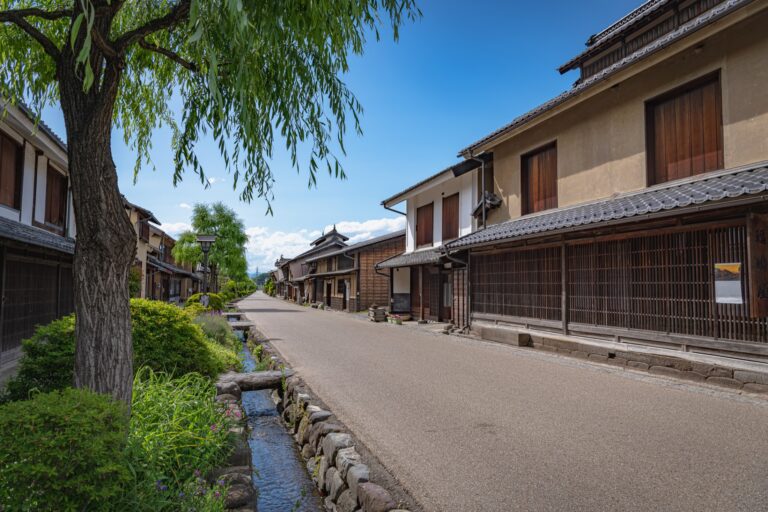
A Hokkoku Kaidō post town and silk village in Nagano, with its own water channel down the street.
Magome-juku
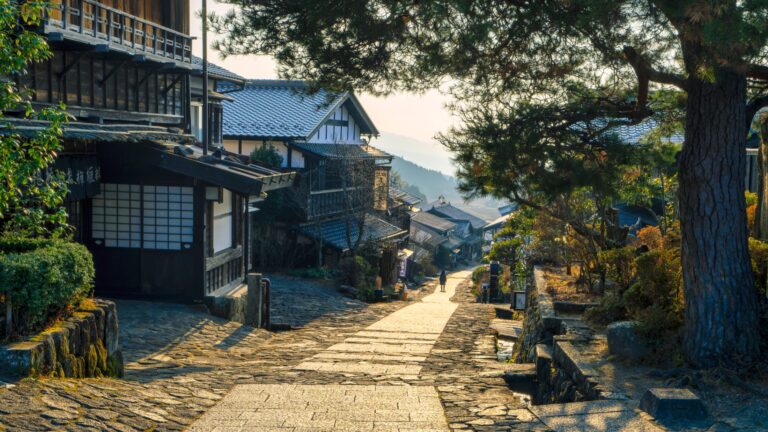
The stone-paved Kiso post town and the classic walk to Tsumago.
Tsumago-juku
A strictly preserved Nakasendō post town in the Kiso Valley.
Japan’s best-preserved post towns
A guide to the seven finest surviving post towns — Magome, Tsumago, Narai, Unno, Seki, Kumagawa and Ouchi — with how they compare and which to choose.
Join travelers discovering Japan's hidden side
Weekly dispatches from off-the-beaten-path Japan — spots and stories you won't find in guidebooks.
No spam. Unsubscribe anytime.
Welcome aboard!
You're in. See you in your inbox soon.