
Kyoto by the Sea · Field report
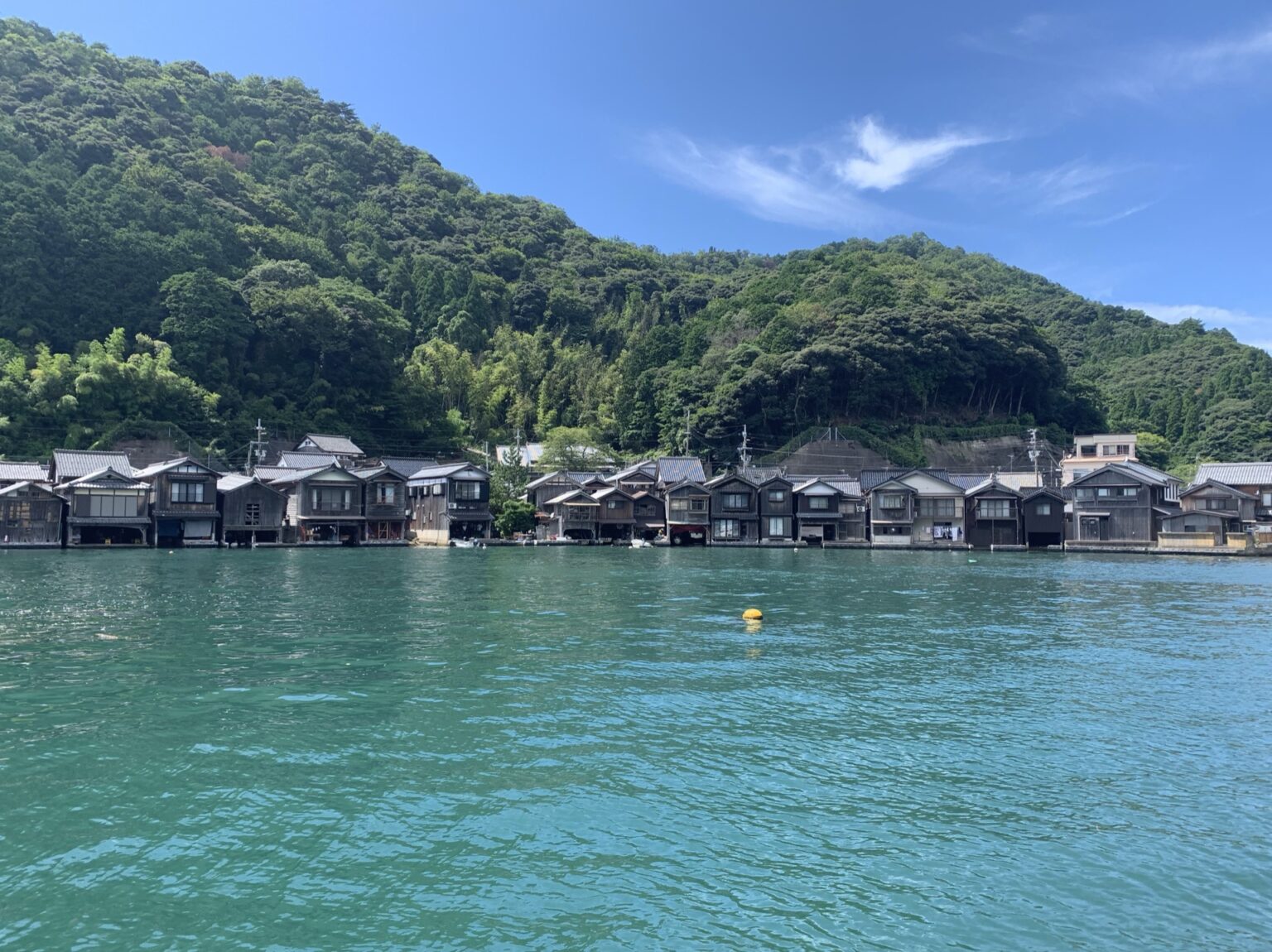
Ine sits two and a half hours north of Kyoto Station, on a horseshoe-shaped bay where 230 wooden boat houses stand directly on the water. The first floor is a private dock for the family’s fishing boat. The second is where they sleep. People still live in them. I went in summer, took both kinds of boats out into the bay, walked the village, and below is the practical version — how to get there, which boat to pick, where to stand, where not to, and what no one tells you about the ¥1,200 cruise.
The 30-second version
Two-and-a-half-hour trip from Kyoto. The 25-minute large sightseeing cruise (¥1,200, walk-up) and the 25-minute sea taxi (¥1,000, also walk-up for groups of 5 or fewer) are both worth doing — pick the sea taxi if you have any choice. The funaya themselves are private homes; you walk past them respectfully, photograph from the water, and don’t enter unless you booked an interior tour. Open year-round, weather permitting. Best photo light is morning to early afternoon.
Quick Facts
| Where | Ine Town, Yosa District, Kyoto Prefecture (northern Kyoto, on the Tango Peninsula) |
|---|---|
| What it is | ~230 traditional wooden funaya boat houses lining 5 km of horseshoe-shaped bay. Designated Important Preservation District. |
| Distance from Kyoto Station | ~2 hours by car. ~3 hours by JR Hashidate limited express + Tankai Bus. |
| Boat tours | Two options: large cruise (¥1,200, 25 min, every 30 min from Hiide Station) and sea taxi (¥1,000, 25 min, walk-up for ≤5). |
| Hours | Cruise 9:00–16:00 year-round (weather permitting). Sea taxi roughly 9:00–17:00 summer, until 16:00 winter. |
| Parking | Paid since 2025. Customer lot at the cruise terminal (Hiide Station) and Shichimenzan parking near the sea-taxi pickup. |
| Bicycle rental | Available at Funaya no Sato Ine roadside station. Suspended Apr 29 – May 6, 2026 due to Golden Week crowds. |
| Tourist info | Ine Tourism Association, 0772-32-0277 (9:00–17:00) |
Why this place is unusual, in one paragraph
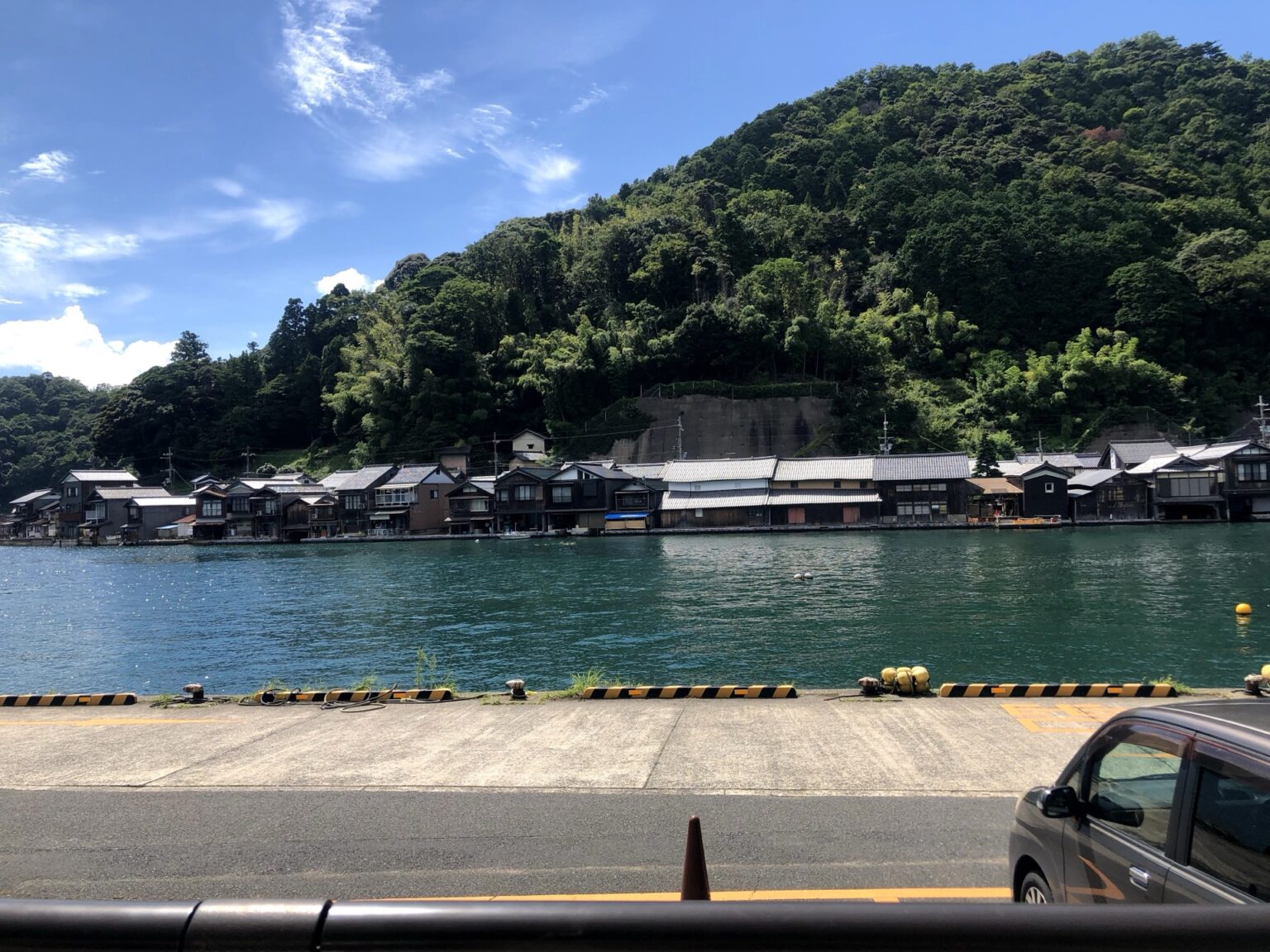
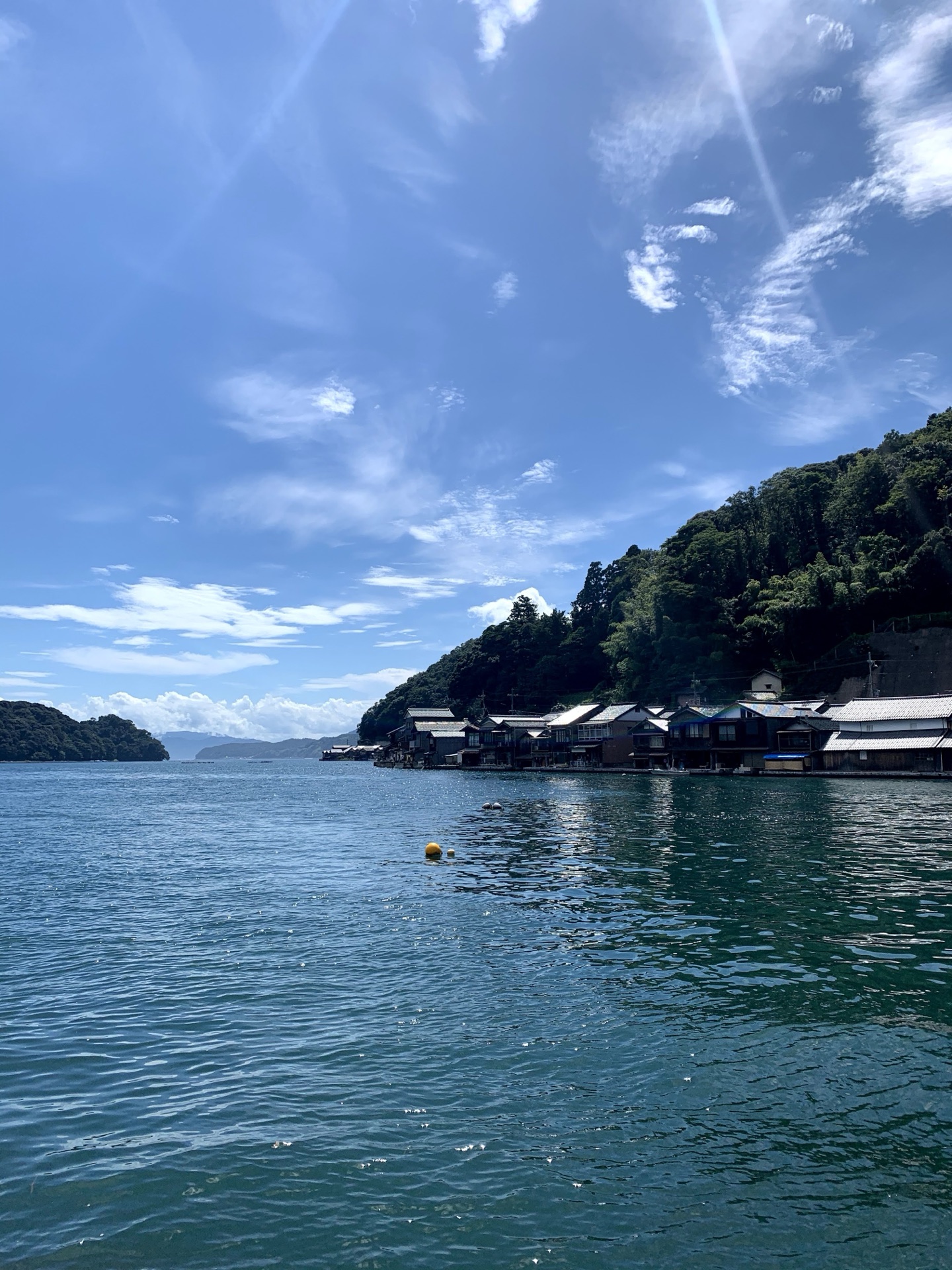
A funaya is a working boathouse with a private home stacked on top. The ground floor opens directly to the water so a fisherman can keep his boat under the same roof he sleeps in. There used to be hundreds of villages structured this way along the Sea of Japan; today only Ine still has the full 5 km lineup, with 230 funaya in active residential use. The bay is shaped like a U with Aoshima island plugging the open mouth, which is what made it possible to build directly on the waterline — the water is calm year-round, no waves to fight. The view that gets photographed is exactly that: 230 wooden buildings standing on the water with green hills behind them, doing nothing in particular. People live here.
The two boat tours, side-by-side
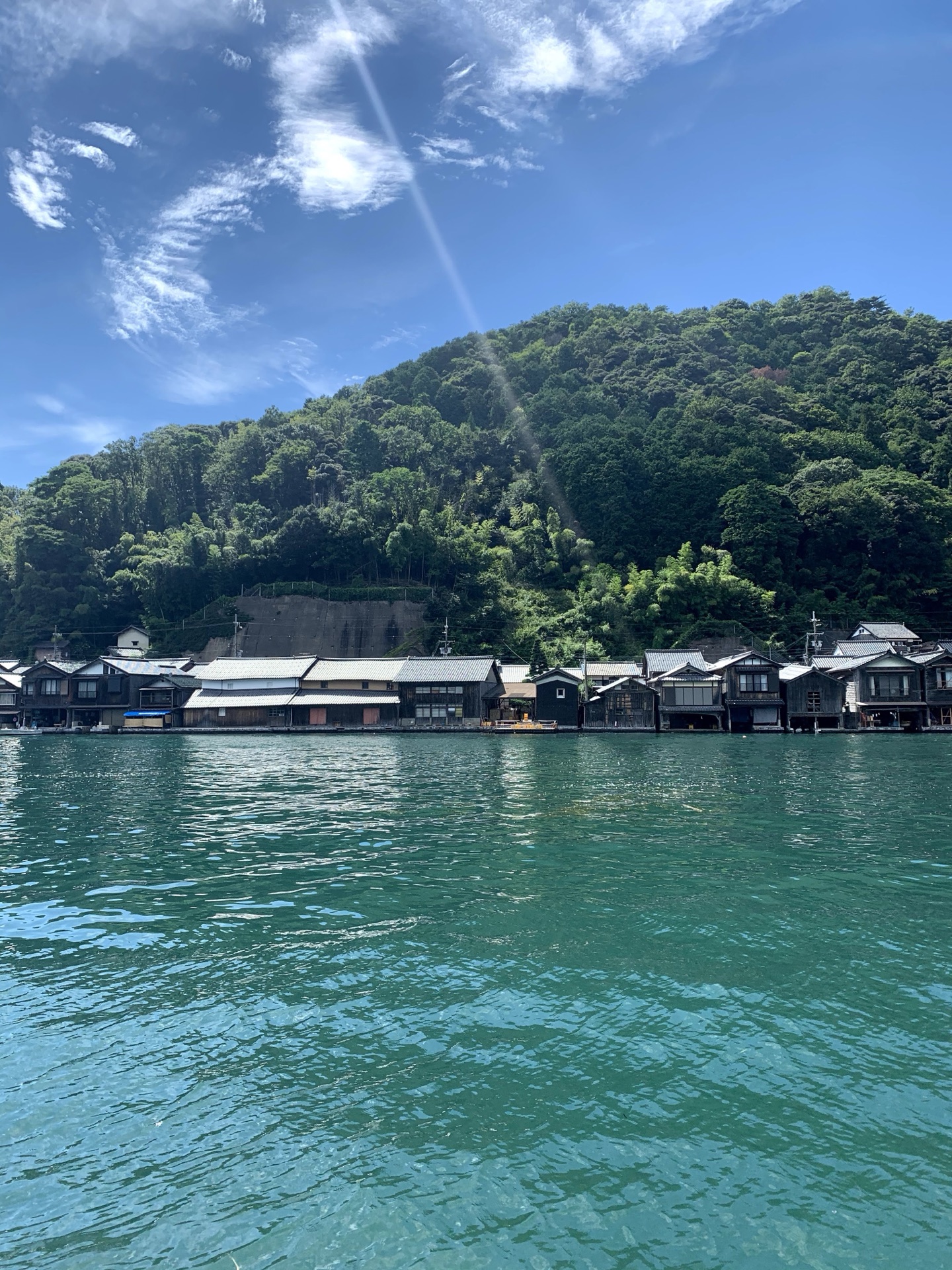
You almost certainly want to do at least one boat tour. The road that runs behind the funaya never lets you see them properly — the buildings face the bay, not the road. The view that you came for only opens up from the water.
Inewan-meguri Cruise
伊根湾めぐり遊覧船 · Tankai Kairiku Kotsu
Easiest, fastest, and the boat is large enough that you won’t get stuck if it’s busy. The narration is in Japanese with simple English handouts. Pick this if you have less than three hours total in Ine, or you arrived without a plan.
Sea Taxi (Small Boat)
海上タクシー · 7 boats run by local fishermen
Slower, closer to the funaya, with a fisherman pointing at things and telling you which house is whose. Pick this if you can spare a flexible 30 minutes — the wait can be 0 minutes or it can be 40 depending on who’s already in line.
Getting there from Kyoto, step by step
By train + bus — the without-a-car route
Kyoto Station → Amanohashidate Station
JR Hashidate limited express, direct, runs roughly every 90 minutes. Reserved seat strongly recommended. Travel time 2 hours, ~¥4,800 (with reserved seat surcharge).
Amanohashidate Station → Ine
Tankai Bus (Kamoi line, bound for Kuranbo or Hetagisou). Hourly. Departure point: bus stop directly outside Amanohashidate Station. Ine stop is 5 minutes’ walk from the cruise terminal.
Bus stop → cruise terminal at Hiide Station
Walk along the harbour road, the cruise terminal is unmistakable — large white building with the boats moored directly behind. Sea-taxi pickup is a further 10 minutes’ walk south near Shichimenzan parking.
By car — faster, more flexible
From Kyoto city centre
Kyoto Jukan Expressway to Miyazu-Yosano Amanohashidate IC, then Routes 176 + 178 north along the coast. Parking at Hiide Station cruise terminal (paid since 2025) or at Funaya no Sato Ine roadside station (free, hilltop view).
From Osaka
Same expressway exit. Add 30 minutes for the southern leg to Kyoto Jukan entrance. The drive is genuinely scenic from Miyazu onwards — coastal views the entire final 45 minutes.
What I did, in order
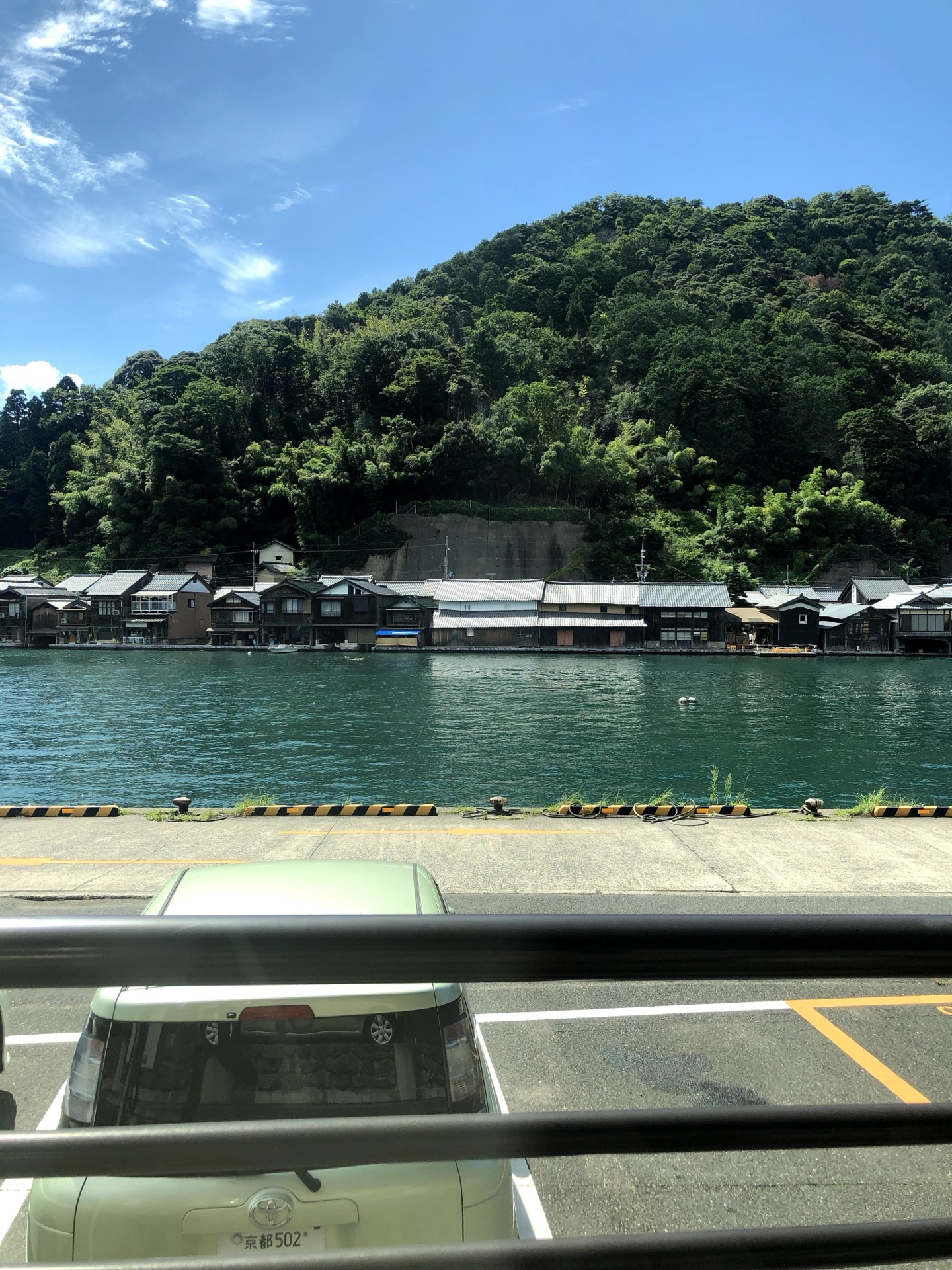
I arrived around 11:00 from Amanohashidate, which puts you in the village at exactly the wrong time — right when the day-trip tour buses are unloading at Hiide Station. The cruise queue at that hour was roughly 25 minutes for the next departure. I wandered along the road for ten minutes first, found a quieter pocket about 200 metres south where the road comes right down to the water, and took the photo above through someone’s wisteria.
The road behind the funaya is a working residential street. Cars use it. Mailboxes belong to people. Don’t sit down on someone’s stone wall — it’s a wall, not a bench.
From the boat the bay opens up into something the road can’t show you. The funaya line stretches in both directions, and the sea taxi captain knows which house was rebuilt last year, which one belongs to which family, and which is now an Airbnb-style minpaku run by the third son who came back from Osaka. The 25 minutes feels like 15.
I took the sea taxi rather than the cruise because I had time. The line for the small boats moves erratically — sometimes you wait five minutes, sometimes thirty — but you can sit much lower, the captain narrates the entire run, and the boat goes closer to the funaya than the cruise does.
Walking the village — what’s allowed and what isn’t
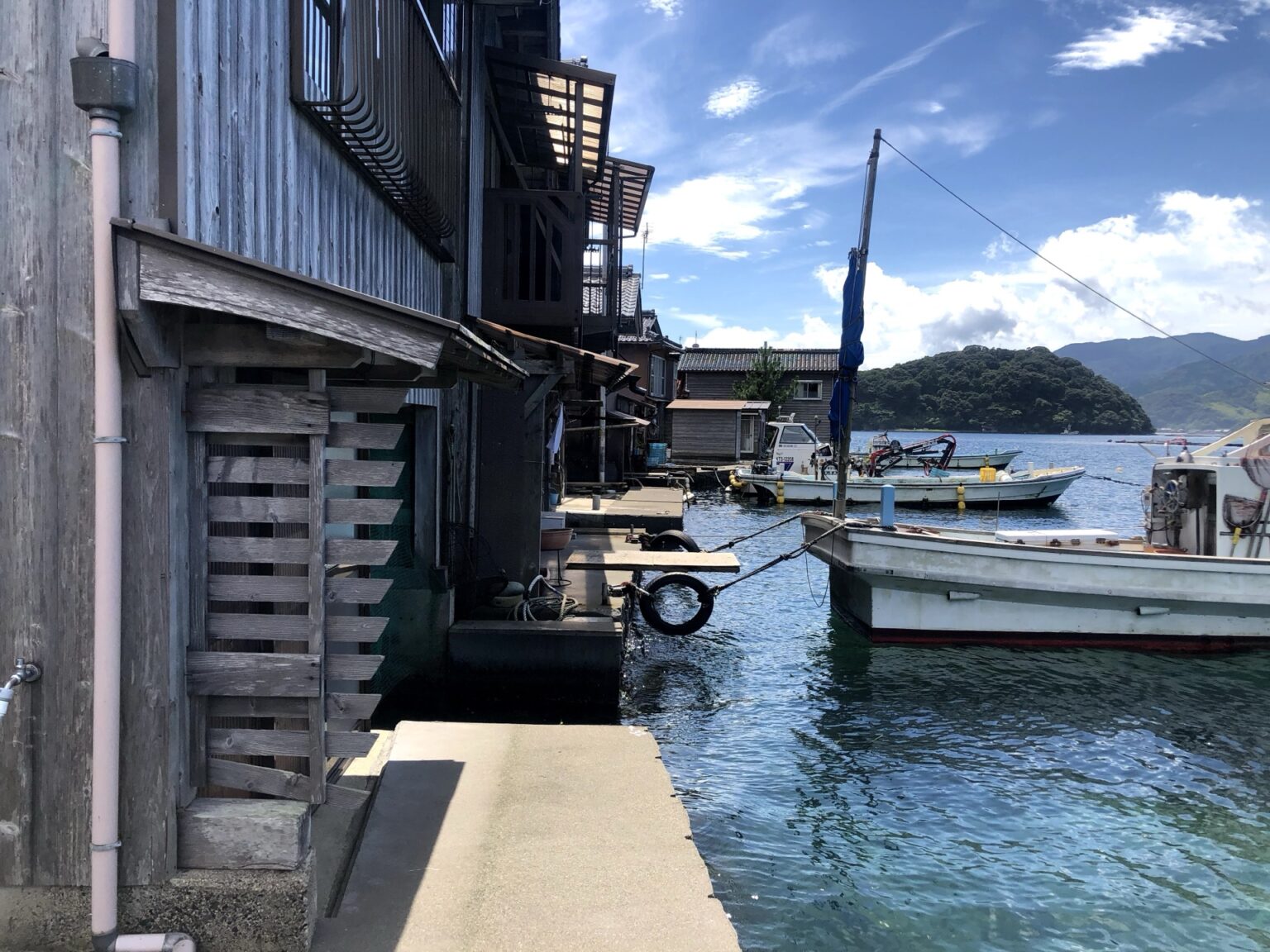
The single thing visitors get most wrong is treating Ine as a museum. It is not. Every funaya you walk past has someone living above it — usually third or fourth generation. The Tourism Association states this politely on every page; let me state it less politely: do not enter funaya unless you booked an interior tour or you are a paying guest at one that operates as accommodation. Don’t peer into windows. Don’t step onto the dock area attached to a private funaya.
What is fine and welcomed:
- Walking the public road that runs behind the funaya line
- Walking the public dockside path between the cruise terminal and the next pier (the one in the photo above)
- Photographing from the water on the cruise or sea taxi
- Photographing from the public road or dockside
- Booking an interior tour of one of the few funaya that explicitly offer them (book through the Tourism Association)
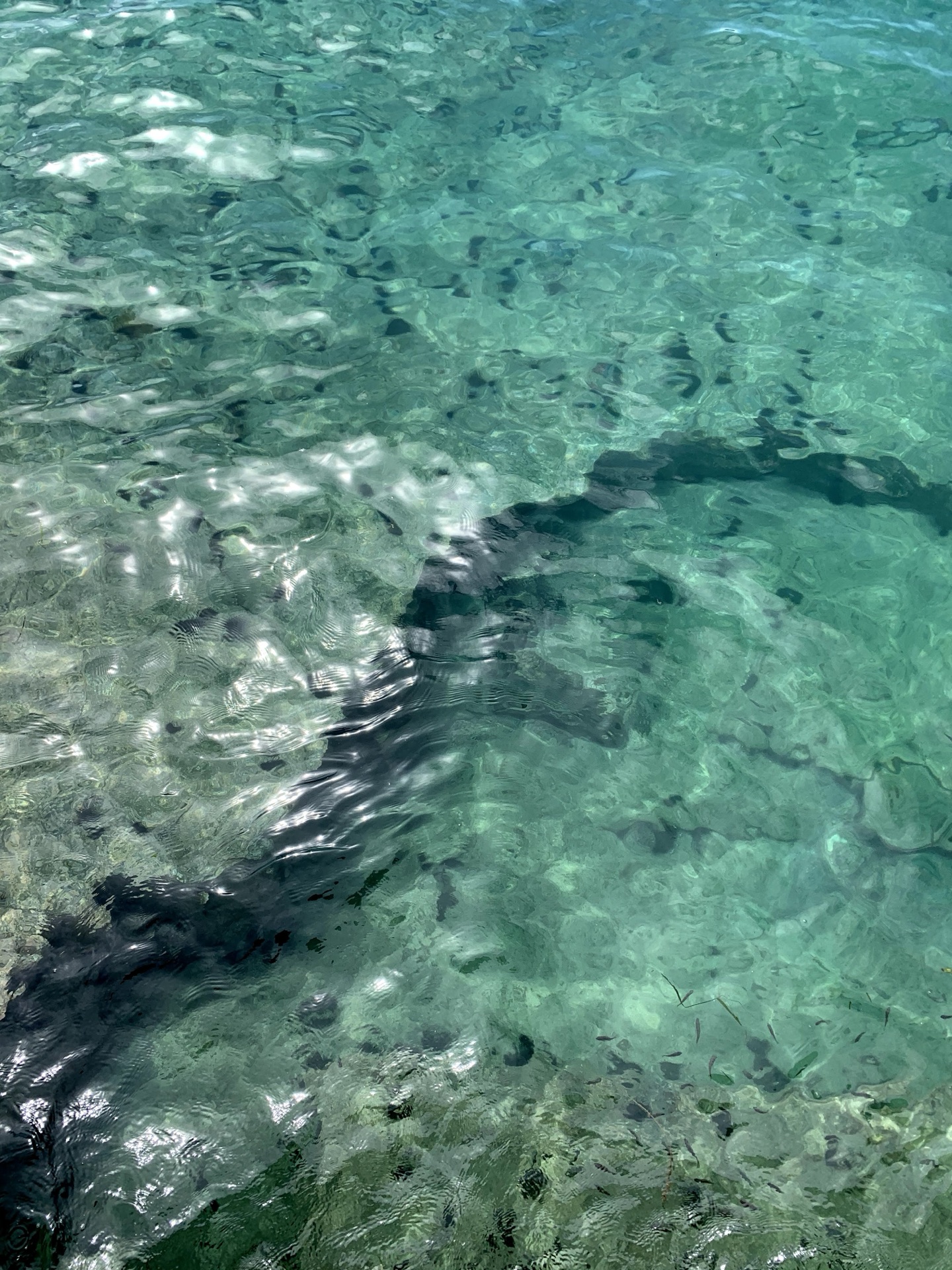
One thing the photographs don’t prepare you for is how clear the water is. The bay is sheltered enough that there’s almost no surf, no sediment lift, no tidal churn — you stand on the dockside and see straight to the rocks two metres down, schools of small fish drifting past in formation.
The water gets warmest in late August (locals swim), clearest in October, and most photogenic in early summer when the morning haze burns off but the day hasn’t gone full glare yet.
Where to eat — without overthinking it
There aren’t many restaurants in Ine. The cluster sits around the Funaya no Sato Ine roadside station, on a hilltop above the village, with the best wide view of the bay. The cafeteria there does straightforward seafood lunches, ¥1,200–2,000 sets, with a window that overlooks everything you came to see. A few funaya operate as small restaurants on the bay itself — reservations needed and harder to land than they look. Don’t fly in expecting to walk into a ryotei.
If you want a working alternative: the Ine Saryo cafe on the bay side serves coffee, sweet potato sweets, and an Ine-blue soda that is exactly as Instagrammable as it sounds. Open afternoons.
Staying overnight — the realistic options
Sponsored placement
Where to actually book
The funaya-as-minpaku option is the dream — sleeping above the boat dock, waking up to the bay — but inventory is small (perhaps 30 properties) and books out 2–3 months ahead in summer and autumn. Realistic alternatives: stay in Amanohashidate (60 min back south) where there’s a deeper hotel and ryokan inventory, then day-trip to Ine. Or stay in Miyazu mid-priced business hotels (45 min south).
If you do land a funaya stay, plan around a 3:00 PM check-in — the tour boats stop at 16:00 and the village empties out within 45 minutes. The first hour after the day-trippers leave is genuinely the best time of the entire trip.
Pre-trip checklist
Bring with you
- Cash + IC card. Cruise tickets accept cards; sea taxi is sometimes cash-only depending on the captain.
- Layered clothing. The bay is 5°C cooler than Kyoto city in summer, and breezy on the boats.
- Sun protection — the boat tours are exposed.
- A printed map or screenshot — mobile coverage is fine but battery drains fast in the open air.
- Camera with a lens that handles glare. Polariser if you have one.
- Patience for the queues, especially at lunch.
Where it is
Ine sits on the Tango Peninsula, 15 km north of Amanohashidate. The bay is the U-shaped indentation visible at the centre of the map.
Pair this with the rest of the Kyoto-by-the-sea region
If you’re already coming this far north, build a 2-day loop:
- Amanohashidate — one of the “Three Views of Japan”, a 3.6 km sand-bar pine forest you walk across. Pair with Ine on the same day or the day before.
- Funaya no Sato Ine roadside station — the hilltop viewpoint and lunch spot mentioned above
- For a deeper Kyoto-area trip, pair with the Hoshinoya Kyoto stay review, the preserved street at Atago-kaido, or our Kyoto tax-free shopping guide for the city days at the start or end of the trip
FAQ
Is one boat tour enough, or should I do both?
One is plenty. The cruise covers the same route as the sea taxi at slightly higher altitude and with more passengers. If your time is tight, take the cruise. If you have a flexible afternoon and like talking to fishermen, take the sea taxi.
Can I see the funaya without a boat?
Yes, but only partially. The road behind the funaya line lets you walk past the buildings; the public dockside path lets you stand right next to a few of them. The complete bay-line view that the photographs show is impossible from land. The hilltop at Funaya no Sato roadside station gives a wide overview but no detail.
Can I stay overnight in a funaya?
Yes — about 30 funaya operate as licensed minpaku (private accommodation) where you sleep on the second floor with the boat dock below you. Inventory is tight, prices ¥18,000–35,000 a night per person typical, books out 2–3 months ahead in peak season. Search through the Ine Tourism Association website for licensed properties.
Is it doable as a day trip from Kyoto?
Yes, but you’ll spend 5–6 hours in transit for a 3–4 hour visit. Possible from Kyoto Station 9:00 to 18:00, with breathing room. Better to combine with a night in Amanohashidate so you arrive in the morning and aren’t watching the clock all day.
What’s the best season?
Late May to early July, and October. Summer is humid and crowded; late autumn is cool but the boats run a tighter schedule. Winter is quiet and clear but cold — the bay rarely freezes but the wind off the open sea bites. Sakura season works if you build the trip around the wider Tango peninsula rather than expecting cherry trees in Ine itself.
Are bicycle rentals available?
Yes, at Funaya no Sato roadside station. Electric and regular bikes. Note: rentals are suspended Apr 29 – May 6, 2026 because of expected Golden Week crowds. Walking the village is fine without a bike anyway — the funaya line is only 5 km end to end and most visitors only see the central 1 km.
Will the boats run if it’s raining?
Light rain is fine; the cruise has covered seating. Heavy rain or strong wind cancels both the cruise and the sea taxis with little notice. Call the Ine Tourism Association (0772-32-0277) the morning of your visit if the forecast looks bad. Cancellations are usually announced by 8:00 AM.
If you’re exploring this stretch of the Kyoto coast around Amanohashidate, save room for a proper sit-down meal at Yama-ichi in Kyotango Mineyama, where the sushi and kappo lunch sets use the same Sea of Japan catch.
Join travelers discovering Japan's hidden side
Weekly dispatches from off-the-beaten-path Japan — spots and stories you won't find in guidebooks.
No spam. Unsubscribe anytime.
Welcome aboard!
You're in. See you in your inbox soon.