
Kumamoto ⇄ Nagasaki · Kyushu
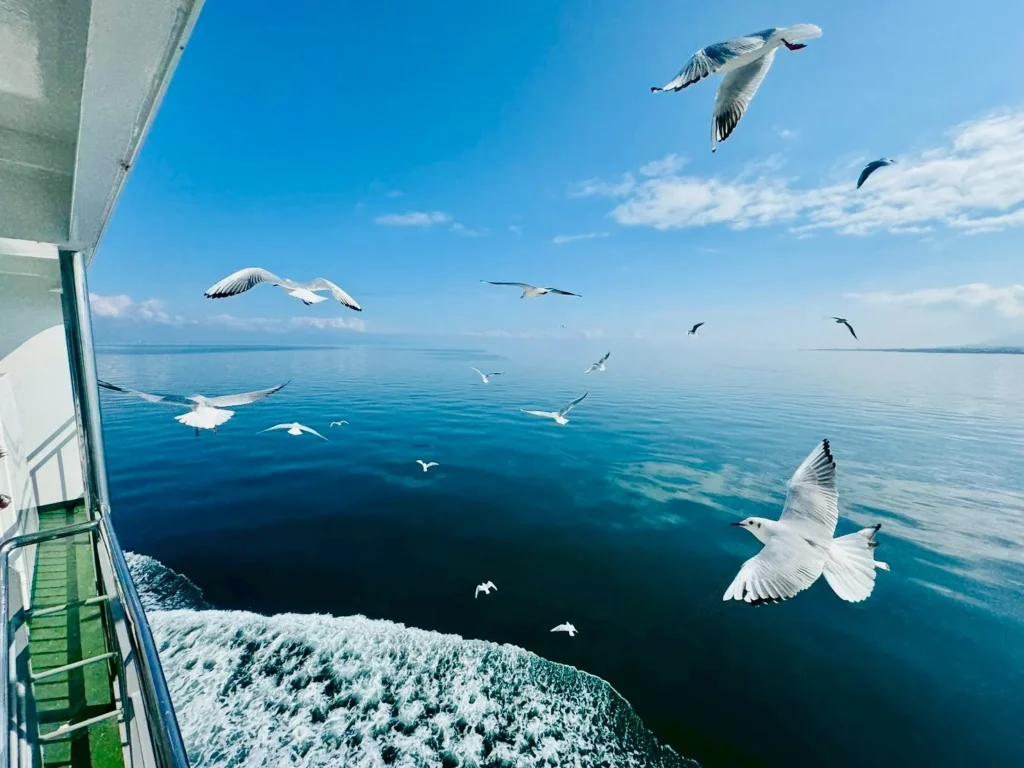
The Ariake Ferry crosses the Ariake Sea between Nagasu Port in Kumamoto and Taira Port on Nagasaki’s Shimabara Peninsula in about 45 minutes, sails roughly once an hour from 6:00 AM to 8:00 PM, costs ¥500 for an adult on foot or ¥2,900 for a car under 5 metres (driver included), and is best known for the wintering gulls you can hand-feed from the open deck in season — a shortcut that saves the long drive around the bay.
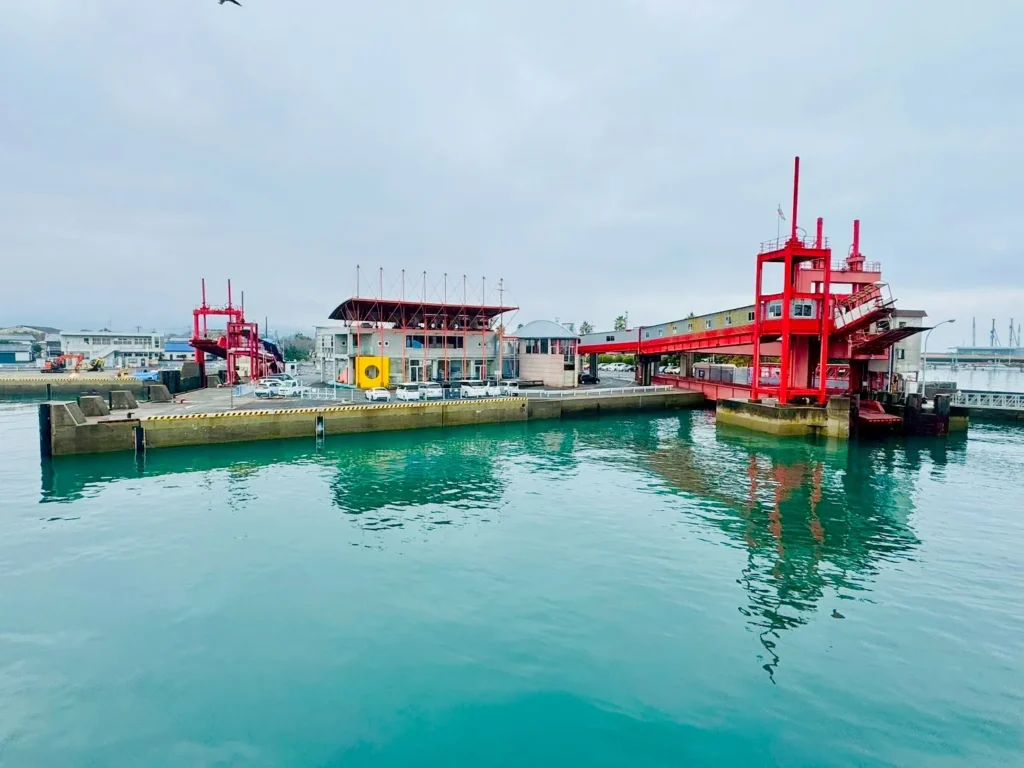
I took this ferry to reach the winter oyster huts at Konagai in Nagasaki, and it turned what would have been a dull detour around the coast into the best 45 minutes of the day. It connects two sides of one trip — the Kumamoto side and the Nagasaki side — so wherever you start, the boat is the easy way over.
A shortcut across the Ariake Sea
The Ariake Ferry is a working boat first — a floating bridge that carries cars, trucks and foot passengers between Kumamoto and the Shimabara Peninsula. For a traveller it’s a smart alternative to the long, winding drive around the top of the bay. You park, you rest, you stretch your legs, and 45 minutes later you roll off on the other side of the prefecture line. It never feels like a tourist attraction, which is exactly why it’s worth doing.
Ariake Ferry fares (2026, common vehicle lengths)
Foot passengers are ¥500 for an adult and ¥250 for a child one way; one pre-school child travels free per paying adult. Cars are priced by length, and the fare already includes the driver — so a car under 5 metres at ¥2,900 covers both the vehicle and the person behind the wheel. Extra passengers each pay the ¥500 foot fare.
| Vehicle length (driver included) | One-way fare |
|---|---|
| Under 3 m | ¥1,800 |
| Under 4 m | ¥2,500 |
| Under 5 m | ¥2,900 |
| Under 6 m | ¥3,300 |
| Under 7 m | ¥4,000 |
| Under 8 m | ¥5,000 |
Ariake Ferry schedule & timetable
The Ariake Ferry schedule is simple: boats leave both ports about once an hour from 6:00 AM to 8:00 PM — roughly 15 crossings a day. On peak dates — in 2026 these include most of August, Silver Week, October–November and the New Year period — it steps up to 19 crossings, departing every 30–60 minutes. The first sailing is at 6:00 AM and the last at 8:00 PM from each side; sailings can occasionally change or pause for weather or dock maintenance, so check the day’s operation status.
| Schedule pattern | Crossings/day | Frequency | Hours (both ports) |
|---|---|---|---|
| Standard (most of the year) | 15 | About hourly | 6:00 AM – 8:00 PM |
| Peak (summer, autumn, holidays) | 19 | Every 30–60 min | 6:00 AM – 8:00 PM |
Boarding with a car
Driving on is simple, but vehicle space is limited, so the order of operations matters.
1 · Arrive early
Get to the port at least 30 minutes ahead. During Golden Week, Obon and New Year, reservations aren’t taken at all — boarding is first-come, first-served, so come earlier. The operator has announced the same for Silver Week 2026: no car reservations from 19 to 23 September (notice dated 27 July), so those five days are first-come only.
2 · Buy your ticket
Pull up to the vehicle booth and tell them your car’s length. Have your shaken-sho (registration) handy in case they check. Pay in cash.
3 · Wait in the lane
You’ll be sent to a waiting lane. Boarding usually starts about 10 minutes before departure.
4 · Drive aboard
Follow the crew onto the car deck and park where they point. Then head upstairs for the crossing.
Foot passengers don’t need to plan around any of this — buy a ticket from the terminal machine (or the shop onboard) and walk on. Car reservations exist but are narrow: private passenger cars only (under 6 m long and 2 m high, one car per booking), from one month ahead until 8:00 PM the day before — no same-day bookings, and the 6:00 AM first sailing can’t be reserved (reservation site, or 0957-78-2105 on weekdays). Worth doing for summer and autumn weekends.
Most travellers who ride with a car are in a rental picked up in Kumamoto or Fukuoka — if that’s the plan, compare Kyushu rental cars before the trip; the ferry fare by car length above is what you’ll pay at the booth.
Onboard: a quiet, retro boat
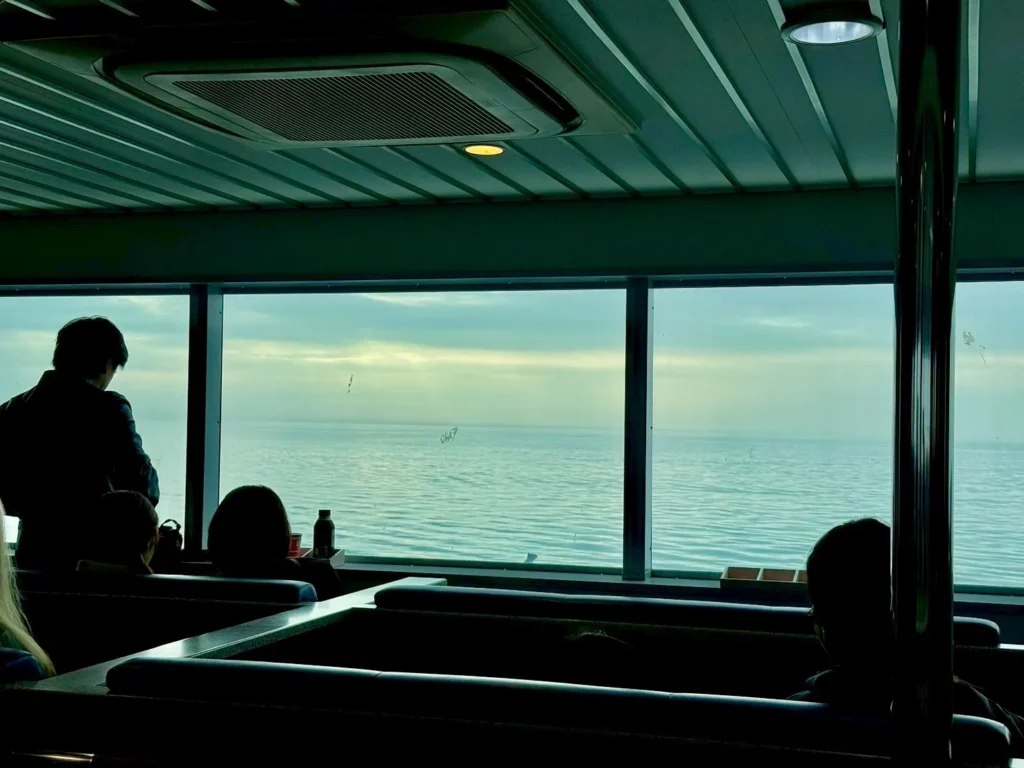
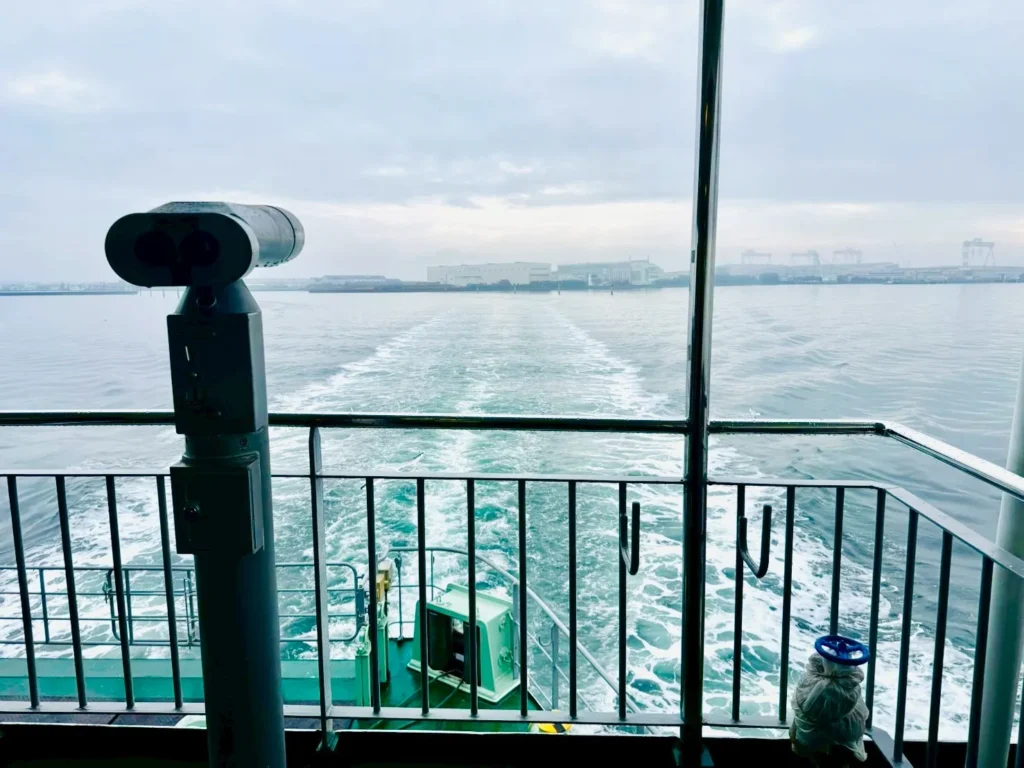
Inside, the Ariake Ferry has an unpretentious, slightly old-fashioned feel — booth seating, big windows, and a small shop (baiten) selling drinks, snacks, and the all-important bag of food for the gulls. A ¥200 coffee and a window seat is a fine way to watch one coastline shrink and the next one grow.
The main event: feeding the gulls
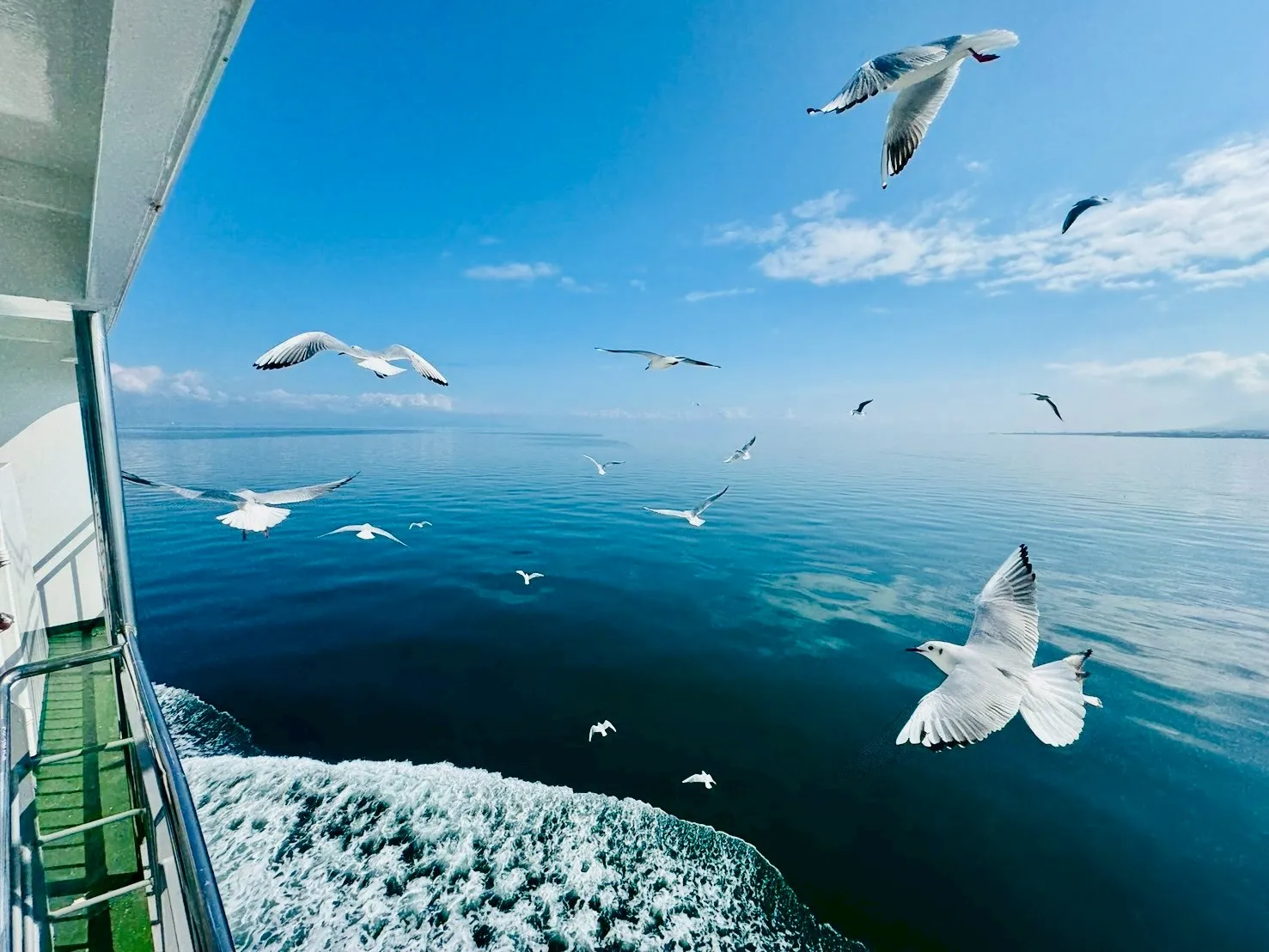
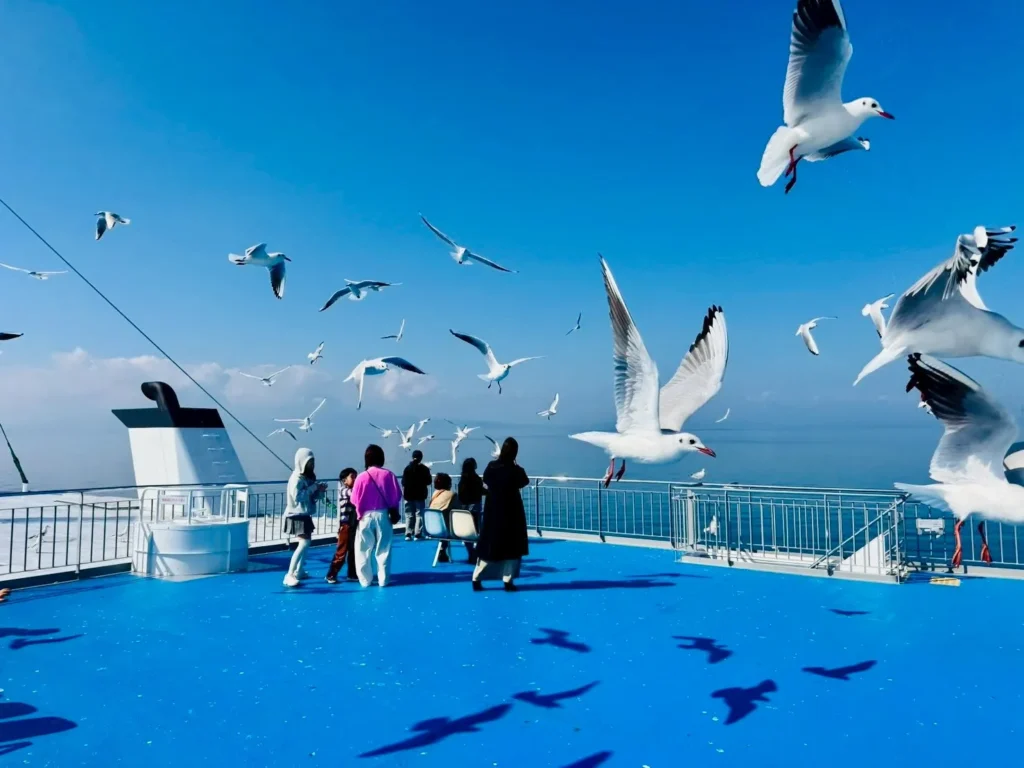
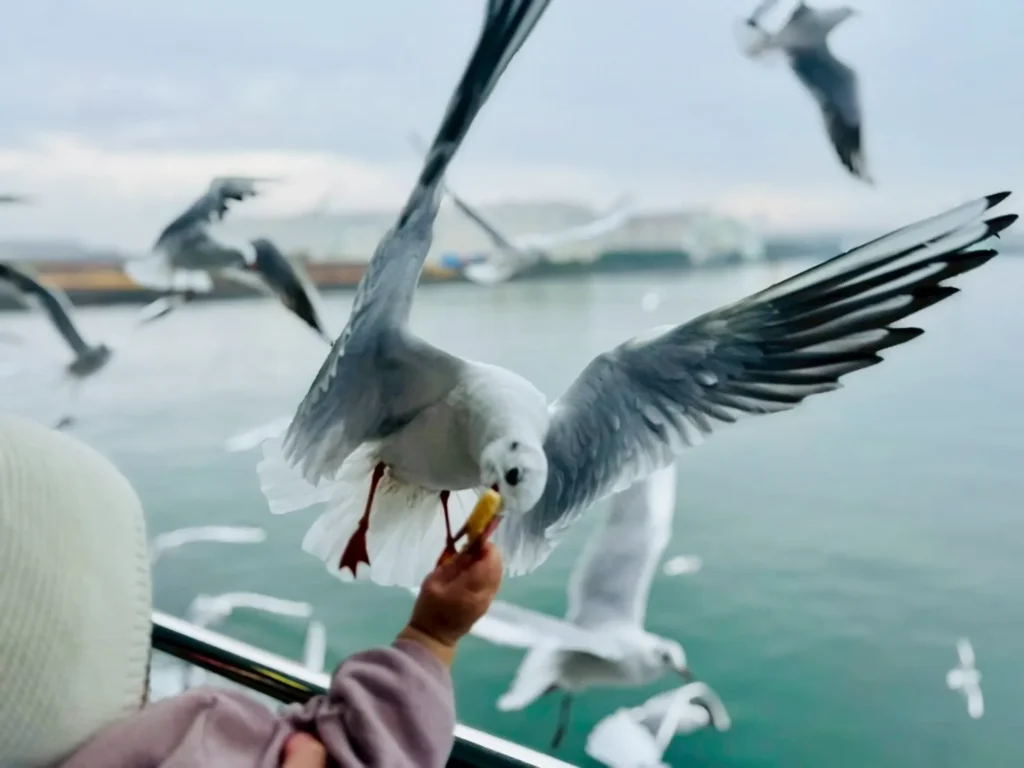
The reason most people remember this crossing is the black-headed gulls that escort the boat through the colder half of the year, from the moment it leaves the dock. Buy a small bag of snacks from the onboard shop first (a few hundred yen; shrimp crackers when I rode), then step out onto the open deck and hold one up. The gulls swoop in and take it straight from your fingers, dozens of them gliding alongside the rail. It’s loud, a little chaotic, and genuinely delightful — the highlight for kids and adults alike.
Practical tips
Buy snacks before the deck
Get your gull food from the shop first so you don’t miss the action queuing while everyone else is feeding.
Wear a hat
With that many birds overhead, droppings happen. A cap (and not your best jacket) is wise.
Check the season’s timetable
The schedule shifts a few times a year between the standard and peak patterns. Confirm your departure online before you drive out.
Bring cash
Fares are cash only — the operator accepts no cards, e-money or QR payments. Have yen ready for the ticket and the gull snacks.
The ferry links the Kumamoto side with the Shimabara Peninsula in one move. Here’s what’s an easy roll-off on each side:
Konagai oyster huts
My reason for crossing: grilled oysters by the water, a short drive from Taira in winter. See the oyster huts →
Unzen’s boiling hells
Up the road on the Shimabara Peninsula, the steaming jigoku of Unzen Onsen. Unzen jigoku guide →
More on the Nagasaki side
Day trips you can build around Taira and the Shimabara coast. Nagasaki-side day trips →
Back on the Kumamoto side
What’s worth your time around Nagasu and inland toward Aso. The Kumamoto side →
Make it a road trip
Fold the crossing into a longer loop through Kyushu’s volcanoes. The 7-day Ruby Route →
Ride the A-Train too
Kumamoto’s jazz-themed sightseeing train runs to Misumi, the other sea gateway – both crossings fit one loop. JR sightseeing trains guide →
Deeper into Kyushu
Takachiho Gorge is the classic add-on if you are looping toward Miyazaki. Takachiho Gorge guide →
Turn the crossing into the trip
How long is the Ariake Ferry crossing?
About 45 minutes between Nagasu Port (Kumamoto) and Taira Port (Nagasaki/Shimabara).
How much does it cost?
One way: ¥500 per adult on foot, ¥250 per child, and one pre-school child free per adult. A car under 5 metres is ¥2,900 with the driver included; other lengths run ¥1,800 (under 3 m) up to ¥5,000 (under 8 m).
What is the Ariake Ferry schedule?
The Ariake Ferry schedule runs roughly once an hour from both ports, 6:00 AM to 8:00 PM — about 15 crossings a day, rising to 19 in summer, autumn, and holiday peak periods. Check the official timetable for your exact date.
Do I need to book in advance?
Foot passengers never need to. For a car it’s worth reserving (online or by phone) on busy weekends to guarantee a spot — but reservations aren’t taken during Golden Week, Obon or New Year, when it’s first-come, first-served.
Can I pay by credit card?
No — the operator states it does not accept credit cards, e-money or QR-code payments for fares. Bring enough yen for the ticket and the onboard shop.
What’s the best part of the ride?
Feeding the gulls from the open deck — buy a ¥100–¥200 bag of snacks onboard and they’ll take it straight from your hand.
Is the ferry wheelchair accessible?
Partly: two of the three vessels (Ariake Mirai and Ariake Kibou) have wheelchair-accessible elevators; the Sunrise does not. If you need the elevator, contact the operator before travelling, arrive at least 20 minutes early, and note it may not be available in busy periods or during dock maintenance.
Join travelers discovering Japan's hidden side
Weekly dispatches from off-the-beaten-path Japan — spots and stories you won't find in guidebooks.
No spam. Unsubscribe anytime.
Welcome aboard!
You're in. See you in your inbox soon.