

Kyoto’s Higashiyama district is the most photographed square kilometer in Japan. Everyone has seen it. The question isn’t whether to go — it’s how to walk it so you don’t come home with the same tired shots as everyone else. The answer: go in the afternoon, arrive at Kiyomizudera around 16:30, and walk the route in the direction of the setting sun. I’m Nobutoshi from Hidden Japan Gems. In January 2023, I walked this route in exactly one hour, from 16:12 to 17:11 on a clear winter afternoon. This is the same route, photographed at the same times, with everything you need to do it yourself in 2026.
Table of Contents
Quick Facts
| Detail | Info |
|---|---|
| Route | Yasaka Pagoda → Sannenzaka → Ninenzaka → Kiyomizudera → Yasaka-dori (~1.5 km) |
| Duration | 60–120 minutes (with photo stops) |
| Best season | Winter (December–February) or late autumn for low golden light |
| Best time | Start at 16:00 in winter / 17:00 in summer for sunset arrival |
| Kiyomizudera admission (2026) | ¥500 adults / ¥200 students |
| Kiyomizudera hours | 6:00 AM – 6:00 PM (6:30 PM in July/August) |
| 2026 Night viewing dates | Aug 14–16, Nov 21–30 (¥600, until 21:30) |
| Yasaka Pagoda (Hokanji) | ¥400 — irregular opening, 10:00 AM – 4:00 PM only |
| Crowds | Heavy 11:00 AM – 3:00 PM; thinner after 16:00 |
| Photo difficulty | Easy (smartphone works); good gear yields better sunset shots |
| Best for | First-time Kyoto visitors, photographers, couples, golden hour chasers |
The Walking Route at a Glance
This walk covers approximately 1.5 kilometers through the best-preserved historical district in Kyoto. You’ll pass through:
- Yasaka-dori (八坂通) — the cobblestone approach street with the iconic Yasaka Pagoda framed at its end
- Sannenzaka (三年坂 / 産寧坂) — a steep stone-stepped street lined with Edo-period buildings
- Ninenzaka (二年坂) — a gentler slope continuing through preserved architecture
- Kiyomizudera (清水寺) — Kyoto’s most famous Buddhist temple, UNESCO World Heritage
Walking the route from the Yasaka Pagoda end toward Kiyomizudera puts the afternoon sun at your back for most of the walk, lighting the vermilion buildings in warm tones and silhouetting the pagodas against the western sky. This is the direction 90% of photographers don’t think about.
16:12 — First Sight of the Yasaka Pagoda
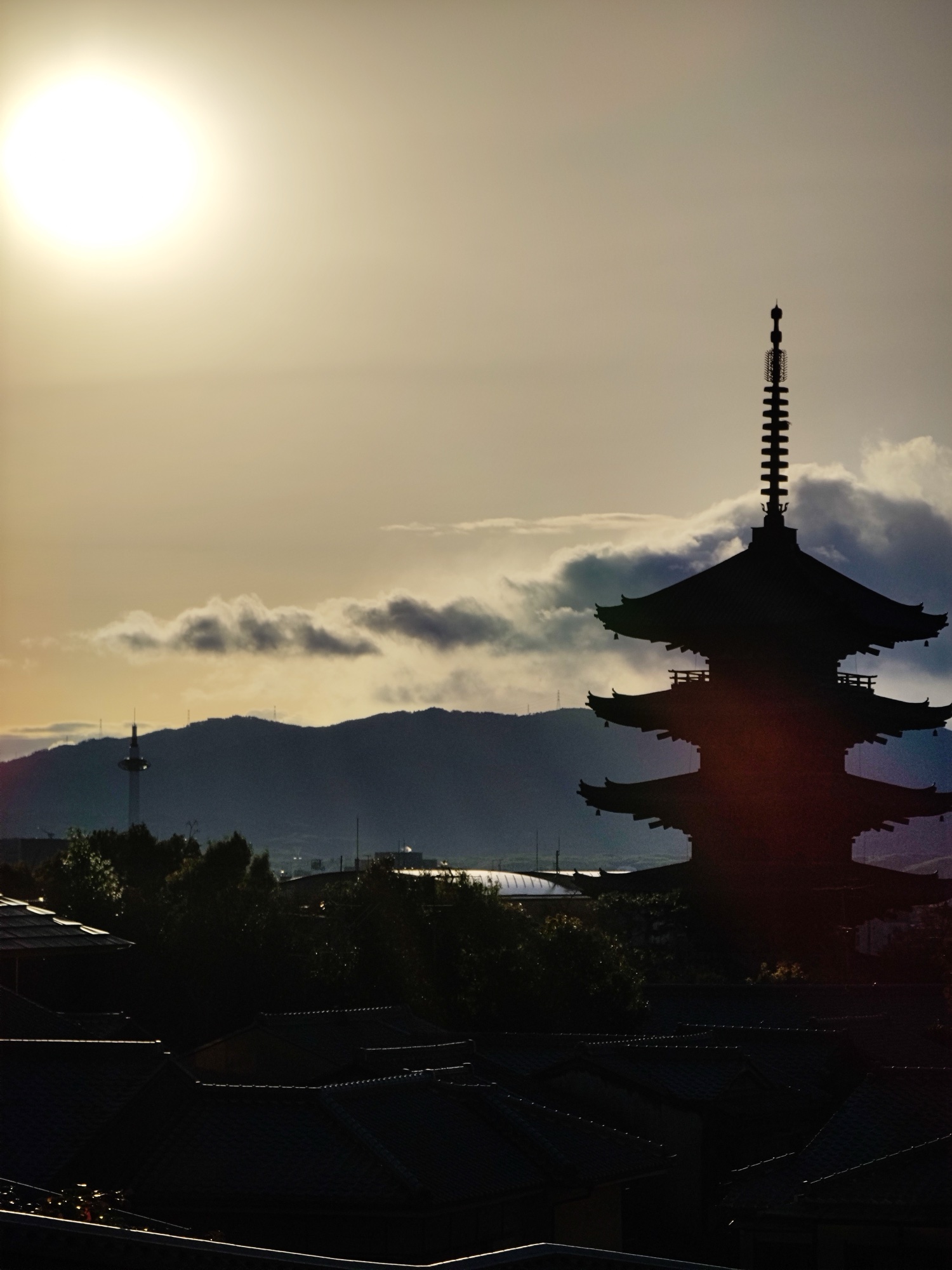
This is the first shot of the walk, taken at 16:12 from just above Yasaka-dori as you approach the preserved district. The five-story pagoda of Hokanji Temple (法観寺), known locally as Yasaka no To (八坂の塔), rises 46 meters above the rooftops of eastern Kyoto. It’s been here since 1440, when the current structure was rebuilt under the patronage of the Ashikaga shogunate. The original pagoda dates even further back — attributed to Prince Shotoku in the 6th century.
The pagoda itself is rarely open to the public — interior access is irregular, dependent on the temple’s schedule, and limited to visitors aged 12 and up (the internal staircase is too steep for younger children). But the external view is what makes it iconic. From almost any angle in eastern Kyoto, you can see this pagoda, and it anchors the entire Higashiyama skyline.
Pro tip from Nobutoshi: The best photograph of the Yasaka Pagoda isn’t from directly below — it’s from one of the sloped side streets that lead up from Yasaka-dori, looking back over rooftops. At 16:12 in January, the sun sits just above the pagoda’s peak, creating the silhouette effect you see here.
16:21 — Climbing Sannenzaka and Ninenzaka
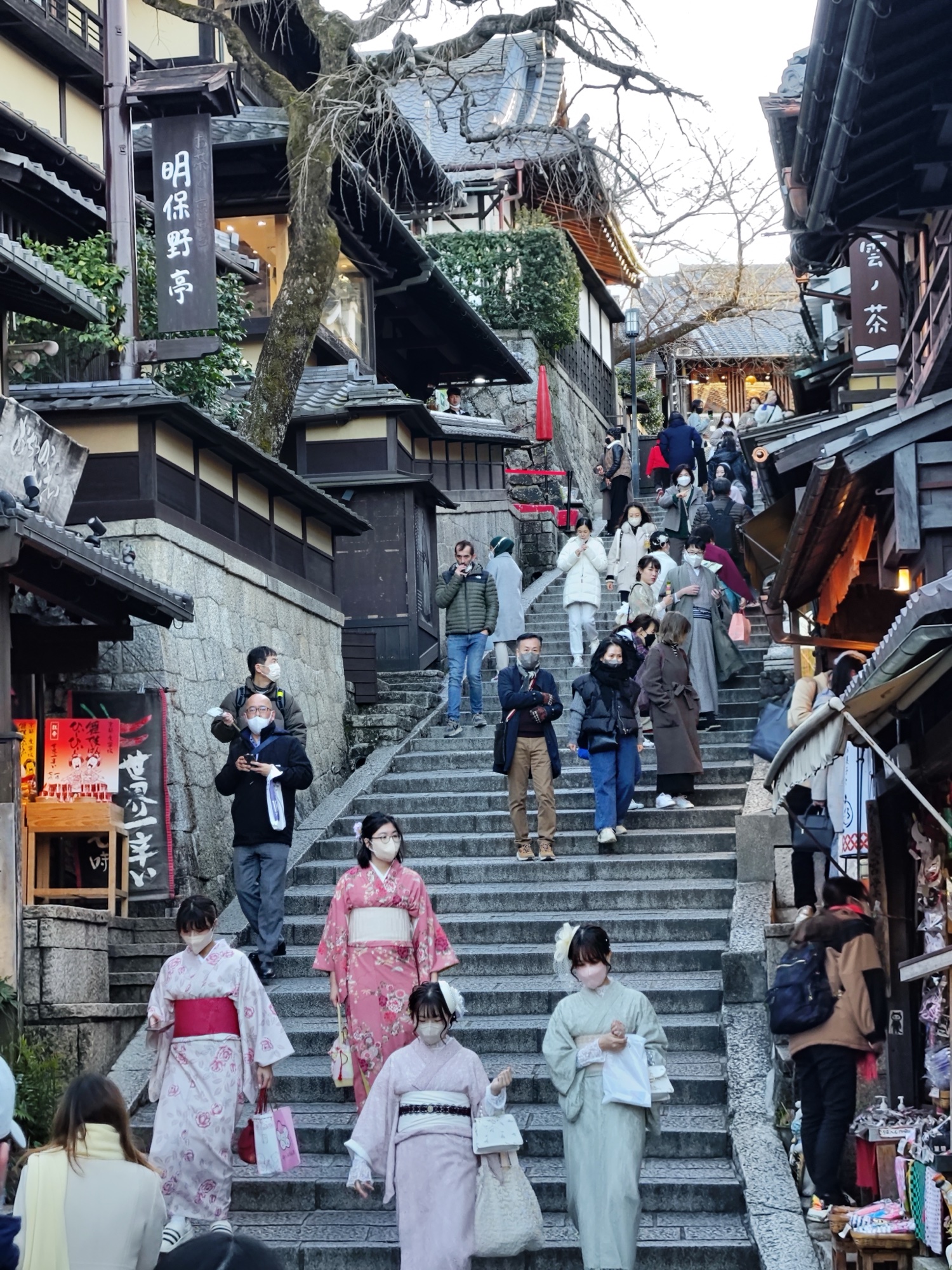
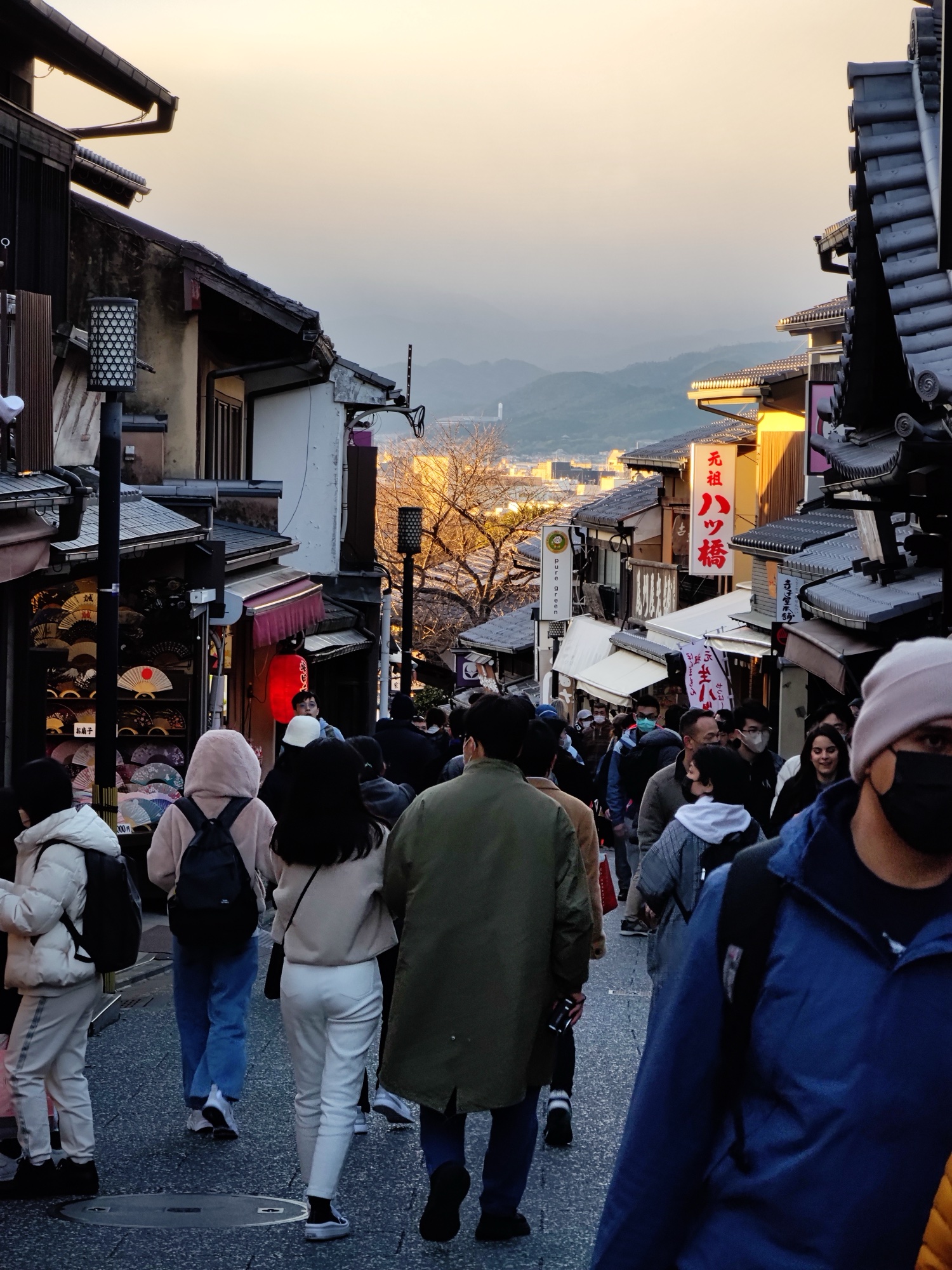
Nine minutes later (16:21), you reach the start of Sannenzaka (三年坂) — officially named Sannei-zaka (産寧坂). The name literally means “birth-wish slope,” a reference to the belief that pregnant women walking this route would have a safe delivery. More darkly, a local superstition holds that if you fall on these steps, you’ll die within three years — which is why locals walk them with uncharacteristic care.
The street is stone-stepped, narrow, and lined with traditional wooden buildings dating from the late Edo and early Meiji periods. It’s one of only four Important Preservation Districts for Groups of Traditional Buildings in Kyoto (the others being Gion Shinbashi, Kamigamo, and Saga Toriimoto).
The kimono factor: Kyoto’s kimono rental industry has exploded in the past decade. On any sunny afternoon, Sannenzaka is filled with visitors wearing colorful rental kimono, taking photos, eating ice cream, crowding the narrow lanes. It’s picturesque but not what the street looked like even 15 years ago. Accept it as part of the modern Higashiyama experience.
By 16:27 you’re continuing into Ninenzaka (二年坂), the gentler-sloped continuation toward Kiyomizudera. The view down this street opens toward the city and distant mountains — a reminder that Kyoto is a valley surrounded by hills, and Higashiyama is the eastern wall.
16:35 — Arriving at Kiyomizudera: The Nio-mon Gate
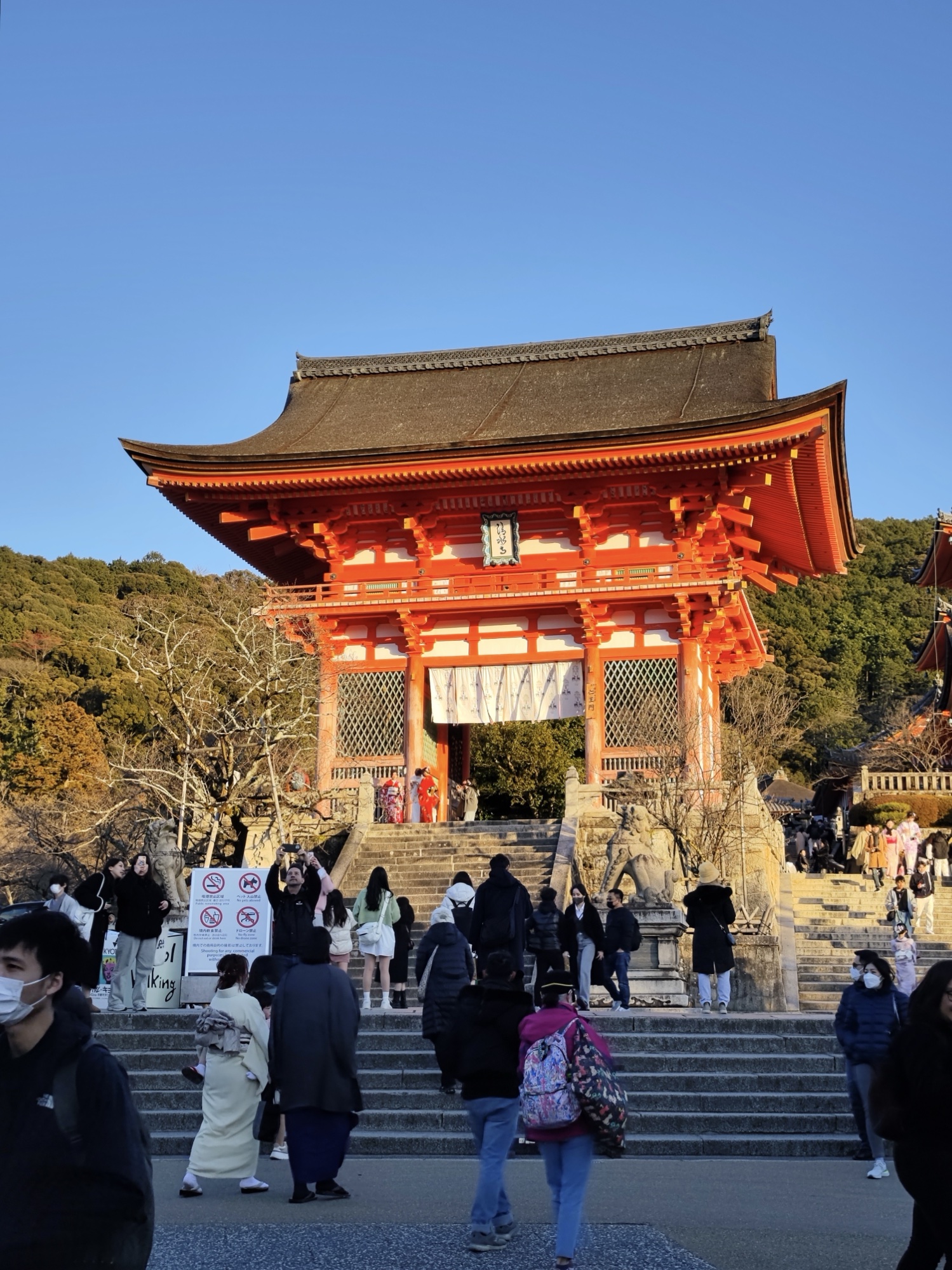
At 16:35, you crest the final slope of Ninenzaka and reach the Nio-mon Gate (仁王門) — the grand vermilion entrance to Kiyomizudera. The gate dates from the early 16th century, with the current structure restored in 2003. The two wooden guardian statues inside (the Nio) are what give the gate its name.
Kiyomizudera is a UNESCO World Heritage Site and one of Japan’s most visited temples. Unlike most of Japan’s Buddhist temples, it was founded in 778 — before Kyoto existed as a capital. The temple predates the city. That historical weight is part of why it remains spiritually significant rather than purely touristic, despite the crowds.
Admission and hours for 2026:
- Adults: ¥500
- Elementary and junior high: ¥200
- Hours: 6:00 AM – 6:00 PM (extended to 6:30 PM in July and August)
- 2026 Night viewing: August 14–16 (summer), November 21–30 (autumn) — ¥600, until 21:30
- Tickets: Sold at the gate, no advance reservation needed
The 16:30 advantage: Arriving at 16:30 in winter (the time this photo was taken) puts you roughly 90 minutes before closing. The daytime tour groups have mostly left. The light is soft and warm. And you still have enough time to walk the full temple grounds before the last entry.
16:39 — The Three-Story Pagoda in Winter Light
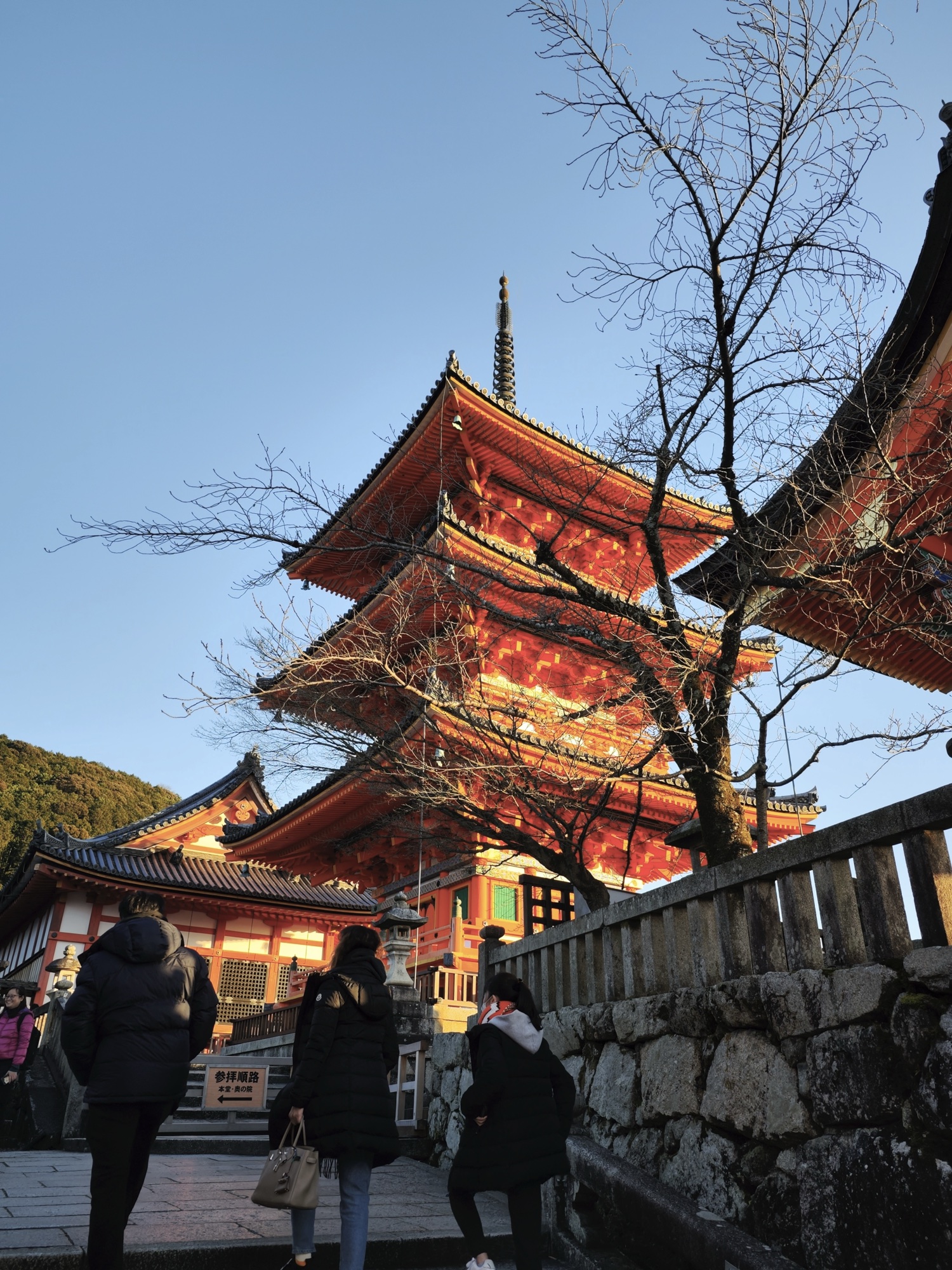
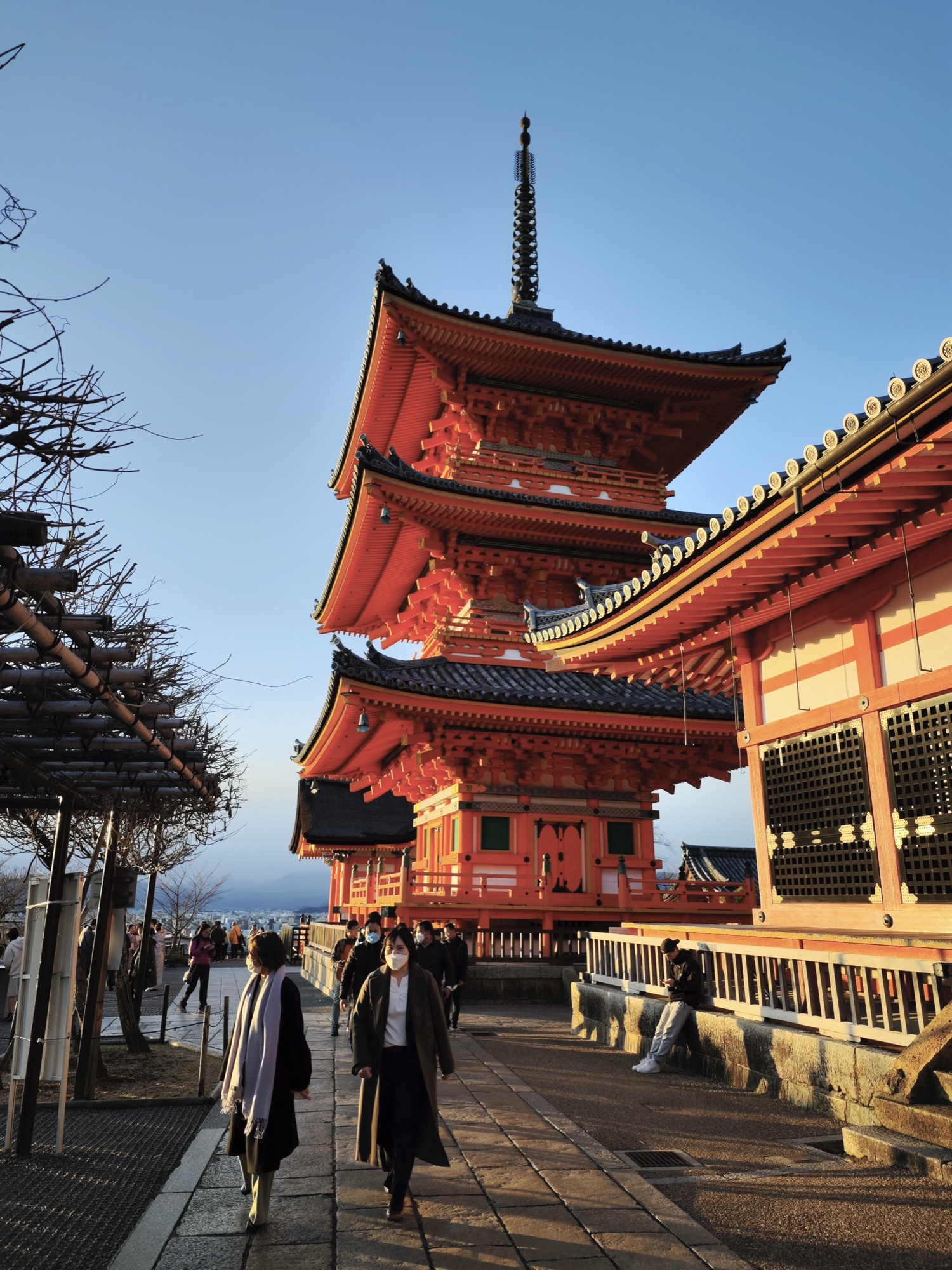
Four minutes later (16:39), you’re standing in front of Kiyomizudera’s three-story pagoda (三重塔). This is the Koyasu Pagoda, one of several historical buildings in the Kiyomizu compound, and at this time of day it catches the low sun directly.
The vermilion paint — bright cinnabar red — is maintained by the temple using traditional mineral pigments. In winter sunlight, with the bare maple branches around it, the color is extraordinary. The contrast between the weathered gray stone paths and the fresh red of the pagoda is one of the essential Kyoto visual experiences.
Two angles, two stories: The left photograph captures the pagoda as a vertical monument — framed by the bare winter tree, with visitors looking up in the foreground. The right photograph captures it as architecture — showing the stacked tiers, the curve of the eaves, the craftsmanship of the rooftops. Both are taken within three minutes of each other from slightly different positions.
This is what golden hour does to Kiyomizudera. The temple’s main hall (the famous wooden stage over the hillside) gets most of the photographs, but the smaller buildings — the three-story pagoda, the Zuigudo hall, the Otowa waterfall — are where the real atmosphere lives.
16:40 — The West Gate and the Kyoto City View
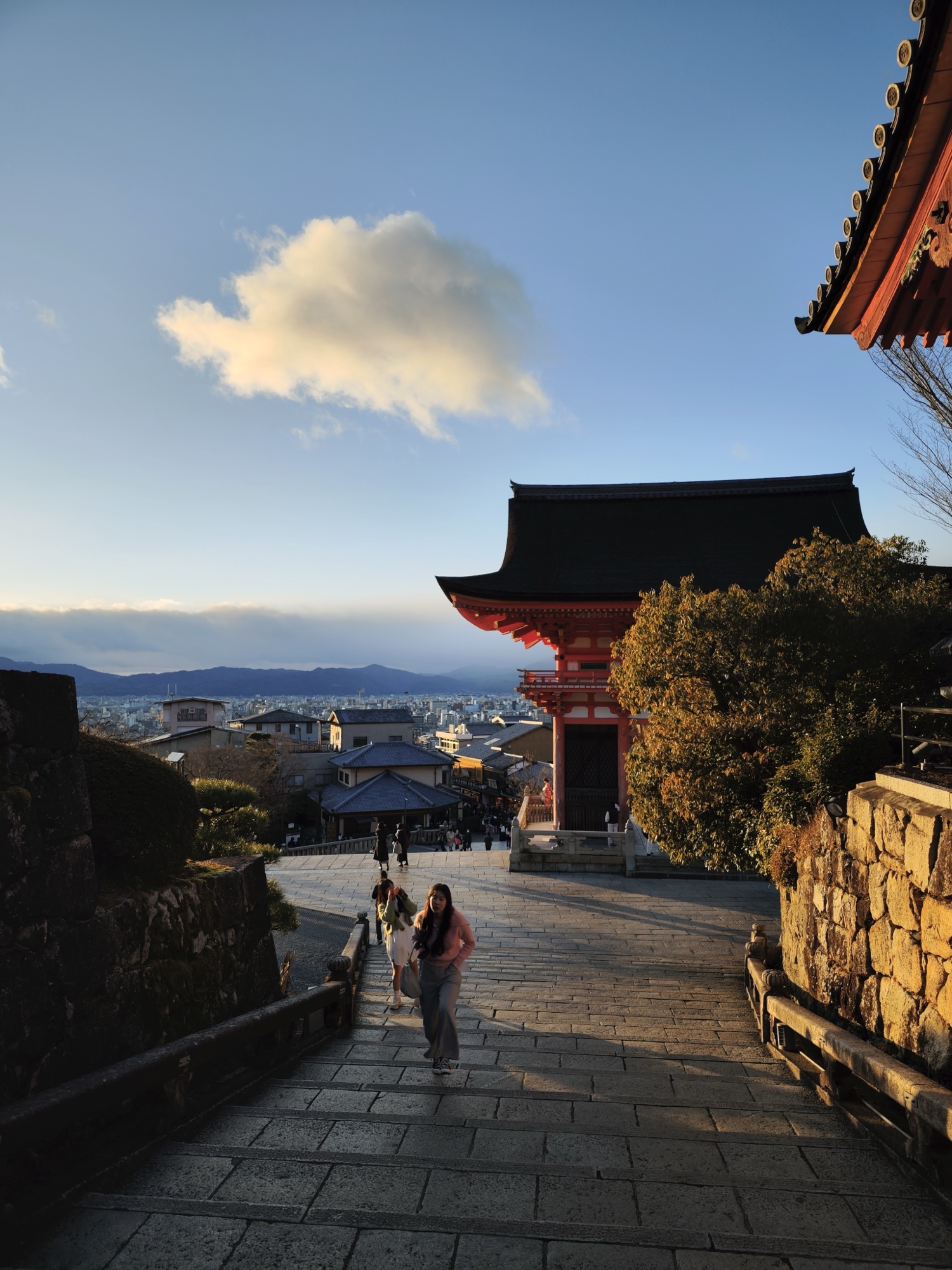
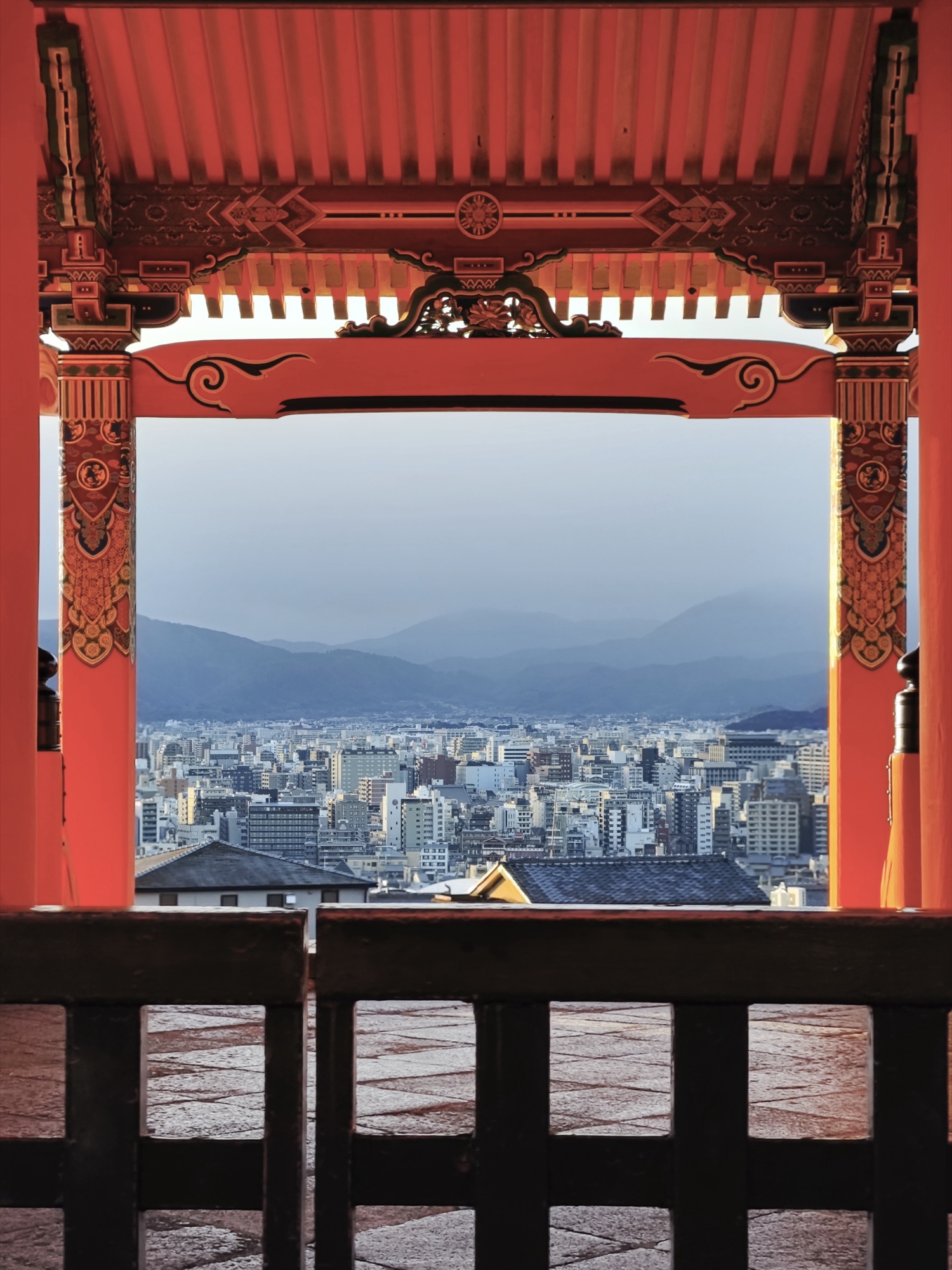
The Nishi-mon (West Gate / 西門) of Kiyomizudera is one of the most underappreciated photo spots in Kyoto. Most visitors rush past it on their way to the famous wooden stage. But the West Gate sits at the highest western edge of the temple grounds, facing directly out over the city of Kyoto.
At sunset, the view from the West Gate is the best sunset panorama in central Kyoto. You can see the grid of the old capital — the low buildings, the rising mountains on the far side, and in the distance the profile of the Kyoto Tower.
The framed composition (right photograph) is what makes this spot special. The vermilion columns and decorative roof beams of the gate become a natural frame for the view beyond. The wooden railing in the foreground gives depth. The distant mountains compress the city into a narrow band, creating a sense of scale and history.
The gate is associated with the Pure Land Buddhist tradition of Nissokan (日想観) — the meditative practice of watching the sun set in the west, visualizing the paradise of Amida Buddha. This isn’t just a view spot. It’s a place designed for sunset contemplation.
17:11 — The Walk Back Through Yasaka-dori
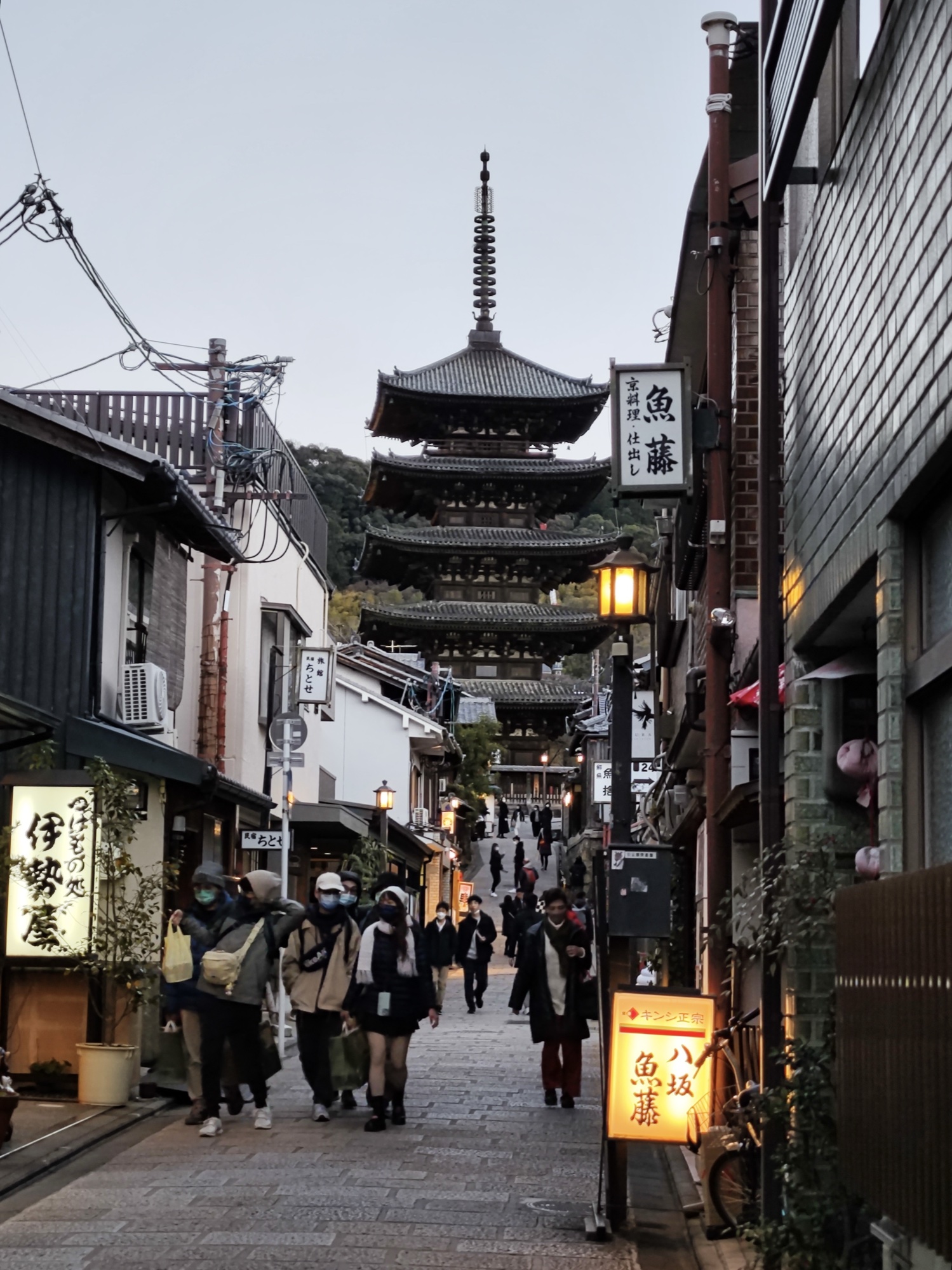
By 17:11 — one hour after the first photograph — the light has shifted from warm golden to cool blue. The afternoon is gone. You’re walking back through Yasaka-dori (八坂通), the narrow cobblestone street that frames the Yasaka Pagoda at its end.
This is the most famous photograph in all of Higashiyama. You’ve probably seen it a thousand times — on Instagram, in travel brochures, on the cover of Kyoto guidebooks. The pagoda rising at the end of the preserved street, with traditional buildings narrowing toward it, lanterns starting to glow, the city slipping into evening.
What makes it special at 17:11:
- The daytime crowds have thinned
- Shop lanterns begin to light up against the darkening sky
- The pagoda silhouette becomes the clearest shape in the frame
- Blue hour light flattens the color palette into muted tones
This is the image you came for. Everyone photographs Yasaka-dori during midday, when the light is flat and the crowds are oppressive. But come at 17:00 in winter or 18:30 in summer, and you get the same view with 30% of the crowd and 200% of the atmosphere.
When to Walk This Route
The exact same walk at a different time of year gives you a completely different photograph. Here’s when to plan it:
| Season | Starting time | What you get |
|---|---|---|
| Winter (Dec–Feb) | 15:30 | Lowest sun angle, bare trees framing the pagodas, crispest light — best for the silhouette photos |
| Spring (Apr) | 17:00 | Cherry blossoms around Sannenzaka and Kiyomizudera, pink contrast with vermilion |
| Summer (Jun–Aug) | 18:00 | Green lush backgrounds, warm evening light, night viewing at Kiyomizudera in August |
| Autumn (Nov) | 15:30 | Red maple contrast, the most photographed season — heaviest crowds, but arguably the best color |
Time of day:
- 16:00 start in winter = arrival at Kiyomizudera by 16:30, golden hour from 16:30–17:00
- 17:00 start in summer = same pattern shifted two hours later for the longer daylight
- Avoid midday — harsh overhead light, oppressive crowds, no shadows on the vermilion buildings
Day of week:
- Weekday afternoons are dramatically less crowded than weekends
- Rainy days cut crowds by 50–70% and give wet cobblestones reflective atmosphere
- Avoid Golden Week (late April / early May) and Obon (mid-August) unless you’re prepared for the worst crowds of the year
Practical Tips
- Walk uphill, photograph downhill. The route climbs from Yasaka-dori to Kiyomizudera. Walk up, reach the temple, then photograph on the way back when the light is warmer and your legs are rested.
- Wear comfortable shoes. Stone steps, cobblestones, and uneven paths throughout. No heels.
- Cash for small shops. Many of the traditional shops on Sannenzaka don’t accept cards.
- Buy water or snacks at the Kiyomizudera approach before entering. The shops along the walk sell everything from matcha ice cream to grilled mochi. This is one of the essential Kyoto food walking routes.
- Kimono rental: If you want to rent kimono for photos, book in advance. Rental shops near Gion and Kiyomizu get fully booked on weekends. Budget ¥3,000–5,000 for basic rental, ¥8,000–15,000 for premium sets with hairstyling.
- Yasaka Pagoda interior: Irregular. The temple opens the pagoda’s interior on specific days only — often announced last-minute. If you find it open during your visit, the climb to the upper levels is worth it, but prepare for a very steep wooden staircase. Children under 12 not permitted inside.
- Kiyomizudera crowds strategy: Arrive by 16:00 to beat the late-afternoon group tours. By 16:30 most tour buses have departed.
- Combine with Gion: If you have more time, extend the walk west from Yasaka-dori through Higashiyama to Yasaka Shrine and into Gion proper. Add 30–45 minutes to your walking time.
- Public transport: The nearest bus stop is Kiyomizu-michi (清水道). Kyoto City Bus routes 100, 206, and 207 stop there. From Kyoto Station, 20 minutes by bus.
FAQ
How long does this walking route take?
The pure walking time is 30–40 minutes. With photo stops at Sannenzaka, Ninenzaka, Kiyomizudera, and the viewpoints, budget 90–120 minutes. Adding a temple interior visit or a food stop adds 30–60 minutes.
What’s the best time of day to walk Higashiyama?
Late afternoon into sunset. Start your walk around 16:00 in winter (December–February) or 17:00 in summer to arrive at Kiyomizudera during golden hour. The light is warm, the crowds thin after 16:00, and the Kiyomizudera West Gate faces west for the sunset.
Can I visit the Yasaka Pagoda interior?
Sometimes. The temple (Hokanji) opens the pagoda’s interior on irregular days, typically 10:00 AM – 4:00 PM, for ¥400 admission. Children under 12 are not permitted inside due to the steep internal staircase. Confirm by calling the temple at 075-551-2417 before visiting.
How much is admission to Kiyomizudera in 2026?
¥500 for adults, ¥200 for elementary and junior high students. During the 2026 night viewing periods (August 14–16, November 21–30), admission is ¥600 and the temple stays open until 21:30.
Is this walk suitable for children?
Yes, but the stone steps on Sannenzaka are steep, and the crowds can be challenging for young children. Stroller-friendly? Not really — Sannenzaka’s steps make stroller navigation difficult. Carriers or toddler backpacks work better.
Can I walk this route in the rain?
Absolutely, and it’s one of the most atmospheric Kyoto experiences. Rainy afternoon Sannenzaka is nearly empty, wet cobblestones reflect the lanterns, and Kiyomizudera under umbrellas is hauntingly beautiful. Bring waterproof shoes.
Where should I start and end the walk?
Start from the Yasaka Pagoda end (closer to Gion) and walk uphill toward Kiyomizudera. This puts the sun at your back during the climb and gives you the best sunset light at the temple. End either by retracing your steps (best for photos) or by descending back to Kiyomizu-michi bus stop.
Is Kiyomizudera crowded?
Yes, especially 10:00 AM – 3:00 PM. Arriving after 16:00 reduces crowds significantly. Weekday afternoons in winter (January–February, excluding holidays) are the quietest time. Avoid weekends during spring cherry blossoms and autumn leaves.
What if I only have time for one stop?
Walk Sannenzaka and Ninenzaka, end at Kiyomizudera’s Nio-mon Gate, and turn back. You’ll see the three most iconic streets in Higashiyama and the entrance gate of Kyoto’s most famous temple in under an hour.
Final Thoughts
The Higashiyama walking route is the most-photographed path in Japan, and that makes it hard to see clearly. Everyone has pre-set expectations. The same angles appear on every Instagram feed. The crowds during daylight hours can turn what should be a contemplative walk into a shuffling queue.
But walk it at 16:00 in January, when the sun is low and the air is sharp and the crowds have started to thin, and the whole district transforms. The vermilion pagodas glow. The cobblestones take on a warm amber tone. The mountains behind Kiyomizudera become visible against the clearing winter sky.
The one-hour walk photographed in this article happened on exactly that kind of afternoon. January 16, 2023. 16:12 to 17:11. Nothing special — just a winter afternoon, a cold blue sky, and an eye for when the light goes golden.
That’s the secret. Not a secret route or an empty temple or a hidden shrine. Just the same path everyone walks, at the time when the light makes it new.
Related Articles on Hidden Japan Gems
- Guide to Kyoto
- Why Early Morning and Late Night Are the Best Times to See Kyoto
- Yasaka Shrine: A 1300-Year-Old Head Shrine in Gion
- Atago Kaido (Saga Toriimoto): Kyoto’s Hidden Preserved Street
- Adashino Nenbutsuji Temple Guide
- Hoshinoya Kyoto Stay Review
- Daikakuji Temple Kyoto Guide
- Jonangu Shrine Guide

- Nidec Kyoto Tower 2026: The View from the Only Skyline in Town
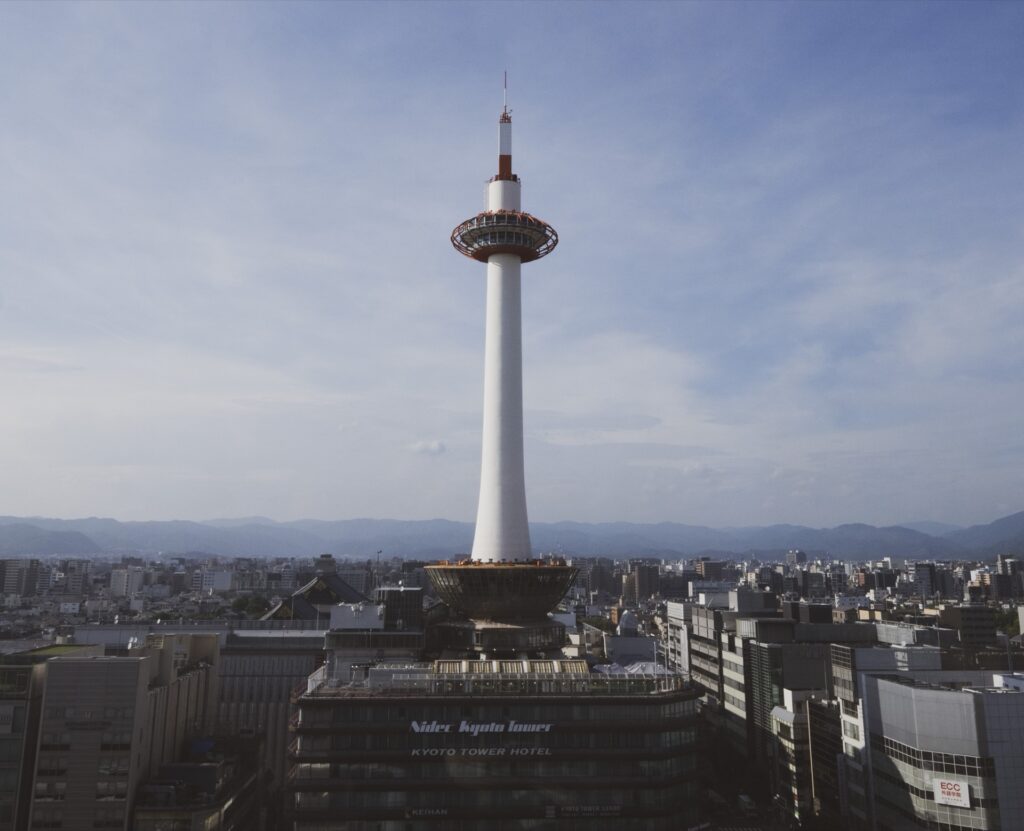 Kyoto · Kyoto Station · Observation Nidec Kyoto Tower 2026: The View from the Only Skyline in Town Most travelers walk past it on the way out of Kyoto Station.… Read more: Nidec Kyoto Tower 2026: The View from the Only Skyline in Town
 - Minamiza 2026: Kyoto’s 400-Year-Old Kabuki Theatre, Walked by a Kyoto-Born Local
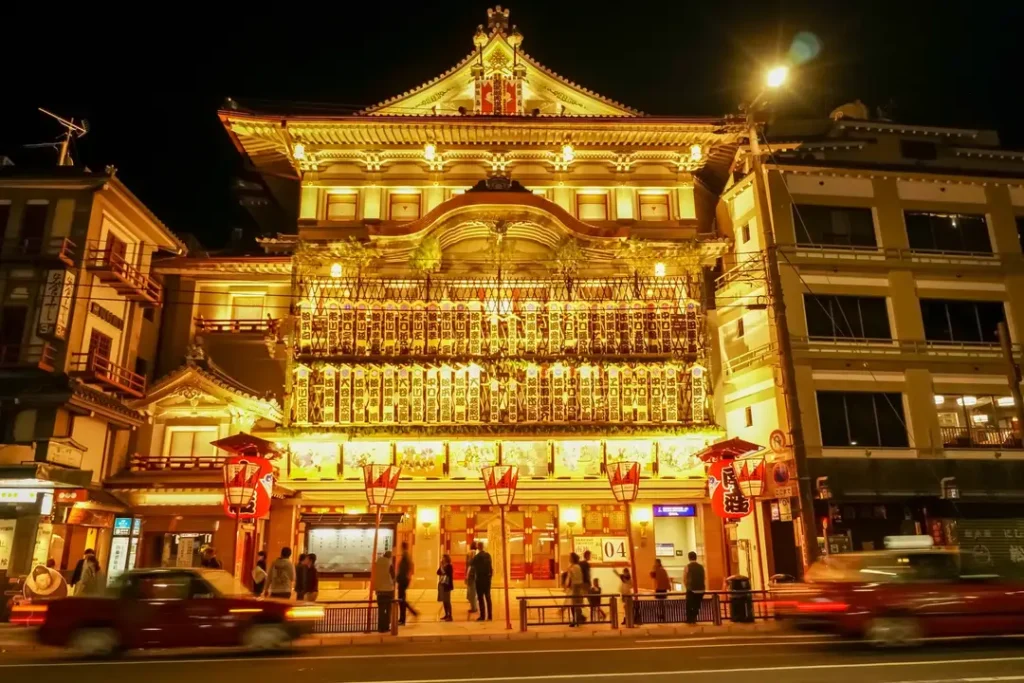 A Kyoto-born local walk through Minamiza, the Edo-period kabuki theatre on Shijo Bridge. 2026 schedule, ticket tiers, the English audio guide that opens it up.
 - Toji Temple Kyoto 2026: Japans Tallest Wooden Pagoda 15 Minutes from Kyoto Station
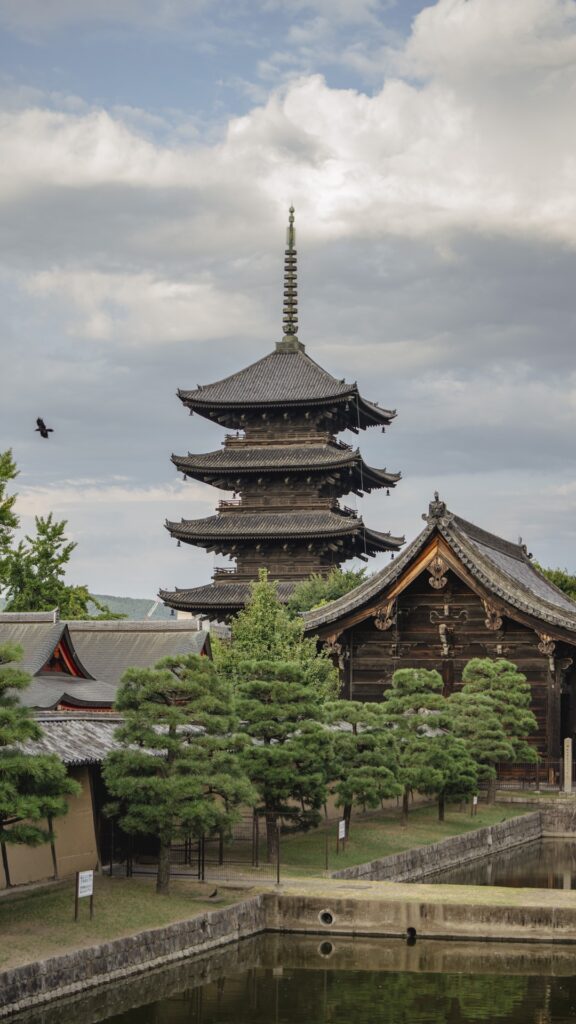 Kyoto · World Heritage · Temple Toji Temple 2026: Japan’s Tallest Wooden Pagoda, 15 Minutes from Kyoto Station A 1,200-year-old World Heritage temple most travelers walk past on their way… Read more: Toji Temple Kyoto 2026: Japans Tallest Wooden Pagoda 15 Minutes from Kyoto Station
 - Ine no Funaya 2026: How to Visit Kyoto Boat-House Village (Without Tripping the Locals)
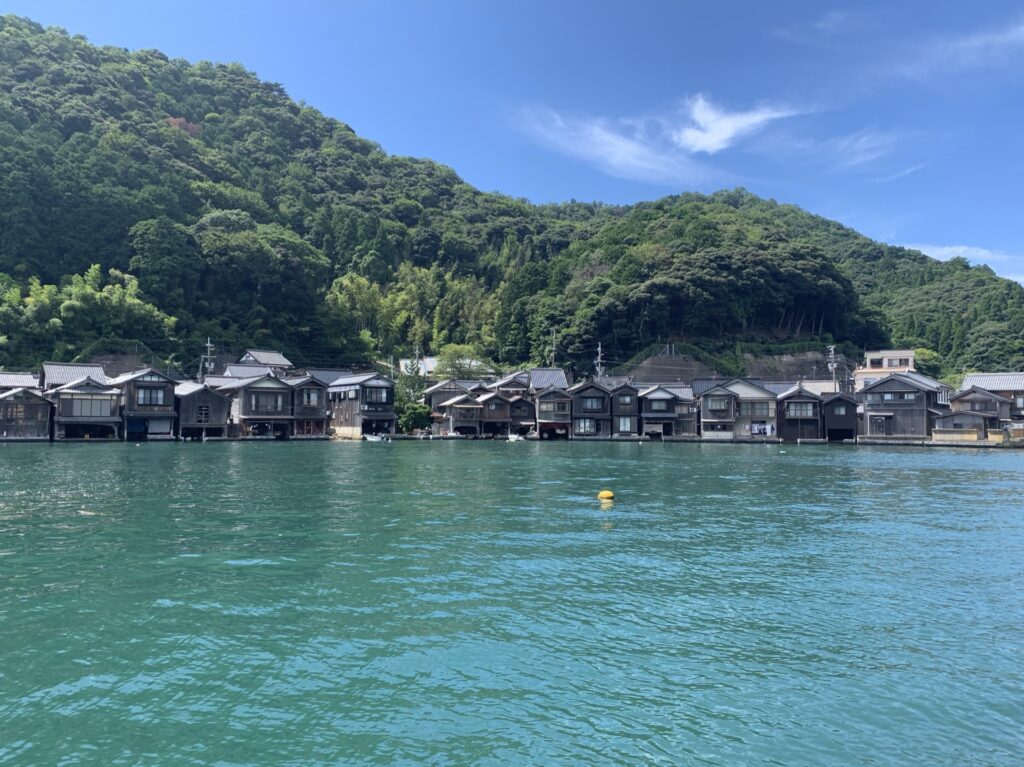 Field report from Ine no Funaya in northern Kyoto: cruise vs sea taxi, access from Kyoto Station, walking-village etiquette, and where to actually stay nearby.
 - Kombu & Men Kiichi: A 45-Minute Kombu Ramen Experience Above a 1902 Kelp Shop in Kyoto Nishijin
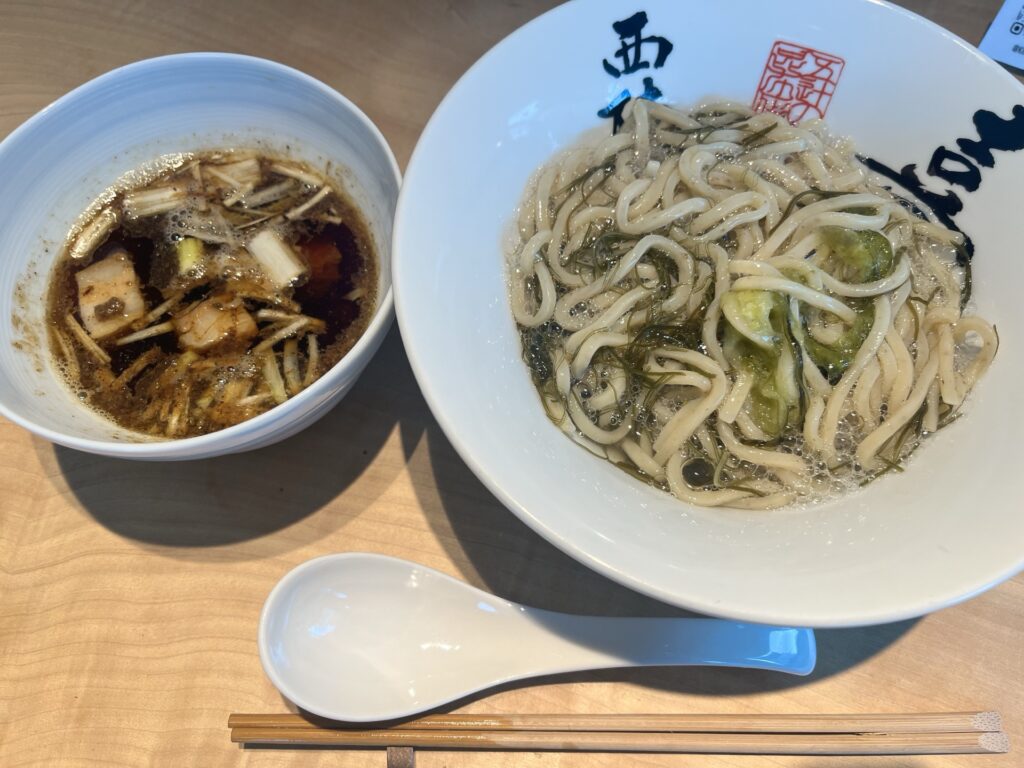 Reservation-only kombu ramen experience above the 1902 Itutuji no Kombu kelp shop in Kyoto Nishijin. Three seatings a day, ¥1,520 plus the one-kombu rule. Field report by Nobu.
2026 cherry blossom cherry blossoms day trip from tokyo flower festival fuji five lakes fujiyoshida Fukuoka fushimi hanami hiking japan japanese culture japanese food japan travel kamakura Kamikochi kanagawa kawagoe kawaguchiko Kumamoto kyoto Mount Fuji mt fuji Nagano Nikko Oku-Nikko Onsen Ramen ryokan saitama sakura Shizuoka shrine sightseeing spring spring in japan Tokyo travel travel guide Travel Guide 2026 when to visit japan winter winter travel Yamanashi
Join 1,000+ travelers discovering Japan's hidden side
Weekly dispatches from off-the-beaten-path Japan — spots and stories you won't find in guidebooks.
No spam. Unsubscribe anytime.
Welcome aboard!
You're in. See you in your inbox soon.