Saga · Imari · Shrine
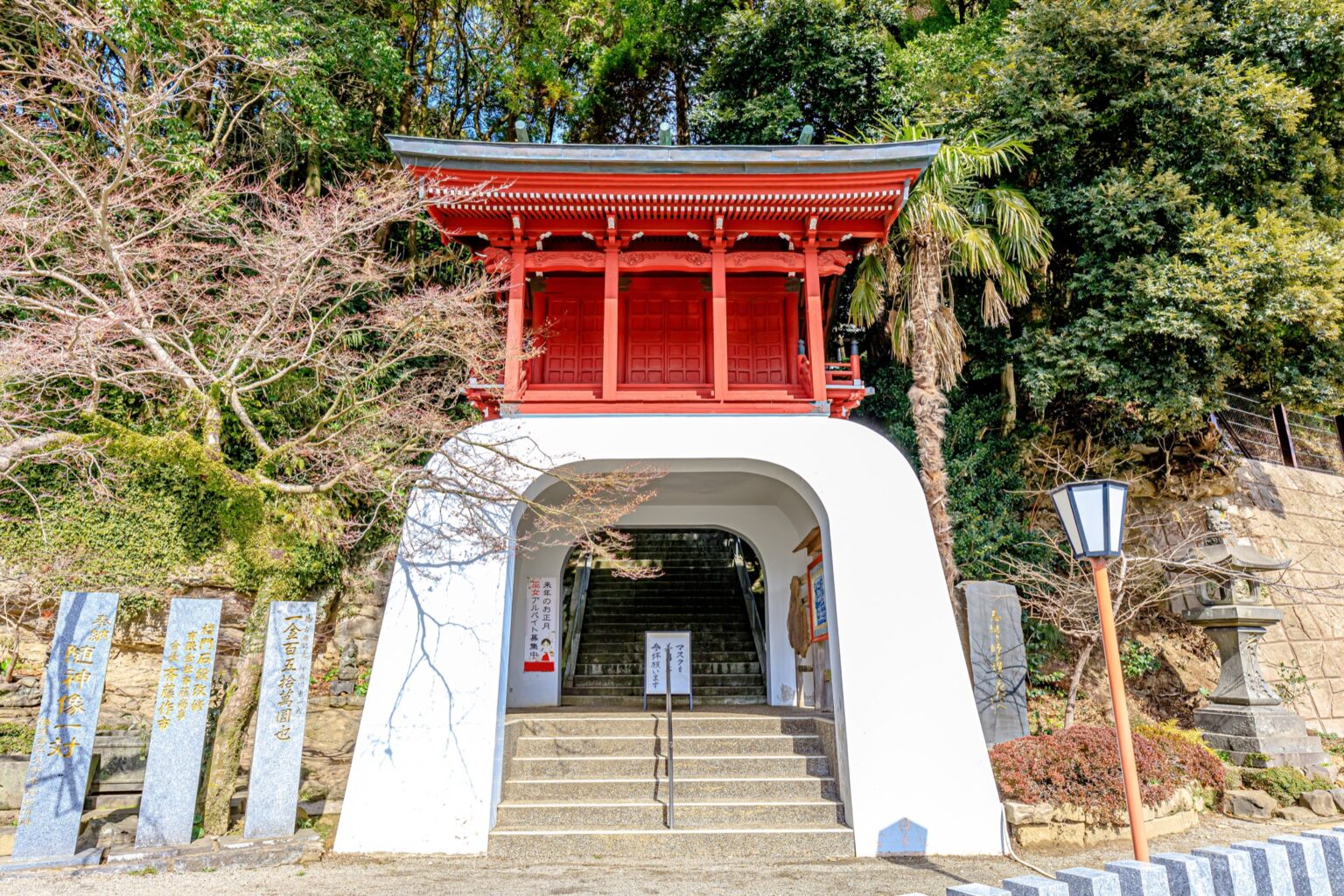
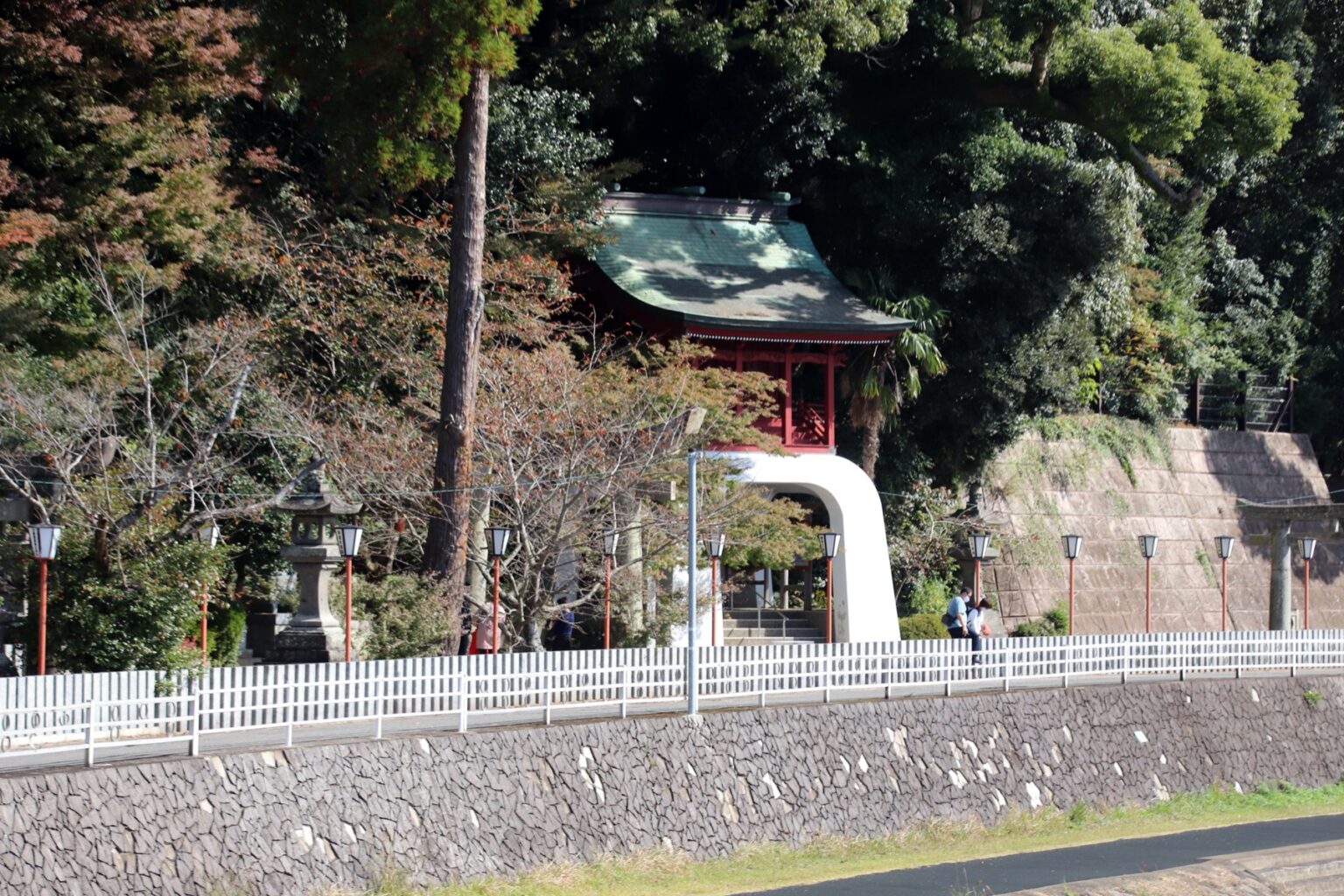
Imari Shrine is best known for two things: a vermilion tower gate that sits over a white arched tunnel — one of the more photogenic shrine entrances in Kyushu — and a small sub-shrine to the god of sweets. The shrine as it stands today was formed in 1962 by merging three older shrines, one of which traces back centuries, and every autumn it hosts Tontenton, one of Japan’s three great “fighting festivals.” I stopped in on a quiet afternoon just before the autumn colour came on.
Older than it looks, newer than you’d think
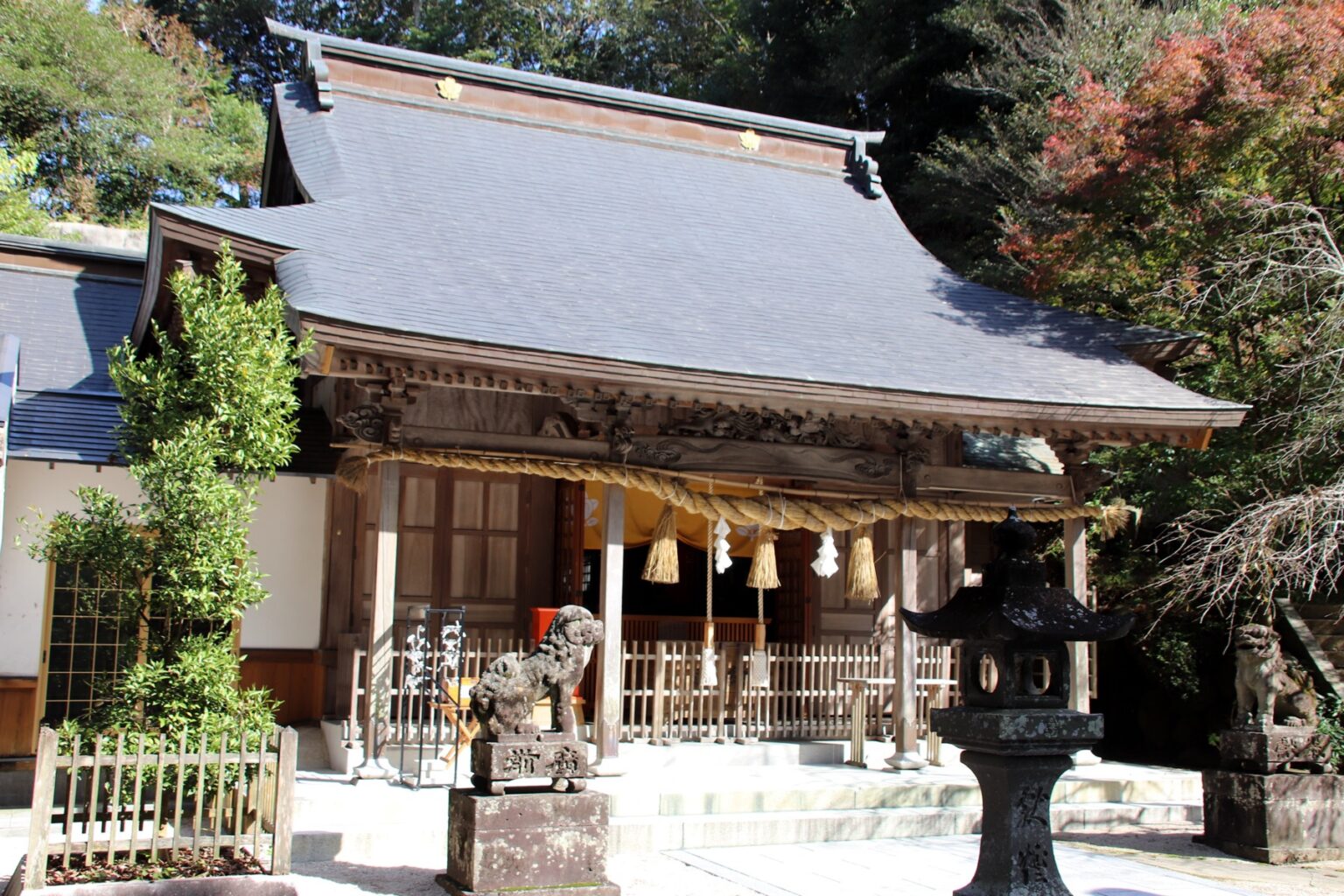
It’s tempting to call Imari Shrine ancient — and part of it is — but the institution you visit today is younger than that. The present Imari Shrine was created in 1962, when three local shrines were brought together: Koukitsu Shrine (the old one, once a prefectural shrine, with a lineage going back centuries), Totoshima Shrine, and Iwakuri Shrine. So the deep history belongs to its predecessors, while the shrine under this name is a modern union of them. Its main deity, Tachibana no Moroe, comes from the Koukitsu side; the shrine has long stood as the guardian of the town’s “demon gate,” the unlucky northeast.
The shrine of sweets
The detail people remember is the little sub-shrine in the grounds: Nakashima Shrine, dedicated to Tajimamori — revered across Japan as the god of sweets and confectionery. The legend has Tajimamori bringing the tachibana citrus, the ancestor of Japanese sweets, back from a long voyage, and Imari claims the spot where he is said to have landed. Pastry chefs and confectioners come here to pray, and it’s a small, genuinely uncommon thing to seek out — there are only a handful of sweets shrines in the country.
Tontenton: the fighting festival
Once a year the calm shrine turns loud. Its autumn procession festival — the Imari Tontenton, held in late October — is counted among Japan’s three great “fighting festivals,” where teams carrying a heavy portable shrine and a wheeled float charge and slam into each other to the beat of drums. It’s raucous, physical and very local; if your trip lands on it, it’s the day to be in Imari.
Getting there
The shrine is in Imari’s Tachibana district, about a 15-minute walk from Imari Station (served by the JR Chikuhi Line and the Matsuura Railway). It’s an easy add-on to a porcelain day — the kiln village of Okawachiyama is a short drive away — so most people fold it into a wider Imari visit rather than a trip of its own. On foot from the station, follow the river; the red gate shows itself from across the water.
Good to know
Is Imari Shrine a Heian-period shrine?
Not as it stands today. The present Imari Shrine was formed in 1962 by merging three shrines — Koukitsu, Totoshima and Iwakuri. The ancient lineage belongs to its predecessor Koukitsu Shrine; the shrine under the current name is a modern union of the three.
What is the shrine known for?
Its vermilion tower gate over a white arched tunnel, a sub-shrine to the god of sweets (Nakashima Shrine), and the Tontenton fighting festival each autumn. People come for protection from misfortune and for good fortune.
What is the sweets shrine?
Nakashima Shrine, a small sub-shrine in the grounds dedicated to Tajimamori, the god of sweets and confectionery. Confectioners pray there; it’s one of only a few such shrines in Japan.
When is Tontenton?
Late October. The Imari Tontenton is one of Japan’s three great “fighting festivals,” where teams slam a heavy portable shrine and a float into each other. It’s loud and physical — worth timing a visit around if you can.
How do I get there?
About a 15-minute walk from Imari Station (JR Chikuhi Line / Matsuura Railway). It pairs easily with the porcelain village of Okawachiyama, a short drive away.
Imari Ware Explained
Japan’s first porcelain and the secret kilns just up the valley.
Arita Sera
22 porcelain shops on one hill — the shopping half of the day.
Imari Bay Fireworks
Saga’s giant autumn fireworks over the bay each November.
Getting to Imari & Arita
Trains and car routes into the pottery country.
Join travelers discovering Japan's hidden side
Weekly dispatches from off-the-beaten-path Japan — spots and stories you won't find in guidebooks.
No spam. Unsubscribe anytime.
Welcome aboard!
You're in. See you in your inbox soon.