![Hiroshima Peace Memorial Park 2026: 7 Key Monuments & Museum Guide [With Map]](https://hiddenjapan-gems.com/wp-content/uploads/2026/04/66F0DEA7-C53A-43F3-8E1E-E0C25C7CE60A-scaled.webp)

Last Updated: April 2026
2026 Update: The Peace Memorial Museum now requires web reservations for early morning (7:30 AM) and extended evening hours during peak seasons. Book your time slot at the official museum website before visiting.
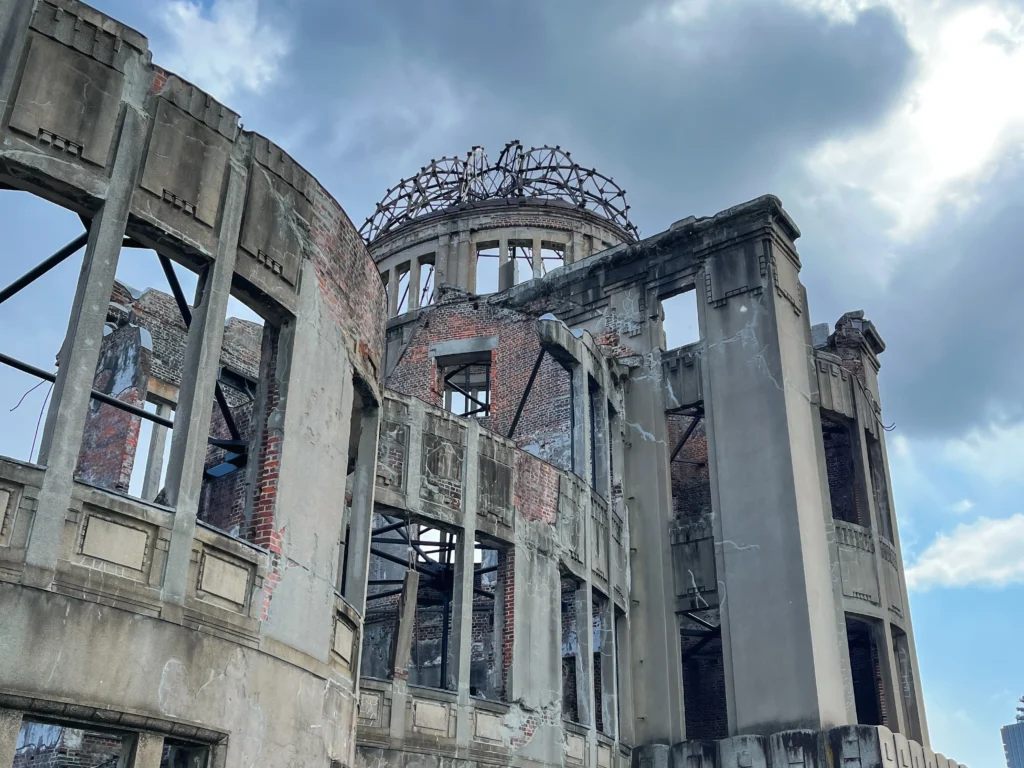
The Atomic Bomb Dome stands 160 meters from where the bomb detonated at 8:15 AM on August 6, 1945. It has been left exactly as it was — broken walls, exposed steel, empty windows — as a permanent witness. Walking through Hiroshima Peace Memorial Park is unlike any other experience in Japan. There are no gift shops selling novelty keychains, no cheerful mascots, no crowds jostling for selfies. There is only silence, stone, water, and the weight of history pressing against your chest. I have visited this park three times over the past decade, and each visit has deepened my understanding of what happened here and why it matters.
This guide covers every major monument, practical museum information, visiting etiquette, and access details so you can plan a respectful, meaningful visit.
Table of Contents
Quick Facts: Hiroshima Peace Memorial Park
| Detail | Information |
| Location | 1-2 Nakajimacho, Naka-ku, Hiroshima City |
| Park Hours | Open 24 hours (free admission) |
| Museum Hours (2026) | 7:30 AM – 7:00 PM (Mar–Nov), 7:30 AM – 6:00 PM (Dec–Feb), 7:30 AM – 8:00 PM (Aug) |
| Museum Admission | Adults ¥200, High School ¥100, Junior High & younger FREE |
| Audio Guide | ¥400 (available in 14 languages) |
| Museum Closed | Dec 30–31, mid-Feb (exhibition changeover) |
| Time Needed | 2–4 hours (park + museum combined) |
| Nearest Tram Stop | Genbaku Dome-mae (Hiroden Line 2 or 6) |
| UNESCO Status | World Heritage Site since 1996 (Atomic Bomb Dome) |
| Map | Google Maps |
What Should I See at Hiroshima Peace Memorial Park?
Hiroshima Peace Memorial Park contains over 70 monuments and memorials spread across 120,000 square meters along the Motoyasu River. The seven sites below form the essential route that most visitors follow, starting from the Atomic Bomb Dome in the north and moving south toward the museum.
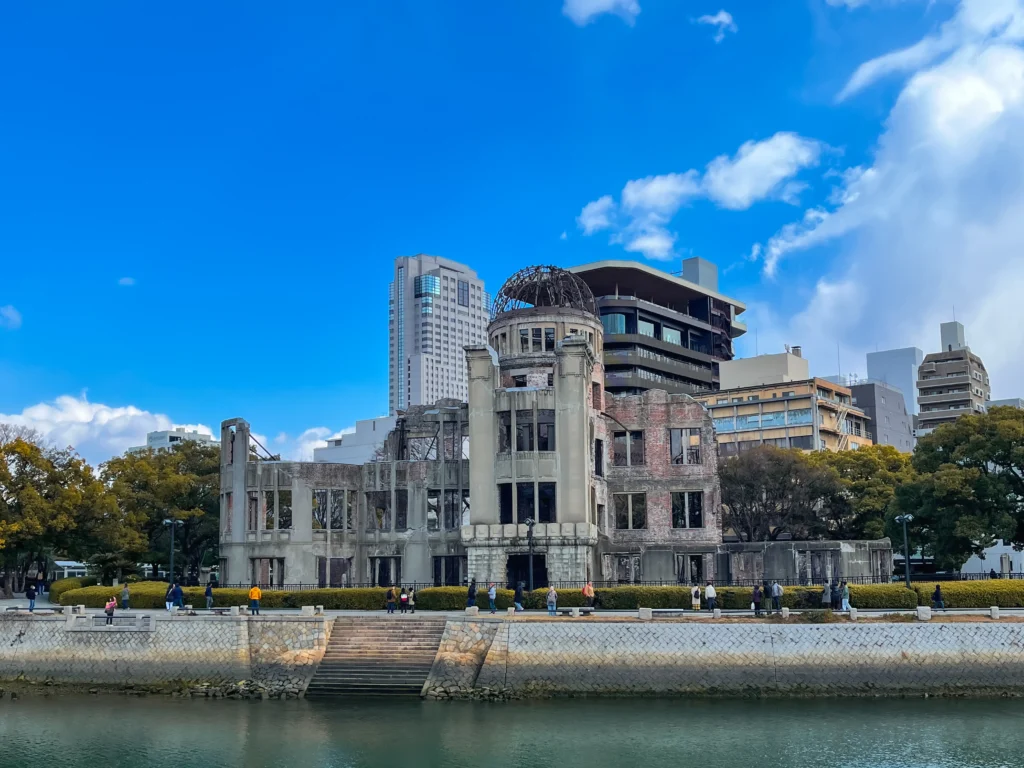
The Atomic Bomb Dome (Genbaku Dome)
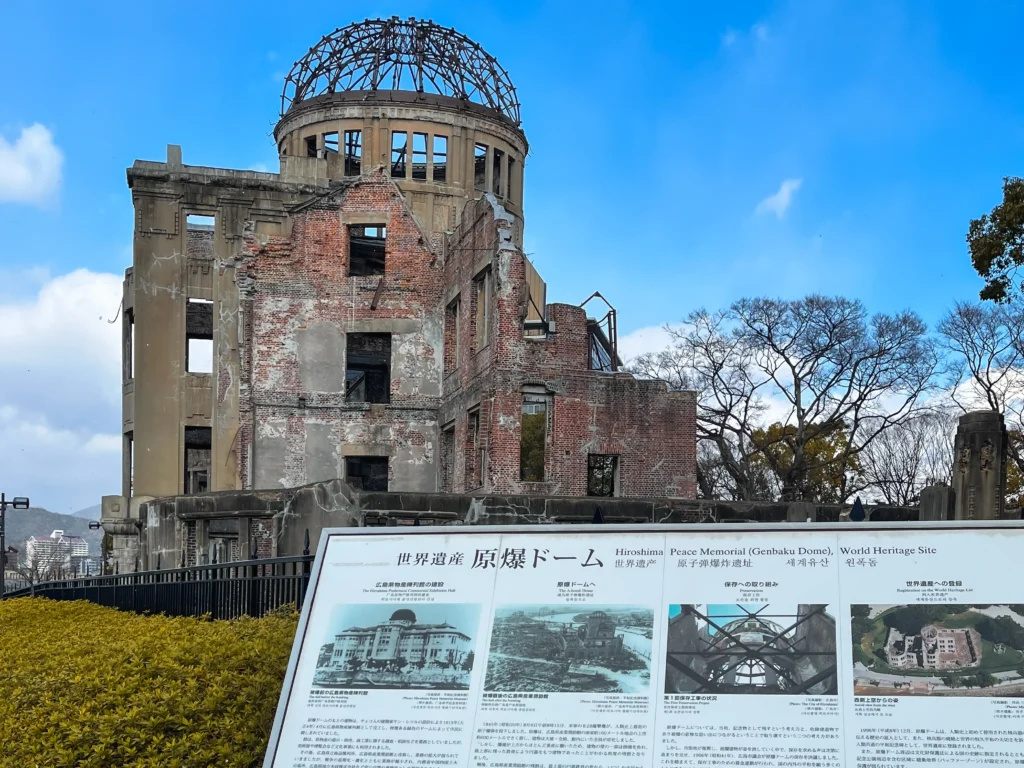
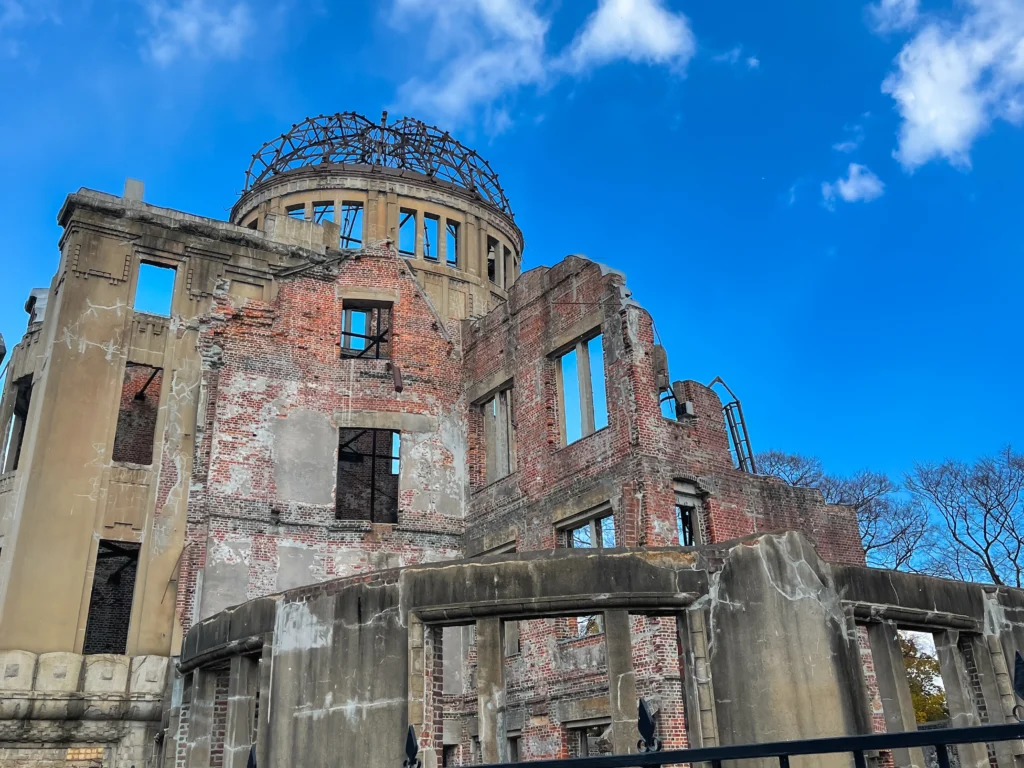
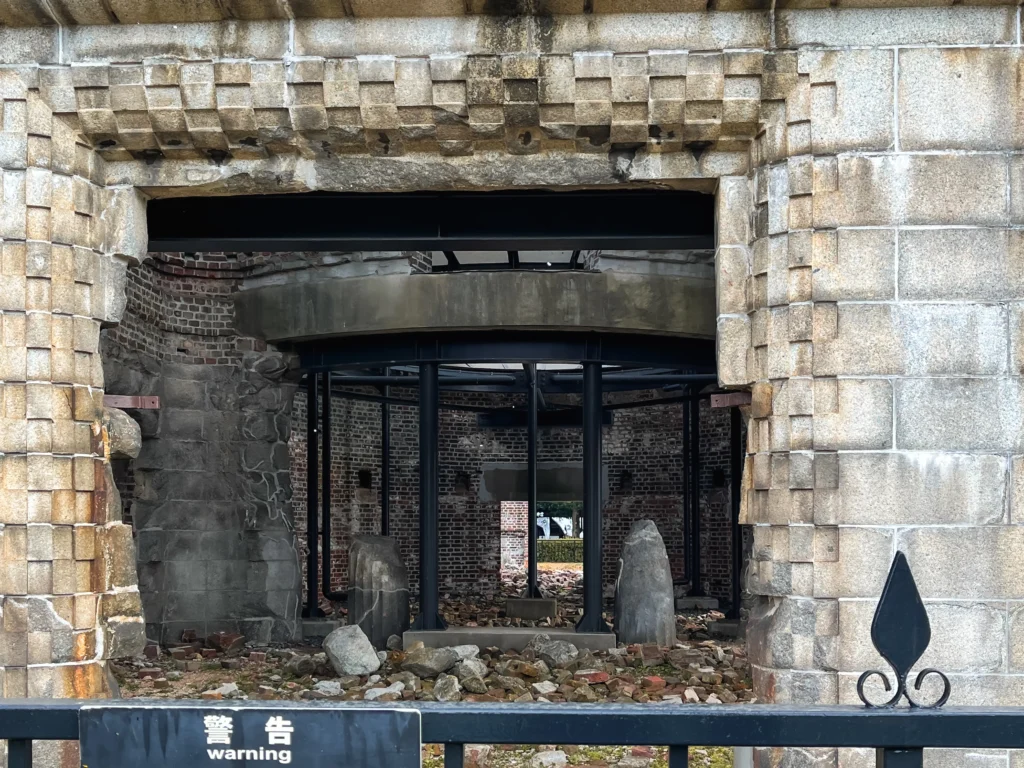
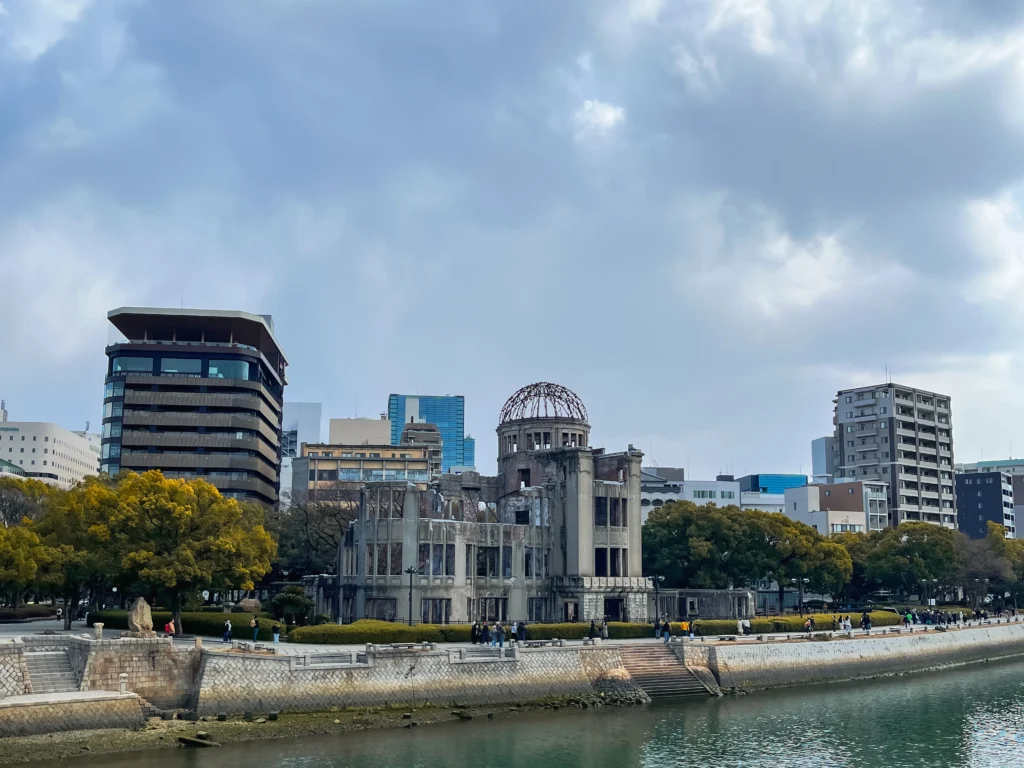
The dome is the single most recognizable symbol of the atomic bombing. Originally built in 1915 as the Hiroshima Prefectural Industrial Promotion Hall, it was the only structure left partially standing near the hypocenter. You cannot enter the building — viewing is restricted to the exterior pathway behind a protective fence. The dome was designated a UNESCO World Heritage Site in 1996, not as a celebration of architecture, but as a reminder of the destructive power of nuclear weapons.
The dome is illuminated from sunset until 10:00 PM every evening. I have found the evening hours, when the crowds thin and the warm light falls on the broken walls, to be the most contemplative time to visit.
The Cenotaph for the A-Bomb Victims
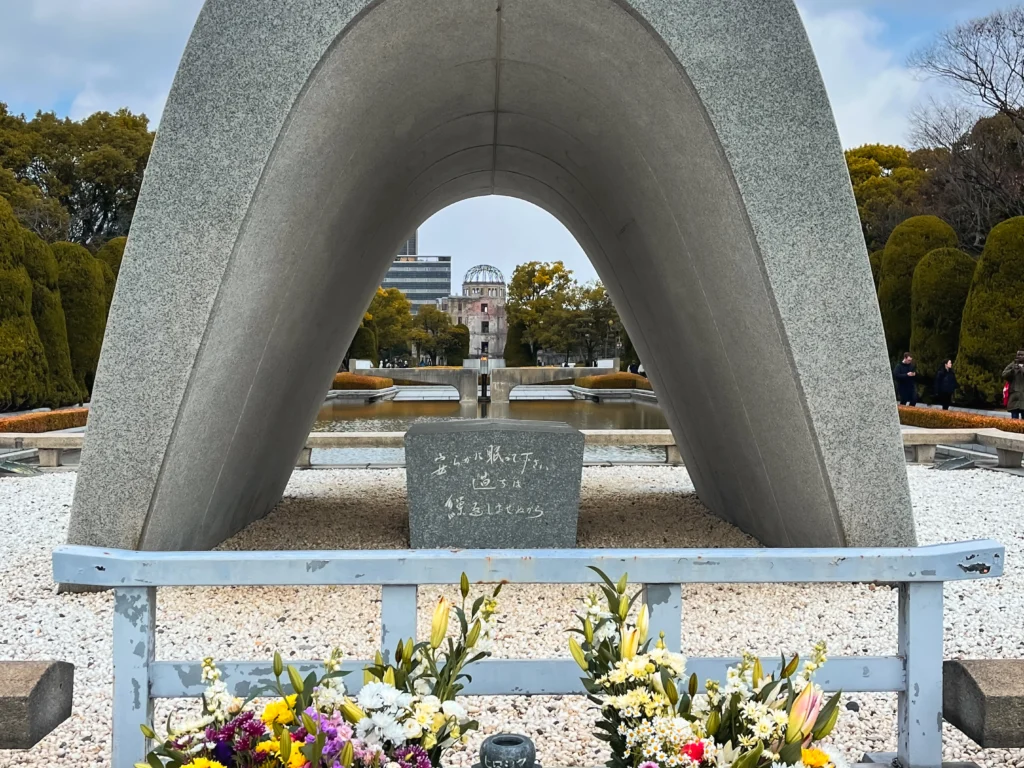
The Cenotaph, formally known as the Hiroshima Peace City Memorial Monument, holds the names of every person confirmed to have died from the bombing and its aftermath. The number continues to grow as radiation-related deaths are still recorded. Through the arch of the Cenotaph, you can see the Peace Flame and the Dome perfectly aligned. The inscription reads: “Let all the souls here rest in peace, for we shall not repeat the error.” The subject of the sentence is deliberately omitted in the original Japanese — a conscious decision by the designer to avoid politicization and place the responsibility on all of humanity.
Fresh flower offerings are placed at the Cenotaph regularly. It is customary for visitors to remove their hats and bow in a moment of silent prayer.
The Peace Flame
The Peace Flame was lit on August 1, 1964, and it will continue to burn until every nuclear weapon on Earth has been eliminated. The flame sits on a pedestal shaped like two hands cupped together, palms facing upward. It is positioned precisely between the Cenotaph and the Dome, completing the intentional alignment that defines the park’s central axis.
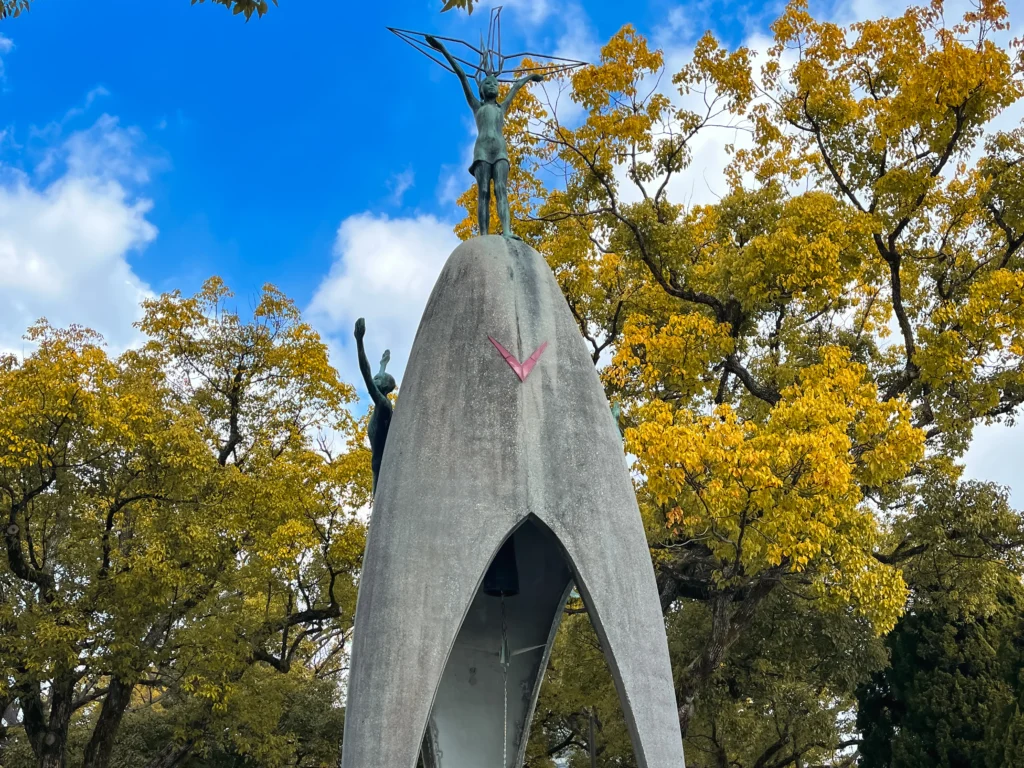
Children’s Peace Monument (Sadako’s Monument)
This monument tells one of the most well-known stories of the bombing’s aftermath. Sadako Sasaki was two years old when the bomb fell. She was twelve when she died. Diagnosed with leukemia caused by radiation exposure, she believed that folding 1,000 paper cranes would grant her wish to live. The monument built by her classmates now receives paper cranes from every country in the world. The inscription at the base reads: “This is our cry, this is our prayer: for building peace in the world.”
Glass cases surrounding the monument display thousands of colorful paper cranes sent by schoolchildren and visitors from across the globe. If you wish to bring cranes, bundles should be under 150 cm long and 25 cm wide.
The Peace Memorial Museum
The museum is the heart of the park’s educational mission. It provides an unflinching account of the bombing through photographs, personal belongings, and survivor testimonies.
The Peace Bell
Visitors are invited to ring the Peace Bell, which features a map of the world without national borders engraved on its surface. The sound carries across the park and is meant to symbolize a world without division.
Motoyasu River and the Park Grounds
The park is built on land that was once a busy commercial district before August 6, 1945. Walking along the Motoyasu River, you pass cherry trees, memorial stones, and quiet benches. The contrast between the modern city skyline and the preserved ruins of the dome is striking.
How Long Should I Spend at the Hiroshima Peace Museum?
Plan for an absolute minimum of 1.5 to 2 hours inside the museum alone. If you intend to read the personal testimonies, examine the artifacts closely, and use the audio guide (available in 14 languages for ¥400), allocate 3 hours or more.
The content inside the museum is graphic and emotionally intense. Displays include torn clothing, melted household objects, photographs of severe burns, and handwritten accounts from survivors. It is an essential educational experience, but visitors — especially those traveling with young children — should prepare themselves for the heavy emotional toll. Some visitors find it helpful to take a break in the museum’s rest area midway through.
Reservation Tip: The museum requires web reservations for early morning (before 8:30 AM) and extended evening hours during busy seasons (Golden Week, August, autumn foliage). Standard daytime entry is generally available without reservation, but booking ahead is always recommended. Reserve at hpmmuseum.jp.
What Is the Etiquette for Visiting Hiroshima Peace Park?
Hiroshima Peace Memorial Park is not a typical tourist attraction. It is a memorial site and a grave for tens of thousands of people. The following guidelines will help you visit respectfully.
•Maintain a quiet demeanor. Speak softly throughout the park. Avoid loud conversations, laughter, or boisterous behavior near the monuments.
•Show respect at the Cenotaph. Remove your hat and take a moment of silent prayer. Do not stand in front of the Cenotaph for extended photo sessions while others are waiting to pay their respects.
•Photography rules. Photography is generally allowed in the park and near the Dome. Inside the museum, photography is permitted in most areas but flash is prohibited in certain exhibits. Always be considerate of others around you.
•Do not climb on monuments or touch fenced-off structures. The Dome and several memorial stones are protected for preservation.
•Consider the content before bringing young children. The museum contains graphic imagery that may be distressing for children under 10.
When Is the Best Time to Visit Hiroshima Peace Park?
The park is meaningful in every season, but the timing of your visit affects both the atmosphere and practical considerations.
| Season | Months | What to Expect |
| Spring | Mar–May | Cherry blossoms along the Motoyasu River (late March–early April). Mild weather, moderate crowds. |
| Summer | Jun–Aug | Hot and humid (33°C+). August 6: Annual Peace Memorial Ceremony — the most significant day. Museum open until 8:00 PM in August. |
| Autumn | Sep–Nov | Comfortable temperatures. Autumn foliage along the river in November. Fewer crowds than spring. |
| Winter | Dec–Feb | Cold but quiet. Museum closes Dec 30–31 and briefly in mid-February. Fewest visitors. |
The August 6 Peace Memorial Ceremony begins at 8:00 AM with a moment of silence at 8:15 AM — the exact time the bomb was dropped. Tens of thousands of people attend. If you plan to be present, arrive very early and expect restricted access to certain areas of the park.
How Do I Get to Hiroshima Peace Park from Hiroshima Station?
Getting to the park from Hiroshima Station is straightforward regardless of your transport method.
| Method | Route | Time | Cost |
| Tram (Hiroden) | Line 2 or 6 → “Genbaku Dome-mae” stop | 17–20 min | ¥220 |
| Sightseeing Loop Bus | From Shinkansen exit (north side) | ~11 min | Free with JR Pass |
| Walk | Southwest along Aioi-dori | ~30 min | Free |
The Hiroden streetcar is the most popular option. If you are using an IC card like Suica, PASMO, or ICOCA, simply tap on and off — no need to buy a paper ticket. For a detailed explanation, see our guide on how to get and use IC cards in Japan.
If you are arriving by Shinkansen from Tokyo, the journey takes approximately 4 hours on the Nozomi (not covered by standard JR Pass) or 5 hours on the Hikari/Sakura. Many visitors combine Hiroshima with a day trip to Miyajima Island and its floating torii gate, which is about 1 hour from the Peace Park by tram and ferry. For broader transport planning, see our complete guide to traveling around Japan.
Practical Tips for Visiting the Peace Park
•Restrooms. Clean public restrooms are available near the museum entrance, beside the Children’s Peace Monument, and near the Dome.
•Drinking water. Water fountains are located near the museum and the rest house. Vending machines are available throughout the park.
•Wi-Fi. Free Wi-Fi is available inside the museum. The park itself has limited connectivity.
•Rest house. The Peace Park Rest House (a pre-war building that survived the bombing) offers a small exhibition, restrooms, and tourist information. Free admission.
•Accessibility. The park grounds are mostly flat and wheelchair accessible. The museum has elevators and accessible restrooms.
•Payment. Museum admission can be paid in cash or by IC card. The audio guide rental requires cash.
•Luggage storage. Coin lockers are available at Hiroshima Station. The museum does not have luggage storage.
Tips for Visitors from Southeast Asia
Hiroshima is accessible from Southeast Asian cities, though most routes require a connection through a major Japanese hub.
Flights: Direct flights to Hiroshima Airport (HIJ) are limited. Most travelers from Singapore, Bangkok, Kuala Lumpur, or Jakarta will fly into Kansai International Airport (KIX) or Fukuoka Airport (FUK) and take the Shinkansen to Hiroshima. Budget carriers like Scoot, AirAsia, Jetstar Asia, and Cebu Pacific serve KIX and FUK regularly. For detailed flight information, see our Japan airport and flight guide.
Climate comparison: Hiroshima summers (June–September) are hot and humid, with temperatures regularly exceeding 33°C — similar to Singapore (31°C) or Bangkok (35°C), but with intense direct sunlight and less shade. In winter (December–February), temperatures drop to 2–7°C, which is dramatically colder than Southeast Asian cities. Pack layers and a warm jacket if visiting between November and March.
Visa: Citizens of Singapore, Malaysia, Thailand, Indonesia, and the Philippines can enter Japan visa-free for short-term tourism (15–90 days depending on nationality).
Halal dining: Hiroshima has a growing number of halal-friendly restaurants, particularly near Hiroshima Station. The popular okonomiyaki restaurant Nagataya near the Peace Park offers halal options upon request. Convenience stores (7-Eleven, Lawson, FamilyMart) carry onigiri and bento options that are often vegetarian-friendly.
Suggested Half-Day Itinerary: Hiroshima Peace Memorial Park
| Time | Activity | Duration |
| 8:30 AM | Arrive at Genbaku Dome-mae tram stop. Walk to the Atomic Bomb Dome. | 20 min |
| 8:50 AM | Walk south along the river to the Cenotaph and Peace Flame. | 15 min |
| 9:05 AM | Visit the Children’s Peace Monument. | 15 min |
| 9:20 AM | Ring the Peace Bell. | 5 min |
| 9:30 AM | Enter the Peace Memorial Museum. Use audio guide. | 2–3 hours |
| 12:00 PM | Exit museum. Walk back through the park along the Motoyasu River. | 20 min |
| 12:20 PM | Lunch at a nearby restaurant (okonomiyaki recommended). | — |
Afternoon option: Take the Hiroden tram to Miyajimaguchieki-mae (about 1 hour) and catch the JR ferry to Miyajima Island for the floating torii gate and Itsukushima Shrine.
Book Hiroshima Transport: Search Shinkansen and local transport options on Trip.com
Frequently Asked Questions About Hiroshima Peace Memorial Park
Is Hiroshima Peace Park free to enter?
Yes, the park grounds are completely free and open 24 hours a day. The Peace Memorial Museum charges a separate admission of ¥200 for adults, ¥100 for high school students, and is free for junior high school students and younger.
How much time do you need at the Hiroshima Peace Museum?
You should plan for an absolute minimum of 1.5 to 2 hours for the museum alone. If you want to read the personal testimonies carefully and use the audio guide (¥400, available in 14 languages), allocate 3 hours or more.
Can you go inside the Atomic Bomb Dome?
No. The Atomic Bomb Dome is fenced off for safety and preservation. Visitors can view it from the surrounding exterior pathways and from across the Motoyasu River. The dome is illuminated from sunset until 10:00 PM for evening viewing.
What is the proper etiquette at the Peace Park?
Maintain a quiet, respectful demeanor throughout. Remove your hat at the Cenotaph and take a moment of silent prayer. Photography is allowed but avoid flash inside certain museum exhibits. Do not climb on monuments or obstruct others paying their respects.
How do I get to the Peace Park from Hiroshima Station?
The easiest method is the Hiroden streetcar. Take Line 2 or Line 6 to u0022Genbaku Dome-maeu0022 stop, which takes 17 to 20 minutes and costs ¥220. You can also take the sightseeing loop bus (about 11 minutes, free with JR Pass) or walk southwest for approximately 30 minutes.
Should I bring children to the Hiroshima Peace Museum?
Parents should use their own judgment. The museum is highly educational, but it contains graphic photographs, artifacts showing severe injuries, and personal accounts of suffering that can be deeply distressing for young children. Many families with children under 10 choose to visit only the outdoor monuments.
A visit to Hiroshima Peace Memorial Park is a sobering experience that stays with you. The park does not ask you to take sides or assign blame — it asks only that you remember what happened and consider what it means for the future. Take your time walking through the grounds. Read the inscriptions. Stand before the Cenotaph. Let the silence speak.
If you are planning a broader Hiroshima trip, consider combining the Peace Park with a visit to Miyajima Island, which offers a completely different atmosphere — ancient shrines, wild deer, and the iconic floating torii gate. Together, they represent the two sides of Hiroshima: its painful history and its enduring beauty.
Sources checked
Hiroshima Peace Memorial Museum, UNESCO World Heritage Centre, Dive Hiroshima, Japan Guide.

- Onomichi Hillside Walk 2026: Senkoji Temple, Stone Steps, Ramen & the Start of Shimanami Kaido
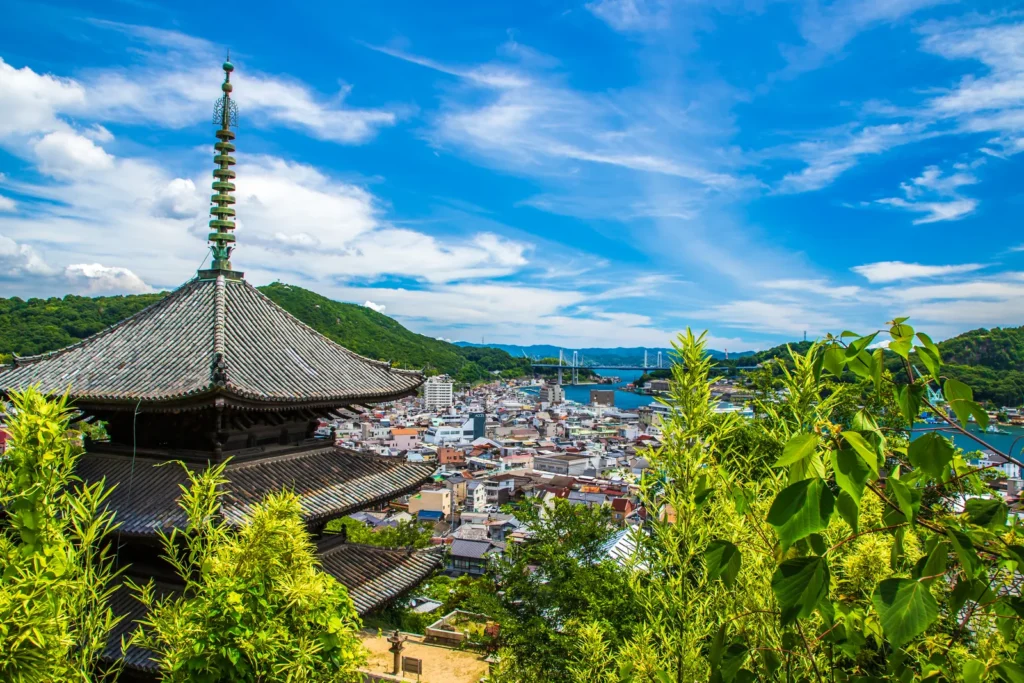 Onomichi · Hiroshima · Setouchi Onomichi Hillside Walk 2026: Senkoji Temple, Stone Steps, Ramen, and the Start of Shimanami Kaido A coastal town built on a slope. Stone steps everywhere. A… Read more: Onomichi Hillside Walk 2026: Senkoji Temple, Stone Steps, Ramen & the Start of Shimanami Kaido
 - Hiroshima & Miyajima in One Day 2026: Route Under ¥10,000
 Last Updated: April 2026 2026 Update: The 3.5-year renovation of Itsukushima Shrine’s Great Torii is completely finished, and the gate is fully visible without scaffolding. However, the five-story pagoda is currently… Read more: Hiroshima & Miyajima in One Day 2026: Route Under ¥10,000
 - Hiroshima Food Guide 2026: Okonomiyaki, Oysters & Seto Sushi [Local’s Picks]
![Hiroshima Food Guide 2026: Okonomiyaki, Oysters & Seto Sushi [Local's Picks]](https://hiddenjapan-gems.com/wp-content/uploads/2026/04/29856F07-18E2-4769-897E-F3CA8EC4F8AE-1024x768.webp) Last Updated: April 2026 2026 Update: While many tourists flock to Okonomimura, the original birthplace of Hiroshima-style okonomiyaki is Mitchan Souhonten. Expect 30-60 minute waits at the Hatchobori main store during… Read more: Hiroshima Food Guide 2026: Okonomiyaki, Oysters & Seto Sushi [Local’s Picks]
Last Updated: April 2026 2026 Update: While many tourists flock to Okonomimura, the original birthplace of Hiroshima-style okonomiyaki is Mitchan Souhonten. Expect 30-60 minute waits at the Hatchobori main store during… Read more: Hiroshima Food Guide 2026: Okonomiyaki, Oysters & Seto Sushi [Local’s Picks] - Hiroshima Peace Memorial Park 2026: 7 Key Monuments & Museum Guide [With Map]Last Updated: April 2026 2026 Update: The Peace Memorial Museum now requires web reservations for early morning (7:30 AM) and extended evening hours during peak seasons. Book your time slot at… Read more: Hiroshima Peace Memorial Park 2026: 7 Key Monuments & Museum Guide [With Map]
- Miyajima Island 2026: Floating Torii, 5 Must-Eat Foods & Ferry Guide [With Tide Tips]
![Miyajima Island 2026: Floating Torii, 5 Must-Eat Foods & Ferry Guide [With Tide Tips]](https://hiddenjapan-gems.com/wp-content/uploads/2026/04/9072AC0A-2F14-4FAC-8BD4-28DF503F9096-1024x768.webp) 2026 Update The 3.5-year renovation of Itsukushima Shrine’s Great Torii is completely finished, and the gate is fully visible without scaffolding. However, the five-story pagoda is currently undergoing roof renovations until… Read more: Miyajima Island 2026: Floating Torii, 5 Must-Eat Foods & Ferry Guide [With Tide Tips]
2026 Update The 3.5-year renovation of Itsukushima Shrine’s Great Torii is completely finished, and the gate is fully visible without scaffolding. However, the five-story pagoda is currently undergoing roof renovations until… Read more: Miyajima Island 2026: Floating Torii, 5 Must-Eat Foods & Ferry Guide [With Tide Tips]
2026 autumn leaves cafe cherry blossoms day trip from tokyo fireworks fuji five lakes fujiyoshida Fukuoka fushimi hiking japan japanese culture japanese food japan travel kamakura Kamikochi kanagawa Kansai kawagoe kawaguchiko kichijoji koyo kyoto Kyushu local food Mt. Fuji Nagano Nara Nikko Onsen post town ryokan Saga saitama sakura Shizuoka shrine spring summer in japan Tokyo travel winter winter travel Yamanashi
Cheaper Than Kyoto: 4 Base Cities
Hiroshima as a value base: cheaper than Kyoto, with big day trips.
Join 1,000+ travelers discovering Japan's hidden side
Weekly dispatches from off-the-beaten-path Japan — spots and stories you won't find in guidebooks.
No spam. Unsubscribe anytime.
Welcome aboard!
You're in. See you in your inbox soon.