

Nagano · Matsumoto · National Treasure
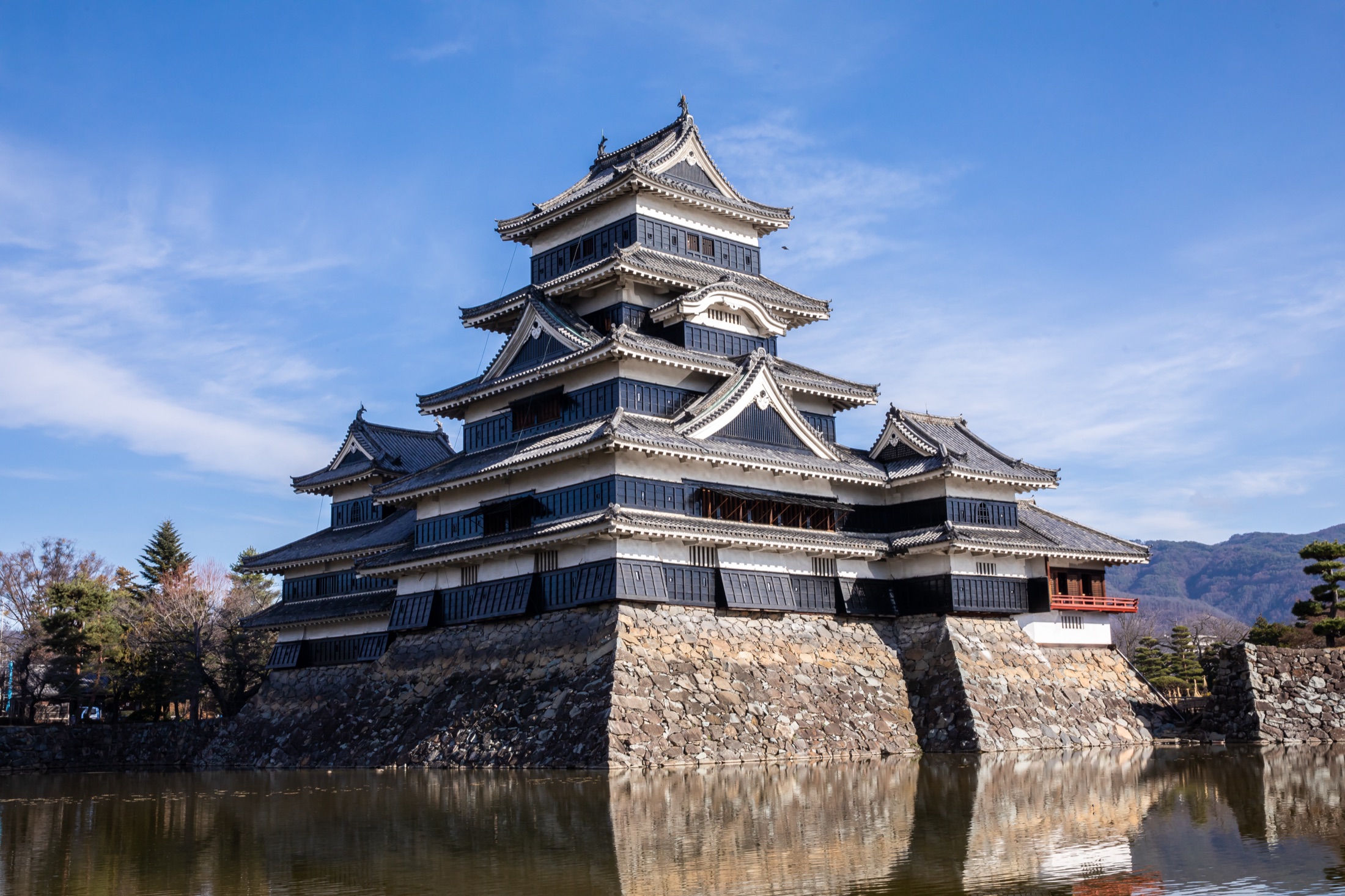
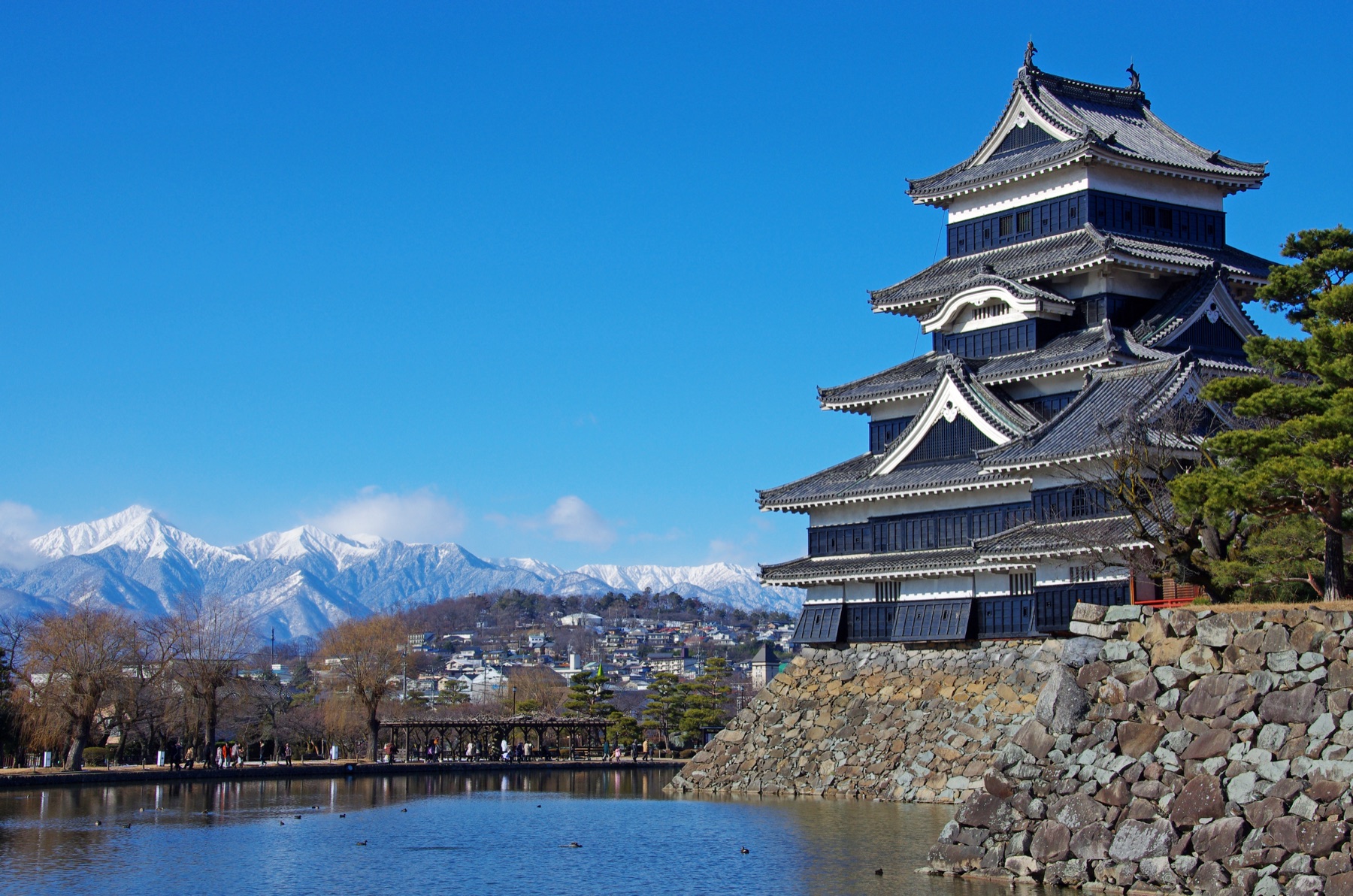
Matsumoto Castle is one of Japan’s twelve surviving original wooden castle keeps and one of only five designated National Treasures, standing on flat ground in the city of Matsumoto, Nagano Prefecture, with the snow-capped Northern Alps behind it; the black five-tiered, six-storey keep was finished around 1593–94 and is the oldest surviving five-tiered keep in the country. I have pointed a camera at most of Japan’s old castles, and Matsumoto is the one I keep going back to. The keep is real timber from the 1590s, not a postwar concrete copy, and on a clear winter morning the mountains behind it do something no reconstruction can fake.
On this page
The quick version
Matsumoto Castle sits in the middle of Matsumoto, a 15-minute walk from the station, and you can see most of it in an hour to ninety minutes. The reason to come is the keep itself: a black, top-heavy tower from the 1590s that you climb on foot, up the same steep wooden stairs people have used for four centuries. Here is what you need before you go.
Admission was raised on 1 April 2025, so older guides that still say ¥700 are wrong. As of 2026 it is ¥1,200 for adults with the electronic ticket, or ¥1,300 if you buy a paper ticket at the gate. Children aged 6 to 15 pay ¥400. Groups of 20 or more get a small discount.
Why this one is different: original, not a rebuild
Most of the famous castle towers in Japan are concrete reconstructions. Osaka and Nagoya look the part from the outside, but inside they are museums with elevators, rebuilt in the twentieth century. Matsumoto is one of only twelve castles in Japan whose main keep survived as the original wooden structure, and one of just five whose keep is a designated National Treasure — together with Himeji, Hikone, Inuyama and Matsue.
| Matsumoto Castle | A typical reconstructed castle (Osaka, Nagoya) | |
|---|---|---|
| The keep | Original wood, finished c. 1593–94 | Rebuilt in concrete (20th century) |
| Status | National Treasure | Reconstruction, not designated |
| Inside | Bare wooden floors, steep original stairs | Museum displays with an elevator |
| How you go up | On foot, in your socks | By elevator or modern stairs |
| What you feel | The building itself | A museum about a building |
This is the whole point of the visit. You are not looking at a replica with a viewing deck on top. You are inside a 430-year-old fighting tower, ducking under low beams, climbing stairs that were built to slow down attackers, not tourists.
The best time to go, and the view worth chasing
Come on a clear, cold morning if you can. Matsumoto sits in a basin ringed by the Northern Japan Alps, and on a sharp winter or early-spring day the snow-capped peaks line up directly behind the black keep. That backdrop is the shot, and it is the one thing about Matsumoto that no other surviving castle can give you. Haze hides the mountains, so a humid summer afternoon will not deliver it.
| Season | What you get | Crowds |
|---|---|---|
| Winter (Dec–Feb) | Snow on the Alps behind the black keep on clear mornings; coldest, sharpest air | Lightest |
| Spring (late Mar–Apr) | Cherry blossoms around the moat; a night sakura light-up when the trees bloom | Heaviest |
| Summer (Jun–Aug) | Deep green around the gates; humid, so the Alps often hide; longer Obon hours | Moderate |
| Autumn (Oct–Nov) | Clear air returns, some colour at the moat, the peaks start to whiten again | Moderate |
Cherry blossom usually peaks in mid-April here, later than Tokyo or Kyoto because Matsumoto is higher and colder, and the castle runs an evening cherry-blossom light-up when the trees open. Exact dates are announced each spring, so check close to your trip.
Climbing the keep — what to know first
The climb is the experience, and it catches people off guard. You take your shoes off at the entrance and carry them in a bag, then go up six floors of original stairs that are steep, narrow and dark, with beams low enough to clip your head. There is no elevator and no way to skip a floor. None of it is difficult if you are steady on your feet, but it is not built for modern comfort.
Shoes off, socks on
You climb in your socks on bare wood. Wear socks without holes, and shoes you can slip off and on quickly.
Very steep stairs
Several flights pitch well past 45 degrees and double as handrails. Take them slowly; one-way flow gets busy at peak times.
Mind your head
The beams are low. Tall visitors duck on most floors. Big tripods and bulky bags are awkward on the way up.
Leave time
Last entry is 16:30 and the climb itself takes a while. Do not roll up at 16:25 expecting to reach the top.
Plan a Matsumoto Trip
Getting to Matsumoto Castle
Everything routes through JR Matsumoto Station. From there the castle is an easy, flat walk straight through the city centre, or a short ride on the local loop bus.
Coming from further afield, Matsumoto is well connected by limited express:
| From | Train | Time |
|---|---|---|
| Shinjuku (Tokyo) | Limited Express Azusa | ~2.5–3 hours |
| Nagoya | Limited Express Shinano | ~2 hours |
The address is Matsumoto, Maruno-uchi 4-1. Here it is on the map:
What to look for once you are inside
The keep is not a single tower but a connected group of five National Treasure structures, and the joins are part of what makes it interesting.
The connected keep
The main keep, the smaller Inui keep and the passage that links them were built for war — thick walls, gun ports, and stairs designed to slow an enemy.
The moon-viewing turret
The red-railed Tsukimi-yagura was added later, in peacetime, purely for watching the moon. A turret built for a view, not a fight, is a rare thing on a Japanese castle.
The black walls & Kuromon
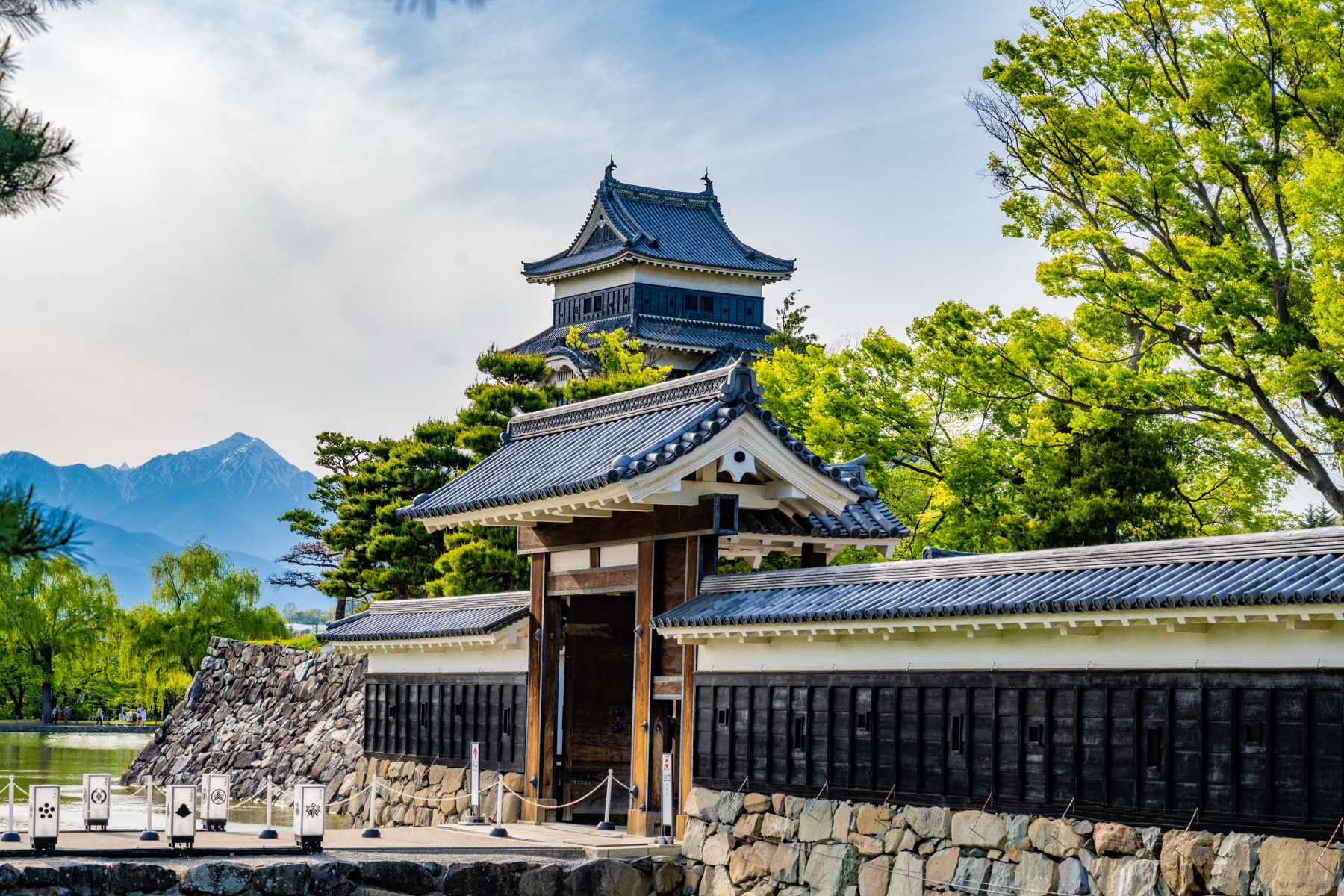
The lower walls are finished in black lacquered boards over white plaster. The restored Kuromon (Black Gate) is the main way in and a good first photo.
The red bridge & moat
The small vermilion bridge over the moat is the classic photo angle. It is sometimes closed to crossing, so check on site rather than counting on walking it.
Outside the walls, two short streets are worth the detour: Nawate-dori, the little “frog street” along the Metoba River, and Nakamachi, a lane of white-walled former merchant houses. Both are a few minutes from the castle and good for lunch — this is Shinshu, so the soba is the thing to order.
Where to stay
Matsumoto is worth a night rather than a rushed day trip, partly so you can catch a clear morning at the castle, and partly because it is the gateway to Kamikochi and the Northern Alps, and a base for the Kiso Valley post towns. Stay near the station and everything is walkable.
Find a base in Matsumoto
Booking has the widest selection of mainstream hotels around Matsumoto Station, a flat 15-minute walk from the castle. Rakuten Travel has the better inventory for traditional ryokan and the Asama Onsen hot-spring quarter on the edge of town.
A day in Matsumoto
- Morning — the castle at openingArrive for 8:30 for the best light and the fewest people, climb the keep, and circle the moat for the Alps view if the air is clear. Allow 1.5 hours.
- Midday — Nawate-dori & NakamachiWalk the frog street and the merchant lane, then a soba lunch. Allow 1–2 hours.
- Afternoon — art or onwardThe Matsumoto City Museum of Art celebrates Matsumoto-born artist Yayoi Kusama, or take an afternoon train onward.
- Next day — into the mountainsIf you stayed the night, use Matsumoto as your jump-off for Kamikochi, or head north in Nagano to Togakushi Shrine.
For visitors from Southeast Asia
- Dress for real cold. Matsumoto sits about 600 m up in a mountain basin, and winter mornings often drop below 0°C — a long way from Singapore or Bangkok at around 30°C. Those cold, clear mornings are exactly when the Alps appear, so the view and the chill come together.
- Nagoya is the quiet way in. If you fly into Nagoya (Centrair), Matsumoto is about 2 hours on the Shinano; from Tokyo it is around 2.5 hours on the Azusa. Scoot, AirAsia and Jetstar reach both Tokyo and Nagoya.
- Cash and the e-ticket. Central Matsumoto takes cards, and the castle’s electronic ticket is cheaper than paper — but carry some cash for small soba shops.
- Shoes off to climb. You remove your shoes to go up the keep, so wear easy footwear and clean socks.
Matsumoto Castle FAQ
How much does Matsumoto Castle cost in 2026?
Admission is ¥1,200 for adults with the electronic ticket, or ¥1,300 with a paper ticket, and ¥400 for children aged 6 to 15. The fee was raised on 1 April 2025, so older guides that say ¥700 are out of date.
Is Matsumoto Castle original or a reconstruction?
It is original. The keep is one of only twelve surviving original wooden castle keeps in Japan and a designated National Treasure, with timber dating to the 1590s — not a twentieth-century concrete rebuild like Osaka or Nagoya.
Why is it called Crow Castle?
The nickname “Crow Castle” (Karasu-jō) comes from the black walls, but the castle’s own management office says there is no historical record of the name and treats it as a modern misnomer rather than a real local term.
How long do you need at Matsumoto Castle?
About one to one and a half hours, most of it spent climbing the six floors of the keep. Add an hour or two if you walk the nearby Nawate-dori and Nakamachi streets.
Can you go to the top of the keep?
Yes, on foot. You climb six floors of steep, narrow original stairs in your socks, and there is no elevator. It is fine for anyone steady on stairs, but not built for modern comfort.
When is the best time for the Northern Alps view?
Clear, cold mornings in winter and early spring, when the air is sharp enough to show the snow-capped Northern Alps behind the keep. Humid summer afternoons usually hide the mountains in haze.
How do you get to Matsumoto Castle from Tokyo?
Take the Limited Express Azusa from Shinjuku to Matsumoto, about 2.5 to 3 hours, then walk roughly 15 minutes from the station or ride the Town Sneaker loop bus.
Is Matsumoto Castle worth visiting?
If you want to see a real sixteenth-century keep rather than a concrete rebuild, yes. It is one of Japan’s five National Treasure castles and pairs well with Kamikochi and the Kiso Valley post towns.
Booking the Trip
Three doors into a Matsumoto visit. Book the bed first.
Join 1,000+ travelers discovering Japan's hidden side
Weekly dispatches from off-the-beaten-path Japan — spots and stories you won't find in guidebooks.
No spam. Unsubscribe anytime.
Welcome aboard!
You're in. See you in your inbox soon.