

Fukuoka · Sasaguri · Mountain Temple
Nomiyama Kannon-ji 2026: Sasaguri’s Green-Maple Temple Before the Autumn Crowds
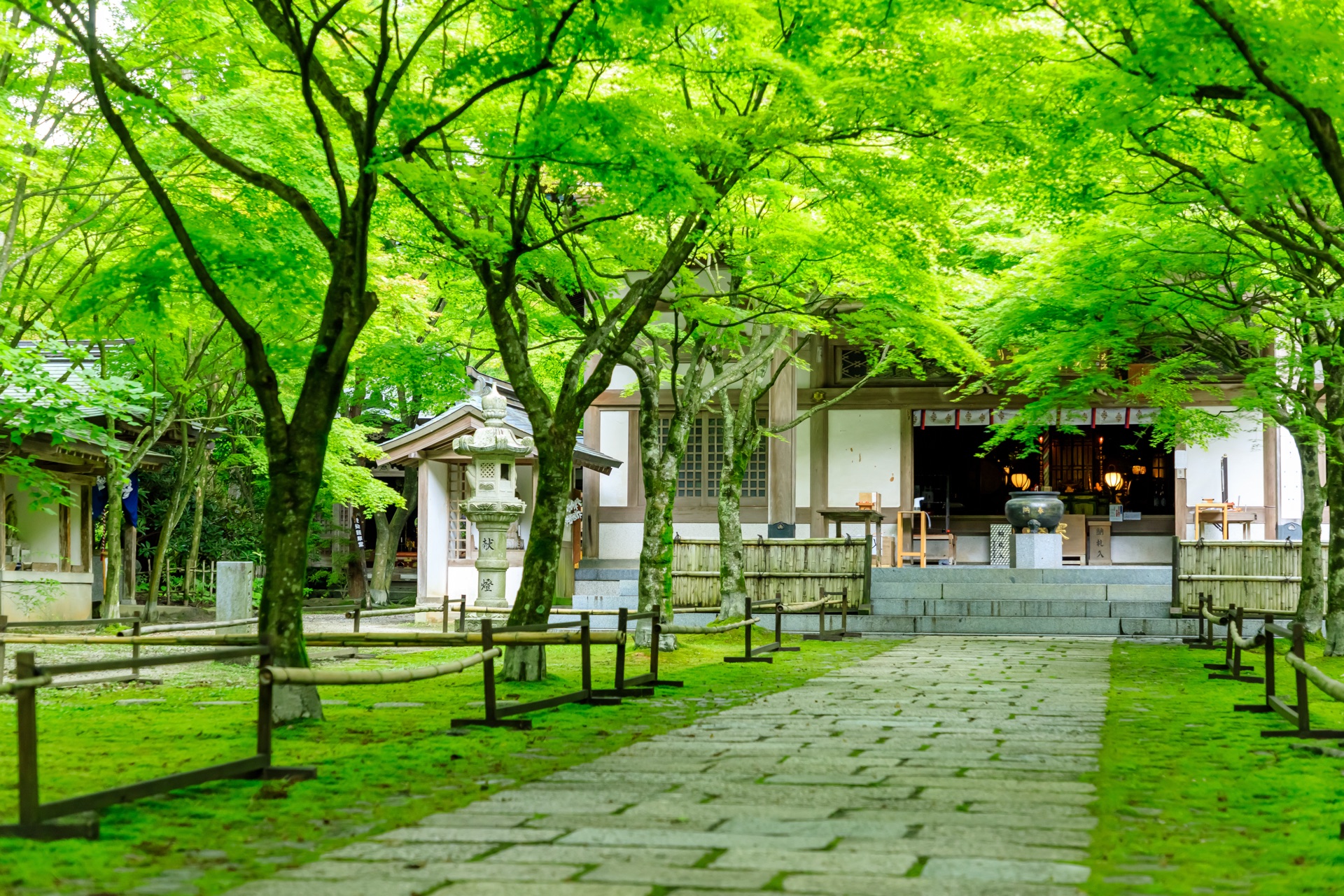
The maple tunnel at Nomiyama in early summer. The same trees that draw a thousand photographers in November sit almost unwalked in May and June.
Most articles about Nomiyama Kannon-ji lead with the autumn photos. The temple is famous for a thousand Japanese maples and a thousand dōdan-tsutsuji bushes that turn the grounds into a sheet of red and orange every November. Worth seeing — but the same maples in early summer, when the new leaves come in bright green and the air is cool under the canopy, are something most visitors never see. I went up in May. The whole approach was empty.
Quick Facts
Why Summer Is the Right Window Right Now
The math here is simple. The temple sits at a few hundred meters elevation in the hills behind Sasaguri, surrounded by maple and cypress forest. In early summer the air under the canopy runs five to seven degrees cooler than the city below. The maple leaves are at their freshest — the bright translucent green that loses ten percent of its impact every week as the season hardens.
The same trees in November draw the photographers, the buses, and the kannon-shi crowds. The grounds in summer get pilgrims, a handful of locals, and almost no foreign visitors. The grounds keepers are still there, the special hall is still open, the kondo and tahōtō pagoda still stand — the temple just runs at a quieter rhythm.
Same trees. Same temple. A tenth of the people. The first time I came in summer I checked twice that the place was open.
Walking the Green-Maple Path
The temple grounds spread along a hillside, with the main approach lined by stone lanterns and old growth maples. The path is paved stone and moss for most of its length. In early summer the canopy closes overhead and the light filters down through new leaves the color of glass.
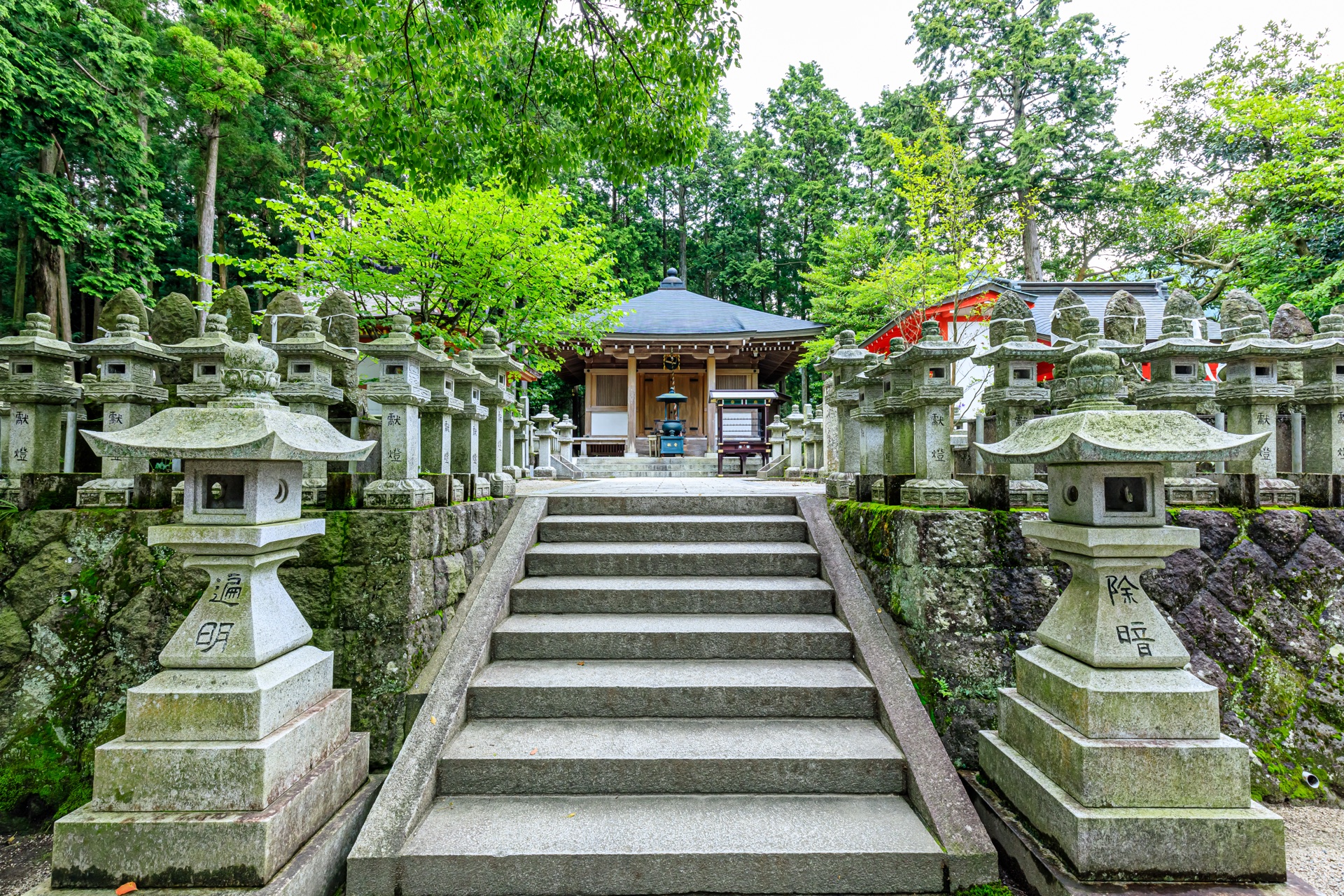
The stone-lantern approach. Two long rows of lanterns climb the hill toward the smaller halls.
What makes the summer walk work is the layering. The lanterns sit in a ground cover of moss; the moss sits under the maple trunks; the maple trunks sit under the green canopy. Three different greens stacked vertically, with stone holding the structure. In November this scene gets read for the orange and red. In May and June it gets read for the green.
The walking itself is gentle. The total grounds are larger than they look — give yourself at least 90 minutes to walk through properly, longer if you want to stop at the smaller halls.
Hours, Fees, and What’s on the Grounds
Best Hours of a Summer Day
When the canopy works
Morning shade and afternoon mist
6:00 – 8:00 AM
The temple opens at six. Cool air, no visitors, the sun side-lighting the lantern path. This is the strongest window for both atmosphere and photography.
8:00 – 11:00 AM
Light filters through the canopy in green columns. The grounds keepers are working; sometimes you can hear the sweep of a bamboo broom on stone.
11:00 AM – 2:00 PM
Hottest part of the day, but the canopy keeps the temple grounds noticeably cooler than the parking lot. Take it slow.
2:00 – 4:00 PM
Light angle drops. Shadow patterns lengthen across the path. After a summer afternoon shower, the moss intensifies — the grounds become almost too green.
After heavy rain
The whole place pivots. Moss saturates, stone darkens, the cedars exhale visibly in the warm air. If a rain just passed, drive up immediately.
Autumn at Nomiyama: A Preview for Your Next Trip
What the Same Grounds Look Like in November
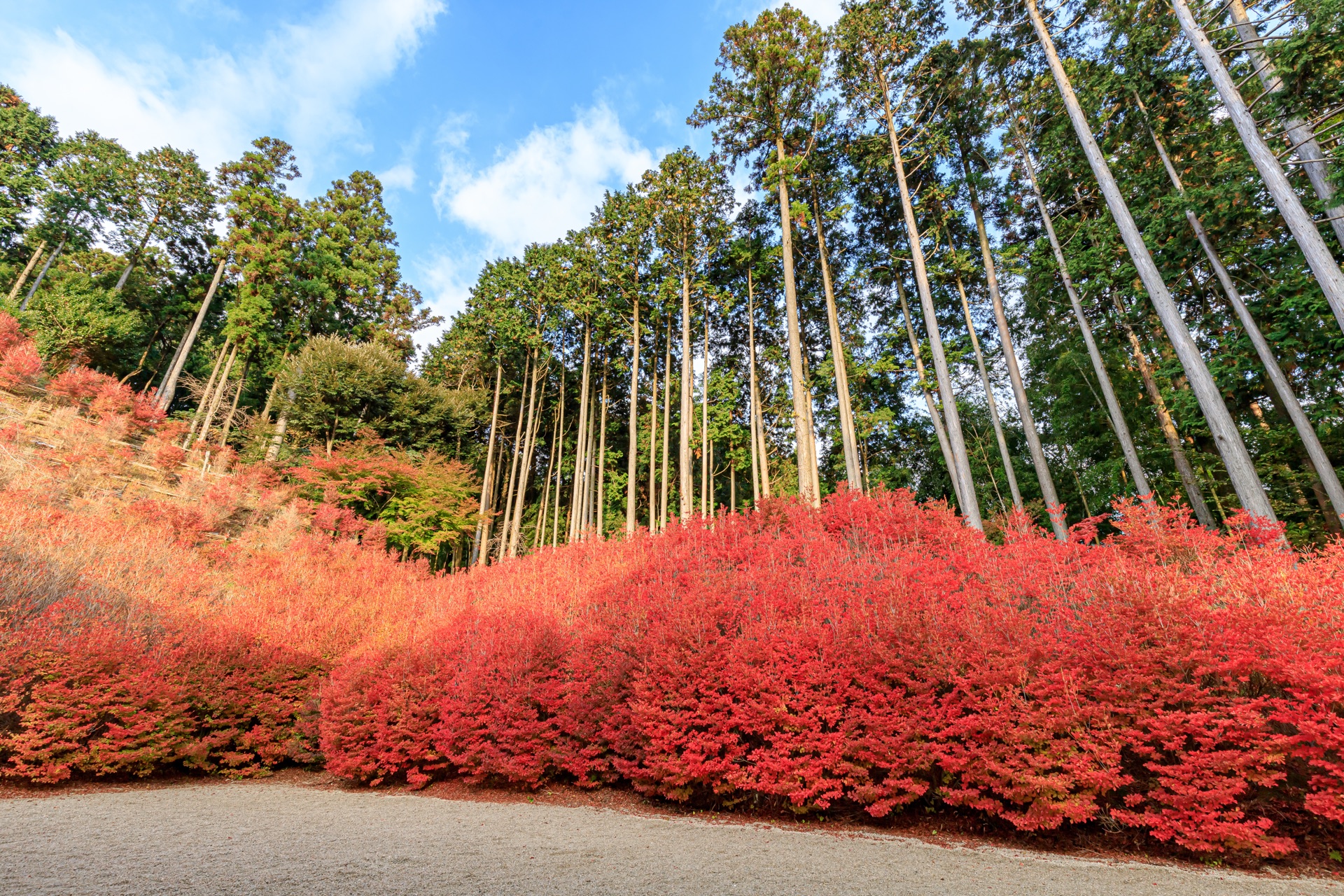
The temple’s reputation is built on autumn. The grounds hold roughly 1,000 Japanese maple trees and 1,000 dōdan-tsutsuji (Japanese enkianthus) shrubs, along with mountain cherry, sumac, oak, and zelkova. When peak color hits, the entire grounds shift to red and orange in coordinated layers.
Autumn Festival 2026: October 28 (Tue) – November 23. During the festival the temple opens special viewings of the yugi taihōtō pagoda and the Kaen-tei garden. A market called Kannon-ichi runs in the parking lot most days, with rotating food stalls. Confirm peak viewing dates and any special hours through the temple’s official site or Instagram before going.
The most-photographed part of the grounds in autumn is not actually the maples — it’s the thousand stone jizō arrayed in tiered rows, framed by maples turning red. The geometric repetition of the small statues against organic autumn color is what carries the photographs.
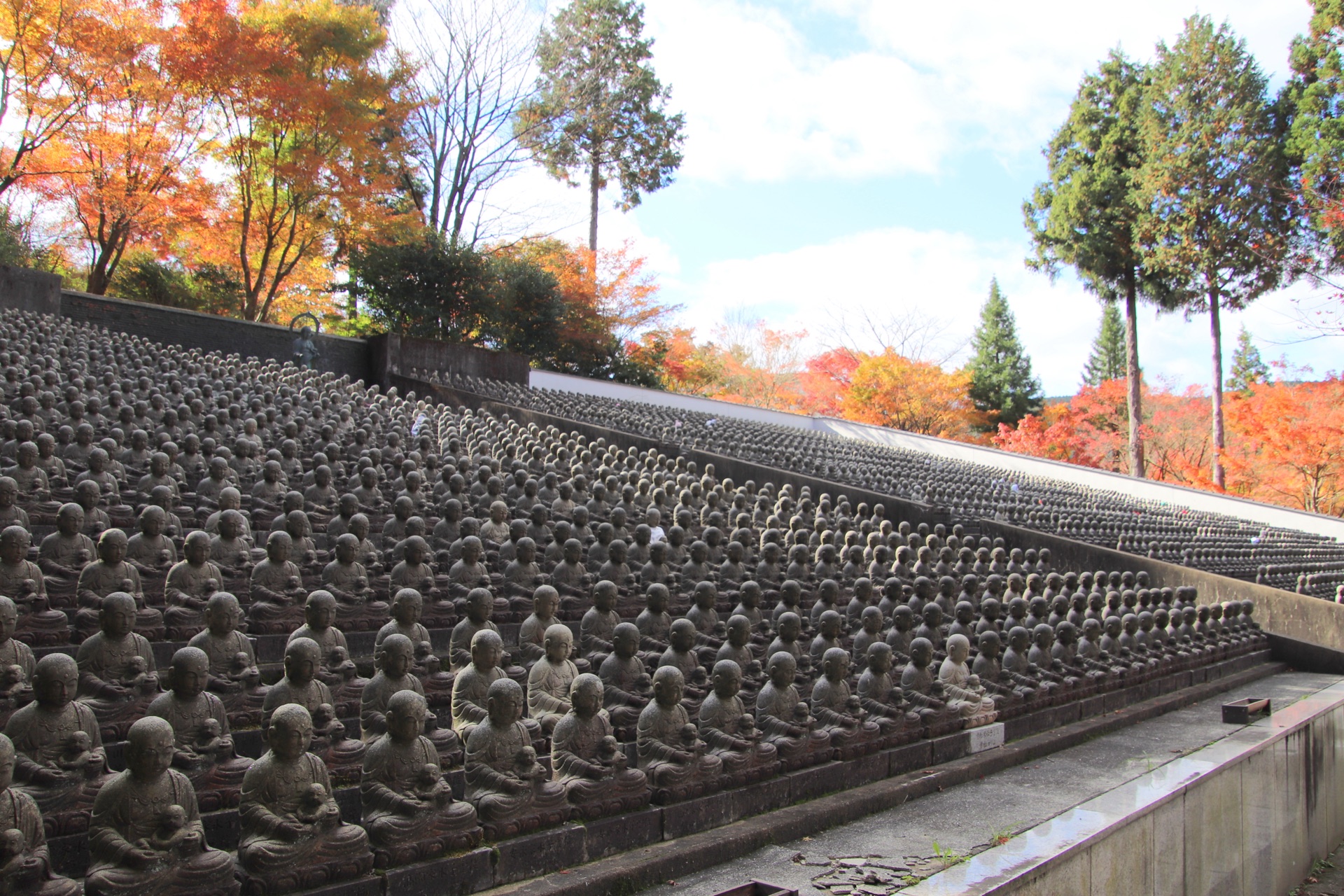
If you visit in summer: walk past the jizō rows and note the maples behind them. Imagine those same trees in November, all turned. That’s what the autumn photographs are showing.
Getting There
⚠ 2026 road closure note: The prefectural road along Chikaramaru Dam (Route 450) has been listed as closed for construction. Use the alternate routes via Wakada Hot Spring or via Iizuka and Yagiyama Pass. Confirm current road status before driving.
RecommendedBy car
From Fukuoka IC on the Kyushu Expressway: roughly 20 minutes via Route 201 and Route 92.
From Wakamiya IC: roughly 25 minutes via Route 92.
The temple has a large free parking area. The drive up is winding mountain road — fine in a passenger car, slower for larger vehicles.
By train + taxiFrom JR Sasaguri
Take the JR Sasaguri Line from Hakata to JR Sasaguri station (~25 minutes).
From the station, the temple is about 15 minutes by taxi. There is no direct bus to the temple from the station.
By busFrom central Fukuoka
Buses run from Tenjin Bus Center (35 min) and Hakata Station Bus Center (30 min) to Sasaguri town. From Sasaguri town, a taxi covers the last segment to the temple.
CombinedDay trip with Nanzoin and Kyudai-no-Mori
If you have a car: Nanzoin in the early morning (9:00 opening), Nomiyama in the cool of late morning, Kyudai-no-Mori in the afternoon. About 30 minutes of driving total between the three.
After Nomiyama: Where to Eat in Fukuoka
Like Nanzoin, the temple itself has limited food options. The pattern is to time the visit so you’re back in central Fukuoka or Hakata for a proper meal. The Sasaguri Line will put you back in Hakata in under an hour.
Two More Sasaguri Stops
Frequently Asked Questions
Is Nomiyama Kannon-ji free?
The grounds are free to enter. There is no general admission ticket. Some interior halls or special viewings during the autumn festival may have separate fees — confirm at the temple’s information area when you arrive.
What are the opening hours?
The temple is open 6:00 AM to 5:00 PM daily. Early morning is by far the best time of day in any season for atmosphere, light, and avoiding crowds.
When is the autumn foliage at its peak?
Peak color is typically mid to late November. The autumn festival in 2026 runs October 28 through November 23, which captures the prime window. Exact peak shifts year to year — check the temple’s Instagram or official site for current-year updates.
Is summer worth visiting?
Yes, especially if you don’t want crowds. The same maples that turn red in November are at their freshest green in May, June, and early July. The temple is cooler than the city, the grounds are quiet, and the moss is at its richest after rain.
How do I get there without a car?
Take the JR Sasaguri Line from Hakata to JR Sasaguri (about 25 minutes), then take a taxi to the temple (about 15 minutes). There is no direct bus from the station to the temple. A round-trip from Hakata takes most of a day.
Can it be combined with Nanzoin?
Yes, but driving is much easier than train. Nanzoin is on the Sasaguri Line itself; Nomiyama requires a taxi or car from Sasaguri town. With a car, you can do Nanzoin (morning), Nomiyama (late morning), and Kyudai-no-Mori (afternoon) in a single day from Hakata.
Is there a dress code?
Nomiyama doesn’t enforce a strict dress code the way Nanzoin does. Standard temple etiquette applies — shoulders covered, no overtly revealing clothing. Comfortable walking shoes are essential because the grounds spread up a hillside.
Are there crowds during cherry blossom season?
The temple has its own original cultivar of cherry called Fukuju Sakura, which received horticultural recognition. The cherry-blossom festival in 2026 runs March 28 to April 12. Crowds are noticeable but smaller than the autumn festival.
Final Thoughts
Nomiyama is a temple with two seasons it’s known for and a third one most people miss. Autumn is the headline — a thousand maples and a thousand dōdan-tsutsuji at peak color is genuinely something. But the same grounds, the same maples, with summer light filtering through fresh green leaves and almost no one walking the path, are the version I keep coming back to.
If autumn is what brought you here on the page, bookmark the dates and plan the November trip. If summer is now and you have a free morning, the temple is up the hill and waiting.
Join 1,000+ travelers discovering Japan's hidden side
Weekly dispatches from off-the-beaten-path Japan — spots and stories you won't find in guidebooks.
No spam. Unsubscribe anytime.
Welcome aboard!
You're in. See you in your inbox soon.