

Nagano · Naraijuku · Shrine
Shizume Shrine: The Quiet Forest at the South End of Naraijuku
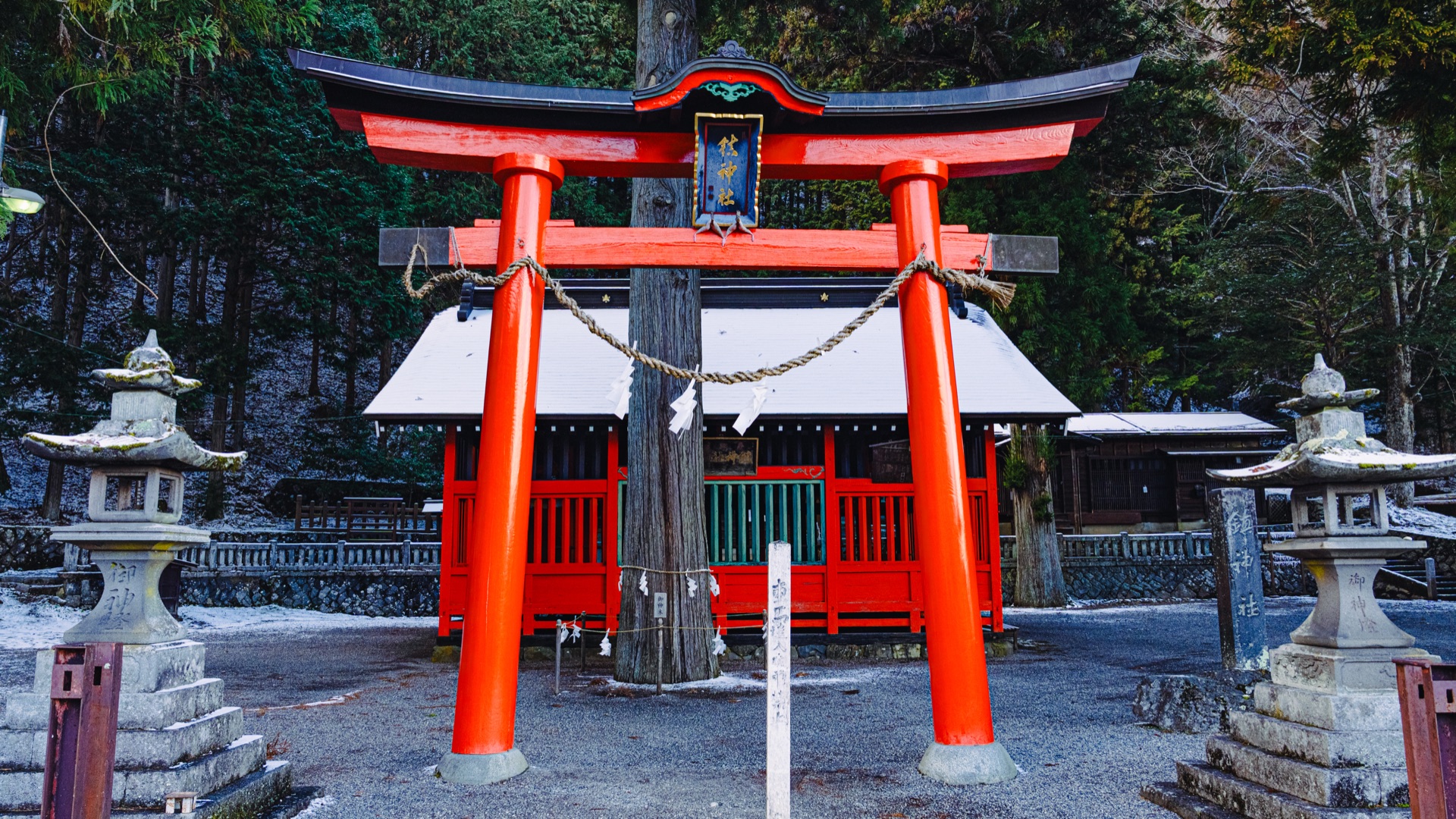
The torii at Shizume Shrine on a December morning. Snow on the shimenawa rope, low sun cutting across the cedar grove.
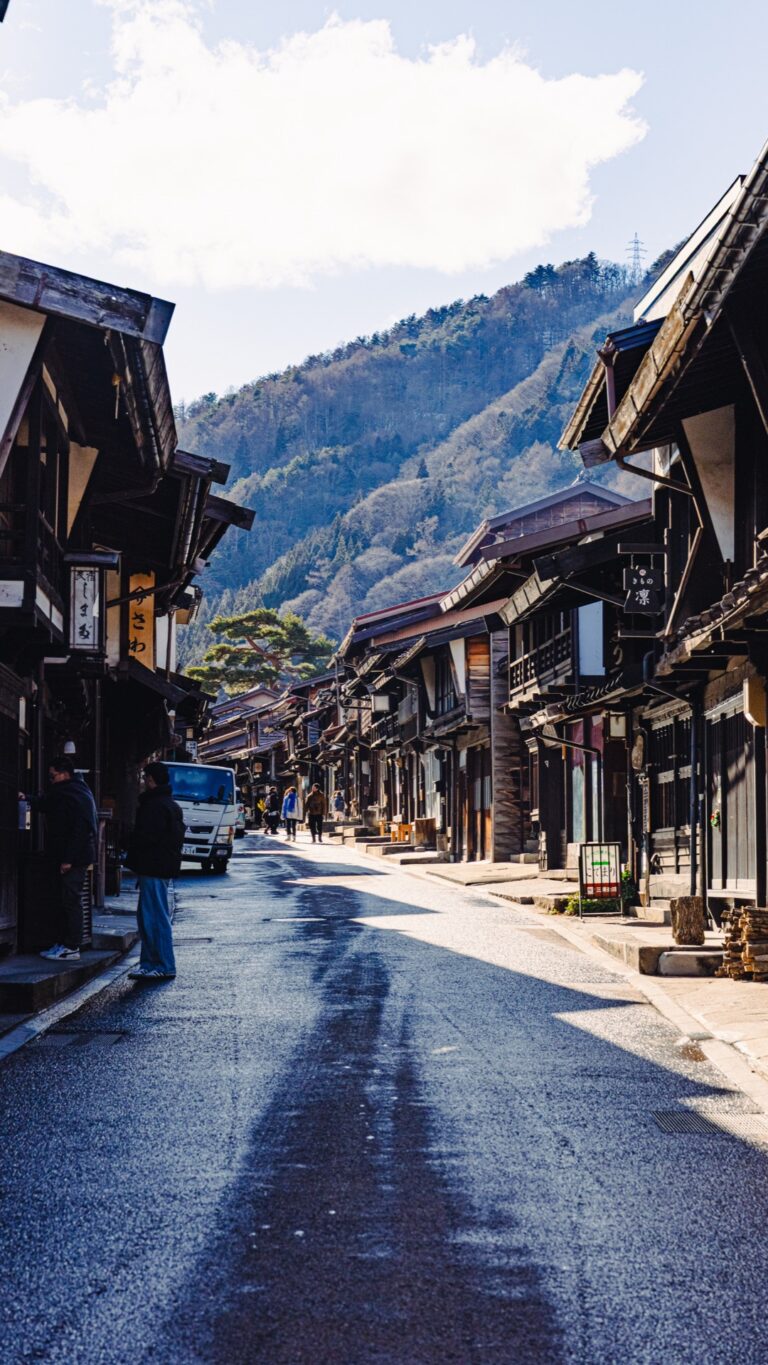
I walked to the south end of Naraijuku on a December morning. Most visitors stop at the wooden inns and lacquerware shops along the main street and turn back. Twenty more minutes, past the last storefront, the road narrows into a cedar grove and a red torii stands alone in the trees. This is Shizume Shrine. It has been standing here since 1618, when the people of Naraijuku built it to stop an epidemic. The epidemic stopped. The shrine stayed.
Quick Facts
The 1618 Story
Genna 4 · Spring
An epidemic in the Kiso valley
In the spring of 1618, an illness called sukumi spread through Naraijuku and the nearby village of Hirasawa. The records do not say what the illness was — only that it stiffened the body and that it was killing people. The locals went to the village head. The village head went to Urabe Asomi Yoshihide, the chief of the Shinto clergy. The advice came back: invite a deity strong enough to push the sickness out.
The deity they chose was Futsunushi-no-Ōkami from Katori Shrine in present-day Chiba — a sword god, a god of clearing things away. The relocation ceremony took place on June 22, 1618. According to the shrine record, the epidemic stopped almost immediately.
The shrine became known as Shizume Daimyōjin — Shizume meaning “to calm, to suppress, to settle.” The name stuck. Four hundred years later, the same name, the same deity, the same patch of forest at the south edge of the post town.
Getting to the Shrine
Walk through Naraijuku from north to south. Past the lacquerware shops, past the storefronts with red banners, past the small museums. The wooden buildings thin out, the road narrows, and a few hundred meters past the last noren curtain you reach a side path that turns left toward the trees. The torii is visible as soon as you turn.
If you’re coming from JR Narai station, the walk takes about twelve minutes — through the entire main street and out the other side. If you’ve already done the post town walk and are at Kiso-no-Ohashi (the wooden bridge over the Narai River), the shrine is roughly ten minutes south.
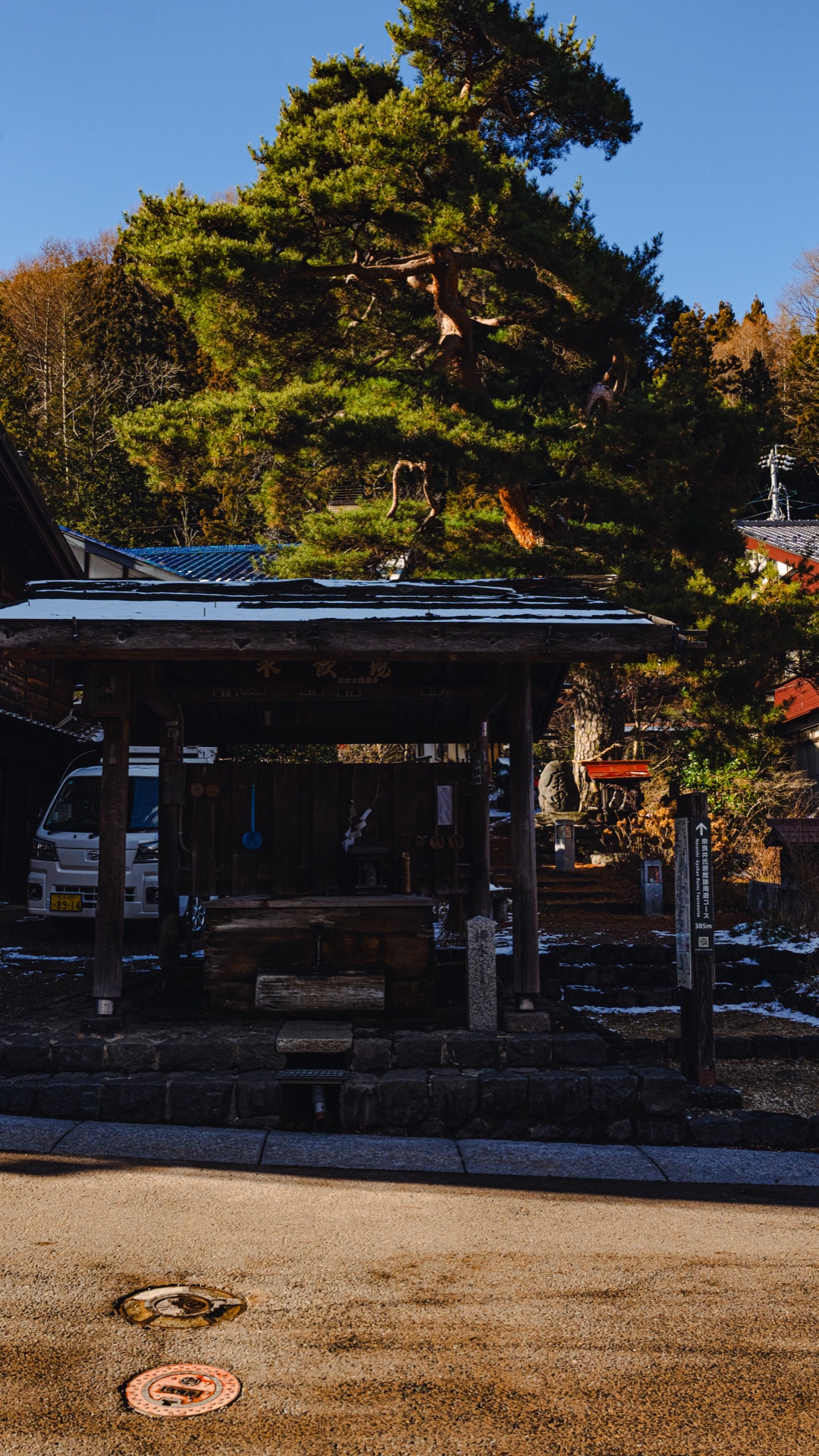
The chōzuya purification basin near the shrine entrance. The pine has been there longer than I’ve been alive.
The Torii in Cedar
The torii is small. Most photos make it look monumental. In person it’s modest — about three meters across, painted a deep red against a wall of cedars that easily reach thirty meters above it. The shimenawa rope hangs across the gate with paper streamers, snow caught in the twists.
What makes the moment is the contrast. The post town behind you is wooden, brown, lined with shops. Through the torii, everything turns red and green and shadowed. The temperature drops a few degrees inside the grove. The road sound from the main street disappears.
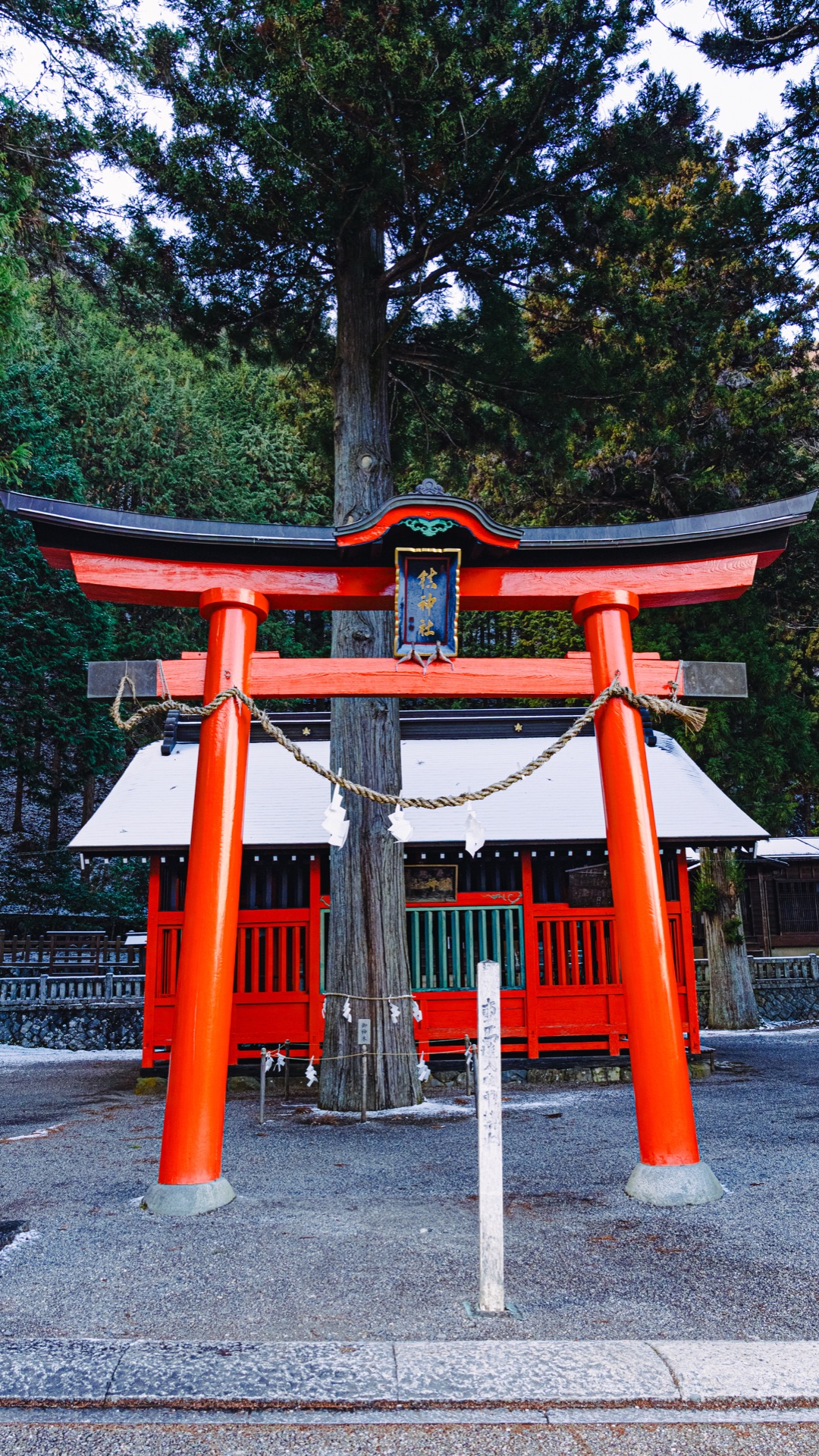
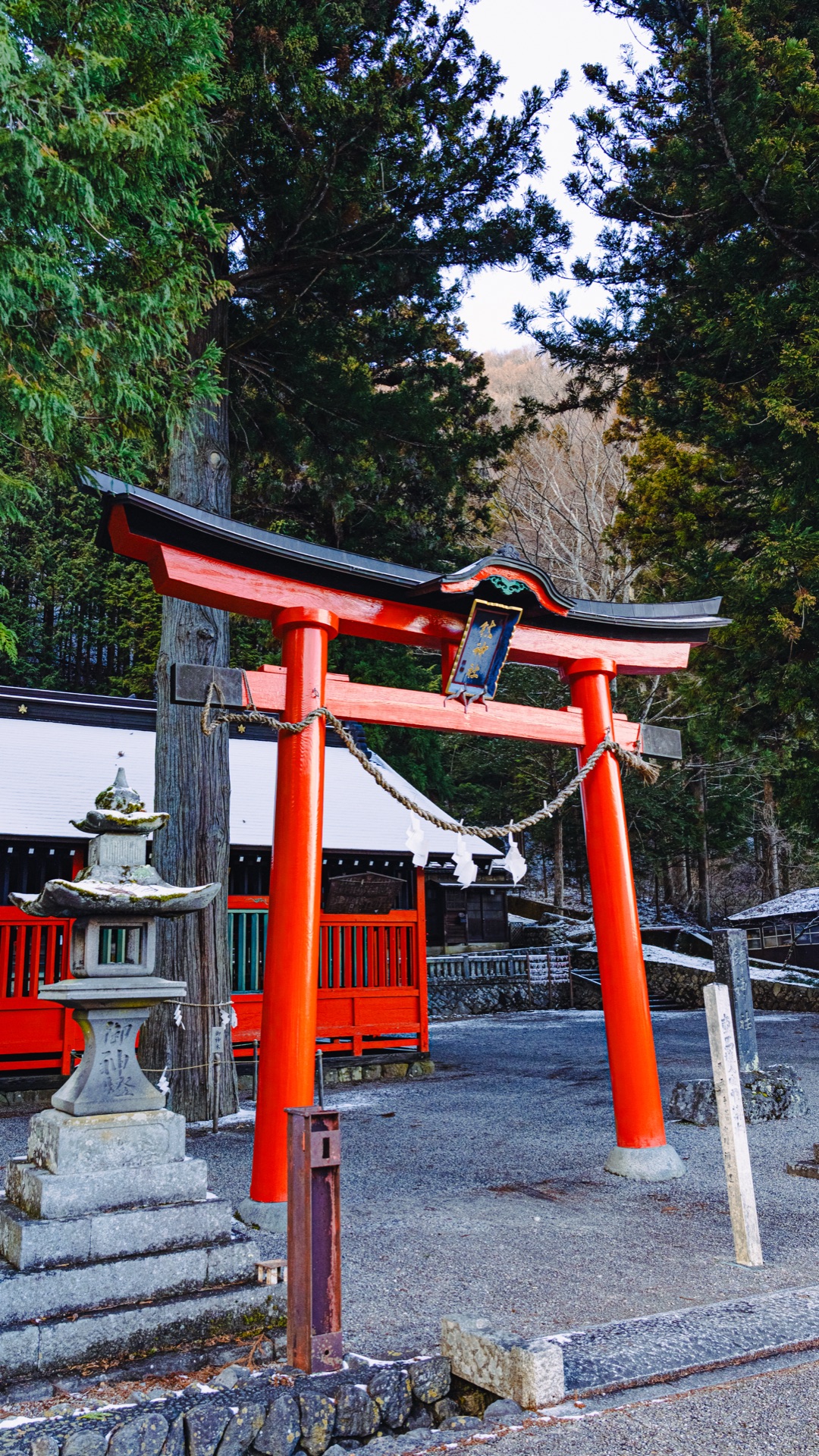
A cedar tree is growing directly behind the torii’s center — close enough that the trunk and the gate share the same vertical line. I don’t know if this is intentional. It looks intentional. The tree is older than the gate, which means the gate was built around it.
The Main Hall
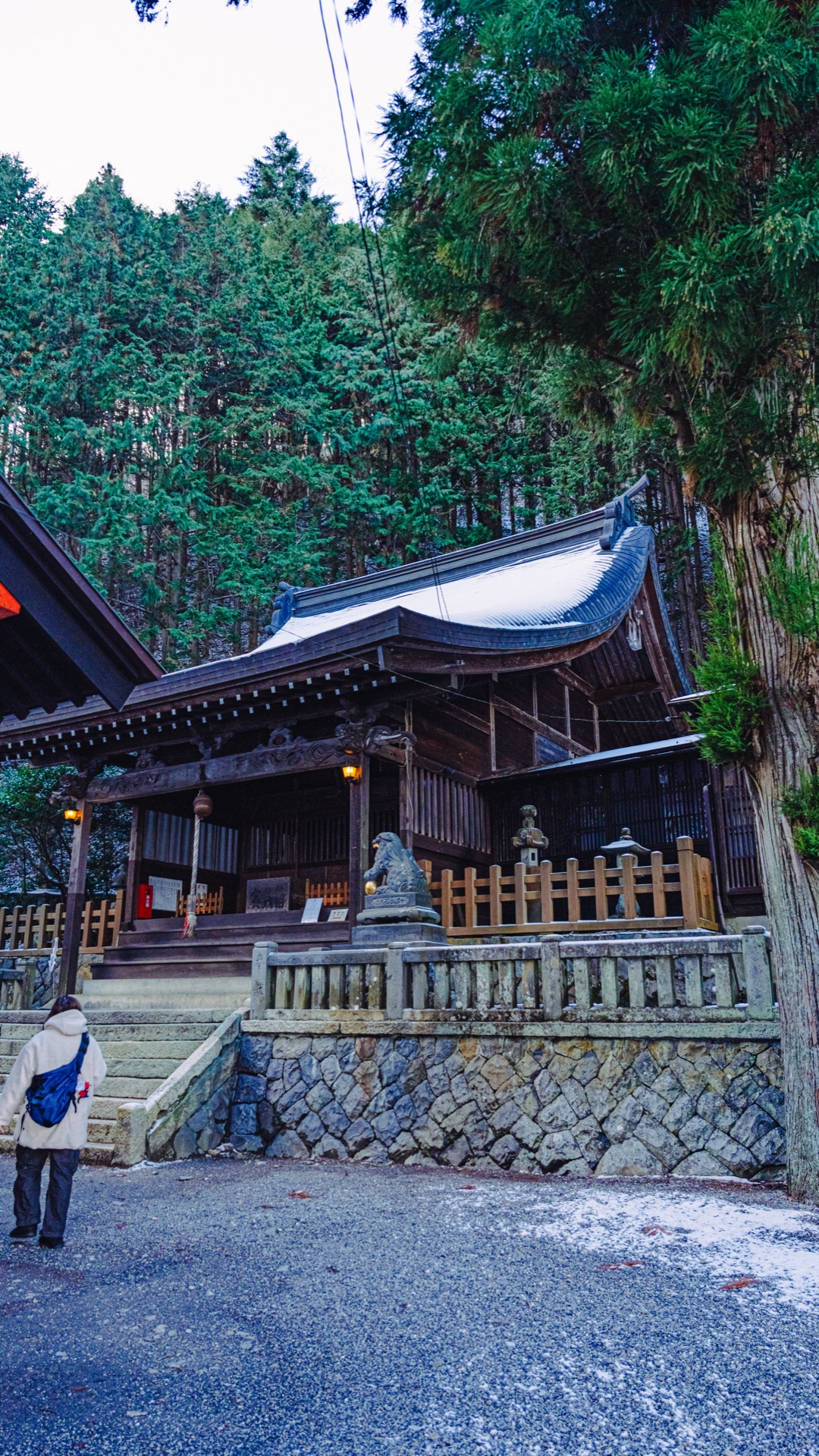
The main hall sits in the cedar grove, raised on a stone retaining wall.
The path past the torii leads up a few stone steps to the main hall (honden). Two komainu — the lion-dog guardians — sit at the base of the stairs. The one on the right has its mouth open. The one on the left is closed. A-un, the Sanskrit alpha and omega, the breath in and the breath out. The same pair stand at every shrine in Japan, and they always feel a little like dogs.
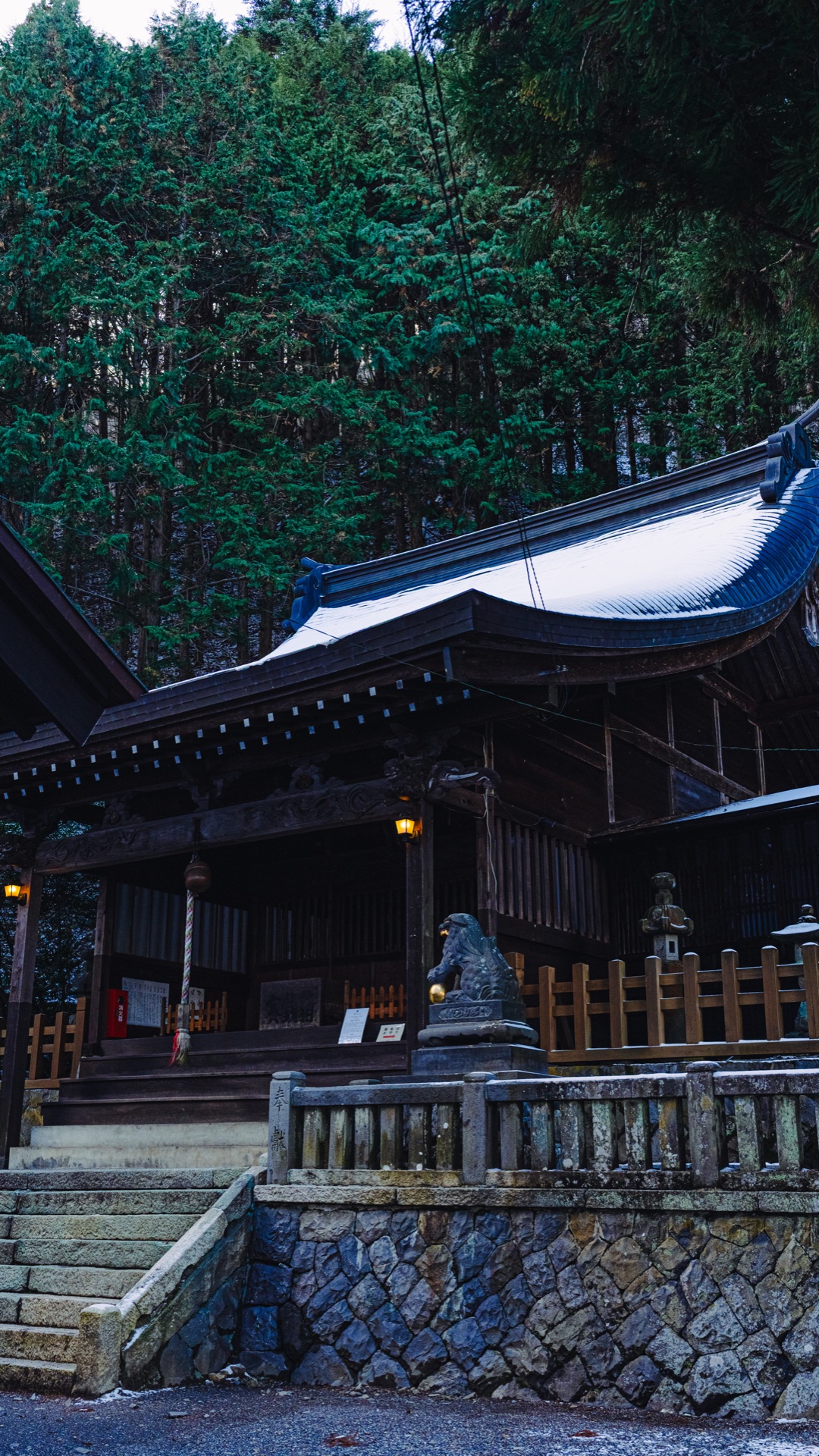
One of the komainu. Close-up, you can see how much the stone has been worn by four centuries of weather.
The main hall itself is small — maybe ten meters across — with a curved cedar-shake roof. Snow on the ridge in winter. A bell rope hanging at the front. There were two people praying when I arrived. They tossed coins in the offering box, clapped twice, bowed once, said something I couldn’t hear, and walked away. The whole thing took thirty seconds.
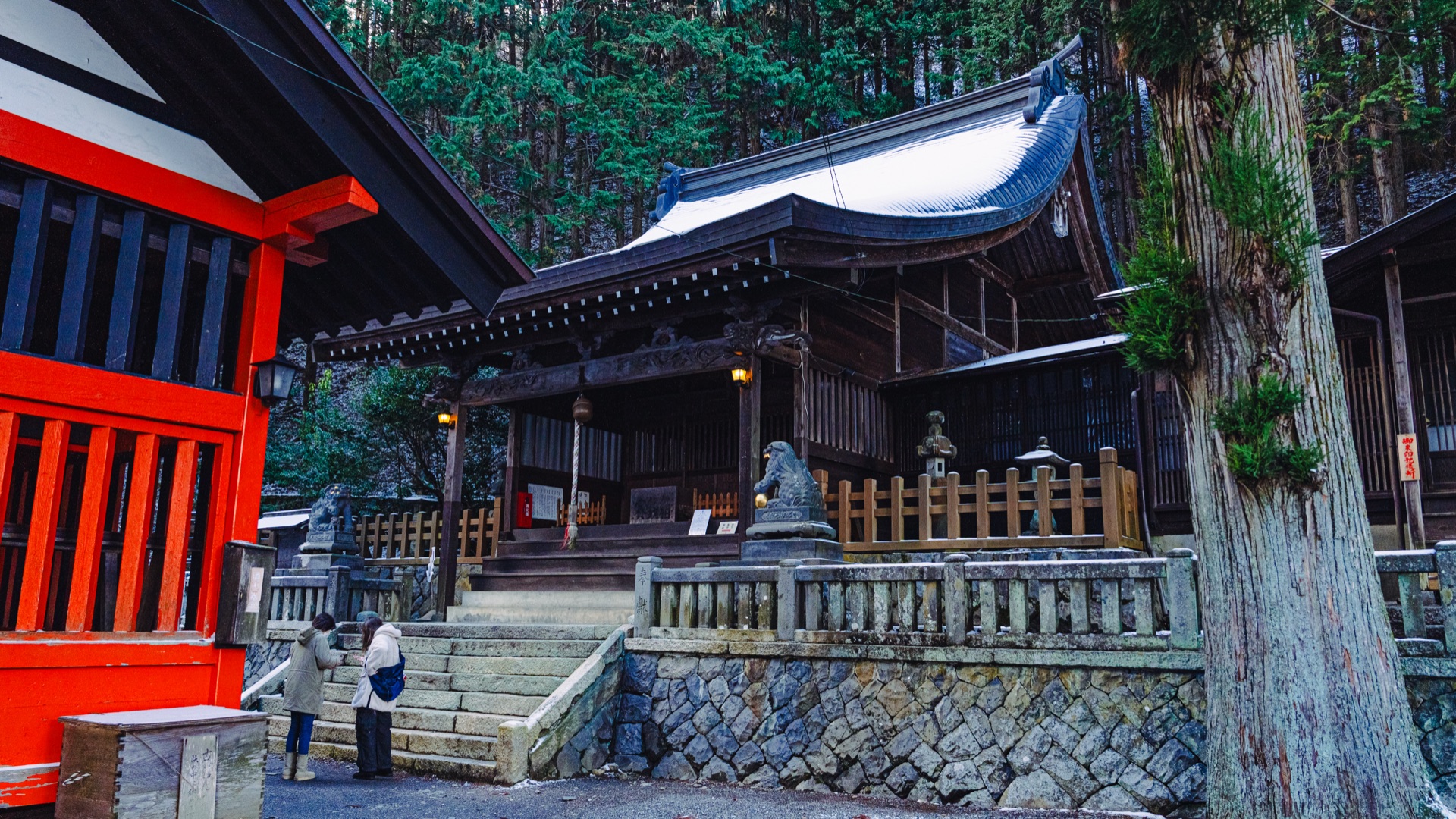
A pair of visitors approaching the main hall to pray. This is the busiest moment I saw all morning.
What Most Visitors Miss
The deity here is Futsunushi-no-Ōkami. In most contexts, he’s a war god — a sword god, associated with the deities of Katori and Kashima Shrines down in Chiba. Samurai prayed to him before battle. The Edo-period military class kept him close.
But that’s not why he’s here. At Shizume, he was invited specifically to cut off the epidemic — to use the sword that calms storms, calms armies, calms sickness. The 1618 priests weren’t asking for victory in war. They were asking for the same blade to be turned on a different enemy.
“Shizume” doesn’t mean fix. It means to weigh down what shouldn’t be moving. To pin the wave so it doesn’t rise. The whole shrine is named after that single act of suppression.
I think about this for a while standing in the grove. After 2020, the idea of a town gathering money and effort to invite a deity to stop a sickness doesn’t feel as historical as it might have. The mechanism is different. The instinct is identical.
When to Go
The shrine grounds are open at all times and there’s no admission fee. So the question is mostly about light, weather, and crowds.
The Annual Festival · August 11–12
The shrine’s reitaisai (grand festival) takes place every August 11–12 with all the parishioners participating. Drum, mikoshi procession through the main street, the kind of small-town festival you remember for being undersold by every guide. If you’re in the Kiso valley in mid-August, plan around it.
Practical Notes
The Walk Back
The most surprising thing about Shizume is how few people make the ten-minute walk south to find it. The main street of Naraijuku — wooden inns, lanterns, the iconic post town view — gets thousands of visitors a day in season. By the time you reach the shrine, the noise drops, the light changes, and you’re in a different version of the same place.
Walk back the way you came. The post town will look slightly different on the return.
What I keep thinking about: the shrine works the way the post town works. Both built for travelers, both built to keep something out — bandits, weather, sickness, time. Naraijuku preserved its wooden street because the locals decided to. Shizume Shrine kept its forest because the same people decided that mattered too.
If you walk Naraijuku end to end and skip the shrine, you’ll have seen the architecture. The story sits ten minutes farther south.
Join 1,000+ travelers discovering Japan's hidden side
Weekly dispatches from off-the-beaten-path Japan — spots and stories you won't find in guidebooks.
No spam. Unsubscribe anytime.
Welcome aboard!
You're in. See you in your inbox soon.