Fukuoka · Asakura · Riverside Teahouse
In shortDangoan is a seasonal mountain-stream teahouse in Akizuki, Asakura City, Fukuoka, open daily 10:00–17:00 with riverside platform seating (sajiki) installed every July through early September. From October to May the menu shifts to dango-jiru hot soup; in winter it opens by reservation only on weekends and holidays.
Akizuki is the small castle town in the hills above Asakura that most Fukuoka guidebooks file under “cherry blossoms in spring, autumn leaves in November.” The thing they leave out is that for two months in the middle of summer, an 1887-founded riverside teahouse called Dangoan installs dozens of wooden platforms directly over the mountain stream behind it — and you eat lunch with your bare feet hanging an inch above cold, clear water. I went on a 35°C afternoon in August, walked twenty minutes uphill from the Akizuki bus stop, and felt fifteen degrees cooler the moment I stepped under the canopy.
Quick Facts
Why Go
Three reasons, in order of how surprised I was by each.
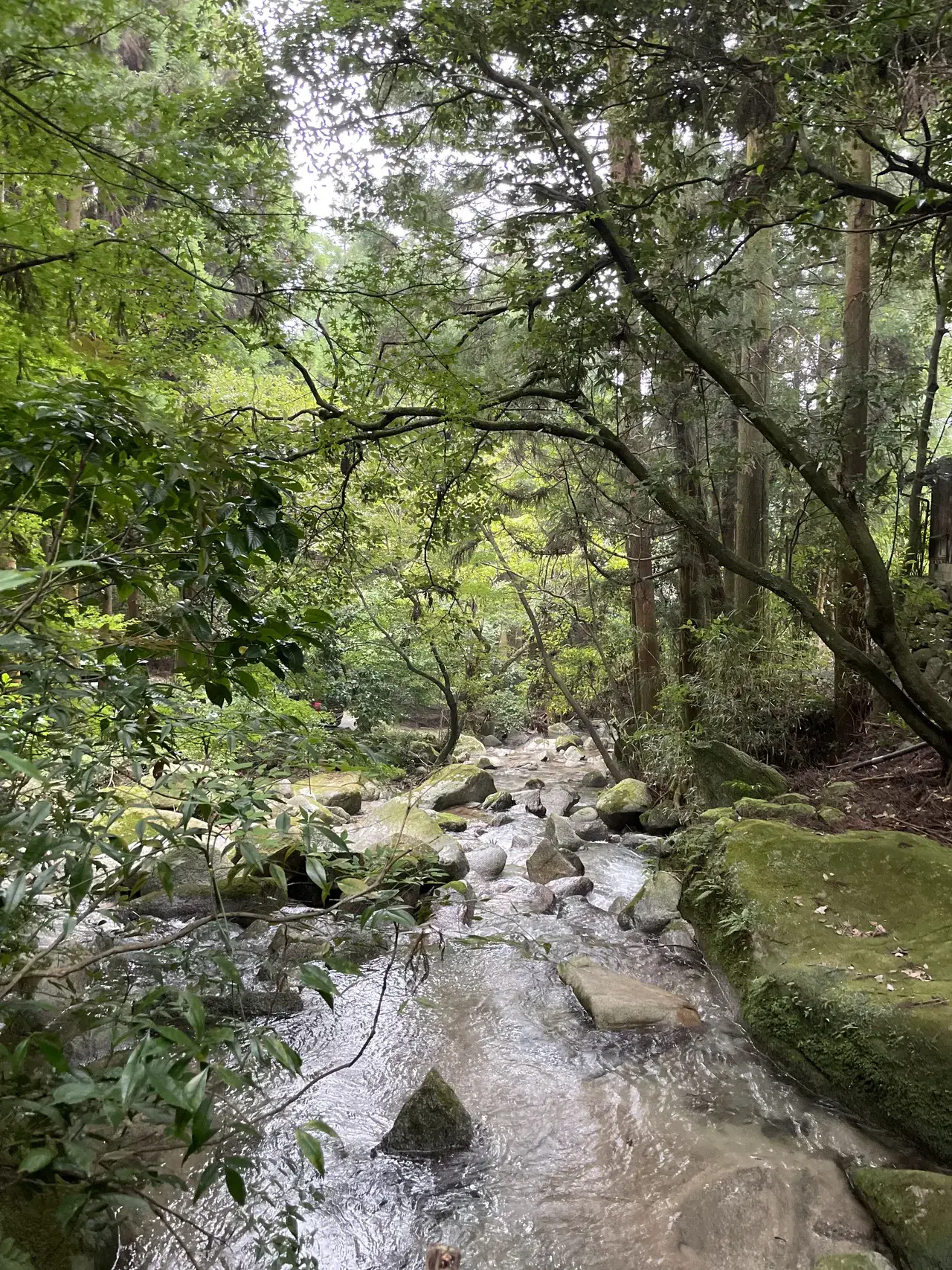
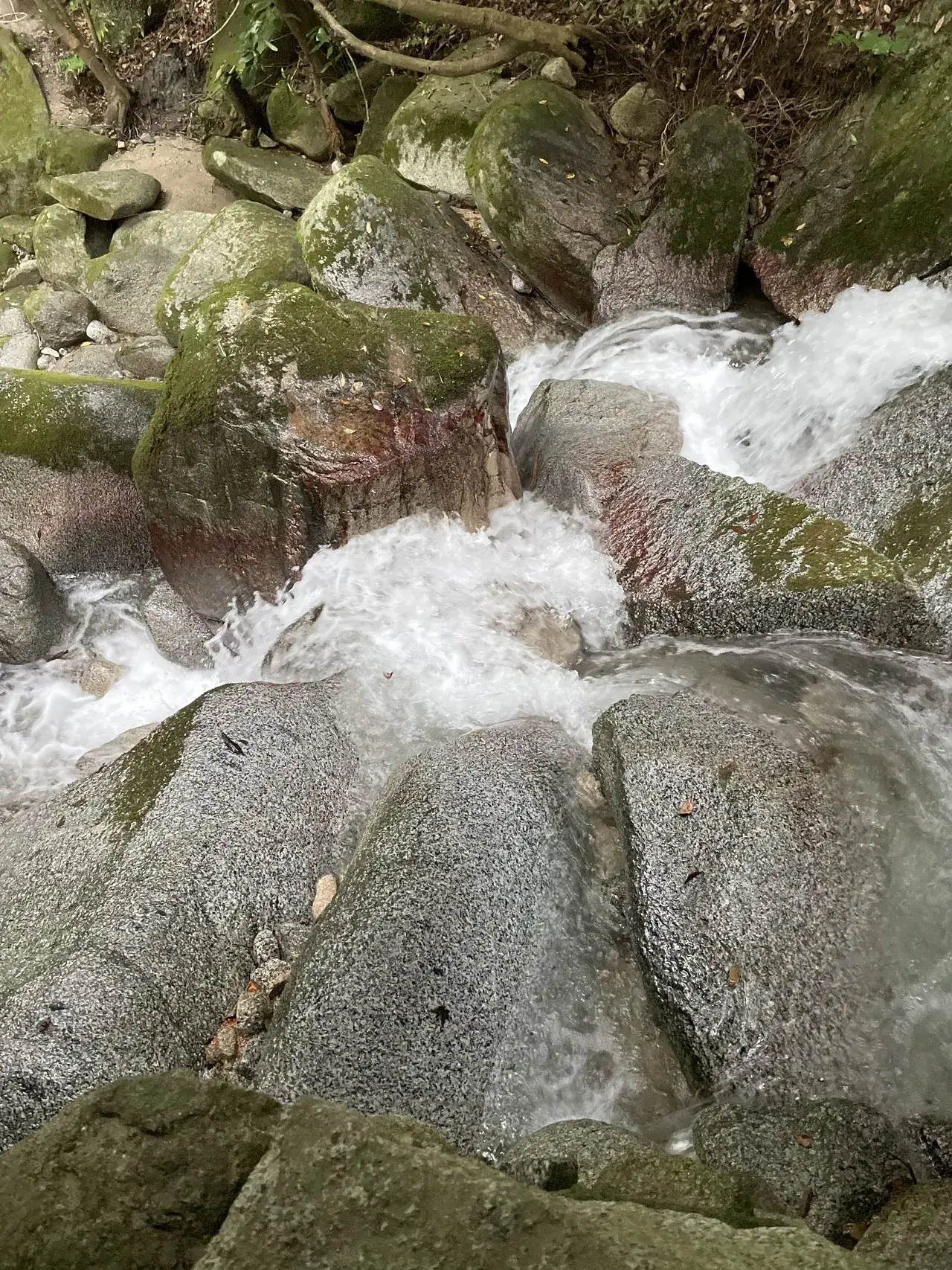
It is genuinely cool. The stream — the Notori River, running down through the foothills of Mt. Furushou (古処山) — arrives at the deck still cold even in August. The wooden platforms are built right over the flow, the canopy is dense forest, and the air sitting at the deck is measurably ten to fifteen degrees cooler than the parking lot at the top of the hill. There is a Japanese word for this kind of designed coolness — nōryō — and Akizuki, an old castle town in the hills, has long drawn people up for it in summer.
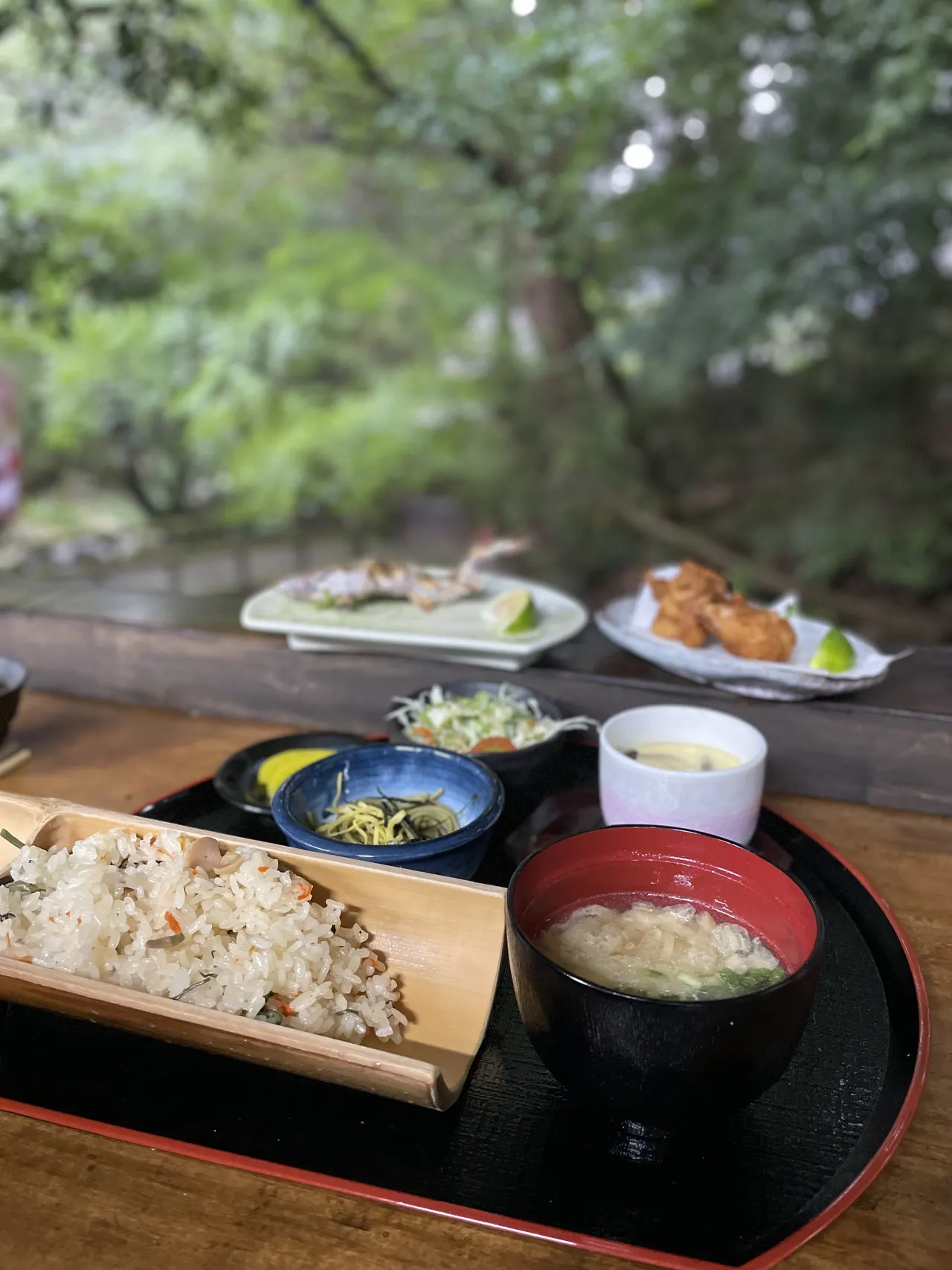
The food is good without trying to be a destination. The summer kohaku dango is two skewered rice dumplings, one tinted red, served on a small dish with sugar and soda water poured over them. The autumn equivalent is the two-color kushi dango with kinako and uguisuko (green-pea-flour). The proper meal is the takikomi rice set in the photo above — rice cooked with seasonal mountain vegetables, miso soup, salt-grilled yamame (river trout) from the tank, fried kosho-dori chicken, and a few side pickles — the yamame and the chicken karaage were what I came away remembering. No fanfare, no menu in English, no Instagram theater. You eat slowly because the air is slow.
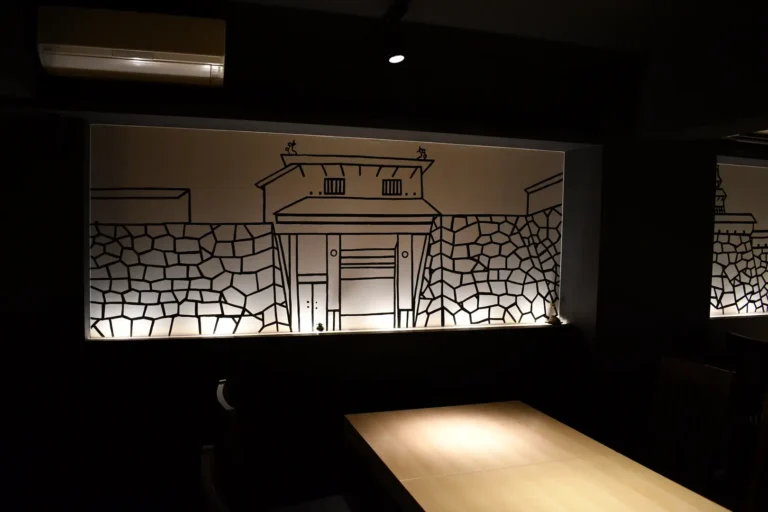
The walk to it is the experience. Park near Akizuki Castle ruins and walk fifteen to twenty minutes uphill on a stone-paved approach. Past samurai-era walls, past the old castle gate, past the cedar forest. The restaurant materializes around a bend in the path — just a wooden sign and a tunnel of green leading down to the water.
Akizuki was always known for cherry blossoms in spring. The mountain stream-cooled summer is what locals actually come back for.
What It Actually Looks Like
The Menu in Plain English
Three rotating menus depending on the season:
Summer (roughly July–mid-September)
- Kohaku dango (紅白だんご) — red-and-white dango chilled in sugar and soda water; the summer sweet (around ¥320).
- Dangoan teishoku (set meal) — bamboo container of seasonal mountain-vegetable rice, miso soup, salt-grilled yamame, fried kosho-dori chicken and pickles. The proper lunch (around ¥2,100–2,300).
- Cold somen on hot days. (The old flowing-somen / nagashi somen setup ran until 2019 and has not returned.)
Autumn / winter (October–May)
- Dango-jiru (だんご汁) — thick hot soup with hand-pulled dough strips, taro, seasonal vegetables, miso base. Warming and filling.
- Nishoku kushi dango (二色串だんご) — the autumn-winter version with kinako and uguisuko.
Year-round when available
- Kosho-dori (古処鶏) — local Asakura free-range chicken, grilled on skewers (around ¥600) or fried in the set.
- Cold sweets — kakigori (shaved ice), warabi-mochi and mizu-manju through the summer.
When To Go
How To Get There
Akizuki is rural-Fukuoka rural. Practical access:
- By car (recommended) — about 20 minutes from the Amagi IC on the Oita Expressway. Fifty parking spaces on-site. The mountain road narrows for the final 1 km — drive slow.
- By bus from Hakata — Highway bus or local rail to Amagi Station (roughly 60–75 minutes from Hakata), then bus or taxi to Akizuki (15–25 minutes). Total around 2 hours.
- By taxi from Amagi Station — about 15 minutes / ¥2,500–3,000 one way to the Akizuki entrance, then 20-minute walk uphill.
Plan a Half-Day Akizuki Trip
Make a Trip Out of It
Practical Tips
FAQ
Is Dangoan open year-round?
Yes, but with different operating shapes. April–November is regular daily operation (10:00–17:00, closed Wednesdays except July/August). December–March is weekends and holidays only, by reservation. The river-deck seating is up only roughly mid-July to early September.
What is the most distinctive thing about Dangoan?
The platform seating built directly over a cold mountain stream during peak summer. Dozens of wooden platforms (sajiki) — sources cite roughly 30 to 50 — are installed over the water from mid-July to early September, with the canopy creating roughly 10–15°C of natural cooling. There is a Japanese word for this engineered summer cooling — nōryō.
How long does the walk from the parking area take?
About 15–20 minutes from the Akizuki Castle ruins parking, uphill on a stone-paved samurai-era approach. The path is well-marked and shaded in summer.
Do I need a reservation?
Weekdays in any season: no reservation, walk-in works. Weekends and holidays in peak summer (mid-July through end of August): arrive before 11:30 or reserve via phone (0946-25-0506, Japanese only). Winter (December–March): reservation is required regardless of day.
Is there a dress code?
No formal code. Stone-paved approach and river-deck seating mean sneakers or sandals with grip. If you plan to dangle feet over the water, wear something ankle-cuttable.
Can I combine Dangoan with other Akizuki stops?
Yes — the natural pairing is Akizuki Castle ruins (just downhill from Dangoan, free, 10-minute walk), the samurai street in central Akizuki (preserved Edo-period merchant houses), and Tarutoyama Park if you have an extra hour. The full half-day loop fits cleanly into one Fukuoka day-trip.
Dangoan is the kind of place that survives because of the geography. Akizuki sits in a fold of the Asakura mountains where a small clear stream comes off Mt. Furushou and runs through what used to be a samurai town. Someone well over a century ago figured out that if you built wooden platforms over that stream and served river-cooled lunches and sweets there in August, people would walk twenty minutes uphill to sit on them. They have not been wrong since.
If you are in Fukuoka in summer and someone takes you here, you will understand why they bothered to drive two hours each way. If you are in Fukuoka in autumn, the castle ruins and the takikomi rice still make the trip worth it. The version of this town in winter is for locals and for the patient.
Pair it with Nanzoin Reclining Buddha (45 min east) for a full day out of Hakata. Or with Sasaguri’s cypress forest for the same direction with no temple stop.
Plan This Trip
Three doors. A car is the realistic answer for a mountain restaurant 20 minutes off the expressway, but Hakata-based with a half-day taxi works too.
For another summer meal in the cool of Fukuoka’s hills, Soba Bunjiro serves handmade noodles up in the mountains.
Join travelers discovering Japan's hidden side
Weekly dispatches from off-the-beaten-path Japan — spots and stories you won't find in guidebooks.
No spam. Unsubscribe anytime.
Welcome aboard!
You're in. See you in your inbox soon.