

Science · Bioluminescence
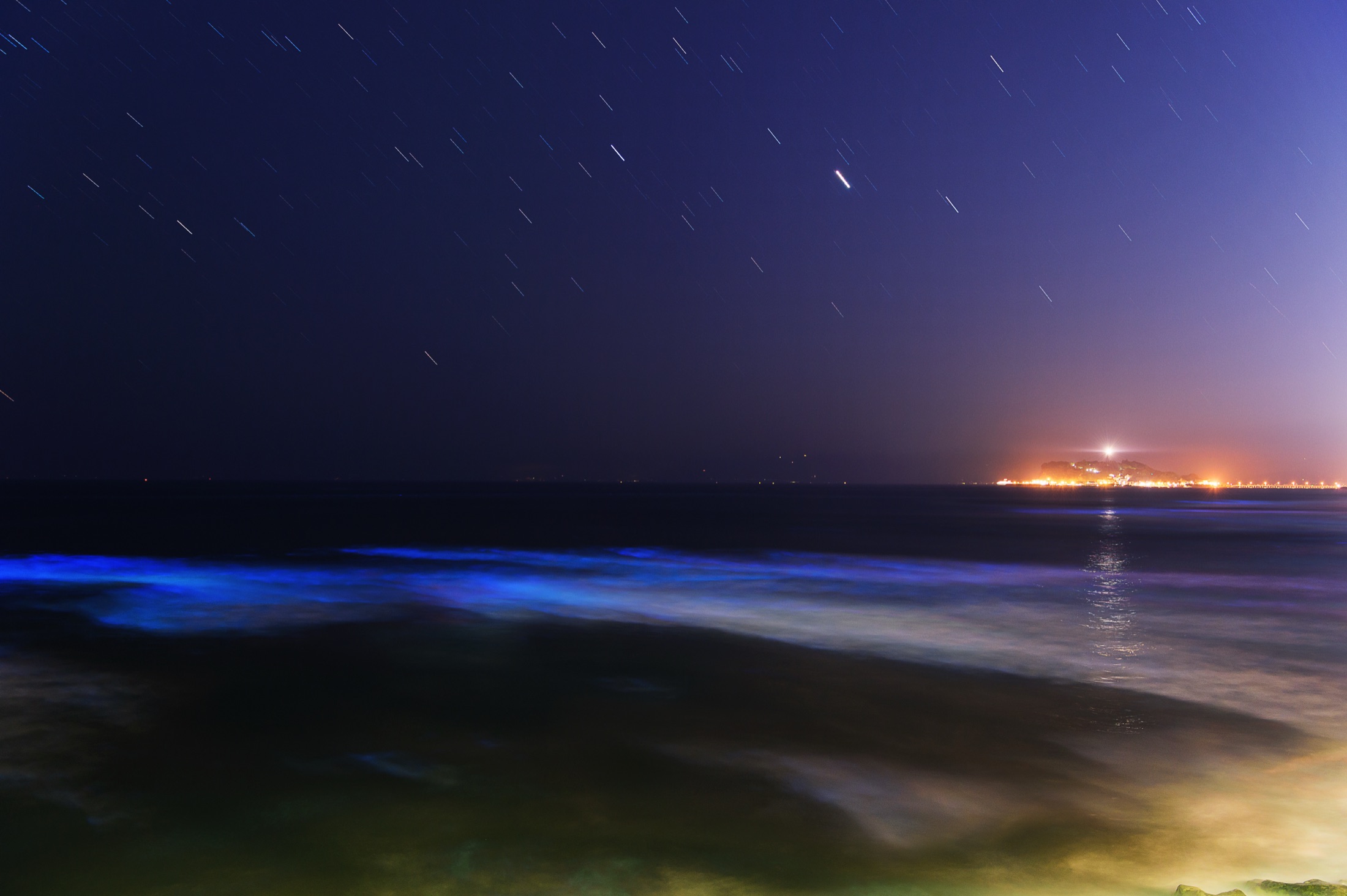
Sea sparkle is the blue bioluminescent glow of Noctiluca scintillans — a single-celled plankton about 1–2 mm across that flashes light when waves, footsteps, or a paddle disturb it; the very same organism colours the water a pink-orange “red tide” by day, and although it produces no toxin, dense blooms release ammonia that can irritate skin, so the rule is simple: look, do not swallow. I have chased this glow up and down the Pacific coast for years, and the questions I get are always the same three — what is it, why does it light up, and is it safe. Here are the answers, checked against the science rather than the hype.
What is sea sparkle, exactly?
Sea sparkle is Noctiluca scintillans, a single-celled dinoflagellate — a tiny, spherical, gelatinous plankton roughly 1 to 2 mm across, just big enough to see as a speck. It drifts near the surface of warm coastal water, and when its population explodes into a “bloom,” millions of cells gather thick enough to light the water at night. Sailors named the effect long before anyone understood it: “the burning of the sea,” and later, sea sparkle.
The blue light is a chemical reaction. Each cell holds thousands of granules of two substances, luciferin and luciferase, and when they react they give off a brief flash of cold blue light. There is no heat, no electricity — just chemistry, the same family of reaction that lights a firefly.
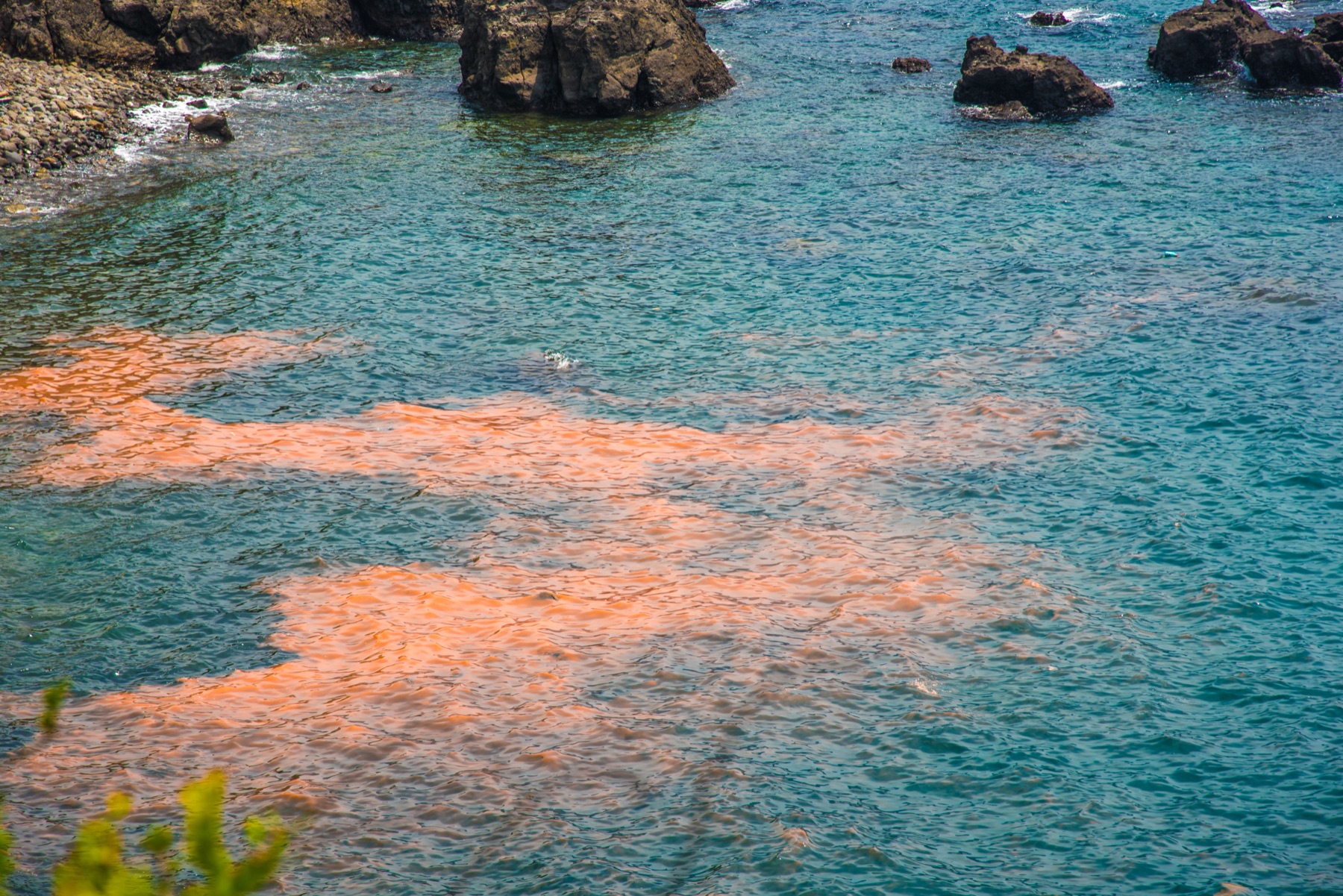
Two faces of the same plankton: red tide by day, blue by night
This is the part most guides miss. The blue glow and the daytime “red tide” are the same organism. When a bloom is dense, the cells form a scum on the surface that reads as pink, orange, or rusty red in daylight. That daytime stain is the single most useful sign you have: if you see a red tide on a warm afternoon, there is a real chance the same water will glow after dark.
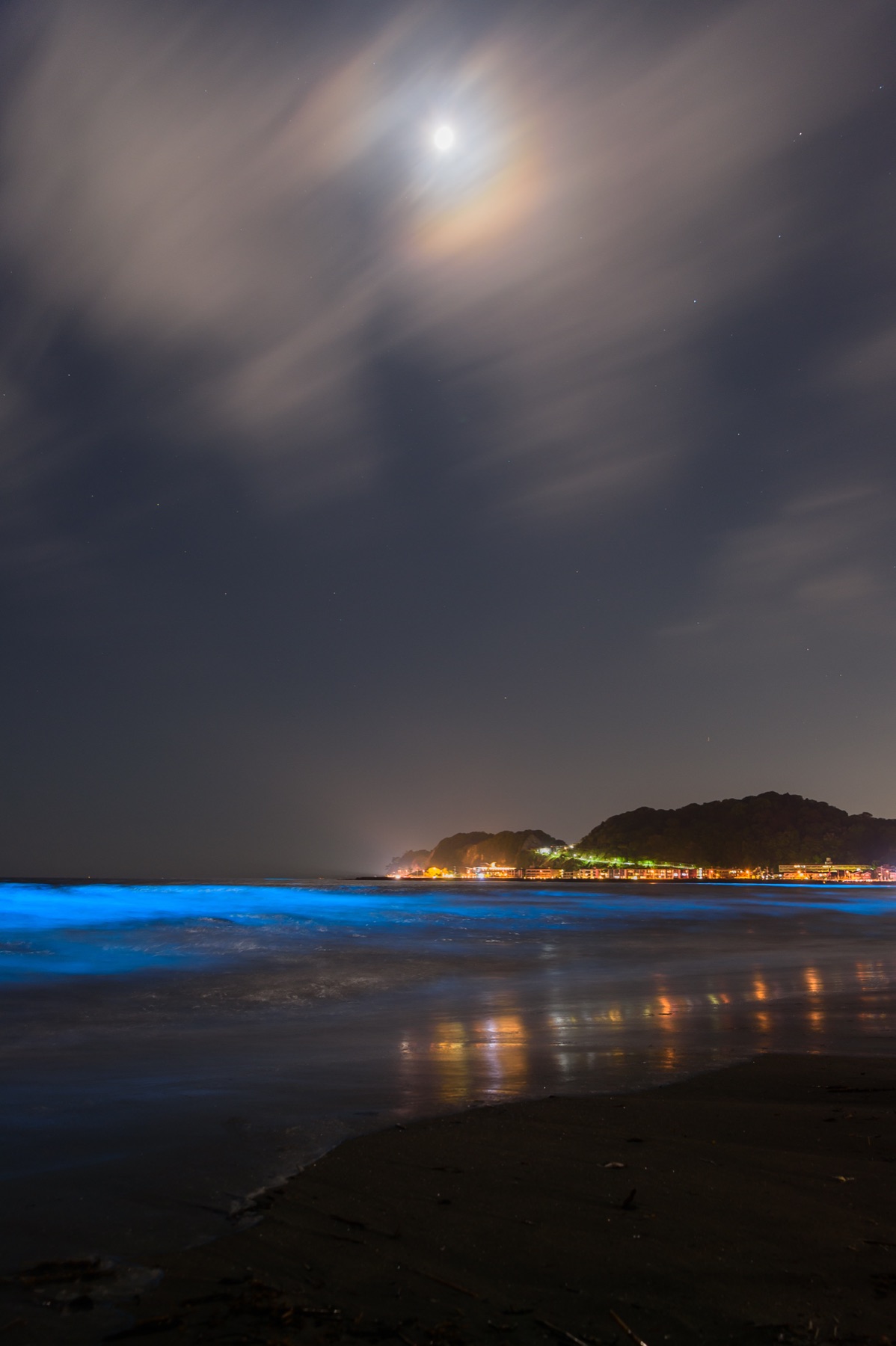
Why does the sea glow blue when you touch it?
The light is a defence reflex, and it is switched on by movement. Noctiluca flashes when the water around it is physically disturbed — a breaking wave, a footstep in the shallows, a hand dragged through the surf, the wake of a boat. Still water stays dark; agitated water lights up. That is why the glow lives at the wave line, why your footprints flash in wet sand, and why dragging a stick through the shallows draws a streak of blue. If a strong offshore wind pushes the bloom out to sea, the glow can vanish within an hour, which is why timing matters as much as luck.
Is sea sparkle safe? Can you swim in it?
Sea sparkle itself is not poisonous. Noctiluca produces no toxin, so it will not poison you the way some harmful algal blooms can. The catch is that dense blooms accumulate and release ammonia, and in a thick bloom that can irritate skin, eyes, and airways — and the water often smells. A red tide can also be hazardous to fish even when it is harmless to people.
When and where can you see sea sparkle in Japan?
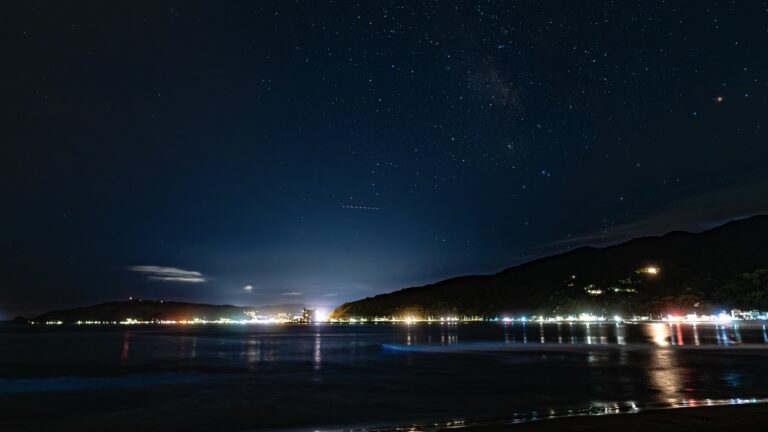
Sea sparkle is seasonal and never guaranteed — it depends on a bloom forming, then on warm, calm, dark conditions, ideally with little moon. In Japan the season runs from late spring through summer, when coastal water warms. The Pacific coast around Sagami Bay (the Shōnan and Kamakura beaches), Suruga Bay, Mikawa Bay near Nagoya, and the Izu Peninsula are the most reliable, with occasional blooms further west. Because it changes night to night, the only way to plan is to check live before you go.
Pick a dark, calm night
Less moon and less wind both help. A flat sea holds the bloom inshore; a strong offshore wind can clear it in under an hour.
Watch for a daytime red tide
A pink-orange stain on the water that afternoon is your best single predictor that the same beach may glow after dark.
Check live, not last year
It moves nightly between beaches. Our live tracker follows verified sightings during the bloom — read it the day you go.
Let your eyes adjust
Step away from streetlights and phone screens for 10–15 minutes. The glow is real but faint to the naked eye; patience reveals it.
For where it is glowing right now and which beaches have been confirmed this season, see our live guide: Japan’s sea sparkle — verified sightings, updated through the bloom. Many of the Shōnan sightings cluster around Enoshima, and the same coast is worth a dawn visit for the Koyurugi crossing while you are there.
Sea sparkle vs firefly squid: two different “glowing seas”
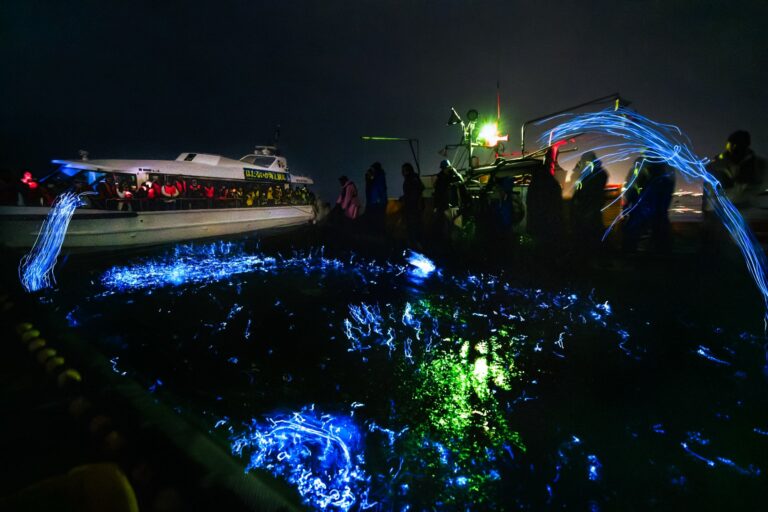
People often mix these up, but they are completely different. Sea sparkle is plankton on the Pacific coast in early summer. Japan’s other famous glow comes from the firefly squid (Watasenia scintillans) — an actual small squid that lights up Toyama Bay on the Sea of Japan side in spring. Same blue, different creature, different coast, different season.
| Sea sparkle (Noctiluca) | Firefly squid (Watasenia) | |
|---|---|---|
| What it is | Single-celled plankton (1–2 mm) | A small squid (about 7 cm) |
| Where | Pacific coast — Shōnan, Suruga, Mikawa, Izu | Toyama Bay, Sea of Japan |
| Season | Late spring to summer | Spring (around April–May) |
| What you see | Blue glow along the breaking waves | Blue squid in fishing nets or washed ashore |
| How to see it | Free, from any dark beach | A pre-dawn boat tour, or a beach stranding |
What is sea sparkle?
Sea sparkle is the blue bioluminescent glow of Noctiluca scintillans, a single-celled plankton about 1–2 mm across. When a bloom is dense enough, the plankton lights the water blue at night and shows as a pink-orange “red tide” by day.
Why does the sea glow blue when you touch it?
The glow is triggered by movement. Each Noctiluca cell holds luciferin and luciferase, and when the water is physically disturbed — a wave, a footstep, a hand through the surf — they react and flash cold blue light. Still water stays dark.
Is sea sparkle safe? Can you swim in it?
Sea sparkle itself produces no toxin, so it will not poison you. But dense blooms release ammonia that can irritate skin, eyes, and airways, and the water often smells. Wading the wave line is fine; avoid swimming in a thick bloom, keep it out of your eyes, and do not swallow the water.
Is sea sparkle the same as a red tide?
Yes — the pink-orange daytime “red tide” and the blue night glow are the same organism, Noctiluca. A red tide in the afternoon is the best single sign that the same water may glow after dark.
When is the best time to see sea sparkle in Japan?
Late spring through summer, on a warm, calm, dark night with little moon. It depends on a bloom forming and staying inshore, so it changes night to night and is never guaranteed.
Where can you see sea sparkle in Japan?
The Pacific coast is most reliable: Sagami Bay (the Shōnan and Kamakura beaches), Suruga Bay, Mikawa Bay near Nagoya, and the Izu Peninsula, with occasional blooms further west. Check a live tracker the day you go, since it moves between beaches.
Is sea sparkle the same as firefly squid?
No. Sea sparkle is plankton on the Pacific coast in early summer. Firefly squid is an actual small squid that glows in Toyama Bay on the Sea of Japan side in spring — a different creature, coast, and season.
Join 1,000+ travelers discovering Japan's hidden side
Weekly dispatches from off-the-beaten-path Japan — spots and stories you won't find in guidebooks.
No spam. Unsubscribe anytime.
Welcome aboard!
You're in. See you in your inbox soon.