

Kamikochi · 2026 · Month by Month
Best Time to Visit Kamikochi 2026 — Month-by-Month Guide for Photographers, Hikers and First-Timers
Open seven months a year. Each month is a different mountain. Snow-and-river contrast in late April. Shinryoku in May. Karasawa colour in late September. Larch gold in early November. Pick wrong and the trip you came for isn’t there.
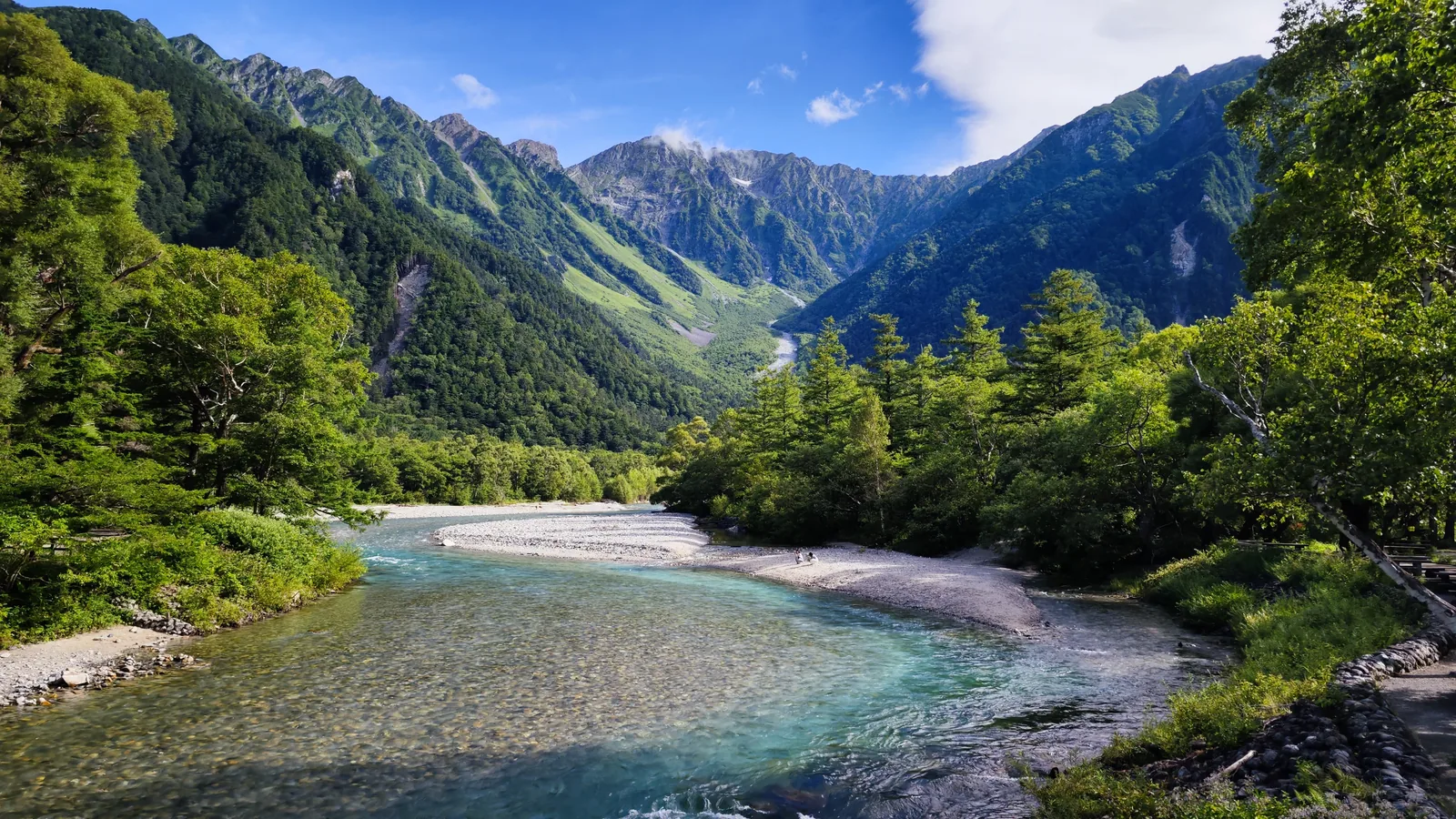
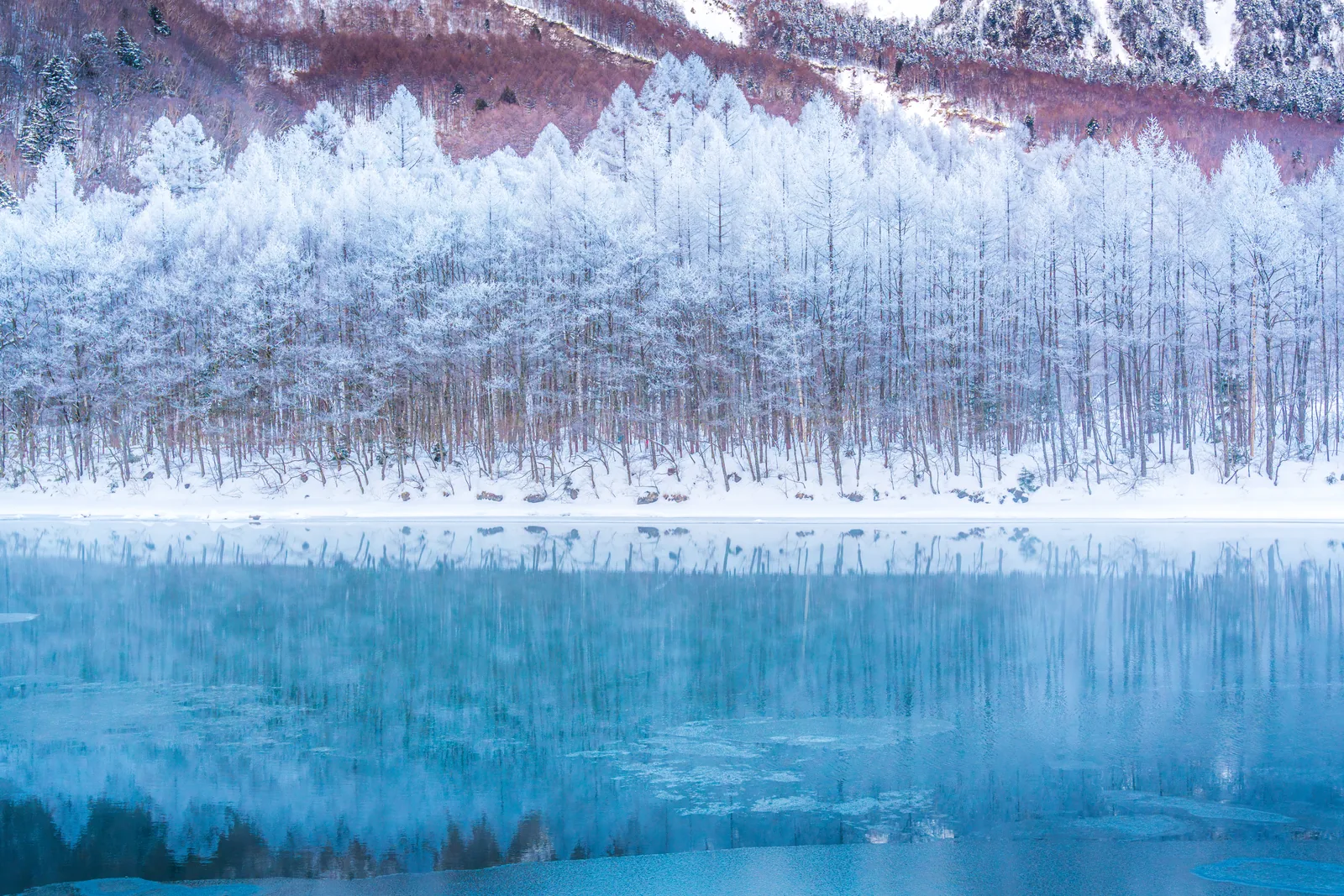
Kamikochi is open seven months a year. The other five it sits silent under snow, no road in, no hotels operating. Within those seven open months, the valley behaves like seven different places — late-April morning frost on the boardwalks, June rainy-season rhododendrons, August alpine flowers, late-October maple-and-larch peak. Most “best time to visit” articles say “autumn” and call it a day. The honest answer is more nuanced: the right month depends on whether you came for photography, alpine hiking, family-friendly walking, or just to stand on Kappa Bridge once. This guide breaks down each open month with verified 2026 events, weather, and what you’ll actually see.
2026 season at a glance — when to go, when to wait
April 17–30, 2026 · Snow-and-river contrast
Why it’s worth coming late April
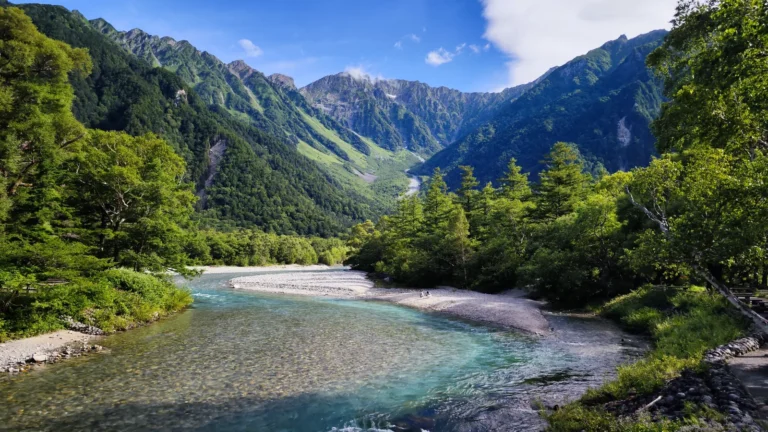
The Kama Tunnel just opened. Snow still caps the Hotaka peaks but the valley floor is exposed gravel and clear water. The contrast between snow-white peak and turquoise Azusa River is sharper here than at any other time of year. Mornings are below freezing — boardwalks have frost, side streams have ice — but by 10 AM the air is dry and the light is alpine-clean.
The 56th Kaizan-sai (opening ceremony) is April 27, 2026 at 10:50 AM at Kappa Bridge. Alphorn, traditional lion dance, sake-barrel cracking. About 3,500 people attend; it’s the only crowded day of the month.
Weekday April 17–24 is the quietest week of the entire season. Hotels run “opening plan” discounts (Park Lodge takes ¥2,000 off). The trade-off: leaves haven’t budded, expect cold mornings, some upper trails still snowbound.
Best for: photographers (snow-and-river contrast, low crowds), solitude seekers, anyone testing camping gear in cold weather.
May 2026 · Golden Week then shinryoku
The split month
May divides into two distinct phases. Golden Week (May 2–6, 2026) is the busiest stretch of the entire season alongside Obon — Sawando parking lots fill by 8 AM, bus waits run 1–3 hours, hotel inventory was booked out by January. Skip if you possibly can.
Then May 7 onward, the valley empties dramatically. The “shinryoku” (新緑, fresh green) starts mid-May; by May 15–25 the valley floor is the bright young green that only happens once a year. Tokusawa wildflowers (nirinso anemones) bloom late May.
Daytime temperatures climb (14–19°C); mornings still chilly. Trail conditions are good across the board. Tokusawa-en’s tent sites and Konashidaira are increasingly viable as nights warm.
Best for: shinryoku photographers (May 15–25), hikers, families wanting comfortable but not crowded conditions. Avoid: Golden Week May 2–6.
June 2026 · The quiet month
Why June is underrated
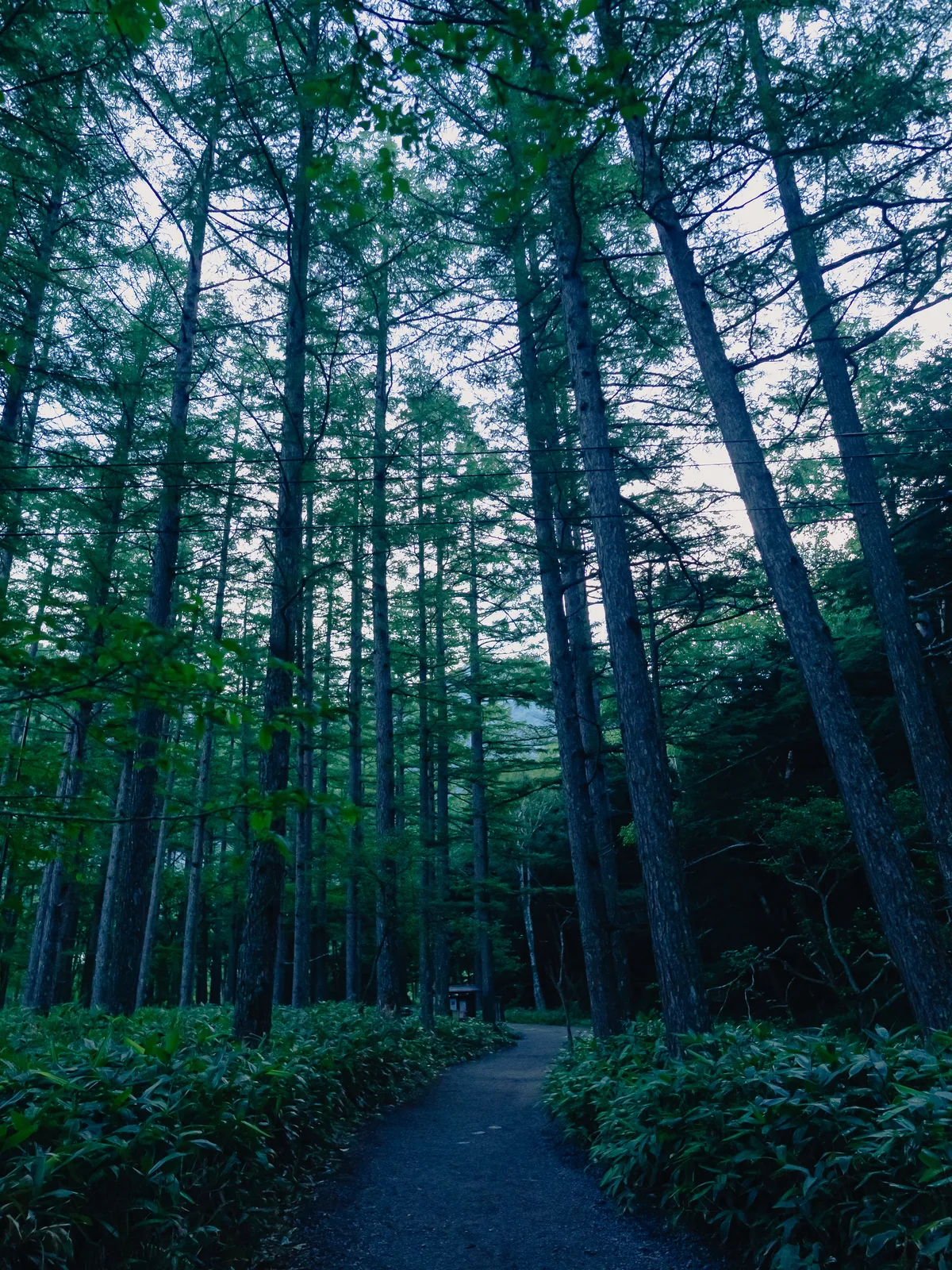
This is the quietest month of the open season. The rainy season (“tsuyu”) brings cool, atmospheric mist; rhododendrons and cotton-grass at Tashiro Wetland; and the lowest hotel demand of the year. Yokoo Sanso is closed for renovation, but everything else is operating with discounted weekday rates.
The Weston Festival is June 7, 2026 (first Sunday) — 70th anniversary year (counting from 1947). Local schoolchildren offer flowers at the Weston Relief, alphorn plays at Kappa Bridge. A modest, locally significant event; not a tourist crush.
The 2026 Nagano accommodation tax (+¥200 per person per night for rooms ≥¥6,000) kicks in June 1. Stays in May still avoid it; June onward includes it.
Best for: budget travelers (lowest demand), atmospheric photographers tolerant of mist and rain, solo trekkers wanting empty trails. Avoid if: you need clear-weather mountain photos.
July 2026 · Alpine flora, building crowds
The classic alpine month
The rainy season ends mid-July; from there through late August the valley sees its highest visitor numbers. Daytime highs reach 21–24°C — the coolest summer escape in central Honshu, vs the brutal humidity in Tokyo or Kyoto.
Alpine flowers peak. The Karasawa cirque is finally snow-free (mid-July onward) and accessible to day-trip hikers from Yokoo Sanso. The Azusa River runs clearest of the year as snowmelt finishes.
Marine Day (Umi-no-hi, July 20, 2026) is a peak day. Weekend crowds are heavy mid-July onward. Hotel rates climb 20-30% from June.
Best for: first-timers wanting comfortable weather + flowers, hikers tackling Karasawa, families with school-age kids on summer vacation.
August 2026 · Peak summer + Obon
The hottest crush of the year
Obon week (mid-August, ~Aug 13–16, 2026) is the second-busiest stretch alongside Golden Week. Sawando parking fills by 7:00 AM, buses queue, hotels are completely booked from January. Avoid these dates if possible.
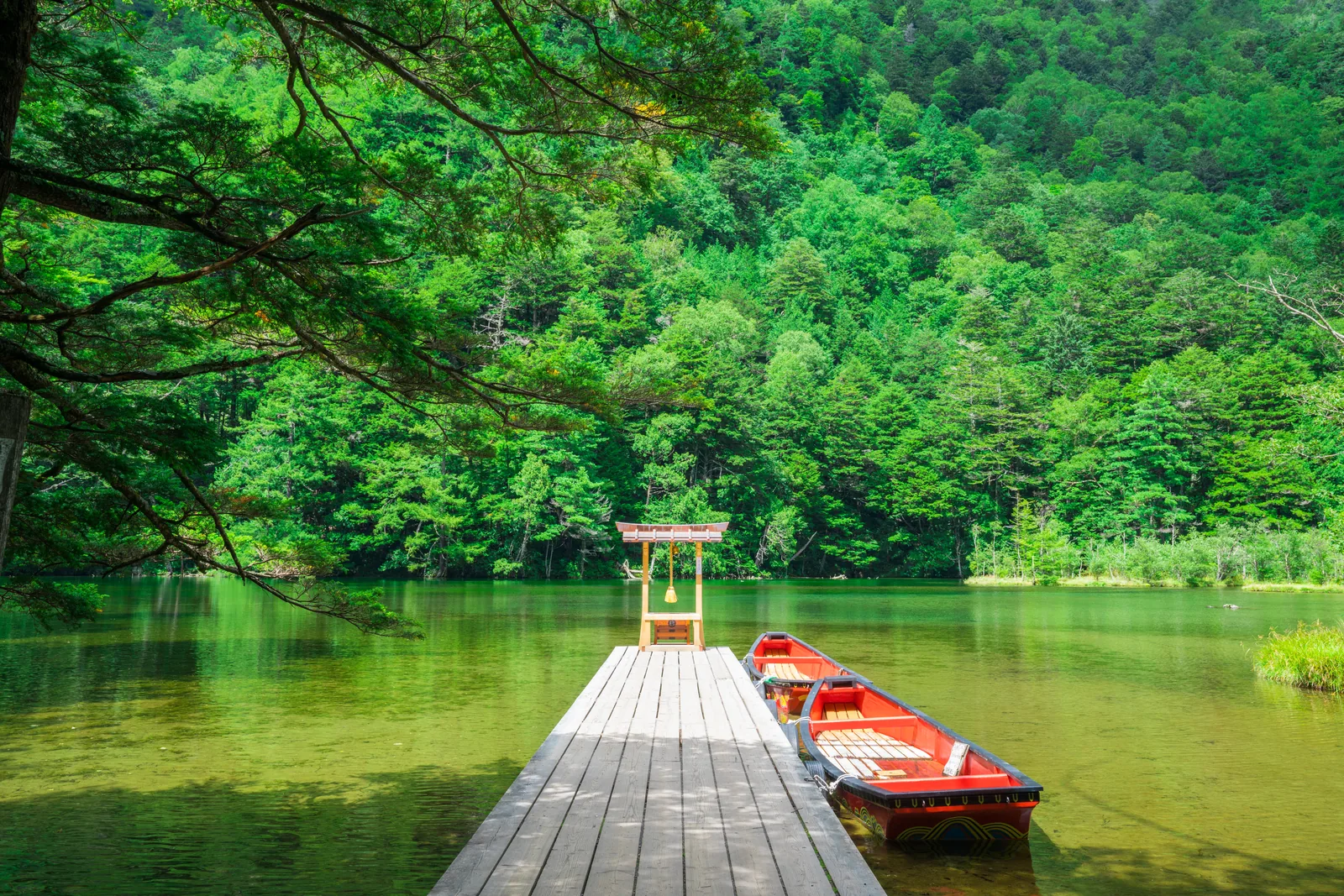
Outside Obon, August is workable — though you’ll share the trails. The valley stays cool (highs in low 20s) while Tokyo bakes, which is exactly why Japanese families come here. Afternoon thunderstorms are common above the cirque; carry rain gear.
Best for: families on summer break, anyone needing a break from urban heat. Avoid: Aug 13–16 specifically.
“Most online guides say ‘autumn is best.’ The honest answer: late September weekday for hiking, late October overnight for photography, early November for larch gold — those are three different best months.”
September 2026 · The shoulder window
Quietest weather window of the year
Daytime temps drop from 19–22°C early month to 14–17°C late month; mornings get brisk (8–12°C). The first hints of autumn colour appear at the highest elevations late September; Karasawa cirque colour peaks ~Sep 25 – Oct 5.
Typhoons can hit early in the month; check forecasts. Otherwise, September weekdays are some of the quietest of the entire autumn — significantly emptier than weekends or early October.
Best for: hikers tackling Karasawa (last-week September is peak there), photographers wanting solitude before October’s rush, first-time visitors who want stable autumn weather without the crush.
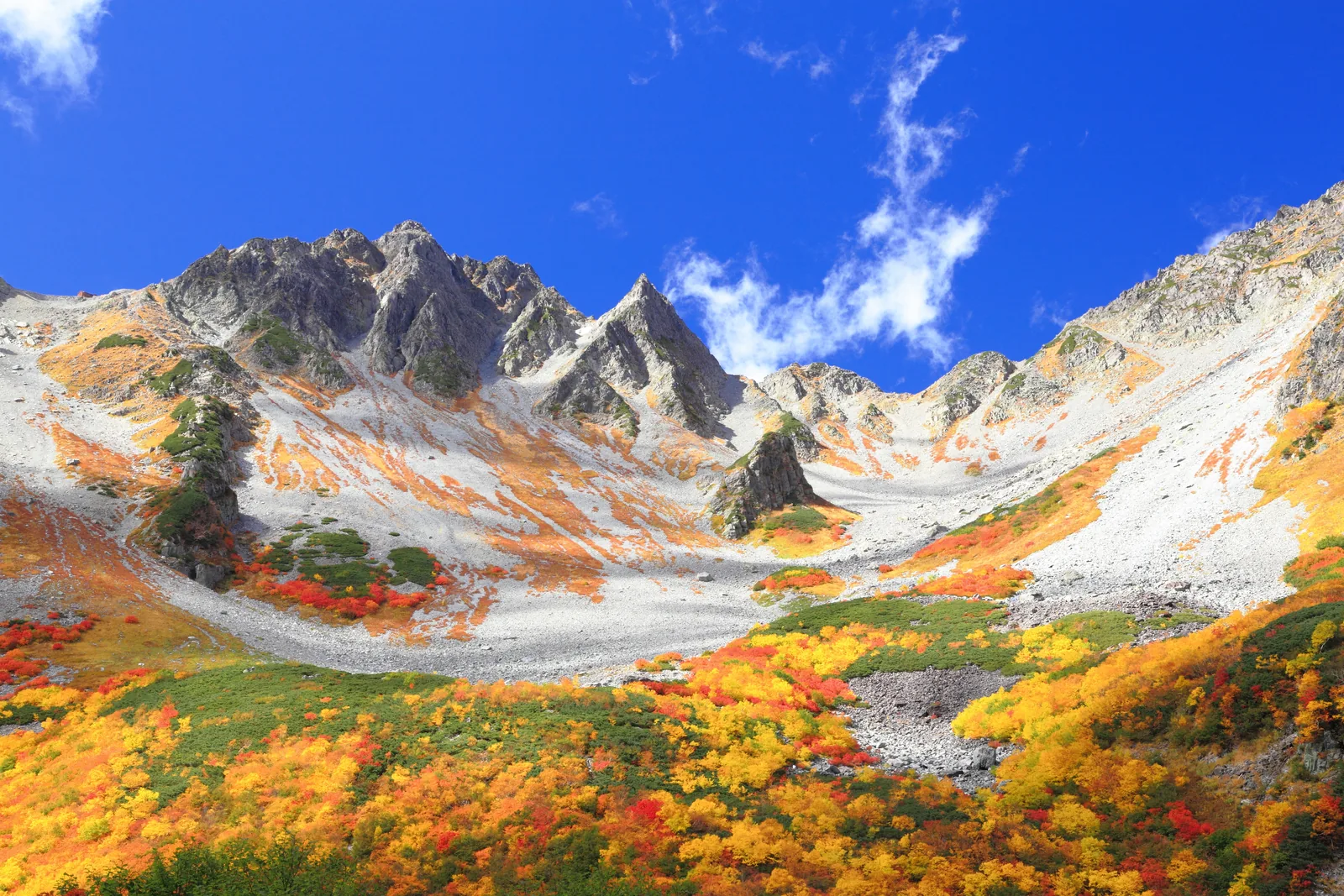
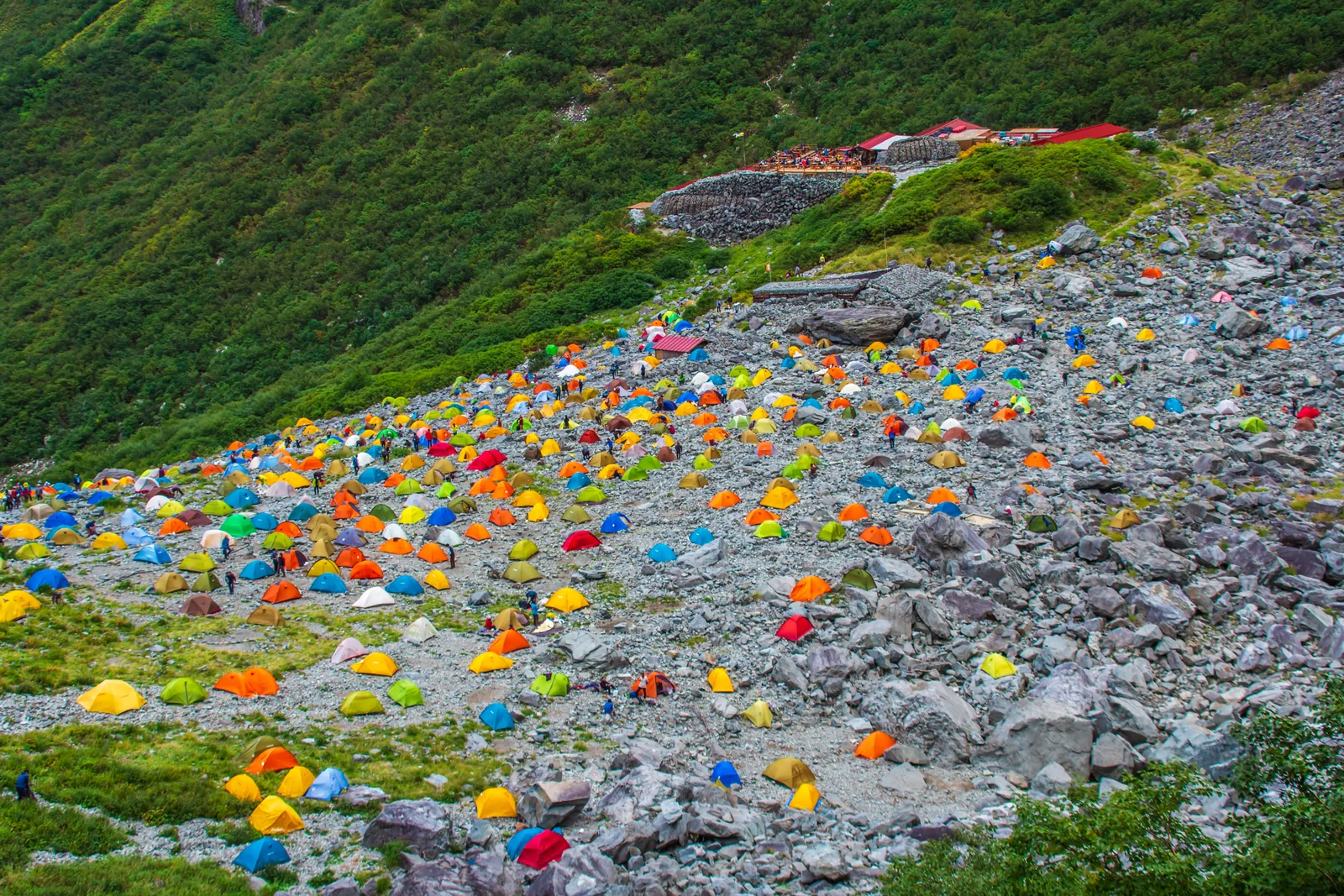
Karasawa cirque in colour (left) — peak Sep 25 to Oct 5. Karasawa campground autumn weekend (right) — bring a tent reservation; the cirque turns into a small town.
October 2026 · Maple peak (and the booking war)
The defining Kamikochi shot
The reflection of the Hotaka peaks in Taisho Pond, surrounded by red maples, with karamatsu (golden larch) starting to turn — this is the photo Kamikochi is famous for, and it happens roughly October 15–25. Mornings have frost; daytime is crisp; air is the clearest of the year.
Weekend crowds are intense. Hotel availability for Saturday nights in October is essentially gone by April. Weekdays remain manageable. The defining advantage of an overnight stay (vs day-tripping) is greatest this month — the best light is dawn, before the buses arrive.
Best for: photographers (the canonical Kamikochi image), but only with overnight stay and ideally weekday. Day-trippers miss the best light. Avoid: weekends Oct 11–25 unless booked months ahead.
November 1–15, 2026 · Larch gold, then closing
The painterly month
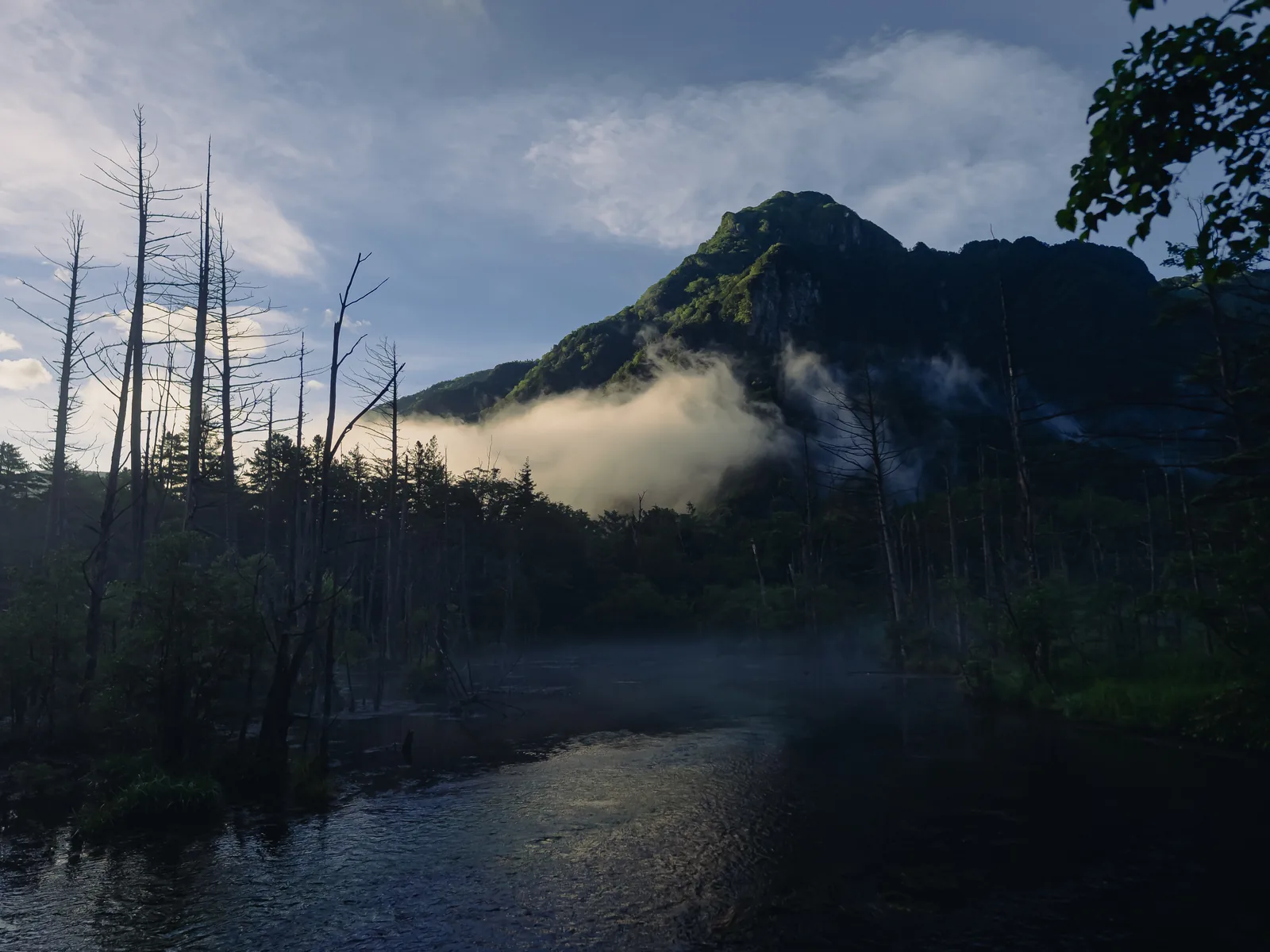
The valley’s karamatsu (Japanese larch) trees turn gold approximately Oct 25 – Nov 5. Conifers stay dark green. Peaks pick up dustings of snow. The combination is moody, almost painterly — different from October’s saturated red maples. Quieter, too: most of the autumn-leaf chasers have moved on.
Several hotels close early November. Yokoo Sanso closes Nov 3; Myojinkan closes Nov 1; Tokusawa-en early Nov; Konashidaira Camping Nov 4. Day hiking still possible until Nov 15; the road closes after that.
The Heizan-sai (closing ceremony) is November 15, 2026 at Kappa Bridge — Shinto rite, sake offering, more low-key than Kaizan-sai. The last tourist day of the season.
Best for: photographers wanting larch gold + dusted peaks; experienced winter-clothing-equipped travelers; solitude (Nov 5–14 is one of the quietest stretches of the season).
Pick by what you came for
Plan around your month
Once you’ve picked a month, the next two questions are: day-trip or overnight? And which hotel? Both decisions depend partly on the month — late April and early November are basically overnight-only because daylight is too short for day-trippers; June can be done as a day-trip from Hirayu; October needs to be overnight if photography matters.
If you’ve decided overnight is the call, Booking.com has the widest English-language Kamikochi inventory; Agoda often beats it on weekday off-peak pricing. Need a rental from Matsumoto? DiscoverCars turns up the cheapest economy options.
FAQ
What are the absolute best dates for Kamikochi in 2026?
It depends on what you came for. For photographers, late October weekday with overnight (Hotaka reflected in Taisho Pond + autumn colour). For hikers, late September into early October (Karasawa cirque peak). For first-timers, late September weekday (stable weather, manageable crowds, last bus still ~17:00). For solitude, mid-June weekday or November 5–14.
When does Kamikochi open and close in 2026?
The Kama Tunnel road opened April 17, 2026 and closes after the November 15, 2026 Heizan-sai closing ceremony. The valley is closed to all vehicles November 16 through April 16. No accommodation operates outside this window.
What dates should I avoid?
Golden Week May 2–6, 2026 (peak crush, hotels booked, parking 1–3 hr waits). Obon week ~Aug 13–16, 2026 (similar conditions). Saturday nights in October mid-month (Oct 11–25) unless you booked months ahead. Weekdays in any of these periods are still manageable.
When is Kamikochi cherry blossom season?
There isn’t a meaningful sakura season at Kamikochi. The valley is at 1,500m elevation; by the time it opens (April 17), the surrounding lower-elevation cherry blossom areas (Matsumoto Castle, Takato) have already finished. Late April brings willow buds and early ground flowers, but no cherry trees in bloom inside the valley.
Can I do hiking in early April or November?
The road is open Apr 17 – Nov 15. The lower trails (Taisho – Kappa – Myojin) are walkable from opening to close. Higher trails (Karasawa, Yari, Hotaka) are snow-bound until mid-July and snowy again from mid-October. Yokoo Sanso is closed June 1–30 for renovation in 2026; Konashidaira closes Nov 4; Myojinkan closes Nov 1.
Is winter Kamikochi open at all?
The Kama Tunnel is closed to vehicles from November 16 to April 16. Experienced winter trekkers do walk in from Sawando in winter (with full alpine gear, snowshoes, and self-rescue capability), but no accommodation is open and the route is genuinely dangerous without proper preparation. For first-time winter alpine experiences, the Norikura or Hakuba areas are far more accessible.
Does the new Nagano accommodation tax apply year-round?
The +¥200 per person per night tax applies to all accommodation rooms ¥6,000 and above, starting June 1, 2026. Stays in April or May 2026 avoid it. Stays from June 1 onward include it. Tents at Konashidaira are likely below the ¥6,000 threshold and exempt; verify at booking.
Last updated April 28, 2026. Weather averages adjusted from Matsumoto JMA records; specific event dates per kamikochi.or.jp 2026 announcements.
Join 1,000+ travelers discovering Japan's hidden side
Weekly dispatches from off-the-beaten-path Japan — spots and stories you won't find in guidebooks.
No spam. Unsubscribe anytime.
Welcome aboard!
You're in. See you in your inbox soon.