

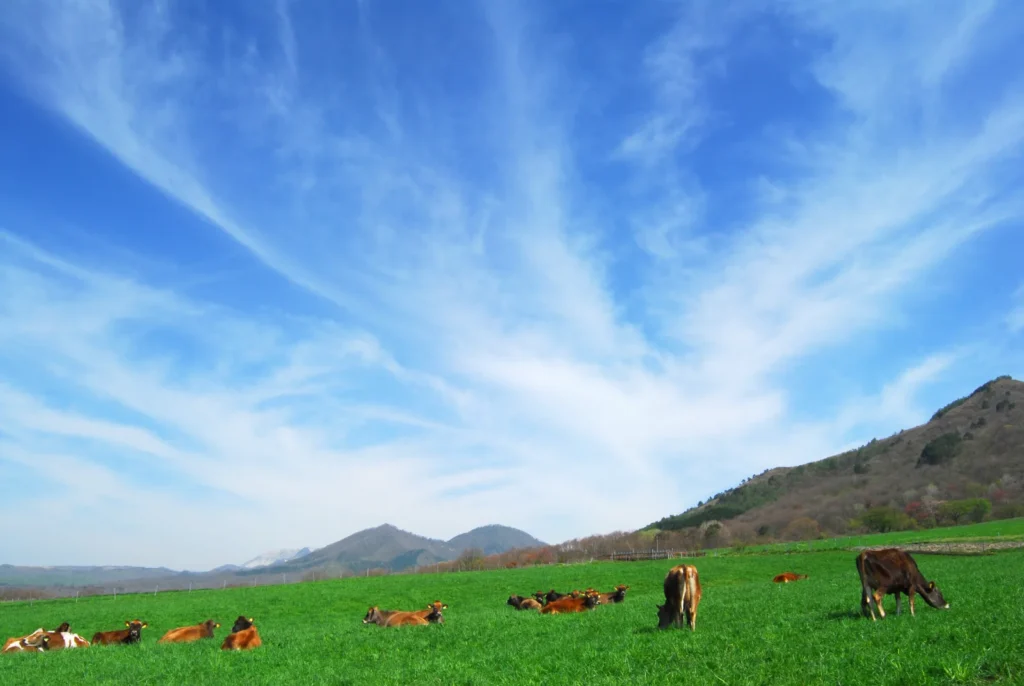
Hiruzen is one of those places Japan seems to have decided, for a season, to try being Switzerland. Rolling pasture, Jersey cows with serious eyelashes, a three-peak ridge in the distance that takes most of a day to walk end-to-end. It sits at the northern edge of Okayama, ten minutes from the Tottori border, around 500 meters up. Almost no foreign travelers come here. The ones who do usually come by accident, en route to Mt. Daisen, and end up staying an extra night.
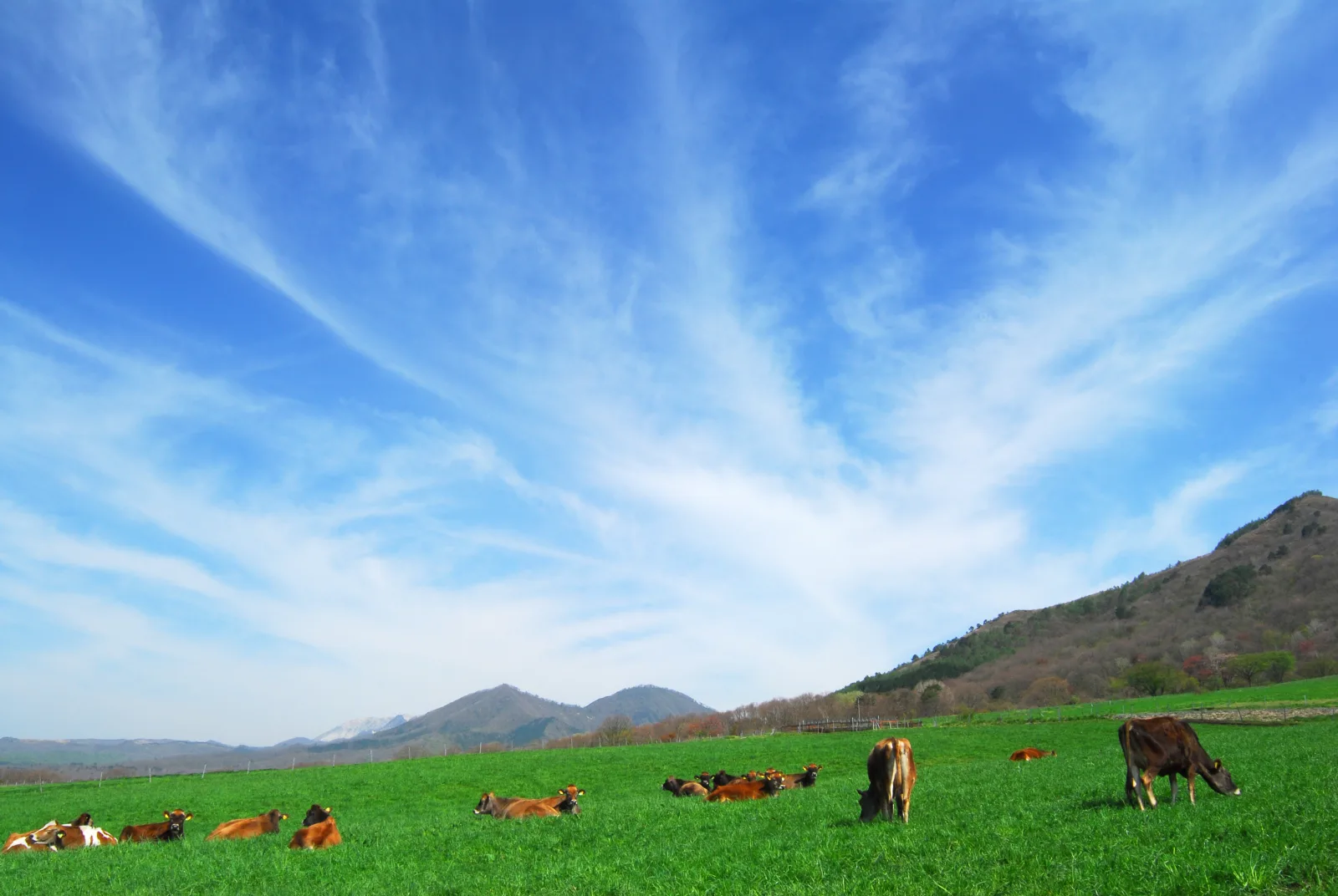
Table of Contents
Quick Facts
| Where | Northern Okayama Prefecture, adjacent to Tottori. Part of Maniwa City. |
| Elevation | ~500 m plateau, framed by three peaks (Shimo-, Naka-, Kami-Hiruzen) rising to ~1,200 m. |
| Best months | Late April – October for hiking and pasture views. November for foliage. January – early March for snow. |
| What it’s known for | Jersey cattle, dairy (soft-serve, yogurt, cheese), jingisukan (grilled lamb), the Hiruzen Sansa ridge walk. |
| Access | 5 minutes from Hiruzen IC on the Yonago Expressway. 3 hours by car from Osaka; 1h 45 from Okayama. |
| How long you need | Overnight minimum. Three days if you’re hiking the ridge. |
Why It Looks the Way It Looks
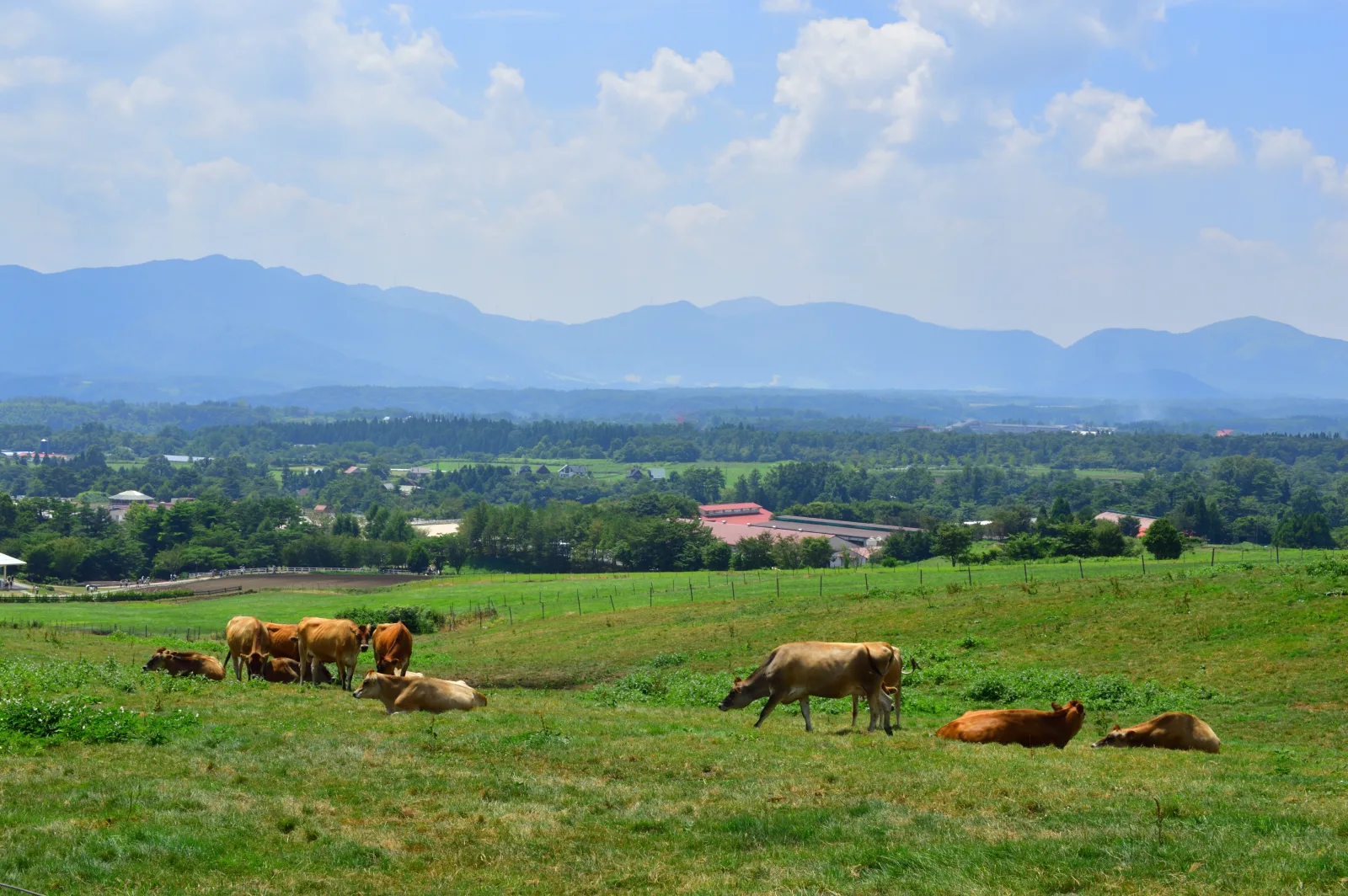
Hiruzen is a volcanic plateau — the sort of wide, flat shoulder of land that sits high but doesn’t feel alpine. What gives it the European feel is the combination of elevation, low forest, and how much of the ground is open grass rather than the usual rice or cedar you see at this latitude. The three Hiruzen peaks to the west — Shimo-Hiruzen (1,100 m), Naka-Hiruzen (1,123 m), and Kami-Hiruzen (1,202 m) — line up neatly on the horizon. From the middle of the plateau they look closer and smaller than they are.
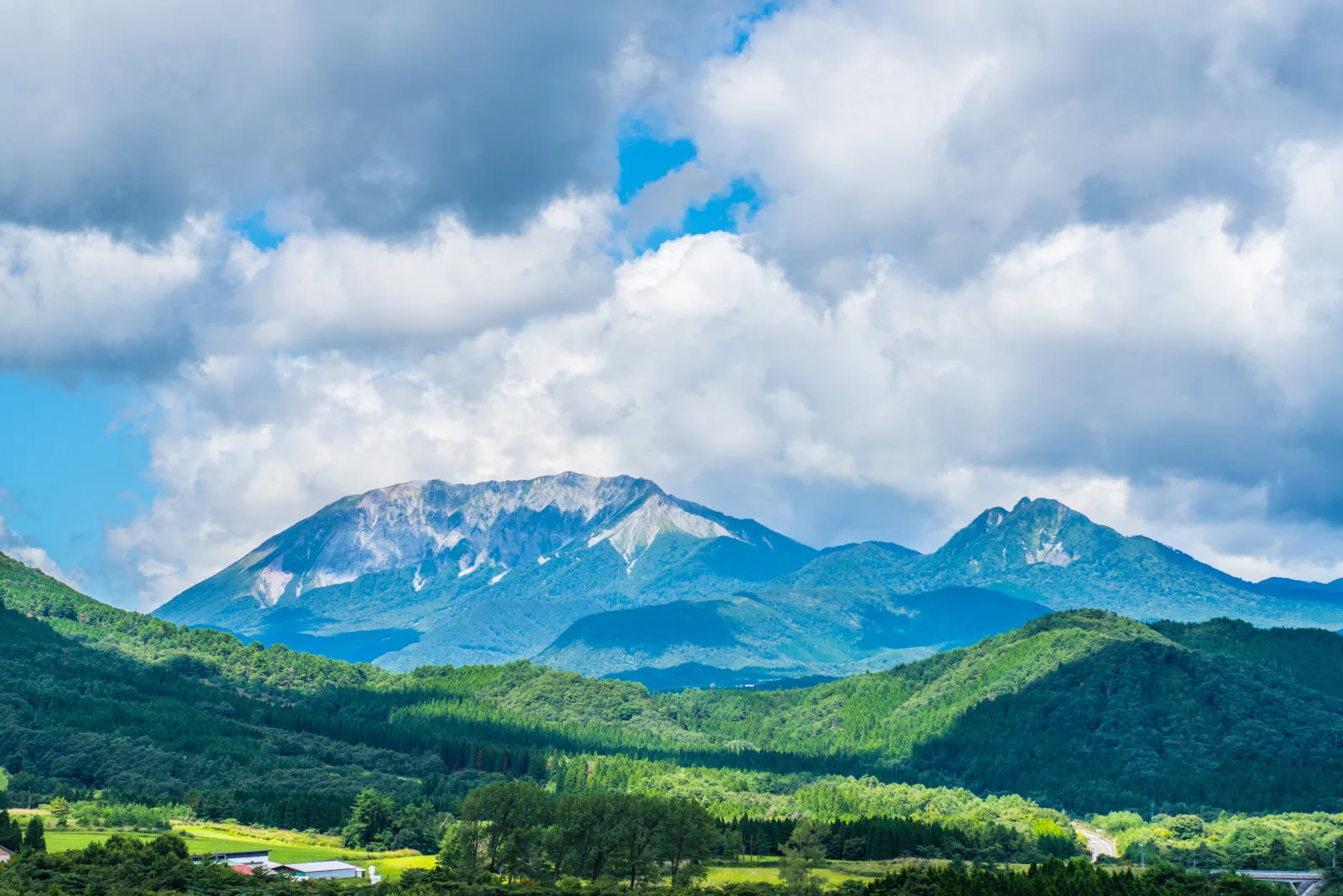
North, the view runs clean to Mt. Daisen in Tottori — the big, pyramidal mountain that dominates every photo taken from the northern edge of the pasture. The fact that the best view of Daisen is from Hiruzen, not from Tottori itself, is one of the quiet jokes of the region.
The Jersey Cows Are the Point
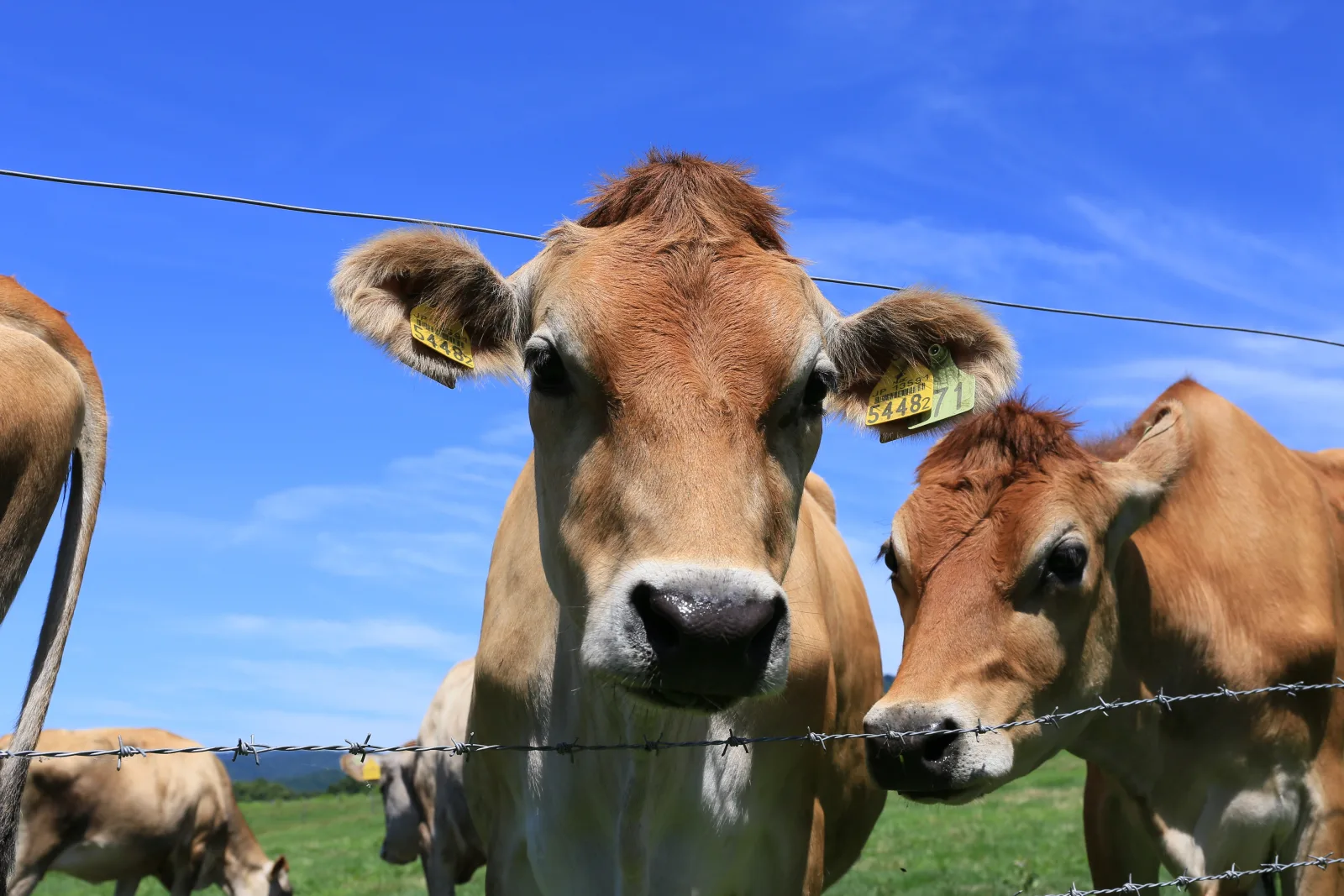
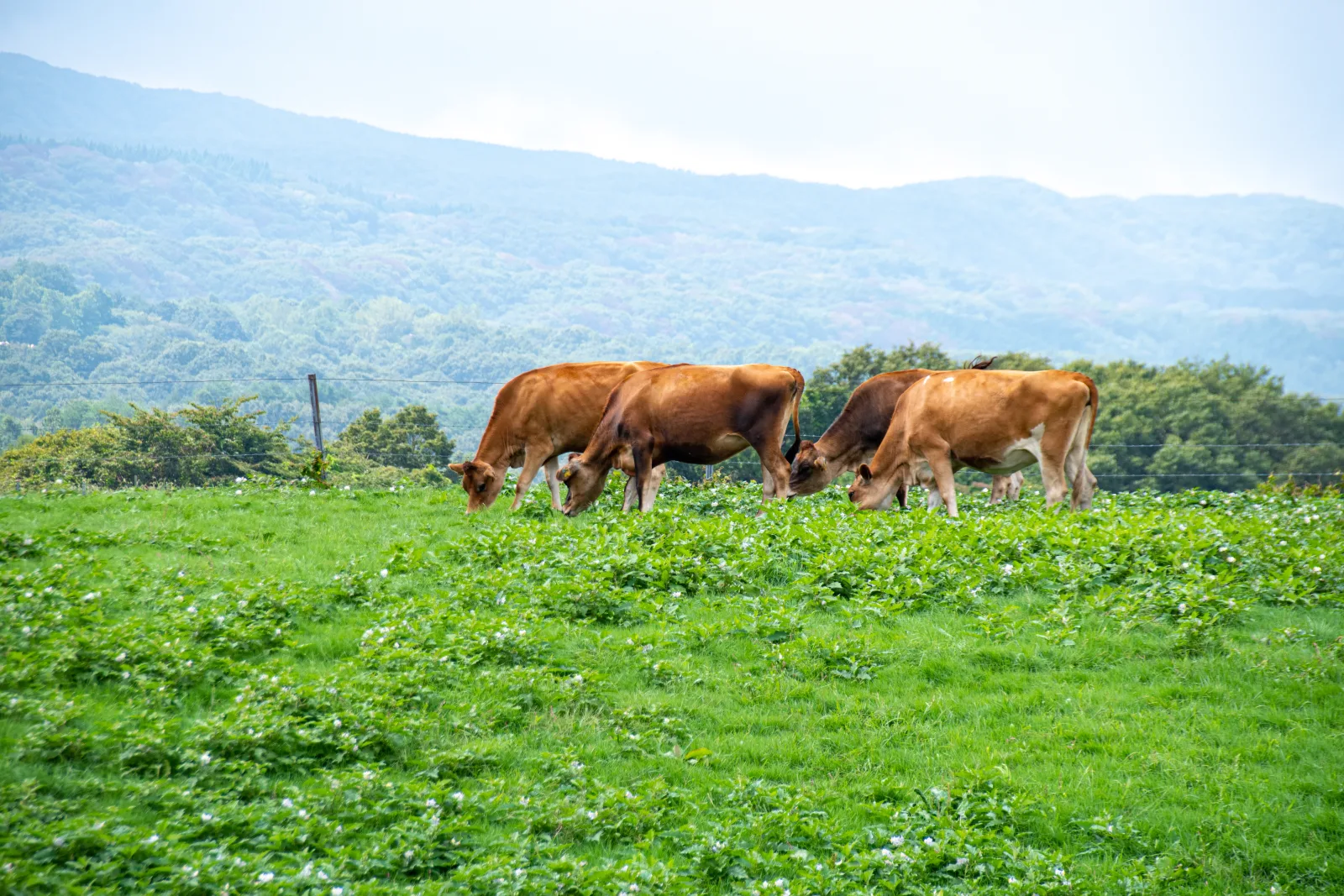
Hiruzen has more Jersey cattle than any other single place in Japan — roughly 2,000 head, which is about half of the national herd. The breed was introduced here in the 1950s because the short grasses and temperate summers suited them better than the Holstein standard. The milk is richer, the butterfat higher, and the soft-serve made from it is, flatly, the best argument for why this plateau is worth a detour.
Two stops cover the dairy story well:
- Hiruzen Jersey Land. Free pasture walk, a shop with the good yogurt, and the soft-serve stand that draws the biggest line on weekends. Go early on a weekday.
- Hiruzen Highland Center. A bigger complex about 5 minutes away with a café, souvenir shop, and the information desk for the hiking trails. More touristy, less scenic.
Hiking the Three Peaks (蒜山三座)
If you can walk for six or seven hours at an even pace, the Hiruzen Sansa traverse is the one hike that justifies a trip to this region on its own. It links the three peaks — Shimo, Naka, Kami — along an open ridge that, for most of the route, is above the treeline. Views in every direction: Daisen to the north, the Chugoku Mountains south, the plateau laid out below.
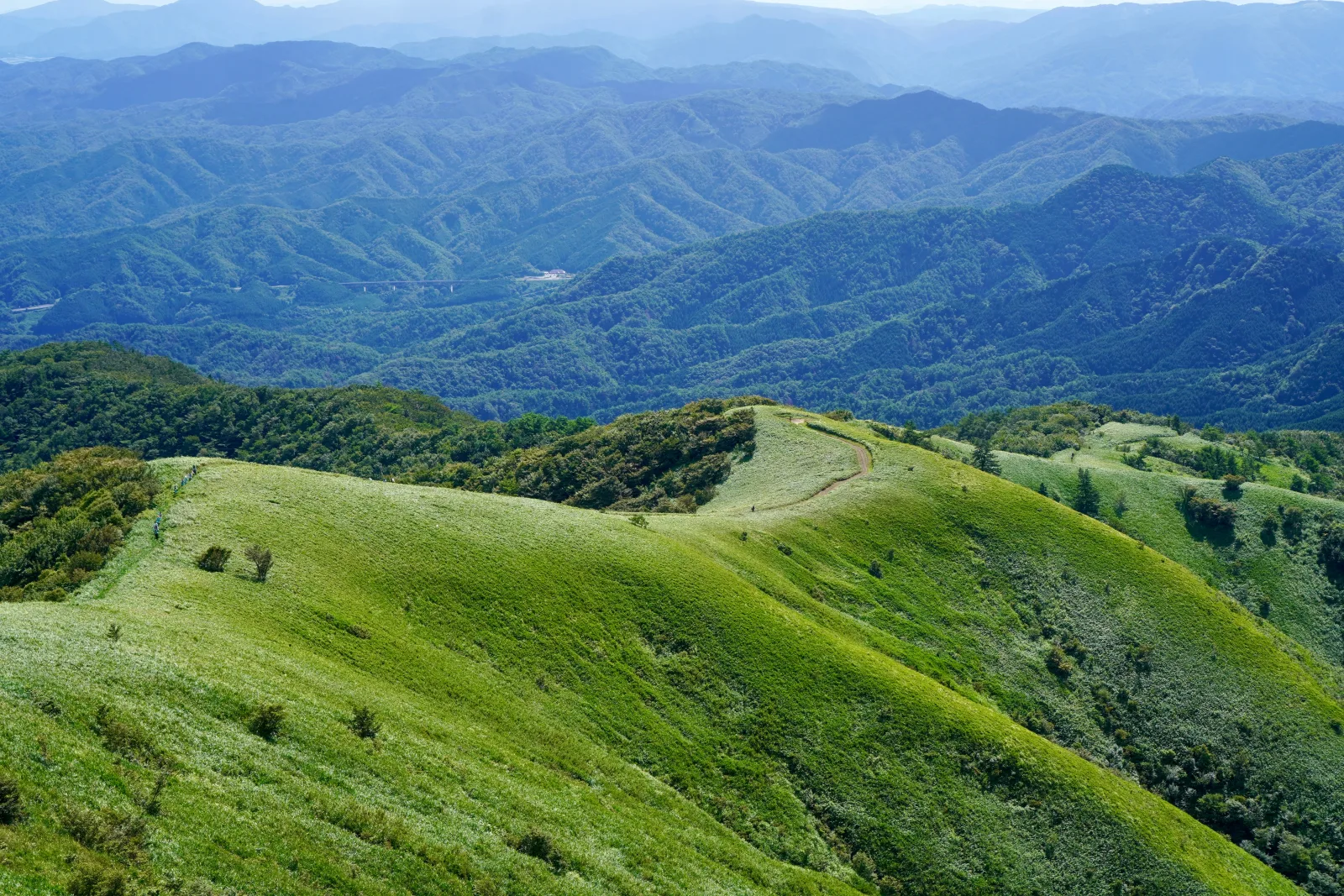
Route notes
- Full traverse (Shimo → Kami or reverse): 11 km, 6–8 hours moving time, ~1,000 m total elevation gain. One-way — plan a pickup or the Hiruzen community bus.
- Naka-Hiruzen only: 4–5 hour round trip from Hiruzen Kogen trailhead. The middle peak has the best summit view for the effort.
- Kami-Hiruzen only: 5 hours return, slightly rougher. Fewer crowds than Naka.
When to hike
- May – early July: green grass, wildflowers, cool air. The best season.
- Late July – August: hot even at elevation. Start at dawn.
- October – early November: autumn foliage. Peak color usually in the second half of October. Weekends get busy.
- December – March: snowshoes or crampons required. The ridge is serious in winter — not a beginner’s route.
The Jingisukan Situation
Jingisukan — grilled lamb on a helmet-shaped grill — is the local dinner. Every ryokan and pension in Hiruzen has its own version, usually served on the iron grill at your table with a pile of cabbage, bean sprouts, and a small bottle of the house sauce. Not a thing most Japanese travelers associate with central Honshu, but it’s been the Hiruzen Sunday dinner for fifty years.
Lunch options:
- Yakiniku Hiruzen — the landmark grill joint on the main road. Jingisukan lunch set ¥1,800.
- Hiruzen Bar and Grill Hiruzen Kogen — Jersey burger, ¥1,500. The cheese melts exactly how you want it to.
- GREENable HIRUZEN café — coffee, Jersey soft-serve, bakery. Light but satisfying.
What Else to See While You’re Here
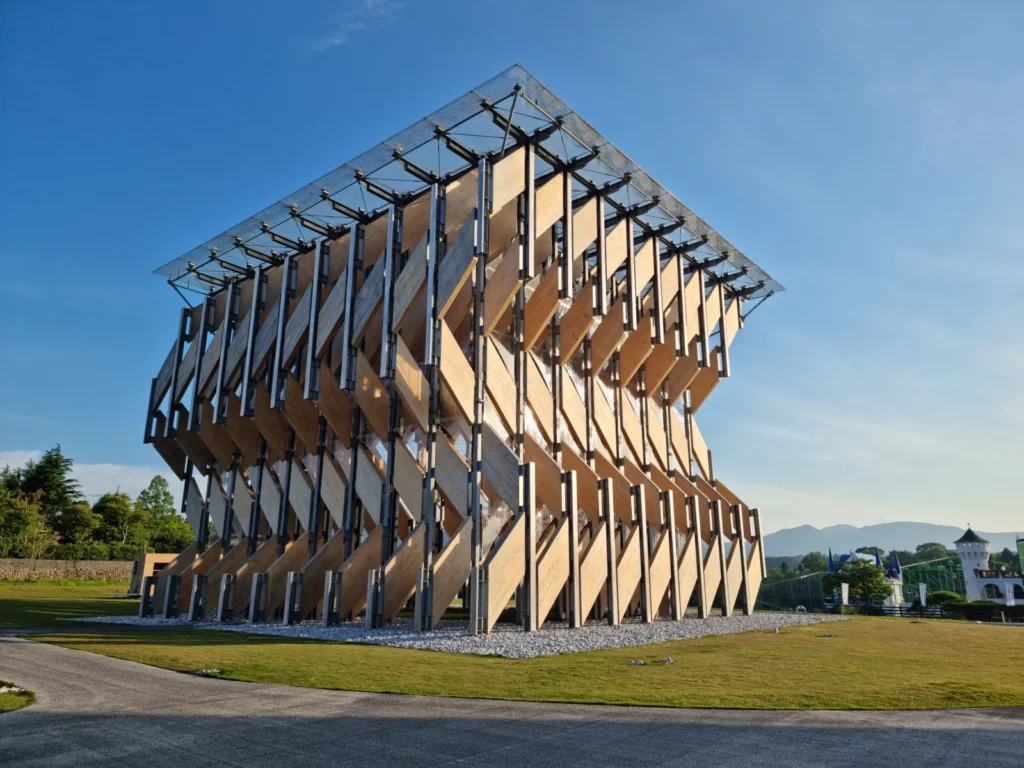
- GREENable HIRUZEN. Kengo Kuma’s CLT pavilion, a small museum, and a cycling center. Half a day well spent.
- Hiruzen Shiba-zakura (moss phlox) field. May only — a ten-day window where the slopes turn pink. Crowded on weekends.
- Miyama Bike Trail (Hiruzen Cycling Road). 30 km of flat-to-rolling road through the pastures, mostly traffic-free.
- Mt. Daisen, Tottori side. 40 minutes by car. Bigger mountain, older shrine, separate trip if you have the day.
Where to Stay
A car unlocks everything here, but even without one you can base yourself near the Hiruzen Kogen Center — the bus stop with best onward connections and walking access to the dairy shops and trailheads.
- Hiruzen Kogen Center Hotel — mid-range, on-site onsen, jingisukan dinner included with most plans.
- Pension Momi-no-Ki (ペンションもみの木) — family-run, Jersey-milk breakfast, ten minutes by car from the center.
- Yubara Onsen ryokan — 25 minutes south, on the Asahi River. The regional onsen town; worth a night if you have three days in the area.
Compare rates on Agoda or Booking.com.
Getting Here
By car
The easy option, and genuinely the right one. From Osaka, about 3 hours on the Chugoku and Yonago Expressways, exit Hiruzen IC. From Okayama City, 1h 45. From Tottori (Yonago side), 40 minutes. DiscoverCars compares Toyota, Nippon, and Times rates across Okayama and Yonago.
By public transit
- JR Kishin Line from Okayama to Chugoku-Katsuyama (final stop, about 80 minutes), then Hiruzen-bound bus (about 80 minutes, 4–6 daily). Total roughly 3 hours.
- From Yonago (Tottori side), the Hiruzen Highway Bus runs twice a day in peak season, 70 minutes.
Bus frequency drops to weekends-only in winter. Plan carefully or rent a car.
Frequently Asked Questions
Is Hiruzen worth going out of the way for?
If you’re already visiting western Japan — Okayama, Tottori, Hiroshima, Matsue — yes, without reservation. A straight shot from Tokyo just to see it is overkill; pair it with Mt. Daisen or a broader San’in coast trip.
Can I day-trip from Okayama or Hiroshima?
From Okayama City, yes but tight — leave by 8 AM, back by evening. From Hiroshima it’s 3 hours each way; plan an overnight instead.
Is the Sansa ridge hike technically difficult?
No, in summer and autumn. Well-marked, no scrambling, gradual ascents. It’s long and exposed, so check the forecast and carry water. Winter is a different route entirely — snowshoes required.
What’s the signature food?
Jingisukan (grilled lamb) for dinner, Jersey-milk soft-serve and yogurt for everything else. The dairy is the main attraction after the landscape.
When are the cows actually outside?
Roughly late April through late October. In winter they’re mostly indoors, and the plateau gets quieter. Spring turnout — when the cows first go back to pasture — is a local event.
Is there English signage?
Patchy. Hiruzen Jersey Land, GREENable HIRUZEN, and the main visitor center have English menus and signage. Smaller shops and ryokan don’t. Translation apps cover the gaps.
Final Take
Hiruzen is an oddly complete place. Hiking, dairy, a surprising piece of Kengo Kuma architecture, old onsen within an hour, and almost no international tourists. It doesn’t have a famous name, but everything it has is good. Come for the weekend if you can get away with it, and stay for the jingisukan.
Last updated: April 2026. For the Kengo Kuma building in particular, see our GREENable HIRUZEN guide. Rates and bus times verified with Maniwa City tourism at time of writing — double-check before departure, especially outside summer.

- Ryoanji Rock Garden: The Kyoto Temple Where Something Is Always Hidden
 You sit on the wooden veranda at Ryoanji with maybe for… 続きを読む: Ryoanji Rock Garden: The Kyoto Temple Where Something Is Always Hidden
 - Unzen Onsen 2026: Walking the Jigoku and a Bath That’s Been Running Since 1919
 Unzen sits on a volcano, at about 700 meters up on the … 続きを読む: Unzen Onsen 2026: Walking the Jigoku and a Bath That’s Been Running Since 1919
 - Hana no Miyako Koen 2026: Yamanakako’s Flower Park When the Sakura and Tulips Actually Overlap
 Hana no Miyako Koen (花の都公園) sits just north of Lake Yam… 続きを読む: Hana no Miyako Koen 2026: Yamanakako’s Flower Park When the Sakura and Tulips Actually Overlap
 - Hiruzen Highlands: Japan’s Alpine Middle, Jersey Cows, and a Weekend No One Talks About
 Hiruzen is one of those places Japan seems to have deci… 続きを読む: Hiruzen Highlands: Japan’s Alpine Middle, Jersey Cows, and a Weekend No One Talks About
 - GREENable HIRUZEN: Kengo Kuma’s Traveling Pavilion Lands in Okayama’s Cow Country
 Drive forty minutes north of Okayama on the Yonago Expr… 続きを読む: GREENable HIRUZEN: Kengo Kuma’s Traveling Pavilion Lands in Okayama’s Cow Country
2026 cherry blossom cherry blossoms day trip from tokyo flower festival fuji five lakes fujiyoshida Fukuoka fushimi hanami hiking japan japanese culture japanese food japanese garden japan travel kamakura kawagoe kawaguchiko Kumamoto kyoto local food Mount Fuji mt fuji Nagano nature Nikko Oku-Nikko Onsen Ramen saitama sakura Shizuoka shrine sightseeing snow spring spring in japan Tokyo travel travel guide travel planning winter winter travel Yamanashi
Join 1,000+ travelers discovering Japan's hidden side
Weekly dispatches from off-the-beaten-path Japan — spots and stories you won't find in guidebooks.
No spam. Unsubscribe anytime.
Welcome aboard!
You're in. See you in your inbox soon.