

Imagine stepping through a dark, unmarked door in Fukuoka‘s upscale Nishi-Nakasu district, guided only by a small wooden sign bearing the characters 焼鳥 真守. Inside, a sleek 10-seat counter awaits, the air carrying the clean, intoxicating scent of Tosa Binchotan charcoal. This is Yakitori Mamori, one of Fukuoka’s best-kept secrets for premium omakase-style yakitori. As the founder of hiddenjapan-gems.com, I have explored countless yakitori restaurants across Japan, and Mamori stands apart for its combination of rare chicken cuts, masterful grilling technique, and an atmosphere of quiet refinement. In this guide, I will walk you through everything you need to know before visiting, from the omakase format and pricing to the specific rare cuts you can expect on your plate.
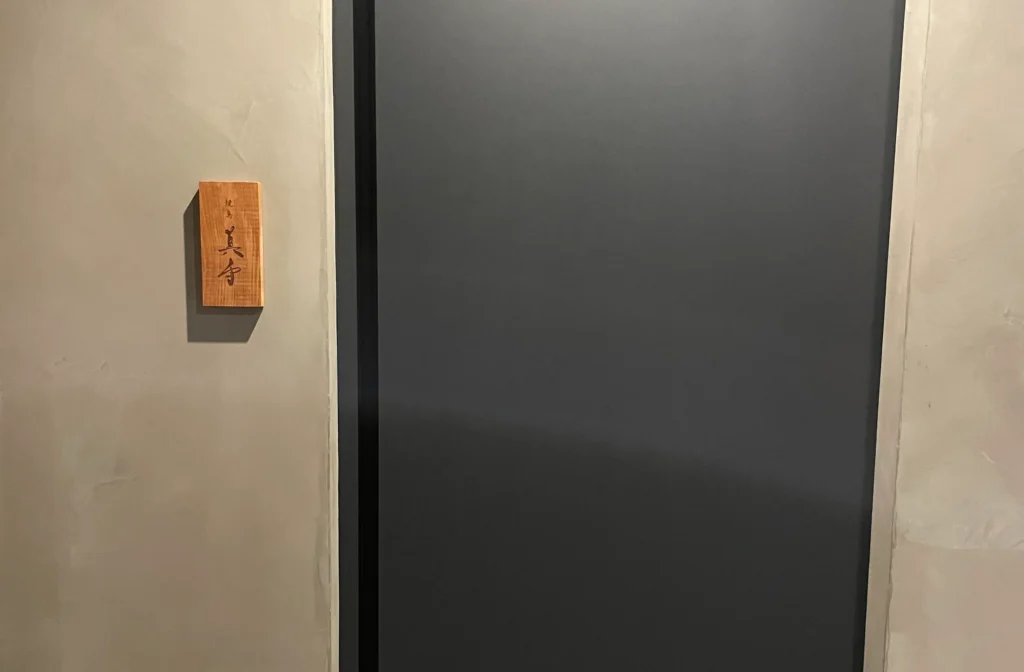
Table of Contents
Quick Facts About Yakitori Mamori
| Detail | Information |
| Restaurant Name | 焼鳥 真守 (Yakitori Mamori) |
| Cuisine | Premium Yakitori, Omakase Style |
| Price Range | ¥10,000 – ¥14,999 per person (food + drinks) |
| Address | 1F-H Delta West, 3-1 Nishi-Nakasu, Chuo-ku, Fukuoka |
| Phone | 092-284-0351 |
| Hours | 17:30 – 23:30 (may vary; confirm when booking) |
| Closed | Irregular holidays (不定休) |
| Seating | 10 counter seats only |
| Reservations | Highly recommended |
| Payment | Cash, Credit Cards (VISA, Master, JCB, AMEX, Diners) |
| Not Accepted | PayPay, QR payments, electronic money |
| Smoking | Non-smoking |
| Parking | None (use nearby coin parking) |
| Nearest Station | Nakasu-Kawabata Station, 4-min walk |
| Official Website | yakitori-mamori.com |
Understanding Omakase Yakitori: What Makes This Style Special
Before diving into the specifics of Yakitori Mamori, it helps to understand the concept of omakase yakitori, as it differs significantly from the casual yakitori experience most visitors encounter in Japan. In a typical yakitori restaurant, you order individual skewers from a menu. At an omakase yakitori establishment like Mamori, the experience is entirely different. The word omakase translates roughly to “I’ll leave it to you,” meaning you entrust the chef to select, prepare, and serve a curated sequence of skewers based on the day’s best ingredients and your personal pace of eating.
At Yakitori Mamori, the chef begins by asking about any foods you dislike or cannot eat. From that point forward, skewers arrive one at a time, each grilled to order over Tosa Binchotan charcoal. The chef carefully observes your drinking pace, your eating speed, and the flow of your conversation, timing each skewer so it arrives at the perfect moment. The restaurant offers approximately 25 different types of skewers, and the course continues until you say “stop.” This format allows you to experience a remarkable range of chicken parts, from familiar cuts to rare delicacies that most visitors have never encountered.
The Dining Experience: From Sashimi to the Final Skewer
Fresh Chicken Sashimi to Start
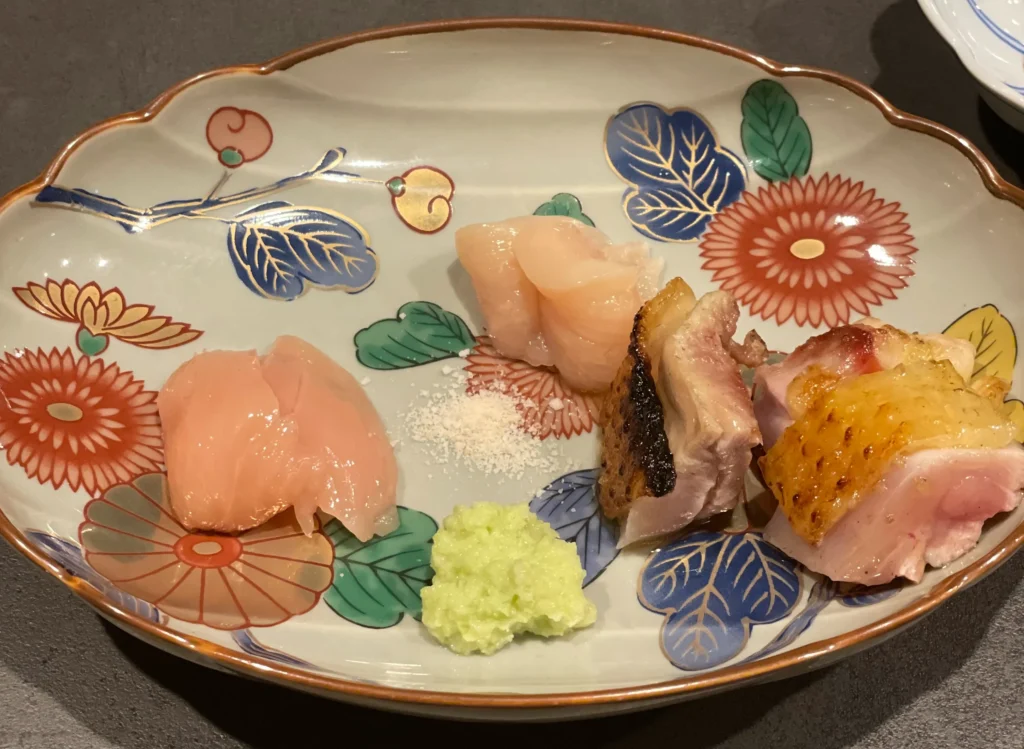
The meal at Yakitori Mamori often begins not with grilled skewers but with an exquisite platter of raw chicken sashimi (¥1,500 per person). This dish immediately demonstrates the extraordinary freshness of the chicken used here. The platter features multiple cuts, including silky breast meat, lightly seared skin, and other parts, all arranged on a beautiful traditional Japanese plate. Fresh wasabi and fine salt accompany the sashimi, allowing you to appreciate the clean, delicate flavors of each cut. For visitors unfamiliar with raw chicken, this is a safe and revelatory introduction, as the quality and handling of the meat at this level is impeccable.
The Blood Liver: A Test of Freshness
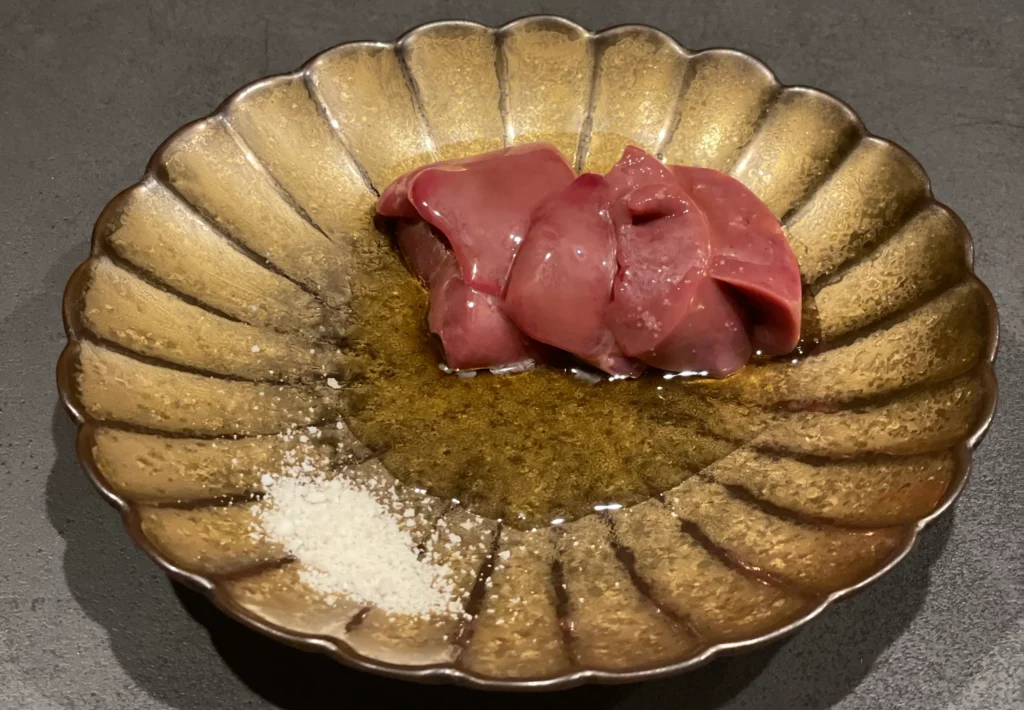
Among the most striking dishes is the chi-gimo, or blood liver. Served raw in an elegant golden scalloped dish with a small mound of salt, the liver has a remarkably smooth, almost creamy texture. Its deep ruby color speaks to its freshness. This is a cut that can only be served raw when the chicken is processed with extreme care and speed, making it a hallmark of a truly premium yakitori establishment.
The Omakase Skewer Parade
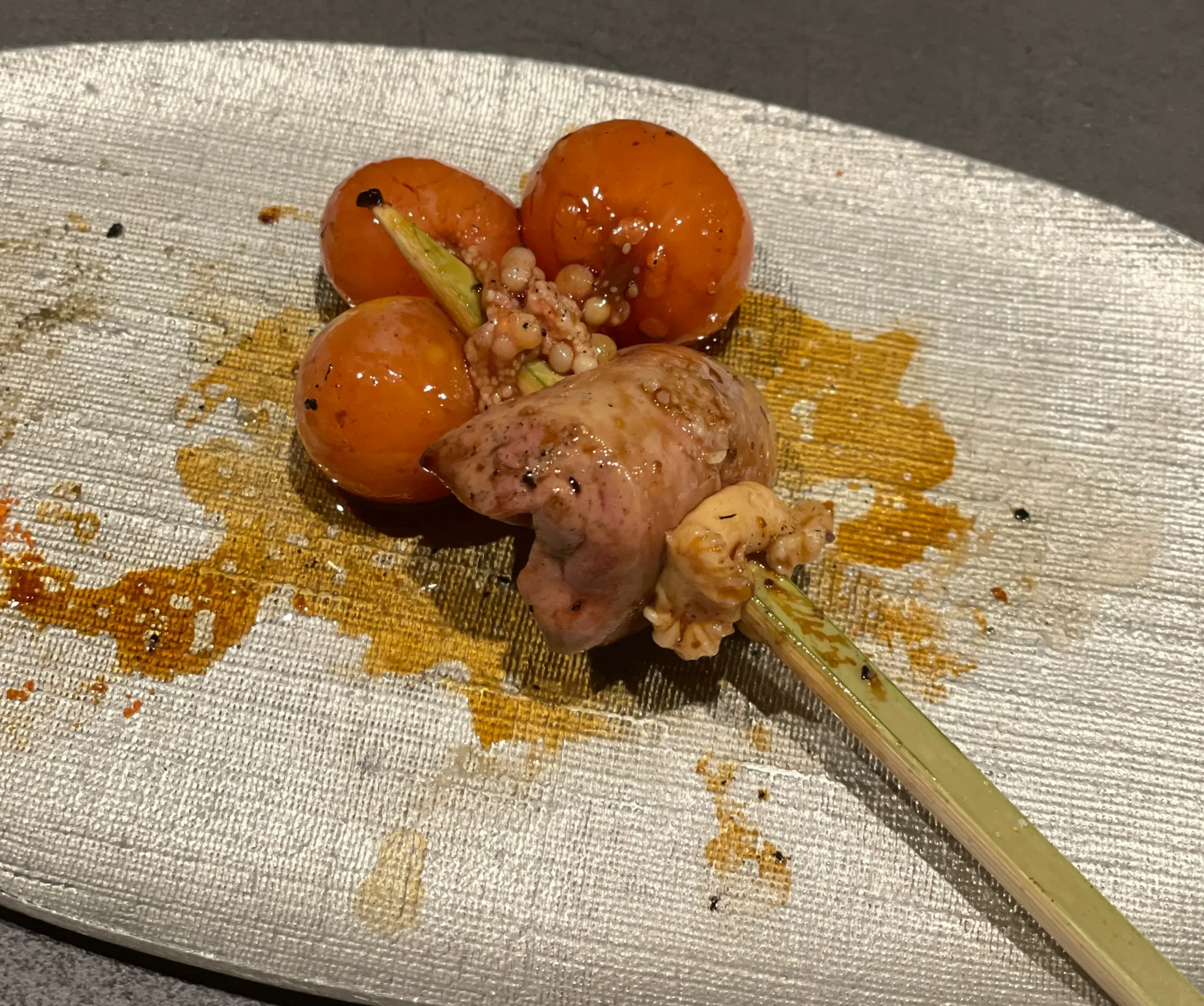
Once the sashimi course concludes, the main event begins. Skewers arrive one by one, each placed on a silver-toned plate with condiments such as shichimi togarashi (seven-spice blend) and sansho pepper. Each skewer is priced from ¥300, and the final bill reflects only what you have consumed. During my visit, the following cuts were served, though the selection varies daily based on what the chef sources:
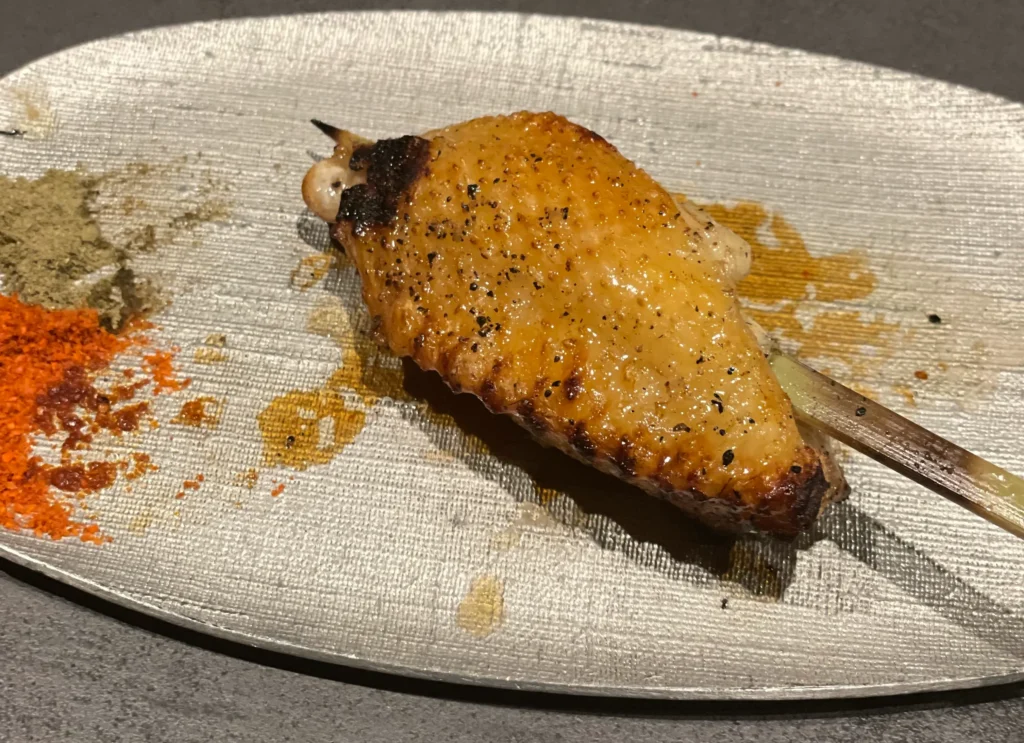
Wasabi (わさび) is a small, tender piece of meat located near the shoulder blade, named for its clean, slightly sharp flavor profile. Fukurahagi (ふくらはぎ) refers to the calf muscle of the chicken leg, offering a lean yet juicy bite. Sori-resu (ソリレス), known in French cuisine as the sot-l’y-laisse or “oyster,” is a tiny, incredibly tender morsel hidden near the thigh bone and is considered one of the most prized cuts by yakitori connoisseurs. Sode (ソデ) is the wing joint meat, rich in collagen and deeply flavorful. Kata (肩) is the shoulder meat, which delivers a satisfying chew and concentrated chicken flavor.
Chōchin: The Crown Jewel of Rare Yakitori
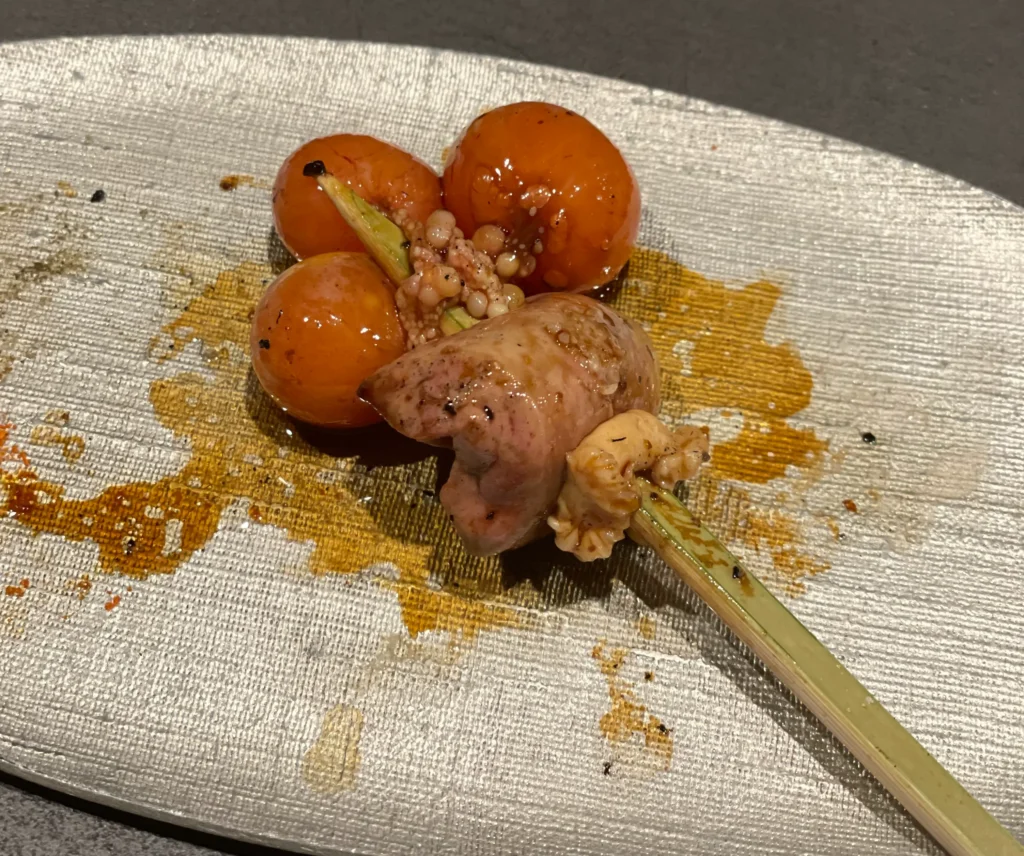
The chōchin (ちょうちん), meaning “lantern,” is arguably the most celebrated rare yakitori cut, and Yakitori Mamori prepares it beautifully. This skewer consists of the hen’s oviduct along with several kinkan, the small, bright-orange unfertilized egg yolks still developing inside the bird. When grilled, the yolks become warm and custard-like, bursting with rich, concentrated flavor when you bite into them. The oviduct itself has a unique, slightly chewy texture. This is a cut that is only available in limited quantities from each bird, making it a genuine delicacy.
Otafuku, Tsunagi, and Other Rare Finds
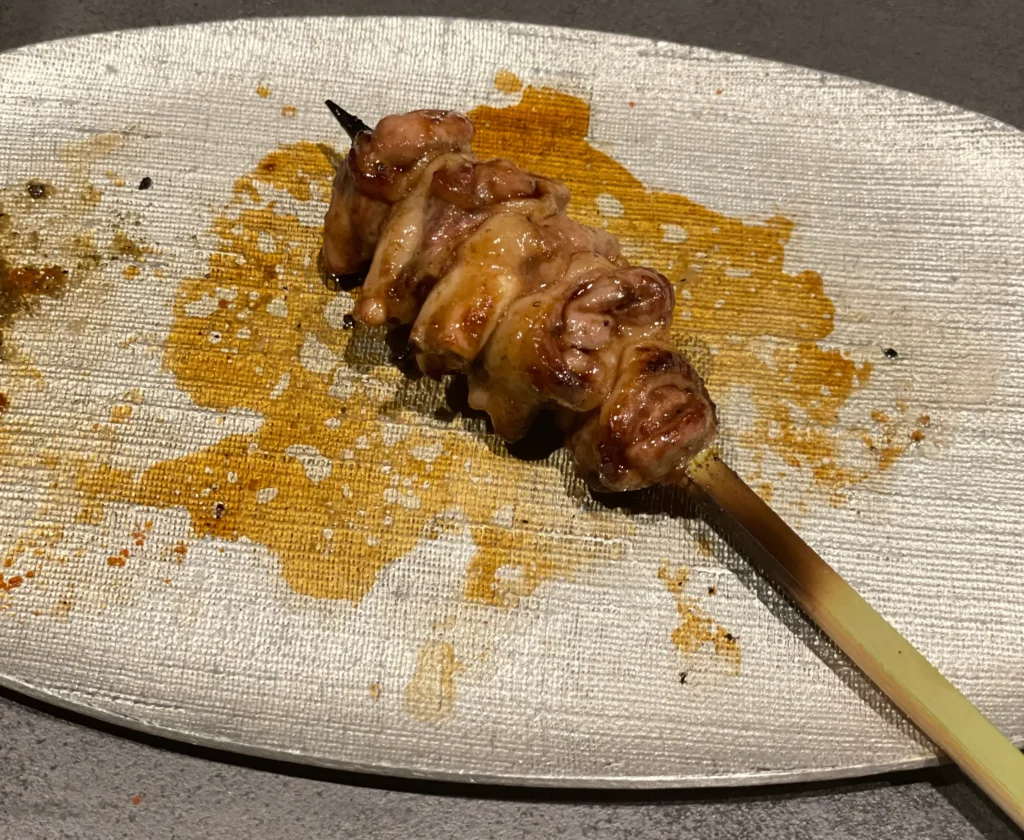
Otafuku (おたふく) refers to the thyroid gland of the chicken, a small and exceptionally tender piece with a mild, creamy flavor. Tsunagi (つなぎ) is the connective tissue between the heart and the liver, offering a distinctive texture that is slightly firm with a rich, iron-tinged taste. These are cuts that even many Japanese diners have never tried, and encountering them at Mamori is part of what makes the experience so special.
The Unexpected: Grilled Scamorza Cheese
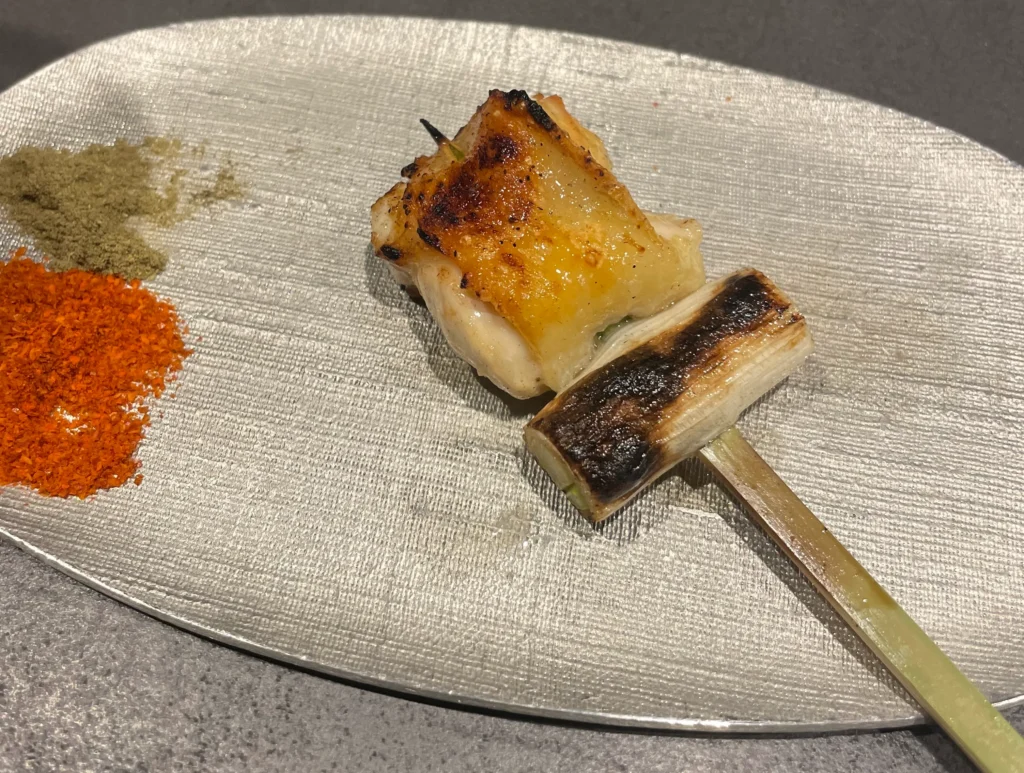
Among the skewers, one delightful surprise breaks from the all-chicken format. The chef grills scamorza, an Italian smoked cheese, on a skewer alongside charred negi (Japanese green onion). The cheese melts into a golden, stretchy mass with a smoky, savory depth that pairs wonderfully with the lighter chicken skewers. It is a creative touch that shows the chef’s willingness to explore beyond tradition while maintaining the highest standards.
Grilled Shiitake Mushroom
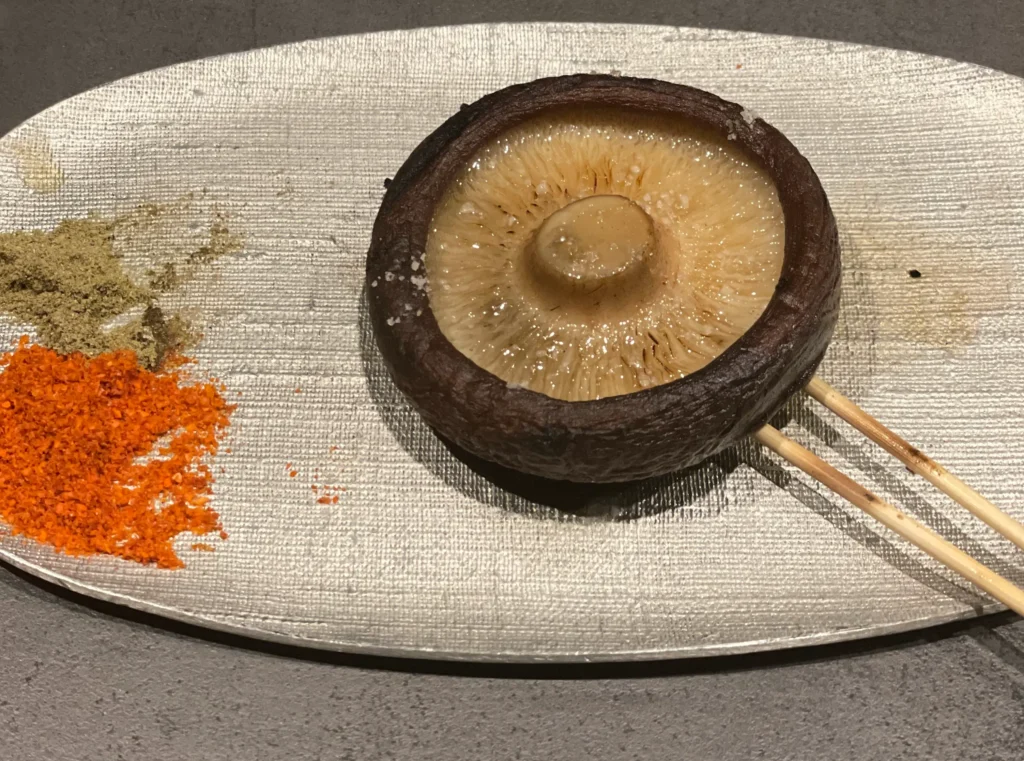
The vegetable interlude comes in the form of a whole shiitake mushroom, grilled cap-down until the juices pool in its center. Served with shichimi togarashi and sansho pepper on the side, this single mushroom is a masterclass in simplicity. The charcoal imparts a subtle smokiness, while the mushroom’s natural umami is intensified by the heat.
How Much Does Yakitori Mamori Cost?
The pricing structure at Yakitori Mamori is straightforward. Each yakitori skewer starts at ¥300, and the total is calculated based on the number of skewers you consume. The chicken sashimi is available as a separate order at ¥1,500 per person. Drinks, including Japanese sake, beer, and other beverages, are priced individually.
During my visit with one companion, our total bill came to approximately ¥30,000 for two people. This included the full omakase skewer course, chicken sashimi, and several rounds of sake and beer. As a general guideline, expect to spend between ¥10,000 and ¥15,000 per person for food and drinks combined.
How to Get to Yakitori Mamori
Yakitori Mamori is located in the Nishi-Nakasu district of Fukuoka, an upscale area situated between the Tenjin shopping district and the Nakasu entertainment zone. The restaurant occupies a ground-floor unit in the Delta West building, and its entrance is deliberately understated, marked only by a small wooden sign.
Step-by-step directions from Nakasu-Kawabata Station (Subway Kuko Line):
1.Exit the station via Exit 1.
2.Turn left and walk west along Meiji-dori Avenue toward the Naka River.
3.Cross the Nishi-Ohashi Bridge over the Naka River.
4.After crossing the bridge, turn right and walk north along the riverside street (Route 67).
5.After approximately 50 meters, look for the Delta West building on your left. Yakitori Mamori is on the 1st floor (Unit 1F-H).
Alternative access: Tenjin-Minami Station (Nanakuma Line) is a 5-minute walk, and Tenjin Station (Kuko Line) is a 6-minute walk.
Practical Tips for Visiting Yakitori Mamori
Making a reservation is essential. With only 10 counter seats, walk-ins are risky. Call the restaurant directly at 092-284-0351 to book. If you do not speak Japanese, consider asking your hotel concierge to make the reservation on your behalf.
Communicating dietary restrictions happens naturally at the start of the meal. The chef will ask what you cannot or prefer not to eat. If you have allergies or strong dislikes, prepare a simple note in Japanese or use a translation app to communicate clearly.
Knowing when to stop is the only real “rule” of the omakase format. When you feel satisfied, simply tell the chef “stop” or gesture that you are finished. There is no pressure to eat a set number of skewers.
Payment is accepted in cash or by major credit cards. Be aware that PayPay, other QR code payment services, and electronic money (Suica, PASMO, etc.) are not accepted.
The atmosphere is calm and refined. The entire restaurant is non-smoking. There is no parking, so plan to arrive by subway or taxi.
Where to Stay Near Nishi-Nakasu
Nishi-Nakasu sits at the crossroads of Fukuoka’s two major districts, Tenjin and Nakasu, making it an excellent base for exploring the city. Several high-end hotels are within walking distance of Yakitori Mamori. The Ritz-Carlton, Fukuoka and Hotel Okura Fukuoka both offer world-class accommodations and are less than a 10-minute walk from the restaurant. For mid-range options, the Solaria Nishitetsu Hotel Fukuoka in Tenjin provides comfortable rooms with easy access to the area. Staying nearby means you can enjoy the full omakase experience, including sake pairings, without worrying about a long journey back to your hotel.
Suggested Evening Itinerary Around Nishi-Nakasu
A visit to Yakitori Mamori fits perfectly into a memorable evening in Fukuoka. Consider the following plan:
Arrive at Yakitori Mamori. Begin with the chicken sashimi, then settle into the omakase skewer course. Take your time; the chef will pace the meal to your rhythm. Expect to spend about two to two and a half hours.
Walk along the Naka River. After dinner, step outside and stroll along the riverbank. The Naka River is beautifully illuminated at night, and the reflections of Nakasu’s neon lights on the water create a quintessentially Fukuoka scene.
Drinks at a Nishi-Nakasu bar. The area is home to several sophisticated cocktail bars and whisky lounges. End your evening with a nightcap in one of these intimate establishments, reflecting on the exceptional meal you have just experienced.
Frequently Asked Questions About Yakitori Mamori
How much does a meal at Yakitori Mamori cost?
A typical meal costs between ¥10,000 and ¥15,000 per person, including food and drinks. Skewers start at ¥300 each, and the total depends on how many you eat. During my visit, two people spent approximately ¥30,000 total, which included the full omakase course, chicken sashimi, sake, and beer.
Do I need a reservation at Yakitori Mamori?
Yes. With only 10 counter seats, reservations are strongly recommended. Call 092-284-0351 to book. If you do not speak Japanese, ask your hotel concierge for assistance.
What does “omakase” mean at a yakitori restaurant?
Omakase means “chef’s choice.” At Yakitori Mamori, there is no printed menu for the yakitori course. The chef selects and grills approximately 25 types of skewers, serving them one at a time until you indicate that you are full. The chef adjusts the pacing based on your eating speed and conversation flow.
Can non-Japanese speakers enjoy Yakitori Mamori?
Absolutely. The omakase format actually simplifies the experience for non-Japanese speakers, as there is no need to read a menu or place individual orders. The chef asks about dislikes at the beginning, which can be communicated through gestures or a translation app. Simply say “stop” when you are satisfied.
What are the must-try rare cuts at Yakitori Mamori?
The chōchin (lantern) skewer, featuring unfertilized egg yolks and oviduct, is the standout. Other exceptional cuts include sori-resu (the chicken oyster), otafuku (thyroid gland), tsunagi (heart-liver connection), and chi-gimo (blood liver served raw).
Is Yakitori Mamori suitable for a special occasion?
Yes. The intimate counter setting, refined atmosphere, and exceptional quality of the food make it an excellent choice for celebrations, anniversaries, or business entertaining. The restaurant’s official website also lists birthdays and anniversaries as recommended occasions.
What type of charcoal does Yakitori Mamori use?
The chef uses Tosa Binchotan, a premium white charcoal from Kochi Prefecture. This charcoal burns at a high, consistent temperature with minimal smoke, allowing the natural flavors of the chicken to shine through.
Can I order individual skewers or only the omakase course?
The yakitori is served exclusively as an omakase course. However, you can separately order the chicken sashimi platter (¥1,500 per person) and the soboro don (minced chicken rice bowl), which is typically served as a finishing dish.
Conclusion
Yakitori Mamori is a destination for those who want to experience yakitori at its highest level in Fukuoka. The combination of premium jidori chicken from Nagoya and Akita, expert grilling over Tosa Binchotan charcoal, and a curated omakase format that includes rare cuts like chōchin and sori-resu makes this restaurant genuinely exceptional. The intimate 10-seat counter and the chef’s attentive, personalized service create an atmosphere that feels both exclusive and welcoming. If you are planning a trip to Fukuoka and want a dining experience that goes far beyond the ordinary, reserve a seat at Yakitori Mamori. Call 092-284-0351 to book, and arrive ready to discover the extraordinary depth of flavor that Japanese yakitori can offer.
Sources checked
•Yakitori Mamori Official Website: yakitori-mamori.com
•Tabelog – Yakitori Mamori: tabelog.com
•Author’s personal visit and original photography

- Nanzoin Reclining Buddha 2026: Worlds Largest Bronze Buddha 25 Minutes from Hakata
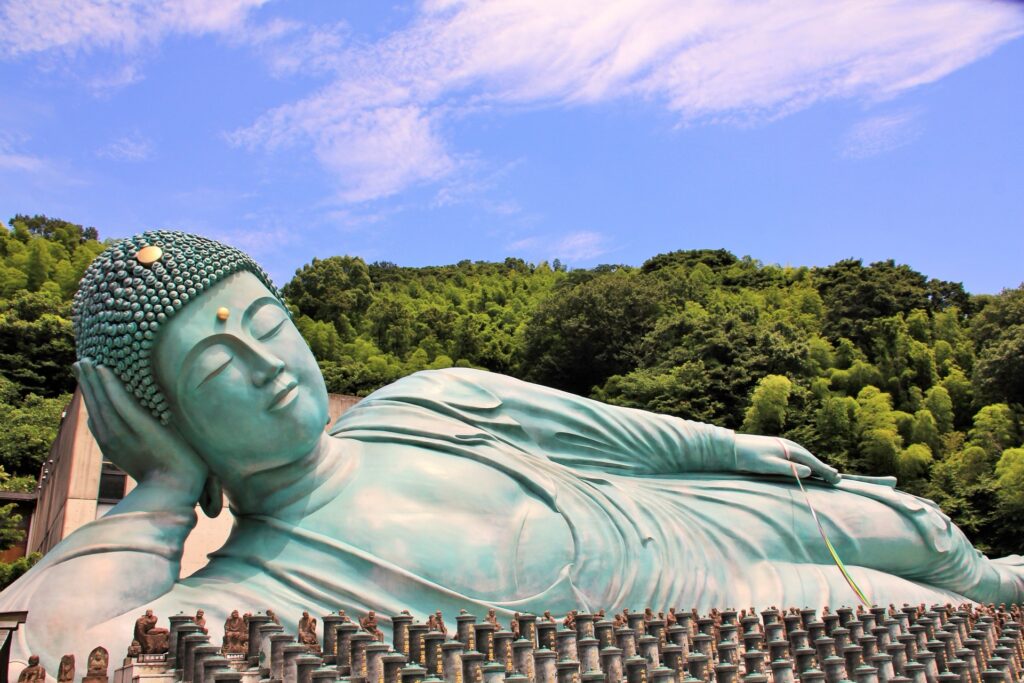 Fukuoka · Sasaguri · Temple Nanzoin Reclining Buddha 2026: World’s Largest Bronze Buddha, Just 25 Minutes from Hakata A 41-meter sleeping bronze giant in a quiet mountain town — what… Read more: Nanzoin Reclining Buddha 2026: Worlds Largest Bronze Buddha 25 Minutes from Hakata
 - Sasaguri Kyudai-no-Mori 2026: The Bald Cypress Pond in Kyushu Universitys Research Forest
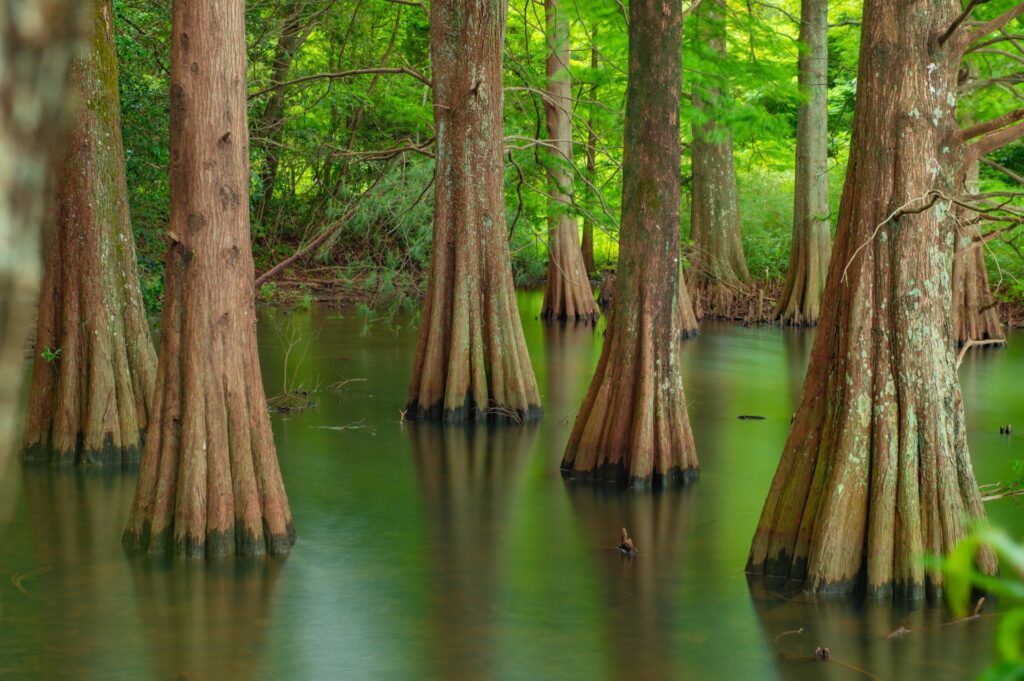 Fukuoka · Sasaguri · Forest Sasaguri Kyudai-no-Mori 2026: The Bald Cypress Pond Most Visitors Don’t Reach in Time A small university research forest with a pond full of trees standing… Read more: Sasaguri Kyudai-no-Mori 2026: The Bald Cypress Pond in Kyushu Universitys Research Forest
 - Best Day Trips from Nagasu Port: What to Do on the Kumamoto Side of the Ariake Ferry (2026)
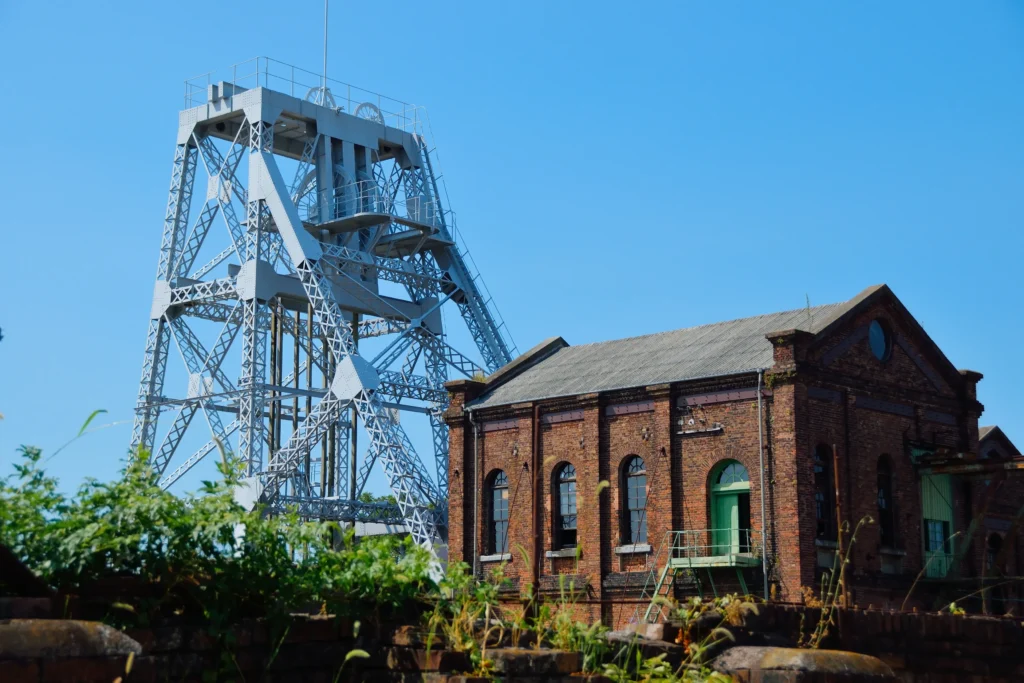 2026 Update: The Manda Coal Mine guided tours have been updated with new pricing structures. Ensure you check the latest guided tour fees if you prefer an in-depth historical explanation.… Read more: Best Day Trips from Nagasu Port: What to Do on the Kumamoto Side of the Ariake Ferry (2026)
 - Wisteria in Japan 2026: 10 Stunning Spots Beyond Ashikaga [With Map]
![Wisteria in Japan 2026: 10 Stunning Spots Beyond Ashikaga [With Map]](https://hiddenjapan-gems.com/wp-content/uploads/2026/04/藤花-1024x683.webp) Blooming Now Peak window: late April — mid May 2026. Ashikaga Flower Park tunnels are at full bloom. Golden Week crowds building — see the crowd-avoidance guide. Wisteria (fuji in… Read more: Wisteria in Japan 2026: 10 Stunning Spots Beyond Ashikaga [With Map]
Blooming Now Peak window: late April — mid May 2026. Ashikaga Flower Park tunnels are at full bloom. Golden Week crowds building — see the crowd-avoidance guide. Wisteria (fuji in… Read more: Wisteria in Japan 2026: 10 Stunning Spots Beyond Ashikaga [With Map] - Yakitori Mamori: Fukuoka’s Hidden Omakase Yakitori Experience in Nishi-NakasuImagine stepping through a dark, unmarked door in Fukuoka’s upscale Nishi-Nakasu district, guided only by a small wooden sign bearing the characters 焼鳥 真守. Inside, a sleek 10-seat counter awaits,… Read more: Yakitori Mamori: Fukuoka’s Hidden Omakase Yakitori Experience in Nishi-Nakasu
2026 cherry blossom cherry blossoms day trip from tokyo flower festival fuji five lakes fujiyoshida Fukuoka fushimi hanami hiking japan japanese culture japanese food japan travel kamakura Kamikochi kawagoe kawaguchiko Kumamoto kyoto Mount Fuji mt fuji Nagano Nikko Oku-Nikko Onsen Ramen saitama sakura Shizuoka shrine sightseeing spring spring in japan Tokyo travel travel guide Travel Guide 2026 travel planning Visit Japan Web when to visit japan winter winter travel Yamanashi
Join 1,000+ travelers discovering Japan's hidden side
Weekly dispatches from off-the-beaten-path Japan — spots and stories you won't find in guidebooks.
No spam. Unsubscribe anytime.
Welcome aboard!
You're in. See you in your inbox soon.