



Just a stone’s throw from the historic Teradaya Inn lies the Ryoma Dori Shopping Street, a charming, retro-style arcade that feels like a journey back to the Bakumatsu period. This isn’t just a place to shop; it’s a path once walked by Sakamoto Ryoma and his fellow revolutionaries. The street beautifully preserves the atmosphere of old Kyoto, making it an essential part of any visit to Fushimi.
As the founder of hiddenjapan-gems.com, I find Ryoma Dori to be the perfect place to connect with Fushimi’s dramatic past while enjoying its present-day local charm. The combination of historic ambiance, unique shops, and cozy cafes creates a truly memorable experience. This guide will introduce you to the highlights of this atmospheric street.
Table of Contents
Quick Facts for Visiting Ryoma Dori
| Item | Details |
| What it is | A historic, 130-meter-long shopping street with a retro, samurai-era atmosphere. |
| Best for | History fans, souvenir shopping, and experiencing a traditional Japanese shopping arcade. |
| Time Needed | 30-60 minutes (depending on shopping and cafe stops). |
| Location | Connects to the Teradaya Inn area in Fushimi-ku, Kyoto. |
| Access | Approx. 7-min walk from Chushojima Station (Keihan Line) or 10-min walk from Fushimi-Momoyama Station (Keihan Line). |
| Key Features | Stone-paved street, gas lamp-style lights, traditional machiya-style storefronts. |
A Stroll Through History
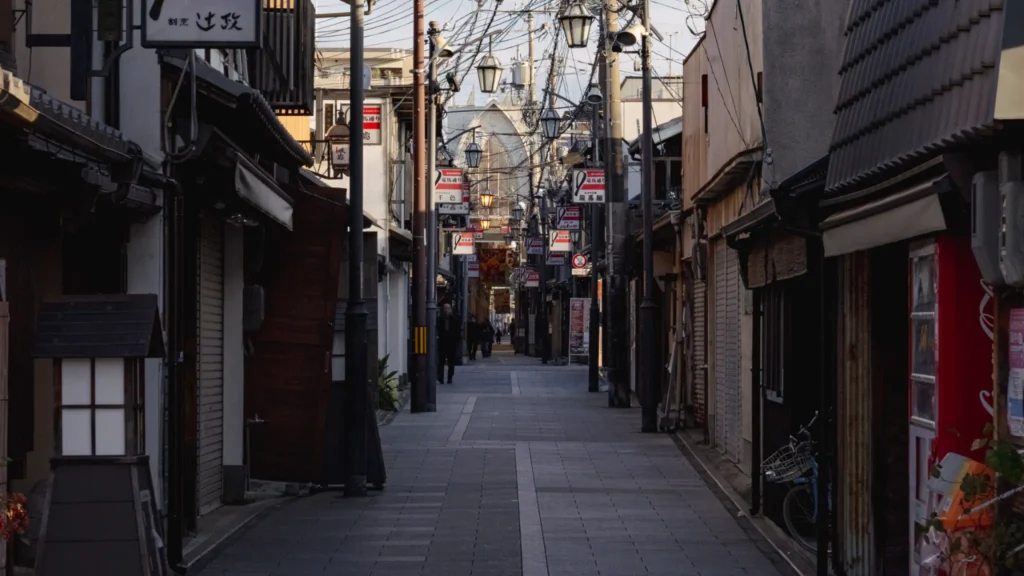
The history of Ryoma Dori dates back over 400 years to when Toyotomi Hideyoshi built Fushimi Castle. The area naturally developed as a town for merchants and travelers. The street as we see it today, however, is the result of a restoration project in the 1990s that aimed to recreate the atmosphere of the Bakumatsu period.
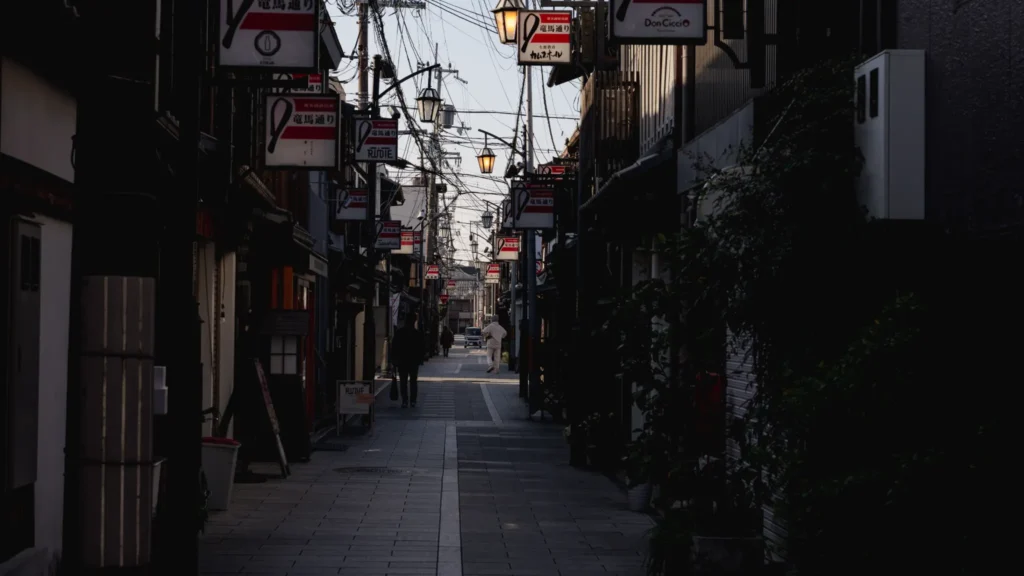
The 130-meter-long street features a beautiful stone-paved path, gas lamp-style streetlights, and unified, traditional machiya-style facades. This careful design creates a cohesive, immersive experience, making you feel as if you’ve stepped onto a movie set depicting samurai-era Japan.

What to See and Do on Ryoma Dori
While the street itself is the main attraction, it’s also home to a variety of unique shops and eateries that add to its charm.
•Local Eateries & Cafes: The street is dotted with small, independent restaurants and cafes. You can find everything from traditional Japanese cuisine to modern cafes set in renovated machiya houses. It’s a great place to stop for lunch or a coffee break while exploring Fushimi. Look for places like Kizakura Kappa Country (a sake brewery restaurant) just off the main street, or cozy spots for a quick bite.
•Soak in the Atmosphere: The best way to enjoy Ryoma Dori is simply to walk its length slowly. Notice the details on the buildings, the warm glow of the lanterns, and the quiet ambiance that sets it apart from the bustling main streets. It’s a perfect spot for photography, especially in the early morning or late afternoon when the light is soft.
How to Get to Ryoma Dori Shopping Street
The street is centrally located in Fushimi and is best reached on foot as part of a larger tour of the area.
•From Chushojima Station (Keihan Line): Approximately a 7-minute walk. This is the most convenient station if you are coming from the direction of the Fushimi Jikkokubune boat ride.
•From Fushimi-Momoyama Station (Keihan Line) or Momoyama-Goryo-mae Station (Kintetsu Line): About a 10-minute walk. This route will take you past the Fushimi Otesuji Shopping Arcade.
Frequently Asked Questions
1. Are the shops on Ryoma Dori open every day?
Most shops have their own individual closing days, which are often on a specific day of the week (like Monday or Tuesday). If you want to visit a particular shop, it’s best to check its schedule online beforehand.
2. Is this the same as the Fushimi Otesuji Shopping Arcade?
No, they are two different streets. Ryoma Dori is a short, historic-themed street, while the Otesuji Arcade is a much longer, modern, covered shopping street with a wide variety of everyday shops and restaurants.
3. Can I find good souvenirs here?
Yes, especially if you are interested in history. The Ryoma-kan is the main souvenir shop, offering unique items related to Sakamoto Ryoma and the Bakumatsu period that you won’t find elsewhere.
Conclusion: A Charming Detour into the Past
Ryoma Dori Shopping Street is a small but powerful piece of Fushimi’s historical puzzle. It serves as the perfect atmospheric link between a visit to the Teradaya Inn and the sake breweries. Whether you’re a history enthusiast, a photographer, or simply a traveler looking for a quiet, beautiful street to explore, Ryoma Dori offers a delightful and authentic Kyoto experience.
Sources Checked
•Kyoto Tourism Navi: https://ja.kyoto.travel/tourism/single01.php?category_id=4&tourism_id=1220
•Kyoto Walks: https://www.kyoto-walks.com/deta/otesuji/ryouma.html

- Ryoanji Rock Garden: The Kyoto Temple Where Something Is Always Hidden
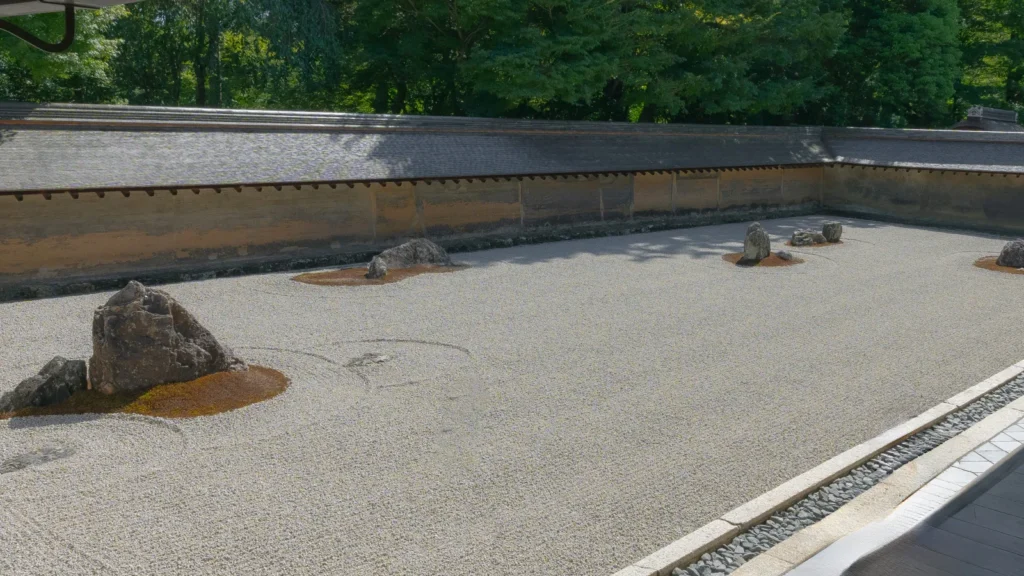 You sit on the wooden veranda at Ryoanji with maybe forty other people, and for a minute nobody says anything. The rock garden in front of you is not large… Read more: Ryoanji Rock Garden: The Kyoto Temple Where Something Is Always Hidden
 - A Perfect Kyoto Afternoon: Walking Higashiyama from the Yasaka Pagoda to Kiyomizudera at Golden Hour (2026 Guide)
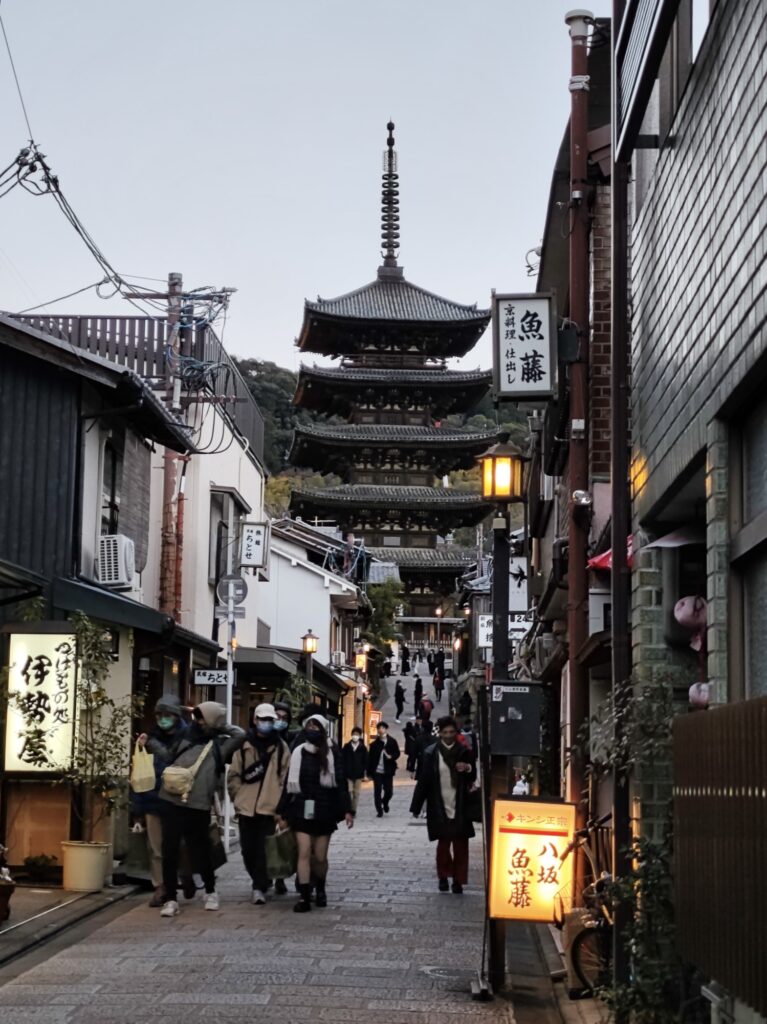 Kyoto’s Higashiyama district is the most photographed square kilometer in Japan. Everyone has seen it. The question isn’t whether to go — it’s how to walk it so you don’t… Read more: A Perfect Kyoto Afternoon: Walking Higashiyama from the Yasaka Pagoda to Kiyomizudera at Golden Hour (2026 Guide)
 - Adashino Nenbutsuji 2026: Kyoto’s Temple of 8,000 Stone Buddhas [With Map]
![Adashino Nenbutsuji 2026: Kyoto's Temple of 8,000 Stone Buddhas [With Map]](https://hiddenjapan-gems.com/wp-content/uploads/2026/04/DSC2083-2-2-1024x576.webp) Most visitors to Arashiyama stop at the famous bamboo grove. But if you keep walking north for about 30 minutes, past the crowds and into the quiet Saga Toriimoto preserved… Read more: Adashino Nenbutsuji 2026: Kyoto’s Temple of 8,000 Stone Buddhas [With Map]
Most visitors to Arashiyama stop at the famous bamboo grove. But if you keep walking north for about 30 minutes, past the crowds and into the quiet Saga Toriimoto preserved… Read more: Adashino Nenbutsuji 2026: Kyoto’s Temple of 8,000 Stone Buddhas [With Map] - Atago Kaido / Saga Toriimoto — Kyoto’s Preserved Street
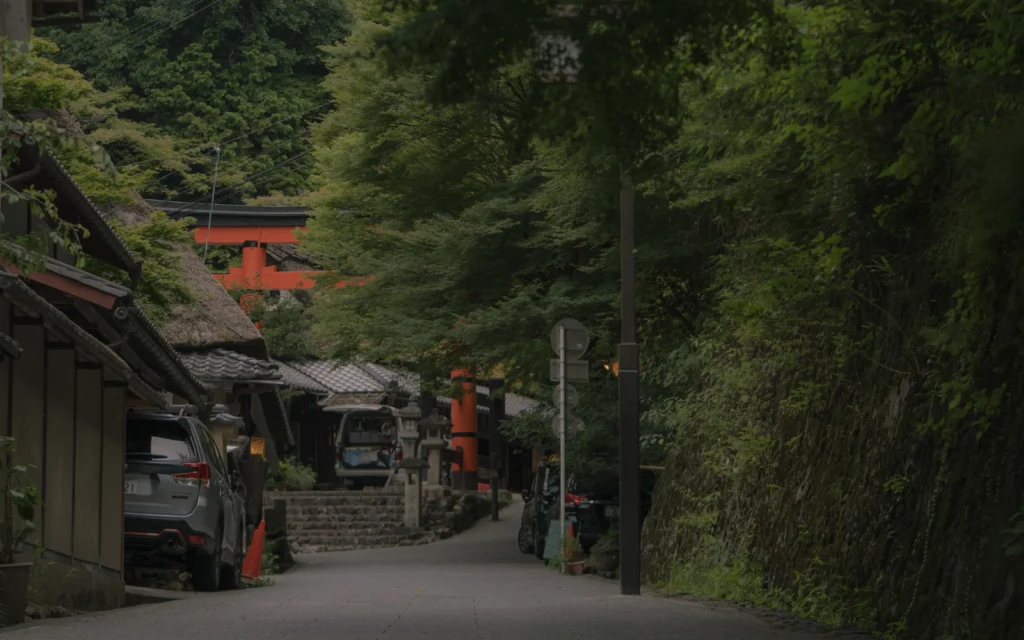 2026 Update: While Arashiyama continues to see record crowds, the 30-minute walk to Saga Toriimoto remains one of Kyoto’s best-kept secrets. We have updated our access guide and tea house… Read more: Atago Kaido / Saga Toriimoto — Kyoto’s Preserved Street
 - A Night at Hoshinoya Kyoto: Boat Ride, Kaiseki & River Views [Stay Review]
![A Night at Hoshinoya Kyoto: Boat Ride, Kaiseki & River Views [Stay Review]](https://hiddenjapan-gems.com/wp-content/uploads/2026/04/IMG_4741-1024x576.webp) 2026 Update : Hoshinoya Kyoto continues to operate its exclusive boat access from the Arashiyama pier. Due to the increasing popularity of the Arashiyama area, we highly recommend arriving at… Read more: A Night at Hoshinoya Kyoto: Boat Ride, Kaiseki & River Views [Stay Review]
2026 Update : Hoshinoya Kyoto continues to operate its exclusive boat access from the Arashiyama pier. Due to the increasing popularity of the Arashiyama area, we highly recommend arriving at… Read more: A Night at Hoshinoya Kyoto: Boat Ride, Kaiseki & River Views [Stay Review]
2026 cherry blossom cherry blossoms day trip from tokyo flower festival fuji five lakes fujiyoshida Fukuoka fushimi hanami hiking japan japanese culture japanese food japan travel kamakura Kamikochi kawagoe kawaguchiko Kumamoto kyoto Mount Fuji mt fuji Nagano Nikko Oku-Nikko Onsen Ramen saitama sakura Shizuoka shrine sightseeing spring spring in japan Tokyo travel travel guide Travel Guide 2026 travel planning Visit Japan Web when to visit japan winter winter travel Yamanashi
Join 1,000+ travelers discovering Japan's hidden side
Weekly dispatches from off-the-beaten-path Japan — spots and stories you won't find in guidebooks.
No spam. Unsubscribe anytime.
Welcome aboard!
You're in. See you in your inbox soon.
[…] past traditional sake breweries and weeping willows, the Fushimi Jikkokubune Canal Cruise offers a unique perspective on Kyoto’s historic sake district. These flat-bottomed […]