
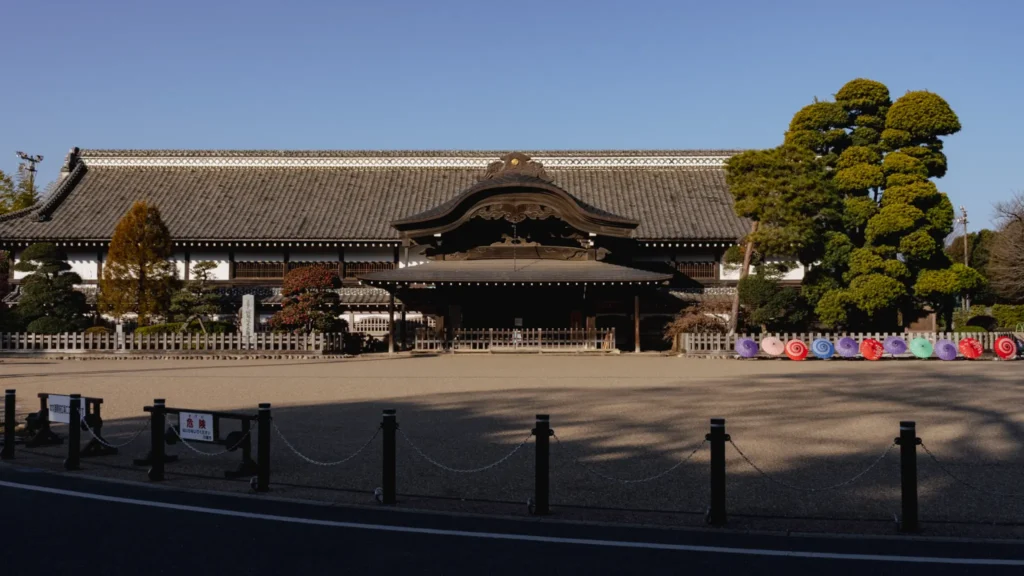
Step back in time in Kawagoe, a city affectionately known as “Little Edo,” and discover one of its most precious historical treasures: the Kawagoe Castle Honmaru Goten. As the only surviving palace building of its kind in eastern Japan, this beautifully preserved structure offers a rare and authentic window into the daily life and governance of a powerful samurai lord during the final years of the Edo Period. For anyone visiting Kawagoe with an interest in Japanese history and traditional architecture, a visit to the Kawagoe Castle Honmaru Goten is an essential experience.
This guide will walk you through the history, architecture, and practical details you need to make the most of your visit to this remarkable site, built in 1848 by the ruling Matsudaira clan.
Table of Contents
Quick Facts
| Feature | Details |
| Best Time to Visit | Year-round |
| Time Needed | 45-60 minutes |
| Nearest Station | Hon-Kawagoe Station (Seibu Line), Kawagoe Station (JR/Tobu Lines) |
| Admission Fee | General: ¥100, University/High School: ¥50, Junior High & under: Free |
| Payment Methods | Cash only |
| Crowd Level | Moderate, can be busier on weekends |
| Accessibility | Limited. The interior has steps and requires removing shoes. |
A Palace Through Time: The Overview of Honmaru Goten
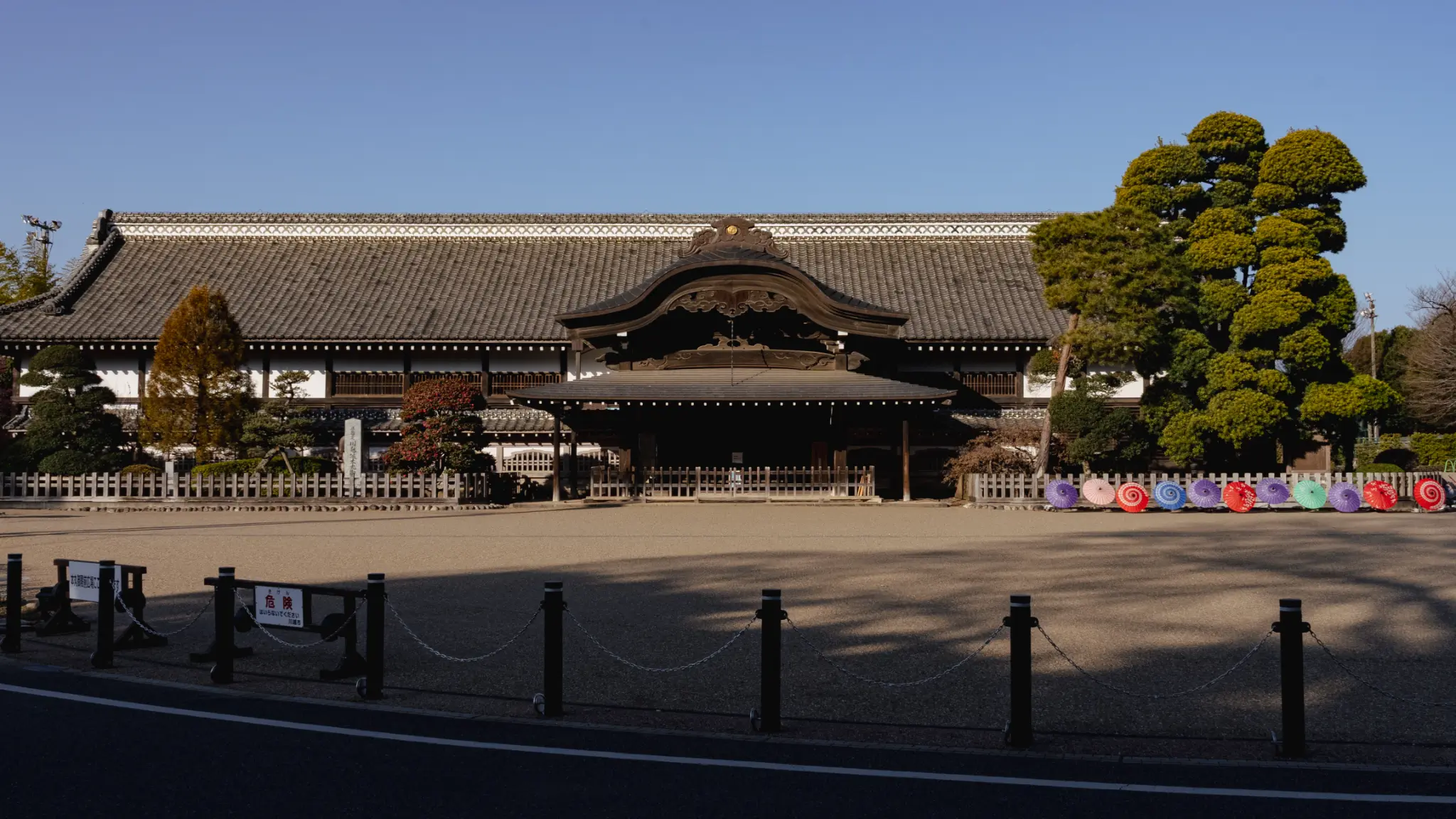
The Honmaru Goten, which translates to “the palace in the innermost circle of defense,” was the residence and office of the feudal lord (daimyo) of the Kawagoe Domain. The current structure was built in 1848 by Matsudaira Naritsune, the lord at the time, and represents a fraction of the original sprawling complex, which once consisted of 16 buildings covering over 3,400 square meters. [1] [2]
After the Meiji Restoration in 1868, the castle was decommissioned, and most of its buildings were dismantled. The Honmaru Goten survived, serving various roles over the years, including as a prefectural office, a public hall, and even a martial arts dojo and a junior high school gymnasium. [3] Thanks to preservation efforts, what remains today—the grand entrance, a large hall, and the chief retainer’s office—stands as one of only two such surviving palace structures in all of Japan, the other being at Kochi Castle.
A Brief History of Kawagoe Castle
To fully appreciate the Honmaru Goten, it’s helpful to understand the history of Kawagoe Castle itself. The castle was first constructed in 1457 by Ōta Dōshin and his son Ōta Dōkan under the order of the Uesugi clan to defend against rival powers. [2] Due to its strategic importance in defending the northern approach to Edo (modern-day Tokyo), the castle was controlled by a succession of powerful and trusted lords throughout the Edo Period (1603-1868), including several who served in high-ranking positions within the Tokugawa shogunate. This earned Kawagoe the reputation of being a “town of elders.” [1]
The castle never had a main keep (tenshu) like Himeji or Osaka Castle. Instead, its highest point was the three-story Fujimi Yagura (Mt. Fuji viewing turret), which served as its symbolic watchtower. The Honmaru Goten was the administrative and residential heart of this formidable fortress.
What to See Inside the Kawagoe Castle Honmaru Goten
A walk through the Honmaru Goten is a journey through the aesthetics and functions of a samurai-era palace. The building’s design is elegant yet practical, reflecting the stoic values of the warrior class.
The Grand Entrance (Genkan) and Main Hall (Ōhiroma)
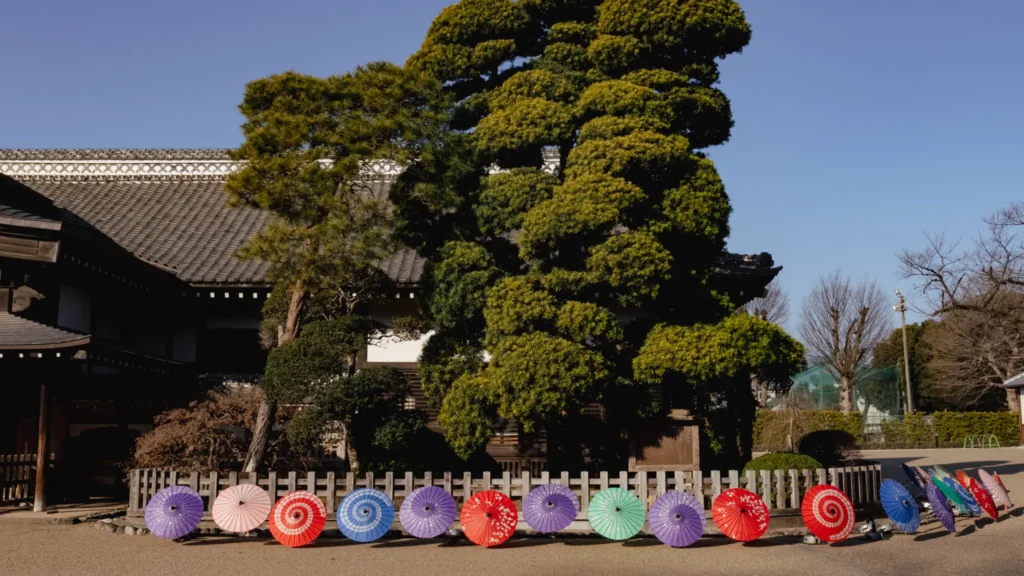
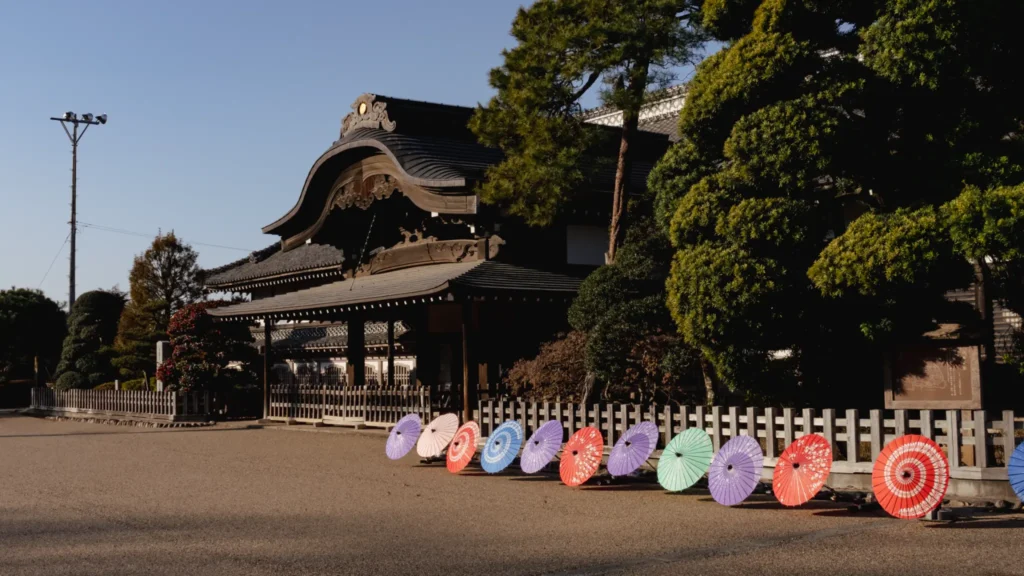
Your visit begins at the magnificent entrance, with its large, curved karahafu gable—a feature denoting high status. After removing your shoes, you’ll step onto the polished wooden floors of the long corridors that wrap around the main rooms. The main hall, a vast space of 36 tatami mats, is striking in its simplicity. While decorations are minimal, the sheer scale of the room and the beautiful painted wooden sliding doors (sugi-to) depicting pine trees convey a sense of authority and refinement. [4]
The Chief Retainer’s Office (Karō Tsumesho)
One of the most engaging exhibits is the Karō Tsumesho, the office where the lord’s chief retainers and councilors would meet. Here, life-sized figures of samurai are seated in a circle, recreating a council meeting. It’s a powerful display that helps you imagine the serious discussions and decisions that once took place within these walls. This part of the building was actually dismantled and moved to a private residence in another city before being returned and reconstructed here in the late 20th century. [3]
Architectural Details and Garden
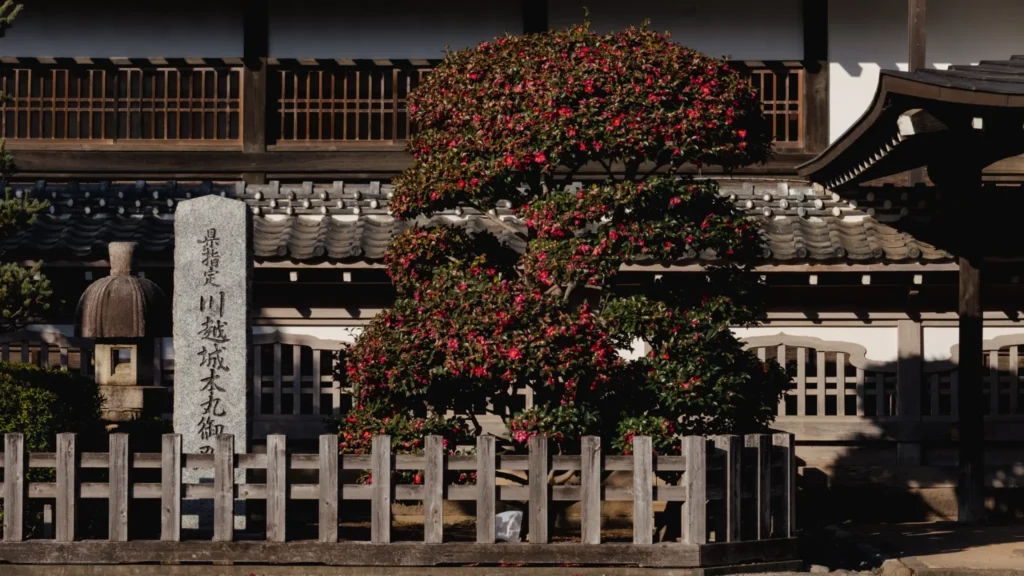
As you wander the corridors, take note of the craftsmanship. The long, straight hallways, smooth wooden floors, and elegant shoji paper screens are hallmarks of traditional Japanese architecture. The corridors look out onto a simple but tranquil Japanese garden, featuring manicured pine trees and stone lanterns, providing a peaceful view from the tatami rooms. You can also see displays of samurai armor and other historical artifacts. [5]
How to Get to Kawagoe Castle
The Honmaru Goten is located in the northern part of Kawagoe’s main tourist area.
By Train from Tokyo:
•Seibu Shinjuku Line: From Seibu-Shinjuku Station to Hon-Kawagoe Station (approx. 45-60 minutes).
•Tobu Tojo Line: From Ikebukuro Station to Kawagoe Station (approx. 30 minutes by express).
•JR Kawagoe Line: From Shinjuku Station to Kawagoe Station (approx. 55 minutes).
From Stations in Kawagoe:
•From Hon-Kawagoe Station: Take the Tobu Bus and get off at “Fuda-no-Tsuji.” It’s about an 8-minute walk from there.
•From Kawagoe Station: Take the Tobu Bus and get off at “Fuda-no-Tsuji” (8-min walk) or use the Koedo Loop Bus and get off directly at the “Honmaru Goten” stop.
•On Foot: The palace is about a 15-20 minute walk from the main Kurazukuri (Warehouse District) street.
Practical Tips for Your Visit
•Combined Tickets:
Consider purchasing a combined ticket that grants access to the Honmaru Goten, the Kawagoe City Museum (located just across the street), the City Art Museum, and the Kawagoe Festival Museum for a discounted price. [5]
•Remove Your Shoes:
You will be required to take off your shoes at the entrance. Plastic bags are provided to carry them with you.
•Photography:
Photography is generally permitted, but be mindful of signs and other visitors.
•Combine with Other Sights:
The Honmaru Goten is located near other key attractions like the Kawagoe City Museum, Hikawa Shrine, and is a pleasant walk from the main Warehouse District.
Where to Stay Nearby
Most accommodations are clustered around Hon-Kawagoe and Kawagoe stations. Staying in this area provides easy access to both the historic sites and transportation for day trips.
•Find Hotels Near Kawagoe Station (Affiliate Link)
Where to Eat Nearby
The area between the Honmaru Goten and the Warehouse District has numerous dining options. You can find everything from traditional eel and soba noodle restaurants to modern cafes. The main Warehouse District street is famous for its sweet potato snacks and other local delicacies.
FAQs
Q: How much time should I spend at Kawagoe Castle Honmaru Goten?
A: Most visitors spend between 45 and 60 minutes exploring the palace and its exhibits.
Q: Is the Honmaru Goten the entire Kawagoe Castle?
A: No, it is the only major surviving building. The rest of the castle grounds are now occupied by parks, schools, and the city museum, though some earthworks and moat remnants can still be seen.
Q: Is the palace accessible for wheelchair users?
A: Accessibility is limited. The interior requires visitors to climb steps and walk on wooden floors and tatami mats, which is not suitable for wheelchairs.
Q: Can I take photos inside?
A: Yes, photography for personal use is generally allowed inside, but flash photography may be restricted. Always follow the posted rules.
Q: What is the best way to get there from the main Warehouse District?
A: It is a pleasant 15-20 minute walk north from the main street of the Warehouse District.
Short Closing
A visit to the Kawagoe Castle Honmaru Goten is more than just a tour of an old building; it’s an immersive step into the world of the samurai. Its quiet halls and elegant design offer a tangible connection to the history that shaped Kawagoe and Japan itself. It stands as a quiet, dignified testament to a bygone era, waiting to be explored.
Sources
•[1] Koedo Kawagoe Tourist Association. (n.d.). Honmaru Goten. Retrieved from https://koedo.or.jp/spot_007/
•[2] Wikipedia. (n.d. ). Kawagoe Castle. Retrieved from https://ja.wikipedia.org/wiki/%E5%B7%9D%E8%B6%8A%E5%9F%8E
•[3] City of Kawagoe. (2025, January 17 ). Kawagoe Castle Honmaru Goten. Retrieved from https://www.city.kawagoe.saitama.jp/museum/honmaru/index.html
•[4] Personal observation and analysis of provided photographs.
•[5] Japan-guide.com. (2025, April 11 ). Honmaru Goten (Kawagoe Castle). Retrieved from https://www.japan-guide.com/e/e6504.html

- Kawagoe Kumano Shrine 2026: 6 Interactive Rituals You Can Actually Try
 2026 Update: Kawagoe Kumano Sh… 続きを読む: Kawagoe Kumano Shrine 2026: 6 Interactive Rituals You Can Actually Try
 - Kitain Temple Kawagoe 2026: Edo Castle Rooms & 538 Rakan [With Map]
![Kitain Temple Kawagoe 2026: Edo Castle Rooms & 538 Rakan [With Map]](https://hiddenjapan-gems.com/wp-content/uploads/2026/04/DSC4602-1024x576.webp) Most visitors to Kawagoe head … 続きを読む: Kitain Temple Kawagoe 2026: Edo Castle Rooms & 538 Rakan [With Map]
Most visitors to Kawagoe head … 続きを読む: Kitain Temple Kawagoe 2026: Edo Castle Rooms & 538 Rakan [With Map] - Starbucks in a Kimono: A Guide to Kawagoe’s Most Beautiful Coffee Shop
 In the heart of Kawagoe, a tow… 続きを読む: Starbucks in a Kimono: A Guide to Kawagoe’s Most Beautiful Coffee Shop
 - Senba Toshogu: A Guide to Kawagoe’s Hidden Tokugawa Shrine
 While Nikko’s Toshogu Shrine i… 続きを読む: Senba Toshogu: A Guide to Kawagoe’s Hidden Tokugawa Shrine
 - Kawagoe Castle Honmaru Goten: A Glimpse into Samurai Lord Life in Little EdoStep back in time in Kawagoe, … 続きを読む: Kawagoe Castle Honmaru Goten: A Glimpse into Samurai Lord Life in Little Edo
2026 cherry blossom cherry blossoms day trip from tokyo flower festival fuji five lakes fujiyoshida Fukuoka fushimi hanami hiking japan japanese culture japanese food japanese garden japan travel kamakura kawagoe kawaguchiko Kumamoto kyoto local food Mount Fuji mt fuji Nagano nature Nikko Oku-Nikko Onsen Ramen saitama sakura Shizuoka shrine sightseeing snow spring in japan Tochigi Tokyo travel travel guide travel planning winter winter travel Yamanashi
Join 1,000+ travelers discovering Japan's hidden side
Weekly dispatches from off-the-beaten-path Japan — spots and stories you won't find in guidebooks.
No spam. Unsubscribe anytime.
Welcome aboard!
You're in. See you in your inbox soon.