

Onomichi · Hiroshima · Setouchi
Onomichi Hillside Walk 2026: Senkoji Temple, Stone Steps, Ramen, and the Start of Shimanami Kaido
A coastal town built on a slope. Stone steps everywhere. A 1,200-year-old mountainside temple complex you reach by ropeway or on foot. Onomichi ramen with chunks of pork back fat. And — for cyclists — the trailhead of one of the world’s great rides.
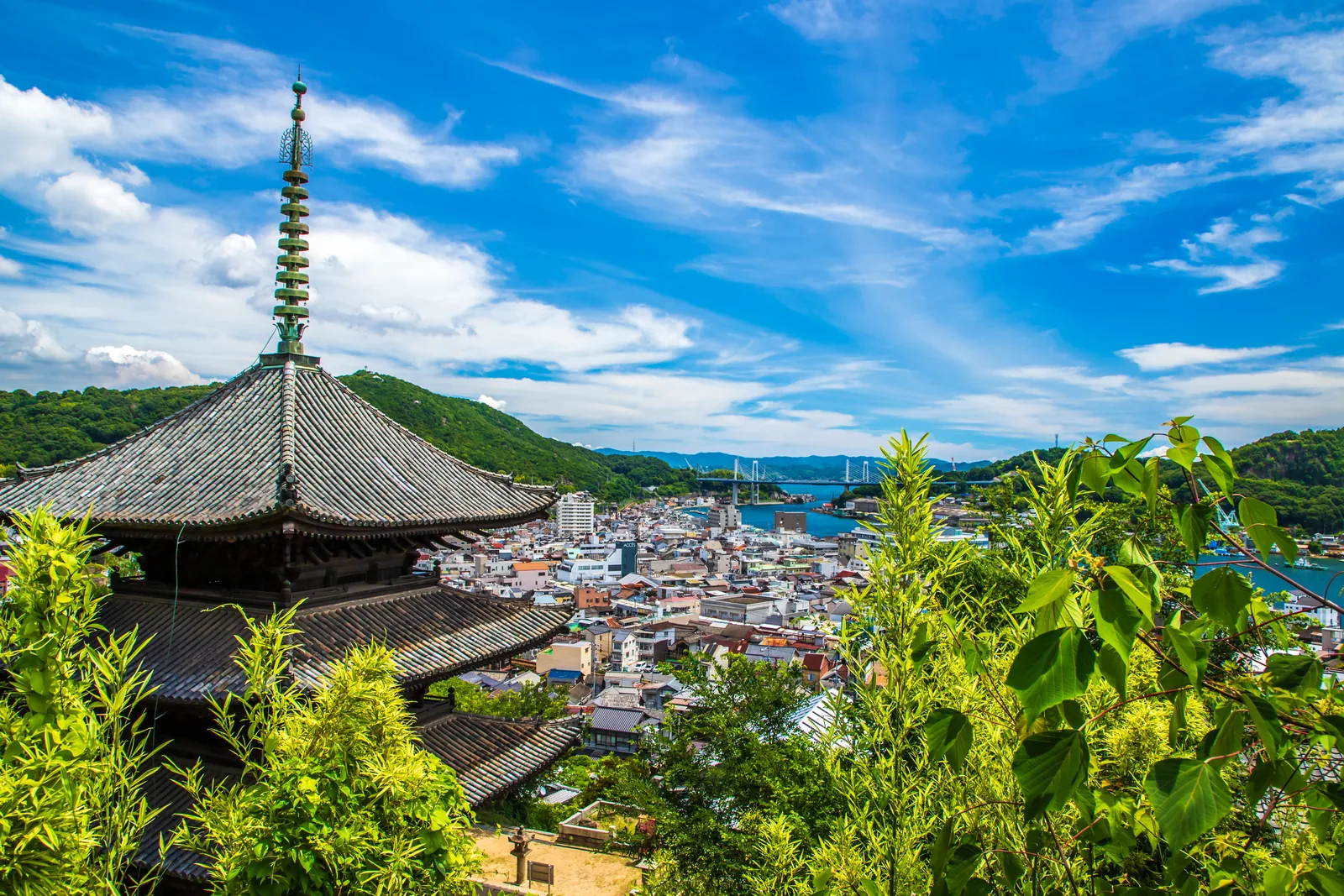
There aren’t many Japanese coastal towns where you can stand on one stone step, look up to a hilltop temple complex, look right to a Pacific channel and tankers, look left to a ropeway gondola descending past slate roofs, and look down to a row of independent ramen shops opening for lunch. Onomichi is one of them. It’s the location for Yasujirō Ozu’s Tokyo Story (1953), the inspiration for half of Lin Onomichi’s films, the start of the Shimanami Kaido cycling route, and a half-day trip from Hiroshima that delivers more visual texture per kilometre than any larger Setouchi city. This is what to actually do if you have 4 to 8 hours here.
1. The hillside walk — stone steps, lanes, temple
The mountain Onomichi sits below — Senkoji-yama (千光寺山) — is laced with stone steps. From the JR Onomichi Station exit, you cross the main street, weave through low alleys, and start climbing. Within 15 minutes you’ve passed three smaller temples, a literary-quotation path called the “Path of Literature” (文学のこみち), and reach Senkoji Temple itself, founded in 806.
You can walk up. You can take the ropeway up and walk down. You can take it both ways. Each option works. Most travellers without time pressure walk up (the steps are the experience) and ride the ropeway back down. The walk-up takes 25–40 minutes depending on photo stops; the ropeway is a 3-minute ride.
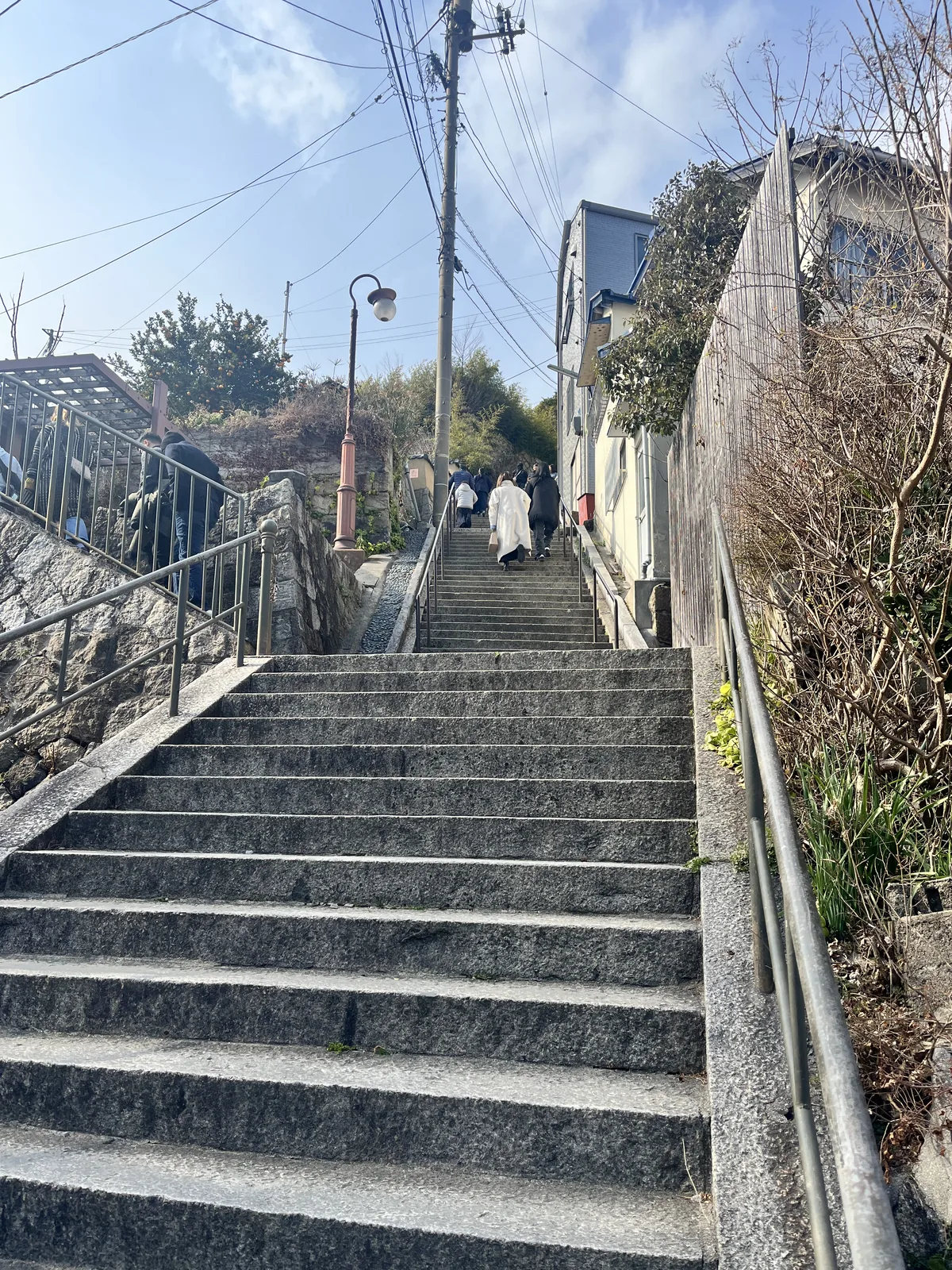
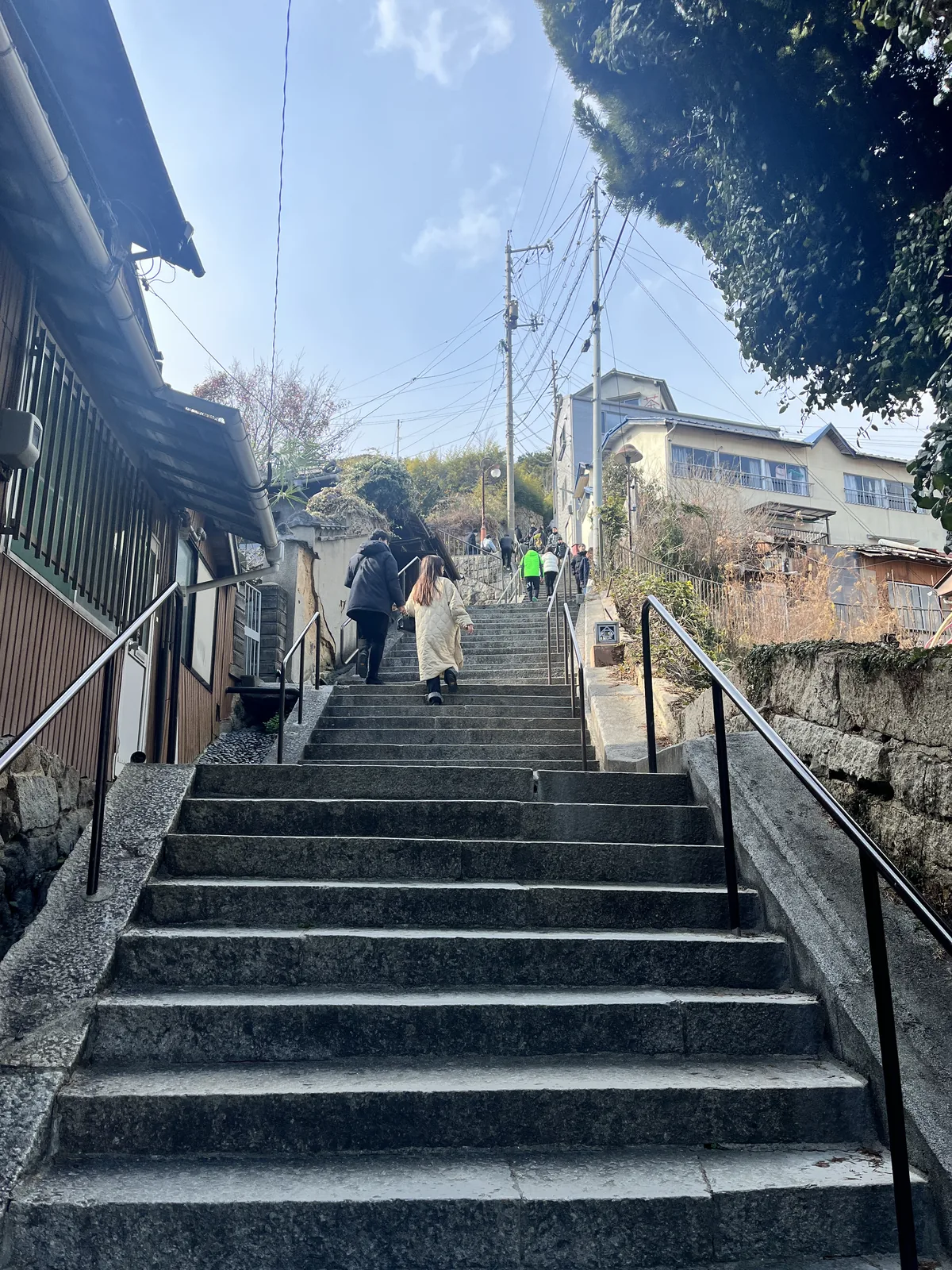
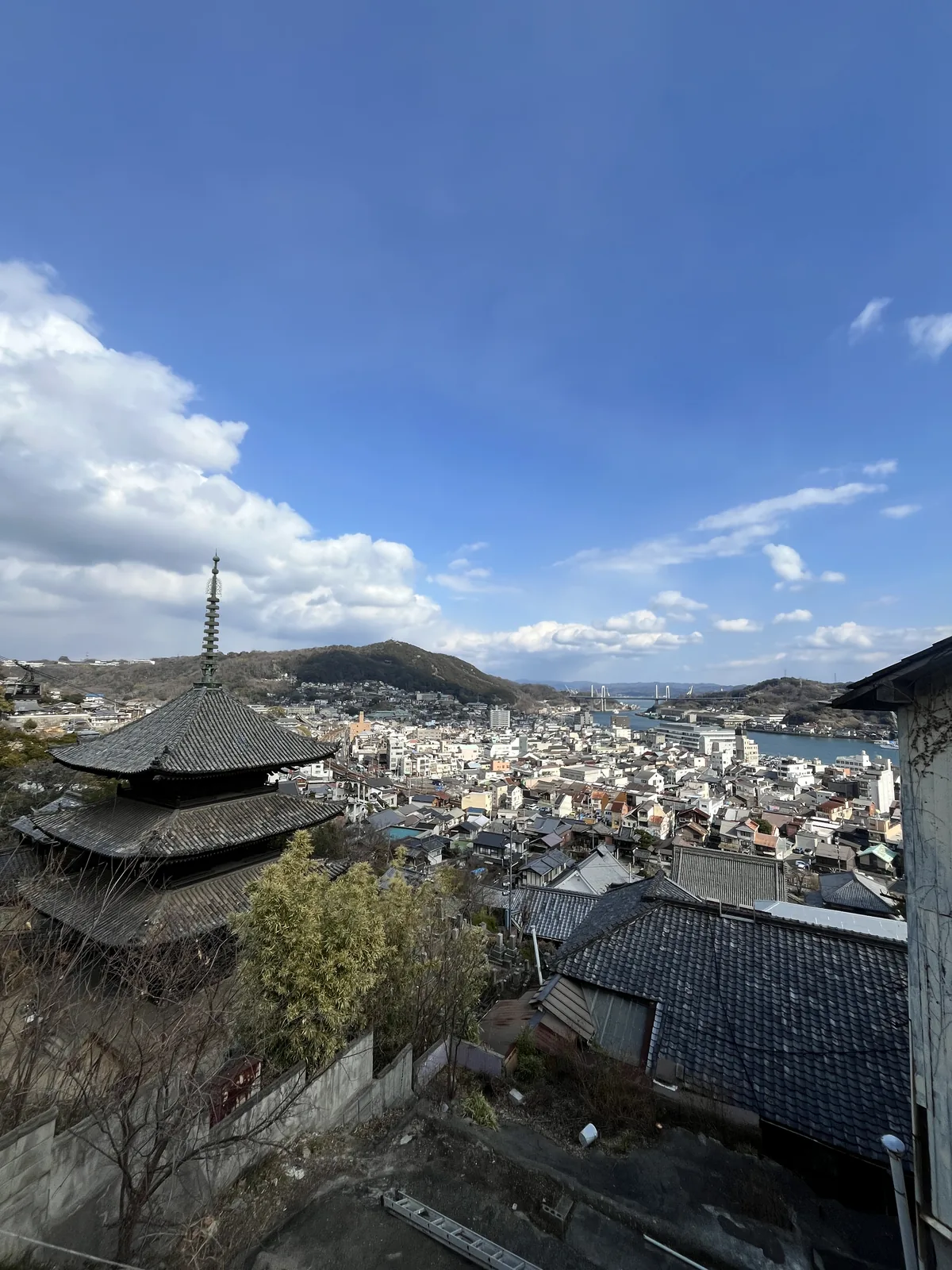
Three landmarks on the walk worth slowing down for:
- Tenneiji Three-Storied Pagoda (天寧寺 三重塔) — the orange-and-grey pagoda that appears in every Onomichi panorama. Built 1388. The viewing platform just above it is the location of the iconic shot.
- Cat Alley (猫の細道) — a narrow lane lined with cat-themed art, painted stones, and a population of locally-fed cats. More charming than a tourist trap, less performative than the Yanaka cat scene in Tokyo.
- Senkoji Temple (千光寺) — the destination. The main hall is built into the hillside, with vermilion walls against grey rock. Bell-ringing is open to visitors before noon. The view from the temple’s lower platform looks out over the entire channel.
2. The ropeway — best if you’ve climbed once
The Onomichi Ropeway runs from Senkoji-shita (the bottom station, near the trailhead) to a hilltop deck right next to Senkoji Temple. The ride is about 3 minutes. The view is unobstructed in both directions — town and Mukaishima island below, the Hotaka-style ridges of the inland Chugoku mountains behind.
Round-trip tickets are roughly ¥700 (one-way ~¥500); the booth at the bottom takes IC cards and cash. Verify the latest schedule before you go — the ropeway has occasional maintenance closures.
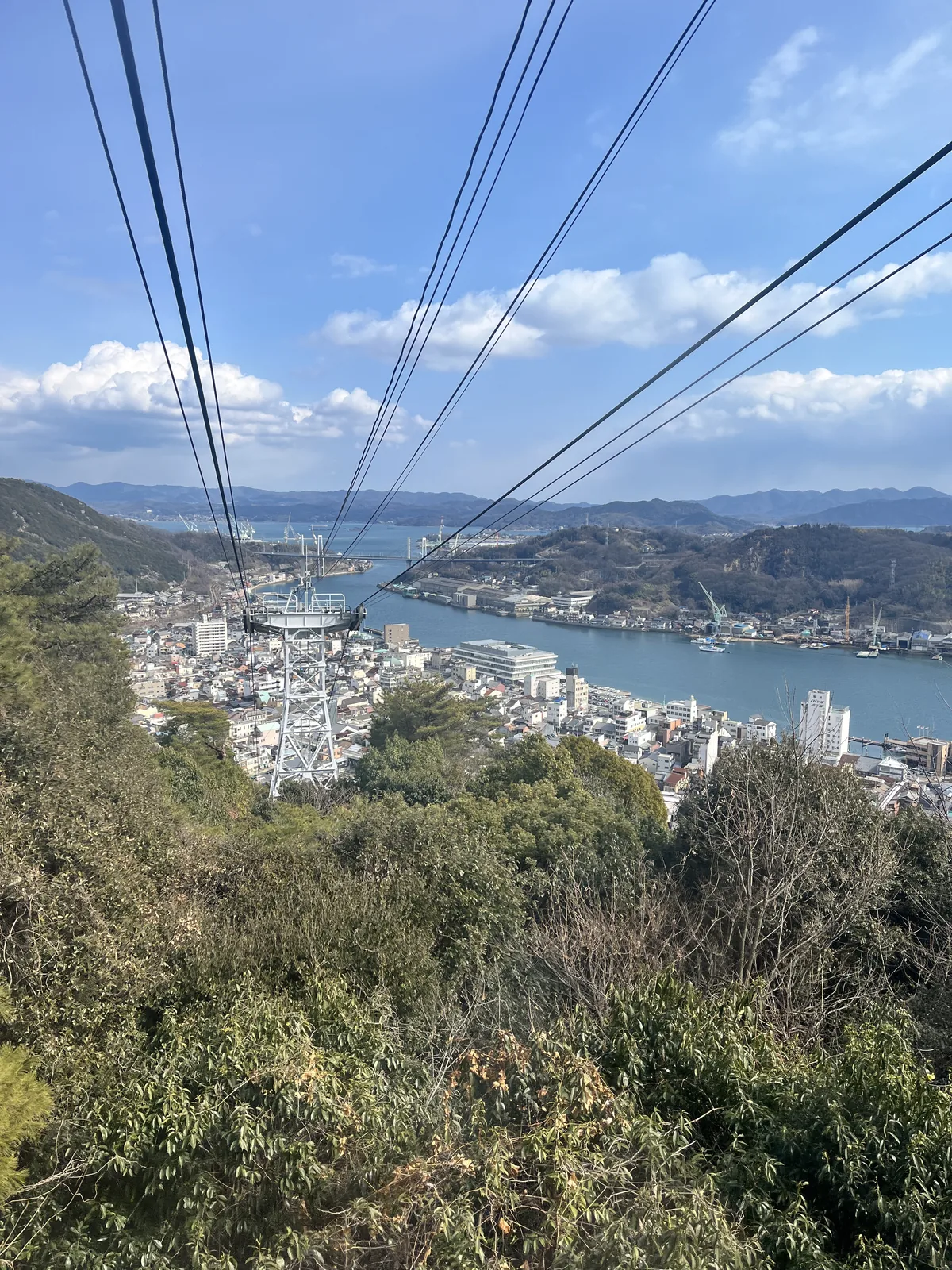
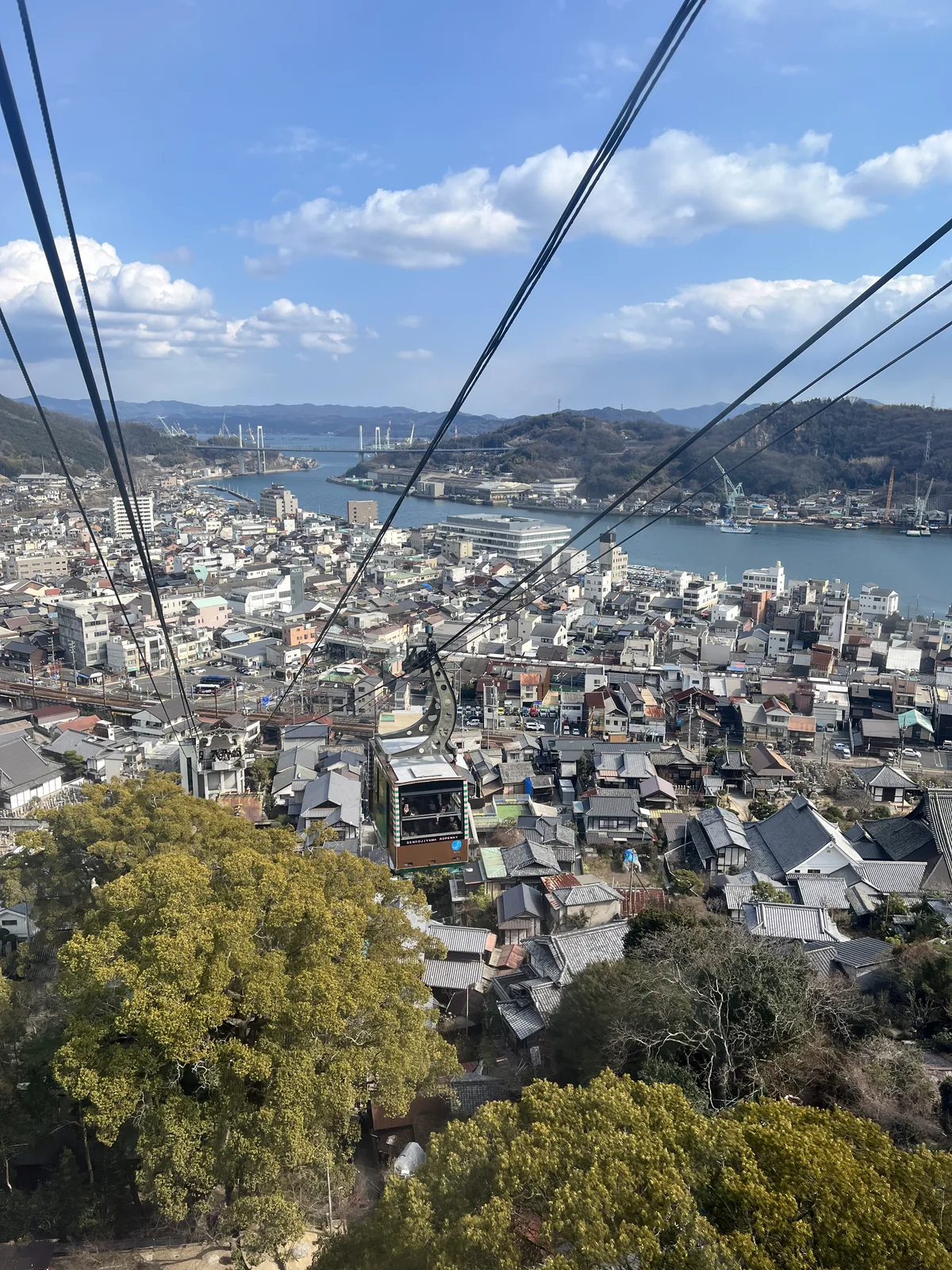
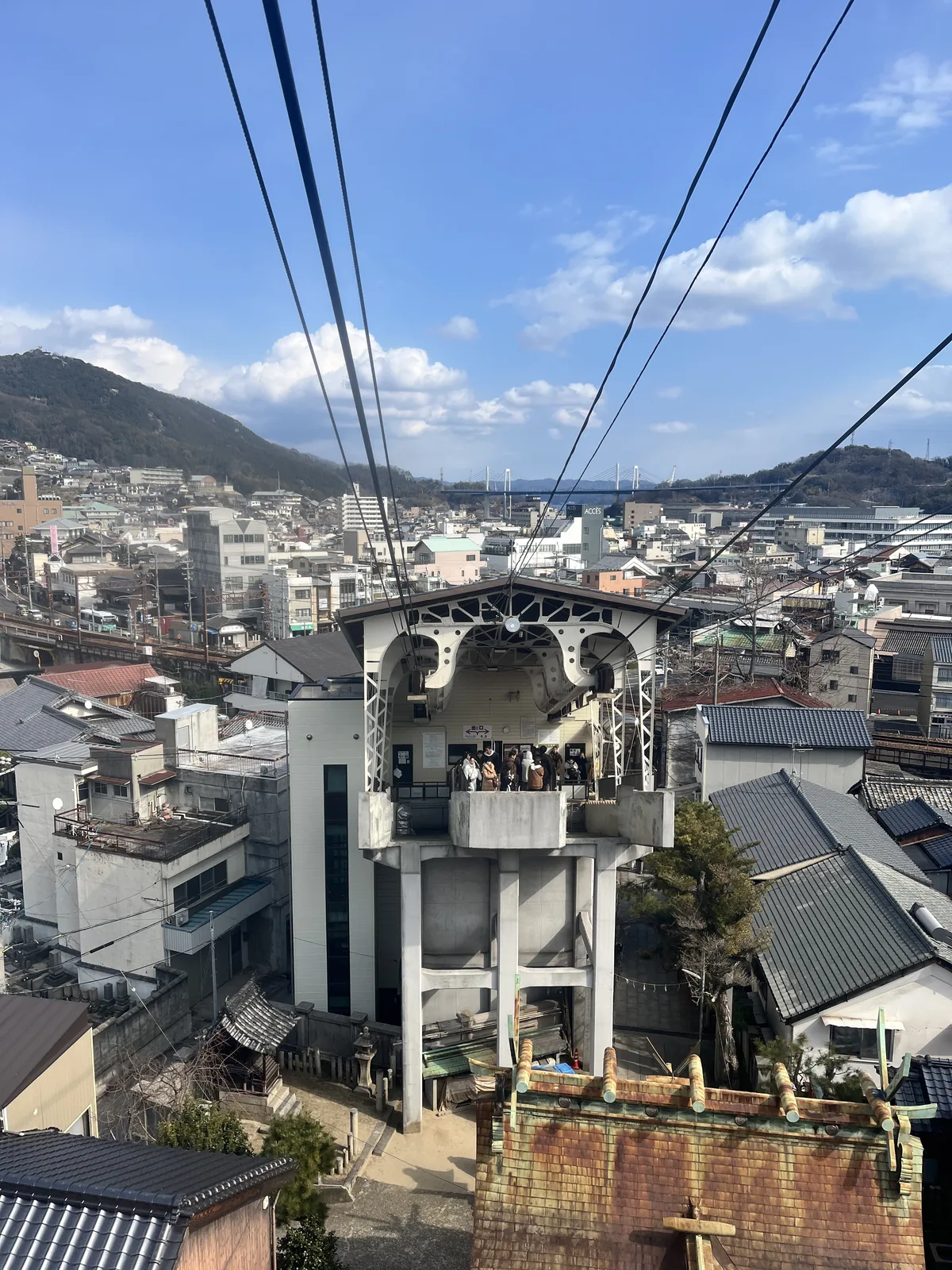
The bottom ropeway station is just behind a small parking area. Watch for the wooden boarding ramps; mid-day weekends the queue can be 15–20 minutes.
If you only have one ride in you, take the ropeway down, not up. Walking up gives you the alleys, the cat-painted stones, the smell of someone’s dinner cooking — none of which you experience from a gondola. Riding down lets you rest your knees while seeing the same scene as a cinematic crane shot.
3. The rocks at the top — Onomichi’s strangest landmark
Just above Senkoji Temple, scattered on the ridge, are massive granite boulders the size of vans, balanced on smaller rocks like a giant’s beach pebbles. The locals named them the “thirty-three Kannon stones” (三十三観音岩) and built tiny stone Buddhas around them. The view down to the town from on top of one of these boulders is the part of Onomichi that no photo on Google captures correctly.
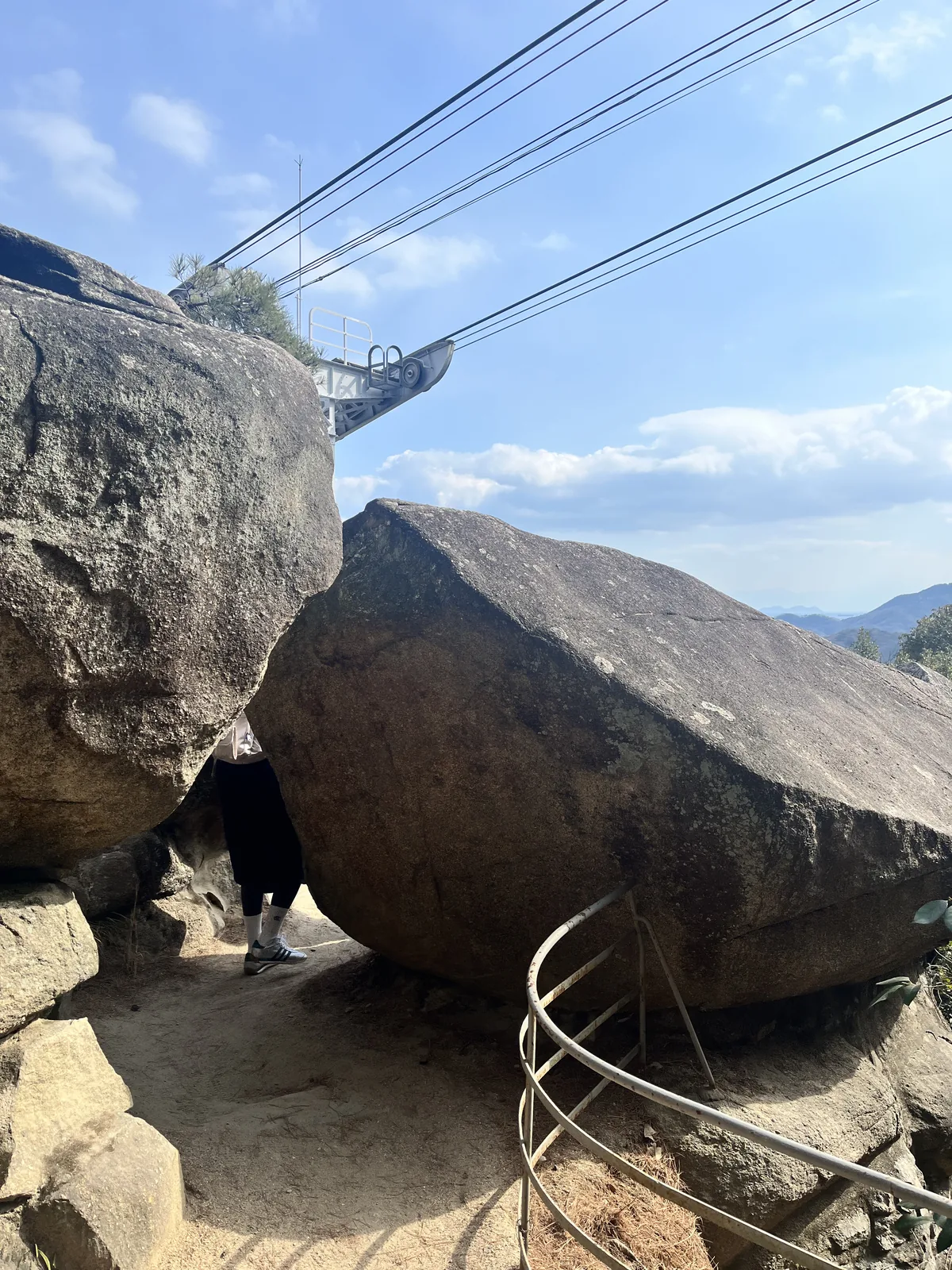
“The view from the top of one of these boulders — looking out over the Onomichi Channel — is the part of Onomichi no photograph captures correctly. You have to climb.”
To find them: from Senkoji’s main hall, take the small staircase to the right marked “観音道” (Kannon-michi). The boulder field is 5 minutes up. Footing is uneven; not stroller-friendly.
4. Onomichi ramen — built around the back fat
Onomichi has its own regional ramen style, distinct enough to be considered one of Japan’s recognised ramen schools. The broth is soy-sauce based, made with chicken bones and Setouchi small fish (the iriko / niboshi flavour the Setouchi region is known for). What sets it apart: chunks of pork back fat (背脂) floating on top, slightly chewy, deeply flavoured. The noodles are flat and slightly curly.
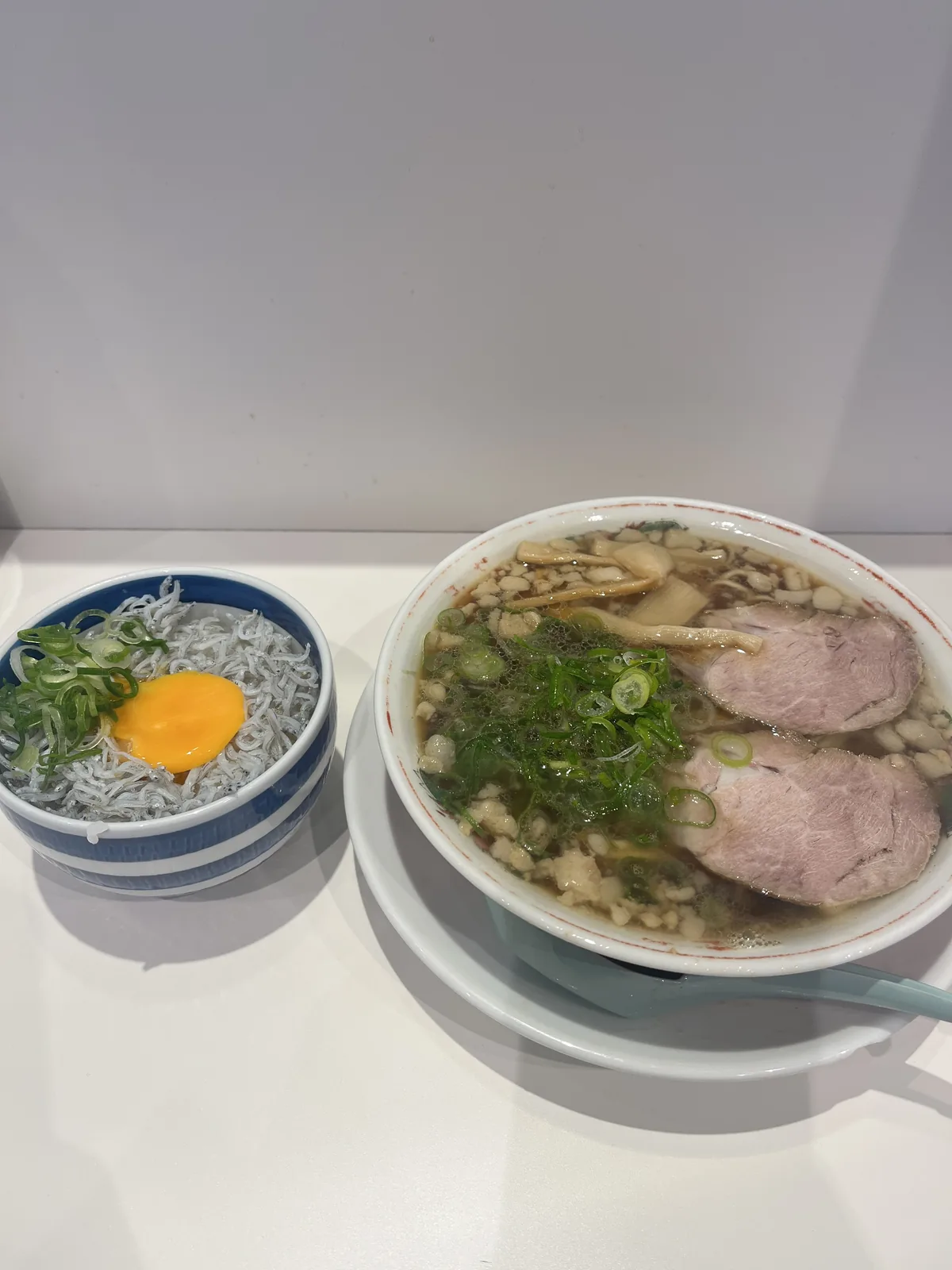
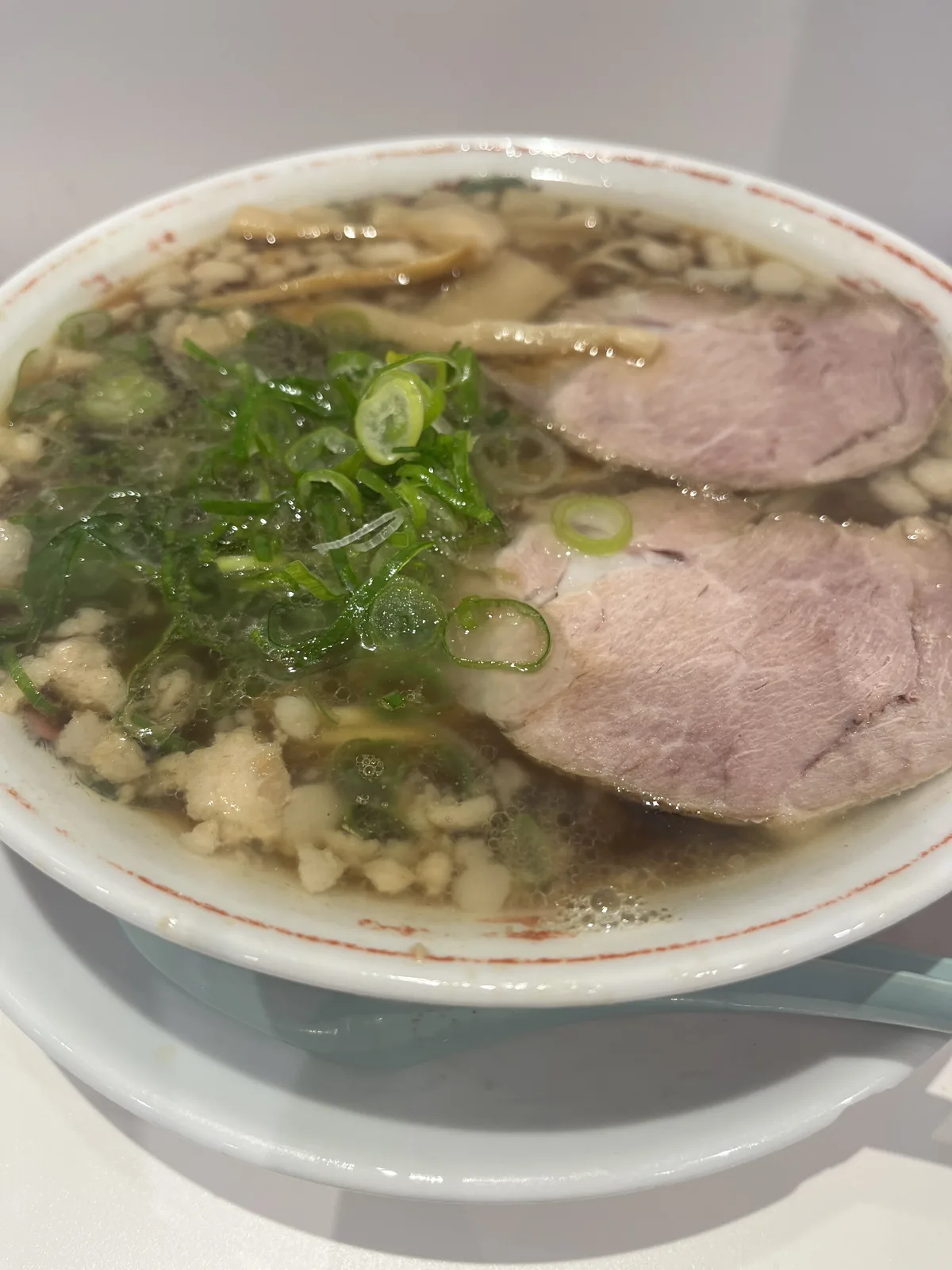
Recommended places (all within walking distance of the station):
- Tsutafuji (つたふじ) — one of the original Onomichi ramen counters, 1947. Always a queue. Cash only, small.
- Shukaen (朱華園) — a long-running rival, less queueing on weekday mornings.
- Ichibankan (一番館) — newer but consistent, English-friendly menu.
Pair the ramen with a side of shirasu-don (しらす丼) — small whitebait over rice, often topped with a raw egg yolk. The shirasu come straight off the Setouchi boats; the texture is right only at the coast.
A realistic half-day plan
Most travellers do Onomichi as a half-day stop on a Hiroshima or Shimanami Kaido trip. This works:
| Time | Action |
|---|---|
| 9:30 | Arrive Onomichi Station from Hiroshima or Fukuyama |
| 9:40 | Cross to mountain side, start the climb via Path of Literature |
| 10:30 | Tenneiji pagoda viewing platform — the iconic photo |
| 10:50 | Senkoji Temple main hall + Cat Alley |
| 11:15 | Boulder field above the temple (Kannon-iwa) |
| 11:45 | Ropeway down (¥500 one-way) |
| 12:00 | Onomichi ramen at Tsutafuji or Shukaen |
| 13:30 | Train back to Hiroshima — or rent a bike, ride Shimanami |
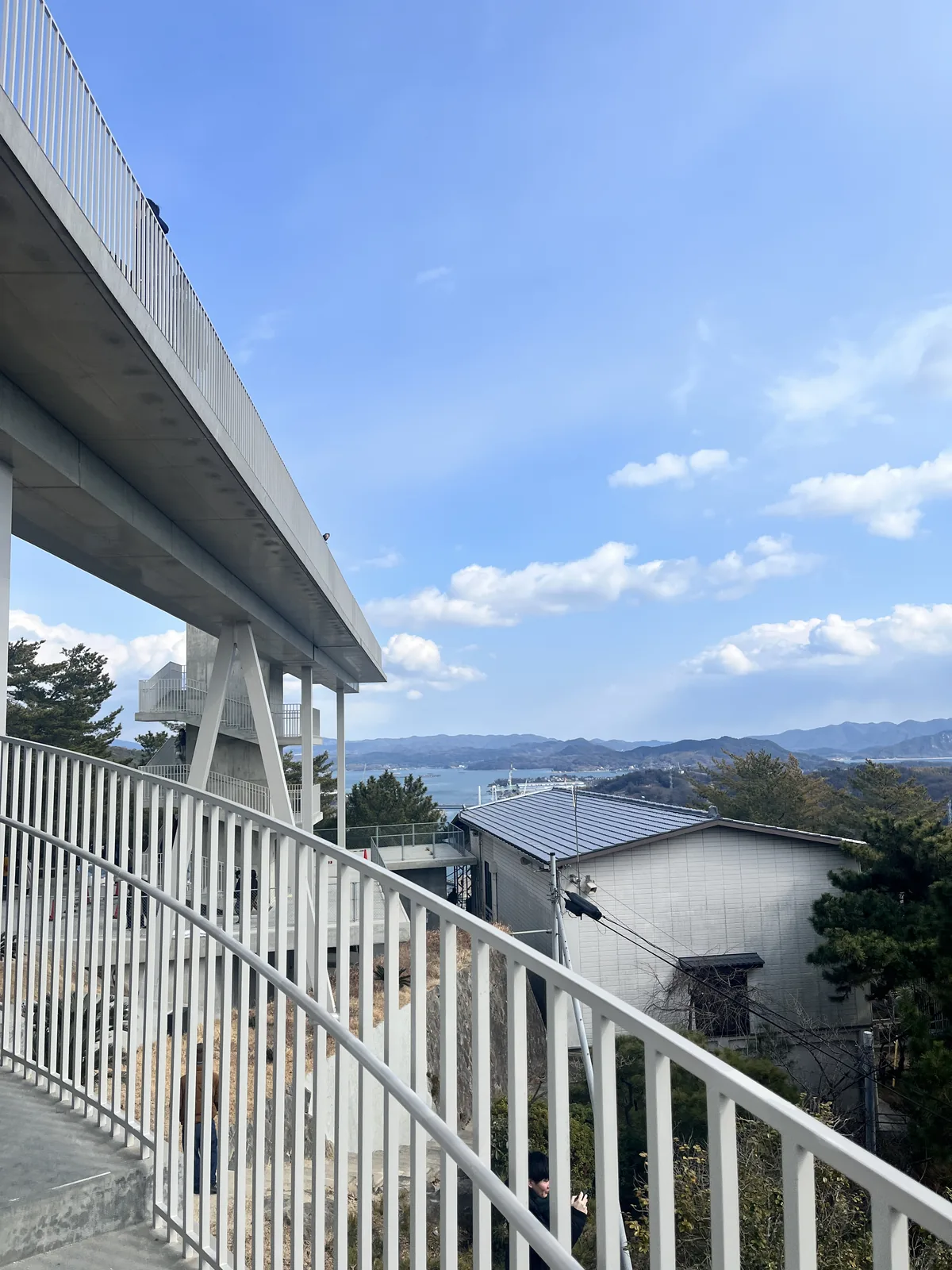
If you have a full day rather than a half, add: a slower lunch with a sake (the brewery at Onomichi Brewery near the harbour is good), a walk along the harbourfront to the Onomichi Renga-Soko brick warehouses (now galleries and cafés), and the U2 cycle hotel — even if you’re not riding, the architecture is worth the half-hour.
The hillside walking paths between the temples are flat-ish in places, with sea views like the one on the left. They connect the smaller temples (Saigokuji, Jodoji, Komeoji) that most travellers skip.
Getting there
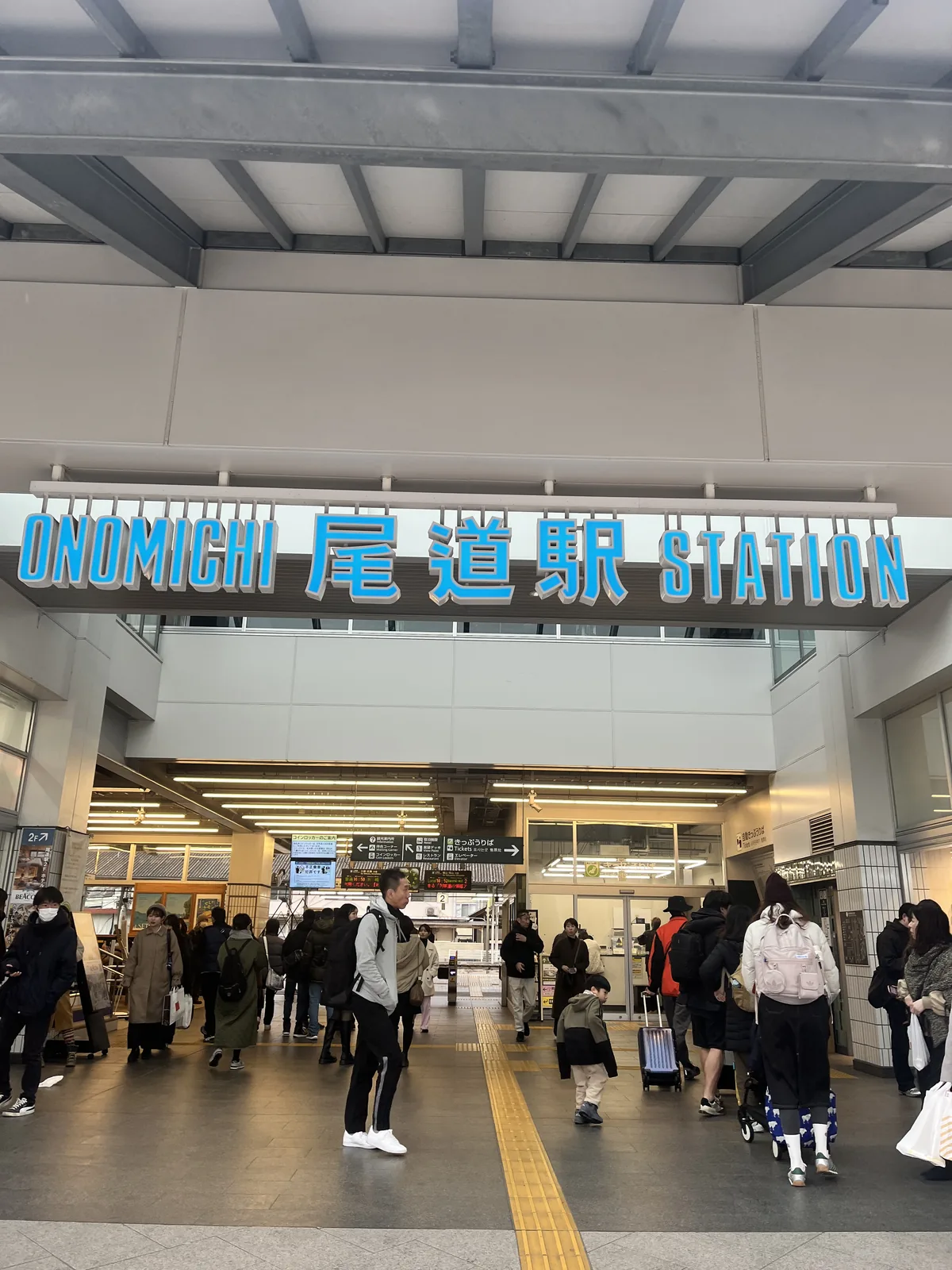
JR Onomichi Station is the main arrival point. The Shinkansen does not stop at Onomichi itself — you take it to Fukuyama or Mihara, then transfer to the JR Sanyo Line (~15 min local).
The station was rebuilt in 2019 in a clean, light-wood style and houses a small visitor centre with English-language maps, a café, and the Shimanami cycling rental desk.
| From | Time | Cost | Notes |
|---|---|---|---|
| Hiroshima Station | ~90 min | ~¥3,600 | Sanyo Shinkansen to Fukuyama (24 min) → Sanyo Line local (24 min) |
| Tokyo Station | ~4 hrs | ~¥17,500 | Tokaido/Sanyo Shinkansen to Fukuyama → local; reserved seat recommended |
| Osaka (Shin-Osaka) | ~2 hrs | ~¥9,500 | Sanyo Shinkansen to Fukuyama → local |
| Imabari (cyclists) | 4–8 hrs | ~¥500 incl. tolls | Shimanami Kaido — depending on pace and photo stops |
Pair with — Setouchi region itinerary
Onomichi is small enough that few travellers make it a single destination. The natural pairings:
- Hiroshima city + Peace Memorial Park — 90 min west by train. Half-day in Hiroshima morning, half-day in Onomichi afternoon, total day-trip.
- Miyajima — Hiroshima Bay’s floating-torii island. Two-day pairing (Hiroshima + Miyajima + Onomichi).
- Hiroshima + Miyajima in one day — our crash-itinerary that adds Onomichi makes it a 1.5–2 day trip from Tokyo or Kyoto.
- Shimanami Kaido cycling — Onomichi → Imabari over 6 islands, 70 km, world-class. Rent a bike at the U2 cycle hotel or Onomichi Station front desk.
- Tomonoura — a fishing port ~25 min east, the inspiration for Studio Ghibli’s Ponyo. Pair with a slow afternoon.
Where to stay
Onomichi works best as a day-stop, but it has some unusually interesting overnight options if you want to ride out at sunrise (Senkoji-yama at first light is one of the better Setouchi photographs).
FAQ
How long do I need in Onomichi?
Half a day is the realistic minimum. Most travellers arrive at 9–10 AM, do the Senkoji walk, ramen lunch, and leave by 2 PM. A full day allows the harbour-front walk, Onomichi Brewery, and the U2 hotel café in addition. Cyclists starting Shimanami Kaido often base overnight to start at sunrise.
Is the Senkoji walk doable for older travellers?
The walk up has steep stone steps; not advisable for travellers with knee or balance issues. Take the ropeway up, walk gently around Senkoji’s flat platforms, and ride the ropeway down. The temple courtyard itself is mostly flat once you’re at the top.
What does Onomichi ramen taste like vs. Tokyo ramen?
Onomichi is soy-sauce based with a chicken-and-Setouchi-fish (iriko) broth — lighter than Tokyo’s pork-bone shoyu, more savoury than Hakata’s tonkotsu. The defining feature is the chunks of pork back fat (背脂) on top, which add richness and chew without thickening the broth.
Do I need to book the ropeway in advance?
No — tickets are sold at the bottom-station booth. Mid-day weekends in spring and autumn can have 15–20 minute queues. Walking up is faster than waiting in a long ropeway queue, especially in good weather.
Is Onomichi a good first stop on Shimanami Kaido?
Yes — the official starting point of the Shimanami Kaido cycling route is in Onomichi (you take a small ferry across the Onomichi Channel to begin the route on Mukaishima island). Bike rentals are available at the station and U2 hotel; one-way rentals to Imabari are common, with bike-return logistics handled.
Can I see Onomichi in winter?
Yes. The Setouchi climate is mild — Onomichi rarely gets snow. Winter (December–February) is actually the clearest air for the Senkoji panorama, and the steps and temples are nearly empty on weekdays. Bring layers; the wind off the channel is colder than Hiroshima city.
Is there an English visitor centre?
Yes. The visitor centre inside the rebuilt Onomichi Station has English maps, route suggestions, and Shimanami cycling materials. Most temple signage above is Japanese-only, but the main route is well-trodden and easy to follow visually.
Last updated April 28, 2026.
Join 1,000+ travelers discovering Japan's hidden side
Weekly dispatches from off-the-beaten-path Japan — spots and stories you won't find in guidebooks.
No spam. Unsubscribe anytime.
Welcome aboard!
You're in. See you in your inbox soon.