
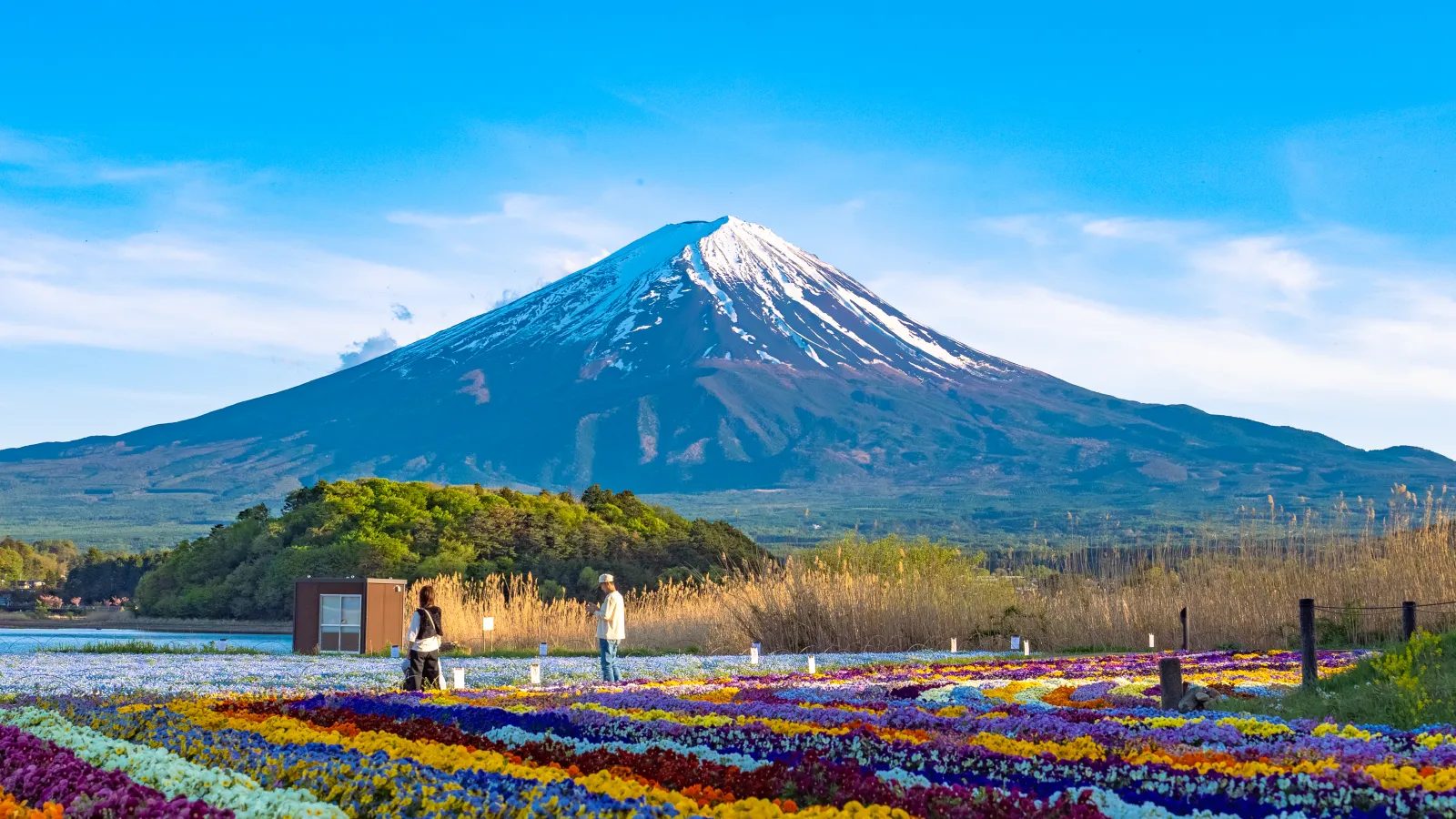

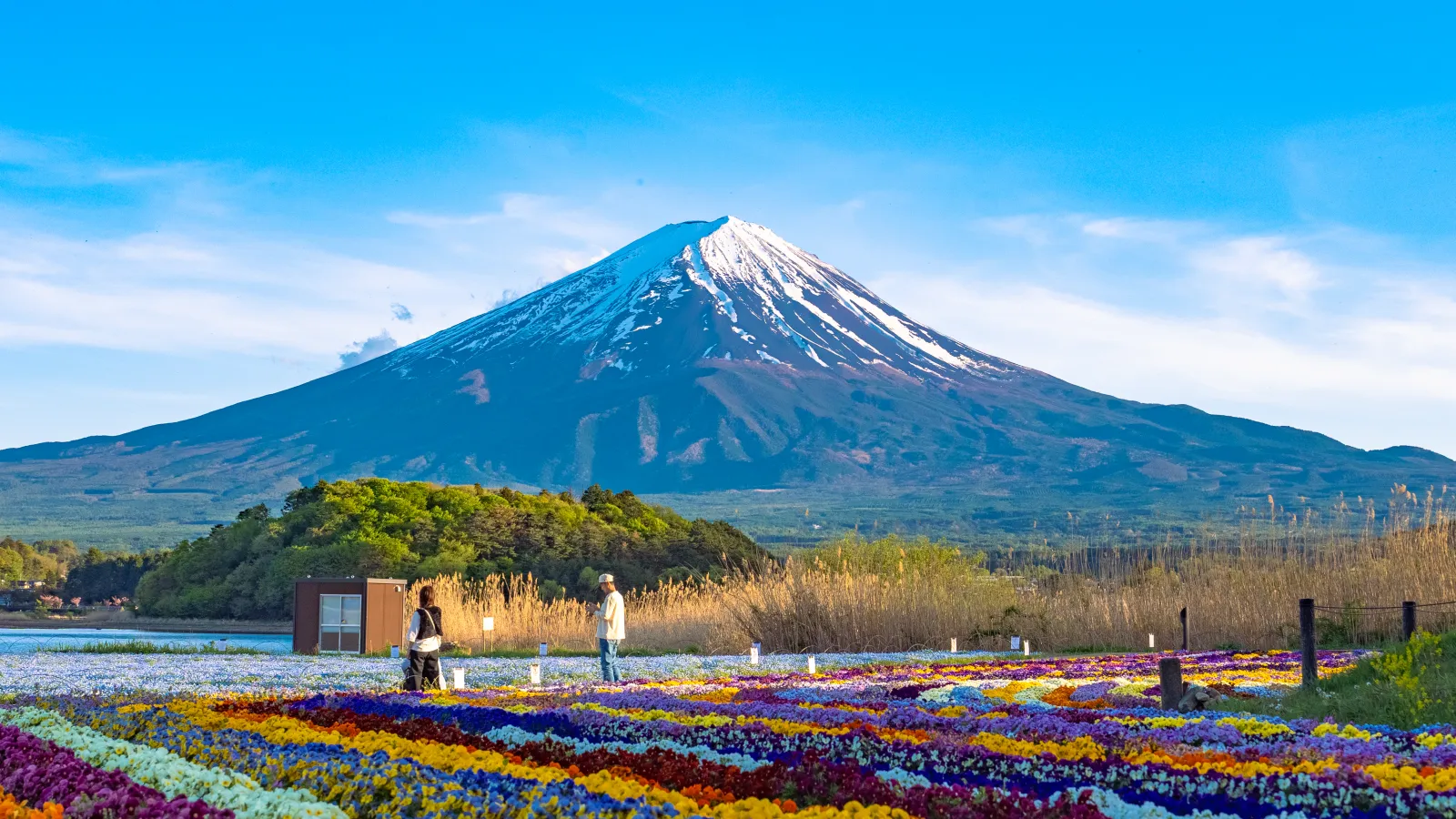
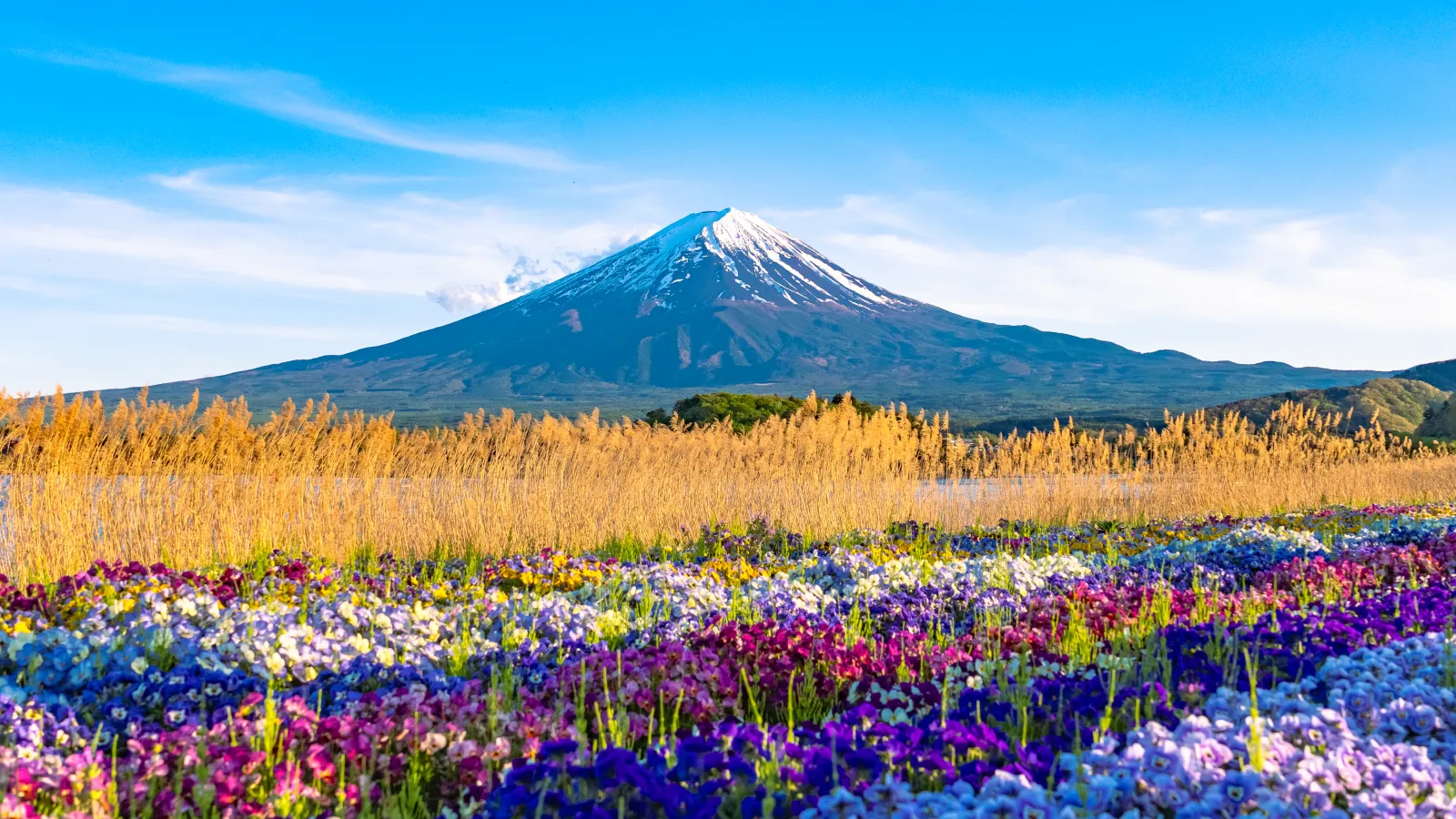
A free lakeside park on the northern shore of Lake Kawaguchiko, Oishi Park (大石公園) keeps a different flower blooming in front of Mt. Fuji almost every month of the year. Cherry and tulips give way to nemophila, then to lavender and rose begonia, then to a fire-red carpet of kochia in October — a view that quietly rotates through twelve months without ever losing its backdrop.
What Blooms When — The Year at Oishi Park
The park is planted in rolling seasonal rotations rather than a single marquee flower. Here is the honest, walk-up-and-see-it version of the calendar — no brochure inflation.
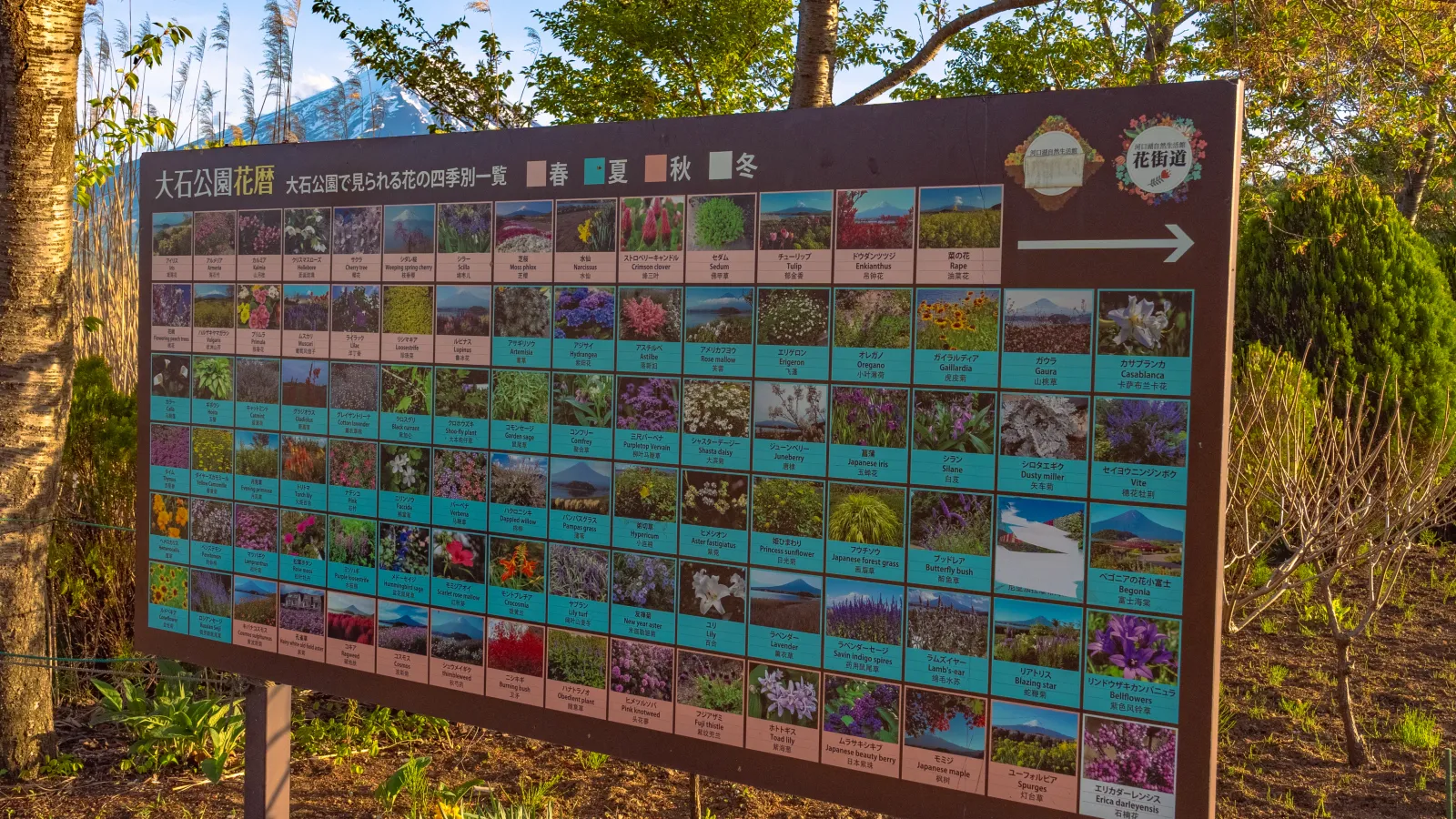
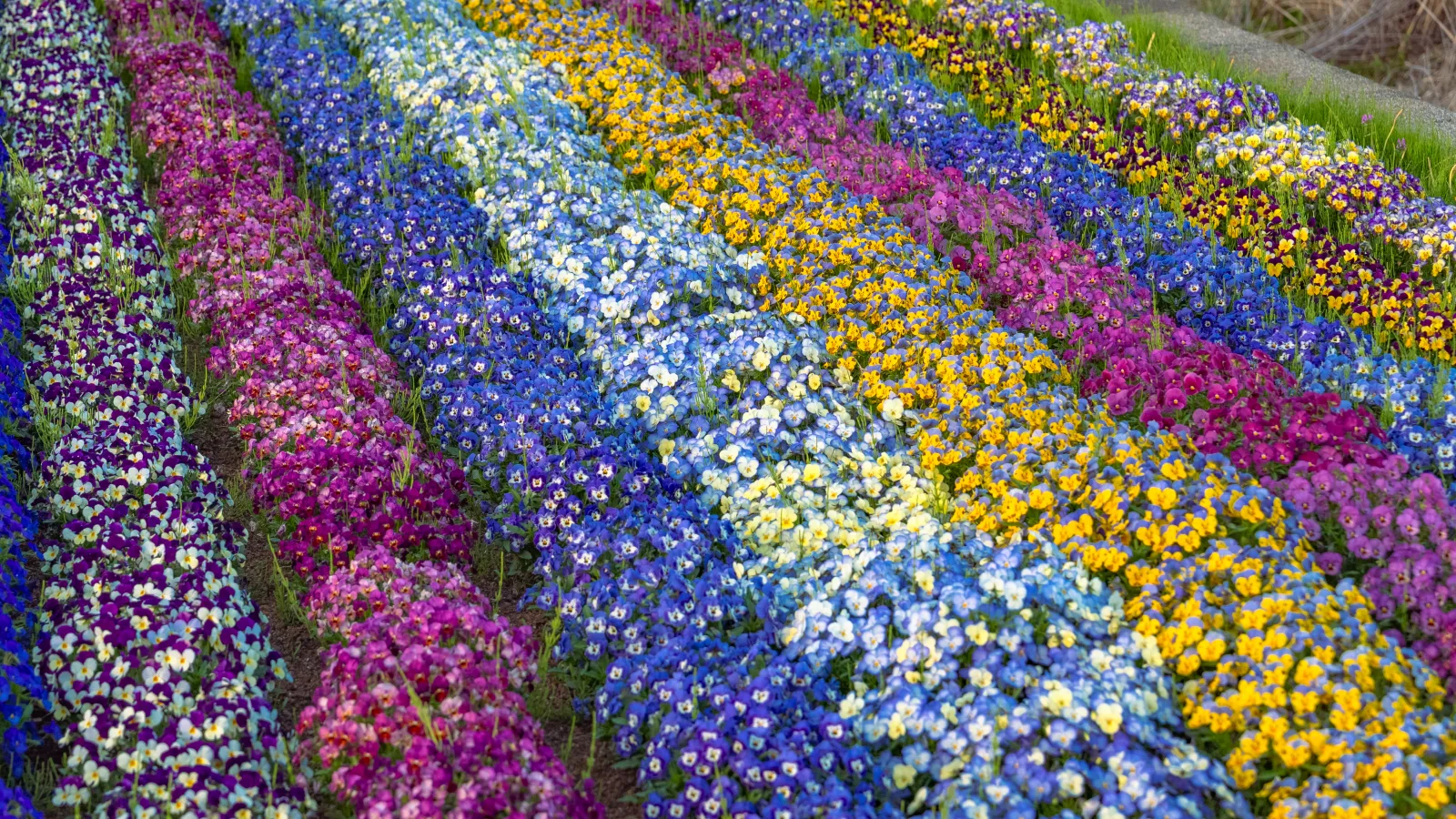
What most guides call a “tulip park” or a “nemophila park” is really neither. Oishi Park is a layered park: the beds closest to the lake are pansies and nemophila in spring, lavender in summer, kochia in autumn. The terraces behind — each with their own small sign — rotate through narcissus, salvia, cosmos and begonia.
The result is that there is no single “bad month” to visit. Even late winter, when the beds look bare, the Fuji view from the lake promenade is at its sharpest of the entire year.
Spring — The Signature Season
Between mid-April and mid-May, three flowers take turns along the lake edge: shibazakura (moss phlox), tulips, and nemophila. It is the only time of year all three can be seen in front of Fuji within a few weeks.
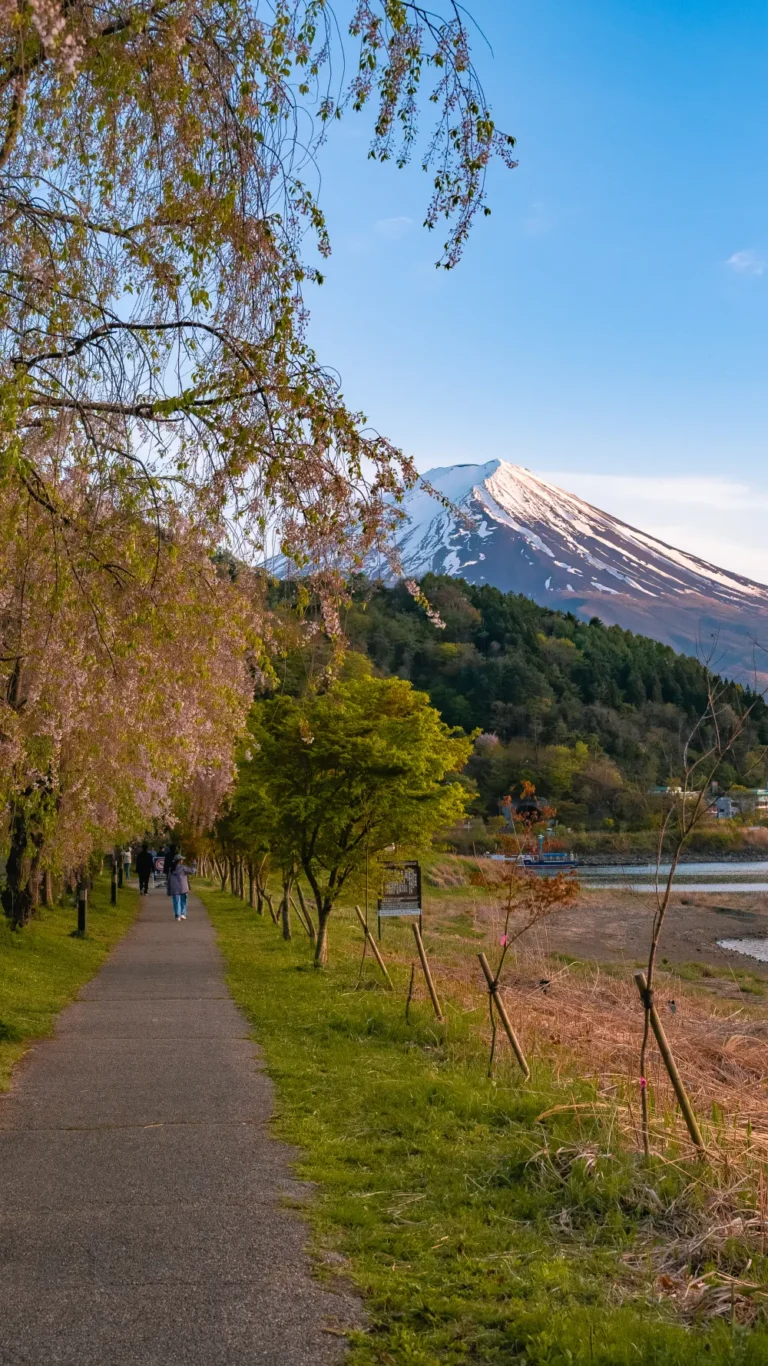
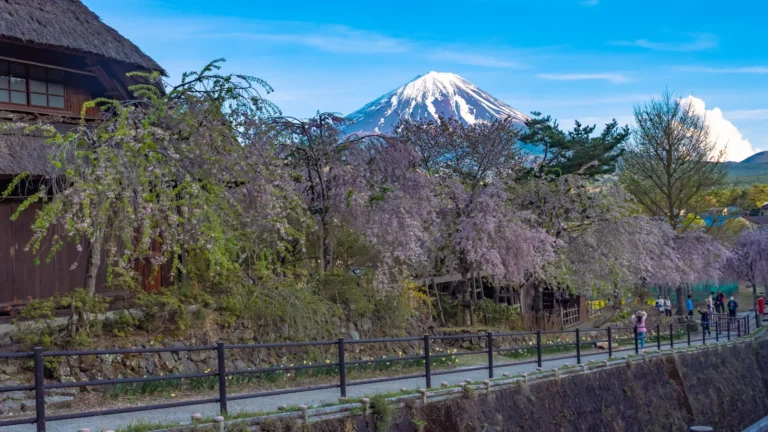
The weeping cherry on the park edge — not the main shibazakura festival grounds at Motosu — frames Fuji for perhaps ten days each year. It is the park’s quietest moment: too early for the nemophila crowds, too late for the Chureito Pagoda tours.
By the first week of May, the nemophila beds along the lakeside path deepen into a pale blue sea. The best angle is low — crouch so the flowers fill the foreground and the mountain sits clean above them.
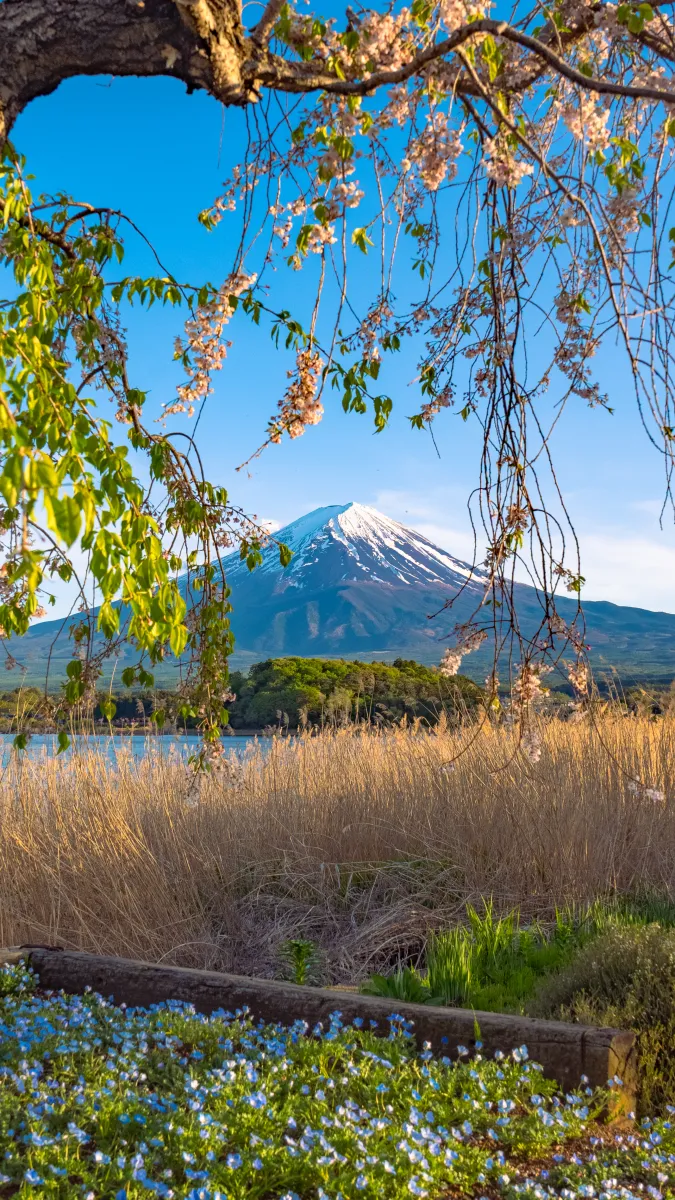
Nemophila — the bloom Oishi Park is known for
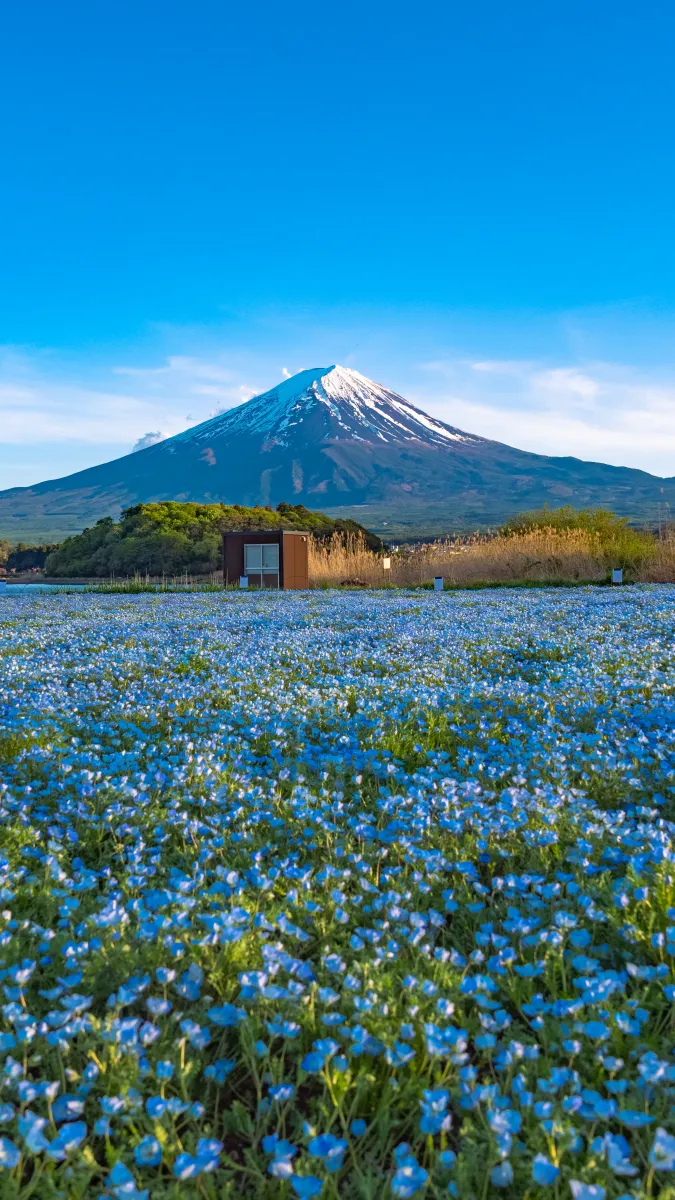
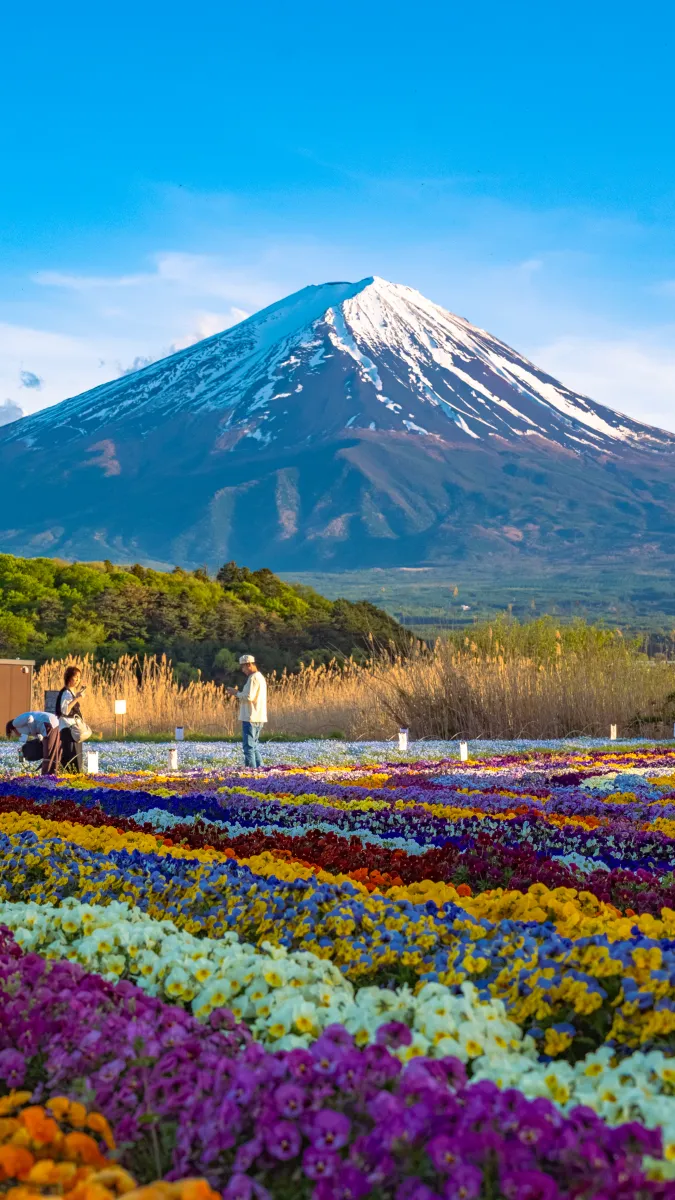
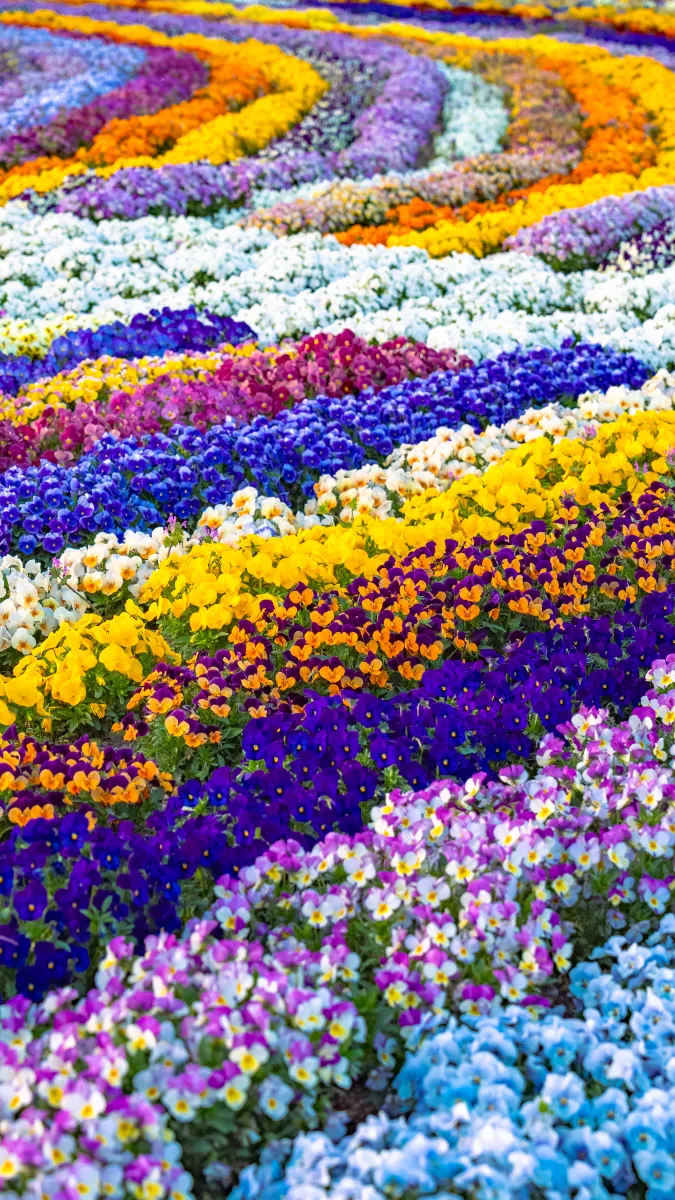
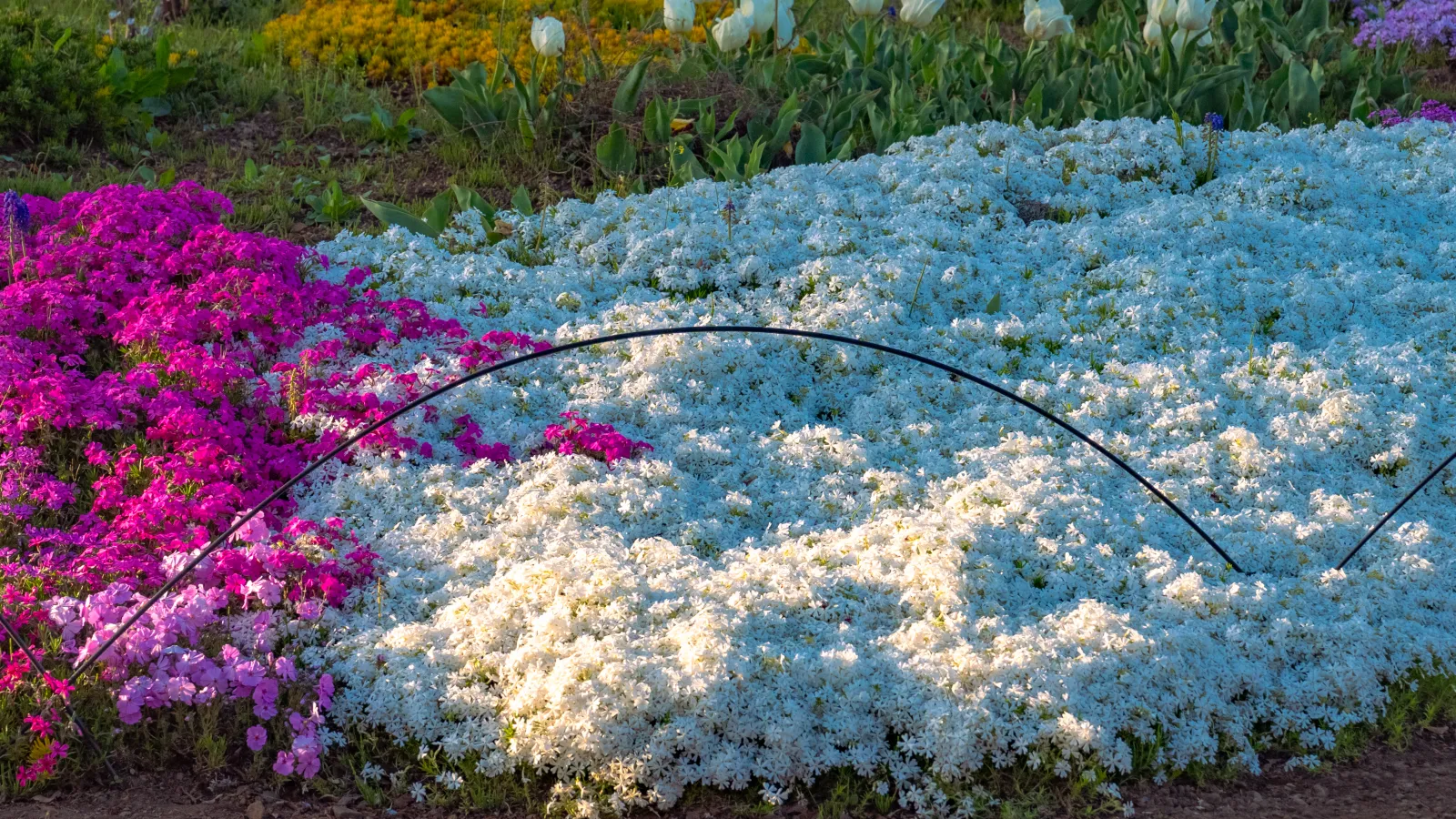
Oishi Park is small — you can walk the whole thing in twenty minutes. What makes it worth the drive is that it is planted as if someone sat down and decided what flower belonged in front of Fuji each month of the year, and then followed through.
Summer — Lavender and the Herb Festival
From late June into mid-July, the lavender beds along the lakefront turn violet and the park hosts the Kawaguchiko Herb Festival (河口湖ハーブフェスティバル) — a joint event with Yagisaki Park on the opposite shore. It is the best-attended period of the year. Arrive before 9am if you want a clean photo.
Behind the main beds, the Begonia “Flower Niagara” — a 130-meter-long, three-meter-high flower wall — opens in June and stays colorful all the way through mid-October. It is the longest-blooming installation in the park and the only one that photographs well in overcast weather, when Fuji is hidden.
Autumn — Kochia in the Red Wave
Roughly a hundred thousand kochia — round green summer shrubs — turn crimson together in mid-October. The peak window is narrow: usually one good week around October 15, sometimes two. The main kochia field is the lakeside terrace closest to the Natural Living Center.
Go at golden hour. The low autumn light bounces off the red spheres and the snow line on Fuji is usually back by then.
Winter — The Overlooked Season
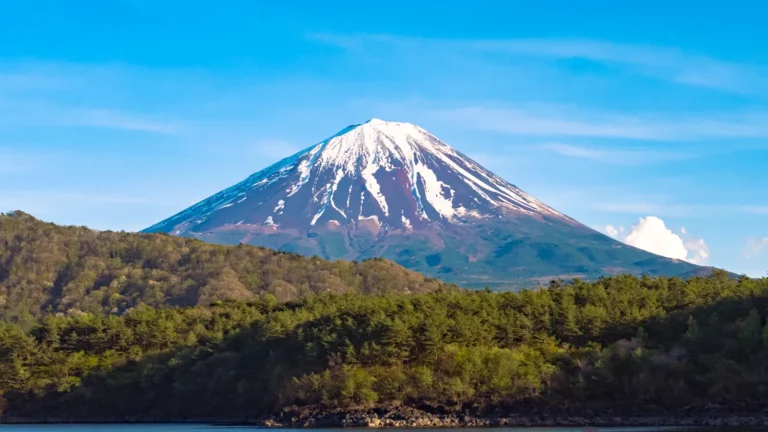
November through March, the flower beds are quiet. But Fuji is at its clearest — the Pacific high-pressure system gives day after day of sharp blue skies — and the park is empty. For Mt. Fuji photography without crowds, winter mornings from the Oishi Park lake promenade are unbeatable. The Natural Living Center remains open and serves hot blueberry drinks.
Where to Stand for the Best Photo
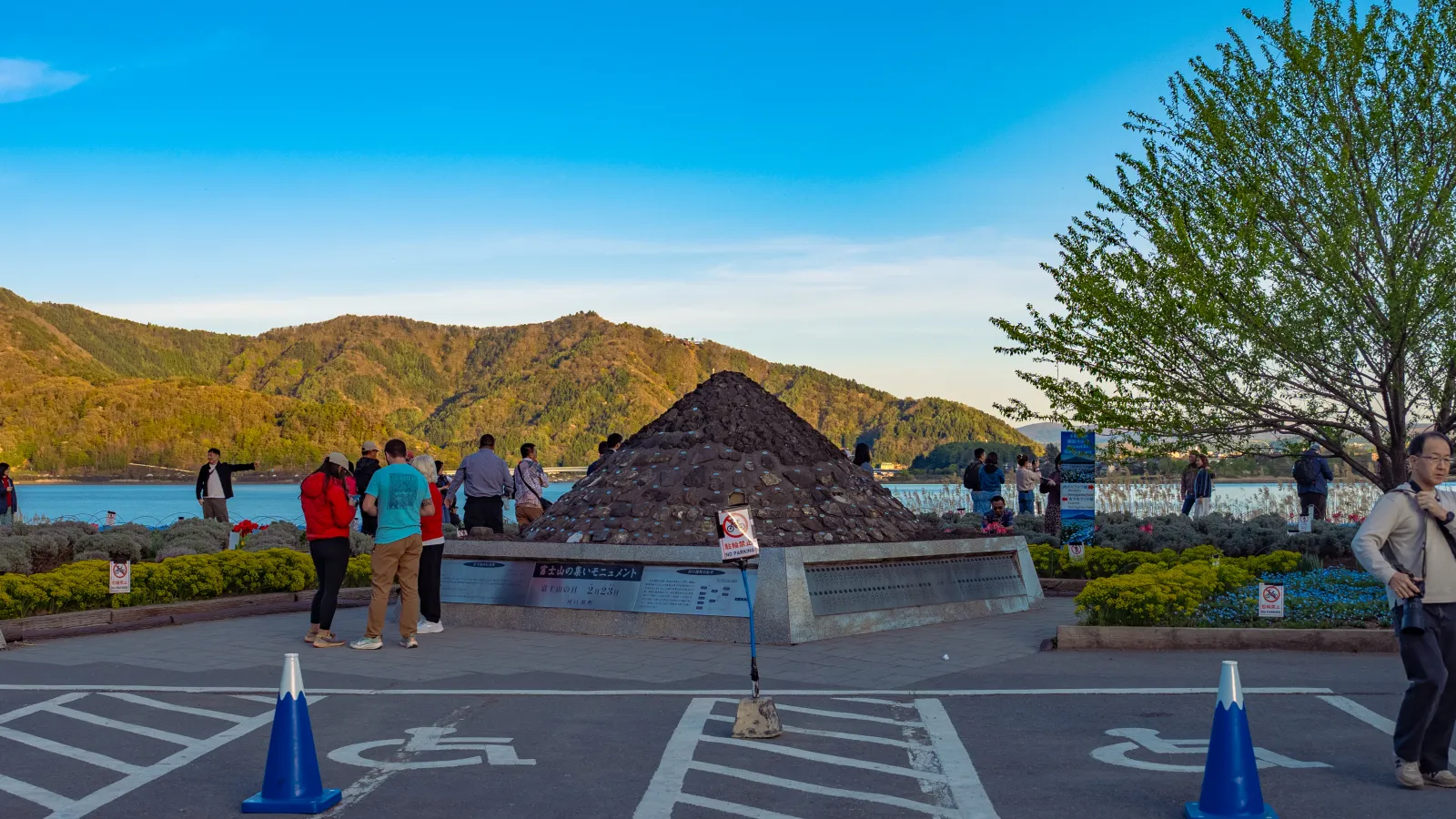
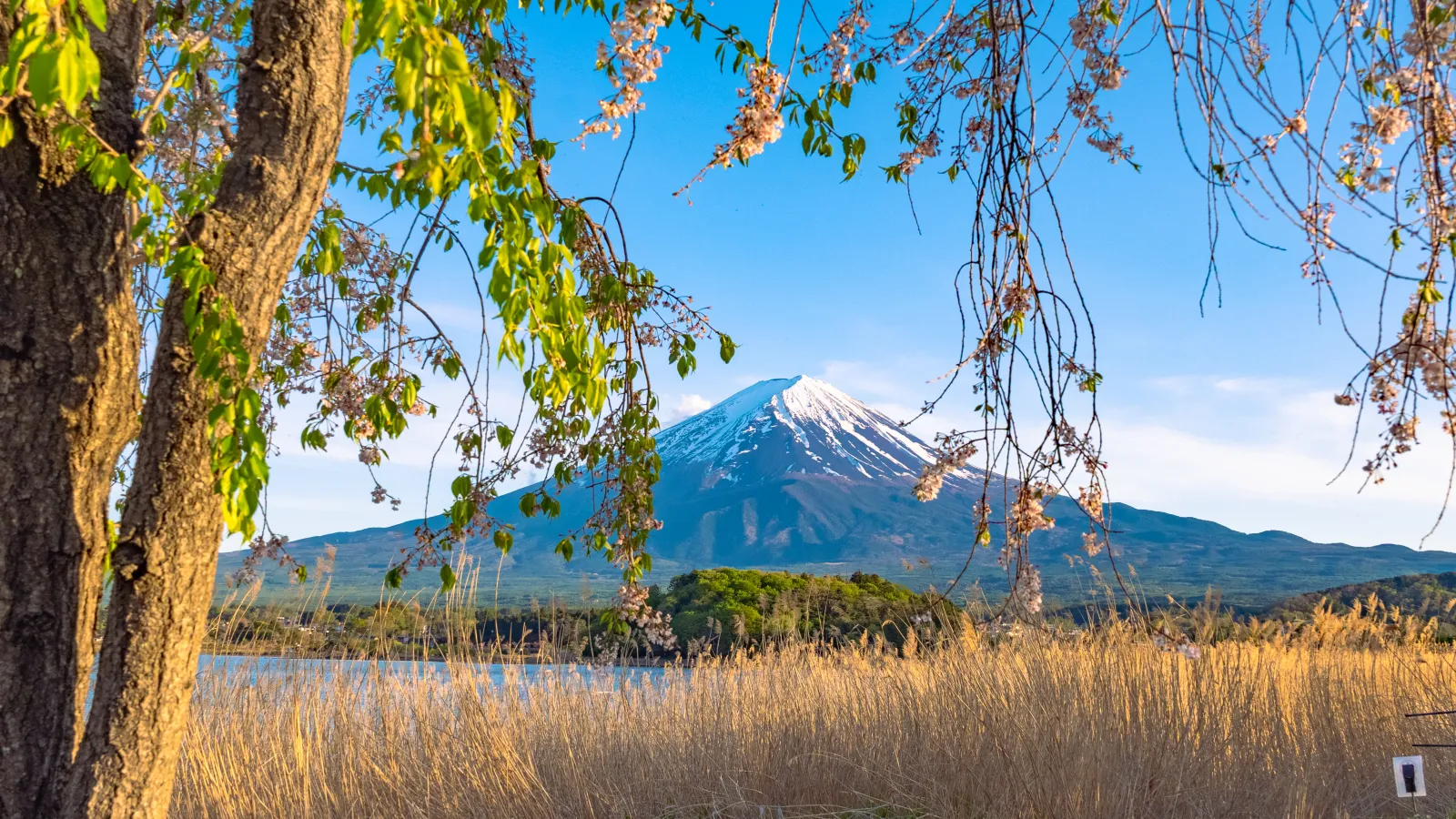
The Natural Living Center
On the upper plateau, the Kawaguchiko Natural Living Center (河口湖自然生活館) sits like a small chalet with a tall navy-blue clock tower. It is the park’s one indoor building — a free-entry shop and café — and most visitors miss what it actually is: the center of Japan’s domestic blueberry movement. The greater Kawaguchiko region grows more blueberries than anywhere else in the country, and the second-floor café serves them in a dozen forms, from soft-serve to jam-on-toast.
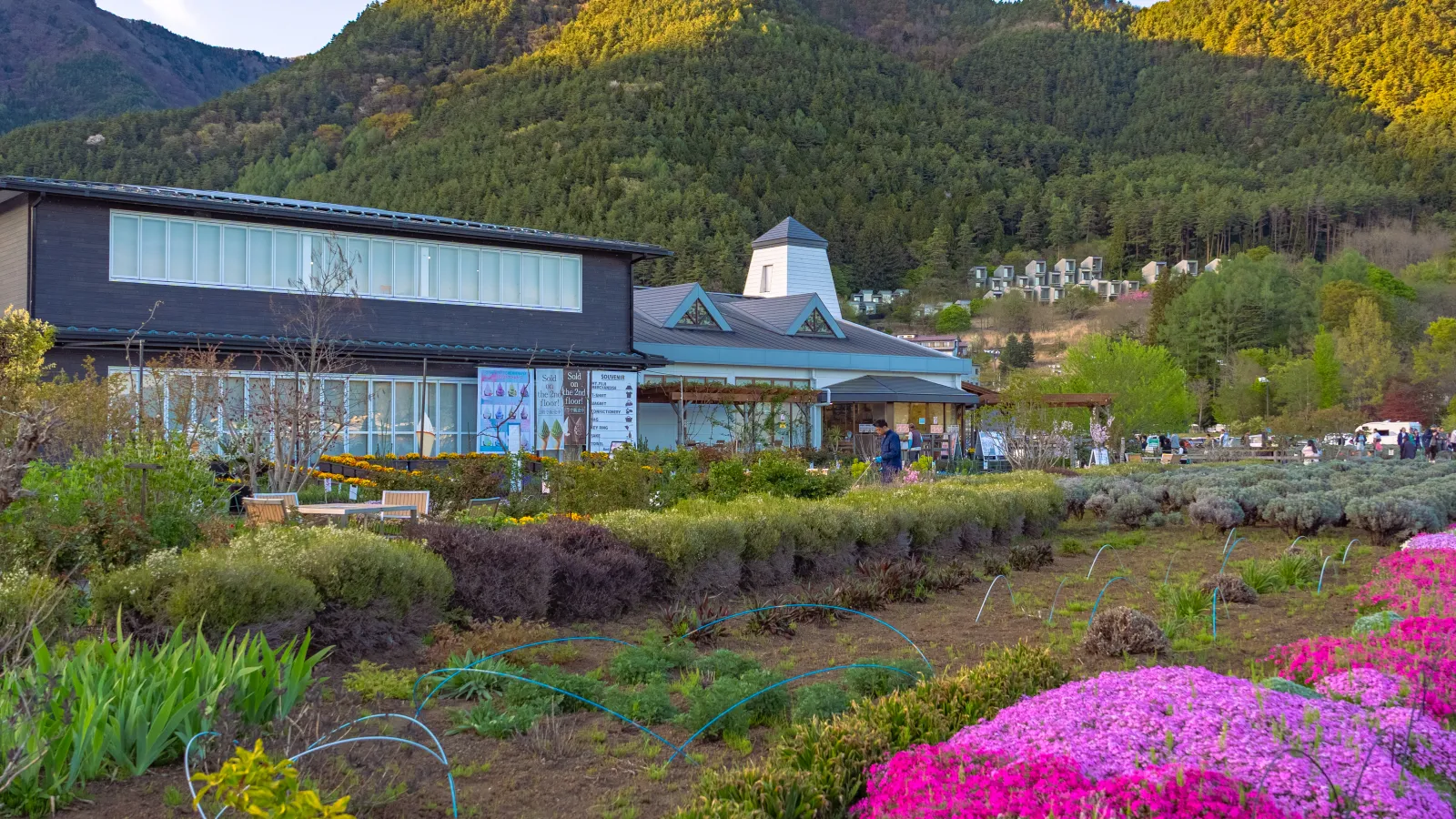
Open March through September, 9:00–17:45 (with reduced winter hours). Inside you will find the expected omiyage wall of blueberry pastries and jams, but also seasonal hand-made crafts and local produce. Public restrooms are here — the cleanest in the park.
Pick-your-own blueberries is offered at affiliated farms nearby in July–August. Information and booking is handled at the Center desk.
How Oishi Park Compares
If you have only one day for flowers with Mt. Fuji, it helps to know how Oishi stacks up against its better-known neighbors.
The practical summary: Oishi Park is the only free option, and it is the only one where the view in front of Mt. Fuji changes every month. If you want a single spectacle, Shibazakura Festival or Hana no Miyako in high season will beat it on volume. If you want a park that rewards repeat visits, this is the one.
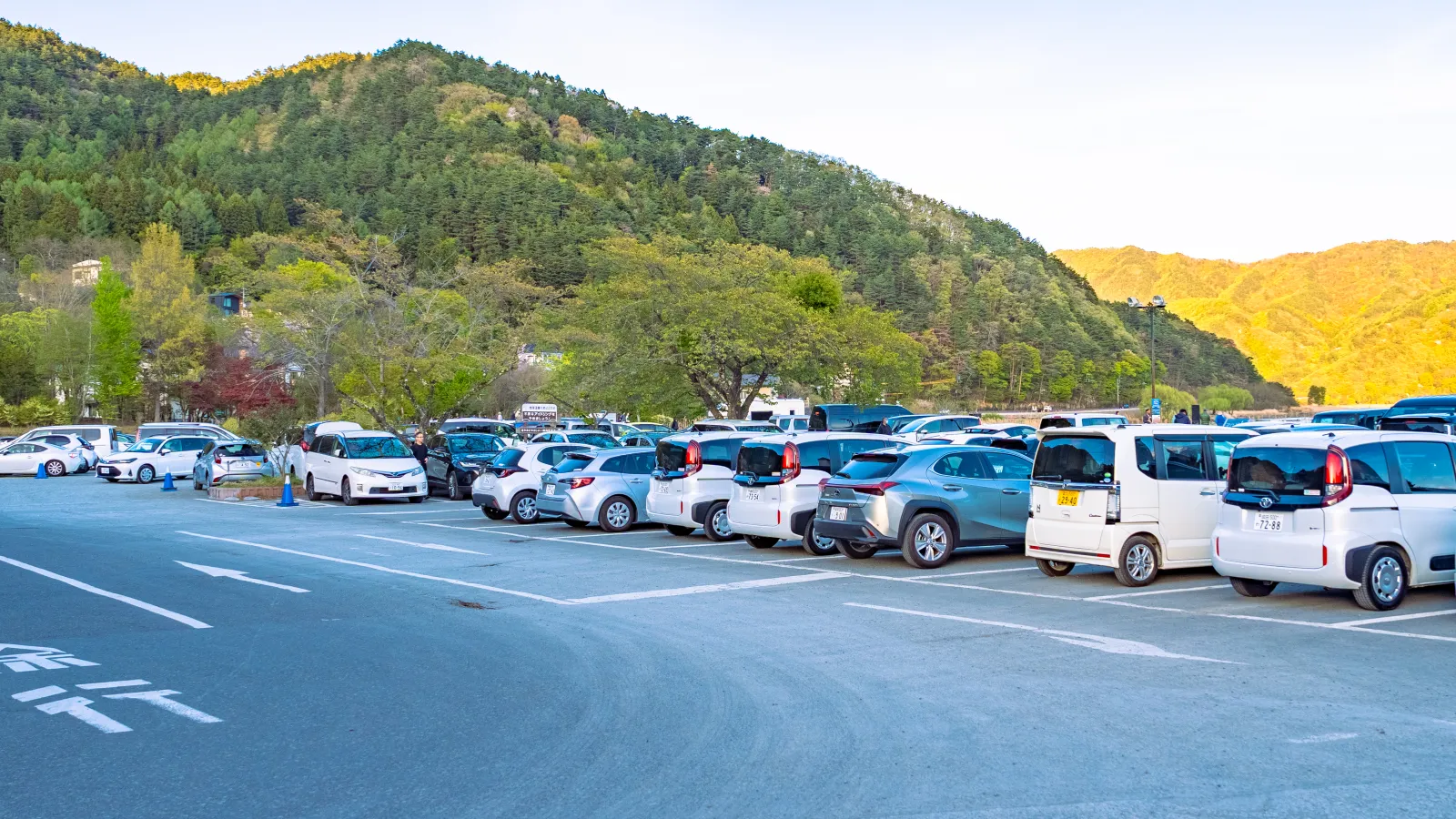
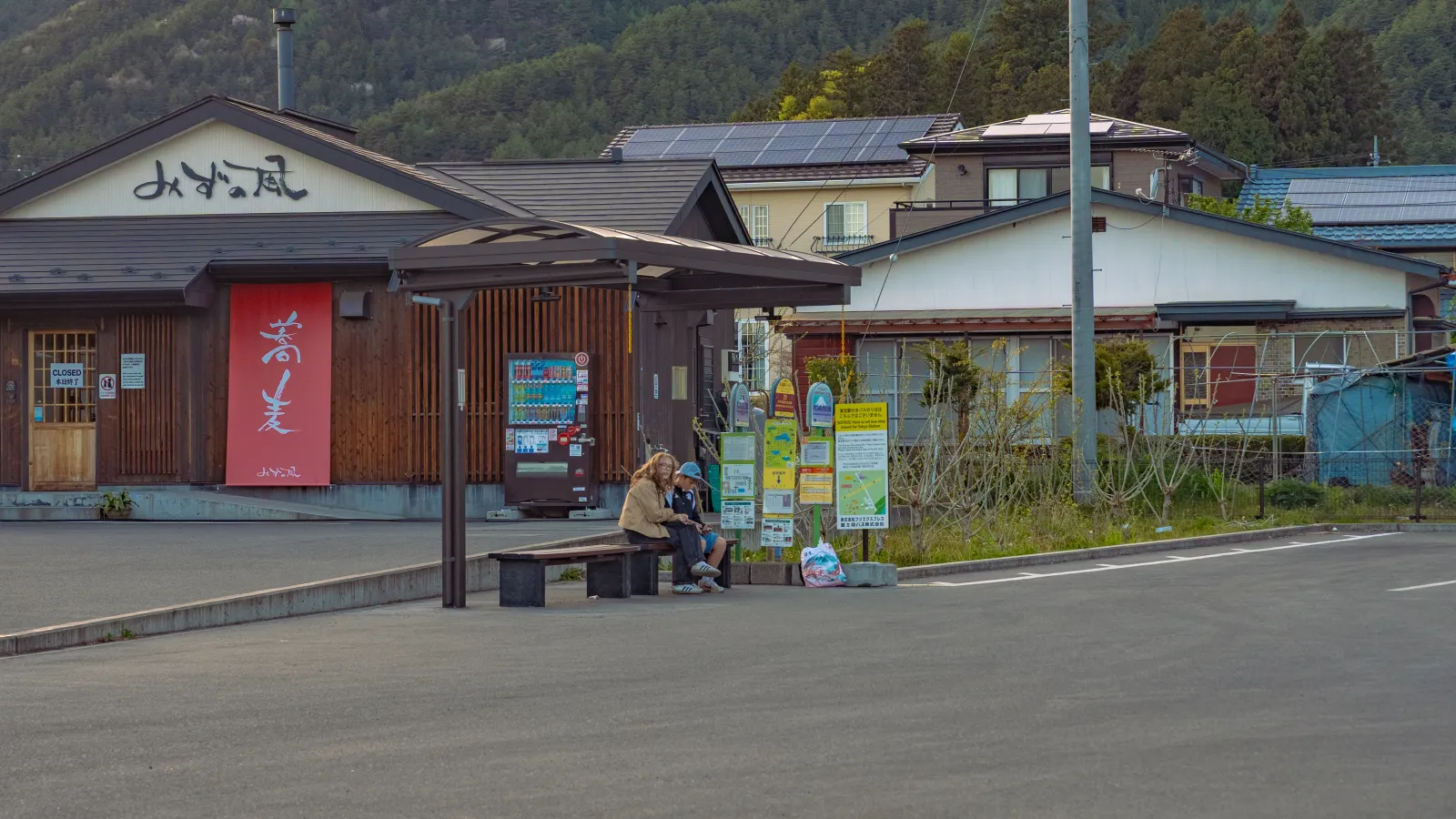
Getting There — Parking, Bus, and What to Expect
Address & Essentials
〒401-0305 山梨県南都留郡富士河口湖町大石2525-11
TEL: 0555-72-1976 (park) / 0555-76-8230 (Natural Living Center)
35.5264° N, 138.7469° E · Google Maps: “Oishi Park”
Where to Stay Near Oishi Park
Oishi Park sits on the quieter northern shore, opposite the busier Kawaguchiko town side. For the best lake-facing rooms and the shortest walk to the park, stay on the north shore itself.
Frequently Asked Questions
Is Oishi Park really free?
When is nemophila at peak?
Is it worth visiting outside the main flower seasons?
How long do I need here?
Is it stroller and wheelchair friendly?
Can I combine it with other Kawaguchiko sights?
Related Reading
Join 1,000+ travelers discovering Japan's hidden side
Weekly dispatches from off-the-beaten-path Japan — spots and stories you won't find in guidebooks.
No spam. Unsubscribe anytime.
Welcome aboard!
You're in. See you in your inbox soon.