

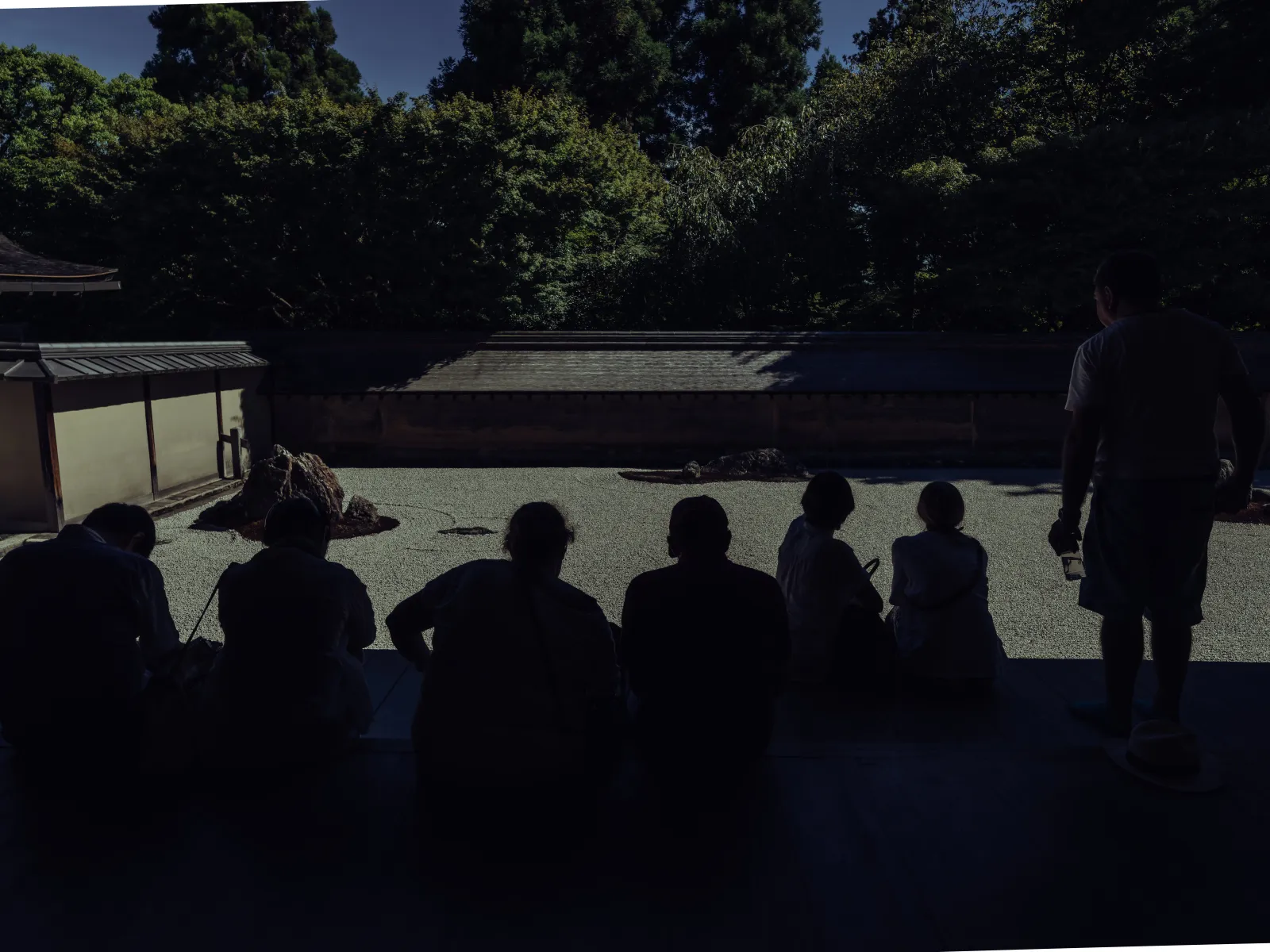
You sit on the wooden veranda at Ryoanji with maybe forty other people, and for a minute nobody says anything. The rock garden in front of you is not large — about the size of a tennis court — and it contains fifteen stones arranged in five clusters on a bed of raked gravel. You count them. You get fourteen. You move to another spot on the veranda. You count again. Fourteen again. The garden was built so that from any single vantage point, one stone is always hidden. Nobody knows who designed it, nobody knows exactly when, and nobody has ever agreed on what it’s supposed to mean. That’s most of the point.
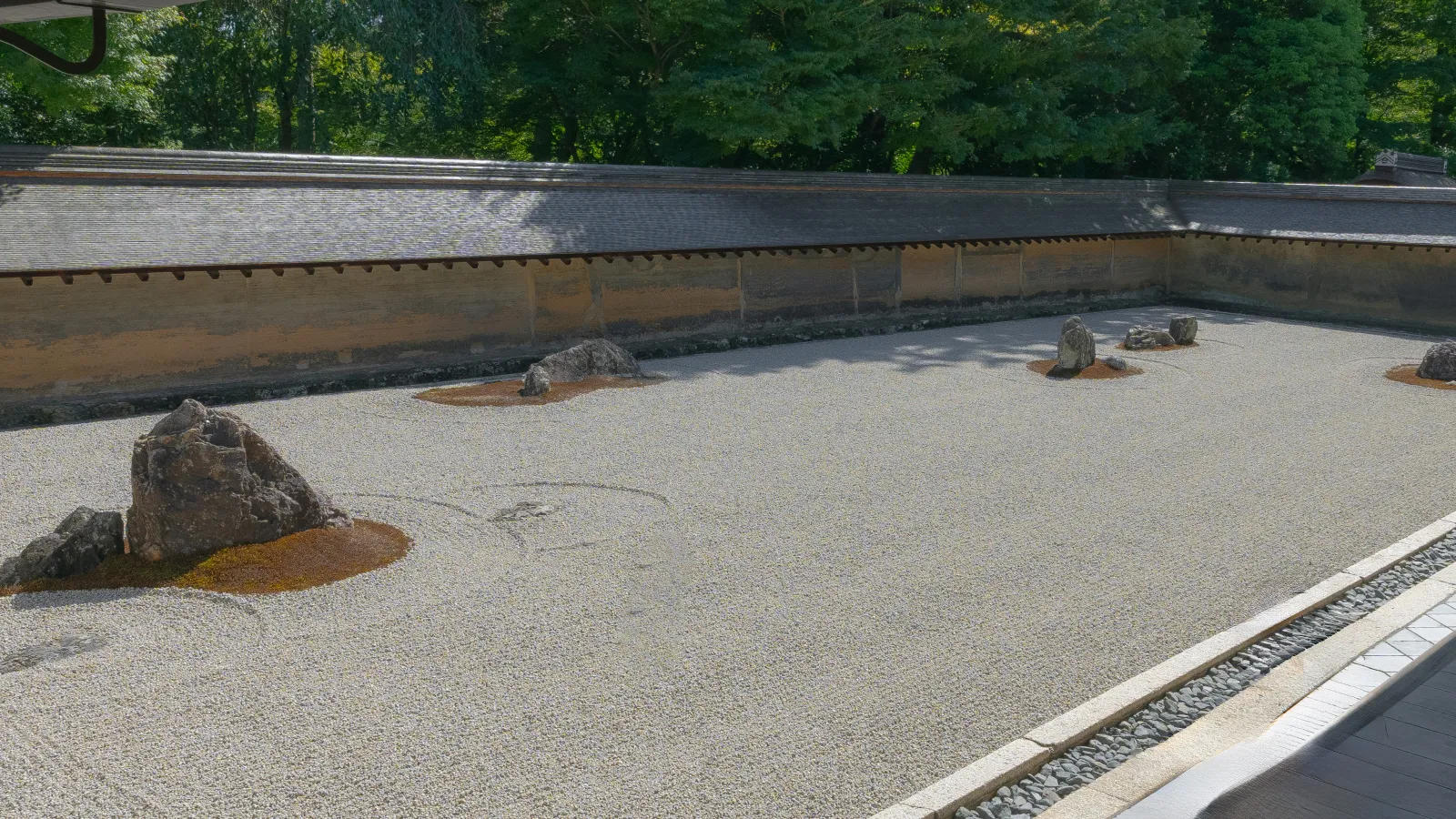
Table of Contents
Quick Facts
| What | Ryoanji (龍安寺) — Zen temple of the Myoshinji school, Rinzai sect. Home to Japan’s most famous karesansui (dry landscape) rock garden. |
| Where | 13 Ryoanji Goryonoshita-cho, Ukyo Ward, Kyoto (northwestern Kyoto, UNESCO World Heritage cluster) |
| Fee | ¥600 adults (¥500 elementary/middle school) |
| Hours | Mar 1 – Nov 30: 8:00 – 17:00. Dec 1 – Feb 28: 8:30 – 16:30. Open daily year-round. |
| Access | Keifuku Kitano Line to Ryoanji-michi Station (5–10 min walk). JR bus #59 from Kyoto Station (about 30 min, ¥230, covered by JR Pass). 5 min bus or 20 min walk west of Kinkakuji. |
| How long | 60–90 min for the garden, Hojo, and Kyoyochi pond. |
The Garden That Doesn’t Explain Itself
Ryoanji became a Zen temple in 1450, converted from a Heian-era nobleman’s villa by Hosokawa Katsumoto — a powerful samurai who would later lead one side of the Onin War that flattened much of Kyoto. The rock garden came sometime after. Records disagree about when; candidates range from the late 15th to the early 16th century. No designer is documented. No instructions were left. What we know is that by the Edo period the garden was already famous and being copied across Japan.
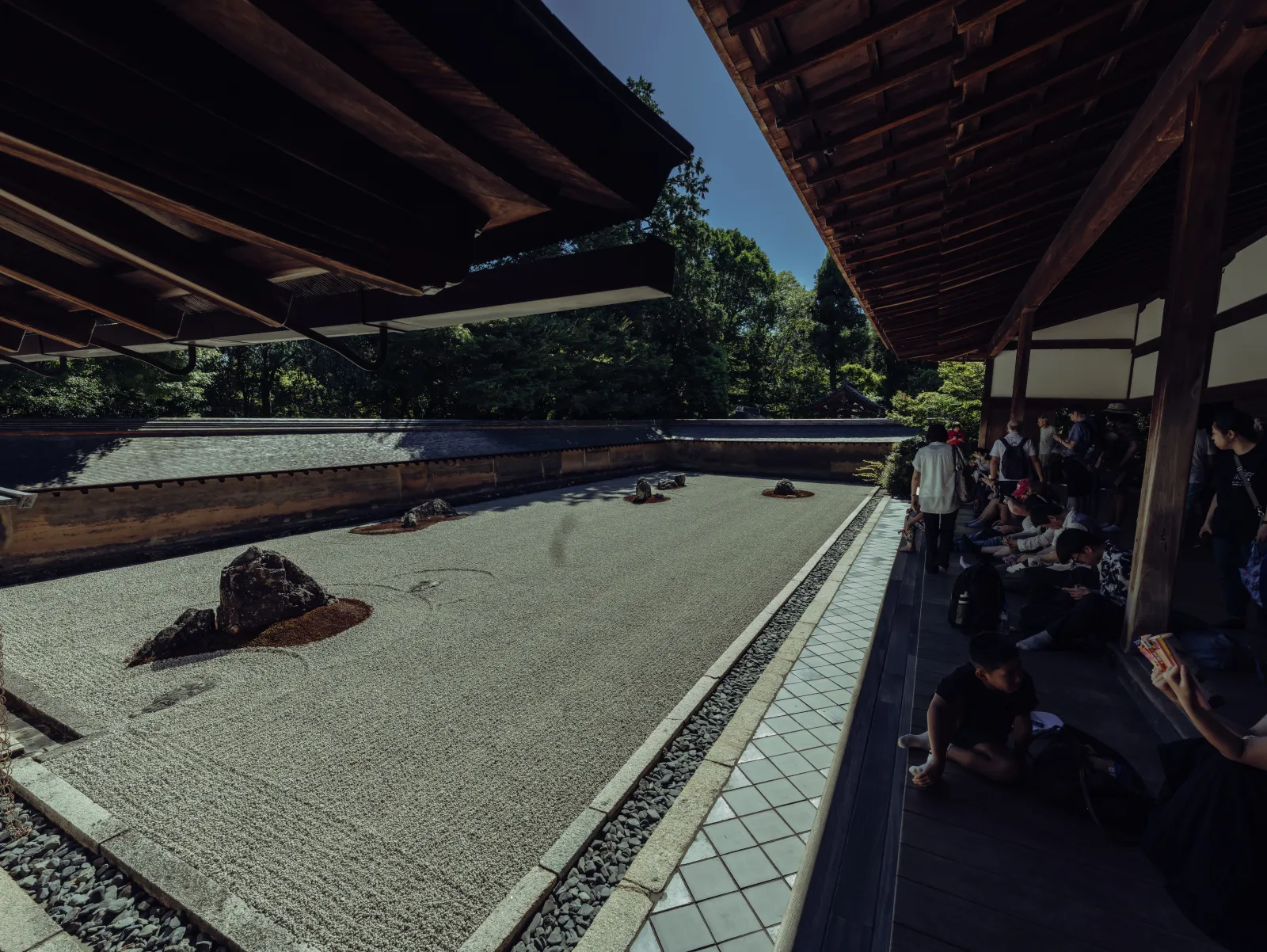
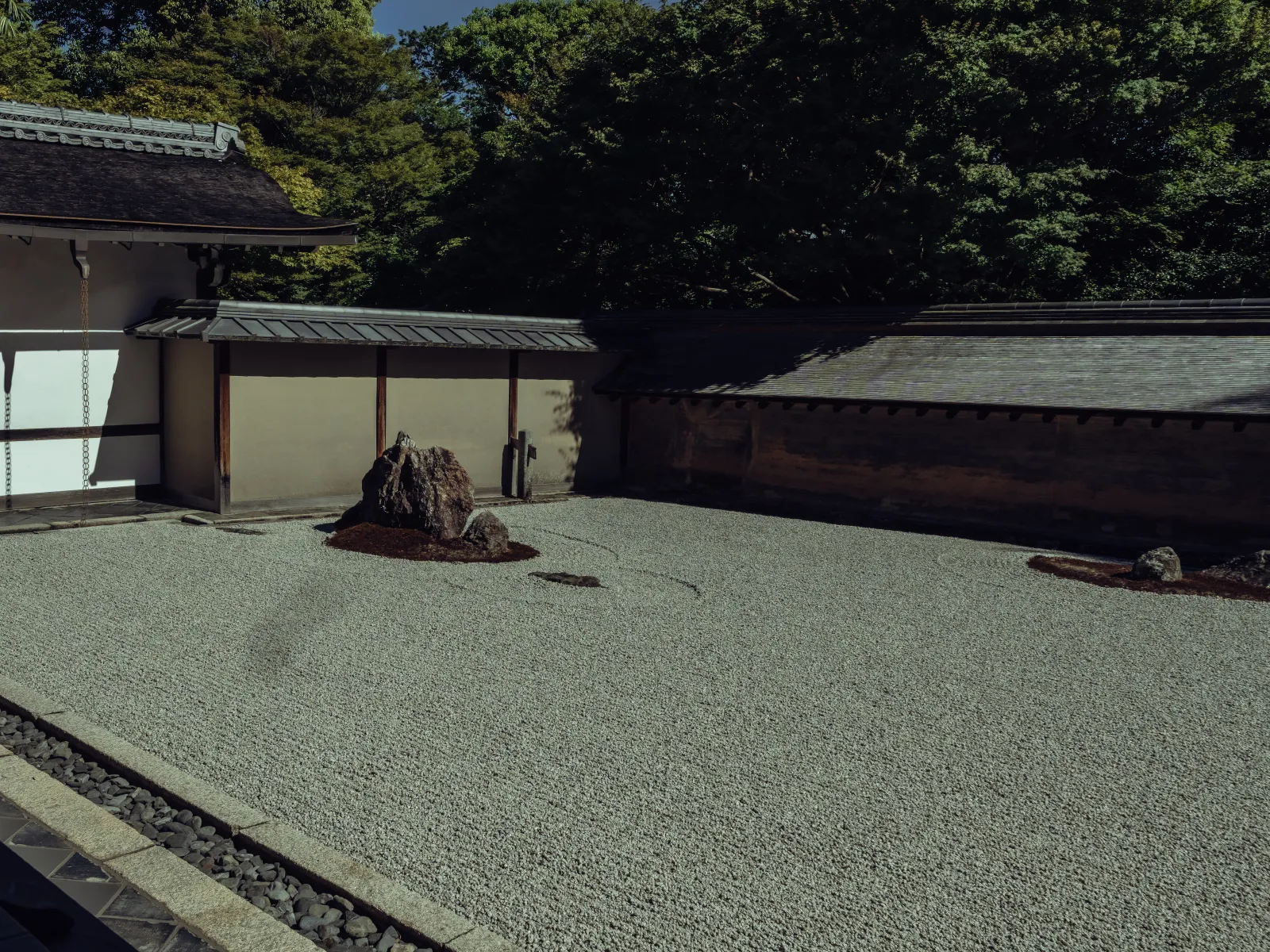
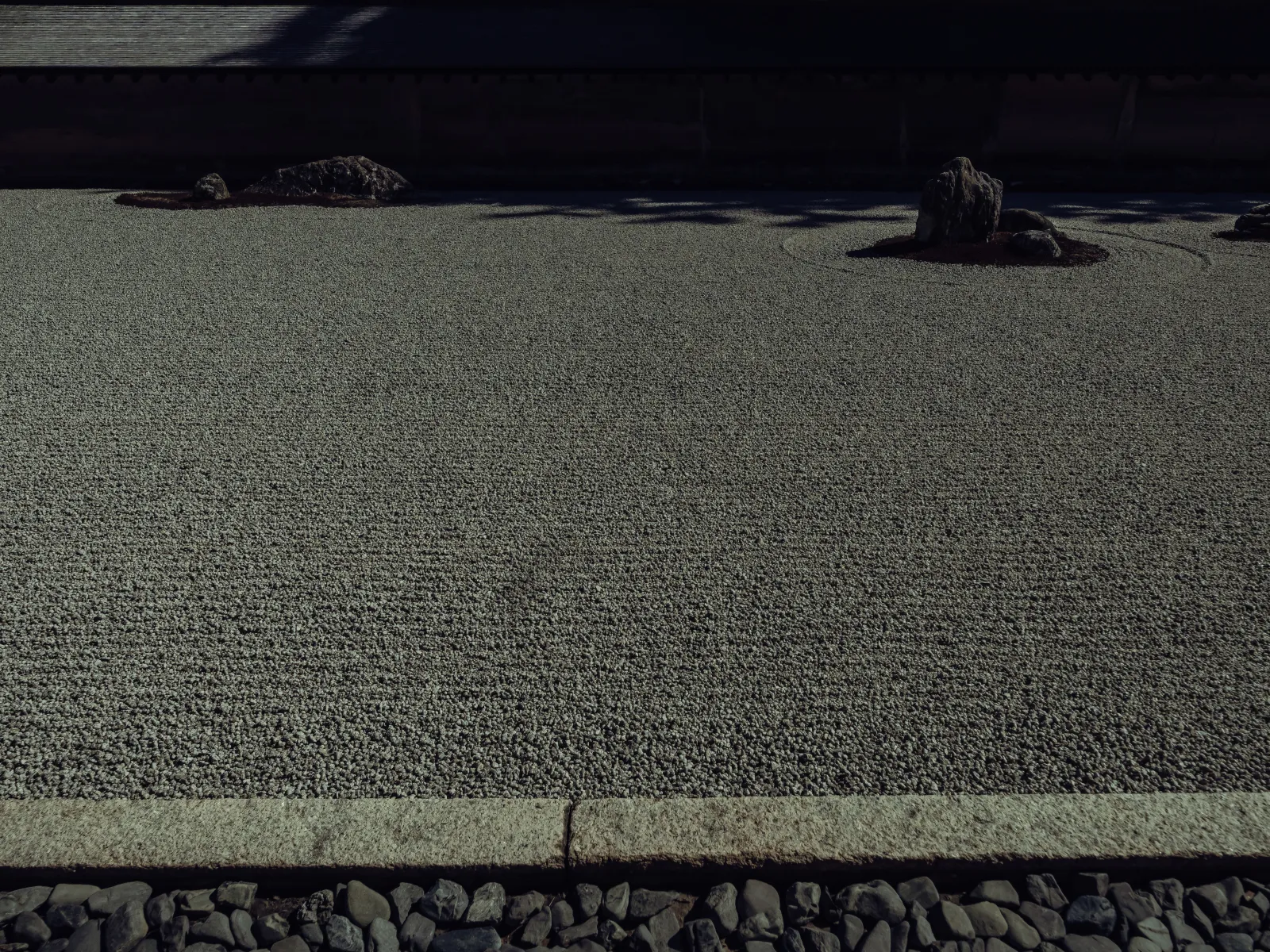
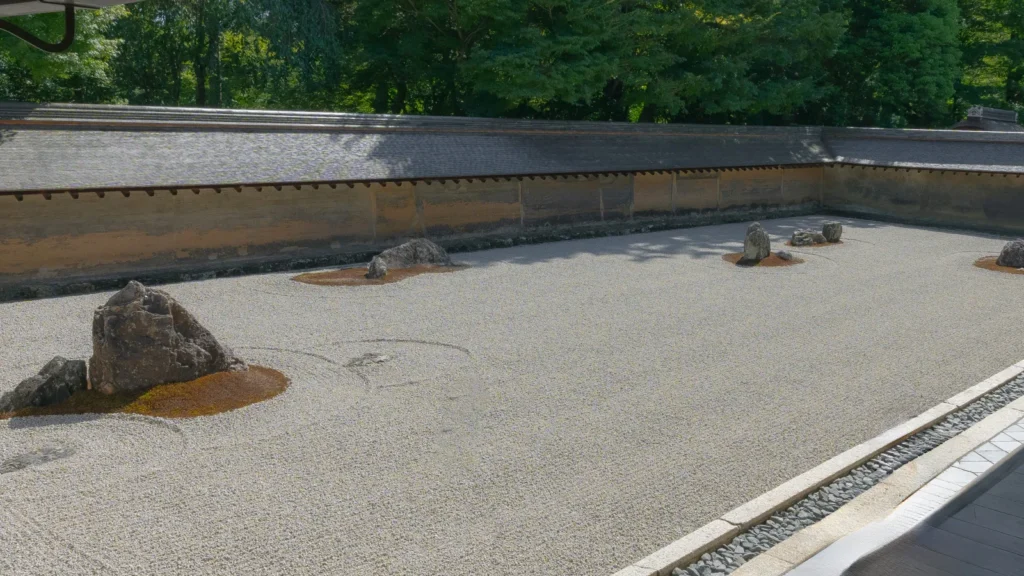
The garden is roughly 25 meters by 10 meters. The enclosing wall is aburadobei — earth mixed with rapeseed oil, which bled over the centuries to give the wall its uneven brown staining. The bed is white gravel, raked in a tight pattern that the monks redo regularly. The fifteen stones sit in clusters of 5-2-3-2-3 on small patches of moss. From no single angle on the veranda can you see all fifteen at once. Move two steps and the hidden stone changes.
What It’s Supposed to Mean
There’s a list of interpretations, none official, all common:
- Tora no ko watashi (虎の子渡し). A tiger shepherding her cubs across a river — a classic Chinese allegory about keeping a group together.
- Islands in the sea. The gravel as ocean, the stones as mountains on islands, following the Chinese landscape-painting tradition that influenced karesansui.
- A map of Zen mind. Modern interpretation — the fifteenth stone is the one you see only when you stop trying.
- No meaning at all. The “blank canvas” reading: the garden is a tool for your own thinking, and interpreting it defeats the purpose.
Take whichever reading fits. The temple itself doesn’t endorse one. The head priest in the 1990s is said to have remarked that the garden “is not meant to be solved.”
Inside the Hojo: Hosokawa’s Dragons
The Hojo (方丈) — the former abbot’s residence — is the building the veranda belongs to. You enter through the north side and walk through a series of tatami rooms. Most visitors walk through in two minutes looking for the garden; the rooms themselves are worth a longer look.
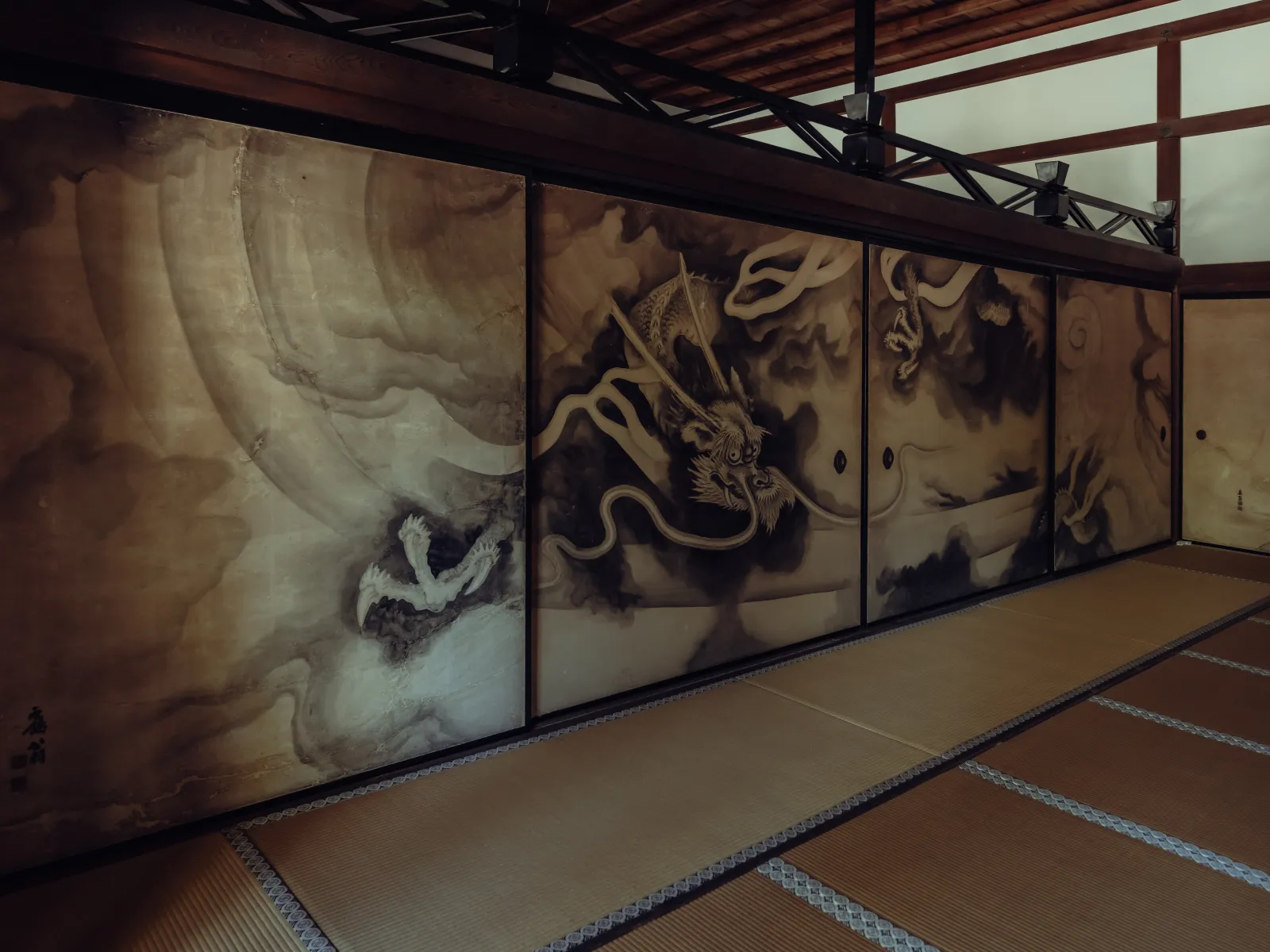
The sliding screens here are unusual: the Unryu-zu (Cloud Dragon) series was painted by Morihiro Hosokawa — yes, the former Prime Minister of Japan — between 2013 and 2016. He donated the set to the temple. Hosokawa is a descendant of Hosokawa Katsumoto himself, the man who founded Ryoanji five and a half centuries earlier. The temple’s original fusuma, by various Edo-period painters, are now preserved elsewhere.
Stand inside the room long enough and the dragons start to move — partly because they’re painted across sliding panels, partly because the light through the paper walls keeps changing. The room itself is not heated, not lit, not decorated beyond the paintings. A signature Zen absence.
The Tsukubai: “I Alone Know Enough”
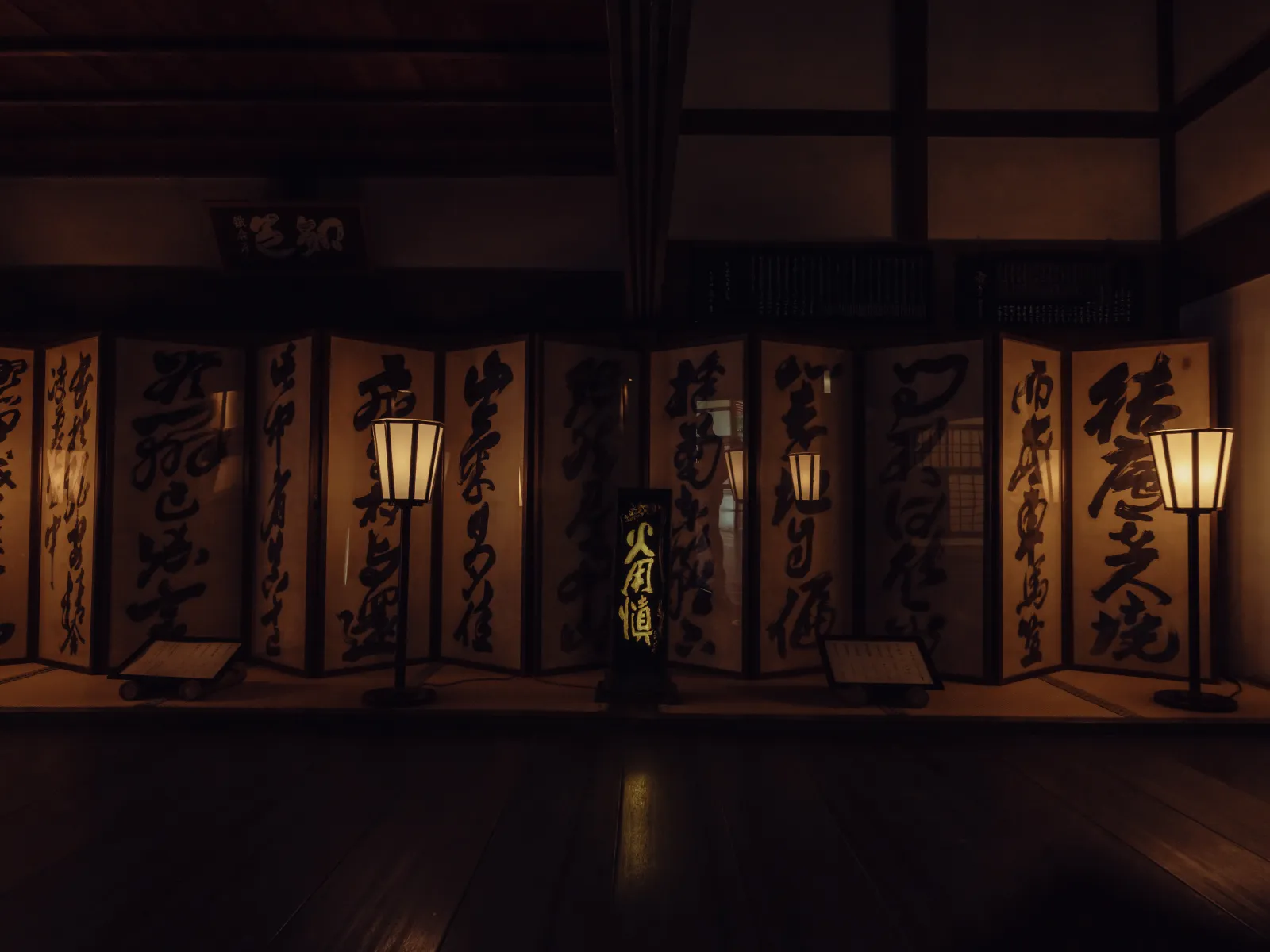
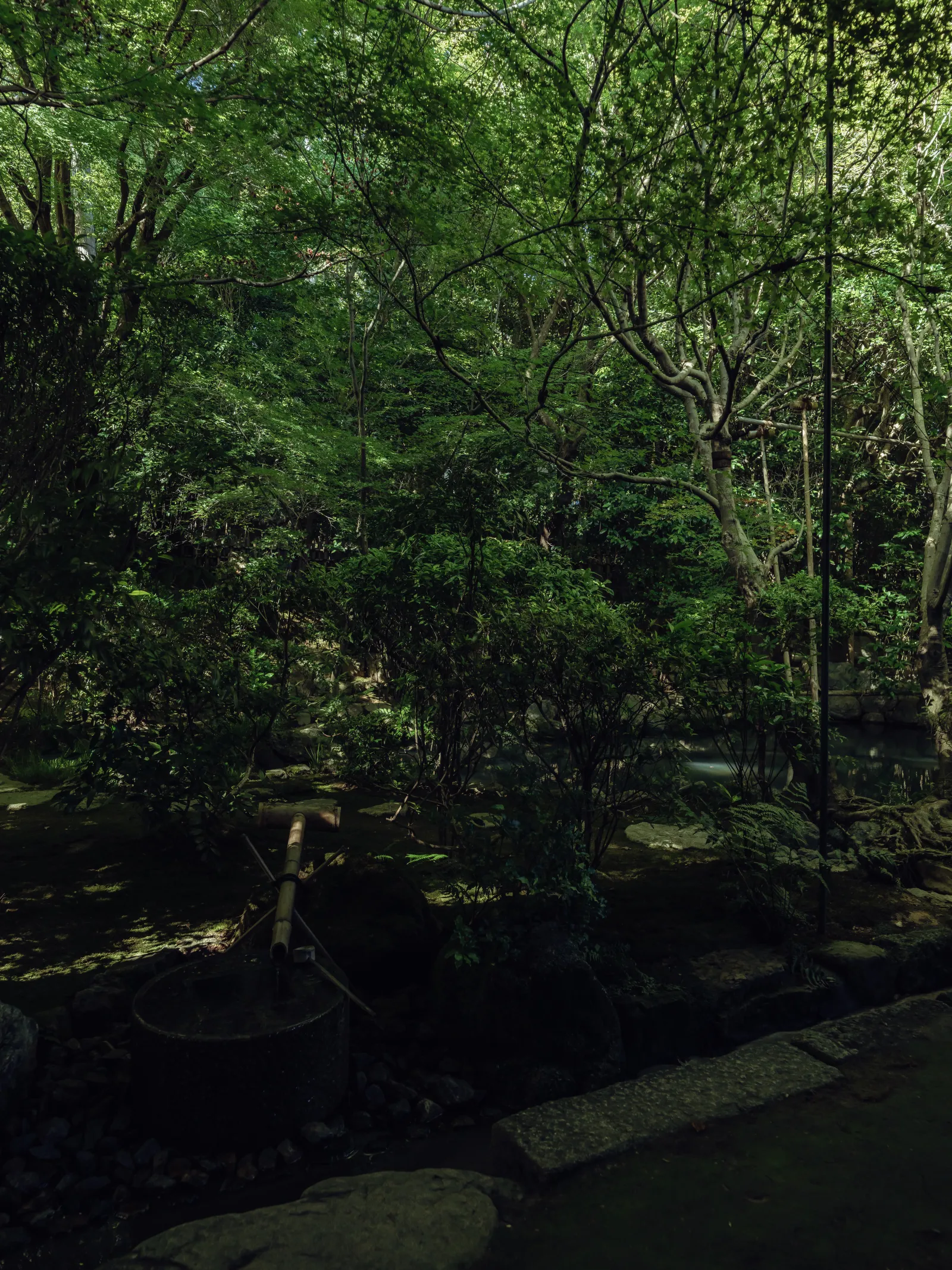
Behind the Hojo, tucked into a small courtyard, sits a stone water basin called a tsukubai. Visitors often walk straight past it. You shouldn’t. The Ryoanji tsukubai is inscribed with a phrase read as ware tada taru wo shiru (吾唯足知) — “I alone know enough.”
The clever part is the design. The four characters 吾・唯・足・知 each share the same radical: 口 (mouth/square). The designer set the basin’s square water hole in the center so that it serves as the 口 radical for all four characters at once. You can’t read the phrase without looking at the water. The basin was donated by Tokugawa Mitsukuni, the Mito-clan daimyo better known for the long compilation project that became the Dai Nihon Shi.
The Sub-Gardens Nobody Photographs
Ryoanji’s rock garden gets 95% of the attention. It shouldn’t. The rest of the grounds have several small gardens that, on their own, would be the centerpiece of most other temples. Two are worth slowing down for:
- The north courtyard of the Hojo. A tight, walled garden with a single rock, a curved line of raked gravel, and a dry channel of dark pebbles. Walking clockwise you rarely see more than one or two people in it.
- Kyoyochi Pond (鏡容池). This is the large pond you walk past on the way in. It pre-dates the temple by several centuries — it was part of the original Heian-era villa. Lotus blooms in August; lily pads and irises in early summer. Good for a slow loop before or after the rock garden.
A Closer Look
Some views you have to stand still for. From the approach up the stone stairs, through the dragons on the fusuma, out to the veranda where fifty strangers are quietly thinking the same thing:
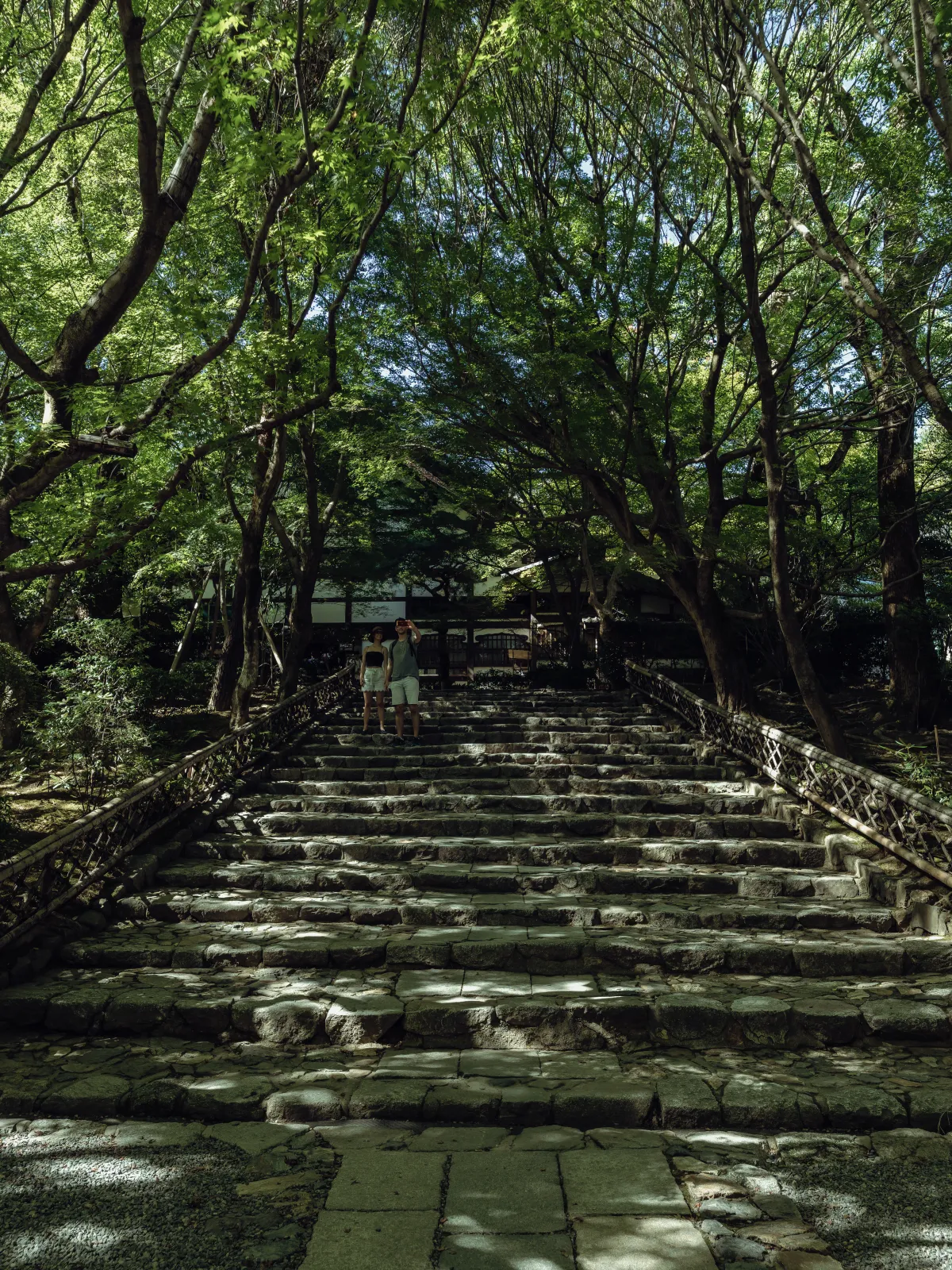
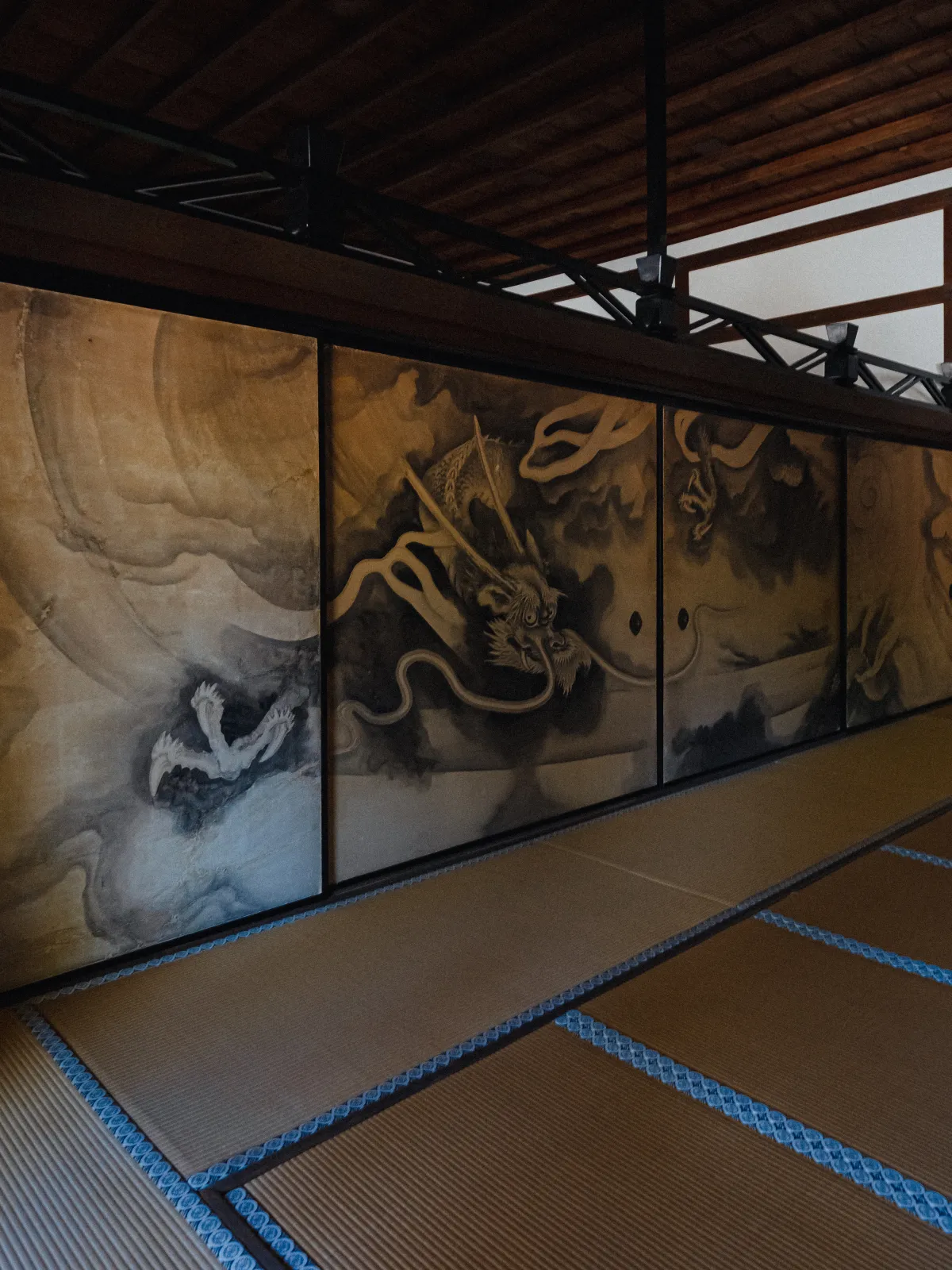
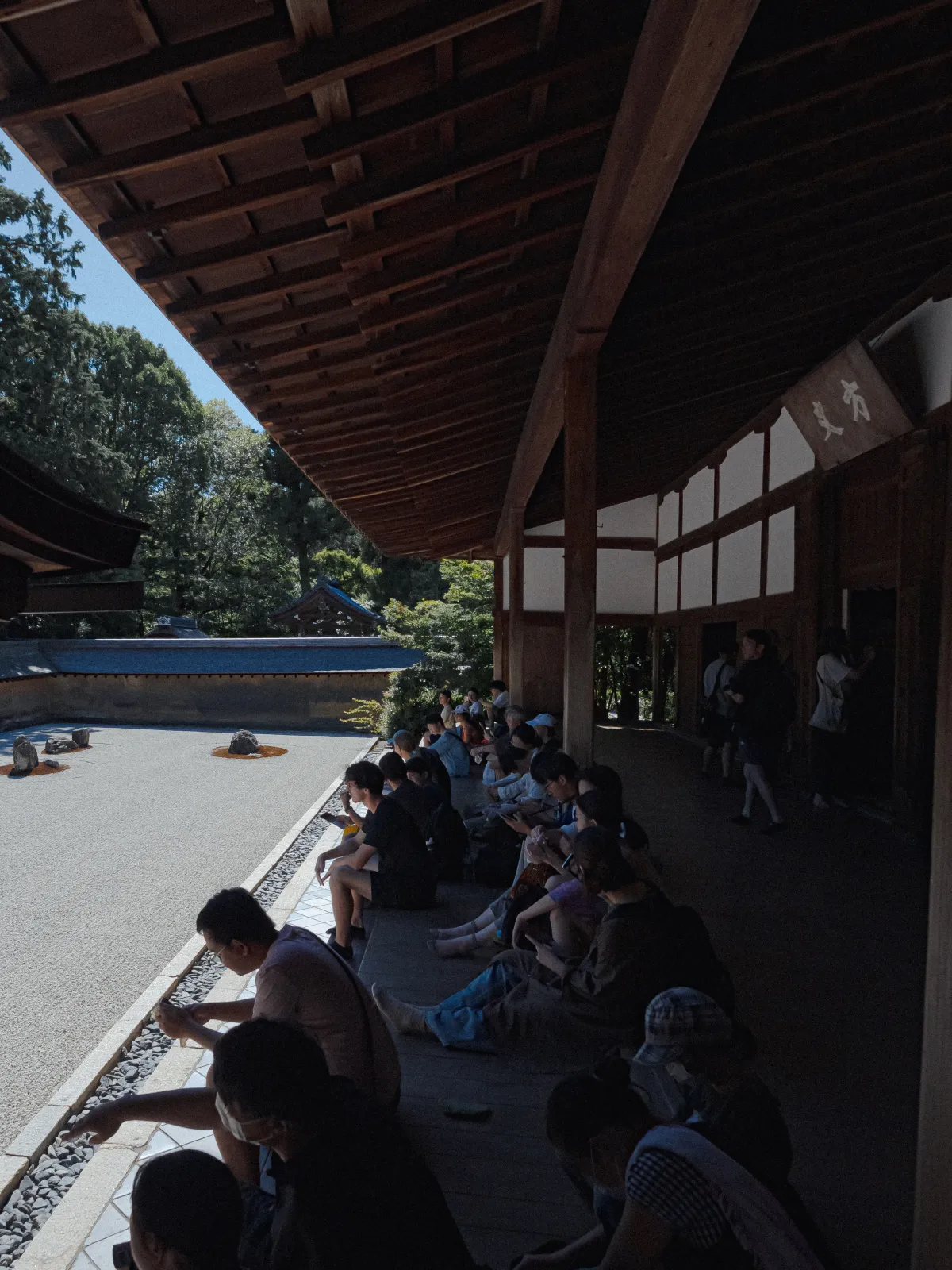
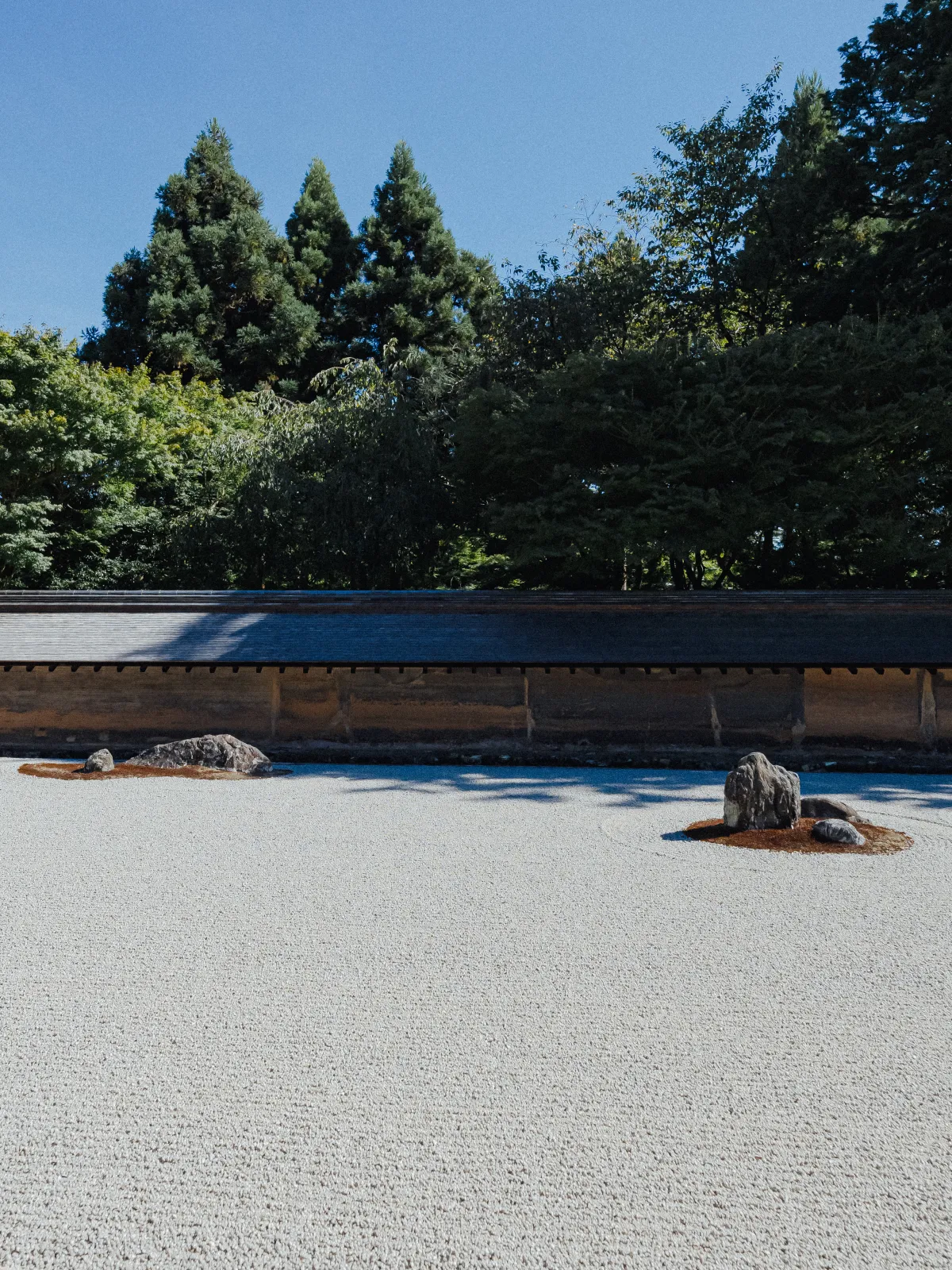
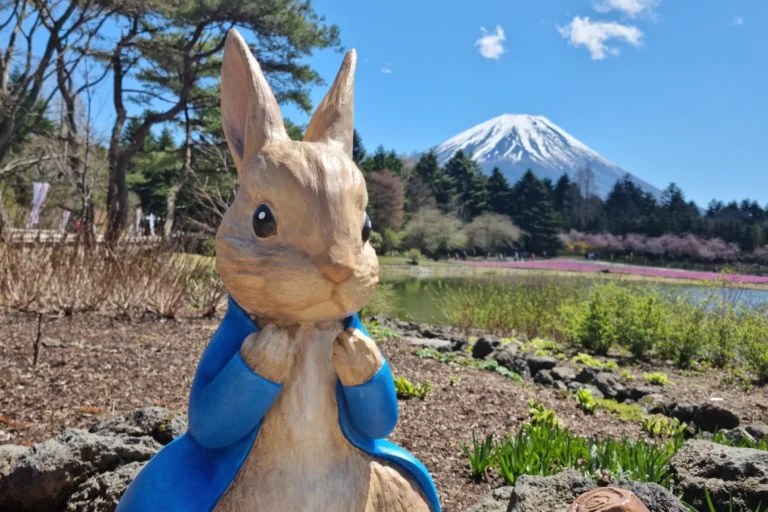
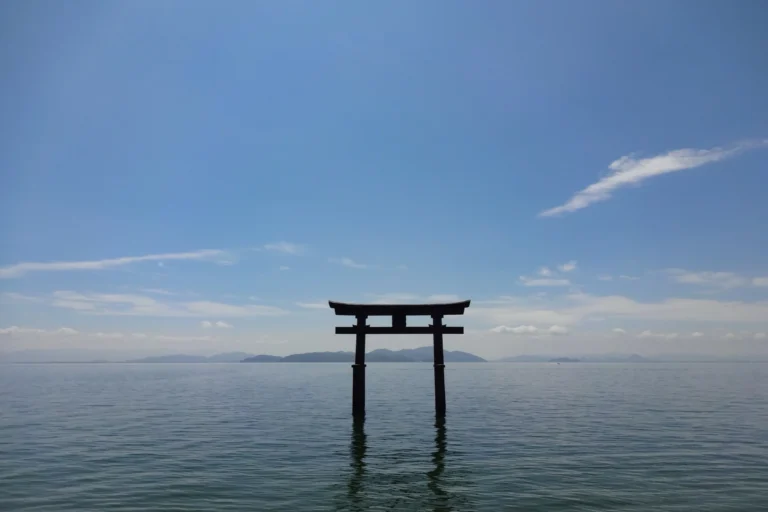
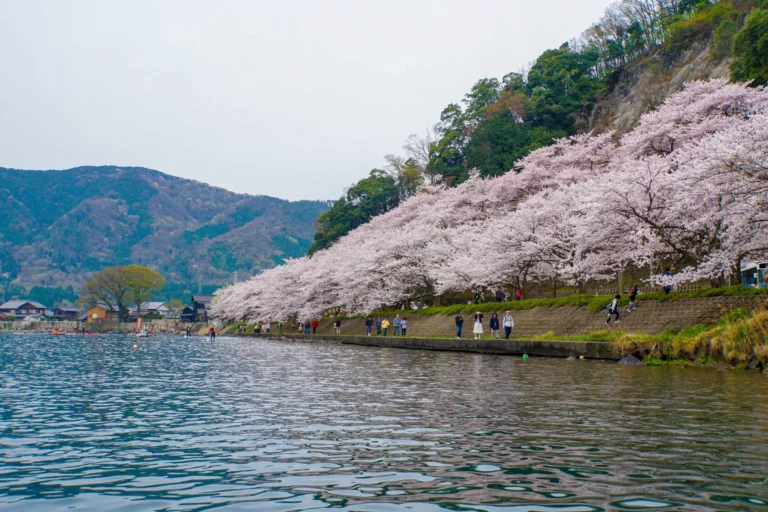
Left to right: the approach, the dragon, the veranda, the garden.
Timing Your Visit
Best hour of the day
8:00 AM opening in summer, 8:30 AM in winter. For the first thirty minutes the veranda is half-empty, the light is clean, and the gravel hasn’t been touched by hundreds of shuffling feet. By 10:00 AM tour buses arrive and the veranda fills up. Afternoons are quieter again, but the sun moves behind the wall and the garden loses direct light.
Best month
- Cherry blossom: Early April. A single large weeping cherry overhangs part of the garden — photographs well but the temple is busy.
- Green season: Mid-May through June. The moss and maples around the tsukubai are at peak saturation.
- Autumn: Mid to late November. Crowds are heavy but the color pays you back.
- Winter: A light snowfall on the gravel is the one Ryoanji image every Japanese photographer has tried to get. The temple is quiet at this time.
Photography rules
Photography is allowed throughout, including inside the Hojo for the dragon fusuma. Tripods and flash are not. Be quick if you’re shooting people on the veranda — some visitors prefer not to be in frame, and the temple asks that you don’t disrupt people seated in contemplation.
Getting There
From Kyoto Station
- JR Bus #59: about 30 minutes, ¥230. Covered by the Japan Rail Pass — the simplest route for pass holders. Drops at the Ryoanji-mae stop.
- Bus #205 + transfer: regular city bus via Nishi-noji, then walk. Slower.
From central Kyoto (Kawaramachi, Shijo)
- Keifuku (Randen) Kitano Line: transfer at Kitano Hakubaicho. Get off at Ryoanji-michi Station — 5–10 minute walk to the temple. The Randen is the more pleasant ride — a small tram on street-level rails.
From Kinkakuji
- Bus #59 or #205: 5 minutes.
- Walking: 20 minutes through the quiet residential streets west of Kinkakuji. If the weather holds, the walk is worth doing. Most visitors take the bus and miss this.
Pair Ryoanji With
- Kinkakuji (Golden Pavilion). 5 min by bus. Most visitors do both in one morning. Kinkakuji opens earlier (9:00) — do Ryoanji first while it’s quiet, then Kinkakuji.
- Ninnaji. A larger temple complex 10 min walk south, with a five-story pagoda and late-blooming cherry trees. Much quieter than Ryoanji or Kinkakuji.
- Arashiyama. 25 min by train. The Randen Kitano Line runs directly there — see our Adashino Nenbutsuji guide for a quieter Arashiyama piece.
- Higashiyama walk. Our Kiyomizudera to Yasaka golden-hour route works well as an afternoon after a morning at Ryoanji.
Where to Stay
Ryoanji is in northwestern Kyoto, away from the main accommodation zones. Most visitors base themselves near Kyoto Station or around Gion/Shijo and day-trip in. A few options that balance access and atmosphere:
- Hotel Kanra Kyoto — central, walking distance to Nishiki Market, direct bus #59 to Ryoanji.
- Ryokan Kinmata — 220-year-old ryokan in Nakagyo. Kaiseki dinner, fifteen minutes by taxi to Ryoanji.
- Tawaraya — the headline traditional ryokan if you’re splurging. 300+ years old.
Compare rates on Agoda, Booking.com, or Expedia. Autumn (mid-Nov) and cherry blossom (early April) weekends book three to four months ahead. For Kyoto day-trips and JR Pass bookings, Klook covers most of the logistics.
Frequently Asked Questions
Why can you never see all fifteen stones?
The stones are positioned so that from any single point on the veranda, at least one is hidden behind another. The common interpretation is that this represents the limits of human perception — you cannot perceive the whole at once. You can, however, see all fifteen if you stand in the center of the garden itself (visitors aren’t allowed there, so the claim is untested by tourists).
Who designed the rock garden?
Unknown. No credible historical record identifies the designer. Attributions to various Muromachi-era garden designers (Soami is the most common) are speculative. The temple itself does not claim a specific author.
How long should I spend at Ryoanji?
60–90 minutes covers the rock garden, the Hojo interior with the dragon fusuma, the tsukubai, and a loop of the Kyoyochi pond. Photographers or anyone wanting to sit on the veranda in quiet should budget two hours.
Can I take photos of the dragon fusuma?
Yes. Photography inside the Hojo is generally allowed. Flash and tripods are not. If the temple posts signage on a specific room, follow it.
Is Ryoanji part of UNESCO?
Yes. Ryoanji is one of the 17 sites registered as “Historic Monuments of Ancient Kyoto (Kyoto, Uji and Otsu Cities)” on the UNESCO World Heritage List in 1994.
Should I do Ryoanji or Kinkakuji first?
Ryoanji opens at 8:00 in peak season and gets busy fast. Kinkakuji opens at 9:00 and handles crowds better because it’s an outdoor loop. Do Ryoanji at 8:00 AM, spend an unhurried hour, then walk or bus five minutes to Kinkakuji for 9:00.
Is there food at Ryoanji?
The temple has a small restaurant serving yudofu (boiled tofu with vegetables), the Kyoto specialty, on the edge of Kyoyochi pond. Reservations are rarely needed outside peak months. Price is around ¥1,500 for a lunch set.
Final Take
Ryoanji is not the temple with the most impressive architecture in Kyoto. It’s not the oldest, the largest, or the most photographed. What it has is the garden that other gardens pretend to be, and a Hojo with dragons painted by a former Prime Minister whose family founded the place. Arrive at 8:00 AM, walk in without reading anything, sit on the veranda, and count the stones. Then come back in forty-five minutes and count them again from the other end. That’s the visit most people remember.
Last updated: April 2026. Opening hours, fees, and access verified against the temple’s official publications and Kyoto Tourism Federation at time of writing. Photography rules and the Hosokawa dragon fusuma displacement are documented via Ryoanji and the Asahi Shimbun archives respectively; if anything has changed when you visit, the temple’s own signage supersedes this page.

- Ryoanji Rock Garden: The Kyoto Temple Where Something Is Always Hidden
 You sit on the wooden veranda at Ryoanji with maybe forty other people, and for a minute nobody says anything. The rock garden in front of you is not large… Read more: Ryoanji Rock Garden: The Kyoto Temple Where Something Is Always Hidden
 - A Perfect Kyoto Afternoon: Walking Higashiyama from the Yasaka Pagoda to Kiyomizudera at Golden Hour (2026 Guide)
 Kyoto’s Higashiyama district is the most photographed square kilometer in Japan. Everyone has seen it. The question isn’t whether to go — it’s how to walk it so you don’t… Read more: A Perfect Kyoto Afternoon: Walking Higashiyama from the Yasaka Pagoda to Kiyomizudera at Golden Hour (2026 Guide)
 - Adashino Nenbutsuji 2026: Kyoto’s Temple of 8,000 Stone Buddhas [With Map]
![Adashino Nenbutsuji 2026: Kyoto's Temple of 8,000 Stone Buddhas [With Map]](https://hiddenjapan-gems.com/wp-content/uploads/2026/04/DSC2083-2-2-1024x576.webp) Most visitors to Arashiyama stop at the famous bamboo grove. But if you keep walking north for about 30 minutes, past the crowds and into the quiet Saga Toriimoto preserved… Read more: Adashino Nenbutsuji 2026: Kyoto’s Temple of 8,000 Stone Buddhas [With Map]
Most visitors to Arashiyama stop at the famous bamboo grove. But if you keep walking north for about 30 minutes, past the crowds and into the quiet Saga Toriimoto preserved… Read more: Adashino Nenbutsuji 2026: Kyoto’s Temple of 8,000 Stone Buddhas [With Map] - Atago Kaido / Saga Toriimoto — Kyoto’s Preserved Street
 2026 Update: While Arashiyama continues to see record crowds, the 30-minute walk to Saga Toriimoto remains one of Kyoto’s best-kept secrets. We have updated our access guide and tea house… Read more: Atago Kaido / Saga Toriimoto — Kyoto’s Preserved Street
 - A Night at Hoshinoya Kyoto: Boat Ride, Kaiseki & River Views [Stay Review]
![A Night at Hoshinoya Kyoto: Boat Ride, Kaiseki & River Views [Stay Review]](https://hiddenjapan-gems.com/wp-content/uploads/2026/04/IMG_4741-1024x576.webp) 2026 Update : Hoshinoya Kyoto continues to operate its exclusive boat access from the Arashiyama pier. Due to the increasing popularity of the Arashiyama area, we highly recommend arriving at… Read more: A Night at Hoshinoya Kyoto: Boat Ride, Kaiseki & River Views [Stay Review]
2026 Update : Hoshinoya Kyoto continues to operate its exclusive boat access from the Arashiyama pier. Due to the increasing popularity of the Arashiyama area, we highly recommend arriving at… Read more: A Night at Hoshinoya Kyoto: Boat Ride, Kaiseki & River Views [Stay Review]
2026 cherry blossom cherry blossoms day trip from tokyo flower festival fuji five lakes fujiyoshida Fukuoka fushimi hanami hiking japan japanese culture japanese food japanese garden japan travel kamakura kawagoe kawaguchiko Kumamoto kyoto local food Mount Fuji mt fuji Nagano nature Nikko Oku-Nikko Onsen Ramen saitama sakura Shizuoka shrine sightseeing snow spring spring in japan Tokyo travel travel guide travel planning winter winter travel Yamanashi
Join 1,000+ travelers discovering Japan's hidden side
Weekly dispatches from off-the-beaten-path Japan — spots and stories you won't find in guidebooks.
No spam. Unsubscribe anytime.
Welcome aboard!
You're in. See you in your inbox soon.