
![Miyajima Island 2026: Floating Torii, 5 Must-Eat Foods & Ferry Guide [With Tide Tips]](https://hiddenjapan-gems.com/wp-content/uploads/2026/04/9072AC0A-2F14-4FAC-8BD4-28DF503F9096-scaled.webp)

2026 Update
The 3.5-year renovation of Itsukushima Shrine’s Great Torii is completely finished, and the gate is fully visible without scaffolding. However, the five-story pagoda is currently undergoing roof renovations until December 2026. Also, note that a ¥100 Miyajima Visitor Tax was introduced in October 2023, collected when purchasing your ferry ticket (even if you use a JR Pass).
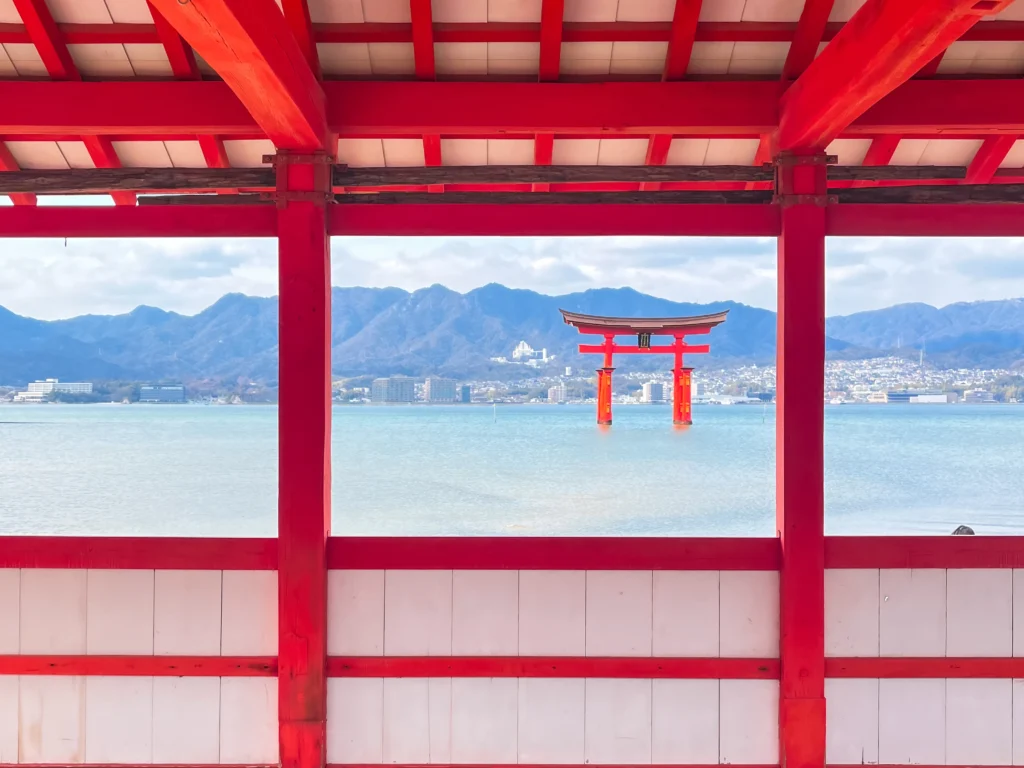
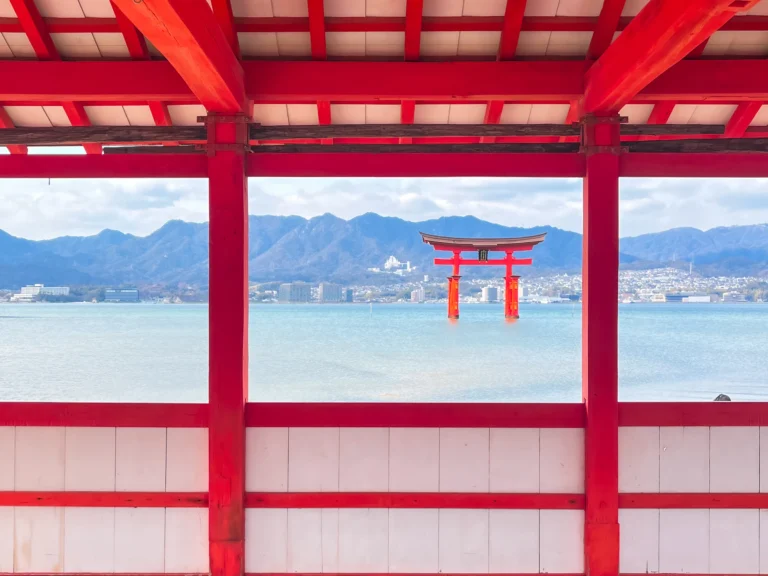
There are few sights in Japan as instantly recognizable as the Great Torii gate of Itsukushima Shrine, standing bright vermillion against the blue waters of the Seto Inland Sea. But Miyajima is much more than a single photograph. It is an island where wild deer roam the streets, where ancient wooden corridors stretch over tidal flats, and where the smell of grilled conger eel and deep-fried maple cakes fills the air. As the founder of hiddenjapan-gems.com, I have visited Miyajima in multiple seasons, and the transition from the modern city of Hiroshima to this sacred island remains one of my favorite short journeys in Japan. This guide covers everything you need to plan your visit: ferry access, shrine hours, tide timing for walking to the torii, the best food on the island, and practical tips for getting around Japan efficiently.
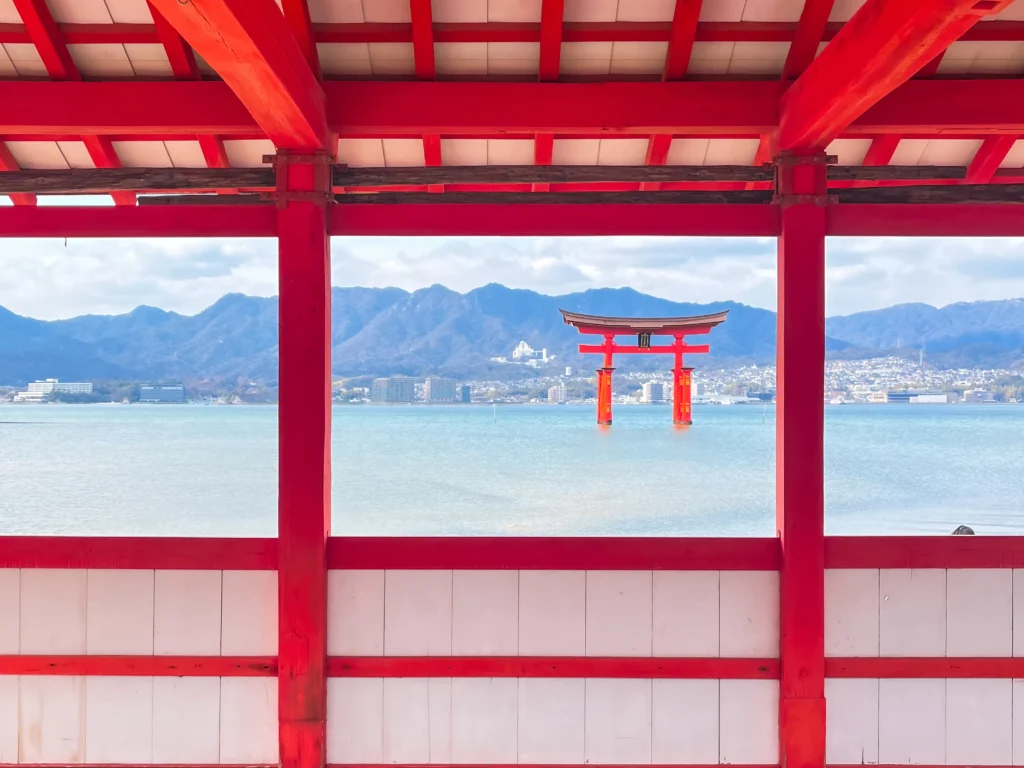
Table of Contents
Quick Facts: Miyajima & Itsukushima Shrine
| Detail | Information |
| Official Name | Itsukushima Shrine (厳島神社) on Miyajima Island (宮島) |
| Location | Hatsukaichi City, Hiroshima Prefecture |
| UNESCO Status | World Heritage Site since 1996 |
| Ferry Cost | ¥200 one-way + ¥100 visitor tax = ¥300 total |
| JR Pass | Valid for JR Ferry (must still pay ¥100 tax) |
| Shrine Admission | Adults ¥300, High School ¥200, Elementary ¥100 |
| Combined Ticket | ¥500 (Shrine + Treasure Hall) |
| Senjokaku | ¥100 (separate admission) |
| Shrine Hours | 6:30-18:00 (Mar-Oct), 6:30-17:00/17:30 (Nov-Feb) |
| Time Needed | Half-day (4-5 hrs) or full day (7-8 hrs) |
| Best For | Day trips, photography, street food, history |
| Book Tours | Miyajima Day Tours on Klook |
How Do I Get to Miyajima Island from Hiroshima?
The ferry ride takes just 10 minutes, but the journey from Hiroshima Station to the island involves three simple steps.
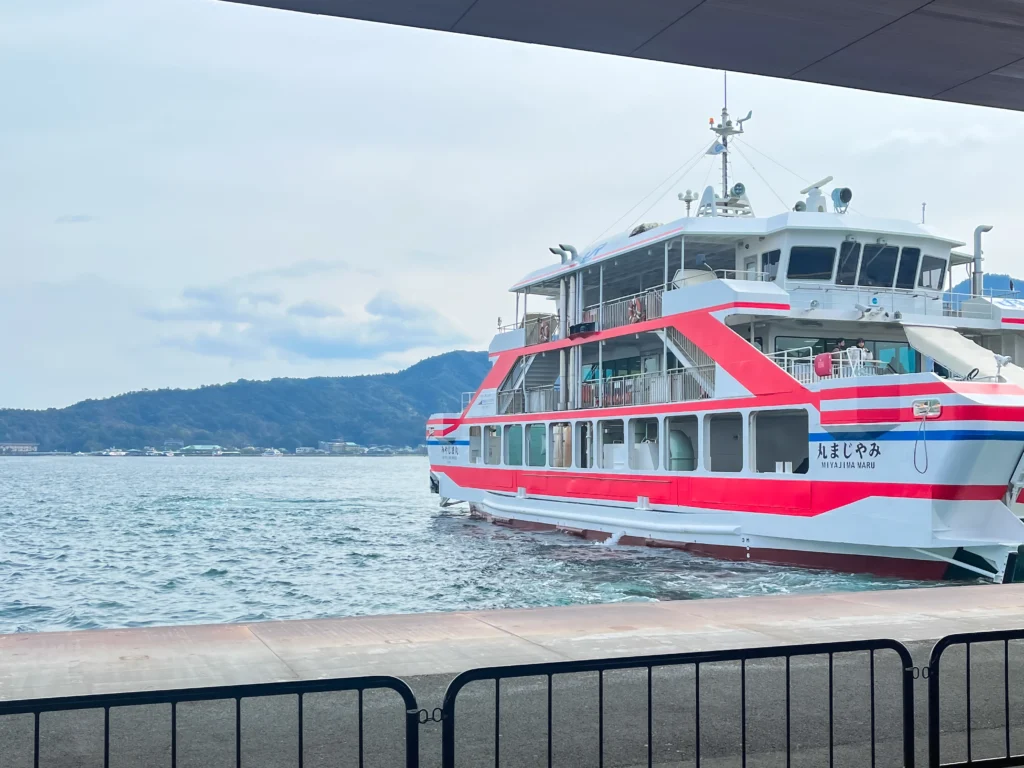
Step 1: Train to Miyajimaguchi. Take the JR Sanyo Line from Hiroshima Station to Miyajimaguchi Station. The ride takes about 30 minutes and costs ¥420. If you have a JR Pass, this leg is fully covered.
Step 2: Walk to the ferry terminal. From Miyajimaguchi Station, follow the signs to the ferry pier. It is a flat, 3-minute walk.
Step 3: Board the ferry. Two companies operate ferries: JR West Miyajima Ferry and Matsudai Kisen. Both cost exactly the same (¥200 fare + ¥100 visitor tax) and take about 10 minutes. If you have a JR Pass, use the JR ferry — your pass covers the fare, though you must still pay the ¥100 tax separately at the terminal.
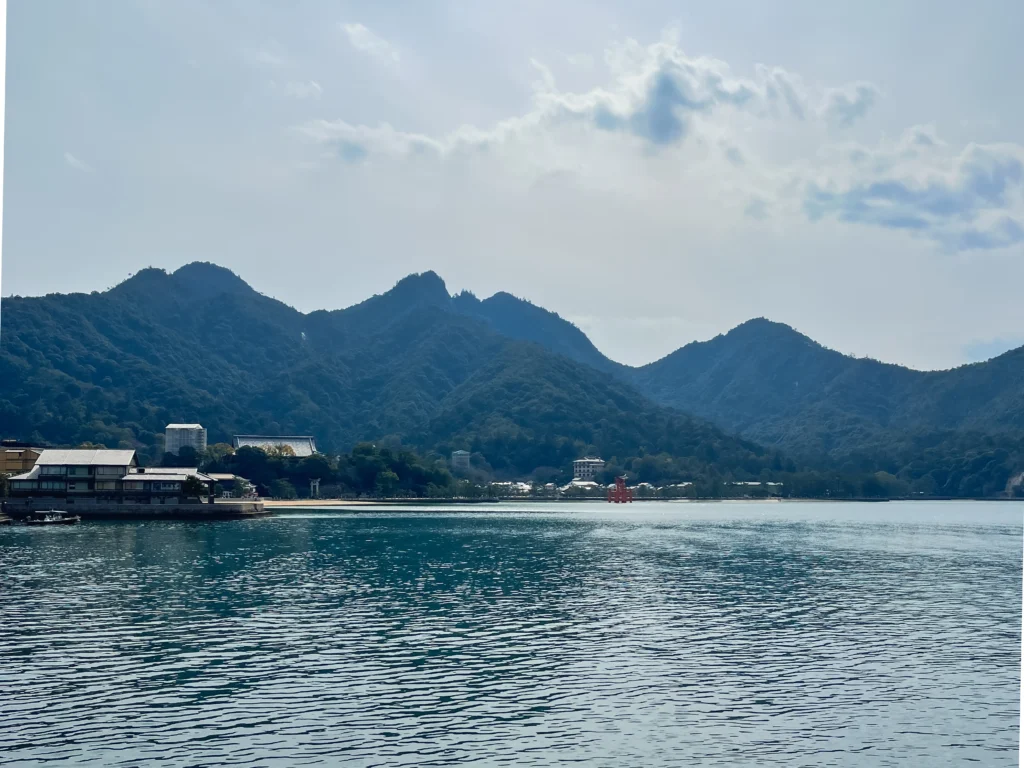
Local Tip: Between 9:10 and 16:10, the JR ferries run a special “Great Torii Route” (大鳥居便) that swings closer to the gate for better photos from the water. Stand on the right side of the ferry for the best angle.
From Southeast Asia
Miyajima is accessible as a day trip from Hiroshima, which has its own airport (HIJ). Direct flights from Singapore (Scoot), Bangkok, and Kuala Lumpur connect to Kansai International Airport (KIX) or Fukuoka (FUK), from which Hiroshima is 1.5-2 hours by Shinkansen. Budget carriers like Scoot, AirAsia, Jetstar Asia, and Cebu Pacific offer competitive fares. Citizens of Singapore, Malaysia, Thailand, Indonesia, and the Philippines can enter Japan visa-free for up to 30 days (15 days for some nationalities). For details on buying JR train tickets, see our separate guide.
Itsukushima Shrine: Walking on Water
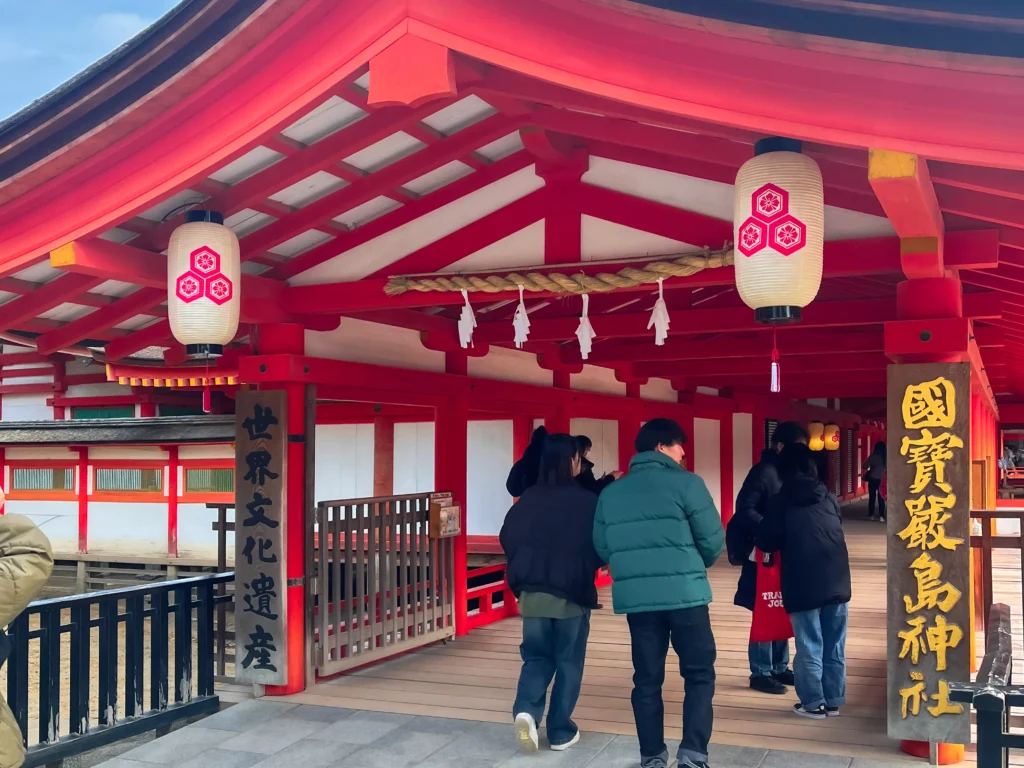
Itsukushima Shrine is the only UNESCO World Heritage shrine in Japan built entirely over the sea. Originally constructed in 593 and remodeled into its current grand pavilion style in 1168 by the powerful samurai Taira no Kiyomori, the shrine was built on the tidal flats because the entire island was considered a god — cutting trees or disturbing the sacred land was forbidden.
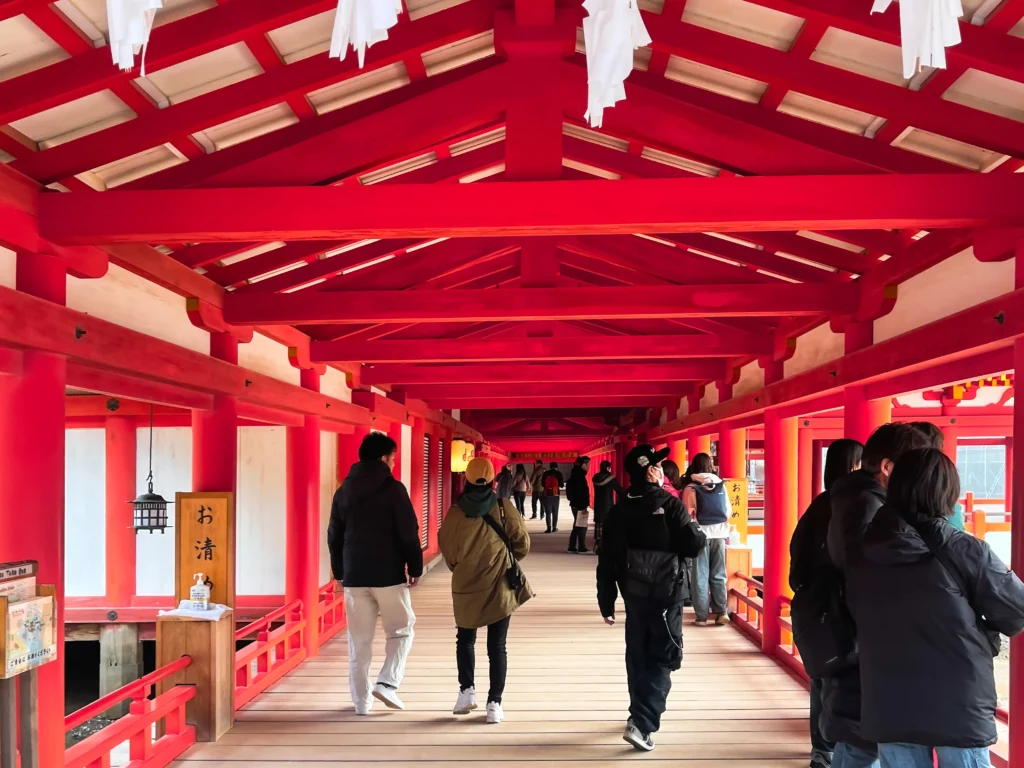
The result is a complex of 275 meters of vermillion corridors connecting various halls, a Noh theater stage (the only one over water in Japan), and arched bridges — all appearing to float when the tide comes in. The shrine’s main hall is designated a National Treasure.
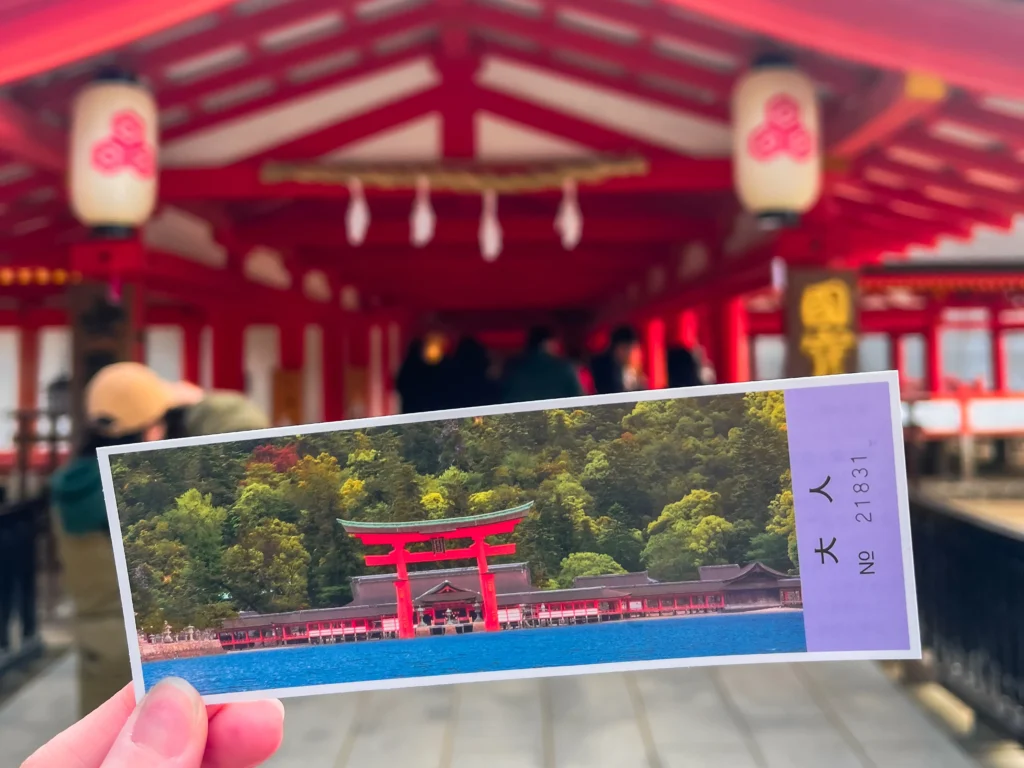
Admission is ¥300 for adults. A combined ticket with the Treasure Hall costs ¥500. Arrive early — the shrine opens at 6:30 AM, well before the day-trippers from Hiroshima.
Senjokaku (Toyokuni Shrine)
Do not miss Senjokaku (千畳閣, “Hall of 1,000 Tatami Mats”), the massive unfinished hall on the hill above the shrine. Commissioned by Toyotomi Hideyoshi in 1587, it was left incomplete after his death. The open-air wooden hall offers shade, a breeze, and excellent views of the shrine and torii below. Admission is just ¥100.
Can You Walk to the Floating Torii Gate at Miyajima?
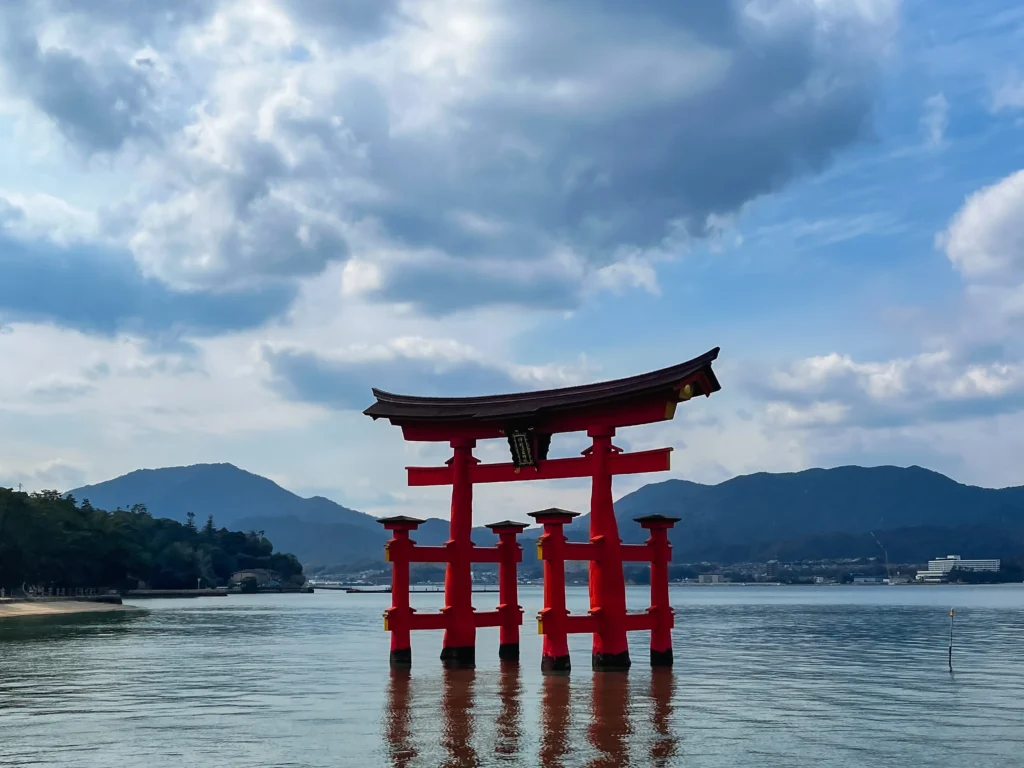
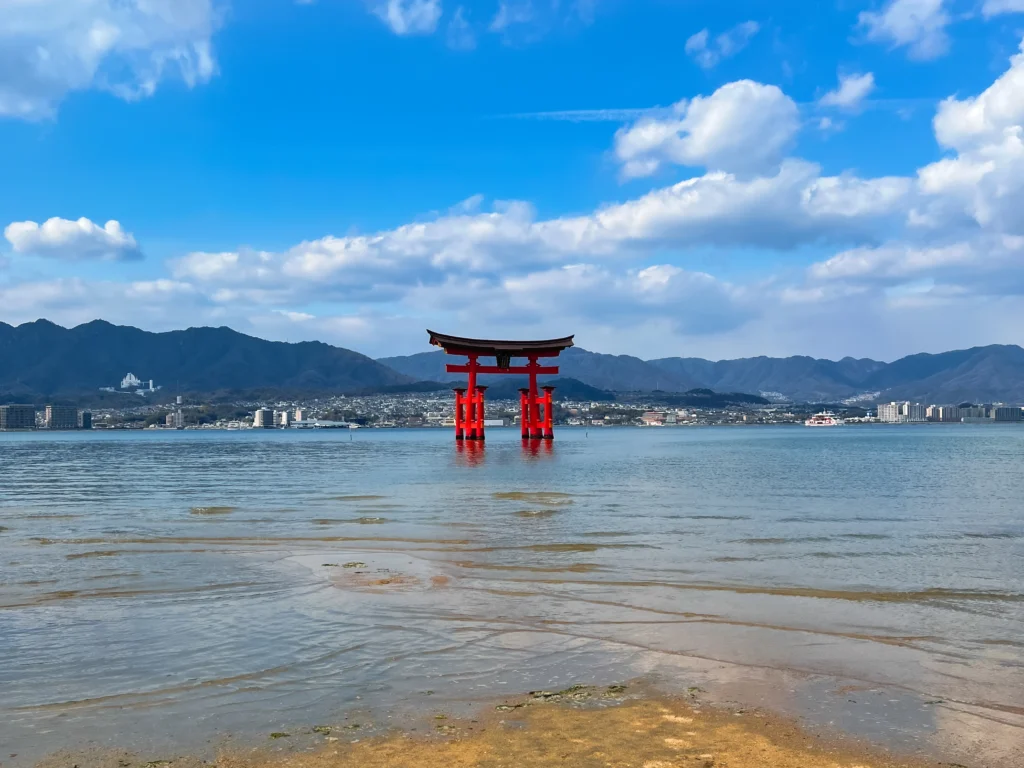
Yes, but only at low tide. The Great Torii (O-torii) stands about 200 meters offshore from the main shrine, and the experience changes completely depending on the water level.
At low tide, you can walk across the sand to the base of the torii and touch its pillars. At high tide, it appears to float. Same gate, two completely different experiences — check the tide table before you go. Generally, you can walk to the gate when the tide level is under 100cm.
The current torii is the 9th generation, rebuilt in 1875. It stands 16.6 meters tall and weighs about 60 tonnes. The pillars are made of camphor wood, and the gate is not anchored to the seabed — it stands by its own weight.
Photography Tip: The most dramatic photos come during the transition between tides. Sunset at high tide creates mirror-like reflections, while early morning at low tide gives you the gate with textured sand patterns. For more tips, see our photography etiquette guide.
What Are the Best Times to Visit Miyajima?
Miyajima is beautiful year-round, but each season offers a distinct experience.
| Season | Months | Highlights | Crowd Level |
| Spring | Mar-Apr | Cherry blossoms around the shrine and pagoda; mild weather | High |
| Summer | Jul-Aug | Miyajima Water Fireworks Festival (August); lush greenery | Very High |
| Autumn | Oct-Nov | Momiji Valley turns red and gold; best photography season | Very High |
| Winter | Dec-Feb | Oyster season; fewest crowds; illuminated torii at night | Low |
For visitors from Southeast Asia: Hiroshima’s winter temperatures drop to 2-7°C — significantly colder than Singapore’s 26°C or Bangkok’s 28°C. Pack layers and a proper winter jacket if visiting between December and February. Spring (April) and autumn (November) are the most comfortable, with temperatures around 15-20°C.
The best strategy is to plan your visit around the tide schedule rather than the season. Check the Miyajima tide tables and aim for a day when low tide falls during your visit hours.
What Should I Eat on Miyajima? 5 Local Specialties
The 350-meter-long Omotesando Shopping Street (also known as Kiyomori-dori) is the culinary heart of the island, with about 70 shops and restaurants. Look for the world’s largest rice paddle (shamoji) on display near the entrance. Here are the five foods you should not miss.
1. Age-Momiji at Benikeido (¥250)
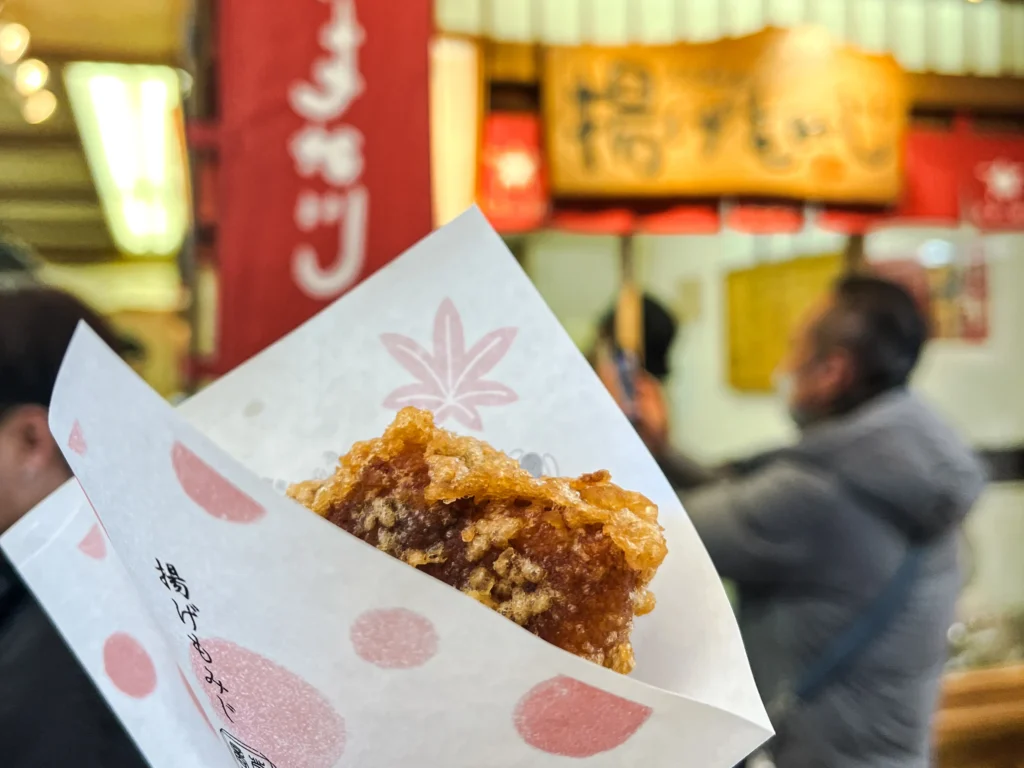
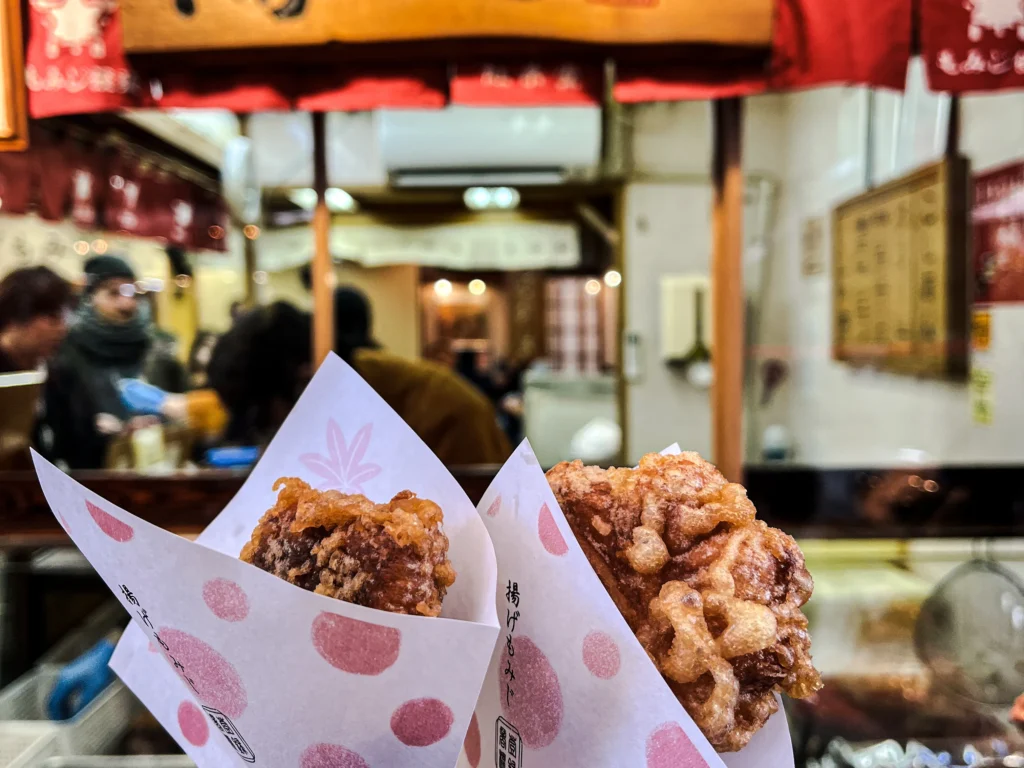
Momiji manju (maple leaf-shaped cakes filled with sweet bean paste) are Hiroshima’s most famous souvenir. But on Miyajima, they take it a step further. The age-momiji at Benikeido is Miyajima’s answer to the question “what if we deep-fried the souvenir?” The answer, at ¥250, is perfect. It is crispy on the outside, hot and fluffy on the inside, and comes in flavors including red bean, cream, cheese, Setouchi lemon, and rare cheese. Benikeido has two shops on Omotesando, open from about 9:00 to 17:30.
2. Anagomeshi Ueno at Miyajimaguchi (¥2,800)
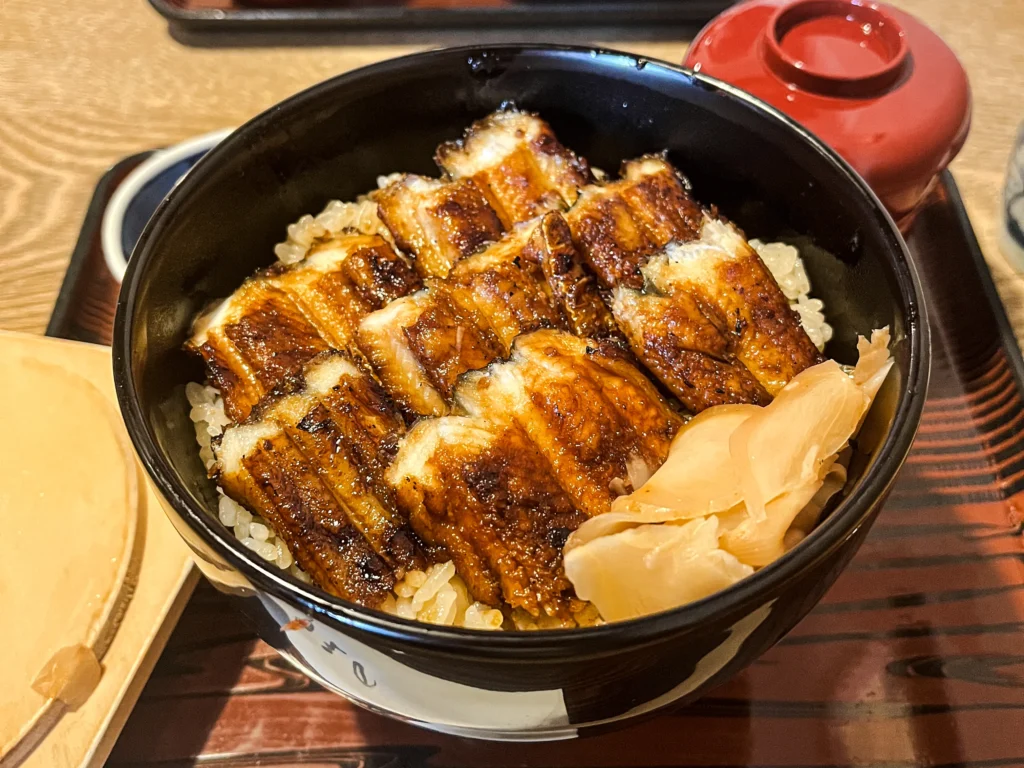
For the best meal of your trip, you actually need to eat before you cross the water, or right after you return. Located near the ferry terminal on the mainland side, Anagomeshi Ueno is legendary.
Anagomeshi Ueno has been cooking conger eel the same way since 1901. The rice is cooked in the eel’s own broth — that’s the secret most visitors don’t realize. The regular bowl costs ¥2,800. They do not take reservations for the restaurant, and wait times can reach 1-2 hours on busy days, but their bento boxes (sold from 9:00 AM) are designed to taste incredible even when cold — the thin wooden box absorbs excess moisture perfectly.
3. Grilled Oysters (¥500-800, Winter Season)
Hiroshima produces over 60% of Japan’s oysters, and Miyajima’s Omotesando street is lined with stalls grilling them fresh from November through March. Two or three plump oysters on a half-shell, grilled with a squeeze of lemon, cost around ¥500-800.
4. Momiji Manju (¥100-150 each)
The original, non-fried version remains a classic. Over a dozen shops on the island make their own varieties. The traditional filling is koshi-an (smooth red bean paste), but modern flavors include matcha, chocolate, custard, and cheese.
5. Conger Eel Croquettes & Street Snacks
Beyond the sit-down restaurants, look for anago croquettes, grilled scallops, and Hiroshima-style okonomiyaki at various stalls along Omotesando.
Halal & Vegetarian Options: Miyajima has limited halal-certified restaurants, but several shops offer vegetarian options including vegetable tempura and inari sushi. Convenience stores (7-Eleven, Lawson) on the mainland at Miyajimaguchi stock onigiri with clear ingredient labels — a budget-friendly option for travelers with dietary restrictions.
Deer Etiquette on Miyajima
Around 500 wild deer live on Miyajima, and you will encounter them everywhere. However, unlike Nara, feeding the deer on Miyajima is strictly prohibited by city ordinance since 2008.
Do not try to feed them, and be very careful with paper bags or food wrappers, as the deer will try to eat them (including plastic). Keep a respectful distance, especially in autumn when male deer with antlers can be aggressive. Do not use flash photography.
How Long Should I Spend on Miyajima?
For most visitors, a half-day (4-5 hours) is sufficient to take the ferry, visit Itsukushima Shrine, see the floating torii, and eat along Omotesando street. This makes it an easy combination with a morning visit to the Hiroshima Peace Park.
However, if you want to take the ropeway up Mount Misen (the island’s highest peak at 535m) for panoramic views of the Seto Inland Sea, or if you want to see the torii at both high and low tides, you should plan for a full day (7-8 hours).
For the ultimate experience, consider staying overnight on the island. When the day-trippers leave on the last ferries, the island becomes incredibly peaceful, and the shrine and torii are beautifully illuminated until 11:00 PM.
Book Miyajima area hotels on Agoda — ryokan on the island fill up fast during autumn foliage season.
Suggested Half-Day Itinerary
| Time | Activity |
| 9:00 AM | Arrive at Miyajimaguchi; buy bento at Anagomeshi Ueno (skip restaurant queue) |
| 9:30 AM | Board JR Ferry (sit on right side for torii view) |
| 9:45 AM | Arrive on Miyajima; walk to Itsukushima Shrine |
| 10:00 AM | Visit shrine (¥300) + Senjokaku (¥100) |
| 11:00 AM | Walk to Great Torii (check tide level) |
| 11:30 AM | Stroll Omotesando; eat age-momiji at Benikeido |
| 12:00 PM | Eat Ueno bento on the beach or at a bench |
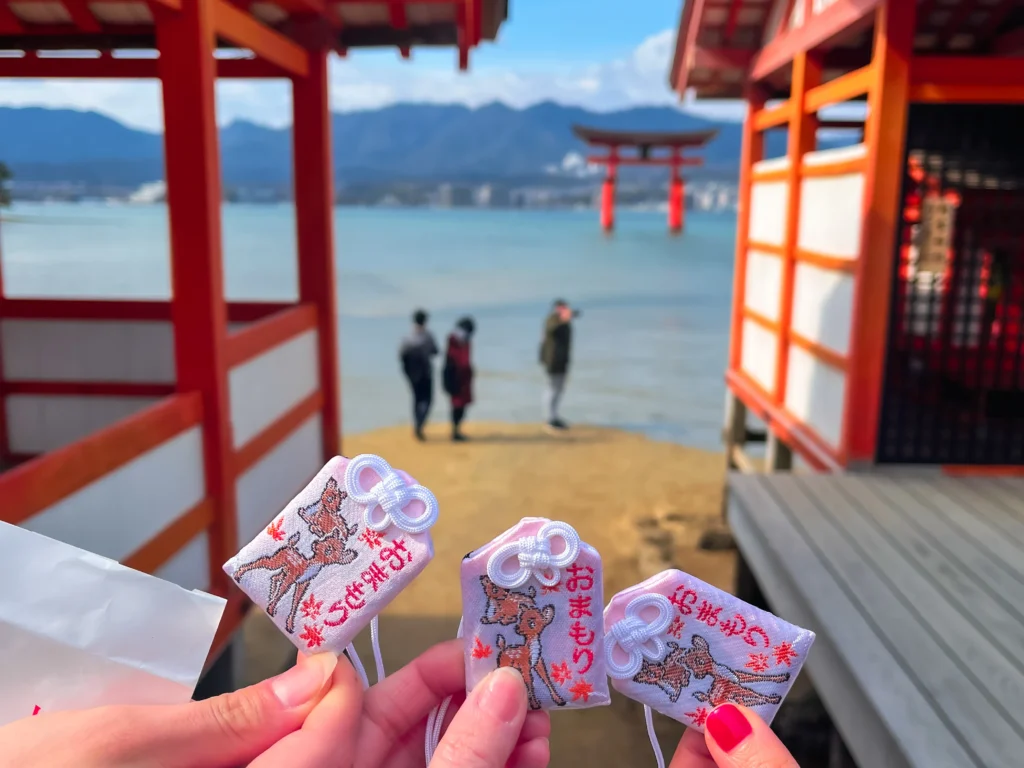
| 12:30 PM | Browse souvenir shops; buy omamori |
| 1:00 PM | Return ferry to Miyajimaguchi |
Suggested Full-Day Itinerary
| Time | Activity |
| 8:30 AM | Arrive at Miyajimaguchi; eat at Anagomeshi Ueno restaurant |
| 10:00 AM | Board JR Ferry |
| 10:15 AM | Itsukushima Shrine + Senjokaku |
| 11:30 AM | Walk to Great Torii at low tide |
| 12:00 PM | Lunch on Omotesando (grilled oysters, street food) |
| 1:00 PM | Miyajima Ropeway to Mount Misen summit |
| 3:00 PM | Descend; explore Momiji Valley |
| 4:00 PM | Return to shrine area for high-tide torii photos |
| 5:00 PM | Age-momiji at Benikeido; souvenir shopping |
| 5:30 PM | Return ferry |
Practical Tips for Visitors
•Payment: Most shops on Omotesando accept cash only. Bring sufficient yen. The ferry terminal accepts IC Cards (Suica/ICOCA), but the ¥100 visitor tax is cash only.
•Crowds: To avoid peak crowds, take a ferry before 9:00 AM. The Omotesando shops open around 9:00 AM and mostly close by 5:30 PM.
•Tide Planning: Check the Miyajima Tide Tables before your visit. A tide level of 100cm or lower is required to walk to the torii base.
•Luggage: Coin lockers are available at the Miyajima ferry terminal (¥300-600). Travel light on the island.
•Renovations (2026): The five-story pagoda is under roof renovation until December 2026 and may be covered in scaffolding.
•Accessibility: The shrine corridors are mostly flat but narrow. Wheelchair access is limited in some sections.
•Cherry Blossom Season: If visiting during sakura season (late March to early April), review our cherry blossom etiquette guide before your trip.
Frequently Asked Questions About Miyajima
How do I get to Miyajima Island from Hiroshima?
Take a JR train from Hiroshima Station to Miyajimaguchi Station (about 30 minutes, ¥420). From there, walk 3 minutes to the ferry terminal and board either the JR West Miyajima Ferry or Matsudai Kisen. The ferry takes 10 minutes and costs ¥200 plus a ¥100 visitor tax.
Is the JR Pass valid on the Miyajima ferry?
Yes, the Japan Rail Pass covers the fare for the JR West Miyajima Ferry. However, you must still pay the ¥100 Miyajima Visitor Tax separately at the ferry terminal. The JR Pass is not valid on the Matsudai Kisen ferry.
Can you walk to the floating torii gate at Miyajima?
Yes, but only at low tide when the water level drops below 100cm. The water recedes completely, allowing you to walk across the sand to the base of the 16.6-meter-tall Great Torii. At high tide, the gate appears to float on the water. Check the tide tables at miyajima.or.jp before your visit.
What should I eat on Miyajima?
The two absolute must-try foods are age-momiji (deep-fried maple leaf cakes, ¥250) at Benikeido on the Omotesando Shopping Street, and anago-don (grilled conger eel over broth-infused rice, ¥2,800) at Anagomeshi Ueno near the mainland ferry terminal. In winter, grilled Hiroshima oysters are also essential.
How long should I spend on Miyajima?
A half-day (4-5 hours) is enough to take the ferry, visit Itsukushima Shrine, see the torii gate, and eat street food. A full day (7-8 hours) is recommended if you want to hike Mount Misen via the ropeway or see the torii at both high and low tides.
Can I feed the deer on Miyajima?
No. Unlike in Nara, feeding the wild deer on Miyajima is strictly prohibited by city ordinance since 2008. Keep a respectful distance, do not touch them, and avoid leaving paper or plastic bags where the deer can reach them.
Conclusion
Miyajima earns its reputation as one of Japan’s three most scenic views. The combination of the floating torii, the over-water shrine corridors, the street food on Omotesando, and the wild deer creates a visit that feels both sacred and fun. Whether you come for a quick half-day from Hiroshima or stay overnight to see the illuminated torii in silence, the island rewards every minute you give it.
If you are planning a broader Hiroshima trip, Miyajima pairs naturally with the Peace Memorial Park in the morning and the island in the afternoon. For more on planning your route, see our guide to traveling around Japan.
Sources checked
JR Miyajima Ferry, Itsukushima Shrine, Miyajima Tourism, Anagomeshi Ueno, Benikeido, Japan Guide

- MT. FUJI SUNRISE (GORAIKO) PHOTO GUIDE
 Mt. Fuji Sunrise 2026: Hour-by-Hour Goraiko Guide [9 Photos] 2026 Update: In 2026, the mandatory ¥4,000 entry fee applies to all trails, and strict gate closures (2:00 PM on the… Read more: MT. FUJI SUNRISE (GORAIKO) PHOTO GUIDE
 - Climbing Mt. Fuji 2026: 4 Trails, New Rules & Costs
 Last Updated: April 2026 2026 Update: In 2026, you cannot simply show up at Mt. Fuji and start climbing. Every trail now requires a mandatory ¥4,000 entry fee. On the… Read more: Climbing Mt. Fuji 2026: 4 Trails, New Rules & Costs
 - Hiroshima & Miyajima in One Day 2026: Route Under ¥10,000
 Last Updated: April 2026 2026 Update: The 3.5-year renovation of Itsukushima Shrine’s Great Torii is completely finished, and the gate is fully visible without scaffolding. However, the five-story pagoda is… Read more: Hiroshima & Miyajima in One Day 2026: Route Under ¥10,000
 - Hiroshima Food Guide 2026: Okonomiyaki, Oysters & Seto Sushi [Local’s Picks]
![Hiroshima Food Guide 2026: Okonomiyaki, Oysters & Seto Sushi [Local's Picks]](https://hiddenjapan-gems.com/wp-content/uploads/2026/04/29856F07-18E2-4769-897E-F3CA8EC4F8AE-1024x768.webp) Last Updated: April 2026 2026 Update: While many tourists flock to Okonomimura, the original birthplace of Hiroshima-style okonomiyaki is Mitchan Souhonten. Expect 30-60 minute waits at the Hatchobori main store… Read more: Hiroshima Food Guide 2026: Okonomiyaki, Oysters & Seto Sushi [Local’s Picks]
Last Updated: April 2026 2026 Update: While many tourists flock to Okonomimura, the original birthplace of Hiroshima-style okonomiyaki is Mitchan Souhonten. Expect 30-60 minute waits at the Hatchobori main store… Read more: Hiroshima Food Guide 2026: Okonomiyaki, Oysters & Seto Sushi [Local’s Picks] - Hiroshima Peace Memorial Park 2026: 7 Key Monuments & Museum Guide [With Map]
![Hiroshima Peace Memorial Park 2026: 7 Key Monuments & Museum Guide [With Map]](https://hiddenjapan-gems.com/wp-content/uploads/2026/04/66F0DEA7-C53A-43F3-8E1E-E0C25C7CE60A-1024x768.webp) Last Updated: April 2026 2026 Update: The Peace Memorial Museum now requires web reservations for early morning (7:30 AM) and extended evening hours during peak seasons. Book your time slot… Read more: Hiroshima Peace Memorial Park 2026: 7 Key Monuments & Museum Guide [With Map]
Last Updated: April 2026 2026 Update: The Peace Memorial Museum now requires web reservations for early morning (7:30 AM) and extended evening hours during peak seasons. Book your time slot… Read more: Hiroshima Peace Memorial Park 2026: 7 Key Monuments & Museum Guide [With Map]
2026 cherry blossom cherry blossoms day trip from tokyo flower festival fuji five lakes fujiyoshida Fukuoka fushimi hanami hiking japan japanese culture japanese food japanese garden japan travel kamakura kawagoe kawaguchiko Kumamoto kyoto local food Mount Fuji mt fuji Nagano nature Nikko Oku-Nikko Onsen Ramen saitama sakura Shizuoka shrine sightseeing snow spring in japan Tochigi Tokyo travel travel guide travel planning winter winter travel Yamanashi
[…] you ask someone in Japan what food Hiroshima is famous for, they will immediately say two things: okonomiyaki and oysters. What they often forget to mention is the incredible seafood pulled fresh from the Seto […]