

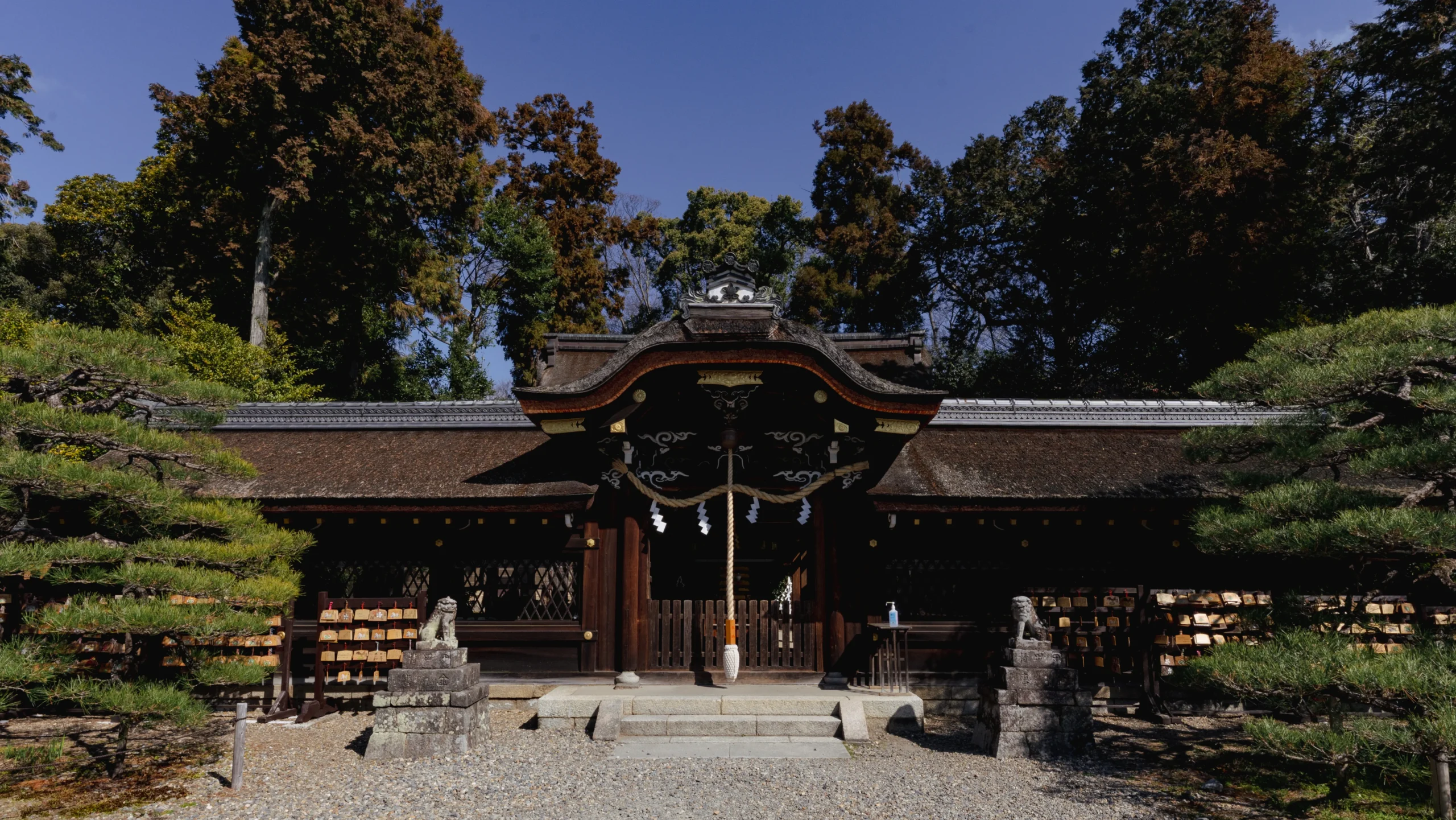

Imagine stepping off a quiet residential street in western Kyoto and finding yourself in a serene sanctuary, where the air is fragrant with plum blossoms and friendly cats lounge in the sun. This isn’t a fantasy; it’s Umenomiya Taisha (梅宮大社), a historic shrine that offers a unique blend of spiritual significance, natural beauty, and feline charm. Far from the usual tourist crowds, this shrine is a haven for those seeking blessings for fertility and safe childbirth, a deep connection to Japan’s sake brewing culture, and a peaceful moment with its resident cats. This guide will unveil everything you need to know to explore this hidden treasure, from its divine legends to its practical tips for visitors.
Table of Contents
Quick Facts: Planning Your Visit
| Feature | Details |
| Opening Hours | Grounds: 6:30 AM – 6:00 PM Garden (Shin’en): 9:00 AM – 5:00 PM (Last entry 4:30 PM) |
| Admission Fee | Grounds: Free Garden (Shin’en): ¥600 for adults, ¥350 for children |
| Main Deities | Sake-no-kami (God of Sake), Konohanasakuya-hime (Goddess of Safe Childbirth) |
| Key Blessings | Safe childbirth, fertility, prosperity for sake brewers |
| Time to Allot | 45-60 minutes (Shrine + Garden) |
| Best For | Cat lovers, sake enthusiasts, expectant mothers, those seeking a peaceful shrine experience |
| Access | By Bus: 3-min walk from “Umenomiya Taisha-mae” bus stop (City Bus No. 3, 28, 29, 71) By Train: 15-min walk from Matsuo-Taisha Station (Hankyu Arashiyama Line) |
| Website | http://www.umenomiya.or.jp/ |
Overview: A Shrine of Sake, Fertility, and Felines
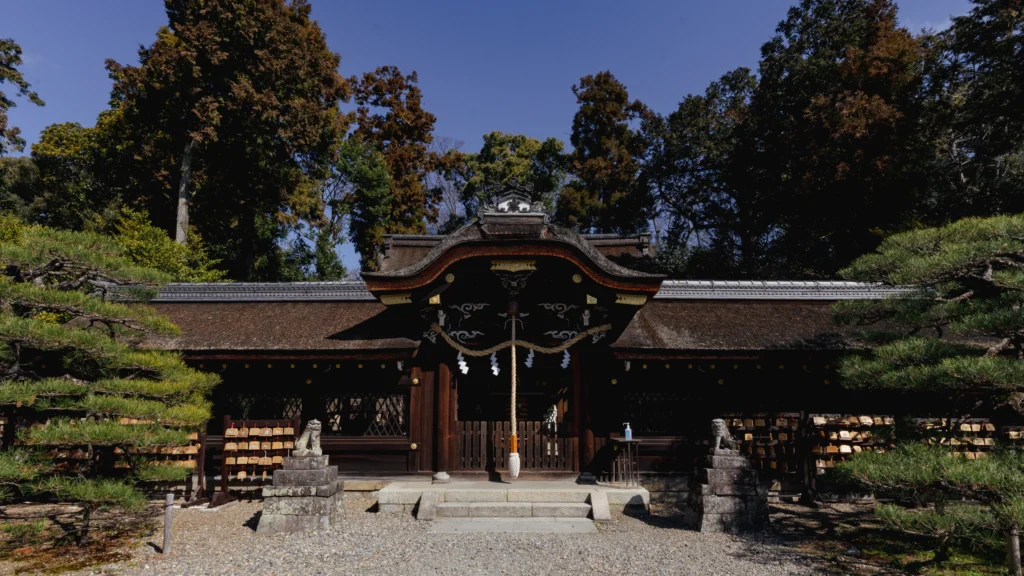
Umenomiya Taisha stands as a testament to Kyoto’s layered history, a place where ancient beliefs and modern life coexist peacefully. Founded approximately 1,300 years ago, it is one of Japan’s oldest shrines dedicated to the gods of sake brewing. As the founder of hiddenjapan-gems.com, I find Umenomiya Taisha particularly captivating because it offers a multi-faceted experience. It’s not just a place of worship; it’s a sanctuary that tells the story of the powerful Tachibana clan, the mythical origins of sake, and the imperial family’s prayers for heirs.
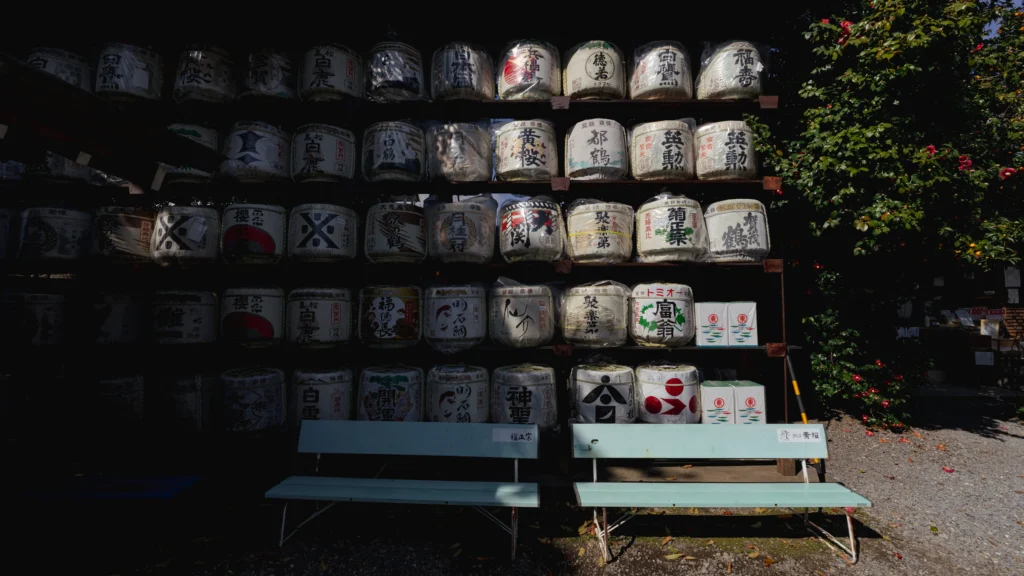
The shrine’s primary deities are directly linked to its two main blessings. The gods of sake, Sakatoke-no-kami and Sakatoke-no-ko-no-kami, are worshipped by brewers from all over Japan who leave barrels of their finest brew as offerings. Simultaneously, the goddess Konohanasakuya-hime, known for her miraculously easy childbirth, is revered by couples and expectant mothers, making this a premier shrine for fertility and safe delivery prayers.
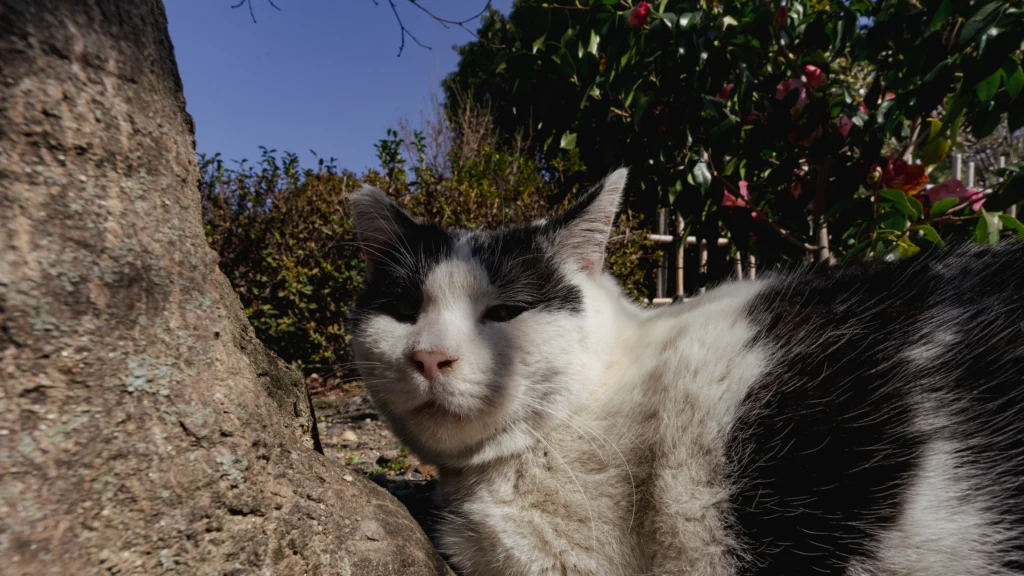
Adding to its unique charm, the shrine has become famous in recent years as a haven for a community of well-cared-for cats, earning it the affectionate nickname “the cat shrine” among locals and visitors.
The Gods of Sake Brewing
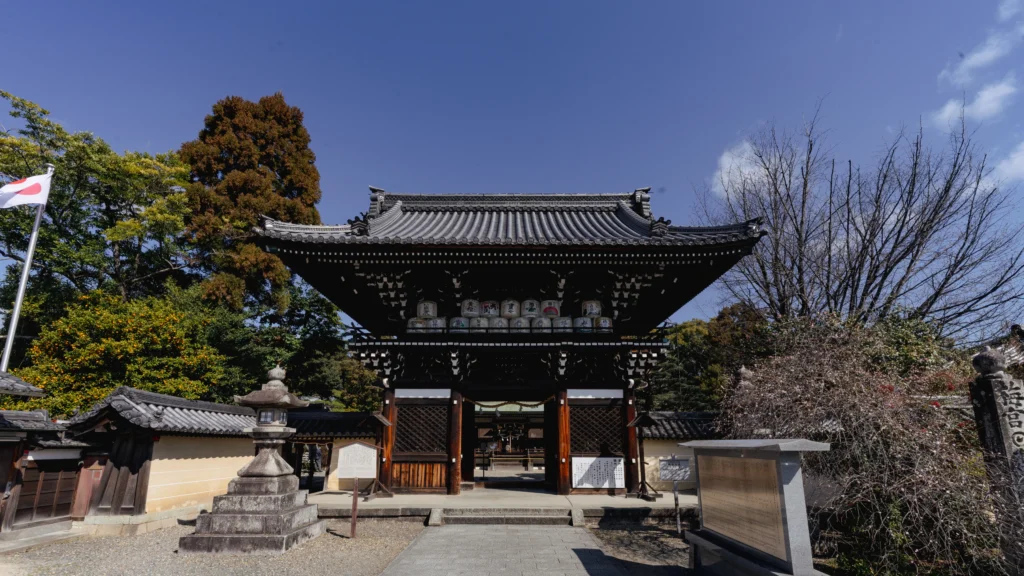
The shrine’s deep connection to sake is evident the moment you arrive. The upper story of the magnificent Romon Gate is lined with decorative sake barrels (kazaridaru), and just inside, you’ll find walls stacked high with real barrels (komodaru) offered by breweries across Japan. This tradition honors the shrine’s deities, Oyamazumi no Mikoto and his daughter Konohanasakuya-hime. Legend tells that when the goddess gave birth, her father was so overjoyed that he created sake to celebrate. This mythological event established Umenomiya Taisha as a primary center of worship for the sake industry.
A Sanctuary for Cats
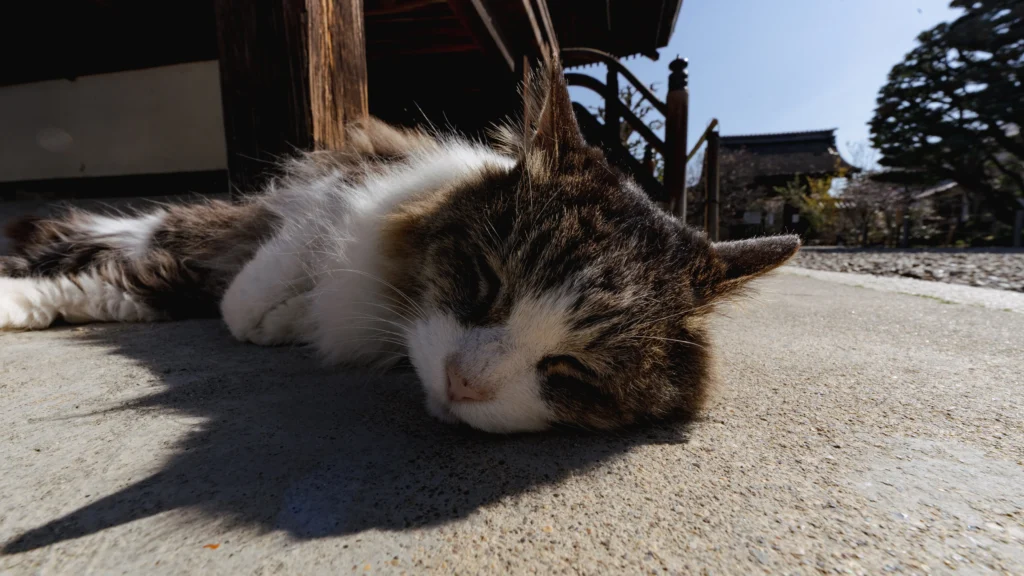
In recent years, Umenomiya Taisha has gained fame for a completely different reason: its resident cats. Several friendly felines call the shrine grounds home, and they can often be found napping in sunny spots, lounging on benches, or greeting visitors. They are cared for by the shrine staff and have become unofficial mascots, drawing cat lovers and photographers who hope to capture a moment with these serene creatures. Their calm presence adds another layer of tranquility to the sacred atmosphere.
Blessings of Fertility: The Matage Ishi Stone
One of the most unique traditions at Umenomiya Taisha is the “Matage Ishi” (またげ石), or “step-over stone.” Located behind the main hall (prayer required), this sacred stone is believed to bestow the blessing of children. The tradition originates with Empress Danrin (786–850), who, after years of being unable to conceive, visited the shrine, stepped over the stone, and soon gave birth to the future Emperor Ninmyō. It is said that couples who pray and step over the stone together may be blessed with a child and an easy delivery.
What to See: Exploring the Grounds
Beyond the main hall and its famous residents, the shrine grounds hold several points of interest.
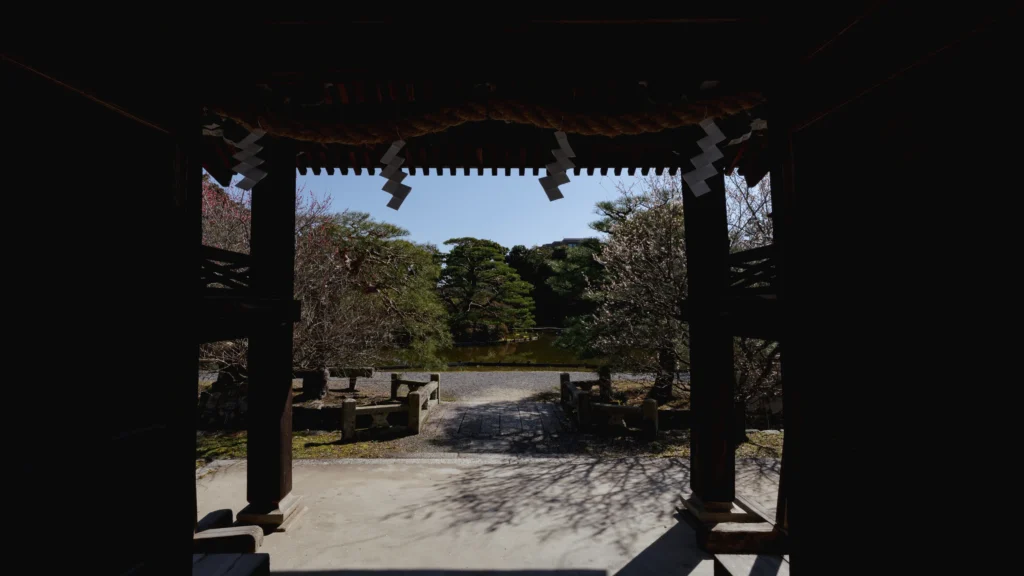
•Romon Gate (楼門): This impressive two-story gate serves as the main entrance. Look up to see the decorative sake barrels lining the second floor.
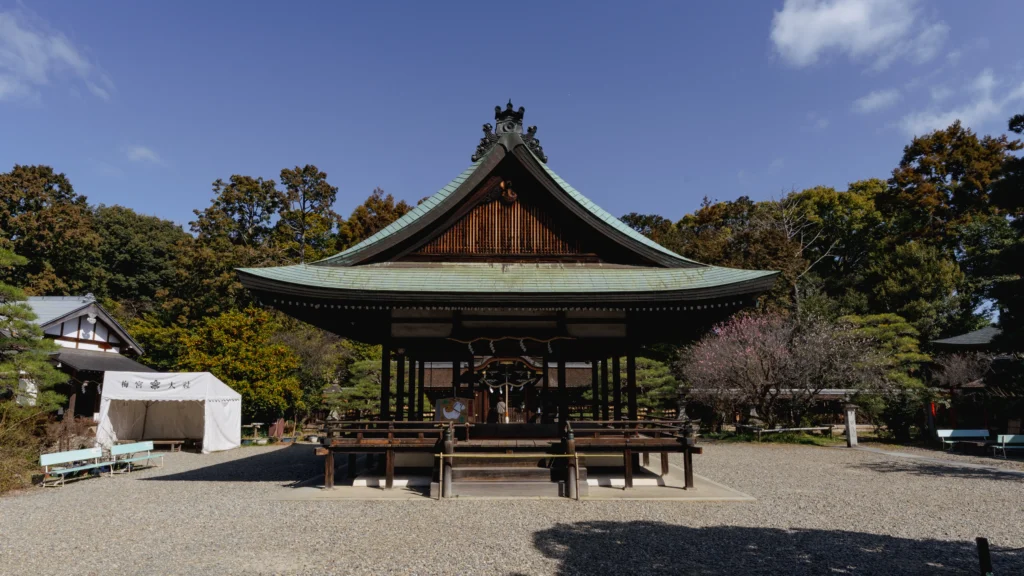
•Butai (舞殿): The open-sided stage in front of the main hall is used for performances and ceremonies. Its elegant roof and structure are a fine example of shrine architecture.
•Shin’en Garden (神苑): The true highlight for nature lovers. This strolling garden features two ponds, an iris field, a plum grove, and a teahouse. It’s a beautiful and peaceful space that changes with the seasons.
Best Time to Visit
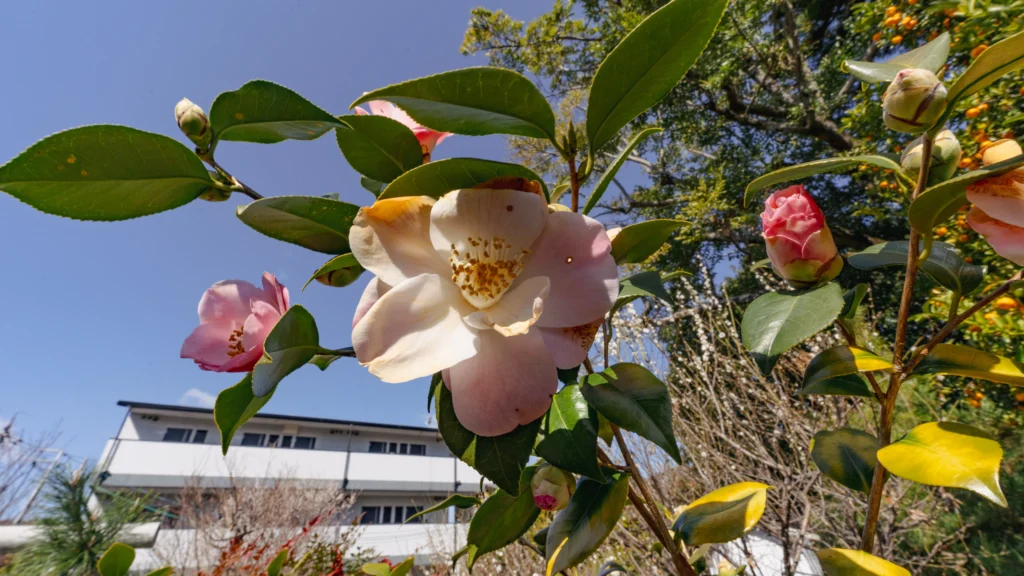
Umenomiya Taisha is a year-round destination, but it is especially stunning when its namesakes, the plum trees (ume), are in bloom from mid-February to mid-March. The shrine holds a Plum Festival (梅産祭, Ume-umi Matsuri) on the first Sunday of March, celebrating both the blossoms and the shrine’s connection to fertility.
Following the plums, the garden comes alive with:
•Kirishima Azaleas: Late April to early May
•Irises (Kakitsubata & Hanashobu): May to June
•Hydrangeas: June to July
How to Get There
Umenomiya Taisha is located in the Umezu area of western Kyoto, easily accessible from major transport hubs.
•By Bus (Recommended): The most direct way is to take a Kyoto City Bus (routes 3, 28, 29, or 71) to the Umenomiya Taisha-mae (梅宮大社前) bus stop. The shrine is a 3-minute walk from there.
•By Train: Take the Hankyu Arashiyama Line to Matsuo-Taisha Station. From the station, it is a pleasant 15-minute walk north, following signs for the shrine.
Practical Tips for Your Visit
•Wear Comfortable Shoes: You will do a fair amount of walking, especially if you plan to explore the garden.
•Bring Cash: While the grounds are free, you will need cash for the garden entrance fee, as well as for purchasing charms (omamori) or making offerings.
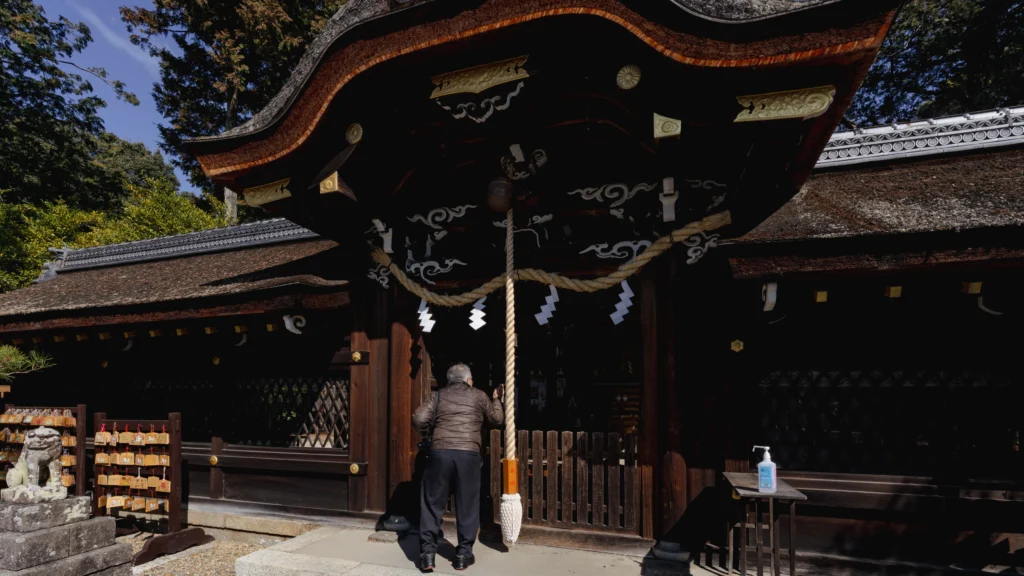
•Be Respectful of Worshippers: This is an active place of worship. Be quiet and mindful, especially around the main hall.
•Cat Etiquette: Feel free to photograph the cats, but do not chase them or feed them. Let them approach you.
•Restrooms: Facilities are available on the shrine grounds.
Suggested Mini-Itinerary: A Half-Day in West Kyoto
Combine your visit to Umenomiya Taisha with a trip to the nearby Matsuo Taisha (松尾大社), another one of Kyoto’s most important and ancient shrines, also famous for its connection to sake brewing. It’s just a 15-minute walk south.
1.Morning (10:00 AM): Start at Umenomiya Taisha. Explore the grounds and enjoy the Shin’en Garden (1 hour).
2.Late Morning (11:15 AM): Walk to Matsuo Taisha. Discover its unique gardens and the Sake Museum (1.5 hours).
3.Lunch (1:00 PM): Find a local restaurant near Matsuo-Taisha Station for lunch before heading to your next destination, such as Arashiyama, which is just one stop away on the Hankyu line.
Strategic FAQ Section
Q1: Is Umenomiya Taisha worth visiting if I’m not interested in sake or pregnancy blessings?
A1: Absolutely. The beautiful Shin’en Garden, with its seasonal flowers and peaceful atmosphere, is a major draw. The presence of the friendly cats also makes it a unique and memorable stop for any animal lover or photographer.
Q2: What is the significance of the cats at the shrine?
A2: While not officially part of the shrine’s religious doctrine, the cats are beloved residents cared for by the shrine. They have become a famous feature, embodying the peaceful and welcoming spirit of the grounds and attracting visitors who enjoy their calming presence.
Q3: Can I buy sake at the shrine?
A3: The shrine does not operate as a sake shop. The barrels on display are offerings from breweries. However, you can purchase special blessed sake (omiki) on certain occasions or as part of a formal prayer ceremony.
Q4: What is the best season to see the flowers?
A4: The prime season is from mid-February to mid-March for the plum blossoms. However, the garden offers a succession of blooms, including azaleas in May and irises and hydrangeas in June, making spring and early summer fantastic times to visit.
Q5: How is Umenomiya Taisha different from Matsuo Taisha?
A5: Both are famous sake shrines, but they have distinct characteristics. Umenomiya Taisha is also renowned for fertility blessings and its resident cats, with a more intimate and tranquil garden. Matsuo Taisha is larger, features a famous turtle and carp pond, and has a dedicated Sake Museum.
Conclusion: A Unique Blend of the Sacred and the Serene
Umenomiya Taisha offers a refreshingly different Kyoto experience, away from the bustling crowds. It’s a place where you can feel a deep connection to ancient traditions—whether it’s the reverence for sake brewing or the age-old prayers for new life—while enjoying the simple pleasure of a beautiful garden and the company of its feline residents. For a peaceful and multi-layered cultural immersion, a visit to this hidden gem is highly recommended.
Article Metadata:
•Last updated: March 24, 2026
Sources checked
•Umenomiya Taisha Official Website
•Kyoto Tourism Official Website (Kyoto Navi)
•Central Japan Railway Company “Souda Kyoto” Website
•Discover Kyoto Website

- Yakushima West Drive 2026: Ohko Falls, Yokogawa Valley, Seibu Rindo and Inakahama
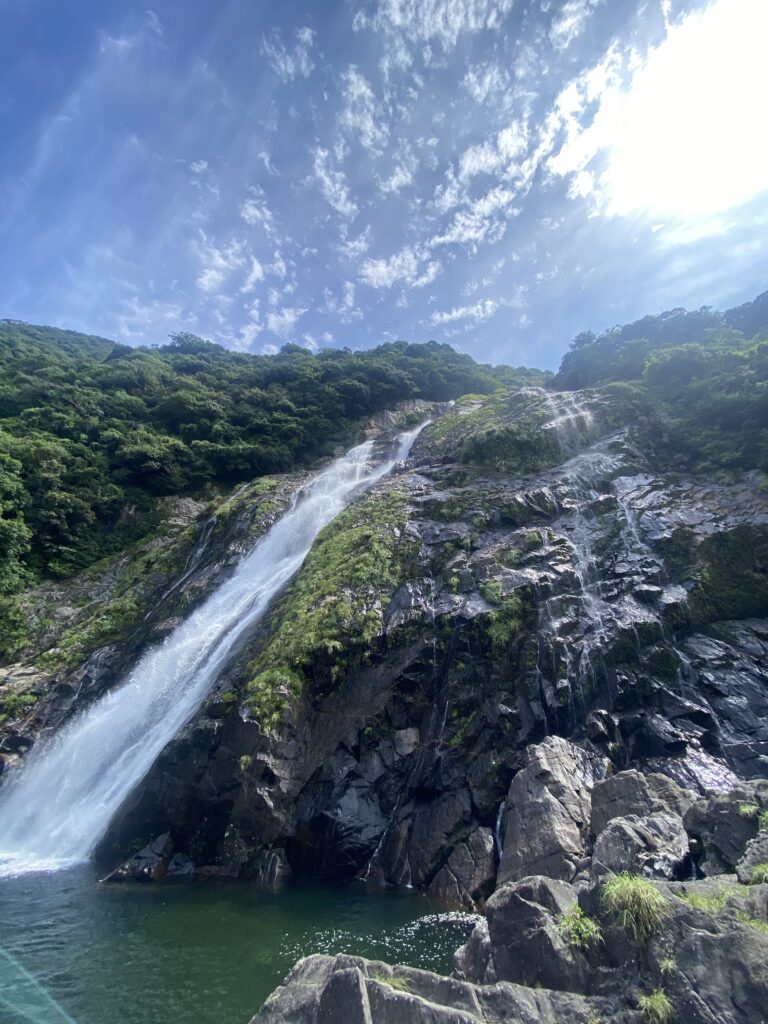 A 120 km west-coast loop that most Yakushima tourists skip — Ohko Falls, the Yokogawa swimming pools, the UNESCO Seibu Rindo wildlife corridor, and Nagata Inakahama beach. With 2026 driving practicalities and an honest hour-by-hour day plan.
 - Shonan at 5 AM in June 2026: Koyurugi Crossing, the Beach with Mt. Fuji, and the Coast Most Visitors Walk Past
 A pre-tsuyu, pre-crowd morning walk along the Shonan coast — Enoden trains, the small Koyurugi crossing, and Mt. Fuji from a beach almost no foreigner has heard of.
 - THE HOTEL YAKUSHIMA Ocean and Forest Review: A Quiet Architectural Stay on the North Shore
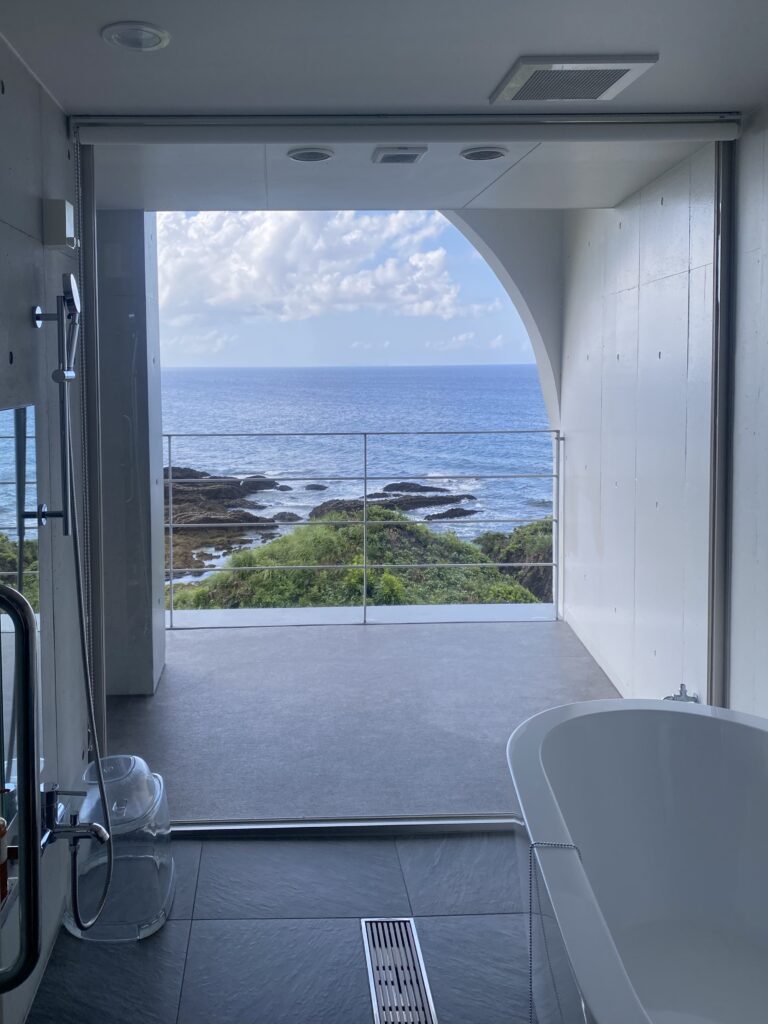 An architect-led 9-villa hotel on Yakushima north-west shore. Each room has an open-air bath that frames the Pacific through a concrete arch and a private balcony 25 meters above the rocks. What works, what does not, and who should book.
 - Shoji Ueda Museum 2026: The Concrete Building That Frames Mt. Daisen Like One of His Photographs
 A pilgrimage to photographer Shoji Ueda hometown museum in Tottori. Shin Takamatsu architecture, four black cubes, and the reflecting pool that frames Mt. Daisen.
 - Minamiza 2026: Kyoto’s 400-Year-Old Kabuki Theatre, Walked by a Kyoto-Born Local
 A Kyoto-born local walk through Minamiza, the Edo-period kabuki theatre on Shijo Bridge. 2026 schedule, ticket tiers, the English audio guide that opens it up.
2026 cherry blossom cherry blossoms day trip from tokyo flower festival fuji five lakes fujiyoshida Fukuoka fushimi hanami hiking japan japanese culture japanese food japan travel kamakura Kamikochi kanagawa kawagoe kawaguchiko Kumamoto kyoto Mount Fuji mt fuji Nagano Nikko Oku-Nikko Onsen Ramen ryokan saitama sakura Shizuoka shrine sightseeing spring spring in japan Tokyo travel travel guide Travel Guide 2026 when to visit japan winter winter travel Yamanashi
Join 1,000+ travelers discovering Japan's hidden side
Weekly dispatches from off-the-beaten-path Japan — spots and stories you won't find in guidebooks.
No spam. Unsubscribe anytime.
Welcome aboard!
You're in. See you in your inbox soon.