
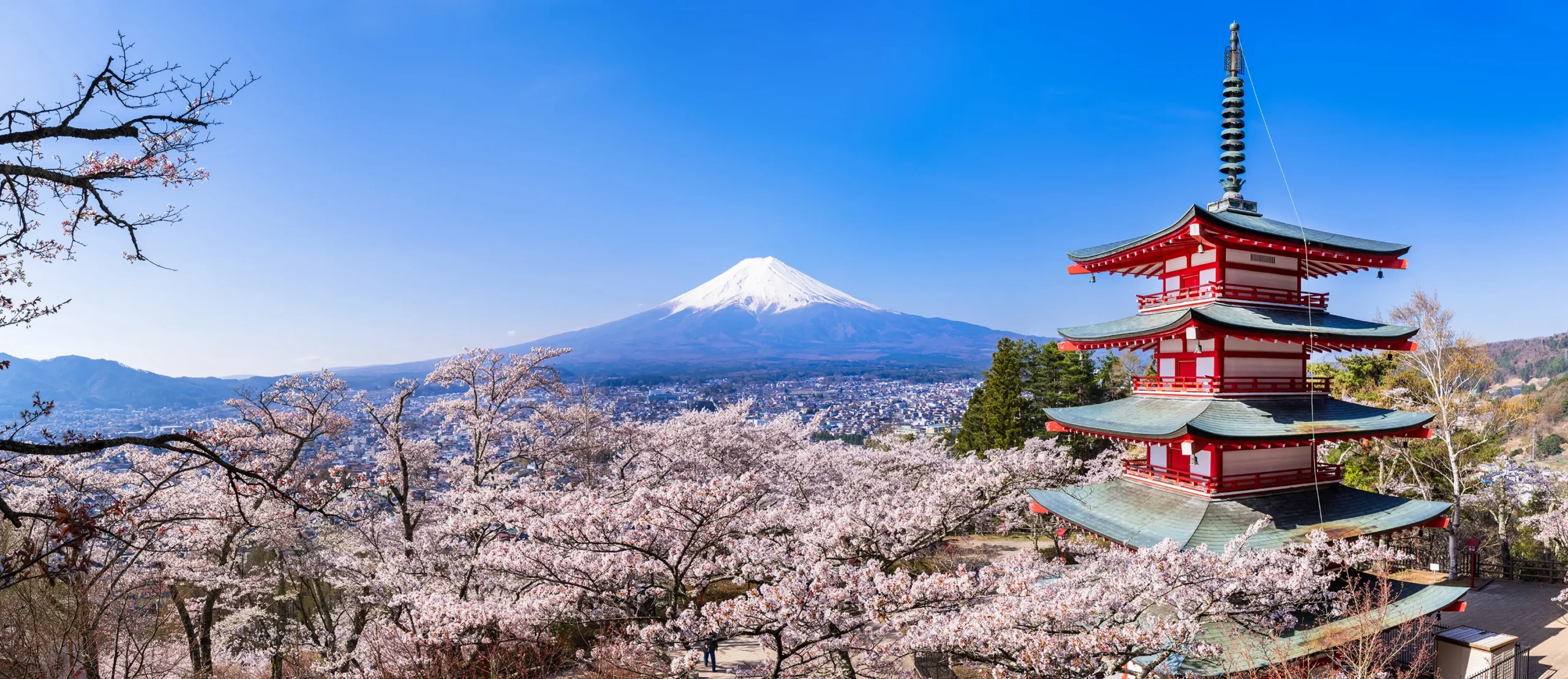

As Japan’s iconic peak, Mount Fuji provides a breathtaking backdrop for the country’s beloved cherry blossoms. While the sakura season in Tokyo and Kyoto often steals the spotlight, the Fuji Five Lakes region offers a later, often less crowded, and equally spectacular viewing experience. This guide provides the latest 2026 forecast, top viewing spots including the famous Chureito Pagoda, and essential tips for planning your visit.
For many travelers, capturing the quintessential photo of cherry blossoms with Mount Fuji is a bucket-list dream. The area, encompassing the Fuji Five Lakes (Fujigoko), offers numerous locations to see this stunning combination. However, due to its higher elevation, the blooming season here typically runs from early to late April, about one to two weeks after the peak in central Tokyo.
This 2026 guide will help you navigate the best viewing times and locations, with a special focus on the evolving situation at Arakurayama Sengen Park (home to the Chureito Pagoda), where crowd management measures have changed how visitors experience the blossoms.
Table of Contents
Quick Facts
| Feature | Details |
| Primary Location | Fuji Five Lakes (Fujigoko) area, Yamanashi Prefecture |
| Best Viewing (2026 Forecast) | April 8 – April 16 (Main areas like Kawaguchiko & Chureito Pagoda) |
| Later Viewing | Late April to early May (Higher elevations like Lake Yamanakako & Lake Motosuko) |
| Main Spots | Arakurayama Sengen Park, Lake Kawaguchiko, Lake Yamanakako, Oshino Hakkai |
| Access | Train or highway bus from Tokyo (Shinjuku) to Kawaguchiko Station |
| Crowd Level | High, especially at Chureito Pagoda and Lake Kawaguchiko. Weekdays and early mornings are better. |
| Key Event | Fuji Kawaguchiko Cherry Blossom Festival (March 28 – April 12, 2026) |
2026 Mt. Fuji Area Cherry Blossom Forecast
The cherry blossom season around Mount Fuji is highly dependent on elevation and local weather conditions. While forecasts are always subject to change, here is the most current prediction for 2026, based on data from the Japan Meteorological Corporation and local tourism sources .
Forecast Summary for Fuji Five Lakes:
•Opening (Kaika): Around April 1 – April 4
•Estimated Best Viewing (Mankai): Around April 8 – April 16
This timing is approximately 7 to 10 days behind central Tokyo, where the peak bloom is expected around the end of March. The cooler mountain climate at elevations of 700-1000 meters (2,300-3,280 ft) allows for a later, more prolonged season.
| Location | Altitude | 2026 Est. Best Viewing | Notes |
| Tokyo (Central) | Low | March 28 – March 31 | Baseline for comparison. |
| Arakurayama Sengen Park | Mid | April 8 – April 15 | Faces significant crowds. |
| Lake Kawaguchiko | ~830 m | April 8 – April 15 | Main festival area, popular. |
| Lake Yamanakako | ~980 m | Mid to Late April | One of the latest blooming spots. |
| Oshino Hakkai | ~936 m | Mid to Late April | Blooms a few days after Kawaguchiko. |
| Lake Motosuko | ~900 m | Late April to Early May | Ideal for late-season viewing. |
Source: Based on data from tenki.jp, Weathernews, and local guides . Dates are predictive and can change.
Top 5 Cherry Blossom Spots Around Mt. Fuji
1. Arakurayama Sengen Park (Chureito Pagoda)
Best Viewing: Mid-April
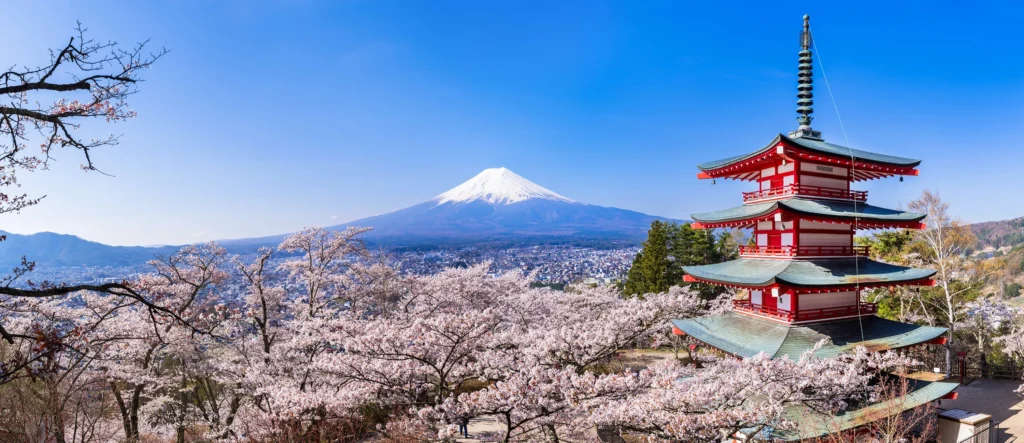
This is arguably the most famous and sought-after cherry blossom view in all of Japan. The combination of the five-storied Chureito Pagoda, a sea of pink sakura, and the majestic Mount Fuji is a photographer’s dream. However, its immense popularity, fueled by social media, has led to significant challenges with overtourism.
Important 2026 Update: No Sakura Festival
In a widely reported decision, the city of Fujiyoshida has canceled the official Arakurayama Sengen Park Cherry Blossom Festival for 2026 . This decision was made to mitigate extreme overcrowding that posed safety risks and caused major disruptions for local residents.
What this means for visitors:
•The park remains open: You can still access the park and the observation deck to see the view.
•Expect crowd control: Based on measures from previous years, expect timed entry, separate entry/exit routes, and potential waiting times of over an hour to access the main photo spot. The area is fenced, and access is strictly controlled.
•No festival stalls: There will be no food vendors, stage events, or other festival-related activities.
To get the iconic shot, you must climb approximately 400 steps (the “Sakuya-hime Stairs”) to the observation deck. The effort is rewarded with an unparalleled panorama.
2. Northern Shore of Lake Kawaguchiko
Best Viewing: Mid-April
As the most accessible of the Fuji Five Lakes, Lake Kawaguchiko is a hub for sakura viewing. The northern shore offers postcard-perfect views of Mount Fuji across the water, framed by cherry trees. The Fuji Kawaguchiko Cherry Blossom Festival is held here from March 28 to April 12, 2026, creating a lively atmosphere with food stalls and craft markets .
The best photo opportunities are along the lakeside promenade, particularly near the Kawaguchiko Music Forest Museum. In the evening, the trees are often illuminated, offering a different, magical perspective.
3. Lake Yamanakako
Best Viewing: Mid to Late April
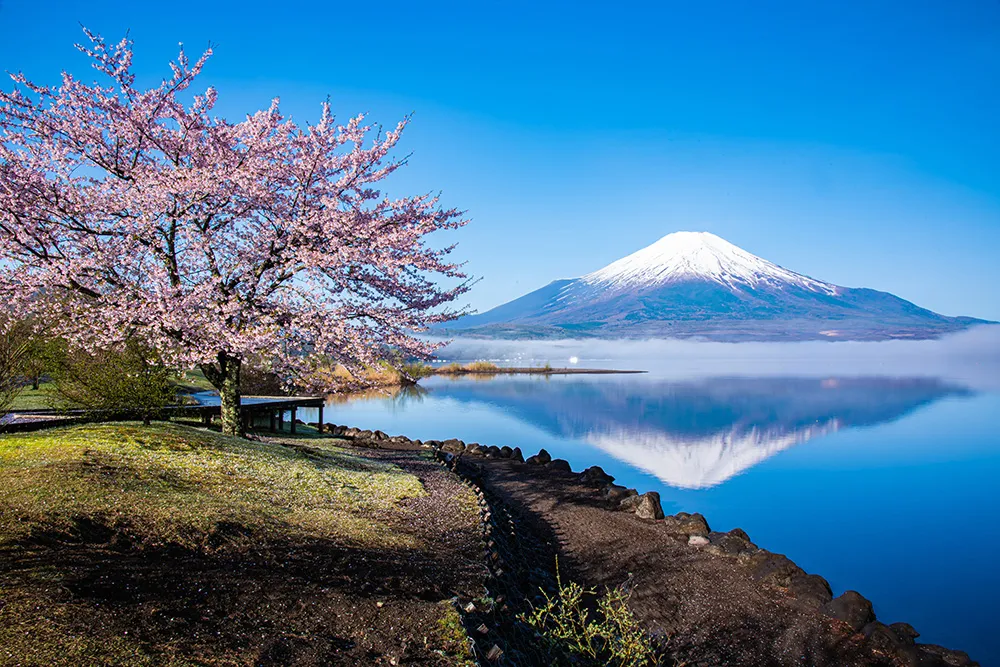
As the highest and largest of the Fuji Five Lakes, Lake Yamanakako’s cherry blossoms typically bloom about a week later than those at Lake Kawaguchiko. This makes it an excellent destination if you’ve missed the peak bloom elsewhere.
The Yamanakako Koryu Plaza Kirara is a prime spot, offering wide-open lawns and unobstructed views of Mount Fuji. The area is generally less congested than Kawaguchiko, providing a more relaxed atmosphere for hanami (cherry blossom viewing).
4. Oshino Hakkai
Best Viewing: Mid to Late April
Oshino Hakkai is a set of eight ponds fed by snowmelt from Mount Fuji, known for their crystal-clear water. A 400-meter stretch of cherry trees along the Shin-nasho River creates a beautiful tunnel of blossoms. From the bridge near the Shibokusa Sengen Shrine, you can capture a classic view of the sakura-lined river with Mount Fuji in the background. The blossoms here also tend to peak a few days after Lake Kawaguchiko.
5. Other Fuji Five Lakes (Saiko, Shojiko, Motosuko)
Best Viewing: Late April to Early May
For those seeking tranquility and to escape the main crowds, the western lakes offer a more rustic and serene experience.
•Lake Saiko: Visit the Iyashi no Sato open-air museum, a reconstructed traditional village where weeping cherry trees are planted along its main street, offering views of Mt. Fuji.
•Lake Shojiko & Lake Motosuko: These less-developed lakes are perfect for late-season viewing. While there are fewer dense groves of cherry trees, the ones that dot the shoreline provide a wild, natural beauty against the backdrop of the mountain.
How to Get There
The primary gateway to the Fuji Five Lakes area is Kawaguchiko Station.
•By Train: From JR Shinjuku Station, take the JR Chuo Line Limited Express to Otsuki Station (about 60 mins). Transfer to the Fujikyu Railway Line for Kawaguchiko Station (about 60 mins).
•By Bus: Direct highway buses operate from the Shinjuku Expressway Bus Terminal (Busta Shinjuku) to Kawaguchiko Station. The journey takes approximately 2 hours and is often the most convenient option.
From Kawaguchiko Station, local buses (such as the Omni Bus Red, Green, and Blue lines) provide access to the different lakes and viewing spots.
•To Arakurayama Sengen Park: Take the Fujikyu Railway Line from Kawaguchiko to Shimo-Yoshida Station (15 mins), followed by a 15-20 minute walk.
Practical Tips for Your Visit
•Go Early:
This is the single most important tip, especially for Arakurayama Sengen Park. Arriving before 8:00 AM can help you avoid the worst of the crowds.
•Check the Forecast:
Sakura bloom times are sensitive to weather. Check the latest forecasts just before your trip.
•Book Accommodation in Advance:
Hotels and ryokans around Kawaguchiko get fully booked months in advance for the sakura season.
•Dress in Layers:
The weather in the mountains can be unpredictable. A warm jacket is recommended, even on a sunny day.
•Consider a Weekday Visit:
If your schedule allows, visiting on a weekday will be significantly less crowded than on a weekend.
Where to Stay Nearby
•Kawaguchiko: Offers the widest range of hotels, ryokans, and restaurants. Many accommodations on the northern shore offer direct Fuji views from the room.
•Fujiyoshida: A good base for early morning access to the Chureito Pagoda. Fewer tourist amenities but offers a more local feel.
•Yamanakako: Ideal for a quieter stay and for those with a rental car, offering beautiful lakeside views.
Frequently Asked Questions (FAQs)
Q1: Is the Chureito Pagoda closed in 2026?
No, the pagoda and park are open. However, the official sakura festival is canceled. Expect significant crowd control measures at the photo deck.
Q2: When is the absolute best time to see cherry blossoms with Mt. Fuji?
For 2026, the second week of April (around April 8-15) is predicted to be the peak for the most popular spots like Chureito Pagoda and Lake Kawaguchiko.
Q3: Can I do a day trip from Tokyo?
Yes, a day trip is possible, but it will be a long day. To make the most of it, take the earliest bus or train from Tokyo.
Q4: Is it better to drive or use public transport?
Public transport is highly recommended. Traffic and parking during the sakura season can be extremely congested, especially around the main viewing spots.
Q5: Are drones allowed?
Generally, flying drones over crowded areas and in national parks is prohibited in Japan. Always check local regulations for each specific location.
Sources
[1] Japan Meteorological Corporation. “2026 Cherry Blossom Forecast.” (Link to be updated)
[2] tenki.jp. “Sakura Forecast 2026.” (Link to be updated)
[3] Fujikawaguchiko Tourist Information. “Fuji Kawaguchiko Cherry Blossom Festival 2026.”

- Mt. Fuji Cherry Blossom Guide 2026 : Forecast & Best SpotsAs Japan’s iconic peak, Mount Fuji provides a breathtaking backdrop for the country’s beloved cherry blossoms. While the sakura season in Tokyo and Kyoto often steals the spotlight, the Fuji… Read more: Mt. Fuji Cherry Blossom Guide 2026 : Forecast & Best Spots
- Nishiura Fujiyoshida: A Journey Through Time in a Retro Showa District
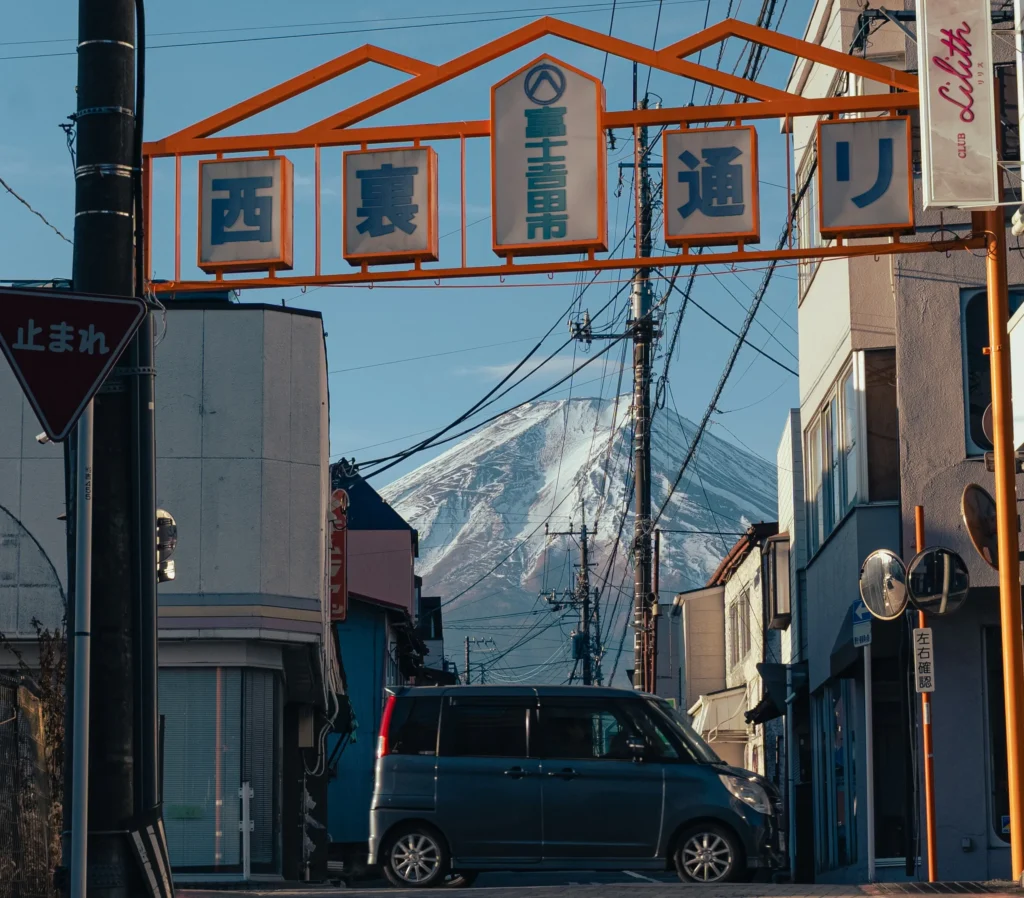 Nestled at the base of Mt. Fuji, the city of Fujiyoshida is known for its deep connection to the textile industry. But beyond the hum of weaving machines lies a… Read more: Nishiura Fujiyoshida: A Journey Through Time in a Retro Showa District
 - Your Complete Guide to Lake Yamanakako Access (2026)
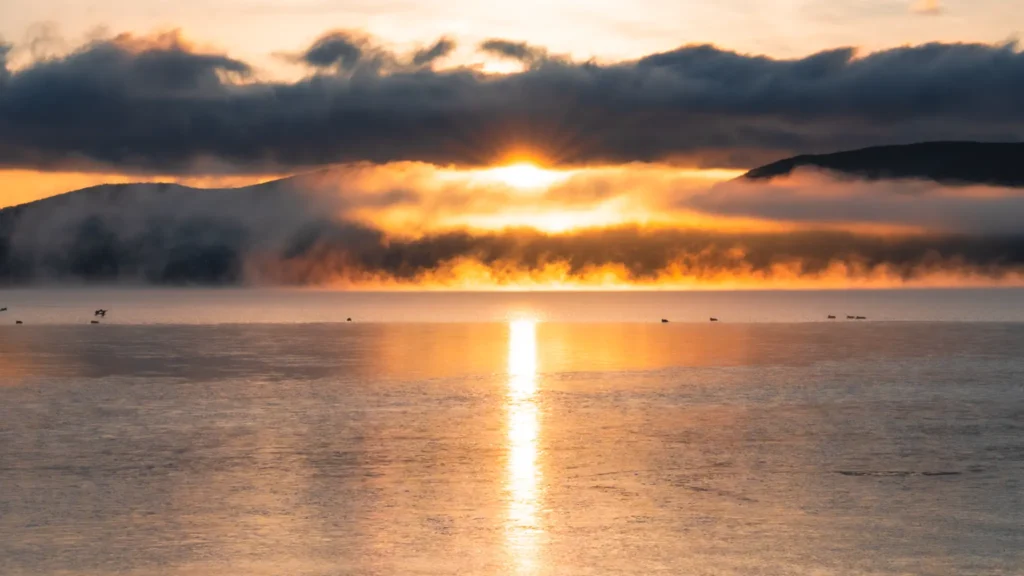 Nestled at the foot of Mt. Fuji, Lake Yamanakako offers some of the most breathtaking views in Japan, from the iconic “Diamond Fuji” to serene swans gliding on its waters… Read more: Your Complete Guide to Lake Yamanakako Access (2026)
 - Tenku no Torii Kawaguchiko: A Complete Guide to the Sky Torii 2026
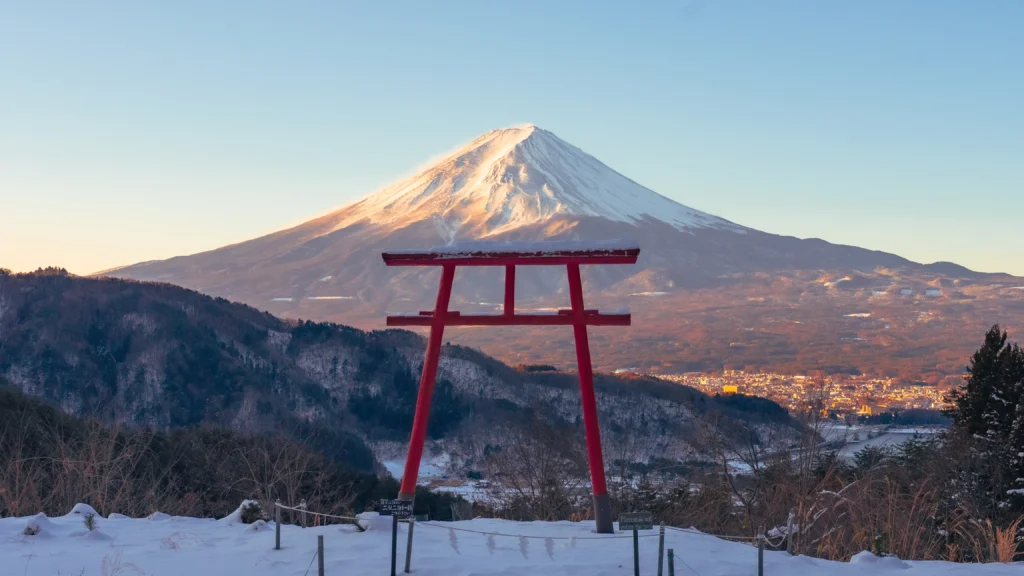 Floating above Lake Kawaguchi with a breathtaking view of Mt. Fuji, the Tenku no Torii Kawaguchiko (富士山遥拝所, Fujisan Yohaijo) has quickly become one of the most iconic photo spots in… Read more: Tenku no Torii Kawaguchiko: A Complete Guide to the Sky Torii 2026
 - Climbing Mt Fuji in Winter: A Rescuer’s Urgent Warning
 When you picture Mt. Fuji, you might imagine a vibrant summer climb, surrounded by fellow hikers under a warm sun. But for nine months of the year, from September to… Read more: Climbing Mt Fuji in Winter: A Rescuer’s Urgent Warning
2026 cafe cherry blossom cherry blossoms day trip from tokyo edo period enoden flower festival fuji five lakes fujiyoshida Fukuoka hanami hiking japan japanese culture japanese food japan travel kamakura kawagoe kawaguchiko kawazu sakura Kumamoto kyoto local food Mount Fuji mt fuji Nagano new year holiday nightlife noodles oita Onsen Ramen Saga sakura Shizuoka shrine spring in japan spring travel Tokyo travel travel guide travel planning winter travel Yamanashi