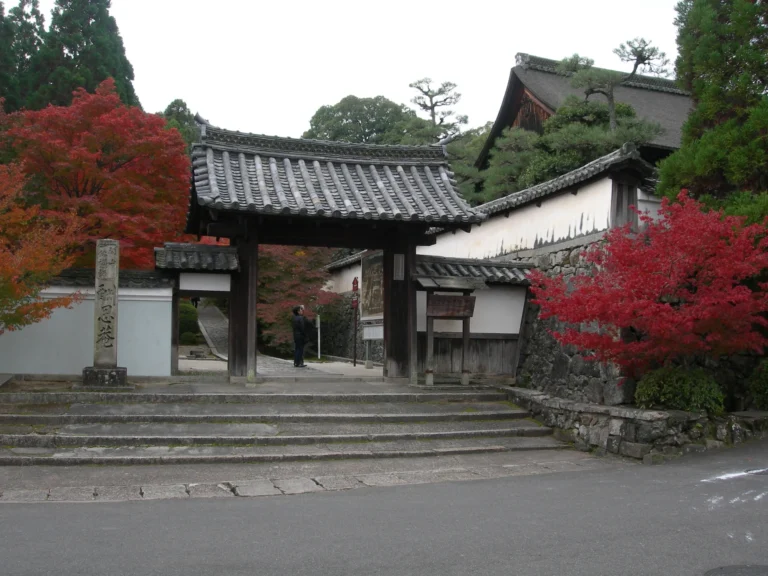
Kyoto · Kyotango Mineyama · Sea of Japan
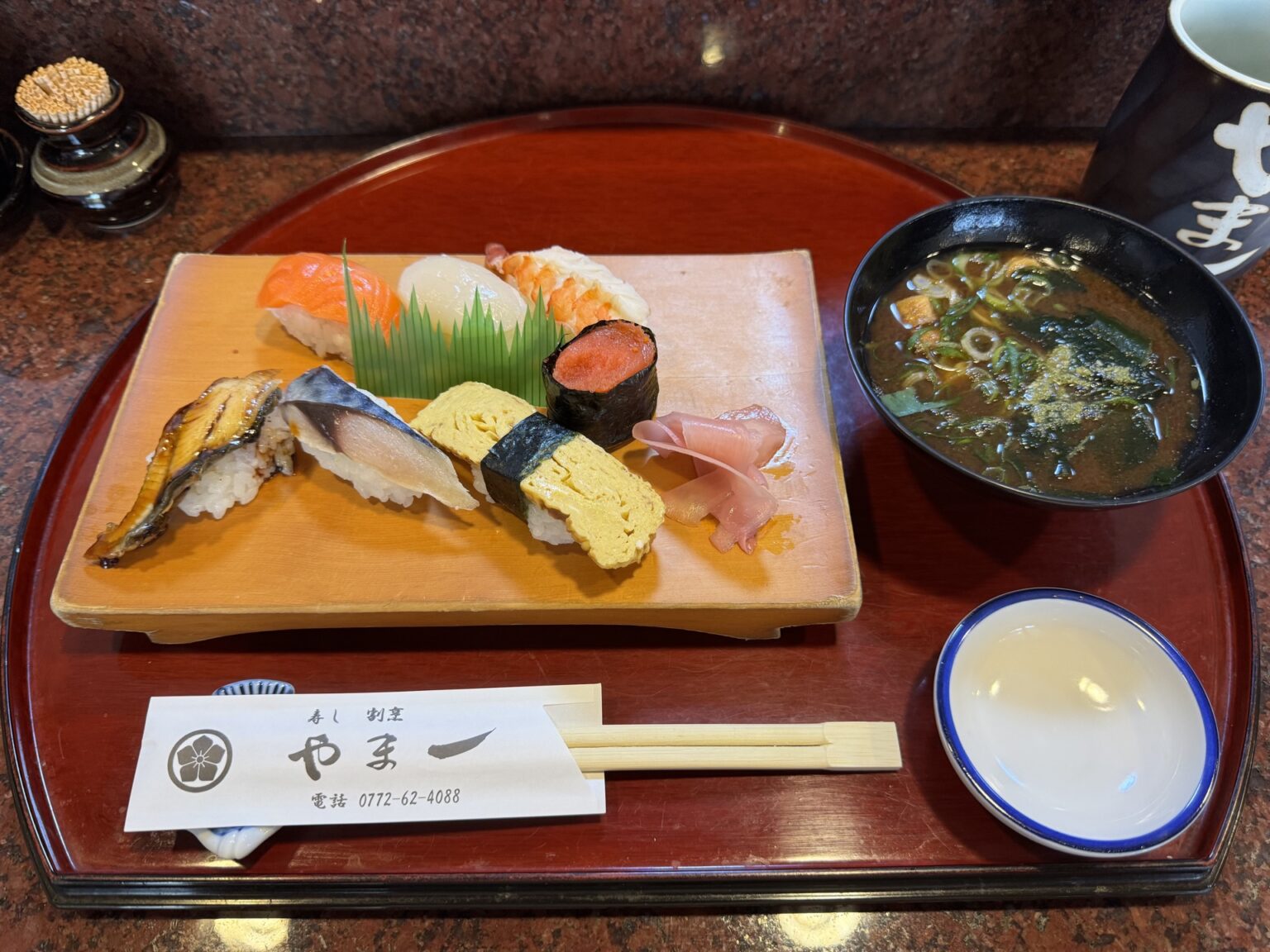
Sushi-Kappo Yama-ichi is a long-established sushi and kappo restaurant in Mineyama-chō, Kyotango City, on the central Tango Peninsula about 30 km north-west of Amanohashidate, serving a lunchtime sushi set under ¥2,000 that uses the same morning Tango-coast catch as the famous ryotei thirty minutes north — at one-fifth the price. A 5-minute walk from KTR Mineyama Station, no reservation required for lunch, and a vibrant tuna-maki that arrives still bleeding red at the cut surface.
I have eaten enough sushi sets in Japan to know when I’m being served the same fish that the ryotei across town serves at five times the price. Yama-ichi’s lunch sushi is that case. The Tango-coast fisheries (Amino, Tateiwa, Kumihama ports) sit at the southern end of the Sea of Japan and produce some of the most consistent sushi-grade catches in western Japan — buri in winter, kohada in spring, akami tuna year-round, sumi-ika (squid) when the season turns. The high-end ryotei buy from the same morning auction Yama-ichi buys from. The difference is that Yama-ichi puts the fish on rice with no ceremony and charges you ¥1,500 instead of ¥10,000. This is the case for treating it as the default lunch stop for anyone visiting Amanohashidate.
30-second summary
What it is: An old-school sushi and kappo (sushi + traditional set-meal) restaurant in central Mineyama-chō (Kyotango City), 5 min walk from KTR Mineyama Station.
The order: Lunch sushi set — 8 nigiri + tamago + maki + miso soup + gari, ¥1,500-1,800 range depending on day’s catch.
When to come: Lunch 11:30–14:00 (last order 13:30). Walk in, no reservation. Dinner is omakase course only and requires booking.
Quick Facts
Location
Sushi-Kappo Yama-ichi (鮨・割烹 やま一). 〒627-0042 京都府京丹後市峰山町長岡473-1 · Kyotango City, Mineyama-chō, Nagaoka 473-1. 5 min walk from KTR Mineyama Station.
Phone
0772-62-4088. Recommended for dinner; walk-in for lunch usually works.
Hours
Lunch 11:30 – 14:00 (L.O. 13:30) · Dinner 17:00 – 21:00 (L.O. 20:30). Closed irregularly — call ahead on weekdays.
Price Range
Lunch ¥1,500-2,500 per person (sushi set basic, chirashi, mini-kaiseki) · Dinner from ¥5,500 for the seasonal omakase.
Distance from Amanohashidate
~25 min by KTR limited express or ~40 min by car from Amanohashidate Station. Pair as the Mineyama-side lunch when you go north of Amanohashidate.
Payment
Cash + major credit cards + IC cards (Suica/ICOCA). PayPay accepted.
The Lunch Set: What Arrives on the Tray
The standard lunch set is eight pieces of nigiri, a slab of dashimaki tamago, six pieces of small maki, miso soup, and pickled ginger — all on a lacquered wooden tray for under ¥2,000. The specific nigiri rotate based on the morning’s catch; what’s consistent is that everything on the tray was caught or prepared within the last 24 hours.
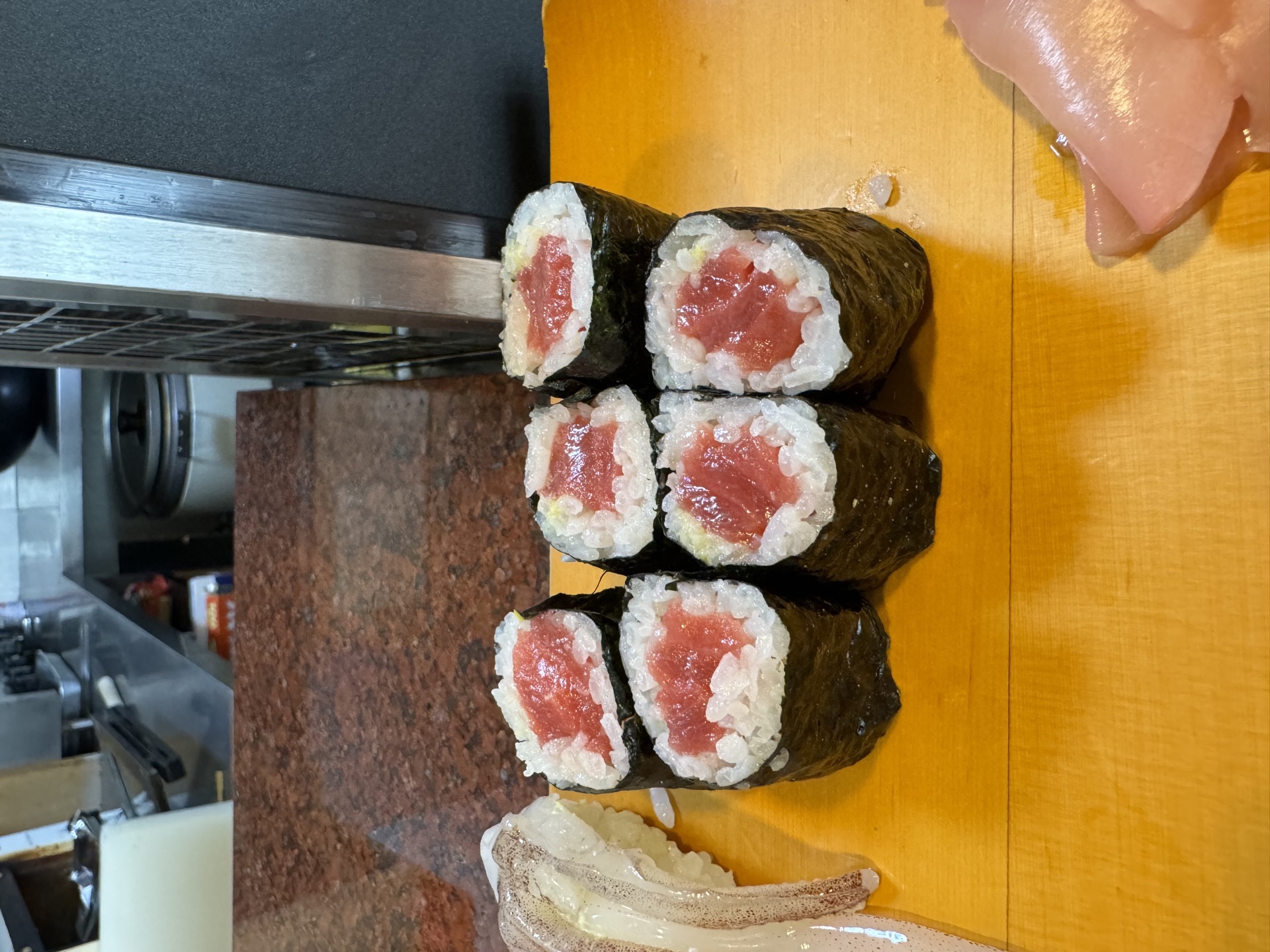
What’s typically on the tray
Akami Tuna
赤身マグロ
Lean tuna, year-round but peak Nov-Feb. The standout colour in our photo.
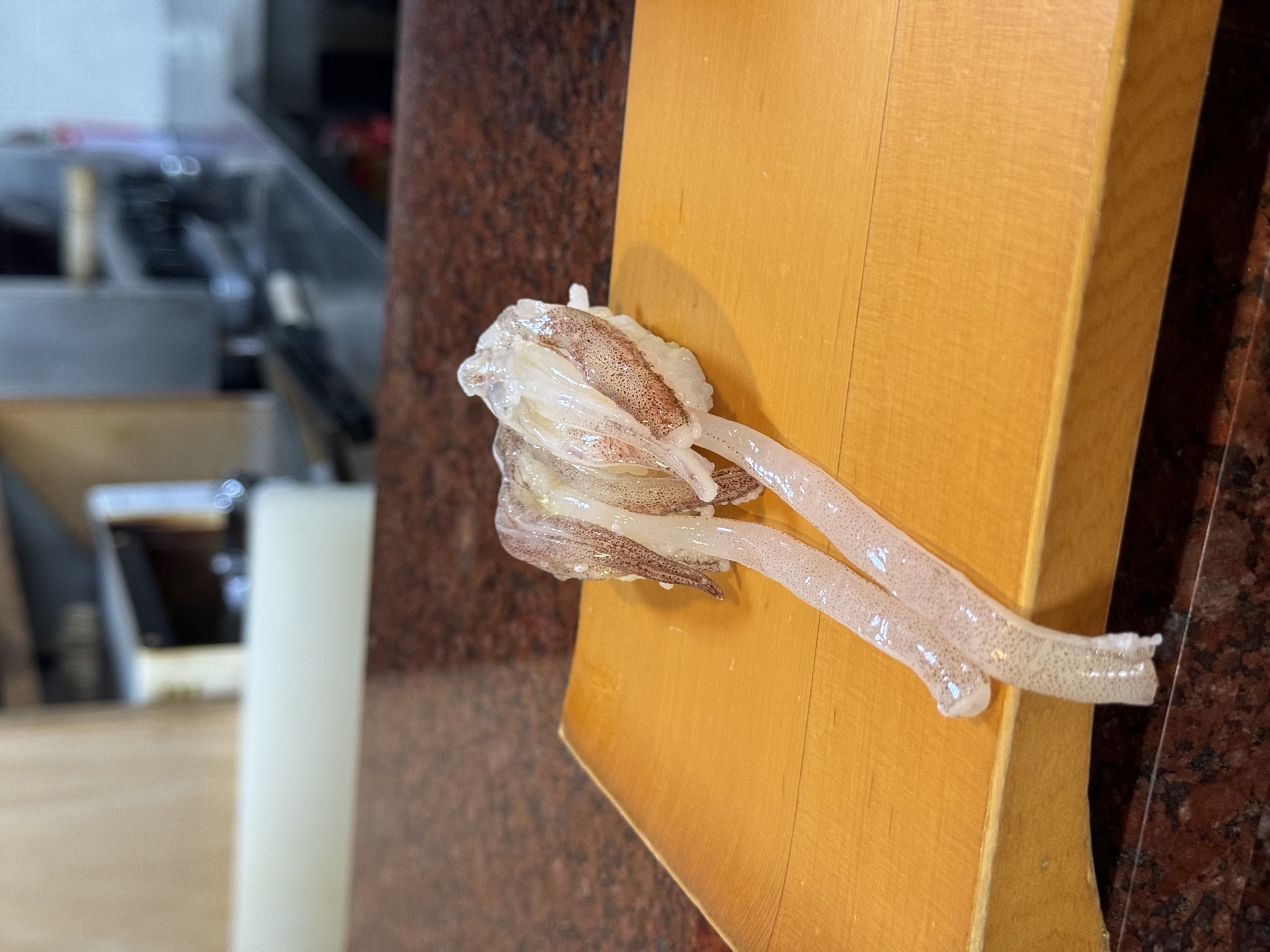
Sumi-ika (Squid)
スミイカ
Local Tango-port sumi-ika, served with tentacle on top. Translucent flesh.
Salmon
サーモン
The crowd-pleaser nigiri. Hokkaido-sourced, served lightly torched.
Sayori or Kohada
サヨリ/コハダ
Seasonal small-fish slot. Spring kohada, autumn sayori — depends on day.
Saba (Mackerel)
サバ
Tango-coast saba, lightly vinegared. The fishy umami you came for.
Tamago
玉子
Dashimaki-style tamago — slightly sweet, dashi-based, more interesting than the standard sushi-yaki.
One detail to notice: the rice. Most rural Japanese sushi shops use plain unseasoned rice or over-vinegared rice; Yama-ichi’s shari is moderately vinegared and served at body temperature (~37°C), not the cold rice many casual sushi chains use. This is a Kappo discipline — the rice is part of the dish, not just a vehicle for the fish.
The Shop: a Working Sushi-Kappo, Not a Tourist Restaurant
Yama-ichi is a working neighbourhood sushi-kappo. The interior is unfussy — wooden counter at the front for omakase regulars, tables in the back room for the lunch set crowd, and a single massive timber slab in the entrance hall that the previous owner installed in the 1970s. There are no English menus on display, but the staff will work through the lunch set order via gestures and pointing if needed.
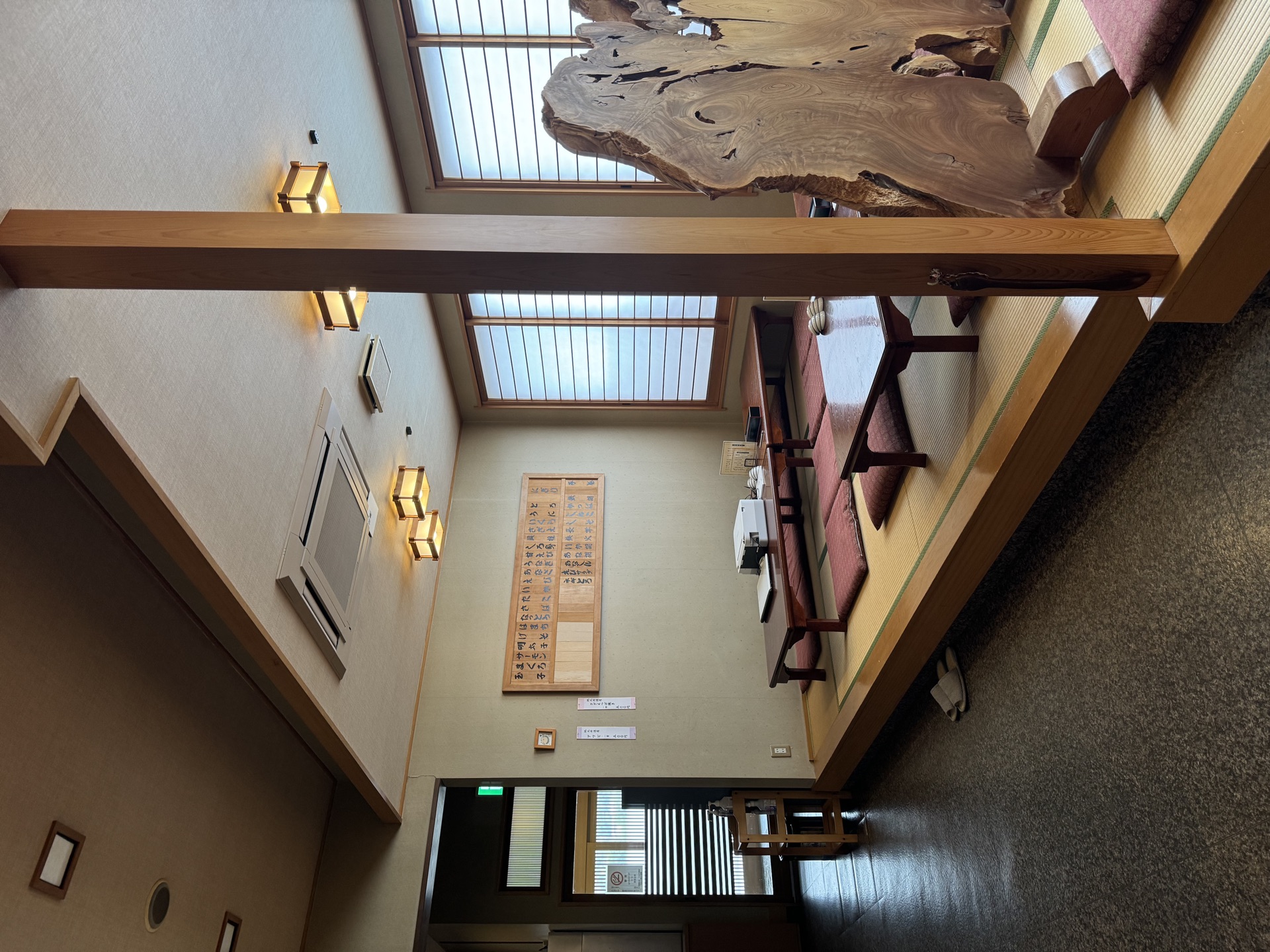
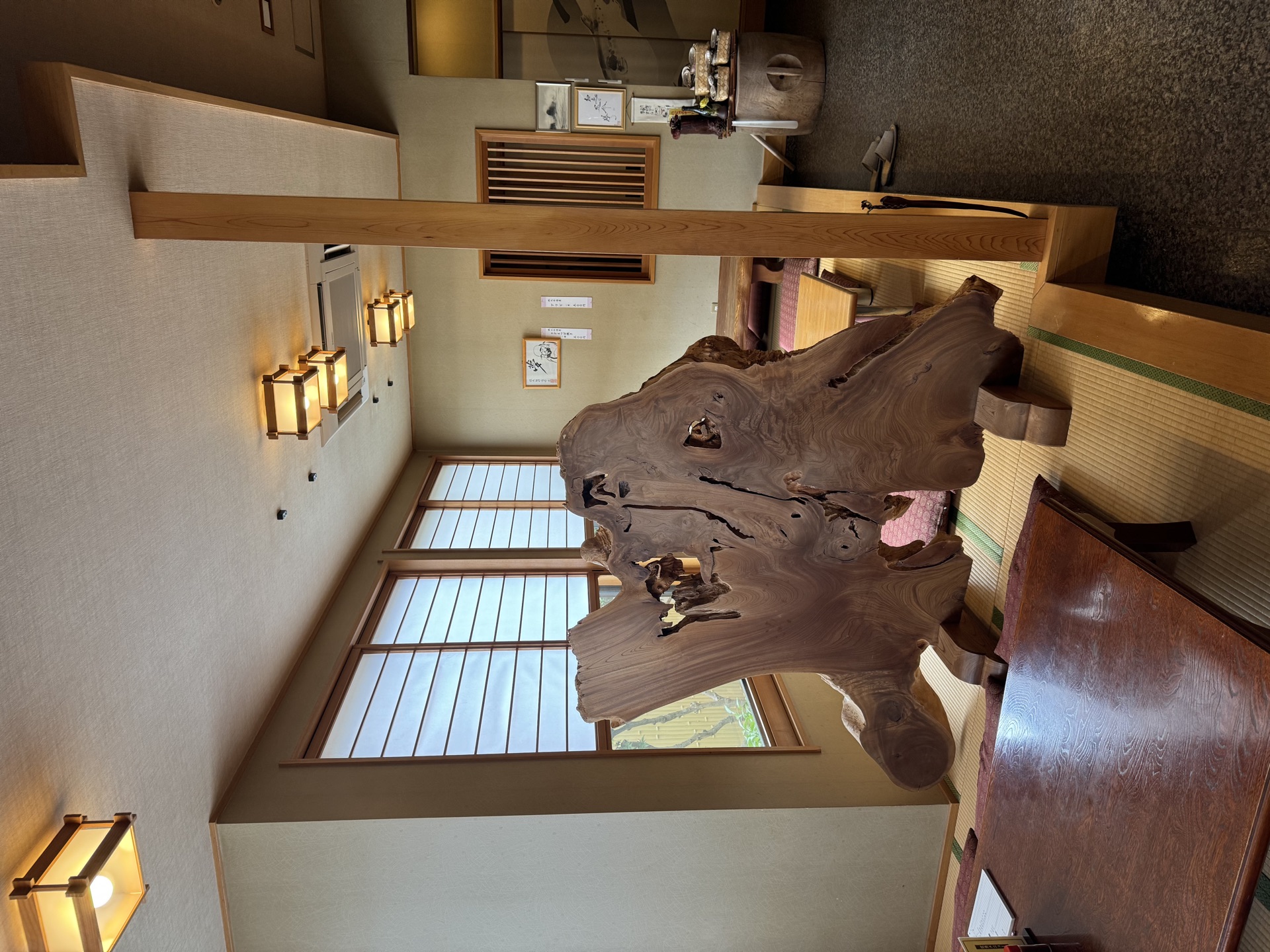
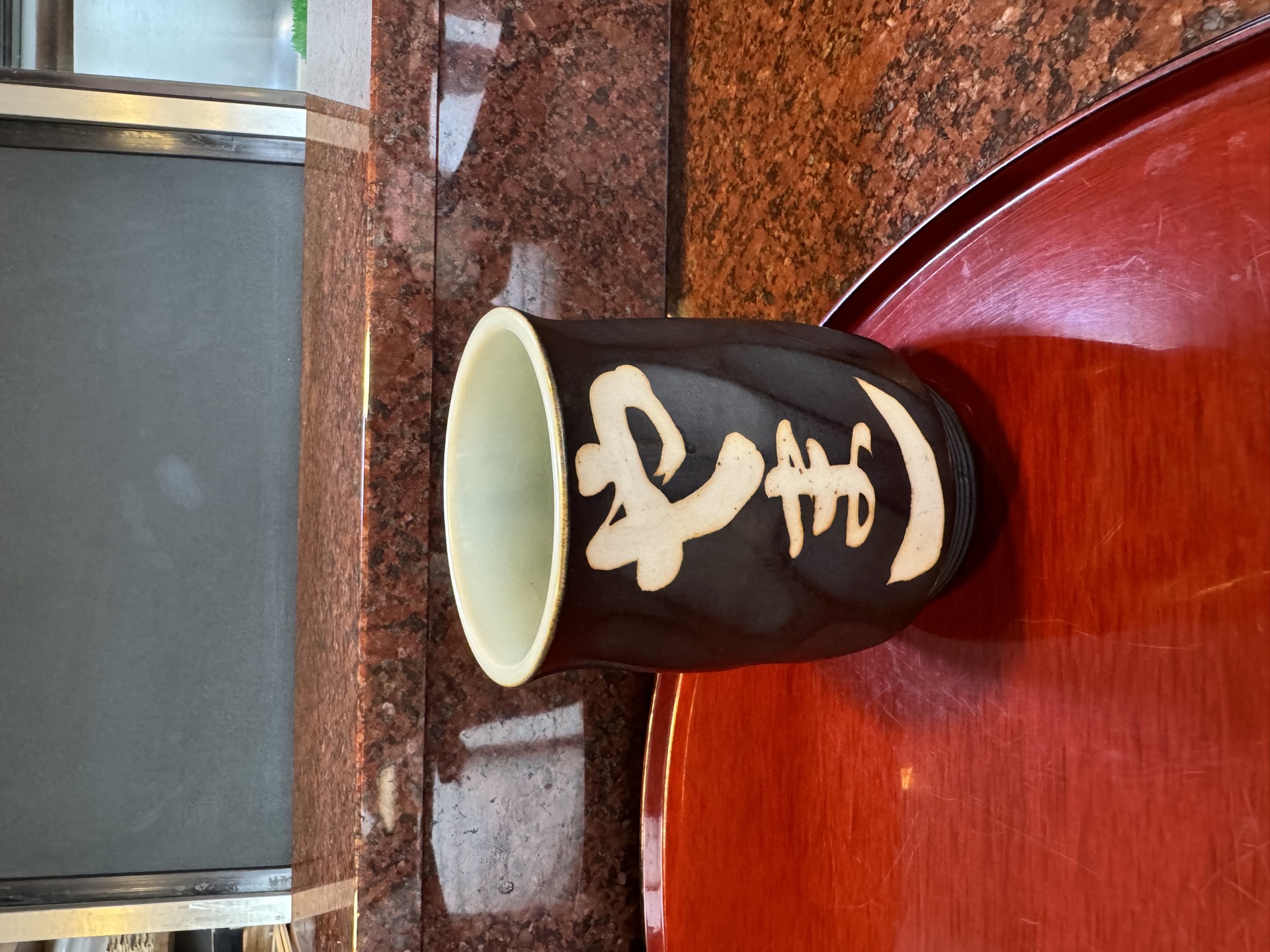
The yunomi (tea cup) you’ll be handed has the shop’s name “やま一” brush-painted in white on a black glaze — a small Mashiko-style ceramic that you can spot on the counter from the door. It is one of those details that wouldn’t matter if everything else were sloppy and that gives you confidence when everything else is careful.
“Same morning catch as the ryotei, at lunch-set prices.”
How to Get There
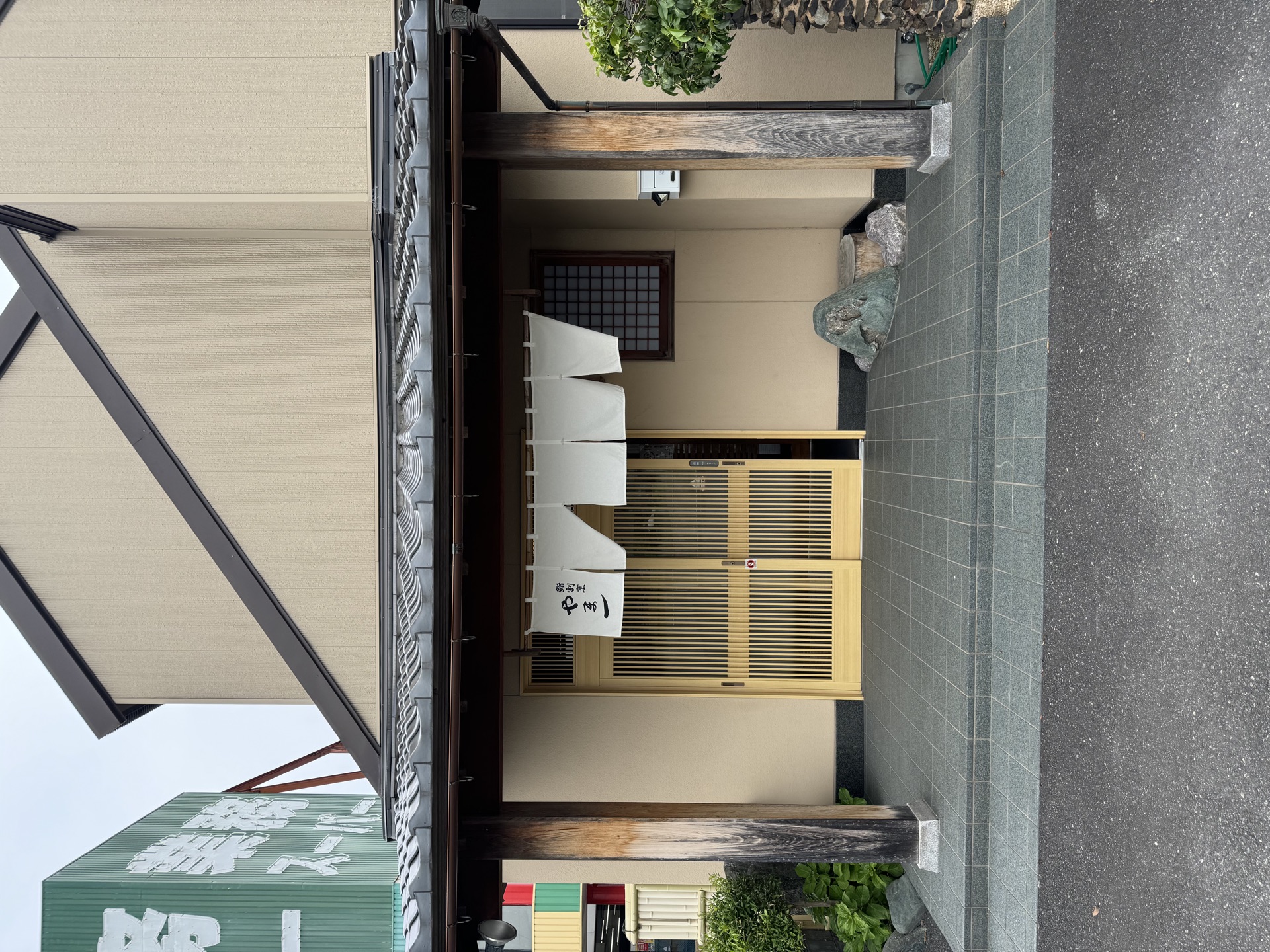
KTR Mineyama Station is the central transport hub for Kyotango City on the Kyoto Tango Railway (KTR), about one stop north of Amanohashidate on the limited-express line. Yama-ichi sits about 5 minutes’ walk from Mineyama Station, on a quiet side street near the Nagaoka residential area.
| From | Route | Time |
|---|---|---|
| Kyoto Station | JR San’in (Sagano) Line → Fukuchiyama → KTR Limited Express to Mineyama | ~2h 30min |
| Osaka Station | JR Special Express “Konotori” → Fukuchiyama → KTR | ~2h 30min |
| Amanohashidate Station | KTR Limited Express north to Mineyama — one stop | ~25 min |
| By car from Kyoto | Kyoto-Jūkan Expressway → Maizuru-Wakasa → Yosano IC | ~2 hours |
| From Mineyama Station to Yama-ichi | Walk 5 min through the Nagaoka residential street | 5 min |
Pair the Visit With (Half-Day Tango / Amanohashidate)
+30 min: Amanohashidate sandbar walk (15 min by KTR north)
The 3.6 km pine-tree sandbar across Miyazu Bay (south of Mineyama) is one of Japan’s three official “scenic trios” (alongside Matsushima and Miyajima). Walk it (45-60 min one-way) or bike it. The Kasamatsu viewpoint at the north end gives you the “looking-between-your-legs” inverted view of the sandbar that Edo-period travel writers documented.
+45 min: Mōroku-ji / Smartphone Temple Chionji
Smaller temple at the south entrance of Amanohashidate. Famous for its “wisdom mochi” stalls and the Edo-era cultural-property gate. 10-minute walk from Amanohashidate Station, attaches to the sandbar walk.
Overnight: Funaya boathouses at Ine
50 min north by car or bus — the famous traditional boathouse-village. If you’re in this region for two days, the Ine funaya overnight is the standard pairing. Yama-ichi for lunch day one, drive to Ine for sunset.
Plan This Trip
Plan This Trip
For Southeast Asian Visitors
Kyotango (Mineyama) and Amanohashidate are off the standard Kyoto route, which is the point — by the time you arrive here from Singapore, KL, Bangkok, Jakarta or Manila via Kyoto, you’ve earned a meal that doesn’t have a tourist mark-up. Yama-ichi’s lunch set is one of the cheapest authentic sushi experiences in greater Kansai at ¥1,500-2,000 per person. Halal note: raw fish is acceptable in most interpretations, but the rice contains rice vinegar (which is non-alcoholic in standard sushi rice). The miso soup contains dashi typically based on dried bonito (katsuobushi). Vegetarian: the tamago and several maki rolls (cucumber, ume-shiso) are vegetarian-friendly; ask for the “yasai” version of maki. Mid-November through February gives the best winter buri / yellowtail catch — peak Tango-coast season.
FAQ
Do I need to make a lunch reservation?
For the standard sushi set: no. Walk in any weekday between 11:30 and 13:30 and you’ll get a table within 5 minutes. Weekends and summer holiday periods (Obon, Golden Week) can have a 15-20 minute wait — call ahead at 0772-62-4088 if you want to be sure. For dinner omakase, reservations are required (24h ahead minimum).
Is there an English menu?
No formal English menu. The lunch options are limited enough (basic sushi set, chirashi, mini kaiseki) that pointing at the photo board or saying “ranchi setto onegaishimasu” works fine. The staff is friendly and patient with non-Japanese speakers — the shop has been getting Amanohashidate-bound international visitors for years.
How is the sushi different from a Tokyo sushi-ya?
Tokyo sushi sources fish from Toyosu market (concentrated, multi-region). Kyotango/Tango sushi sources directly from the Tango fishing ports (single-region, single-morning). The result is less variety (no obscure tuna grades, no Kyushu specialties) but more consistent texture and a closer relationship to one specific water. For Sea of Japan-style sushi specifically — squid, mackerel, winter buri — Yama-ichi is closer to source than any Tokyo equivalent at this price.
Can I do Yama-ichi as a Kyoto day-trip?
Tight but possible. Leave Kyoto Station 9:00, arrive Mineyama 11:30, lunch at Yama-ichi 11:45, walk Amanohashidate sandbar 13:30, back at Kyoto Station by 18:30. Workable but rushed. A two-day plan with one night in Amanohashidate is the comfortable version.
What’s the chirashi like?
The chirashi-don option (~¥1,800) is the same sushi neta arrangement served over rice in a lacquered bowl instead of as individual nigiri. Useful if you don’t like the formality of individual sushi pieces. Slightly less of a “showcase” of the morning’s catch, but the fish quality is identical.
Is the dinner omakase worth the price jump?
Yes if you’re staying in the Kyotango / Amanohashidate area and have an evening to spare. The dinner course (~¥5,500-8,000 depending on season) adds steamed dishes, grilled fish, a small sashimi platter, and a more developed sushi sequence including the chef’s choice cuts. The lunch is the “introduction”; the dinner is the “thesis.” Pair with the local Tango sake on the menu.
Can children eat here?
Yes. The shop has table seating in the back room (away from the omakase counter) and the staff are happy to bring out simpler items for kids — tamago, kappa maki, cooked items. The standard set is suitable for primary-school-age kids; younger children may struggle with the raw fish but the tamago, maki, and miso soup are kid-safe.
Booking the Trip
Booking the Trip
Three doors into a Kyotango / Amanohashidate overnight. Yama-ichi lunch is the first reliable meal once you arrive.
Related Reading
- Best Hotel Booking Sites for Japan 2026 — Where to find Amanohashidate ryokan inventory at the best price.
- Practical Hotel Booking Guide — 5 platforms tested; the 10-25% ryokan trick is relevant for rural Tango bookings.
- Japan Cash vs Card 2026 — Useful context for paying in rural Tango/Kyotango shops.
Join travelers discovering Japan's hidden side
Weekly dispatches from off-the-beaten-path Japan — spots and stories you won't find in guidebooks.
No spam. Unsubscribe anytime.
Welcome aboard!
You're in. See you in your inbox soon.
![Adashino Nenbutsuji 2026: Kyoto's Temple of 8,000 Stone Buddhas [With Map]](https://hiddenjapan-gems.com/wp-content/uploads/2026/04/DSC2083-2-2-768x432.webp)