2026 Update: As of October 2024, the morning prayer time has been standardized to 5:30 AM year-round. Previously, the schedule changed with the seasons, and many third-party websites still show outdated information. If you are planning a visit, set your alarm for 4:00 AM to catch the bell ringing before the 5:30 AM service.
It is 4:45 AM, and the mountain air in Yamanashi Prefecture is biting cold. You step out of your shukubo (temple lodging) into the pitch black, guided only by the beam of your flashlight and the towering silhouettes of ancient cedar trees. Then, precisely at 5:00 AM, a sound reverberates through the valley—a deep, resonant boom that seems to vibrate through your chest before echoing into the darkness.
This is the sound of the Great Bell at Minobusan Kuonji (身延山久遠寺), signaling the start of a daily ritual that has continued for centuries. For spiritual travelers, photographers, and those seeking an authentic connection to Japanese Buddhism, attending the morning prayer service (Asa-zutome) at Kuonji is an experience that makes other temple visits feel like mere tourism.
Unlike many exclusive religious ceremonies, anyone can attend the morning prayer at Kuonji, regardless of faith. There is no reservation required and no cost to enter. You just need to show up before 5:30 AM.
For a complete overview of the temple grounds, cherry blossoms, and how to get there, see our Complete Guide to Minobusan Kuonji Temple. This article focuses specifically on how to experience the morning bell and prayer service.
Quick Facts: Kuonji Morning Service
Detail
Information
Morning Bell Time
5:00 AM daily
Prayer Service Time
5:30 AM daily (Year-round)
Location
Main Hall (Hondo), Minobusan Kuonji
Who Can Attend
Open to the general public (Buddhists and non-Buddhists)
Cost
Free (Optional Okaicho viewing is ¥2,000)
Reservations
Not required
Photography
Prohibited inside all temple buildings
What to Bring
Flashlight, warm layers (especially in winter), socks
The Great Bell (Daisho) at Kuonji is struck every morning at 5:00 AM. Cast in 1624, the 6-ton bronze bell produces a sound that carries for four kilometers across the mountain valley.
The Great Bell (Daisho): An Acrobatic Tradition
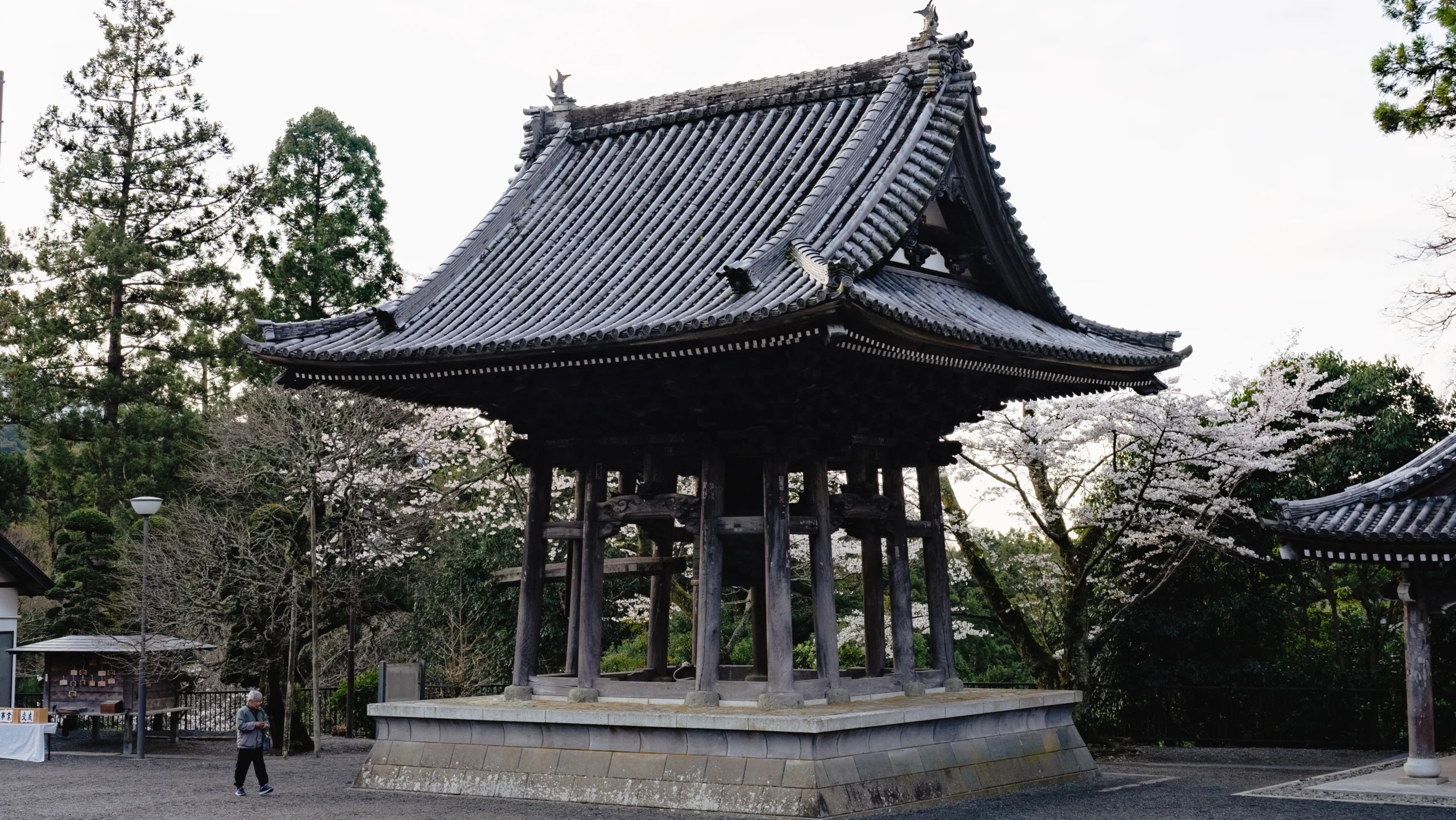
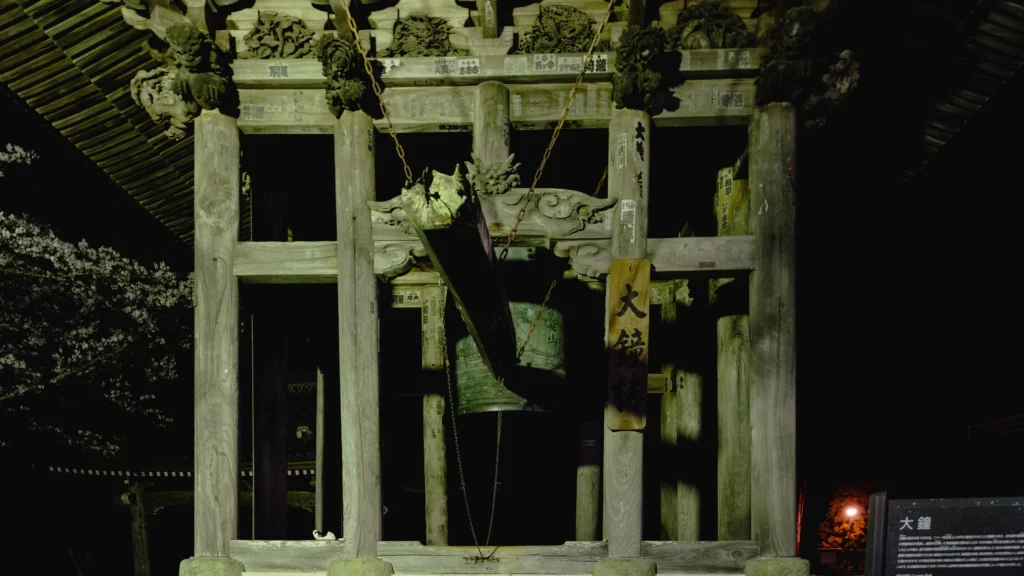
Before the prayer service begins, you must witness the ringing of the Great Bell. Cast in 1624 and donated by a concubine of Tokugawa Ieyasu, this 6-ton bronze bell stands 2.4 meters tall. But it is not the bell itself that makes this moment so special—it is how it is rung.
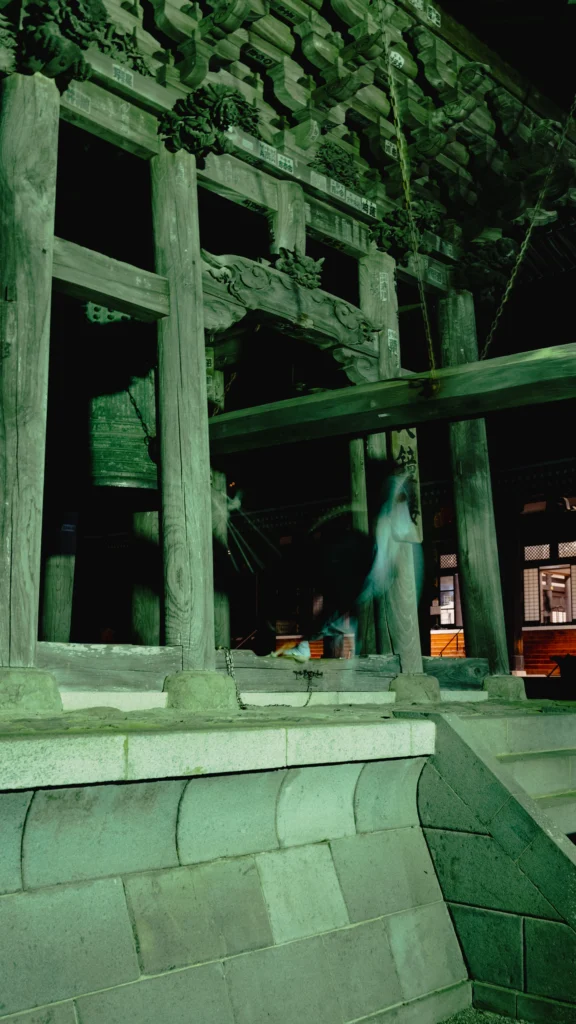
The morning bell at Kuonji is rung using a technique found nowhere else in Japan—the monk leans his entire body backward to the ground, then uses that rebound to swing a 4.3-meter beam into the 6-ton bell. The monk’s body becomes an extension of the massive wooden striking beam. It is a full-body, acrobatic movement that resembles contemporary dance, requiring immense physical strength and precise timing.
Only a select few authorized student monks studying at Minobusan are permitted to perform this ritual. While the general public cannot ring the bell (except during the New Year’s Eve 108 strikes), standing in the pre-dawn darkness to watch this athletic display is mesmerizing.
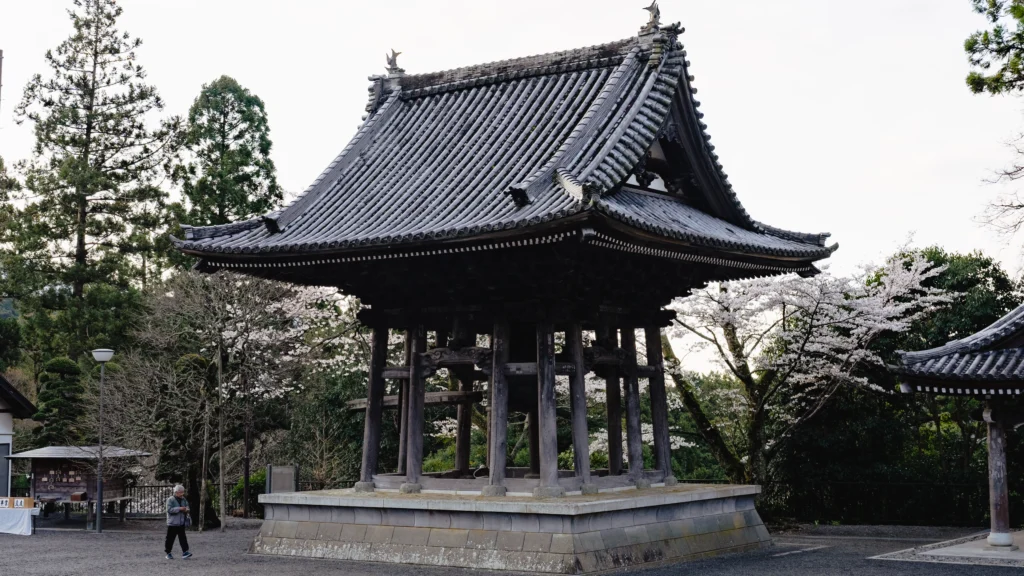
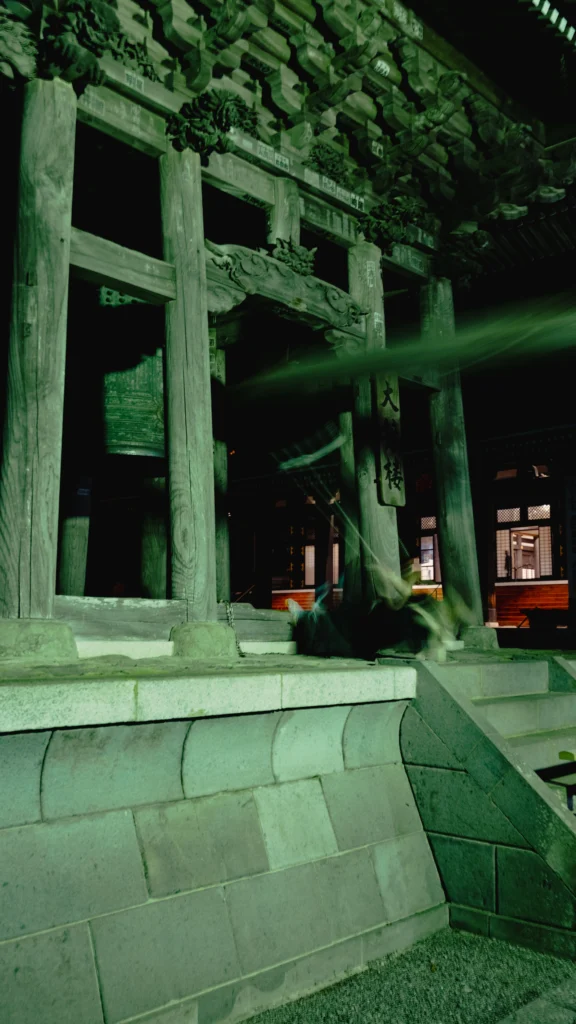
The bell tower seen during the day, surrounded by Kuonji’s famous weeping cherry blossoms. The striking beam (shumoku) is over four meters long and weighs heavily, requiring the monk’s full body weight to swing.
The unique acrobatic ringing technique at Kuonji. The monk leans entirely backward, using his body weight and the rebound momentum to strike the 6-ton bell.
The Morning Prayer (Asa-zutome): A Step-by-Step Guide
After the bell ringing, visitors make their way to the massive Main Hall (Hondo). Here is a timeline of what to expect during the service:
5:15 AM – Entering the Hall:
Remove your shoes at the entrance (shelves are provided) and step onto the tatami mats. You can choose to sit in seiza (kneeling), cross-legged, or use one of the available chairs at the back. Rental prayer books are available if you wish to follow along, though it is not required.
5:30 AM – The Great Drum:
Exactly at 5:30 AM, a massive drum (Odaiko) sounds. Its booming rhythm fills the hall, signaling the start of the procession.
The Procession:
Approximately 50 to 60 monks march into the Main Hall in formal formation. Watching dozens of monks in full robes entering the dimly lit wooden hall is a striking, solemn moment.
The Chanting:
Led by the head priests, all present chant the Odaimoku (“Namu Myoho Renge Kyo”) together, keeping time with the great drum. When 50 monks chant in unison inside the wooden main hall, the sound doesn’t just fill the room—it vibrates through your chest. You do not need to know the chant; the repetitive rhythm is hypnotic, and you are welcome to simply sit quietly and absorb the atmosphere.
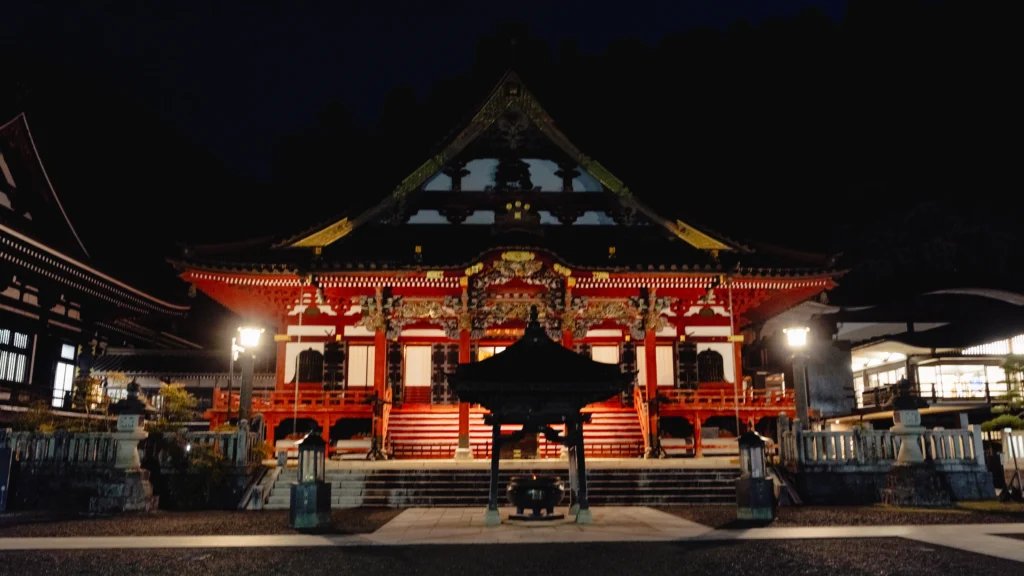
The massive Main Hall (Hondo) illuminated before dawn. Inside, dozens of monks gather daily at 5:30 AM to chant sutras in a powerful, synchronized rhythm.
Okyoha Distribution:
Following the main chanting, the monks distribute Okyoha (お経葩)—small, flower-shaped colored paper certificates. There are five different colors distributed at random. These serve as a beautiful, free memento of your participation in the morning service.
The Okaicho: Special Statue Viewing (Optional)
After the service in the Main Hall concludes, the monks move to the adjacent Soshido (Founder’s Hall). Here, they perform the Okaicho (お開帳)—the ceremonial opening of the doors to reveal the sacred statue of Nichiren.
While the main chanting service is free, participating in the Okaicho requires a fee of ¥2,000 per person (¥1,000 for Nichiren sect members). You do not need to reserve this in advance; you can simply apply at the reception desk that morning. If you choose to participate, you will have the opportunity to offer incense.
How to Offer Incense:
1.Pick up a small pinch of powdered incense using your right thumb, index, and middle fingers.
2.Drop it gently into the center of the incense burner.
3.Bow twice facing forward.
4.Clap your hands twice.
5.Bow once more, then step back without turning your back to the altar.
The Soshido (Founder’s Hall) where the Okaicho ceremony takes place. The ornate vermilion building houses the sacred statue of Nichiren.
Etiquette and Practical Tips
Attending a pre-dawn temple service requires a bit of preparation. Keep these practical tips in mind:
Dress Warmly (Especially in Winter):
The Main Hall is unheated. In winter (November through March), temperatures at 5:00 AM can easily drop to 0–5°C. For visitors from Southeast Asia accustomed to tropical climates, this is significantly colder than anything in Singapore or Bangkok. Wear thermal layers, a proper winter jacket, and thick socks (since you must remove your shoes).
Photography is Strictly Prohibited Indoors:
Do not attempt to take photos or record audio inside the temple halls during the service. Outdoor photography of the buildings and the bell ringing is perfectly fine.
Bring a Flashlight:
The walk from the temple town to the main compound involves navigating cedar-lined paths that are very dark before dawn. A smartphone flashlight works, but a dedicated flashlight is better.
Behavior:
Maintain a quiet, respectful demeanor. Turn your phone to silent. You are not expected to know Buddhist rituals; simply follow the lead of the monks and other attendees—stand when they stand, and sit when they sit.
Why You Must Stay Overnight in a Shukubo
Because the first train of the day does not arrive at Minobu Station until around 9:00 AM, it is impossible to attend the 5:00 AM bell ringing as a day trip from Tokyo. To experience this, you must stay overnight in a shukubo (temple lodging).
Staying in a shukubo is an integral part of the Kuonji experience. Much like a traditional Japanese ryokan, you will sleep on tatami mats and bathe in communal baths. The stay includes a dinner and breakfast of shojin ryori (Buddhist vegetarian cuisine). Most importantly, the shukubo staff will wake you up and guide you to the temple in time for the morning service.
Recommended Shukubo for Morning Prayer Access:
•Habanobō (端場坊): At ¥12,000~, this is the highest-elevation lodging, offering the shortest walk to the Main Hall at 5:00 AM.
•Kakurinbo (覚林坊): At ¥12,000~, this is the most international-friendly option, offering English sutra copying (shakyo) and morning yoga.
•Kishinobō (岸之坊): At ¥11,000~, located near the founder’s tomb, featuring an English website.
•Shimanobō (志摩房): At ¥10,500~, this is the oldest lodge (750 years), offering a deeply traditional atmosphere.
•Daijōbō (大乗坊): At ¥8,800~, a budget-friendly option that still provides excellent access to the temple.
Booking Tip: You can book these lodgings directly or through major platforms. For advice on navigating Japanese booking systems, see our practical guide to hotel booking sites in Japan. Note that many shukubo require cash payment, so be sure to check Japanese bank and ATM hours to ensure you have enough yen before heading into the mountains.
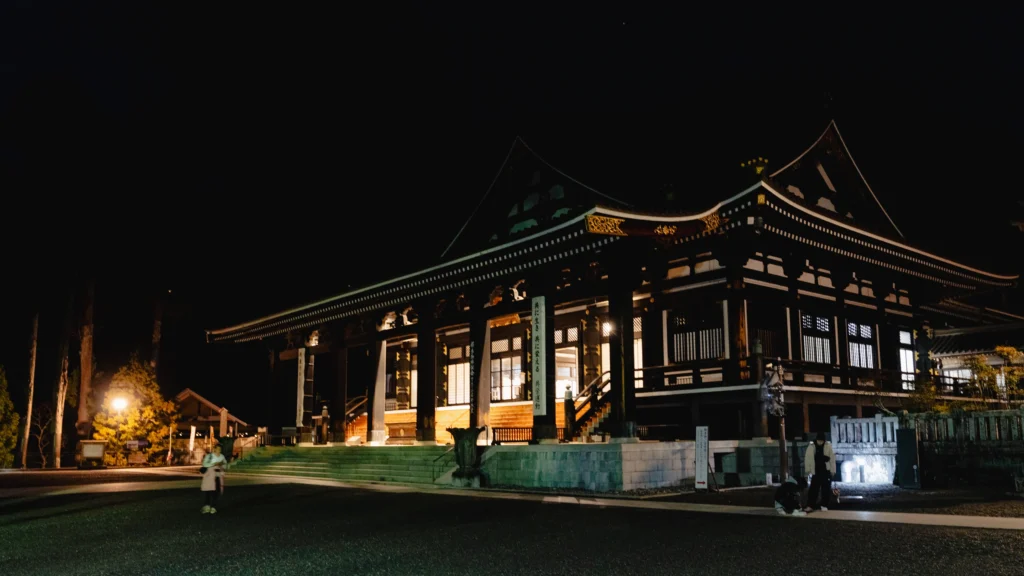
A wide view of the Kuonji compound. The walk from the shukubo village below up to this main courtyard in the pre-dawn darkness is a memorable part of the spiritual journey.
Summer vs. Winter: How the Experience Differs
Because the service is held at 5:30 AM year-round, the seasonal atmosphere changes dramatically.
In the summer months, the sun rises early. By the time the service begins, the sky is already light, and the mountain air is pleasantly cool and refreshing. The atmosphere is energetic and bright.
In the winter months, 5:30 AM is pitch black. The cold is piercing, and your breath plows in the air. Navigating the dark paths with a flashlight feels like a true pilgrimage. The contrast between the freezing outdoor air and the resonant warmth of the chanting inside the hall makes the winter experience arguably more profound and atmospheric.
If you plan to travel around Japan using a JR Pass or the efficient public transport network, Minobu is accessible year-round, though winter travel requires slightly more preparation. If you visit in spring, the temple’s famous weeping cherry blossoms add another layer of beauty to the experience—check our cherry blossom forecast to time your visit perfectly.
New Year’s Eve: The One Time You Can Ring the Bell
There is exactly one occasion each year when ordinary visitors can ring the Great Bell themselves. On December 31, starting around 11:50 PM, the temple opens the bell tower for Joya no Kane (除夜の鐘)—the traditional 108 bell strikes that cleanse the 108 worldly desires (bonno) recognized in Buddhism.
Visitors line up and take turns striking the bell, each person swinging the massive beam under the guidance of the monks. It is a powerful way to ring in the New Year, and the sound of the bell echoing through the frozen mountain valley at midnight is unforgettable.
Following the bell ceremony, the New Year Service begins at 4:00 AM on January 1. If you are in Japan over the holiday period, combining the Joya no Kane with the New Year morning service is an extraordinary double experience. For more on how Japan celebrates the New Year, see our guide to Japan’s New Year closures and our account of a first visit to a shrine on New Year’s Day.
Strategic FAQ Section
Q: Can visitors attend morning prayers at Kuonji Temple?
Yes. Anyone can attend the morning prayer service at Kuonji Temple, regardless of faith or religious background. It is open to the general public, including non-Buddhists and international tourists. There is no reservation required and no cost to enter the main chanting service.
Q: What time is the morning bell at Minobusan Kuonji?
The Great Bell (Daisho) at Minobusan Kuonji is struck every morning at exactly 5:00 AM, 365 days a year. It is highly recommended to arrive at the bell tower by 4:55 AM to witness the unique, acrobatic ringing technique performed by the monks.
Q: What happens during the morning prayer at Kuonji?
At 5:30 AM, a large drum sounds, and a procession of 50 to 60 monks enters the Main Hall. Led by the head priests, the monks chant the Odaimoku (“Namu Myoho Renge Kyo”) in unison. The powerful chanting lasts for about an hour, after which monks distribute small paper flower souvenirs (Okyoha) to attendees.
Q: Do I need to stay overnight to attend the morning service at Kuonji?
Yes. Because the bell rings at 5:00 AM and the service starts at 5:30 AM, it is impossible to reach the temple as a day trip from Tokyo (the first train arrives around 9:00 AM). You must stay overnight in a local shukubo (temple lodging) in Minobu Town.
Q: Is the Kuonji morning prayer open to non-Buddhists?
Absolutely. The temple welcomes visitors of all faiths and backgrounds. You are not required to chant or participate in the rituals; you may simply sit quietly at the back of the hall and respectfully observe the ceremony.
Q: Can I take photos during the morning prayer?
No. Photography, video, and audio recording are strictly prohibited inside all temple buildings at Kuonji. However, you are free to take photos outdoors, including the ringing of the Great Bell at the bell tower.
Conclusion
Attending the morning prayer at Minobusan Kuonji is not a polished tourist attraction—it is a raw, living religious practice that has endured for centuries. Standing in the freezing pre-dawn darkness to watch a monk throw his entire body weight into a 400-year-old bell, followed by the chest-rattling vibration of fifty monks chanting in a massive wooden hall, is an experience that grounds you in the present moment.
If you are willing to brave the early wake-up call and the mountain chill, Kuonji offers a glimpse into the spiritual heart of Japan that few travelers ever see. Book a shukubo, set your alarm, and prepare for a morning you will not forget.
The serene atmosphere of Kuonji Temple at golden hour. Whether in the pre-dawn darkness or the fading light of evening, the temple offers a profound sense of peace.
To provide the best experiences, we use technologies like cookies to store and/or access device information. Consenting to these technologies will allow us to process data such as browsing behavior or unique IDs on this site. Not consenting or withdrawing consent, may adversely affect certain features and functions.
Functional
Always active
The technical storage or access is strictly necessary for the legitimate purpose of enabling the use of a specific service explicitly requested by the subscriber or user, or for the sole purpose of carrying out the transmission of a communication over an electronic communications network.
Preferences
The technical storage or access is necessary for the legitimate purpose of storing preferences that are not requested by the subscriber or user.
Statistics
The technical storage or access that is used exclusively for statistical purposes.The technical storage or access that is used exclusively for anonymous statistical purposes. Without a subpoena, voluntary compliance on the part of your Internet Service Provider, or additional records from a third party, information stored or retrieved for this purpose alone cannot usually be used to identify you.
Marketing
The technical storage or access is required to create user profiles to send advertising, or to track the user on a website or across several websites for similar marketing purposes.


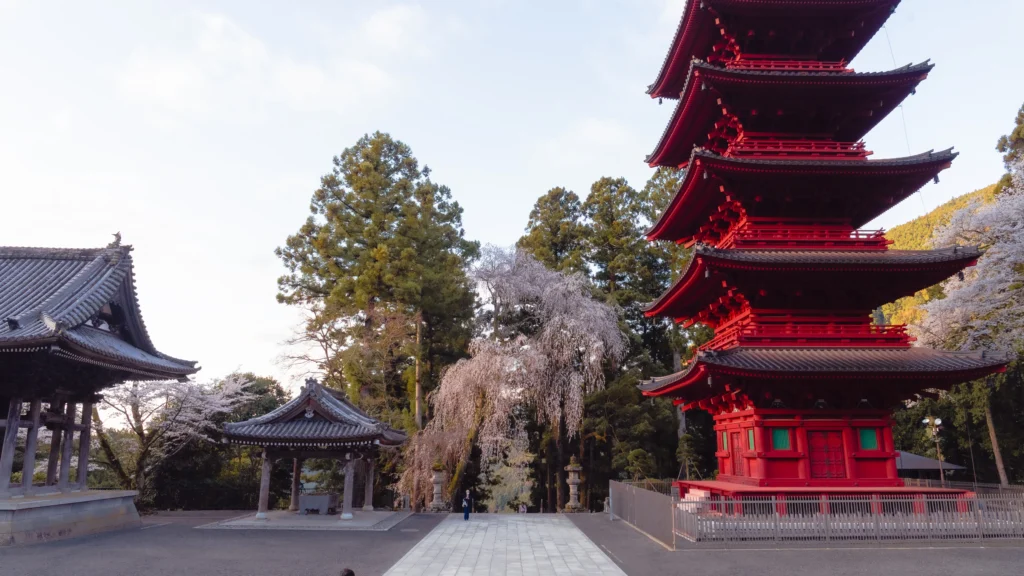
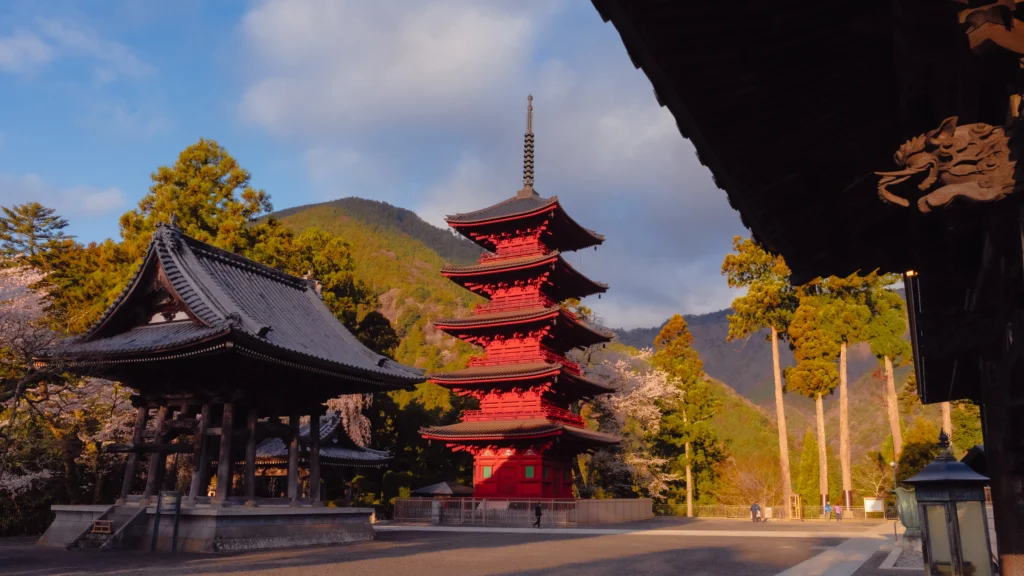

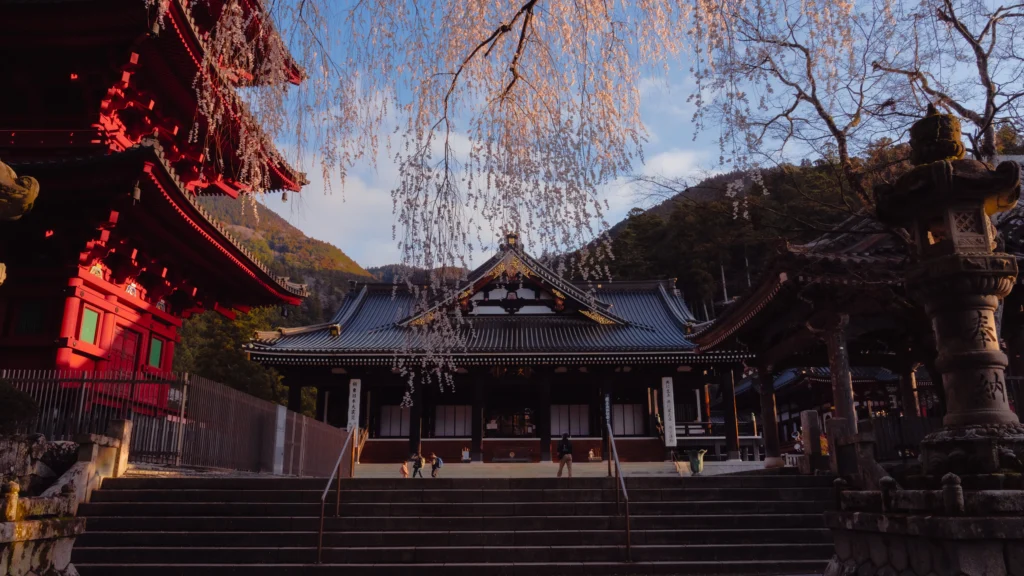 2026 Update: Morning prayer is now held at a fixed time of 5:30 AM year-round (previously varied by season). The five-story pagoda, reconstructed in 2009, remains one of the… Read more: Minobusan Kuonji 2026: A 750-Year-Old Temple with Japan’s Best Weeping Cherry Trees
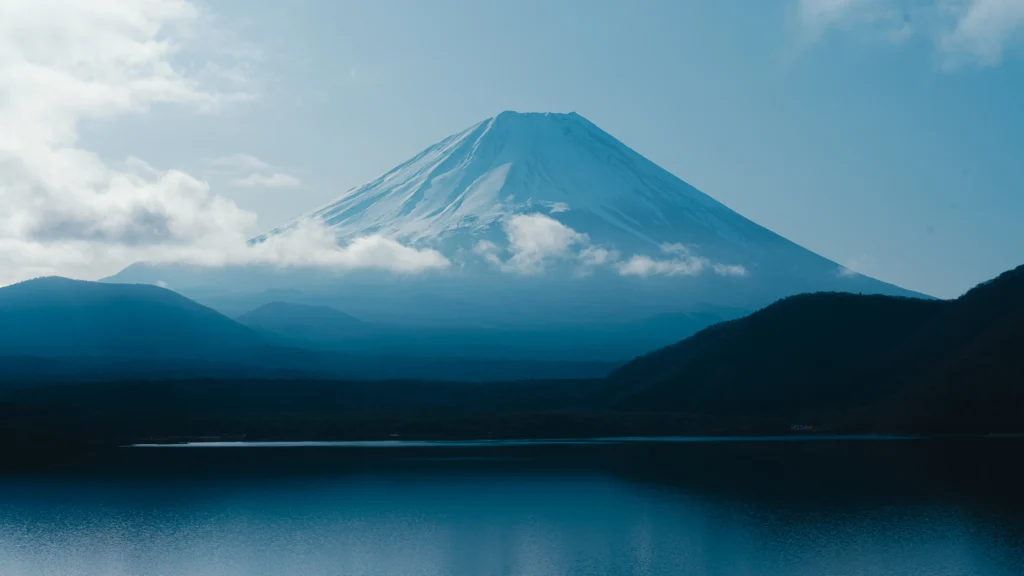 Have you ever pulled a 1,000 yen bill from your wallet, looked at the majestic image of Mount Fuji reflected on a lake, and wondered, “Is this place real?”… Read more: Lake Motosu: Chasing the Fuji on the 1,000 Yen Bill
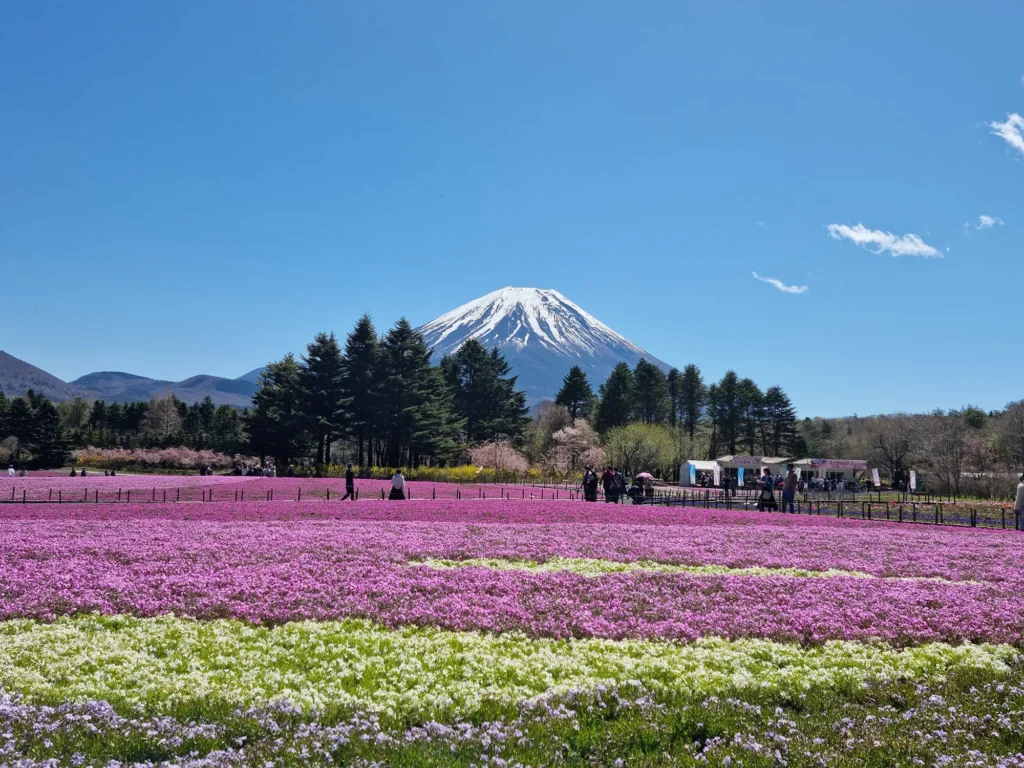 At Fuji Motosuko Resort (Minamitsuru District, Yamanashi), the Fuji Shibazakura Festival—one of the largest in the Kanto region—will start on Saturday, April 11, 2026, featuring around 500,000 moss phlox… Read more: Fuji Shibazakura Festival: A Sea of Pink at the Foot of Mt. Fuji
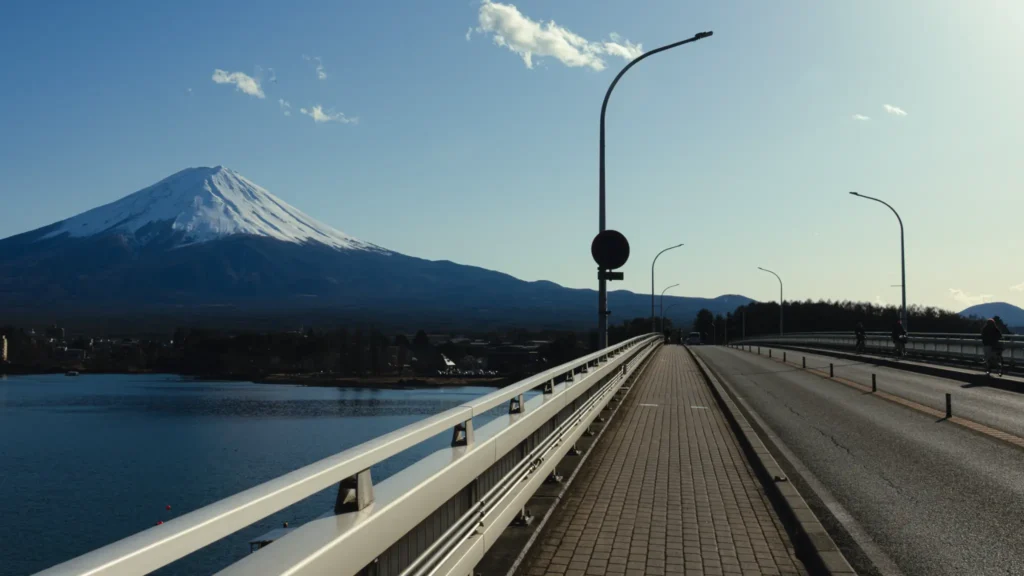 Imagine standing in the crisp mountain air, the vast expanse of Lake Kawaguchiko shimmering before you, and the iconic, snow-capped peak of Mt. Fuji commanding the horizon. For many… Read more: Kawaguchiko Ohashi: The Bridge with a Million-Dollar Mt. Fuji View
![Kitain Temple Kawagoe 2026: Edo Castle Rooms & 538 Rakan [With Map]](https://hiddenjapan-gems.com/wp-content/uploads/2026/04/DSC4602-768x432.webp)