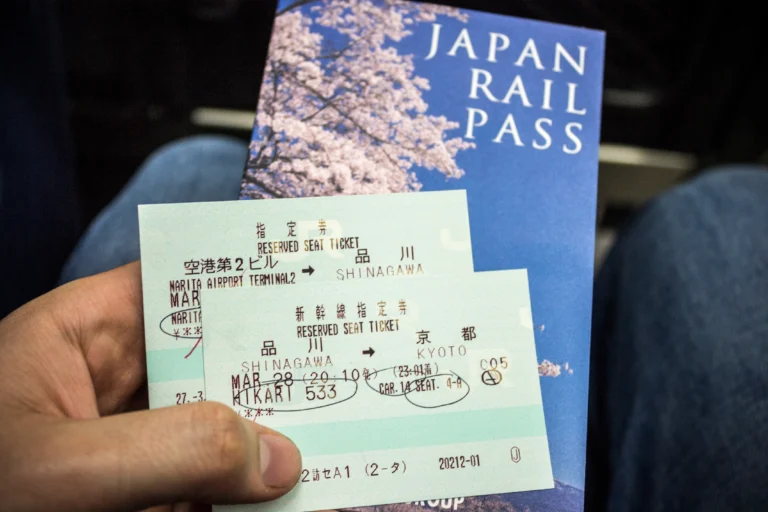




Planning a trip to Japan in 2026? The moment you start searching for flights is when the journey truly begins. That first glimpse of Mt. Fuji from your airplane window is a memory that lasts a lifetime, but navigating the complexities of international air travel can be daunting. As the founder of hiddenjapan-gems.com, I’ve flown into nearly every major Japanese airport and have learned the ins and outs of making the process as smooth as possible. This comprehensive Japan airport guide is designed to be your single source of truth for getting to Japan.
We’ll cover everything from choosing the right airport for your itinerary and deciding between a low-cost carrier (LCC) and a full-service airline, to streamlining your arrival with the Visit Japan Web service. Whether you’re looking for the cheapest way to fly to Japan or the most convenient access to major cities, this guide will equip you with all the essential information for a seamless start to your adventure.
Table of Contents
Japan’s Main Gateways: A Quick Comparison
| Airport | IATA Code | Location | Best For | Key Feature |
| Narita Int’l | NRT | Chiba (Tokyo) | Most international long-haul, Kanto region | Widest range of international airlines |
| Haneda Int’l | HND | Tokyo | Business travelers, convenience to central Tokyo | Extremely close to the city center |
| Kansai Int’l | KIX | Osaka | Kyoto, Osaka, Nara, Kobe (Kansai region) | 24-hour operation, main gateway to West Japan |
| Chubu Centrair | NGO | Nagoya | Central Japan, Takayama, Shirakawa-go | Excellent domestic connections |
| Fukuoka | FUK | Fukuoka | Kyushu island, quick city access | Unbeatable 5-minute subway ride to city center |
| New Chitose | CTS | Sapporo | Hokkaido, ski resorts, nature | Main gateway to Japan’s northern island |
Japan’s 6 Major International Airports: An Overview
Japan is served by a network of world-class airports, but for most international travelers, the journey will begin at one of these six major hubs. Each offers unique advantages depending on your destination and travel style.
1. Narita International Airport (NRT)
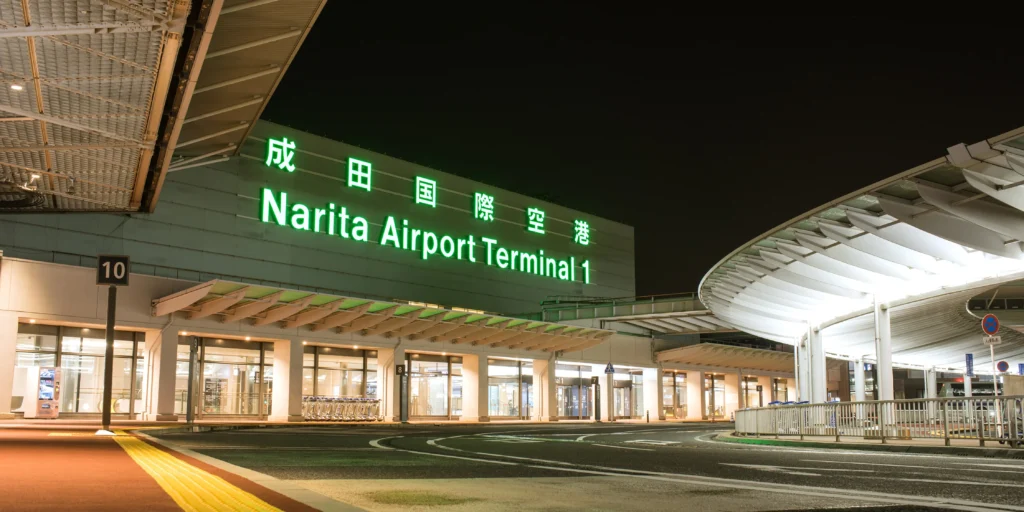
For decades, Narita was the primary international gateway to Japan. Located about 60 kilometers east of central Tokyo in Chiba Prefecture, it handles the majority of long-haul international flights. While its distance from the city is a drawback, it offers an extensive network of airlines and direct connections to destinations worldwide. Its three terminals are well-equipped, with Terminal 3 being a dedicated hub for low-cost carriers.
2. Haneda Airport (HND) – Tokyo International Airport
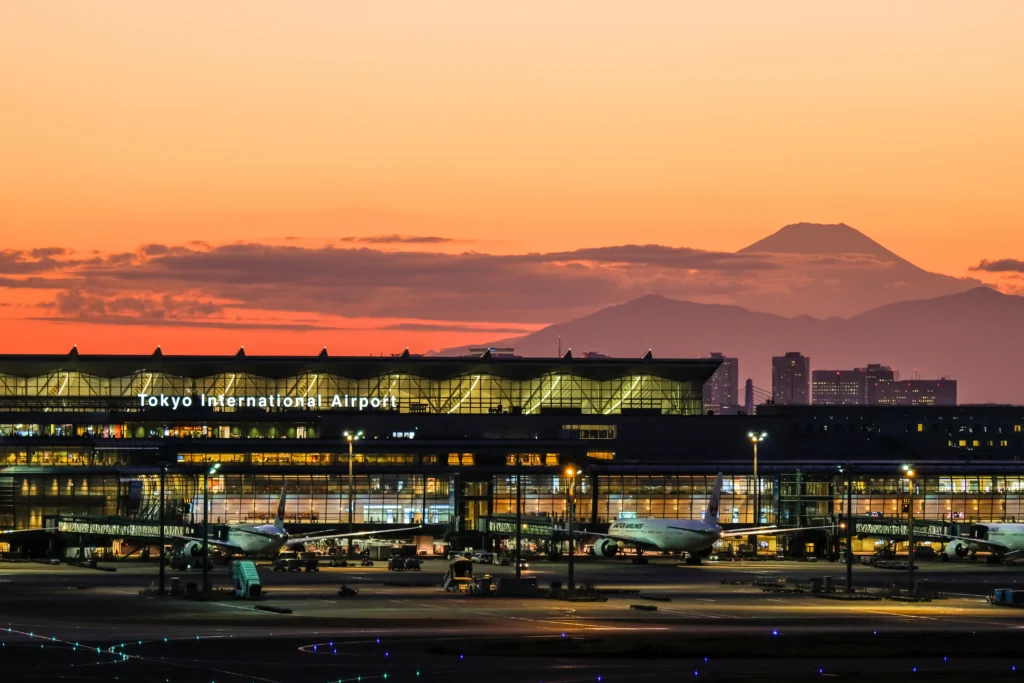
Originally Tokyo’s domestic airport, Haneda has rapidly expanded its international services and is now a favorite for many travelers, especially those on business. Its biggest advantage is its location—just a short train or monorail ride from major hubs like Shinagawa and Hamamatsucho. This convenience makes it the preferred choice for those who want to get into the city quickly after a long flight.
3. Kansai International Airport (KIX)
Located on a man-made island in Osaka Bay, Kansai International Airport is the main hub for the Kansai region, providing easy access to Osaka, Kyoto, Nara, and Kobe. As a 24-hour airport, it offers great flexibility for flights arriving at any time. It’s the perfect entry point for travelers whose itineraries are focused on exploring Japan’s cultural heartland.
4. Chubu Centrair International Airport (NGO)
Situated on another man-made island near Nagoya, Chubu Centrair is the gateway to central Japan. It’s an ideal starting point for trips to the Japan Alps, including the historic villages of Takayama and Shirakawa-go. The airport itself is a destination, featuring an observation deck, a traditional bathhouse with views of the runway, and numerous shops and restaurants.
5. Fukuoka Airport (FUK)
Fukuoka Airport is arguably one of the most convenient airports in the world. Located within the city limits of Fukuoka, it’s a mere five-minute subway ride from Hakata Station, the city’s main transport hub. This makes it an incredibly efficient entry point for exploring the island of Kyushu or for connecting to other destinations in Asia.
6. New Chitose Airport (CTS)
As the main gateway to Hokkaido, Japan’s northernmost island, New Chitose Airport is essential for anyone looking to explore the region’s stunning national parks, world-class ski resorts, and vibrant food scene. The airport is well-connected to Sapporo and offers a wide range of domestic flights, making it a great starting point for a Hokkaido adventure.
Choosing the Right Airport for Your Itinerary
Selecting the right airport can save you significant time and money. Consider an “open-jaw” ticket—flying into one airport and out of another—to avoid costly backtracking.
•For First-Time Visitors (Tokyo & Kyoto): Fly into Haneda (HND) or Narita (NRT) and out of Kansai (KIX). This classic “Golden Route” itinerary is made much more efficient without the need to return to Tokyo for your flight home.
•For Skiing in Hokkaido: Fly directly into New Chitose (CTS). Many airlines offer direct flights from other Asian hubs, and you can connect from Tokyo if flying from further afield.
•For Exploring Kyushu: Fukuoka (FUK) is your best choice. Its incredible proximity to the city center makes it a seamless start to your journey through Japan’s southern island.
•For the Japan Alps & Central Japan: Chubu Centrair (NGO) provides the most direct access to Nagoya, from where you can easily travel to Takayama, Kanazawa, and the Kiso Valley.
LCC vs. Full-Service Carrier: Which is Right for You?
The choice between a Low-Cost Carrier (LCC) and a Full-Service Carrier (FSC) often comes down to more than just the ticket price. Here’s a breakdown to help you find the cheapest way to fly to Japan that fits your needs.
| Feature | Full-Service Carrier (e.g., JAL, ANA, United) | Low-Cost Carrier (e.g., Zipair, Peach, Jetstar) |
| Base Fare | Higher, but often includes checked baggage, meals, and seat selection. | Lower, but everything is extra: checked bags, meals, seat selection, etc. |
| Comfort | More legroom, wider seats, in-flight entertainment systems. | Tighter seating, minimal amenities. Some offer extra-legroom seats for a fee. |
| Baggage | Typically includes 1-2 checked bags and a carry-on. | Strict limits on carry-on size/weight. Checked baggage is an additional cost. |
| Flexibility | More flexible with changes and cancellations, though fees may apply. | Very rigid. Changes are costly or not allowed. High fees for any modifications. |
| Network | Extensive global network with partner airlines and alliances. | Point-to-point routes, often to secondary airports. Limited or no partner connections. |
The Verdict:
•Choose an FSC if: You value comfort, are traveling with significant luggage, or need the flexibility of a large airline network. The bundled price can sometimes be a better value than an LCC with many add-ons.
•Choose an LCC if: You are traveling light, on a tight budget, and are certain of your travel dates. Japan’s domestic LCCs, like Zipair, Peach, and Jetstar, offer a high-quality experience compared to budget airlines in other parts of the world and are excellent for short-haul flights within Asia.
Step-by-Step Guide to Japan’s Entry Procedures (2026)
Japan has streamlined its entry process with the Visit Japan Web service. Completing this before you fly is highly recommended for a smooth arrival.

Before Your Flight:
1.Check Your Visa Requirements: As of early 2026, travelers from 74 countries and regions can enter Japan visa-free for short-term stays (typically up to 90 days). Always check the latest requirements with the official Ministry of Foreign Affairs of Japan website.
2.Register on Visit Japan Web:
•Go to the official Visit Japan Web portal.
•Create an account and register your details, including your passport information.
•Complete the immigration and customs declaration forms online.
•This should be done at least 6 hours before your flight’s scheduled arrival time.
3.Get Your QR Codes: Once registered, you will receive two QR codes: one for immigration and one for customs. Take a screenshot of these or save them to your phone’s wallet, as you may not have Wi-Fi upon landing.
Upon Arrival in Japan:
1.Immigration: Proceed to the immigration counter (or automated gates for eligible passport holders). Present your passport and the immigration QR code when prompted.
2.Baggage Claim: Collect your luggage from the carousel.
3.Customs: Go to the customs declaration area. At electronic customs gates, scan your passport and the customs QR code. If you have items to declare, proceed to a staffed customs counter.
Future Development: JESTA
The Japanese government has announced plans for a pre-travel authorization system called JESTA (Japan Electronic System for Travel Authorization), similar to the US ESTA. While it is planned for implementation by 2029, it is not yet in effect for 2026 travel. Always check for official updates before your trip.
Airport to City: Your Complete Transport Guide
Once you’ve cleared customs, your next step is getting into the city. Japan’s public transport is famously efficient, and every airport offers a range of options.
From Narita (NRT) to Central Tokyo
•Fastest: The Keisei Skyliner is the quickest option to the Ueno area (36 mins). For Tokyo Station, Shinjuku, or Shibuya, the JR Narita Express (N’EX) is a direct and comfortable choice (approx. 60 mins).
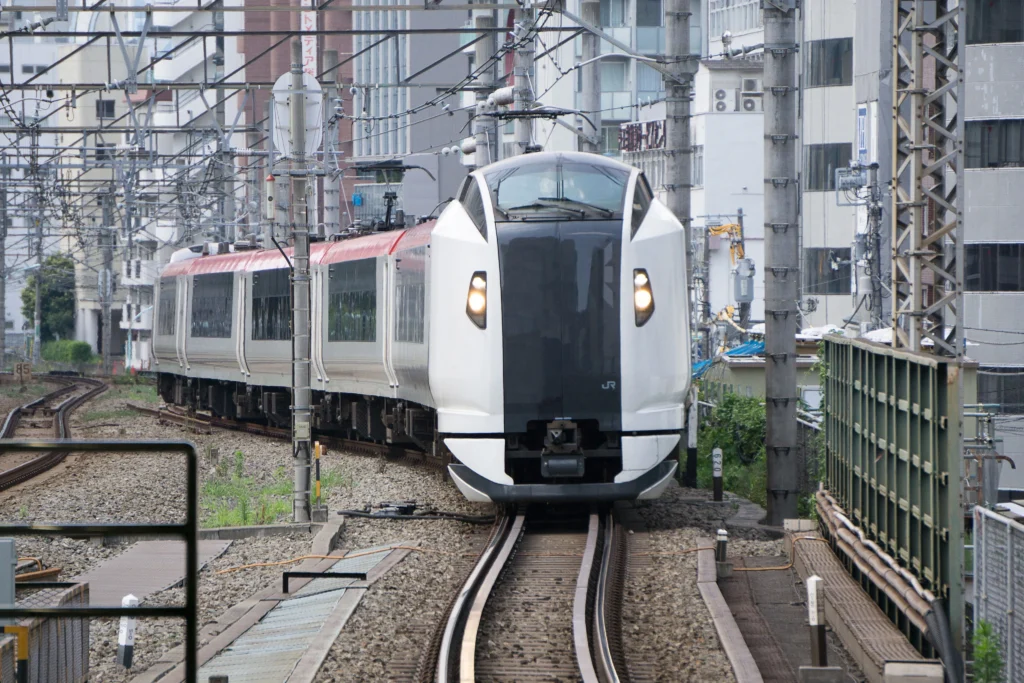
•Most Economical: The Keisei Access Express or Keisei Main Line offer cheaper, albeit slower, train services. Airport Limousine Buses also serve major hotels and stations directly, which is convenient if you have a lot of luggage.

From Haneda (HND) to Central Tokyo
•Fast & Cheap: The Tokyo Monorail to Hamamatsucho or the Keikyu Line to Shinagawa are both incredibly fast (under 20 minutes) and affordable (around ¥500). From these stations, you can easily transfer to the JR Yamanote Line to reach other parts of the city.
From Kansai (KIX) to Osaka/Kyoto
•To Osaka: The Nankai Rapi:t express train is a stylish and quick way to get to Namba Station in the heart of Osaka.
•To Kyoto: The JR Haruka Express is the best option, offering a direct and comfortable 75-minute journey to Kyoto Station. Consider purchasing the ICOCA & Haruka Discount Ticket for a great deal.
Strategic FAQ Section
Q1: What is the absolute cheapest way to fly to Japan in 2026?
A1: The cheapest way is typically to fly with a Low-Cost Carrier (LCC) like Zipair, Peach, or Jetstar during the off-season (e.g., late autumn or winter, excluding holidays). Booking 40-75 days in advance and being flexible with your dates are key. Flying into Narita (NRT) or Kansai (KIX) often presents more budget options than Haneda (HND).
Q2: Is it better to fly into Narita (NRT) or Haneda (HND) for Tokyo?
A2: For convenience, Haneda (HND) is almost always better. It is much closer to central Tokyo, and the transport into the city is significantly faster and cheaper. However, Narita (NRT) often has more international flight options and can sometimes be cheaper, so it’s worth comparing prices and total travel time.
Q3: Do I need to use the Visit Japan Web service?
A3: While not strictly mandatory (you can still fill out paper forms on arrival), it is highly recommended. Using Visit Japan Web to get your QR codes for immigration and customs will save you a significant amount of time and hassle at the airport.
Q4: I’m planning a trip to both Tokyo and Kyoto. What’s the best flight plan?
A4: The most efficient plan is to book an “open-jaw” ticket. Fly into a Tokyo airport (HND or NRT), travel to Kyoto via the Shinkansen (bullet train), and then fly home from Kansai International Airport (KIX). This saves you the time and expense of a return trip to Tokyo.
Q5: Are LCCs in Japan reliable?
A5: Yes, Japan’s LCCs are known for their punctuality and high service standards, especially when compared to budget airlines in other regions. While they are no-frills, they offer a safe and efficient way to travel, particularly for domestic flights or short-haul international routes within Asia.
Conclusion
Arriving in Japan should be an exciting start to your adventure, not a stressful experience. By choosing the right airport for your itinerary, understanding the trade-offs between different airline types, and preparing your entry documents online with Visit Japan Web, you can ensure a smooth and efficient arrival. As the founder of hiddenjapan-gems.com, I believe that a well-planned journey is the foundation of a memorable trip. Use this Japan airport guide as your trusted resource, and you’ll be ready to explore the wonders of Japan from the moment you land.
Article Metadata
•Last updated: March 23, 2026
Sources checked
•Japan-guide.com – International Air Travel
•Digital Agency – Visit Japan Web
•Ministry of Foreign Affairs of Japan – Visa Exemption
•Narita, Haneda, Kansai, Chubu, Fukuoka, and New Chitose Airport Official Websites