

Japan · May 2026 · Festival & Travel Calendar
Japan in May 2026: a day-by-day calendar of festivals, wisteria, and the country’s best-value week.
Sakura is finished, the rains haven’t started, and the country shifts into its loudest two weeks of festival season. May rewards travellers who time it right and quietly punishes those who land on Golden Week. Here is the calendar I use, with every event slot I could verify, and the week I’d fly in for if I had only one chance.
Weather
19°C avg Tokyo
12°C Sapporo · 21°C Naha
Crowds
Extreme → Low
GW peak then sudden drop
Costs
High → Mid
May 11–25 cheapest of year
Best for
Festivals & wisteria
3 of Japan’s top 10 matsuri
The May 2026 calendar at a glance
Five colour codes: red = national holiday, deep red = major festival, purple = flower / nature event, green-tinted week = the cheapest and quietest week of the month. Days with no entries are still good for general travel — they just don’t have a flagship event.
The month in five weeks
Each week of May has its own character. If you can’t fit the whole month, picking the right week alone changes the entire trip.
Week 1
Apr 29 – May 6
Golden Week chaos
Avoid domestic flights and shinkansen. Stay put in one city, watch koinobori and Hakata Dontaku.
Week 2
May 7 – 10
Sudden quiet
GW ends sharply. Hotels drop 30%, trains empty out. Wisteria everywhere.
Week 3
May 11 – 17
The best week
Aoi + Sanja + Kanda + Aoba. Three of Japan’s top festivals and the cheapest accommodation. Fly in this week.
Week 4
May 18 – 24
Wisteria last call
Ashikaga closes May 20. Soma Nomaoi (Fukushima) starts the long weekend.
Week 5
May 25 – 31
Pre-tsuyu window
Last clear week before the rainy season. Roses peak. Hokkaido sakura still finishing.
Six festivals worth flying in for
If you’re building a trip around a specific event, these are the heavy hitters — ranked by visual impact and how unlikely they are anywhere else in Japan.
Aoi Matsuri
葵祭 — Hollyhock Festival
A roughly 500-person procession in Heian-period costume, walking from the Imperial Palace to Shimogamo and Kamigamo Shrines along a 8 km route. One of Kyoto’s three great festivals; the imperial tradition has continuity records back to the seventh century. Postponed by one day if it rains.
Sanja Matsuri
三社祭 — Three Shrines Festival
Asakusa Shrine’s annual festival, drawing roughly 2 million people across one weekend. Friday: Daigyoretsu costume parade. Saturday: ~100 neighbourhood mikoshi (portable shrines) brought to Sensoji to be blessed. Sunday: the three main mikoshi, each weighing about a tonne, paraded through the streets from dawn to dusk. Loud, dense, alcohol-fuelled. Bring earplugs if sound bothers you.
Kanda Matsuri
神田祭 — the “Tenka Matsuri”
Held on a full scale only in odd-numbered years — 2026 is a hon-matsuri (full year). Saturday May 16 features the Shinkō-sai parade with 200+ portable shrines and Edo-era costume groups winding through 30 km of central Tokyo over 12 hours. Sunday May 17 is the climax. Smaller crowds than Sanja but historically more imperial.
Sendai Aoba Matsuri
仙台青葉まつり — Fresh-Green Festival
Saturday is the “Yoi Matsuri” eve festival featuring the Sendai Suzume Odori (sparrow dance) by 30,000+ dancers in costume. Sunday is the “Hon Matsuri” with eleven tall wheeled floats called yamaboko paraded through the city. The reason to come to Tohoku in May.
Hakata Dontaku
博多どんたく
A two-day festival drawing roughly 2 million visitors to Fukuoka. Parade floats, costumed performance groups, food stalls along the central street. The biggest matsuri held during Golden Week and the only major reason to be in Kyushu specifically on those days.
Soma Nomaoi
相馬野馬追 — Wild Horse Chase
An armoured horseback festival originally held to capture wild horses for the gods, traced to the 10th century. Featuring 400+ riders in samurai armour, mock cavalry battles, and a sacred horse-catching ceremony at Hibarigahara. Note: the festival was historically held in late July; from 2024 it shifted to late May to avoid extreme summer heat. Confirm 2026 dates with Soma City tourism before travel.
Where to find wisteria in May
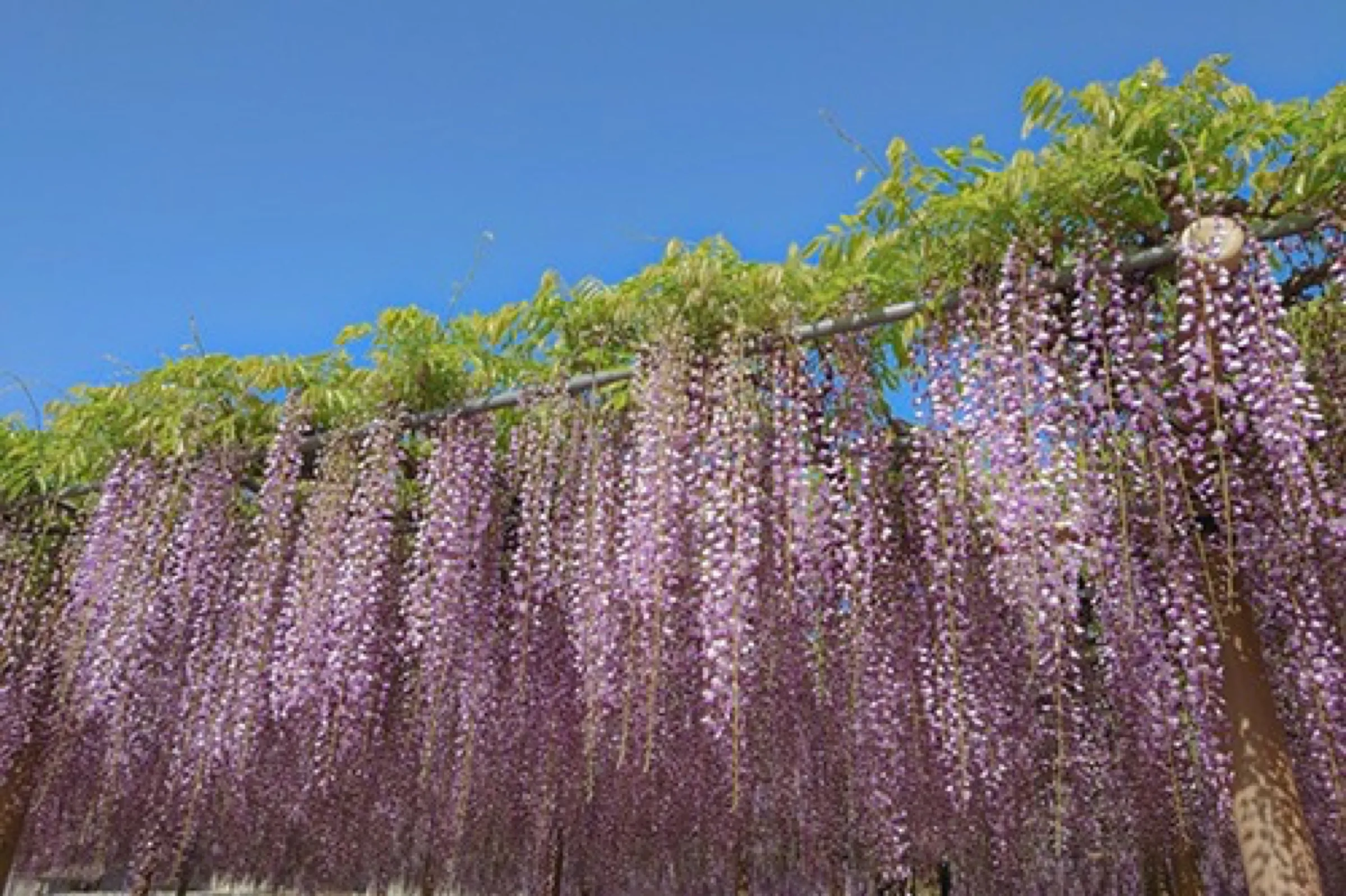
May is the wisteria month. Three reliable spots, none of which require Kyoto.
| Spot | Where & access | Peak (typical) |
|---|---|---|
| Ashikaga Flower Park | Tochigi · JR Ryomo Line, “Ashikaga Flower Park” station; special train runs from Tokyo | Late Apr — mid May |
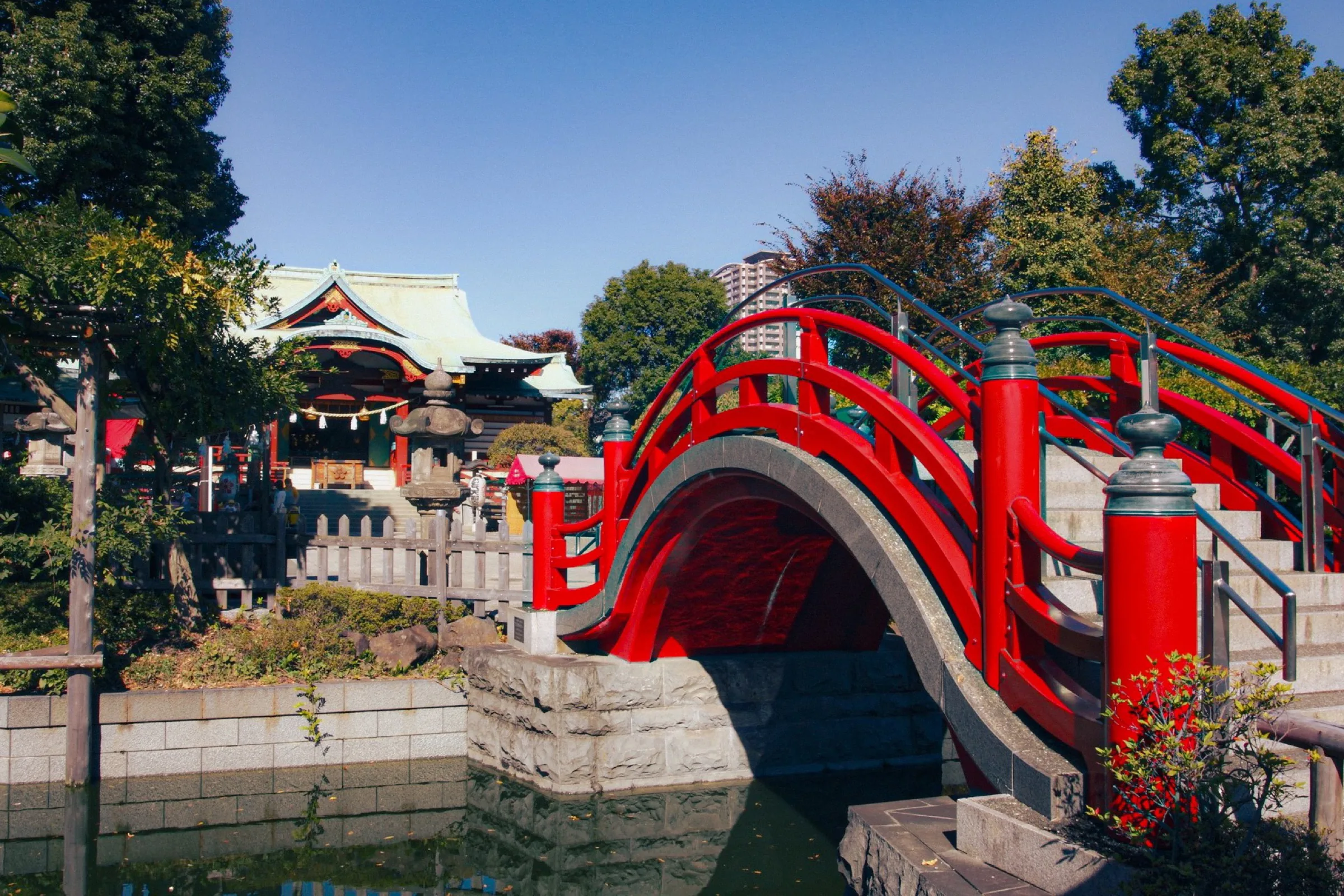
| Kameido Tenjin Shrine | Tokyo · JR Sobu Line “Kameido” (~10 min walk); free, open shrine | Late April — early May |
| Tennogawa Park | Aichi · Meitetsu Tsushima Line “Tsushima” (~15 min walk) | Late April — early May |
Where to be, region by region
Tokyo & Kanto
The festival heavyweight month. Kanda and Sanja both fall the same weekend (May 15–17), so don’t expect to do both at full intensity — choose. For wisteria, Kameido Tenjin is the closest urban spot. Ashikaga Flower Park is a 90-minute train ride from Shinjuku and worth the effort if your dates align.
Kyoto & Kansai
Aoi Matsuri on May 15 is the only mass-tourism event of the month here. Otherwise, Kyoto in May is unusually walkable — sakura crowds gone, foreign tourists not yet arrived for foliage. The two surprise picks: Mifune Matsuri in Arashiyama (a re-enactment of Heian-era courtly boat parties on the Oi River, third Sunday of May) and Otsu on Lake Biwa for an overnight detour. See our Takashima day-trip guide for the lake side.
Tohoku & Hokkaido
Sendai’s Aoba Matsuri (May 16–17) is the main event of the region. Hokkaido and northern Tohoku are still in cherry-blossom season in early-to-mid May — the so-called “back-door sakura” window for travellers who missed Tokyo’s in early April. Hakodate’s Goryokaku Park and Hirosaki Park typically peak around late April and the first week of May.
Chubu (Toyama / Nagano)
Toyama leads with Takaoka Mikurumayama Matsuri (May 1) and Yatsuo Hikiyama (May 3). Tonami’s tulip fair runs through early May. The Japanese Alps are accessible — Kamikochi opened to traffic on April 17 and is at its best by mid-May. See our Kamikochi access guide.
Kyushu & Okinawa
Hakata Dontaku on May 3–4 is the regional anchor. After GW, Kyushu in May is one of the cleanest, quietest places in Japan to be — rainy season here doesn’t start until early June. Okinawa wraps up its lily festival on May 5 (Ie Island) and beach season runs all month.
Why mid-May is statistically the best week
Weather, prices, and crowds all align in the second week of May:
- Hotels and ryokan: rates drop 25–40% from the GW peak, often to the cheapest of the entire year.
- International flights: typically 15–25% cheaper than late-March / April sakura week.
- Shinkansen reservations: low to moderate; standing room rare, reserved seats easy.
- Crowds at shrines: Kyoto’s Fushimi Inari, Kiyomizu, Arashiyama all noticeably calmer than peak season.
- Three of Japan’s biggest matsuri (Aoi, Sanja, Kanda hon-matsuri) all fall on May 15–17.
If your dates are flexible, this is the week.
Practical: weather, packing, payment
Weather
Tokyo and Kyoto: 15–22°C days, 12–15°C evenings. Hokkaido is 8–15°C and still feels like spring; you may want a light jacket. Okinawa is 22–26°C and humid — full summer wear works. Rainfall is moderate; the rainy season (tsuyu) usually starts around June 8 in Honshu.
Packing
- Layers — mornings cool, afternoons warm, sometimes 8–10°C swing in a single day.
- Light rain jacket or compact umbrella; daily 30% chance of brief showers.
- Sunglasses — the “new green” light is bright and reflective.
- Comfortable shoes for festival standing — matsuri days mean 6+ hours on your feet.
Payment & budget
Festival food stalls are cash-mostly. Bring ¥5,000–10,000 in small bills for festival days. Hotels and big restaurants take cards. For full mechanics see our cash vs card guide.
FAQ
Is Golden Week really worth avoiding?
For domestic travel and reservations, yes. Hotel prices double, shinkansen are standing-room, and major attractions like Fushimi Inari are at peak crowd density. Tokyo and Kyoto sightseeing during GW isn’t dramatically worse than a normal busy weekend — most Japanese families travel out of the cities. The single thing to do during GW is stay put in one city. See our Golden Week 2026 guide for the specific dates.
Sanja or Kanda — which Tokyo festival should I prioritise?
If this is your first time in Japan: Sanja Matsuri. It’s in Asakusa where you’d be sightseeing anyway, the mikoshi are dense and visible, and the atmosphere is dramatic. Kanda Matsuri is more historically refined and has a smaller, calmer crowd, but the procession route is spread across central Tokyo and harder to follow if you don’t know the city. Both fall on May 15–17 in 2026 weekends, so unfortunately you can’t catch both at full intensity.
What if my trip is May 1–7 (Golden Week only)?
Stay in one city the entire week. Tokyo is the safest bet; Hakata Dontaku in Fukuoka is the only major matsuri during GW worth flying for. Don’t book trains between cities. Eat at restaurants outside the central tourist districts — queues are 50% shorter just five blocks from the Asakusa or Shibuya core.
Will the wisteria still be peaking in May 2026?
It depends on weather. As of late April 2026, Ashikaga Flower Park is reporting earlier-than-typical bloom, with peak likely landing on the GW weekend. Late wisteria varieties continue blooming into mid-May. Check the Ashikaga Flower Park live status page within a week of your visit. Other parks (Kameido Tenjin, Tennogawa) follow similar timing.
Is the rainy season starting in May?
Not yet, in most of Japan. Tsuyu (the rainy season) typically begins around June 8 in Honshu, around June 11 in Kansai, and earlier in Okinawa (mid-May). For Tokyo, Kyoto, and Tohoku, May is dry to moderately dry. The last fully clear week is usually May 25–31.
Is Soma Nomaoi really in May now?
From 2024 the festival shifted to late May to avoid extreme summer heat. The 2026 dates are May 23–25 according to current Soma City tourism announcements. The festival was historically held in late July, so older blogs and guidebooks still refer to summer dates — verify against the official Soma City Tourism site before booking.
The cheapest, calmest week in Japan is May 11–17.
If you can’t fly during GW and you can’t do November foliage, mid-May is the answer. Three top-tier festivals and the lowest hotel rates of the year, all in one week.
See the full year calendar → Find your region →Join 1,000+ travelers discovering Japan's hidden side
Weekly dispatches from off-the-beaten-path Japan — spots and stories you won't find in guidebooks.
No spam. Unsubscribe anytime.
Welcome aboard!
You're in. See you in your inbox soon.