
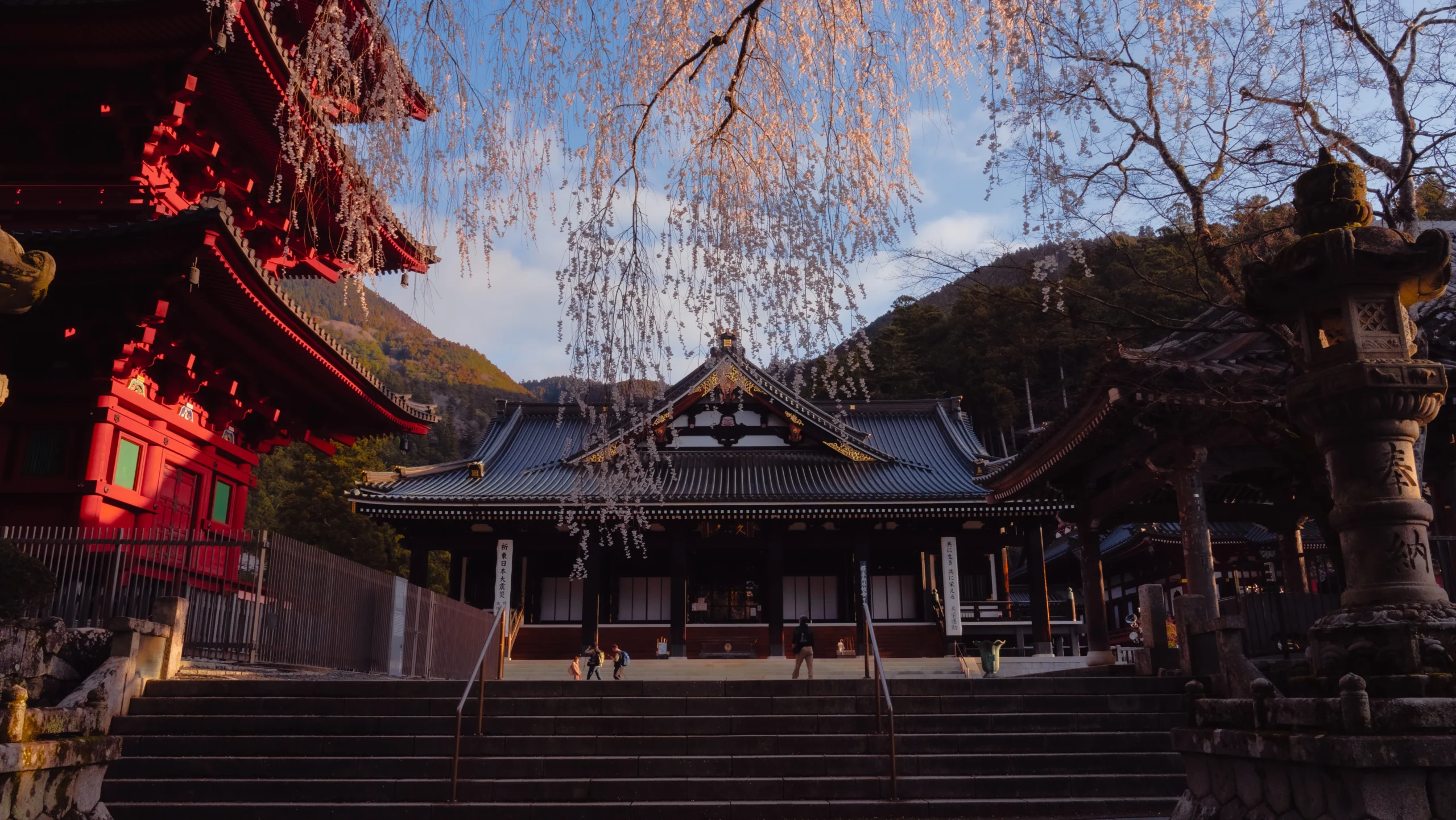

2026 Update: Morning prayer is now held at a fixed time of 5:30 AM year-round (previously varied by season). The five-story pagoda, reconstructed in 2009, remains one of the most photographed structures on the grounds.
If you are looking for a genuine spiritual experience in Japan — far from the crowds of Kyoto — you need to look toward the mountains of Yamanashi Prefecture. Here, at the foot of Mount Minobu, sits Minobusan Kuonji (身延山久遠寺), the 750-year-old head temple of Nichiren Buddhism and home to two of Japan’s most famous weeping cherry trees.
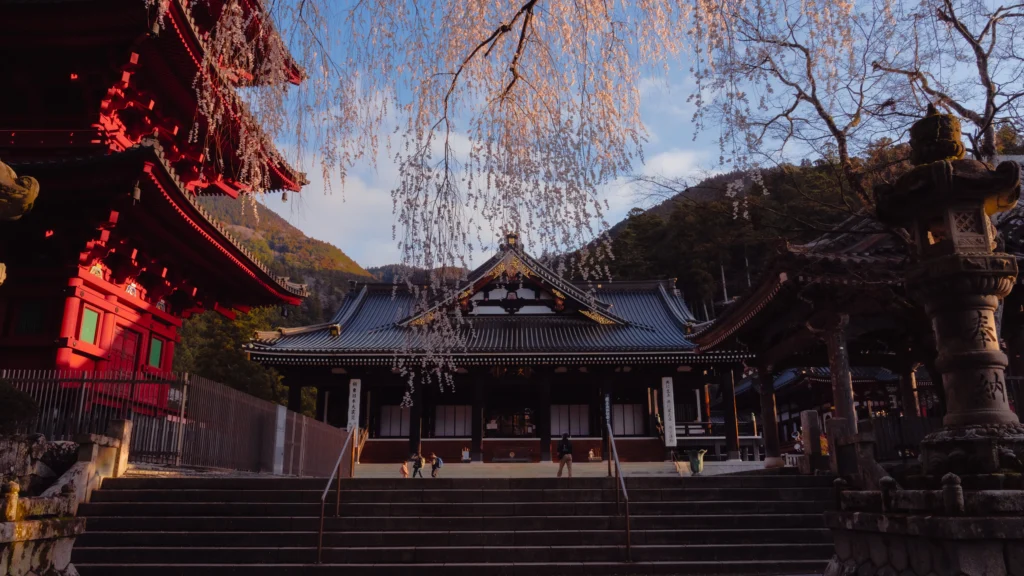
As the founder of hiddenjapan-gems.com, I have visited hundreds of temples across Japan. But standing at the bottom of Kuonji’s Bodaiti — a seemingly endless stone stairway of 287 steps disappearing into towering cedars — is an experience that still commands absolute awe. Kuonji is the head temple of Nichiren Buddhism — one of Japan’s most influential Buddhist traditions, founded 750 years ago at the foot of Mount Minobu. Whether you are coming for the spectacular 400-year-old weeping cherry trees in spring, or staying overnight in a shukubo (temple lodging) to attend the 5:30 AM morning prayers, Kuonji offers a depth of history that few other places in Japan can match.
This guide covers everything you need: how to get here from Tokyo, when to see the cherry blossoms at their peak, what a night in a shukubo is really like, and a full-day itinerary to make the most of your visit.
Table of Contents
Quick Facts: Visiting Minobusan Kuonji
| Detail | Info |
| Full Name | 身延山妙法華院久遠寺 (Minobusan Myohokke-in Kuonji) |
| Founded | 1274 by Nichiren Shonin |
| Sect | Head Temple of Nichiren Shu (日蓮宗) |
| Location | Minobu Town, Yamanashi Prefecture |
| Entry Fee | Free (Temple grounds) |
| Hours | 5:00 AM – 4:20 PM daily |
| Morning Prayer | 5:30 AM daily, year-round |
| Treasure Museum | ¥500 adults / ¥200 students (closed Thursdays) |
| Best Season | Late March – Early April (cherry blossoms), Late November (autumn leaves) |
| Time Needed | Half-day (2–3 hours), full day (5+ hours), overnight recommended |
| Wheelchair Access | Inclined elevator available, barrier-free paths |
| Contact | TEL 0556-62-1011 / info@kuonji.jp |
What Makes Kuonji One of Japan’s Most Important Temples?
Kuonji is far more than a pretty temple with cherry trees. It is the spiritual headquarters of an entire Buddhist tradition. The monk Nichiren (1222–1282) was invited to Mount Minobu by his follower Nanbu Sanenaga on May 17, 1274. He spent the last nine years of his life here — reading sutras, training disciples, and writing letters that would shape Japanese Buddhism for centuries. His dying wish was unambiguous: “Even if I die elsewhere, build my tomb at Minobu.”
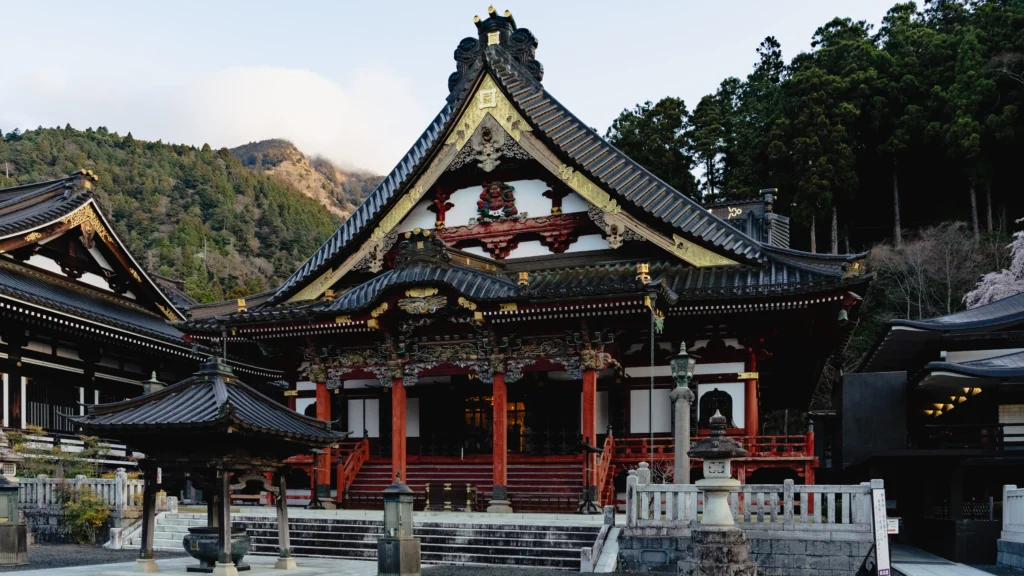
Today, the temple complex is massive. The main hall (Hondo), rebuilt in 1985 for Nichiren’s 700th memorial, measures 32 meters wide and 51 meters deep — large enough to accommodate 1,500 people. Inside, a famous “Bokuryu” (ink dragon) ceiling painting appears to make eye contact with you from any angle in the hall. Beside the main hall stands a beautiful five-story pagoda, reconstructed in 2009 using entirely domestic timber to faithfully replicate its 17th-century design that was lost to fire 134 years earlier.
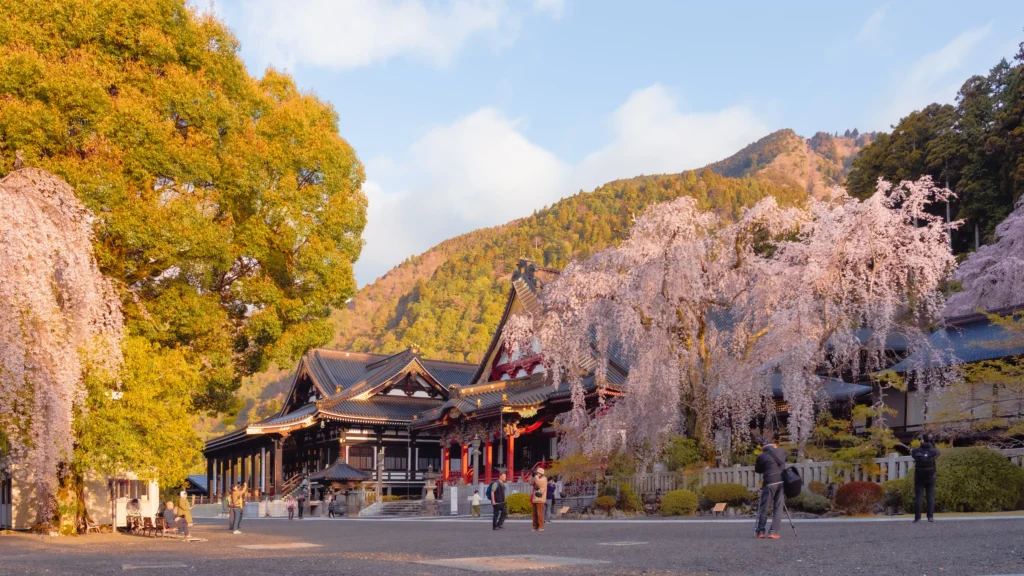
The Soshido (Founder’s Hall), rebuilt in 1881, is where Nichiren’s spiritual presence is enshrined. Its vermilion-lacquered walls and elaborate gold carvings are striking, and the hall sits right next to the most famous weeping cherry tree on the grounds — creating the iconic spring composition that draws photographers from across the country.
The Sanmon Gate: One of Japan’s Three Most Famous
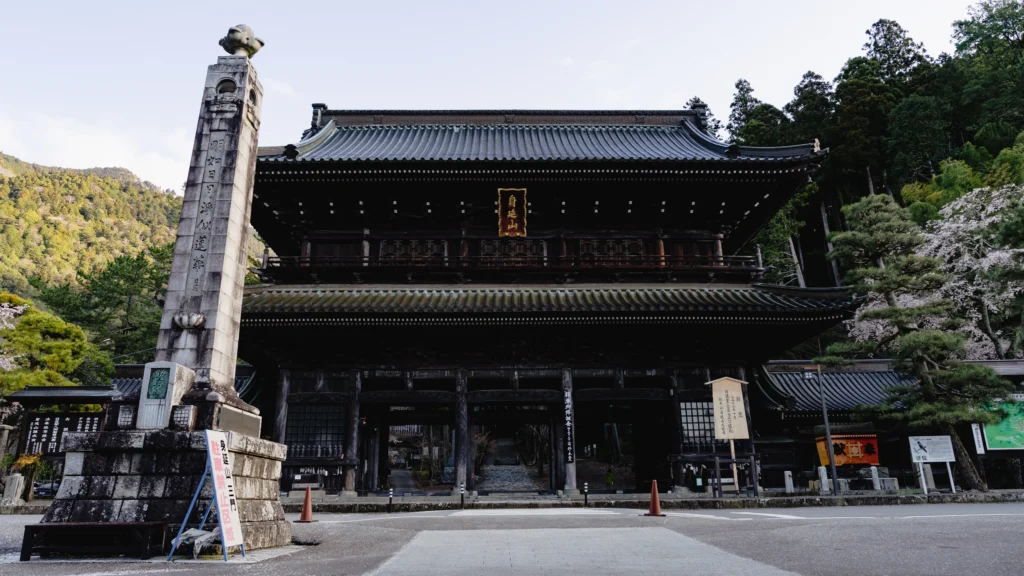
Before you even reach the main temple grounds, you pass through the Sanmon (三門), considered one of Japan’s three most famous temple gates. This imposing two-story wooden structure represents three forms of Buddhist enlightenment: emptiness, formlessness, and non-desire.
Look closely at the gold Nio guardian statues inside. You will often see running shoes left at their feet — offerings from visitors praying for leg health and strength. It is a small, human detail that immediately tells you this is a living temple, not a museum.
The Bodaiti: 287 Steps Divided Into 7 Sections
Beyond the Sanmon lies the Bodaiti (菩提梯), and this is where Kuonji separates itself from every other temple in Japan. The Bodaiti stairway’s 287 steps are divided into 7 sections, one for each character of the Nichiren chant “Na-mu-myo-ho-ren-ge-kyo.” The name itself means “reaching nirvana upon completion.”
The steps are steep, flanked on both sides by massive cedar trees that block out most of the sky. Climbing them is both a physical and spiritual challenge — your legs will burn, your breathing will quicken, and by the time you reach the top, you will understand why the name promises enlightenment.
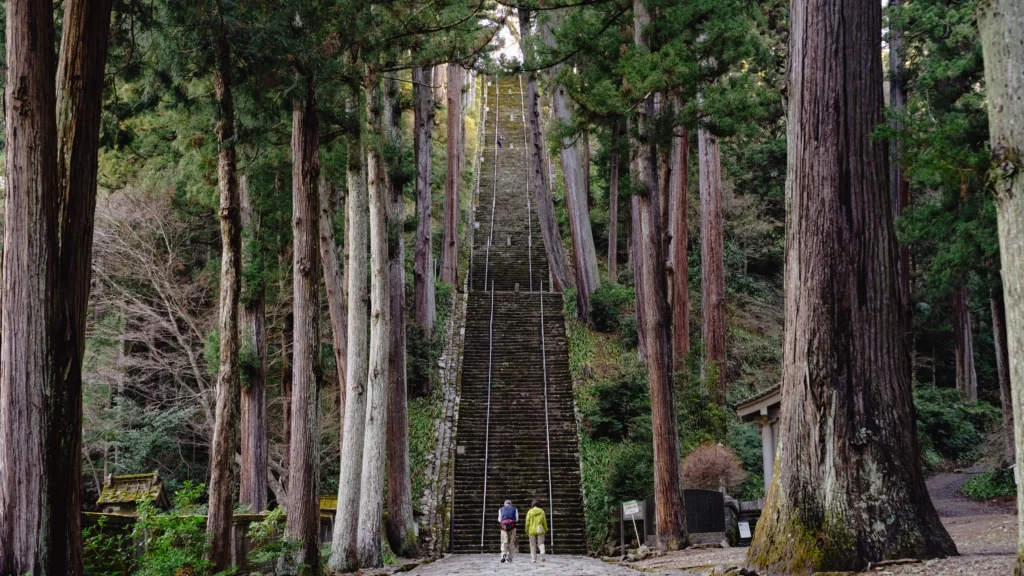
If you prefer a less strenuous route, there are alternative winding paths known as the “male slope” (Otokozaka) and “female slope” (Onnazaka). An inclined elevator is also available for those with mobility concerns.
Kuonji’s 400-Year-Old Weeping Cherry Trees: Japan’s Top 10
While the temple is spectacular year-round, it transforms into a photographer’s dream in late March and early April. Kuonji’s two 400-year-old weeping cherry trees are ranked among Japan’s Top 10 — and unlike Kyoto’s famous trees, you can stand beneath them without fighting a crowd.
The two main trees have names: “Myoho-zakura” stands beside the Soshido, and “Yoraku-zakura” blooms before the Butsuden. Unlike the Yoshino cherry trees that produce fluffy white clouds of petals, these ancient weeping trees create dramatic, cascading waterfalls of pale pink. The most famous composition is the Myoho-zakura framed against the vermilion Soshido — a scene that has graced countless photography books and travel magazines.
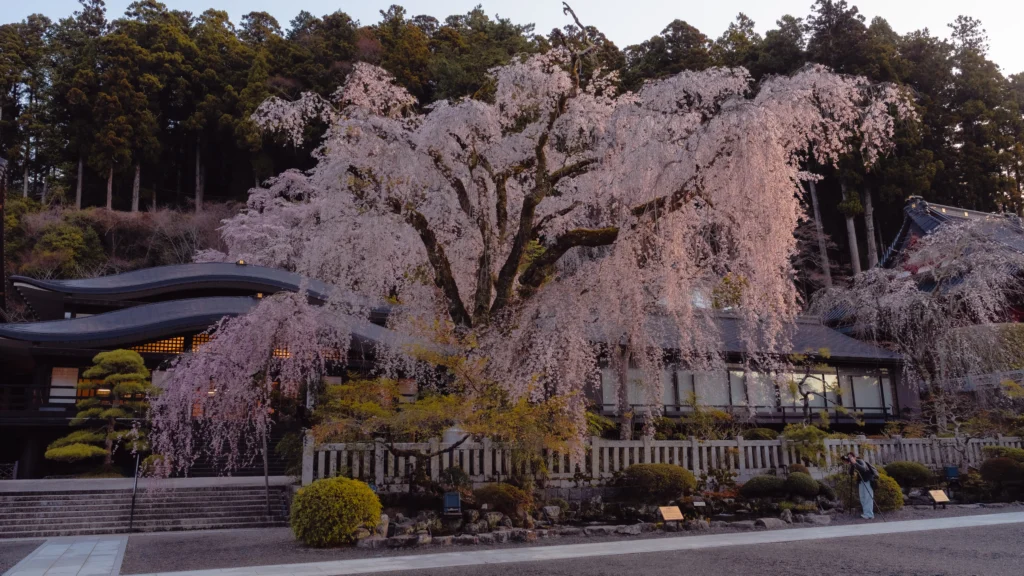
In the West Valley of the temple grounds, you will find about 50 additional weeping cherry trees ranging from 200 to 300 years old. During peak bloom, traffic restrictions are enforced (9:00 AM – 4:00 PM) and a shuttle bus operates to manage the flow of visitors.
2026 Cherry Blossom Timing: Based on past years (2025 peak was March 28 – April 1), expect the 2026 peak between late March and the first few days of April. Check our 2026 Cherry Blossom Forecast for exact dates. Because this is a mountain location, early mornings (before 8:00 AM) offer the best lighting and the fewest crowds. For more on cherry blossom etiquette, please be mindful of the temple grounds and other visitors.
Staying in a Shukubo: Temple Lodging from ¥8,800
To truly experience Kuonji, you should stay overnight in a shukubo (temple lodging). There are currently 20 active shukubo in the temple town (Monzen-machi) leading up to the gate. If you have ever stayed in a traditional ryokan, a shukubo shares some similarities — tatami rooms, futon bedding, communal baths — but the atmosphere is distinctly more austere and spiritual.
All shukubo rates include one night and two meals of shojin ryori (traditional Buddhist vegetarian cuisine). This is entirely plant-based cooking with no meat, fish, or pungent vegetables like garlic or onion. For visitors from Malaysia, Indonesia, or other Muslim-majority countries, note that shojin ryori is naturally free of pork and alcohol in cooking, though it is not halal-certified. Vegetarian and vegan travelers will find this cuisine perfectly suited to their needs.
| Shukubo | Price/Person | Highlights |
| Kakurinbo (覚林坊) | ¥12,000~ | Japan Travel Awards 2024. Zen garden. Craft beer, kimono experience. English shakyo. Featured in Washington Post. |
| Habanobō (端場坊) | ¥12,000~ | Founded 1280. Highest location. Water purification practices. Max 3 groups at a time. |
| Shimanobō (志摩房) | ¥10,500~ | Oldest lodge (750 years). Handmade cuisine, private cherry gardens. |
| Kishinobō (岸之坊) | ¥11,000~ | Near founder’s tomb. English website. Shakyo, yoga, juzu (prayer bead) making. |
| Takenobō (竹之坊) | ¥10,000~ | Three cottage rooms with private toilets. |
| Yamamotobō (山本坊) | ¥9,350~ | Online booking available (updated Feb 2026). |
| Kitanobō (北之坊) | ¥9,350~ | Cherry blossom viewing spot. |
| Daijōbō (大乗坊) | ¥8,800~ | Budget-friendly option. |
Booking: Contact the Minobu Town Tourism Board (TEL 0556-62-0502), or search on Jalan, Rakuten Travel, or Booking.com. For a broader look at hotel booking strategies in Japan, see our dedicated guide.
Cash Note: Many shukubo prefer or require cash payment. Make sure you understand Japanese bank and ATM hours before heading into the mountains, as convenience stores with international ATMs are limited in Minobu Town.
The 5:30 AM Morning Prayer and the Great Bell
The primary reason to stay overnight is to attend the morning prayer service (Asa-zutome). Every single day of the year, at exactly 5:30 AM, the monks gather in the massive Main Hall to chant sutras.
The sound of dozens of monks chanting in unison, accompanied by the rhythmic beating of taiko drums echoing through the mountain air, is deeply moving. You do not need to be Buddhist to attend; visitors of all faiths are welcome to sit quietly at the back of the hall. Just remember that photography is strictly prohibited inside the buildings.
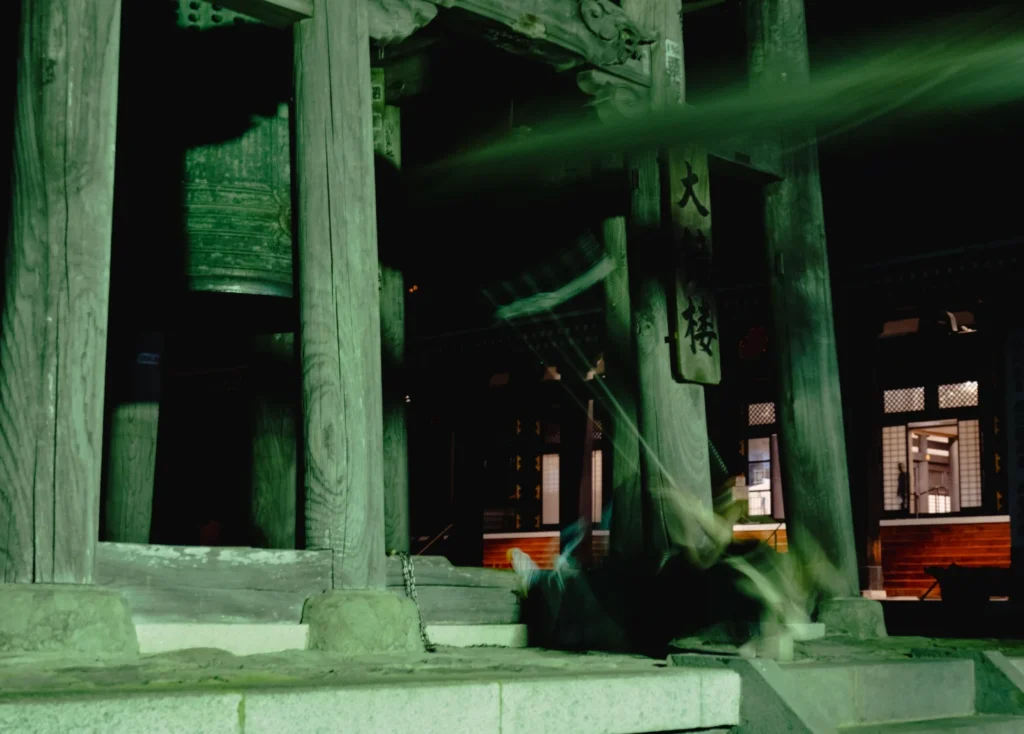
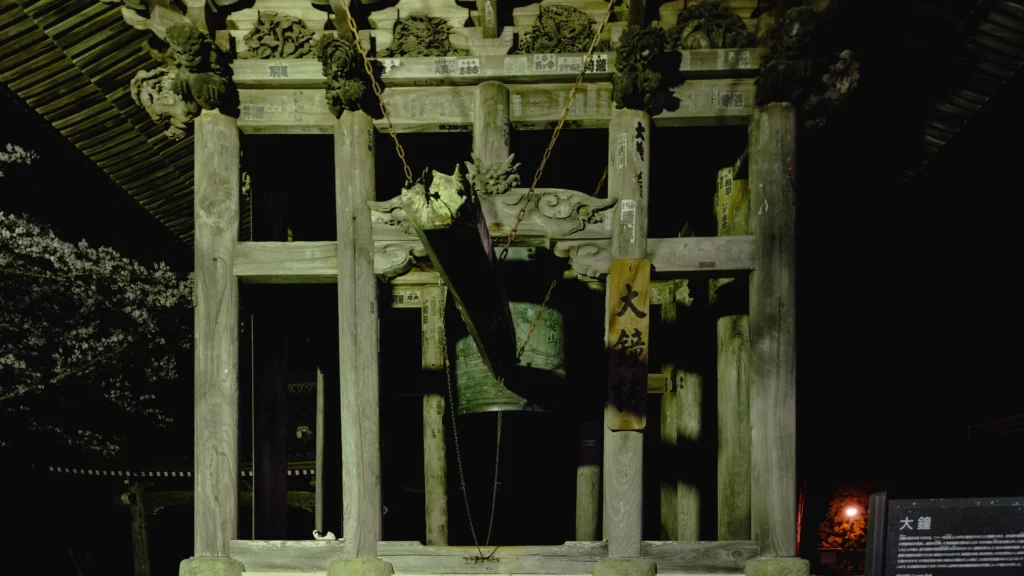
Before the prayer, at 5:00 AM, you can watch a monk ring the Daisho (大鐘) — a 6-ton bronze bell cast in 1624, originally donated by a concubine of Tokugawa Ieyasu. The bell stands 2.4 meters tall, and the monk uses a full-body acrobatic technique, leaning entirely backward on a rope to swing the massive 4.3-meter wooden beam. It is rung again in the evening between 4:30 and 5:00 PM.
Minobusan Ropeway: Mt. Fuji Views from 1,153 Meters
After exploring the temple grounds, take the Minobusan Ropeway to the 1,153-meter summit of Mount Minobu. The ropeway covers 1,665 meters with an elevation gain of 763 meters — the largest in the Kanto region — and the ride takes about 7 minutes.
At the summit, you will find the Okunoin Shishinkaku temple and three observation decks offering views of Mt. Fuji, Suruga Bay, and the Southern Alps. In mid-March and early October, you can witness “Diamond Fuji” — the sun setting directly behind the peak of Mt. Fuji.
| Ropeway Detail | Info |
| Operating Hours | 9:00 AM – 4:00 PM (Mar 16 – Nov 15), last descent 4:40 PM |
| Round-Trip | Adults ¥1,500 / Children ¥750 |
| Duration | ~7 minutes one way |
| Summit Elevation | 1,153 meters |
What to Eat: Yuba and Shojin Ryori in the Temple Town
The Monzen-machi (temple town) stretching from Minobu Station to the Sanmon gate is lined with traditional shops and restaurants. The local specialty is yuba (tofu skin), which has a 700-year history in Minobu — traced back to Nichiren’s disciples who brought the technique from Kyoto.
For a full yuba experience, visit “Minobu Yuba no Sato” (みのぶ ゆばの里), which combines a production facility with a restaurant. You can watch the yuba being made and then eat it fresh — a completely different texture from the dried version you find in supermarkets.
Another must-try is Minobu Manju (身延饅頭), a traditional steamed bun that makes for a perfect souvenir. Several shops along the Monzen-machi sell freshly steamed versions.
A Perfect Day Itinerary at Kuonji
Here is how to structure a full day, whether you are visiting as a day trip or planning an overnight stay:
| Time | Activity |
| 9:30 AM | Arrive at Minobu Station, take the bus to the temple (15 min, ¥280) |
| 10:00 AM | Walk through the Sanmon gate and challenge the 287 steps of the Bodaiti |
| 10:30 AM | Explore the Main Hall (look up at the ink dragon ceiling), the Soshido, and the five-story pagoda |
| 11:30 AM | Visit the Treasure Museum beneath the Main Hall (¥500). Try the 5-minute sutra-copying experience |
| 12:30 PM | Walk down to the Monzen-machi for a yuba lunch |
| 2:00 PM | Take the Minobusan Ropeway to the summit (¥1,500 round trip). Clear days offer Mt. Fuji views |
| 3:30 PM | Return and explore the West Valley cherry trees (in season) |
| 4:00 PM | Check into your shukubo, enjoy a shojin ryori dinner, rest early |
| Next 5:00 AM | Watch the Great Bell ringing ceremony |
| Next 5:30 AM | Attend the morning prayer in the Main Hall |
Seasonal Events at Kuonji
Kuonji hosts significant events throughout the year. If your travel dates are flexible, timing your visit to coincide with one of these adds another layer to the experience.
| Period | Event |
| January 1–3 | New Year Service (4:00 AM on Jan 1, 5:30 AM on Jan 2–3) |
| February 16 | Nichiren’s Birthday celebration |
| Late March – Early April | Weeping cherry blossom peak season |
| May 3–5 | Senbue (千部会) — Thousand Recitations ceremony |
| October 11–13 | Oeshiki (御会式) — Nichiren’s Memorial with lantern parade |
| Late November | Autumn leaves peak |
| December 31 | New Year’s Eve Bell — the public can ring the bell (108 strikes) |
For visitors planning around Japan’s national holidays and closures, note that the temple remains open during New Year, Golden Week, and Obon — making it an excellent destination when other attractions may be crowded or closed.
How to Get to Minobusan Kuonji from Tokyo
Minobu is located in southern Yamanashi Prefecture. While it feels remote, it is accessible using the efficient Japanese transport network.
Option 1: Highway Bus (Easiest)
The most straightforward route is the Highway Bus from the Shinjuku Expressway Bus Terminal. Six departures run daily, the ride takes about 3.5 hours, and the fare is approximately ¥3,100.
Option 2: Train via Kofu (JR Pass Compatible)
If you are using a JR Pass, take the JR Chuo Limited Express from Shinjuku to Kofu Station, then transfer to the JR Minobu Line south to Minobu Station. Total travel time is about 2 hours and 40 minutes (approximately ¥5,500 without JR Pass).
Option 3: Shinkansen via Shin-Fuji (Fastest)
Take the Tokaido Shinkansen from Tokyo Station to Shin-Fuji Station (65 minutes), transfer to JR Fuji Station, then ride the JR Minobu Line north. Total time is about 2 hours and 15 minutes (approximately ¥6,500).
From Minobu Station to the Temple
A local bus runs from Minobu Station to the temple gate in about 15 minutes (¥280). A taxi costs approximately ¥2,000.
By Car
From Shinjuku, take the Chuo Expressway to the Chubu-Odan Expressway, exit at Minobusan IC. Total driving time is about 2 hours. Free parking is available at the east gate (Kanromon-shita), and paid parking at the west Seishin lot (¥300 for the first hour).
For Southeast Asian Visitors
Direct Flights to Tokyo: Budget carriers including Scoot (Singapore ), AirAsia (Kuala Lumpur), Jetstar Asia (Singapore), and Cebu Pacific (Manila) offer direct flights to Narita or Haneda. From the airport, the fastest route to Minobu is Narita Express to Shinjuku, then the highway bus.
Visa Info: Citizens of Singapore, Malaysia, Thailand, Indonesia, and the Philippines can enter Japan visa-free for short-term tourism (15–90 days depending on nationality).
Weather Note: Late March in Minobu averages 10–15°C during the day and can drop to 3–5°C at night — significantly colder than Singapore (31°C) or Bangkok (35°C). Bring layers, a light jacket, and comfortable walking shoes for the 287-step climb.
Practical Tips for Visiting Kuonji
Payment: Many shukubo and small restaurants in the Monzen-machi prefer cash. The nearest 7-Eleven with an international ATM is in Minobu Town center, about 10 minutes by car from the temple. Withdraw cash before you arrive.
Photography:
Freely permitted outdoors. Strictly prohibited inside all temple buildings.
Accessibility:
An inclined elevator bypasses the Bodaiti stairway entirely, and barrier-free paths connect the main buildings. The ropeway is also wheelchair-accessible.
Restrooms:
Clean public restrooms are available near the Sanmon gate, beside the Main Hall, and in the Monzen-machi.
Connectivity:
Wi-Fi is limited. Some shukubo offer it, but do not rely on it. Consider an eSIM or pocket Wi-Fi for your trip.
Etiquette:
Remove shoes before entering any building. Bow slightly when passing through gates. During morning prayer, sit quietly and do not use your phone.
Strategic FAQ Section
Q: What is Minobusan Kuonji and why is it important?
Kuonji is the 750-year-old head temple of Nichiren Buddhism, founded in 1274 at the foot of Mount Minobu in Yamanashi Prefecture. It is where the monk Nichiren spent the last nine years of his life. Today, it remains one of Japan’s most important spiritual centers, famous for its 287-step Bodaiti stairway, two 400-year-old weeping cherry trees ranked among Japan’s Top 10, and daily 5:30 AM morning prayers attended by dozens of monks.
Q: How do I get to Kuonji Temple from Tokyo?
The easiest route is by Highway Bus from Shinjuku Expressway Bus Terminal, which takes about 3.5 hours and costs approximately ¥3,100. By train, take the JR Chuo Limited Express to Kofu, then transfer to the JR Minobu Line to Minobu Station (about 2 hours 40 minutes, ¥5,500). From Minobu Station, a 15-minute local bus (¥280) takes you directly to the temple gate.
Q: When is the best time to visit Kuonji Temple?
Late March to early April is the most spectacular time, when the 400-year-old weeping cherry trees are in full bloom. Late November is also beautiful for autumn foliage. However, the temple is open year-round, and the daily 5:30 AM morning prayer is a powerful experience in any season.
Q: Can I stay overnight at Kuonji Temple?
Yes. There are 20 active shukubo (temple lodgings) in the temple town. Rates range from ¥8,800 to ¥12,000 per person and include two meals of shojin ryori (Buddhist vegetarian cuisine). Staying overnight allows you to attend the 5:00 AM bell ringing and 5:30 AM morning prayer — the highlight of any visit.
Q: What are the famous cherry blossoms at Kuonji like?
Kuonji is home to two 400-year-old weeping cherry trees (shidare-zakura) named Myoho-zakura and Yoraku-zakura, ranked among Japan’s Top 10. Unlike standard Yoshino cherry blossoms, these trees feature long, cascading branches of pale pink flowers that drape dramatically in front of the traditional vermilion temple buildings. An additional 50 weeping cherry trees (200–300 years old) bloom in the West Valley.
Q: Is there an entrance fee for Kuonji Temple?
No. Exploring the main temple grounds, the Bodaiti stairway, and viewing the cherry trees is completely free. The Treasure Museum beneath the Main Hall charges ¥500 for adults and ¥200 for students (closed Thursdays). The Minobusan Ropeway to the summit costs ¥1,500 round trip.
Q: Is Kuonji Temple suitable for visitors with mobility issues?
Yes. An inclined elevator bypasses the 287-step Bodaiti stairway entirely, and barrier-free paths connect the main buildings. The ropeway is also accessible. However, some areas of the West Valley and the Gobyosho (mausoleum) involve uneven terrain.
Q: What is shojin ryori and is it suitable for vegetarians?
Shojin ryori is traditional Buddhist vegetarian cuisine that uses no meat, fish, or pungent vegetables (garlic, onion, leek). It is entirely plant-based and suitable for vegetarians and vegans. While not halal-certified, it is naturally free of pork and alcohol in cooking.
Conclusion
If you want to step away from the heavily trodden tourist paths of Kyoto and experience a living, breathing center of Japanese Buddhism, Minobusan Kuonji should be on your itinerary. The combination of the 287-step climb through ancient cedars, the 400-year-old weeping cherry trees ranked among Japan’s finest, and the echoing chants of the 5:30 AM morning prayer creates an atmosphere that is impossible to replicate.
Book a night in a local shukubo, set your alarm for 5:00 AM, and experience the profound stillness of Mount Minobu for yourself. For the best experience, combine your visit with a stop at Narai-juku, another beautifully preserved slice of traditional Japan in the same region.
Sources Checked

- Kuonji’s 5 AM Bell: A Traveler’s Guide to Morning Prayers at Minobusan
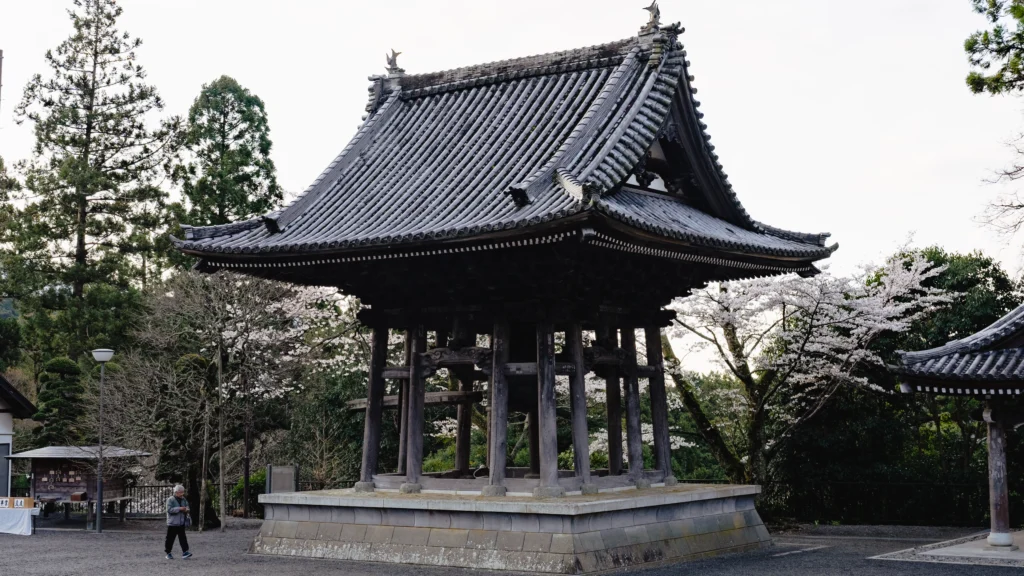 2026 Update: As of October 2024, the morning prayer time has been standardized to 5:30 AM year-round. Previously, the schedule changed with the seasons, and many third-party websites still show outdated information. If you are planning a visit, set your alarm for 4:00 AM to catch the bell ringing before the 5:30 AM service. It… Read more: Kuonji’s 5 AM Bell: A Traveler’s Guide to Morning Prayers at Minobusan
 - Minobusan Kuonji 2026: A 750-Year-Old Temple with Japan’s Best Weeping Cherry Trees2026 Update: Morning prayer is now held at a fixed time of 5:30 AM year-round (previously varied by season). The five-story pagoda, reconstructed in 2009, remains one of the most photographed structures on the grounds. If you are looking for a genuine spiritual experience in Japan — far from the crowds of Kyoto — you… Read more: Minobusan Kuonji 2026: A 750-Year-Old Temple with Japan’s Best Weeping Cherry Trees
- Lake Motosu: Chasing the Fuji on the 1,000 Yen Bill
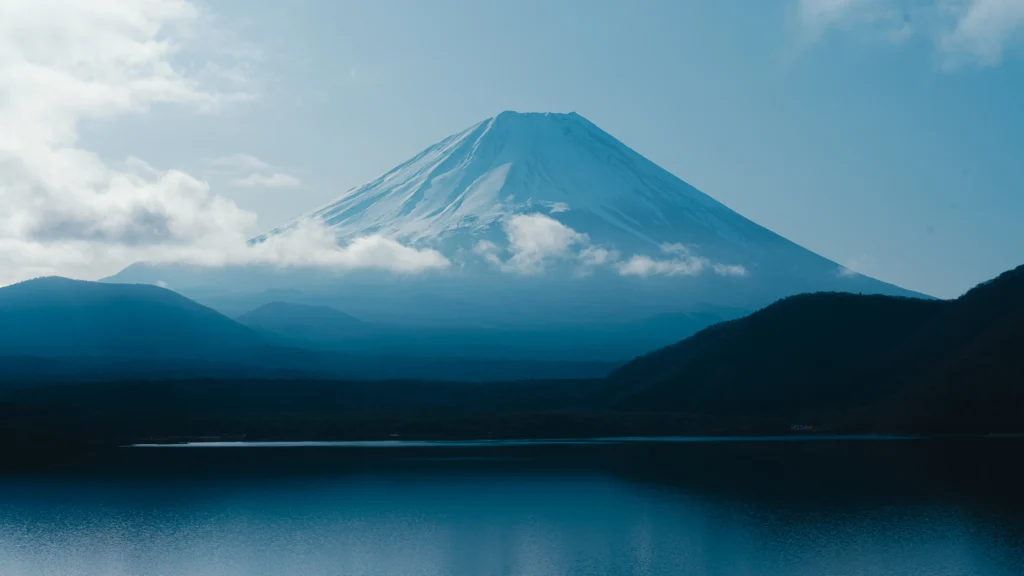 Have you ever pulled a 1,000 yen bill from your wallet, looked at the majestic image of Mount Fuji reflected on a lake, and wondered, “Is this place real?” I can tell you it is, and standing there is a moment that connects you deeply to the heart of Japan. That place is Lake Motosu… Read more: Lake Motosu: Chasing the Fuji on the 1,000 Yen Bill
 - Fuji Shibazakura Festival: A Sea of Pink at the Foot of Mt. Fuji
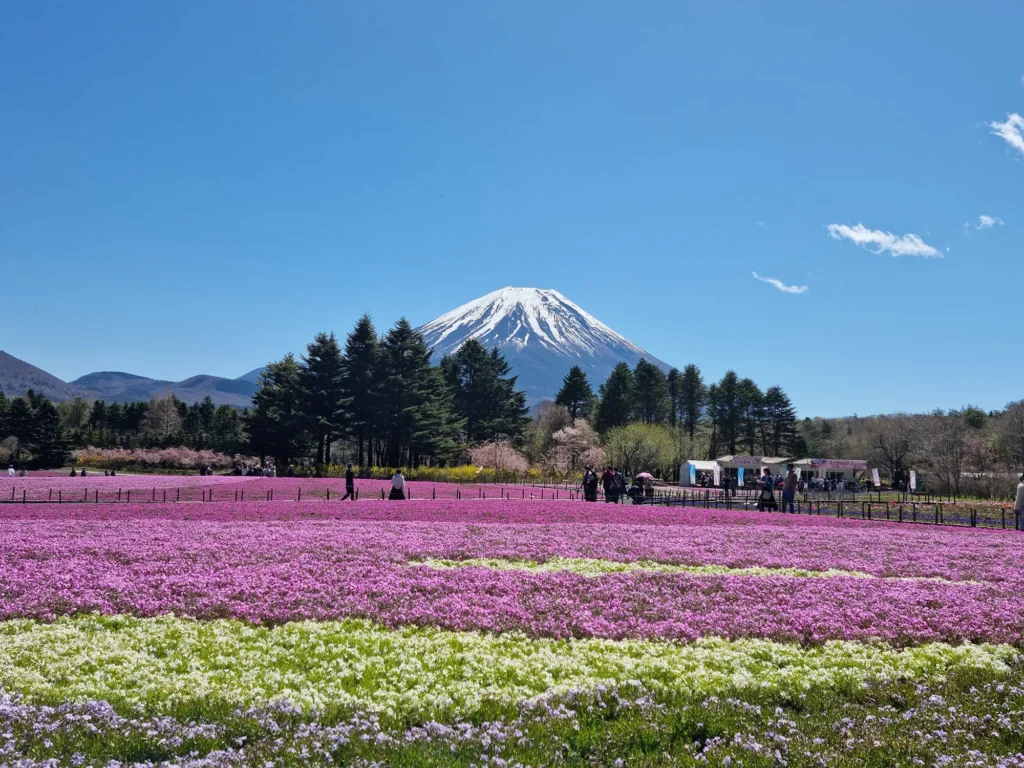 At Fuji Motosuko Resort (Minamitsuru District, Yamanashi), the Fuji Shibazakura Festival—one of the largest in the Kanto region—will start on Saturday, April 11, 2026, featuring around 500,000 moss phlox plants in full color. A breathtaking carpet of pink moss phlox stretches out with the majestic Mt. Fuji in the background. This is the Fuji Shibazakura… Read more: Fuji Shibazakura Festival: A Sea of Pink at the Foot of Mt. Fuji
 - Kawaguchiko Ohashi: The Bridge with a Million-Dollar Mt. Fuji View
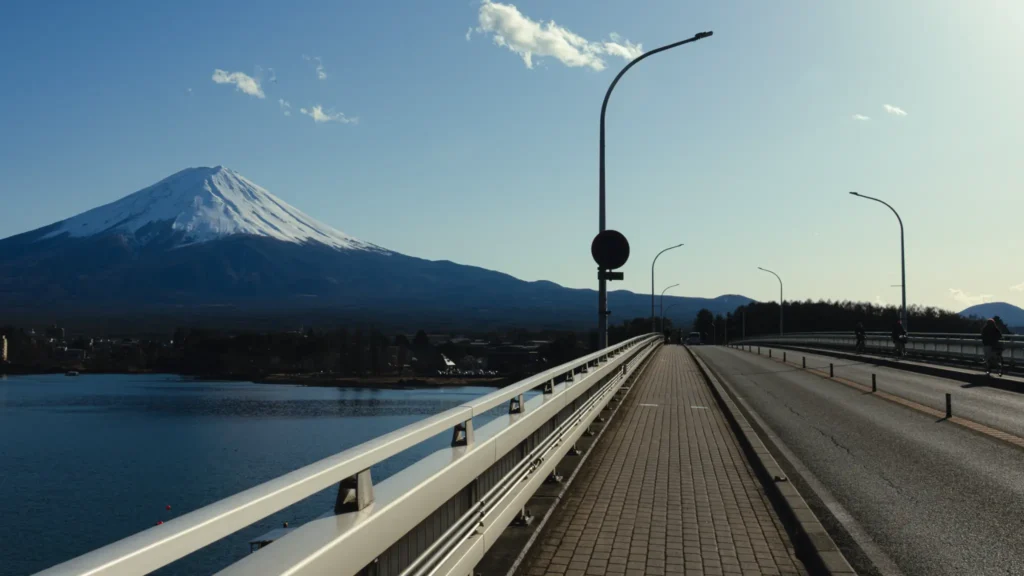 Imagine standing in the crisp mountain air, the vast expanse of Lake Kawaguchiko shimmering before you, and the iconic, snow-capped peak of Mt. Fuji commanding the horizon. For many travelers planning a trip to the Fuji Five Lakes region, finding that perfect, unobstructed viewpoint is a top priority. If you’re looking for a spot that… Read more: Kawaguchiko Ohashi: The Bridge with a Million-Dollar Mt. Fuji View
cherry blossom cherry blossoms day trip from tokyo flower festival fuji five lakes fujiyoshida Fukuoka fushimi hanami hiking japan japanese culture japanese food japanese garden japan travel kamakura kawagoe kawaguchiko Kumamoto kyoto local food Mount Fuji mt fuji Nagano nature Nikko Oku-Nikko Onsen Ramen Saga saitama sakura Shizuoka shrine sightseeing snow spring in japan Tochigi Tokyo travel travel guide travel planning winter winter travel Yamanashi
![Kitain Temple Kawagoe 2026: Edo Castle Rooms & 538 Rakan [With Map]](https://hiddenjapan-gems.com/wp-content/uploads/2026/04/DSC4602-768x432.webp)
[…] is the sound of the Great Bell at Minobusan Kuonji (身延山久遠寺), signaling the start of a daily ritual that has continued for centuries. For […]