
2026 Update: The Sakyu Center Chairlift now accepts IC cards (Suica, ICOCA) as of March 21, 2026. The Sand Museum reopens April 24, 2026, with a new Spain theme.
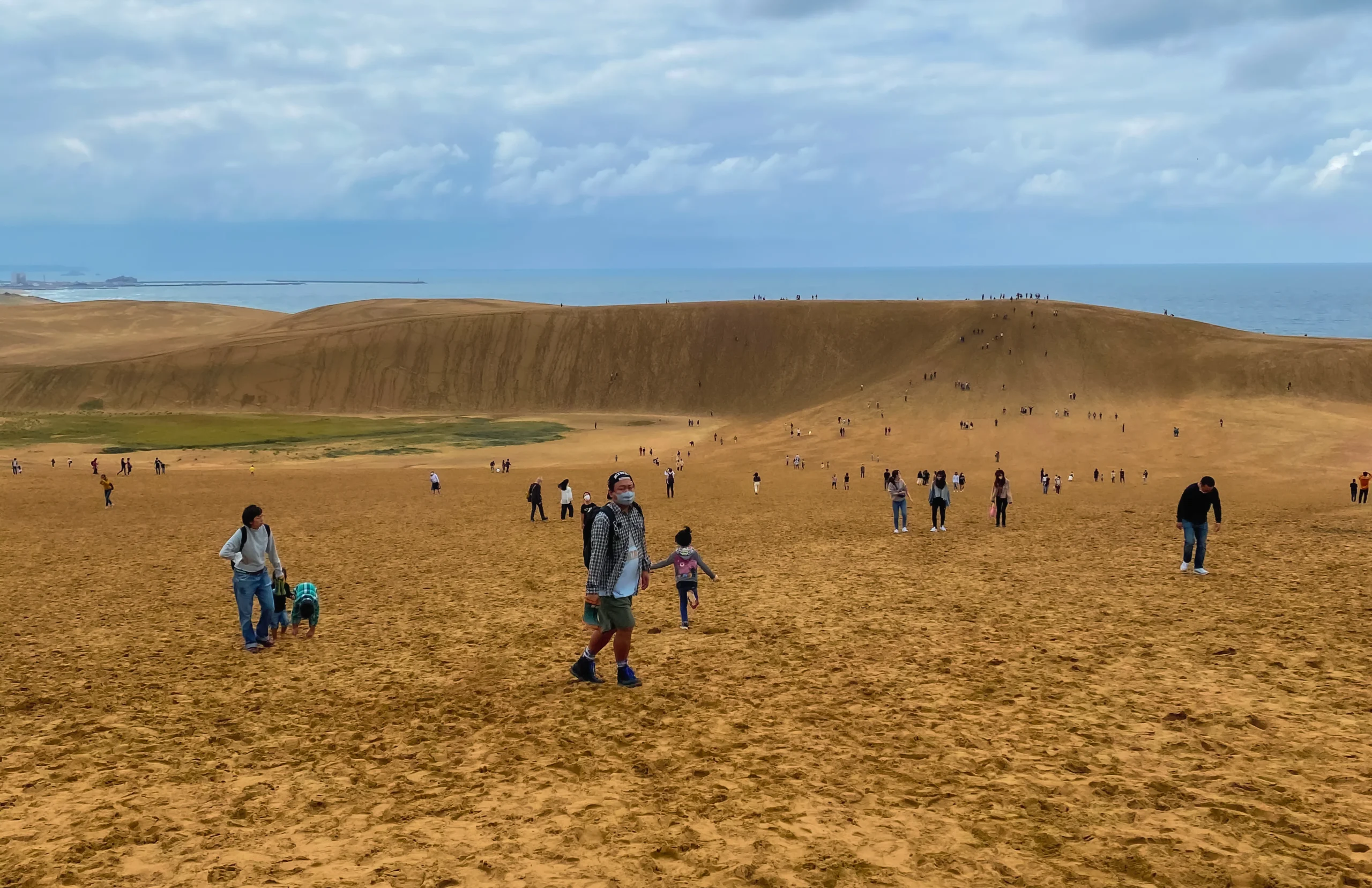
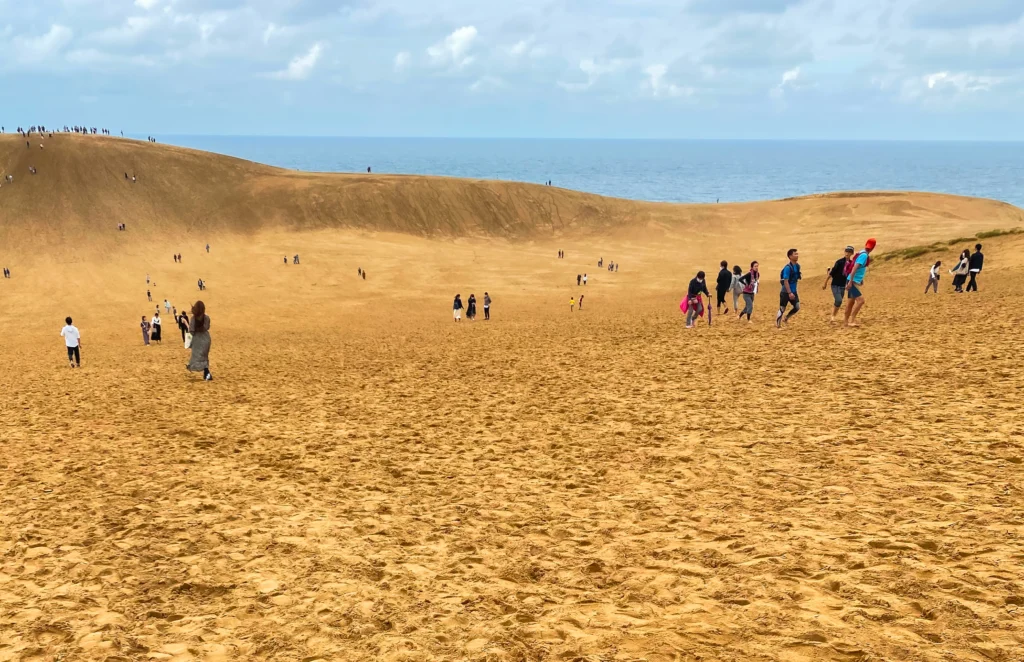
Most international visitors have never heard of Tottori. That’s exactly why you should go. On the Sea of Japan coast in western Japan, the Tottori Sand Dunes (鳥取砂丘, Tottori Sakyu) are Japan’s largest coastal dunes — 16 km of wind-sculpted sand stretching along the ocean, free to enter, and open 24 hours a day. You can paraglide over the ridges, sandboard down 30-degree slopes, ride a camel, or simply stand on the 47-meter-high crest at sunrise and watch the wind redraw the entire landscape overnight.
As the founder of hiddenjapan-gems.com, I have visited dozens of Japan’s natural landmarks, and the Tottori Sand Dunes remain one of the most visually striking. The sheer scale — a desert meeting the ocean — feels like it belongs in another country entirely. This guide covers everything you need to plan your visit: activities, access from Osaka and Tokyo, seasonal highlights, and practical tips from my own trips.

Table of Contents
Quick Facts: Visiting Tottori Sand Dunes
| Essential Info | Details |
| Official Name | Tottori Sand Dunes (鳥取砂丘) |
| Size | 16 km east-west, 2.4 km north-south |
| Tallest Point | Umanoze (馬の背) ridge: ~47 m high |
| Entry Fee | FREE |
| Hours | Open 24 hours, 365 days |
| Time Needed | 60–90 min (walking only) / 3–4 hours (with activities + Sand Museum) |
| Designations | National Natural Monument (1955), San’in Kaigan UNESCO Global Geopark, Japan Heritage |
| Visitor Center | Free boot rental, foot-washing station, sand wheelchair loan, free Wi-Fi |
| Toilets | At Visitor Center and Sakyu Kaikan only (none inside the dunes) |
| Chairlift | ¥300 one-way / ¥400 round-trip — IC cards accepted from March 2026 |
| Parking | ¥500/day at main city lot; free lots at Sakyu Kaikan and Sakyu Center |
| Nearest Station | Tottori Station (22 min by bus) |
| Nearest Airport | Tottori Sand Dunes Conan Airport (10 min by taxi) |
What Activities Can You Do at Tottori Sand Dunes?
The dunes are far more than a walk-and-look destination. Tottori has developed into a genuine adventure hub with eight distinct activities available in 2026.
1. Paragliding Over the Dunes
The soft sand and absence of trees or power lines make Tottori one of the safest places in Japan to learn paragliding. Zero Paraglider School and West Japan Outdoor School offer half-day tandem experiences starting around ¥8,000 (peak season +¥1,000). Other operators charge ¥12,000–¥15,500 for longer sessions. You can book through Tottori Tours, Asoview, or Activity Japan.
2. Sandboarding
Riding down sand slopes with up to a 30-degree incline is surprisingly fast. The Tottori Sand Dunes Sandboard School (Tel: 0857-30-1991) runs three sessions per day, priced at ¥4,500–¥5,500 plus ¥500 insurance. They also offer “sand sliders” (sleds) for younger children who cannot stand on a board.
3. Camel Rides and Photos
The Rakudaya (らくだや) camel station operates daily, weather permitting. A photo sitting on the camel costs ¥650 per person, while a short walking ride is ¥1,600 for one or ¥2,600 for two. Hours are 9:30–16:00 (March–November) and 10:00–16:00 (December–February). On busy weekends and holidays, they often restrict this to photo-only to protect the camels from exhaustion.
4. Fat Bikes
Camel Cycle Club rents fat bikes — mountain bikes with extra-wide tires designed for sand — for about ¥8,000 for a 2-hour guided ride. This lets you explore the wider, less-crowded areas of the dunes that most visitors never reach on foot.
5. Segway Tours
Guided Segway tours run from late March to late November, departing at 9:30 or 13:30. The Perfect Course (150 min) costs ¥9,800 with a Japanese guide or ¥14,800 with an English guide. The Middle Course (90 min) is ¥7,800 / ¥10,800 respectively. Riders must be aged 16–70 and weigh 45–118 kg.
6. Sand Dune Yoga
From mid-March to late October, you can practice yoga on the sand with ocean views. In summer, they also offer “Night Yoga” (夜ヨガ) sessions under the stars — a genuinely unique experience.
7. Night Stargazing Tours
Tottori Prefecture calls itself the “Stargazing Sanctuary” (星取県) due to its exceptionally low light pollution. At night, the dunes become pitch black. The Star Observation Night Tour (¥3,000, 20:00–22:00) includes a DSLR photo souvenir. The Mystery Night Walk (¥4,000, ~2 hours 45 min) includes coffee and a guided exploration of the dunes after dark.
8. Water Sports (Seasonal)
In warmer months, the beach beyond the dunes offers surfing, sea kayaking, SUP (stand-up paddleboarding), and clear canoe experiences. Photo guide tours are also available for those who want professional help capturing the landscape.
Walking the Dunes: What to See at Umanoze
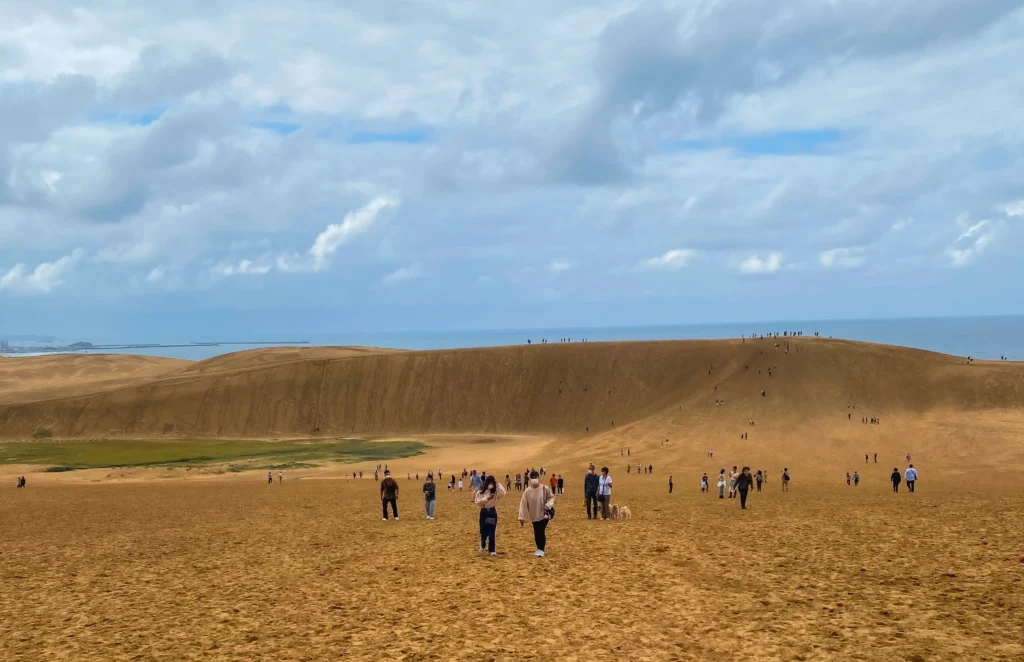
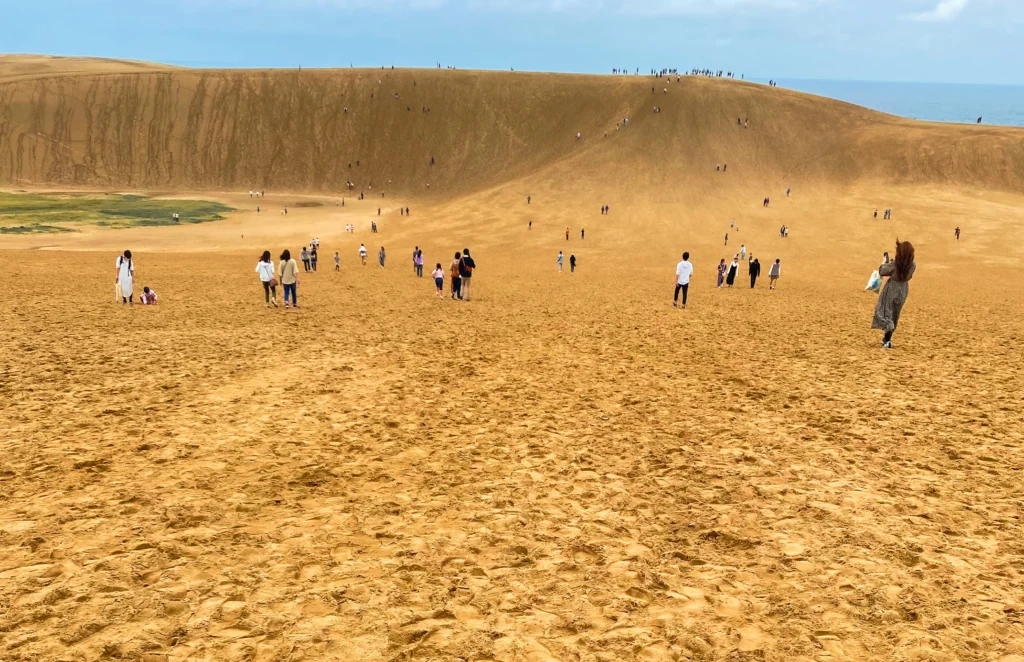
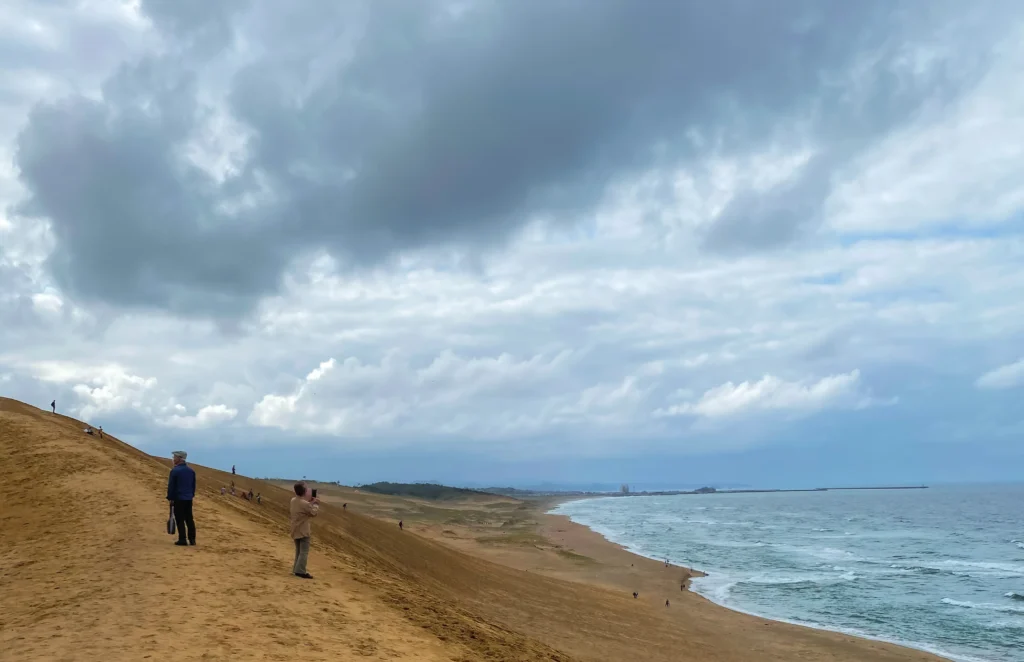
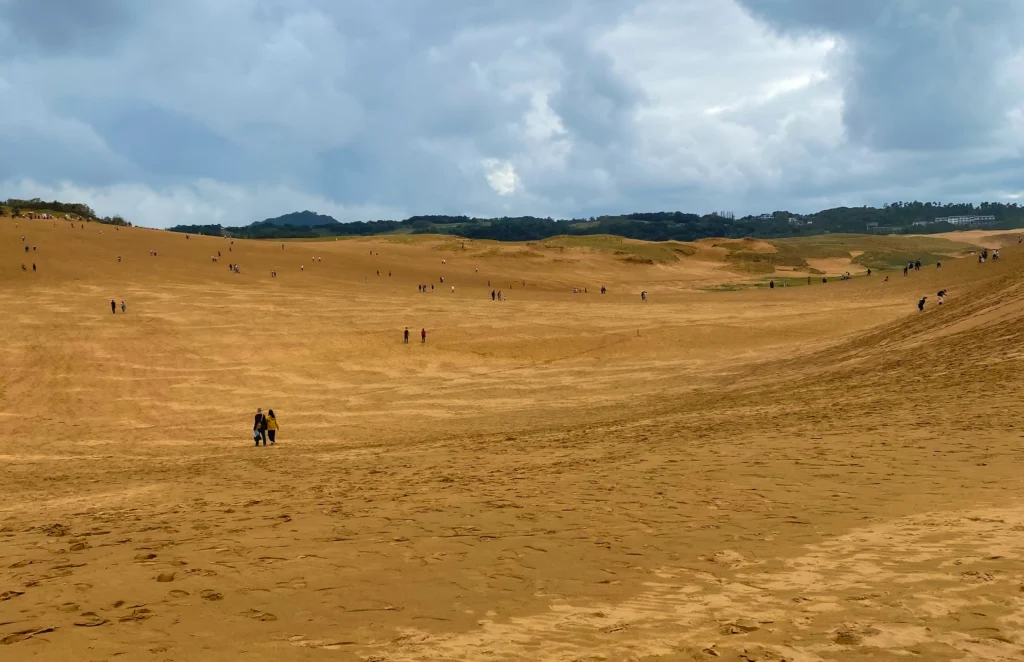
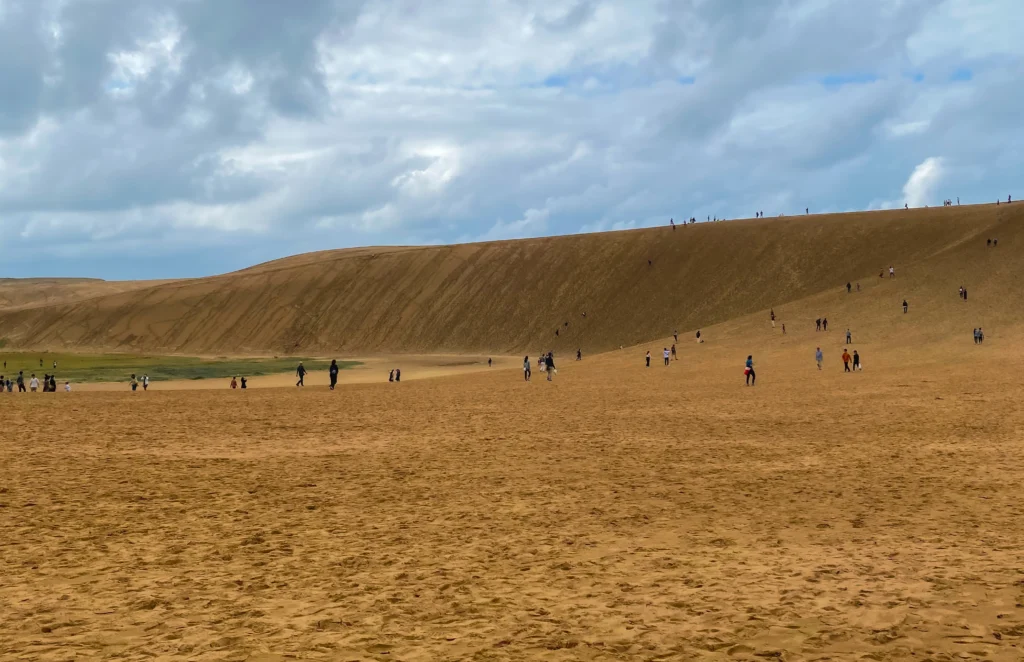
Even without booking any activities, the walk itself is the main attraction. The primary goal is reaching Umanoze (馬の背), the massive 47-meter-high ridge that blocks the view of the sea from the entrance.
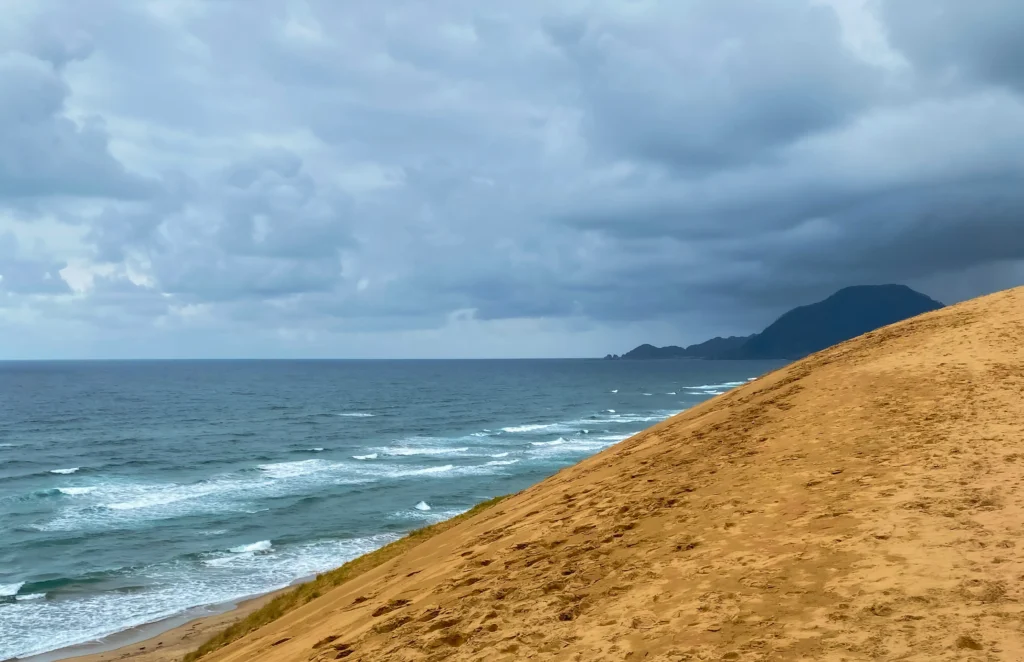
The walk from the entrance to the top of Umanoze takes about 15 to 20 minutes across a flat sandy plain. The final ascent is steep — your feet sink into the soft sand with every step, and you will be out of breath by the top. But once you crest the ridge, the view of the Sea of Japan opening up before you is spectacular. The sand drops away steeply on the ocean side, and on a clear day, you can see far along the coastline in both directions.
At the base of the dunes, seasonal “oasis” pools form from rainwater. These are most visible in late autumn through spring and create surreal reflections of the sky — sometimes compared to Bolivia’s Uyuni Salt Flats.
What Is the Best Time of Year to Visit Tottori Sand Dunes?
Every season transforms the dunes into a different landscape. There is no single “best” time — it depends entirely on what you want to experience.
| Season | Temperature | Highlights | What to Wear / Know |
| Spring (Mar–May) | 10–20°C | Wildflowers bloom, oasis pools appear | Most comfortable weather. Light jacket. |
| Summer (Jun–Aug) | 25–33°C | Isaribi squid fishing lights at night, stargazing | Sand surface reaches 60°C. Avoid midday barefoot. Bring lots of water. |
| Autumn (Sep–Nov) | 12–22°C | Purple Rakkyo flowers (Oct–Nov), Saren sand cascades after rain | Excellent light for photography. |
| Winter (Dec–Feb) | 5–7°C | Fumon wind ripples, snow on dunes, Sachuu sand pillars | Best for photography. Warm layers and waterproof boots essential. |
In winter, overnight winds carve delicate ripple patterns (風紋) into the sand — arrive at sunrise before anyone else’s footprints break the spell. The conditions for perfect wind ripples require wind speeds of 5–10 m/s and dry sand, which occur most reliably in the early morning hours of winter.
For Southeast Asian Travelers: Winter in Tottori averages 5–7°C — drastically colder than Singapore (27°C) or Bangkok (28°C). The fierce winds off the Sea of Japan make it feel even colder. Bring a proper winter jacket, thermal layers, and waterproof boots. The Visitor Center lends free long boots, which help enormously. Even in spring and autumn, mornings can be chilly — a light down jacket is wise.
Photography Tips for the Dunes
The Tottori Sand Dunes are one of the most photogenic landscapes in Japan, but timing and conditions matter enormously.
Sunrise is the golden hour. The low-angle light creates deep shadows on the sand ridges, and if you arrive before other visitors, the wind ripples from the previous night will be perfectly undisturbed. This is the single best time for photography.
Sunset paints the dunes in amber and red tones. The sun sets directly over the Sea of Japan, and silhouettes of people walking along the Umanoze ridge make dramatic compositions.
Sand Cascades (砂簾 – Saren): After a heavy rain, the drying sand falls down the steep slopes in thin streams, creating patterns that look like waterfalls frozen in sand. These are most common in autumn.
The “Uyuni” Effect: In late autumn and spring, large oasis pools form at the base of the dunes. On calm days, these reflect the sky perfectly, creating a mirror effect similar to Bolivia’s Uyuni Salt Flats. This also works after rain on the flat sandy areas.
Isaribi (漁火): On summer evenings, the lights of squid fishing boats line the horizon of the Sea of Japan, creating a magical scene from the top of the dunes.
Please review our guide on Japan Photography Etiquette before visiting. Cosplay photography with props requires prior authorization from the Visitor Center.
How Do I Get to Tottori Sand Dunes from Osaka or Tokyo?
Tottori is off the main Shinkansen route, which keeps the crowds manageable but requires a bit more planning.
From Osaka / Kyoto
Take the JR Super Hakuto limited express train from Osaka or Kyoto directly to Tottori Station. The journey takes about 2.5 hours and costs roughly ¥7,500.
Important for JR Pass Holders: The Super Hakuto runs partially on a private railway line (the Chizu Express section). JR Pass holders must pay a ¥2,150 supplemental fee on board for this section. See our guide on How to Buy JR Tickets for details.
From Tokyo
By Air (Recommended): ANA flies from Tokyo Haneda to Tottori Sand Dunes Conan Airport (about 1 hour 20 minutes). From the airport, the dunes are only a 10-minute taxi ride away. Check our Japan Airport Guide for flight details and airport navigation.
By Train: Take the Tokaido Shinkansen to Himeji or Osaka, then transfer to the Super Hakuto limited express. Total time is about 5.5 hours.
From Southeast Asia
Budget airlines connect Singapore, Bangkok, Kuala Lumpur, and Jakarta to Osaka Kansai Airport (KIX). From there, the Super Hakuto train reaches Tottori in 2.5 hours. Scoot, AirAsia, and Jetstar Asia offer direct flights to Osaka. Citizens of Singapore, Malaysia, Thailand, and Indonesia can enter Japan visa-free for up to 30 days (90 days for Singapore).
From Tottori Station to the Dunes
Take the local bus (Tottori Sand Dunes Line #39) from Tottori Station. It takes 22 minutes and costs ¥380. On weekends and holidays, the Loop Kirinjishi Bus is also available (¥400/ride or ¥700 day pass). You can use your IC cards (Suica, Pasmo, ICOCA) on these buses.
For a broader overview of navigating the country, see our guide on Getting Around Japan by Train.
What to Eat Near Tottori Sand Dunes
The area around the dunes has several local specialties worth trying.
Suna-tamago (砂たまご) — Eggs steam-baked in the hot dune sand. The texture is firmer and slightly chestnut-like, completely different from a regular boiled egg. Sold at souvenir shops near the entrance.
Pear Soft Cream (梨ソフトクリーム) — Made from 100% local Nijisseiki pear puree with no artificial flavoring. Tottori is Japan’s top pear-producing prefecture, and this soft serve is the best way to taste it.
Sand Pudding (砂プリン) — A custard pudding topped with powdered caramel that looks like sand. A fun souvenir.
Sand Dune Sundae (砂丘サンデー) — A layered dessert with a camel-shaped cookie, pear jelly, and kinako (roasted soybean flour) “sand.”
Matsuba-gani Crab — In winter (November–March), Tottori’s matsuba-gani snow crab is among the finest in Japan. Available at restaurants in Tottori city.
Gyukotsu Ramen (牛骨ラーメン) — Tottori’s regional ramen uses a beef bone broth instead of the usual pork or chicken. Rich, savory, and unique to this area.
Kaisendon — Fresh seafood rice bowls featuring the day’s catch from the Sea of Japan. Available at the Sakyu Kaikan restaurant near the dunes.
For visitors from Malaysia and Indonesia, halal-certified restaurants are limited in Tottori. Seafood (especially sashimi and grilled fish) is generally a safe option, but confirm ingredients with staff. Convenience stores (7-Eleven, Lawson, FamilyMart) stock onigiri, salads, and snacks that can serve as budget-friendly alternatives.
Practical Tips and Rules
Footwear:
You can walk barefoot in spring and autumn, but the sand burns in summer (surface temperatures reach 60°C) and freezes in winter. The Visitor Center offers free long boot rentals, which are highly recommended. Shoe covers are also sold at souvenir shops.
Facilities at the Visitor Center:
The center provides free exhibits, maps, a foot-washing station, towel vending machines, free Wi-Fi, and sand wheelchair loans for visitors with mobility needs. Coin lockers are available at nearby souvenir shops. Wooden boardwalks with viewing decks provide wheelchair and stroller access to observation points.
Toilets:
There are NO toilets inside the dune area. Use the facilities at the Visitor Center or Sakyu Kaikan before walking out onto the sand.
Payment:
Most activity operators accept cash only. The chairlift now accepts IC cards (from March 2026), but bring cash for camel rides, food stalls, and smaller shops.
Rules:
Do not write or draw in the sand (落書き禁止). Do not take sand home. Do not swim in the sea beyond the dunes. Drone flying requires prior Visitor Center approval. Photography and cosplay with props requires authorization.
Weather Preparedness:
The San’in coast is exposed to sudden weather changes, especially in winter. Check our Disaster Preparedness Guide for tips on handling typhoons and storms.
2026 Events and Updates
Sand Museum Reopening (April 24, 2026): The world-famous Sand Museum reopens with a new Spain theme, featuring massive sand sculptures by international artists. A must-visit addition to your dunes trip.
Tottori Sand Dunes Illusion: Every December, the dunes are illuminated with approximately 450,000 LEDs in a free light-up event (typically 18:00–21:00). The 2025 edition ran December 14–28.
Pokemon Sand Collaboration: Sandshrew (Alolan form) has been Tottori’s official “Furusato Ambassador” since 2018. The Sand Park playground (opened 2023) features Pokemon-themed sand play equipment — a hit with families traveling with children.
Suggested Half-Day Itinerary
If you only want to walk to the top of the Umanoze ridge, take photos, and walk back, 60 to 90 minutes is sufficient. However, if you plan to do an activity and visit the Sand Museum, allocate a half-day (3 to 4 hours).
| Time | Activity |
| 9:00 | Arrive by bus from Tottori Station. Pick up free boots at Visitor Center. |
| 9:15 | Walk across the flat plain to the base of Umanoze ridge. |
| 9:30 | Climb Umanoze. Enjoy the Sea of Japan view from the top. |
| 10:00 | Descend and explore the oasis area. Take photos. |
| 10:30 | Return to the entrance area. Try a camel photo (¥650). |
| 11:00 | Eat pear soft cream or sand-baked eggs at the souvenir shops. |
| 11:30 | Walk to the Sand Museum (10 min). Spend 60–90 min inside. |
| 13:00 | Return to Tottori Station by bus. |
Frequently Asked Questions About Tottori Sand Dunes
Q: How do I get to Tottori Sand Dunes from Osaka or Tokyo?
From Osaka, take the JR Super Hakuto limited express train directly to Tottori Station (2.5 hours, ~¥7,500). From Tokyo, the fastest way is to fly ANA from Haneda Airport to Tottori Sand Dunes Conan Airport (1 hour 20 minutes), then take a 10-minute taxi. From Tottori Station, local bus #39 reaches the dunes in 22 minutes for ¥380.
Q: What activities can you do at Tottori Sand Dunes?
You can go paragliding (from ¥8,000), sandboarding (¥4,500–¥5,500), ride fat bikes (¥8,000), take a guided Segway tour (from ¥7,800), practice sand dune yoga, or ride a camel (¥1,600). At night, guided stargazing tours (¥3,000–¥4,000) offer a completely different experience. In summer, water sports like sea kayaking and SUP are also available.
Q: What is the best time of year to visit Tottori Sand Dunes?
Spring (March–May) offers the most comfortable weather for walking. Autumn provides excellent light for photography and the chance to see purple Rakkyo flowers. Winter is bitterly cold but offers the best chance to see wind ripple patterns (fumon) and snow on the sand. Summer is extremely hot — the sand surface can reach 60°C — but summer evenings are ideal for stargazing.
Q: Are the Tottori Sand Dunes free to visit?
Yes. Entry to the Tottori Sand Dunes is completely free, and the natural area is open 24 hours a day, 365 days a year. You only pay if you book specific activities, use the chairlift (¥300–¥400), or park in the main paid lot (¥500/day).
Q: How long should I spend at the Tottori Sand Dunes?
If you only want to walk to the main ridge (Umanoze) for the ocean view and take photos, 60 to 90 minutes is enough. If you want to do an activity like sandboarding or paragliding and visit the nearby Sand Museum, plan for a half-day (3 to 4 hours).
Q: Are there toilets inside the Tottori Sand Dunes?
No. There are no toilets inside the actual dune area. You must use the facilities at the Visitor Center or the Sakyu Kaikan building before walking out onto the sand. The Visitor Center also has a foot-washing station and free boot rental.
Conclusion
The Tottori Sand Dunes offer something no other destination in Japan can: a vast, wind-sculpted desert that meets the ocean. Whether you come for the adventure activities, the photography, or simply the experience of standing on a 47-meter sand ridge watching the Sea of Japan, this is one of the most memorable landscapes in the country. The fact that entry is free and the dunes are open around the clock makes it accessible to every budget and schedule.
If you are planning a trip beyond the usual Tokyo-Kyoto-Osaka route, Tottori deserves a spot on your itinerary. Pair it with a visit to the Sand Museum and a bowl of beef bone ramen in the city, and you have one of the best day trips in western Japan.
Sources checked
Tottori City Tourism (torican.jp), Visit Tottori, Tottori Activity Association, Tottori Tours, Sakyu Center, Japan Guide, Tottori Sand Dunes Visitor Center

- Tottori Sand Dunes 2026: 8 Activities, Free Entry & How to Get There2026 Update: The Sakyu Center Chairlift now accepts IC cards (Suica, ICOCA) as of March 21, 2026. The Sand Museum reopens April 24, 2026, with a new Spain theme. Most… Read more: Tottori Sand Dunes 2026: 8 Activities, Free Entry & How to Get There
- Kawagoe Kumano Shrine 2026: 6 Interactive Rituals You Can Actually Try
 2026 Update: Kawagoe Kumano Shrine now offers QR-code multilingual guides at 16 locations throughout the grounds, available in English, Chinese, and Korean. The shrine also accepts cashless payments (PayPay) for… Read more: Kawagoe Kumano Shrine 2026: 6 Interactive Rituals You Can Actually Try
 - Kitain Temple Kawagoe 2026: Edo Castle Rooms & 538 Rakan [With Map]
![Kitain Temple Kawagoe 2026: Edo Castle Rooms & 538 Rakan [With Map]](https://hiddenjapan-gems.com/wp-content/uploads/2026/04/DSC4602-1024x576.webp) Most visitors to Kawagoe head straight to the warehouse district. Start at Kitain instead — it’s quieter in the morning, and you’ll walk the same route the Tokugawa shoguns once… Read more: Kitain Temple Kawagoe 2026: Edo Castle Rooms & 538 Rakan [With Map]
Most visitors to Kawagoe head straight to the warehouse district. Start at Kitain instead — it’s quieter in the morning, and you’ll walk the same route the Tokugawa shoguns once… Read more: Kitain Temple Kawagoe 2026: Edo Castle Rooms & 538 Rakan [With Map] - Kuonji’s 5 AM Bell: A Traveler’s Guide to Morning Prayers at Minobusan
 2026 Update: As of October 2024, the morning prayer time has been standardized to 5:30 AM year-round. Previously, the schedule changed with the seasons, and many third-party websites still show… Read more: Kuonji’s 5 AM Bell: A Traveler’s Guide to Morning Prayers at Minobusan
 - Minobusan Kuonji 2026: A 750-Year-Old Temple with Japan’s Best Weeping Cherry Trees
 2026 Update: Morning prayer is now held at a fixed time of 5:30 AM year-round (previously varied by season). The five-story pagoda, reconstructed in 2009, remains one of the most… Read more: Minobusan Kuonji 2026: A 750-Year-Old Temple with Japan’s Best Weeping Cherry Trees
cherry blossom cherry blossoms day trip from tokyo flower festival fuji five lakes fujiyoshida Fukuoka fushimi hanami hiking japan japanese culture japanese food japanese garden japan travel kamakura kawagoe kawaguchiko Kumamoto kyoto local food Mount Fuji mt fuji Nagano nature Nikko Oku-Nikko Onsen Ramen Saga saitama sakura Shizuoka shrine sightseeing snow spring in japan Tochigi Tokyo travel travel guide travel planning winter winter travel Yamanashi
![Kitain Temple Kawagoe 2026: Edo Castle Rooms & 538 Rakan [With Map]](https://hiddenjapan-gems.com/wp-content/uploads/2026/04/DSC4602-768x432.webp)