
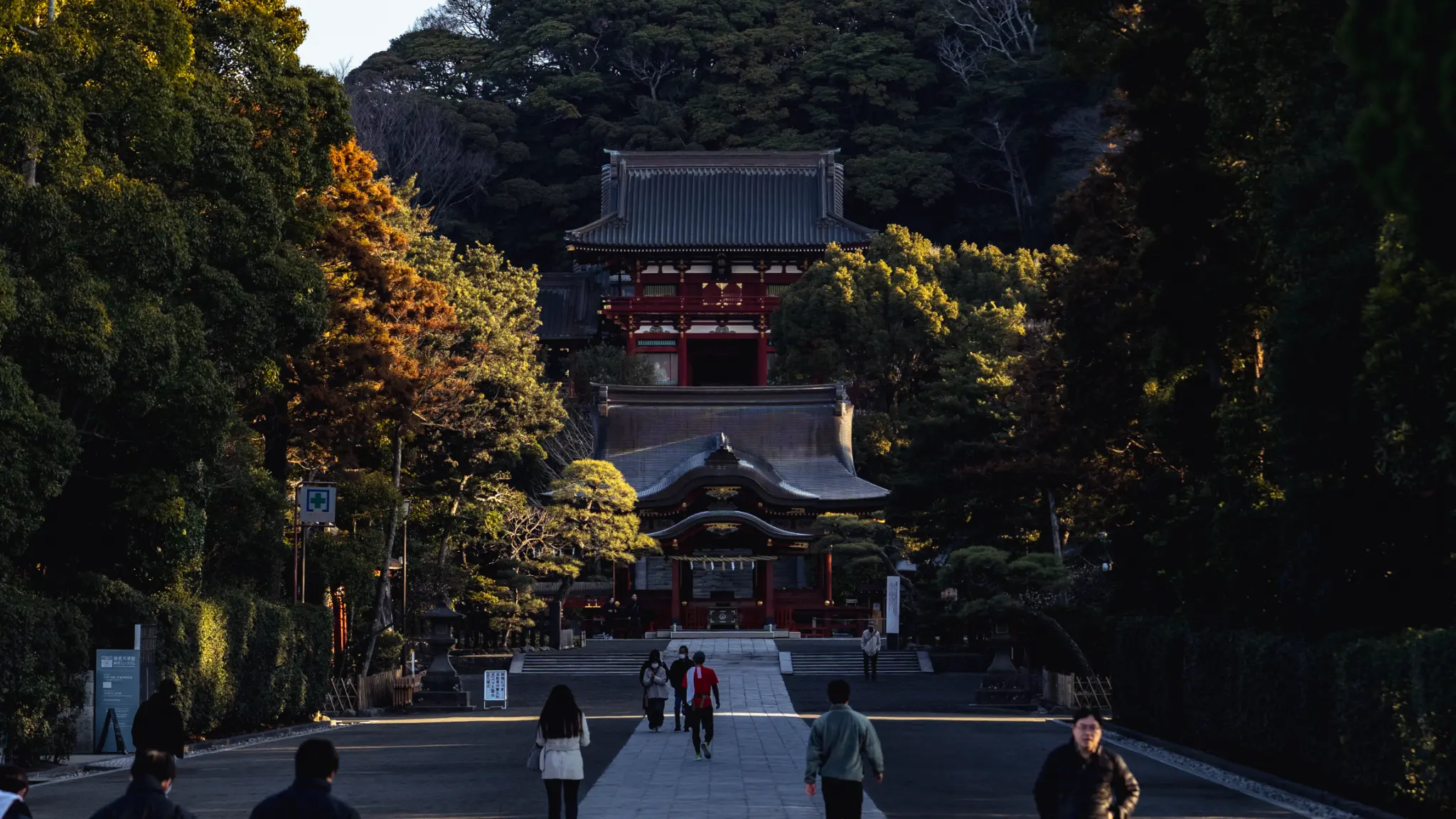

As the sun casts long, golden shadows down the main approach, a quiet sense of reverence settles over Tsurugaoka Hachimangu. I made a point to visit early in the morning, a trick I’ve learned to appreciate the scale and serenity of Japan’s most popular sites before the crowds arrive. This sprawling shrine complex is not just the spiritual heart of Kamakura; it’s a journey through the history of the samurai capital itself. For anyone planning a trip to Kamakura, understanding this shrine is essential to understanding the city. This guide will walk you through its history, key sights, and practical tips, drawing from my own early-morning stroll through its hallowed grounds.
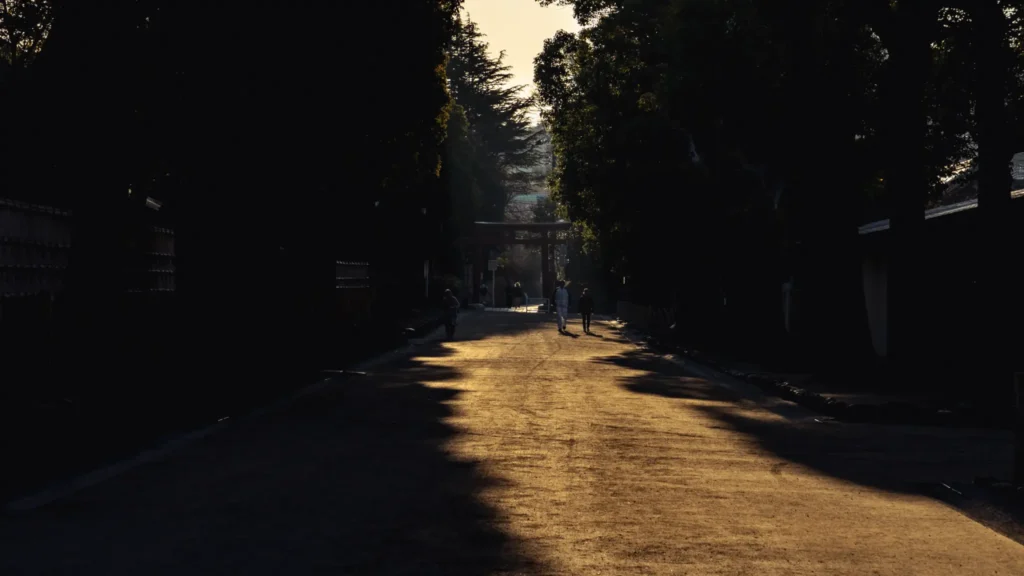
Table of Contents
Quick Facts
| Feature | Details |
| Best Time to Visit | Early morning to avoid crowds. Spring for cherry blossoms, summer for lotus, autumn for foliage. |
| Time Needed | 1 to 1.5 hours |
| Nearest Station | JR Kamakura Station (East Exit) |
| Admission | Free (Treasure Hall: ¥200) |
| Opening Hours | 6:00 AM to 8:00 PM (No closing days) |
| Payment Methods | Cash for offerings and Treasure Hall |
| Crowd Level | High, especially on weekends and holidays. Very low in the early morning. |
| Accessibility | The main grounds are accessible, but the main hall requires climbing a large stone stairway. Ramps are available for parts of the complex. |
A Brief History: The Center of Samurai Power
Tsurugaoka Hachimangu is inextricably linked to the rise of the samurai. Founded in 1063 by Minamoto Yoriyoshi, it was moved to its current, more prominent location in 1180 by Minamoto Yoritomo, the founder and first shogun of the Kamakura Shogunate . He established the shrine not only as a place of worship for Hachiman—the patron god of the Minamoto clan and the samurai—but also as the political and geographical center of his new military government.
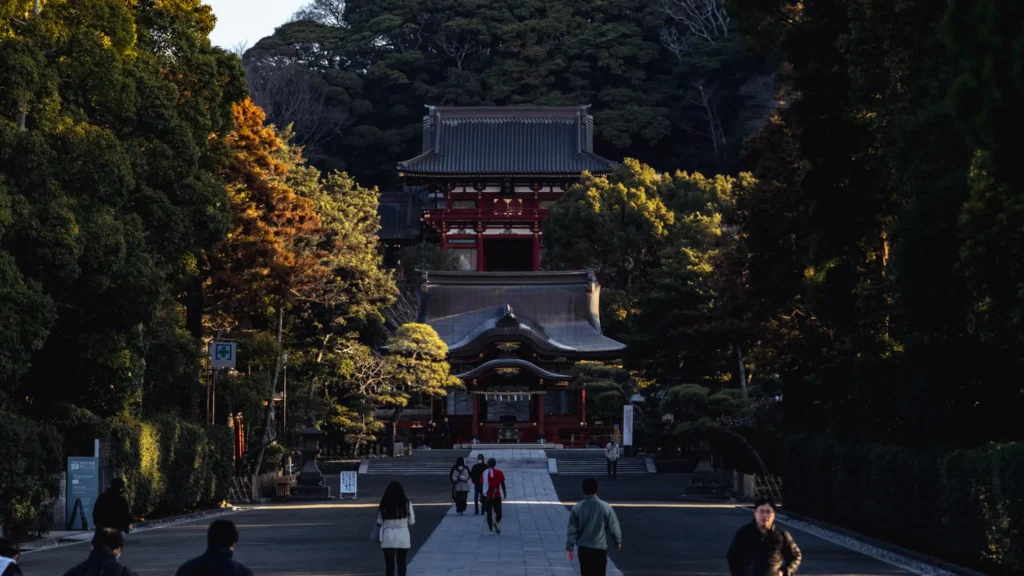
The shrine’s layout itself is a statement of power, with a long, grand approach, Wakamiya Oji Street, creating a direct line of sight from the sea to the main hall. This positioning cemented its importance, making it a site for both solemn rituals and pivotal, sometimes tragic, historical events. One of the most famous is the assassination of the third shogun, Minamoto no Sanetomo, in 1219, an event that took place on the shrine’s grand stone steps and marked the end of the Minamoto bloodline’s direct rule .
How to Get There
Tsurugaoka Hachimangu is centrally located and easily accessible from JR Kamakura Station. The walk itself is part of the experience.
From JR Kamakura Station (East Exit):
1.Exit the station’s East Exit. You will immediately see a large red torii gate marking the entrance to Komachi-dori, a bustling shopping street.
2.You have two main options for the 10-15 minute walk:
•Komachi-dori Street: This narrow street runs parallel to the main road and is packed with small shops, cafes, and restaurants. It’s a lively and interesting route, but can get very crowded.
•Dankazura (段葛): This is the shrine’s formal pedestrian approach, a raised flagstone path that runs down the center of Wakamiya Oji Street. It is lined with hundreds of cherry trees, making it a spectacular sight in spring. This was the path I chose for my quiet morning walk, and it offers a more direct and stately route to the shrine.
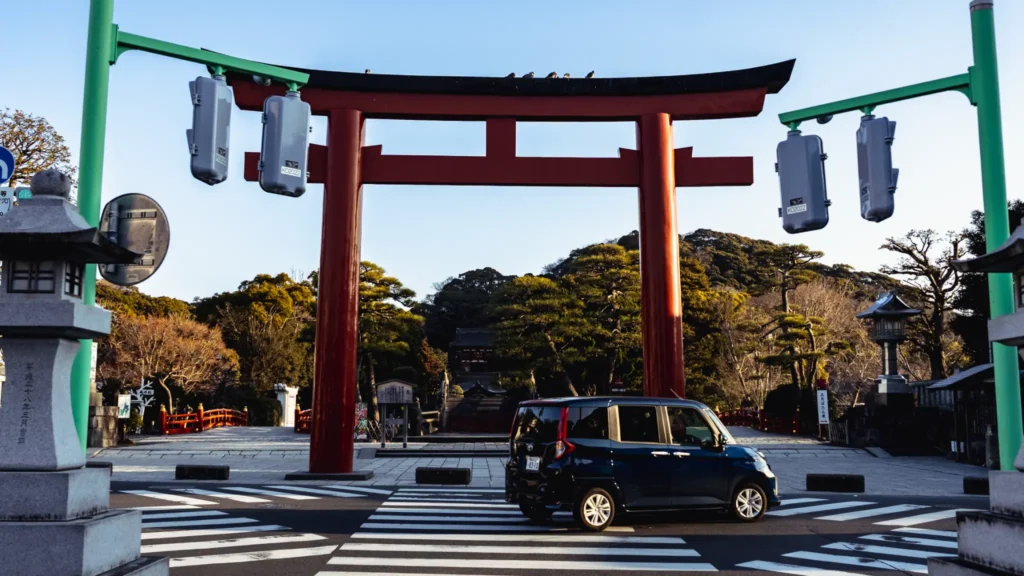
3.Both paths lead directly to the San-no-Torii (Third Torii), a massive red gate that marks the entrance to the shrine grounds proper.
Exploring the Grounds: A Self-Guided Walk
Once you pass through the San-no-Torii, the shrine complex opens up. Here are the key sights to see as you make your way through the grounds.
The Ponds and the Maiden Hall
After crossing a small bridge, you’ll be flanked by two large ponds: the Genji Pond on the right and the Heike Pond on the left. The Genji Pond, representing the Minamoto clan, features three islands (the number 3 symbolizing birth/creation), while the Heike Pond, for the rival Taira clan, has four islands (the number 4 being a homophone for death) . In summer, the ponds are covered in beautiful white and red lotus flowers.
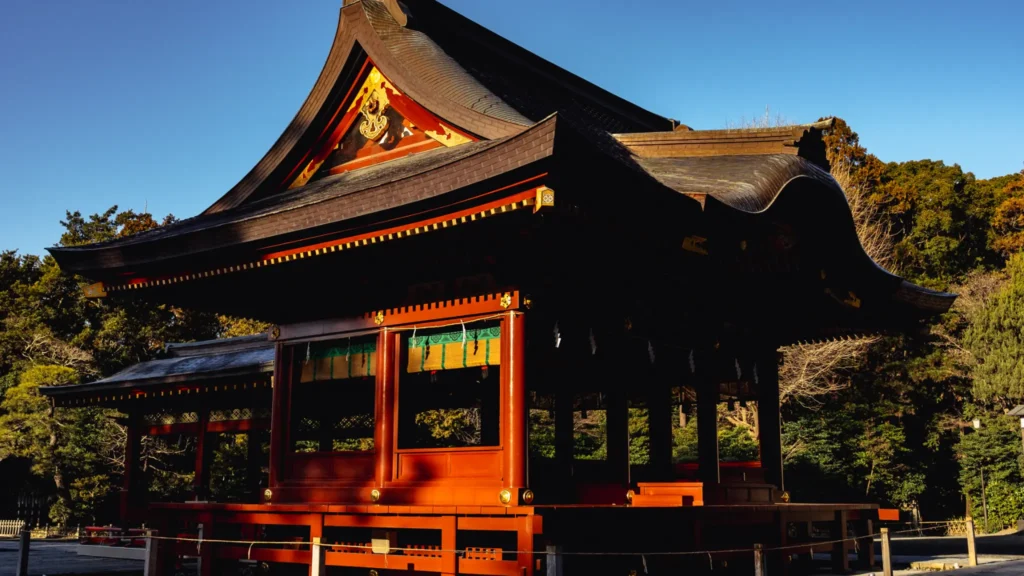
Continuing straight, you will arrive at the Maiden (舞殿), a striking open-sided stage. This is where traditional music, dances, and wedding ceremonies are performed. Its vermilion structure stands out beautifully against the greenery, especially in the soft morning light.
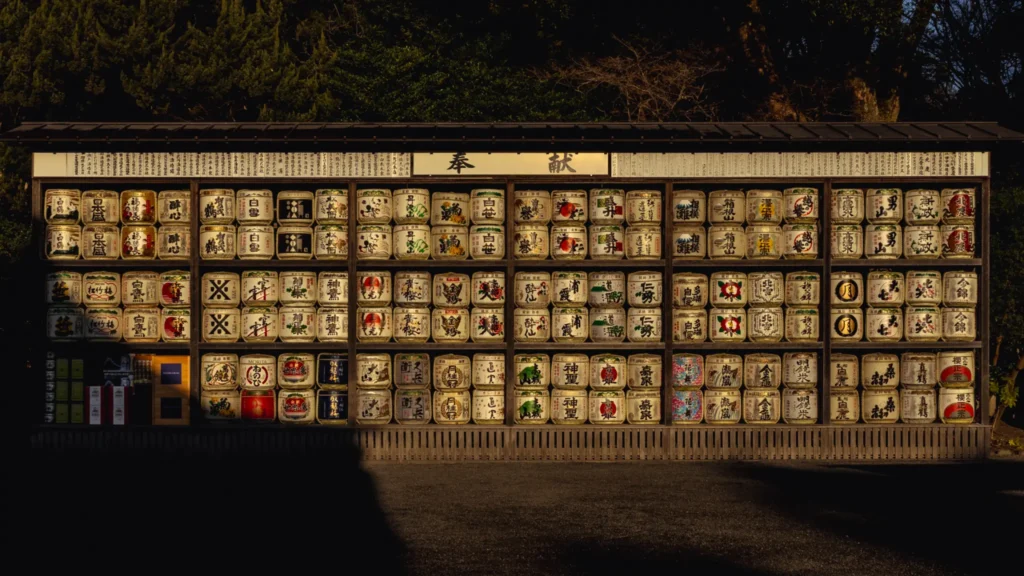
To the side of the path, you’ll also notice rows of straw-wrapped barrels. These are kazaridaru, or decorative sake barrels, offered to the shrine’s deities by breweries from across Japan. They make for a colorful and uniquely Japanese photo opportunity.
The Great Stone Steps and the Main Hall
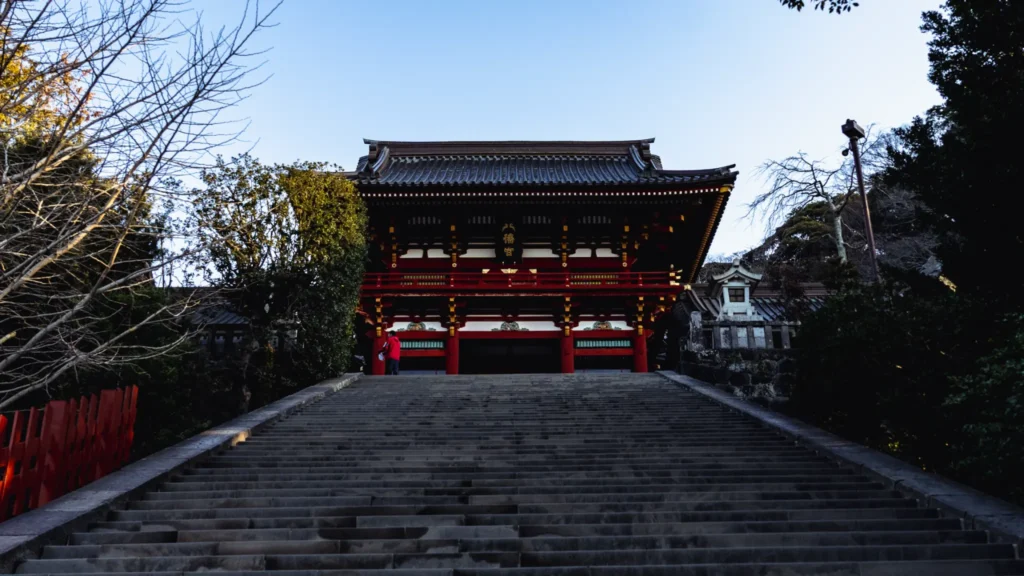
Dominating the view is the Great Stone Stairway (大石段), a flight of 61 steps leading up to the Main Hall. As you ascend, remember that this was the site of Shogun Sanetomo’s assassination in 1219. To the left of the stairs is the stump of the Great Ginkgo Tree, which was over 1,000 years old before it fell in a storm in 2010. It was said to be the hiding place of Sanetomo’s assassin. New shoots are now growing from the ancient stump, a symbol of resilience.
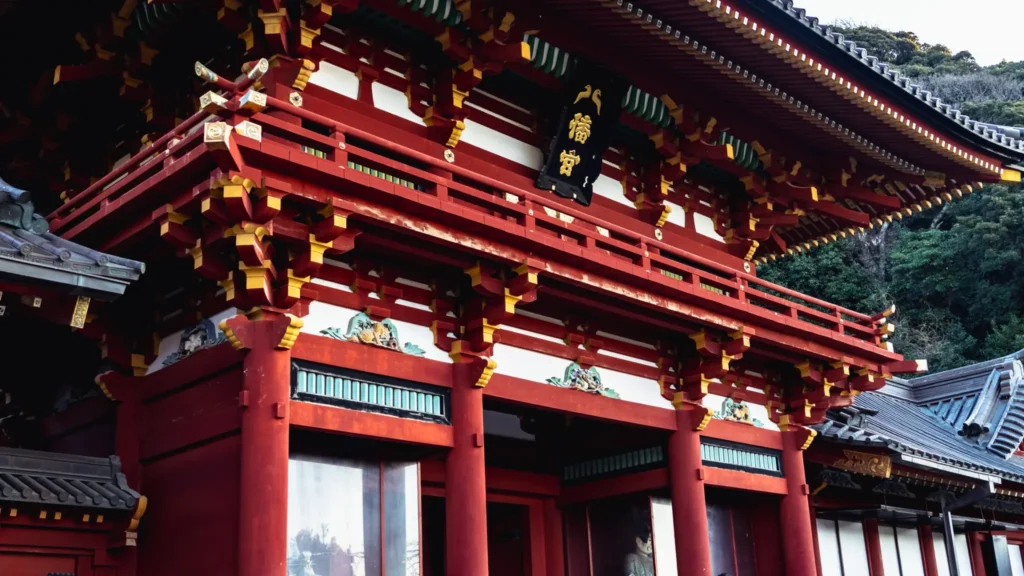
At the top of the stairs is the Main Hall (本宮), the most important building in the complex. From this elevated position, you get a commanding view back down the stairway, over the Maiden, and along the Dankazura path all the way into the city. The current building dates to 1828 and is a designated National Important Cultural Property. Take a moment to admire the intricate carvings and the powerful presence of the building, dedicated to the god Hachiman.
Practical Tips for Your Visit
•Go Early:
My best advice is to emulate my experience and visit between 6:00 and 8:00 AM. You’ll have the vast grounds almost to yourself, allowing for peaceful contemplation and crowd-free photos. The way the morning light filters through the trees is magical.
•Footwear:
Be prepared for a fair amount of walking, including the large stone staircase. Comfortable shoes are a must.
•Shrine Etiquette:
Before entering, it’s customary to bow at the torii gate. At the temizuya (water pavilion), you can purify your hands and mouth. When praying at the main hall, the general custom is to bow twice, clap twice, and bow once more.
•Photography:
Photography is generally permitted on the grounds, but be respectful, especially during ceremonies or prayers. Tripods may be restricted in crowded areas.
Where to Stay Nearby
Kamakura is an excellent day trip from Tokyo, but staying overnight allows you to experience the city’s quieter side. Most accommodation is clustered around Kamakura Station, offering easy access to the shrine and other major sights.
Suggested Mini-Itinerary
Arrive at Tsurugaoka Hachimangu for a quiet walk through the grounds.
Walk down Komachi-dori as the shops begin to open.
Visit the Great Buddha (Daibutsu) via the Enoden train line.
Explore Hasedera Temple, known for its beautiful gardens and views.
Enjoy lunch near Hase Station or back in central Kamakura.
Frequently Asked Questions
1. Is Tsurugaoka Hachimangu worth visiting?
Absolutely. It is the most important historical and cultural site in Kamakura and provides essential context for the city’s samurai past.
2. How much time do I need at Tsurugaoka Hachimangu?
Plan for at least 1 to 1.5 hours to explore the main grounds without feeling rushed.
3. What is the best way to get from Tokyo to Kamakura?
The JR Yokosuka Line offers a direct connection from Tokyo Station to Kamakura Station in about one hour.
4. Can I see Mount Fuji from the shrine?
No, Mount Fuji is not visible from the shrine grounds. For views of Mount Fuji, you would need to go to the coast, such as Inamuragasaki Cape, on a clear day.
5. Are there English signs at the shrine?
Yes, major signs and informational plaques throughout the shrine grounds are provided in both Japanese and English.
6. What is the significance of the pigeons at the shrine?
Pigeons (hachiman-hato) are considered messengers of the god Hachiman. You will see them throughout the grounds, and many souvenirs are shaped like pigeons.
A Moment of Calm in a Historic City
Leaving Tsurugaoka Hachimangu as the city fully awakens, you carry with you a sense of its scale and history. It’s more than just a collection of beautiful buildings; it’s the anchor of Kamakura, a place where the echoes of shoguns and samurai still resonate. A visit here, especially in the tranquil hours of the morning, is a powerful and essential Japanese travel experience.
Sources
[1] Japan Guide. “Tsurugaoka Hachimangu Shrine”.
[2] Nippon.com. “Tsurugaoka Hachimangū: A Shrine at the Center of Kamakura History”.
[3] Tsurugaoka Hachimangu Official Website.

- A Visitor’s Guide to the Great Buddha of Kamakura (Kotoku-in Temple)
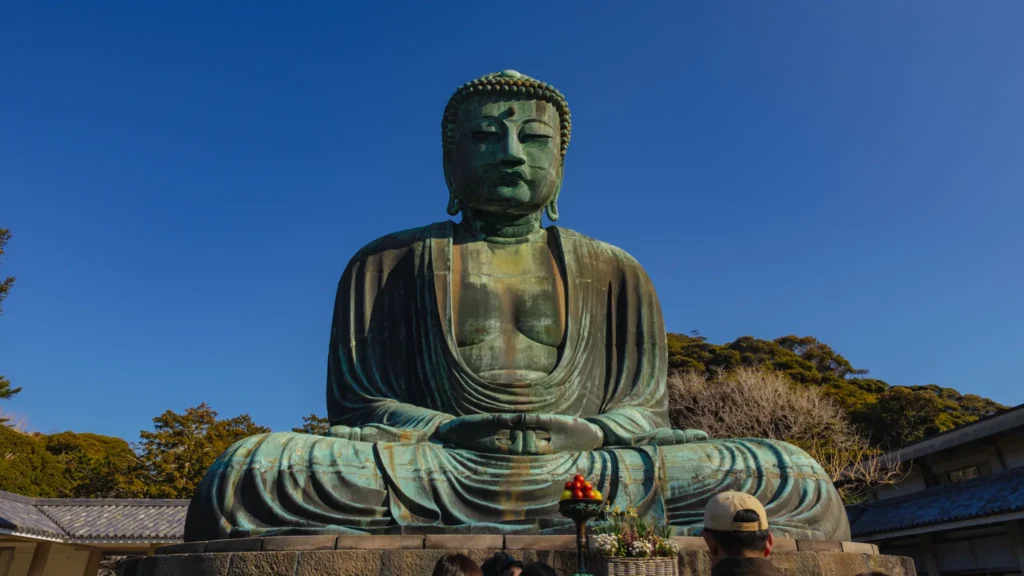 Kamakura, a coastal city just south of Tokyo, is a treasure trove of temples, shrines, and historical landmarks. Yet, few are as iconic or instantly recognizable as the Great Buddha… Read more: A Visitor’s Guide to the Great Buddha of Kamakura (Kotoku-in Temple)
 - Tsurugaoka Hachimangu: A Visitor’s Guide to Kamakura’s Most Important ShrineAs the sun casts long, golden shadows down the main approach, a quiet sense of reverence settles over Tsurugaoka Hachimangu. I made a point to visit early in the morning,… Read more: Tsurugaoka Hachimangu: A Visitor’s Guide to Kamakura’s Most Important Shrine
- Chasing Fuji: A Guide to 3 Iconic Mt. Fuji Photo Spots in Shichirigahama
 Shichirigahama, a coastal neighborhood in Kamakura, is not just for beach strolls and anime pilgrimages. For photographers, it offers some of the most breathtaking and distinctly Japanese views of Mt.… Read more: Chasing Fuji: A Guide to 3 Iconic Mt. Fuji Photo Spots in Shichirigahama
 - The Slam Dunk Crossing in Kamakura: A Guide to Visiting Responsibly
 For fans of the iconic 90s anime Slam Dunk, the image is instantly recognizable: a small railway crossing, the green and yellow Enoden train gliding past, and the sparkling Shonan… Read more: The Slam Dunk Crossing in Kamakura: A Guide to Visiting Responsibly
 - Shichirigahama Beach: A Kamakura Sunrise Walk Guide
 As the first golden light spills over Sagami Bay, the silhouette of Enoshima Island sharpens against an orange sky. Early morning surfers are already carving lines into the gentle waves,… Read more: Shichirigahama Beach: A Kamakura Sunrise Walk Guide
2026 cafe cherry blossom cherry blossoms day trip from tokyo edo period enoden flower festival fuji five lakes fujiyoshida Fukuoka hanami hiking japan japanese culture japanese food japan travel kamakura kawagoe kawaguchiko kawazu sakura Kumamoto kyoto local food Mount Fuji mt fuji Nagano new year holiday nightlife noodles oita Onsen Ramen Saga sakura Shizuoka shrine spring in japan spring travel Tokyo travel travel guide travel planning winter travel Yamanashi