

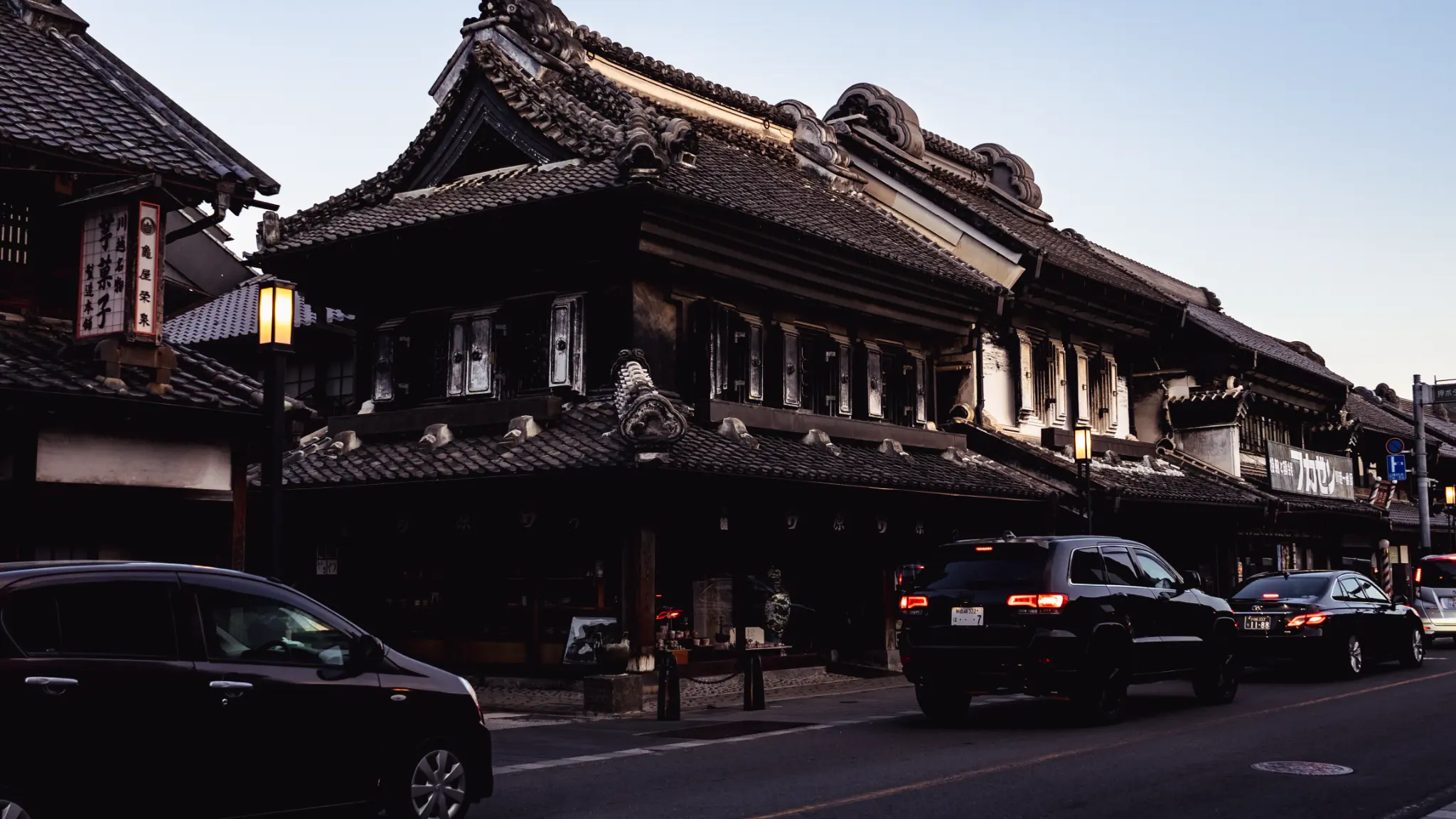

Just 30 minutes from the bustle of central Tokyo, the city of Kawagoe in Saitama Prefecture offers a journey back in time. Known affectionately as “Little Edo” (Koedo), its streets preserve the atmosphere of Japan’s feudal past, alongside architectural treasures from the Meiji, Taisho, and Showa eras. This Kawagoe sightseeing guide will walk you through everything you need to know to plan the perfect day trip, from historic landmarks to practical travel tips.
Whether you’re a history buff, a foodie, or simply looking for a picturesque escape, Kawagoe provides a rich, immersive cultural experience. You’ll discover a town where centuries-old traditions meet modern life, all within easy reach of the capital.
Table of Contents
Quick Facts
| Feature | Details |
| Best Time to Visit | Autumn (October/November) for the Kawagoe Festival and pleasant weather. Spring for cherry blossoms. |
| Time Needed | Half-day to a full day. |
| Nearest Stations | Hon-Kawagoe Station (Seibu Line), Kawagoe Station (JR/Tobu Lines). |
| Main Attractions | Kurazukuri (Warehouse) Street, Toki no Kane (Bell Tower), Kashiya Yokocho (Candy Alley). |
| Cost | Varies. Many sights are free to view from the outside. |
| Payment | Cash is recommended, especially at smaller shops and food stalls. IC cards and credit cards are accepted at larger establishments. |
| Crowds | Can be very crowded on weekends and holidays. Weekdays are more relaxed. |
| Accessibility | The main streets are flat and walkable. Some older buildings may have limited accessibility. |
An Overview of Kawagoe: The Enduring Spirit of Edo
Kawagoe flourished as a castle town and vital commercial hub during the Edo Period (1603-1868), supplying goods to the capital. Its nickname, “Little Edo,” reflects this deep historical connection. After a great fire in 1893, the merchants of Kawagoe rebuilt their shops in a fireproof style known as kurazukuri—heavy, black-plastered warehouse buildings that now define the town’s iconic landscape.
Today, this beautifully preserved district, officially designated as a “Group of Traditional Buildings,” allows visitors to stroll through a living museum. Beyond the main street, you’ll find the elegant architecture of the Taisho era (1912-1926) and the nostalgic charm of the Showa era (1926-1989), making Kawagoe a unique place where you can experience the ambiance of four different historical periods in a single day.
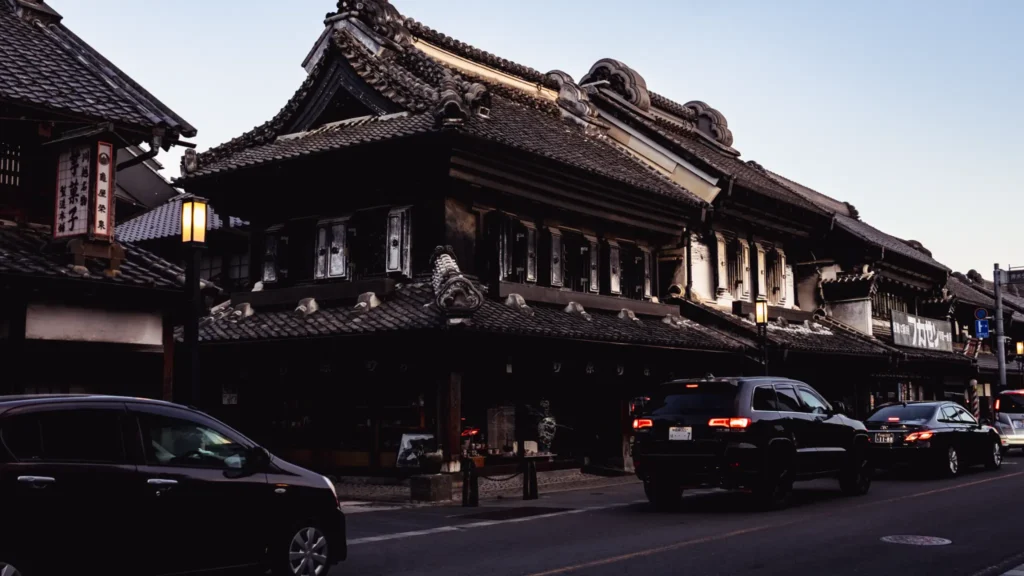
Best Time to Visit
Kawagoe is a year-round destination, but autumn (October-November) is particularly special. The weather is pleasant for walking, and the city comes alive for the Kawagoe Festival in mid-October. This spectacular event, a UNESCO Intangible Cultural Heritage, features massive, ornate floats parading through the streets.
Spring (March-April) is also beautiful, with cherry blossoms framing the historic scenery, especially along the Shingashi River. Summer can be hot and humid, but it’s a great time to enjoy local treats like sweet potato ice cream. Winter is quieter and offers crisp, clear days for photography.
How to Get There
Kawagoe’s accessibility from Tokyo is one of its biggest draws. You have three main railway options.
From Ikebukuro (Fastest & Recommended):
•Tobu Tojo Line: An express train from Ikebukuro Station will get you to Kawagoe Station in about 30 minutes for ¥490. This is the most direct and popular route. Foreign tourists can purchase the Kawagoe Discount Pass for ¥710, which covers a round trip.
From Shinjuku:
•Seibu Shinjuku Line: An express train from Seibu-Shinjuku Station takes about 50-60 minutes to reach Hon-Kawagoe Station (¥520). The Limited Express “Koedo” is even faster at around 45 minutes (¥1120).
•JR Saikyo/Kawagoe Line: Direct rapid trains from Shinjuku Station take about 55 minutes to Kawagoe Station (¥770) and are fully covered by the Japan Rail Pass.
Getting Around Kawagoe:
The main sightseeing area, including the Kurazukuri Street, is about a 10-15 minute walk from Hon-Kawagoe Station, which is the closest station. From Kawagoe Station, it’s about a 20-minute walk.
Klook.comFor convenience, two tourist loop bus services are available:
•Tobu Koedo Loop Bus: A one-day pass costs ¥400.
•Co-Edo Loop Bus: A vintage-style bus with a one-day pass for ¥600.
What to Do in Kawagoe: A Journey Through Time
Kawagoe is compact and highly walkable. The main attractions are clustered together, allowing you to explore different historical eras on foot.
1. Stroll Down Kurazukuri Street (Warehouse District)
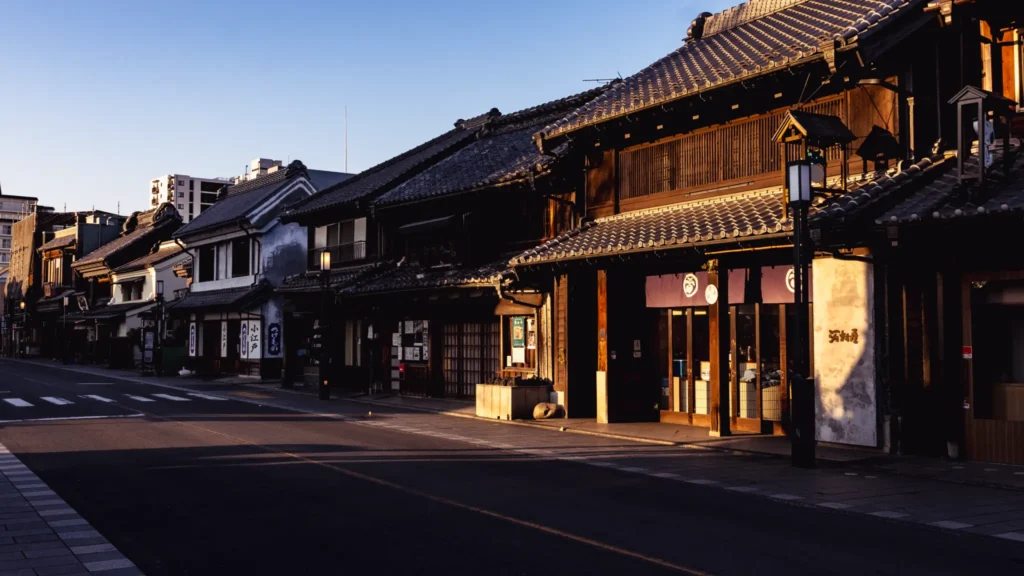
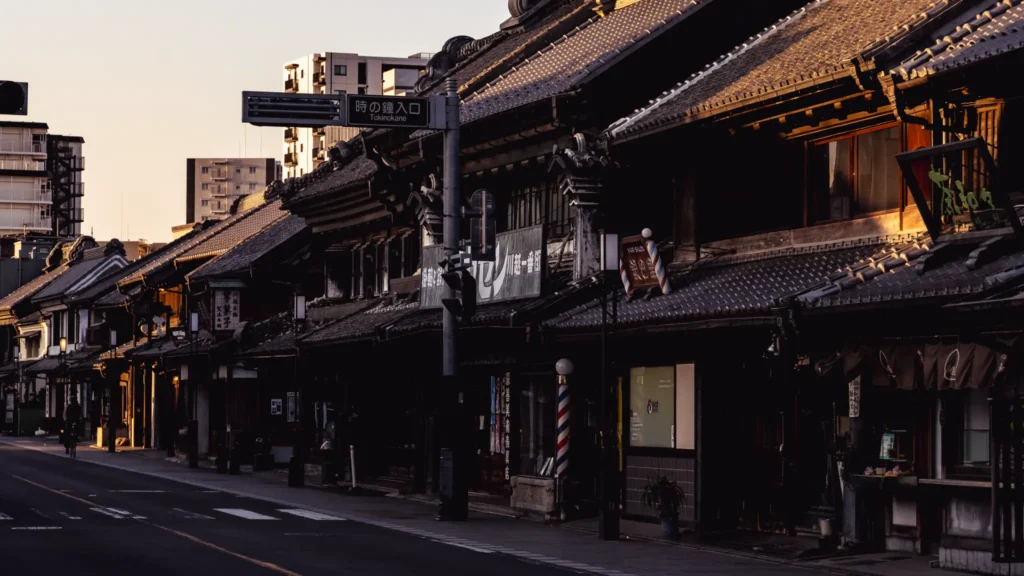
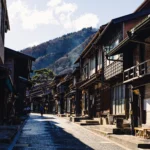
The heart of Little Edo is the Kurazukuri no Machinami, or Warehouse District. Walking down this street is like stepping onto a film set. The massive, dark-plastered merchant houses with their imposing tiled roofs create a powerful atmosphere. Many of these buildings now house shops selling local crafts, sweet potato snacks, and souvenirs, as well as restaurants.
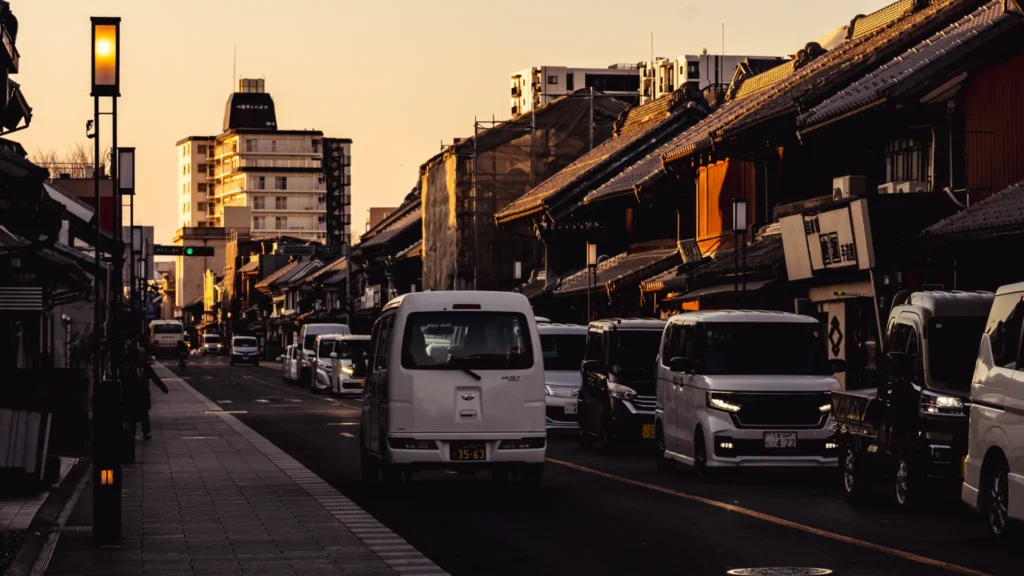
Take time to look closely at the architectural details. The lattice windows and heavy gates of these merchant houses are works of craftsmanship in their own right. Some buildings feature intricate wooden lattice patterns that served both decorative and practical purposes, allowing ventilation while maintaining privacy.
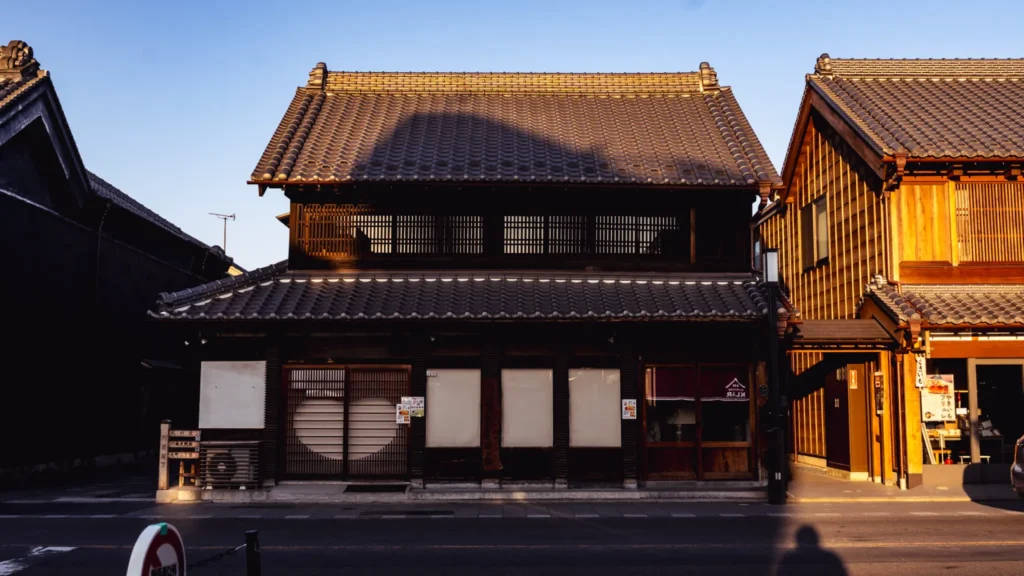
The panoramic view down the main street captures the full scale of this preserved district. Traditional shop curtains (noren) hang from the storefronts, adding splashes of color against the dark facades.
2. Hear the Bell at Toki no Kane (The Bell of Time)
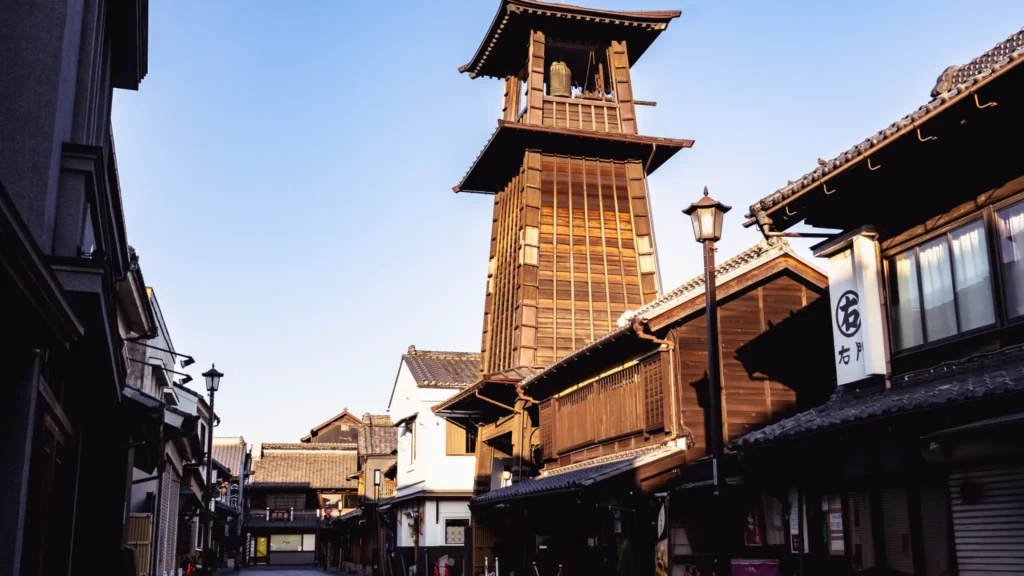
A short walk from the main street stands the Toki no Kane, the city’s beloved symbol. The original bell tower was built in the early Edo Period. The current structure was rebuilt after the Great Kawagoe Fire of 1893. The bell rings four times a day (6:00, 12:00, 15:00, and 18:00), its sound selected as one of the “100 Soundscapes of Japan.”
The wooden tower stands about 16 meters tall, rising above the surrounding rooftops. It has been keeping time for the residents of Kawagoe for over 400 years.
3. Visit the Kawagoe Festival Museum
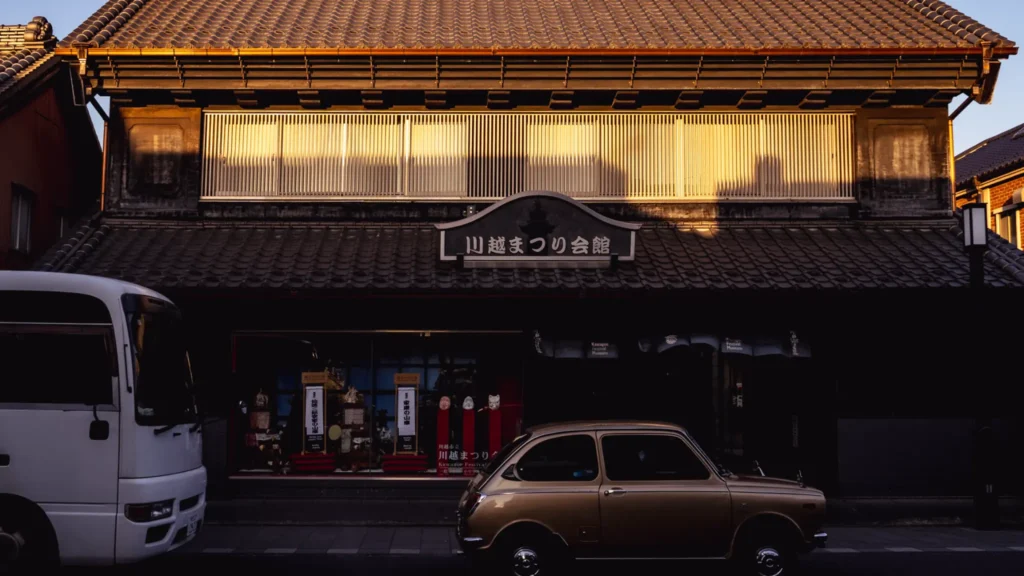
To understand the spirit of this castle town, stop by the Kawagoe Festival Museum (Kawagoe Matsuri Kaikan). The museum displays the magnificent festival floats (dashi) that parade through the streets during the annual Kawagoe Festival. Even if you can’t visit during the festival itself, the museum offers a vivid sense of the event’s scale and artistry.
4. Explore Kashiya Yokocho (Candy Alley)
Just around the corner from the main street is Kashiya Yokocho, a narrow lane lined with around 20 shops selling traditional Japanese sweets and snacks. The nostalgic atmosphere and sweet scents of caramel and cinnamon, which earned it a place in the Ministry of Environment’s “100 Fragrant Sceneries,” are a delight for the senses.
5. Step into the Taisho Era on Taisho Roman Street
Experience a different period of history on Taisho Roman Yume Dori (Taisho Roman Dream Street). Here, the architecture shifts to the Taisho era’s Western-influenced style. The street is home to the former Kawagoe Chamber of Commerce and Industry, a stately, retro building that captures the spirit of the age.
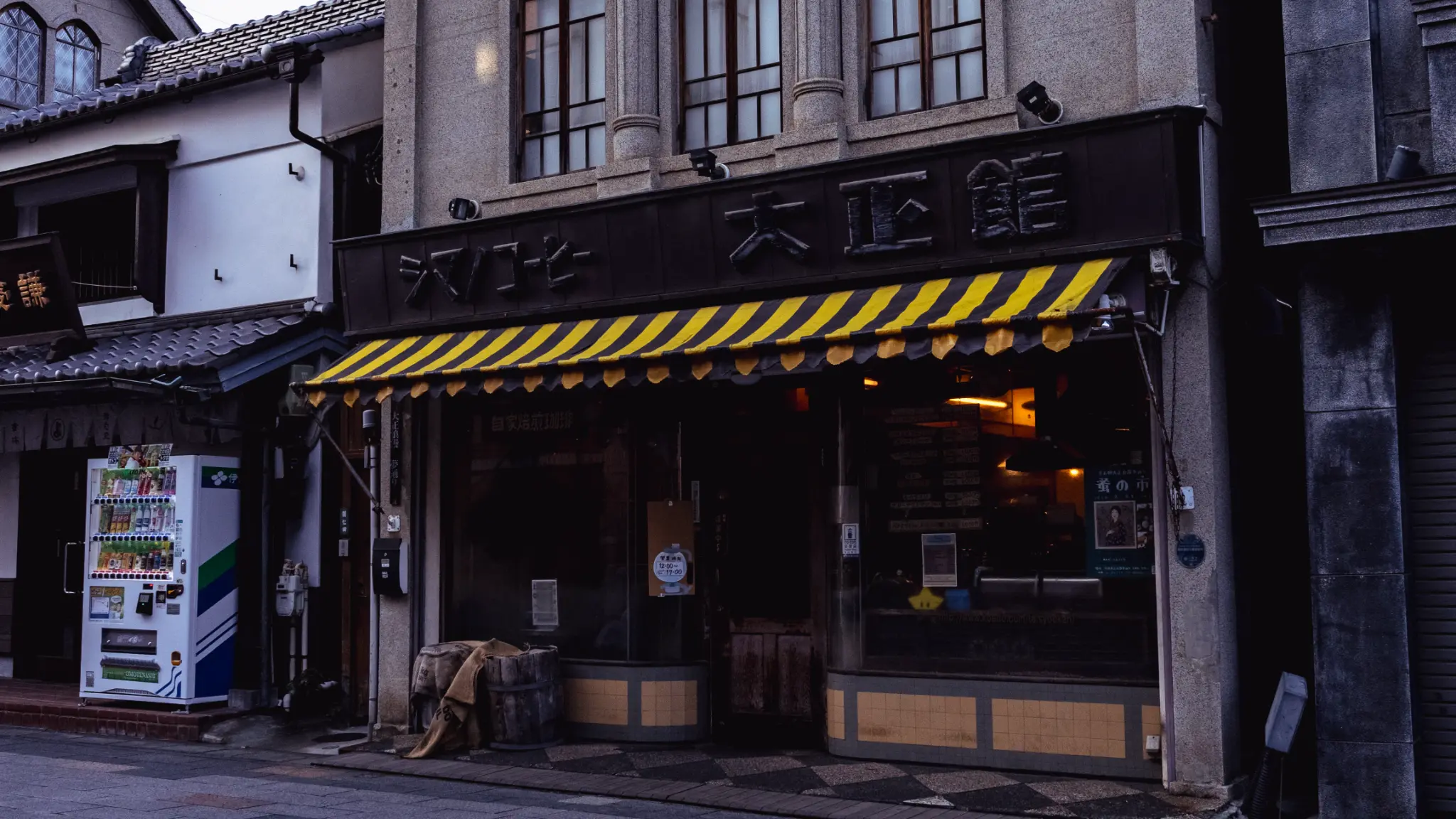
6. Admire the Kurazukuri Gate Architecture
As you walk through the district, notice the impressive gate structures of the merchant houses. These gates, with their heavy wooden doors and ornate details, were designed to project the wealth and status of the merchant families who built them.
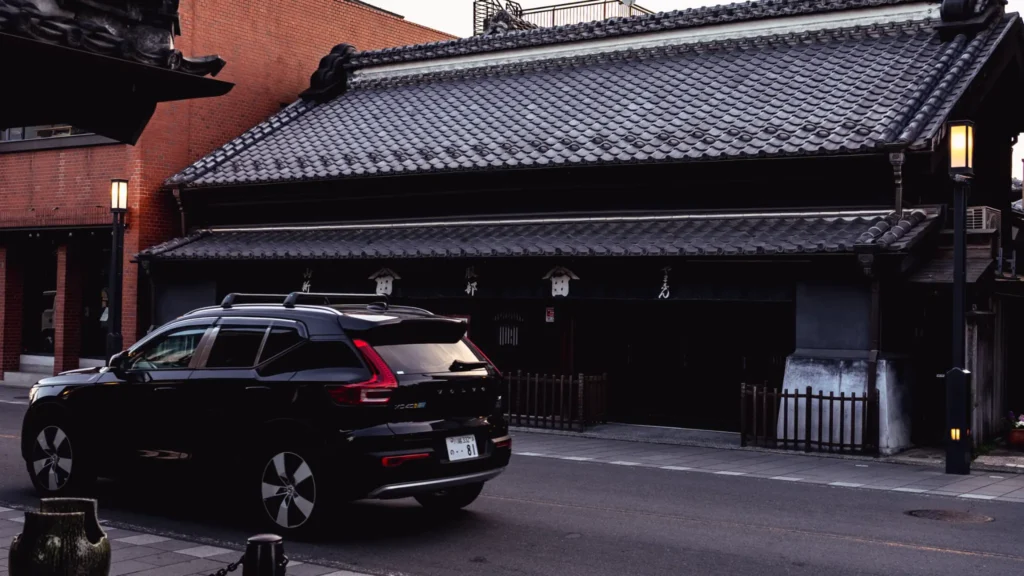
7. Discover Temples and Shrines
Kawagoe is home to several significant religious sites. While a full exploration of each deserves its own article, be sure to visit:
•Kita-in Temple: Known for its 500 unique Gohyaku Rakan statues, each with a different facial expression. It’s also one of the few places where you can see original Edo Castle structures, which were moved here.
•Kawagoe Hikawa Shrine: A beautiful shrine famous for its association with matchmaking and relationships. Its summer wind chime festival is particularly popular.
Practical Tips for Your Visit
•Wear Comfortable Shoes:
You will be doing a lot of walking.
•Bring Cash:
While larger stores accept cards, many smaller food stalls and souvenir shops are cash-only.
•Check Festival Dates:
If you want to see the Kawagoe Festival, confirm the dates in mid-October, as it draws huge crowds.
•Rent a Kimono:
To fully immerse yourself in the historical atmosphere, consider renting a kimono for the day. Many shops are available near the main sightseeing area.
•Luggage Storage:
Coin lockers are available at Kawagoe and Hon-Kawagoe stations if you have luggage.
Where to Stay Nearby
While Kawagoe is an easy day trip, staying overnight allows for a more relaxed experience. You can enjoy the streets after the day-trippers have left. There are several modern hotels near the main stations in Kawagoe and the neighboring city of Omiya.
Find Hotels Near Kawagoe Station
Where to Eat Nearby
Kawagoe is famous for its sweet potato (satsumaimo) treats. You’ll find everything from sweet potato ice cream and chips to a local sweet potato beer. Another local specialty is unagi (eel), with several long-established restaurants serving grilled eel over rice.
Suggested Mini-Itinerary: A Half-Day in Little Edo
Arrive at Hon-Kawagoe Station and walk towards the Kurazukuri district.
Enjoy an unagi lunch at a traditional restaurant.
Stroll down Kurazukuri Street, browsing the shops.
Visit the Toki no Kane and listen for the 3:00 PM bell.
Wander through Kashiya Yokocho (Candy Alley) and try some traditional sweets.
Explore Taisho Roman Street and admire the retro architecture.
Head back to the station, picking up souvenirs on the way.
Frequently Asked Questions
Q: Is Kawagoe worth visiting?
A: Absolutely. If you’re looking for an easily accessible day trip from Tokyo that offers a deep dive into Japanese history and culture, Kawagoe is an excellent choice.
Q: How much time do I need in Kawagoe?
A: A half-day (4-5 hours) is enough to see the main sights. A full day allows for a more leisurely pace and time to explore more temples and museums.
Q: What is Kawagoe best known for?
A: Kawagoe is best known for its beautifully preserved Kurazukuri (warehouse) district, which gives it the nickname “Little Edo,” and its iconic Toki no Kane (Bell of Time).
Q: Can I use a JR Pass to get to Kawagoe?
A: Yes, the JR Saikyo/Kawagoe Line from Shinjuku to Kawagoe Station is fully covered by the Japan Rail Pass.
Q: Is Kawagoe crowded?
A: It can be very busy, especially on weekends and national holidays. For a quieter experience, visit on a weekday.
Q: What food is famous in Kawagoe?
A: Kawagoe is famous for sweet potato (satsumaimo) products and grilled eel (unagi).
Sources
[1] Kawagoe City Official Website. (n.d.). Kurazukuri Zone. Retrieved from
[2] Kawagoe Matsuri Official Website. (n.d. ). About the Kawagoe Festival. Retrieved from
[3] Japan-guide.com. (2025, April 11 ). Kawagoe: Getting there and around. Retrieved from
[4] Ministry of the Environment. (n.d. ). 100 Soundscapes of Japan. Retrieved from
[5] Ministry of the Environment. (n.d. ). 100 Fragrant Sceneries. Retrieved from
This guide provides a comprehensive overview for a first-time visitor. For those interested in a deeper dive, future articles will explore specific locations like Kita-in Temple, the unique Starbucks in a traditional house, and the history of Kawagoe Castle in more detail. Enjoy your trip to Little Edo!

- Temomi Ramen Juhachiban: Ogikubo’s Legendary Hand-Kneaded Noodle Shop
 As evening settles over Ogikubo, a bustling neighborhood in Tokyo‘s Suginami ward, a bright yellow awning casts a warm, inviting glow onto the street. This is the home of Temomi… Read more: Temomi Ramen Juhachiban: Ogikubo’s Legendary Hand-Kneaded Noodle Shop
 - Mt. Fuji Cherry Blossom Guide 2026 : Forecast & Best Spots
 As Japan’s iconic peak, Mount Fuji provides a breathtaking backdrop for the country’s beloved cherry blossoms. While the sakura season in Tokyo and Kyoto often steals the spotlight, the Fuji… Read more: Mt. Fuji Cherry Blossom Guide 2026 : Forecast & Best Spots
 - Inokashira Park Cherry Blossoms 2026: A Local’s Guide to Tokyo’s Serene Hanami Spot
 As the cherry blossom season approaches in Tokyo, many travelers dream of iconic but often crowded spots like Ueno or Yoyogi Park. But what if you could experience breathtaking sakura… Read more: Inokashira Park Cherry Blossoms 2026: A Local’s Guide to Tokyo’s Serene Hanami Spot
 - A Visitor’s Guide to the Great Buddha of Kamakura (Kotoku-in Temple)
 Kamakura, a coastal city just south of Tokyo, is a treasure trove of temples, shrines, and historical landmarks. Yet, few are as iconic or instantly recognizable as the Great Buddha… Read more: A Visitor’s Guide to the Great Buddha of Kamakura (Kotoku-in Temple)
 - Ariake Ferry Kumamoto-Nagasaki Guide
 Connecting Kumamoto and Nagasaki prefectures, the Ariake Ferry offers more than just a convenient shortcut across the Ariake Sea. It’s a delightful 45-minute journey that provides a glimpse into local… Read more: Ariake Ferry Kumamoto-Nagasaki Guide
2026 cafe cherry blossom cherry blossoms day trip from tokyo edo period enoden flower festival fuji five lakes fujiyoshida Fukuoka hanami hiking japan japanese culture japanese food japan travel kamakura kawagoe kawaguchiko kawazu sakura Kumamoto kyoto local food Mount Fuji mt fuji Nagano new year holiday nightlife noodles oita Onsen Ramen Saga sakura Shizuoka shrine spring in japan spring travel Tokyo travel travel guide travel planning winter travel Yamanashi
[…] known as “Little Edo,” and discover one of its most precious historical treasures: the Kawagoe Castle Honmaru Goten. As the only surviving palace building of its kind in eastern Japan, this beautifully preserved […]
[…] •Toki no Kane (Bell of Time): The symbol of Kawagoe, just seconds away. […]